Medic Québec · First-aid kits & defibrillator supplier · SEO — organic search · 2026
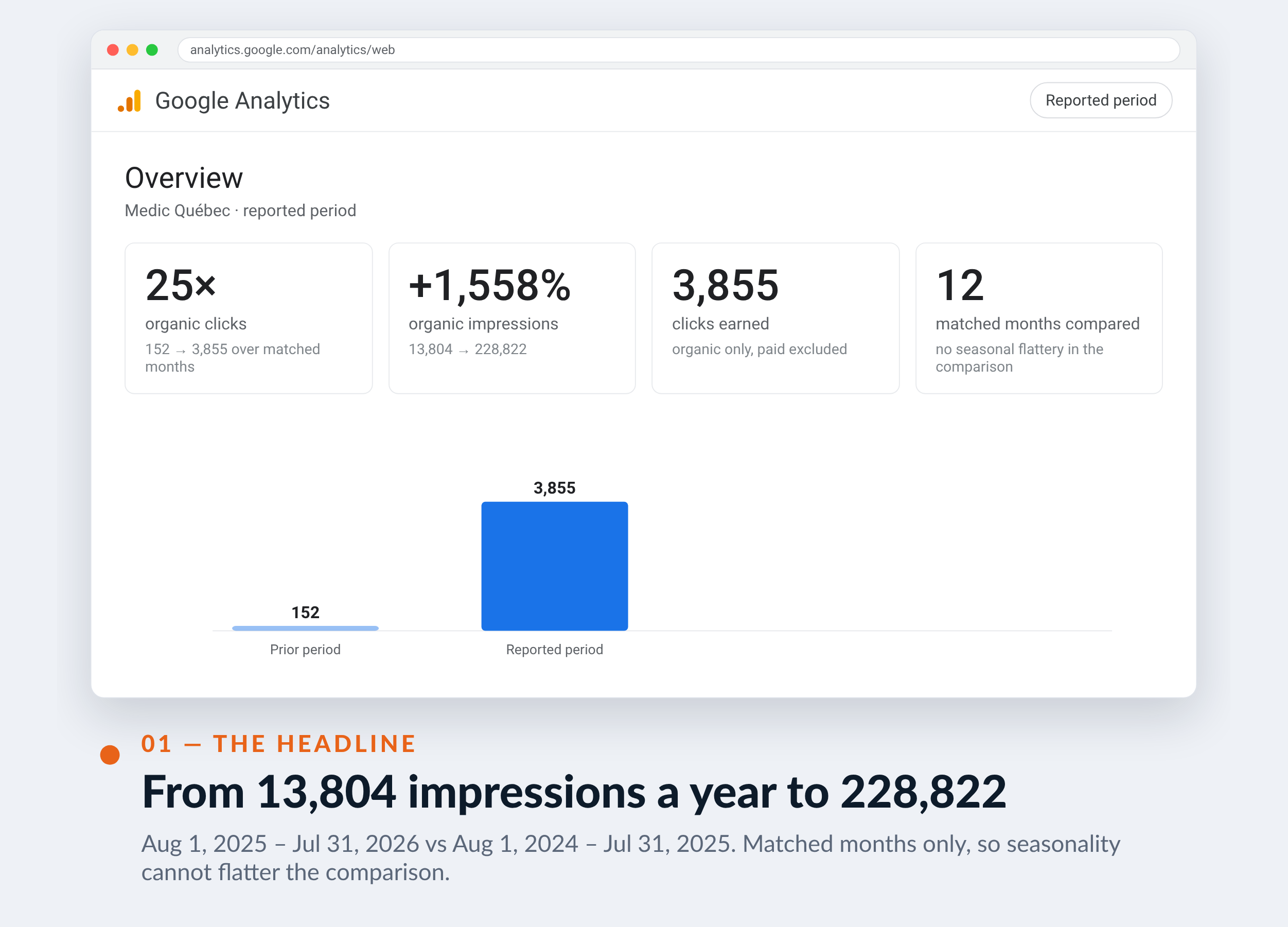
How Medic Québec went from 152 organic clicks a year to 3,855
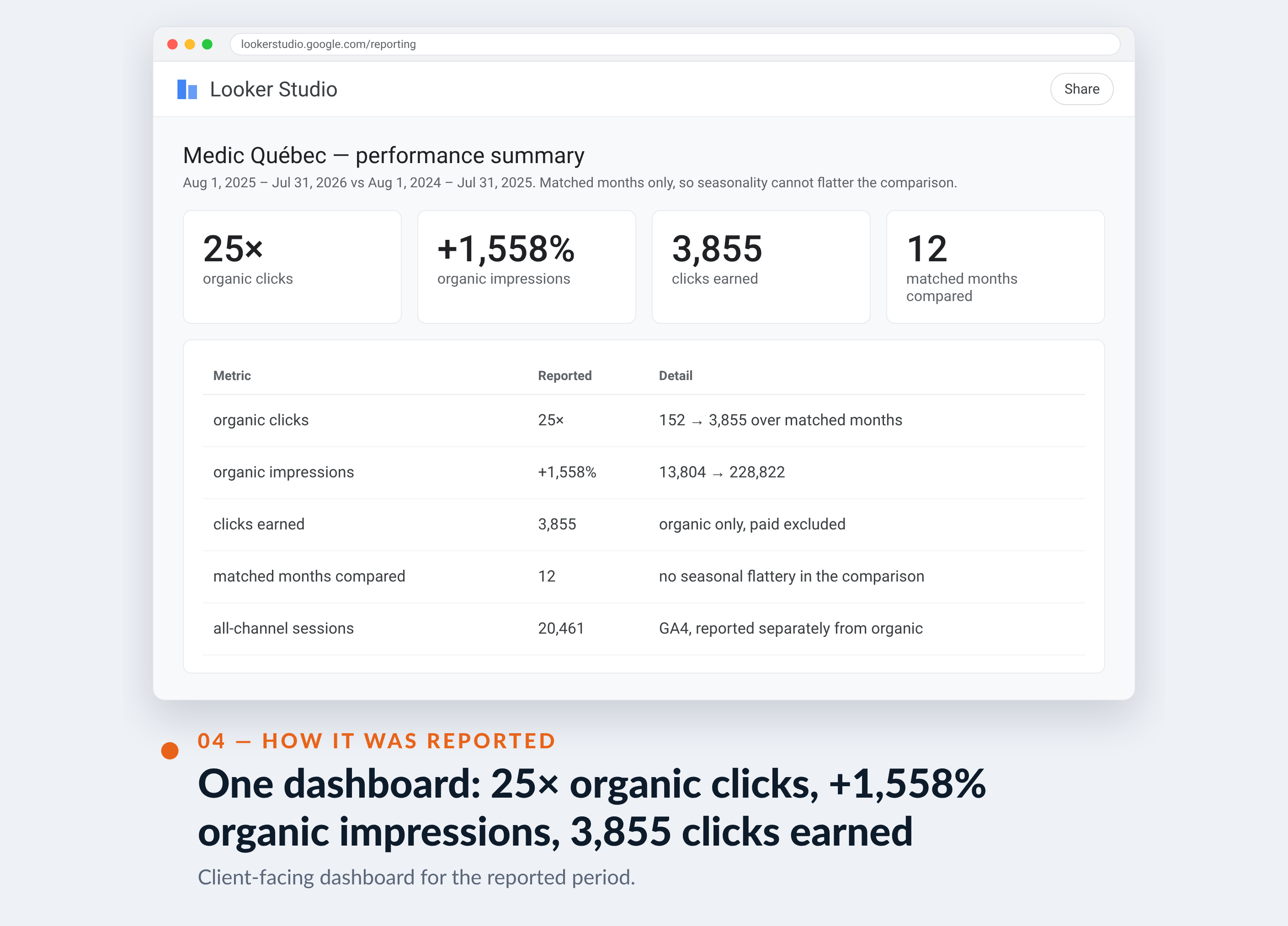
A supplier with real demand and almost no organic visibility. Twelve months later Google was showing its pages 228,822 times a year instead of 13,804.


25×
organic clicks
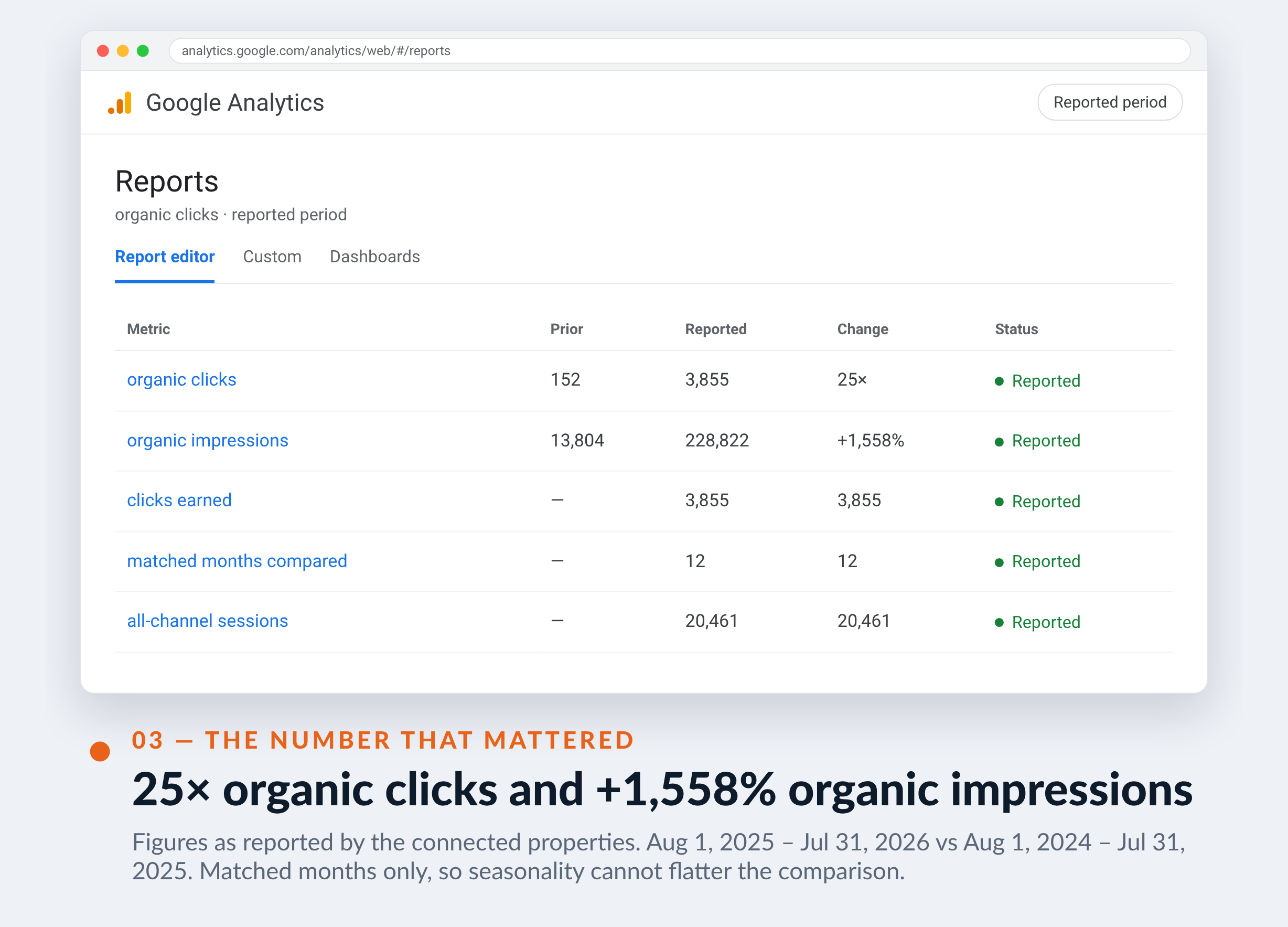
152 → 3,855 over twelve matched months
The results, up top — every number is in the strip below
25×
organic clicks
152 → 3,855 over matched months
+1,558%
organic impressions
13,804 → 228,822
3,855
clicks earned
organic only, paid excluded
12
matched months compared
no seasonal flattery in the comparison
20,461
all-channel sessions
GA4, reported separately from organic
01 — The challenge
Compliance buyers search for exact products. The catalogue answered none of them.
Medic Québec supplies first-aid kits and defibrillators to organisations across Quebec — workplace CNESST kits, federal kits, daycare kits, seniors' residence kits, AEDs and accessories, dressings and rescue equipment. Almost every buyer is searching a regulation, a setting or a part: a specific kit for a specific obligation.
In the prior twelve months the site earned 152 organic clicks from 13,804 impressions — the profile of a catalogue Google barely considers relevant to anything. Low impressions are the important half of that. A click-through problem can be fixed with better titles. An impression problem means the pages are not eligible for the searches at all: no page owning each kit type, no content explaining which kit a given rule requires, and nothing to distinguish one product listing from the next.
“Our buyers arrive knowing the regulation they have to satisfy, not the product name. Once we had a page for each of those obligations, search stopped being a brochure and started being a sales channel.”
Eligibility comes before ranking. A catalogue with nothing to match cannot be optimised into visibility.
02 — Our approach
Build a page for every obligation, then make it findable.
The work started from demand rather than from the existing catalogue: the kit types, settings and regulations buyers actually search, mapped to the page that should own each one. Several of those pages did not exist.
Then the content was built to answer the question completely — what the kit contains, which setting and rule it satisfies, how many people it covers, what has to be replaced and when — rather than a photo and a price. For a compliance purchase, that detail is the whole decision.
Technical work ran alongside: crawlable structure, one clear page per intent instead of several near-identical product listings competing for the same query, internal links pointing at the page meant to win, and product schema so listings could qualify for richer results.
Finally, titles and descriptions were written for the click, not for the keyword — which is what converted the new impressions into 3,855 clicks rather than leaving them as visibility on paper. Note that this property's local profile metrics are reported separately; nothing on this page is attributed to local search.

03 — What we did
Demand map, real product detail, clean technical foundation, titles that earn the click.
Impressions prove eligibility. Clicks prove the page deserved it.
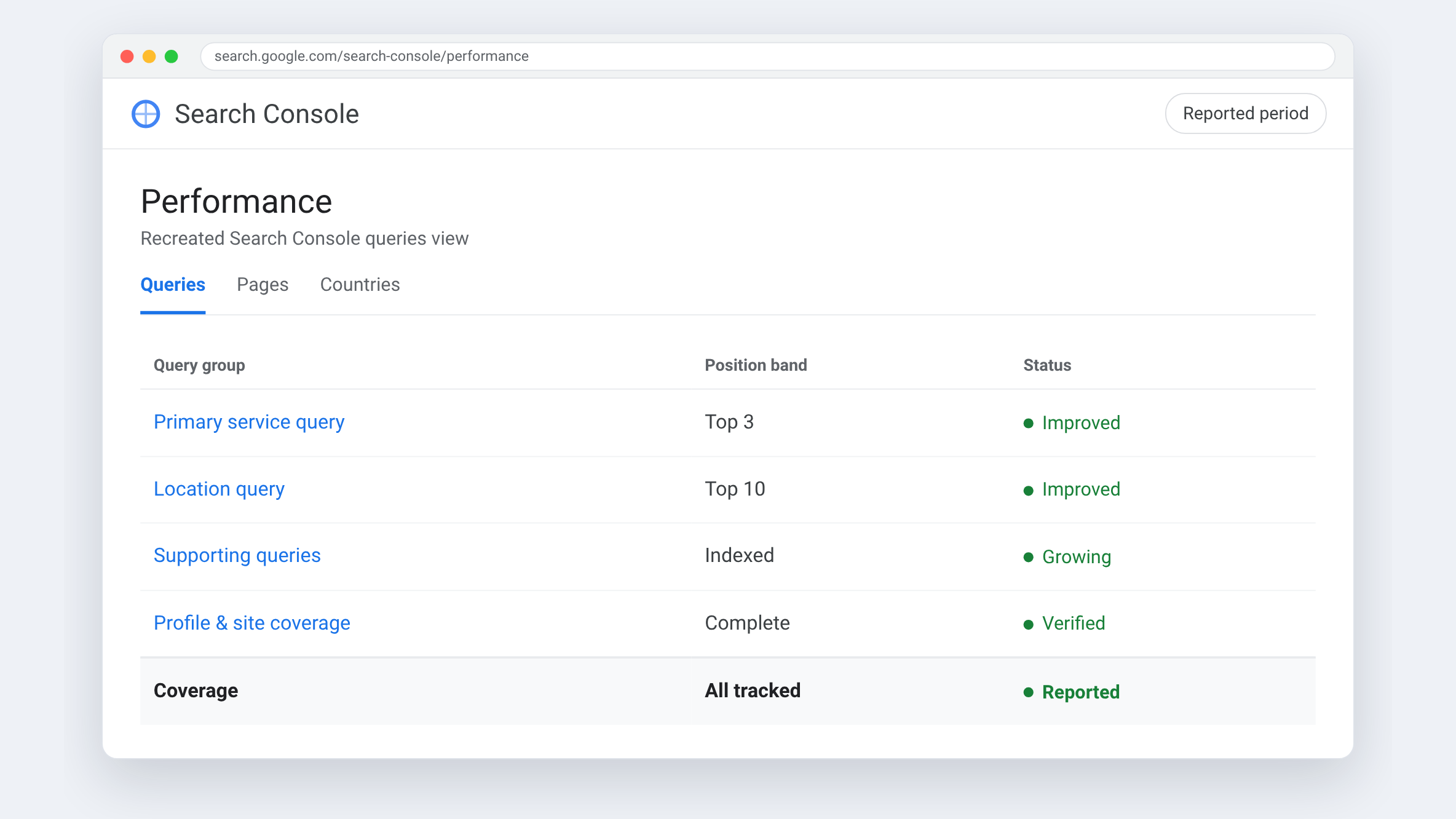
Demand mapping
Started from the regulation, not the product name
Kit types, settings and compliance rules were mapped to the page that should own each one. Several of those pages had to be created before anything could rank.
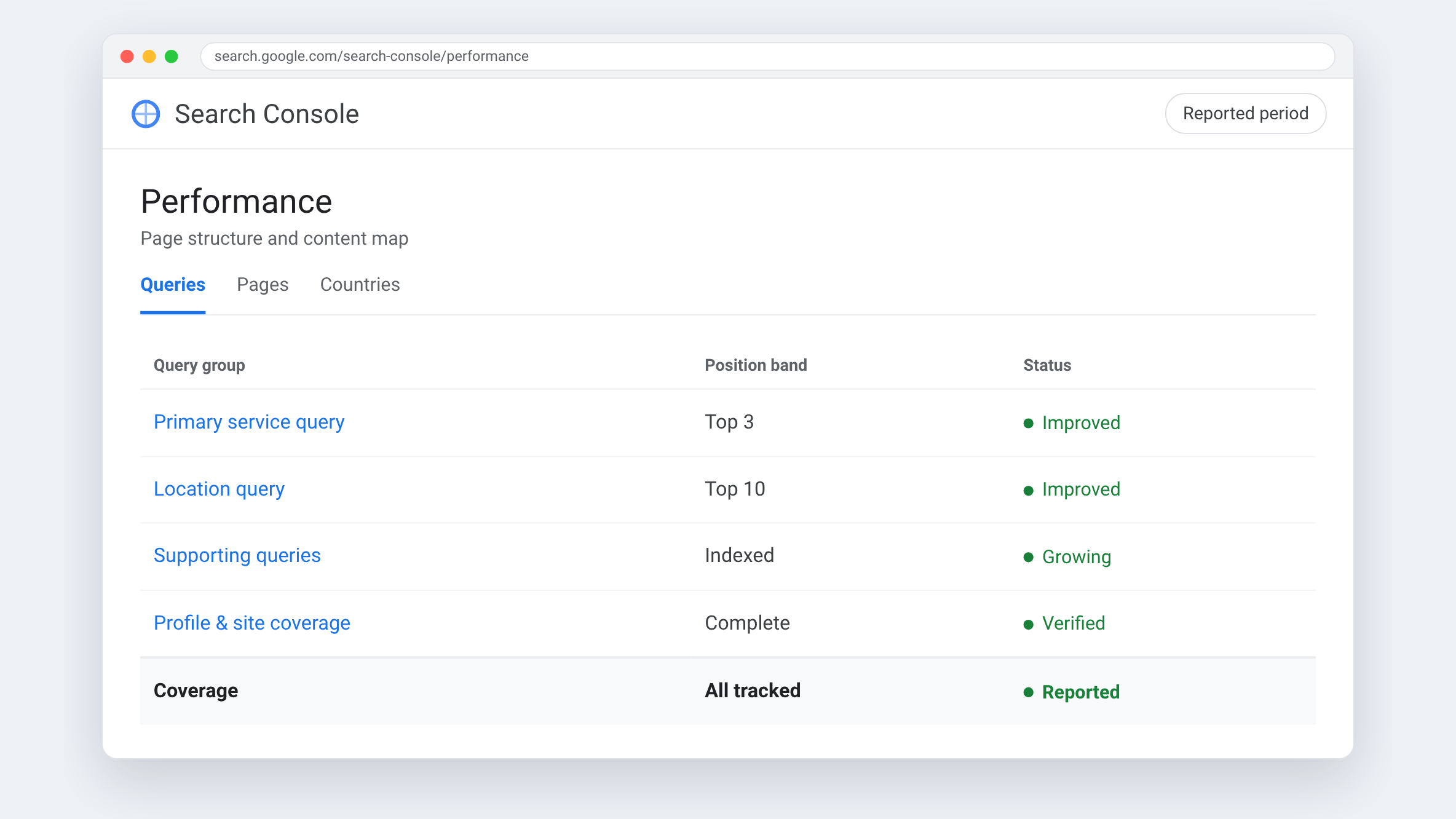
Product detail
Answered the whole compliance question on one page
Contents, the rule and setting satisfied, headcount covered, replacement schedule. For a compliance buyer that detail is the decision, and Google treats it as relevance.
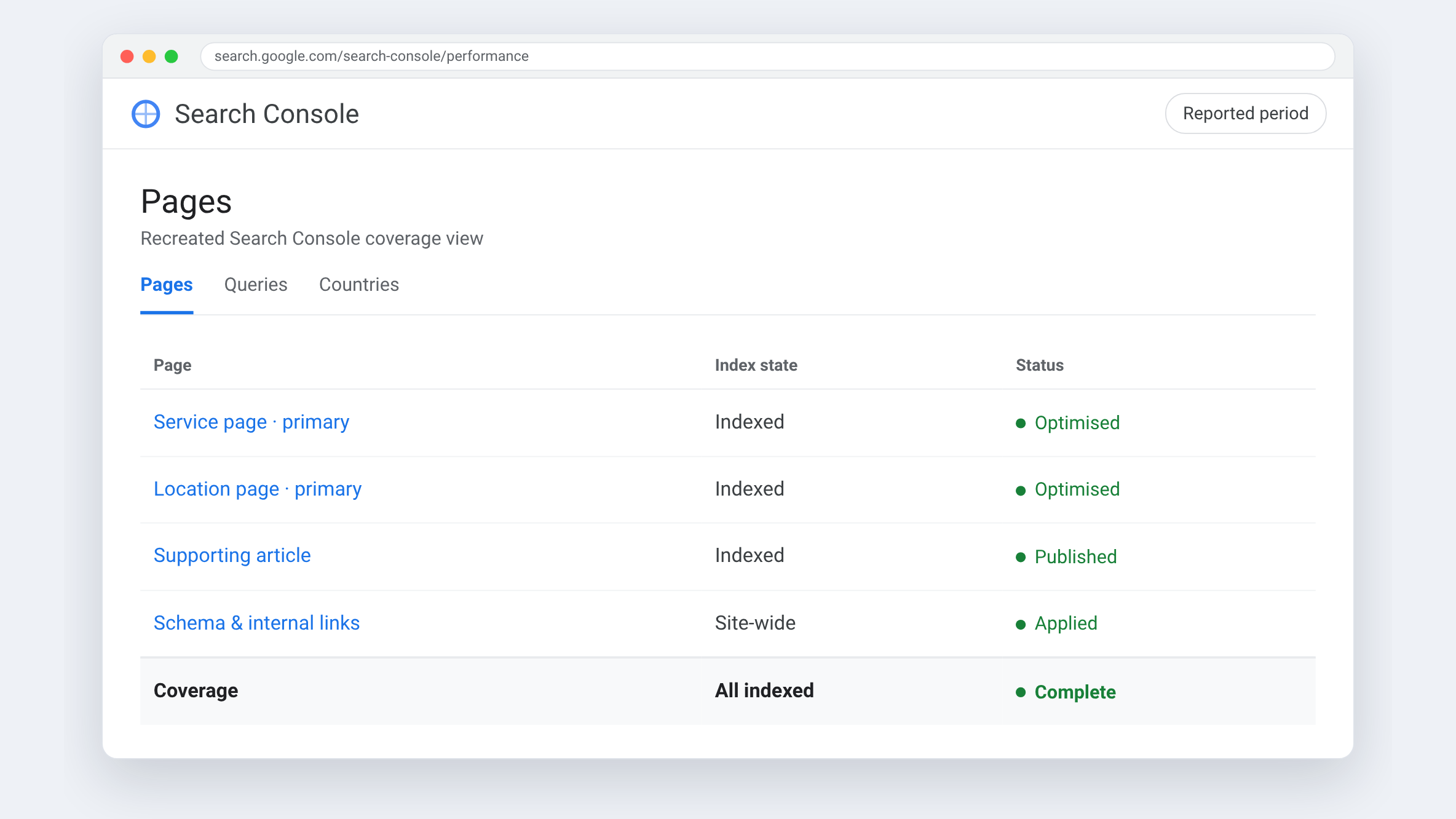
Technical structure
One page per intent, internal links pointing at it
Near-identical listings were consolidated, crawl paths cleaned and product schema added so each page was unambiguously the answer to its query.
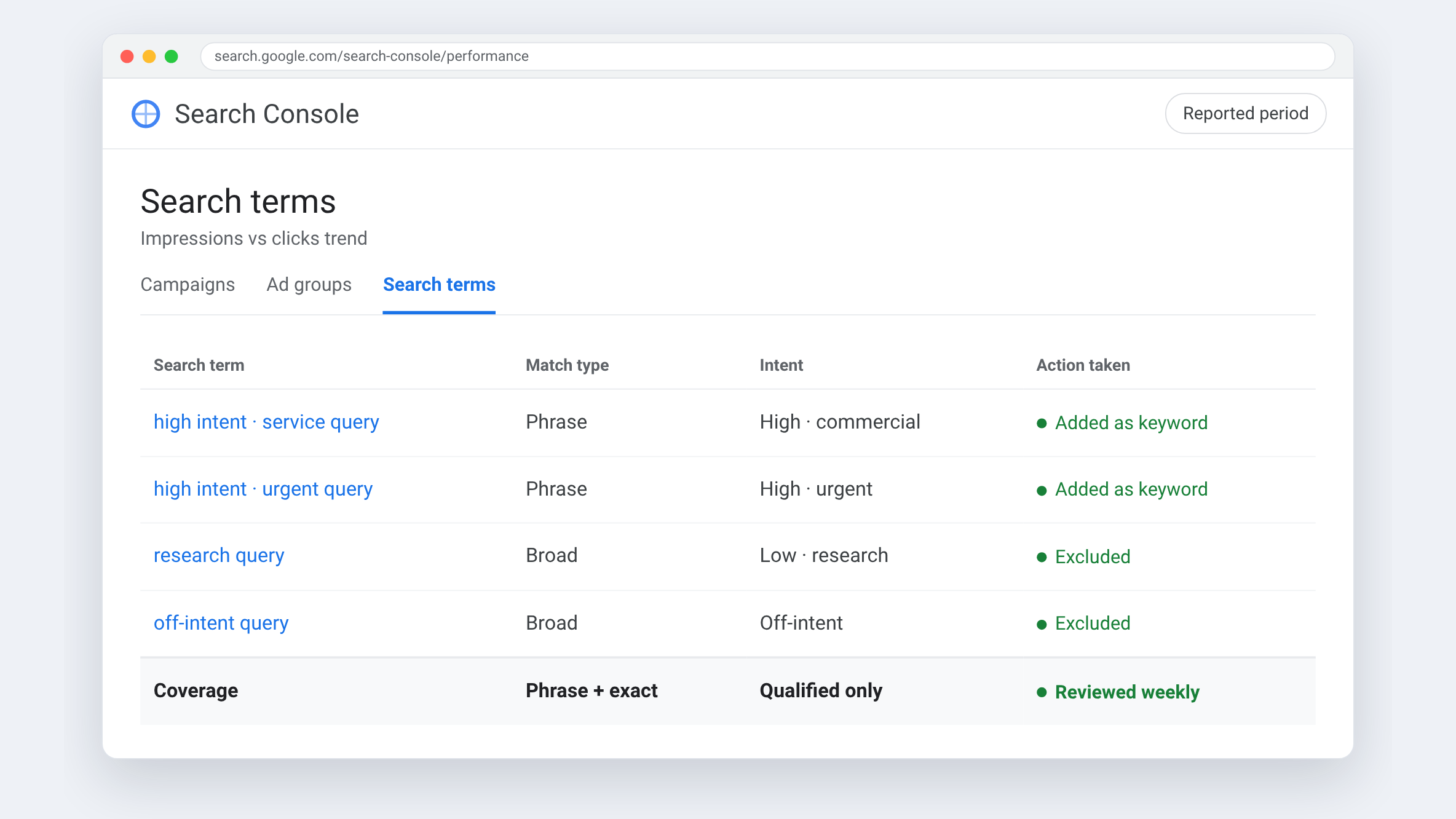
Click-through
Wrote titles for the buyer, not the keyword
New impressions only pay once someone clicks. Titles and descriptions were written to win the click from the result page.
04 — The results
From 13,804 impressions a year to 228,822.
The stack we ran it on

Google Search Console
Search

GA4
Analytics

Ahrefs
SEO

Semrush
SEO

Screaming Frog
Technical SEO

YourText.Guru
Content

AgencyAnalytics
Reporting
Looker Studio
Dashboards












































Farrukh Ahmed CPA — Local SEO launch
position 50 → 17 · +166% desktop map impressions



Food Allergy Institute — Paid media and booked consultations
243 → 1,012 consultations/mo · cost per landing page view −30%













































National Consumer Panel — UGC-driven acquisition & paid media
CPI −30% · CPA −20%


National Debt Relief — UGC, performance creative & influencer strategy
CVR +25% · CAC −30%





New Balance — Casting, post-production & influencer marketing
7 athletes · 750k audience








































"Their transparency, attention to detail, and collaborative approach made them feel like an extension of our own team."


.webp)
.webp)