Be the obvious choice nearby.
obvious choice
We are the local SEO agency for businesses that serve a place. We earn the map pack, make every location page worth ranking, keep your listings identical everywhere they appear, and turn reviews into a system rather than a scramble — alongside organic SEO, answer-engine visibility and conversion work when the calls are arriving but not closing.






Tell us a little about your brand and we'll be in touch within 24 hours to lock in a time.



THE FOUR WORKSTREAMS
Profile, proximity pages, citations, reviews.
Profile, proximity
Local search rewards businesses that are consistent, close and credible. Each of these four workstreams has an owner, a checklist and a number we watch weekly, and none of them is a one-off task you tick off in month one.
Google Business Profile
Location & service pages
Citations & data accuracy
Reviews & reputation
The profile does more work than the website.
For most local businesses the profile is the storefront customers actually see. BrightLocal's 2026 research found that 52% of consumers started their most recent local search on Google Search and a further 9% on Google Maps, with 71% touching Google Search somewhere in the journey — so a thin profile costs you customers before anyone reaches the site.
We take the profile seriously: primary and secondary categories chosen against what actually ranks in your area rather than what sounds right, services and products written out in full, attributes completed, hours including holidays, real photographs replaced on a schedule, and the booking or call action wired to something we can measure. Posts, offers and Q&A get used the way an active business would use them, because dormant profiles look dormant.
Then we protect it. Suggested edits, category changes, duplicate listings and suspension risk are monitored, and every change is logged so a ranking movement can be traced to a cause instead of guessed at. Worth knowing: BrightLocal also found only 35% of small businesses have a Google Business Profile at all, which is why a properly run one still moves the needle in most towns.
- Categories, services and attributes chosen from what ranks locally
- Hours, holiday hours and booking actions kept accurate
- Photography refreshed on a schedule, not once at setup
- Posts, offers and Q&A used actively
- Suggested edits, duplicates and suspension risk monitored
52%
of local searches start on Google Search (BrightLocal 2026)
9%
start directly in Google Maps
One real page per place you serve.
Proximity is the strongest ranking signal in local search and the one you cannot buy, which is exactly why the pages around it have to earn their place. We build a page for each location and each service-area cluster with content only that page could carry: the team who work there, the jobs done in those streets, parking and access, the neighbourhoods covered, the local pricing reality, embedded directions and the reviews written by people nearby.
What we do not build is fifty near-identical pages with the city name swapped. Those templates once worked and now mostly sit unindexed; Google is comfortable ignoring pages that exist for its benefit rather than a customer's. Where a service area is genuinely thin we say so and combine it rather than publishing filler.
The technical layer matters too: LocalBusiness schema per location, matching NAP in the markup and the footer, internal links from the services that feed each area, and mobile pages that load quickly — BrightLocal recorded 73% of local searches starting on a phone, so a slow page is a lost enquiry rather than a technical footnote.
- A page per location and per genuine service-area cluster
- Content unique to that place: people, jobs, access, neighbourhoods
- LocalBusiness schema and NAP matching everywhere
- Internal links from parent services to each area page
- No duplicated city-swap templates, ever
73%
of local searches begin on a mobile device
75%
of consumers use more than one channel before deciding
One version of your business, everywhere.
Directories, data aggregators, maps apps, industry bodies and AI assistants all read your business details from somewhere, and when those details disagree the search engines discount all of them. So we build one canonical record — name, address, phone, hours, categories, description, service area — and then make the internet agree with it.
The work is unglamorous and it compounds: claim and correct the core aggregators, clean the long tail of niche directories that matter in your industry, kill duplicate listings that split your review count and your authority, fix old addresses left behind by a move, and standardise tracking numbers so call attribution never breaks the consistency rule. Every entry is recorded with its login, so you keep control of the estate rather than renting it back from an agency.
This matters more now that AI assistants answer local questions directly. BrightLocal found half of consumers have asked an AI tool for a business recommendation, and those tools quote whatever structured record they can find.
- One canonical NAP record, documented and owned by you
- Core aggregators and industry directories claimed and corrected
- Duplicate and legacy listings removed
- Call tracking implemented without breaking consistency
- Quarterly re-audit, because listings drift
1 in 2
consumers have asked an AI tool for a business recommendation
6
review sites the average consumer consults
Recent, plentiful, answered.
Reviews are the closest thing local search has to a scoreboard. BrightLocal's 2026 survey found 97% of consumers read reviews for local businesses and 41% now always read them, up from 29% the year before, with the average consumer checking six different review sites. Recency carries the most weight, which means volume last year cannot save you this year.
We make asking systematic rather than occasional: the request goes out at the moment satisfaction peaks, through the channel that customer already uses, with a link that lands on the right form. Staff get a script that never offers an incentive, because a policy breach costs more than the reviews are worth. Then responses — all of them, in your voice, quickly, and calmly on the difficult ones, since prospects read the reply more carefully than the complaint.
We also watch where the reviews sit. Google's share of review reading fell from 83% to 71% in a year as industry sites and video platforms picked up ground, so a single-platform reputation is more fragile than it looks.
- Requests triggered at the moment satisfaction peaks
- Never incentivised, never gated — policy-safe by design
- Every review answered, including the hard ones
- Coverage across the platforms your customers actually check
- Themes fed back to operations, not just to marketing
97%
of consumers read reviews for local businesses
41%
always read reviews, up from 29% a year earlier
of local mobile searches end in a visit within a day (Google)
more traffic for businesses in the Local Pack (SOCi)
Rankings measured across the service area you sell to
Every profile, listing and page we touch
We made the difference for those brands

Home essentials, appliances, kitchen & pet

Creative, content, arts & culture

Home essentials, appliances, kitchen & pet

B2B software, fintech, insurance

Food & beverage
Consumer tech and platforms

B2B software, fintech, insurance
Travel & mobility

Beauty, personal care & wellness

Beauty, personal care & wellness

Creative, content, arts & culture

B2B software, fintech, insurance

Food & beverage

Consumer tech and platforms

B2B software, fintech, insurance

B2B software, fintech, insurance
Home essentials, appliances, kitchen & pet

Food & beverage

Home essentials, appliances, kitchen & pet

Retail & commerce

B2B software, fintech, insurance

Apparel and lifestyle

Retail & commerce

Consumer tech and platforms

Beauty, personal care & wellness

B2B software, fintech, insurance

Apparel and lifestyle

B2B software, fintech, insurance

Beauty, personal care & wellness

Consumer tech and platforms

Healthcare & regulated services
01 — The challenge
Visible in the office, invisible three streets away.
You rank when you search from your own desk and vanish when a customer searches from the next suburb. The profile was set up years ago by someone who has left, half the directories still list the old address, the reviews stopped in spring, and the location pages read like the same page with a different city name pasted in.
“We are the biggest name in town and we are nowhere on the map.”
The demand is not the problem: BrightLocal found 84% of consumers searched for a local business online in the last three months, and 75% used more than one channel before deciding. The problem is that a customer comparing three businesses in five minutes is reading a profile, a review page and a landing page that were never treated as one product. Each of those is fixable, and the fixes hold once the process behind them exists.
02 — Our approach
Fix the record, earn the map, keep it fed.
We start with an audit of what a customer nearby actually sees: profile completeness and category fit, map-pack rankings sampled across a grid rather than from one address, listing accuracy across the aggregators, review volume and recency by platform, and the location pages themselves. That produces a ranked list of what is holding you back, with the cheap wins separated from the structural work. Then we build: the profile brought to a standard we would defend, one genuine page per place you serve with schema and internal links to match, the citation estate cleaned and documented, and a review programme your team can run without us standing over them. From there it is upkeep and pressure — posts, new photography, fresh service pages, links from local organisations, and a monthly review of grid rankings, calls, direction requests and booked jobs so the reporting talks about customers rather than positions. You own every profile, listing and page we touch.
03 — What we did
Four phases, and the map moves first.
Audit, profile and pages, citations and reviews, then compounding upkeep — the map pack usually responds first, and the organic pages follow.
Weeks 1-2 / Audit
See what your neighbours see
Grid rankings sampled across the service area, profile and category audit, listing accuracy, review recency by platform.

Weeks 2-6 / Build
Profile and pages brought to standard
Categories, services, photography and actions fixed; one real page per location with schema, internal links and local proof.

Weeks 4-10 / Trust
Citations cleaned, reviews systematised
Aggregators corrected, duplicates removed, and a review programme your team runs at the moment satisfaction peaks.

Ongoing / Growth
Pressure, then proof
Posts, photography, new service pages, local links, and a monthly review of calls, direction requests and booked jobs.

WHAT YOU GET
Deliverables that stay yours.
stay yours
Everything below is built in accounts you own and documented as we go, so nothing walks out of the door if we stop working together.

Profile build and management
Categories, services, attributes, photography, posts and booking actions maintained and protected against edits and duplicates.

Location and service pages
A genuine page per place you serve, with local proof, schema, directions and internal links from the services that feed it.

Citation clean-up and estate
Aggregators and industry directories claimed and corrected, duplicates removed, every login handed to you in one document.

Review programme
Request flows, staff scripts, response templates in your voice and coverage across the platforms your customers actually read.

Grid rank tracking
Rankings sampled across your whole service area rather than one point, so you can see exactly where visibility stops.

Reporting and monthly review
Calls, direction requests, form fills and booked work reported together, with a written review that ends in recommendations.
HOW WE WORK
Operating standards, not promises.
Operating standards


Multi-location brands
Bulk profile governance, page templates with genuine local content, and store-level reporting.
ExploreService-area businesses
Trades and home services with no storefront: coverage mapped by where the vans actually go.
ExploreSingle-site businesses
Clinics, restaurants and studios that live or die on the map pack in one neighbourhood.
Explore

















Built on trust. Proven by results.
We partner with SMBs and Fortune 500 companies to deliver more than reach — we bring clarity, execution, and measurable outcomes. Every successful partnership starts with a strong culture fit and a shared drive to grow.




CASE STUDIES
Case studies
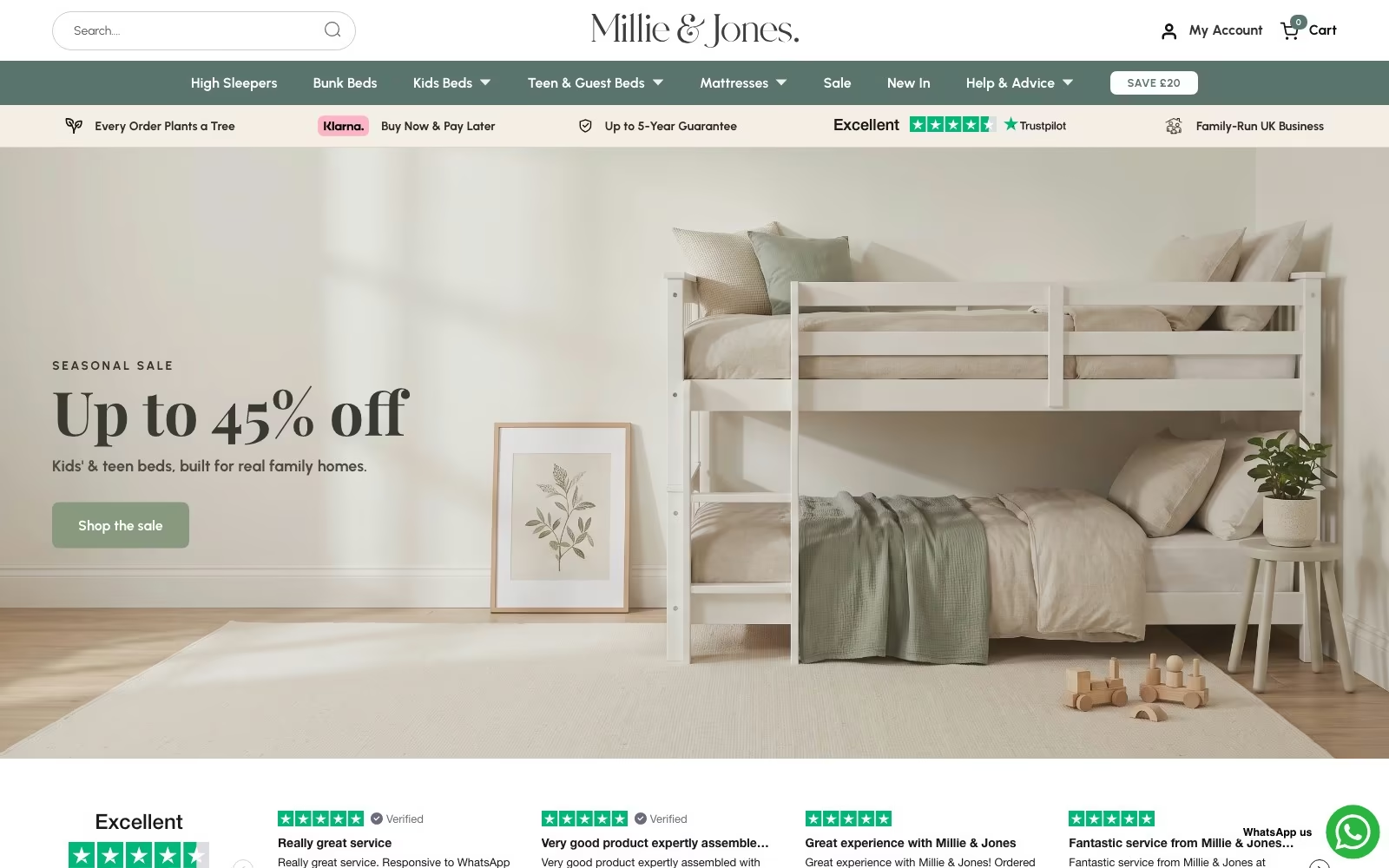
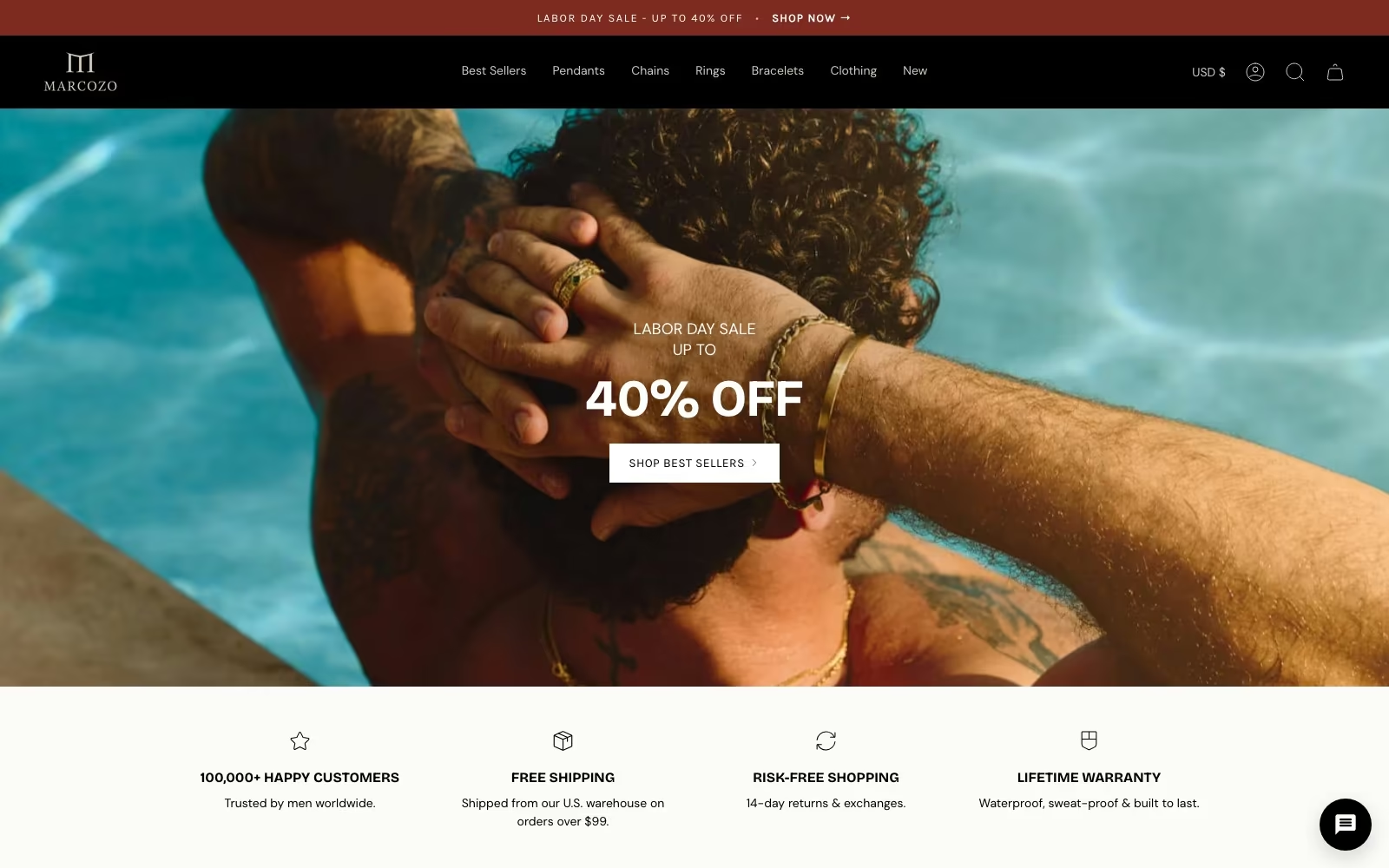
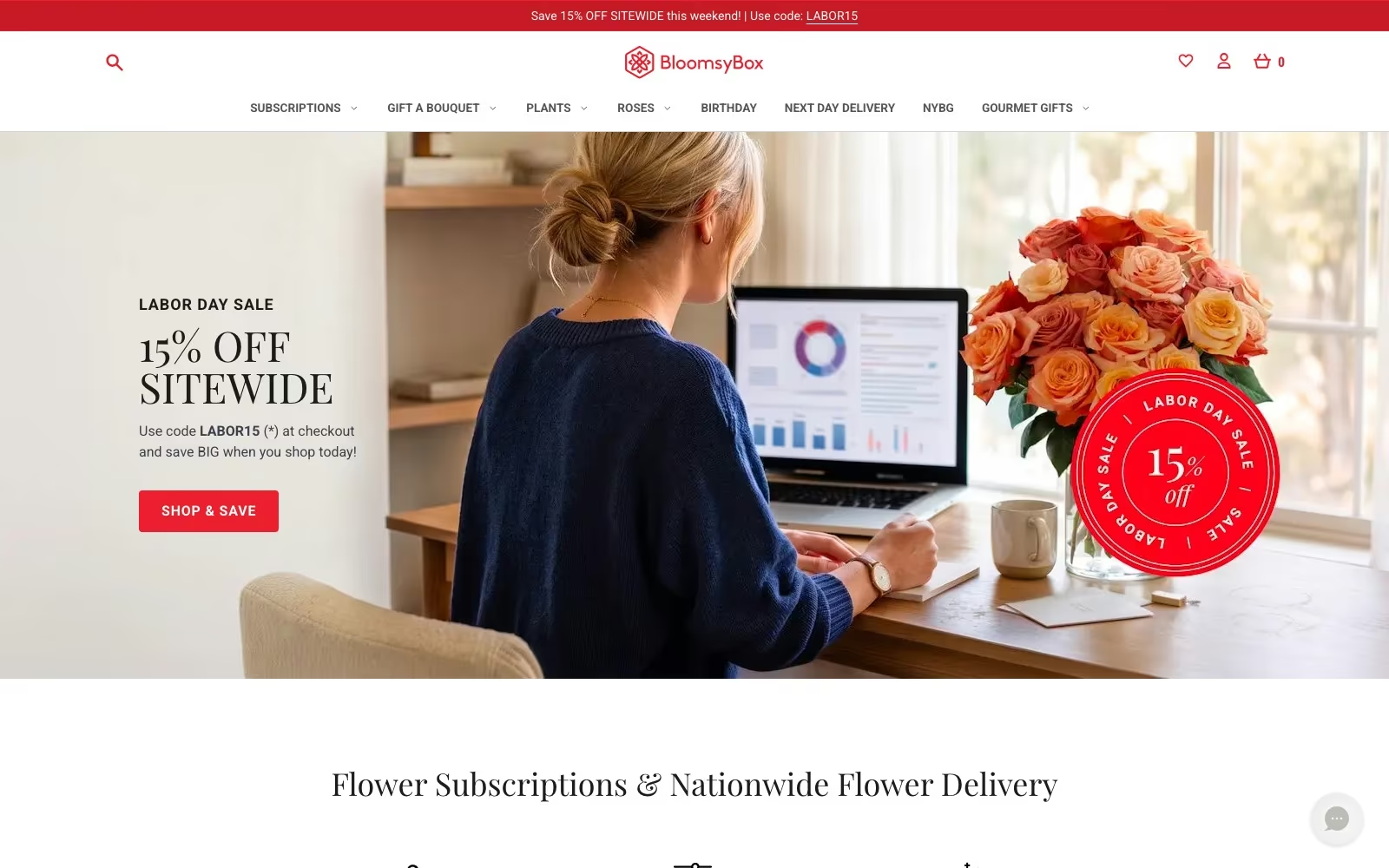
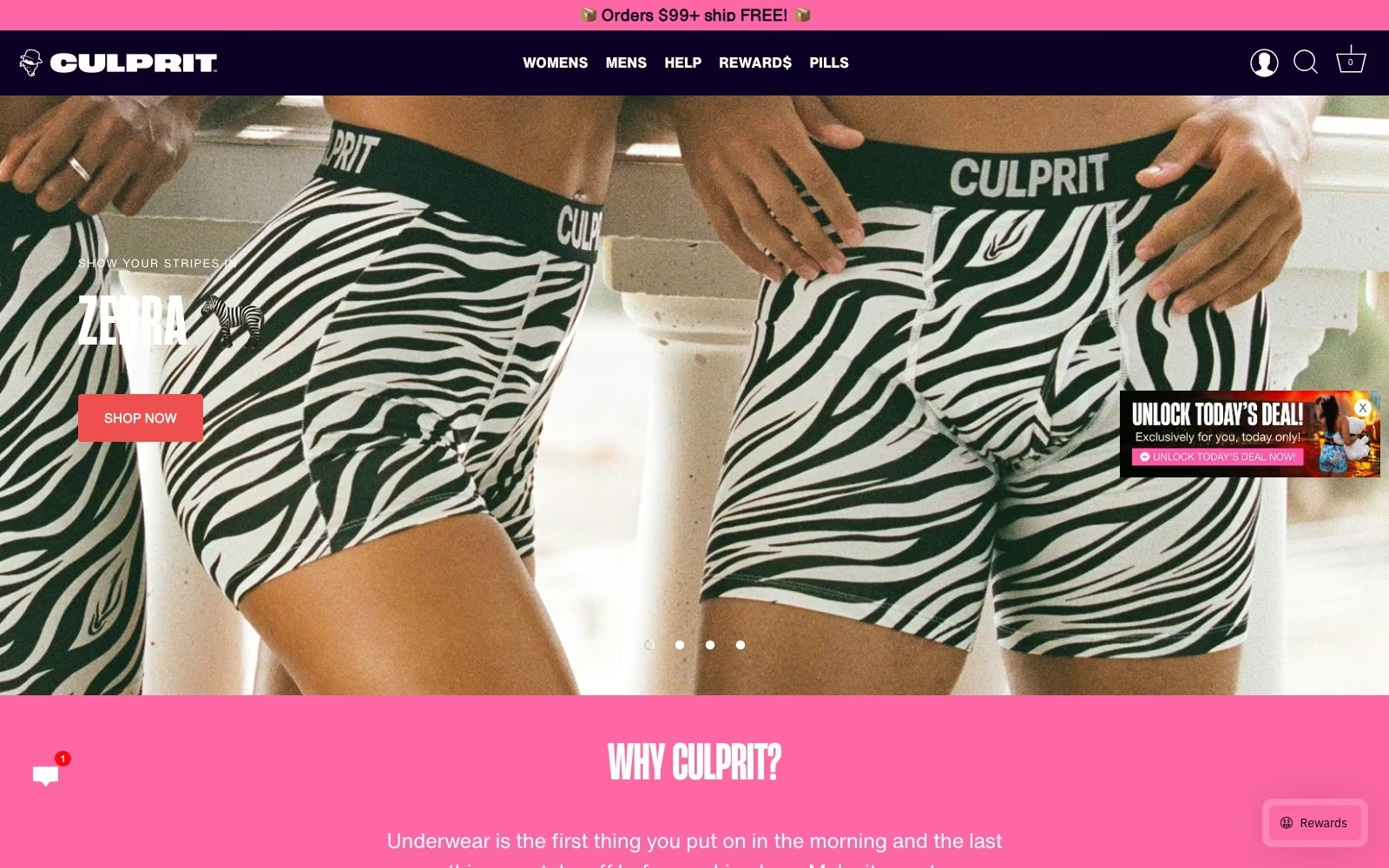
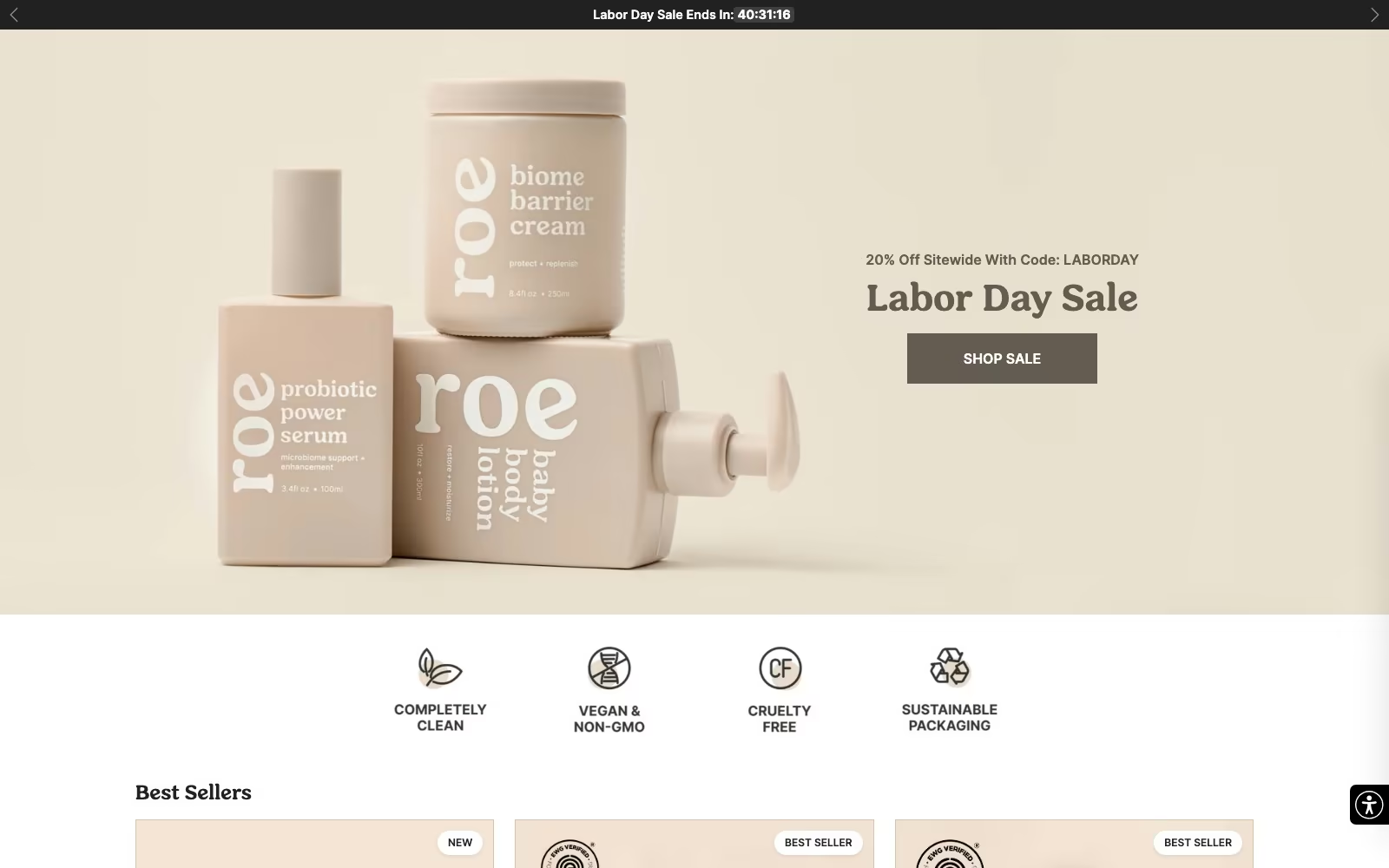
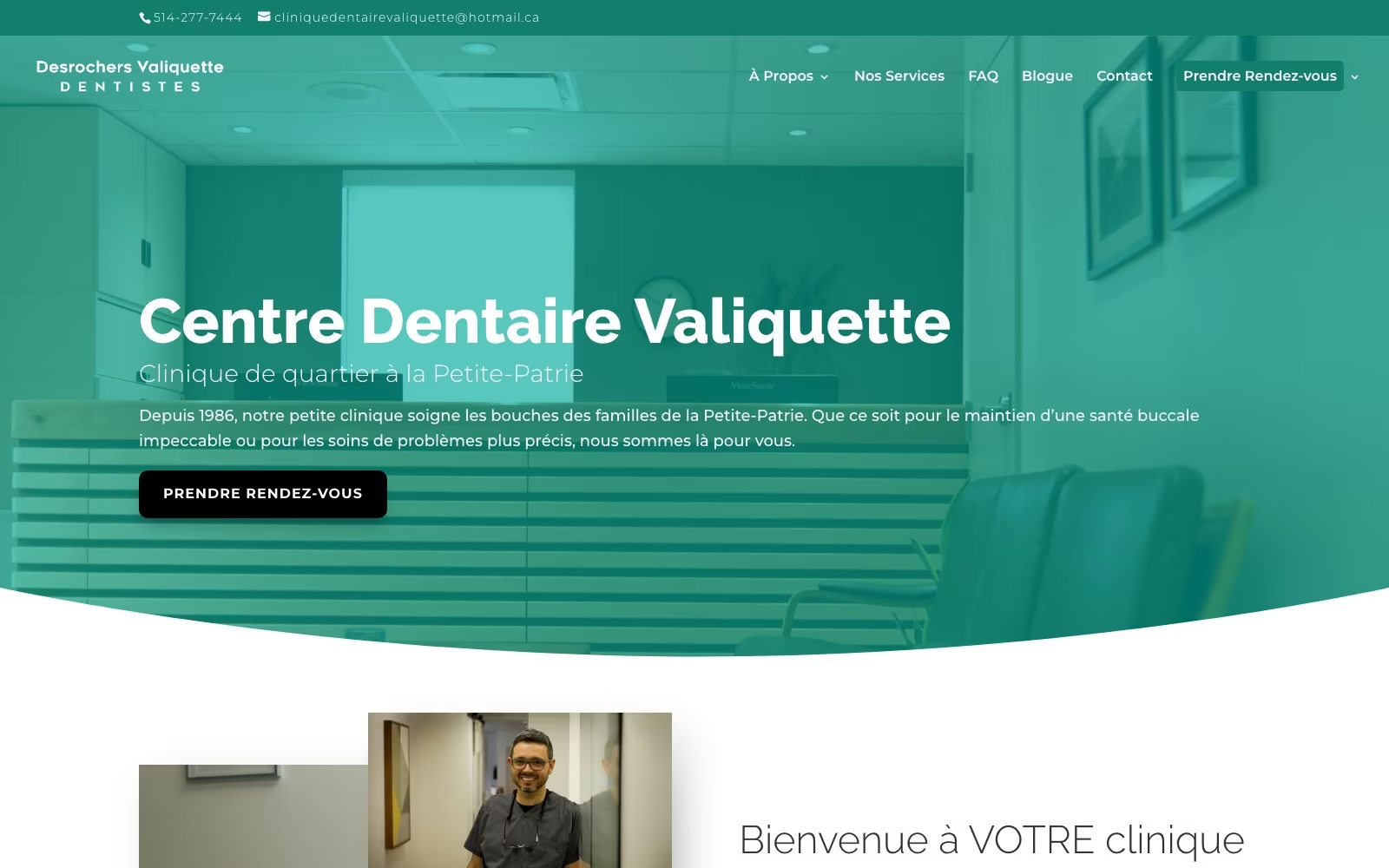
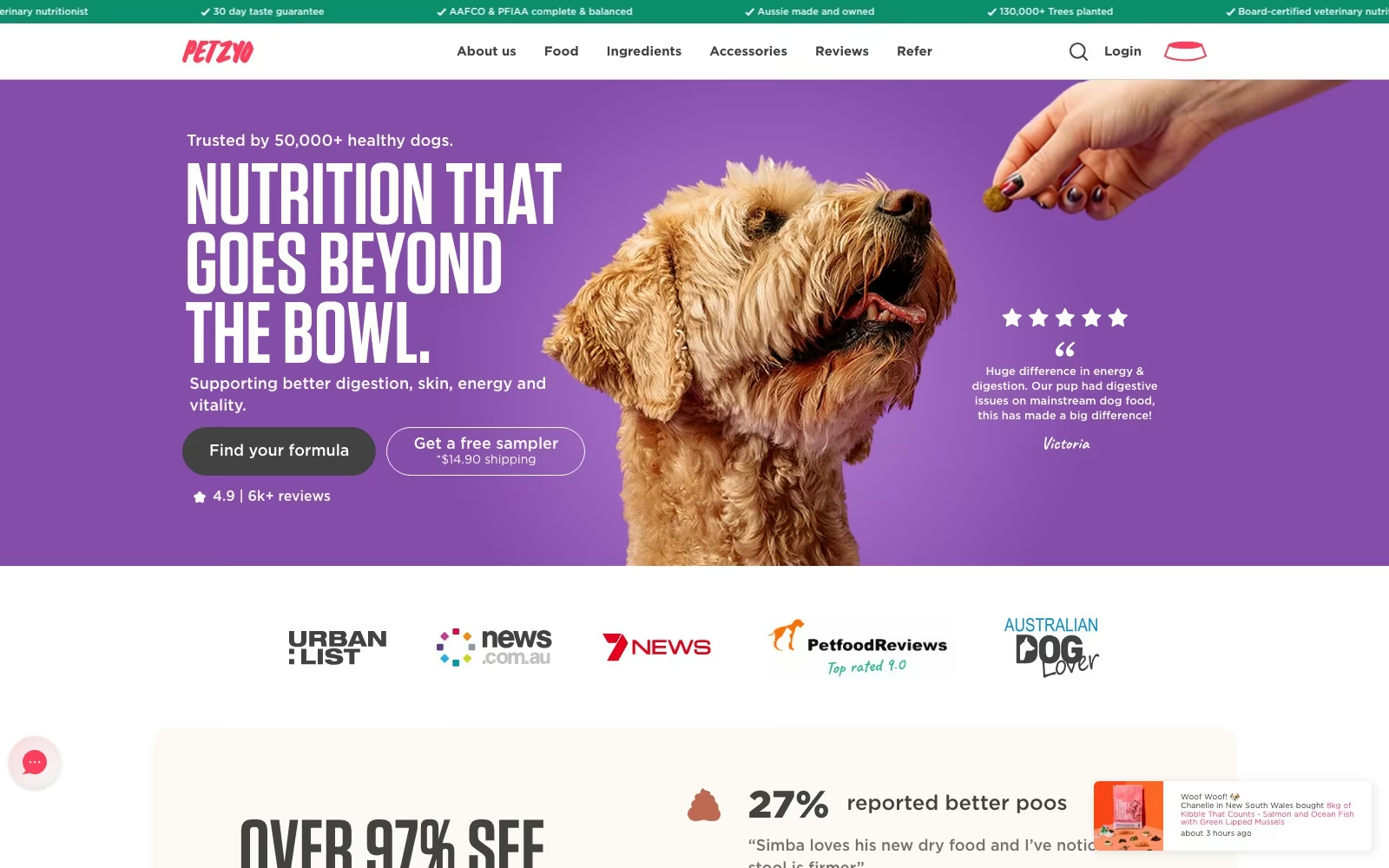
Website Portfolio
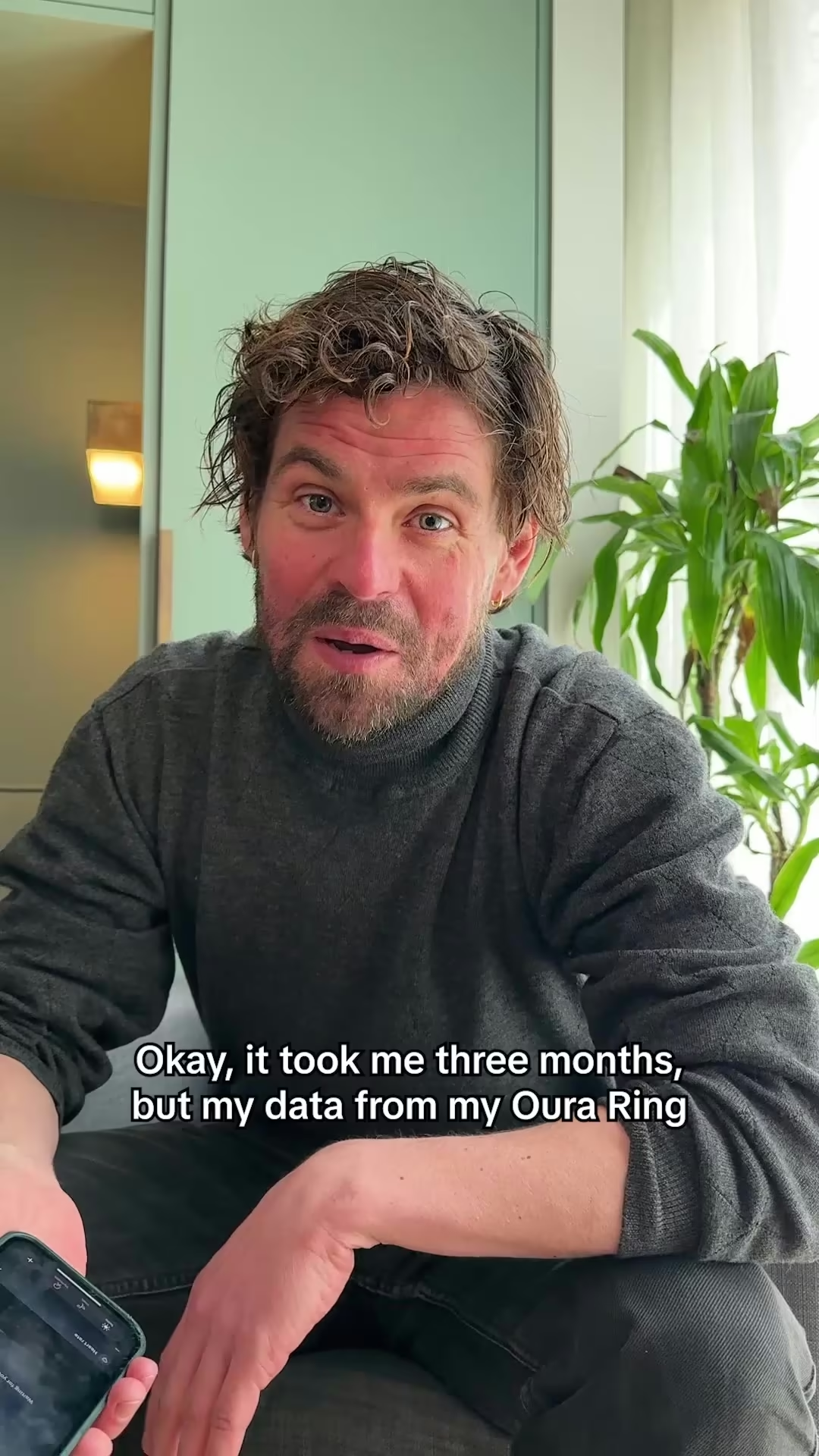
Video Ads
Static Ads




























































FAQ
What local businesses ask us first.
What do local SEO services actually include?
Four workstreams that only work together. The Google Business Profile, run properly and protected from edits and duplicates. Location and service pages with content only that place could carry. A citation estate that says the same thing everywhere, documented and owned by you. And a review programme that runs on a schedule rather than when someone remembers. Around those sit the technical basics — schema, internal links, mobile speed — and reporting that counts calls, direction requests and booked work. A good engagement leaves you with all of it in your own accounts and a documented process your team can keep running.
How long before we see results from local SEO?
Faster than national SEO and slower than ads. Profile and listing corrections are the quickest lever — a badly categorised profile fixed properly can change map-pack visibility within weeks — and most clients see movement in the grid within six to ten weeks. Review velocity compounds from the first month and keeps compounding. Location pages behave like ordinary organic content and usually need a quarter to settle, longer in a competitive city. We report the grid monthly from the start so you can watch the shape of the improvement rather than waiting for a verdict at month six.
Why do we rank at our office but not across town?
Because proximity is one of the strongest signals in local search, and it is measured from the searcher, not from you. Ranking checks run from a single address hide this completely, which is why we sample a grid across your whole service area and show you the map of where visibility fades. The distance you can rank away from your pin is bought with everything else: category fit, review volume and recency, profile completeness, genuine pages for the areas you serve, and links from organisations in those areas. It is a real constraint rather than a barrier — strong local businesses routinely rank several suburbs out.
How important are reviews, really?
They are the part customers act on. BrightLocal's 2026 survey of US consumers found 97% read reviews for local businesses and 41% always do, up from 29% a year earlier, with the average consumer consulting six different review sites. Recency matters most, so a steady trickle beats a burst. We build the asking into your operations at the point satisfaction peaks, answer everything in your voice, and spread coverage across the platforms your customers actually check — Google's share of review reading fell from 83% to 71% in a year, so one platform is no longer the whole picture.
Should we build a page for every town we serve?
Only for the ones where you can write something true and specific. A page with the team who cover that area, jobs you have done there, the neighbourhoods included, access and parking, and reviews from people nearby earns its place. Fifty pages generated by swapping a city name do not: those templates mostly sit unindexed now, and at scale they dilute the pages that do work. We map your service area against demand, build genuine pages for the clusters worth it, and fold the thin ones into a parent page. That usually means fewer pages than the last agency proposed and more of them ranking.
How do you choose between local SEO agencies?
Ask four questions. Will they measure rankings across a grid, or from one address that flatters the report? Who owns the profiles, listings and logins at the end — you or them? What exactly will exist after the build, and can your team maintain it without a retainer? And will they show you a sample monthly review rather than a case-study slide, since the review is where you see how an agency thinks? Good local SEO agencies will also tell you when a smaller engagement is enough: plenty of businesses need a profile rebuild, a listings clean-up and a review process, not a permanent programme.
Can our Google Business Profile get suspended, and what happens then?
It can, usually after a category change, an address edit, a service-area business showing a public address it should not, or a burst of activity that looks unusual. It is a recoverable situation and we handle it calmly: we keep a log of every change we make, so when something trips a filter we can show exactly what changed, gather the verification evidence — signage, utilities, registration, vehicles — and file the reinstatement with the documentation it needs. Prevention is most of it: we make risky edits deliberately and one at a time, keep your details consistent everywhere, and never stuff keywords into the business name.
Do AI assistants change local search?
They add a route rather than replacing one, and the preparation is the same work done well. BrightLocal found half of consumers have asked an AI tool for a business recommendation, and its channel research shows most of them go back to Google or another source to verify before deciding. Assistants quote structured, consistent records: an accurate profile, matching listings, clear service and area pages, schema, and enough recent reviews to look active. Everything we build for the map pack is what those tools read. Our answer-engine team tracks how the brand is described in those answers and fixes the sources behind them.
We have multiple locations. How does that work?
The difference is governance rather than tactics. Every location gets its own profile, its own page and its own review stream, but the categories, descriptions, service lists and photography standards come from one controlled template so a manager cannot quietly rewrite the brand. We handle bulk profile management, per-store grid tracking, review routing to the right site, and reporting that shows a regional manager only their stores. Where locations compete for the same searches we set the boundaries explicitly instead of letting them cannibalise each other, and we flag the openings and closures that need special handling before they hurt visibility.
Do you do local link building, and does it matter?
Yes, and it is one of the few places where a small business can beat a national brand. Local relevance beats raw authority here: the chamber of commerce, the club you sponsor, the supplier who lists installers, the trade body, the local paper covering something you actually did. We prioritise relationships you already have, because the sponsorship you fund every year is usually an unclaimed link, and we go looking for the events, scholarships and community work that create honest reasons to be mentioned. Our link building team handles the wider programme when a page needs authority beyond the local pool.
How do you report local SEO, and what should we watch?
We lead with outcomes: calls, direction requests, messages, form fills and booked work, split by location. Underneath sit the diagnostics — grid rankings across the service area, profile views and searches, review volume and average rating by platform, and organic performance for the location pages. Call tracking is implemented so it never breaks NAP consistency, and where the CRM allows it we close the loop from enquiry to job value so the number in the report matches the number in the accounts. The monthly review says what moved, what we changed, and what happens next, in that order.
Is local SEO worth it for a small business?
Usually yes, and often at a smaller scope than expected. The three things that move the needle for most small local businesses — a properly built profile, accurate listings, and a steady flow of recent reviews — are a one-off project plus a habit, not an endless retainer. We are happy to do it that way: build the foundation, train your team, hand over the documentation, and stay available for the bigger pieces when you want a new service area, a second location or a website that converts the calls you are now getting. The businesses that benefit most are the ones where a customer chooses in minutes and the job is worth a real amount.
What does it cost?
The audit and build phase is fixed-scope and quoted up front — profile rebuild, citation clean-up, location pages, review programme and reporting — so you approve a number rather than an open retainer. Ongoing work is a monthly fee scoped to how many locations you run and how much new content and link work you want, and it scales down once the foundation is in place and your team is running the review programme. Multi-location pricing is per location with a lower rate as the count rises, since the governance work is shared. Everything is written out, including what is not included.
Will this work alongside our paid ads?
It works better together, and we plan them as one. Local Services Ads and search ads buy the top of the page immediately while the map pack and organic pages are still building, and the profile and review work makes those ads cheaper by improving the click-through and the conversion at the other end. We share negatives, landing pages and call tracking between the two so you are not paying twice for the same enquiry, and we report the blended cost per booked job rather than letting each channel claim the same customer. Our paid search team runs that side when you want both.

.webp)
.webp)