Creators who sell, not just post.
who sell
We are the influencer marketing agency for brands that want creator work to show up in revenue rather than in a screenshot deck. We source the people your buyers already trust, negotiate usage rights properly, brief without flattening anyone's voice, and measure the outcome against the same standard as your paid social and paid search spend — with the best performing posts recycled into ads instead of expiring after a week.






Tell us a little about your brand and we'll be in touch within 24 hours to lock in a time.


THE FOUR STAGES
Casting, terms, creative, then proof.
then proof
Most disappointing creator campaigns fail at the first stage and are blamed on the last. Cast badly and no brief rescues it; skip the usage rights and your best asset is unusable a month later. So we run the programme in order, and we do not start paying people before the measurement is in place.
Casting & vetting
Terms, rights & compliance
Briefing & creative
Measurement & scale
The audience matters more than the follower count.
The market has grown up quickly. Mordor Intelligence puts influencer marketing at USD 40.51 billion in 2026, up from USD 31.07 billion a year earlier, which means the good influencers are busy, professionally represented and sceptical of vague outreach. Casting is therefore a research job, not a shortlist pulled from a database on follower count.
We look at who is actually watching: audience geography, age, the share of the following that is real, comment quality, how many of the last thirty posts were paid, and whether previous brand work looked like an ad or like a recommendation. An influencer with 20,000 engaged followers in your city routinely outperforms one with a million spread across markets you do not ship to.
Then we talk to them. A short conversation about the product tells you more about whether an endorsement will land than any audit tool, and it is where the good ideas usually come from.
- Follower quality, geography and authenticity checked before outreach
- Sponsored-upload ratio and past brand work reviewed
- Comment quality read by a human, not scored by a tool
- Direct conversation before any offer is made
$40.51bn
influencer marketing market size in 2026
$31.07bn
the same market a year earlier
Buy the usage rights the first time.
The single most expensive mistake in creator work is paying for a post and not for the right to use it. Six weeks later the video is the best performing asset in the account, the licence has lapsed, and you are renegotiating from a weak position. We contract for paid usage up front, with the term, territories and platforms written down.
Rates are negotiated against deliverables and rights rather than follower count, with exclusivity priced separately because it genuinely costs an influencer money. Whitelisting or partnership-ad permissions are agreed at signature, so the media team can run the content from the creator's own handle without a second round of emails.
Disclosure is not optional and is written into the brief: paid partnership labels on, ad or sponsored language in the caption, and no claims the brand could not make itself. It protects the partner, and it protects you.
- Paid usage rights, term and territories agreed before filming
- Exclusivity priced separately, never assumed
- Whitelisting and partnership-ad permissions in the contract
- Disclosure requirements written into every brief
- Approval, revision and payment terms fixed in advance
Rights
negotiated up front, never after a post performs
Direct the message, never the voice.
A brief that dictates shot lists and script lines produces an ad wearing someone else's face, and audiences spot it instantly. Ours give the non-negotiables — the claim we can make, the proof point, the offer, the call to action, the legal lines — and then leave format, language and pacing to the person who knows what works on their account.
We do give creative direction where it earns its keep: which hook to open on, which objection to answer, which product moment to actually show. Those come out of what is already working in your paid accounts, so influencer content and ad creative feed each other rather than running as separate programmes.
Volume is planned deliberately. A single placement is a lottery ticket; a cohort of influencers, each testing a different angle in their own register, is a test you can read and repeat.
- Claims, proof points and legal lines specified; wording left to the creator
- Hooks and objections drawn from live ad performance
- Several angles tested across a cohort, not a single hero placement
- Winning footage repurposed as advertising with rights already cleared
31%
of brands name TikTok in their 2026 influencer plans
41%
lower engagement when briefs are overly prescriptive (Grin)
Attribution built before the first post goes live.
Influencer measurement is the part the industry still gets wrong. In the Influencer Marketing Hub's 2026 benchmark work, measuring ROI (8.70%) and attribution complexity (7.14%) together account for 15.84% of the challenges brands report — the largest cluster after finding influencers at all.
So we set it up first: unique codes and links per influencer, post-purchase survey questions, tracked landing experiences where the offer justifies one, and a holdout or geo test when the spend is large enough for the answer to be worth having. Platform-reported figures are read as a directional signal, never as the invoice.
Scaling is then arithmetic rather than instinct: repeat with the influencers whose audiences convert, promote their content through media buying where the cost per acquisition beats your other creative, and retire the partnerships that only produced impressions. That is also how a programme survives a budget review.
- Codes, links and survey questions in place before launch
- Geo or holdout tests where the spend justifies them
- Influencer content pushed into media buying and judged on cost per acquisition
- Monthly written review of who to repeat, scale or retire
15.84%
of reported influencer-programme challenges are measurement
66.3%
of brands run influencer programmes entirely in-house
long-term ROI index vs 100 all-channel average (IPA)
of brands prefer micro and mid-tier creators (Later)
Written paid usage terms before anything runs
The footage, rights and creator relationships
We made the difference for those brands

Consumer tech and platforms

Creative, content, arts & culture

Travel & mobility
Beauty, personal care & wellness

Beauty, personal care & wellness

Healthcare & regulated services

B2B software, fintech, insurance

Retail & commerce
B2B software, fintech, insurance

Home essentials, appliances, kitchen & pet

B2B software, fintech, insurance

Healthcare & regulated services

Food & beverage
Creative, content, arts & culture

B2B software, fintech, insurance
Travel & mobility

Creative, content, arts & culture
Food & beverage

Consumer tech and platforms
Consumer tech and platforms
Travel & mobility

Travel & mobility

Home essentials, appliances, kitchen & pet

Home essentials, appliances, kitchen & pet

Apparel and lifestyle

Home essentials, appliances, kitchen & pet

Apparel and lifestyle

Beauty, personal care & wellness

Consumer tech and platforms
Consumer tech and platforms

Food & beverage
Retail & commerce
01 — The challenge
Plenty of posts. No line in the revenue report.
The campaign looked busy. Twenty influencers, good production, a wall of stories, an engagement rate somebody screenshotted. Then finance asked what it sold, and the answer was a reach figure and a shrug.
“We know it did something. We just cannot say what.”
It is the norm rather than the exception: measurement and attribution make up 15.84% of the challenges brands report in the 2026 benchmark data. The fix is unglamorous and it happens before launch — one tracked code per partner, a survey question at checkout, usage rights bought in advance so the winners can run as ads, and a test design when the budget is big enough to deserve one. Do that and the same campaign produces an answer instead of an anecdote.
02 — Our approach
Cast on audience. Contract for rights. Measure before launch.
We start with which influencers your buyers already listen to, checking audience geography, authenticity and comment quality rather than follower counts, and we speak to every influencer before an offer goes out. Terms are negotiated against deliverables and usage rights, with exclusivity priced separately and whitelisting permissions agreed at signature, so a post that performs can run as an ad the same week. Briefs fix the claim, the proof and the call to action, then leave voice and format alone. Tracking — unique codes, links, survey questions and a geo or holdout test where the spend justifies it — is live before the first post. Each month we report what sold, not what trended, and decide who to repeat, who to scale into paid media, and who to retire.
03 — What we did
Four phases, one honest number at the end.
Casting, contracting, production and scale run in sequence, with a weekly working session and a written monthly review of what the programme actually returned.
Weeks 1-2 / Casting
Find the audiences, then the people
Audience geography, authenticity and comment quality reviewed by hand, past brand work read, and every shortlisted creator spoken to before an offer.
Weeks 2-3 / Terms
Buy the rights while you have leverage
Rates negotiated against deliverables, paid usage and exclusivity written down, whitelisting permissions agreed at signature.

Weeks 3-6 / Production
Brief the message, leave the voice
Claims, proof and calls to action specified; hooks drawn from live ad data; several angles tested across a cohort instead of a single hero placement.
Ongoing / Scale
Push the winners into paid
Codes and survey data read together, top content amplified as partnership ads, and partnerships repeated or retired on cost per acquisition.
WHAT YOU GET
Deliverables you keep, including the footage.
including the footage
Everything below is run in your own accounts and contracts, documented as we go, and yours to keep when the engagement ends.

Influencer strategy and casting
A shortlist built on audience quality, geography and past brand work, with the reasoning written down for every name on it.

Negotiation and contracts
Rates, deliverables, usage rights, exclusivity and whitelisting permissions agreed and documented before production starts.

Briefs and creative direction
Claims, proof points, hooks and calls to action specified, with format and language left to the creator who knows their audience.

Programme management
Outreach, scheduling, approvals, revisions, payments and disclosure compliance handled so your team is not chasing anyone.

Amplification
The best performing posts run as partnership ads from the creator's own handle, judged against the rest of your paid social creative.

Tracking and monthly review
Codes, links and survey data reconciled into one report on what sold, ending in who to repeat, scale or retire.
HOW WE WORK
Operating standards, not promises.
Operating standards


















Built on trust. Proven by results.
We partner with SMBs and Fortune 500 companies to deliver more than reach — we bring clarity, execution, and measurable outcomes. Every successful partnership starts with a strong culture fit and a shared drive to grow.


CASE STUDIES
Case studies
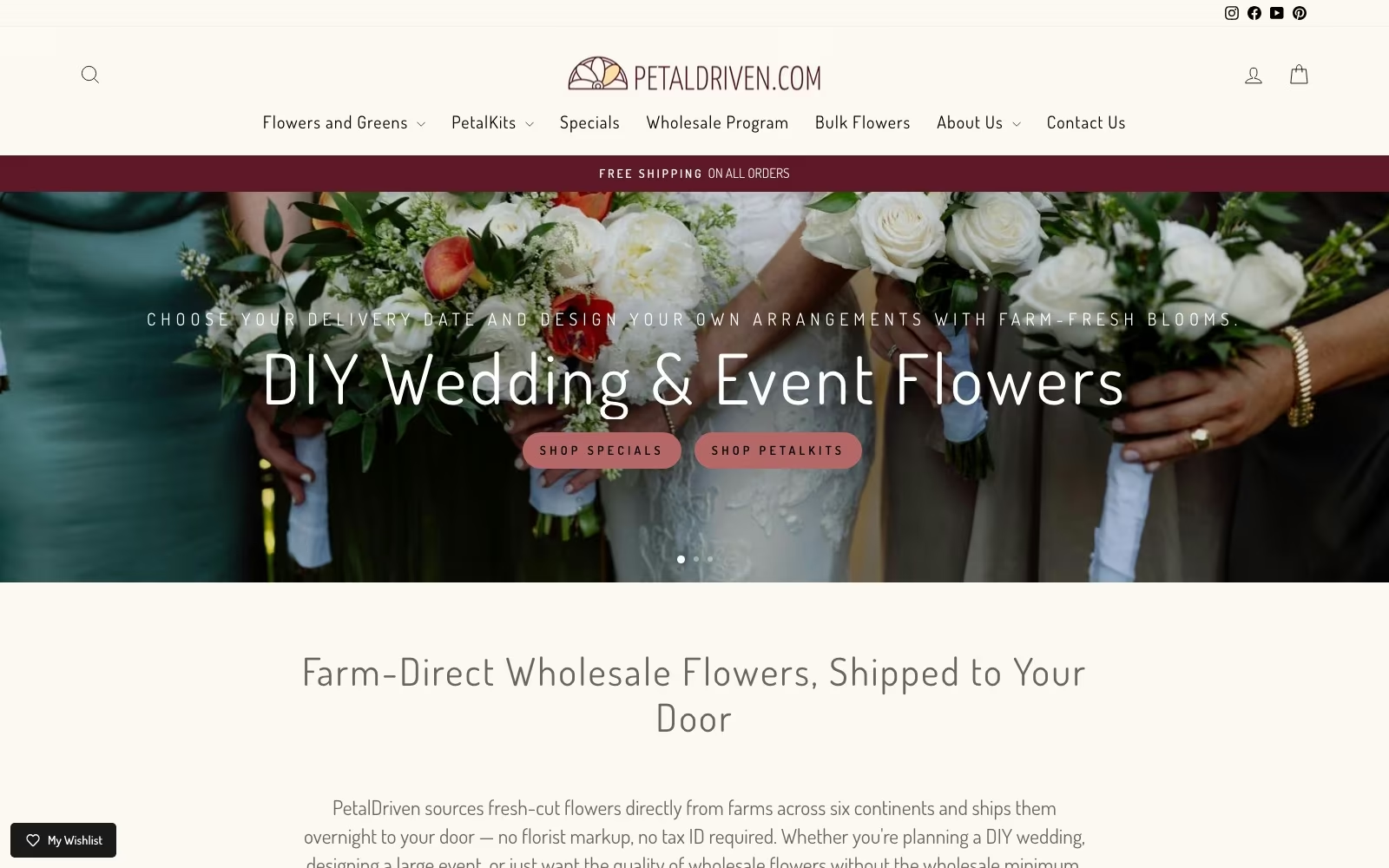
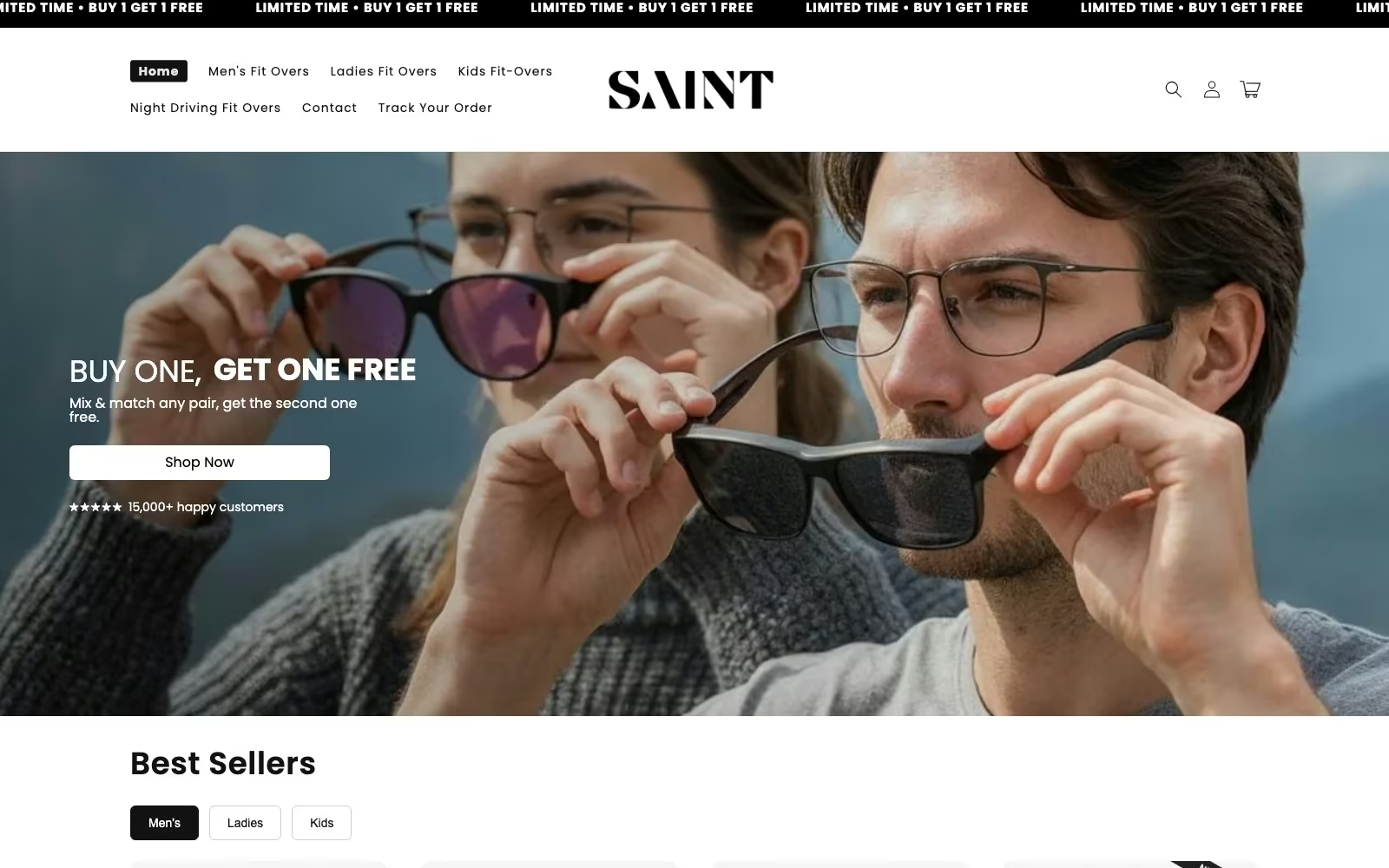
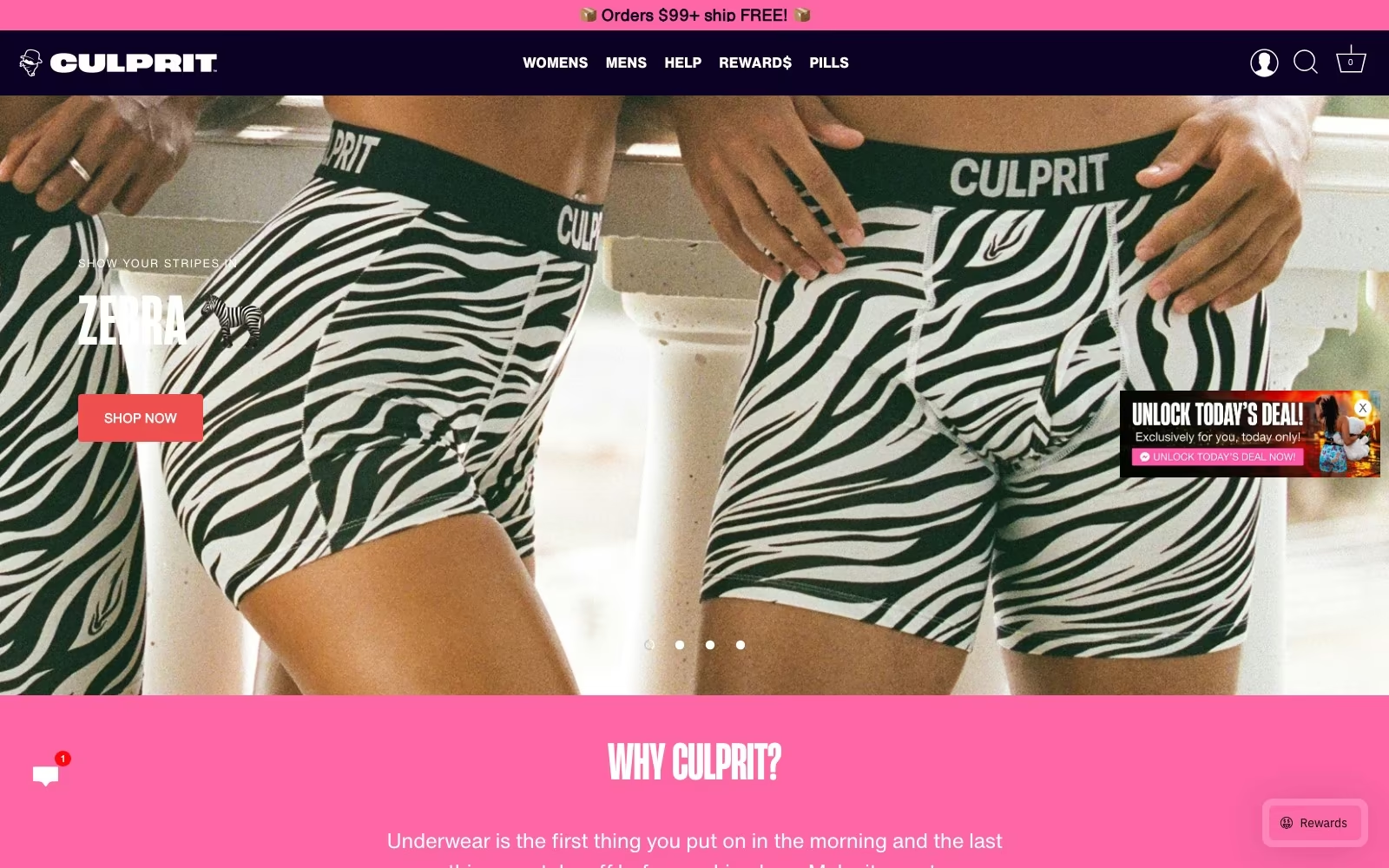
Website Portfolio
Video Ads
Static Ads




















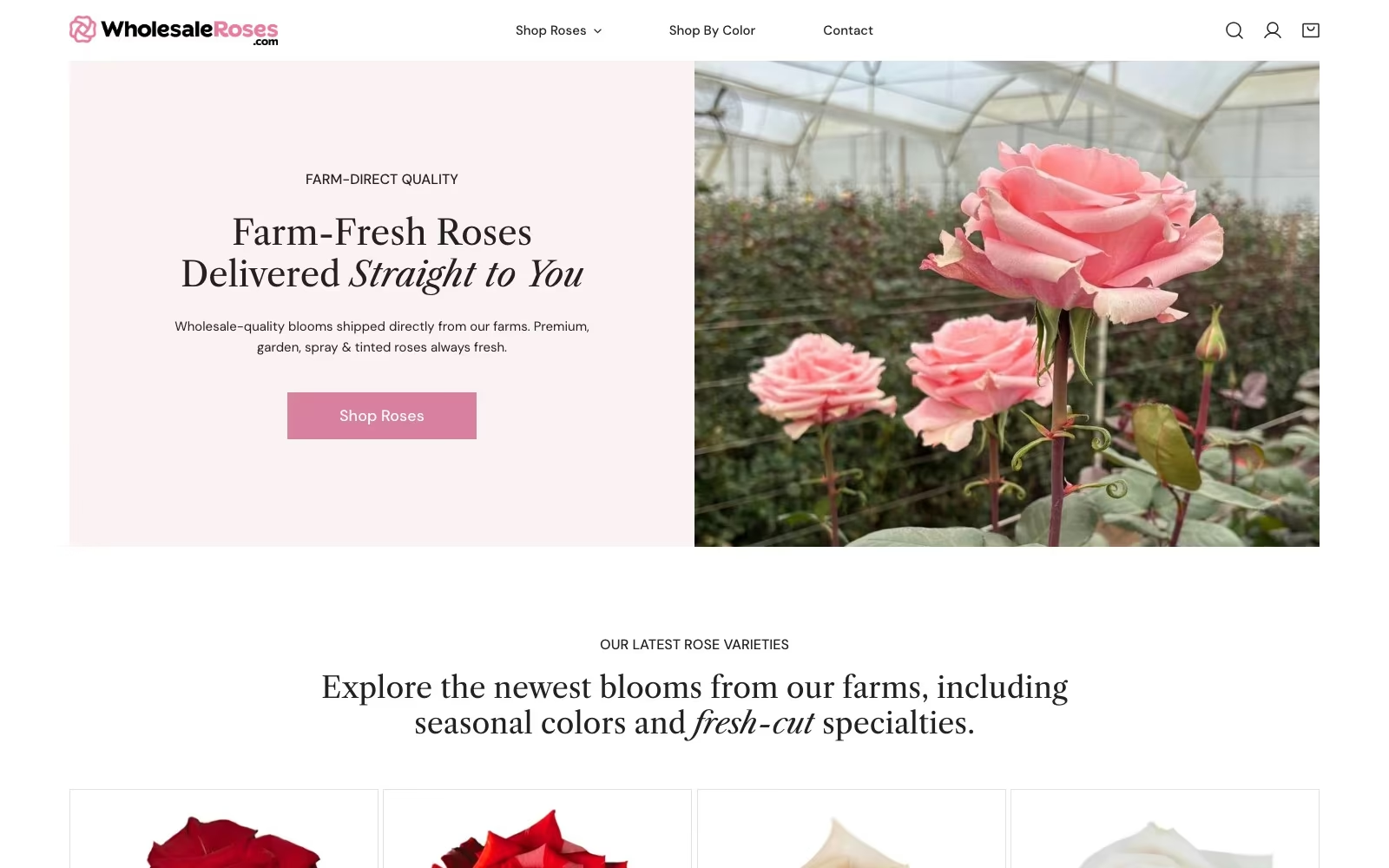

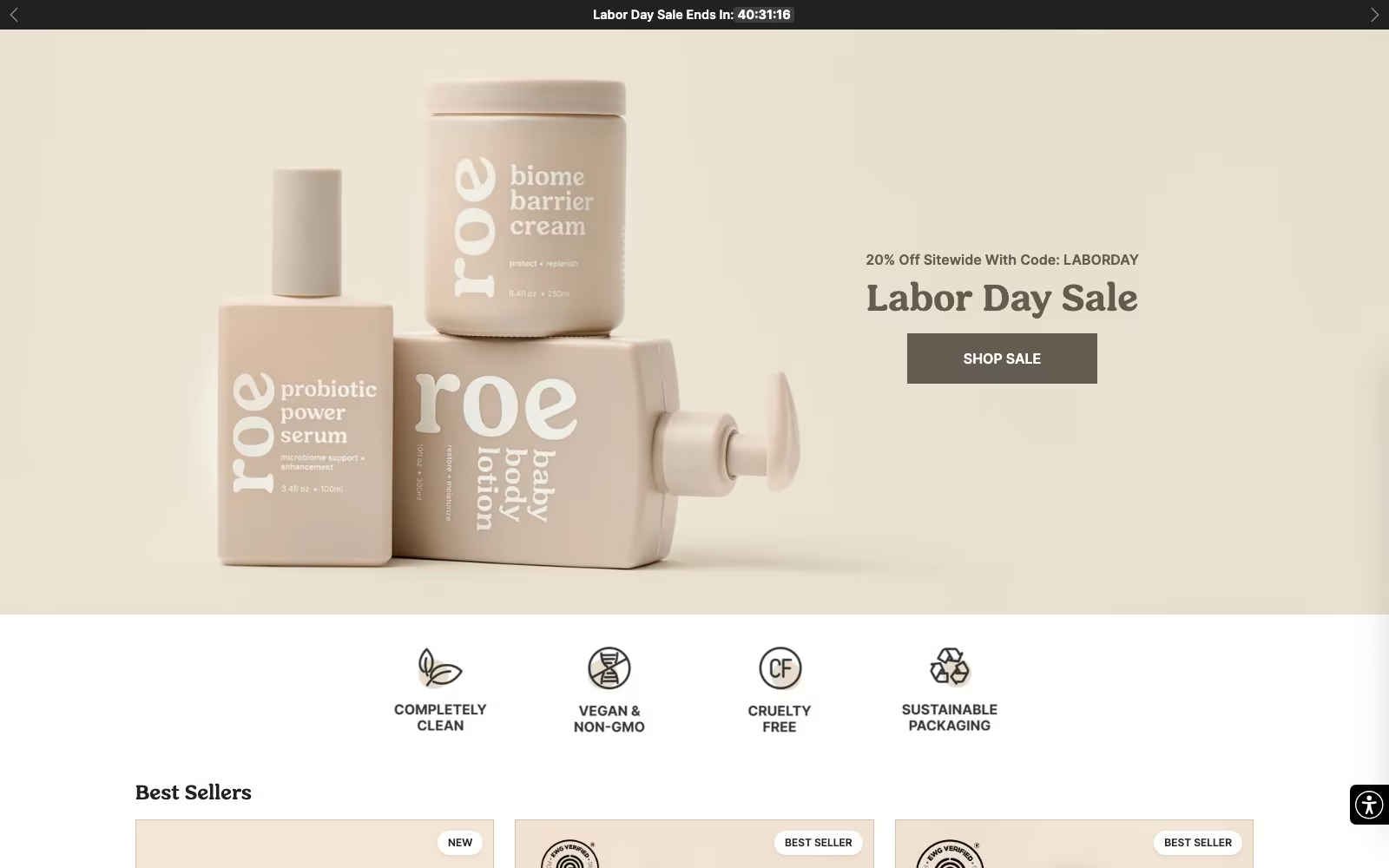

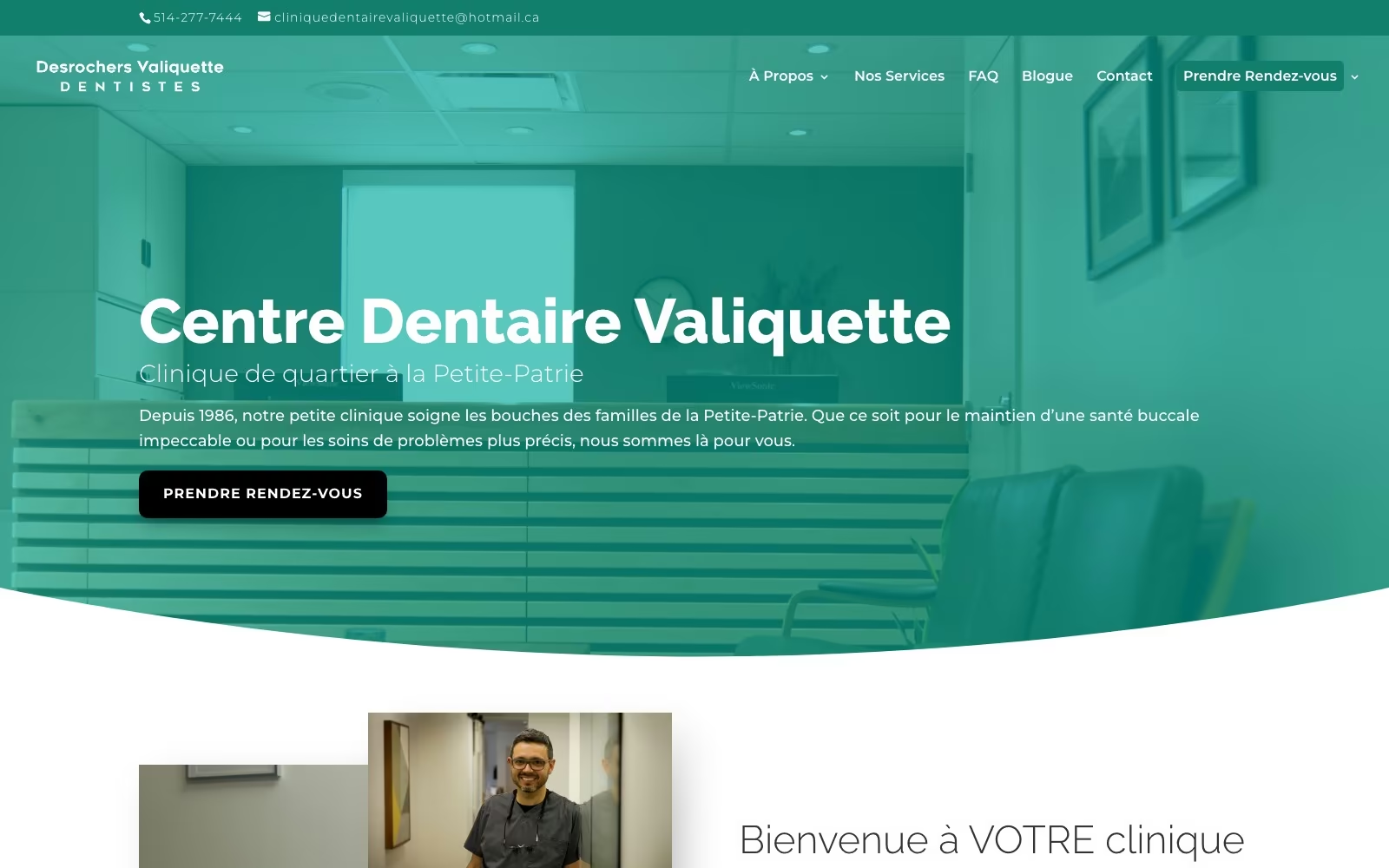

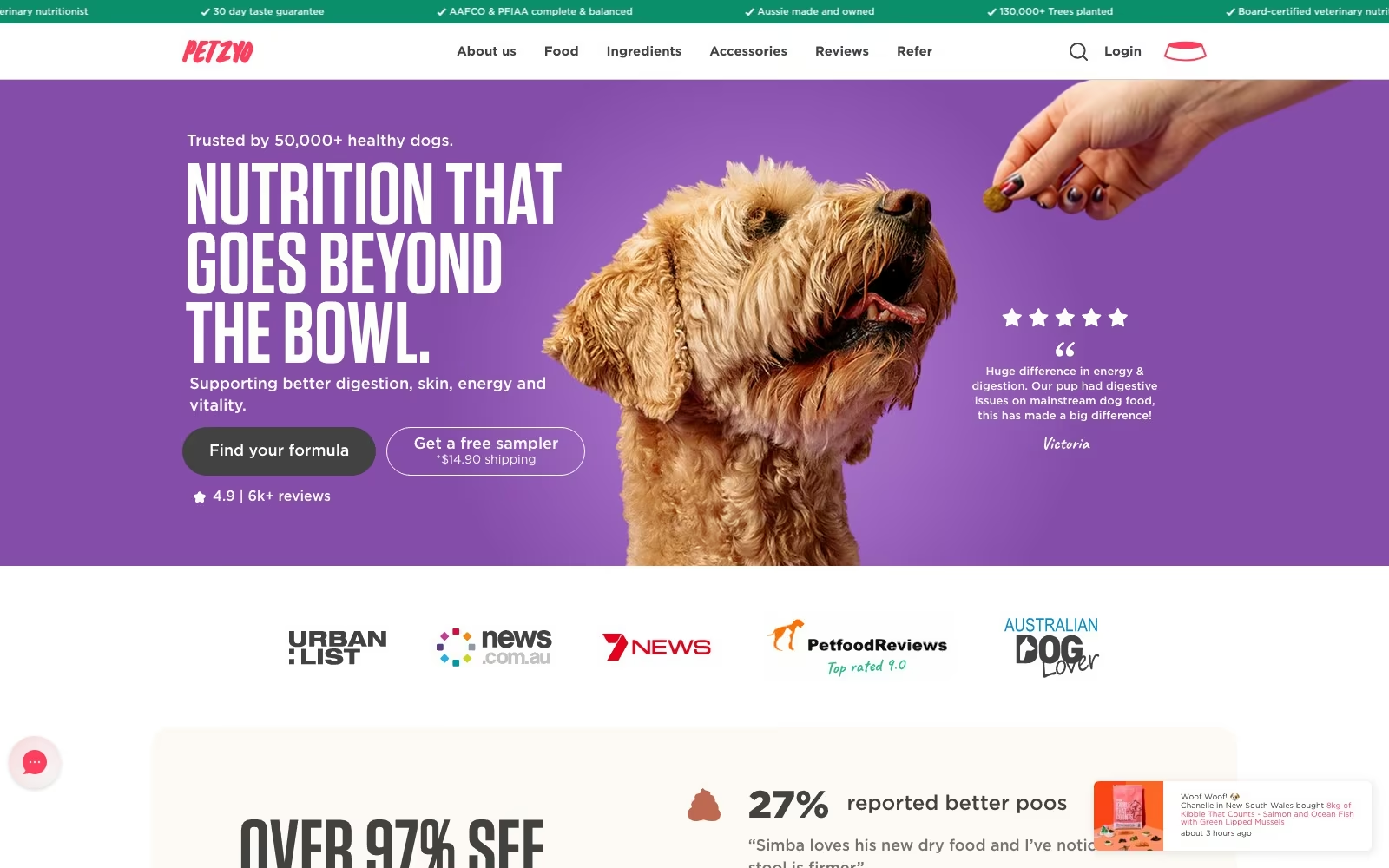
















FAQ
What brands ask us first.
What does an influencer marketing agency actually do?
Four things, in order: casting, contracting, creative and measurement. Casting is research into whose audience matches your buyer. Contracting secures deliverables and, crucially, usage rights. Creative means briefing the claim and the proof while leaving voice and format to the creator. Measurement is codes, links, survey questions and, where budgets justify it, a geo test. A good engagement leaves you with content you own, relationships in your name, and a clear read on which partnerships pay — and it should make your in-house team more capable, not more dependent.
How much should we budget for creator work?
Enough to run a cohort rather than a single post, because one partnership is a lottery ticket and five is a test. Rates depend far more on deliverables and usage rights than on follower count: a nano creator with a genuinely local audience can cost a few hundred dollars, while exclusivity and twelve months of paid usage on a mid-tier creator will run into thousands. We build the plan against your acquisition targets and show the numbers before you commit, and we would rather start with a smaller, well-measured round than spend a quarter's budget on one unrepeatable campaign.
Do micro-creators really outperform big accounts?
Often, though the honest answer is that it depends on the job. Smaller creators tend to have closer relationships with their following, cost less per piece of content, and are more willing to make something specific to your product — which is why they usually win on cost per acquisition. Large accounts still earn their place when the goal is reach in a short window, or when the association itself is the point. Our default is a portfolio: a base of smaller creators producing volume you can test, plus selective bigger partnerships when there is something to launch.
How do you measure whether it worked?
With several imperfect lenses read together, because no single one is reliable. Every partner gets a unique code and link. Where you can, a post-purchase survey asks buyers where they heard about you, which catches the demand a code never sees. Platform figures are treated as directional. When the spend is large enough, we run a geo holdout so the question of incrementality gets an actual answer. That discipline matters because measurement and attribution remain the biggest reported obstacle after sourcing itself, and it is what turns a creator programme into a budget line that survives review.
Who owns the content once a campaign ends?
You do, on the terms we negotiate up front. We buy usage rights with a stated term, territory and platform list at the point of contracting, when your leverage is highest, plus whitelisting permissions so top posts can run as ads from their own handle. That is deliberately different from the common pattern of paying for a post, discovering it works, and then renegotiating a licence at a premium. Contracts sit in your name, so if we stop working together the relationships and the footage stay with you.
Is influencer content worth putting media behind?
Usually it is the highest-return part of the programme. Influencer footage already looks native to the feed, carries a real person's endorsement, and has been validated by an organic following before any media goes behind it. Run through partnership ad formats it keeps the creator's handle, which holds the credibility that makes it work. We test it against your existing ad creative on cost per acquisition rather than assuming it wins, and scale the pieces that beat the control.
What about disclosure and compliance?
It is written into every brief and every contract: paid partnership labels enabled, clear sponsored or ad language in the caption, and no claim a partner makes that your brand could not make itself. Regulated categories get an extra review step, and we keep records of approvals. Beyond the legal position, disclosure is simply better marketing — audiences already assume a partnership, and the creators whose recommendations carry weight are the ones who have never hidden one.
How long before we can judge the programme?
Give it one full round plus a repeat, which usually means eight to twelve weeks. The first round tells you which audiences respond and which angles land; the repeat tells you whether that was signal or luck. Individual posts can spike inside 48 hours, but a spike is not a programme, and creator content frequently keeps converting for months once it is running as media. We report from week one so nothing is a surprise, while being straight that the decision-grade read arrives after the second cohort.
Can you work with influencers we already know?
Yes, and it is a good place to start — existing relationships are an asset and we would rather build on them than replace them. We will review the current terms, fill in the gaps that tend to be missing (paid usage, whitelisting, tracking), and fold them into the same measurement as new partners so you can compare like with like. Where a relationship is not paying its way, we will show the numbers and suggest a different brief before suggesting a different partner.
Do you also run the paid media behind it?
We can, and the loop closes faster when the same team does both: the people reading the performance data are the ones commissioning the next round of content. Our paid social and analytics teams work from the same definitions, so influencer work is judged on the same cost per acquisition as everything else in the account. It is equally fine to buy influencer campaigns alone while another agency runs your media — we will share the tracking setup with them so the numbers still reconcile.

.webp)
.webp)