A brand people recognise, and remember.
and remember
We are a branding agency for companies that have to sell as well as look good. Positioning, naming, identity, verbal tone and a usable brand framework — built so the result holds up in a paid social feed, on your site and in a sales deck, not only on a presentation slide. Distinctive, documented, and handed over so your team can keep it consistent.






Tell us a little about your brand and we'll be in touch within 24 hours to lock in a time.


THE FOUR STAGES
Strategy, identity, framework, rollout.
framework, rollout
A brand is a strategic decision that happens to have a visual output. We settle the decision first — who you are for, what you claim, why anyone should believe it — and only then design the identity that carries it. The last two stages are the ones agencies skip and clients need most: the framework, and the rollout.
Brand strategy & positioning
Identity & naming
Brand framework & guidelines
Rollout & brand performance
Decide what you are for.
We start with research rather than mood boards: customer and lost-deal interviews, sales-call listening, category and competitor analysis, and a hard look at what your buyers can actually distinguish. The output is a written strategy — audience, positioning, proof, personality and the messages that ladder up to it — agreed before a single logo is drawn.
Differentiation is the scarce commodity. Tiny Hunter's State of Business Branding 2026 found just over half of businesses believe their brand is consistent across touchpoints, with 40% unsure or unconvinced it communicates a clear point of difference. Meanwhile buyers are choosing on values as much as features: Edelman reports 64% of people choose brands based on their beliefs, up four points year over year.
So we write positioning that a salesperson could say out loud and a customer could repeat — specific, ownable and testable, rather than a purpose statement that would fit any company in your category.
- Customer, lost-deal and sales-call research before any design
- Category and competitor distinctiveness analysis
- Written positioning, proof points and personality
- Message hierarchy your sales team can actually use
40%
of businesses doubt their brand shows a clear point of difference
64%
of people choose brands based on their beliefs
Distinctive beats tasteful.
Identity work covers the assets people will actually remember: logo and its variants, colour, typography, layout logic, photography and illustration direction, motion behaviour, and where relevant naming and product nomenclature with proper trademark screening. Every route is presented in context — an ad, a landing page, an invoice, a shop window, a phone screen — because a logo on white tells you almost nothing.
We optimise for distinctiveness rather than taste. The question is not whether the mark is beautiful; it is whether a customer glancing at a feed for a quarter of a second knows it is you with the name cropped off. That means committing to a small number of assets and using them relentlessly: one colour that is genuinely yours, type that is legible at ad sizes, a layout signature that survives compression.
Accessibility is checked as we design, not audited afterwards — contrast, minimum sizes and legibility are part of the palette decision, which our accessibility team verifies before handover.
- Logo framework, colour, type, layout, photography and motion
- Naming and nomenclature with trademark screening where needed
- Every route presented in real contexts, never on white alone
- Contrast and legibility checked while designing
0.25s
the glance a feed gives you to be recognised
A system your team can actually use.
Most brands are not broken; they are undocumented. So the deliverable is not a beautiful PDF nobody opens but a working system: guidelines written for the people who will use them, real templates for decks, social, ads, email and documents, a component library that matches your site, and correctly packaged files with the rules for each one.
Consistency is where the commercial value sits, and it is also where most organisations are weakest — Forrester found the share of B2B organisations prioritising brand development and consistency across touchpoints rose from 42% to 52% in a single year. A system that makes the on-brand option the easy option is what turns that intention into practice.
We also write the boring pages people quietly need: how to name a file, which logo to use at small sizes, what to do when a partner asks for an asset, who approves an exception. Those pages are why a brand still looks like itself two years later.
- Guidelines written for users, not for awards
- Working templates for decks, social, ads, email and documents
- Component library aligned to your site build
- Packaged files with usage rules and an exceptions process
52%
of B2B organisations now prioritise brand consistency, up from 42%
Launch it properly, then measure it.
A rebrand is an operational engagement as much as a creative one. We sequence it: audit every touchpoint, prioritise the ones customers see most, plan the internal go-live before the external one, and stage the changeover so nothing embarrassing sits half-updated. Website, ads, packaging, email, signage, decks, invoices, job listings — each with an owner and a date.
Then we measure. Brand is not unmeasurable; it is measured differently: unaided awareness and recall, share of search, branded search volume, direct traffic, win rates and price realisation, tracked over quarters. The business case for keeping it funded is now well documented — BCG finds cutting $1 of brand spending costs $1.92 in future investment to regain lost share, up from $1.85 in 2022.
Where you want the same team to keep building demand, our paid search and analytics teams run against the same positioning, so the brand and the pipeline stop arguing.
- Touchpoint audit with an owner and a date for each
- Internal go-live before the external one
- Staged changeover so nothing sits half-updated
- Awareness, share of search and win rate tracked quarterly
$1.92
future investment needed for every $1 cut from brand spend
average cost of working with a branding agency (Clutch)
months is the typical branding project timeline (Clutch)
Every route reviewed as an ad, a page and an invoice
Every source file, template and document
We made the difference for those brands

Beauty, personal care & wellness

Retail & commerce

Consumer tech and platforms

Beauty, personal care & wellness

B2B software, fintech, insurance
B2B software, fintech, insurance

B2B software, fintech, insurance

Apparel and lifestyle

B2B software, fintech, insurance

Consumer tech and platforms

B2B software, fintech, insurance

Consumer tech and platforms
Retail & commerce
Food & beverage

Healthcare & regulated services

B2B software, fintech, insurance

Apparel and lifestyle

Beauty, personal care & wellness

Apparel and lifestyle

B2B software, fintech, insurance
Travel & mobility

Retail & commerce

Apparel and lifestyle

B2B software, fintech, insurance

Apparel and lifestyle

Food & beverage

B2B software, fintech, insurance

Creative, content, arts & culture

Creative, content, arts & culture

Food & beverage
Food & beverage

Home essentials, appliances, kitchen & pet
01 — The challenge
Nobody can tell you apart.
Your deck, your site and your ads look like three companies. Sales explains the value differently on every call. The category has converged on the same blue, the same geometric type and the same promise about partnership — and buyers, given four options that sound identical, default to price.
“Cover the logos and you could not tell our site from theirs.”
It is a widely admitted problem: 40% of businesses are unsure or unconvinced that their brand communicates a clear point of difference, and only just over half believe they are consistent across touchpoints. The upside of fixing it is unusually durable, because trust concentrates in brands people already know — Edelman finds 80% of people trust the brands they use, more than they trust business, media, government or NGOs. Distinctiveness, documented and used consistently, is what converts that trust into preference.
02 — Our approach
Research it, design it, document it, ship it.
We begin with evidence rather than taste: customer and lost-deal interviews, sales-call listening, category analysis, and a written positioning that says who you are for, what you claim and why it is believable. Only then do we design — logo system, colour, typography, layout, photography and motion, plus naming where it is needed — and every route is shown in real contexts, from an ad in a feed to an invoice, because that is where brands live or die. Next comes the part that keeps the work alive: a system your team can use, with guidelines written for users, real templates, a component library matched to your website and packaged files with rules. Rollout is planned as an operational engagement with an owner and a date per touchpoint, internal go-live before external. Then we measure — awareness, share of search, win rates — quarter by quarter. You own every file, source and document.
03 — What we did
How a branding engagement runs.
Discovery, identity, system, rollout — with working sessions rather than big reveals, so decisions are made with you instead of presented at you.
Weeks 1-3 / Discovery
Interviews before mood boards
Customer, lost-deal and internal interviews, sales-call listening and category analysis, ending in written positioning and proof points.

Weeks 4-8 / Identity
Design for distinctiveness
Logo system, colour, typography, layout and photography direction, each route presented in real contexts rather than on a white slide.

Weeks 8-12 / System
Build the system, not a PDF
Guidelines written for users, working templates, a component library matched to the website, and packaged files with usage rules.

Ongoing / Rollout
Launch internally, then everywhere
Touchpoint audit with owners and dates, internal launch first, then quarterly tracking of awareness, share of search and win rates.

WHAT YOU GET
Deliverables your team can run with.
run with
Every source file, template and document is handed over and yours to keep, with the reasoning written down rather than left in a designer's head.

Brand strategy and positioning
Written positioning, audience definition, proof points and personality, built on customer, lost-deal and category research.

Identity and logo system
A primary mark with the variants real life needs, presented in context and built for recognition at feed and favicon sizes.

Colour, imagery and motion
A palette that is genuinely yours, photography and illustration direction, and motion behaviour, all checked for contrast as we design.

Naming and verbal identity
Naming and nomenclature with trademark screening where needed, plus tone of voice and a message hierarchy sales can actually use.

Brand system and guidelines
Guidelines written for the people who use them, working templates, a component library and packaged files with usage rules.

Rollout plan and brand tracking
A touchpoint audit with owners and dates, an internal launch plan, and quarterly awareness, share of search and win rate tracking.
HOW WE WORK
Operating standards, not promises.
Operating standards



















Built on trust. Proven by results.
We partner with SMBs and Fortune 500 companies to deliver more than reach — we bring clarity, execution, and measurable outcomes. Every successful partnership starts with a strong culture fit and a shared drive to grow.





CASE STUDIES
Case studies
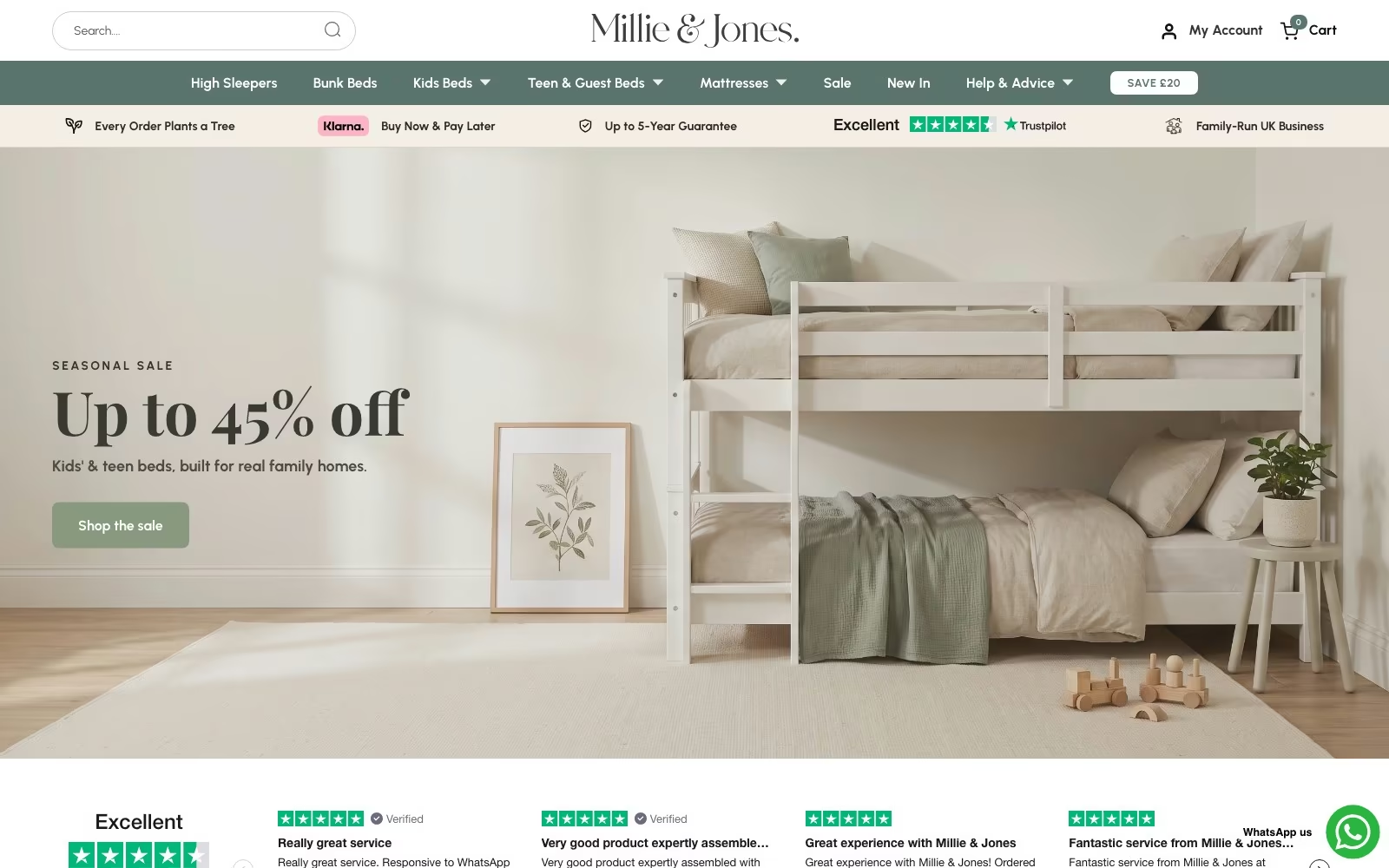
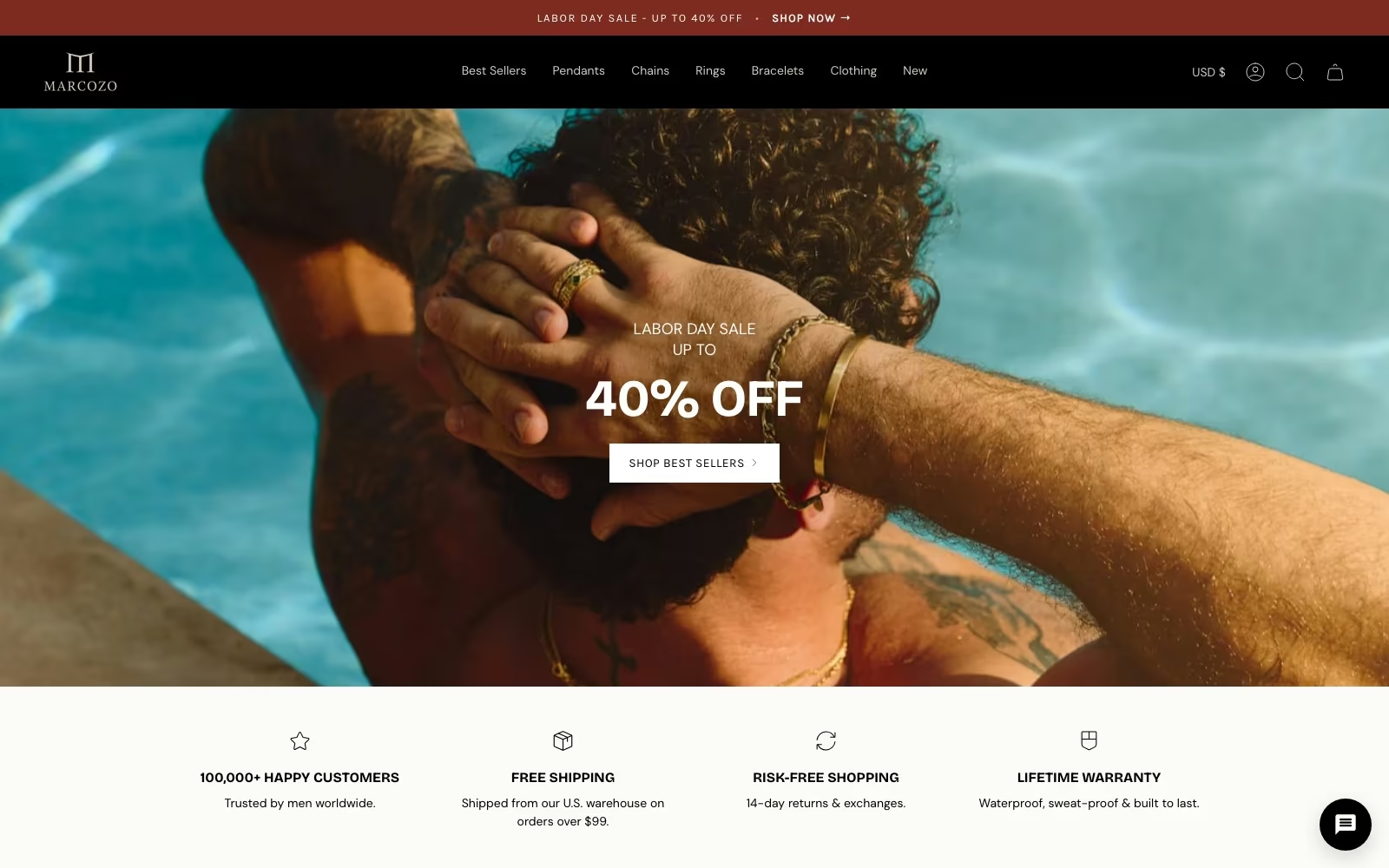
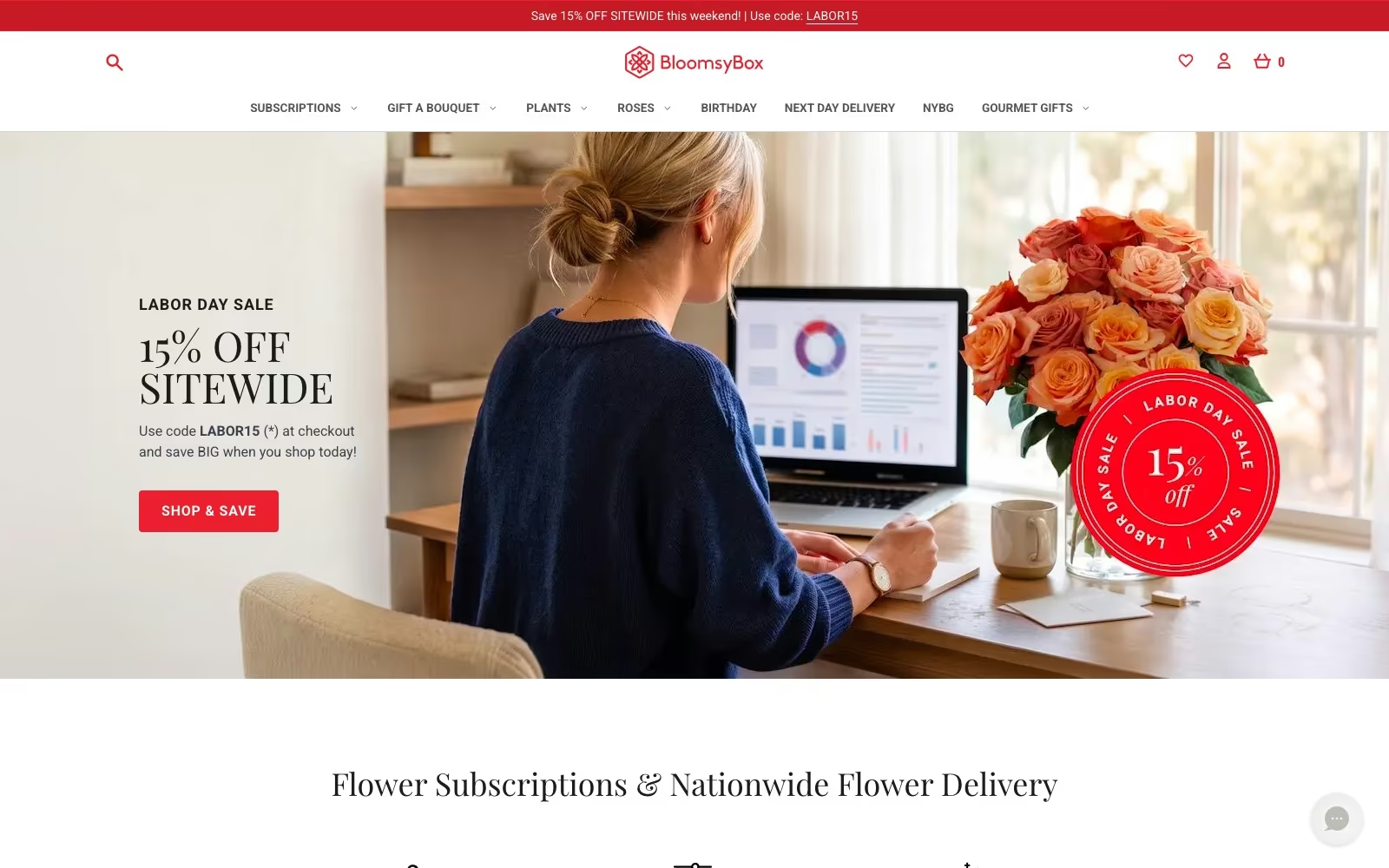
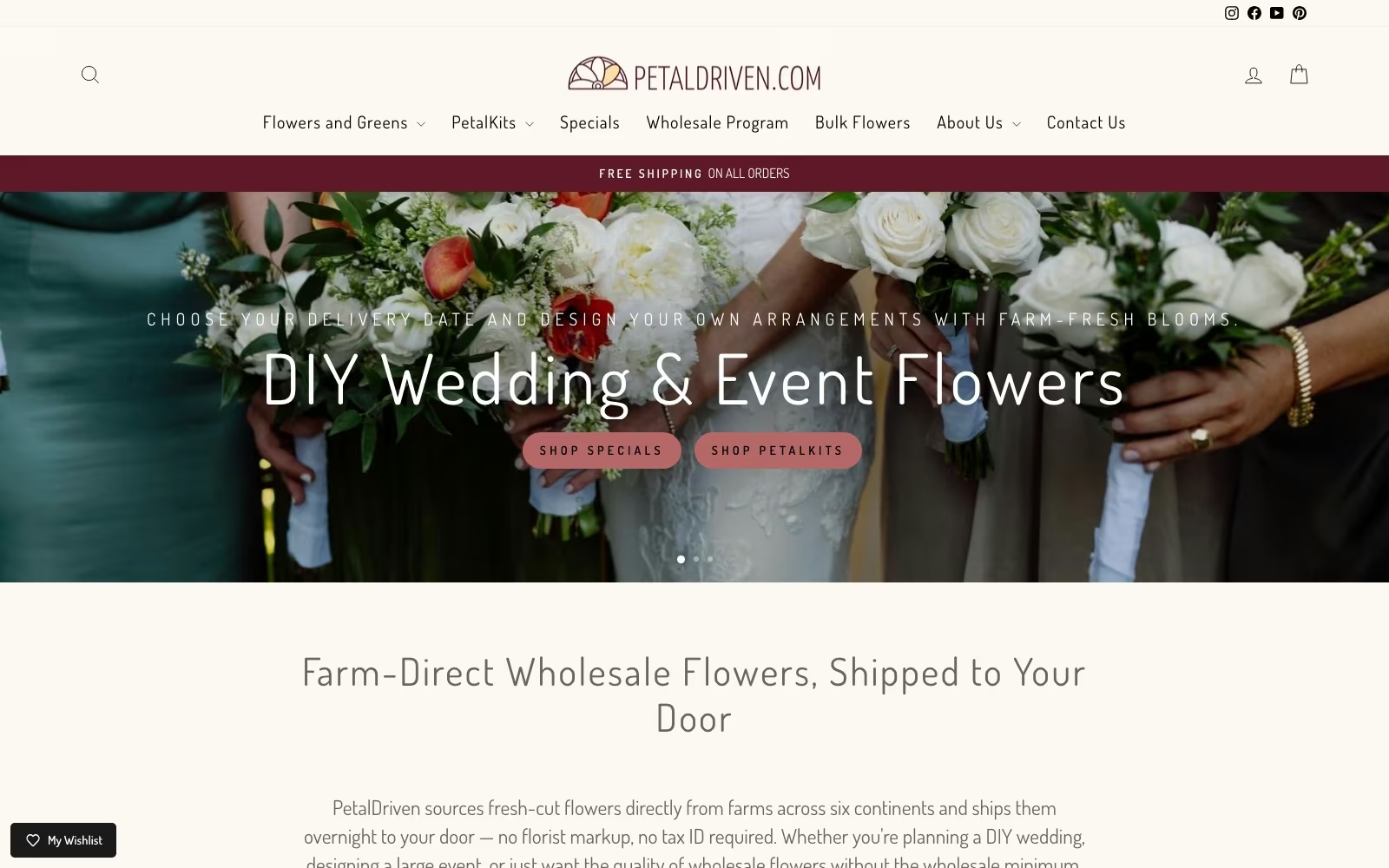
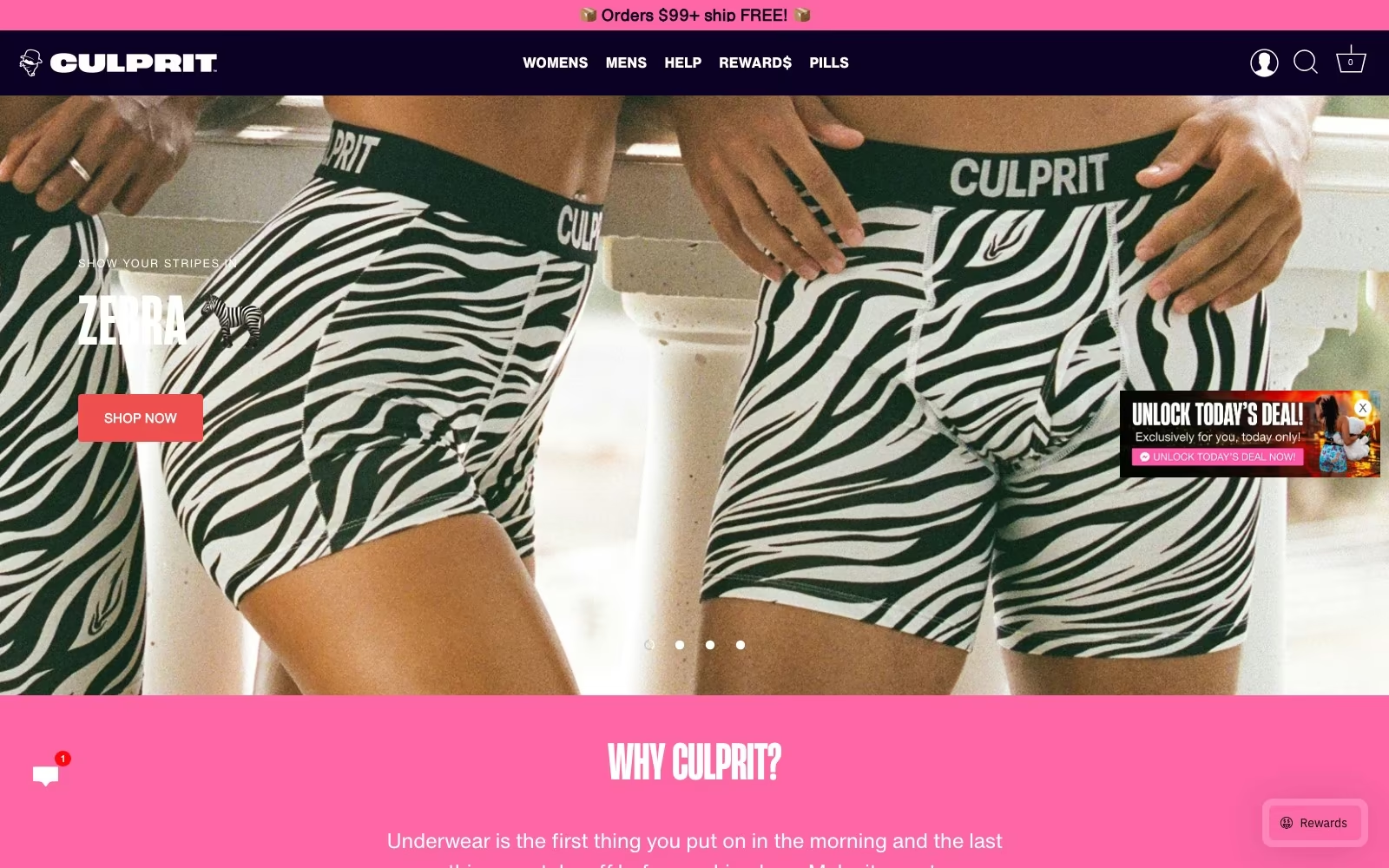
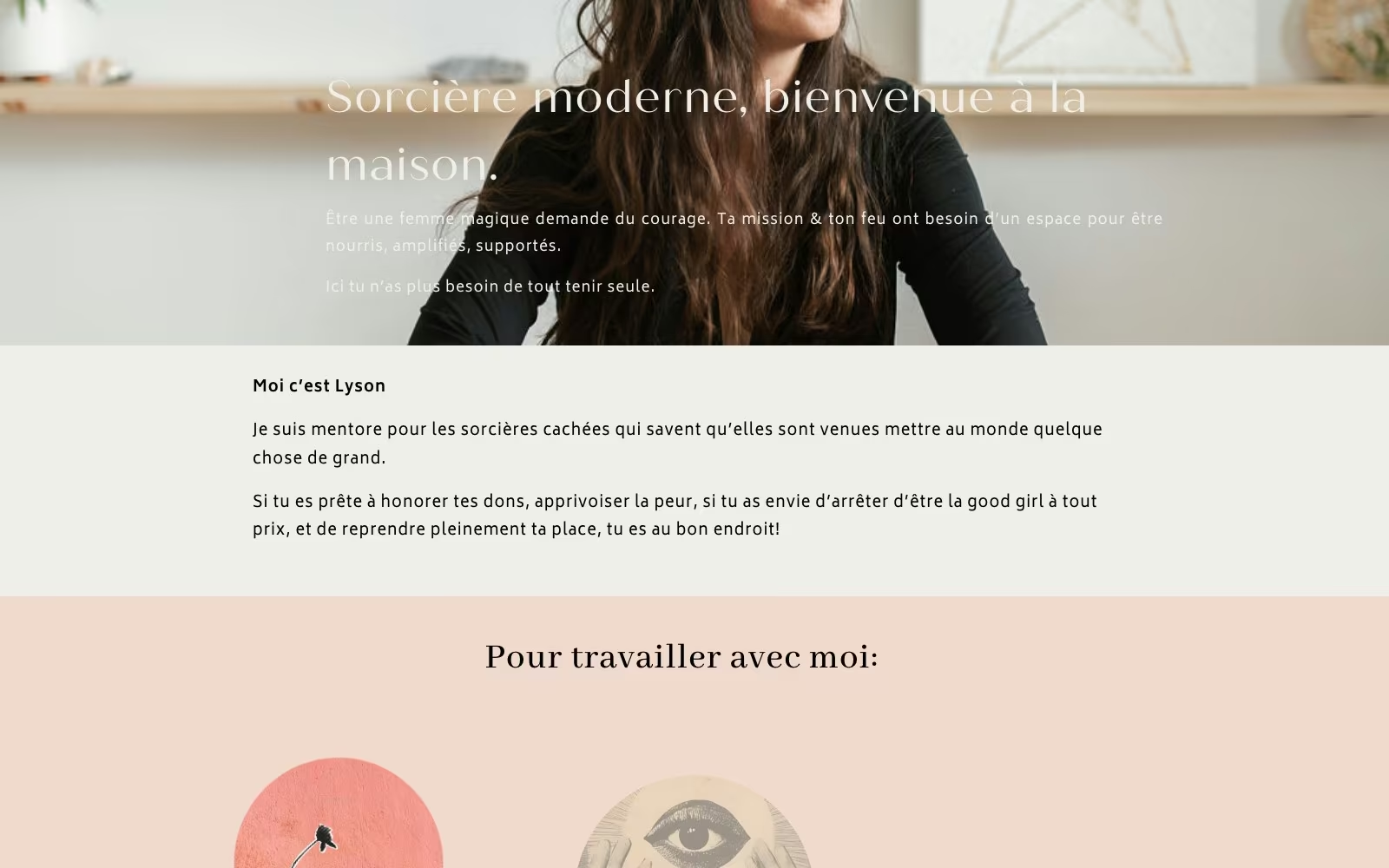
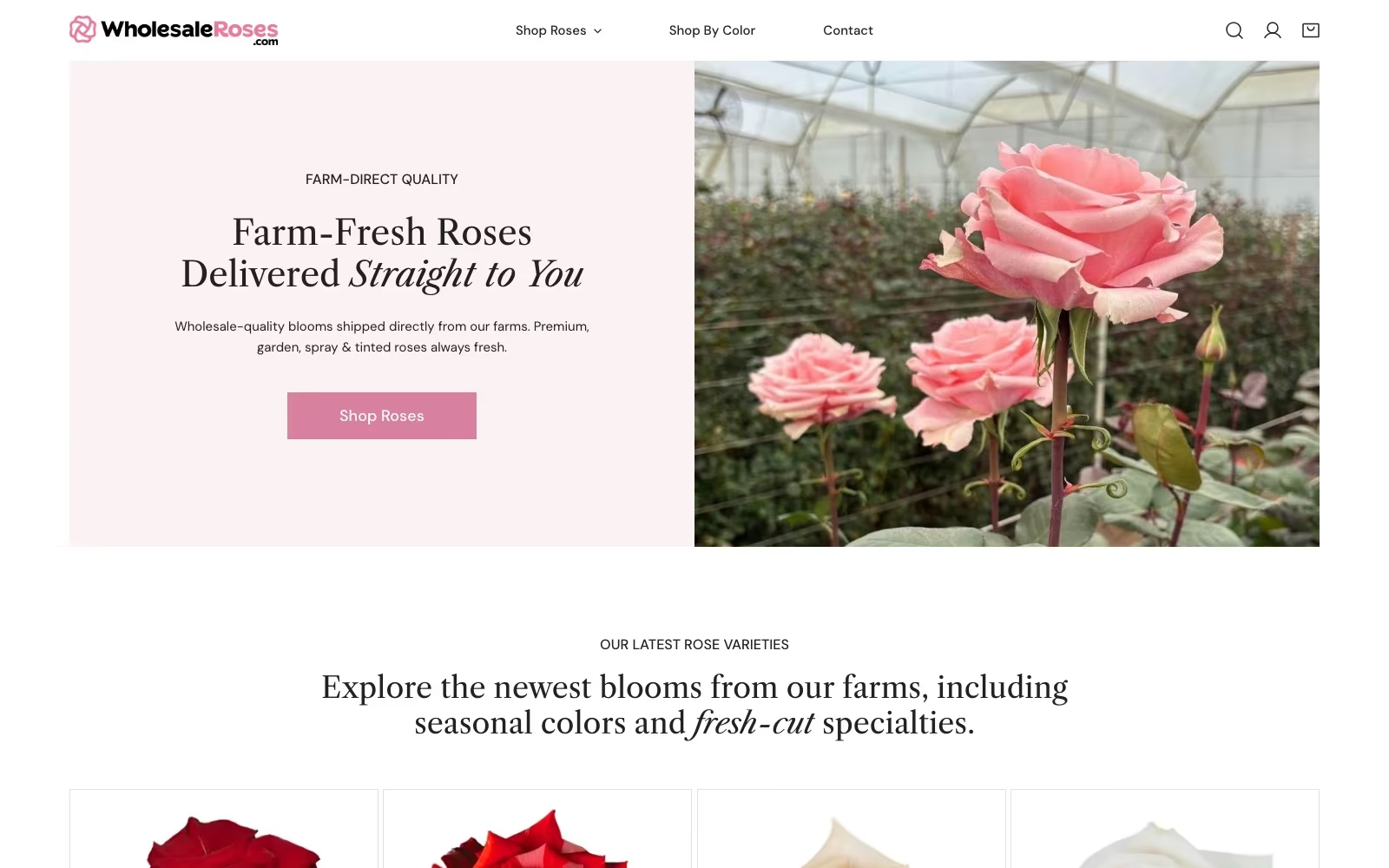
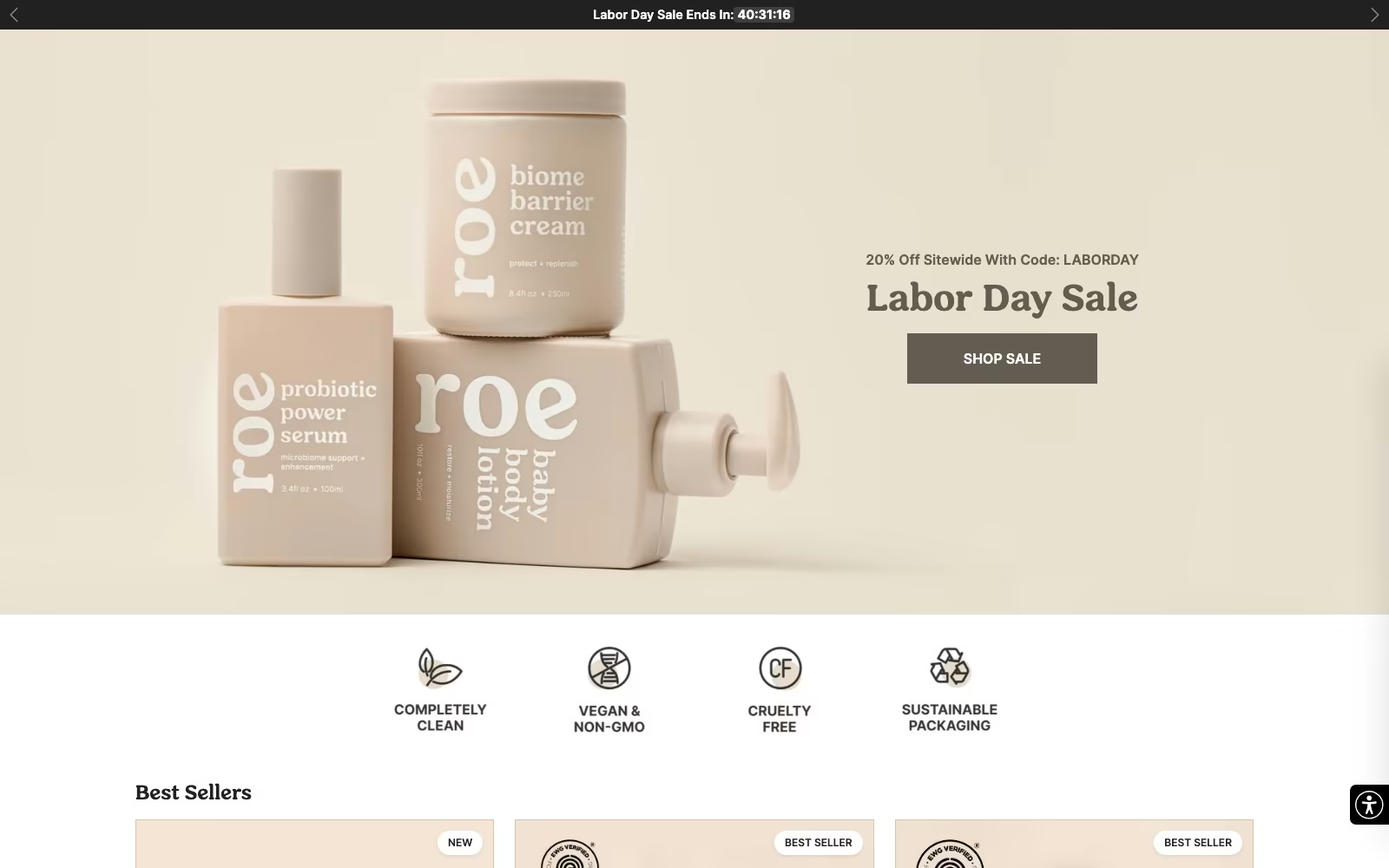
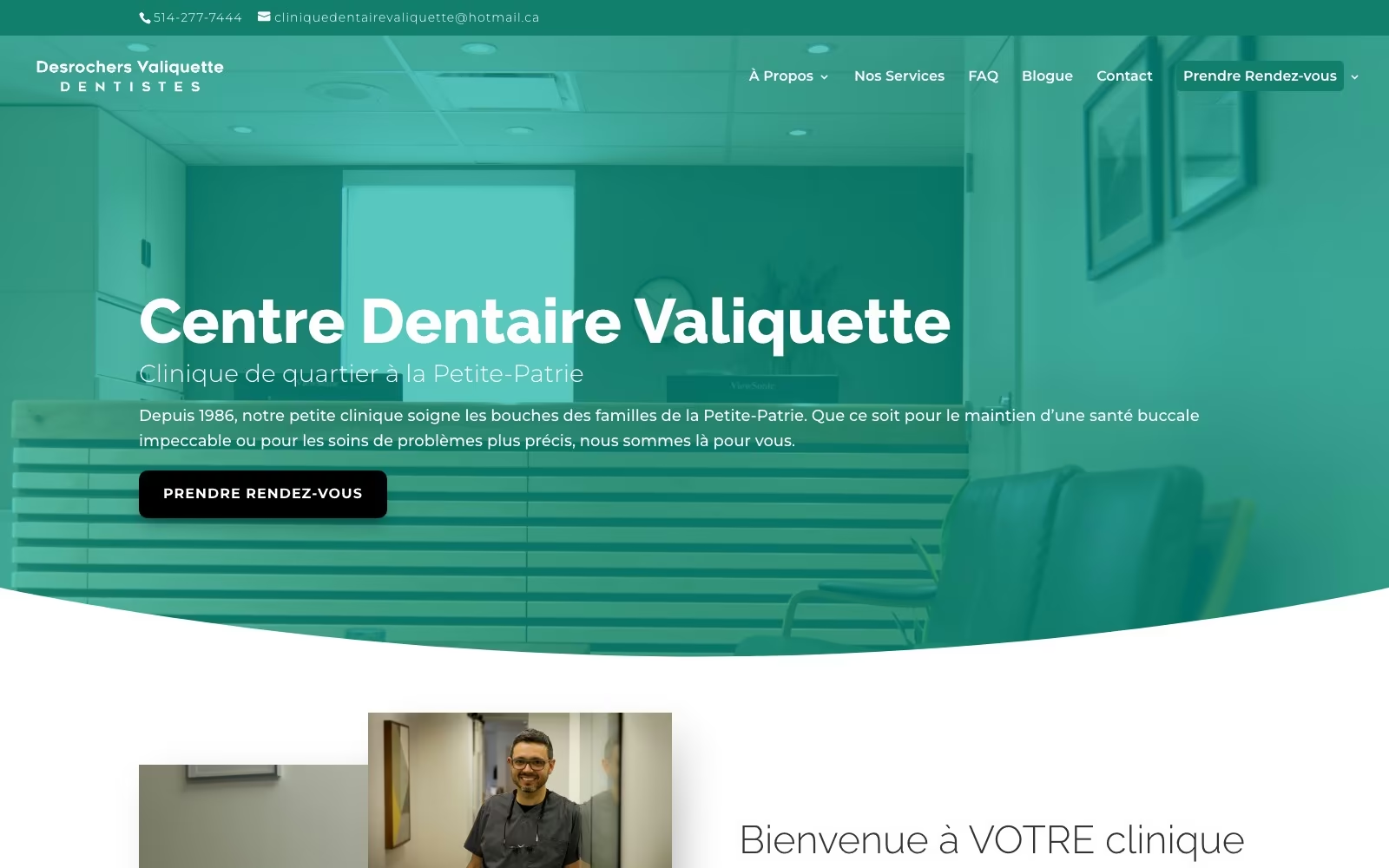
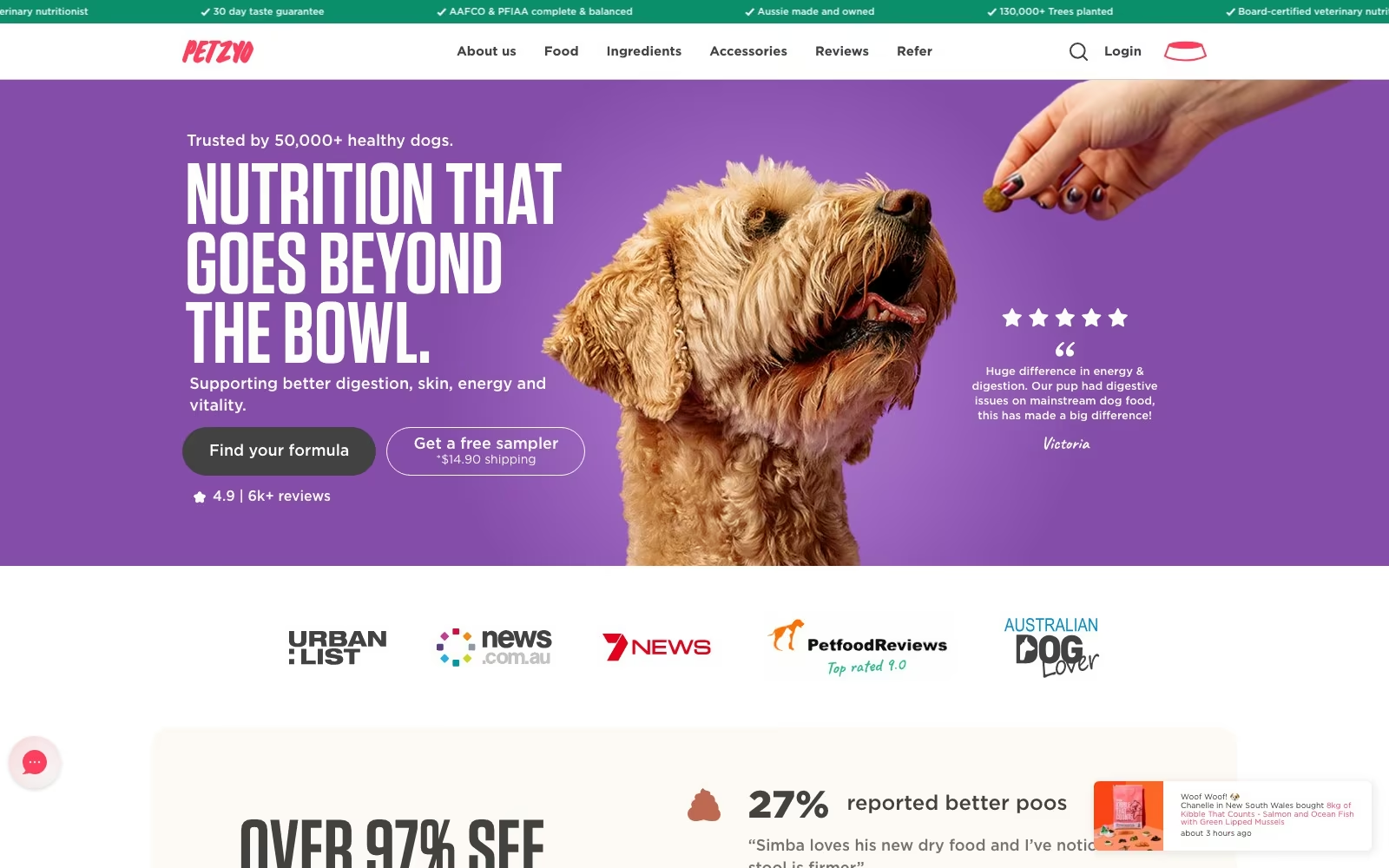
Website Portfolio
Video Ads
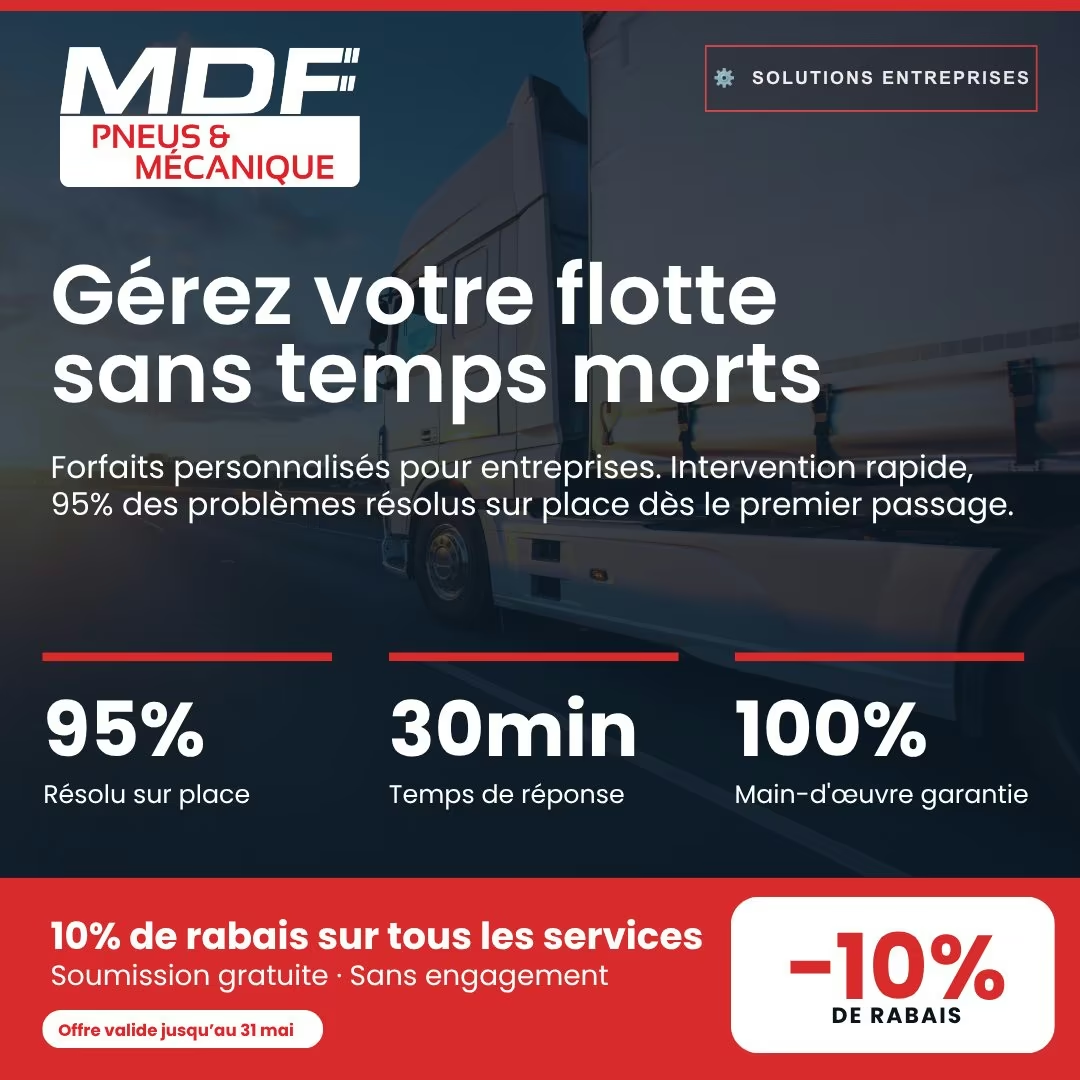
Static Ads





















































FAQ
What founders ask us first.
What does a branding agency actually deliver?
Four things: a written strategy that settles who you are for and what you claim; an identity that makes you recognisable; a system of guidelines, templates and files so your team can stay consistent without asking; and a rollout plan with owners and dates. The middle one gets the attention and the last two decide whether the work survives. You should finish a project able to produce on-brand material yourselves — if you still need the agency for every asset, the system was not built properly.
What does branding cost, and how long does it take?
For most mid-market companies a full project — research, positioning, identity, system and rollout planning — runs eight to twelve weeks, and the fee scales with scope: number of audiences, whether naming and trademark screening are involved, how many touchpoints need templates. A focused refresh of an identity that is fundamentally sound is considerably less. We scope and price after the review call so you approve a fixed number rather than an hourly estimate, and we will tell you plainly if a refresh serves you better than a rebuild.
Do we need a full rebrand or just a refresh?
Usually a refresh, and we will say so even though it is the smaller project. A rebuild is justified when the positioning is genuinely wrong, when you have outgrown or merged past the name, or when the equity you have is negative. Far more often the strategy is sound and the execution has drifted: inconsistent assets, no templates, no documentation. That is a system problem, and fixing it costs less and risks less than starting over. The review call tells us which situation you are in.
Will a rebrand hurt our existing recognition or SEO?
Handled properly, no — and that is the part we plan first. Equity is protected by keeping the assets customers actually use to recognise you and changing around them, staging the changeover so nothing sits half-updated, and launching internally before externally. On the technical side, domain and URL changes are mapped with redirects, entity and schema markup updated, and branded search monitored weekly through launch, with our SEO team on the plan. Our clients get the risk list up front, with the mitigation next to each item.
How do you measure whether branding worked?
With the metrics brand actually moves, tracked over quarters rather than weeks: unaided awareness and recall, share of search against competitors, branded search volume, direct traffic, win rate and price realisation, plus consistency audits of your own touchpoints. We baseline before launch so there is something to compare against. The long-run case is well evidenced — BCG finds every $1 cut from brand spending requires $1.92 in future investment to regain lost share — which is the argument we help you make internally when budgets are under pressure.
Why does brand consistency matter so much?
Because recognition is cumulative and inconsistency resets it. Every impression that looks like someone else's is an impression you paid for and did not bank. Organisations have noticed: Forrester recorded the share of B2B companies prioritising brand development and consistency across touchpoints rising from 42% to 52% in a year, while only just over half of businesses believe they are actually consistent. The gap between intention and practice is nearly always missing templates and undocumented rules, which is exactly what the system stage fixes.
Do you do naming and trademark work?
Yes. Naming runs as its own track: territory definition, generation against those territories, linguistic and cultural checks in your markets, domain and handle availability, and screening with a trademark attorney before anyone falls in love with a candidate. We shortlist names that are sayable, spellable and defensible, then pressure-test them in real contexts — said on a call, printed small, read aloud in an ad. Legal clearance is your attorney's call and we make the handover to them part of the process.
Can you work with our in-house design team?
Yes, and it is often the strongest arrangement. We usually own strategy, the identity design and the system build, while your team owns day-to-day application — which means we design for the way they actually work, including their tools, templates and file conventions. They join the working sessions rather than receiving a finished PDF, so nothing arrives as a surprise. Once handed over, the system belongs to them, and we stay available for the awkward questions instead of holding the keys.
How does branding connect to our advertising performance?
Directly, and it is the most practical argument for doing this work well. Distinctive assets lift attention and recall in a feed, which shows up as better hold rates and cheaper acquisition; a clear message hierarchy gives the ad creative team something specific to test rather than adjectives; and consistency means every impression compounds. When the same positioning drives paid social, paid search and the website, measurement gets easier too, because the variable being tested is the message and not the brand.
What happens after launch?
Two things. First, guardianship: a quarterly consistency audit, template additions as new needs appear, and a named contact for the exception requests that always come. Second, measurement: the awareness, share of search and win rate baselines get re-read each quarter so the brand is managed as an asset rather than admired as a project. Plenty of clients handle both themselves — the system is built for that — and we are happy either way, because a brand you can run without us is the point.

.webp)
.webp)