Words that do a job on the page.
do a job
We are the copywriting agency for businesses whose website reads well and sells badly. Our copywriters interview your customers, find the sentence that makes people act, and write the landing pages, ads, emails and product pages that carry it — then we test the claims rather than admire them, alongside our web design, paid search and content marketing teams.






Tell us a little about your brand and we'll be in touch within 24 hours to lock in a time.


THE FOUR LAYERS
Research, message, craft, proof.
craft, proof
Good copywriting is mostly research and judgement, and only then writing. We work the four layers in order because clever writing on the wrong message is the most expensive kind of copy: it costs the same and it convinces nobody.
Research & voice of customer
Messaging & positioning
Craft across every format
Testing & iteration
Your customers already wrote it for you.
Before we write a line we go and listen. Customer interviews, sales call recordings, support tickets, review sites, the questions your team answers every week, and the objections that kill deals. The phrases people use to describe their own problem are worth more than anything a writer can invent, because they are what a reader recognises instantly as their situation.
We also read what the competition says, mostly to find out what everyone in the category claims. When six companies all promise quality, service and partnership, none of them says anything. That overlap is the map of where not to position, and it is usually where a brand's current homepage sits.
The output is a message document: the audience, what they are actually comparing you against, the promise, the proof behind it, the objections in order, and the vocabulary to use and avoid. Everything we write afterwards traces back to that document, which is also what makes the work reviewable rather than a matter of taste.
- Customer and sales interviews, plus review and support mining
- Objections collected in the order they actually arise
- Competitor claims mapped to find the crowded ground
- A written message document every piece traces back to
6.6%
median landing page conversion rate across industries
3.8-12.3%
range of industry medians in the same benchmark
One promise, said plainly, first.
Most pages fail in the first screen, by describing the company instead of the reader's problem. We write the promise first — what you do, who for, what changes, and why you rather than the alternative — and every section after it either supports that promise or removes a reason to hesitate.
Plain language wins, and the data on it is unusually blunt. Unbounce's analysis of more than 41,000 landing pages found pages written at a fifth-to-seventh-grade reading level convert at 11.1%, against 7.1% at eighth-to-ninth grade and 5.3% for professional-level writing. That is not a case for writing down to people; it is a case for removing the abstraction that hides what you actually do.
We also fix the order. A page that answers the objections in the sequence a buyer raises them — price, risk, effort, trust — reads as if it was written for one person, because it was. Against a median conversion rate of 6.6% across industries, the gap between an average page and a good one is usually structure and specificity rather than adjectives.
- The promise written first, in plain words
- Objections answered in the order buyers raise them
- Reading level checked, jargon and abstraction removed
- Proof attached to every claim that needs it
11.1%
conversion rate for pages written at a 5th-7th grade reading level
5.3%
conversion rate for the same pages written at professional level
The same message, tuned to the surface.
A landing page, a search ad, a cold email, a product description and a video script are the same argument at different lengths and temperatures. Our writers produce all of them from one message document, so a customer who clicks an ad and lands on a page meets a continuous sentence rather than two departments.
Craft is where the specifics live. Headlines that name the reader's situation instead of the product category. Subheads that let someone scan the whole argument in fifteen seconds. Buttons that describe the next step rather than commanding a click. Sentences short enough to read on a phone in a queue, because that is where the traffic is.
We write in your voice, from a documented voice guide built out of interviews with your people, not a generic house style. That guide is a deliverable: it lets your own team write consistently after the engagement, and it is what stops your website sounding like every other company using the same tools.
- Landing pages, ads, emails, product and lifecycle copy from one message
- Ad-to-page continuity so the argument never restarts
- Scannable structure written for phones first
- A documented tone guide your people keep and use
One
message document behind every page, ad and email we write
$30.3B
global copywriting market size in 2026 (Mordor Intelligence)
Test the claim, keep the winner.
Opinions are cheap; tests are decisions. Where traffic supports it we run headline and offer tests, and where it does not we use qualitative signals — session recordings, scroll and attention data, sales objections, and the questions people still ask after reading the page. Both beat a debate in a review meeting.
Expectations should be honest about hit rates. VWO's 2026 experimentation benchmark found call-to-action copy is the most-tested element, with around 3,500 tests and roughly a 10% win rate. That is exactly why we test the message and the offer before we test the button: the big wins live in what you promise, not in the verb on a call-to-action.
Everything we learn goes back into the message document, so the second round of pages starts from evidence rather than from scratch. Over a few quarters that compounds into a genuine asset: a written record of what your market responds to, which no competitor can copy off your homepage.
- Headline and offer tests where traffic supports them
- Recordings, scroll data and sales objections where it does not
- Winners documented back into the message guide
- Results reported honestly, including the tests that lost
10%
win rate on CTA copy tests in VWO's 2026 benchmark
3,500
CTA copy tests behind that benchmark figure
of the copywriting market is SEO copy (Mordor)
median in-house copywriter salary (BLS)
rounds of revisions included on every deliverable
The words, message document and tone guide
We made the difference for those brands

B2B software, fintech, insurance
Travel & mobility

B2B software, fintech, insurance

Apparel and lifestyle

Consumer tech and platforms

Beauty, personal care & wellness
Consumer tech and platforms

Consumer tech and platforms

Food & beverage

Food & beverage

Food & beverage
Healthcare & regulated services

Beauty, personal care & wellness
B2B software, fintech, insurance

B2B software, fintech, insurance
Home essentials, appliances, kitchen & pet
Beauty, personal care & wellness

Beauty, personal care & wellness
Consumer tech and platforms

Food & beverage
Travel & mobility

Healthcare & regulated services

B2B software, fintech, insurance

Beauty, personal care & wellness

B2B software, fintech, insurance

Apparel and lifestyle

B2B software, fintech, insurance

Beauty, personal care & wellness

B2B software, fintech, insurance

Healthcare & regulated services
B2B software, fintech, insurance
01 — The challenge
A website everyone signed off, and nobody buys from.
The design is good. The copy went through four rounds of internal review and came out saying that you are a trusted partner delivering innovative solutions. Traffic arrives, reads the first screen, and cannot tell what you sell or who you sell it to.
“Our own sales team explains what we do better than our homepage does.”
That is almost always a research problem wearing a writing problem's clothes: nobody asked customers why they bought, so the page argues from the inside out. The measurable cost is in the benchmarks — Unbounce's study of 41,000 landing pages puts the median conversion rate at 6.6%, with plainly written pages converting at 11.1% against 5.3% for professional-level prose. Same traffic, same offer, different words. Fixing the copy is usually the cheapest performance work available to a business already paying for the visits.
02 — Our approach
Interview, decide the message, write, then test it.
We start by listening: customer interviews, sales calls, support tickets, reviews and the objections that lose deals, plus a read of what every competitor in the category already claims. That produces a written message document — audience, real alternative, promise, proof, objections in order, and the vocabulary to use and avoid. Then we write, in your voice, from a documented tone guide built out of interviews with your team: landing pages, website copy, ads, emails, product and lifecycle wording, all from the same argument so an ad and its page read continuously. Everything is written plainly and structured to be scanned on a phone, with proof attached to the claims that need it. Finally we test what matters — message and offer before button verbs — using experiments where traffic allows and recordings, scroll data and sales feedback where it does not, and we document every winner back into the guide you keep.
03 — What we did
Four phases from interviews to tested pages.
Research, message, drafting and testing run in sequence, with your people in the interviews and a written record of every claim we tested and what it did.
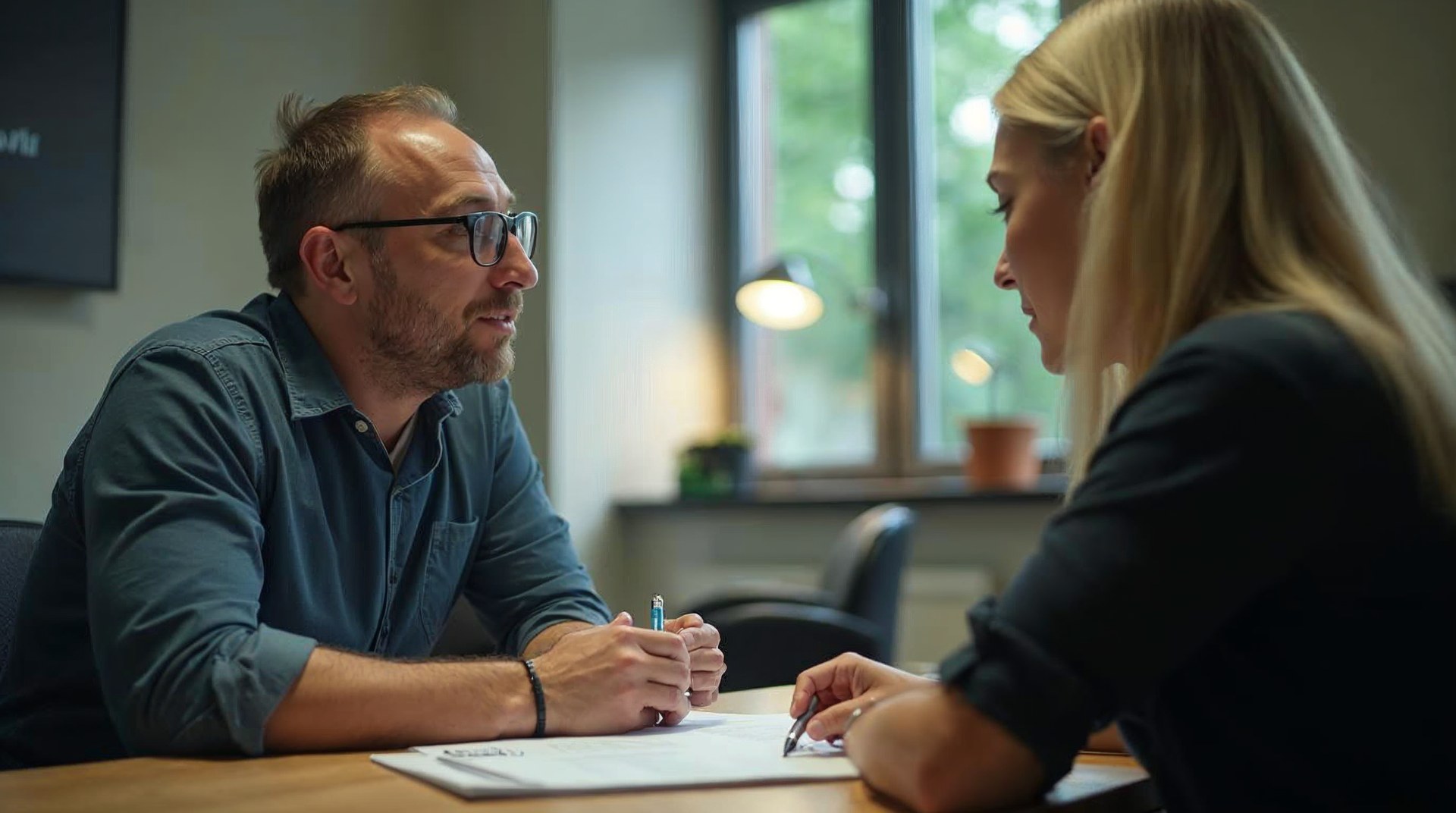
Weeks 1-2 / Research
Interview customers before writing anything
Customer and sales interviews, review and ticket mining, and a map of what every competitor already claims — turned into one written message document.
Weeks 2-4 / Drafting
Write the promise, then the proof
Headline and offer options written first and chosen against the message document, then full pages, ads and emails drafted in your documented voice.

Weeks 4-8 / Testing
Put the claims in front of real traffic
Message and offer tested where traffic supports it, with recordings, scroll data and sales objections filling in where the volume is too small.
Ongoing / Scale
Document the winners, roll them out
Winning language documented back into the tone and message guides, then rolled across the rest of the site, the ad accounts and the email programme.

WHAT YOU GET
Deliverables your team can keep writing from.
keep writing from
Every document below is yours, written to be used by your own writers after the engagement rather than to keep you dependent on ours.

Message and positioning document
Audience, real alternative, promise, proof and objections in order, drawn from customer interviews rather than a workshop whiteboard.

Website and landing page words
Full page wording written plainly and structured to be scanned, with proof attached to the claims that carry the sale.

Wireframed page structure
Sections delivered in order with headings, subheads and buttons mapped so design and development can build it directly.

Email and lifecycle sequences
Welcome, nurture, abandonment and win-back sequences written from the same message as the pages they send people to.

Ad and page continuity
Search, social and video ad lines written so the ad and the page it lands on read as one continuous argument.

Tone guide and templates
A documented tone guide with examples, plus reusable templates so your team writes consistently once we are done.
HOW WE WORK
Operating standards, not promises.
Operating standards


















Built on trust. Proven by results.
We partner with SMBs and Fortune 500 companies to deliver more than reach — we bring clarity, execution, and measurable outcomes. Every successful partnership starts with a strong culture fit and a shared drive to grow.




CASE STUDIES
Case studies
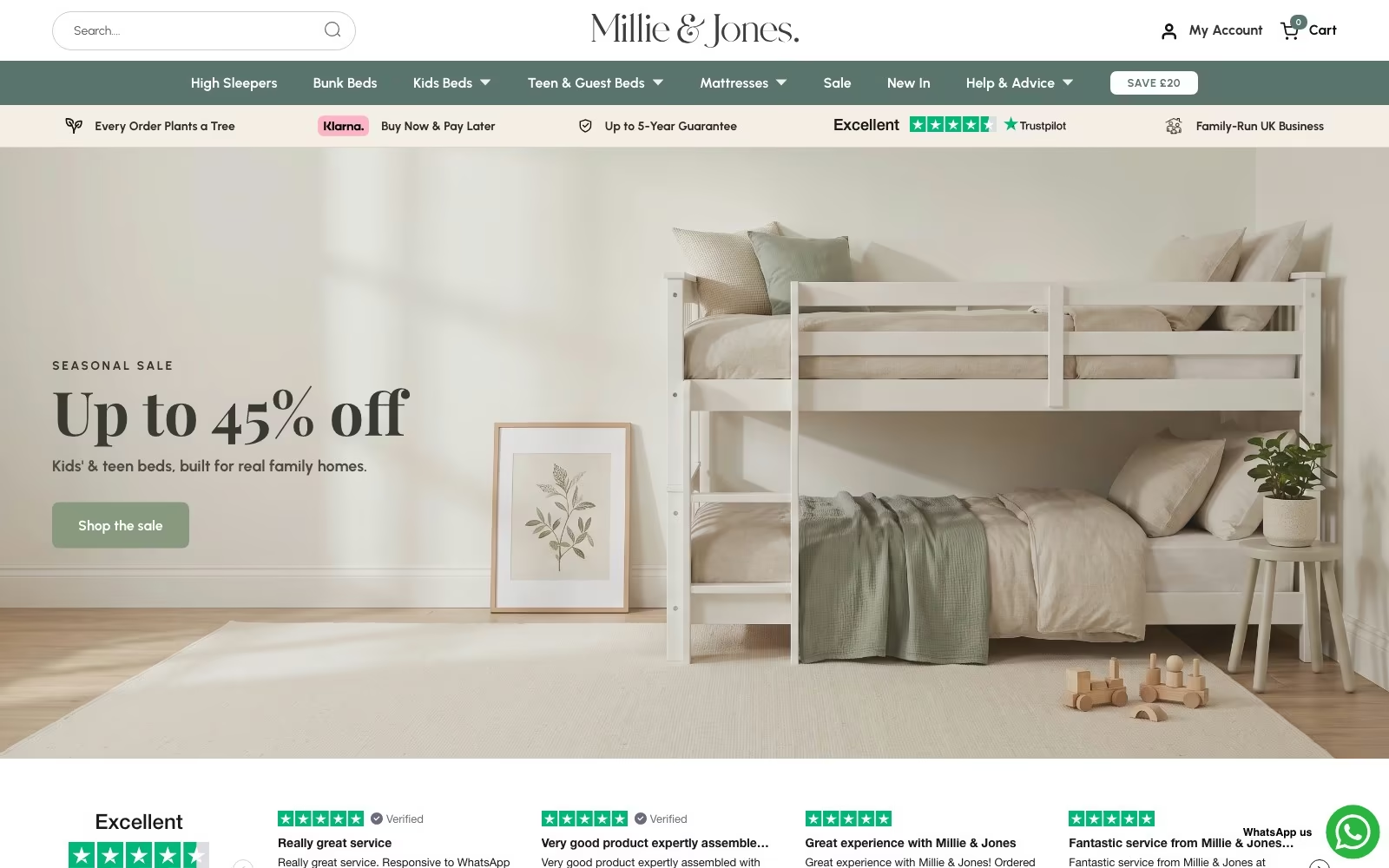
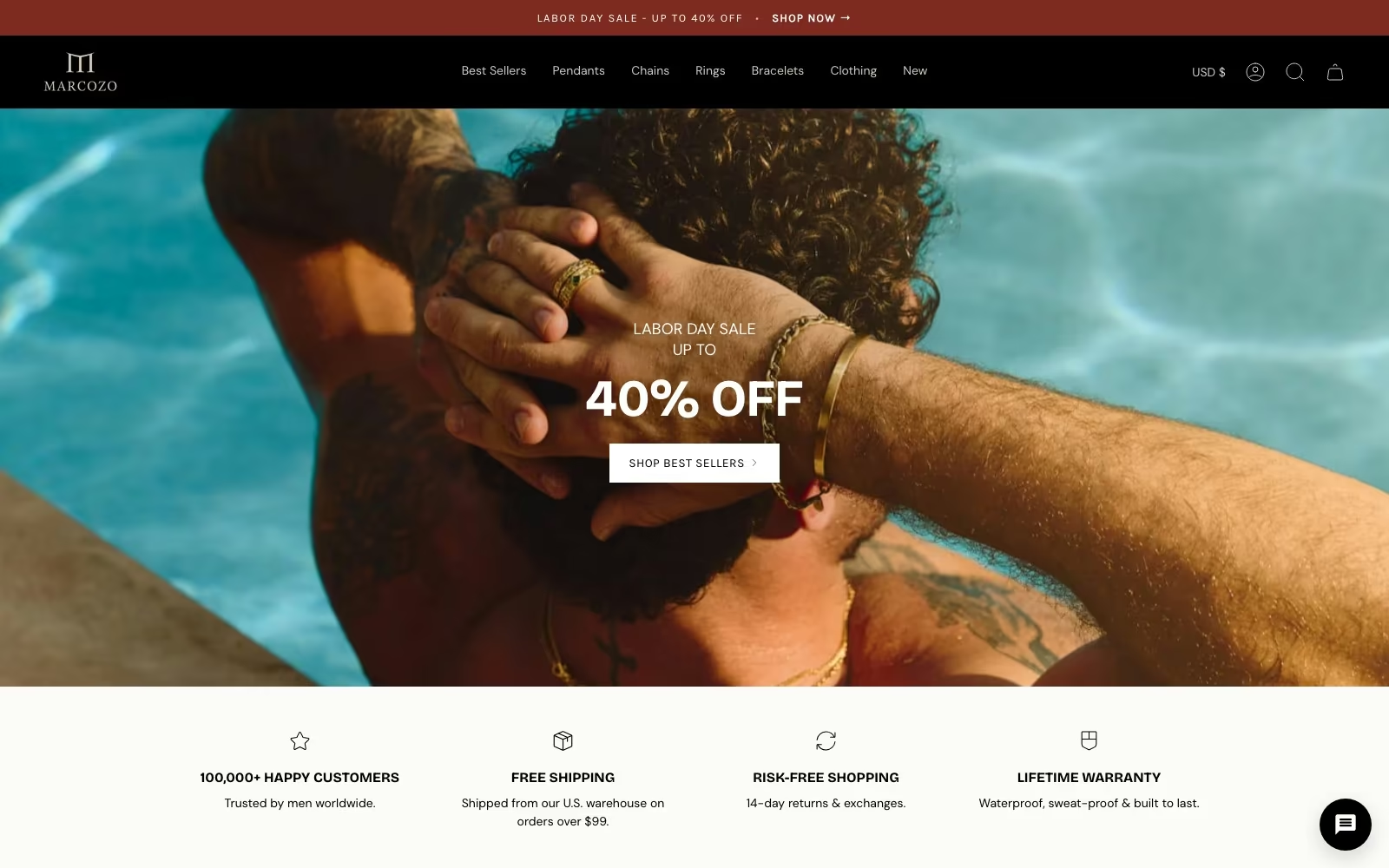
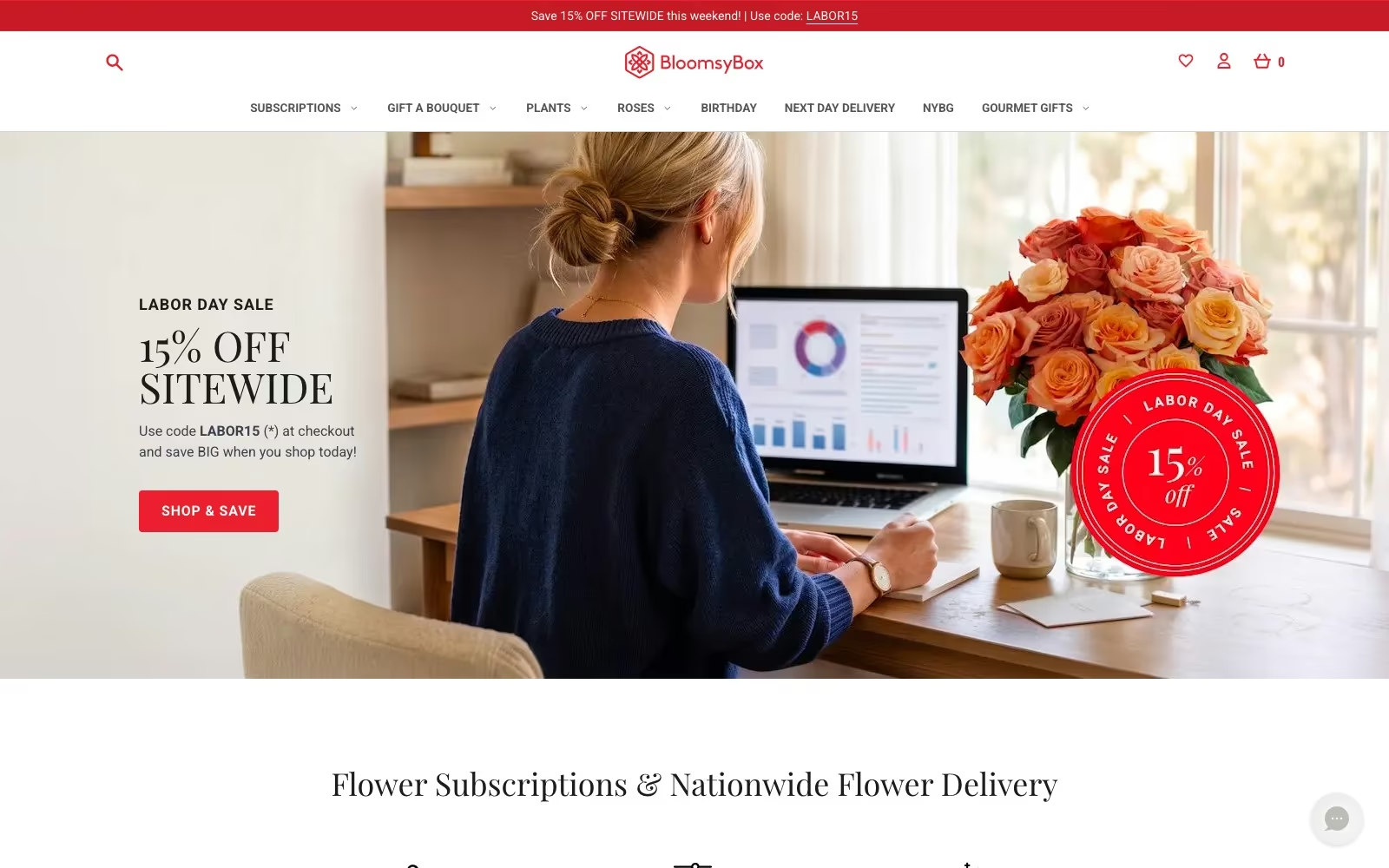
Website Portfolio
Video Ads
Static Ads


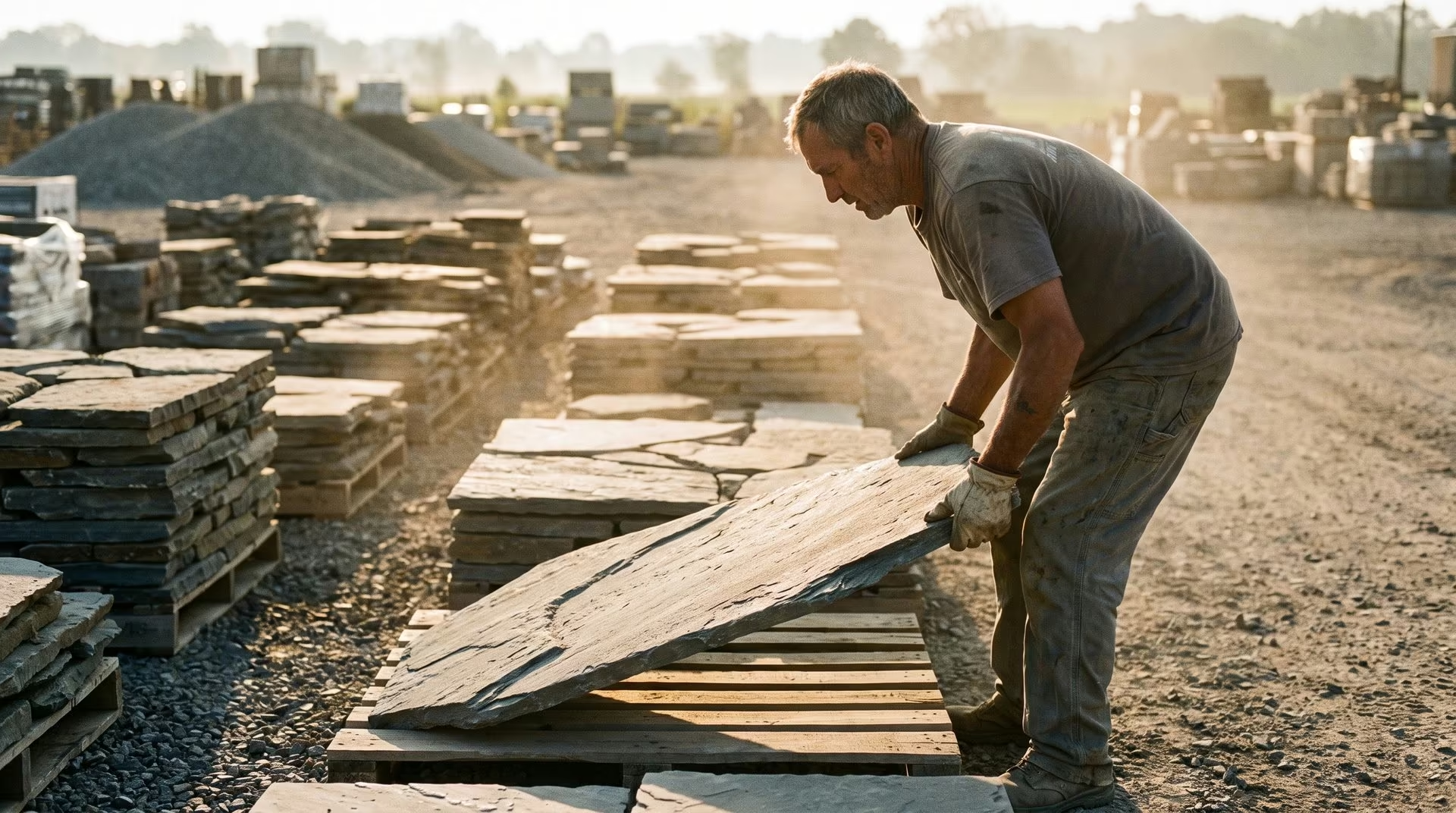



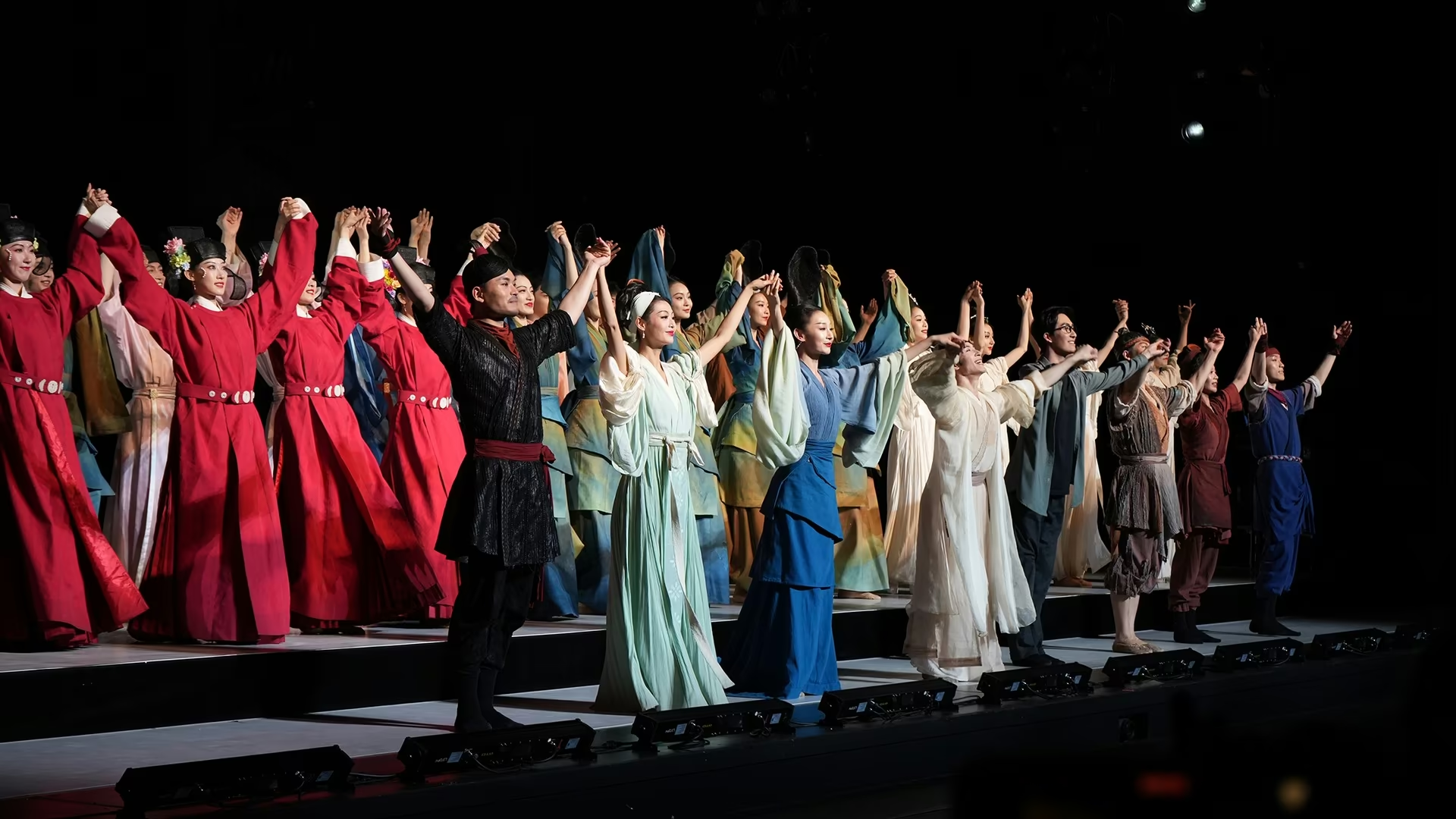

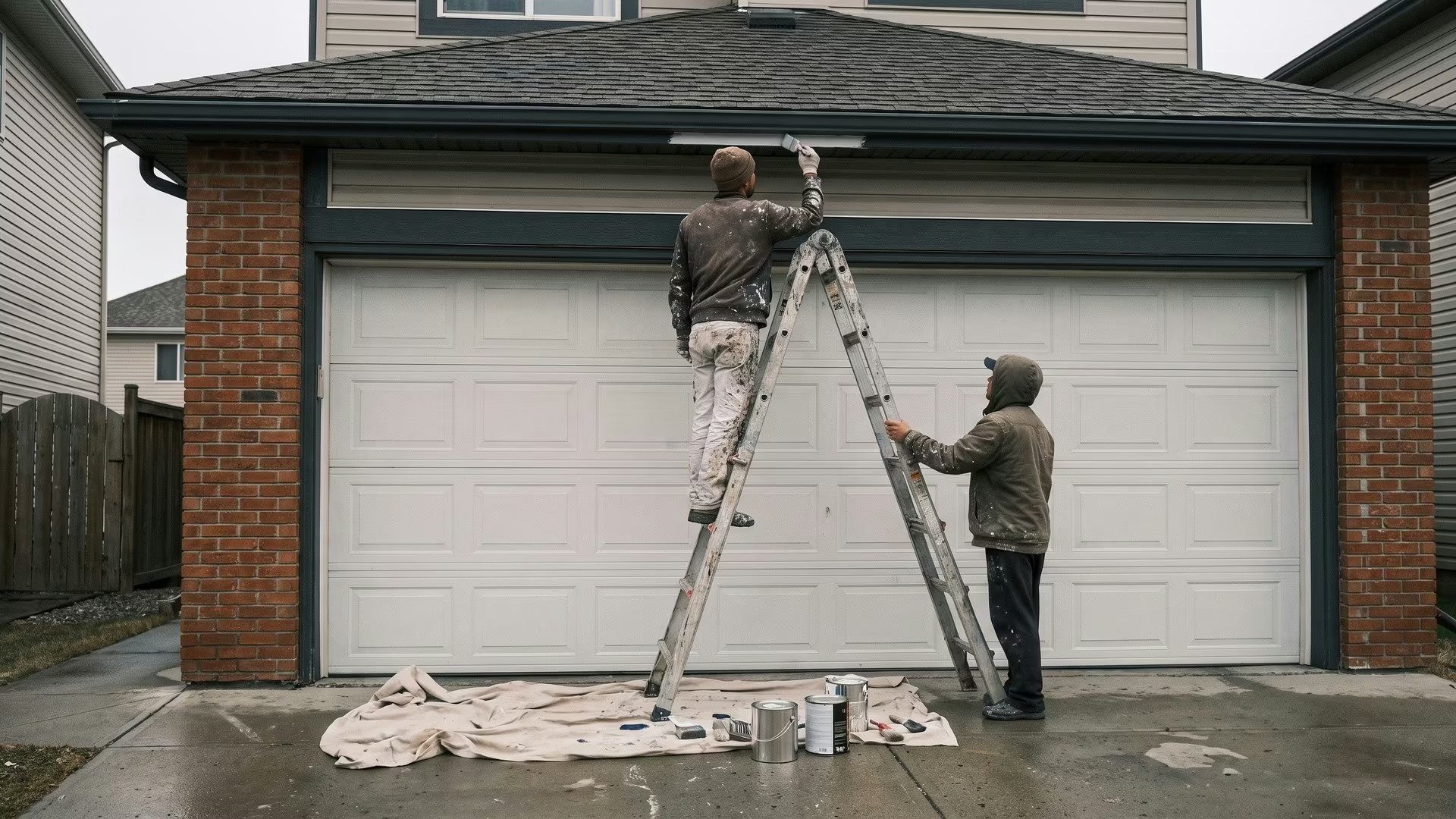









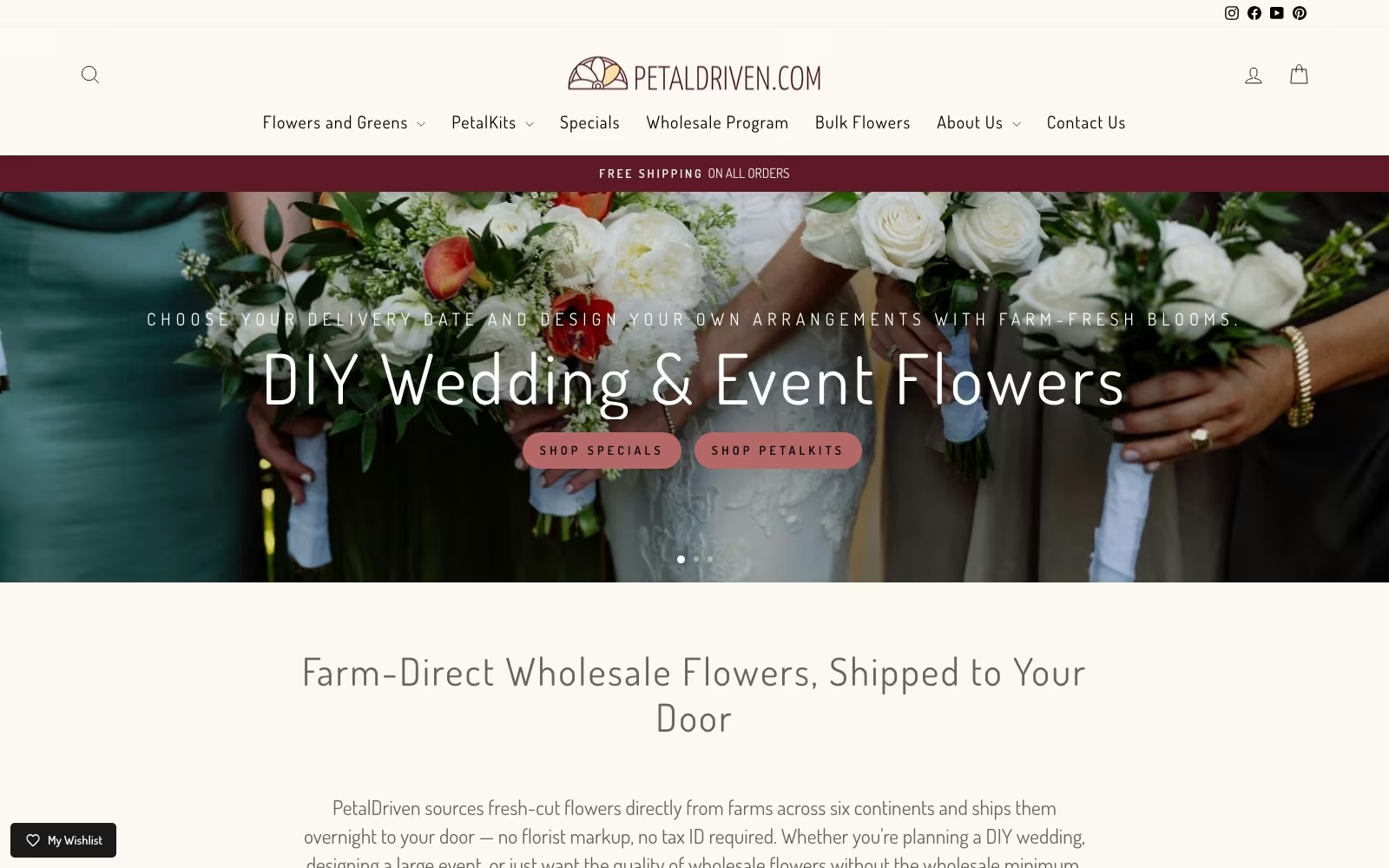



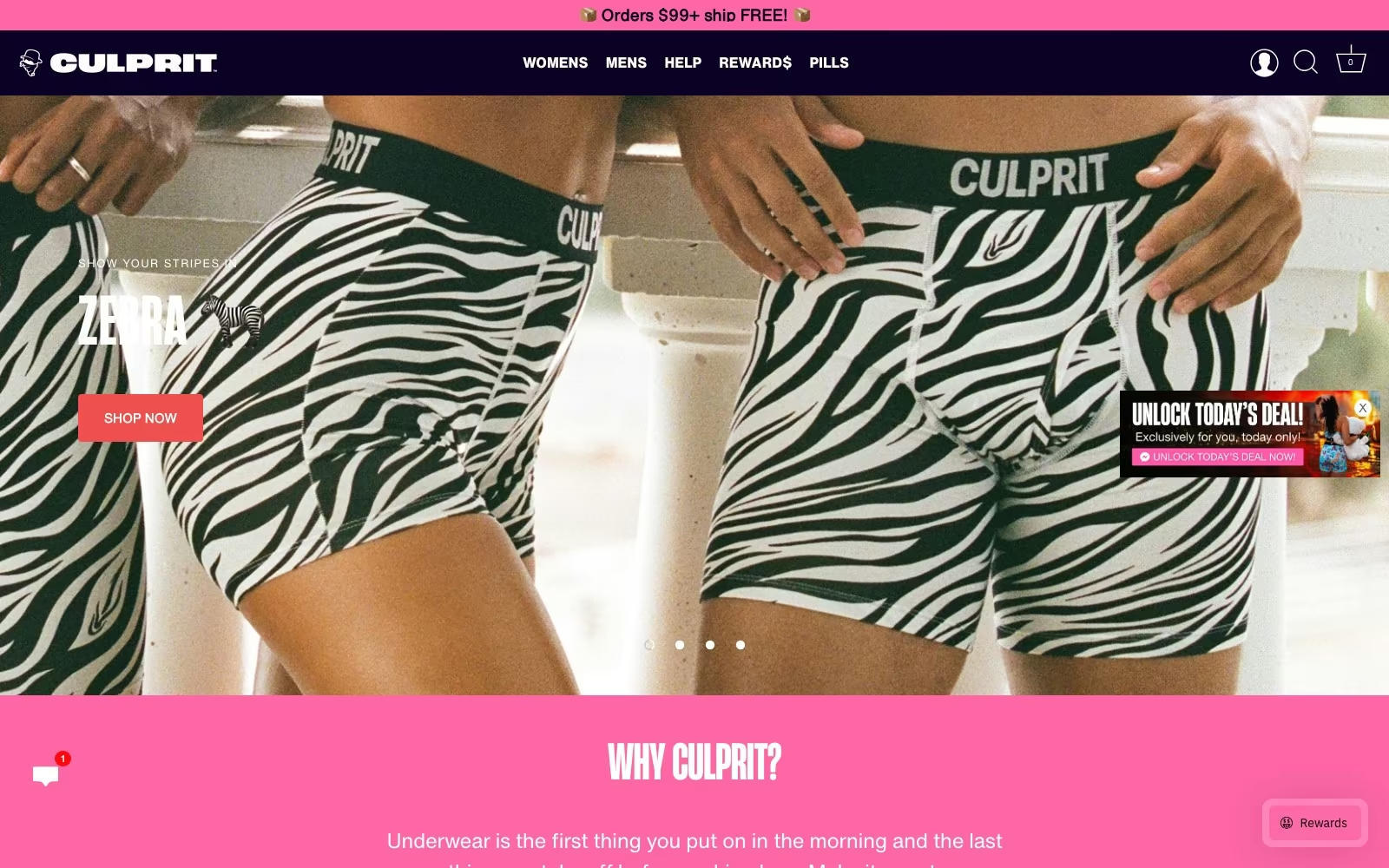

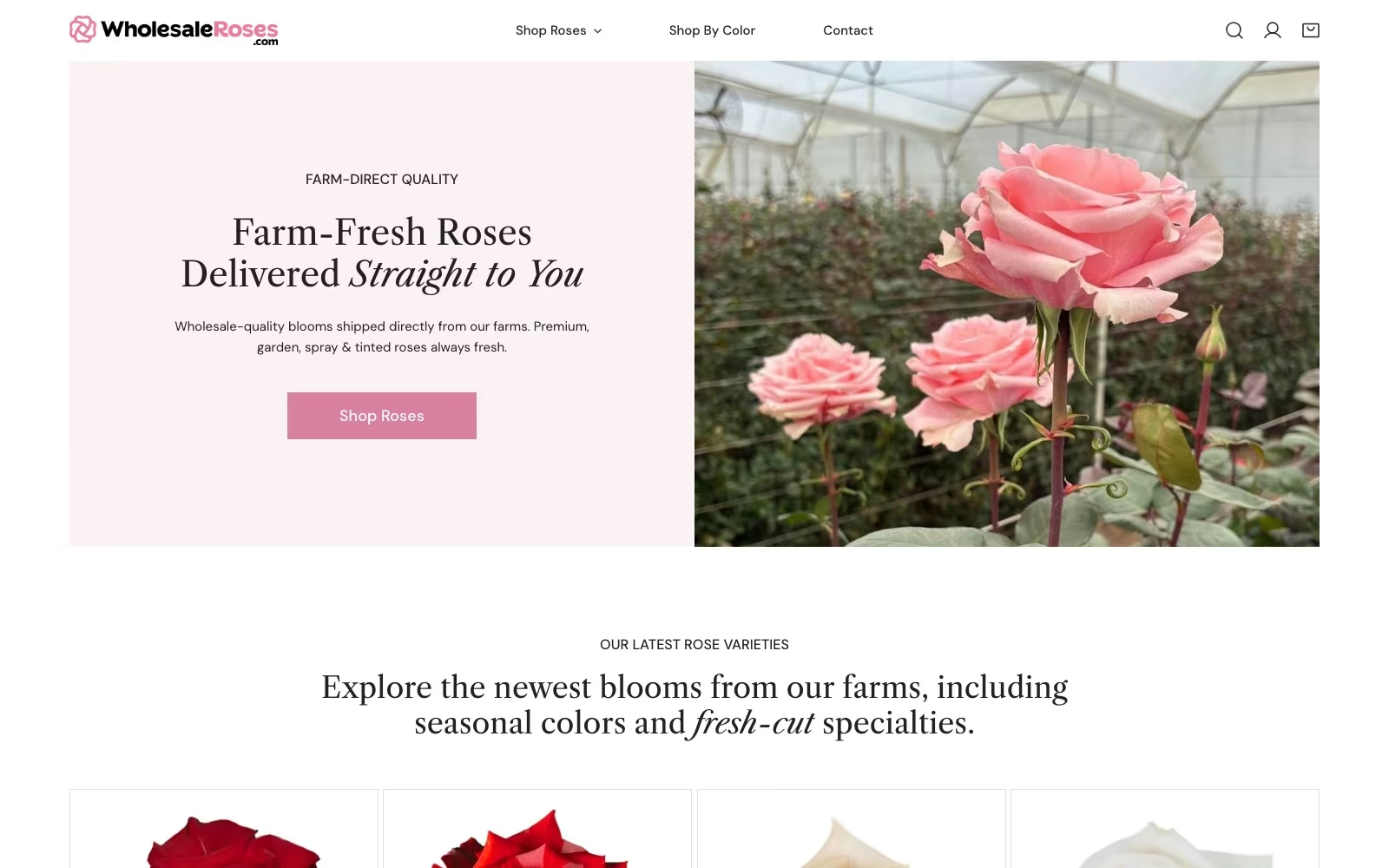

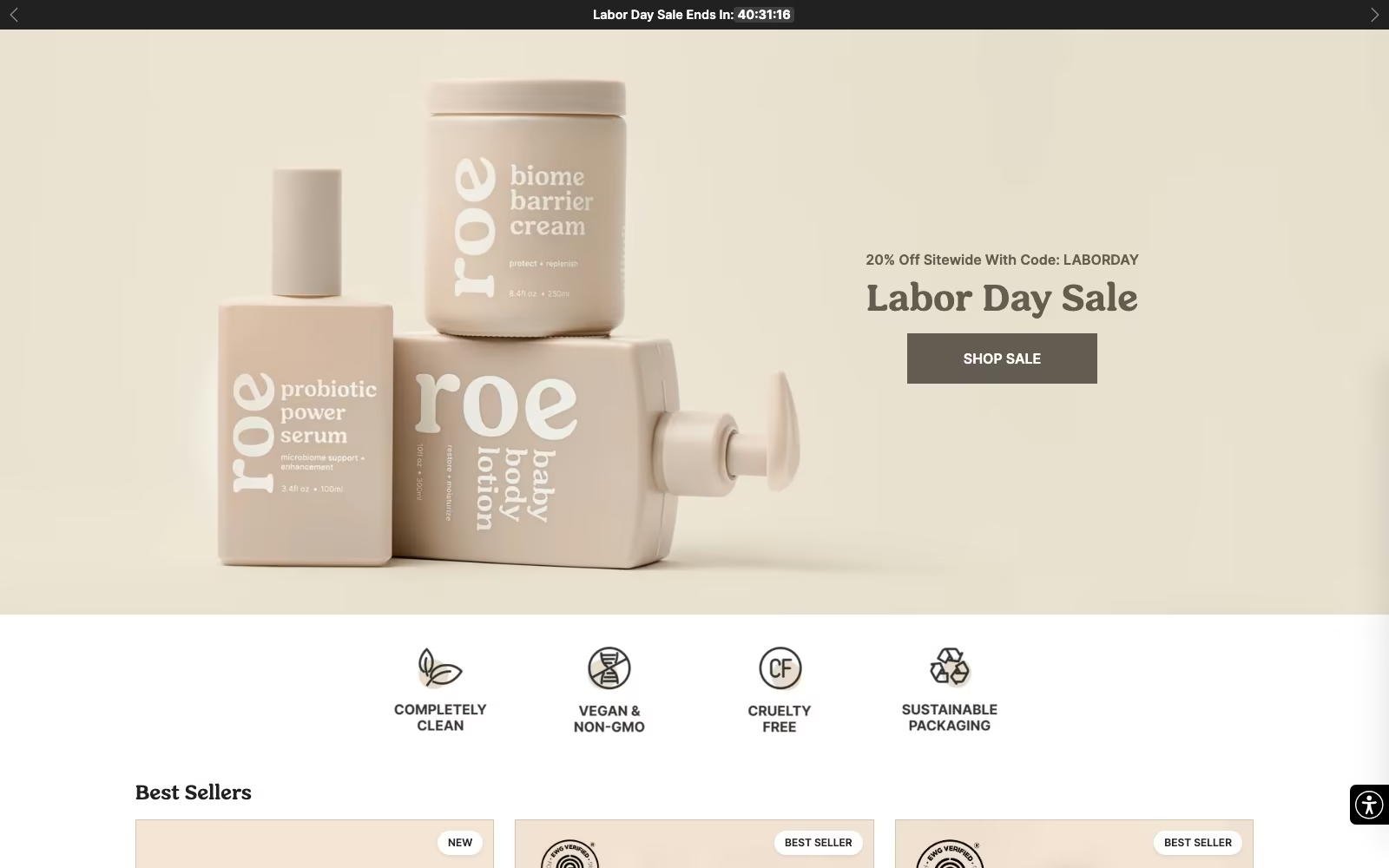

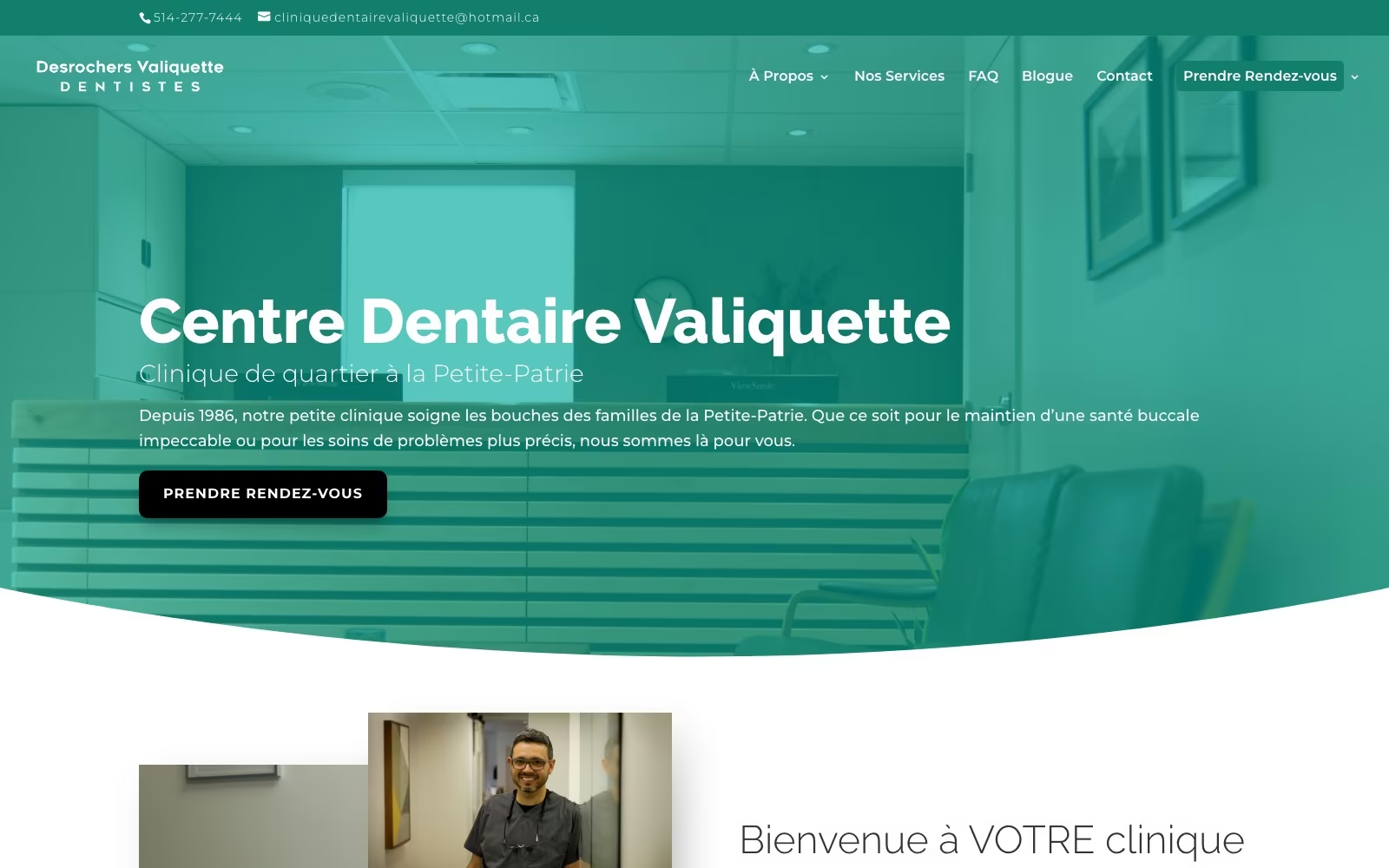

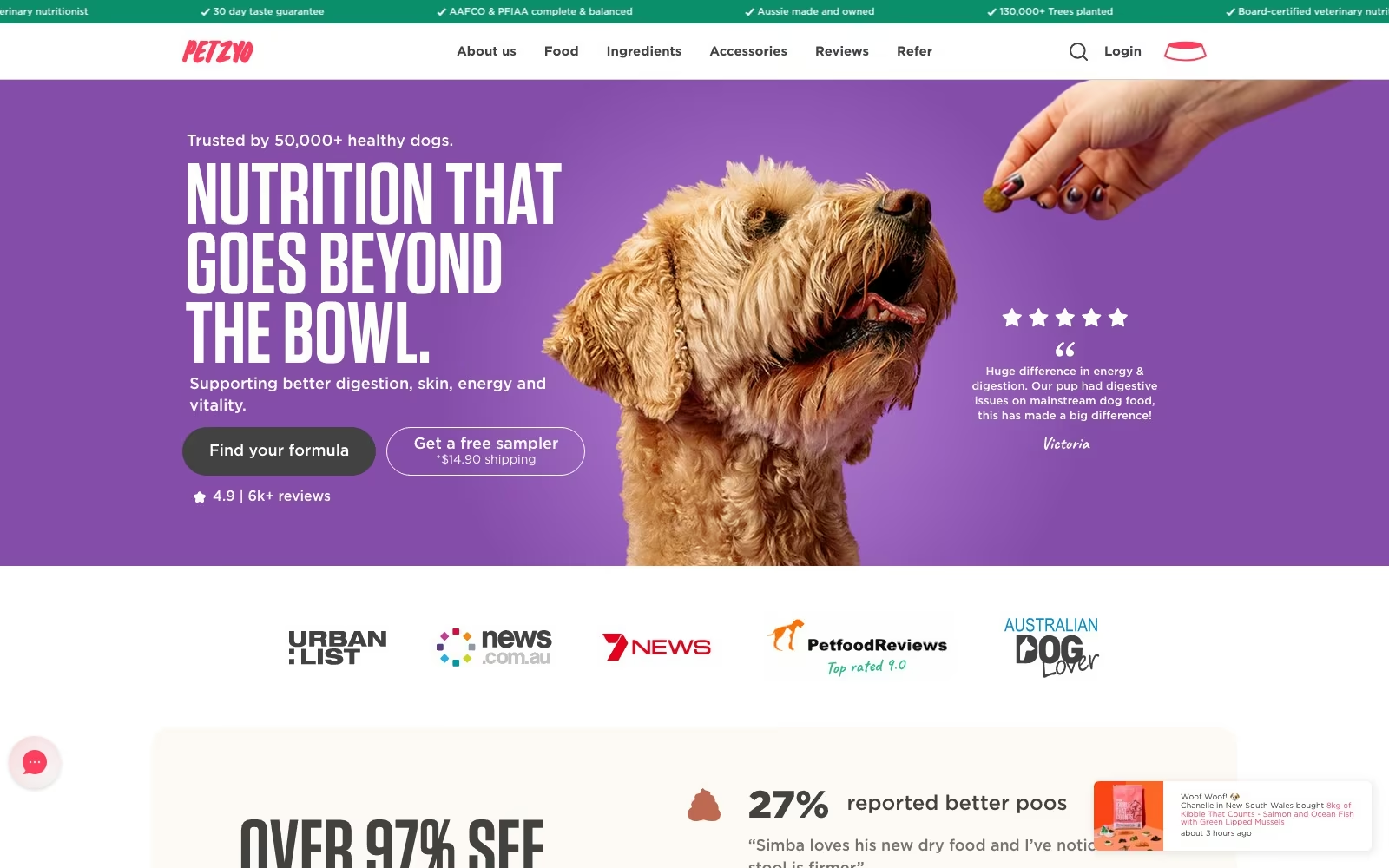














FAQ
What teams ask us first.
What does a copywriting agency do that a freelancer does not?
Freelance copywriters can be excellent, and for a single well-defined piece one is often the right answer. What an agency adds is the surrounding work: customer research and sales interviews, a message document that keeps every page consistent, editors reviewing drafts, designers and developers who can build the page, and the testing that shows whether the copy performed. It also adds continuity — when your website, ads and emails are written from one argument by one team, the whole funnel reads as a single sentence instead of three.
How do you choose between copywriting agencies?
Ask what happens before the writing. If the process starts with a questionnaire and ends with a draft, you are buying words; if it starts with customer interviews, sales call reviews and a message document, you are buying judgement. Ask who writes and who edits, and read three pieces in a category near yours. Ask what they measure, because copy that nobody tested is just copy that nobody argued with. And check what you keep: the message document and voice guide should be yours, so your writers can produce consistently afterwards.
Do you use AI to write our copy?
Not as the writer. We use it the way a researcher uses a search engine — synthesising interview transcripts, sorting review data, generating variations to react against — and the writing, the judgement and the editing are human. The reason is commercial rather than sentimental: with 95% of B2B marketers now using AI applications (CMI, 2026), competent generated copy is the baseline everyone already has, so it cannot differentiate you. What differentiates a page is the specific sentence a real customer said, and that only comes from talking to them.
How long should our landing page copy be?
As long as the decision requires, which is a different answer for a $40 product and a $40,000 service. The useful rule is that length is not the variable that matters — order and clarity are. A long page that answers objections in the sequence a buyer raises them outperforms a short page that hides what you sell. What consistently helps is plainness: Unbounce's benchmark of 41,000 pages found fifth-to-seventh-grade reading levels converting at 11.1% versus 5.3% for professional-level writing. We write to the decision, then cut every sentence that is not doing work.
Will you write in our brand voice?
Yes, and we document it so it survives us. The tone guide comes out of interviews with your founders and sales team, a read of the wording you already like and dislike, and the words your customers use themselves. It includes examples of the same sentence written well and badly, which is far more useful to a writer than adjectives like 'confident' or 'friendly'. If you already have brand guidelines we work inside them and flag anything that is actively costing conversions rather than quietly ignoring it.
Can you improve pages we already have instead of rewriting everything?
Often that is the better first project, and it is the cheaper one. We review the existing pages against the message document, then fix in priority order: the first screen, the offer, the order of objections, the proof, and the calls to action. On a page with existing traffic that sequence usually moves results before any redesign, and it gives us evidence for the larger rewrite. We are equally happy to say a page is fine and point the budget somewhere that will pay better.
How do you measure whether the copy worked?
Against conversion rate on the page and quality further down the funnel, not against internal approval. Where traffic supports experiments we test the message and the offer first, because that is where the size is: VWO's 2026 benchmark shows call-to-action copy as the most-tested element with roughly a 10% win rate, which tells you how little is left in button verbs. Where volume is low we use session recordings, scroll and attention data, and what sales hears after the form. We report the tests that lost as well as the ones that won.
Do you write for ads, emails and product pages too?
Yes, and writing them together is the point. Search and social ads, landing pages, welcome and nurture sequences, abandonment and win-back emails, product and collection copy, sales one-pagers and video scripts all come from the same message document, so a person who clicks an ad meets the same promise on the page and again in the first email. Our paid search and paid social teams brief us on what the accounts need, which is why the ad and the page rarely disagree.
What do you need from us, and how much of our time will it take?
Around three to four hours in total, concentrated at the start. We need access to sales calls or a couple of interviews with the people who sell, introductions to three to five customers for short conversations, whatever reviews and support data exists, and one reviewer with authority to approve copy so drafts do not die in committee. For context, Orbit Media's survey puts the average blog post alone at nearly four hours of writing time — the research hours you give us are the reason our drafts need two rounds rather than six.
What if we do not like the first draft?
Then we revise it, and the message document usually tells us why quickly. Two rounds of revisions are included on every deliverable, and we ask for feedback against the document — is the promise wrong, the proof insufficient, the objection order off — rather than as line edits, because that fixes causes instead of symptoms. Disagreements about a specific headline we are happy to settle with a test rather than seniority. In practice the drafts that need real rework are the ones where the research surfaced a positioning question the business had not yet decided, and that is a useful thing to discover on a page rather than in a quarter of spend.
How much do copywriting services cost, and how do you price them?
Page and campaign work is priced per deliverable as a fixed project, so you approve a number rather than an open-ended arrangement, and ongoing programmes run as a monthly retainer sized to the volume you need. What moves the price is the research: a page set that needs five customer interviews and a full positioning strategy costs more than a rewrite of three service pages inside an existing guide. Interviews, two revision rounds, the message document and the voice guide are included rather than billed as extras. We quote after the review call, when we know which of those you actually need, and we will say plainly when a smaller scope would serve you better.
Who writes our content, and what expertise will they have?
A named senior writer with experience in your kind of business, plus an editor who reviews every draft, and you meet them before the work starts. We do not rotate accounts through a pool of freelance writers, because the value compounds when the same person hears the customer interviews, writes the pages and then writes the ads and emails from that same understanding. Where a subject needs expertise nobody outside your company has — a regulated industry, a technical product, a specialist buyer — we interview your experts and build the creative work around what they tell us, which is also what stops the writing sounding generic.
Do you handle SEO in the copy as well?
Yes, without letting it wreck the writing. That means the page targets one clear primary topic, uses the vocabulary real searchers use, structures headings so both readers and crawlers can follow the argument, and links sensibly to related pages. It does not mean stuffing a phrase into every paragraph, which reads badly and no longer helps. Where the project is primarily about rankings rather than persuasion, our SEO team and content team lead and we write to their briefs.

.webp)
.webp)