The living room is a performance channel now.
performance channel
We are the YouTube advertising agency for companies that want measurable demand from video, not a showreel. We make the ads, buy the placements, feed the platform clean conversion data and prove incrementality — so YouTube sits alongside paid search, paid social and measurement as a line you can defend in a budget meeting. It is a full marketing service — strategy, ads, media buying and reporting — run by one senior team rather than split between a production house and a media agency.






Tell us a little about your brand and we'll be in touch within 24 hours to lock in a time.



THE FOUR LAYERS
Four layers decide whether video pays.
whether video pays
The asset, the buy, the measurement and the learning loop. Most marketing teams and most agencies are strong at one or two of the four. Campaigns that disappoint almost always fail one layer below where the blame lands: the targeting is not the problem, the first three seconds are.
Assets & hooks
The buy & campaign types
Measurement & signal
Scaling & the learning loop
Earn the first three seconds.
Nothing else in the account matters as much as the opening. A viewer reaching for the skip button is the real competition, not the other advertiser in the auction, so we write for the cold open: the problem stated in one line, the product on screen early, the offer legible without sound. Then we cut the same shoot into the shapes each surface needs — six-second bumpers, skippable in-stream, vertical for the Shorts feed, and a longer edit for the living room screen.
Volume is what makes video improve. We produce in batches so there are always fresh hooks in rotation and fatigue never forces a rushed shoot, and we test one variable at a time: opening line, framing, offer, length, voiceover. Most accounts we inherit have three assets and a year of history — that is a testing problem disguised as a media problem.
Video is mainstream now: Wyzowl finds 91% of businesses using video as a marketing tool and 42% outsourcing the making of it. Doing it in volume, on brief, is the part that stays hard.
- Hooks written for the skip button, not the storyboard
- One shoot cut for bumpers, in-stream, Shorts and the TV screen
- Batched production so fresh assets are always in rotation
- One variable tested at a time, with a written verdict
91%
of businesses use video as a marketing tool (Wyzowl)
42%
outsource making the videos themselves
Match the campaign type to the job.
YouTube is not one placement. Demand Gen, in-feed, in-stream, bumpers, the Shorts feed and connected-TV inventory behave like different media, and choosing between them is most of the craft. Response-driven accounts start where intent already exists — audiences built from your own customer and search data — then widen deliberately once the conversion signal is strong enough for the algorithm to work with.
The living room is where the growth is. Nielsen's May 2026 Gauge put YouTube at 13.8% of US TV watch-time, the largest share of any distributor for a third consecutive month, which is why we treat the big screen as its own plan with its own edits and its own frequency rules rather than a spillover from desktop.
Structure stays deliberately simple: few campaigns, enough data per line to learn from, exclusions and frequency managed centrally, and no placement running for a fortnight without anyone reading its numbers.
- Campaign type chosen per objective, not per habit
- Audiences built from your customer and search data first
- Connected TV planned as its own surface with its own edits
- Frequency, exclusions and placement lists actively managed
13.8%
of US TV watch-time went to YouTube in May 2026
No. 1
distributor in Nielsen's Gauge for a third straight month
Feed the platform truth, then judge it honestly.
Video is the channel most often mismeasured. Platform-reported conversions use view-through windows that flatter, last-click reporting denies video any credit at all, and both numbers get quoted in the same meeting. We fix the inputs first: deduplicated conversion events, server-side collection where the browser is unreliable, offline and CRM-stage imports so bidding optimises toward qualified demand rather than form fills.
Then we judge the channel with more than one lens: the in-platform view for in-flight decisions, the pipeline view for what actually closed, blended efficiency for the business, and a geo holdout or paused-market test when the question is genuinely causal. Advertisers who skip the last one are guessing, and usually either cutting a channel that works or scaling one that does not.
Reporting says what moved, what we changed, what we learned and what we recommend next — with the confidence level attached.
- Conversion events deduplicated and validated against the CRM
- Offline and pipeline data imported so bidding sees real outcomes
- Platform, CRM and blended views reported side by side
- Geo holdouts when the decision is worth the test
3 lenses
in-platform, pipeline and blended views read together
Scale the winners, retire the tired.
Scaling video is mostly asset supply. Once a hook works, the ceiling is how fast you can produce variants of it before frequency fatigue sets in, which is why our production calendar is planned against the media plan instead of being commissioned in a panic. Budget moves weekly toward the edits and placements carrying efficiency, and away from the ones coasting on early results.
The market is expanding into this, not away from it: Alphabet reported YouTube ad revenue growing 13% year over year in Q2 2026, which Variety put at $11.06 billion for the quarter, ahead of analyst expectations. Rising competition means the auction gets more expensive for advertisers with weak assets and better for advertisers with a pipeline of them.
Every account gets a written monthly review and a next-quarter testing plan. Accounts, assets, footage and audiences remain yours.
- Production calendar planned against the media plan
- Weekly budget shifts toward what is carrying efficiency
- Fatigue watched per placement, not per account average
- Monthly written review plus a next-quarter test plan
$11.06B
YouTube ad revenue in Q2 2026, up 12.6%
13%
year-over-year growth reported by Alphabet
average YouTube cost per view (DigitalApplied)
of US YouTube watch time is connected TV (DigitalApplied)
Fresh assets in rotation before fatigue forces a rush
Accounts, footage, edits and audiences
We made the difference for those brands

Creative, content, arts & culture

Food & beverage

Food & beverage

B2B software, fintech, insurance

B2B software, fintech, insurance

Beauty, personal care & wellness

Apparel and lifestyle

Beauty, personal care & wellness
Food & beverage

Food & beverage

Healthcare & regulated services

Retail & commerce

Consumer tech and platforms

Creative, content, arts & culture

Creative, content, arts & culture

Beauty, personal care & wellness

Consumer tech and platforms

B2B software, fintech, insurance

Healthcare & regulated services

Healthcare & regulated services

Food & beverage

Creative, content, arts & culture

B2B software, fintech, insurance

B2B software, fintech, insurance

Home essentials, appliances, kitchen & pet

B2B software, fintech, insurance

Consumer tech and platforms

B2B software, fintech, insurance

Retail & commerce

Creative, content, arts & culture
01 — The challenge
Plenty of plays. No idea what they bought.
The reach numbers look wonderful, the cost per play is cheap, and nobody in the room can say what the spend produced. Meanwhile the same three assets have been running since last year, and the one placement everyone argues about is the one nobody has tested.
“It reached four million people. Sales were flat.”
Two things are usually true at once: the assets are not earning attention, and the measurement cannot tell anyone so. Both are fixable, and the prize is worth the work — Nielsen has YouTube holding 13.8% of US TV watch-time, more than any other distributor, so this is where a large part of the audience for national advertising now sits. Get the hooks and the conversion signal right and the channel stops being a faith-based line in the plan.
02 — Our approach
Fix the signal. Make the assets. Then buy scale.
We start with measurement, because buying media on unreliable events wastes the budget and the learning: events deduplicated and validated against your sales system, server-side collection where the browser is unreliable, and pipeline stages imported so bidding optimises toward customers rather than clicks. Next comes the asset plan — hooks written for the skip button, one shoot cut into bumpers, in-stream, vertical and living-room edits, produced in batches so rotation never runs dry. The buy starts where intent already exists, using your own customer and search data, then widens once the signal supports it, with connected TV planned as its own surface. Weekly we shift budget toward what is working and retire what is fatiguing; monthly you get a written review and a test plan. Accounts, footage and audiences stay yours.
03 — What we did
Four phases, and the assets keep coming.
Signal, assets, launch, then scale — run in sequence with a weekly working session and a written monthly review of what changed and what it moved.
Weeks 1-2 / Signal & plan
Rebuild the conversion signal first
Events deduplicated and validated against the sales system, pipeline stages imported, audiences built from first-party data, and the asset brief written from what already converts.

Weeks 2-4 / Assets
One shoot, every shape it needs
Hooks written for the skip button, then cut into six-second bumpers, skippable in-stream, vertical edits and a longer living-room version.
Week 5 / Launch
Buy where intent already exists
Campaigns launched on your own customer and search data, with frequency rules, exclusions and connected-TV edits handled separately from the desktop feed.

Ongoing / Scale
Test, retire, then push budget
Weekly budget shifts toward the edits carrying efficiency, holdout tests where the decision is causal, and a monthly written review ending in recommendations.

WHAT YOU GET
Deliverables you can audit line by line.
audit line by line
Everything below is made in your own accounts, documented as we go, and yours to keep — footage, edits, audiences and reporting.

Channel plan and forecast
Objectives, surfaces, audiences and budgets mapped to a forecast you can hold us to, with the placements we would not run yet named.

Ad assets in volume
Scripted hooks and batched edits — bumpers, in-stream, vertical and living-room cuts from one shoot, refreshed before fatigue lands.

Campaign build and buying
Campaign types matched to the objective, audiences from first-party data, frequency and exclusions managed centrally rather than per line.

Conversion signal engineering
Deduplicated events, server-side collection and pipeline imports so bidding optimises toward qualified demand instead of raw form fills.

Incrementality testing
Geo holdouts and paused-market tests designed to settle the questions platform reporting cannot, run when the decision is worth the cost.

Reporting and monthly review
Platform, pipeline and blended views side by side, plus a written review of what moved, what we changed and what we recommend next.
HOW WE WORK
Operating standards, not promises.
Operating standards



















Built on trust. Proven by results.
We partner with SMBs and Fortune 500 companies to deliver more than reach — we bring clarity, execution, and measurable outcomes. Every successful partnership starts with a strong culture fit and a shared drive to grow.






CASE STUDIES
Case studies
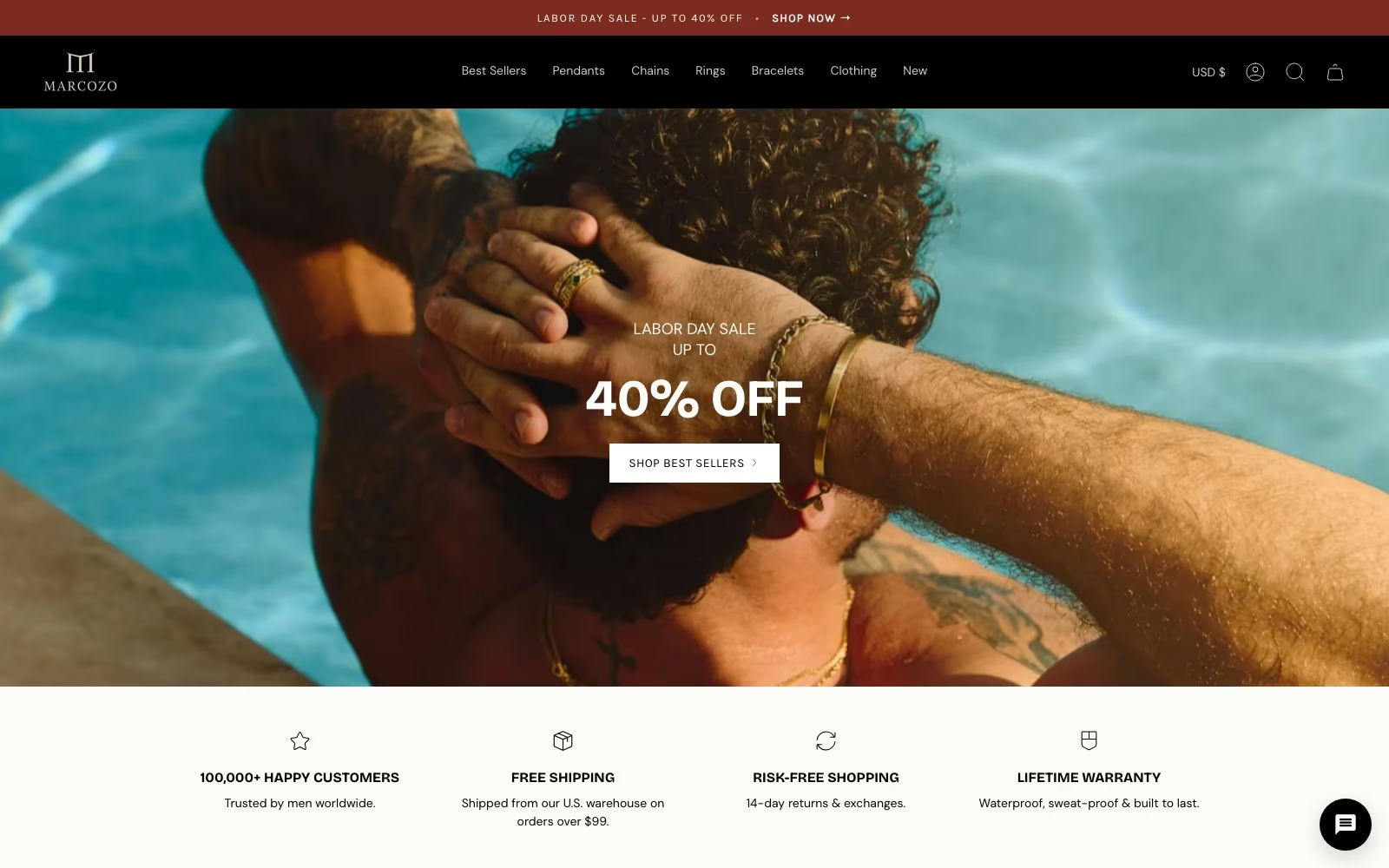
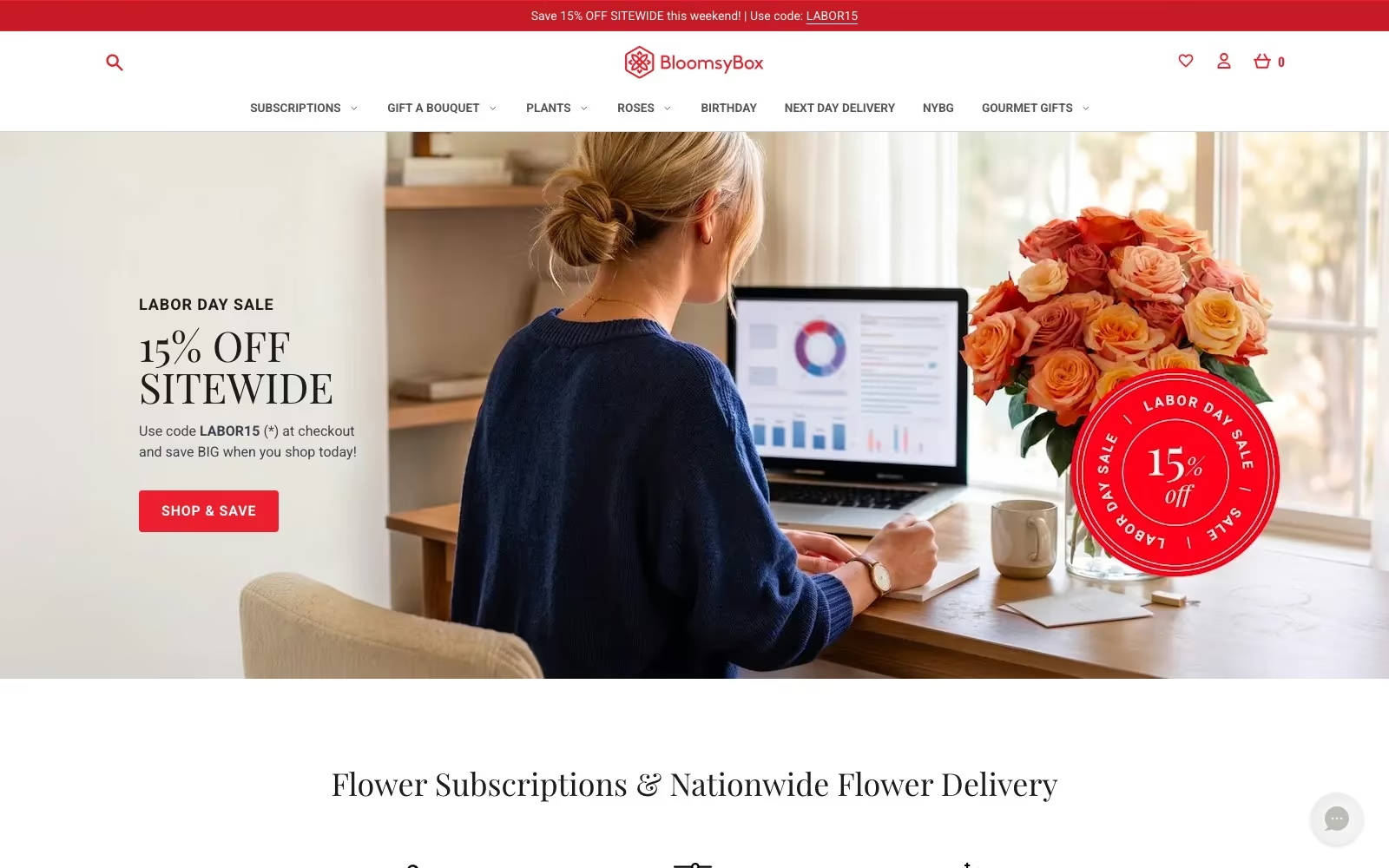
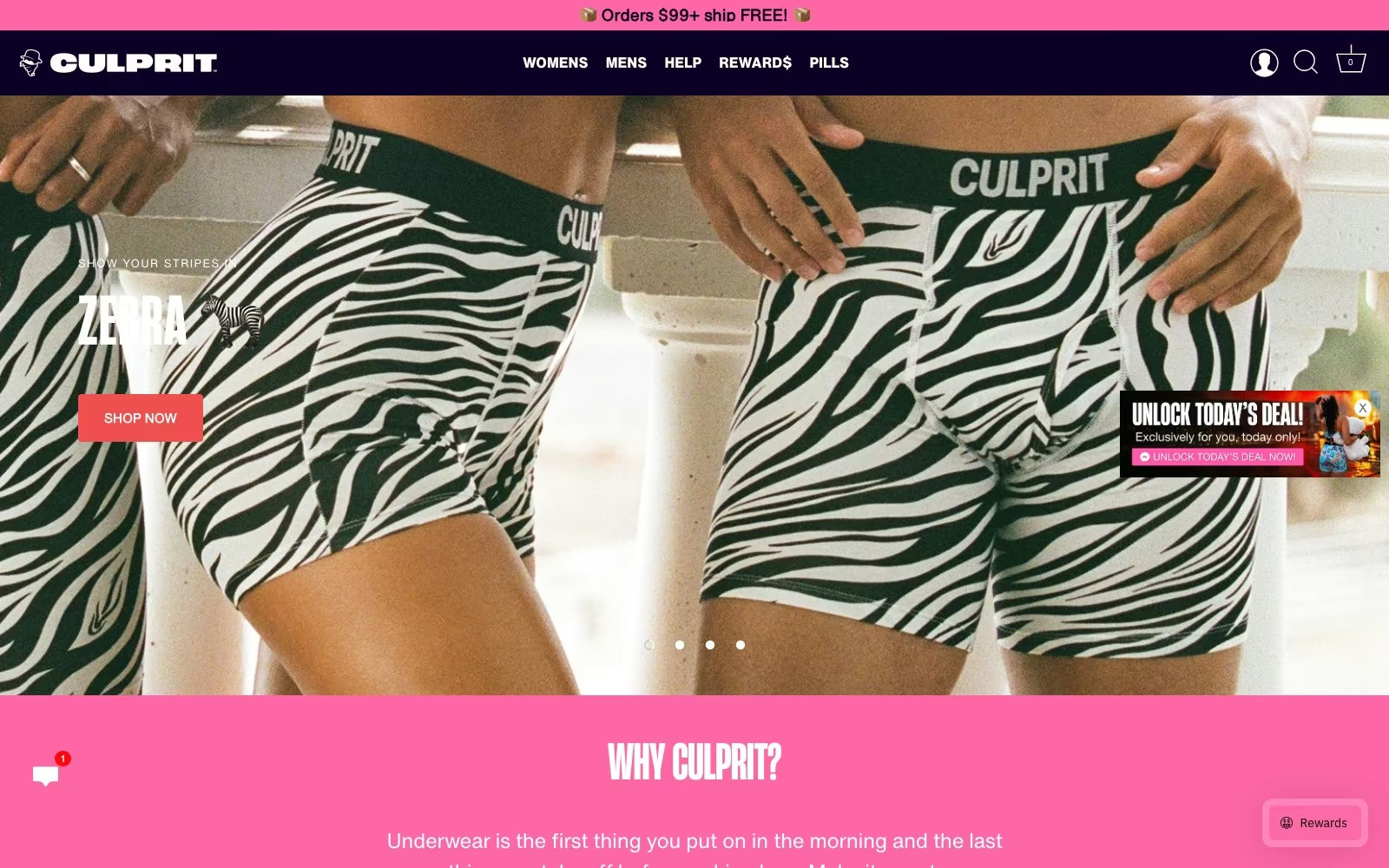
Website Portfolio
Video Ads
Static Ads


































































FAQ
What advertisers ask us first.
What does a YouTube advertising agency actually do?
Four things, in order: make assets that earn attention, buy the right surfaces for the objective, engineer the conversion signal so the platform can optimise toward customers, and prove what the channel contributed. Most engagements that disappoint have skipped one of the middle two — beautiful films bought against unreliable events, or clean measurement behind three tired edits. We do all four with one team, and the reporting ends in a decision rather than a slide of reach figures.
How much budget do we need for YouTube to work?
Enough for two things at once: sufficient conversion volume for bidding to learn, and a rotation of assets so you are not running one edit into the ground. For a response-driven account that usually means starting on a focused surface and audience rather than spreading a modest budget across every placement. If your budget only supports one of the two, we will tell you which to fund first, and we would rather advise a smaller, honest test than sell a plan that cannot produce a readable result.
Is YouTube a branding channel or a performance channel?
Both, and the distinction is mostly an artefact of how it is measured. The living-room screen behaves like television for reach and recall, while in-feed and vertical placements can drive direct response with the right asset and a clean signal. Alphabet itself attributes recent growth to direct response as well as brand advertising, with strength in the living room. We plan the two jobs separately, with different edits, different bidding and different success measures, so neither gets judged by the other's numbers.
How do you measure YouTube properly?
By fixing the inputs, then using several lenses. Inputs first: deduplicated events, server-side collection where the browser is unreliable, and pipeline or offline outcomes imported so bidding sees revenue rather than form fills. Then we report the in-platform view for in-flight decisions, the sales-system view for what closed, and blended efficiency for the business as a whole — and when the question is genuinely causal we run a geo holdout instead of arguing about attribution windows. Ranges with a stated method beat one confident number nobody can reproduce.
How many ads do we need, and how often should they change?
More than most advertisers expect, and less often than panic suggests. A healthy account runs several distinct hooks per audience so the platform has something to choose between, with variants queued for when performance starts drifting. We watch fatigue per placement rather than by account average, because the vertical feed tires faster than the living-room screen. The practical answer is a production calendar planned against the media plan — batched shoots, cut many ways — rather than commissioning a new film every time a number dips.
Can you use footage we already have?
Often, and it is usually the fastest way to get a first honest read. Existing footage, product shots, testimonials and even sales-call recordings can be recut with a stronger opening and a legible offer, which tells us what your audience responds to before anyone books a shoot. That matters commercially, because making the films is the part most companies outsource anyway — Wyzowl finds 42% of businesses outsourcing video production. We will re-edit what you have, prove the hook, then shoot deliberately against what won.
How does YouTube fit with search and social spend?
As the demand-creation layer that makes the rest cheaper. Search captures intent that already exists; video is one of the few places you can manufacture that intent at scale, and accounts running both usually see branded search volume move first. We plan them together from one budget and one set of definitions, so nobody is claiming the same sale twice: our paid search, paid social and analytics specialists sit in the same weekly review as the video team.
What should we look for when comparing YouTube advertising agencies?
Four questions separate the agencies worth hiring. Who writes the hooks, and can they show you a dozen different openings for one offer? How do they measure — and will they run a holdout test, or only quote in-platform numbers? Which key metrics define success before the campaign starts, and are they business metrics rather than reach? And who owns the account, footage and audiences afterwards? A full-service marketing agency that treats video as a production line without a measurement plan will produce lovely films and no verdict. Ask for the last three tests any agency ran and what each one changed.
Which industries and business models does this work best for?
It works wherever demand can be created rather than only harvested: ecommerce brands with a visual product, subscription services, local service businesses with a large catchment, education, healthcare and considered B2B purchases where the buying committee needs to understand something before they search. It is a weaker fit when your total addressable market is a few hundred named accounts, where targeted outbound and LinkedIn advertising usually beat it. We will tell you which group you are in before quoting, because a channel plan that cannot work is worse than no plan.
How does video advertising support SEO and social strategy?
Directly, in two ways. Video assets earn visibility in their own right — the same edits, titles and descriptions can be optimised so they get found in search rather than only served as ads — and demand created by video shows up as branded queries our SEO and search teams then capture cheaply. On the social side, the same shoot supplies paid social and organic management, so one production budget serves several channels instead of one.
What strategy do you start with, and what are the key goals?
The strategy depends on where the constraint sits. If measurement is unreliable, that is the first goal, because every other decision inherits it. If the signal is sound but the assets are thin, we start with hook testing at low spend and scale only what earns attention. If both are healthy, the goal becomes efficient expansion: new audiences, the living-room screen, and a causal test to size the real contribution. We write the goals down with numbers attached before launch, review them weekly, and change them openly when the data says the plan was wrong.
Who owns the accounts, footage and audiences?
You do, without exception. Campaigns run in your advertising account, audiences are built in your property, footage and project files are handed over as we go, and documentation is written so another team could pick it up tomorrow. There is no proprietary layer you would lose by leaving and no long-term lock-in. We would rather earn the next quarter with results than hold a client with switching costs, and it keeps us honest about what is actually working.
What results should we expect in the first quarter?
In the first month, a trustworthy signal and a first read on which hooks hold attention. In the second, efficiency improving as budget concentrates on the winners and the weaker placements are cut. By the end of a quarter you should have a small library of proven assets, a cost per acquisition you can compare honestly against other channels, and at least one causal test on the record. What we will not do is promise a number before seeing your data — the forecast comes after the audit, and we hold ourselves to it in writing.

.webp)
.webp)