Buy the good inventory. Skip the rest.
the good inventory
We are the programmatic advertising agency for brands that want reach without the leakage. We curate the sites, apps and screens worth paying for, buy them through a DSP you can see inside, and report what the spend actually produced next to your paid search and paid social numbers — measured against a tracking setup we are happy to defend.






Tell us a little about your brand and we'll be in touch within 24 hours to lock in a time.



THE FOUR LAYERS
Four decisions decide the outcome.
Four decisions
Where the money lands, who sees it, what they see, and how you know. Most underperforming open-web buying fails at the first one, then gets blamed on the creative or the model. So we start with supply and work outward.
Supply curation
Audience & addressability
Formats, CTV & DOOH
Verification & measurement
A short list of places worth buying.
The open web sells everything, including a great deal you would refuse if you could see it. The ANA's Q2 2025 transparency benchmark put $26.8bn of global programmatic budget in the wasted column for a single quarter, with only 36.5% of spend reaching publishers. That is the default outcome of buying broad and hoping.
Discipline changes the arithmetic. By November 2025 the ANA reported the share of spend reaching publishers rising to 47.1%, up 11 points since 2023, with made-for-advertising exposure down to 0.39% for buyers who enforced quality rules. So we build an inclusion list rather than a blocklist: named sites and apps, curated deals with publishers who matter to your buyer, and a hard ceiling on long-tail exchange volume.
Everything sits in your own seat where practical, so the list, the deal IDs and the log-level history stay yours if you ever change partners.
- Named inclusion list, reviewed monthly against outcomes
- Curated and private deals with publishers your buyer reads
- Long-tail exchange volume capped, not left open
- Log-level reporting kept in your own seat where possible
$26.8bn
of global programmatic spend wasted in one quarter (ANA, Q2 2025)
47.1%
of spend reaching publishers once quality rules are enforced
First-party signal first, panels last.
Audience buying on the open web has quietly changed. Third-party segments are thinner than their datasheets suggest, browser controls remove a large share of the identifiers they rely on, and paying a premium for a poorly built segment is the most common way to make a good media plan expensive.
We prioritise signal you actually own: customer lists, site and app behaviour, CRM stages, offline outcomes, and the contextual and geographic patterns that hold up without an identifier at all. Where third-party data earns its keep we buy it deliberately and test it against a clean control, rather than stacking segments and calling the result precision. The ANA found participants directing 41% of programmatic budget to effective ad impressions, up from 36% in 2023 — progress, and still a lot of room.
Suppression matters as much as targeting. Existing customers, recent buyers and the wrong job titles come out before launch, not after someone notices in a report.
- Customer, CRM and site signal onboarded and refreshed
- Contextual and geographic buying that works without identifiers
- Third-party segments tested against a control before scale
- Customer and irrelevant-audience suppression set before launch
41%
of programmatic budget reaching effective impressions (ANA, Q1 2025)
One buying discipline, many screens.
Programmatic is no longer a banner business. Connected TV, online video, audio, digital out-of-home and native all trade through the same pipes, and each one needs its own creative logic: a fifteen-second CTV spot earns attention differently from a roadside screen six metres wide or an in-feed native unit.
We plan format by role. Video and CTV for reach and story, native and display for coverage and retargeting, audio for time nobody else is buying, out-of-home for the physical footprint around stores and venues. Scale is real: EMARKETER expects US walled-garden programmatic display spend to grow 19.6% this year to $177.36bn, which is exactly why the open web rewards buyers who are selective rather than merely present.
Every format ships with its own measurement plan up front. If we cannot state how a screen will be judged before it runs, we do not buy it.
- CTV, online video, audio, native, display and DOOH under one plan
- Creative built per format, not resized and shipped
- Frequency managed across screens, not per line item
- A stated measurement method before any format goes live
$177.36bn
US walled-garden programmatic display spend forecast for 2026
$1.4B
global programmatic DOOH spend in 2025 (World Out of Home Organization)
Proof that survives a finance review.
Open-web buying attracts optimistic reporting, so verification is not an add-on here. Viewability, invalid-traffic filtering, brand-safety and attention measurement run on every campaign, and we read the placement report line by line: the site that delivers ten million cheap impressions and nothing else is the single most common drain on a budget.
Outcome measurement is triangulated, not taken on faith. Platform numbers guide in-flight decisions, your CRM or billing system says what closed, blended efficiency describes the business, and geo holdouts settle the questions a model cannot. Where the ANA still finds top-quartile advertisers putting up to 28.7% of budget into made-for-advertising domains, the ability to prove where money went is a competitive advantage rather than housekeeping.
You get the raw placement data, not a summary of it. That is the point of working with a team that has nothing to hide in the supply chain.
- Viewability, IVT and brand-safety verification on every line
- Full placement reports shared, not summarised
- Platform, CRM and blended views read side by side
- Geo holdouts where the decision is bigger than the test
28.7%
of budget still going to MFA domains among top-quartile advertisers
$11.58
trueCPM gap between efficient and wasteful advertisers (ANA)
programmatic ad revenue in 2025 (IAB)
of programmatic budget wasted by siloed buying (StackAdapt)
Placement reports shared in full, every month
Every site and app we buy is on a list you approved
We made the difference for those brands

Food & beverage

Retail & commerce

Food & beverage

Home essentials, appliances, kitchen & pet

Home essentials, appliances, kitchen & pet

Healthcare & regulated services

Creative, content, arts & culture
Food & beverage

Food & beverage

Beauty, personal care & wellness

Healthcare & regulated services

Consumer tech and platforms

Consumer tech and platforms

Retail & commerce

Beauty, personal care & wellness

Healthcare & regulated services

Home essentials, appliances, kitchen & pet

Food & beverage

Beauty, personal care & wellness

Consumer tech and platforms

Consumer tech and platforms

Beauty, personal care & wellness

Home essentials, appliances, kitchen & pet

B2B software, fintech, insurance

Home essentials, appliances, kitchen & pet

Food & beverage

Creative, content, arts & culture

Consumer tech and platforms

Healthcare & regulated services

B2B software, fintech, insurance
01 — The challenge
Millions of impressions, no idea where they went.
The dashboard says the campaign is efficient. The placement report says half the budget went to sites nobody in the room has heard of, the CPM looks suspiciously cheap, and the conversions the DSP claims do not appear anywhere in the sales system. Somebody asks where the money actually went and the honest answer takes a week to assemble.
“We reached everyone, apparently. Sales did not notice.”
The scale of that gap is documented rather than anecdotal: the ANA measured $26.8bn of programmatic spend wasted in a single quarter, with barely a third reaching publishers. The cause is rarely the DSP. It is open-exchange buying with no inclusion list, audience segments nobody validated, creative resized rather than made, and reporting that counts impressions instead of outcomes. Tighten the supply path and the same budget starts behaving like media rather than noise.
02 — Our approach
Curate the supply. Own the signal. Verify everything.
We start with where the money lands: a named inclusion list, curated publisher deals, and a hard cap on long-tail exchange volume, built in a seat you can see inside. Then audience, driven by data you own — customer lists, site behaviour, CRM stages, offline outcomes — with third-party segments tested against a control before they get real budget, and suppression set before launch. Creative is produced per format, because a CTV spot, a roadside screen and an in-feed native unit are three different jobs. Verification runs from day one: viewability, invalid traffic, brand safety, and full placement reports you receive rather than request. Outcomes are triangulated across the platform, your sales system and blended efficiency, with geo holdouts where a decision deserves proof.
03 — What we did
From open exchange to a list you can defend.
Audit, curation, creative and verification run in sequence, with a weekly working session and a written monthly review of what the spend produced.
Weeks 1-2 / Audit
Read the placement report line by line
Every site, app and deal ranked by outcome rather than impressions, with the cheap-and-useless supply cut before anything else changes.

Weeks 2-4 / Curation
Build the inclusion list and the deals
Named publishers, curated and private deals, capped long-tail volume, and suppression lists in place before a single line goes live.

Weeks 3-6 / Creative
Make the format, do not resize it
CTV, video, audio, native, display and out-of-home built for their own screen, with frequency managed across all of them together.

Ongoing / Verification
Verify, triangulate, then move budget
Viewability and invalid-traffic checks, full placement data, platform and CRM views read together, and holdouts where the stakes justify one.

WHAT YOU GET
Deliverables, not a monthly impression count.
impression count
Built in your own seat wherever the platform allows it, documented as we go, and yours to keep if you ever move on.

Media plan and supply path
A named inclusion list, curated publisher deals and capped exchange volume, with the reasoning written down per line.

Audience and suppression build
First-party lists, site behaviour and CRM stages onboarded, with customer and irrelevant-audience suppression live from day one.

Creative per format
CTV, video, audio, native, display and out-of-home versions produced for their own screen and refreshed on a schedule.

Verification and brand safety
Viewability, invalid-traffic and suitability measurement on every line, with the full placement report shared each month.

Outcome reporting
Platform, sales-system and blended efficiency views side by side, with assumptions and uncertainty stated plainly.

Incrementality testing
Geo holdouts and controlled pauses designed for the decisions attribution models cannot settle on their own.
HOW WE WORK
Operating standards, not promises.
Operating standards



















Built on trust. Proven by results.
We partner with SMBs and Fortune 500 companies to deliver more than reach — we bring clarity, execution, and measurable outcomes. Every successful partnership starts with a strong culture fit and a shared drive to grow.





CASE STUDIES
Case studies
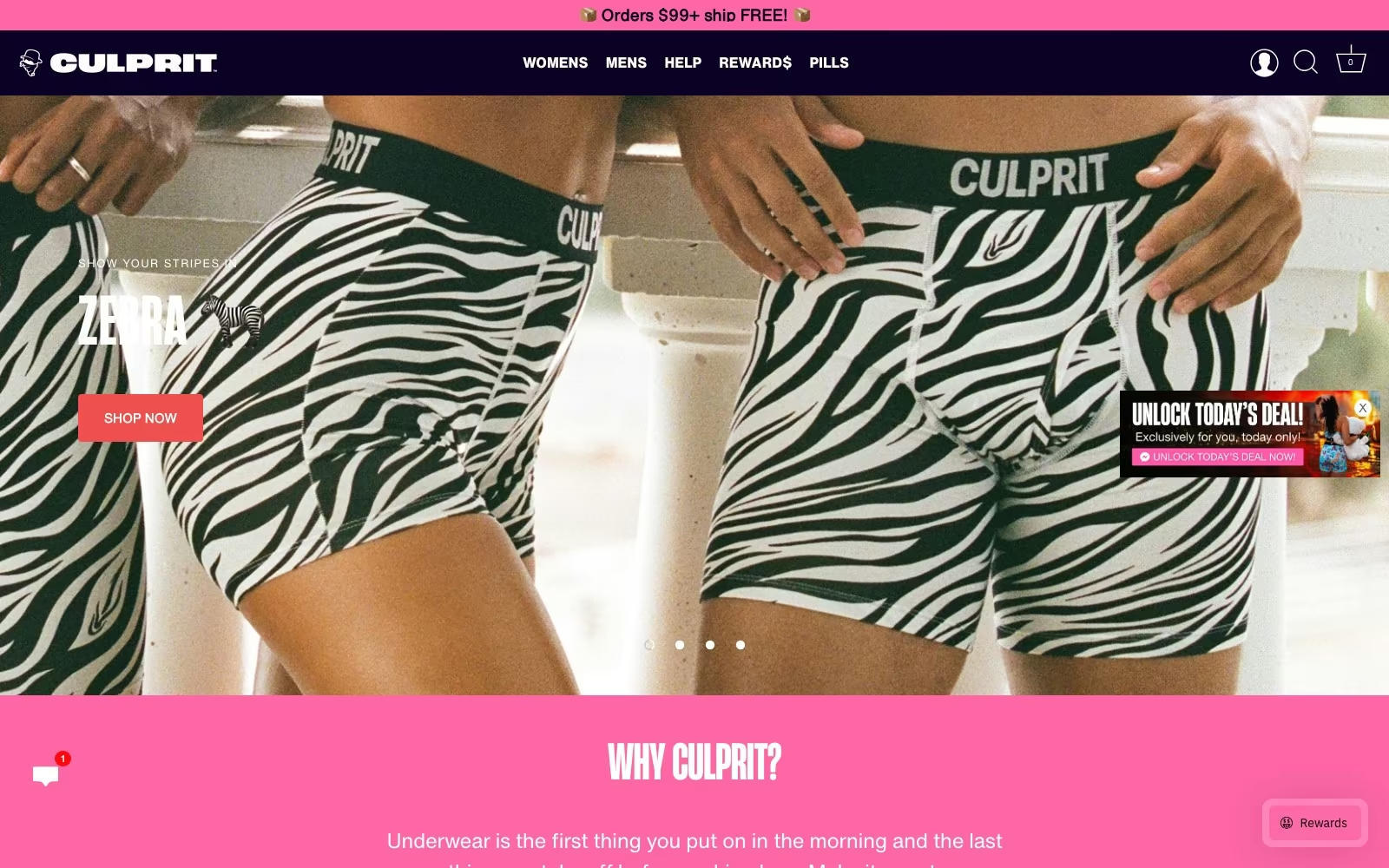
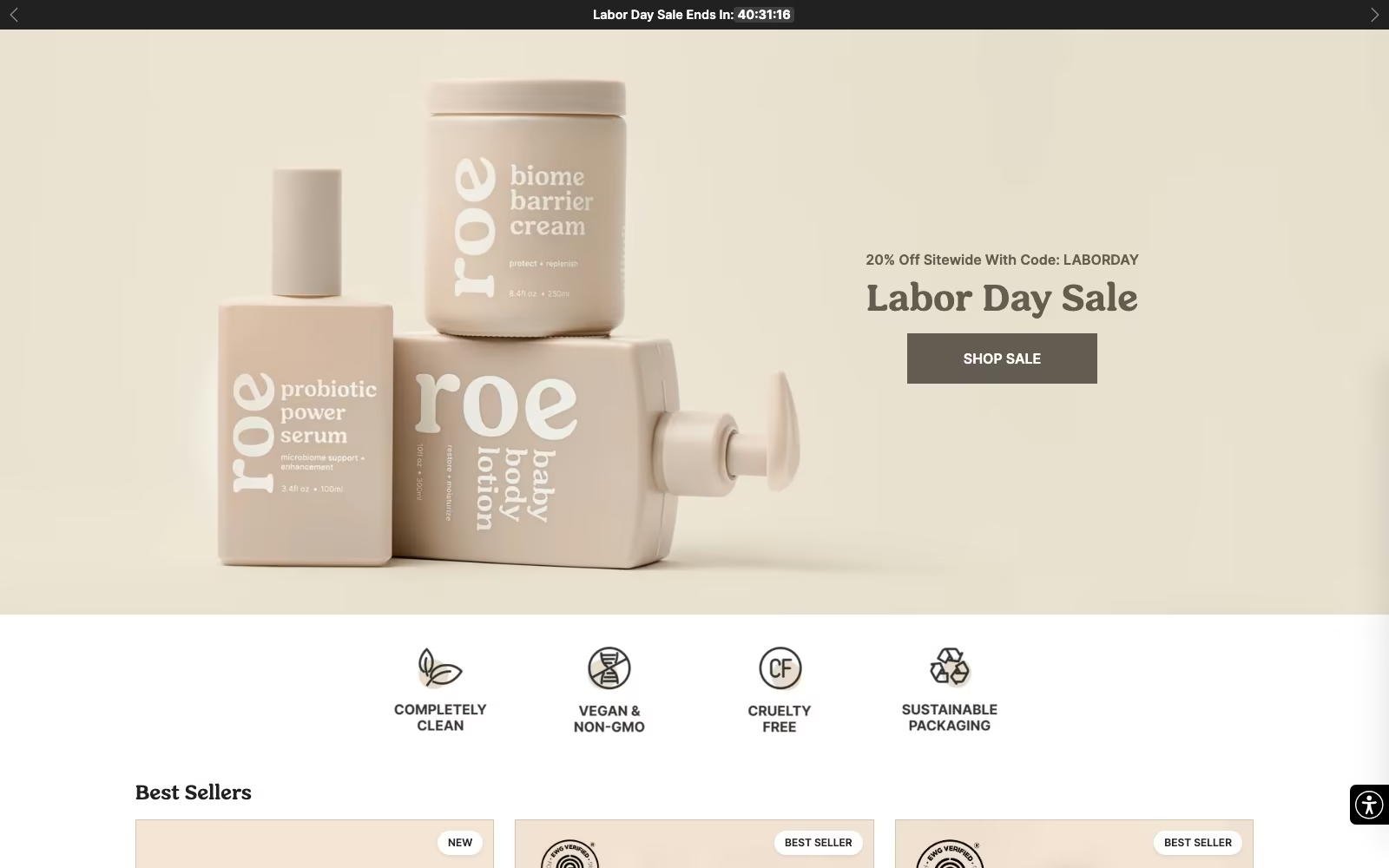
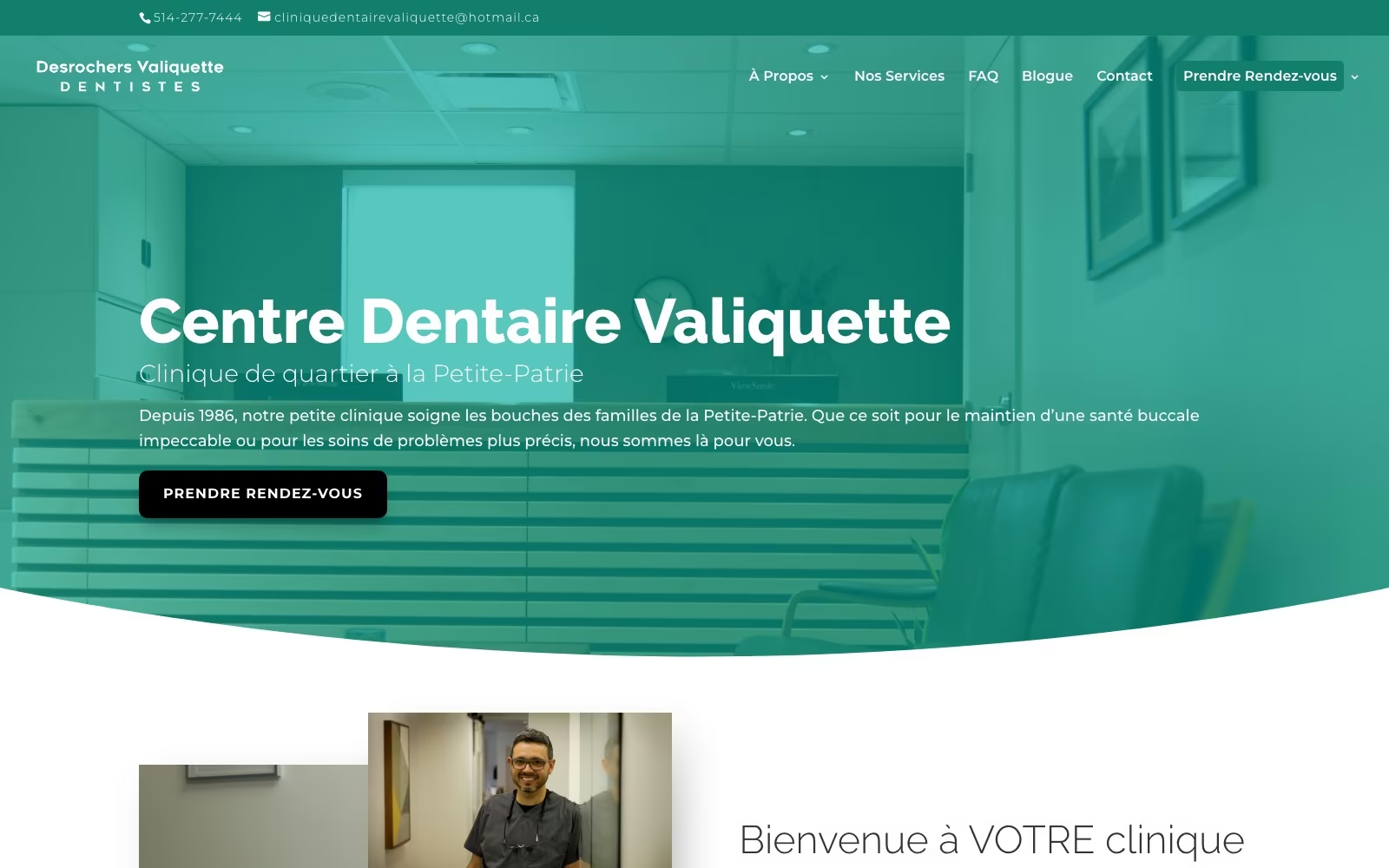
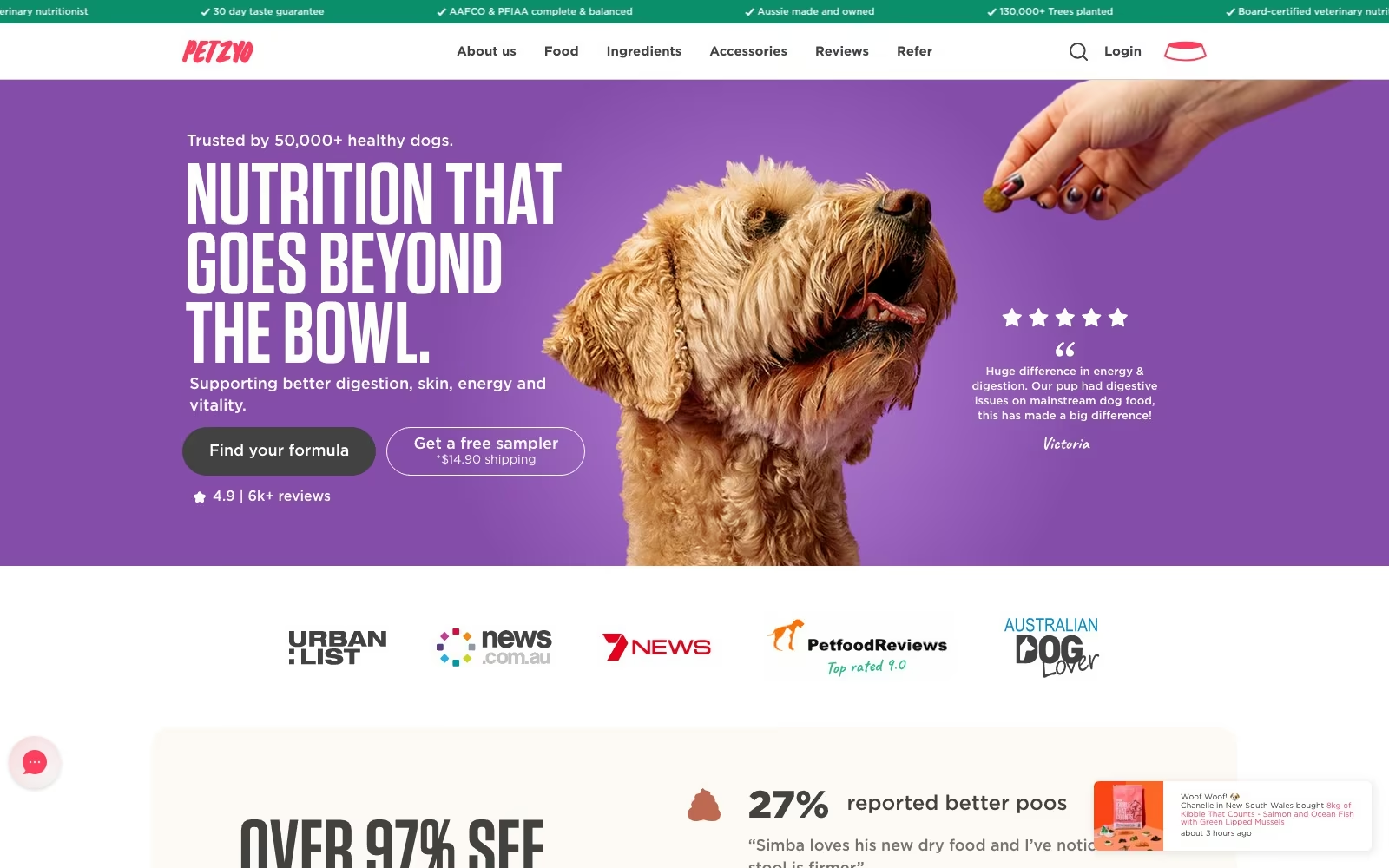
Website Portfolio
Video Ads
Static Ads




















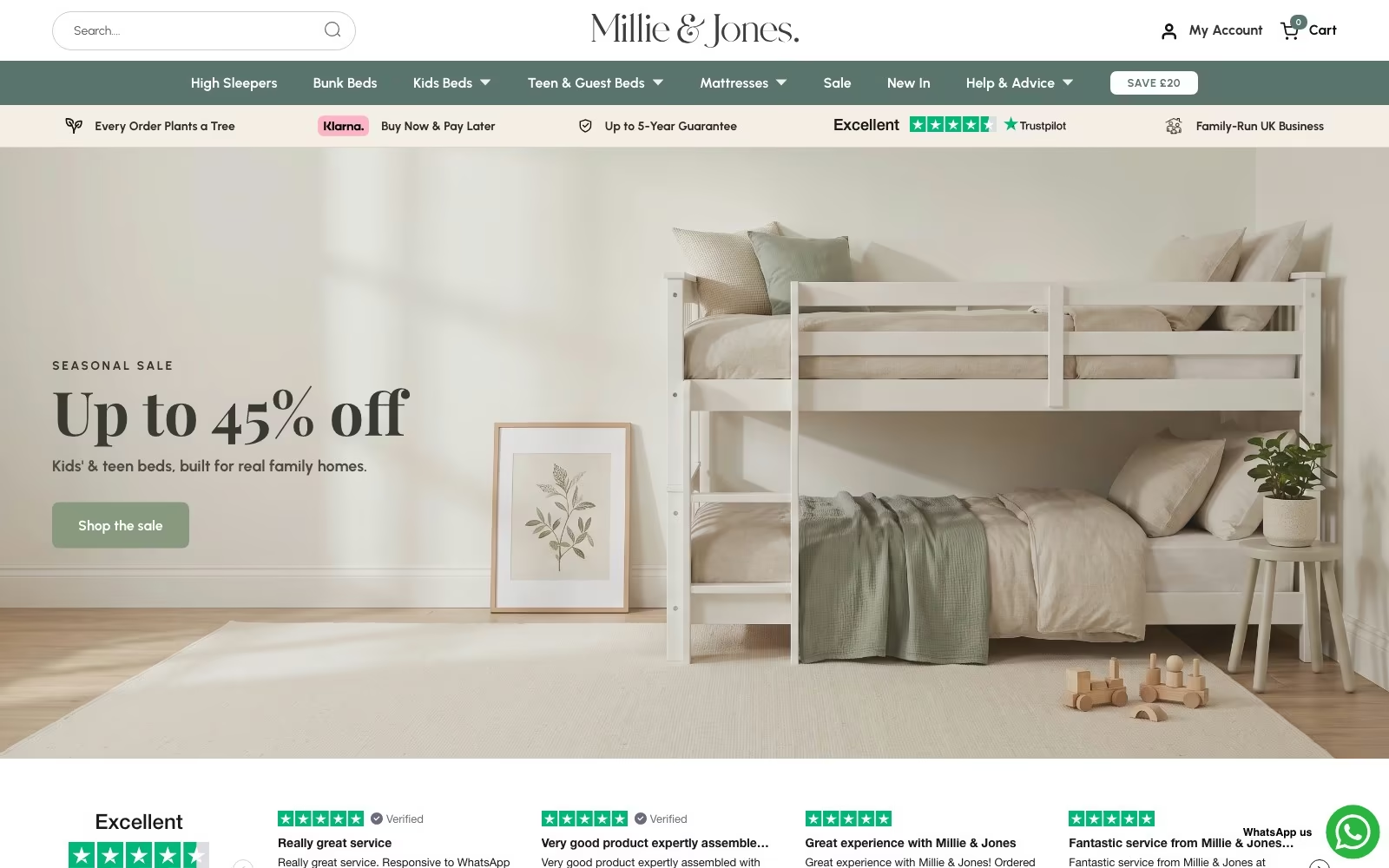

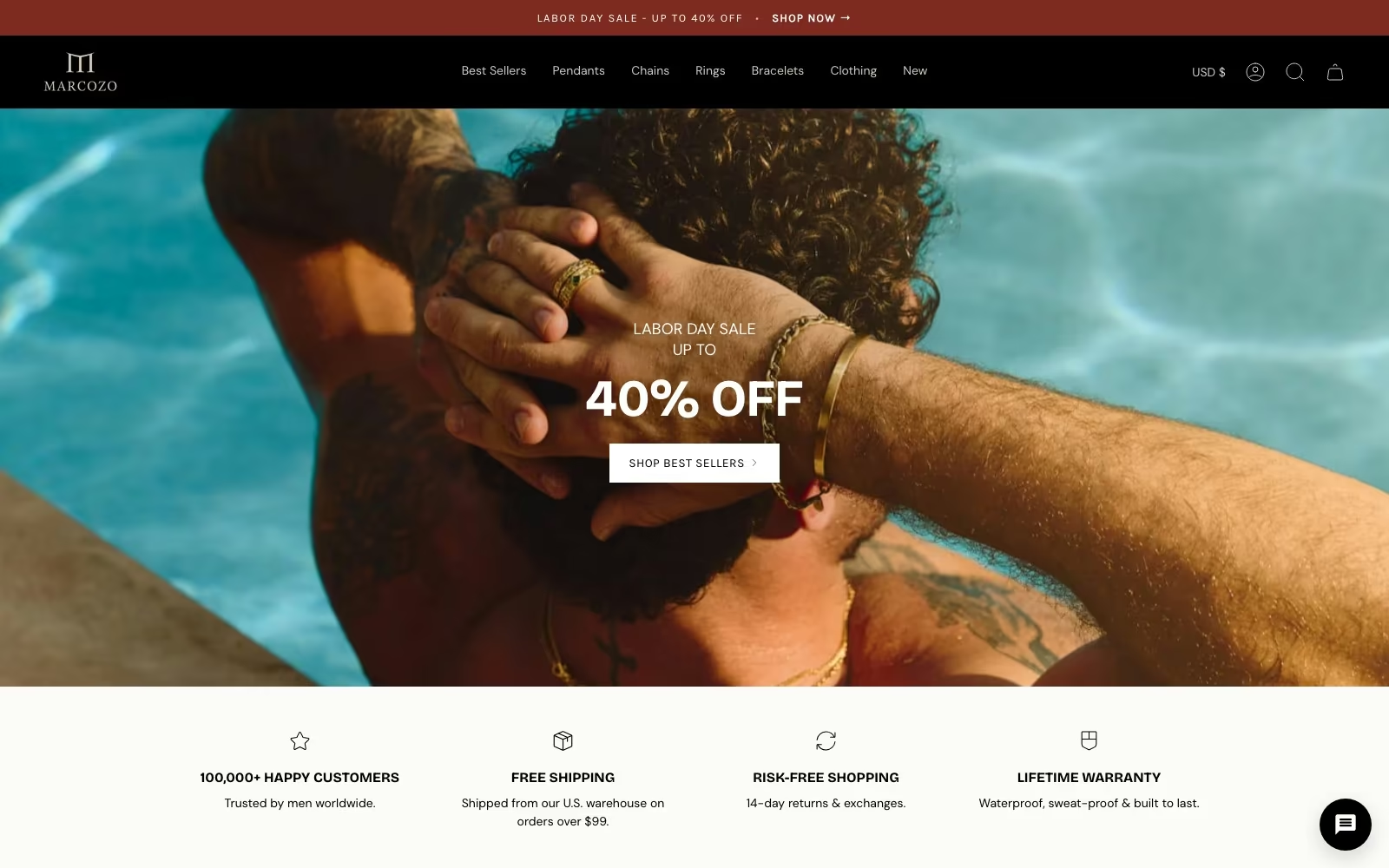

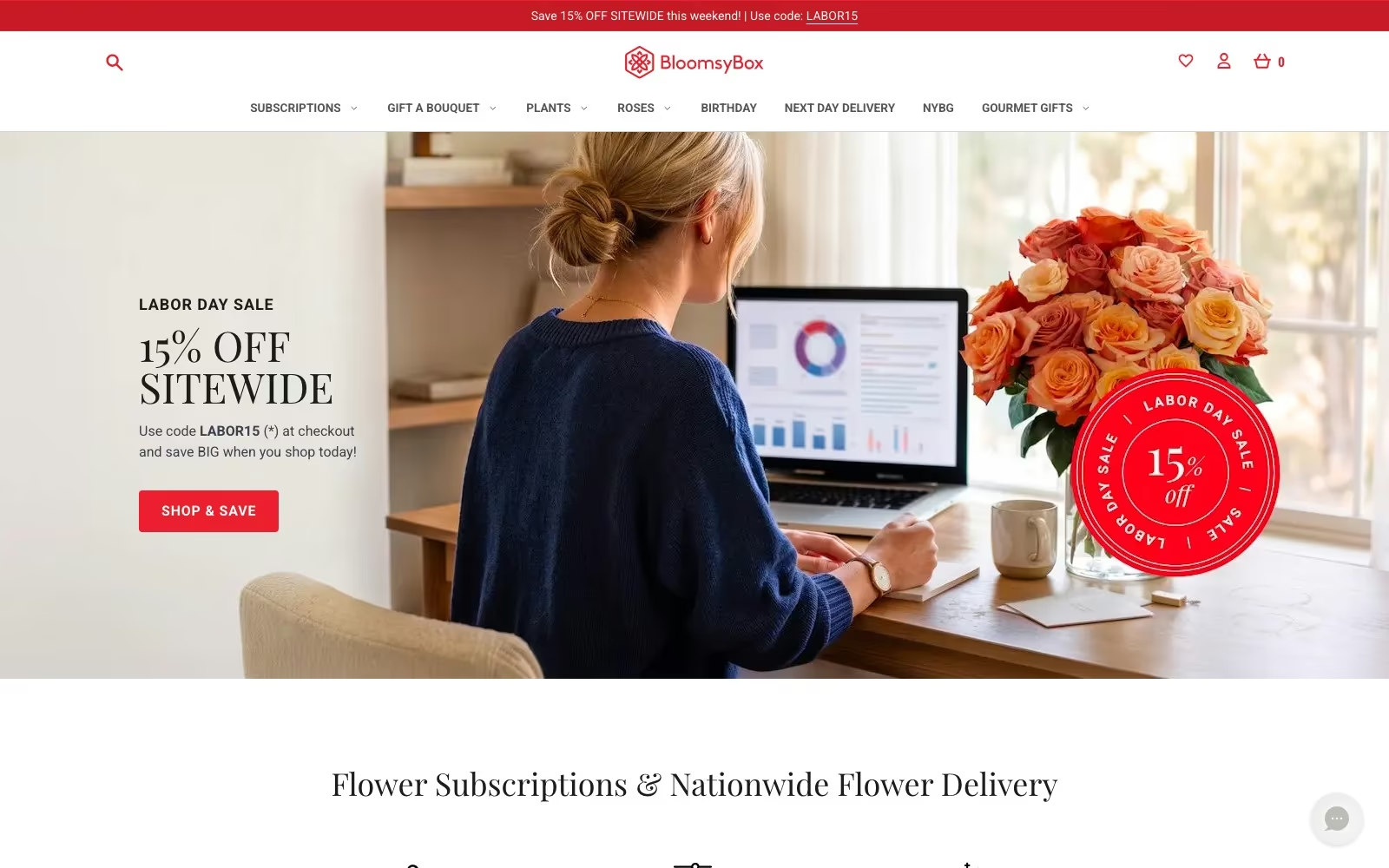

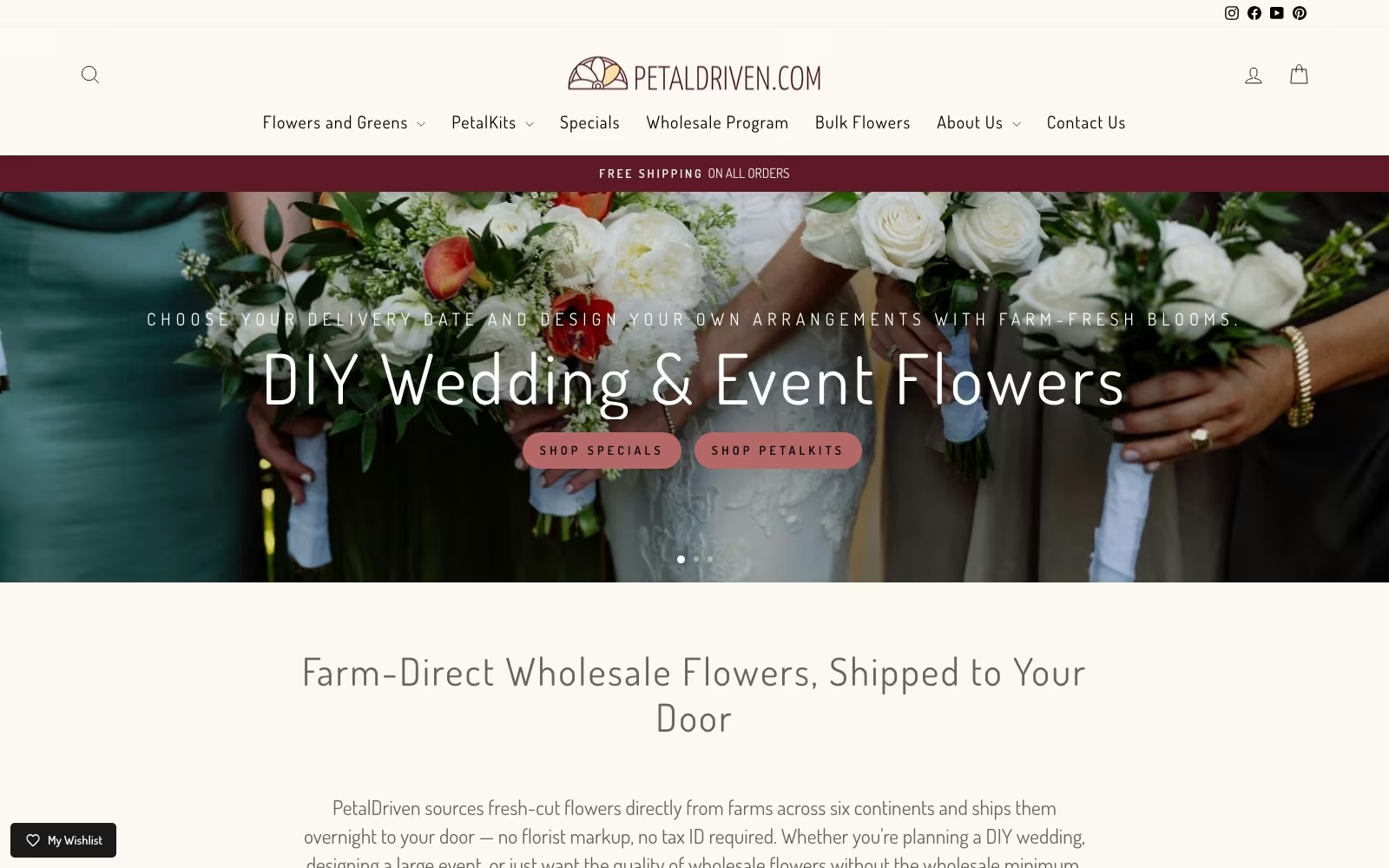



























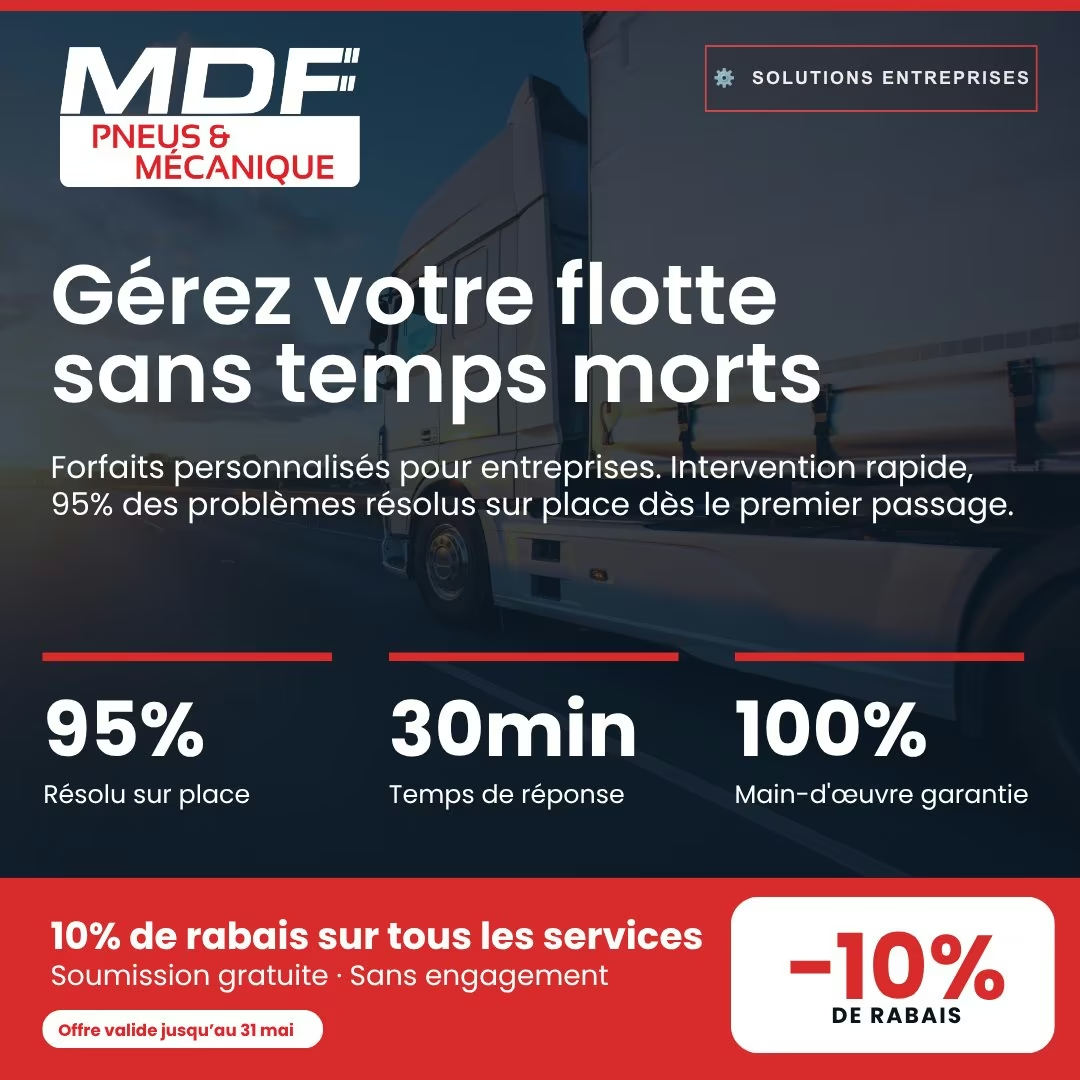
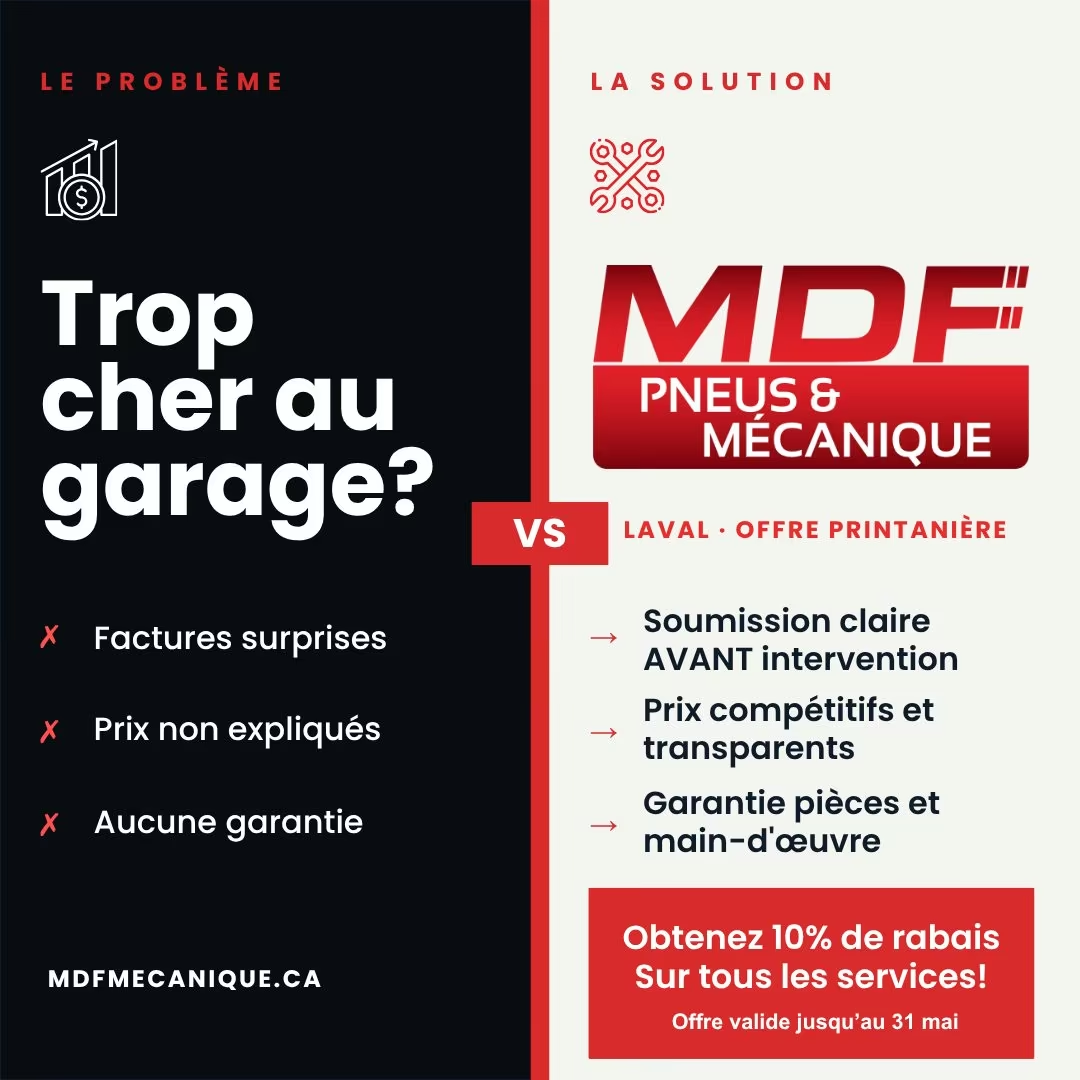






FAQ
What buyers ask us first.
What does a programmatic advertising agency actually do?
Four things, in order: decide which inventory is worth buying, build the audience and suppression logic, produce creative that fits each screen, and verify what was delivered against what you were charged for. The buying platform is the easy part — the value sits in supply curation and measurement, because that is where budgets quietly disappear. A good engagement leaves you with a named inclusion list, curated deals, a verification setup and reporting that a finance director can read without a translator.
Is programmatic still worth it given all the reported waste?
Yes, once you buy it deliberately. The waste is real and measured: the ANA logged $26.8bn wasted in one quarter with only 36.5% of spend reaching publishers. But the same programme showed the other side, with 47.1% of spend reaching publishers and MFA exposure down to 0.39% among advertisers enforcing quality rules. The difference is not luck or budget size; it is an inclusion list, curated deals, capped long-tail volume and someone reading the placement report every week. That is the job.
How do you keep our ads away from bad inventory?
By deciding what we will buy rather than listing what we will not. Blocklists chase an infinite problem; an inclusion list of named sites, apps and curated deals turns the question around. On top of that we run suitability and invalid-traffic verification on every line, cap open-exchange volume, exclude the domains and app bundles that exist only to serve ads, and review the full placement report monthly with you. Anything unexplained comes off the list until it is explained.
Do we need first-party data before we start?
It helps a great deal, and its absence is not a blocker. Plenty of strong programmatic work starts with contextual and geographic buying, curated publisher deals and well-made video, all of which perform without an identifier. In parallel we get your own signal into shape: customer lists, site and app behaviour, CRM stages and offline outcomes. Within a couple of months that usually becomes the most valuable targeting asset you have, and it is one nobody can take away from you.
How does CTV fit alongside search and social?
As the reach layer that makes the rest cheaper to convert. Connected TV buys attention that search cannot create and social increasingly has to fight for, and it now trades programmatically with the same targeting and frequency controls as display. We plan it as one budget with your paid search and paid social activity, manage frequency across screens rather than per platform, and judge it on modelled and tested lift rather than the click it never earns.
How do you measure programmatic properly?
With several lenses and no illusions about any single one. Platform reporting drives in-flight optimisation, your sales or billing system says what actually closed, blended efficiency describes the business, and geo holdouts answer the causal questions attribution cannot. On the delivery side we verify viewability, invalid traffic and suitability, and share the whole placement report rather than a curated slice. Where the answer is a range, we give you the range and the method behind it.
Will you work with our existing DSP seat and partners?
Happily, and we prefer it. Working in your seat keeps the deal IDs, audiences and log-level history with you, which is exactly how it should be. If you have no seat we can buy through ours and hand over the setup later, documented so it survives the transition. We are also comfortable sitting alongside another agency that owns a different channel — we will share the methodology and the data, because a supply path only one party can inspect is the problem we exist to remove.
How much budget does this need to work?
Enough to buy a curated list with meaningful frequency, which for most brands means mid five figures a month across a small number of formats. Below that, thin spend spread over many screens produces impressions and little else, and we will say so rather than take the retainer. Fees are a transparent management charge on a scope we agree up front, not an opaque margin inside the media cost — you should always be able to see what the media cost and what we cost.
How quickly should we expect results?
Delivery quality improves within the first fortnight, because cutting poor supply is immediate. Efficiency on outcomes usually takes six to twelve weeks: the audience signal needs to be onboarded, creative needs a fair read per format, and a holdout takes time to be worth trusting. We report leading indicators weekly so nothing is a black box in the meantime, and we would rather tell you early that a format is not working than defend it for a quarter.
Do you also run the measurement behind this?
We can, and it makes the media better. Our marketing analytics and server-side tracking teams build the collection layer these campaigns are judged on, so conversions come back from your systems rather than a platform's estimate. It is equally fine to keep measurement elsewhere: we will report against whatever source of truth you nominate and share our method with whoever maintains it.

.webp)
.webp)