Win the first second, then the budget.
the first second
We are the TikTok ads agency for brands that want this platform run as performance marketing: an ad-making engine feeding it, clean tracking behind it, and a buying plan that scales spend without losing the cost per result. Campaign strategy, ad testing, audience and bidding management, Spark Ads, TikTok Shop and measurement that agrees with your analytics.






Tell us a little about your brand and we'll be in touch within 24 hours to lock in a time.



THE FOUR WORKSTREAMS
Creative, targeting, tracking, scale.
Creative, targeting
On TikTok the ad itself is the targeting, the tracking decides what the algorithm optimises toward, and the scaling method decides whether performance survives a budget increase. We run all four as one account programme rather than four separate specialisms, because that is how the results actually connect.
Creative strategy & production
Campaign structure & targeting
Tracking & measurement
Scaling & budget management
Enough video, made on purpose.
Ad volume is the constraint on almost every underperforming account we inherit. The market has moved to native, creator-style footage: CreatorIQ and IAB report that creator content now powers 44% of paid media creative, with creator advertising spend reaching $37B in 2025 and projected at $44B in 2026, and Emplifi's Q1 2026 data put UGC-driven conversions at 6.73x, up from 4.27x a quarter earlier.
So we plan ad supply as a production line, not a campaign asset. Concepts come from real buyer objections; each concept ships as a hook family — the same proof and offer behind several openings — because the first second decides the cost of everything after it. Captions burned in, sound designed for playback with audio on, native pacing, end frames swapped per audience. Our UGC and video production teams supply batches monthly so the account always has something untested in the queue.
Every TikTok ad is labelled by hook, format, creator profile and offer, so the report explains which variable earned the result instead of which video happened to win.
- Monthly batches of native, creator-style footage
- Hook families tested against the same proof and offer
- Captions, sound design and native pacing as standard
- Every ad labelled by hook, format, creator and offer
44%
of paid media creative is now creator content (IAB / CreatorIQ)
6.73x
UGC-driven conversion multiple reported in Q1 2026 (Emplifi)
Broad delivery, disciplined structure.
Structure on TikTok rewards restraint. Too many ad groups split the conversion signal, starve the learning phase and produce noisy results that nobody can act on. We consolidate: a small number of ad groups with enough budget to exit learning, broad or lightly constrained audiences so the algorithm can find buyers, and the ads doing the segmentation instead of layered interest stacks.
Then the tools get used properly — Smart Performance campaigns where signal volume supports them, manual structures where control matters, Spark Ads so paid delivery runs behind organic posts and creator handles, custom and lookalike audiences from first-party lists, and exclusions that stop retargeting from buying customers you already have. Placement, dayparting and geography are decided from the account's own data rather than habit.
Bidding follows objective and maturity: cost caps once the conversion history justifies them, lowest cost while it does not, and value-based bidding only where revenue signal is genuinely clean.
- Consolidated ad groups funded to exit the learning phase
- Broad delivery with the assets doing the segmentation
- Spark Ads behind organic posts and creator handles
- Bidding matched to conversion volume, not fashion
Fewer
ad groups, each funded properly, beats a fragmented account
Optimise toward revenue, not form views.
Everything the algorithm does depends on the events you send it. So we audit the pixel and the Events API together, deduplicate the events counting the same action twice, separate revenue events from micro-conversions, pass values where they exist, and reconcile platform-reported results against your own sales system on a schedule. Where the browser is unreliable, conversions move server-side.
Attribution is treated as a range rather than a verdict. Platform numbers are used for in-flight optimisation, your CRM or store for what actually closed, and blended efficiency for the business as a whole; on short-cycle accounts we add incrementality tests, because a channel this ad-led is exactly where view-through credit is argued about. That plumbing is also what makes the spend defensible in a board meeting.
Not one part of this is exotic work — it is the same discipline our conversion tracking team applies across every channel, done before the budget scales rather than after.
- Pixel and Events API audited, deduplicated and validated
- Revenue events separated from micro-conversions, values passed
- Server-side collection where the browser cannot be trusted
- TikTok, store and blended views reported side by side
Validated
every conversion event reconciled against your sales system
Add budget without buying worse results.
TikTok is not short of money or attention or attention. WARC, citing eMarketer forecasts, reports that TikTok's US ad revenue is projected to reach $14.5bn in 2026 and $16.7bn next year, with the US accounting for 38% of global ad revenue. Competition for the same feed is rising, which is why method matters more than aggression when you scale.
We scale in two directions deliberately. Vertically: measured budget increases on proven ad groups, paced so the learning phase is not reset, with a defined rollback if cost per result moves outside its band. Horizontally: new hooks, new creator profiles, new offers, new geographies and new placements, so growth comes from fresh supply rather than from paying more for a fatiguing winner.
Fatigue is monitored as a metric, not a feeling — frequency, hook rate decay and cost drift trigger the next batch. With 91% of businesses now using video (Wyzowl, 2026), the accounts that hold their numbers are simply the ones that never run out of things to test.
- Paced vertical increases with a defined rollback rule
- Horizontal scale through new hooks, creators and offers
- Fatigue tracked by frequency, hook decay and cost drift
- Weekly working session, monthly written review
$14.5B
forecast TikTok US ad revenue in 2026 (eMarketer via WARC)
38%
of TikTok's global ad revenue comes from the US this year
median TikTok cost per click (AdLiftr)
median TikTok cost per first DTC purchase (AdLiftr)
Fresh ad batches so nothing fatigues unanswered
The ad account, the pixel and the asset library
We made the difference for those brands

Travel & mobility

Creative, content, arts & culture

Travel & mobility

B2B software, fintech, insurance

Creative, content, arts & culture
Consumer tech and platforms
B2B software, fintech, insurance

Creative, content, arts & culture

B2B software, fintech, insurance

Home essentials, appliances, kitchen & pet

Healthcare & regulated services

Home essentials, appliances, kitchen & pet

Healthcare & regulated services

Food & beverage
Consumer tech and platforms

Creative, content, arts & culture
Creative, content, arts & culture

Food & beverage

Consumer tech and platforms
Healthcare & regulated services

Consumer tech and platforms

Food & beverage

B2B software, fintech, insurance
Beauty, personal care & wellness

Healthcare & regulated services
Travel & mobility

B2B software, fintech, insurance

Beauty, personal care & wellness

Apparel and lifestyle

Travel & mobility
01 — The challenge
It worked for a month, then it did not.
The account launched well, one video carried it, and then costs drifted. More budget made it worse. The reporting inside the platform claims three times the conversions the store can find, so nobody trusts the number that would justify spending more — and the queue of new concepts is empty.
“Our best ad is fatiguing and the TikTok numbers do not match the store.”
Both halves have the same cause: the account was set up as a campaign rather than a system. Fix the events so the algorithm optimises toward real revenue, consolidate the structure so the signal is not split, and put an ad pipeline behind it — the format that now supplies 44% of paid media creative across the industry. Then budget increases buy volume instead of buying noise.
02 — Our approach
Fix the signal, feed the funnel, then scale.
We audit tracking first: pixel and Events API deduplicated, revenue events separated from micro-conversions, values passed, critical conversions moved server-side and every number reconciled against your store or CRM. Then the account is consolidated — fewer ad groups, each funded to exit learning, broad delivery with the assets doing the segmentation, Spark Ads behind organic and creator posts, and bidding matched to the conversion volume the account actually has. Creative runs as a production line: concepts from real objections, hook families tested against the same proof, monthly batches so nothing fatigues unanswered. Scaling is deliberate in both directions, paced to protect the learning phase, with a written rollback rule. You get a weekly working session, a monthly written review, and TikTok, store and blended numbers reported side by side.
03 — What we did
How the first ninety days run.
Four stages, one named team, and a written decision log so every budget move can be explained a month later.
Weeks 1-2 / Foundations
Tracking rebuilt, first hooks briefed
Pixel and Events API audited and reconciled against your store, while the first hook families are briefed from real buyer objections.

Weeks 2-4 / Launch
Consolidated structure, funded properly
A small number of ad groups with broad delivery and enough budget to exit learning, Spark Ads live behind organic and creator posts.

Weeks 4-8 / Testing
Hooks, offers and creators isolated
Structured tests that separate hook, proof and offer, so each cycle tells the account which variable earned the result.
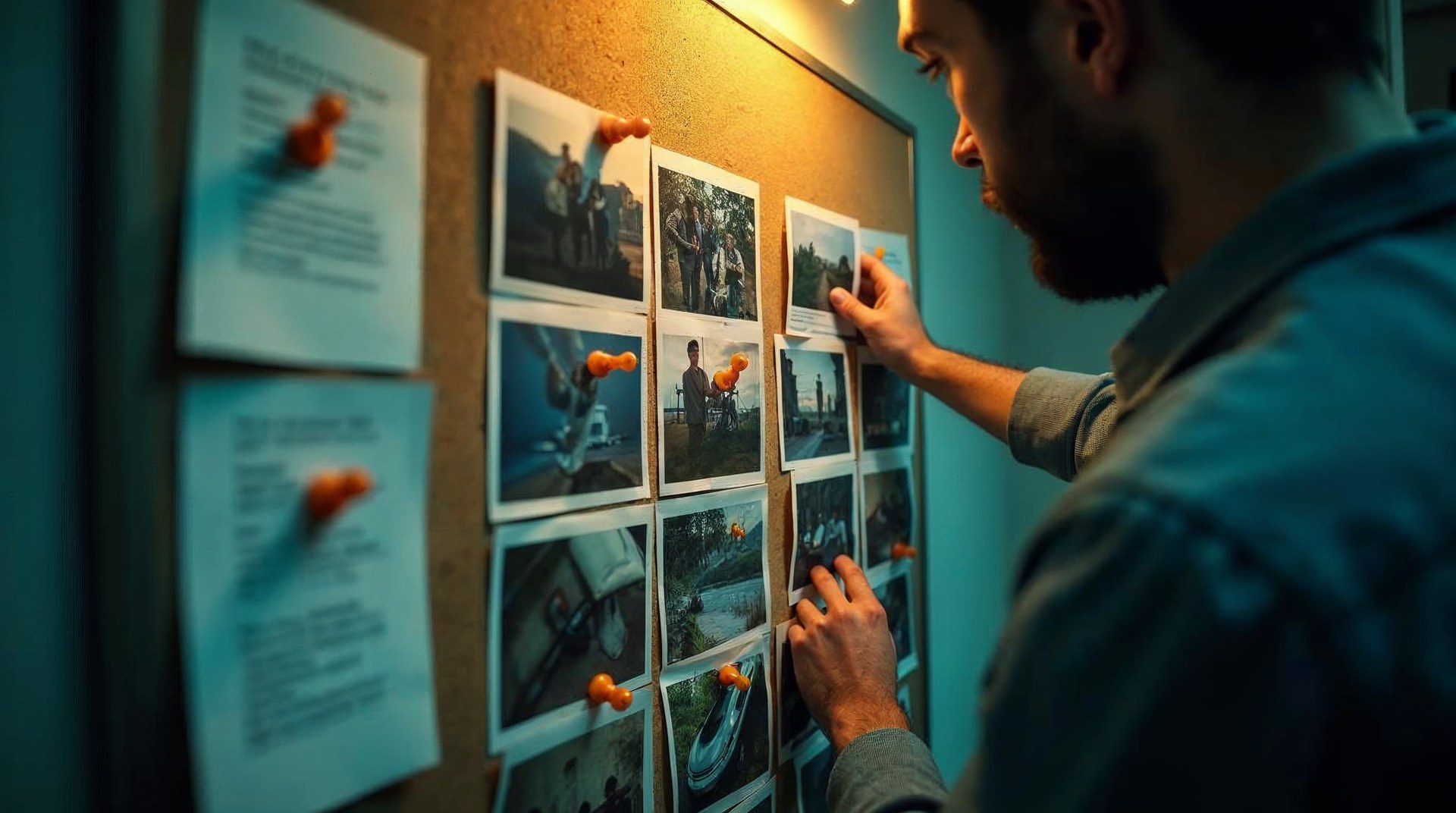
Weeks 8-12 / Scale
Budget added on a rule, not a hunch
Paced increases on proven ad groups with a written rollback band, plus horizontal expansion into new hooks, creators and geographies.

WHAT YOU GET
Deliverables, not activity reports.
not activity reports
Everything below is built in your own ad account and analytics, documented as we go, and yours to keep if we ever part company.

Campaign build and Spark Ads
Consolidated campaign structure, broad delivery and Spark Ads running behind your organic posts and creator handles.

Creative pipeline
Monthly batches of native footage with hook families, captions and end frames built for testing rather than one execution.

Structured testing programme
Tests that isolate hook, proof, offer and creator profile so results explain themselves instead of needing interpretation.

Tracking and Events API setup
Pixel and server-side events audited, deduplicated, valued and reconciled against your store or CRM.

Scaling and budget plan
Paced vertical increases with a rollback band, plus horizontal expansion into new hooks, offers and markets.

Reporting and reviews
TikTok, store and blended numbers side by side, a weekly session and a monthly written review with recommendations.
HOW WE WORK
Operating standards, not promises.
Operating standards



















Built on trust. Proven by results.
We partner with SMBs and Fortune 500 companies to deliver more than reach — we bring clarity, execution, and measurable outcomes. Every successful partnership starts with a strong culture fit and a shared drive to grow.




CASE STUDIES
Case studies
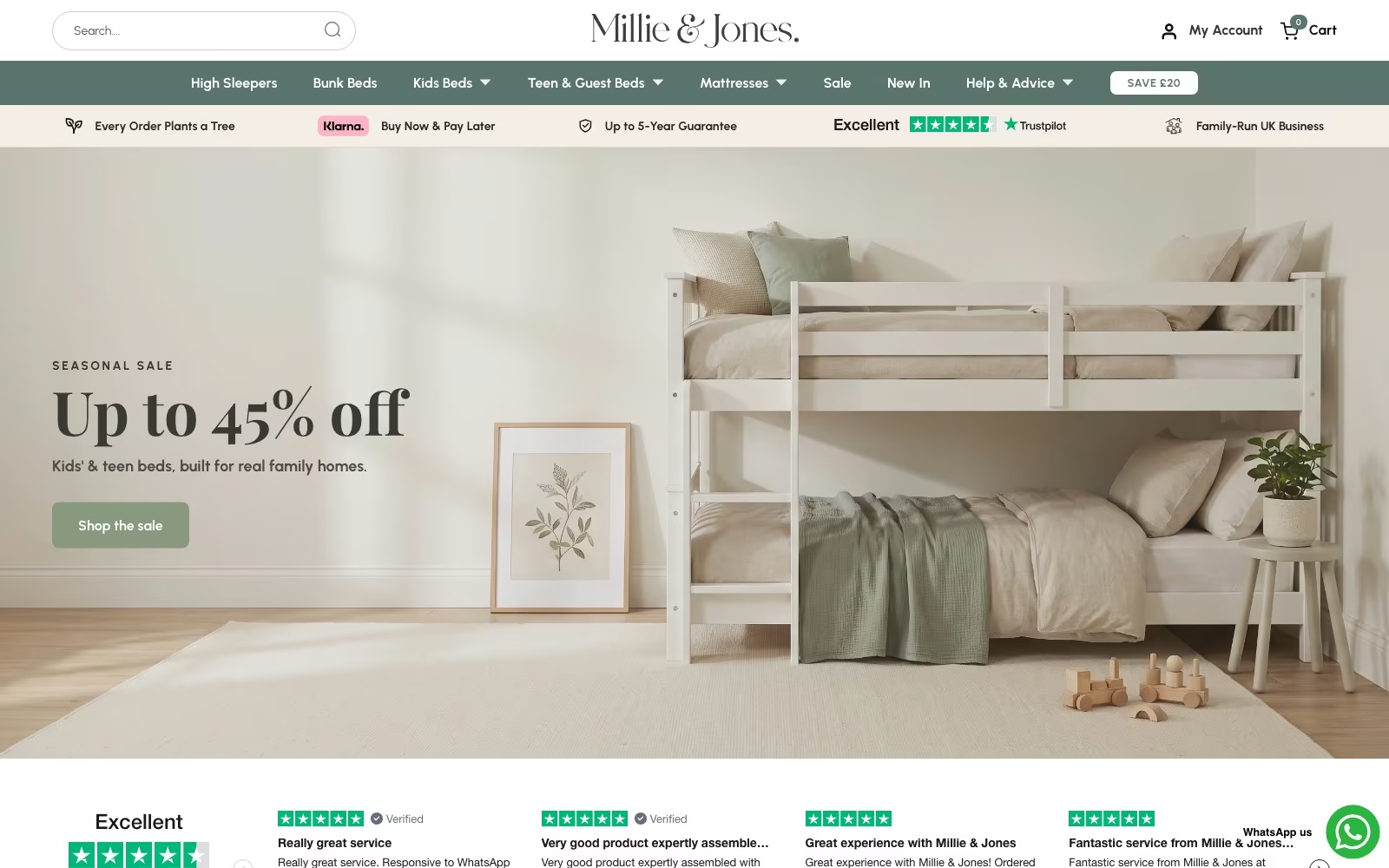
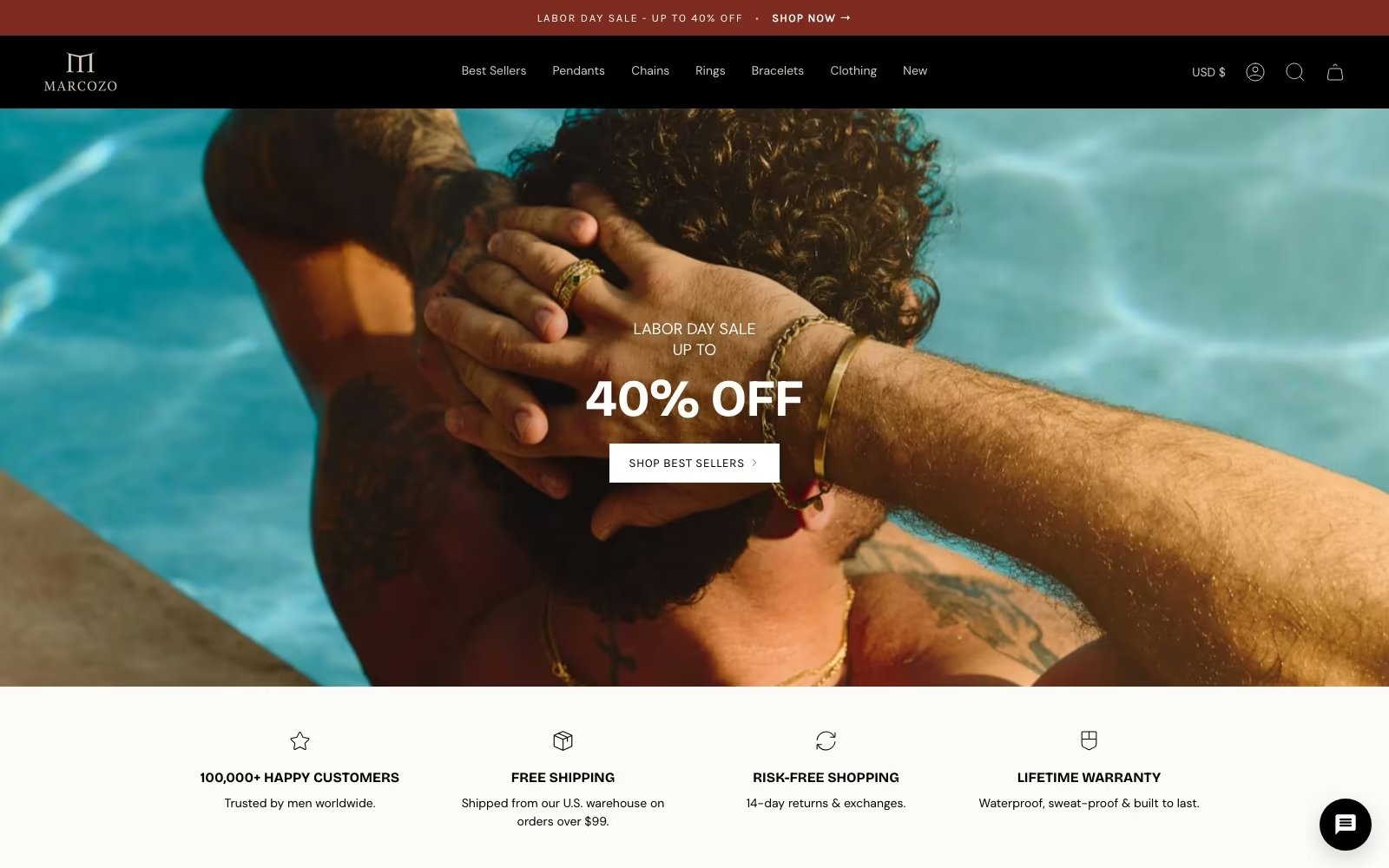
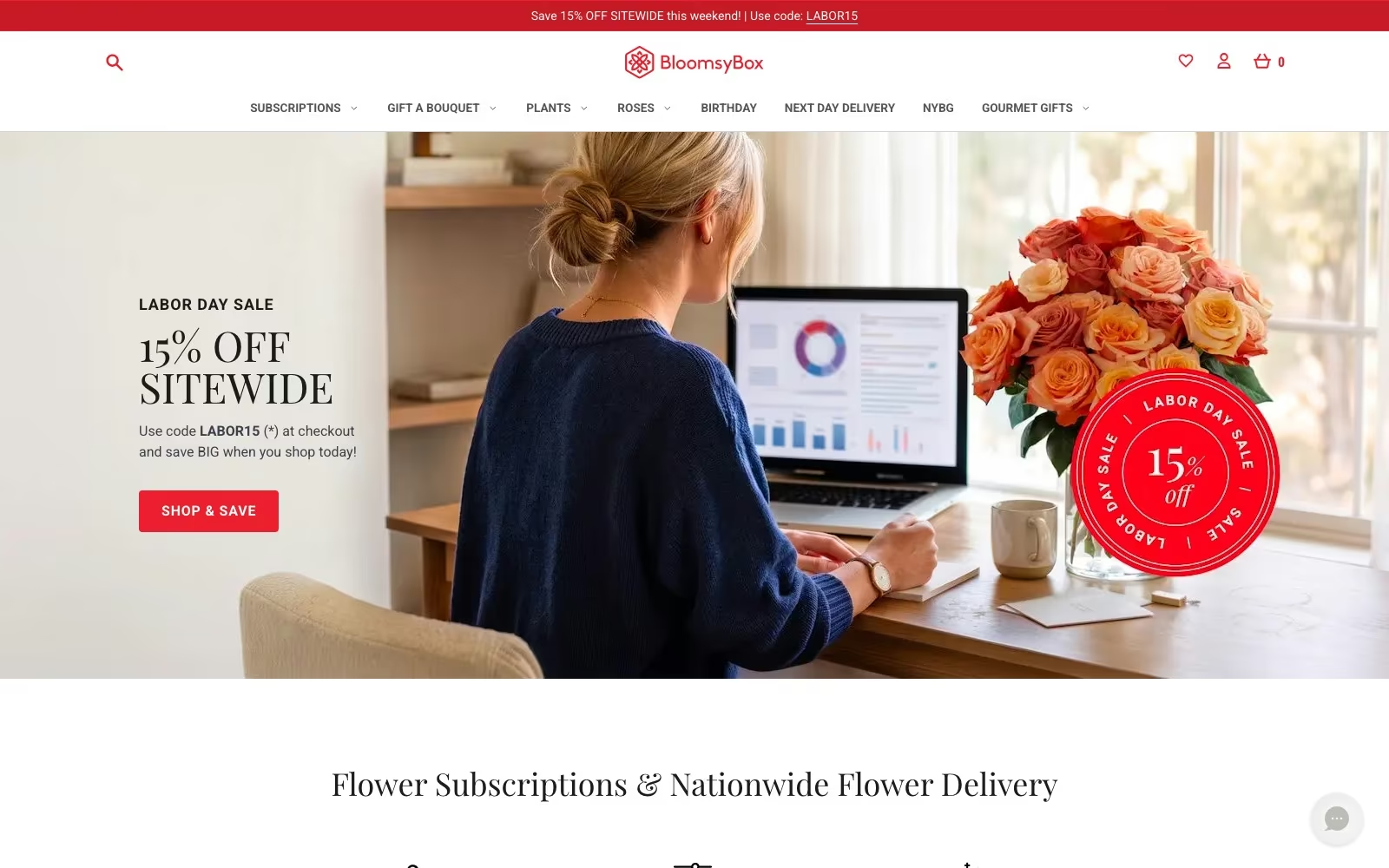
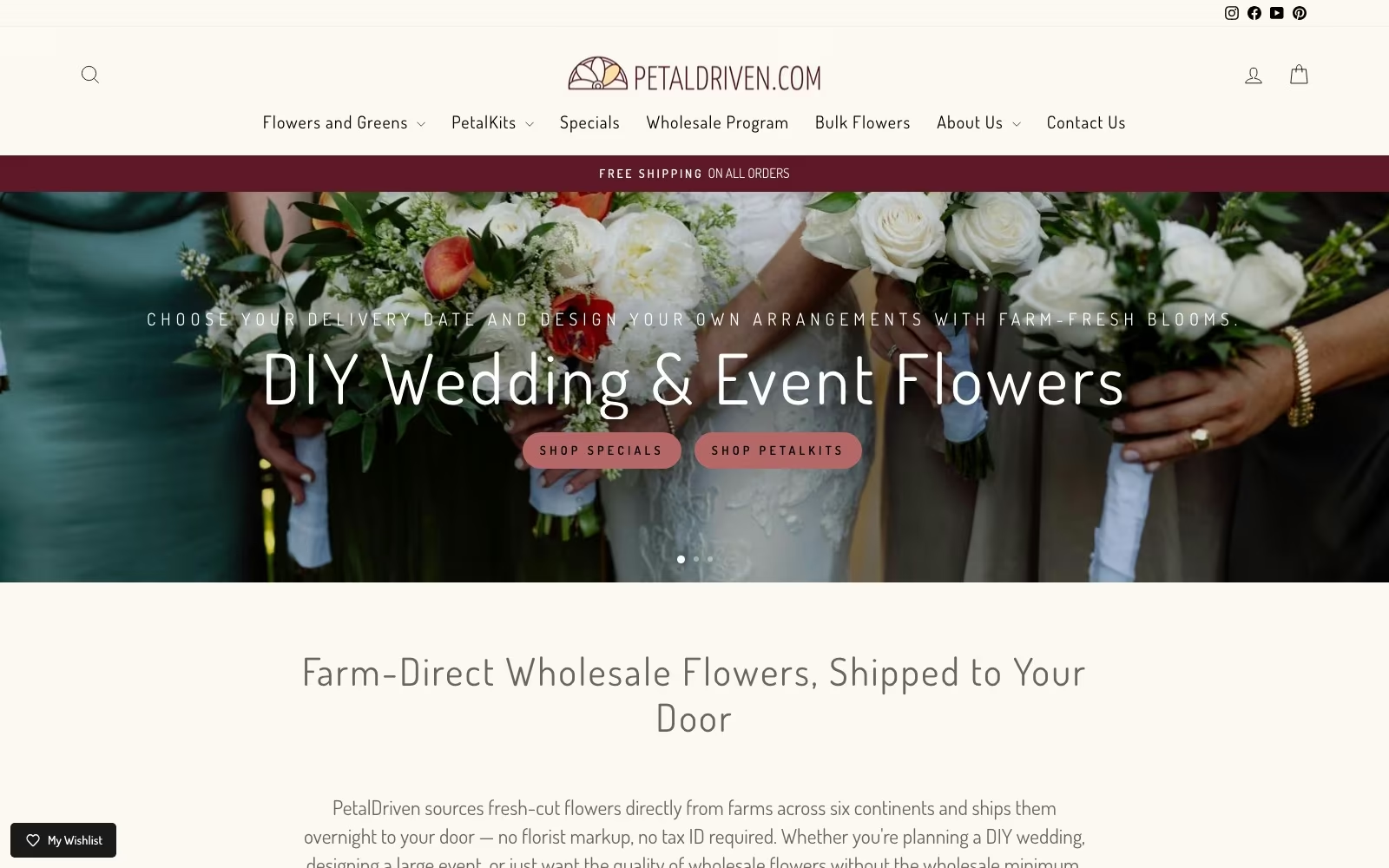
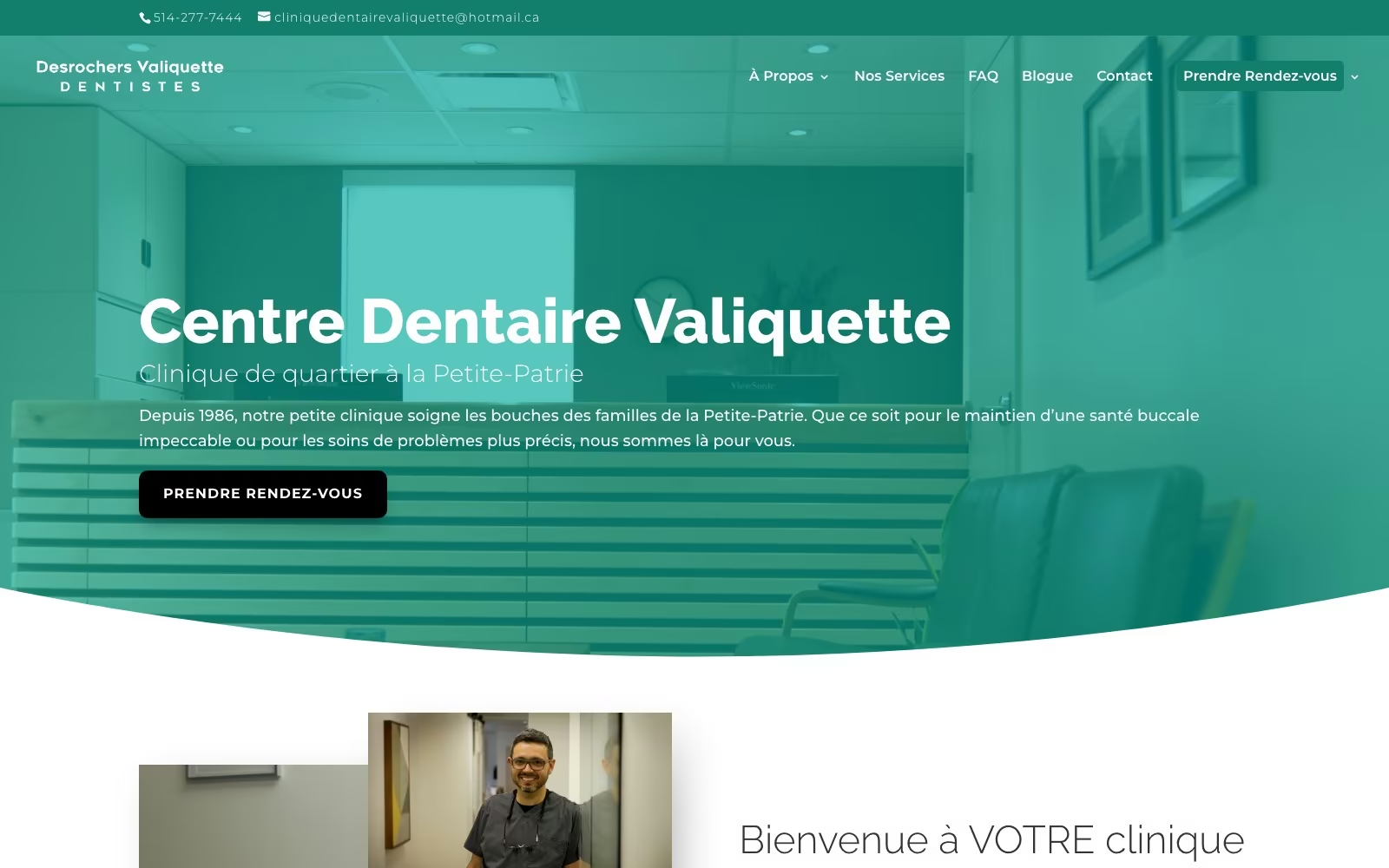
Website Portfolio
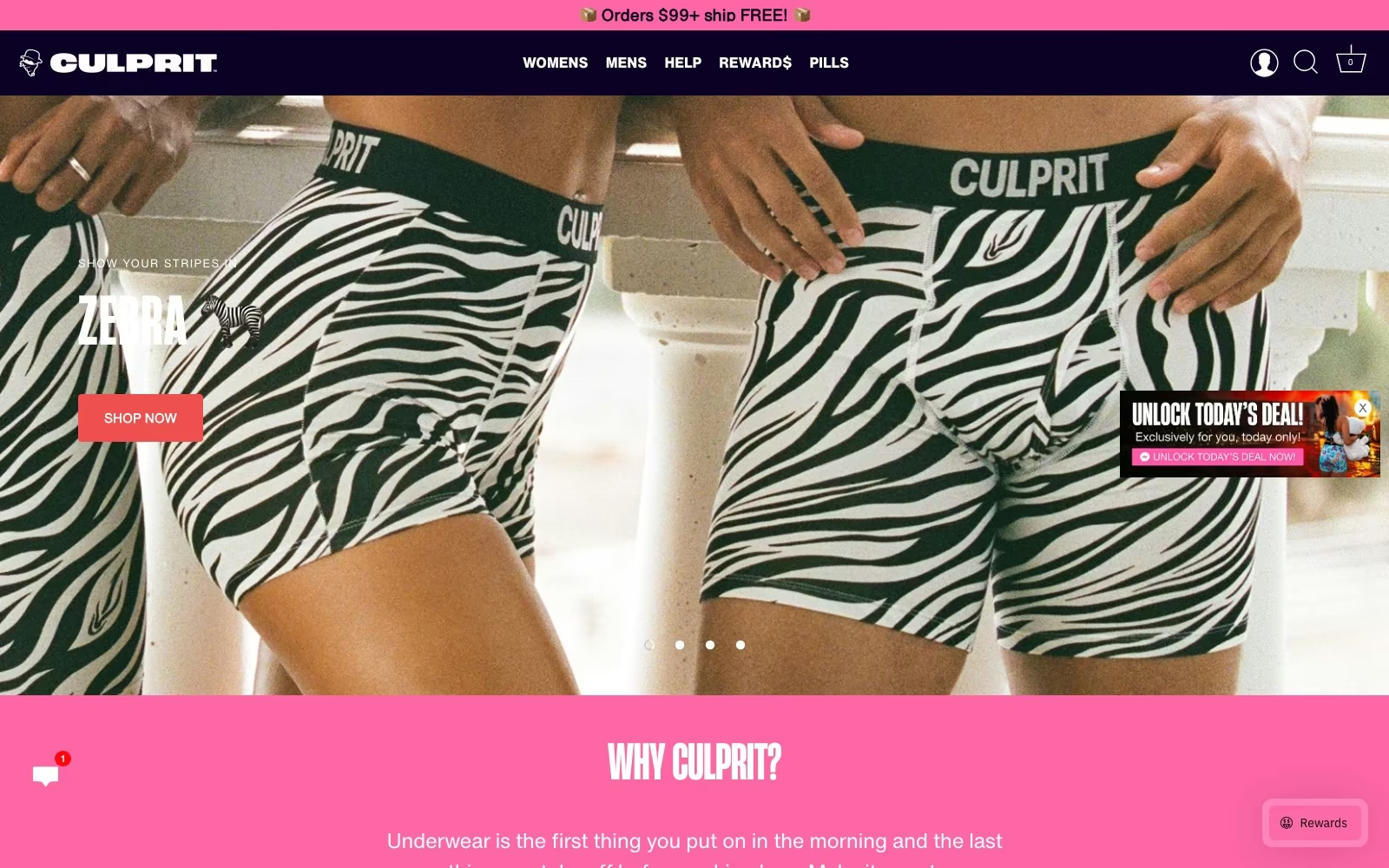
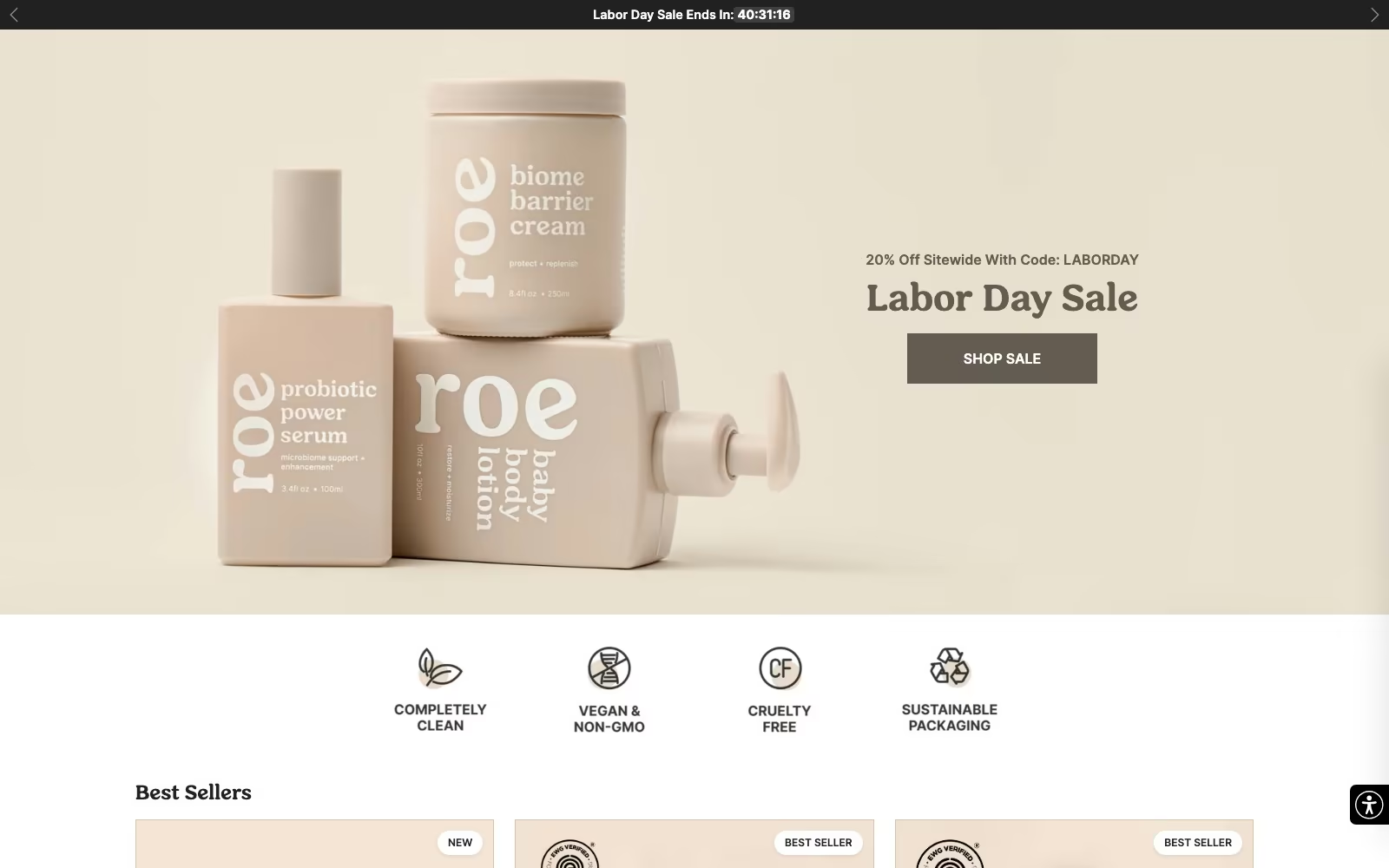
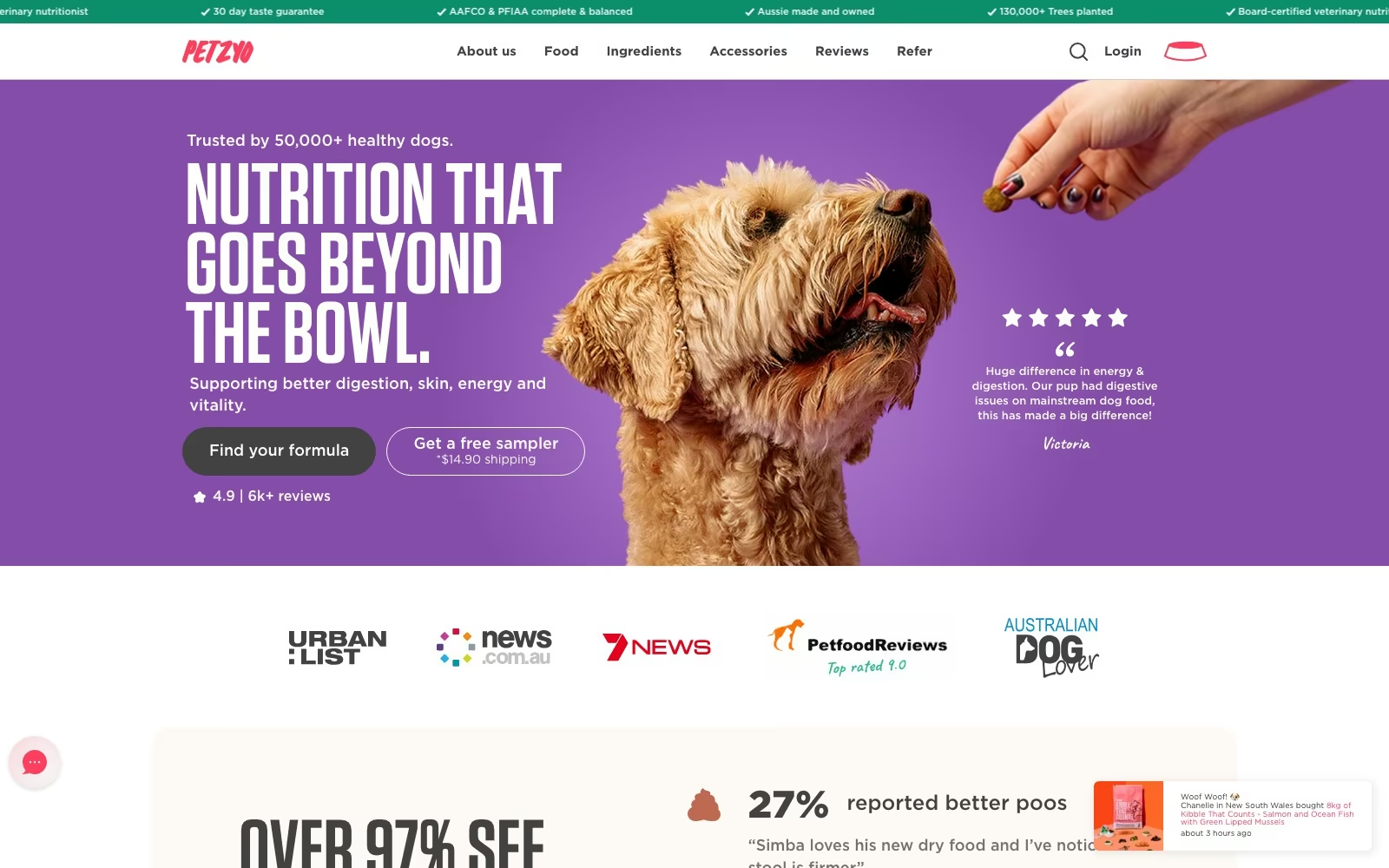
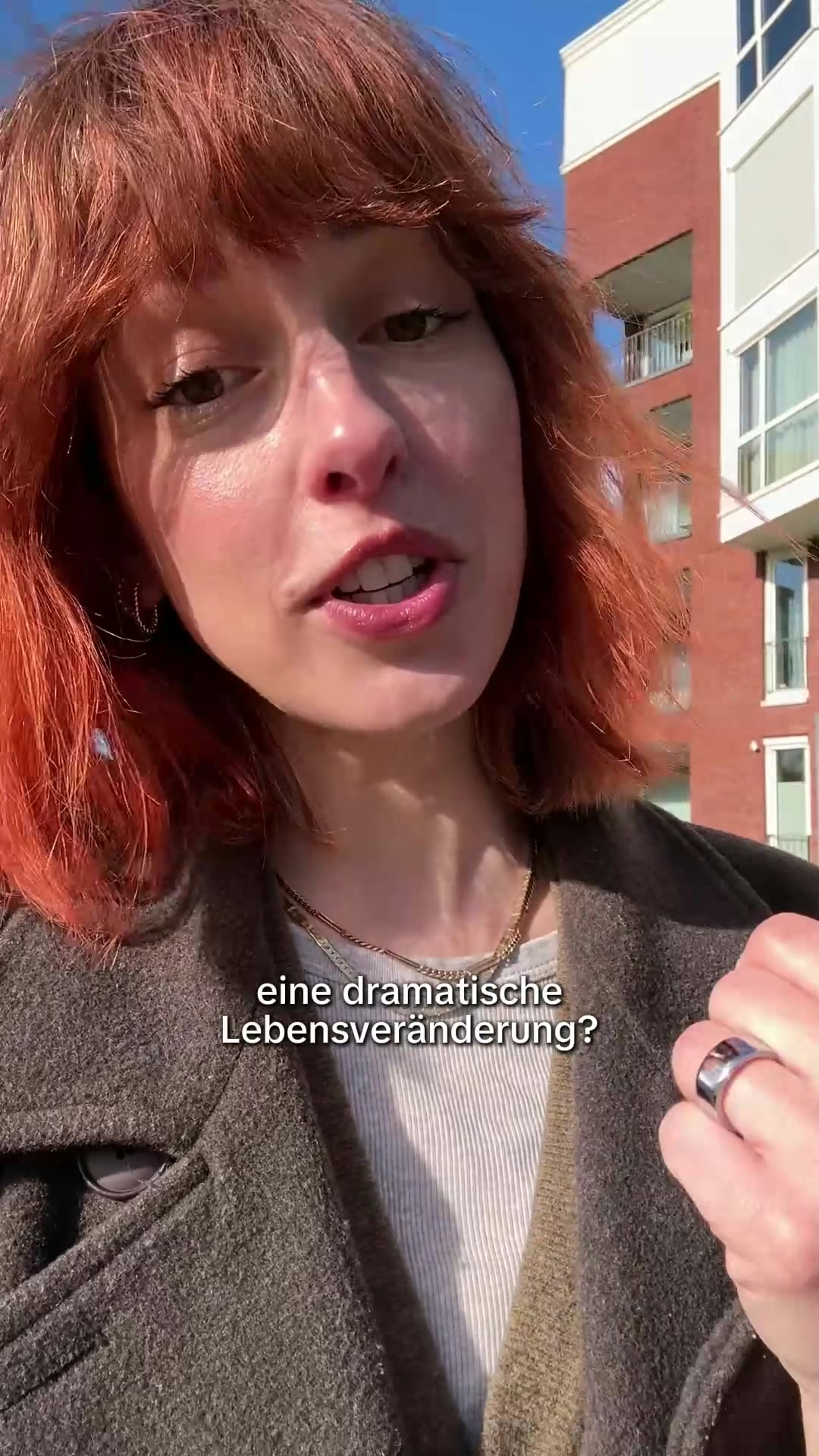
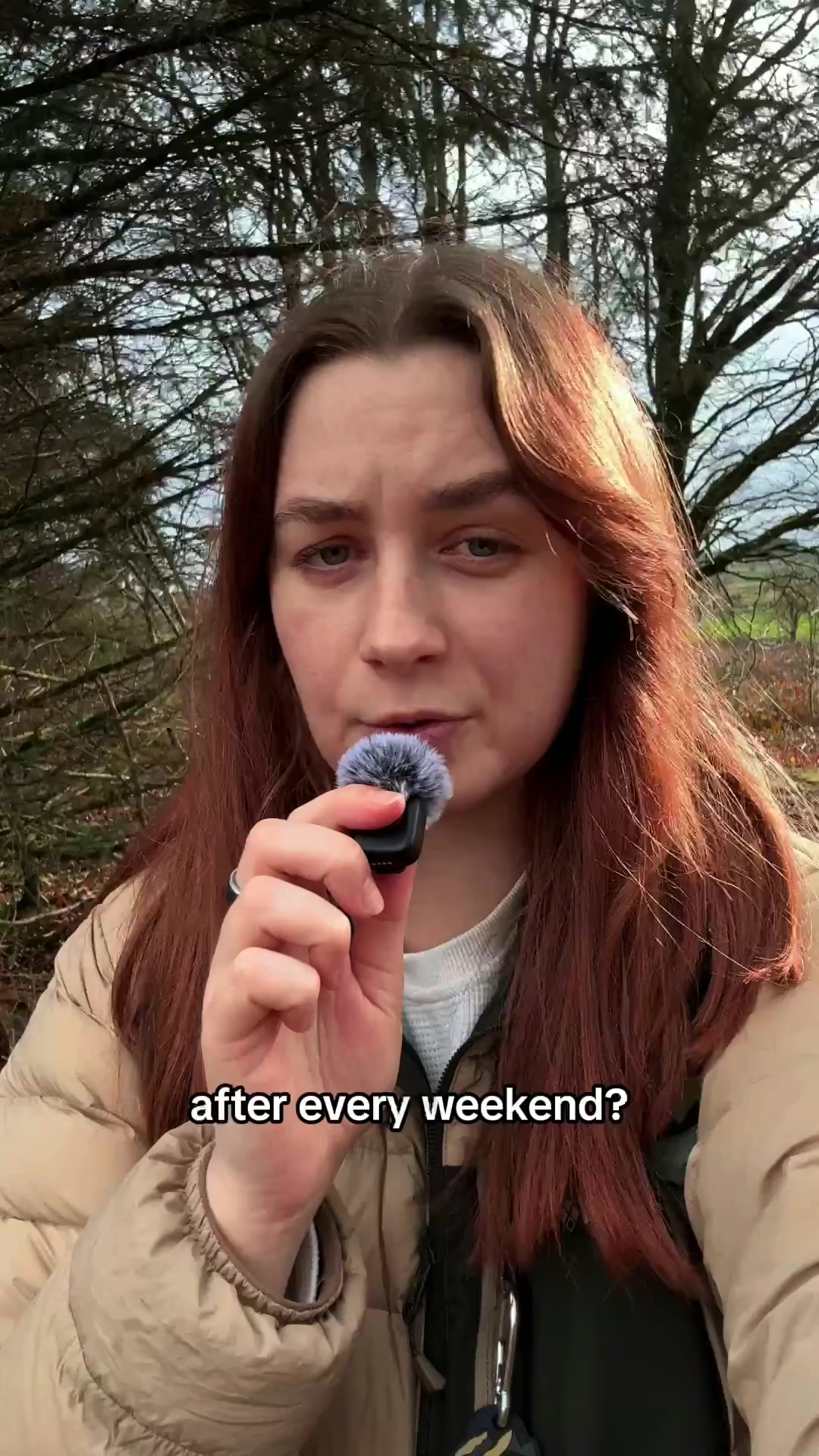
Video Ads
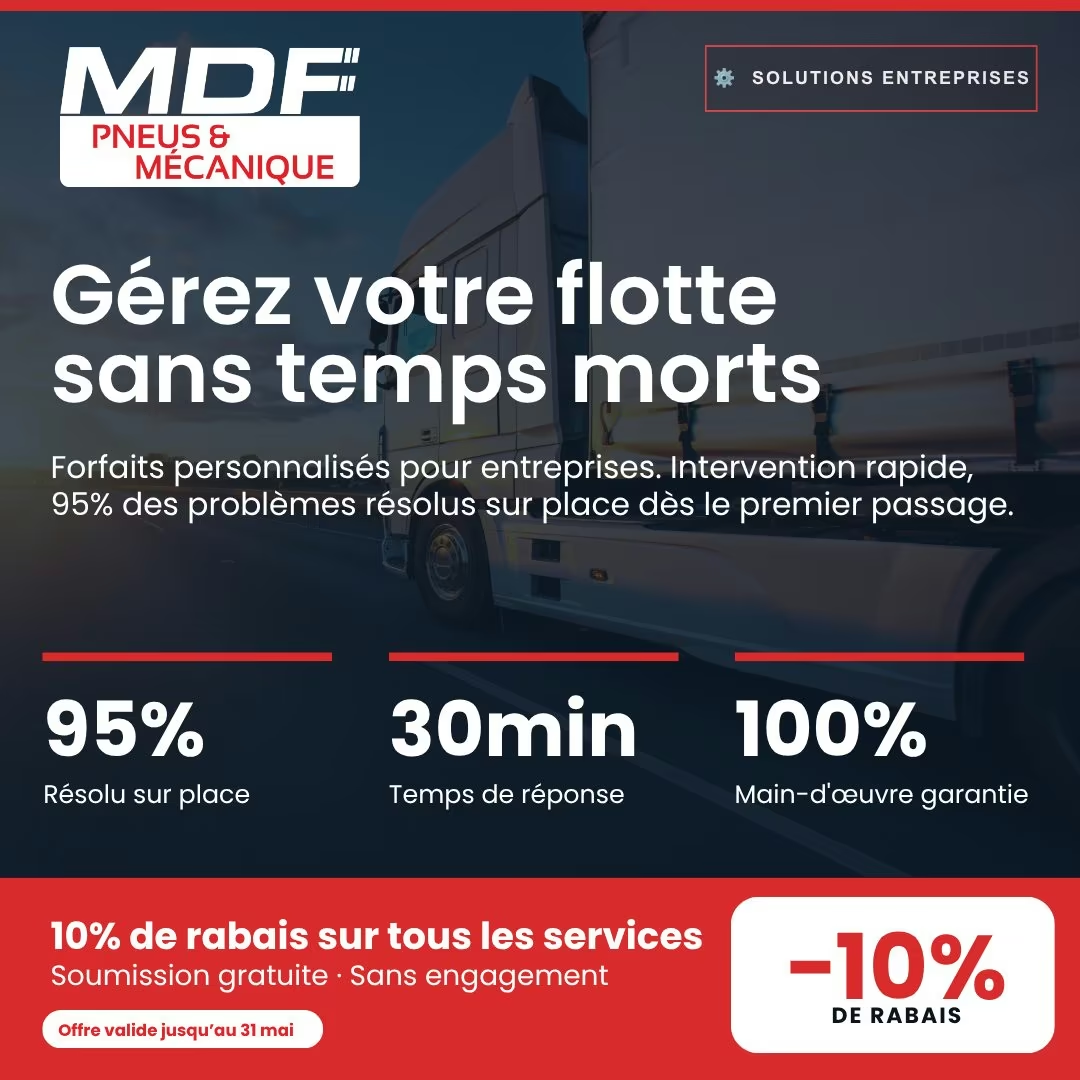
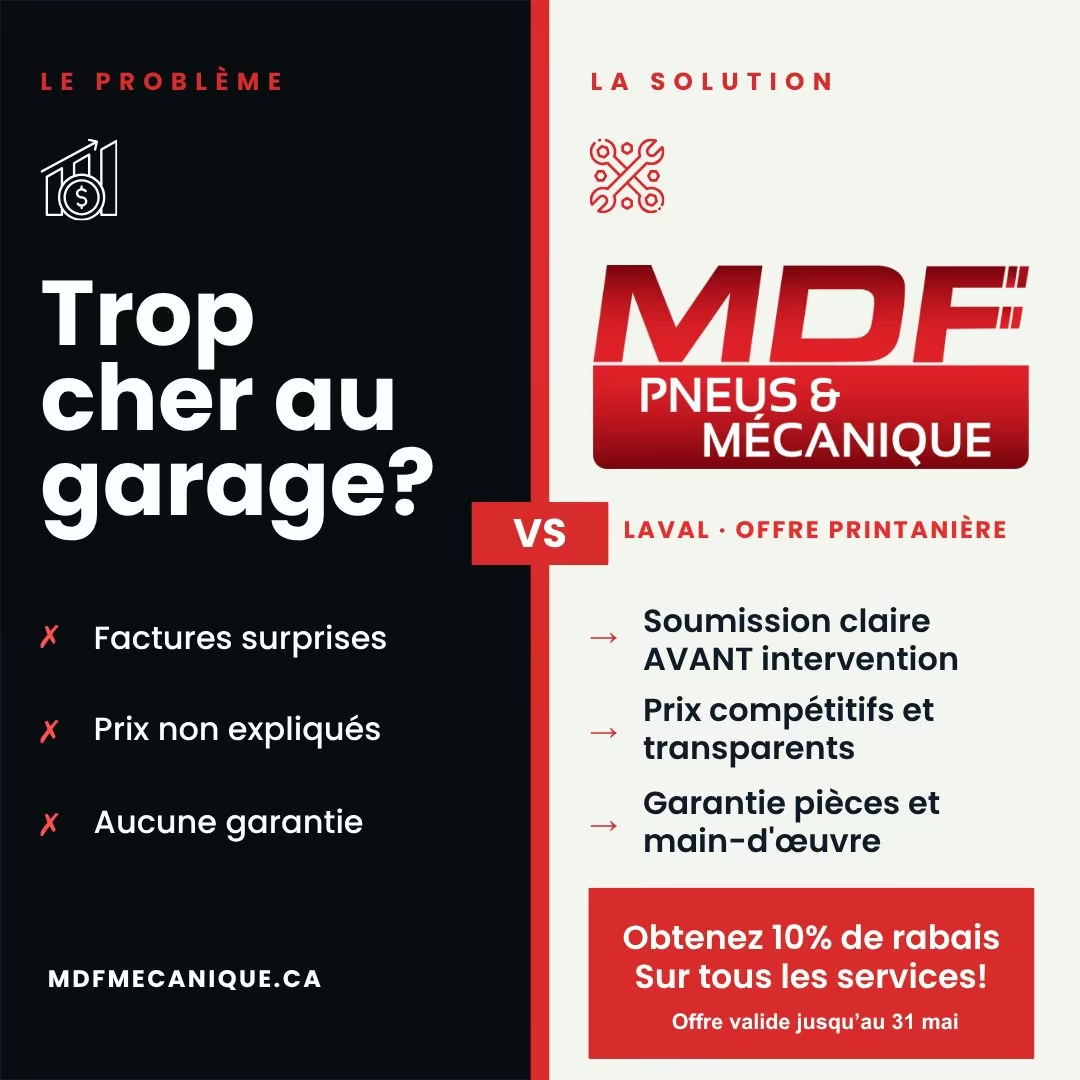
Static Ads



















































FAQ
What advertisers ask us first.
What does a TikTok ads agency actually do?
Four jobs that only work together. It builds and manages the media — structure, audiences, bidding, budgets, Spark Ads, catalogue and Shop setup where relevant. It supplies creative at the volume TikTok consumes, because a feed this ad-led exhausts assets quickly. It fixes measurement so the algorithm is optimising toward revenue rather than form views, and so your reporting can be defended. And it runs a testing programme that isolates hook, proof and offer, which is what makes each month cheaper than the last. An agency doing only the first job will look busy and stall.
How much should we spend to make this channel work?
Enough that a consolidated structure can exit the learning phase and that there is a monthly batch of new concepts behind it — those two costs are the real floor, and they are related, because thin budgets spread across many ad groups produce data nobody can act on. Rather than quote a universal number, we model it from your average order value or lead value, your target cost per result and the conversion volume the account needs to optimise. If the answer is that another channel should come first, we will tell you that before you sign anything.
Do we need creators, or can we use our existing brand video?
Existing brand film can work as a component, but on its own it usually underperforms here: the feed rewards footage that reads as a person rather than as an advertisement. The industry has moved accordingly — creator content now powers 44% of paid media creative and Emplifi measured UGC-driven conversions at 6.73x in Q1 2026. Our practical answer is a mix: creator-style assets from our UGC pipeline for volume and proof, plus polished cuts from video production where the brand needs scale.
How many new concepts do you need each month?
More than most brands expect, and the number scales with spend rather than with company size. Hook rate decays as frequency climbs, so an account running meaningful budget needs a steady batch of new openings, not a quarterly shoot. We scope the count from your spend level, how many audiences and geographies you run, and how quickly your current assets are decaying — then commit to it as a schedule so planning is possible. Starting smaller is fine. Starting with no pipeline is the mistake that shows up in month three.
Why do TikTok's numbers disagree with our store?
Because they are answering different questions. TikTok counts conversions it believes it influenced, inside its own attribution windows and with modelling applied; your store counts what was paid for. Add duplicated events, micro-conversions counted as purchases and browser restrictions and the gap widens. Our approach is to make the gap a known quantity: audit and deduplicate events, move critical conversions server-side, reconcile against the store on a schedule, and report TikTok, store and blended efficiency side by side rather than picking a favourite.
What are Spark Ads and should we use them?
Spark Ads let paid delivery run behind an existing organic post — yours or a creator's — keeping the handle, the comments and the social proof attached. They usually outperform an equivalent asset uploaded cleanly, because the ad looks like the thing people came to watch, and the engagement stays on the original post. The requirement is authorisation from the account that published it, which we handle as part of creator contracting. We use them as a default wherever a creator or organic post exists, not as an experiment.
Which bidding strategy is right for our account?
It depends on conversion volume rather than preference. With little conversion history, lowest-cost delivery gathers signal fastest and cost caps simply throttle learning. Once the account has consistent volume, cost caps give predictable unit economics and value-based bidding becomes possible where revenue values are genuinely clean. We migrate deliberately, one change at a time, with the learning phase protected and a written rollback rule — because the most common cause of a sudden cost spike is three strategy changes made in the same week.
Can this work for B2B or high-consideration products?
Often, with two adjustments. First, optimise toward a signal that predicts revenue rather than raw form fills, which means feeding qualified-stage data back from your CRM so delivery learns what a good lead looks like. Second, expect the assets to carry more explanation: practitioner-led demonstrations and honest talking-head footage outperform polished brand statements. We are also willing to say when a category is a poor fit — if the audience is narrow and the cycle very long, your budget may work harder in paid search first.
How do you handle TikTok Shop and catalogue campaigns?
As a merchandising problem as much as a media one. Feed quality decides what can be delivered, so we audit titles, images, availability and pricing, then build product sets that separate proven sellers from the long tail rather than letting one catalogue campaign average everything. Video Shopping Ads and creator content are planned together, since the same footage sells the product and populates the storefront. Reporting is on contribution after returns and discounts, because gross revenue on a returns-heavy category flatters a decision you are about to regret.
What does a first ninety days look like?
Weeks one and two: tracking audit and rebuild, account audit, first hook families briefed. Weeks two to four: a consolidated structure launched with enough budget per ad group to exit learning, Spark Ads live where posts exist. Weeks four to eight: structured ad testing, with hook, proof and offer isolated so we learn which variable matters. Weeks eight to twelve: paced scaling on proven ad groups plus horizontal expansion into new hooks and markets. Throughout: a weekly working session and a monthly written review ending in recommendations rather than a screenshot of the dashboard.
What happens if performance drops after we scale?
We agree the answer before it happens. Every budget increase carries a rollback band — the cost per result range within which we hold, and the point at which we step spend back to the last stable level while the creative queue catches up. Because fatigue is tracked as a metric (frequency, hook rate decay, cost drift), the response is usually a new batch rather than a panic. You also see the decision log, so every increase and rollback can be explained a month later with the numbers that drove it.
How do you decide which TikTok objectives and campaign types to use?
From your business objectives backwards. If the goal is purchases, we optimise for purchase events and let TikTok learn from clean revenue signal; if the goal is qualified leads, delivery is pointed at the CRM stage that predicts revenue rather than the click. Reach and video-view objectives have their place for launches, and we say so plainly instead of selling awareness as performance. Whichever objectives apply, the account is documented so any client can see why each campaign exists and what it is meant to drive.
Do you follow TikTok trends, or build something more durable?
Both, in a set ratio. Trends and sounds help TikTok users accept an ad as part of the feed, so a slice of every batch explores what is working culturally this month. The durable half is built on your own proof: demonstrations, customer stories, comparisons and offers that keep delivering after the trend passes. Chasing trends alone produces spikes and no compounding; ignoring them entirely makes the spots feel like display advertising bolted onto a social app. We report which half is winning so the mix can be tuned with data.
How does TikTok fit with influencer and organic social work?
Closely, and it should be planned as one programme. Influencer partnerships create content and credibility; paid delivery turns the good pieces into reach you control, usually through Spark Ads on the creator's own post. Organic posting teaches you which hooks TikTok users actually respond to before you spend money finding out. Our influencer marketing and social media management specialists work alongside the buyers, so nothing is briefed twice.
What do you need from us to get started?
Very little, and we help with the rest. Access to the TikTok Ads Manager account or a new one created in your name, access to your store or CRM so results can be reconciled, your product or service facts, and whatever footage and customer stories already exist. From there we run the audit, agree objectives and a testing plan, and set out what each stage costs. If our assessment is that other services or channels should come first, that is what the audit will say — and you will still own the analysis.
What kinds of brands get the most from this channel?
Businesses whose product can be shown. Beauty, food and drink, home, apparel, fitness, pet and gadget brands see the fastest results because a demonstration does the selling, and their customers are already on the app. Service businesses can work well too when a practitioner explains something worth knowing. The clients who struggle are the ones with nothing visual to show and a very narrow target audience — and we would rather tell you that during the audit than take a retainer to learn it together over a quarter.
How does this compare with other digital marketing channels?
It behaves differently. Search captures people already looking for solutions, so it converts quickly and stops growing when demand runs out. This channel creates demand: users who were not shopping see something that makes them want it, which drives incremental sales but takes better measurement to prove. In most marketing plans the two work together, with search harvesting the interest social creates. We are happy to explore that split with you in the audit, using your own numbers rather than a generic case study.
How do you report growth, and what will we actually see?
A weekly working session and a monthly written review. The review states what moved, what we changed, what we learned and what happens next — spend, cost per result, click and conversion behaviour, revenue or pipeline, plus how each batch of new concepts performed against the last. Every client sees the same three views: what the app reports, what your own systems recorded, and the blended efficiency of the business. Nothing in that report needs an agency to interpret it, which is deliberate.
Do you run our other channels too?
We can, and shared measurement is the reason clients ask. Our paid social, paid search and analytics teams work from the same definitions, so blended efficiency is a number rather than an argument between reports. Buying this channel alone is equally fine: we will report honestly against whatever your other agencies are doing, share the methodology, and keep everything inside your own accounts so nothing is stranded if the roster changes.

.webp)
.webp)