Win the shelf, not just the keyword.
the shelf
We are an Amazon ads agency for brands that treat the marketplace as a profit centre rather than a channel to tick off. Sponsored Products, Brands, Display and DSP run against your real contribution margin, on listings good enough to convert the traffic we buy. It sits beside your paid search and paid social work, because off-Amazon demand is what makes your organic rank on Amazon defensible.






Tell us a little about your brand and we'll be in touch within 24 hours to lock in a time.


THE FOUR LEVERS
Four levers decide marketplace profit.
marketplace profit
Retail readiness, campaign structure, bidding discipline and expansion beyond search. Get the first one wrong and every dollar after it is more expensive, because advertising on Amazon is priced by conversion: the listing that converts better wins the same placement for less. We work in that order rather than starting with bids.
Retail readiness
Campaign structure
Bidding & profitability
Display, DSP & off-Amazon
Advertising cannot rescue a listing that does not convert.
Amazon's auction rewards relevance and conversion, so the cheapest improvement in most accounts is not a bid change, it is the detail page. Titles that lead with the search term a buyer actually uses, images that answer objections in sequence, A+ content that handles the comparison, bullet points written for scanning, backend search terms filled properly, variations grouped so reviews consolidate rather than scatter.
The scale involved makes the discipline worth it. Amazon's advertising business reported $21.3 billion of revenue in the fourth quarter of 2025, growing 22% year over year, which is another way of saying your competitors are bidding harder every quarter. Where reviews are thin we prioritise the programmes that fix that first, because paying to send shoppers to a product with four ratings is an expensive way to learn nothing.
We audit retail readiness before spend, then re-audit it monthly. It is unglamorous and it is where the margin is.
- Titles, bullets and backend terms rebuilt around real demand
- Image sequence and A+ content built to answer objections
- Variations and reviews consolidated correctly
- Stock, buy box and pricing watched before bids are raised
$21.3B
Amazon ad revenue in Q4 2025, up 22% YoY
29.8%
average Amazon product page conversion rate (CommerceIQ)
Separate defence, harvest and discovery.
Most accounts we inherit have one shape: a pile of automatic campaigns, a few manual ones nobody has restructured since launch, and brand defence tangled up with prospecting so the blended ACOS explains nothing. We split spend into intent tiers — brand defence, proven high-intent terms, category and competitor conquesting, and discovery — each with its own budget and its own target, because they do not deserve the same one.
Benchmarks only help once that separation exists. Headline's 2025 study of $29.6 million in managed spend across 43 accounts reports a portfolio-weighted 3.64x ROAS, with Sponsored Products near 3.8x, Brands 3.2x and Display 2.8x. Those gaps are structural, not accidental, which is why blending the three into a single target quietly starves whichever one is doing the acquisition.
Search term harvesting runs weekly: converting terms graduate into exact match with their own bids, wasteful ones become negatives, and automatic campaigns stay in the account as a discovery engine rather than a budget leak.
- Brand defence separated from prospecting and conquesting
- Exact, phrase, broad and automatic given distinct jobs
- Weekly query harvesting and negative maintenance
- Targets set per campaign type, never blended into one
3.64x
portfolio-weighted ROAS across $29.6M of managed spend
Weekly
search term harvesting into exact match
Managed to contribution margin, not to ACOS.
ACOS is a ratio, not a decision. A 35% ACOS on a high-margin subscription product can be excellent and a 15% ACOS on a thin-margin bundle can be losing money, so we build a contribution model first: price, COGS, fulfilment and referral fees, returns, and where relevant the lifetime value of a subscriber. Targets come out of that model, and they differ by product.
Then the bidding work is honest arithmetic. Placement modifiers where top-of-search genuinely pays for itself, dayparting where the data supports it, bid strategy chosen per campaign rather than set once at the account level, and budgets rebalanced toward whatever is still converting at target. For reference, Headline's 2025 dataset puts the average US cost per click at $1.31 — useful as a sanity check, useless as a goal.
Every product falls into one of four buckets: scale it, defend it, fix the listing, or stop advertising it. That classification is reviewed monthly and it is the most valuable page in the report.
- Contribution margin modelled per product before targets are set
- Placement modifiers and dayparting used only where they pay
- Products classified scale, defend, fix or stop, monthly
- Budget moved to what is converting, not spread evenly
$1.31
average US Amazon cost per click, 2025 benchmark
Beyond search, once search is efficient.
Sponsored Products is where profitability gets proven; it is not where growth ends. Sponsored Brands and video defend your brand term and tell a story above the fold, Display retargeting reaches viewers and defends against competitors on your own detail pages, and the DSP reaches shoppers off the marketplace with audiences built from real Amazon behaviour. We open those surfaces in sequence, not all at once.
The strategic case for the marketplace is concentration: EMARKETER forecasts $56.71 billion of US retail media spend going to Amazon in 2026 against $5.99 billion for second-placed Walmart, on the back of a 40.6% share of US ecommerce sales. That is why marketplace advertising deserves specialist attention rather than a spare afternoon inside a general PPC retainer.
Off-Amazon demand matters too. Brand searches driven by social advertising and organic search convert on the marketplace at high rates and lift organic rank, so we plan the two together rather than reporting them in separate silos.
- Sponsored Brands and video for defence and storytelling
- Display ads for retargeting and detail page defence
- DSP audiences built on Amazon shopping behaviour
- Off-marketplace demand planned with the on-Amazon plan
$56.71B
forecast US retail media spend on Amazon in 2026
40.6%
Amazon share of US ecommerce sales
US Amazon retail media ad spend in 2026 (EMARKETER)
of US retail media spend runs through Amazon (EMARKETER)
Contribution margin modelled before any target is set
Seller Central and advertising accounts
We made the difference for those brands

Consumer tech and platforms

Creative, content, arts & culture

Beauty, personal care & wellness

B2B software, fintech, insurance

Retail & commerce

Home essentials, appliances, kitchen & pet

Consumer tech and platforms

Healthcare & regulated services

B2B software, fintech, insurance

B2B software, fintech, insurance

Consumer tech and platforms

Food & beverage
Food & beverage

B2B software, fintech, insurance

Home essentials, appliances, kitchen & pet

Healthcare & regulated services

Travel & mobility

B2B software, fintech, insurance

Apparel and lifestyle

Creative, content, arts & culture

Healthcare & regulated services

Retail & commerce

Creative, content, arts & culture

Consumer tech and platforms
Retail & commerce

B2B software, fintech, insurance

Healthcare & regulated services

Healthcare & regulated services

Travel & mobility

Retail & commerce

Apparel and lifestyle
01 — The challenge
The ACOS looks fine. The P&L does not.
The account is spending, the dashboard shows an ACOS the previous agency called healthy, and total sales are flat. Underneath, brand defence is subsidising the average, three products are absorbing budget they will never repay, and nobody has read a search term report since the last launch.
“We are the top seller in our category and we still cannot say which products make money after ad spend.”
Two things cause it. Targets get set on a ratio instead of on contribution margin, so profitable products are throttled while unprofitable ones look acceptable. And spend gets poured onto listings that were never made ready to convert — where the auction punishes you twice, since conversion rate feeds the cost of your next click. With competition intensifying — Amazon's ad business grew 22% year over year in Q4 2025 — the gap between a modelled account and an averaged one keeps widening.
02 — Our approach
Model the margin. Fix the listing. Then buy the click.
We start with a contribution model per ASIN — price, cost of goods, fulfilment and referral fees, returns, subscription value where it applies — so every target has a reason behind it. Next comes retail readiness, because conversion rate is the cheapest lever in the auction and it decides what your clicks cost. Then we restructure into intent tiers, separate brand defence from prospecting, and give automatic campaigns a defined discovery job with weekly harvesting into exact match. Bidding follows: placement modifiers where they pay, budgets moved toward what is converting, and every product classified as scale, defend, fix or stop. Display and DSP open only once search is efficient. You get one weekly working session and a monthly written review that reads in profit, not in ratios.
03 — What we did
Four workstreams, one profit number.
Margin modelling, retail readiness, structure and expansion run in parallel with a weekly working session and a written monthly review of what changed and what it earned.
Weeks 1-2 / Retail readiness
Make the detail pages worth advertising
Titles, images, A+ content and backend terms rebuilt around real demand, with stock, price and buy box checked before spend scales.

Weeks 2-3 / Structure
Split defence, harvest and discovery
Intent tiers with their own budgets and targets, negatives cleaned, and automatic campaigns given a defined discovery role.

Month 1-2 / Profitability
Set targets from contribution, not from ACOS
Per-product margin modelled, placement modifiers tested, and every ASIN classified scale, defend, fix or stop.

Ongoing / Expansion
Open Display and DSP once search pays
Brands, Display retargeting and DSP audiences added in sequence, with off-marketplace demand planned alongside.

WHAT YOU GET
The work that moves marketplace profit.
marketplace profit
Everything below is built for your catalogue, stays inside your own Amazon accounts, and is documented as we go.

Sponsored Products management
Intent-tiered campaigns with weekly query harvesting, negative maintenance and match types given distinct jobs rather than duplicated.

Listing and A+ optimisation
Titles, bullets, images, A+ modules and backend terms rebuilt around measured demand so conversion rate carries the auction.

Brands, Display and DSP
Brand defence, video placements, detail page retargeting and DSP audiences opened in sequence once paid placements are efficient.

Catalogue and feed hygiene
Variations, parentage, suppressed listings, stock and buy box monitored, because none of the advertising works while the catalogue fights you.

Margin model and bid discipline
Contribution modelled per product, targets derived from it, and placement modifiers used only where the incremental profit is real.

Profit reporting and reviews
Weekly working session plus a written monthly review that reports profit per product and the scale, defend, fix or stop decision behind it.
HOW WE WORK
Operating standards, not promises.
Operating standards



















Built on trust. Proven by results.
We partner with SMBs and Fortune 500 companies to deliver more than reach — we bring clarity, execution, and measurable outcomes. Every successful partnership starts with a strong culture fit and a shared drive to grow.






CASE STUDIES
Case studies
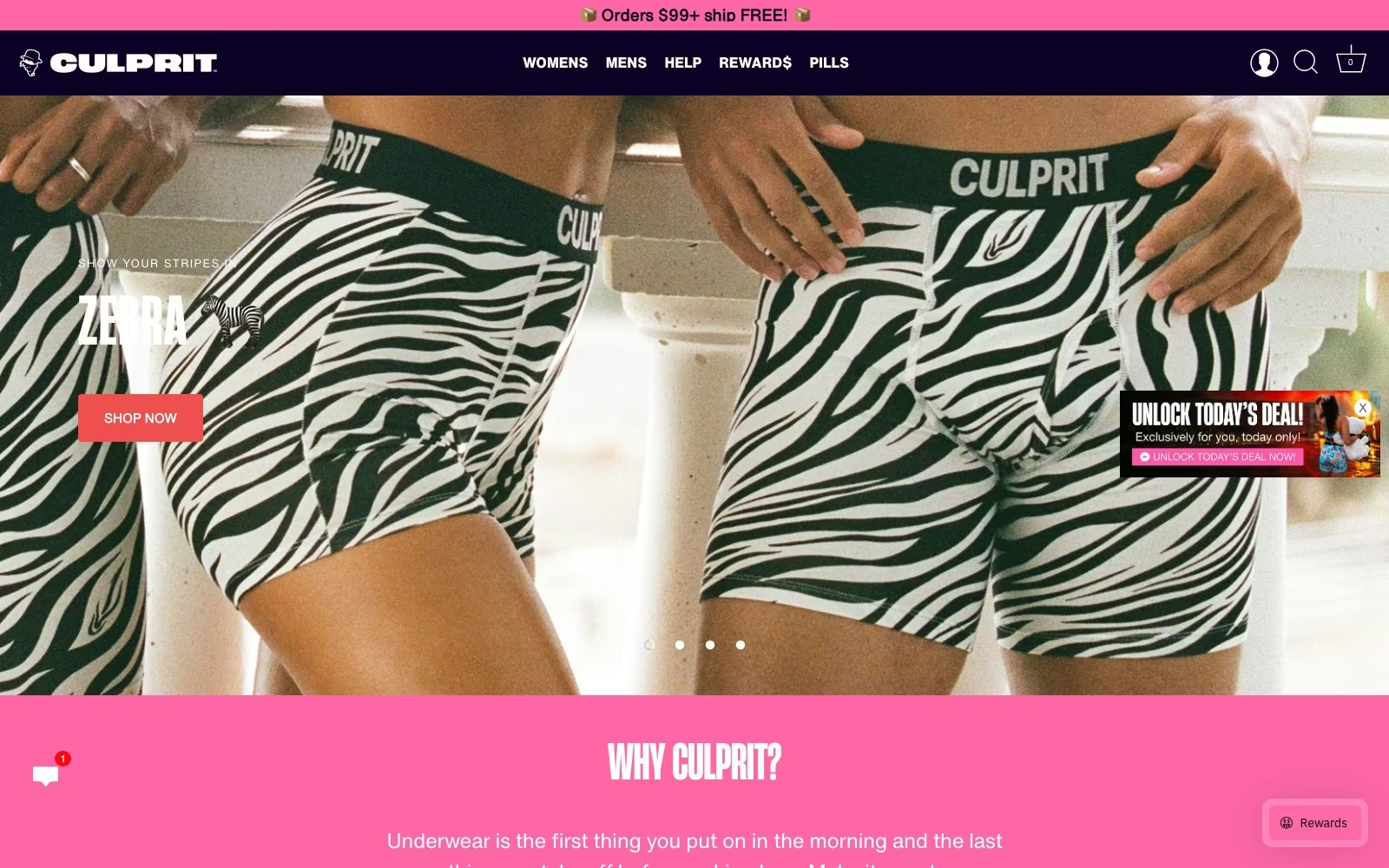
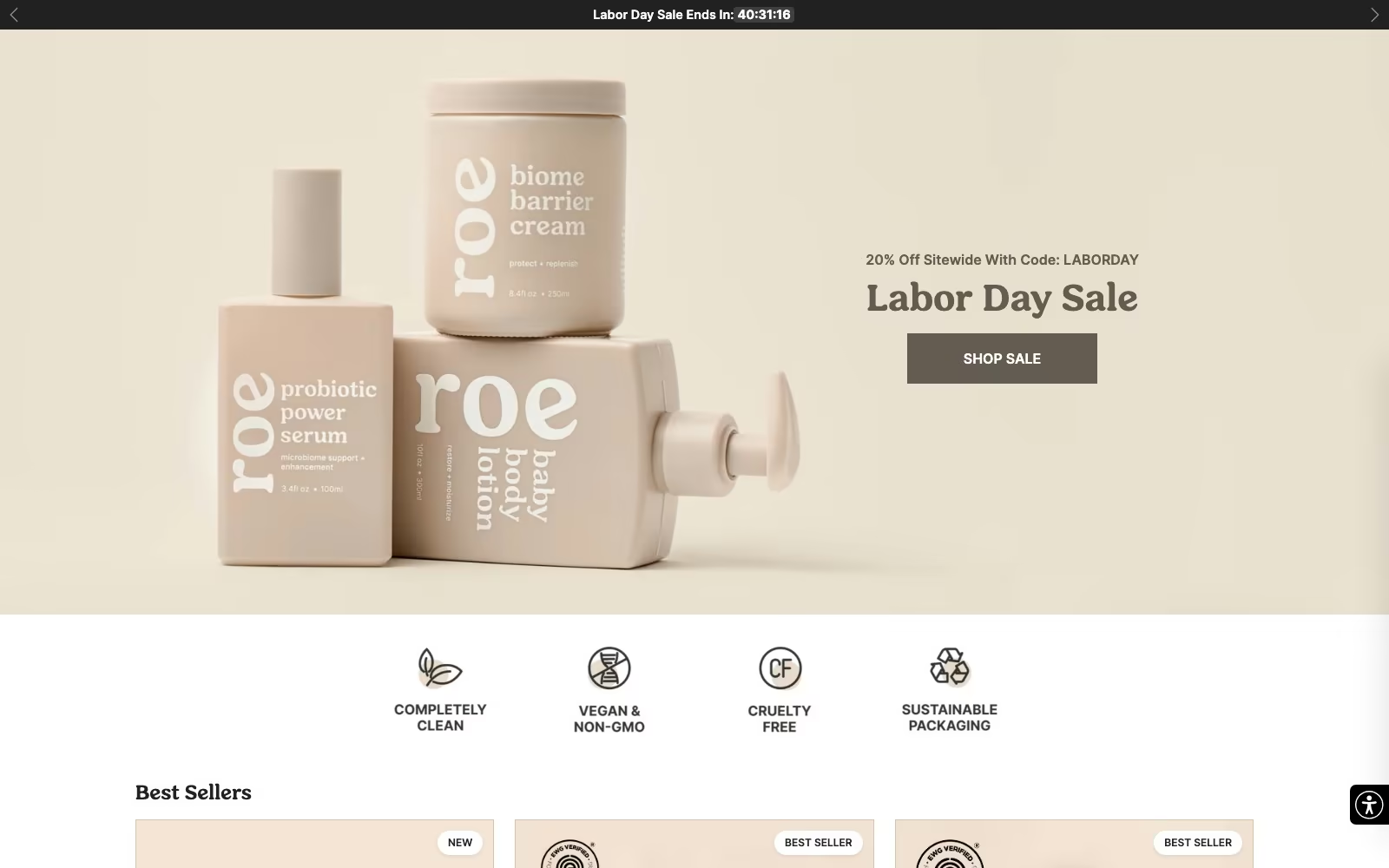
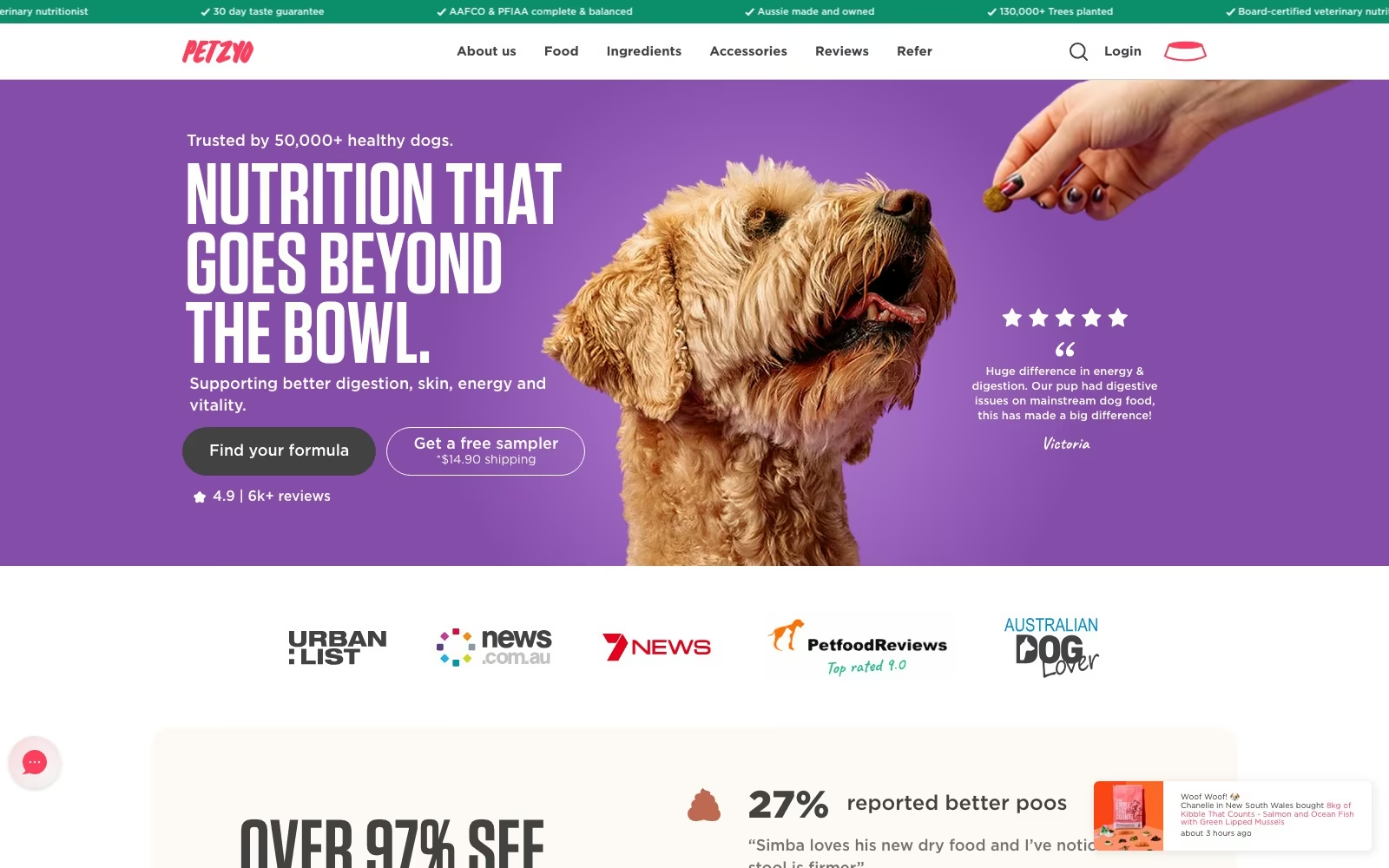
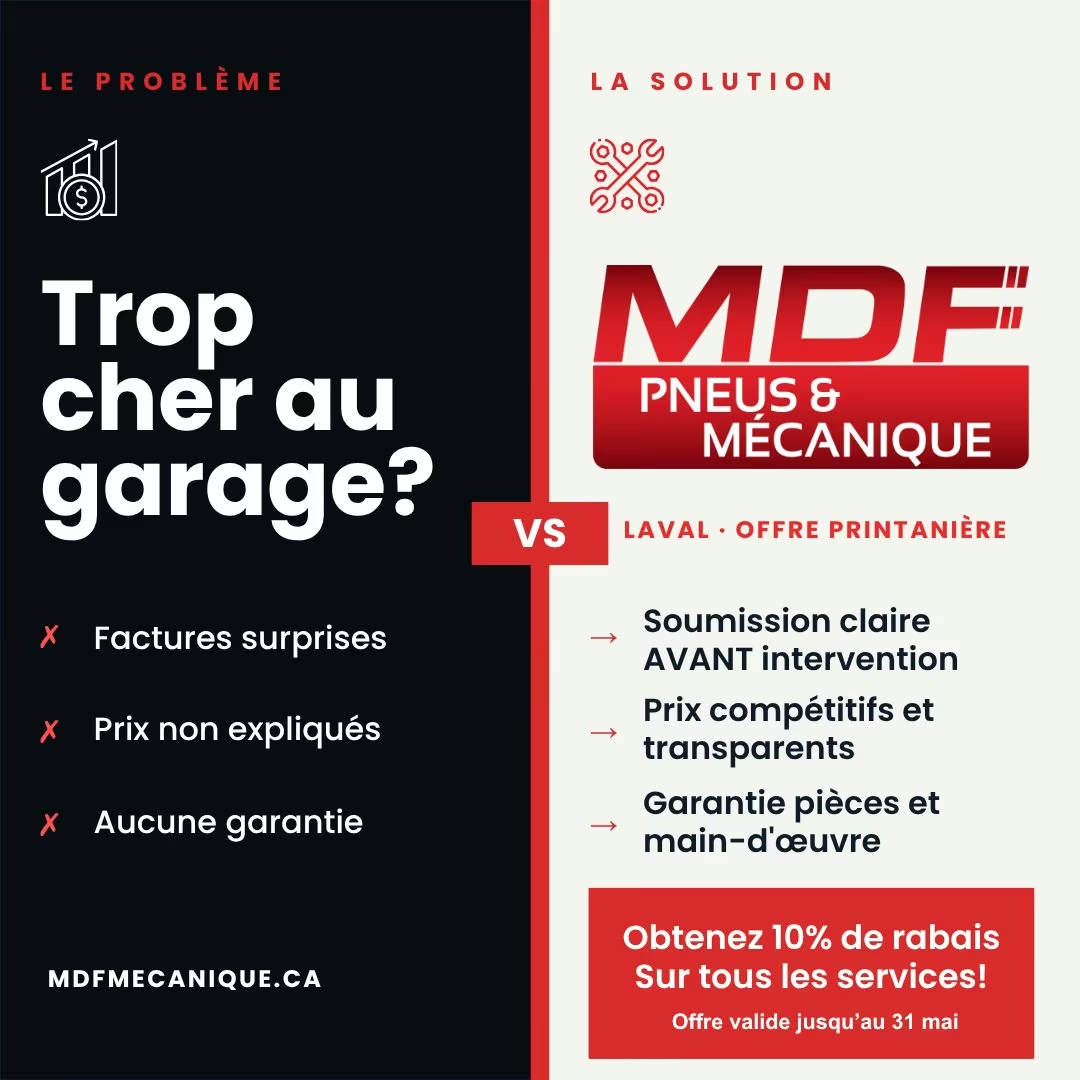
Website Portfolio
Video Ads
Static Ads



















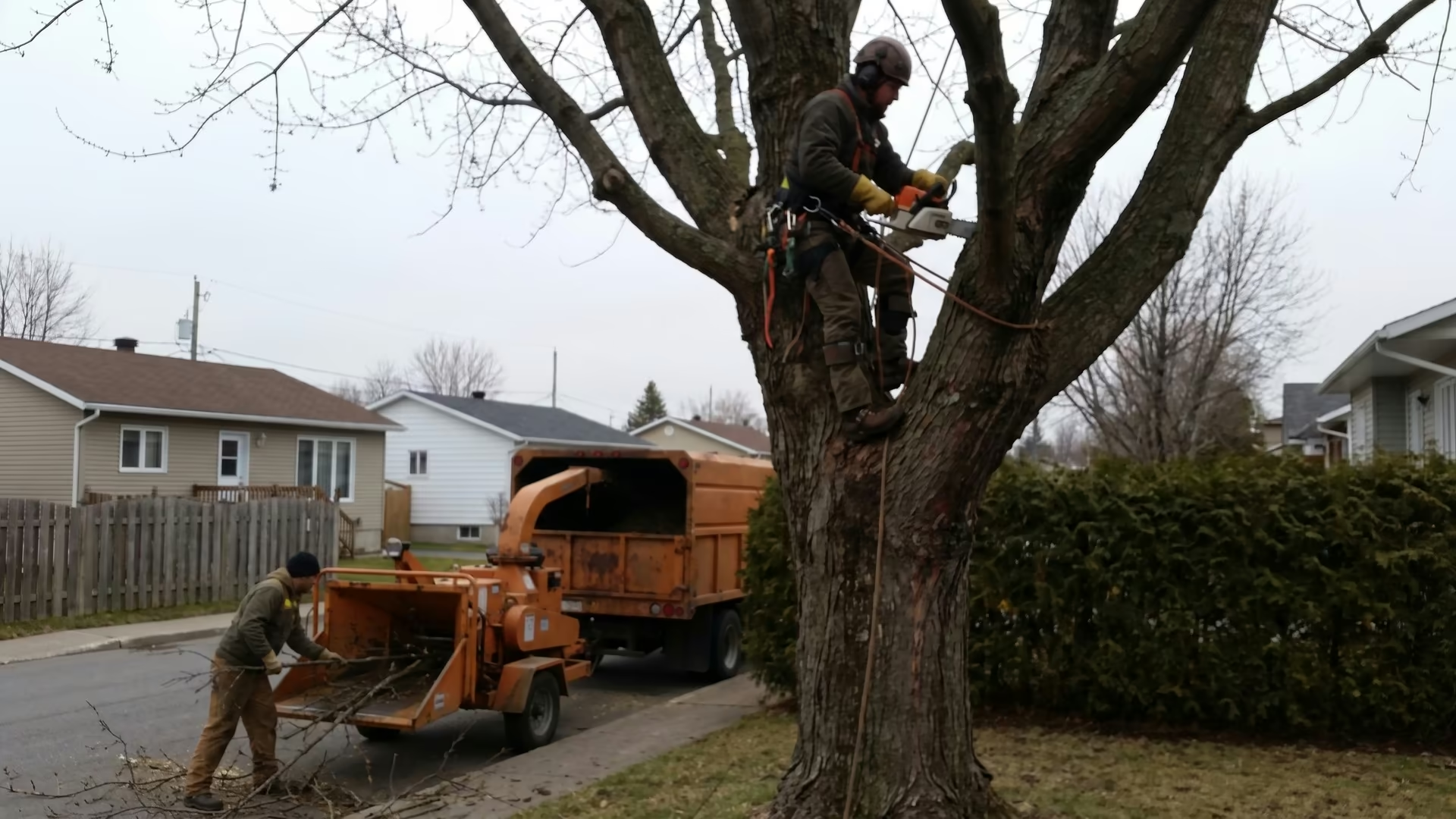



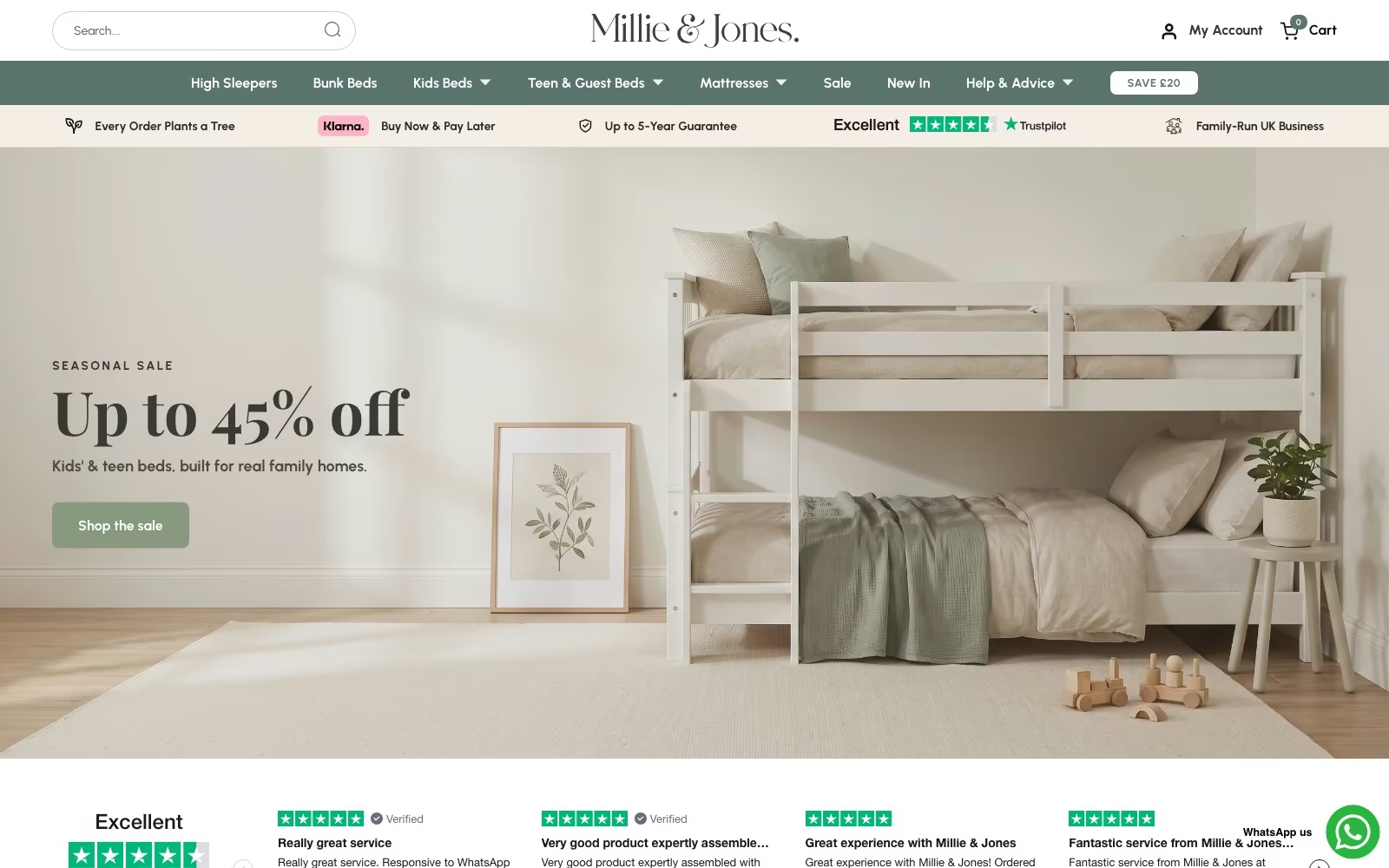

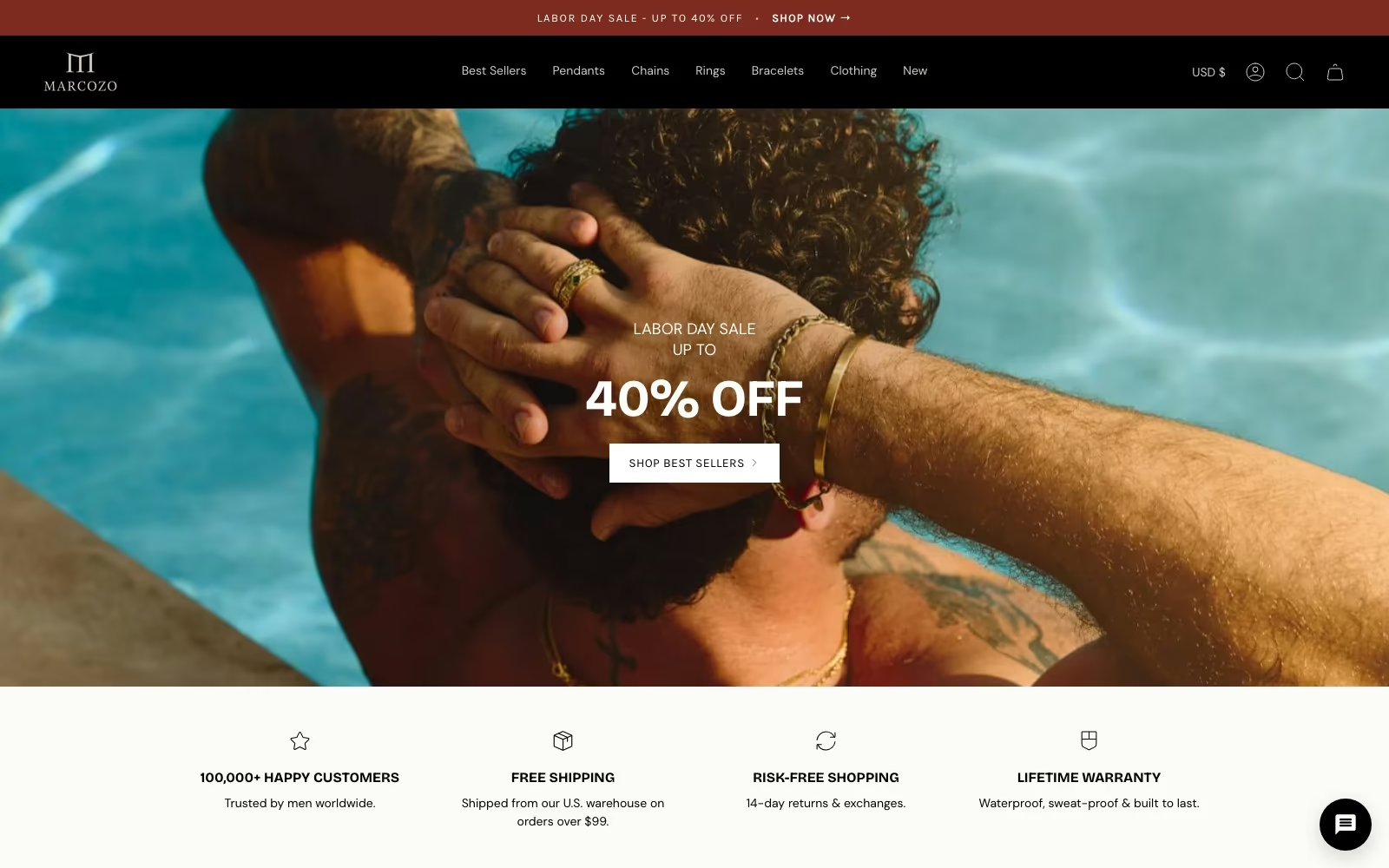

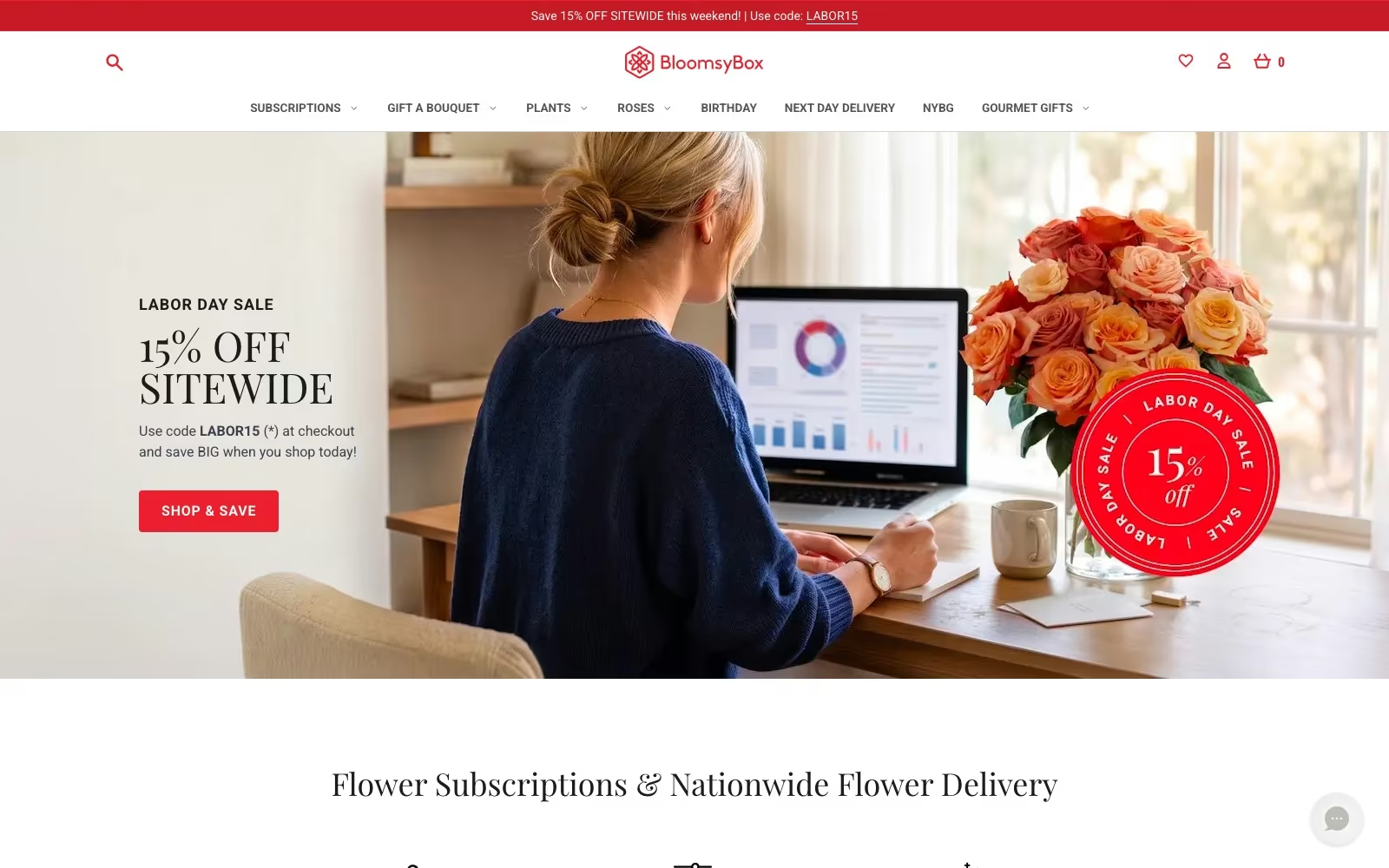







































FAQ
What sellers ask us first.
What does an Amazon ads agency actually manage?
The advertising and the things that decide whether advertising works. On the media side: Sponsored Products, Brands and Brands video, Display, and Amazon DSP where the budget justifies it. On the retail side: titles, bullets, images, A+ content, backend search terms, variation structure, review velocity, stock and buy box health. Separating those two is the most common mistake in the category, because the auction prices your clicks partly on how well the page converts. An agency that only touches bids is optimising the smaller half of the problem.
Is ACOS the right target to manage against?
Not on its own. ACOS ignores margin, so it cannot tell you whether a sale was worth making. We build a contribution model per product — price, cost of goods, FBA and referral fees, returns, and subscription value where it applies — and derive a break-even and a target from it. A high-margin item may deserve a 35% ACOS to take share; a thin-margin bundle may lose money at 15%. We also separate brand defence from prospecting, because blending them produces an average that flatters the account and hides which spend is genuinely acquiring customers.
What is a good ROAS or ACOS on Amazon?
The honest answer is that it depends on margin and category, but benchmarks give you a sanity check. Headline's 2025 analysis of $29.6 million in managed spend reports a portfolio-weighted 3.64x ROAS, with Sponsored Products around 3.8x, Brands 3.2x and Display 2.8x, on an average US cost per click of $1.31. Use those to spot a campaign type that is badly out of line, not as a target. Your own break-even, calculated from contribution margin, is the only number that tells you whether to bid more or less tomorrow.
Our listings need work. Should we advertise anyway?
Selectively, yes — and we would rather tell you that than take a full budget on pages that are not ready. Advertising a weak listing is expensive twice: you pay for clicks that do not convert, and the poor conversion rate raises what the next click costs. So we typically run a small diagnostic budget on your best-prepared products to gather search term and conversion data while the listing work happens, then scale into the improved pages. That sequence usually reaches profitability faster than launching everything at once, and it costs less to get there.
How do you handle brand defence versus competitor conquesting?
As two different budgets with two different targets. Defending your own brand terms is cheap insurance: shoppers already searching for you should not meet a competitor's ad above your listing, and Sponsored Brands plus Display on your own detail pages handle that. Conquesting is prospecting, priced accordingly, and judged on new-to-brand orders rather than blended ROAS. Reporting them separately is what makes the account legible: you can see what defence costs, what acquisition costs, and decide each one on its own merits instead of arguing about a single average.
Do you use the automatic campaigns or turn them off?
We keep them, with a job description. Automatic campaigns are the cheapest discovery engine Amazon gives you, but left alone they become a budget leak. Ours run on controlled budgets with close-match and substitutes separated where possible, harvested weekly: converting terms graduate into exact match with their own bids, and wasteful ones become negatives so the automatic campaign stops paying for them twice. The result is a discovery layer that keeps feeding the structured campaigns instead of competing with them.
How does Amazon advertising fit with our other channels?
Closely, and it is a real advantage. Brand demand created off the marketplace converts unusually well on it, and marketplace conversion velocity feeds organic rank, so social and search work compounds inside Amazon rather than competing with it. Given that EMARKETER expects $56.71 billion of US retail media spend to flow to Amazon in 2026 on a 40.6% share of US ecommerce sales, most brands should plan the marketplace as a primary surface rather than a leftover. We run it alongside paid search and paid social with one blended cost per customer, so budget can move to whichever surface is compounding.
Which marketplaces and account types do you support?
Amazon US and Canada as standard, plus UK and EU marketplaces where you already have listings and logistics in place. We work with Seller Central, Vendor Central and hybrid setups, and we will say plainly when a new marketplace is not worth opening yet — translation quality, local review counts and fulfilment economics decide that more than ad budget does. Where a launch does make sense, we sequence it: listings and logistics first, a small structured advertising programme second, expansion once the unit economics hold.
What reporting do we get?
A weekly working session with the people doing the work, and a written monthly review built around profit rather than ratios: contribution by product after ad spend, new-to-brand share, the scale, defend, fix or stop call on each ASIN, what we changed, and what we are testing next. Harvesting and negative keyword changes are logged with dates, so there is always an audit trail of decisions. Everything lives in your own accounts and reporting tools, and it stays there if we part ways.
Do we keep control of Seller Central and the ad console?
Yes, entirely. We work inside your accounts with the permissions your team grants, never through an agency-owned wrapper, so your data, history and creative assets are yours from day one. Documentation is handed over as we go rather than at the end. There are no long-term lock-ins — if you ever move the work in-house, you keep the margin model, the structure, the harvesting process and the negative lists, which is most of what makes the account work.

.webp)
.webp)