Fewer posts. Ones people finish.
Ones people finish
We run social accounts the way a publisher would: a point of view, a production line that never misses, community management by people who know your business, and reporting tied to pipeline rather than to likes. It works alongside creative strategy, paid social and influencer marketing, so the same ideas earn twice.






Tell us a little about your brand and we'll be in touch within 24 hours to lock in a time.



THE FOUR WORKSTREAMS
Strategy, production, community, proof.
community, proof
Those four, in that order, run by named people rather than a scheduling tool. The accounts that stall are almost always missing the first and the last: no point of view, and no measurement anyone outside marketing cares about.
Strategy & positioning
Content production
Community & moderation
Measurement & reporting
A point of view, then a plan.
We start with the argument your brand is making and who it is aimed at: the buyer, the moments they are in, the questions they ask, the competitors they compare you against, and the content formats that carry those answers well. That produces platform choices instead of platform obligations — most brands are better served doing two channels properly than five badly.
Then the content model: three to five recurring pillars with a purpose each, a house style for tone and visuals, a hook library, and a publishing rhythm the team can actually sustain. Volume for its own sake is a trap. Socialinsider recorded a 48% decrease in monthly posting frequency as brands moved from volume toward fewer, higher-value posts, and Buffer's analysis of 52 million posts across 200,000 accounts found reach per post tends to decline at higher posting frequencies.
Everything is written down: pillars, formats, cadence, approval flow, escalation rules and the measurement plan. It is the document that keeps an account coherent when everyone is busy.
- Audience, competitor and content audit before any calendar
- Two or three platforms chosen deliberately, not all of them
- Three to five content pillars with a purpose each
- House style, hook library and sustainable cadence agreed
48%
decrease in monthly posting frequency as brands chose quality (Socialinsider, 2026)
52M+
posts behind Buffer's 2026 engagement analysis
A production line, not a scramble.
Content is produced in batches against the calendar: short vertical video, carousels, stills, native text posts, and the platform-specific formats that earn distribution this quarter. Captions are written by people who have read your sales calls, not generated from a prompt, and every asset is built for the platform it lands on rather than exported once and posted five times.
Batching is what makes quality repeatable. One planning session sets the month, one production block covers most of the assets, and the remainder is left deliberately open for reactive posts, which is where a brand sounds human. Editing, subtitling, thumbnails, alt text and accessibility are part of the job rather than an afterthought.
Reach conditions are worth stating plainly: Hootsuite notes that Facebook's average organic reach fell from around 16% in 2012 to 1-2% in 2025, with Instagram down 12% and LinkedIn down 34% year on year. So we optimise for the metrics that survive that squeeze — saves, shares, watch-through and profile visits — and use paid amplification where a post deserves more people.
- Monthly batch production with reactive capacity held back
- Assets built per platform, not exported once and reused
- Captions written by people who have heard your sales calls
- Subtitles, thumbnails, alt text and accessibility included
1-2%
typical Facebook organic reach in 2025, down from ~16% in 2012 (Hootsuite)
34%
LinkedIn organic reach decline year on year (Hootsuite)
Replies are the channel, not the overhead.
Comments, direct messages, mentions, reviews and tags are handled daily inside agreed response windows, by people briefed on your products, pricing posture and the things you cannot say. Sales-intent messages are routed to your team with context rather than answered with a link, because a warm reply left for three days is a lost enquiry.
Moderation runs to a written policy: what gets answered publicly, what moves to a private message, what gets hidden, and what escalates to you immediately. We also keep a crisis playbook with named contacts and holding statements, because the worst time to invent a process is the morning it is needed. Sentiment and recurring questions are logged and fed back into content, which is the cheapest research a brand has access to.
Social listening covers your brand, key competitors and category terms, so you hear about a problem or an opportunity from us rather than from a screenshot.
- Daily comment, message, mention and review handling
- Agreed response windows and a written moderation policy
- Sales-intent conversations routed to your team with context
- Crisis playbook with named contacts and holding statements
Daily
community management inside agreed response windows
Numbers a finance director recognises.
We report on what the work is for. Reach and engagement rate stay in the report as diagnostics, but the headline metrics are saves and shares, watch-through, profile and link clicks, assisted conversions, branded search volume, and enquiries that arrived through social — tracked with proper campaign parameters so they show up in analytics rather than as direct traffic.
Benchmarks come from the published datasets rather than from folklore. Metricool's 2026 study covers 39,762,999 posts across 1,059,949 accounts, which is enough to say honestly whether your engagement rate is normal for your platform and size before anyone panics about a soft month.
Each month you get a written review: what we published, what worked, what we are stopping, what we are testing next, and the recommendation attached to each. Quarterly we revisit the strategy itself, because platform distribution changes faster than most content plans admit. You keep the accounts, the asset library and the calendar throughout.
- Saves, shares, watch-through and profile clicks as headline metrics
- Campaign parameters so social traffic is attributable
- Benchmarked against published platform datasets
- Written monthly review plus a quarterly strategy revisit
39.7M
posts in Metricool's 2026 benchmark study
Monthly
written review ending in recommendations
average monthly social agency project (Clutch)
of agencies price it as a retainer (Clutch)
Community replies inside the response window we agree
The accounts, asset library and calendar
We made the difference for those brands
Consumer tech and platforms

Consumer tech and platforms

Travel & mobility

B2B software, fintech, insurance

B2B software, fintech, insurance

Retail & commerce

Creative, content, arts & culture

Consumer tech and platforms

Consumer tech and platforms
Home essentials, appliances, kitchen & pet

Home essentials, appliances, kitchen & pet

Food & beverage

B2B software, fintech, insurance

Food & beverage

Food & beverage

Healthcare & regulated services

Food & beverage

Consumer tech and platforms

Food & beverage

Retail & commerce

Creative, content, arts & culture

Consumer tech and platforms

Retail & commerce

Home essentials, appliances, kitchen & pet

B2B software, fintech, insurance

Healthcare & regulated services
B2B software, fintech, insurance

Beauty, personal care & wellness

B2B software, fintech, insurance

Creative, content, arts & culture
01 — The challenge
Posting every day, hearing nothing back.
The calendar is full, someone is up late making a carousel, and the numbers barely move. Comments go unanswered for days because nobody owns them. When the board asks what social contributed last quarter, the answer is a follower count and an apology.
“We are the busiest we have ever been on social and the least sure it is working.”
Two things are usually true at once. Distribution genuinely got harder — Facebook's average organic reach fell from roughly 16% in 2012 to 1-2% in 2025, with LinkedIn down 34% year on year (Hootsuite). And more posting is the wrong response to it: Buffer's analysis of 52 million posts found reach per post declines as frequency rises. The fix is a smaller number of posts with a real point of view, community management that answers people the same day, and measurement pointed at enquiries instead of applause. That is the programme, and it is calmer to run than what you are doing now.
02 — Our approach
Choose fewer platforms. Publish better. Answer everyone.
We open with an audit of your accounts, competitors and best-performing content, then agree the point of view, the two or three platforms worth doing properly, three to five content pillars, a house style and a cadence your business can sustain. Production runs in monthly batches with reactive capacity held back, every asset built for the platform it lands on and captions written by people who have heard your sales calls. Community management happens daily inside agreed response windows, with a written moderation policy, sales-intent messages routed to your team with context, and a crisis playbook ready before it is needed. Reporting leads on saves, shares, watch-through, profile clicks and enquiries, tracked with proper campaign parameters and benchmarked against published datasets, with a written monthly review and a quarterly strategy revisit. You keep the accounts, the asset library and the calendar from day one.
03 — What we did
Four phases to an account that earns its place.
Audit and strategy, production system, community operations and reporting, with a weekly working session and a written monthly review.
Weeks 1-2 / Audit
Find the point of view worth posting
Accounts, competitors and past performance audited; audience and buying moments mapped; platforms chosen deliberately and pillars agreed.

Weeks 2-4 / Production
Stand up a production line
House style, hook library, batch shoots and a calendar with reactive capacity held back for the posts that need to be timely.

Ongoing / Community
Answer people the same day
Comments, messages, mentions and reviews handled daily to a written policy, with sales-intent conversations routed to your team.

Monthly / Proof
Report the metrics that survive
Saves, shares, watch-through, profile clicks and enquiries benchmarked, with a written review and a quarterly strategy revisit.

WHAT YOU GET
Deliverables, not a content calendar screenshot.
not a screenshot
Everything below is built in your own accounts and asset library, documented as we go, and yours to keep.

Strategy and content pillars
Audience and competitor research, platform choices, three to five pillars, house style and a cadence your business can sustain.

Calendar and approvals
A rolling monthly calendar with reactive slots held back, plus an approval flow that does not stall publishing.

Content production
Vertical video, carousels, stills and native text posts produced per platform, with subtitles, thumbnails and alt text.

Community management
Daily comment, message, mention and review handling to agreed response windows, with sales-intent routing.

Listening and crisis playbook
Brand, competitor and category monitoring, a written moderation policy and holding statements agreed in advance.

Benchmarked reporting
Saves, shares, watch-through, profile clicks and enquiries against published benchmarks, with a written monthly review.
HOW WE WORK
Operating standards, not promises.
Operating standards



















Built on trust. Proven by results.
We partner with SMBs and Fortune 500 companies to deliver more than reach — we bring clarity, execution, and measurable outcomes. Every successful partnership starts with a strong culture fit and a shared drive to grow.





CASE STUDIES
Case studies
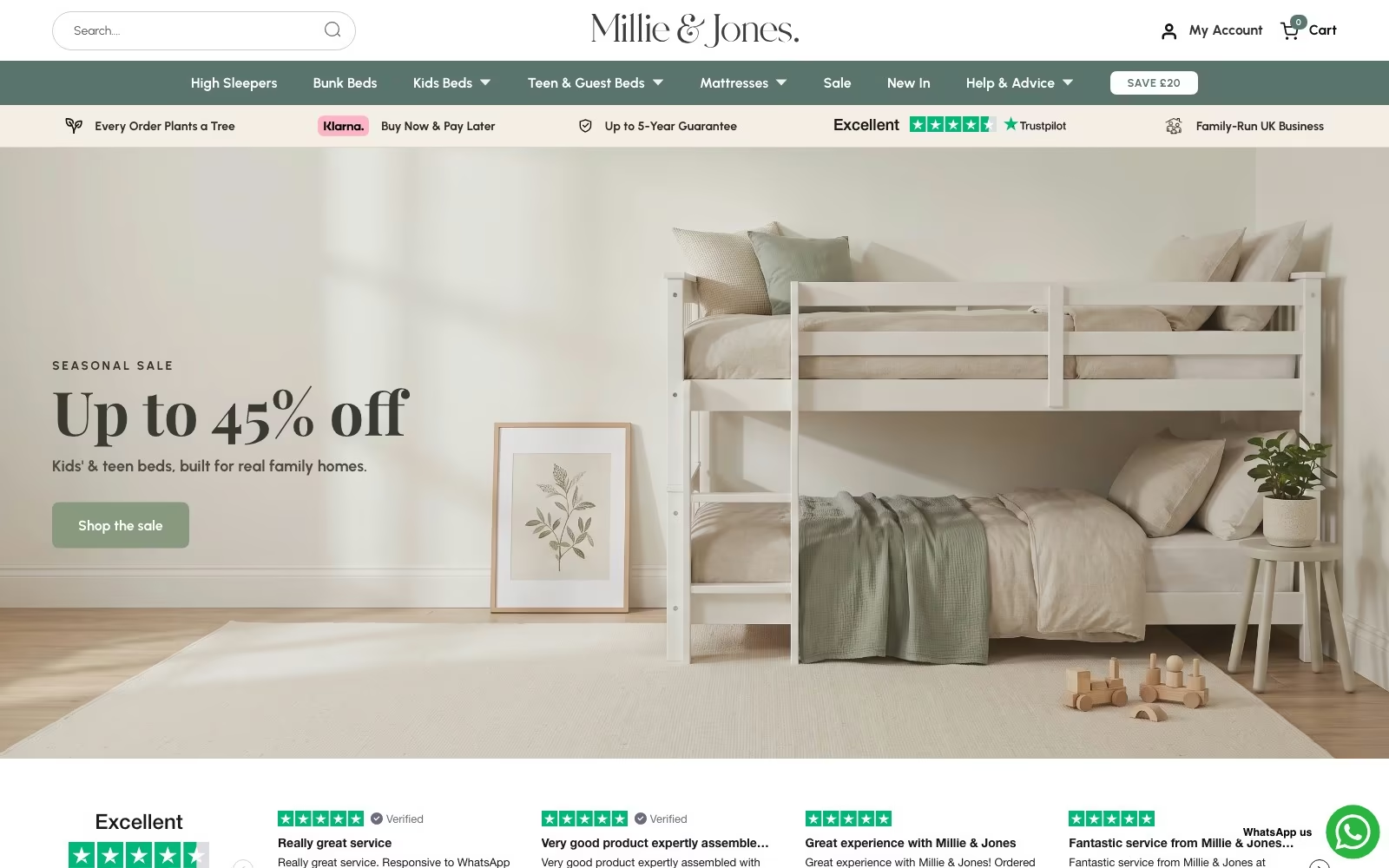
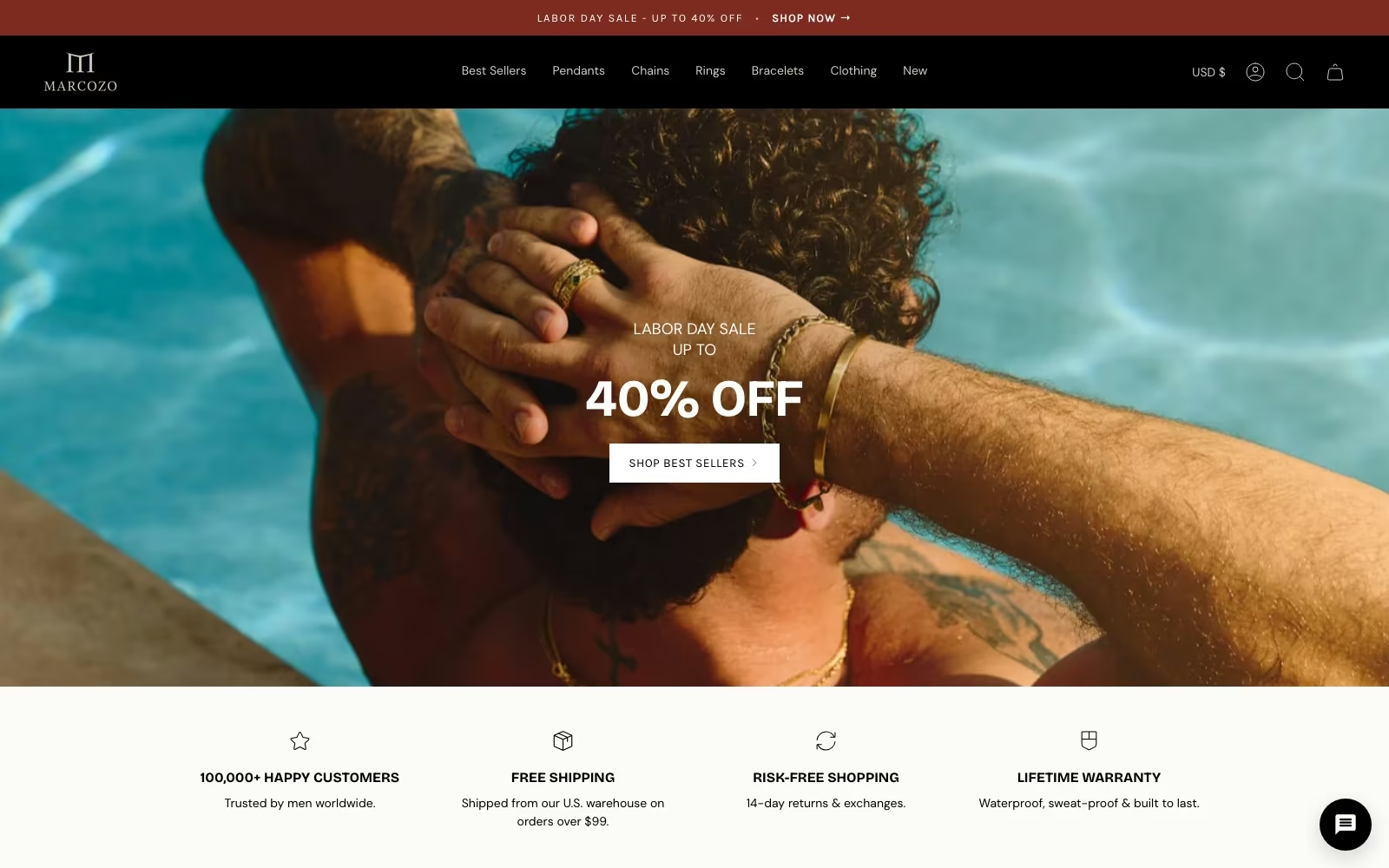
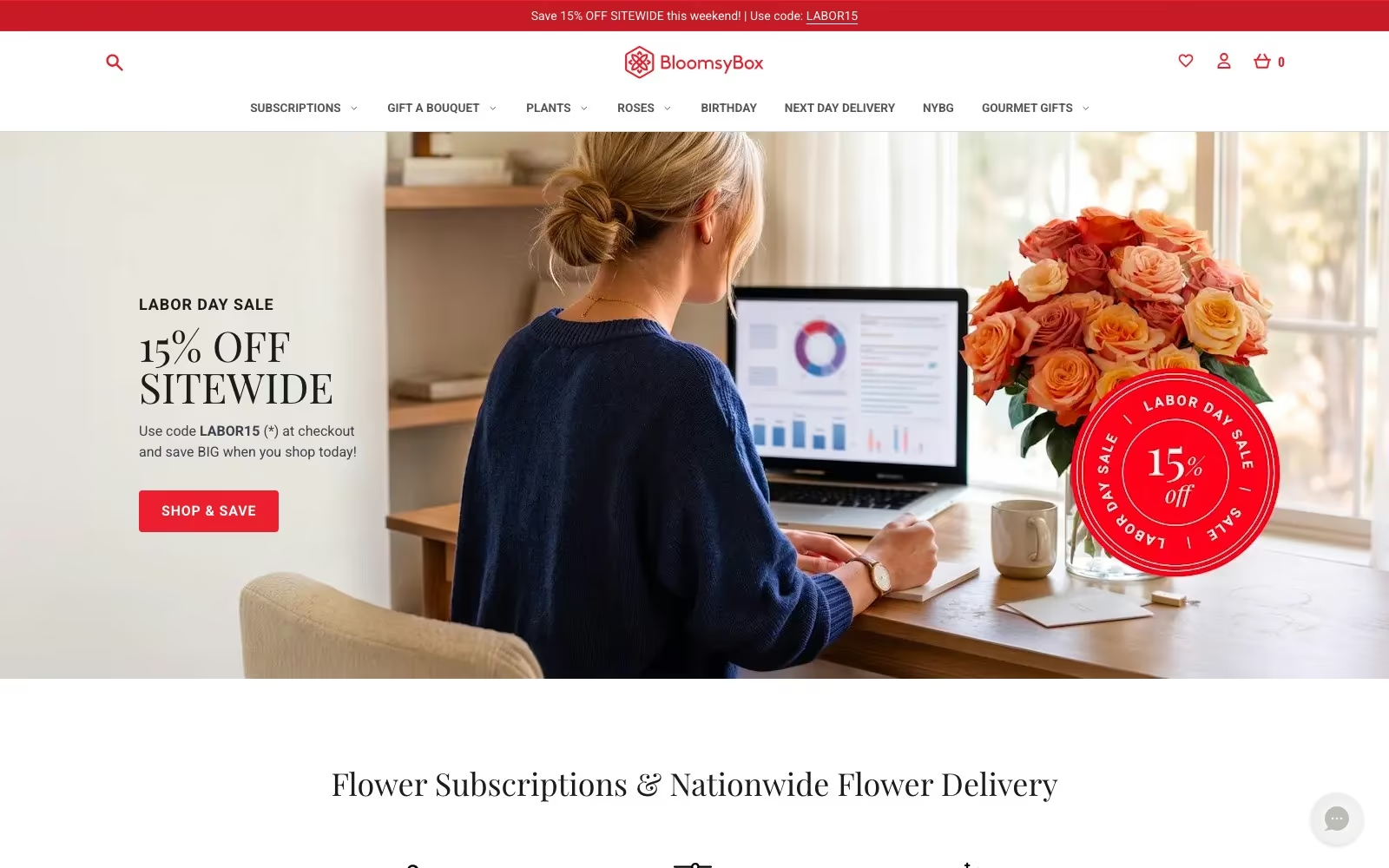
Website Portfolio
Video Ads
Static Ads























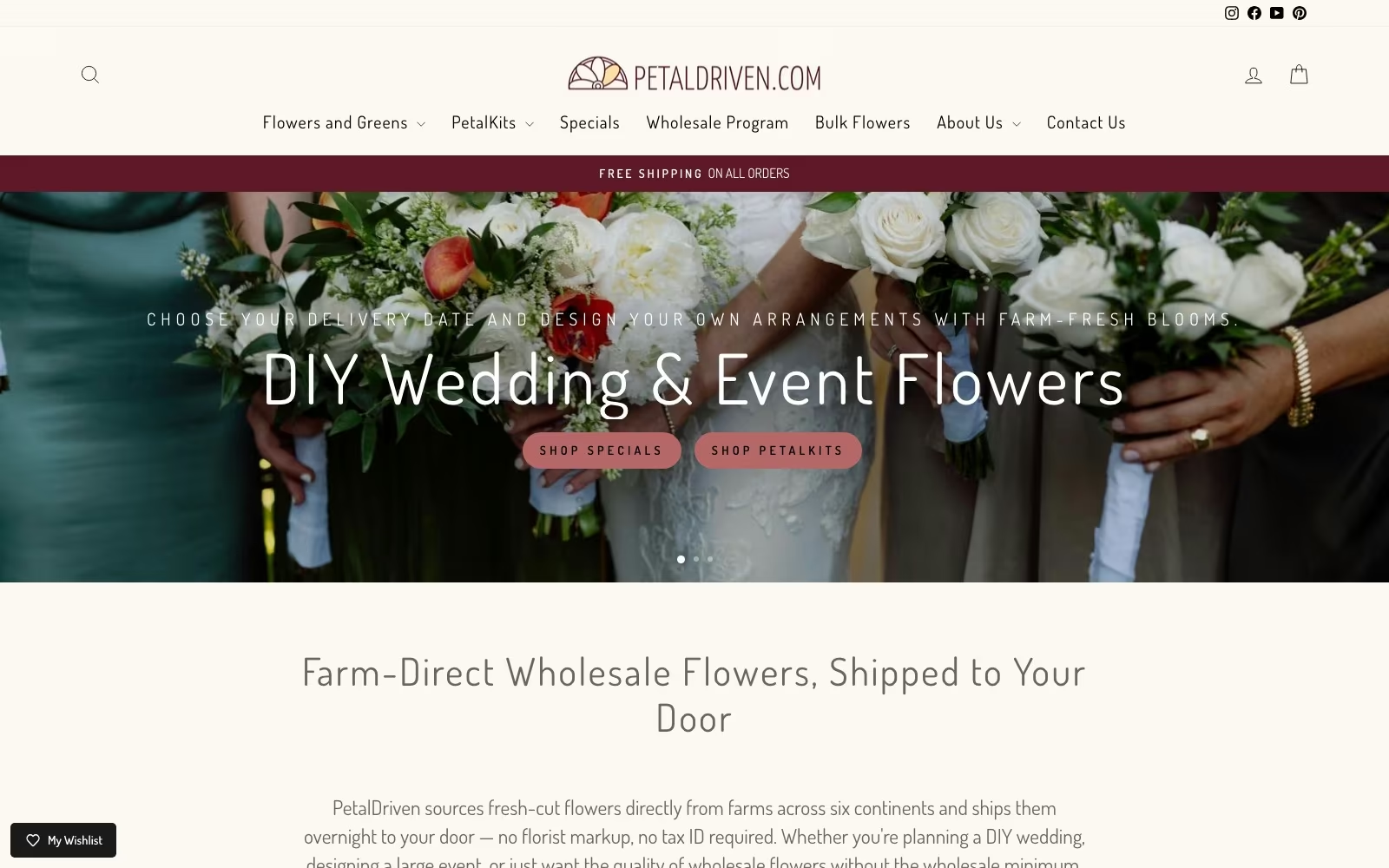



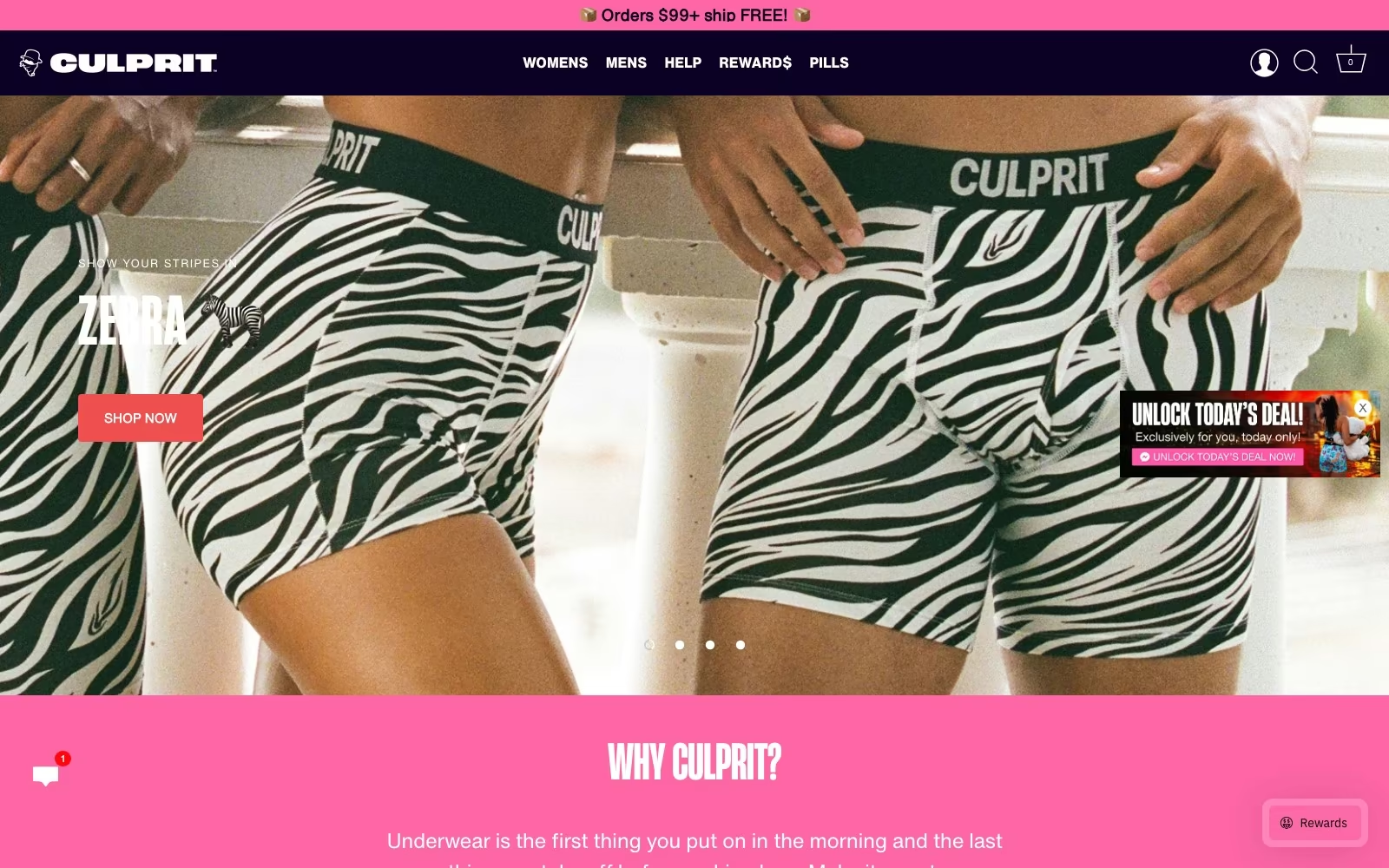





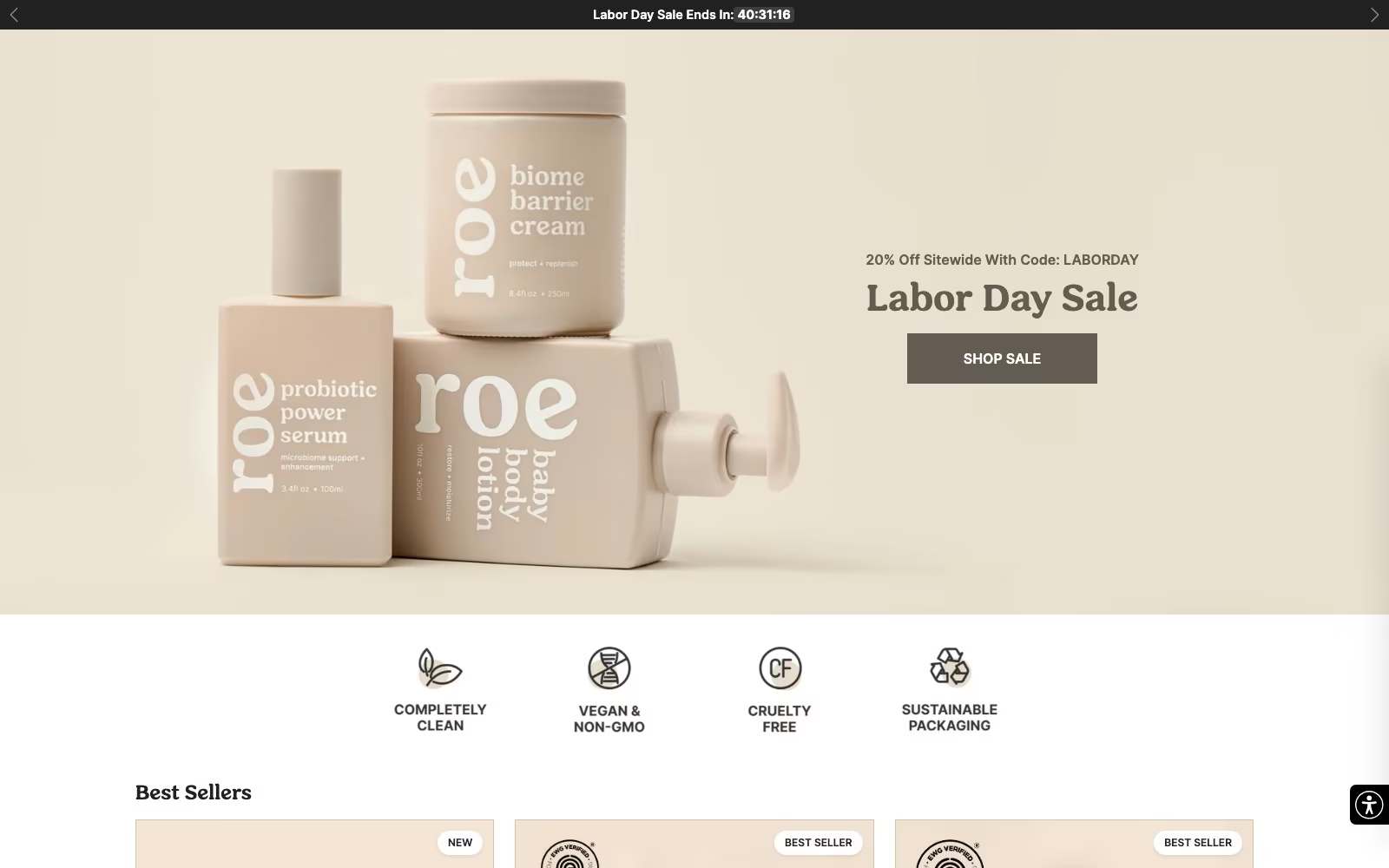



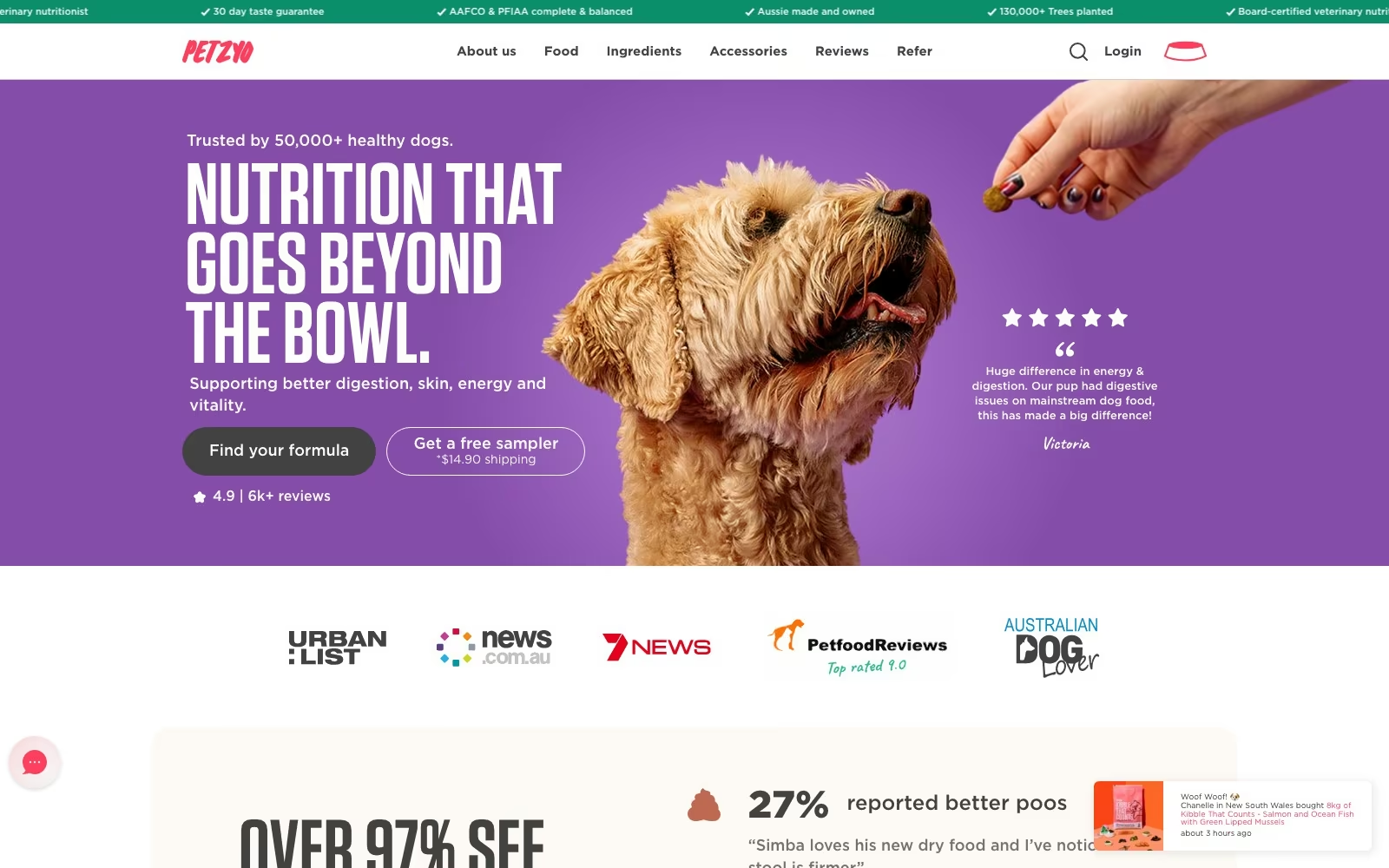
























FAQ
What brands ask us first.
What does a social media management agency actually do?
Four things, and the fourth is the one that decides whether the first three were worth buying. Strategy: the point of view, the platforms worth your time, the pillars and the cadence. Production: assets made for each platform, in batches, to a house style. Community: daily replies, moderation, routing of sales-intent messages and a crisis playbook. Measurement: reporting tied to enquiries and assisted conversions rather than to follower counts. A good engagement should leave you with a documented content system, an asset library you own, an inbox that gets answered, and a monthly review that changes what happens next month. If an agency only sells you a calendar, you are buying a scheduling tool with a retainer attached.
How much does social media management cost?
The market range is wide and honest scoping matters more than a headline figure. Published guidance puts agency programmes at roughly $3,000-$5,000 a month for growth accounts, $6,000-$10,000 for premium mid-market programmes, and $30,000-$50,000+ for enterprise or multi-brand work (Fifty & Five, 2026). What moves the number is production volume, how much original video is involved, how many platforms and languages you need, whether community management is daily or business-hours only, and how many approval layers exist on your side. We quote a fixed monthly fee against a written scope with the deliverable counts in it, so you can compare proposals on substance rather than on adjectives, and we would rather reduce platform count than thin out quality to hit a budget.
How often should we post?
Less than most calendars assume, and consistently. The evidence points the same way twice: Socialinsider recorded a 48% decrease in monthly posting frequency as brands moved toward fewer, higher-value posts, and Buffer found reach per post tends to decline at higher frequencies. In practice, three to five strong posts a week on one primary platform beats daily filler across four, and short video plus stories or reactive posts carry the rest. The number that matters is the one you can sustain for a year without quality drifting, because algorithmic distribution rewards accounts that keep their promises. We set the cadence from your production capacity and then protect it.
Is organic social still worth it if reach keeps falling?
Yes, provided you buy it for the right reasons. Reach has genuinely compressed — Facebook's average organic reach went from roughly 16% in 2012 to 1-2% in 2025, Instagram fell 12% and LinkedIn 34% year on year (Hootsuite) — so treating follower count as a distribution channel no longer works. What still works is the rest of it: social is where buyers check whether you are credible, where your creative gets tested cheaply before it goes into paid, where recruitment and partnerships start, and where customer questions surface first. The programmes that pay are the ones designed for saves, shares, watch-through and profile visits, with paid amplification behind posts that have already proved themselves.
Who writes and approves the content?
We write it; you approve it, on a schedule that does not stall publishing. A strategist, a creator and a community manager are named on your account, and they are briefed properly — we read sales calls, support tickets and reviews, and we interview the people in your business who know the product best, because that is where the specific detail comes from. Drafts go into a shared calendar a set number of days ahead with one clear approval step; anything that misses the window rolls forward rather than blocking the queue. Reactive posts have pre-agreed guardrails so we can move on the day without waiting for a committee, and anything sensitive escalates to a named person on your side.
How do you measure whether social is contributing?
By reporting the metrics that survive a distribution squeeze and tying them to demand. Saves, shares, watch-through, profile visits and link clicks show whether content lands; campaign parameters on every link mean the resulting sessions appear as social rather than as direct traffic; and we track assisted conversions, enquiries mentioning social, and branded search volume as the demand signals. Benchmarks come from published datasets such as Metricool's 2026 study of 39,762,999 posts across 1,059,949 accounts, so a soft month can be judged against platform reality instead of last year's chart. Where a channel's contribution is genuinely arguable, we say so plainly rather than claiming credit the data does not support.
Can you handle community management and comments?
Yes, and it is usually where the fastest wins are. We handle comments, direct messages, mentions, tags and reviews daily inside a response window we agree with you, using a written policy that says what gets answered publicly, what moves to a private conversation, what gets hidden and what escalates immediately. People asking about price, availability or booking are routed to your team with the conversation history attached, because a warm enquiry answered three days later is a lost sale. Recurring questions are logged and turned into content, and sentiment is reported monthly. For regulated or sensitive categories we agree an approved-language list before we answer anything.
Do you work with our in-house team or replace it?
Either, and the blended model is often the best value. Where you have an in-house creator or social manager, we tend to own strategy, production capacity, reporting and the systems, while your person keeps the voice, the reactive posting and internal access — they know the business in a way no agency will. Where there is nobody in-house, we run the whole function and train whoever inherits it later. Either way everything lives in your accounts with documented processes, the asset library is yours, and we keep the tooling conventional so a handover is a handover rather than an excavation.
What happens if there is a crisis or a bad review cycle?
We use the playbook we wrote before it happened. That document names who decides, who speaks, which holding statements are pre-approved, what pauses automatically (scheduled posts and paid amplification), and how fast each step happens. In the moment, our job is to slow the situation down: pause publishing, respond factually where a response helps, move individuals into private channels, log everything, and give you an hourly picture of volume and sentiment rather than a stream of screenshots. Afterwards we run a review and update the playbook and the FAQ content, since most flare-ups repeat in a different costume and the second one should be duller than the first.
How does social media marketing fit with our other digital marketing?
It works best as part of one plan rather than a separate service. Organic social builds the audience and produces the creative; paid social and other digital advertising campaigns buy reach for whatever earns attention; SEO and the website capture the demand all of it creates; email keeps the relationship going. In practice that means shared briefs, shared tracking and one report, so a piece of content that drives ecommerce sales or booked calls is credited properly. Where other agencies run your search or advertising work, we share content, audience insight and performance data with them — a social programme that only helps itself is not much use to the business.
What should we expect from a top social media marketing agency?
Three things beyond the posting. First, an opinion: the best agencies tell you what to stop doing, not only what to add, and are specific about which platforms deserve your budget. Second, production capacity that is verified rather than promised — ask to see a real month of output for a business like yours. Third, measurement that connects the work to traffic, leads and revenue, with a written monthly review instead of a dashboard link. Good agencies are comfortable being audited: clear scope, transparent reporting, no lock-in, and every account, asset and insight owned by you.
Should paid social run alongside this?
Usually yes, and the two get better when the same people see both. Organic is the cheapest place to find out which hooks and formats earn attention; paid social is where a proven idea gets the audience it deserves. Running them together means creative learning flows one way and audience data the other, and frequency is managed rather than accidental. We also pair this with influencer marketing and creative strategy where creator content is doing the heavy lifting. Buying organic management on its own is fine too — we will share what we learn with whoever runs your paid accounts.

.webp)
.webp)