A redesign that keeps what already works.
keeps what already works
Most website redesigns are judged on how the new design looks and paid for out of the traffic the old one earned. We do it the other way round: measure what converts and ranks today, protect it through the move, then rebuild the parts that are actually losing you enquiries. Design, build, search continuity and conversion work in one plan.






Tell us a little about your brand and we'll be in touch within 24 hours to lock in a time.



THE FOUR PHASES
Four phases, in this order.
in this order
Evidence, structure, web design and migration. The order is the whole method: a site redesigned before anyone looked at the data is a bet, and the two most common ways a relaunch loses money — a lost URL map and a rebuilt page that converted better before — are both decided in the first two phases.
Evidence & baseline
Structure & content
Design & build
Migration & aftercare
Find out what you would be throwing away.
Before a single frame is drawn we record the baseline: which pages earn the enquiries, which keywords and URLs bring qualified visits, where people drop out of forms and checkouts, what the analytics say about website templates rather than the homepage everyone argues about. Session recordings and heat maps tell us where attention actually goes, and interviews with sales tell us which questions the site never answers.
This is also where the commercial ambition gets specific. If checkout is the problem, that is a measurable target: Baymard Institute's aggregate of 50 studies puts the average cart abandonment rate at 70.22%, most of it caused by friction rather than price. If the experience on a phone is the problem, that is measurable too — the Web Almanac reports 48% of mobile origins passing all three Core Web Vitals.
The output is a one-page brief: what must not change, what must improve, and the numbers we will be judged on afterwards. It is the cheapest phase and the one that decides whether the project pays for itself.
- Baseline of enquiries, revenue and rankings per template
- Funnel and form drop-off measured before anything moves
- Recordings, heat maps and sales interviews for the why
- A written list of what must not change
- Success metrics agreed before design starts
70.22%
average documented cart abandonment rate
48%
of mobile origins pass all three Core Web Vitals
Decide the shape before the styling.
Navigation, page inventory, URL map, templates and the words that go in them. Most websites that feel dated are not badly styled, they are badly organised: services buried three clicks down, five overlapping pages competing for one search term, proof scattered where nobody reads it, and a homepage carrying an argument that should live on a service page.
So we consolidate and map. Every existing URL is assigned a destination — kept, merged, rewritten or redirected — and pages that rank are treated as assets to strengthen rather than as drafts to replace. Then the copy is written to the evidence from phase one: the objections sales hears, the questions the search data shows, the proof that convinces.
Wireframes come out of that, not out of a template library, and they are signed off in grey before anyone discusses colour. It is a duller review meeting and it removes the expensive round of changes that otherwise arrives after the visuals.
- Page inventory with keep, merge, rewrite or redirect per URL
- Navigation and internal linking planned, not inherited
- Copy written from evidence before layouts are styled
- Wireframes signed off before visual design begins
1 URL
map covering every page before design starts
Familiar, quick and unmistakably yours.
Judgement is fast and mostly unconscious. The classic study behind every design deck found that visual appeal is decided within 50 milliseconds, and Google's own research narrowed it further: aesthetic judgements form between 17 and 50 milliseconds, and pages that are visually complex or unfamiliar in layout are rated less beautiful — the case for restraint, not for novelty.
So we design distinctive brand expression inside conventional structure. Buttons look like buttons, the phone number is where a thumb expects it, forms ask for what you actually need. Everything is built as a component system your team can extend without a developer, with accessibility, states and edge cases specified rather than discovered later.
Speed is a design constraint from the first review, not a clean-up task at the end: budgets per template, media pipeline, fonts and third-party tags agreed while there is still time to choose differently. Our speed engineering team sets those budgets and holds the build to them.
- Distinctive brand inside conventional, familiar structure
- Component system your team can extend safely
- Accessibility, states and edge cases specified up front
- Speed budgets per template agreed during design
50ms
is all it takes for a visitor to judge visual appeal
17ms
the shortest exposure at which judgements still form
The launch is the risky part. Treat it that way.
Google publishes the list of things that cost websites their traffic, and it reads like a relaunch checklist: host name changes, moving pages to new URLs, moves to HTTPS and site reorganisations. Every one is avoidable with a mapped redirect for each indexed URL, redirects that resolve in one hop, canonical tags and sitemaps regenerated, structured data carried across, and staging blocked from indexing until the day it is not.
We rehearse the cutover, launch with a rollback ready, and then watch closely for six weeks: crawl and indexation daily at first, rankings and enquiries against the baseline weekly, error logs and form submissions checked rather than assumed. A short settling period while the index catches up is normal; a sustained fall is a fault, and knowing the difference is why the baseline exists.
Aftercare includes the ordinary post-launch improvements every website needs once real visitors arrive, and a handover of the component library, the editing guide and the documentation.
- Every indexed URL mapped to a single-hop redirect
- Canonicals, sitemaps and structured data carried across
- Rehearsed cutover with a rollback ready
- Six weeks of daily crawl and weekly enquiry monitoring
- Component library, editing guide and docs handed over
1 hop
every redirect resolves directly, with no chains
523 days
average recovery time after a botched site migration (Search Engine Journal)
average site lifespan before a major redesign (Orbit Media)
average cost of a website redesign (Rick Whittington)
Nothing is redesigned before we know what it earns
The accounts, repository and component library
We made the difference for those brands

Consumer tech and platforms

Consumer tech and platforms

Home essentials, appliances, kitchen & pet

B2B software, fintech, insurance

Home essentials, appliances, kitchen & pet

B2B software, fintech, insurance

Healthcare & regulated services

Creative, content, arts & culture

B2B software, fintech, insurance

Apparel and lifestyle

Home essentials, appliances, kitchen & pet

B2B software, fintech, insurance

Healthcare & regulated services

B2B software, fintech, insurance

Retail & commerce

Beauty, personal care & wellness

Consumer tech and platforms

Retail & commerce

Beauty, personal care & wellness

Food & beverage

Consumer tech and platforms

B2B software, fintech, insurance

Apparel and lifestyle

Food & beverage

B2B software, fintech, insurance

Travel & mobility

Healthcare & regulated services

Consumer tech and platforms

Food & beverage

Food & beverage
01 — The challenge
The new site looked better and earned less.
It happens often enough to be a genre. The brand is sharper, the team is proud of it, and three weeks later enquiries are down a third. Nobody recorded what the old pages earned, half the URLs changed, the page that used to rank was merged into a hub, and the enquiry form grew four fields during a sign-off meeting.
“We love the new site. Our leads fell off a cliff.”
Almost all of that is preventable, and Google says so itself: its guidance on why site traffic drops lists host changes, URL changes and reorganisations first. The rest is commercial rather than technical — a page that converted was rewritten because it looked old, and no baseline existed to argue with. Measure first, map every URL, protect what earns, and a relaunch becomes an improvement you can prove instead of a risk you hope survives.
02 — Our approach
Protect what earns. Rebuild what leaks.
We start with evidence: enquiries, revenue, rankings and drop-off measured per template, plus recordings of real users and sales interviews for the reasons behind them, ending in a written list of what must not change and the business goals we will be judged on. Then structure — page inventory, URL map, navigation and copy written to that evidence, signed off as wireframes before anyone discusses colour. Design follows: distinctive brand inside conventional structure, built as a component system with accessibility specified and speed budgets agreed per template while there is still time to choose differently. Migration is treated as the risky part it is: every indexed URL mapped to a single-hop redirect, canonicals, sitemaps and structured data carried across, a rehearsed cutover with a rollback ready, then six weeks of close monitoring against the baseline. You keep the component library, the documentation and the accounts.
03 — What we did
Four phases, one protected baseline.
Evidence, structure, design and migration, with a weekly working session and a written record of every decision that affects what the site earns.
Weeks 1-2 / Evidence
Record what the current site earns
Enquiries, revenue, rankings and funnel drop-off per template, plus recordings and sales interviews, ending in a written list of what must not change.

Weeks 3-5 / Structure
Map every URL and write the pages
Page inventory with keep, merge, rewrite or redirect decisions, navigation planned, copy written to the evidence, wireframes signed off in grey.
Weeks 6-10 / Design & build
Build it as a system, to a budget
Distinctive brand inside familiar structure, a component library your team can extend, accessibility specified, speed budgets held per template.

Launch + 6 weeks / Migration
Rehearse the cutover, then watch it
Single-hop redirects for every indexed URL, canonicals and sitemaps carried across, rollback ready, then daily crawl and weekly enquiry checks against the baseline.

WHAT YOU GET
What a redesign hands over.
hands over
Built in your own accounts and repository, documented as we go, and yours to keep whatever happens next.

Baseline and success metrics
What each template earns today in enquiries, revenue and rankings, with the numbers the project will be judged on agreed in writing.

Page inventory and URL map
Every existing URL assigned a destination — kept, merged, rewritten or redirected in a single hop.

Structure and page copy
Navigation, internal linking and words written from the evidence, signed off as wireframes before any styling.

Design system and build
A component library with states, accessibility and edge cases specified, built so your team can extend it safely.

Migration and launch plan
Rehearsed cutover, canonicals, sitemaps and structured data carried across, rollback ready on the day.

Six weeks of aftercare
Daily crawl and indexation checks, weekly reads against the baseline, and the early fixes real visitors always reveal.
HOW WE WORK
Operating standards, not promises.
Operating standards



















Built on trust. Proven by results.
We partner with SMBs and Fortune 500 companies to deliver more than reach — we bring clarity, execution, and measurable outcomes. Every successful partnership starts with a strong culture fit and a shared drive to grow.






CASE STUDIES
Case studies
Website Portfolio
Video Ads
Static Ads






















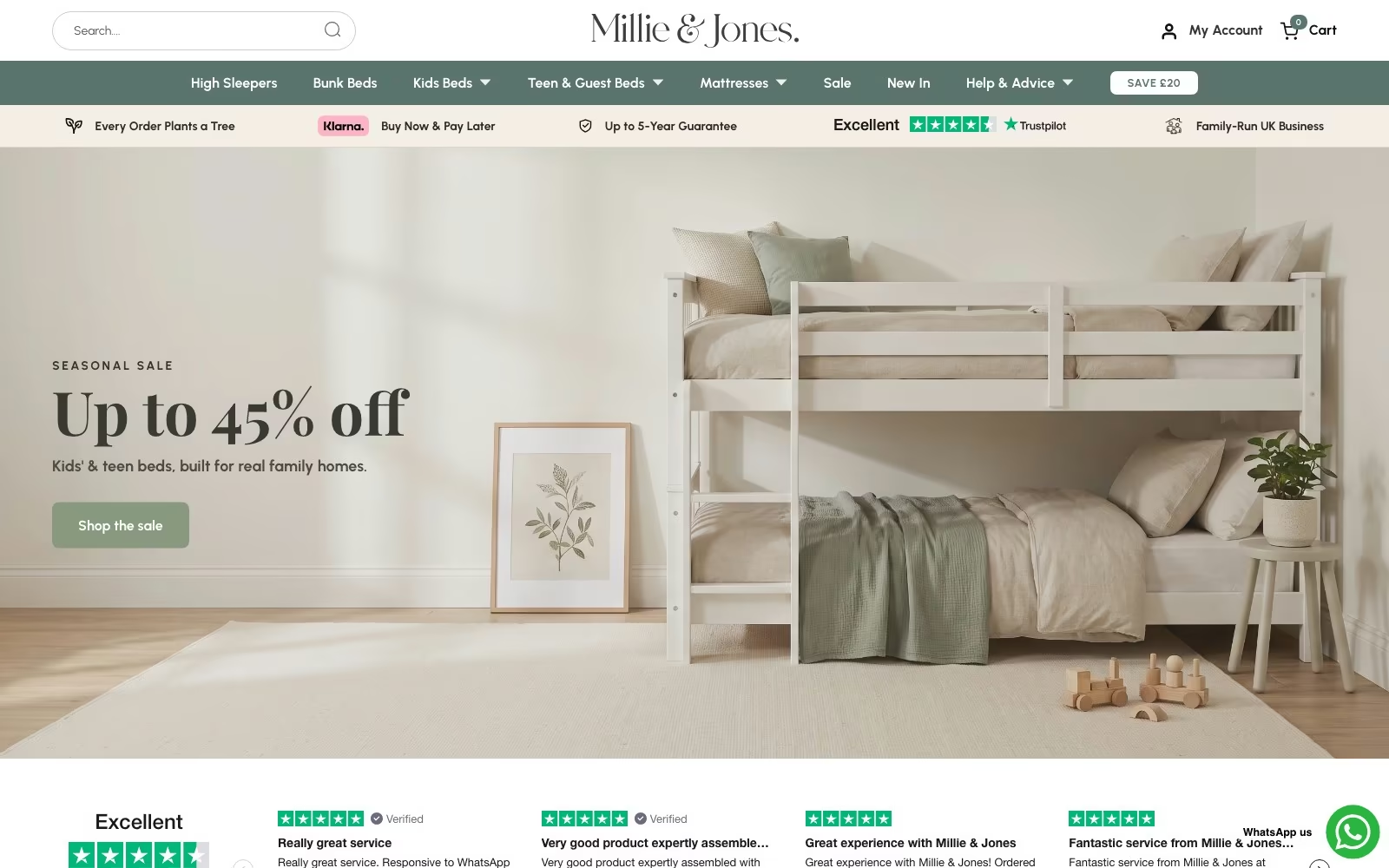

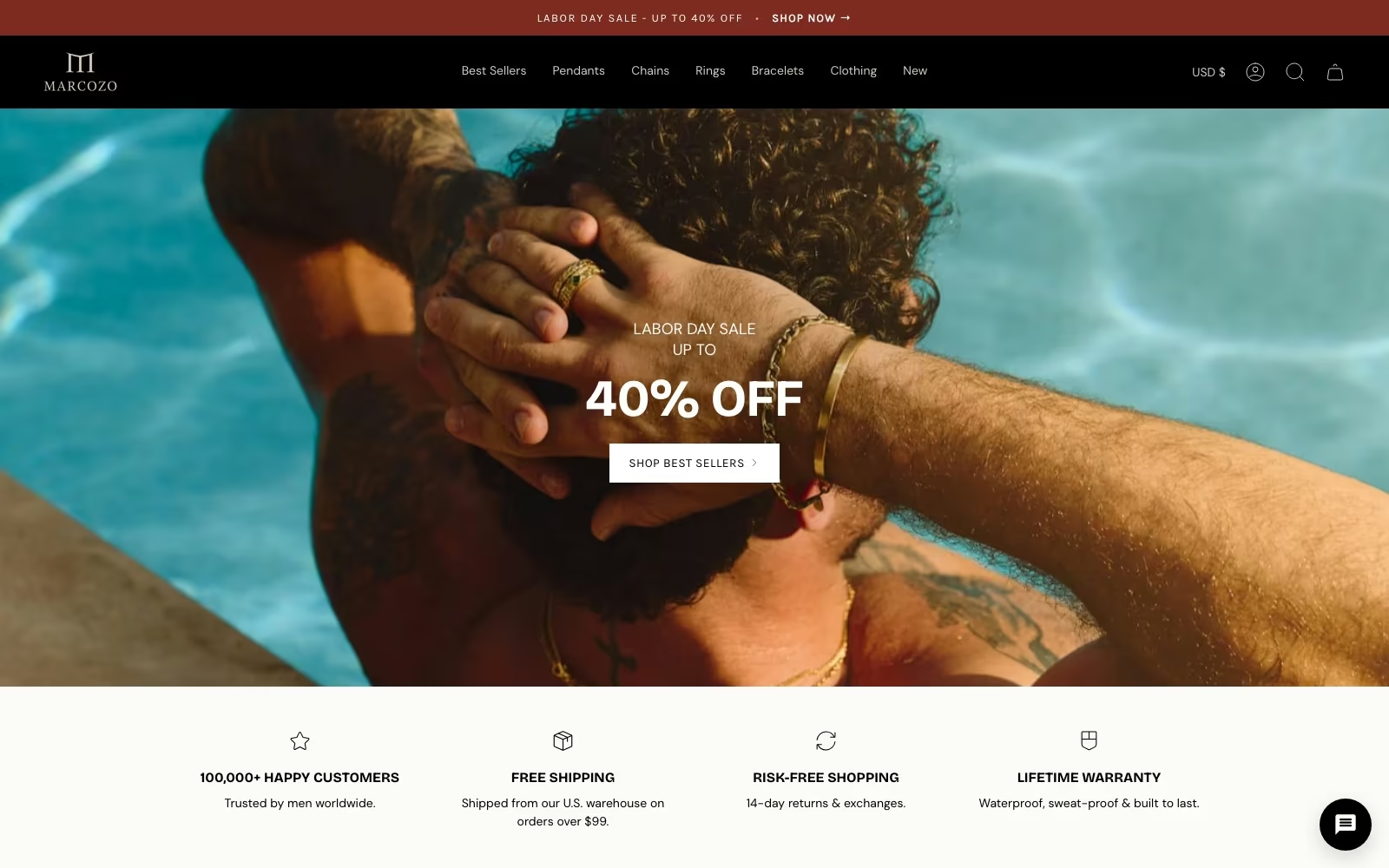













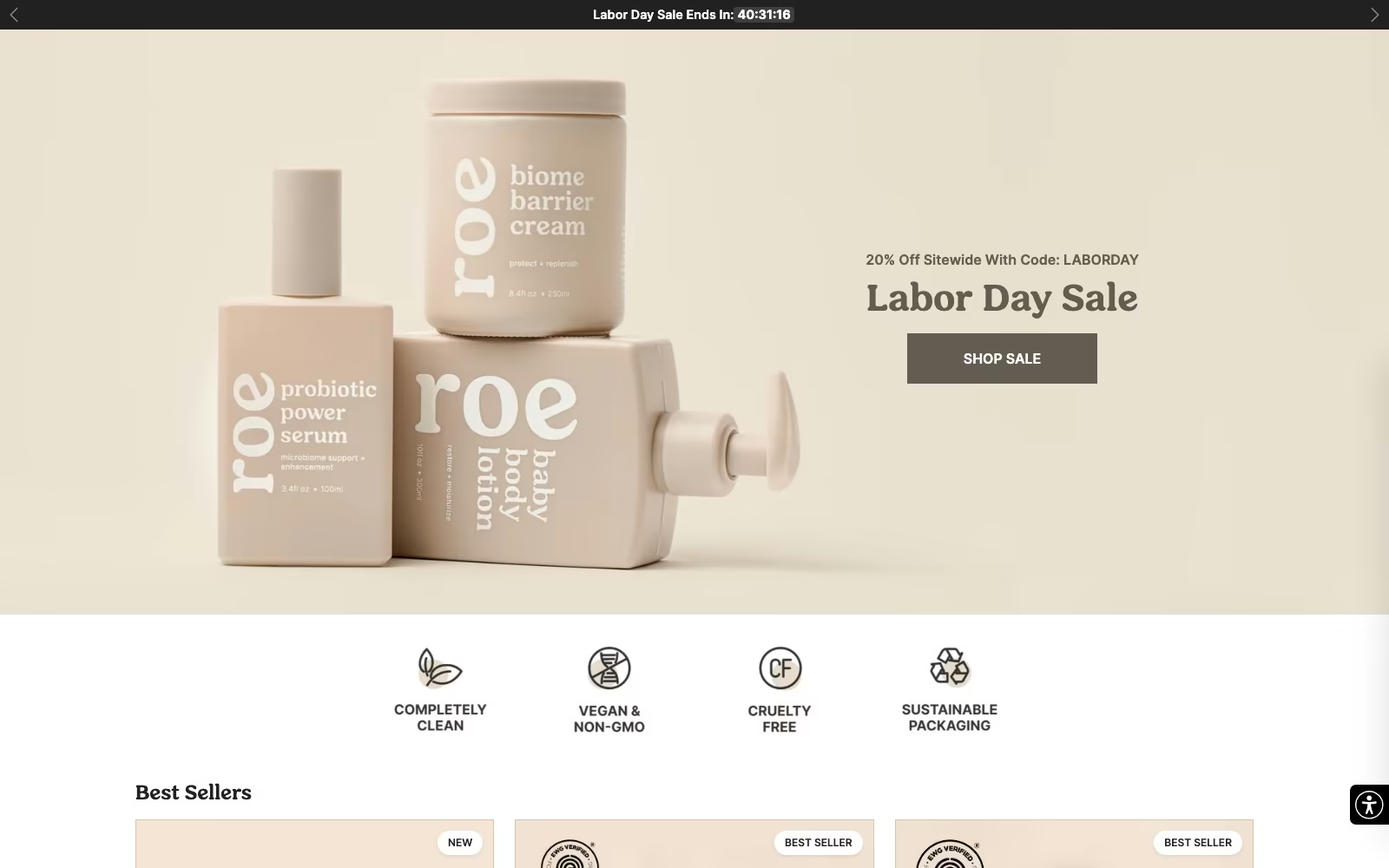

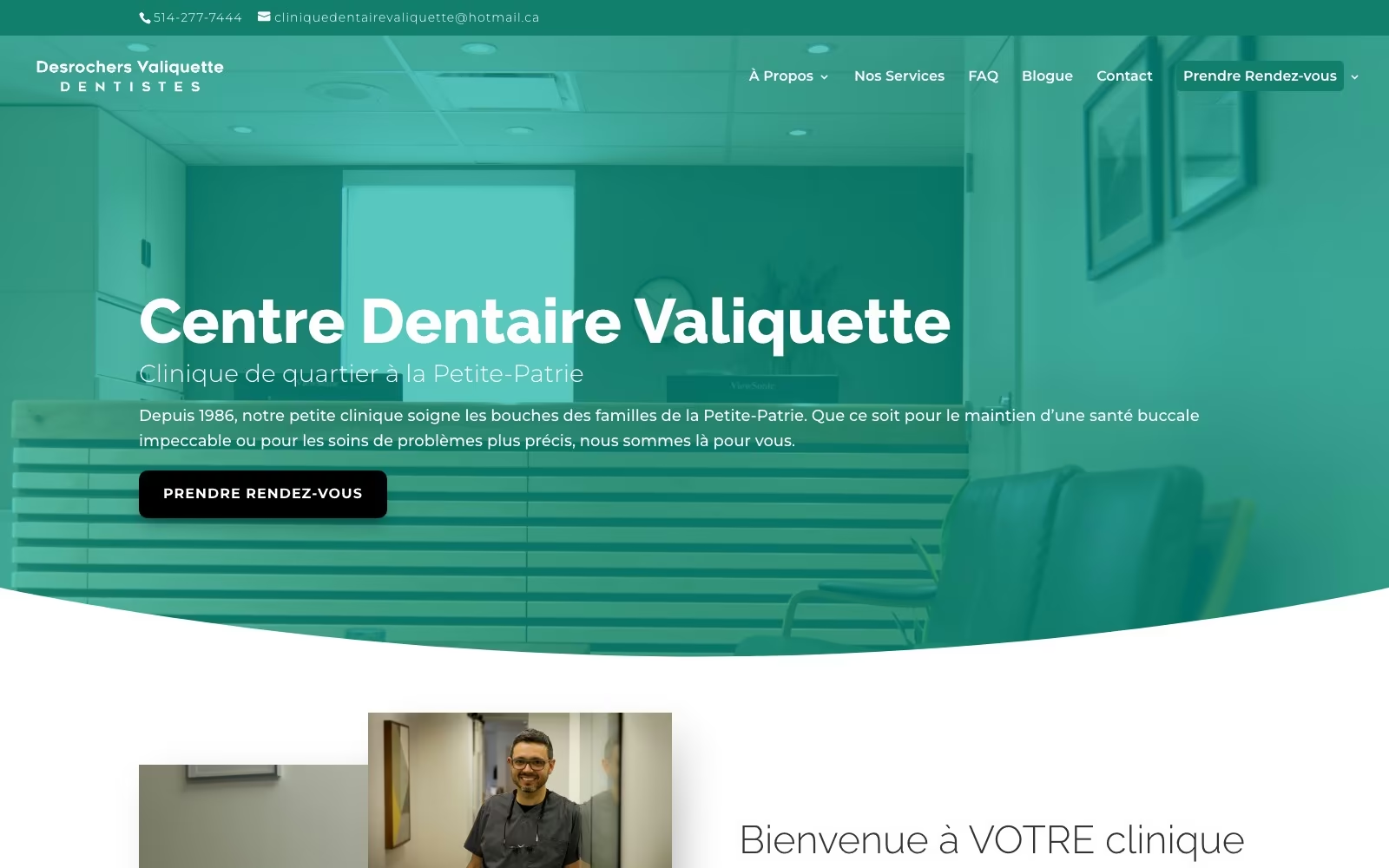




























FAQ
What teams ask us first.
Will a redesign hurt our search rankings?
Handled properly it protects them, and protecting them is a defined piece of work rather than a hope. Every indexed URL is mapped to a single-hop destination, canonicals and sitemaps are regenerated, structured data is carried across, internal links are rebuilt deliberately, and pages that rank are strengthened instead of merged away. Google's own guidance on why site traffic drops names host changes, URL changes and reorganisations as the usual culprits — all three are planning failures, not inevitabilities. Expect a short settling period while the index catches up; because we recorded the baseline, we can tell settling from a fault within days.
How do we know a redesign is what we need?
Often it is not, and that is worth ten minutes before it is worth a budget. If the design is sound and the website is simply slow, speed engineering is cheaper and faster. If organic traffic is the problem rather than conversion, SEO work on the existing website pages usually returns sooner. If one journey leaks, conversion testing answers it without a rebuild. A full redesign earns its place when the structure fights the business, the platform blocks the team, the brand has moved on, or the build is too fragile to change safely. We look at your numbers and say which of those it is.
What does a website redesign cost?
It is driven by page count, how many templates are genuinely different, how much copy has to be written, and what the site integrates with — not by how it looks. A focused marketing website with six or seven templates and written copy is one order of magnitude; a store with a catalogue, a configurator and CRM and ERP integrations is another. We quote in phases so you can approve evidence and structure before committing to the build, and the URL map and baseline you get from phase one keep their value even if you pause afterwards.
Can we keep our current platform?
Usually, and we start from that assumption because a replatform doubles the risk of the project for reasons unrelated to design. Platform choice should follow two questions: who edits the website day to day, and what it must integrate with. A marketing team that publishes weekly is well served by Webflow or a well-built WordPress; a product catalogue with complex fulfilment belongs on commerce infrastructure; a website that is really an application needs custom development. If your current platform answers both questions, we rebuild on it and spend the budget on the site instead of the move.
How do you handle content we do not want to lose?
By inventorying it before anything is designed. Every page gets a decision — keep as is, keep and improve, merge into a stronger page, or retire and redirect — and the decision is made from data on what it earns and ranks for, not from how old it feels. Pages that bring qualified visits are the assets the project is meant to protect, so where a merge makes sense we carry the substance into the destination and redirect the old URL to it. Nothing gets deleted quietly, and the inventory is a document you keep.
Who writes the copy?
We do, from evidence, and your team reviews it. Copy written after the layout is finished ends up padding a shape; copy written from the objections sales hears, the questions search data reveals and the proof that convinces decides the shape instead. That is why wireframes are signed off in grey — the words are the design at that stage. Where you have subject-matter experts we interview them rather than inventing claims, and everything factual is checked with you before it goes live.
How involved does our team need to be?
Less than most agencies ask and more than nobody. Practically: an hour a week for a working session, two or three sign-off points where a decision genuinely needs your business context, access to sales for two interviews, and one named person who can settle internal disagreements. We do not run design by committee, because a page assembled from six opinions converts worse than a page built to evidence, and we will show you the reasoning behind any recommendation you want to push back on.
What happens on launch day, and afterwards?
The cutover is rehearsed on a staging copy first, so the day itself is a checklist: redirects verified, robots and canonicals corrected, sitemaps submitted, analytics and conversion tracking confirmed firing, forms and payment paths tested with real submissions, rollback ready. Then six weeks of aftercare: crawl and indexation daily at first, rankings and enquiries read weekly against the baseline, error logs watched, and the early fixes real traffic always reveals. You get a written launch report at the end of it.
Can you redesign in stages instead of one launch?
Yes, and on large or high-traffic websites we often recommend it. Templates are released in waves — usually the highest-value journey first — so each wave can be measured against the baseline and the next one learns from it. It costs a little more in engineering because two design systems coexist for a while, and it removes the single-day risk of moving everything at once. Where a brand relaunch requires one visible moment, we do the structural and technical work in stages beforehand and keep the visual switch for the date you have announced.
How do you keep SEO and mobile users at the centre of the process?
By making both a constraint rather than a review stage. On the SEO side, the URL map, internal linking plan and page-level keyword targets are written during structure, so the new website is designed around the terms your customers actually search rather than retrofitted afterwards. On the mobile side, every template is designed at the small breakpoint first and held to a speed budget, because most visitors arrive on a phone and a layout that only works on a desktop is a business problem disguised as a creative choice. Both sets of goals go in the brief with the conversion targets, so nobody has to argue for them later.
How do we choose between website redesign agencies?
Ask three questions and the field narrows quickly. First: what will you measure this website redesign against, and will you record it before we start? An agency that cannot answer is selling design services rather than business outcomes. Second: who writes the URL map, and can we see one from another project? That single document separates teams who have protected organic search through a launch from teams who have not. Third: who does the work day to day, and will that person be in our weekly session? Portfolios are marketing; process artefacts are evidence. Any credible partner will show you a baseline, an inventory and a launch checklist without being asked twice.
Should one agency handle design, development and marketing?
It depends on where your risk sits. Splitting design from development works when both teams are strong and someone senior owns the seam between them; it fails when the seam is where the speed budget, the accessibility spec and the URL map are supposed to live. Our own preference, and the reason we run a full-service team, is that whoever inherits the website for search and paid media should have had a say in how it was built. If you already have a digital marketing partner you trust, we will build to their brief and share the baseline with them openly.
Do you also handle branding and visual identity?
Yes. Some redesigns need a full identity, most need the existing one extended properly into a digital system: type scale, colour with contrast that passes accessibility checks, photography direction, iconography, motion. Our design and identity teams work on the same project rather than in a separate contract, which keeps the website and the brand from drifting apart six months later. Where your identity is strong and recent, we say so and leave it alone.

.webp)
.webp)