Creative that earns the click.
earns the click
We are the Facebook ads agency for brands whose account has plenty of activity and not enough profit. We rebuild the tracking so the numbers are real, simplify the structure so the system can learn, and ship the volume of creative Meta now needs to keep working — with ad creative, server-side tracking and conversion support when the landing page is the limit.






Tell us a little about your brand and we'll be in touch within 24 hours to lock in a time.



THE FOUR WORKSTREAMS
Signal, structure, creative, profit.
Signal, structure
In that order, because targeting cannot rescue bad data, structure decides how quickly Meta learns, creative is the only lever left with real headroom, and profit is the only score worth keeping. Each workstream has an owner and a number we review weekly.
Tracking and signal quality
Account structure and buying
Creative production and testing
Measurement and profit
Feed it the truth first.
Meta optimises against whatever you send it, so a half-broken pixel does not produce a slightly worse account — it produces confident spending against the wrong outcome. We start by auditing every event: what fires, what duplicates, what has quietly stopped, and whether the values passed match what the business actually banked.
Then we rebuild the plumbing. Server-side Conversions API alongside the browser pixel with correct deduplication, hashed customer data to lift match quality, offline and CRM conversions imported for lead businesses so the system learns from qualified leads rather than form fills, consent handled properly, and one naming and UTM convention so the platform, the analytics and the CRM can be compared without a spreadsheet argument.
Finally we agree what a conversion means before we spend. That sounds obvious and is the single most common thing missing from the accounts we inherit: three definitions of a lead, two of purchase value, and a reported return that nobody in finance recognises.
- Full event audit: firing, duplication, values, freshness
- Conversions API and pixel deduplicated, match quality improved
- Offline and CRM conversions imported for lead accounts
- Consent handled properly across regions
- One naming and UTM convention across platform, analytics and CRM
3.60bn
daily active people across Meta apps, June 2026
$59.4bn
Meta advertising revenue in Q2 2026 alone
Fewer, better-fed campaigns.
Most inherited accounts are fragmented: forty ad sets, each starved of data, each restarting learning every time someone edits a budget. Meta's delivery system needs volume in one place to find the people who convert, so the first structural job is usually consolidation rather than expansion.
We build a small, legible account: broad prospecting where the algorithm has room to work, a small set of genuinely differentiated audiences where they still earn their keep, retargeting sized to the traffic that actually exists, and Advantage+ used where it fits rather than because it is fashionable. It is a large part of Meta's own business now — Advantage+ reached a $75 billion annual revenue run rate in Q2 2026 — but automation still needs correct signal, honest exclusions and a budget it can hold steady.
Then we govern it: fixed test windows, one change at a time, budget moved on evidence rather than on Monday nerves, and a written log so a dip can be traced to a decision instead of blamed on the platform.
- Consolidated structure that feeds the delivery system
- Broad prospecting plus only the audiences that still earn a place
- Advantage plus used where it fits, with clean signal behind it
- Fixed test windows and one change at a time
- Written change log tied to every budget move
$75bn
annual run rate of Meta's Advantage+ suite, Q2 2026
9m
small businesses using a Meta AI creative tool
The lever with headroom left.
Targeting has largely been automated away; creative has not. On this platform the ad is the audience, so the programme is built around a steady supply of concepts rather than a quarterly shoot. Each concept starts from a stated belief about the customer — a hesitation, a comparison, a moment of need — and gets tested against the metric it was designed to move.
We produce across the formats that actually deliver: short vertical video with the promise in the first two seconds, static and carousel for clarity and proof, creator and customer footage for credibility, and catalogue-driven ads where the product range does the work. Hooks, opening frames, captions and offers are tested separately so a result teaches something reusable.
The economics justify the discipline. WordStream's benchmark study of over 1,000 campaigns puts average cost per lead at $27.66 against $70.11 on Google Ads, with a $1.92 cost per click versus $5.26 — the cheap entry point is real, and it is squandered by ads nobody watches.
- Concepts built from a stated belief about the customer
- Vertical video, static, carousel, creator and catalogue formats
- Hooks, frames, captions and offers tested separately
- Refresh cadence set by fatigue data, not by calendar
- Every asset delivered to you in source files
$27.66
average Facebook cost per lead (WordStream)
$70.11
average cost per lead on Google Ads for comparison
Report what the bank agrees with.
Platform-reported return is a comparison tool, not a fact: it counts what it touched, on its own attribution window, in its own dashboard. We report it, and we never stop there. Alongside it sit blended performance across all marketing spend, CRM or billing-confirmed revenue, contribution margin after cost of goods, shipping and fees, and where the budget justifies it a holdout or geo test that answers the only question that matters — what would not have happened anyway.
For lead generation the same discipline applies further down: qualified lead, opportunity and closed value fed back so the platform optimises toward customers rather than form fills, and cost per sale reported next to cost per lead. Costs move, so we baseline against published benchmarks — WordStream recorded Facebook lead costs rising 20.94% year over year while Google Ads cost per click rose 12.88% — and judge your trend against the market rather than against last month.
The monthly review says what moved, what we changed, what we learned and what happens next, in that order.
- Platform, blended and confirmed revenue reported side by side
- Contribution margin after goods, shipping and fees
- Holdout or geo tests where the budget justifies them
- Qualified lead and closed value fed back to the platform
- Written monthly review ending in recommendations
$1.92
average Facebook leads-campaign cost per click
$0.70
average cost per click on traffic campaigns
median cost per click across industries (get-ryze.ai)
year-over-year rise in Meta CPMs (Ira Bodnar)
Tracking is rebuilt before we touch a budget
Ad account, pixels, audiences and source files
We made the difference for those brands

Apparel and lifestyle

Travel & mobility
Consumer tech and platforms

Beauty, personal care & wellness

Travel & mobility
Food & beverage

B2B software, fintech, insurance

Beauty, personal care & wellness

Food & beverage

Home essentials, appliances, kitchen & pet

B2B software, fintech, insurance

Creative, content, arts & culture

Consumer tech and platforms

B2B software, fintech, insurance

Retail & commerce

Creative, content, arts & culture

Retail & commerce

Food & beverage

Home essentials, appliances, kitchen & pet

B2B software, fintech, insurance
B2B software, fintech, insurance

Consumer tech and platforms

Consumer tech and platforms

Apparel and lifestyle

Home essentials, appliances, kitchen & pet

B2B software, fintech, insurance

B2B software, fintech, insurance

Travel & mobility

Creative, content, arts & culture

B2B software, fintech, insurance
01 — The challenge
Plenty of spend, no agreed answer.
The account has forty ad sets, three definitions of a conversion and a return that changes depending on who opens the dashboard. Creative goes out when someone has time, budgets get nudged on a Monday, and every dip is blamed on the algorithm. Meanwhile the finance team quietly stopped believing the reported number months ago.
“The platform says we tripled our money. Our bank account disagrees.”
The opportunity is still there: Meta reported 3.60 billion daily active people across its apps in June 2026 and $59.4 billion of advertising revenue in the quarter, and WordStream's benchmarks still put Facebook cost per lead at $27.66 against $70.11 on Google Ads. The gap between that entry price and your reported result is almost always signal, structure and creative supply — three problems with known fixes.
02 — Our approach
Trust the data, simplify the account, feed it creative.
We begin with a signal audit, because everything downstream inherits its errors: every event checked for firing, duplication and value accuracy, Conversions API deduplicated against the pixel, match quality raised, offline and CRM conversions imported where the sale happens later, and one naming convention across platform, analytics and CRM. Then we simplify: fewer campaigns holding more data, broad prospecting where the system can learn, only the audiences that still earn their place, retargeting sized to real traffic, and Advantage plus used where it genuinely fits. With the foundation stable, creative becomes the engine — concepts built from a belief about the customer, produced in vertical video, static, carousel and creator formats, with hooks and offers tested separately and refreshed on fatigue data rather than on a calendar. Everything is judged on profit: platform numbers alongside blended and confirmed revenue, contribution margin, and incrementality tests where the spend justifies them. You keep the account, the pixels, the audiences and every source file.
03 — What we did
Four phases, and the numbers get honest first.
Signal, structure, creative engine, then profit reporting — each phase makes the next one cheaper, and none of them is skippable.
Weeks 1-2 / Signal
Rebuild the measurement
Event audit, Conversions API deduplicated against the pixel, match quality raised, offline conversions imported, one naming convention.

Weeks 2-4 / Structure
Consolidate so it can learn
Fragmented ad sets merged, broad prospecting given room, retargeting sized to real traffic, exclusions made honest.

Weeks 3-10 / Creative
Build the production engine
Concepts from customer insight, produced in vertical video, static, carousel and creator formats, tested hook by hook.

Ongoing / Profit
Prove it outside the dashboard
Blended and confirmed revenue, contribution margin, holdout or geo tests, and a written monthly review.

WHAT YOU GET
Deliverables that outlast the retainer.
outlast the retainer
Everything below is built inside your own Business Manager and documented as we go, so it stays with you whatever happens next.

Signal and account audit
Every event, value, audience and campaign reviewed, with a ranked list of what is costing you money and what to fix first.

Conversions API build
Server-side events deduplicated against the pixel, match quality improved and consent handled properly across regions.

Account restructure
A consolidated, legible account with naming conventions, exclusions and budgets your team can read without a translator.

Creative production
Vertical video, static, carousel and creator assets shipped on a cadence, with source files handed over every month.

Testing roadmap
A queue of hypotheses with fixed windows and success criteria, so a result teaches something reusable rather than settling an argument.

Profit reporting
Platform, blended and confirmed revenue reported together with contribution margin, plus a written monthly review.
HOW WE WORK
Operating standards, not promises.
Operating standards


eCommerce
Catalogue ads, margin-aware bidding and creative built around the products that actually pay.
ExploreLead generation
Qualified lead and closed value fed back, so the system optimises for customers not form fills.
ExploreApps and subscriptions
Install to activation tracked properly, with creative tested against retained users.
Explore

















Built on trust. Proven by results.
We partner with SMBs and Fortune 500 companies to deliver more than reach — we bring clarity, execution, and measurable outcomes. Every successful partnership starts with a strong culture fit and a shared drive to grow.



CASE STUDIES
Case studies
Website Portfolio
Video Ads
Static Ads






















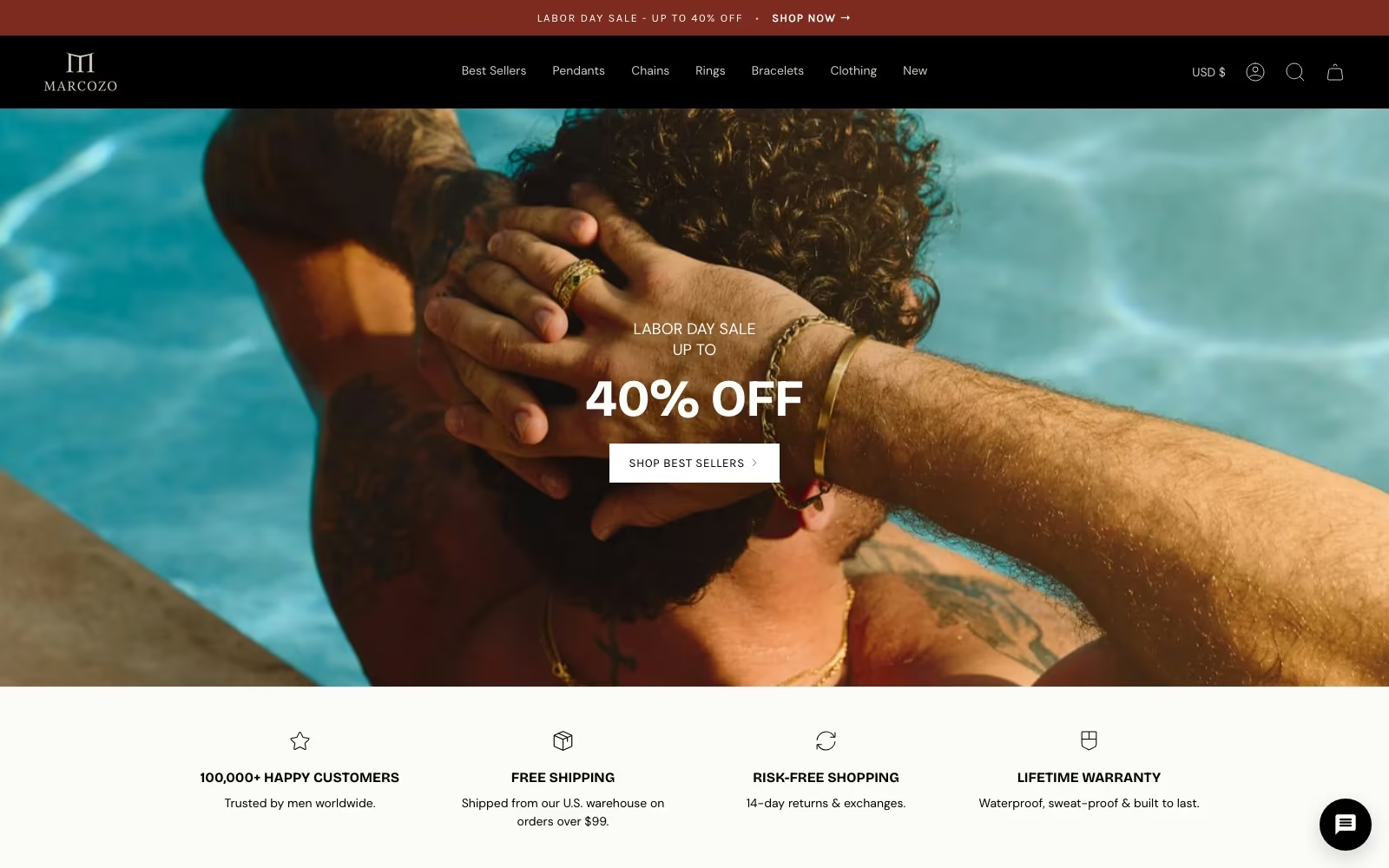

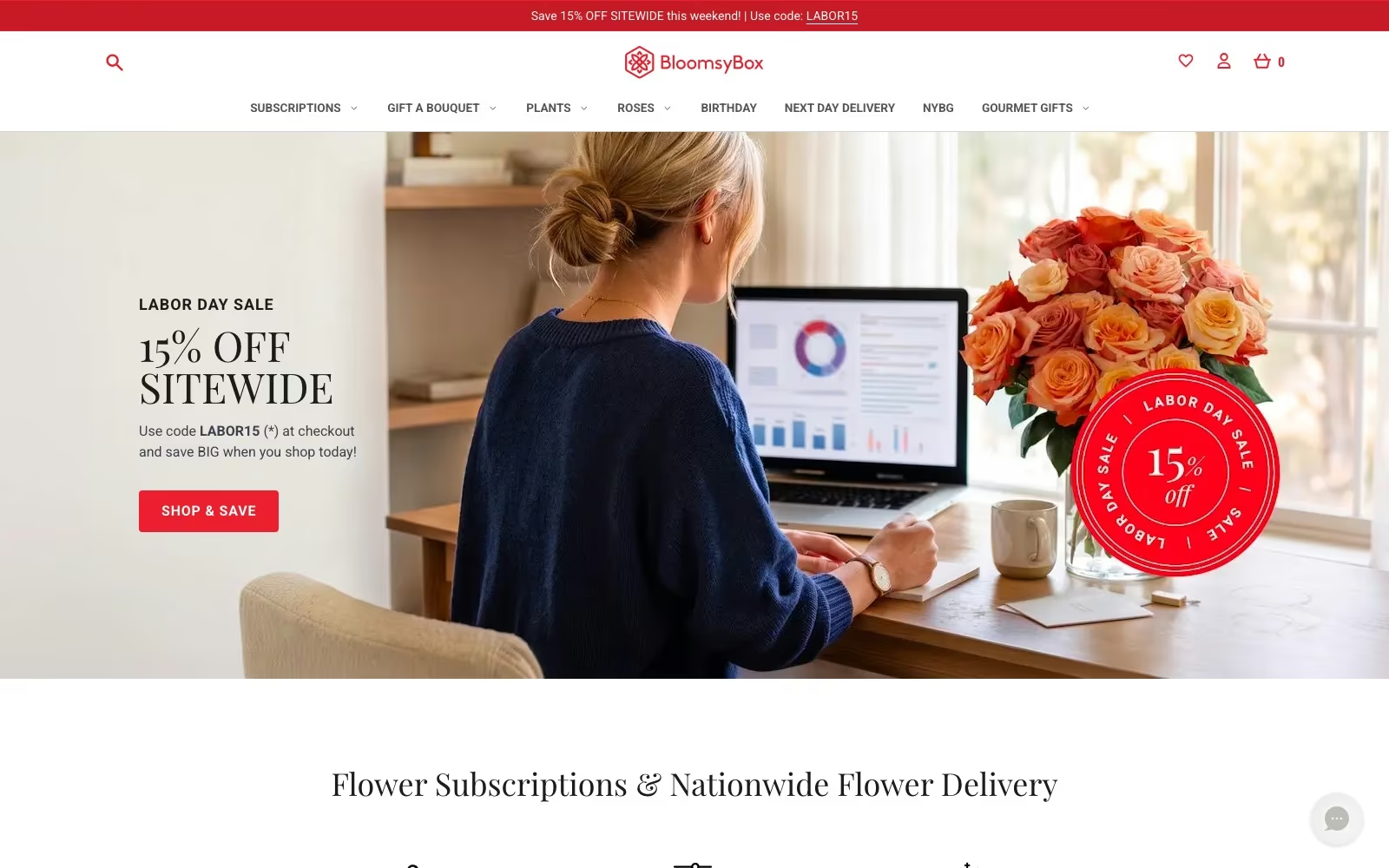

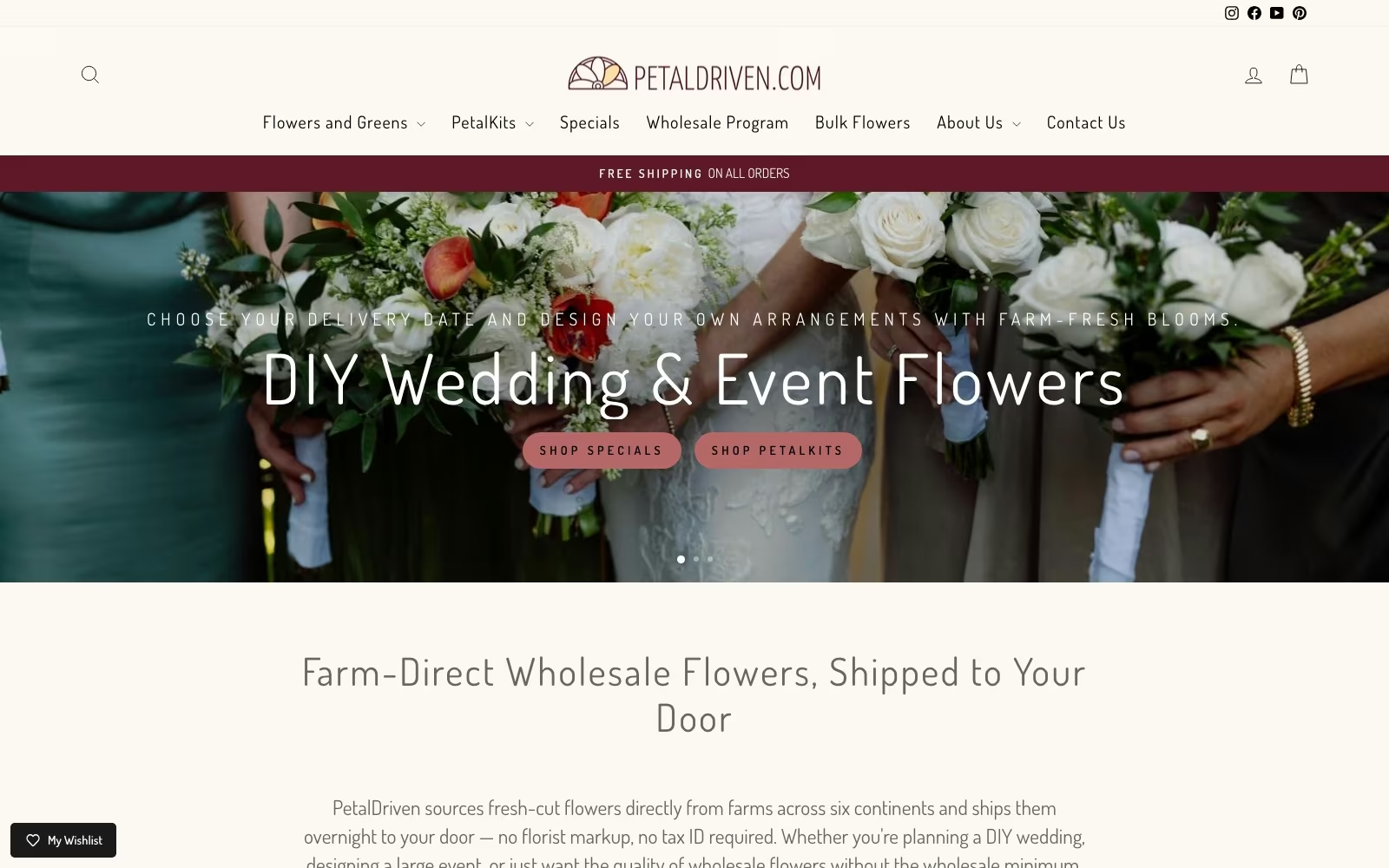



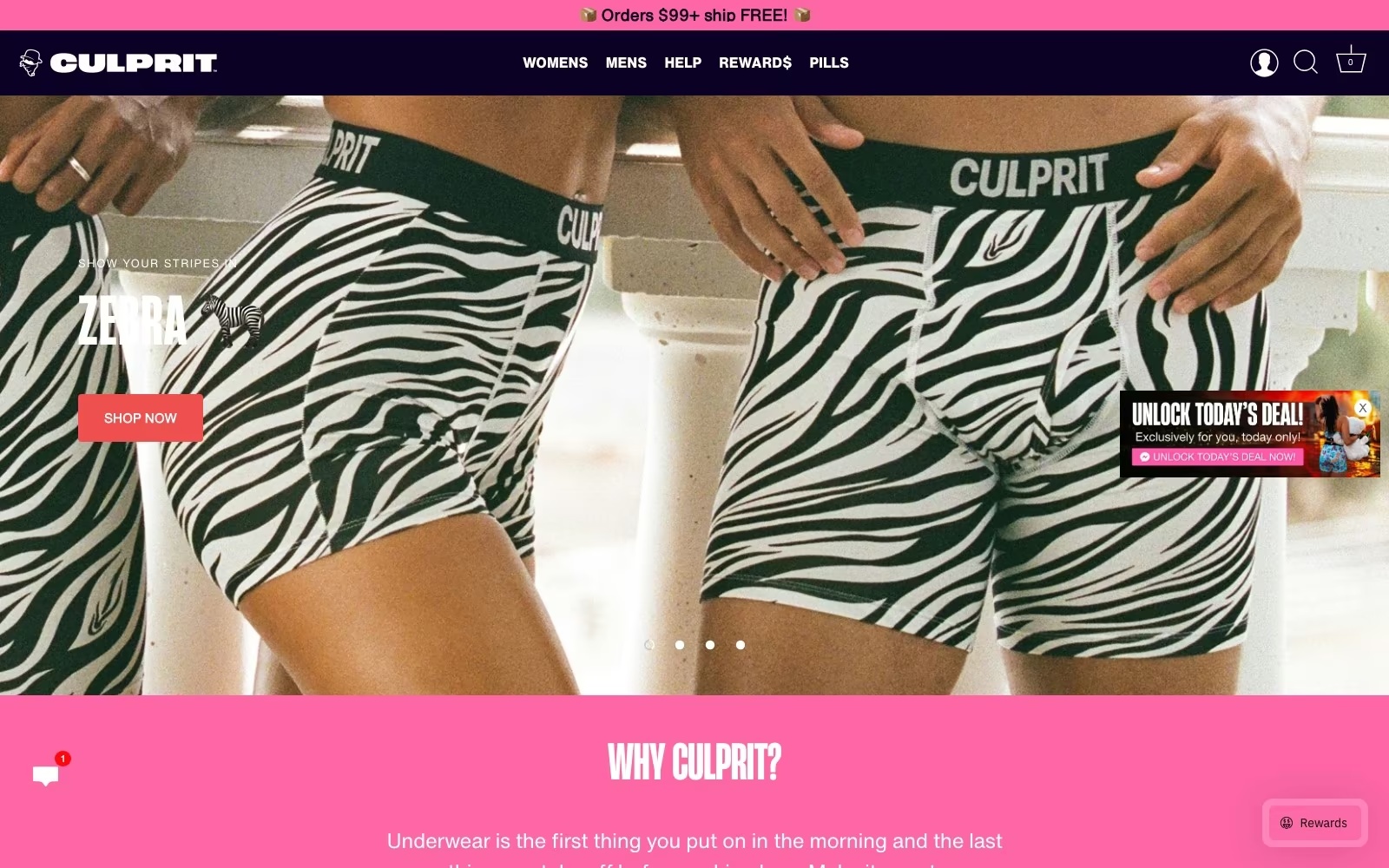
































FAQ
What advertisers ask us first.
What does a Facebook ads agency actually do day to day?
Four things, in a repeating loop. It protects the signal: checking events, values and match quality, because everything the platform decides is downstream of that. It manages structure and budget: consolidating what is fragmented, moving money on evidence, and keeping changes inside test windows. It supplies creative: new concepts, new hooks, new formats, on a cadence rather than when someone has time. And it reports profit honestly, including the months when the answer is uncomfortable. The daily fiddling that looks like work in a screen share is mostly what stops accounts learning.
How much do Facebook ads cost?
Auction prices vary by industry, offer and season, so treat any single number as a starting point. WordStream's study of more than 1,000 campaigns puts average cost per click at $0.70 for traffic campaigns and $1.92 for leads campaigns, with an average cost per lead of $27.66 — against $5.26 per click and $70.11 per lead on Google Ads. What actually decides your cost is the offer, the creative and what happens after the click. In the first audit we model your realistic range from your own history and margins, with the assumptions written down.
What budget do we need to start?
Enough for the delivery system to learn without starving, which in practice means a few thousand a month for most businesses, plus creative production. Below that the account spends its life in learning phases and every result is noise. If your numbers do not support it yet, we will tell you before you sign and suggest where the money works harder first — often local search, email or fixing the landing page. When you are ready we start deliberately: one market, one offer, one clean structure, then scale on evidence rather than opening ten campaigns and hoping.
Should we use Advantage+ or manage campaigns manually?
Both, deliberately. Advantage+ carries a large share of spend now — Meta said it reached a $75 billion annual revenue run rate in Q2 2026 — and it genuinely works when the signal is clean, the catalogue is healthy and the creative pool is deep. What it does not do is rescue broken tracking or thin creative; it just spends faster. We usually run an Advantage+ core alongside a small manual set where we need control — a new market, a margin-sensitive range, a test that needs isolation — and we review the split monthly rather than treating either as doctrine.
Our tracking is a mess since the privacy changes. Can it be fixed?
Yes, and it is where we start, because the fix is well understood. We deploy the Conversions API server-side alongside the browser pixel with correct deduplication, pass hashed customer information to raise match quality, import offline and CRM conversions so later sales count, and handle consent properly by region. Most accounts we inherit recover a large part of the events they were silently losing, and the platform starts optimising toward the outcomes that pay. Our Conversions API team builds it, and it stays in your accounts.
How much creative do you need each month?
More than most brands expect, and the right answer scales with spend. On this platform the creative is the targeting, so a programme that ships a handful of new concepts and a wider set of variations each month keeps finding pockets of audience that a single hero asset never reaches. We plan the cadence against your budget and fatigue data rather than a fixed quota: when frequency climbs and click-through falls on a winning concept, the next batch is already in production. Everything we produce is yours, in source files, including the concepts that did not win.
How do you decide what to test?
From a queue of hypotheses, each written as a belief plus the metric it should move. A test gets a fixed window, a success criterion agreed in advance, and only one variable in play — hook, offer, format, audience or landing page — so the result teaches something reusable. We do not stop tests early because a first day looked good, and we do not run six overlapping experiments that make each other unreadable. Losing tests are reported as plainly as winners, since a queue of honest results is what makes the next quarter faster.
How do you report results, given platform attribution is generous?
Three views, always labelled. Platform attributed performance, which is useful for comparing ads to each other. Blended performance across all marketing spend against total revenue, which is the number a business owner feels. And CRM or billing-confirmed revenue with contribution margin after cost of goods, shipping and fees, which is the number worth making decisions on. Where the budget justifies it we add a holdout or geo test to measure incrementality directly. Our attribution team builds that reporting so it survives the next platform change.
Do Facebook ads still work for lead generation?
They do, provided the definition of success moves past the form fill. WordStream's benchmarks put Facebook cost per lead at $27.66 against $70.11 on Google Ads, and that gap is real — but cheap leads are only good news if they close. So we feed qualified lead, opportunity and closed value back into the platform, optimise toward the stage that predicts revenue, and report cost per sale next to cost per lead. Instant forms, landing pages and messaging flows each suit different sales processes, and we choose between them on how your team actually follows up.
How do we choose between Meta ads agencies?
Ask what they will do in week one: if the answer is not about tracking and structure, keep looking. Ask who makes the creative and how much of it ships each month, since that is where the results now come from. Ask how they report profit, and whether they will show you a real monthly review rather than a case-study slide. Ask who owns the ad account and assets at the end — the answer should be you, without negotiation. And ask what they would refuse to do. Good Meta ads agencies are comfortable saying a budget is too small or a landing page must be fixed first.
Can you work with our in-house team rather than replacing them?
Often that is the better arrangement. Plenty of teams have someone capable running the day to day and need the foundation set and the creative engine built: signal repaired, structure simplified, a testing framework installed, reporting connected to the CRM, and a monthly strategic review. We do that, train the team, and stay available for the harder moments — a scaling push, a new market, a tracking break, a quarter where costs jump. It costs less than a full retainer and it keeps the day-to-day with the people closest to your customers.
What happens to performance when we scale spend?
Costs rise as you reach beyond the cheapest pockets of audience, which is normal and manageable if you plan for it. We scale in steps the delivery system can absorb rather than doubling budgets overnight, widen creative variety before widening budget, watch frequency and marginal return rather than average return, and set the efficiency floor with you in advance so nobody panics at a number that was always expected. When marginal return approaches the floor, the honest advice is to hold spend and invest in offer, creative and conversion rate instead — and we will give it.
What does it cost to work with you?
The audit and rebuild phase is fixed-scope and quoted up front — tracking repair, restructure, initial creative batch and reporting — so you approve a number rather than an open commitment. Ongoing management is a monthly fee scoped to spend level, creative volume and how many markets you run. We do not price purely as a percentage of ad spend, because that rewards spending more rather than earning more, and we list production costs separately so you can see exactly what the money buys.

.webp)
.webp)