Photos that answer the question before it is asked.
before it is asked
We are the product photography agency for brands whose catalogue has to sell without a salesperson. Every shoot is planned around the doubts that stop a purchase — scale, texture, colour, what is actually in the box — then delivered as a consistent set of product photos your ad creative, paid social and site teams can all work from.






Tell us a little about your brand and we'll be in touch within 24 hours to lock in a time.


HOW A SHOOT WORKS
Four stages, one repeatable studio standard.
studio standard
Planning, shoot, post production, delivery. The stage most brands skip is the first one, and it is the one that decides whether the images sell: what each photo has to prove, in what order a shopper will meet them, and which surface each frame is cut for.
Planning & shot list
The shoot
Post production
Delivery & performance
Decide what each photo has to prove.
Shoppers are blunt about how much this matters. In Salsify's consumer research, 61% of shoppers said images and video are the single biggest product page factor in deciding whether to complete a purchase. So we start from the objections, not from the mood board: does it fit, how big is it really, what is the finish, what arrives in the box.
The output is a written shot list per item — hero frame, scale reference, detail macro, in-use lifestyle photos, every variant — mapped to the surface each frame serves. Marketplace rules are designed in rather than discovered at upload, and the same list becomes the brief for whoever shoots your next range. For context, ecommerce brands averaged 8 images per product in 2024, which is a coverage target, not a quota to pad.
Planning is also where the price stops moving. A shot list, an agreed volume and a fixed post production standard is what lets us quote a project rather than an open-ended day rate.
- Shot list per product, written before anyone books a studio
- Hero, scale, detail, lifestyle and variant frames defined
- Marketplace and ad specs designed in from the start
- Fixed volume and fixed price, not an open day rate
61%
of shoppers say images decide whether they buy
8
images per product, the 2024 ecommerce average
A lighting recipe we can repeat next season.
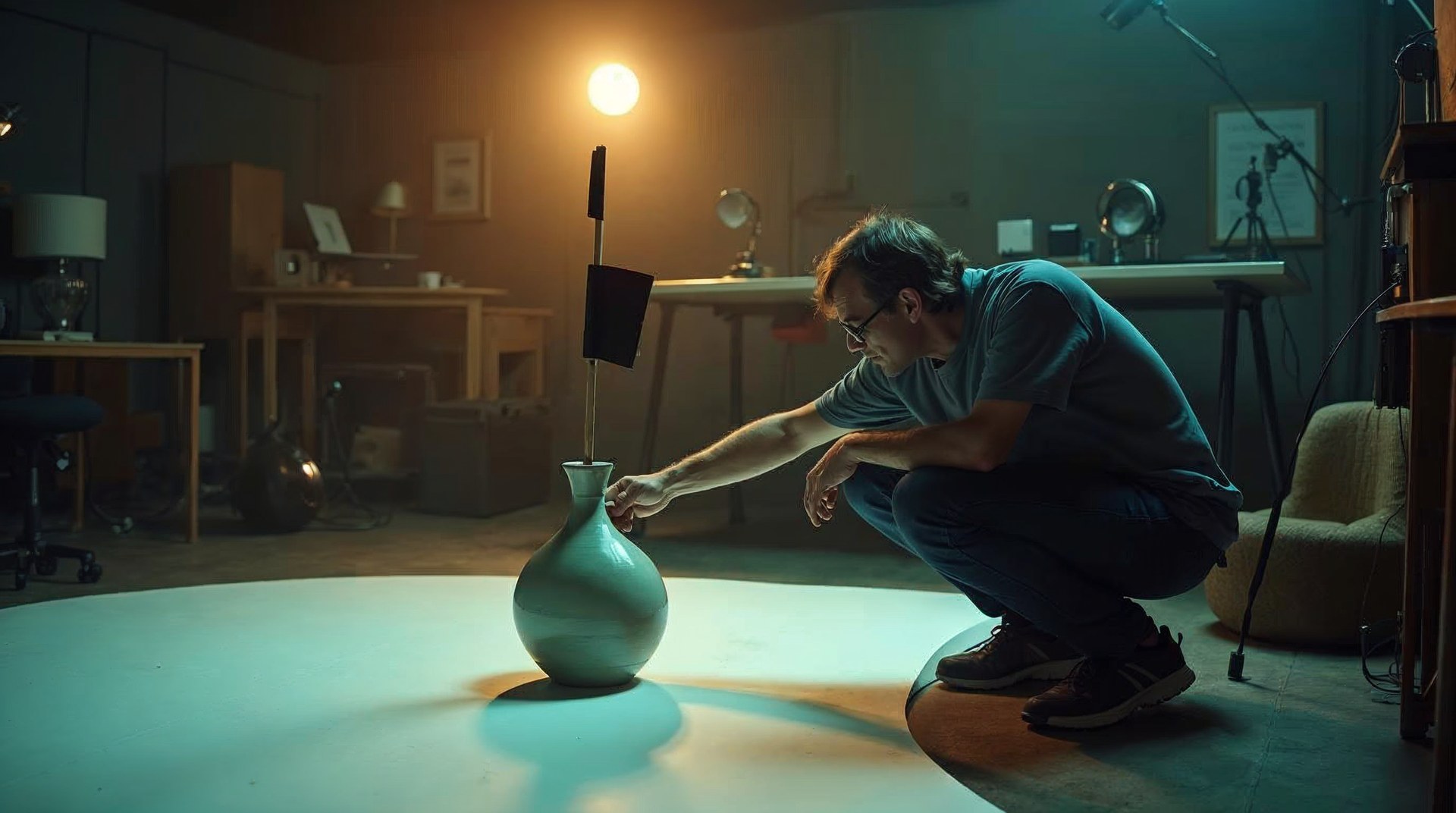
Consistency is worth more than any single beautiful frame. A catalogue where the whites drift and the shadows change direction reads as careless long before a shopper can explain why, and it makes a grid of product photos look like it came from three different companies. So every set-up is documented: light positions, modifiers, camera height, lens, distance, colour targets.
We shoot tethered with the layout on screen, so the crop that matters is checked while the product is still on set rather than reconstructed later. Styling is deliberate and quiet: props earn their place by showing scale or use, and nothing in frame competes with the item you are selling. For ranges that refresh often, we build a studio recipe your team can hand to any good photographer and get matching frames back.
Where a category needs motion — a garment moving, a pour, a mechanism opening — we capture it in the same session, because the second visit is the expensive one.
- Documented lighting recipe, repeatable next season
- Tethered capture with the real crop checked on set
- Colour targets shot so the finish is accurate, not flattering
- Motion captured in the same session, not a second booking
1
documented lighting recipe you keep and reuse
Retouching to a written standard.
Post is where the budget quietly disappears, so we fix the standard in writing: background treatment, crop and margin, shadow style, colour tolerance, file naming, export sizes per surface. Every frame is graded against the colour target rather than by eye, because a jumper returned for being the wrong shade of navy costs more than the retouch.
Published rates make the trade-off clear. Photoroom's industry data puts traditional product photography at $25-$500 per image plus $150-$300 per studio hour, with a half-day fashion shoot at $500-$2,000 before retouching, and Shopify's guide notes that per-image pricing commonly lands between $50 and $350, with photographers charging $500 to $3,000 per day. Volume work only stays affordable when the treatment is a specification instead of a decision made again on every file.
You get layered working files as well as exports, so a future edit does not mean a future shoot.
- Written retouching standard: background, crop, shadow, tolerance
- Colour graded against a target, not by eye
- Exports sized per surface, named to your convention
- Layered working files handed over with the finals
$50-$350
typical per-image price range for commercial work
$150-$300
typical studio hour before retouching
Images that keep earning after handover.
Delivery is a working library, not a folder of finals: organised by product and frame type, tagged, versioned, and cut for the places the photography is actually used — product page gallery, marketplace listing, email, paid social, print. Anyone in your team can find the right file without asking a designer, which is usually the difference between assets being used and being forgotten.
Then we watch how the photos perform. Which hero frame wins on the product page, which lifestyle photo carries the ad set, where shoppers zoom, what returns tell you about colour accuracy. That feedback shapes the next shot list, so the library gets stronger each cycle instead of being rebuilt from scratch.
If you run your own studio, we are happy to leave the recipe and the standard behind and let your team shoot the long tail.
- Tagged, versioned library organised by product and frame type
- Every export cut for the surface it will run on
- Winning frames identified from real on-site and ad data
- Standards handed over so your team can shoot the long tail
100%
full commercial rights and working files, yours to keep
of online buyers rank image quality first (electroIQ)
of commercial photography is ecommerce product work (Grabon)
A quoted price per agreed volume, never an open day rate
Working files delivered with the finals
We made the difference for those brands

Beauty, personal care & wellness

Healthcare & regulated services

Retail & commerce

B2B software, fintech, insurance

B2B software, fintech, insurance

Creative, content, arts & culture

Consumer tech and platforms

B2B software, fintech, insurance

Consumer tech and platforms

Beauty, personal care & wellness

Home essentials, appliances, kitchen & pet

Retail & commerce

Consumer tech and platforms

Healthcare & regulated services

Food & beverage
Creative, content, arts & culture

Retail & commerce

Creative, content, arts & culture

Retail & commerce

Retail & commerce

Consumer tech and platforms

Retail & commerce

Creative, content, arts & culture

Apparel and lifestyle

Consumer tech and platforms
Retail & commerce

B2B software, fintech, insurance

Creative, content, arts & culture

Apparel and lifestyle

Beauty, personal care & wellness

Apparel and lifestyle

Healthcare & regulated services
01 — The challenge
Great products, photos that undersell them.
The range is good, the packaging is good, and then the catalogue shows the same flat frame on a grey backdrop with a colour cast, no sense of scale, and nothing that answers the one question stopping the sale. Meanwhile every shoot is quoted afresh, so nobody knows what a set of product photos should cost.
“We had 900 images and still could not show how big the thing is.”
Shoppers decide on the visuals: 61% say images and video are the biggest factor in whether they complete a purchase (Salsify). The gap is rarely talent. It is the absence of a shot list, a written retouching standard and a colour target, which is what makes a catalogue drift and a price unpredictable. Fix those three and quality, consistency and cost per image all settle at once — and a range refresh stops being a small crisis.
02 — Our approach
Plan the frames, fix the standard, shoot once.
We start with the shot list: what each photo has to prove for each product, which surface it is cut for, and how many frames the range genuinely needs. Then we fix the studio standard in writing — lighting positions, camera height, colour targets, background treatment, crop, shadow style, export sizes and file naming — so the photography matches across a season and across photographers. The shoot itself is tethered, with real layouts on screen, and any motion we need is captured in the same session rather than a second booking. Post production runs to the written specification and is graded against the colour target, not by eye. You receive a tagged, versioned library plus layered working files and full commercial rights, and we report which frames actually win on the product page and in ads so the next shot list starts from evidence.
03 — What we did
From shot list to a library that sells.
Four phases, a fixed price per agreed volume, and a written standard your team keeps at the end of it.
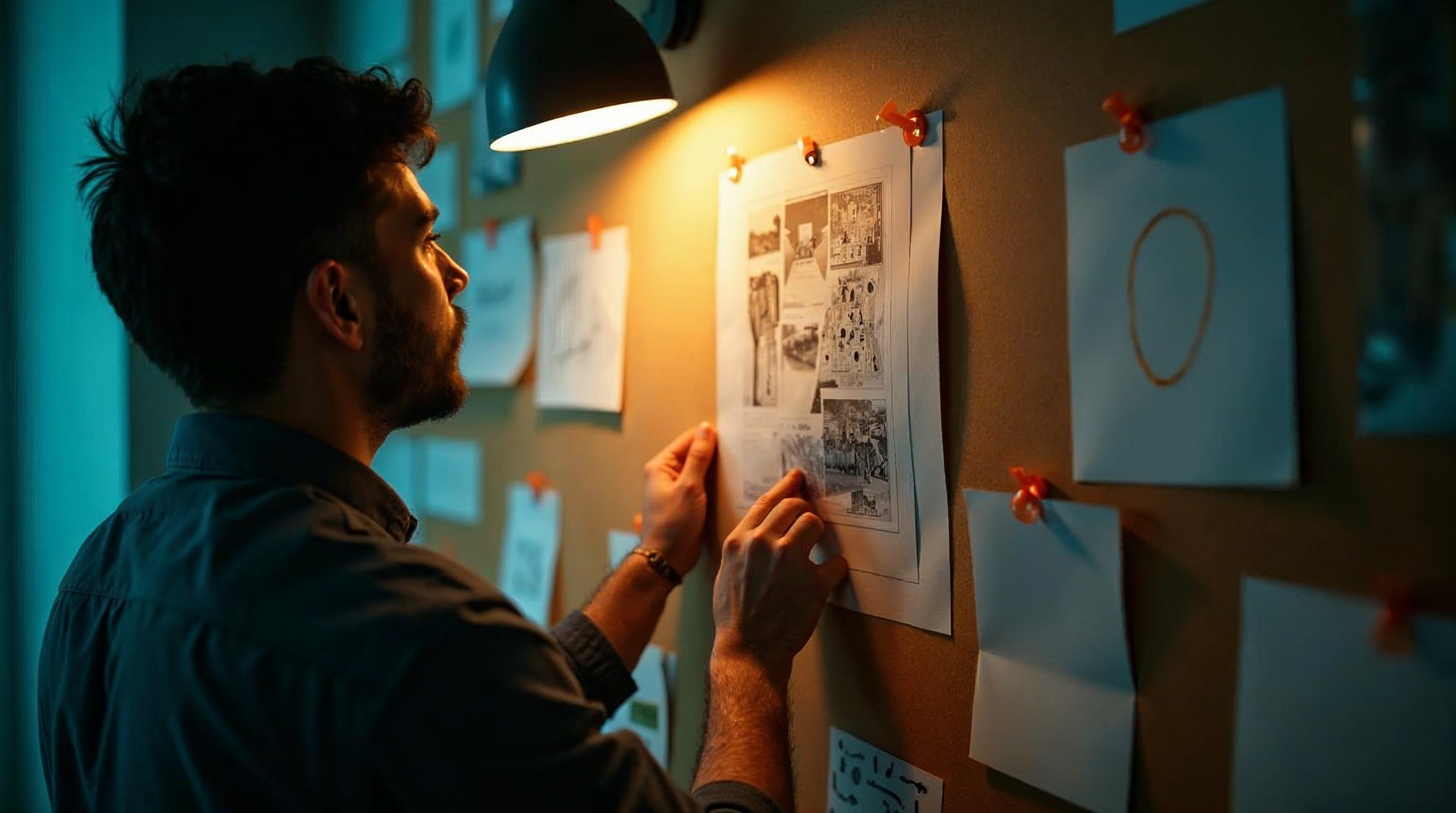
Week 1 / Brief
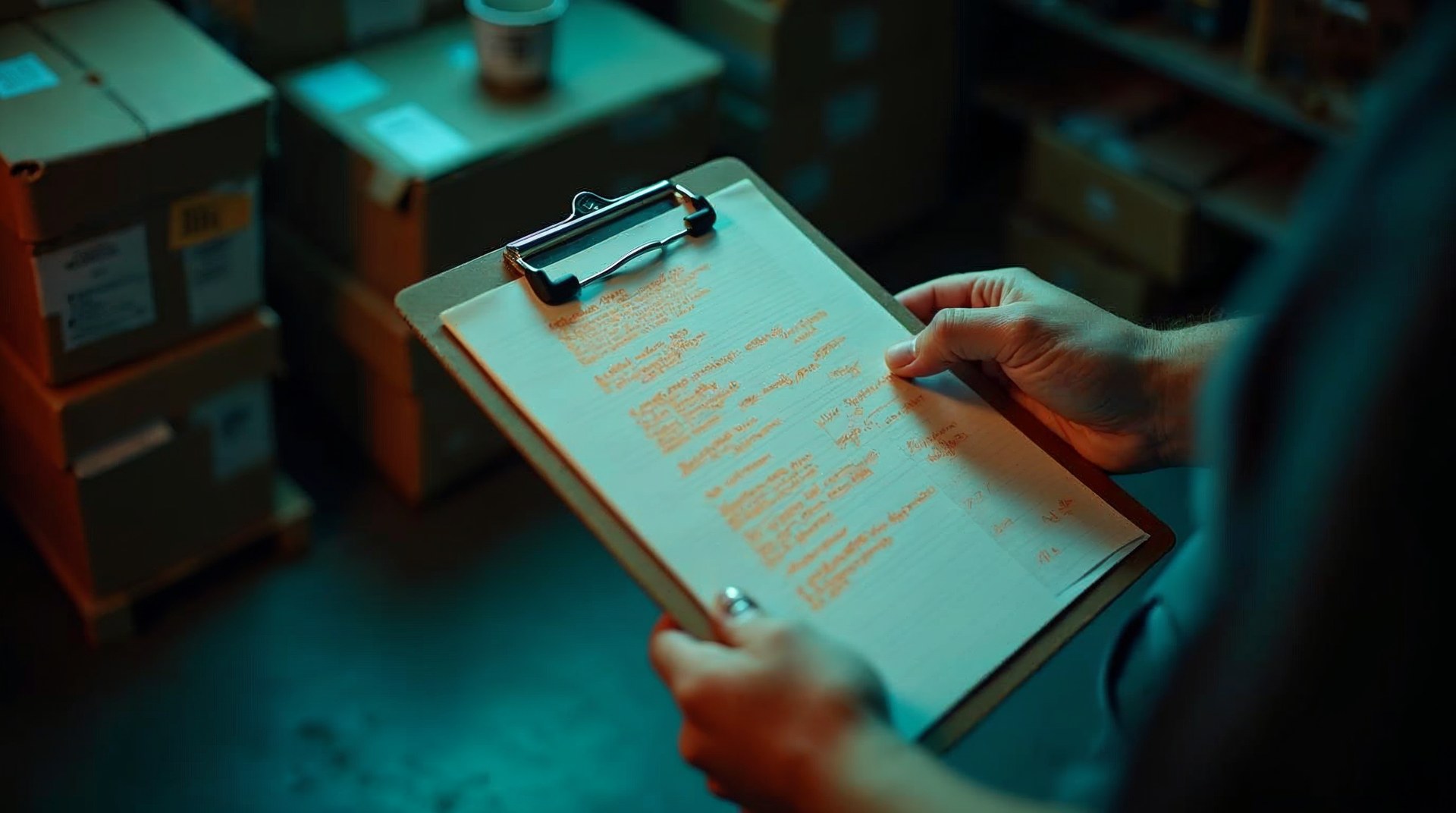
Write the shot list before booking a studio
Objections mapped per product, frames defined for each surface, marketplace and ad specifications designed in, volume and price agreed.
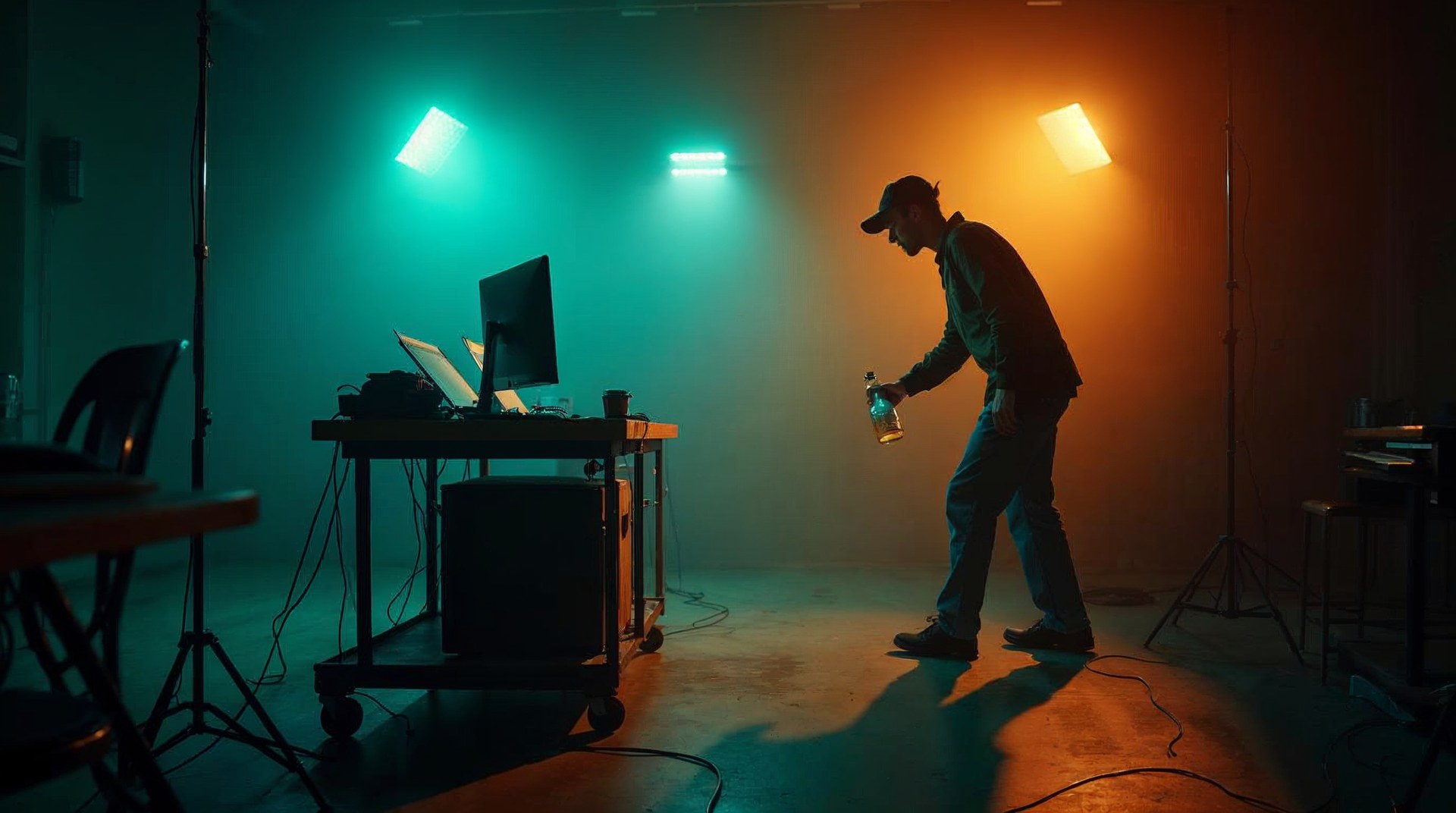
Weeks 2-3 / Shoot
Build a lighting recipe, then repeat it
Tethered capture, documented light positions and colour targets, styling that shows scale and use, motion captured in the same session.
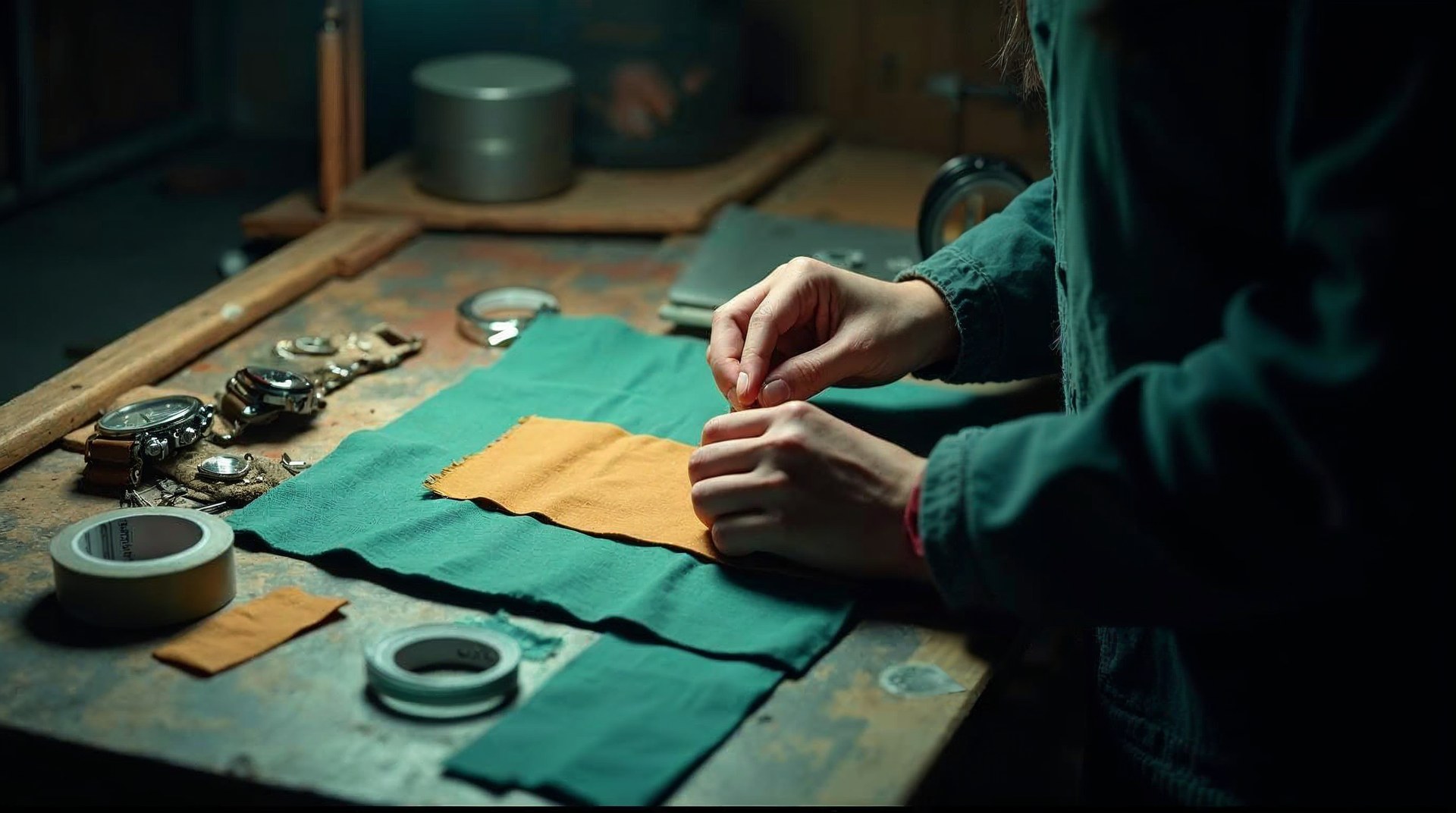
Weeks 3-4 / Post
Retouch to a written specification
Background, crop, shadow and colour tolerance fixed in writing; every frame graded against a target and exported per surface.

Ongoing / Use
Find the frames that actually sell
A tagged library your whole team can use, plus reporting on which hero and lifestyle photos win, feeding the next shot list.
WHAT YOU GET
Deliverables, not a folder of favourites.
not a folder of favourites
Everything below is delivered with full commercial rights, layered working files and the written standards behind it.

Catalogue and hero frames
Clean, consistent hero product photos per item and variant, cut and named for your product page and every marketplace you list on.

Lifestyle and in-use photos
Product photos in context that answer scale and use, styled so the item stays the subject rather than the set.

Detail and texture macros
Close frames for finish, stitching, material and mechanism, the frames that settle a doubt a description cannot.

Motion and short-form video
Turntables, pours, unboxing and garment movement captured in the same session and cut for feeds and product pages.

Studio standard and shot list
The written lighting recipe, retouching specification, colour targets and shot list template your team reuses on every future range.

Tagged asset library
Every frame organised, tagged and versioned by product and surface, with layered working files handed over alongside the exports.
HOW WE WORK
Operating standards, not promises.
Operating standards


















Built on trust. Proven by results.
We partner with SMBs and Fortune 500 companies to deliver more than reach — we bring clarity, execution, and measurable outcomes. Every successful partnership starts with a strong culture fit and a shared drive to grow.






CASE STUDIES
Case studies
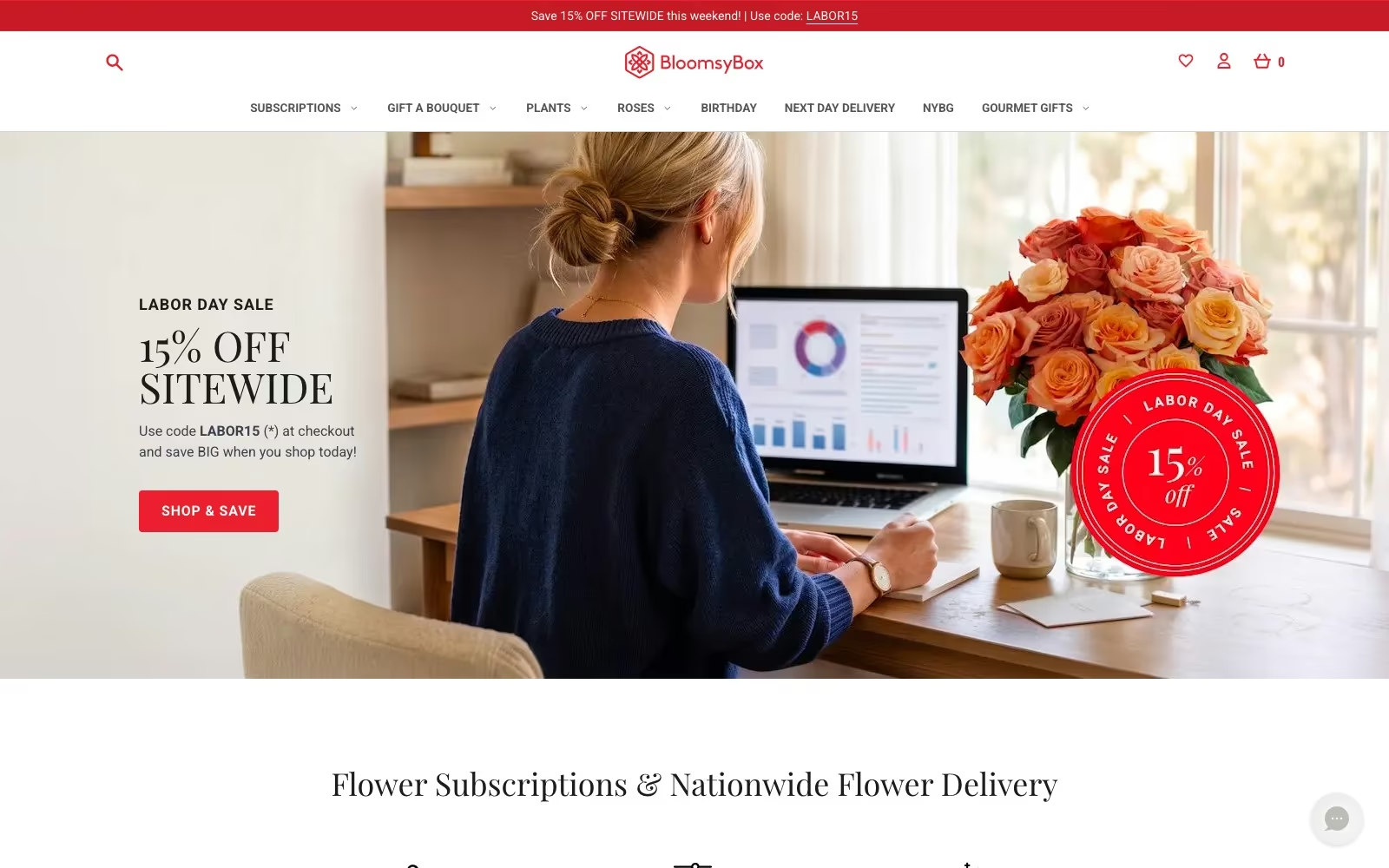
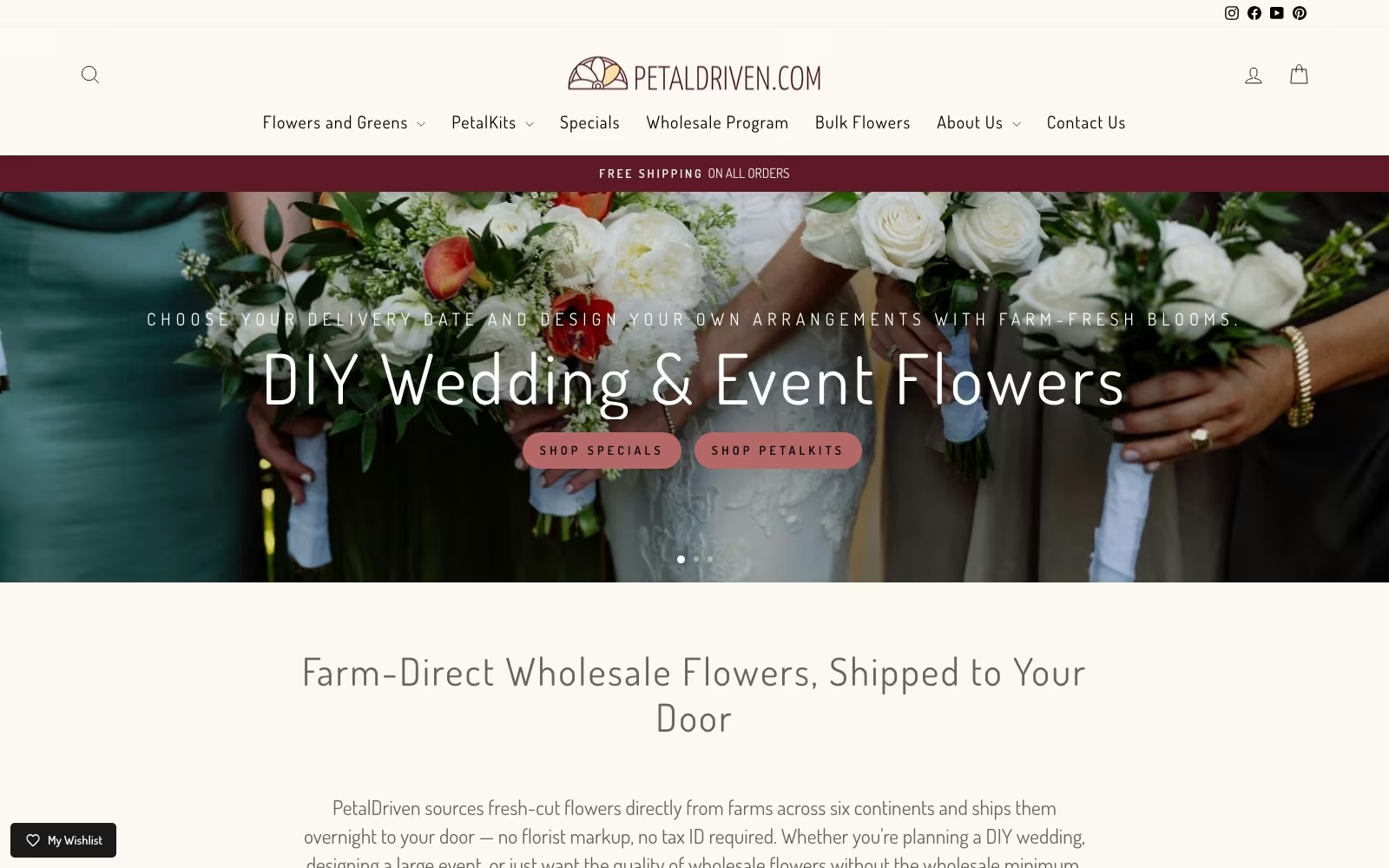
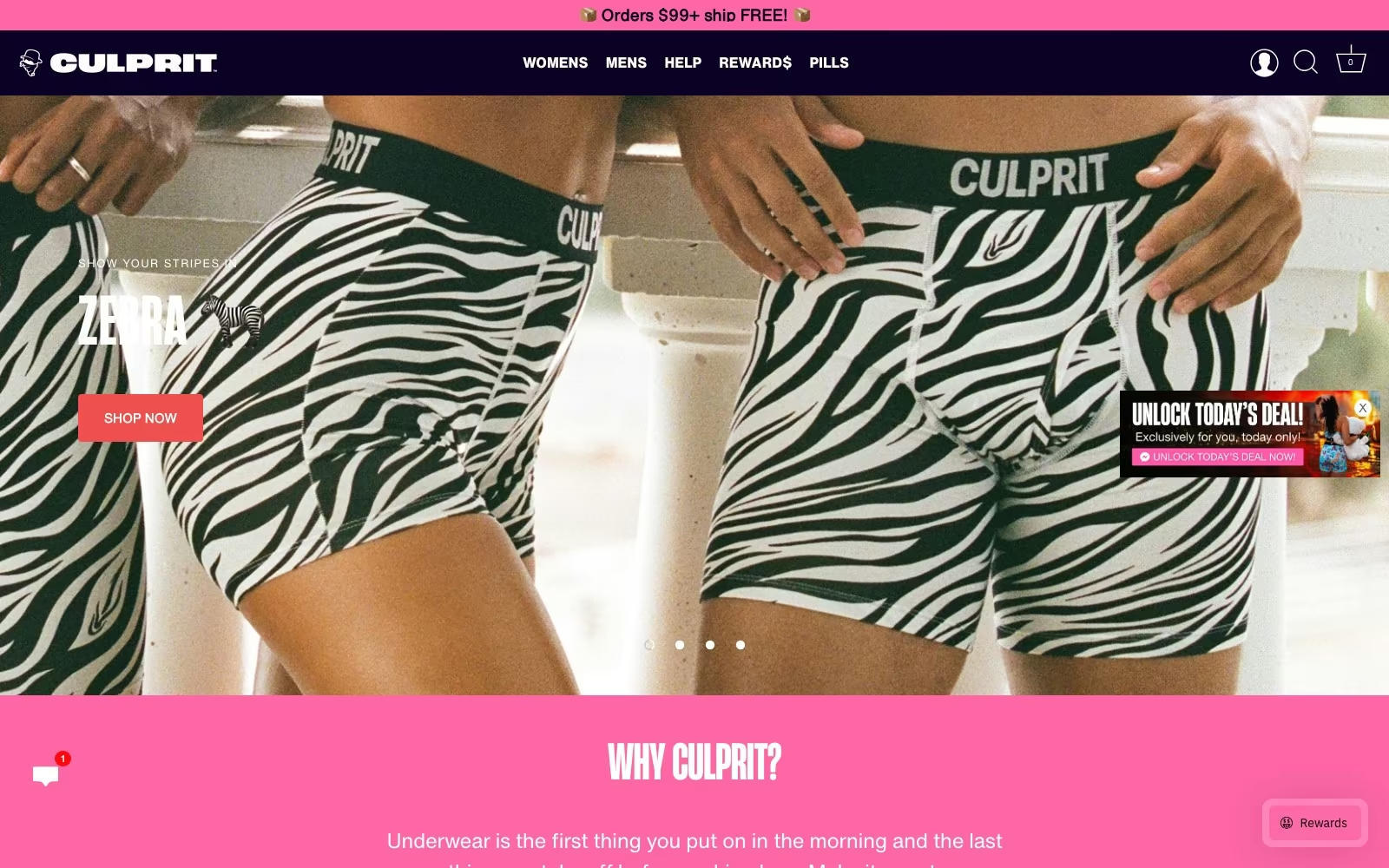
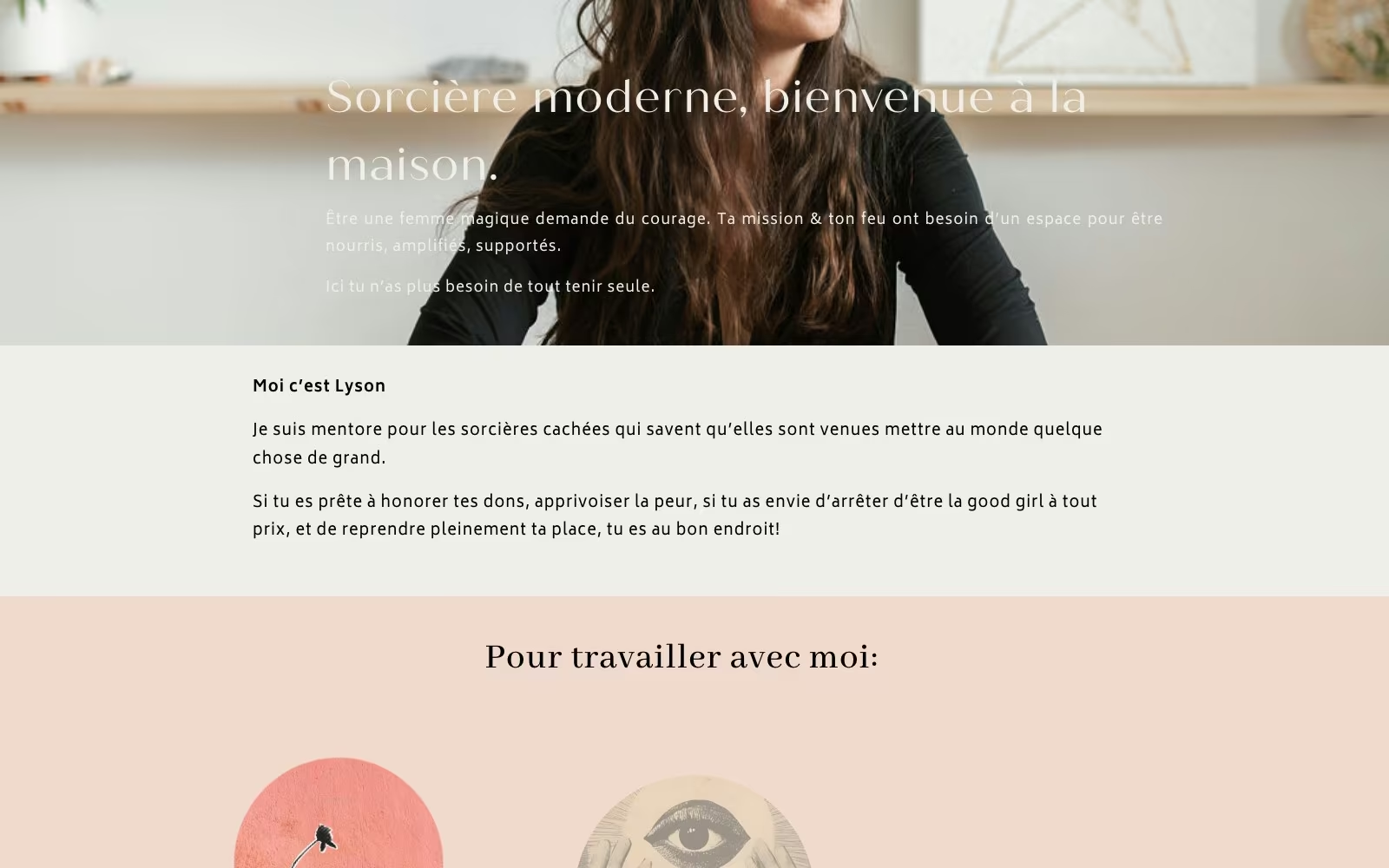
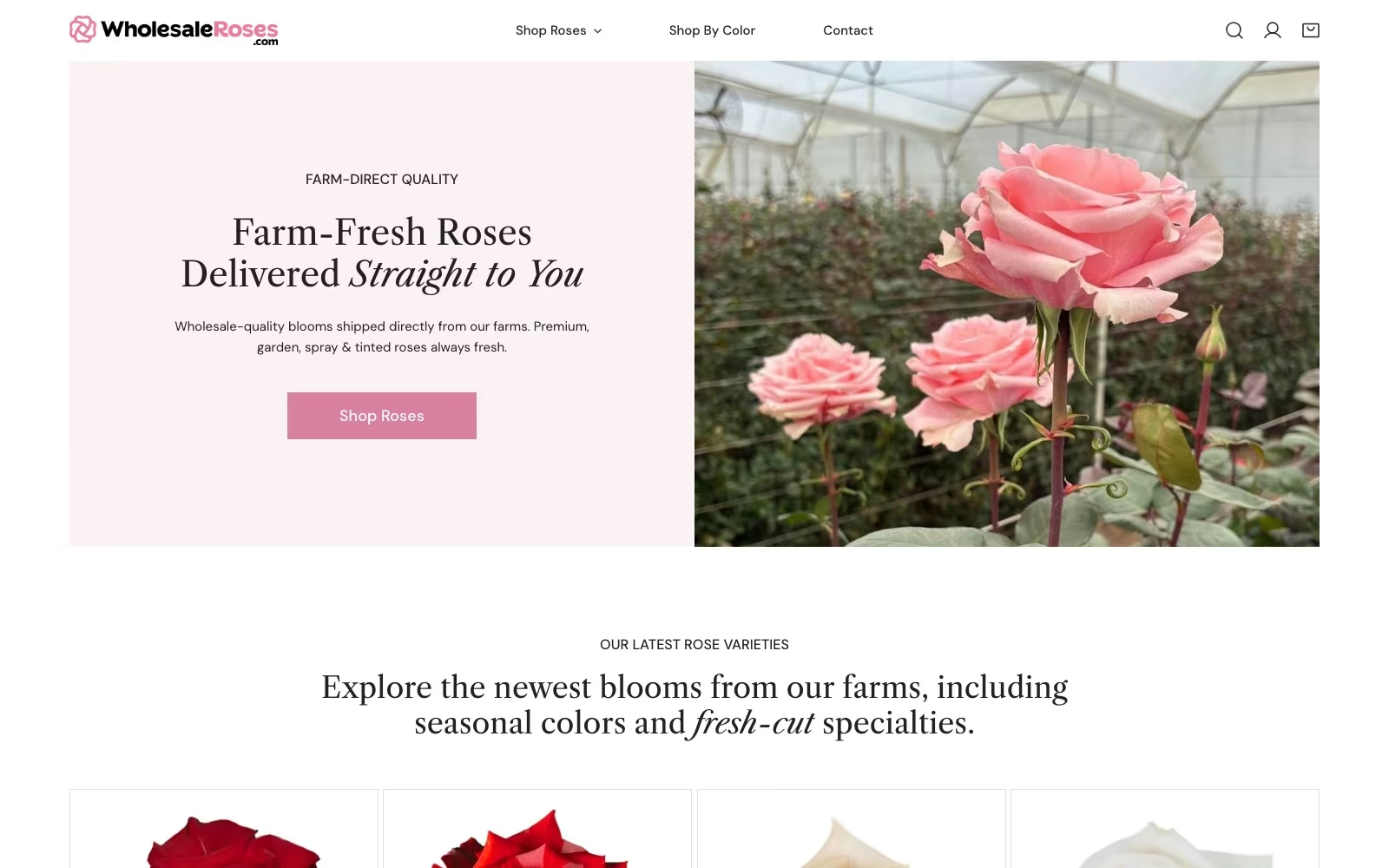
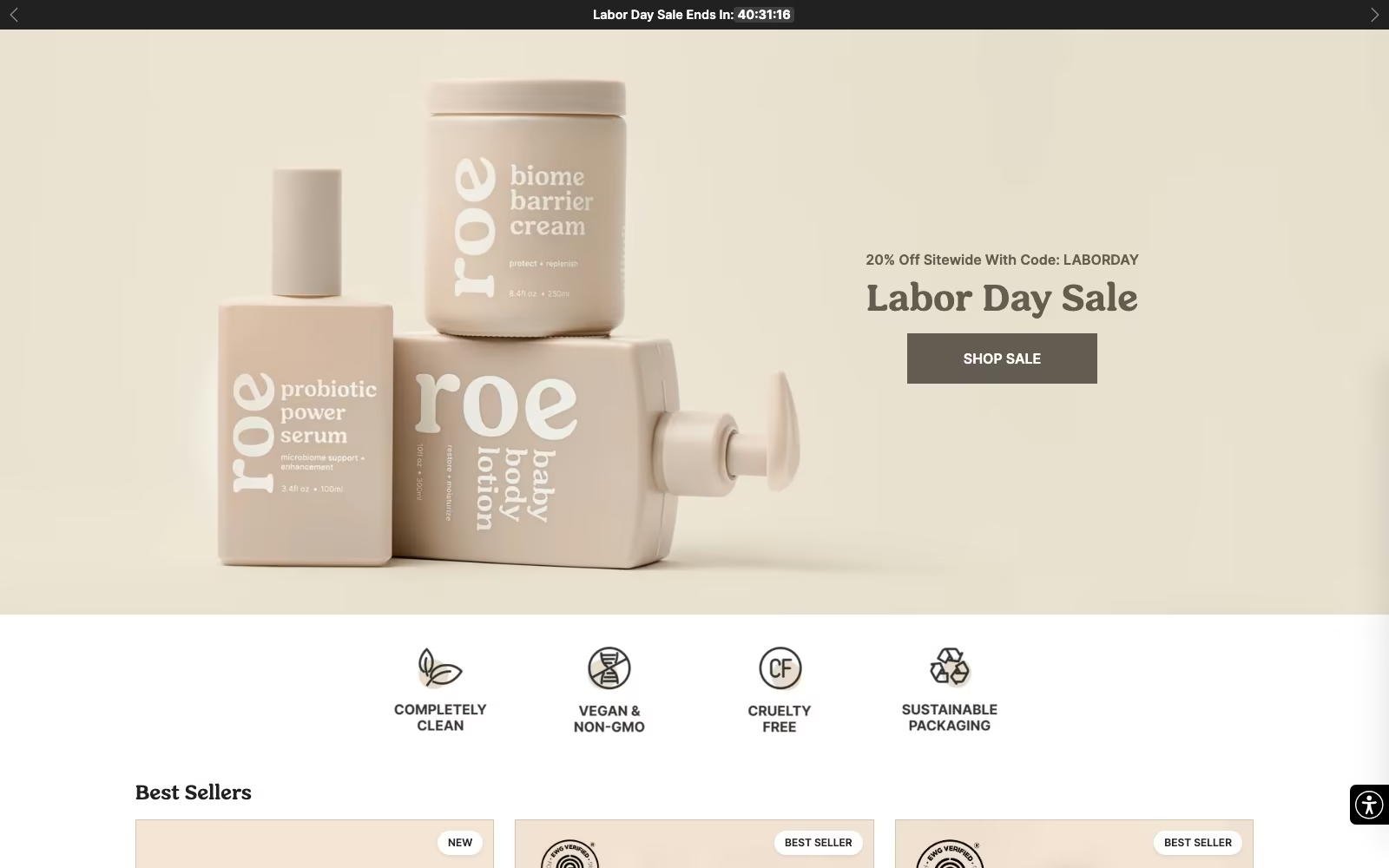
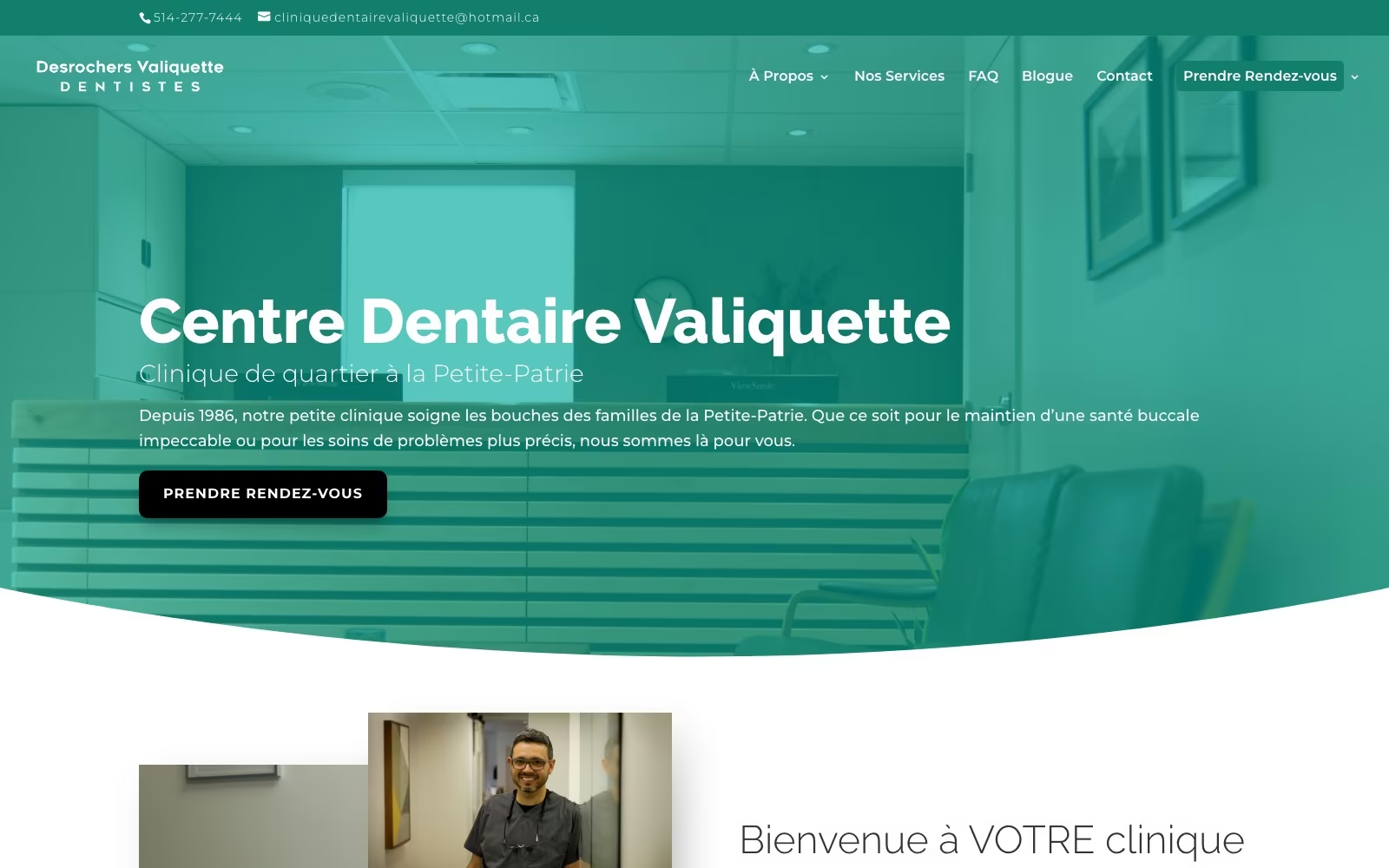
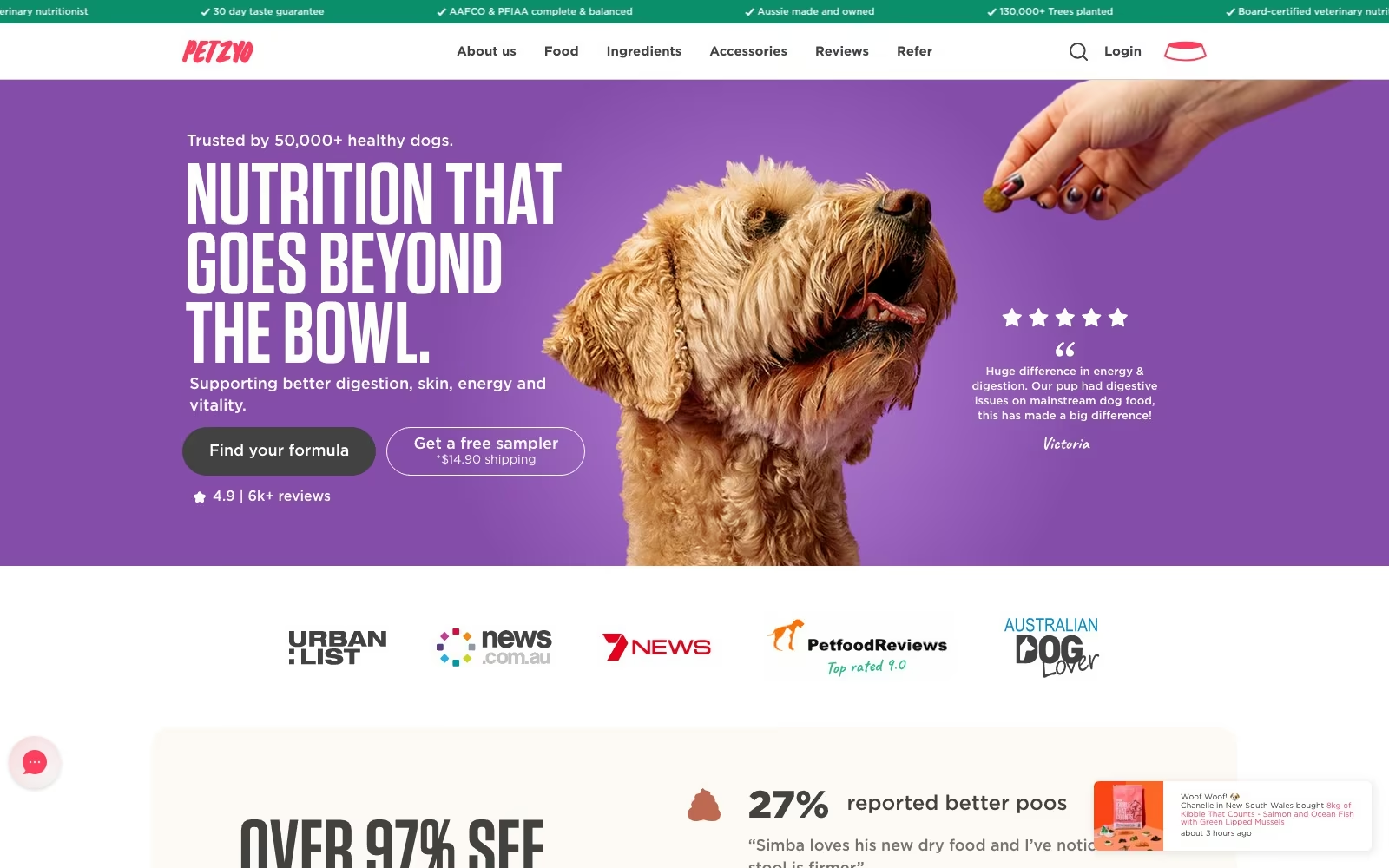
Website Portfolio
Video Ads
Static Ads






















































FAQ
What brands ask us first.
How much should a set of product photos cost?
Published market rates are a fair anchor. Shopify's pricing guide notes that commercial photographers charge roughly $500 to $3,000 per day and per-image prices commonly land between $50 and $350, while Photoroom's industry data puts traditional work at $25 to $500 per image plus $150 to $300 per studio hour. Simple pack shots at volume sit at the bottom of that range; styled lifestyle photos with a model sit at the top. We quote per project against an agreed shot list, so the number you approve is the number you pay.
How many images does each product actually need?
Coverage beats volume, but the floor is higher than most brands assume: ecommerce brands averaged 8 images per product in 2024. The useful way to think about it is one frame per objection — a clean hero, a scale reference, a detail macro for finish or material, one or two in-use lifestyle photos, and a frame per variant a shopper has to choose between. Anything beyond that should earn its place. Padding a gallery with near-identical angles adds cost and slows the page without answering a single extra question.
Can you match the look of our existing catalogue?
Yes, and it is a common brief when a range is being extended rather than replaced. We reverse-engineer the existing set-up from your current catalogue — light direction and quality, camera height, crop and margin, shadow style, background value — then shoot test frames against them until new and old sit together in a grid without drawing attention. From that point the recipe is documented, so the drift that made the original catalogue inconsistent does not start again.
Do you shoot video as well as stills?
Yes, and we recommend capturing both in one session because the second visit is the expensive one. Turntables, unboxing sequences, pours, mechanisms opening and garment movement all come from the same set-up and the same styling, then get cut for product pages and for feeds. Where the video is intended to carry paid spend, our ad creative team writes the hooks and variants into the shot list first, so the footage is planned for the placement rather than trimmed to fit it afterwards.
What do you need from us before a shoot?
Products, in the finish you actually sell, and a little context: which items matter most, which surfaces the frames serve, any marketplace rules you are held to, and your brand guidelines if they exist. If variants differ only by colour, tell us which ones must be shot rather than adjusted. Send samples early enough for us to test the difficult ones — glass, gloss, chrome and anything translucent take longer to light, and knowing that in advance keeps the schedule and the quote honest.
Will AI-generated visuals do this job instead?
They are genuinely useful for backgrounds, variant recolouring and quick concept frames, and we use them where they help. What they cannot do yet is guarantee that the stitching, finish, proportion and colour a shopper receives match the image that sold it, and that guarantee is the whole point of catalogue photography — it is also what keeps returns down. Our approach is practical: photograph the truth of the product once, to a documented standard, then use generative tools to extend that library rather than to invent it.
Who owns the images and the files?
You do. Every engagement includes full commercial rights across your own channels, marketplaces and paid media, with no per-use fees and no expiry to diarise. We hand over the graded exports, the layered working files and the written standards — lighting recipe, retouching specification, colour targets, naming convention — so you are free to shoot the long tail in-house or with any photographer you like and still get matching results.
Can you handle a large catalogue on a tight deadline?
Yes, and volume is where a written standard pays for itself. Once the shot list and the studio recipe are fixed, capture becomes a production line: batched by set-up rather than by product, tethered so approvals happen on set, retouched against a specification by more than one retoucher without the output drifting. We schedule the difficult categories first, agree a weekly delivery rhythm so your team can publish as batches land, and tell you plainly if the deadline needs a second photographer to be realistic.
How do you know which photos are working?
By measuring them. On the product page we compare gallery orders and hero frames, watch zoom and scroll behaviour, and read what returns say about colour and scale accuracy. In paid media the same frames get tested as ad creative, where the differences show up fastest. Those findings go straight into the next shot list, which is why the second project with us is usually cheaper per useful image than the first — we stop paying for frames nobody looks at.
Do you work alongside our other agencies?
Often, and it works well. We supply the library and the standards; your brand or media agency uses them. Because every export is cut per surface and named to a convention, other teams can pick files up without a briefing call, and the written specification means a photographer we never meet can extend the set correctly. Where we also run your paid social or creative strategy, the loop is simply faster: the people reading the results write the next shot list.

.webp)
.webp)