Build a roster, not a one-off post.
not a one-off post
We design and run brand ambassador programs — recruiting the brand advocates, creators, customers and employees who already like you, giving them something worth sharing, and paying them on results you can track. The content they make feeds your paid social and ad creative pipeline, so advocacy compounds instead of expiring with a campaign.






Tell us a little about your brand and we'll be in touch within 24 hours to lock in a time.


THE FOUR WORKSTREAMS
Four workstreams that keep a roster alive.
keep a roster alive
Recruiting, onboarding, content and economics. Programs rarely fail at recruitment — they fail three months later, when nobody has been briefed, paid on time or told their post worked. So we build the operating rhythm first and treat the roster as a relationship business rather than a media buy.
Recruiting the right advocates
Onboarding & enablement
Content engine
Offers, tracking & payouts
Start with people who already buy from you.
The best ambassadors are usually already in your CRM, your reviews and your comments — and increasingly, on your payroll. The Cision and PRWeek 2025 Comms Report found that employees (52%) are now considered the most effective influencers of consumer behaviour, just ahead of everyday consumers (51%), while celebrities have fallen to 24%. Authority moved closer to home, and most brands have not restructured their programs to match.
So we source from four pools: existing customers with real usage, micro-creators in your category, employees who already post, and practitioners whose recommendation carries professional weight. Selection is on evidence rather than follower count — audience overlap with your buyers, saved and shared rates, comment quality, previous partnership behaviour, and whether they have ever bought from you. That preference is widely shared: 73% of brands prefer micro and mid-tier creators for the engagement-to-cost ratio.
Outreach is personal, in your voice, with the offer stated plainly. We would rather sign twenty advocates who genuinely use the product than two hundred who will post once.
- Sourcing from customers, micro-creators, employees and practitioners
- Selection on audience overlap, saves and comment quality
- Vetting for previous partnership behaviour and brand safety
- Personal outreach in your voice with the offer stated up front
52%
of communicators rank employees the most effective influencers
73%
of brands prefer micro and mid-tier creators
Make it easy to post something good.
An ambassador who is unsure what to say posts nothing. Onboarding is therefore a real deliverable: a short, human brand brief that says what to claim and what never to claim, three or four content angles that have already worked, the disclosure wording their region requires, and the practical stuff — where to get product, who answers questions, when they get paid.
We build a small kit rather than a rulebook: hooks and formats that perform, examples from the roster, a tracked link and code, and permission language so we can amplify their creative as paid media without another email chain. Creative freedom stays with them, because the whole point is that it does not sound like you wrote it.
Then we keep in touch like a person: a monthly note on what performed, a heads-up before launches, and a fast answer when they ask something. That cadence is the difference between a roster and a spreadsheet of names.
- Short brand brief: claims to make, claims to avoid
- Proven content angles, hooks and formats, not a rulebook
- Region-correct disclosure wording built into every brief
- Usage rights agreed up front so creative can run as paid media
- Monthly performance note back to every ambassador
3-4
proven creative angles handed to every ambassador
Advocacy that also feeds your ads.
The commercial case for a roster is volume of trustworthy creative. A program of thirty active ambassadors produces more usable creative in a month than a studio shoot produces in a quarter, in the formats social platforms actually reward, at a cost per asset that makes testing affordable. That library is why ambassador programs outlive campaigns: Later's 2025 research found ambassador programs were the top-performing tactic among brands generating over $500M in revenue.
We run it as a pipeline with a monthly theme, briefs sent in advance, a submission window and a review step, so nothing arrives unusable. The best performers get promoted into paid media — with rights already agreed — and the hooks that win there are fed back to the roster as next month's angles. Creator posts flow the other way too, into email, product pages and retail assets.
Volume with feedback is the mechanism. Nobody guesses which angle works once the paid data is coming back to the people making it.
- Monthly theme, advance briefs and a submission window
- Review step before anything is published or promoted
- Winners promoted into paid media under pre-agreed rights
- Paid performance data fed back to the roster as new angles
$1.4B
gross merchandise value driven by creator links in 2025
171%
annual rise in influencer marketing investment (CreatorIQ)
Pay for outcomes, on time, every time.
The offer decides who joins and how long they stay. We design a tiered structure — product and status at entry, commission or fee once performance is proven, bonuses for the ambassadors who recruit and mentor others — and we model the unit economics before launch so the program is affordable at scale, not just at twenty people.
This is where the money is going industry-wide. Per EMARKETER via Digiday, combined traditional and creator affiliate spending will rise 10.1% between 2025 and 2026 to $13.2 billion, with creator affiliate revenues having doubled from $570 million in 2021 to $1.1 billion in 2024, and impact.com reports 59% of brands planning to put at least a quarter of their affiliate budget into creator partnerships.
Tracking is unglamorous and decisive: individual codes and links, attribution wired to real orders through our attribution setup, and payouts that land on the promised date. Late payment is the fastest way to lose a roster, so we automate it.
- Tiered offer modelled for unit economics before launch
- Individual codes and links per ambassador
- Commission attributed to real orders, not self-reported clicks
- Automated payouts on a fixed, promised date
$13.2B
projected US affiliate and creator affiliate spend in 2026
59%
of brands committing a quarter of affiliate budget to creators
of consumers trust recommendations over ads (Nielsen)
average annual brand influencer spend (CreatorIQ)
Ambassador payouts automated, never late
The roster, contracts and content library
We made the difference for those brands

Consumer tech and platforms

Creative, content, arts & culture

B2B software, fintech, insurance

Creative, content, arts & culture

Apparel and lifestyle

Beauty, personal care & wellness

B2B software, fintech, insurance

B2B software, fintech, insurance

Beauty, personal care & wellness

Apparel and lifestyle

B2B software, fintech, insurance

Healthcare & regulated services

Creative, content, arts & culture

Beauty, personal care & wellness

B2B software, fintech, insurance

B2B software, fintech, insurance

Apparel and lifestyle

Healthcare & regulated services

Consumer tech and platforms

Consumer tech and platforms

B2B software, fintech, insurance

B2B software, fintech, insurance

Creative, content, arts & culture

Home essentials, appliances, kitchen & pet

Apparel and lifestyle

Apparel and lifestyle

B2B software, fintech, insurance

Consumer tech and platforms

Healthcare & regulated services

B2B software, fintech, insurance
01 — The challenge
You have fans. You do not have a program.
Customers already post about you, a few employees share every launch, and someone keeps a spreadsheet of creators who once agreed to a discount code. None of it compounds: nobody is briefed, the codes are untracked, and the creative that performs never reaches the ad account.
“We have plenty of advocates. What we do not have is a brand program.”
The opportunity is bigger than the effort suggests, because trust now sits closest to the customer: Edelman's 2025 Brand Trust report found 80% of people trust the brands they use — more than they trust business, media, government or NGOs. Those existing users are your most credible media channel, and a program turns their goodwill into a repeatable brand, content and revenue engine rather than an occasional nice surprise. The work is operational, not magical: recruit deliberately, brief properly, track honestly, pay on time.
02 — Our approach
Recruit deliberately. Enable properly. Pay on results.
We start where the advocacy already exists — your customer base, your reviews, your comments and your own team — and shortlist on evidence rather than follower count: audience overlap with your buyers, saves and shares, comment quality and whether they actually use the product. Then we design the offer and model its unit economics before launch, so the program still works at two hundred people. Onboarding gives every ambassador a short brief, proven content angles, correct disclosure wording and a tracked link, with usage rights agreed up front so strong content can run as paid media immediately. From there it runs as a monthly pipeline: theme, briefs, submissions, review, promotion of the winners, and paid performance data fed back as next month's angles. Payouts are automated to a fixed date, and every ambassador gets a note on how their content performed. You own the roster, the contracts and the content library.
03 — What we did
How a program gets built.
Design, recruitment, first content cycle, then scaling — with a weekly working session and a written monthly review of content and revenue.
Weeks 1-3 / Design & recruit
Shortlist from people who already buy
Offer designed and modelled, then a shortlist built from customers, micro-creators, employees and practitioners, vetted on real engagement.

Week 4 / Onboard
Brief, kit, tracked link, disclosure
Every ambassador gets a short brand brief, proven angles, region-correct disclosure wording, a tracked code and agreed usage rights.
Months 2-3 / Content
Run the first monthly cycle
Monthly theme, advance briefs, submission window and review, with the strongest content promoted into paid media under agreed rights.

Ongoing / Scale
Pay on results, promote what works
Automated payouts, commission tied to real orders, and paid performance data fed back to the roster as next month's angles.
WHAT YOU GET
A program you could run without us.
without us
Everything is built in your accounts and documented as we go: the roster, the contracts, the briefs and the content library stay yours.

Recruitment and vetting
A brand-aligned shortlist sourced from your customers, micro-creators, employees and practitioners, vetted on audience overlap and real engagement.

Onboarding and briefs
A short brand brief per ambassador with proven content angles, claims to avoid and the disclosure wording their region requires.

Monthly content pipeline
Themes, advance briefs, a submission window and a review step, so usable creative arrives on a schedule instead of at random.

Offer and commission design
A tiered structure of product, status, commission and bonuses, modelled for unit economics before the program launches.

Tracking and payouts
Individual codes and links, commission attributed to real orders, and automated payouts landing on a fixed promised date.

Reporting and amplification
Monthly reporting on content and revenue per ambassador, with the best assets promoted into paid media under agreed rights.
HOW WE WORK
Operating standards, not promises.
Operating standards


















Built on trust. Proven by results.
We partner with SMBs and Fortune 500 companies to deliver more than reach — we bring clarity, execution, and measurable outcomes. Every successful partnership starts with a strong culture fit and a shared drive to grow.





CASE STUDIES
Case studies
Website Portfolio
Video Ads
Static Ads

















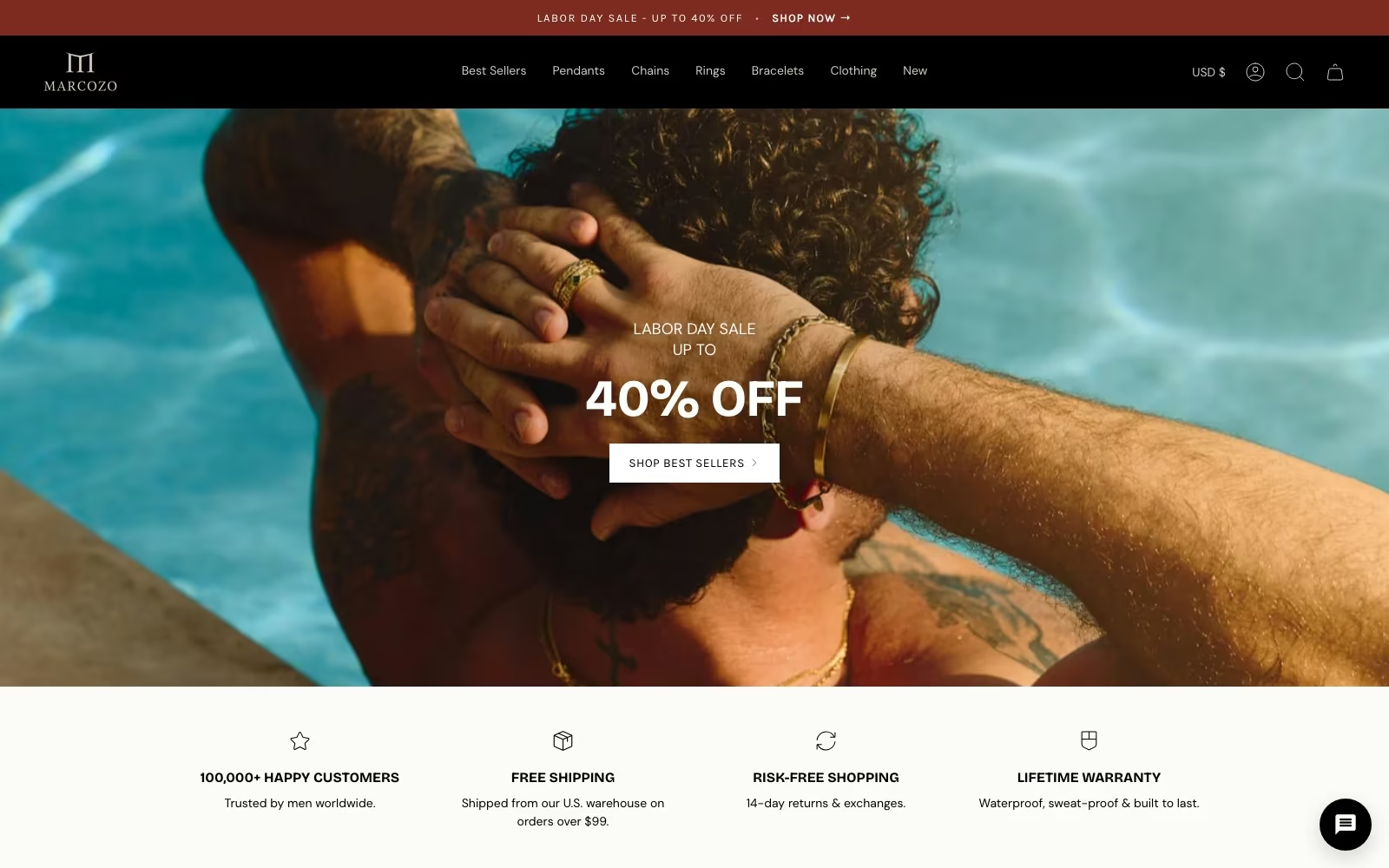

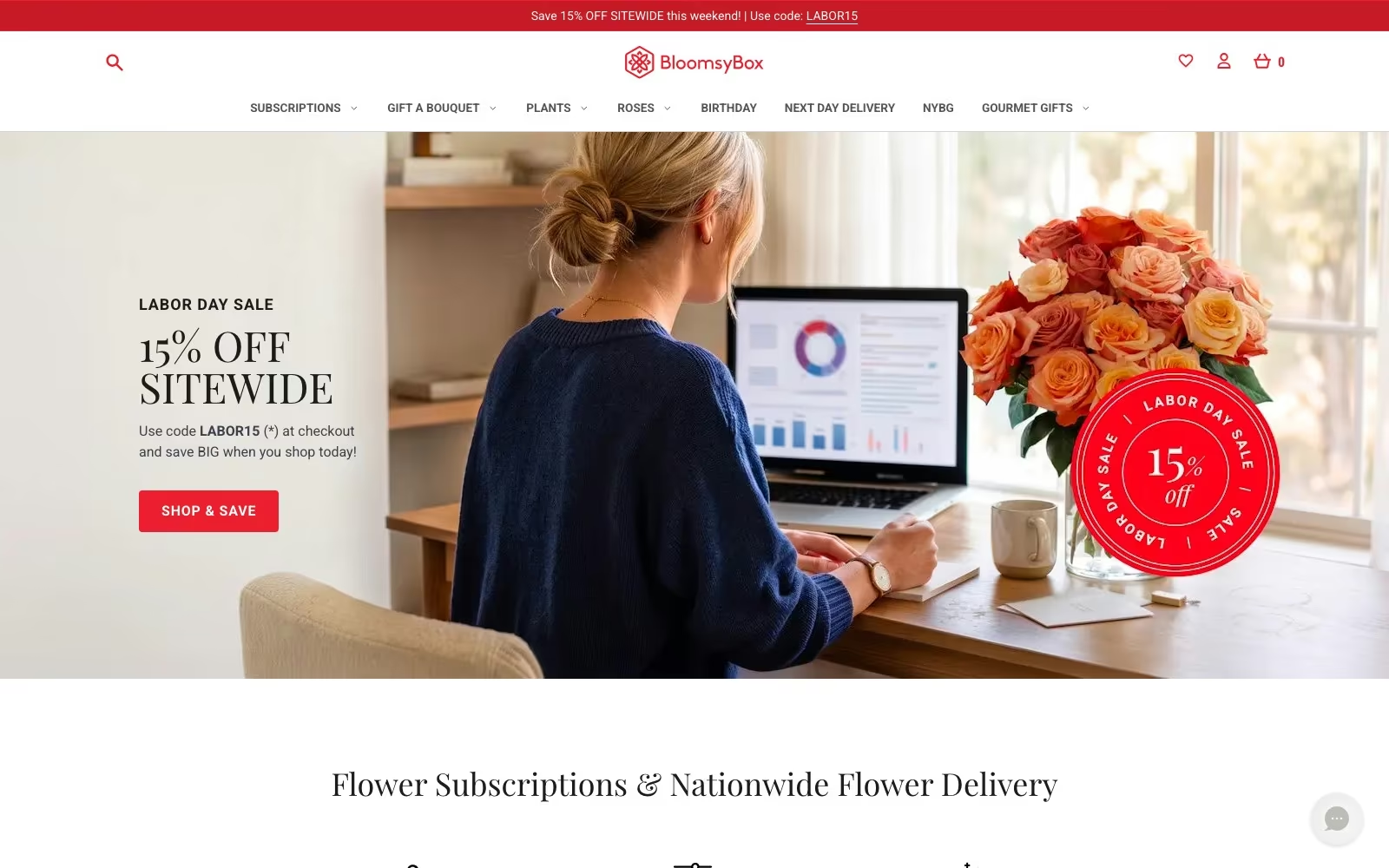

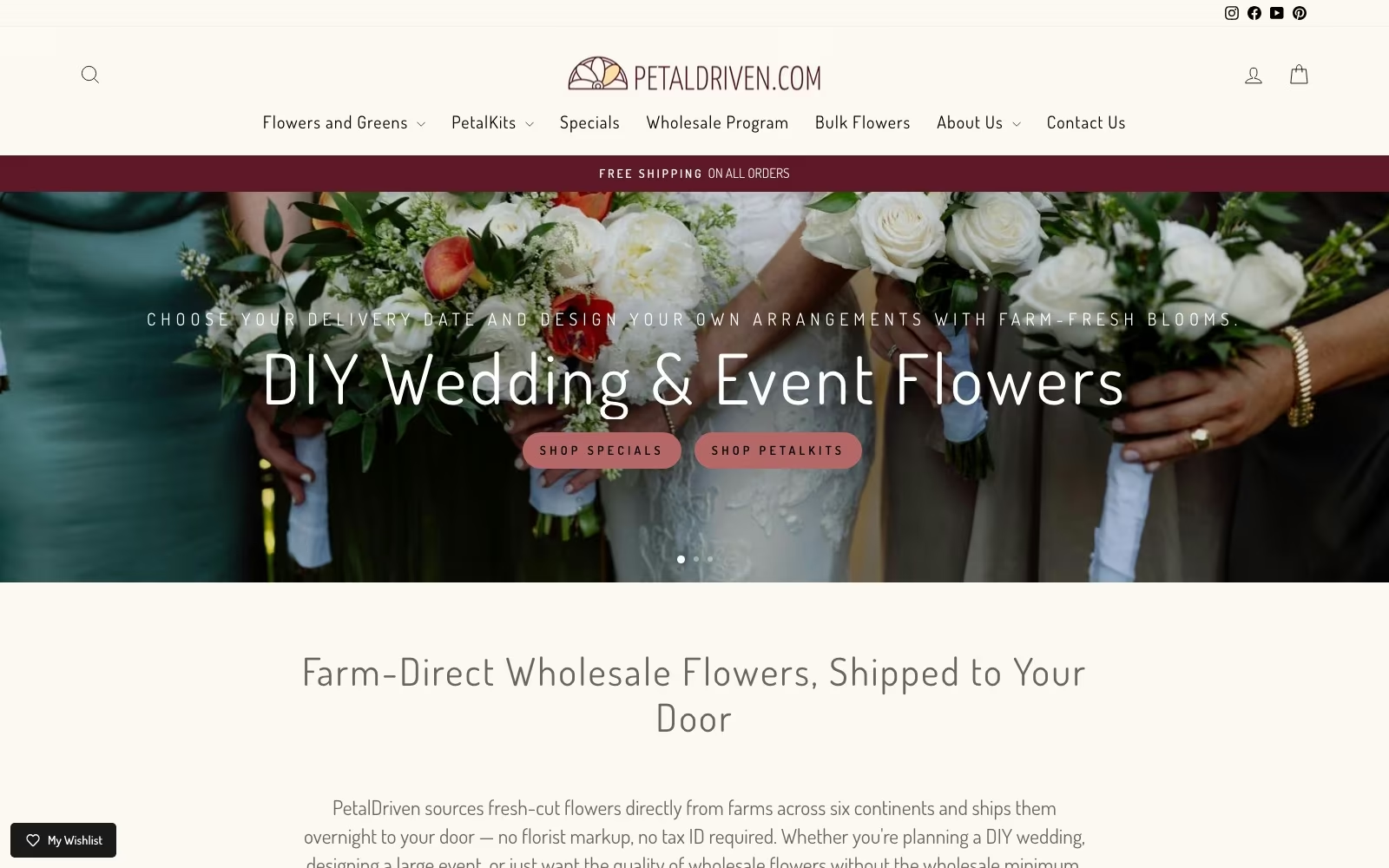

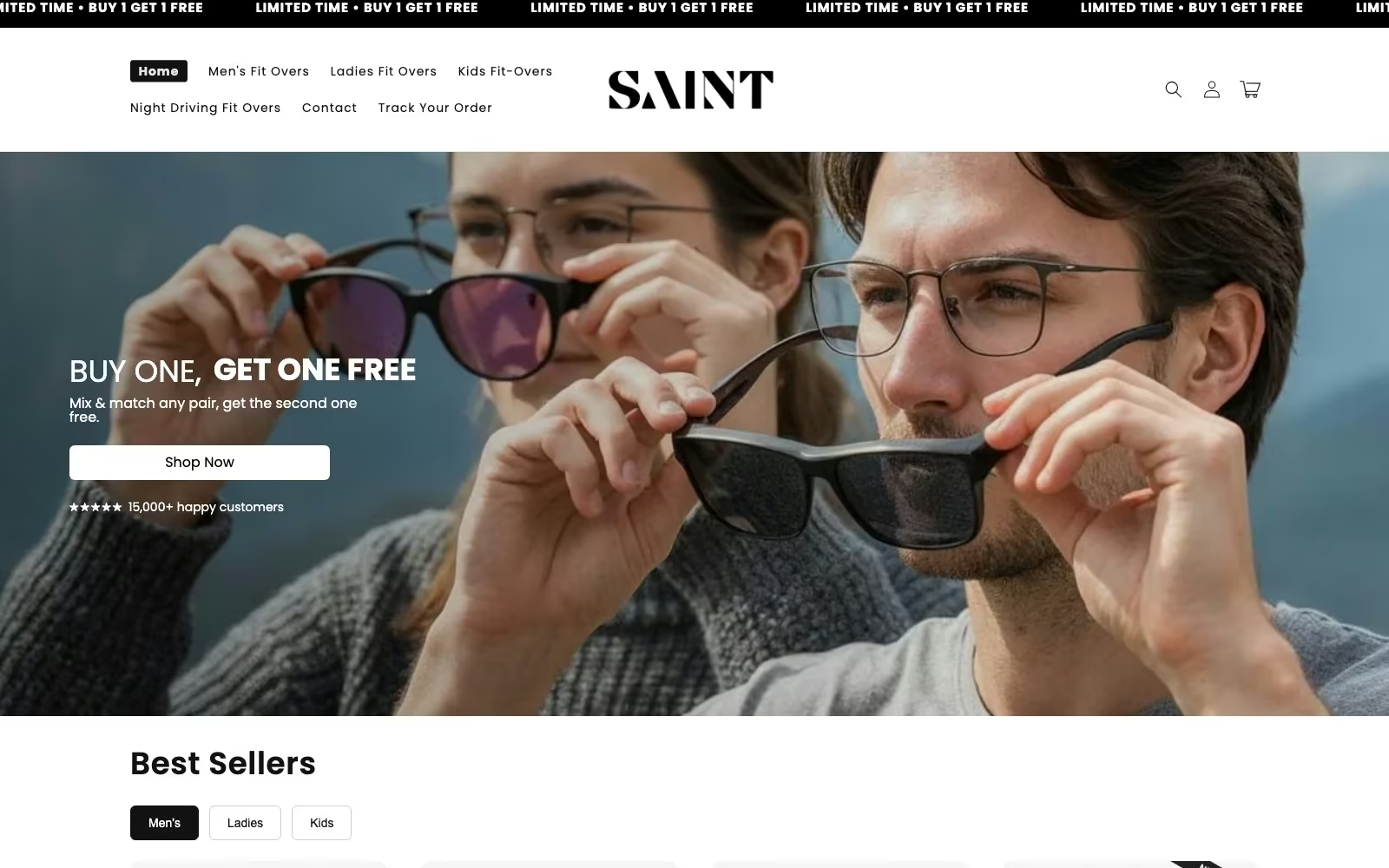


























FAQ
What brands ask us first.
What does a brand ambassador program agency actually do?
Four jobs: design an offer people want and the business can afford, recruit and vet the right advocates, enable them with briefs, angles and tracked links so posting is easy, and run the monthly rhythm of themes, reviews, payouts and reporting. We also promote the strongest content into paid media, which is where most programs find their return. What you keep at the end is a roster, a contract set, a content library and a documented operating rhythm your own team could run.
How is an ambassador program different from influencer marketing?
Duration and relationship. Influencer marketing usually buys a post or a campaign; an ambassador program builds a standing roster of people who use the product, post regularly and earn on results. That changes the economics — briefing costs fall, content quality rises as they learn what works, and the audience sees consistency rather than a one-week endorsement. It is where mature programs end up: Later's 2025 research found ambassador programs were the top-performing tactic for brands above $500M in revenue.
Should we use customers, creators or our own employees?
All three, for different jobs. Customers bring credibility and detail, micro-creators bring reach and production skill, and employees bring expertise plus a reach most brands underuse — the Cision and PRWeek 2025 report found employees ranked the most effective influencers at 52%, with celebrities down at 24%. In practice we start with customers and employees because they cost less and convert better, then layer in micro-creators once the briefing and tracking machinery is proven. Employee advocacy needs its own guardrails, which we write with your HR and legal teams.
How do you pay ambassadors, and what does a program cost?
Typically a tiered offer: product and status at entry, then commission on tracked sales or a modest fee once someone is producing reliably, plus bonuses for the people who recruit and mentor others. We model the unit economics before launch so the structure still works at scale. Budget-wise, most brands are moving this way already — impact.com reports 59% planning to put at least a quarter of affiliate budget into creator partnerships. Our own fee is a fixed monthly amount scoped to roster size and content volume, never a cut of ambassador earnings.
How do you track what the program actually generates?
Individual codes and links per ambassador, attributed to real orders in your own systems rather than to self-reported clicks, plus content-level metrics for the assets we promote as paid media. Trackable creator activity is now substantial at industry level: Later reported $1.4 billion in gross merchandise value driven through creator links in 2025. For the part that is genuinely hard to attribute — brand lift, dark social sharing — we use holdouts and surveys rather than inventing a number, and our attribution team wires the reporting into everything else you run.
Can ambassador content be used in our paid ads?
Yes, and it should be — it is usually the highest-return part of the program. We agree usage rights at onboarding, with the term, platforms and any paid-amplification bonus written into the agreement, so promoting a strong post takes hours rather than a negotiation. Ambassador content tends to outperform studio work in feed placements because it looks like the platform it appears on, and the volume a roster produces makes proper creative testing affordable. Those results then go back to the roster as next month's angles.
How much of our team's time will this take?
Less than running it informally, which is usually the honest comparison. We handle sourcing, outreach, briefing, review, payouts and reporting; what we need from you is product supply, a named internal contact for questions, and an hour a week in the working session. Employee advocacy needs a little more internal involvement because HR and legal should shape the guardrails once at the start. After the third monthly cycle most of the rhythm is automated and the meetings get shorter.
What stops a program from going quiet after two months?
Three things, all operational. First, ambassadors are told how their content performed — a monthly note with their numbers is the single biggest driver of continued posting. Second, payouts arrive on a fixed date without chasing. Third, briefs arrive before the month starts with angles that have already worked, so nobody stares at a blank screen. We also refresh the roster continuously rather than waiting for it to decay, and retire people politely when their content stops resonating.
Is this compliant? What about disclosure rules?
Yes, and we build it in rather than bolt it on. Every brief carries the disclosure wording appropriate to the ambassador's region and platform, agreements state the relationship plainly, and the review step checks disclosure before content is promoted. Employee advocacy gets an extra pass with your HR and legal teams so people know what they may claim. Handled this way, disclosure costs nothing in performance — audiences respond to the honesty, and it keeps both you and the ambassador protected.
Do you run campus or student ambassador programs?
Yes, and student programs deserve their own design because the motivation differs: campus ambassadors join for experience, portfolio and community as much as for products or commission. We recruit through student societies, course groups and existing customers on campus, keep the application simple, and build progression into the program so the strongest students take on training and mentoring roles. Turnover is seasonal by nature, so we plan recruitment around the academic calendar and document everything to make each intake faster to onboard than the last.
Do you provide event and field staffing too?
We plan and brief the brand ambassadors who represent you at events, activations and in-store, and we co-ordinate the staffing partners who supply people at volume rather than pretending to be a staffing bureau ourselves. That means the event team works from the same brand brief, claims list and content angles as your online roster, so an activation produces usable photography and video instead of only footfall. Results are reported the same way as the rest of the program: tracked codes, content produced and revenue attributed.
How do you train ambassadors, and what benefits keep them engaged?
Training is deliberately light and practical: a short onboarding session on the brand and the products, a one-page claims sheet, examples of content that performed, and a monthly clinic where the roster sees what worked and asks questions. The benefits that keep people engaged are rarely just money — early access to products, being credited when their content runs as an ad, direct contact with the team, and free product for the people they influence all rank highly. We ask each intake what they value and adjust rather than assuming.
Can you run this alongside our existing creator agency?
Yes. A common split is that they keep campaign-based creator buys while we own the standing roster, the tracking and the always-on content rhythm, with one shared definition of a qualified result so nobody optimises against a different target. We share what we learn in both directions, since the hooks that win on a roster usually win in campaigns too. Where you would rather consolidate, our paid social and ad creative teams pick up the rest of the pipeline.

.webp)
.webp)