The ad is the targeting now.
the targeting
Broad targeting and automated delivery moved the decisions that used to sit in the ad account into the creative itself. We are the ad creative agency for brands that need volume and judgment at the same time: concepts built from real customer language, produced weekly in static, video and UGC, and read against results rather than taste. It plugs straight into paid social and paid search, so the same team briefing the work is watching what it spends.






Tell us a little about your brand and we'll be in touch within 24 hours to lock in a time.


HOW THE WORK RUNS
A creative engine, not a project queue.
creative engine
Most brands do not have a creative problem, they have a creative supply problem: two good ads, no way to make the next twenty, and no framework for deciding which part of an ad to change. We run research, production, testing and iteration as one continuous loop with a fixed weekly output, so the account always has fresh angles to spend behind and every launch is a question with an answer attached.
Research & angles
Production at pace
Testing & iteration
Reporting & the creative library
Concepts come from customers, not from a brainstorm.
Creative is the largest controllable lever in performance marketing. NCSolutions' meta-analysis of hundreds of campaigns attributes about 47% of a brand's advertising-driven sales lift to the creative itself, 49% once ad context is counted — more than reach, targeting or recency contribute. That is a strong argument for spending real hours on the input rather than on another audience test.
So we start where the language already exists. Reviews and support tickets, sales call recordings, comment sections, Reddit threads, competitor ad libraries, the objections your closers hear every week. Out of that we build an angle bank: the specific pains, doubts, comparisons and moments of purchase intent, each turned into a testable message rather than a vague theme.
Each concept is written as a hypothesis — the audience it speaks to, the belief it is trying to shift, the metric that should move if it works. That is what makes a losing ad useful: it disproves something specific, and the next brief is better because of it.
- Voice-of-customer mining from reviews, tickets and calls
- Competitor ad library teardown by angle and format
- An angle bank scored by expected impact and effort
- Every concept written as a hypothesis with a metric
47%
of advertising sales lift attributed to creative
Static, video and UGC, shipped every week.
Volume is not vanity, it is how the algorithm finds your winners. Motion's 2026 benchmark set shows weekly new-creative output rising from roughly 2.8 new ads a week for advertisers under $10K a month to about 18.9 for those above $1M, and their winner analysis finds that doubling weekly output roughly doubles the absolute number of winners rather than halving the hit rate. The constraint worth managing is quality control, not output.
We produce across the formats that actually run: motion-designed and typographic statics, founder and expert talking-head video, creator and UGC footage, product demonstrations, before-and-after edits, unboxings, screen-recorded walkthroughs for software, and native-feeling Reels, Shorts and TikToks cut to the platform rather than resized to it. Where you have existing footage or a brand shoot sitting unused, that library usually yields several months of ads before anyone needs to book a camera.
Sourcing is handled too: creator briefs, casting, shipping, usage rights, revisions. You approve the brief and the cut, not the logistics.
- Fixed weekly output agreed up front, not a vague retainer
- Statics, video, UGC and creator content from one team
- Creator sourcing, briefing and usage rights managed
- Existing brand assets mined before new production is booked
- Platform-native edits, never a resized 16:9 film
2.8 to 18.9
new ads a week across advertiser spend tiers
2x output
roughly doubles the absolute winner count
Change one variable, learn one thing.
An ad has four separable parts: the hook, the visual idea, the offer or claim, and the format. Testing all four at once produces a winner nobody can explain and cannot be repeated. We isolate them — same concept, five hooks; same hook, three visual treatments; same treatment, two offers — and read hook rate, hold rate, click-through and cost per result together rather than judging by the last-click number alone.
Iteration is where the compounding happens. A concept that beats the control does not get retired to a folder; it gets a second generation with a new hook, a third with a different opening frame, a fourth cut for a different placement. Most of our best-performing ads are the fourth or fifth version of an idea that merely looked promising the first time.
Fatigue is treated as a scheduling problem, not a surprise. When frequency climbs and hook rate decays, the replacement is already briefed, because the pipeline runs ahead of the account.
- Hook, visual, offer and format tested as separate variables
- Hook rate, hold rate and cost per result read together
- Winners iterated into generations, not archived
- Fatigue watched on frequency and hook-rate decay
4 variables
hook, visual, offer and format, tested apart
You keep the assets and the learning.
Every asset we produce is delivered in a library you own: master files, platform cuts, captions, and the brief and hypothesis that produced it. Tagging is the part teams skip and later regret — angle, format, hook type, creator, offer — because without it you cannot answer which kind of ad works for you, only which single file did well last month.
Reporting rolls up to the questions worth asking. Which angles produce cheap acquisition, which formats hold attention, which hooks earn the click, how long a concept lasts before it decays, and what the next month's slate should therefore look like. That written review is where the plan for the following cycle comes from, so the account gets sharper rather than just busier.
If we stop working together, the library, the tagging and the documented learning stay with you. That is the asset, not the agency relationship.
- Master files and platform cuts handed over as produced
- Tagged by angle, format, hook, creator and offer
- Monthly written review of what worked and why
- Next cycle's slate planned from the evidence
100%
of assets, files and rights stay yours
5%
of Meta ad creatives ever become winners (Motion)
median hook rate on Meta creative (Benly.ai)
median Meta video ad click-through rate (Benly.ai)
Fixed creative output agreed before we start
Every file, cut and usage right
We made the difference for those brands

Retail & commerce

Apparel and lifestyle

Creative, content, arts & culture

Creative, content, arts & culture

Beauty, personal care & wellness

Creative, content, arts & culture

Food & beverage

Consumer tech and platforms

Retail & commerce

Healthcare & regulated services

Creative, content, arts & culture

Healthcare & regulated services

Food & beverage

Healthcare & regulated services

Travel & mobility

Beauty, personal care & wellness
Retail & commerce
Travel & mobility

Home essentials, appliances, kitchen & pet

Food & beverage

Consumer tech and platforms

Beauty, personal care & wellness

Beauty, personal care & wellness

B2B software, fintech, insurance

Retail & commerce

Food & beverage

Retail & commerce

Travel & mobility

Creative, content, arts & culture

Beauty, personal care & wellness
01 — The challenge
Two good ads and no way to make the next twenty.
The account is fine. The targeting has been consolidated, the tracking works, and for a while performance held. Then frequency crept up, the two ads carrying the budget started to decay, and the pipeline behind them was a shared drive of brand photography and a designer with other priorities.
“We are not short of budget. We are short of ads worth putting behind it.”
That is the modern bottleneck. With delivery automated and audiences broad, the creative is doing the segmentation, and it is also the biggest lever left — roughly 47% of advertising-driven sales lift, per NCSolutions. Brands stuck at two or three new ads a month are not testing, they are hoping, and the volume benchmarks show what their competitors are shipping instead. The fix is a supply of distinct concepts, produced on a rhythm, with a framework for deciding what to change next.
02 — Our approach
Angles from customers. Volume on a rhythm. Decisions from data.
We mine your reviews, support tickets, sales calls and competitors' ad libraries for the language buyers already use, then turn it into an angle bank where each concept states who it is for and what it should move. Production runs on a fixed weekly cadence across statics, video and UGC so there is always something new to spend behind. Testing isolates one variable at a time — hook, visual, offer, format — and we read hook rate and hold rate alongside cost per result, so a winner is explainable and therefore repeatable. Winners get iterated into generations; losers narrow the field. Everything ships into a tagged library you own, with a monthly written review that sets the next slate. Your brand guidelines are respected throughout — performance creative and brand consistency are not opposites when the same team owns both.
03 — What we did
Four steps, running continuously.
Research, production, testing and iteration overlap rather than queue, with one weekly working session and a written monthly review of what the evidence changed.
Week 1 / Research
Build the angle bank from real customer language
Reviews, tickets, sales calls and competitor libraries mined into scored angles, each written as a hypothesis with a metric attached.

Weeks 2-3 / Production
Ship the first slate across three formats
Statics, talking-head video and creator UGC produced to a fixed weekly output, cut natively for each placement rather than resized.

Weeks 3-6 / Testing
Isolate one variable, then read the funnel
Hooks, visuals, offers and formats tested separately, judged on hook rate, hold rate and cost per result together.
Ongoing / Iteration
Iterate the winners before they fatigue
Every winner gets a next generation, and replacements are briefed against frequency and hook-rate decay instead of after the drop.
WHAT YOU GET
The formats that actually carry spend.
carry spend
Every asset is produced for your brand and your offer, delivered in master and platform cuts, and stays your property with rights cleared.

Angle bank and creative briefs
Customer-language research turned into scored angles and written briefs, each with the audience, the belief to shift and the metric to watch.

Creator and UGC video
Casting, briefing, shipping and usage rights handled, with footage cut into multiple ads rather than delivered as one long film.

Statics and motion design
Typographic, comparison, review-led and offer statics plus light motion, built to your guidelines and sized for every placement.

Structured creative testing
Hook, visual, offer and format isolated as variables so each result teaches something repeatable instead of producing a lucky file.

Iteration and editing sprints
Winners rebuilt into new generations with fresh hooks and openings, and replacements briefed before fatigue reaches the account.

Tagged library and monthly review
Master files tagged by angle, format, hook and creator, with a written review that turns the evidence into next month's slate.
HOW WE WORK
Operating standards, not promises.
Operating standards


















Built on trust. Proven by results.
We partner with SMBs and Fortune 500 companies to deliver more than reach — we bring clarity, execution, and measurable outcomes. Every successful partnership starts with a strong culture fit and a shared drive to grow.


CASE STUDIES
Case studies
Website Portfolio
Video Ads
Static Ads

















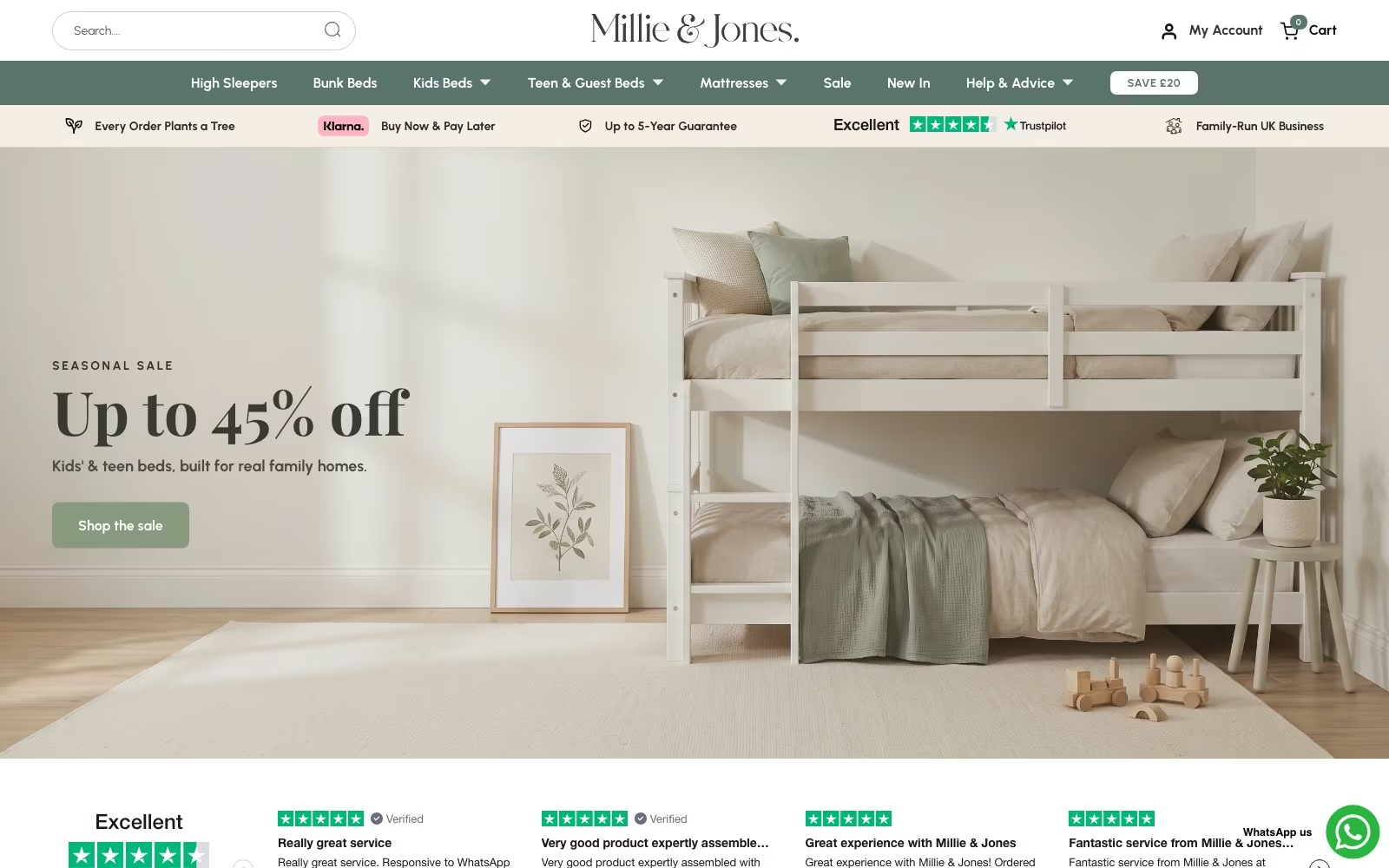

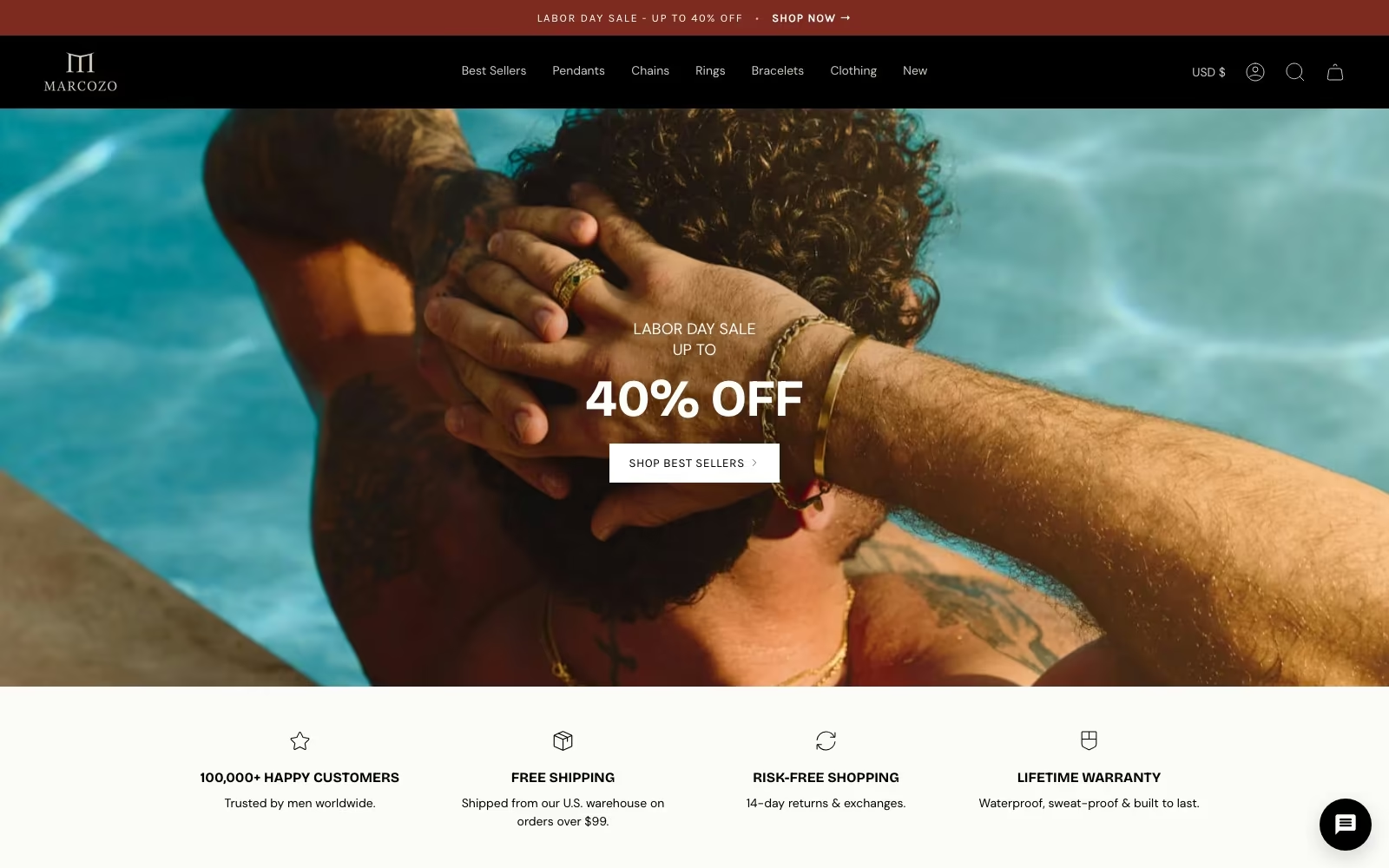

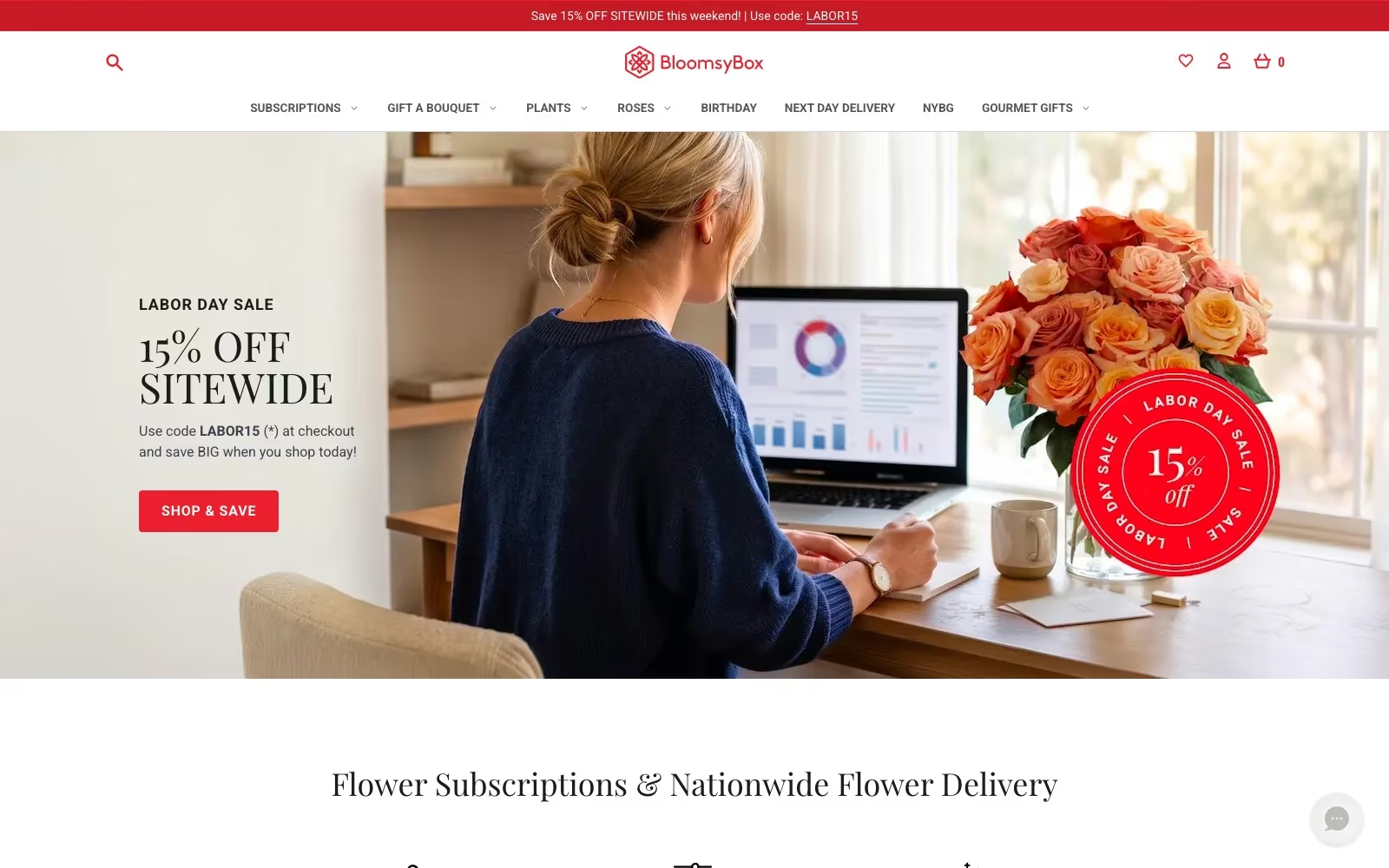

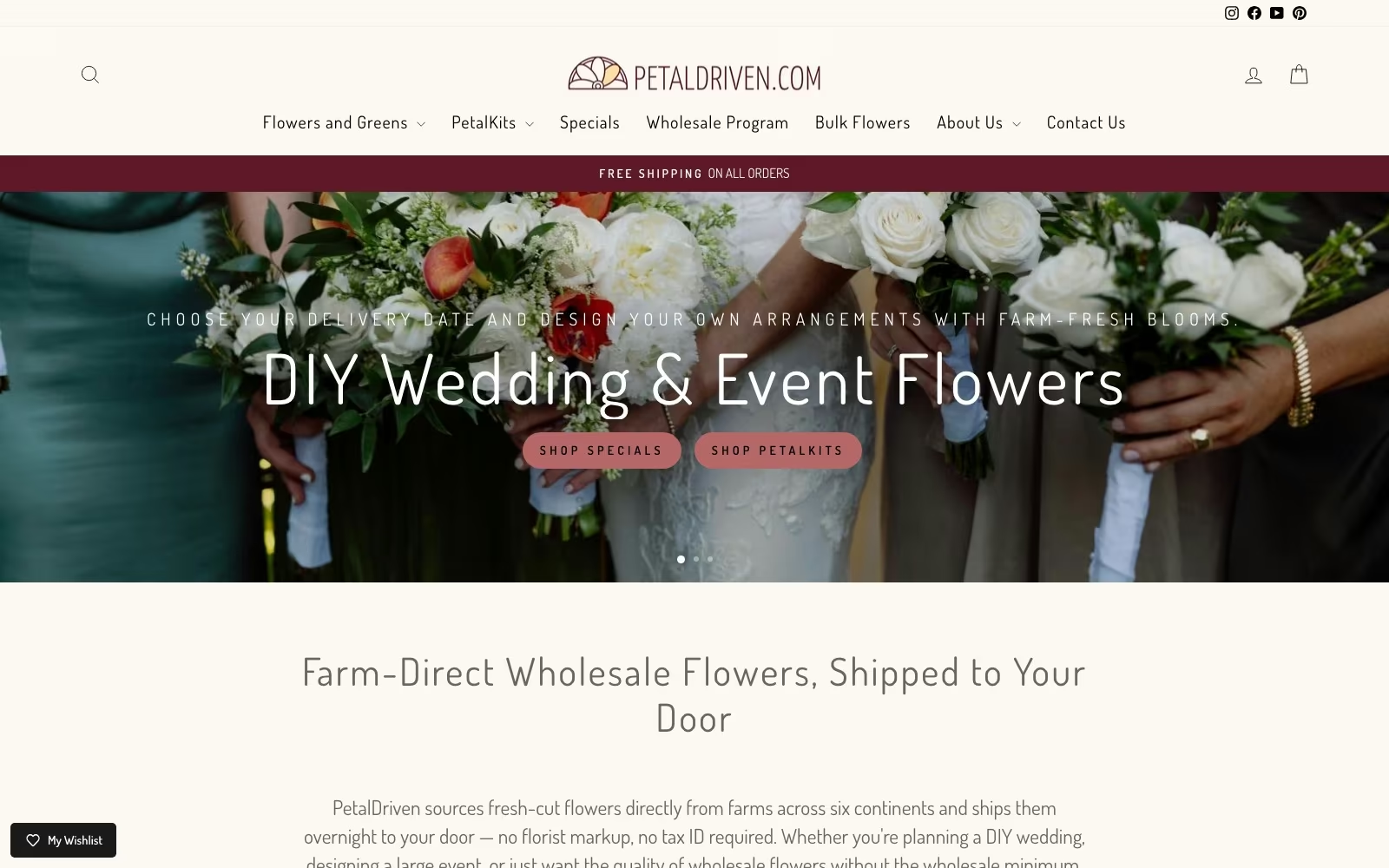



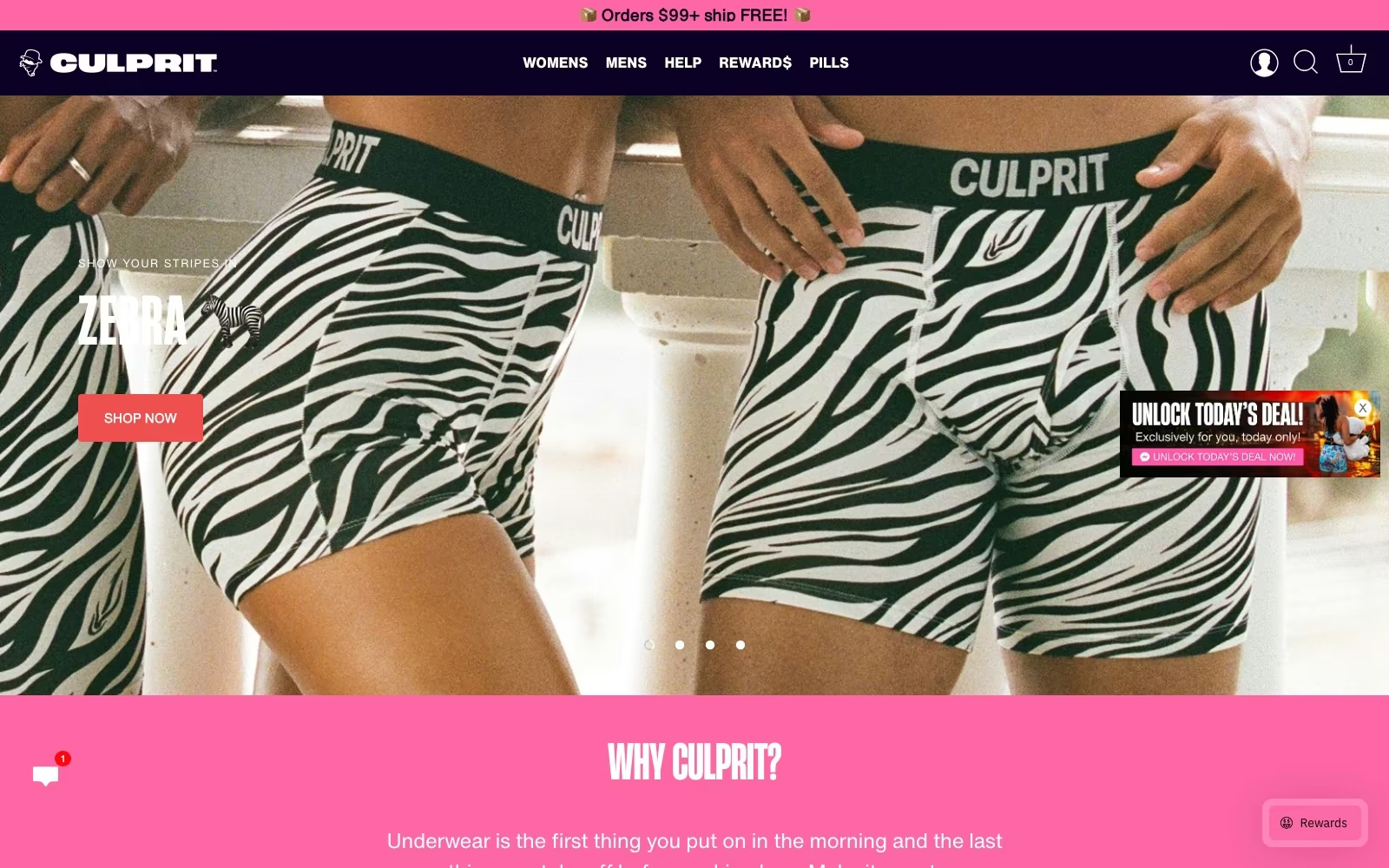


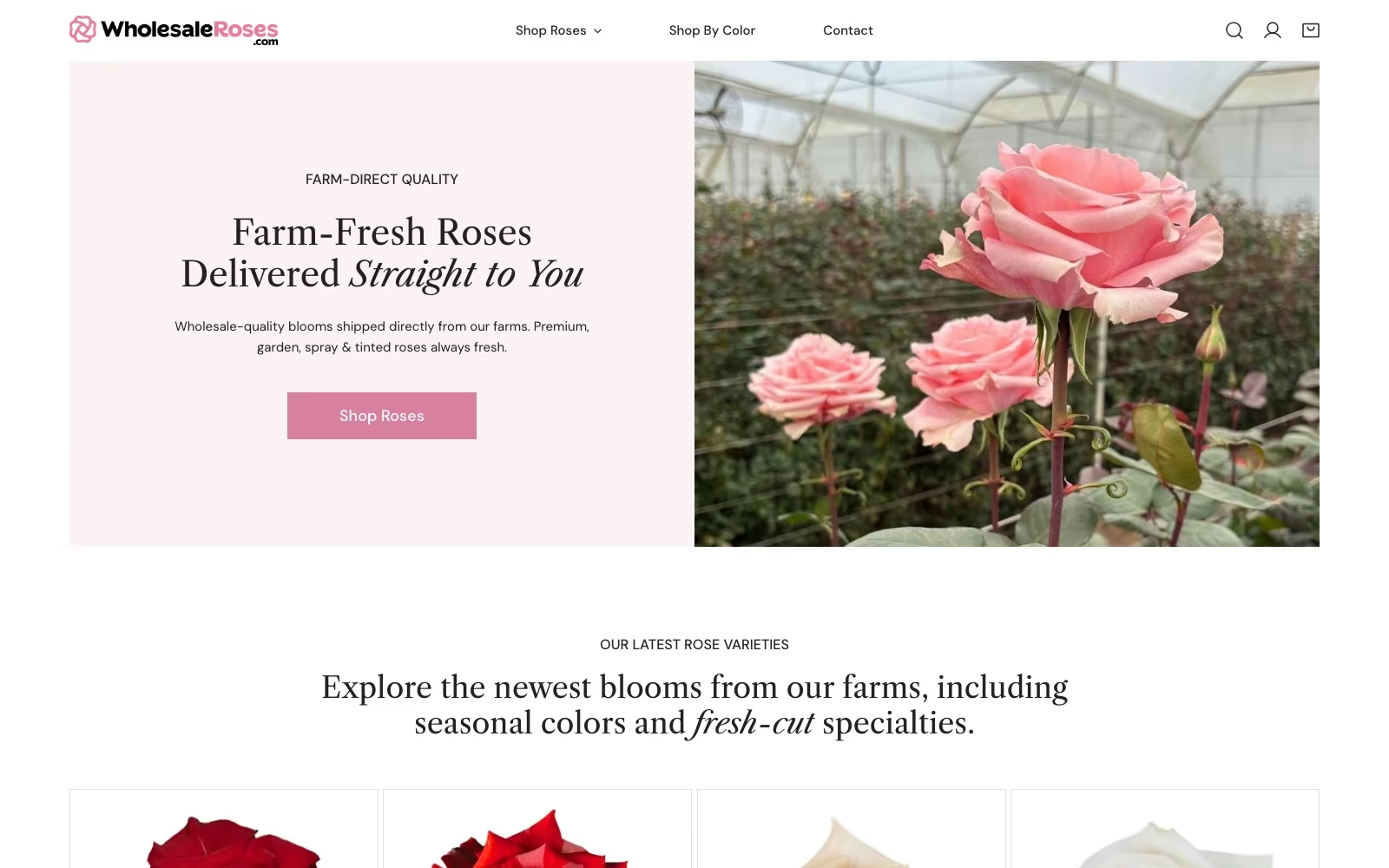

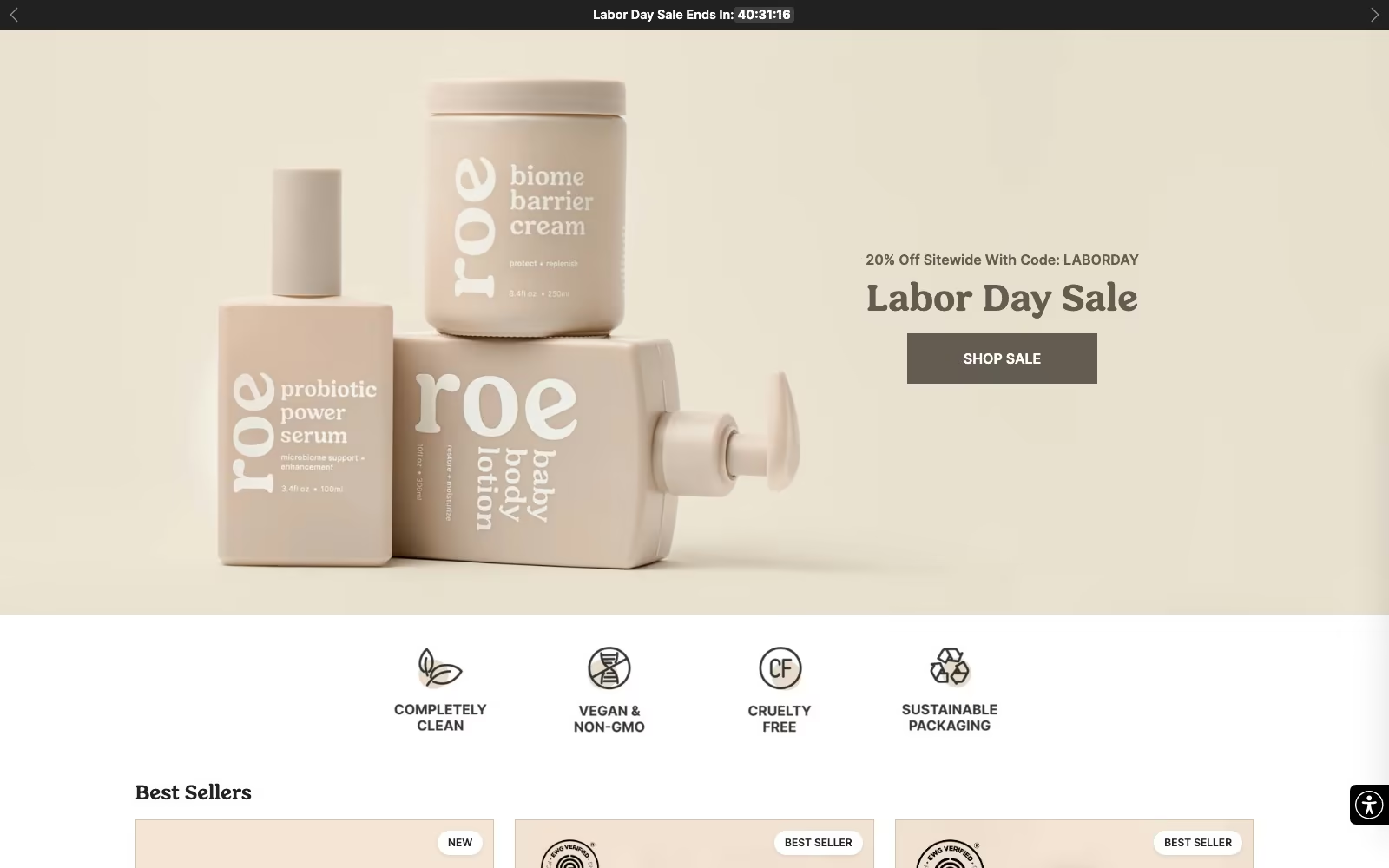























FAQ
What brands ask us first.
What does an ad creative agency actually do?
Three things, in a loop. It works out what to say — researching the language your customers already use and turning it into distinct, testable angles. It produces the advertising assets to say it: video, static, creator content, cut for each platform. And it reads the results closely enough to know which part of an ad to change next. A studio does the middle step beautifully and stops there; a media agency does the last step and briefs the middle vaguely. Performance creative means owning all three, because a great execution of a weak angle and a strong angle in a weak execution fail identically in the auction.
How many ads do we need each month?
Enough to keep learning at your spend level. Motion's 2026 benchmarks put average weekly new-creative volume at about 2.8 ads for advertisers spending under $10K a month, rising to roughly 18.9 above $1M, with top performers shipping two to three times their tier's average. What matters more than the raw count is distinctness: six genuinely different concepts teach you more than thirty colour variants of one. We agree a weekly output that fits your budget and keeps a testing slate and a proven set running at the same time, then adjust it as spend grows.
Will performance creative damage our brand look?
No — and protecting the brand is part of the brief we write. We work inside your guidelines, use your type, palette and logo lock-ups correctly, and keep a consistent visual system across the slate so the ads compound recognition rather than fragmenting it. What performance creative changes is the structure of the message: a clear hook in the first two seconds, one idea per ad, proof close to the claim, an obvious next step. Brands that make that shift usually end up with a sharper identity in market, because the work is tested rather than argued about. Where a piece would sit badly with your positioning, we say so and propose another angle.
Do you handle creator sourcing and usage rights?
Yes, end to end. We define the creator profile from the angle rather than from follower count, run outreach and casting, brief the shoot with shot lists and hook variants, manage product shipping, review the footage, and negotiate paid usage rights with the term you need. Every deliverable arrives with the rights documented so nothing has to be pulled mid-flight. One creator shoot typically becomes several distinct ads once it is cut against different hooks, which is the difference between buying content and building a creative supply.
How do you decide whether an ad worked?
By reading the funnel, not one number. Hook rate tells us whether the opening earned attention; hold rate whether the idea kept it; click-through whether the promise was compelling; and cost per result whether it was the right promise to a buyer. An ad with a brilliant hook and poor hold rate is a hook worth reusing on a better concept. Because each test isolates one variable, we can attribute the outcome to something specific and reuse it. Those readings go into the monthly review, which is also where we retire the angles that have stopped paying.
What is creative fatigue, and how do you handle it?
Fatigue is what happens when the same people see the same ad often enough that response decays: frequency rises, hook rate slides, cost per result drifts up while nothing in the account has changed. Because the signal is visible before the damage, we treat replacement as scheduling. The pipeline runs ahead of spend, so when a concept starts to decay its next generation is already briefed or produced. We also rotate formats and openings rather than only swapping files, since a new hook on a proven idea usually recovers performance faster than an entirely new concept.
Can you work with the footage and assets we already have?
Usually, and it is the fastest place to start. Brand shoots, product photography, event footage, customer videos, webinar recordings and old ads often contain months of usable material that was never cut for performance. We audit the library, identify what maps to your strongest angles, and produce from it while new production is being briefed. That gets a testing slate live within weeks and tells us what to shoot when the camera does come out, which makes the first production round considerably more accurate.
Who owns the creative if we stop working together?
You do, without exception. Master files, project files, platform cuts, captions, the briefs, the tagged library and the documented test results are yours, and creator usage rights are contracted in your name for the agreed term. There are no long-term lock-ins and nothing is held back as leverage. Clients who leave keep a working creative system: the angle bank, the testing framework and a library organised well enough that the next team can pick it up and keep going.
How fast can the first ads be live?
Research and the angle bank take about a week. Statics and edits from existing footage can be live in the same week they are approved; creator and UGC shoots add roughly two to three weeks for casting, shipping and filming. So a typical engagement has a first testing slate running inside two to three weeks, with the production rhythm settling from there. We would rather launch a small, well-formed slate quickly than hold everything for a perfect batch, because the first read shapes everything after it.
How is pricing structured, and what do plans look like?
We price on output and scope rather than on a percentage of your advertising budget, because a fee tied to spend rewards spending more instead of creating better work. A plan states the weekly volume of creatives, the mix of videos, statics and creator content, the number of test reads, and who from our team is on the account. Smaller businesses start with a lean monthly plan; high-volume and enterprise advertisers take a larger slate with a dedicated production team and global asset versioning for multiple markets. Nobody sells you unlimited creation — unlimited usually means slow — and pricing is agreed before the first brief, with free access to the audit that sizes it.
How do we choose between ad creative agencies?
Ask for evidence rather than a reel. The best creative teams can show you a losing ad and explain what it taught them, name the insights that produced their top performers, and describe the models they use to decide what to test next. Ask how many creatives they ship a week at your spend level, who does the work day to day, and whether the assets and rights become your property. Ask how they connect to media buying: creative quality is only visible in the results, so a team with no access to your Meta or Google reporting is guessing. Great agencies are specific about the industries where they have proof, and honest about where the constraint on your marketing is the offer or the website rather than the advertising itself.
Do you also handle the landing page and the offer?
We can, and often the biggest gain is there rather than in the ad. If the ad promises something the page does not repeat within one scroll, the click is wasted no matter how good the creative is. Our web design team builds matched landing pages, and we will tell you plainly when the offer, not the creative, is the constraint. That honesty tends to save budget: a reworked guarantee or a clearer price frame has moved more accounts than another batch of ads would have.

.webp)
.webp)