Pages built to be judged on one number.
one number
We are the landing page design agency for teams whose traffic is fine and whose conversion rate is not. We write the argument first, design around it, build pages that load fast on a phone, and then test them — so the money you already spend on paid search, paid social and organic search lands somewhere that actually closes.






Tell us a little about your brand and we'll be in touch within 24 hours to lock in a time.



THE FOUR PARTS
Message, structure, speed, then testing.
then testing
A landing page is an argument with a layout wrapped around it. Get the argument wrong and no amount of design rescues the page; get it right and remarkably plain pages convert. So we work in that order, and we never start in a design tool.
Message & offer
Structure & design
Build & speed
Testing & iteration
Match the promise that got them here.
The most common reason a page underperforms is a mismatch: the ad promised a price, the page opens with a mission statement. We start from the exact query or ad that brings the visitor, and the first screen answers three questions — what this is, who it is for, what happens next — before anyone has to scroll.
Context matters for what counts as good. Unbounce's benchmark data, drawn from 57 million conversions across 41,000 landing pages, puts the median conversion rate at 6.6%, but that median hides enormous variation by offer: the same research shows SaaS sitting near 3.8% while low-friction entertainment offers run above 40%. A demo request and a newsletter signup are not the same product.
So we set the target from your own baseline and economics, not from a blog post average, and we change the offer when the offer is the problem.
- Page message matched to the ad or query that delivers the click
- What it is, who it is for and what happens next above the fold
- Objections answered in the order buyers actually raise them
- Targets set from your baseline and unit economics
6.6%
median landing page conversion rate across industries
3.8%
median for SaaS pages in the same data
One page, one job, one obvious action.
Landing pages fail by addition. A navigation bar invites people to wander, three competing calls to action split intent, and a form asking for a phone number before anyone has decided anything quietly halves completions. We strip the page back to a single job and then design around the sequence of doubts a real buyer has.
Proof is placed where the doubt occurs rather than in a testimonials block at the bottom: the guarantee next to the price, the review beside the claim it supports, the credentials next to the risky commitment. Form fields are cut to what sales genuinely needs on first contact, with the rest asked after the lead exists.
Mobile is the design target, not an adaptation. Most of these pages are read one-handed on a phone with a thumb hovering over a button, and pages designed on a wide monitor rarely survive that.
- One offer and one primary action per page
- Proof placed next to the claim it supports
- Forms cut to what sales actually needs first
- Designed mobile-first, reviewed on real devices
1
primary action per page, always
Fast pages convert; slow ones leak.
Speed is not a technical nicety, it is a conversion input. Google and Deloitte's Milliseconds Make Millions study found that a 0.1 second improvement in mobile site speed lifted retail conversion rates by 8.4% and lead-generation form completions by 8.1%. Those are the kinds of gains teams normally chase with a redesign.
So we build lean: images sized and compressed properly, fonts subsetted, third-party scripts audited and mostly removed, no page builder bloat left in the output. Tracking is implemented deliberately rather than by dropping in every tag anyone has ever asked for, because tag sprawl is usually the single biggest cause of a slow page.
Pages are built where your team can edit them — Webflow, WordPress, or your existing stack — and handed over with the components documented, so the next campaign does not need us.
- Core Web Vitals treated as a launch requirement
- Images, fonts and scripts audited before launch
- Analytics and conversion tracking verified end to end
- Built in your stack, documented, editable by your team
8.4%
retail conversion lift from a 0.1s mobile speed gain
8.1%
lead-form completion lift from the same 0.1s
Launch is the start of the work.
The first version of a page is a hypothesis. We plan the testing sequence before launch: the headline and offer framing first, because that is where the movement usually is, then form length, proof placement and layout, one variable at a time so a result means something.
We are honest about sample sizes. Below a few hundred conversions a month, a formal A/B test will not reach significance in any useful timeframe, and pretending otherwise is how teams ship changes based on noise. At lower volumes we use sequential redesigns judged over longer windows, plus qualitative evidence — session recordings, form analytics, and what the sales team hears on calls.
Every test is written up whatever the outcome, because a losing test that explains why an audience did not respond is worth more than a winning one nobody can account for.
- Test sequence planned before launch, one variable at a time
- Sample size checked honestly before a test is called
- Session recordings and form analytics read alongside the numbers
- Every test documented, including the ones that lost
Written
every test documented, win or lose
median landing page conversion rate (Unbounce)
median for SaaS, 4.2% for ecommerce (Unbounce)
Every page designed and reviewed on a phone first
The pages, accounts and documentation
We made the difference for those brands

Consumer tech and platforms

Healthcare & regulated services

Consumer tech and platforms

Beauty, personal care & wellness

Apparel and lifestyle

Retail & commerce

Travel & mobility

Creative, content, arts & culture

Travel & mobility

B2B software, fintech, insurance

Healthcare & regulated services

Retail & commerce

Food & beverage

Consumer tech and platforms

Consumer tech and platforms

Healthcare & regulated services

Consumer tech and platforms

Beauty, personal care & wellness

B2B software, fintech, insurance

Beauty, personal care & wellness
B2B software, fintech, insurance

Retail & commerce

Apparel and lifestyle

Creative, content, arts & culture

Healthcare & regulated services

Home essentials, appliances, kitchen & pet

B2B software, fintech, insurance

Apparel and lifestyle

Creative, content, arts & culture

Retail & commerce
01 — The challenge
The traffic arrived. The form stayed empty.
Spend is up, clicks are up, the campaign dashboard looks healthy, and the leads have not moved. Somewhere between the ad and the form, most of the audience quietly left — and the page they left is the one part of the funnel nobody has touched in two years.
“We keep buying more traffic to fix a page problem.”
The economics are unforgiving. With a median landing page conversion rate of 6.6%, more than nine in ten visitors leave without acting, so a page moving from 2% to 4% is worth the same as doubling the media budget — at a fraction of the cost. Usually the causes are mundane and fixable: the page does not repeat the promise the ad made, the form asks for too much too early, the proof sits below the decision, and it takes four seconds to load on a phone.
02 — Our approach
Write the argument. Cut the friction. Then test it.
We start from the query or ad that delivers the visitor and write the page as an argument: what this is, who it is for, what happens next, then the objections in the order buyers raise them, with proof placed beside the claim it supports. Design follows the copy, mobile first, with one offer and one primary action per page and forms cut to what sales genuinely needs on first contact. The build is lean — compressed images, audited scripts, Core Web Vitals treated as a launch requirement — because speed is a conversion input, not a technical detail. Tracking is verified end to end before launch. Then we test in a planned sequence, one variable at a time, calling results only when the sample supports it, and writing up what we learned either way. Pages are built in your stack and handed over documented.
03 — What we did
Four phases, from teardown to a page that earns.
Teardown, copy, build and testing run in sequence, with a weekly working session and a written monthly review of what moved and what we are changing next.
Week 1 / Teardown
Find where the audience leaves
Existing pages reviewed against the ads and queries feeding them, with analytics, form drop-off and session recordings read together.

Weeks 2-3 / Argument
Write the page before designing it
Offer, headline, objection order and proof placement agreed on paper, matched to the promise that brought the visitor.

Weeks 3-5 / Build
Design mobile first, build it lean
One action per page, forms trimmed, images and scripts audited, Core Web Vitals and conversion tracking verified before launch.

Ongoing / Testing
Test the headline, then the friction
A planned sequence of tests, one variable at a time, called only when the sample supports it and documented either way.

WHAT YOU GET
Deliverables built in your own stack.
your own stack
Everything below is built in accounts and tools you own, documented as we go, and editable by your team when the engagement ends.

Conversion teardown
Your current pages reviewed against the ads and queries feeding them, with drop-off, form analytics and recordings read together.

Page copy and offer
Headline, offer framing, objection order and proof placement written before any design work starts.

Mobile-first design
A single-purpose layout designed for a thumb on a phone, with proof placed beside the claims that need it.

Fast, editable build
Lean pages in Webflow, WordPress or your existing stack, with Core Web Vitals treated as a launch requirement.

Tracking and analytics
Conversion tracking, form events and campaign parameters implemented and verified end to end before launch.

Testing programme
A planned sequence of tests with honest sample-size calls and a written record of every result, win or lose.
HOW WE WORK
Operating standards, not promises.
Operating standards



















Built on trust. Proven by results.
We partner with SMBs and Fortune 500 companies to deliver more than reach — we bring clarity, execution, and measurable outcomes. Every successful partnership starts with a strong culture fit and a shared drive to grow.






CASE STUDIES
Case studies
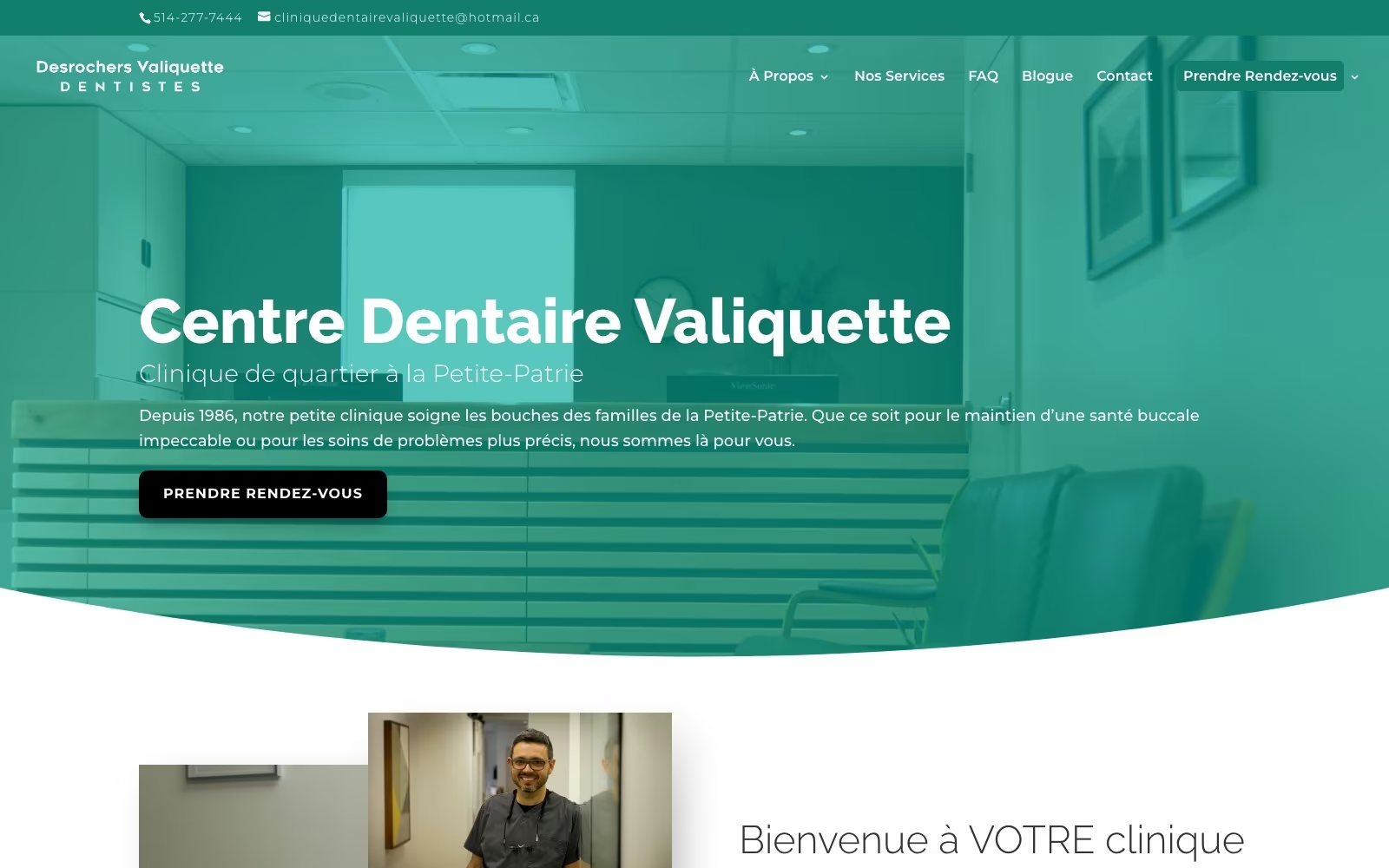
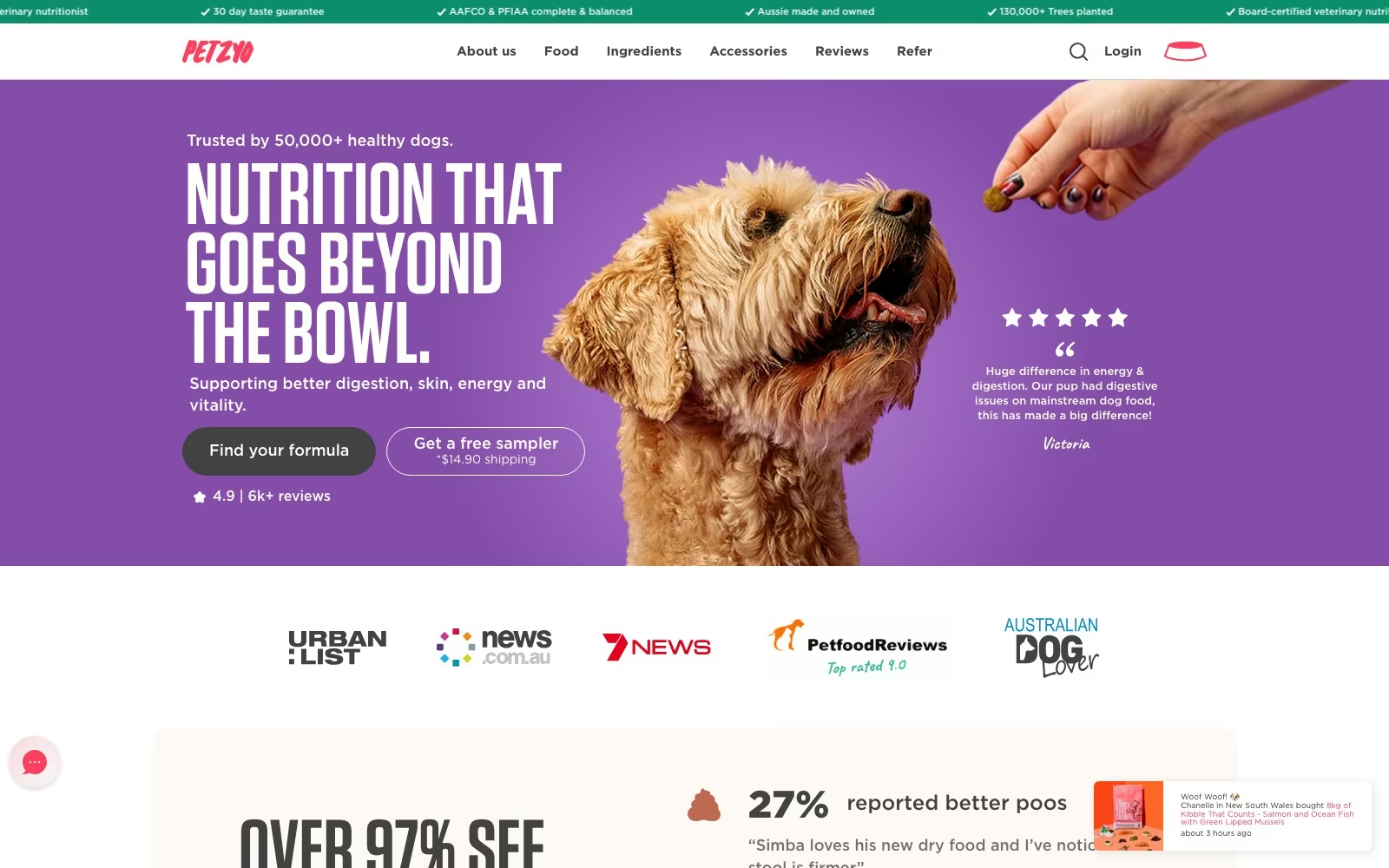
Website Portfolio
Video Ads
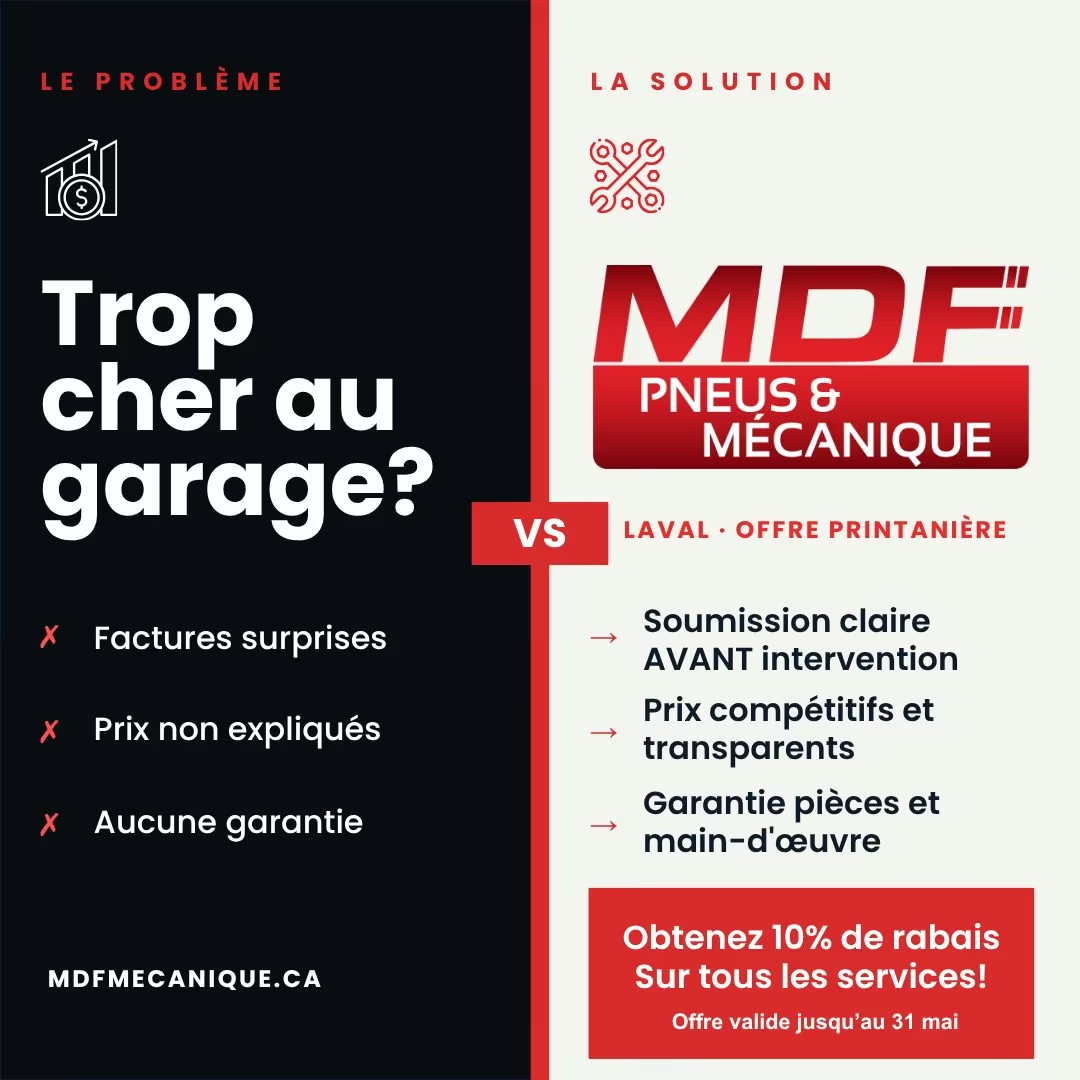
Static Ads






















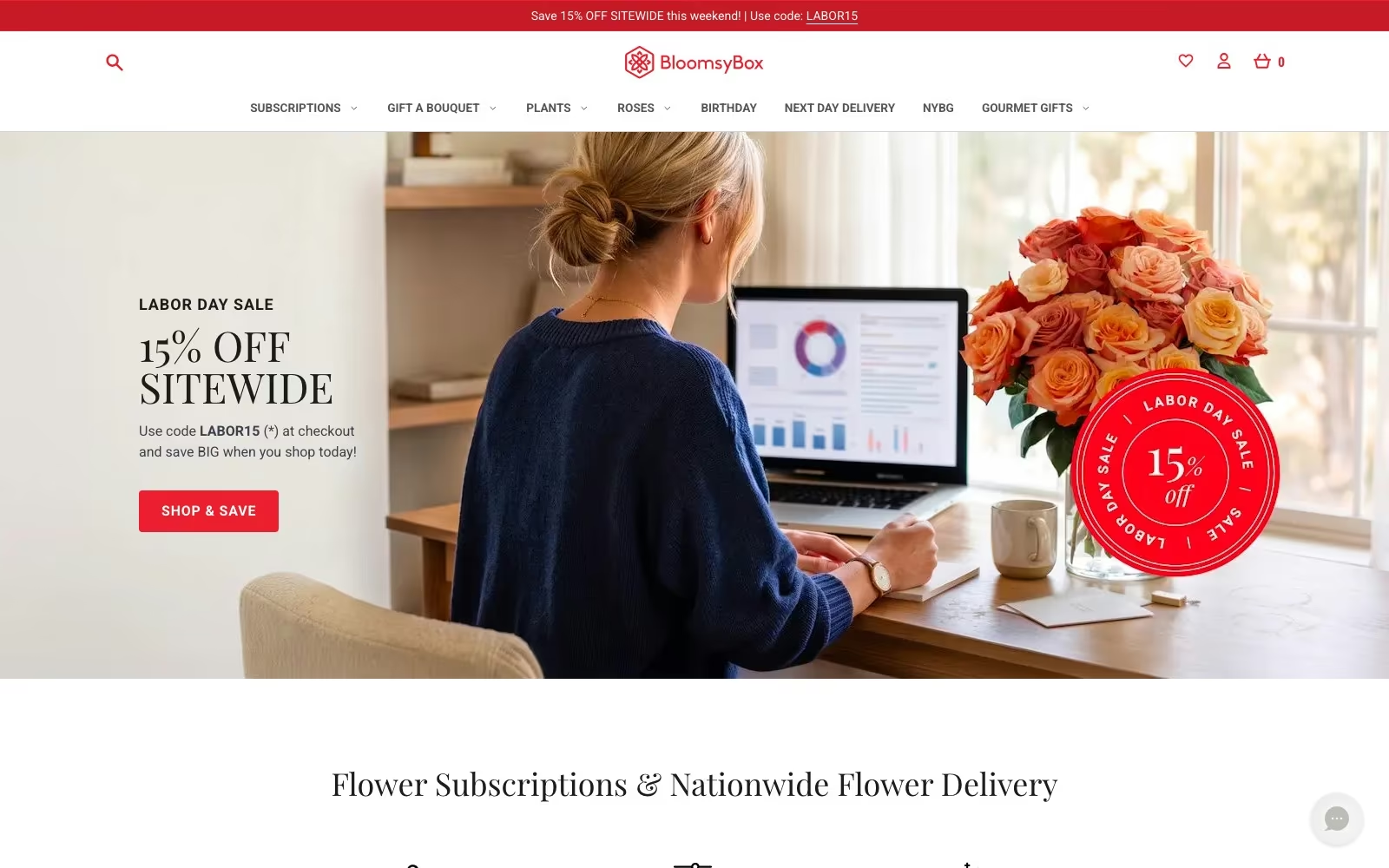

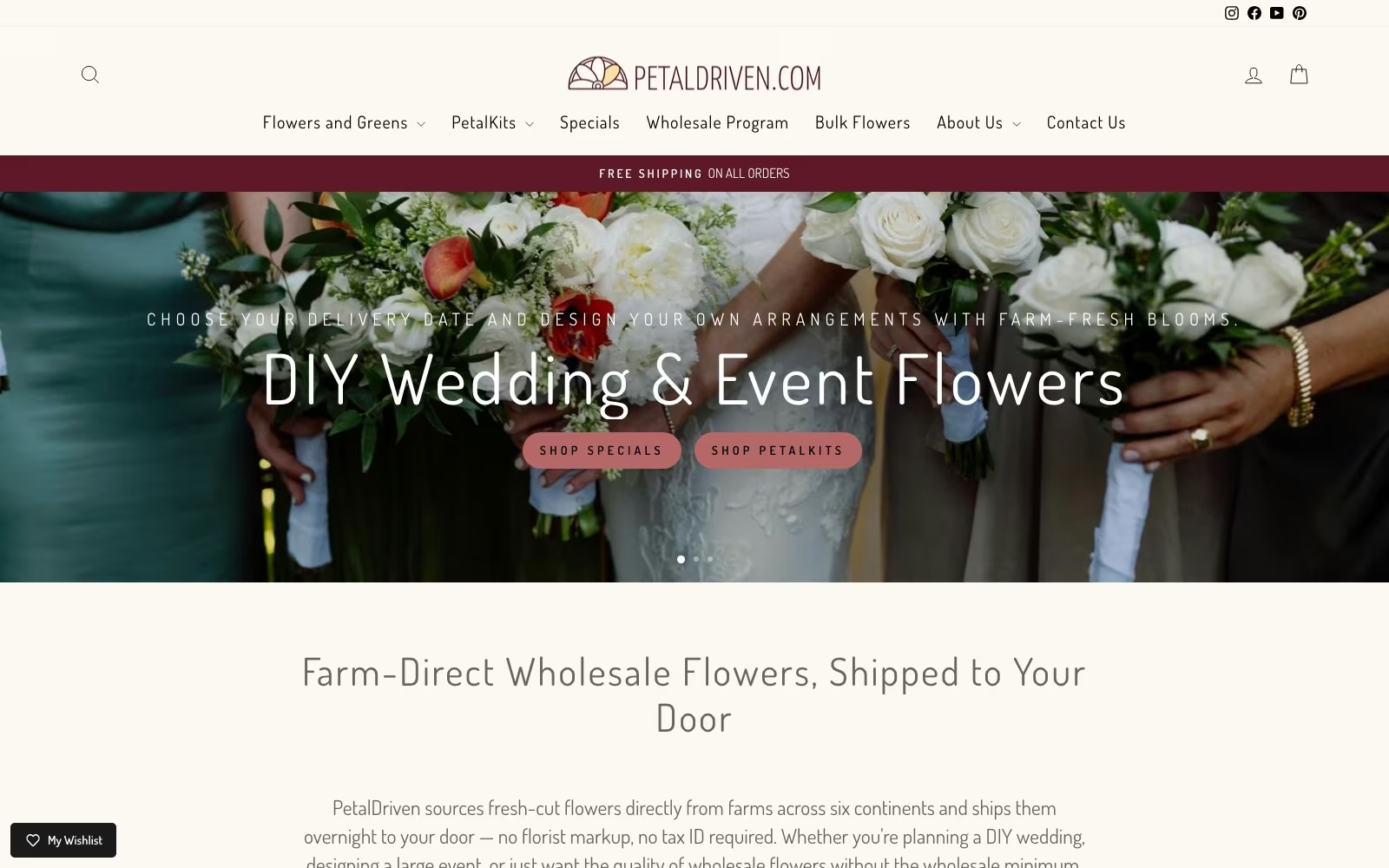



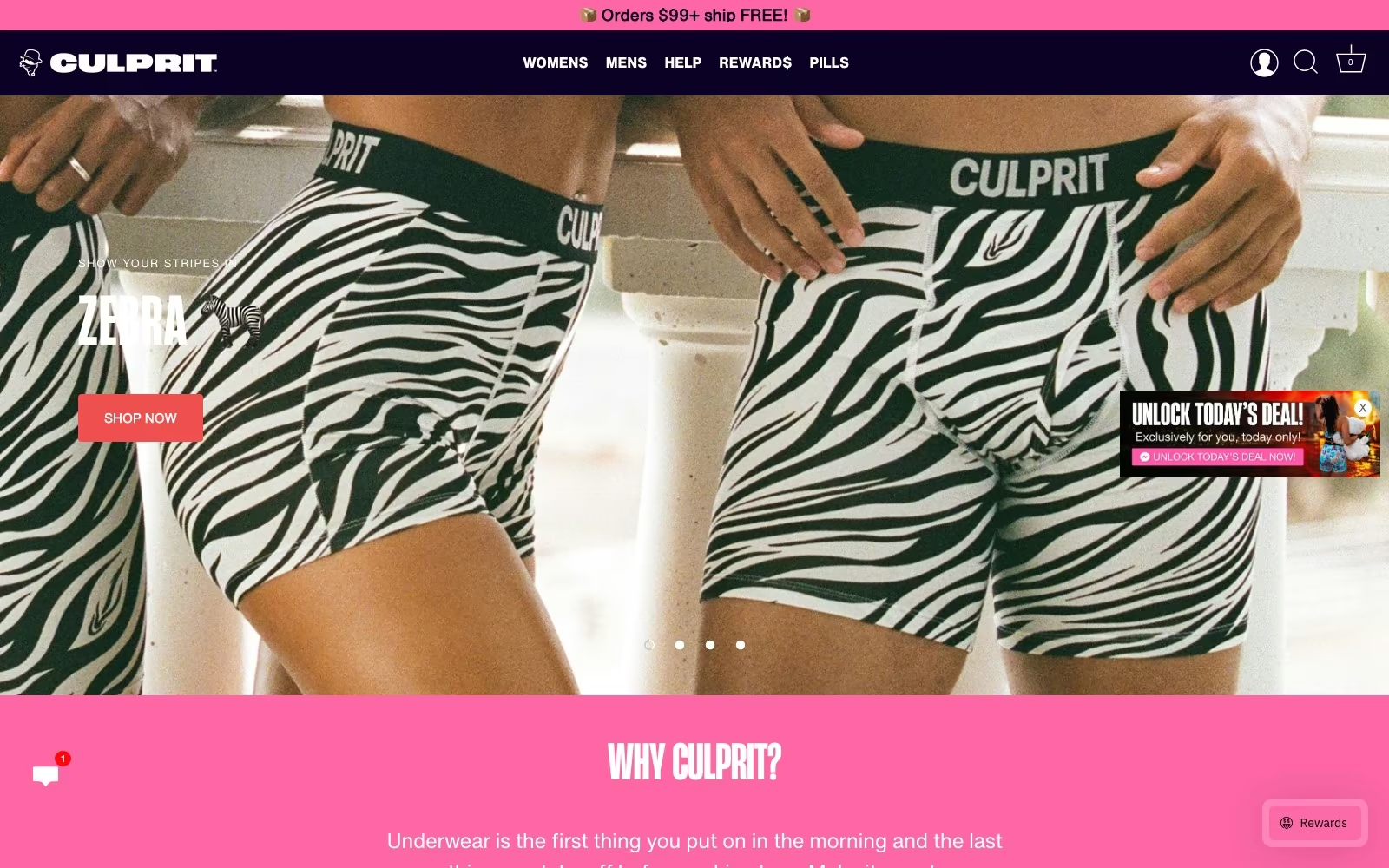





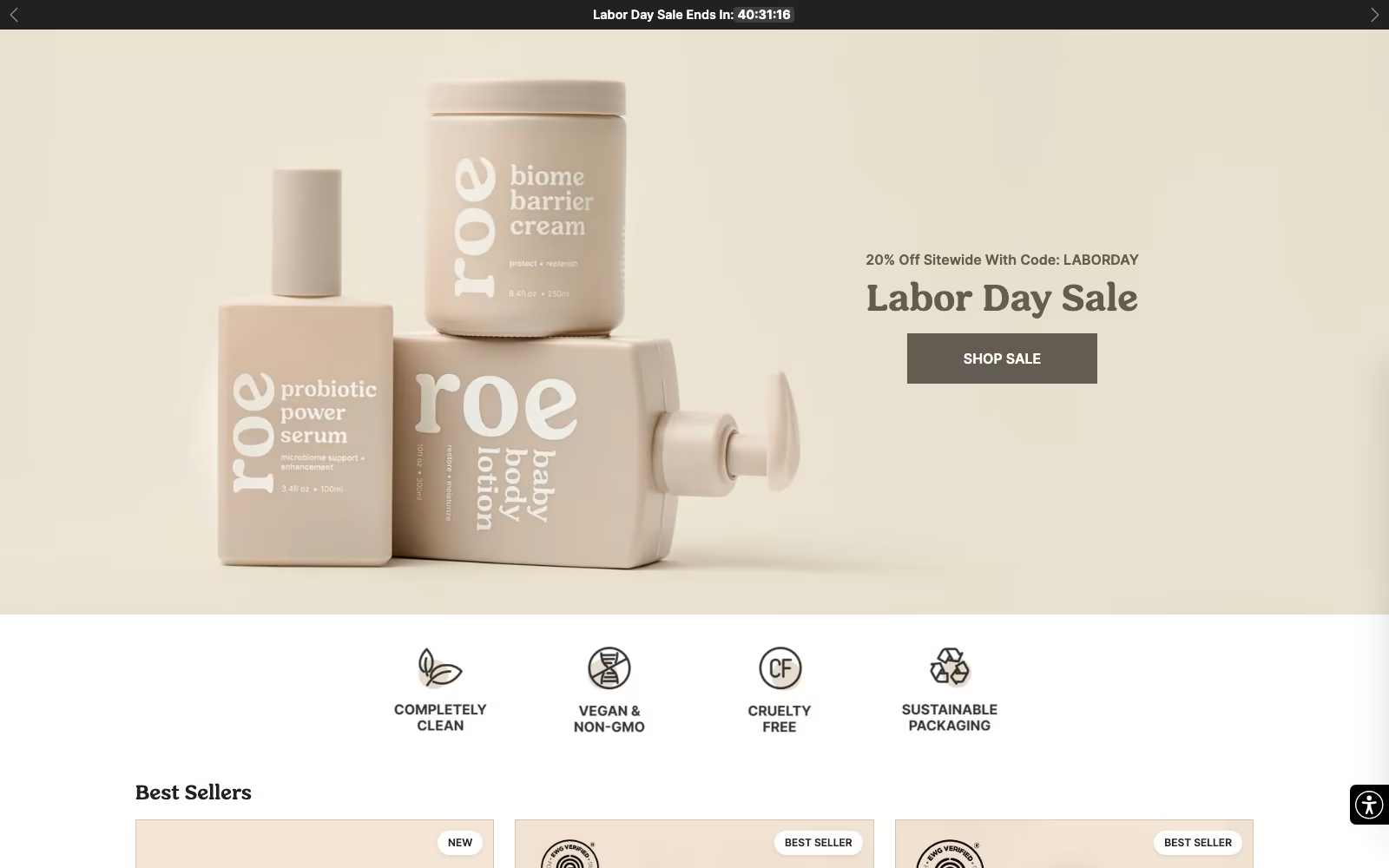




























FAQ
What teams ask us first.
What is a good landing page conversion rate?
The most-quoted figure is the 6.6% median across 41,000 landing pages in Unbounce's benchmark data, but treating that as a target is a mistake. The same dataset shows SaaS around 3.8% and low-commitment entertainment offers above 40%, because the ask is completely different. What matters is your own baseline and unit economics: if a lead is worth $900, a page moving from 2% to 3% changes the business, regardless of where that sits against an industry median. We set the target from your numbers and report progress against it.
Should we fix the page or buy more traffic?
Fix the page first, in almost every case. Traffic is a recurring cost and page performance is a one-off investment that improves every channel at once — paid, organic, email and referral all land on the same page. Doubling a conversion rate has the same effect on volume as doubling spend, without doubling the invoice. The exception is when volume is so low that no test can ever be read; then getting traffic up enough to measure comes first, and we will say so rather than sell you a testing programme that cannot produce an answer.
Do we need a separate page for each campaign?
Usually yes for paid campaigns, because message match is the single biggest lever available: a page that repeats the exact promise of the ad converts materially better than a generic homepage. That does not mean hand-building fifty pages. We build a component system so campaign variants can be produced in an hour from proven blocks, with only the headline, proof and offer changing. Your team can then create new pages without us, which is the point of handing over documented components.
How much does page speed really matter?
More than most teams assume. Google and Deloitte's research found a 0.1 second improvement in mobile site speed lifted retail conversion rates by 8.4% and lead-form completions by 8.1% — from a change most visitors would never consciously notice. On paid traffic it compounds, because slow pages also waste the click you just paid for. In practice the wins are unglamorous: oversized images, fonts loading late, and a stack of third-party scripts nobody has audited since they were added.
How long should we run an A/B test?
Until the sample supports a decision, which is a function of your traffic and conversion volume rather than a fixed number of days. As a rule of thumb you want a couple of hundred conversions per variant and at least two full business cycles, so weekday and weekend behaviour are both represented. Below a few hundred conversions a month, formal testing will not resolve in a useful timeframe; we say so and switch to sequential redesigns judged over longer windows, backed by recordings and form analytics. Calling a test early is how teams ship noise.
Will you work with our brand guidelines?
Yes, and we prefer it — consistency is worth real money and rebuilding an identity for one campaign rarely is. Brand systems set typography, colour and tone; conversion work decides sequence, emphasis and friction, and the two rarely conflict. Where a guideline genuinely gets in the way of a decision — a hero image that pushes the offer below the fold, say — we will show the data and propose an exception for that page rather than quietly break the rules.
What do you need from us to start?
Less than you would expect: access to analytics and the ad accounts feeding the pages, whoever owns the offer for an hour, and someone in sales who hears the objections first-hand. The sales conversation is consistently the most valuable input we get, because the reasons people hesitate on a call are the same reasons they abandon a form. Beyond that we need edit access to the site or a staging environment, and an hour a week to review what the tests are telling us.
Can you improve pages we already have?
Often that is the faster route to a result. Existing pages come with traffic and history, so changes can be measured immediately rather than starting from zero. We tear down what is there, fix the highest-impact problems first — message match, form length, proof placement, speed — and only rebuild when the structure genuinely cannot carry the argument. A rebuild is a bigger project and should be justified by the evidence, not by a preference for starting fresh.
How do you handle tracking and privacy?
Carefully, because a page that converts but does not report is invisible to the media buying that feeds it. We implement conversion events, form tracking and campaign parameters deliberately, verify them end to end before launch, and reconcile against your CRM so platform numbers and real leads can be compared. Consent tooling is implemented properly rather than bolted on, and where the browser is unreliable we move critical conversions server-side with our analytics team.
Do you also run the campaigns pointing at these pages?
We can, and it shortens the loop considerably: the team reading the conversion data is the team adjusting the ads and the offer. Our paid search and paid social teams work from the same tracking and definitions as the build team. It is equally fine to buy pages alone while another agency runs your media — we will share the test plan and the tracking spec with them so everyone is optimising toward the same number.

.webp)
.webp)