Built properly, so it stays fast.
stays fast
We are the custom web development agency for companies that have outgrown a theme and a pile of plugins. We build the site or application your business actually runs on — fast, accessible, integrated with your CRM and measurable from day one — and hand over clean code your own developers can read. Design lives with our web design team, conversion work with CRO, and the data plumbing with CRM integration.






Tell us a little about your brand and we'll be in touch within 24 hours to lock in a time.



HOW WE BUILD
Four disciplines behind every build.
four disciplines
Architecture, front-end engineering, integrations and the handover. Most custom projects go wrong in the fourth: the thing works on launch day and nobody can safely change it in month six. We build for the second year of the site's life, not the launch photo.
Architecture & platform choice
Front-end engineering & speed
Integrations & data
Testing, launch & handover
The boring decision that decides everything.
The first question is not which framework, it is what the site has to do. A content-heavy marketing site with a small team behind it wants a CMS editors can actually use. A product configurator, a portal or a booking engine wants a real application with tests. A store with thousands of variants wants commerce infrastructure and a feed strategy. Picking the heaviest option available is how projects become unmaintainable.
We map the content model, the integrations, the editor workflow and the traffic profile, then choose deliberately — a headless build where the content is genuinely shared across surfaces, a conventional CMS where it is not, a framework your team already knows over one we prefer. Hosting, caching, image handling and build pipeline are part of that decision rather than an afterthought, because they determine what the site feels like under real load. The reference point for what real load looks like is public: the HTTP Archive Web Almanac measures Core Web Vitals across millions of pages every year, and the gap between lab numbers and field numbers is where most sites lose.
Everything is written down before the build starts, in plain language, including what we chose not to do.
- Content model, editor workflow and integrations mapped first
- Platform chosen for your team, not for our comfort
- Hosting, caching and build pipeline decided up front
- Decisions documented, including the rejected options
Year 2
is what we design for, not launch day
Performance is engineering, not a plugin.
Speed is the one technical property with a direct, repeatedly measured commercial effect. Deloitte's mobile study found a 0.1 second improvement in load time lifting retail conversion rate 8.4% and average order value 9.2%, travel conversion 10.1%, and lead-generation form submissions 21.6%. Google's own collection of Core Web Vitals business-impact case studies shows the same direction of travel, and T-Mobile's programme reported a 20% reduction in user-reported site issues and a 60% improvement in visit-to-order rate.
Getting there is unremarkable work done consistently: server-rendered or statically generated HTML where it helps, images sized and served in modern formats, fonts loaded without blocking, third-party scripts audited and deferred, layout stability designed in rather than patched, and a performance budget enforced in the build so a later feature cannot quietly undo it. Accessibility is built the same way — semantic markup, keyboard paths and contrast checked as we go, which our accessibility team audits independently.
Third-party tags are usually the biggest offender, and the fix is governance rather than heroics.
- Performance budget enforced in the build pipeline
- Images, fonts and scripts handled properly, not patched
- Layout stability and keyboard access designed in
- Third-party tags audited and deferred
8.4%
retail conversion lift from a 0.1s faster mobile load
21.6%
more form submissions on lead-generation sites
A site that talks to the rest of the business.
Custom builds earn their premium in the connections. Forms and bookings writing structured records into the CRM with campaign data attached. Inventory, pricing or availability pulled from the system of record instead of retyped. Payment, quoting and scheduling flows that behave when a call fails. Customer portals that read real account data. Search that indexes what people actually look for.
We treat every integration as production software: typed contracts, retries and queues where a third party can be slow, error alerting that reaches a human, and a documented field map. Measurement is built in at the same time — server-side events where the browser is unreliable, consent handled properly, and conversion data flowing back to the ad platforms through our conversion tracking setup, so the site is measurable the day it launches rather than three months later.
Nothing is stored in a hidden field or a spreadsheet somebody maintains by hand.
- Forms, bookings and payments writing structured records
- Retries, queues and alerting around every third-party call
- Server-side measurement and consent built in at launch
- Field maps and contracts documented for handover
Day one
the site is measurable, not months after launch
81%
of B2B SaaS firms are building AI agents that use integrations (Paragon)
Code your own developers can pick up.
A launch is a migration, and migrations are where traffic gets lost. We map every existing URL, plan redirects deliberately, preserve the markup and internal linking that earned your rankings, stage the whole thing behind authentication, and run content, form, payment and analytics checks before anyone flips DNS. Our SEO team signs off the technical side.
Then the part clients tell us they have rarely had: a handover that works. Readable code in your repository, conventional patterns over clever ones, automated tests on the paths that matter, environment and deployment documentation, editor training recorded, and a written list of the decisions behind the architecture. We would rather you could replace us than need us, because dependency is a poor substitute for quality.
Post-launch we watch performance, errors and conversion rate for a period agreed in advance, then support at whatever level you want.
- URL map, redirects and rankings protected before launch
- Staging, content, payment and analytics checks pre-DNS
- Readable code, tests and deployment docs in your repository
- Editor training recorded and architecture decisions written down
Yours
code, repository, hosting and documentation from day one
web development services market in 2026 (Mordor)
of that spend is web applications (Mordor)
A performance budget enforced in the build pipeline
Code, repository, hosting and documentation
We made the difference for those brands

B2B software, fintech, insurance

Beauty, personal care & wellness

Home essentials, appliances, kitchen & pet

Beauty, personal care & wellness

Travel & mobility

B2B software, fintech, insurance

Creative, content, arts & culture

B2B software, fintech, insurance

Consumer tech and platforms

Home essentials, appliances, kitchen & pet

Healthcare & regulated services

B2B software, fintech, insurance

Creative, content, arts & culture

Healthcare & regulated services

Home essentials, appliances, kitchen & pet

Creative, content, arts & culture

Consumer tech and platforms

Apparel and lifestyle

Healthcare & regulated services

B2B software, fintech, insurance

Retail & commerce

Beauty, personal care & wellness

Apparel and lifestyle

Home essentials, appliances, kitchen & pet

Apparel and lifestyle

Beauty, personal care & wellness

Retail & commerce

Beauty, personal care & wellness

Food & beverage

Creative, content, arts & culture
01 — The challenge
The site works, until someone needs to change it.
It started as a theme with a page builder. Then a plugin for forms, another for bookings, one more for the thing the CRM needed. Now a small copy change takes a week, mobile load time is embarrassing, and nobody wants to touch the checkout in case it breaks.
“Every change is a negotiation with the site.”
The cost is measurable, which is what makes it worth fixing rather than tolerating: Deloitte found a tenth of a second of mobile load time worth 8.4% in retail conversion rate and 21.6% in lead-generation form submissions. A custom build is not about bespoke for its own sake. It is about owning a codebase where the fast path is the default, changes are safe, and your team is not paying interest on decisions made three years ago.
02 — Our approach
Scope honestly, build conventionally, hand it over properly.
We start with what the site has to do and who has to maintain it, then choose the platform deliberately — often something more ordinary than clients expect, because the best architecture is the one your team can still change next year. The content model, integrations and editor workflow get mapped before any code, and the decisions are written down including the options we rejected. Then we build in short cycles against a working staging site, with a performance budget enforced in the pipeline, accessibility checked as we go, and integrations treated as production software with retries and alerting. Launch is run as a migration: URL map, redirects, rankings protected, everything checked before DNS. Handover includes readable code in your repository, tests, deployment docs and recorded training.
03 — What we did
Four phases, one maintainable codebase.
Discovery, build, hardening and launch, with a weekly demo of working software rather than a status document.
Weeks 1-2 / Discovery
Map the model before writing code
Content model, user flows, integrations and editor workflow mapped, platform chosen deliberately, and the architecture decisions written down in plain language.

Weeks 3-8 / Build
Short cycles against real staging
Front end and integrations built in weekly increments on a live staging site, with tests on the paths that matter and conventional patterns over clever ones.

Weeks 8-10 / Hardening
Speed, accessibility and error handling
Performance budget enforced, images fonts and third-party tags handled, keyboard and contrast paths checked, retries and alerting added around every external call.

Launch / Handover
Migrate carefully, then hand over the keys
URL map and redirects planned, rankings protected, full pre-DNS checks, then readable code, deployment docs and recorded editor training delivered to your team.

WHAT YOU GET
Deliverables your developers will thank you for.
your developers
Everything ships into your own repository, hosting and accounts, documented as we build, and yours to keep.

Technical scope and architecture
Content model, integrations and editor workflow mapped, with the platform choice and the rejected options written down in plain language.

Custom site or application build
Front end and back end built in short cycles on live staging, using conventional patterns your own team can read and extend.

Performance and accessibility work
Performance budget enforced in the pipeline, images fonts and tags handled, keyboard paths and contrast checked as we go.

Integrations and measurement
CRM, payment, booking and inventory connections with retries and alerting, plus server-side measurement working at launch.

Migration and launch plan
URL map, deliberate redirects, ranking protection and a full pre-DNS checklist covering content, forms, payments and analytics.

Handover, tests and training
Code in your repository with tests, environment and deployment documentation, and recorded training for whoever edits the site.
HOW WE WORK
Operating standards, not promises.
Operating standards


















Built on trust. Proven by results.
We partner with SMBs and Fortune 500 companies to deliver more than reach — we bring clarity, execution, and measurable outcomes. Every successful partnership starts with a strong culture fit and a shared drive to grow.






CASE STUDIES
Case studies
Website Portfolio
Video Ads
Static Ads






































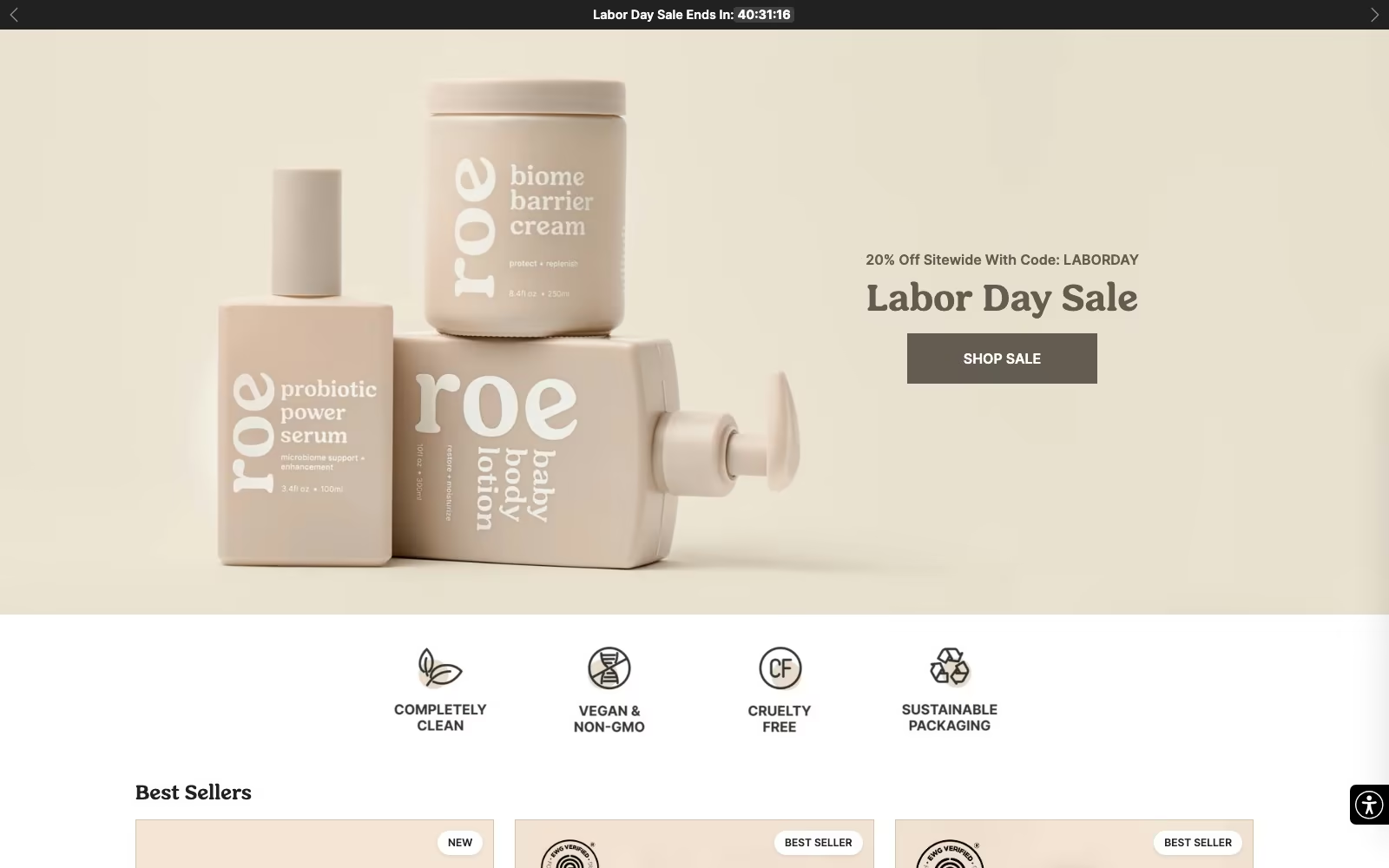

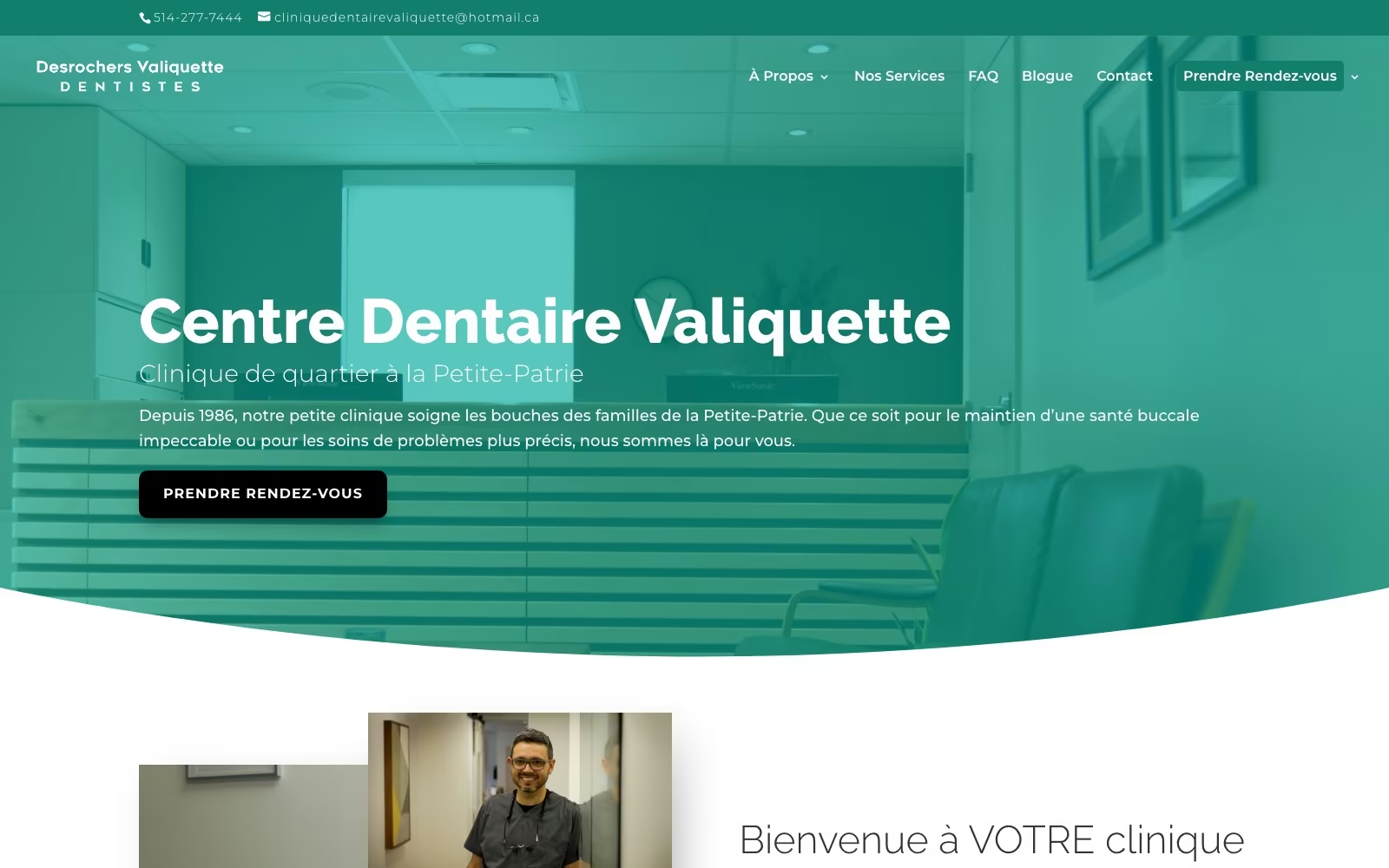

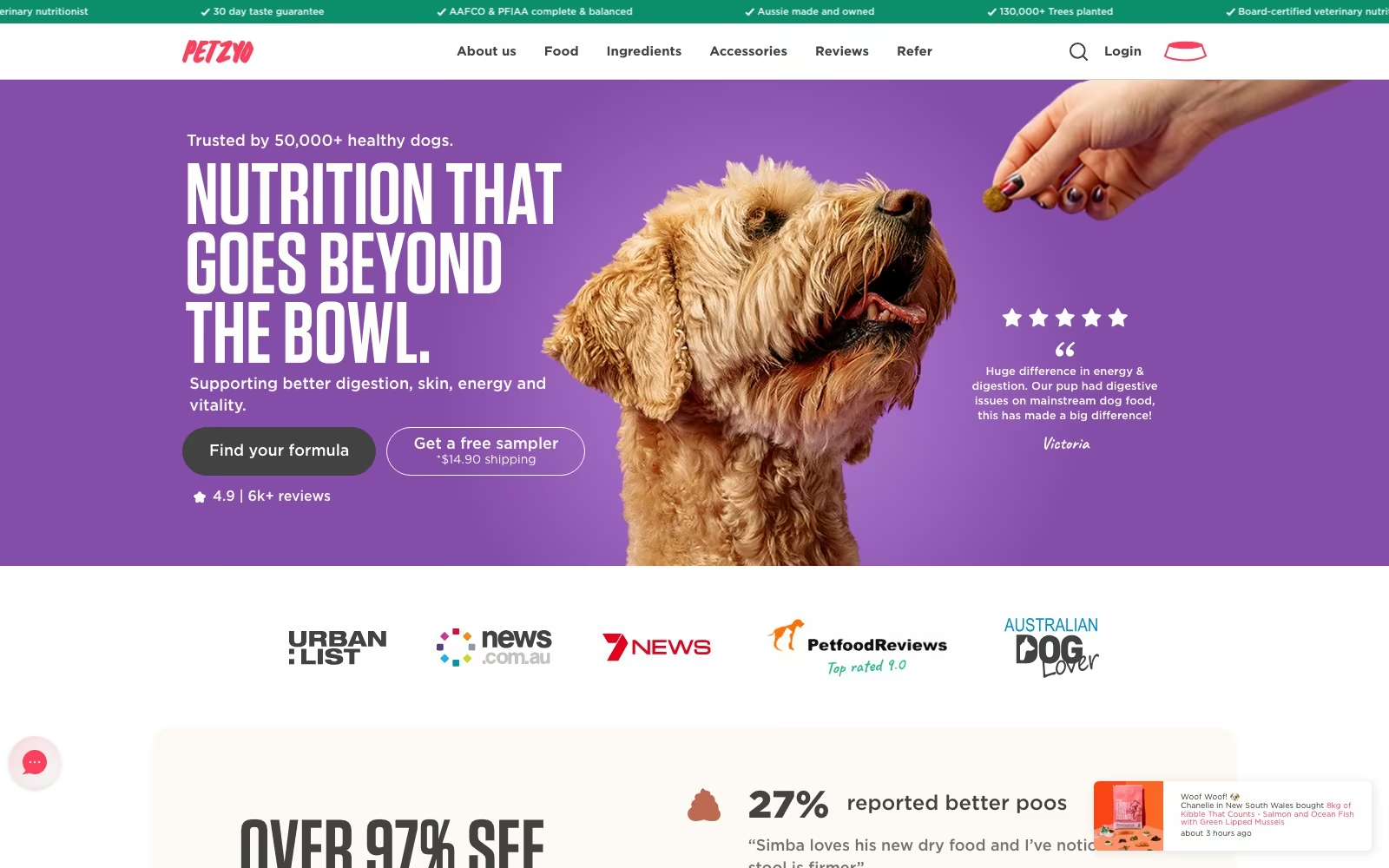



























FAQ
What teams ask us first.
When is custom development the right call over a template?
When the site has to do something, not just say something. A brochure site with five pages and no integrations rarely justifies custom work, and we will tell you so. The case gets strong when you need real CRM or inventory integration, a portal or configurator, complex content relationships, performance at scale, or an editor experience your team will use every day. The other common trigger is accumulated cost: when plugin conflicts, page-builder bloat and one-off patches mean every change takes a week, rebuilding is usually cheaper than another year of workarounds.
Which platform and stack will you recommend?
Whichever one your team can still change in two years. We work across Webflow, WordPress, Shopify, Next.js, Laravel and Node, and we choose based on the content model, the integrations, the traffic profile and who maintains it after launch — not on what is fashionable. Headless is excellent when content genuinely serves several surfaces and expensive overhead when it does not. If you already have in-house developers in a particular stack, that is usually the deciding factor, and we will say so before scoping.
How do you make sure the new site is fast?
By treating performance as a build constraint rather than a post-launch clean-up. That means a performance budget enforced in the pipeline, HTML rendered on the server or at build time where it helps, images sized and served in modern formats, fonts loaded without blocking, layout stability designed in, and third-party tags audited — usually the single biggest drag. The commercial case is well documented: Deloitte measured a 0.1s mobile improvement worth 8.4% in retail conversion rate, and Google's Core Web Vitals case studies point the same way.
Will a rebuild affect our search rankings?
Handled properly, a rebuild protects rankings and usually improves them, because speed, crawlability and internal structure all get better at once. The protection comes from process: a full crawl and URL inventory before anything moves, a redirect map reviewed line by line, headings, metadata and internal linking preserved on the pages that earn traffic, structured data carried across, and staging blocked from indexing. Our SEO team signs off before launch and monitors coverage and rankings afterwards, so if anything moves we know within days rather than at the next quarterly review.
How do you scope and price a custom build?
With a paid or free discovery step first, depending on complexity, and a fixed price for a defined scope after it. Guessing at a number before the content model and integrations are understood is how projects end in change requests and bad feeling. For larger applications we phase the work so you get something usable early and can stop or redirect between phases. Hosting and third-party licences are quoted separately and transparently, in your own accounts, so you are never renting infrastructure through us at a markup.
What happens after launch?
We watch it. For an agreed period after launch we monitor performance, error rates, form and payment success, and conversion behaviour, and fix anything that surfaces. After that, support is whatever you want it to be: a retainer covering maintenance, security updates and iteration, an as-needed arrangement, or nothing at all because your team has taken it on. All three are fine by us. The handover is built so the last option is real rather than theoretical, which is also the best evidence that the build was done well.
Can you work with our existing developers?
Yes, and it is common. Typical arrangements are us building the greenfield work while your team maintains the existing platform, or us taking front-end and integration work while your developers own the core application and code review. We work in your repositories, follow your conventions and review standards, and join your stand-ups if that helps. Where a team is stretched, the most valuable thing we do is often unglamorous — clearing technical debt and documentation that nobody has had time to touch.
Do you handle accessibility as part of the build?
Yes, and it is far cheaper built in than retrofitted. Semantic markup, keyboard operability, focus states, contrast, form labelling and sensible heading structure are part of how we write front-end code rather than a later pass. For organisations with a legal or procurement requirement, our accessibility team audits the build independently against WCAG and documents the result, which is what buyers and public-sector clients usually need to see.
Can you also design the site, or only build it?
Both, and either. Our web design team can take it from positioning through to design system, and our CRO team can shape the pages that carry revenue. We are equally happy building from your designer's files, and we will flag anything in a design that will cost speed, accessibility or editor sanity before we start rather than after. Working from someone else's design system is normal for us and does not change how the code is written or handed over.
Do you build ecommerce websites as well as marketing sites?
Yes. Ecommerce is where custom development earns its keep fastest, because catalogue size, variant logic, subscription rules and feed quality all start fighting an off-the-shelf theme quickly. We work in Shopify where the platform fits and build custom storefronts where it does not, with product data, pricing and availability read from the system of record rather than maintained twice. Merchandising, feeds and the paid channels that consume them are handled with our retail media and paid teams, so the website and the campaigns share one source of product truth.
What sort of projects and industries do you usually work on?
Most of our development projects fall into three groups: marketing websites for companies whose growth depends on organic and paid demand, customer-facing applications like portals, configurators and booking engines, and ecommerce stores past the point a theme can carry them. The industries vary — professional services, home services, healthcare, manufacturing, SaaS and retail brands — and the technical questions are more similar than the sectors suggest. What tends to differ is the compliance and integration environment, which is exactly what the discovery phase is for.
How does development work with design and the rest of the digital plan?
As one project rather than a relay. Design decisions have engineering consequences and vice versa, so our designers and developers work in the same cycle, with a shared component library rather than static pages handed over as a finished opinion. Where the website also has to serve SEO, paid media and lifecycle marketing, those teams review the templates and the content model before build, because retro-fitting a landing page structure or a schema requirement afterwards is always more expensive. Our design services page covers the design side in more detail.
What does the handover actually include?
Code in your repository with a readable commit history, automated tests on the paths that would cost you money, environment and deployment documentation, the architecture decisions written down including what we rejected and why, a field map for every integration, and recorded training for the people who will edit the site. Access is yours throughout — hosting, DNS, CMS, repository and third-party accounts are all in your name from the first week, not transferred at the end.

.webp)
.webp)