Own the search bar in the App Store.
the search bar
We run Apple Ads for app businesses that need installs which turn into paying users, not a bigger download chart. Keyword discovery, campaign structure, custom product pages, bid discipline and post-install measurement — managed weekly by the people who build it, and reported next to your paid search and paid social spend so the whole acquisition picture sits in one place.






Tell us a little about your brand and we'll be in touch within 24 hours to lock in a time.


THE FOUR WORKSTREAMS
Four jobs, run in this order.
in this order
Discovery, structure, creative, then economics. Most underperforming builds we inherit are not badly bid — they are badly structured, so good keywords and bad keywords share a budget and neither can be judged. We separate them first and let the auction teach us the rest.
Keyword & intent discovery
Account structure
Custom product pages & creative
Bids, budgets & post-install value
Find the searches that already want you.
App Store search is intent at its purest: someone types what they want and picks from a handful of results. That makes the placement unusually efficient when the phrase list is honest. Published benchmarks put the scale of that intent in context — MobileAction's 2026 report finds an all-time average conversion rate of 63.95% on search results ads, because the tap happens at the moment of decision.
We build the list from four directions: your own Search Terms report, rival brand demand, category and generic phrases, and the language people actually use in reviews and support tickets. Each candidate is grouped by intent — brand, competitor, category, feature, problem — because those four groups deserve different bids, different creative and different definitions of success.
Discovery never stops. A Search Match campaign runs permanently as a listening device, and everything it finds gets promoted into an exact campaign or negated, so the account keeps learning without paying twice for the same lesson.
- Search Terms mining plus review and support-ticket language
- Keywords grouped by intent: brand, competitor, category, problem
- Permanent Search Match discovery campaign feeding exact campaigns
- Negative-term hygiene run weekly, not quarterly
63.95%
all-time average conversion rate on App Store search results ads
One intent per campaign, always.
Structure is where Apple Ads results are won. We split brand defence, rival conquesting, category discovery and feature terms into separate campaigns with their own budgets, so a cheap brand keyword cannot flatter a wasteful category term inside one blended number. Exact-match ad groups carry the keywords we have proven; broad and Search Match sit apart, funded deliberately as research.
Today's Tab, Search Tab and product page placements each get their own treatment rather than inheriting search bids, because the mindset and the economics are different. Geography matters too: we separate the markets that earn revenue from the markets that only earn downloads, and we never let a cheap-install country quietly absorb a budget meant for a paying one.
Naming is boring and it pays. Every campaign, ad group and keyword follows one convention, so a report can be read by someone who did not build the account — including your own team.
- Brand, rival, category and feature intent split by campaign
- Exact-match kept apart from discovery, each funded on purpose
- Search tab and product page placements bid separately
- Revenue markets separated from cheap-install markets
- One naming convention across the whole account
1
search intent per campaign, so every line can be judged
Match the page to the search.
An ad that promises one thing and lands on a page selling another wastes the tap you just paid for. Custom product pages let us show a different screenshot set, headline and hook per intent group — the rival-brand searcher sees the comparison, the problem searcher sees the fix, the category browser sees the range.
We work from your existing store assets first, then test in a fixed rhythm: one variable at a time, held long enough to be believable, judged on conversion rate and downstream value rather than on taste. Screenshot order, first-frame clarity, caption copy and icon legibility at thumbnail size all get their turn. The winners feed back into your organic store listing, which is why store optimisation and Apple Ads belong on one desk.
Where you have a strong ad creative library already, we adapt it rather than start again — the App Store rewards clarity over production value almost every time.
- Custom product pages mapped to each intent group
- One-variable creative tests with a stated hold period
- Screenshot order, first frame and caption copy tested in turn
- Winning angles fed back into the organic store listing
1
custom product page per intent group, not one page for all
Bid to the value, not to the install.
Price per tap moves with the calendar. MobileAction recorded 2025 search results CPT opening at $1.30, dipping to $1.26 in Q2 — the lowest quarterly figure since 2020 — then closing at $1.88 in Q4, while the yearly average CPA improved to $2.51 from $2.76 the year before. Efficiency and auction pressure moved in opposite directions, which is exactly why a fixed annual bid plan fails.
So we bid to value. Installs are the first metric, never the last one: we wire SKAdNetwork and your attribution or analytics stack so trials, subscriptions, purchases and retention come back by keyword group. Bids then follow payback, budgets shift toward the cohorts that renew, and seasonality is planned for instead of survived. Where privacy limits the signal, we say so and use holdouts rather than pretending the data is complete.
Reporting lands next to your other channels so blended acquisition cost is a real number, not four dashboards that disagree.
- SKAdNetwork and MMP or analytics wired to keyword groups
- Bids driven by trial, subscription and retention value
- Seasonal auction pressure planned into the budget
- Holdout tests where privacy limits the attribution signal
$2.51
2025 average cost per download on App Store search results ads
$1.26
lowest quarterly cost per tap recorded since 2020 (Q2 2025)
US median Apple Ads cost per install (AppTweak)
global median conversion rate in search results (AppTweak)
Hands-on optimisation, not a monthly check-in
The Apple Ads account and every asset in it
We made the difference for those brands

Home essentials, appliances, kitchen & pet

Creative, content, arts & culture

Creative, content, arts & culture

Healthcare & regulated services

Beauty, personal care & wellness

Consumer tech and platforms
Food & beverage

Creative, content, arts & culture

Consumer tech and platforms

B2B software, fintech, insurance

B2B software, fintech, insurance

Beauty, personal care & wellness

B2B software, fintech, insurance

Consumer tech and platforms

B2B software, fintech, insurance

Beauty, personal care & wellness

Retail & commerce

B2B software, fintech, insurance

Creative, content, arts & culture

Creative, content, arts & culture
Healthcare & regulated services

B2B software, fintech, insurance

Healthcare & regulated services

Consumer tech and platforms
Retail & commerce

Retail & commerce

Beauty, personal care & wellness

Retail & commerce

Retail & commerce

B2B software, fintech, insurance

Apparel and lifestyle
01 — The challenge
Plenty of installs. Not enough paying users.
The dashboard looks healthy. Downloads are up, cost per install is acceptable, and the finance team still cannot see the return. Somewhere between the tap and the twelfth day of the trial, the money leaks — and a blended install number cannot tell you where.
“We are buying installs efficiently. We just cannot tell you which ones renew.”
The App Store itself is not the problem; the surface is enormous and buying intent is genuine, with Apple reporting that the App Store ecosystem facilitated $1.4 trillion in developer billings and sales in 2025. The problem is nearly always structure and measurement: brand, rival and category phrases sharing one budget, one product page serving every search, and post-install value never making it back to the keyword that produced it. Separate those three things and the same spend starts buying a different quality of user.
02 — Our approach
Split the intent. Match the page. Bid to payback.
We start with an audit that answers one question: which keywords produce users who stay? That means mining the Search Terms report, rebuilding the account so brand, competitor, category and feature intent each own a campaign and a budget, and running discovery permanently but separately so research money is visible. Custom product pages are then mapped to those intent groups, because the tap is only half of what you paid for. In parallel we wire measurement — SKAdNetwork plus your MMP or analytics — so trials, subscriptions and retention come back by keyword group and bids can follow payback rather than install volume. From there the work is weekly and unglamorous: promote what converts, negate what does not, test one creative variable at a time, and plan for the seasonal auction instead of reacting to it. You keep the account, the structure and the data.
03 — What we did
How an engagement actually runs.
Audit, rebuild, creative testing, then scaling — with a weekly working session and a written monthly review of what changed and why.
Week 1 / Audit
Mine the search terms, find the leak
Search Terms report, placement and geography breakdown, measurement check, and a ranked list of what is wasting money before anything is rebuilt.

Weeks 2-3 / Rebuild
One intent per campaign, budgets separated
Brand, rival, category and feature campaigns rebuilt with their own budgets, discovery funded deliberately, naming standardised.
Weeks 3-6 / Creative
Custom product pages per intent group
Screenshot sets, hooks and captions matched to each intent group, then tested one variable at a time on conversion and downstream value.

Ongoing / Scale
Bid to payback, plan for the season
Post-install value routed back to keyword groups, bids following payback, and budget planned around the quarterly auction pattern.

WHAT YOU GET
Everything built in your own account.
your own account
We work inside your Apple Ads account and your measurement stack, document as we go, and leave the structure behind if you ever take it in-house.

Keyword and intent research
A ranked phrase universe built from your search terms, competitor demand, category language and the words users write in reviews.

Account rebuild and structure
Brand, rival, category and feature campaigns separated with their own budgets, plus a naming convention anyone can read.

Custom product pages
Screenshot sets, headlines and hooks mapped to each intent group, then tested one variable at a time against conversion rate.

Bid and budget management
Weekly bid work driven by payback rather than install volume, with seasonal auction pressure planned into the budget.

Post-install measurement
SKAdNetwork plus your MMP or analytics wired so trials, subscriptions and retention come back attached to keyword groups.

Reporting and monthly review
One report covering Apple Ads alongside your other channels, and a written monthly review that ends in recommendations.
HOW WE WORK
Operating standards, not promises.
Operating standards


















Built on trust. Proven by results.
We partner with SMBs and Fortune 500 companies to deliver more than reach — we bring clarity, execution, and measurable outcomes. Every successful partnership starts with a strong culture fit and a shared drive to grow.


CASE STUDIES
Case studies
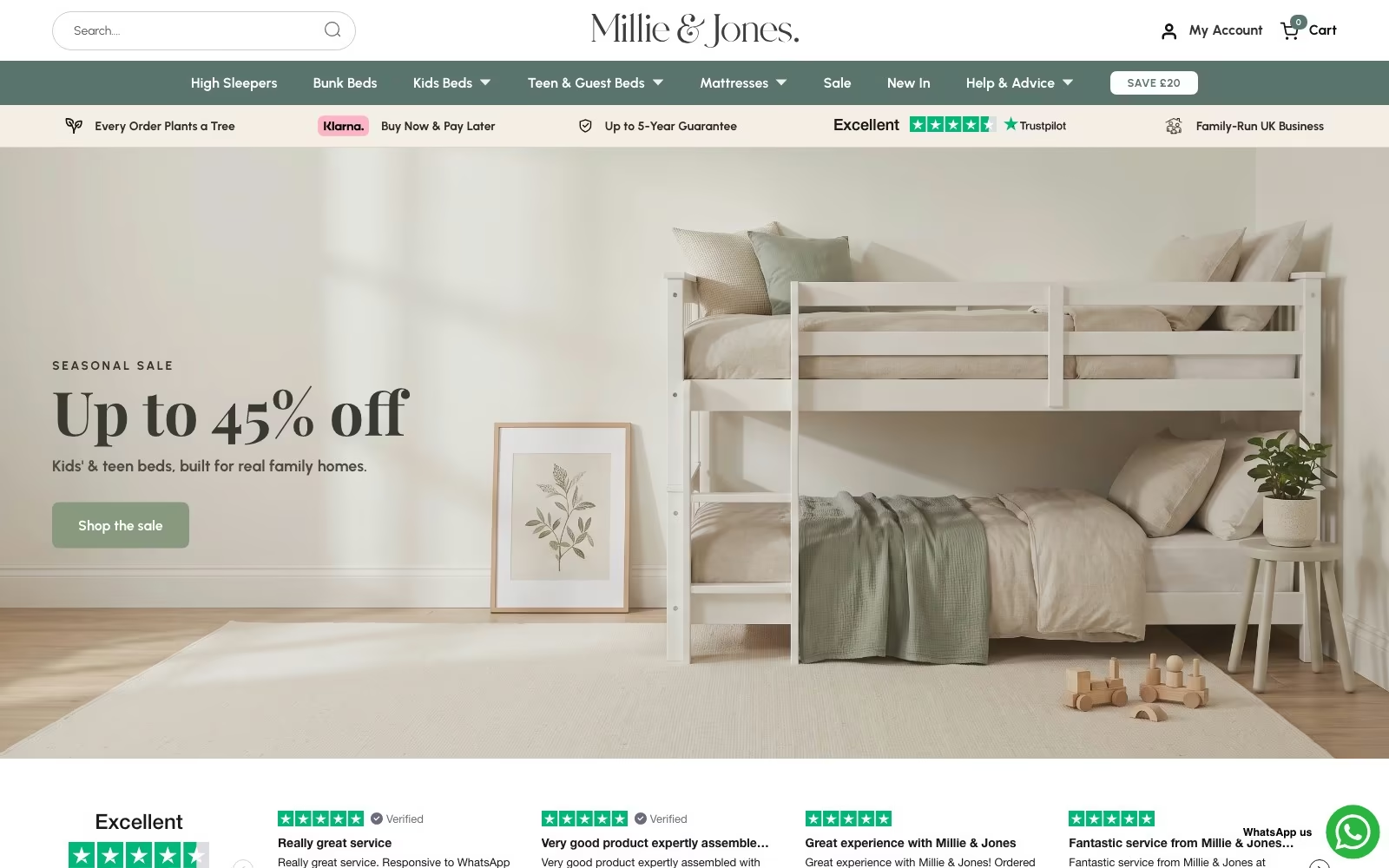
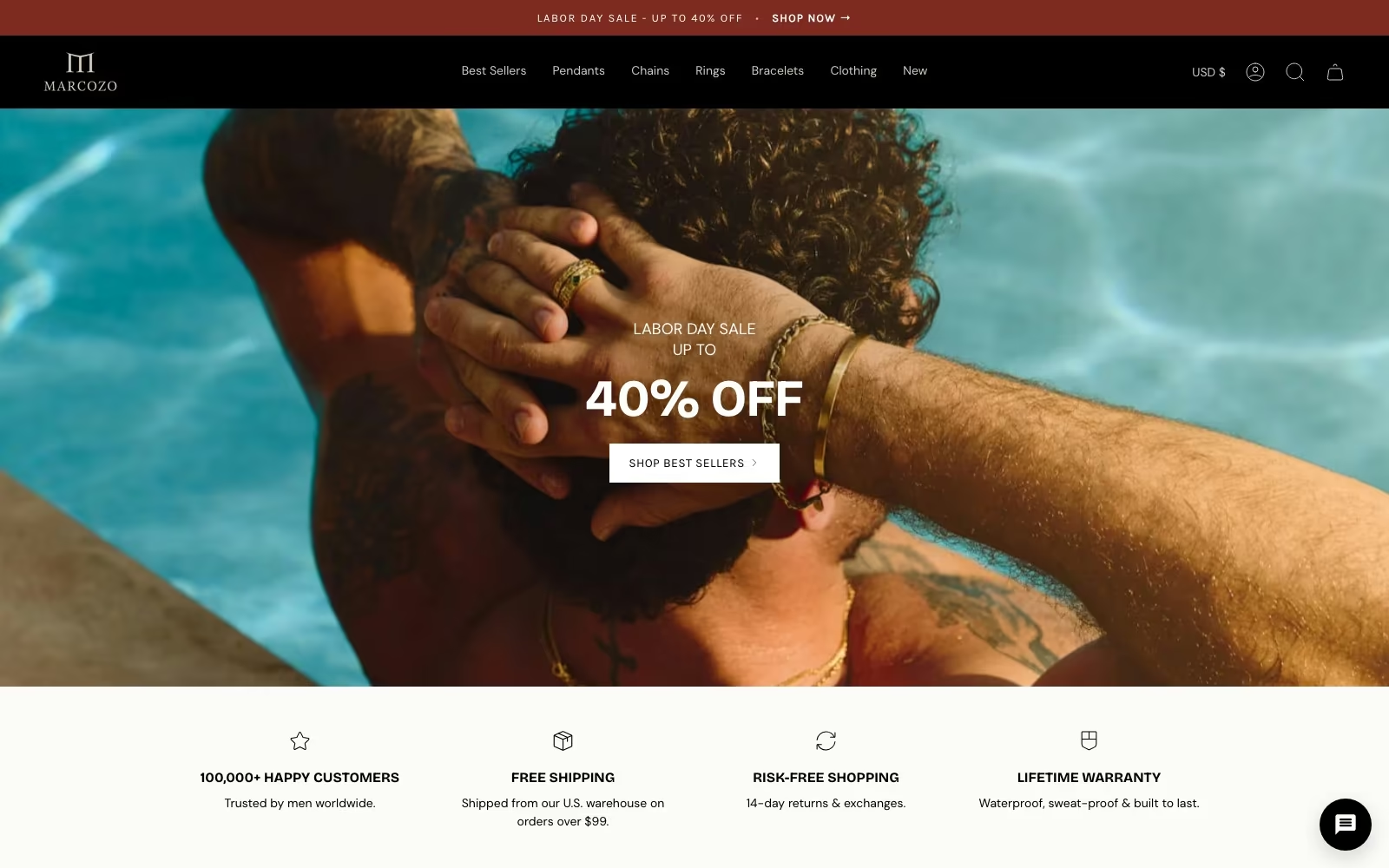
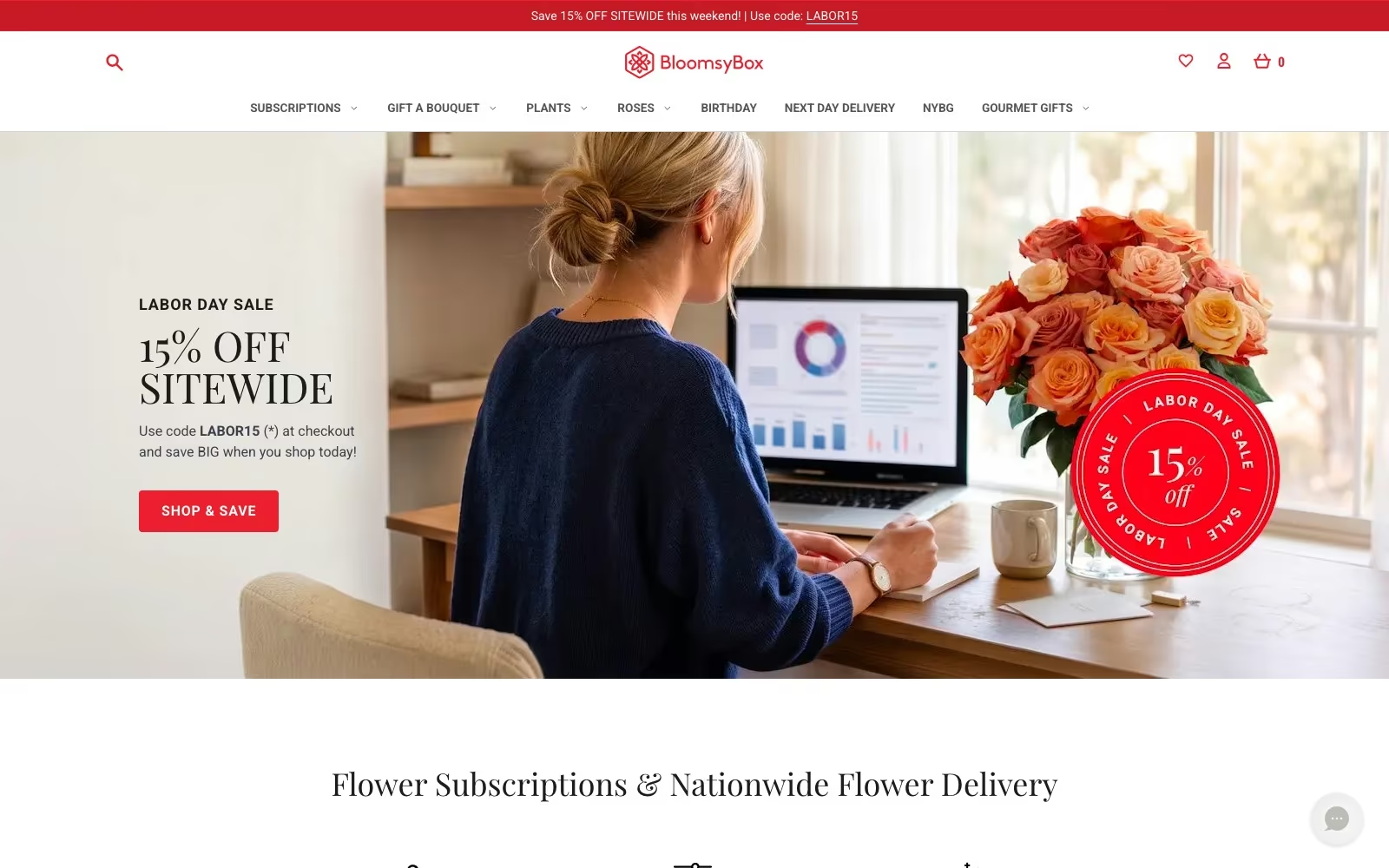
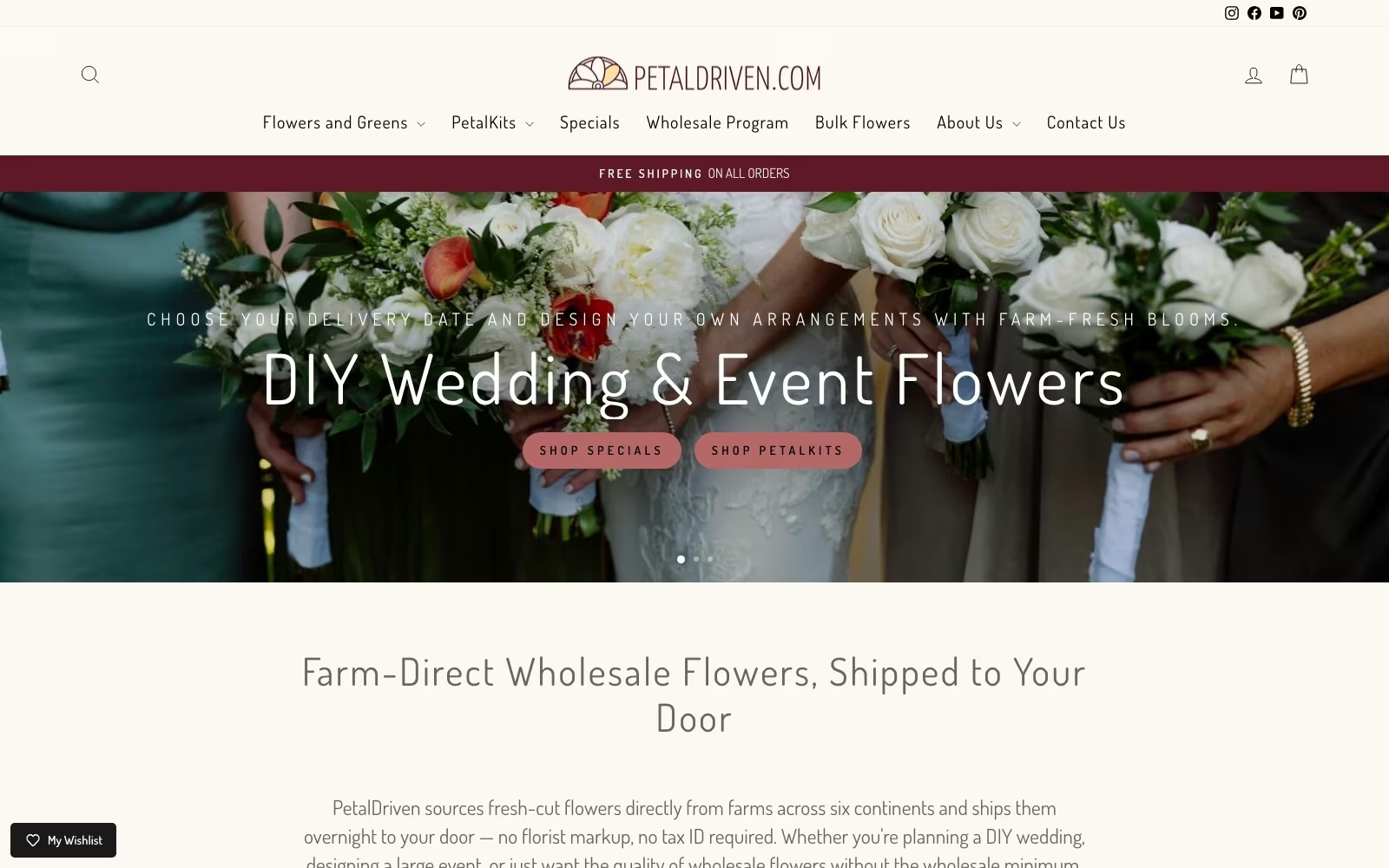
Website Portfolio
Video Ads
Static Ads

















































FAQ
What app teams ask us first.
What does an Apple Search Ads agency actually do?
Four things, in order: find the searches worth buying, structure the account so each intent can be judged on its own, match a product page to each of those intents, and connect post-install value back to the phrase that produced it. Day to day that means weekly promotion and negation of search terms, creative tests held long enough to believe, bid work driven by payback, and one report that reads alongside your other channels. A good engagement also leaves your team with a documented structure they could run themselves.
How much do Apple Ads cost, and what should we expect to pay per install?
It depends on your category and market, but public benchmarks give a useful frame. MobileAction's 2026 report puts the 2025 yearly average cost per download on search results ads at $2.51, down from $2.76 in 2024, with cost per tap ranging from $1.26 in Q2 to $1.88 in Q4. Competitive categories like finance and dating sit well above those averages, and brand keywords well below. We model your own numbers from the audit rather than quoting an industry average as a forecast, and we work to a payback target you set.
Why is the conversion rate so high compared with our other channels?
Because the ad appears at the moment of decision, inside the store, with a one-tap install. MobileAction records an all-time average conversion rate of 63.95% on search results ads — roughly an order of magnitude above typical web funnels, because there is no landing page, no form and no checkout between the tap and the download. The implication matters: the leverage on this channel is in phrase choice and post-install value, not in conversion-rate optimisation. That is where we spend the hours.
Is Apple Ads worth it when installs are cheap on other platforms?
Often yes, because the users are different. App Store searchers have already decided to solve a problem, so they tend to activate and retain better than users interrupted mid-scroll, which usually shows up as a lower price per subscriber even when the install cost is higher. The way to settle it is not opinion but arithmetic: compare cohorts on trial start, conversion to paid and day-30 retention rather than on install price. We set that comparison up in the first month, and if Apple Ads is the wrong channel for your economics we will say so.
How does SKAdNetwork and privacy affect what you can measure?
You get less granularity than the web and enough to run the channel well. SKAdNetwork returns aggregated, delayed postbacks with limited conversion values, so we design the value schema deliberately — picking the handful of post-install events that predict revenue — and read it alongside your MMP or analytics and your own billing data. Where the signal genuinely runs out, we use holdouts and geo tests rather than a confident model built on thin data. We are explicit about which numbers are measured and which are modelled, on every report.
What are custom product pages and do we need several?
They are alternate versions of your App Store page — different screenshots, captions and promotional text — that an ad can point to. You need one per meaningful intent group rather than one per keyword: the person searching a competitor's name wants a comparison, the person searching a problem wants the fix, the browser wants the range. Three to six pages covers most apps. We build them from your existing assets where we can, test one variable at a time, and feed the winners back into your main listing so organic search benefits too.
Can you run Apple Ads alongside our existing user acquisition team?
Yes, and it is a common arrangement. We usually own the App Store surface — keywords, structure, product pages, bids — while your team keeps the platforms it already runs, with one shared definition of a qualified user so nobody is optimising against a different target. We share the keyword and creative learnings both ways, because the phrases that win in the store usually win in paid search too. Where you would rather hand over the whole acquisition mix, our analytics team wires the measurement so every channel is judged the same way.
How long until the account improves?
Structural waste is usually the fastest win: separating brand from category spend and negating the terms that never convert tends to show up within the first two weeks. Creative testing needs a month or two to produce decisions you can trust, and value-based bidding needs one full payback cycle — which for a subscription app means waiting for renewals rather than guessing. We publish the sequence up front so you know which improvements are arriving when, and the weekly session means you see the work as it happens rather than in a monthly summary.
Do you work with pre-launch or small apps?
Yes, with one honest caveat: below a certain budget the auction cannot teach us much in a reasonable time, so we would rather scope a short research-and-listing engagement than take a retainer that cannot work. For pre-launch apps the highest-value work is usually store listing, keyword research and a small Search Match budget to learn what people actually type. We will tell you plainly where your first dollars are best spent, even when that is not this service.
What happens if we want to take it in-house later?
You keep everything and we help you leave well. The account is yours throughout, the structure and naming convention are documented, the keyword universe and negative lists are exported, and the measurement setup is written down rather than living in someone's head. We will train the person inheriting it and stay available for a defined handover period. Clients who know they can leave easily tend to stay for the right reasons, which is the arrangement we want.

.webp)
.webp)