A store built to be fast in year three.
fast in year three
We are the ecommerce development agency for brands that have outgrown their theme. We build and replatform stores on Shopify, Shopify Plus and headless stacks, fix the checkout friction that quietly costs orders, keep the rankings through migration, and hand over clean code your team can extend — with conversion work, SEO and tracking in the same plan.






Tell us a little about your brand and we'll be in touch within 24 hours to lock in a time.



THE FOUR DECISIONS
Four decisions decide the build.
Four decisions
Platform, architecture, checkout and migration. Get those right and the front-end work is straightforward; get them wrong and no amount of design rescues the store. We argue them out with you before a line of code exists.
Platform choice
Performance
Checkout & UX
Migration & launch
The cheapest platform that does the job.
Most brands need less than they are being sold. Shopify handles the overwhelming majority of catalogues, promotions and subscription models perfectly well, and Shopify Plus earns its keep at higher order volumes, with complex B2B pricing, or where checkout customisation and multi-store setups matter. Headless is worth it when you have a content-heavy front end, several regions or apps sharing one commerce back end — not because it sounds modern.
Hosted platforms also carry a performance advantage that is easy to underrate: Shopify reports, citing Chrome User Experience data, that nearly 80% of Shopify stores pass all Core Web Vitals thresholds. A bespoke build has to earn that back with engineering time you would rather spend on merchandising.
So we write the recommendation as a document with the trade-offs, the running costs and the exit path, and we are happy to be the agency that talks you out of a rebuild.
- Written platform recommendation with costs and trade-offs
- Shopify, Shopify Plus and headless assessed against your catalogue
- Subscription, B2B and multi-region needs scoped up front
- Exit path documented before you commit
80%
of Shopify stores pass all Core Web Vitals thresholds
0
rebuilds recommended when a fix will do
Speed is a revenue feature.
Speed is the part of a build with the clearest commercial evidence behind it. In the Deloitte and Google study of 37 retail, travel and lead-generation brands, a 0.1-second improvement in mobile load time lifted retail conversion rates by 8.4% and average order value by 9.2%. That is a tenth of a second — roughly the cost of one badly loaded third-party script.
So performance is a build constraint here, not a phase at the end. We set budgets for weight and Core Web Vitals per template, serve responsive images in modern formats, defer and audit every app and tag, keep third-party JavaScript on a leash, and treat the product and cart templates as the two pages that must never regress. Each release is measured against the budget before it ships.
Half the wins are subtractions: an abandoned review widget, three analytics tags doing the same job, a slider nobody scrolls. We show you what each app costs in milliseconds and let you decide.
- Performance budget per template, checked before each release
- Every app and third-party tag audited for its cost in milliseconds
- Modern image formats, lazy loading, deferred scripts
- Product and cart templates protected from regression
8.4%
retail conversion lift from a 0.1s faster mobile load
9.2%
average order value lift in the same study
The most expensive 40 seconds on the site.
Baymard's long-running research puts the global average cart abandonment rate at 70.19%, and their benchmark of the 344 leading stores found only 35% with a decent-or-better checkout flow and just 2% rated good. Their audits count an average of 39 usability issues in a single checkout flow. Almost none of that is a design problem; it is forms, timing and honesty about cost.
We work through it methodically: shipping cost and delivery date shown before the checkout, guest checkout that is genuinely first-class, address autocomplete and correct input types, wallet payments at the top, error messages that name the field and keep the data, and no surprise fee on the final step. On Shopify Plus we extend checkout properly rather than bolting apps onto it.
Then we instrument every step so the drop-off is visible, and hand the funnel to our conversion team to keep testing after launch.
- Costs and delivery dates shown before checkout begins
- Guest checkout, wallets and address autocomplete as standard
- Validation that keeps data and names the problem
- Every checkout step instrumented so drop-off is visible
70.19%
global average cart abandonment rate (Baymard)
39
usability issues in the average checkout flow
Replatform without losing the rankings.
The risk in a replatform is rarely the code. It is the 4,000 URLs that change shape, the review content that lives in an app database, the customer passwords that cannot be exported, the tax and subscription edge cases nobody documented, and the tracking that silently stops matching the old numbers a week after launch.
So migration is run as its own workstream. A full crawl and URL inventory, a mapped redirect for every old path including parameters and paginated collections, metadata and structured data carried across, product and variant data reconciled against the source of truth, historical orders and customer records validated, and a staging environment your team signs off on before launch day rather than during it.
Launch is a rehearsed checklist with rollback ready. Afterwards we watch crawl stats, indexation, Core Web Vitals, revenue by template and error rates daily for a fortnight, because the point of the plan is that the week after launch is boring.
- Complete URL inventory and mapped redirects, parameters included
- Metadata, structured data and internal links carried across
- Product, order and customer data reconciled before go-live
- Rehearsed launch with rollback ready
- Two weeks of daily monitoring after launch
1:1
redirect mapped for every indexed URL before launch
global average storewide conversion rate (IRP Commerce)
global average order value (IRP Commerce)
A performance budget per template, checked before release
Repository, theme, documentation and accounts
We made the difference for those brands

Food & beverage

B2B software, fintech, insurance

Beauty, personal care & wellness

Retail & commerce

Consumer tech and platforms

Food & beverage

Home essentials, appliances, kitchen & pet

Home essentials, appliances, kitchen & pet

Healthcare & regulated services

Consumer tech and platforms

Retail & commerce

Beauty, personal care & wellness

Healthcare & regulated services

Home essentials, appliances, kitchen & pet

Home essentials, appliances, kitchen & pet

Home essentials, appliances, kitchen & pet

Food & beverage

Food & beverage

Creative, content, arts & culture

Beauty, personal care & wellness

B2B software, fintech, insurance

B2B software, fintech, insurance

Consumer tech and platforms

Consumer tech and platforms

Healthcare & regulated services

Creative, content, arts & culture

Beauty, personal care & wellness

Healthcare & regulated services

Creative, content, arts & culture

Travel & mobility
01 — The challenge
The store works. It just leaks.
Traffic is fine, the catalogue is fine, and the conversion rate has been flat for two years. The theme has been patched by four agencies, twelve apps load on every page, the product template takes six seconds on a phone, and every new promotion needs a developer and a fortnight.
“We are not short of traffic. We are short of the orders it should be producing.”
The leak is usually measurable in two places. Speed: Deloitte and Google found a 0.1-second mobile improvement lifting retail conversions 8.4%. And checkout: Baymard puts average cart abandonment at 70.19% with only 2% of leading stores rated good. Both are engineering problems with commercial answers, which is the work we do — and often it is a focused fix rather than the rebuild you were braced for.
02 — Our approach
Decide the platform. Protect the speed. Fix the checkout.
We start with a review of the live store: performance per template, the cost in milliseconds of every app and tag, the checkout walked step by step against known usability findings, and the funnel read from your own data. That produces a written recommendation with costs and trade-offs — frequently a targeted fix rather than a rebuild. When a build or replatform is the right answer, performance budgets are set per template and enforced on every release, the checkout is rebuilt around cost transparency and guest purchase, and migration runs as its own workstream: full URL inventory, mapped redirects, metadata and structured data carried across, product, order and customer data reconciled before go-live. Launch is rehearsed with rollback ready, then monitored daily for two weeks. You own the repository, the theme, the documentation and the accounts throughout.
03 — What we did
Four phases, one boring launch week.
Review, build, migrate, launch — with a weekly demo on real data and every decision written down as we go.
Weeks 1-2 / Review
Measure before recommending
Performance per template, the millisecond cost of every app, the checkout audited step by step, and the funnel read from your own analytics.

Weeks 3-8 / Build
Templates inside a performance budget
Front end built to a weight and Core Web Vitals budget per template, with the product and cart pages protected from regression.

Weeks 6-9 / Checkout
Rebuild the expensive part
Costs and delivery dates surfaced early, guest checkout and wallets first class, validation that keeps data, every step instrumented.

Weeks 8-10 / Migrate & launch
Rankings and data carried across
Mapped redirects for every URL, metadata and structured data preserved, records reconciled, a rehearsed launch and two weeks of daily monitoring.

WHAT YOU GET
Deliverables your developers will thank you for.
developers will thank you for
Everything below is built in your own accounts and repository, documented as we go, and handed over in full.

Store and platform review
Performance, app weight, checkout usability and funnel data assessed, with a written platform recommendation and the costs of each option.

Store build or rebuild
Shopify, Shopify Plus or headless front end built to a performance budget, with clean components your team can extend.

Checkout and funnel work
Cart and checkout rebuilt around cost transparency, guest purchase and wallets, with every step instrumented for drop-off.

Replatform and migration
URL inventory, mapped redirects, metadata and structured data carried over, product, order and customer records reconciled before go-live.

Integrations and automation
ERP, warehouse, subscriptions, loyalty, tax and support systems connected by API, with failure handling that does not lose an order.

Ongoing development care
A retained team for releases, seasonal peaks, app hygiene and performance monitoring, with a written monthly summary.
HOW WE WORK
Operating standards, not promises.
Operating standards



















Built on trust. Proven by results.
We partner with SMBs and Fortune 500 companies to deliver more than reach — we bring clarity, execution, and measurable outcomes. Every successful partnership starts with a strong culture fit and a shared drive to grow.






CASE STUDIES
Case studies
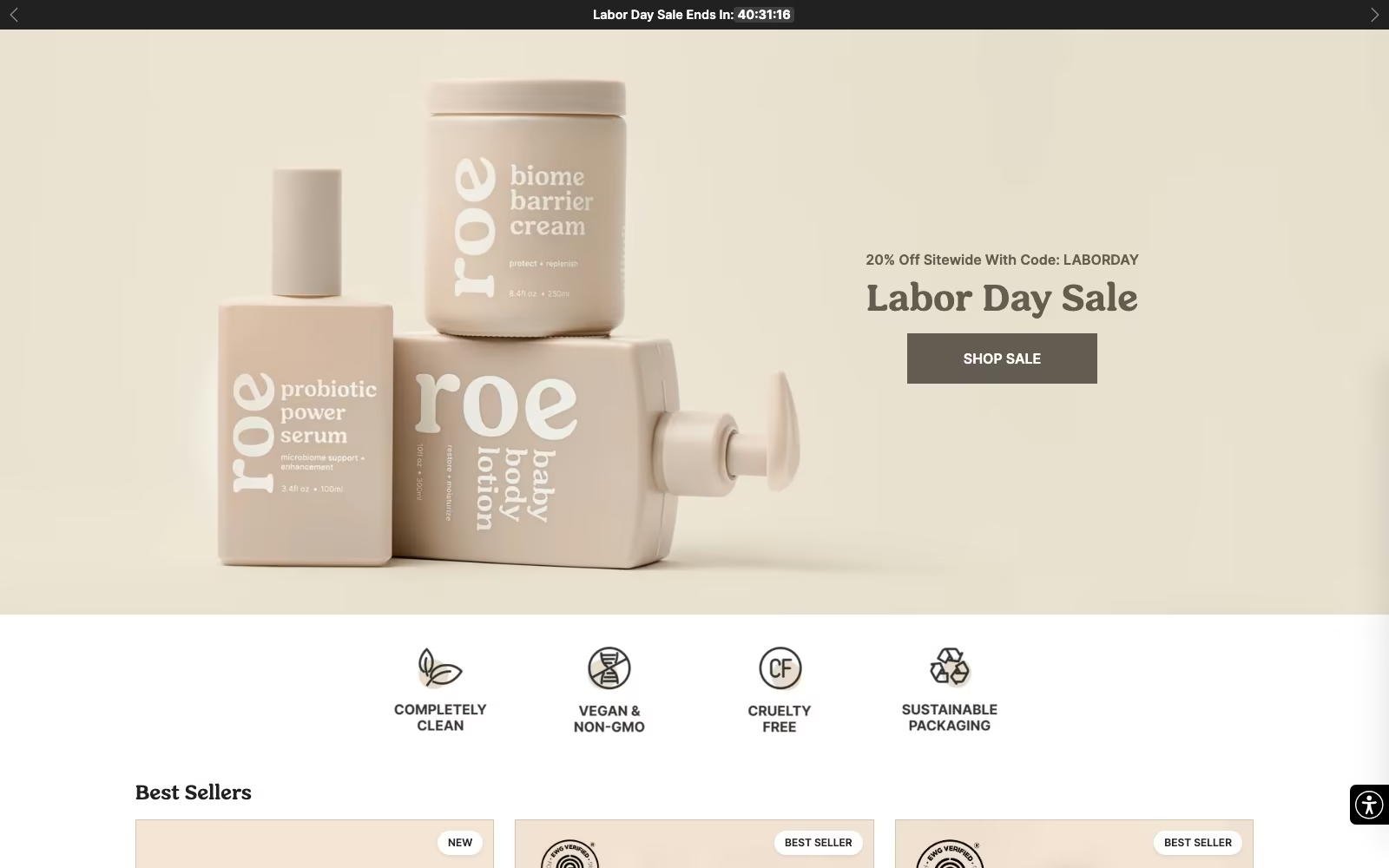
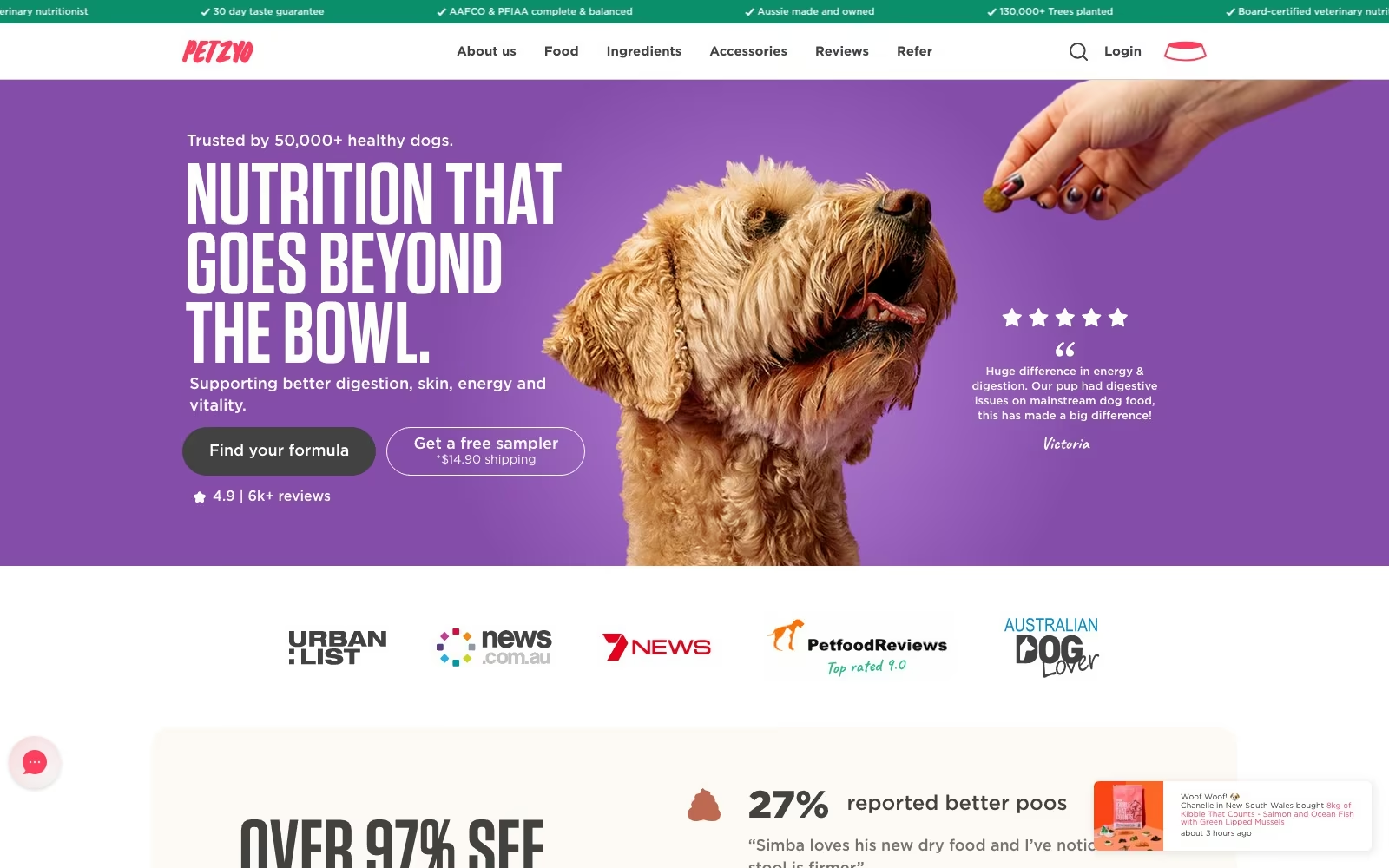
Website Portfolio
Video Ads
Static Ads







































































FAQ
What brands ask us first.
What does an ecommerce development agency actually do?
Four things that pay for themselves: choosing the right platform, building a front end that stays fast under real conditions, fixing the cart and checkout where most revenue is lost, and moving an existing store without losing rankings or data. Around those sit the integrations — ERP, warehouse, subscriptions, loyalty, tax — and the ongoing release work that keeps a store shippable. The good version of this job leaves your team faster and better documented than it found them, not more dependent on the agency.
Should we rebuild, replatform, or just fix what we have?
Fix, more often than brands expect, and we will tell you when that is the answer even though it is the smaller project. If the data model is sound and the problems are speed, app bloat and checkout friction, a focused engagement gets most of the value in weeks. Replatform when the platform genuinely blocks what you sell — pricing rules it cannot express, checkout it will not let you change, licence and hosting costs out of proportion to revenue — or when every change needs a developer because the theme has been patched past rescue.
Will a replatform hurt our organic traffic?
It does not have to, and protecting that traffic is a planned workstream rather than a hope. We crawl the existing store completely, inventory every indexed URL including parameters and paginated collections, map a redirect for each one, carry metadata, structured data and internal linking across, and check the staging build against that inventory before launch. After go-live we monitor crawl stats, indexation and revenue by template daily for a fortnight, so if anything moves we know within a day. Our SEO team is in the project from the first week, not called in afterwards.
How much of our conversion problem is speed?
Frequently more than people expect. In Deloitte and Google's study of 37 retail, travel and lead-generation brands, a 0.1-second improvement in mobile load time was associated with an 8.4% lift in retail conversion rate and a 9.2% lift in average order value. On a typical store the biggest single lever is subtraction: apps and tags loading on pages that do not need them. We measure the millisecond cost of each one and give you the list, then set a budget per template so the gains do not quietly erode over the next year.
Our cart abandonment is around 70%. Is that normal?
It is almost exactly the global average — Baymard's meta-analysis puts average cart abandonment at 70.19% — so the number itself is not the alarm. What matters is how much of yours is fixable, and the same research suggests plenty is: across the 344 leading stores they benchmark, only 35% have a decent-or-better checkout and 2% are rated good, with an average of 39 usability issues per flow. Shipping cost revealed late, forced account creation and validation that wipes a form are the usual suspects, and all three are engineering fixes.
Do we need headless commerce?
Usually not, and it is the recommendation we most often argue against. Headless earns its extra cost and complexity when you have a genuinely content-heavy front end, several regions or brands sharing one commerce back end, native apps consuming the same APIs, or performance requirements a themed store cannot meet. It costs you the platform's built-in speed, its checkout, its app ecosystem and a chunk of your team's autonomy. We write the comparison out with running costs on both sides so the decision is made on numbers rather than on how modern it sounds.
Can you work with our existing developers or theme?
Yes, and it is a good arrangement when the store is fundamentally sound. We work in your repository with your review process, document what we change, and keep implementations conventional so your team is not inheriting anything clever. Where a theme has been patched by several agencies we will map the debt honestly — what is worth refactoring, what to leave, what will bite at the next peak — and price the options separately so you can stage the work over quarters instead of committing to everything at once.
How do you handle integrations with our ERP and warehouse?
As first-class work with explicit failure handling, because integrations are where quiet revenue loss lives. Stock, pricing, orders, fulfilment, returns and invoices are mapped field by field with the edge cases written down: partial shipments, backorders, exchanges, tax exemptions, multi-currency rounding. Every job retries, logs and alerts rather than failing silently, and we build a reconciliation view so a mismatch is visible the same day. Where an ERP has no usable API we say so early rather than discovering it in week six.
What does an ecommerce build cost and how is it priced?
Fixed-scope and quoted after the store review, so you approve a number rather than an hourly estimate that drifts: discovery, build, checkout work, migration, integrations and launch each priced as a line you can accept or defer. A focused performance-and-checkout engagement is a fraction of a full replatform and often the right first step. Ongoing development care is a monthly retainer scoped to the release cadence you want, and it is optional — the handover is complete either way.
Do you also run the marketing after launch?
We can, and it is often where a good build pays off fastest. Our conversion, paid social and email marketing teams work from the same tracking and the same definitions the build ships with, so the numbers agree from day one. It is equally fine to buy development alone and keep your existing agencies: we hand over documentation written for whoever comes next, because a store only one agency can maintain is a liability we would rather not create.

.webp)
.webp)