The cheaper half of search, run properly.
run properly
Most advertisers treat Microsoft Advertising as a Google Ads copy they check twice a year. That is why it usually underperforms — and why it is one of the few places left where a careful team still finds cheap, high-intent clicks. We run Bing search, shopping and audience campaigns as their own channel: their own keywords, their own bids, their own PPC creative, measured against the same pipeline as your paid search and paid social work.






Tell us a little about your brand and we'll be in touch within 24 hours to lock in a time.



THE FOUR WORKSTREAMS
Four workstreams, one account you can defend.
one account you can defend
Every Microsoft Advertising account we inherit has the same three problems: it was imported once and left alone, the query reports were never read, and nobody agreed what counted as a lead. So we rebuild in this order — structure, query reports, audience, then scale — and we do not touch bids until the measurement underneath them is trustworthy.
Account audit
Search campaigns
Audience & shopping
Measurement & scale
Read the account before changing it.
We start with an audit of the whole account: campaign structure, match types, negative keyword lists, bid strategies, conversion definitions, reach settings, syndication and the syndicated partner network, plus the shopping feed if you run one. Each finding gets a number next to it — what it costs you per month in wasted spend or missed volume — so the fix list is ranked by money rather than by tidiness.
The audit almost always shows the same pattern on an imported account. Broad match keywords inherited from Google collect queries that were harmless in a bigger auction and expensive in a smaller one. Search partner traffic runs unsegmented, so nobody can tell whether it works. Conversion tracking points at a thank-you page view rather than a qualified lead, which means automated bidding has been optimising toward the wrong outcome for months.
You get the audit as a written document with the fix list, the expected impact and the order of work, whether or not you hire us to do it.
- Structure, match types and negative lists reviewed line by line
- Conversion definitions checked against your CRM or booking system
- Search partner and syndicated traffic segmented and judged separately
- Every finding priced, so the fix list is ranked by money
Written
audit document you keep, hire us or not
Build it for this auction, not Google's.
The import tool is a starting point, not a strategy. Microsoft's own documentation is clear that a Google import can be scheduled to run on a recurring basis, with up to 100 scheduled import jobs per account — useful for keeping coverage in sync, and exactly how accounts end up on autopilot. So we import once for coverage, then rebuild: keyword lists trimmed to what this network actually searches, match types tightened, ad copy rewritten for an older, more professional buyer, and extensions filled out properly.
The auction rewards that work because it is thinner. Benchmarketing's 2026 dataset puts the median Microsoft Ads CPC at $3.32 with a median click-through rate of 2.83% and a median conversion rate of 4.12% — and a wide gap between the 25th and 75th percentiles, which is another way of saying management quality decides the outcome here more than budget does. Fewer competitors bidding means a well-built campaign moves the average position quickly.
Bing query reports are read every week, not every quarter. That is where the money leaks on this platform, and it is the least glamorous part of the job.
- Import for coverage, then a rebuild for this network
- Keyword lists and match types set for a thinner auction
- Ad copy written for a professional, higher-income audience
- Search terms and negatives reviewed weekly, not quarterly
- Extensions, sitelinks and location assets completed
$3.32
median Microsoft Ads CPC in the 2026 benchmark set
4.12%
median Microsoft Ads conversion rate
Use the signal Microsoft actually has.
The interesting part of this platform is not the search box. Microsoft publishes its own network reach from Comscore qSearch data for desktop PC users, measured in December 2025, and the buyers it describes skew older, more educated and more likely to be at work. On the search side that means business software, finance, legal, industrial and considered-purchase queries convert at rates the volume alone does not predict.
Beyond search we run audience ads across the network, shopping campaigns from a properly maintained feed, and remarketing lists that are actually segmented by intent rather than lumped into one pool. The platform has also changed shape as artificial intelligence has moved into the product: Microsoft told investors in April 2026 that Bing had reached one billion monthly active users for the first time, and new surfaces arrive faster than most accounts adopt them.
We test those surfaces on a small, ring-fenced budget with a clear read date, so a land-grab never quietly becomes the whole plan.
- Audience ads and remarketing segmented by intent, not pooled
- Shopping feed maintained, titles and attributes optimised
- LinkedIn profile targeting used where the buyer profile justifies it
- New surfaces tested on ring-fenced budget with a read date
1 billion
monthly active Bing users reported in April 2026
Segmented
remarketing lists split by intent, never pooled
Scale only what the pipeline confirms.
Before we scale anything, conversions have to reconcile with a system that takes money. Offline conversion imports carry qualified leads and closed revenue back into the account, so automated bidding optimises toward the outcome you sell rather than the form you happen to track. Where the sales cycle is long, we bid to a weighted lead value instead of pretending a form fill is a conversion.
Then we scale in a straight line: raise budget on the campaigns holding efficiency, widen match types where the query data justifies it, add geographies deliberately, and keep a share of budget on tests. Because the clicks are relatively cheap here, the constraint is usually the landing page rather than the auction — and the median landing page in Unbounce's benchmark study converts at 6.6%, so there is normally more to gain after the click than before it.
Every month you get a written review: what moved, what we changed, what we learned and what we recommend next.
- Offline conversion imports so bidding learns from revenue
- Weighted lead values where the sales cycle is long
- Budget raised only where efficiency held at the previous level
- Landing page work treated as part of the media plan
6.6%
median landing page conversion rate, Unbounce benchmark
Monthly
written review ending in recommendations
average US search cost per click (WordStream)
monthly users on the Microsoft Search Network (Microsoft)
Query report and negative keyword review, every account
The Microsoft Advertising account and its data
We made the difference for those brands

B2B software, fintech, insurance

B2B software, fintech, insurance

B2B software, fintech, insurance

Apparel and lifestyle

Consumer tech and platforms
Consumer tech and platforms

Consumer tech and platforms

B2B software, fintech, insurance

Food & beverage

Consumer tech and platforms

Creative, content, arts & culture

Travel & mobility

Creative, content, arts & culture

Consumer tech and platforms

B2B software, fintech, insurance

B2B software, fintech, insurance

Food & beverage

Food & beverage

Retail & commerce

Apparel and lifestyle

Home essentials, appliances, kitchen & pet

Food & beverage

Apparel and lifestyle

Consumer tech and platforms

Home essentials, appliances, kitchen & pet

Healthcare & regulated services

Retail & commerce

Food & beverage

Home essentials, appliances, kitchen & pet

Healthcare & regulated services
01 — The challenge
It was imported once, then forgotten.
Someone ran the Google import during a quiet week, spend settled at a few thousand a month, and the account has run itself ever since. Nobody reads the query reports. The negative list is whatever Google had two years ago. Search partner traffic is mixed in with everything else, so the numbers cannot be judged. It looks like a small marketing channel doing small numbers, so it never gets the attention that would make it bigger.
“Bing does about eight percent of our leads. I could not tell you which campaign.”
The waste is dull and the upside is real. In the 2026 benchmark set the gap between the 25th and 75th percentile Microsoft Ads cost per acquisition runs from about $22 to $74 — the same platform, the same auction, management quality doing most of the work. Fixing structure, query reports and conversion definitions is weeks of work, not a new budget.
02 — Our approach
Audit it, rebuild it, then scale on proof.
We audit the account first and price every finding, so the fix list is ranked by what it costs you rather than by how untidy it looks. Then we rebuild for this network instead of maintaining a copy of your Google account: keyword lists trimmed to what people search here, match types tightened, negative lists rebuilt, syndicated partner and syndicated traffic segmented so it can be judged on its own, ad copy rewritten for an older and more professional audience, and every extension completed. Conversion tracking is verified against your CRM or booking system before a single automated bid strategy is trusted, and offline conversions are imported wherever the real outcome lives in a sales system. Only then do we scale: more budget where efficiency held, wider matching where the query data earns it, audience and shopping campaigns where the catalogue or the audience justify them, and a fixed share of spend kept on tests with a read date. Search terms get read weekly. You own the account, the data and the documentation throughout.
03 — What we did
Four phases, then a channel worth reporting on.
Audit, rebuild, measurement and scale run in sequence, with a weekly working session and a written monthly review.
Weeks 1-2 / Audit
Price every problem in the account
Structure, match types, negatives, bid strategies, conversions and syndicated traffic reviewed, with a cost attached to each finding.

Weeks 2-5 / Rebuild
Rebuild it for this auction
Import for coverage, then trim keywords, tighten match types, rebuild negatives, rewrite ad copy and complete every extension.

Weeks 4-7 / Audience
Add the surfaces that suit you
Audience ads, shopping from a maintained feed and intent-segmented remarketing added where the catalogue or the audience earns them.

Ongoing / Scale
Scale on confirmed revenue
Offline conversions imported, budgets raised only where efficiency held, tests kept ring-fenced, and a written review every month.

WHAT YOU GET
Deliverables you keep.
you keep
Everything below is built inside your own Microsoft Advertising account, documented as we go, and yours whether we keep working together or not.

Microsoft Ads account audit
Every campaign, keyword, negative list and conversion reviewed, with the cost of each problem written next to it.

Search campaign rebuild
Campaign structure, keywords, match types and negatives rebuilt for the Bing auction rather than inherited from your Google account.

Ad copy and extensions
Responsive search ads written for a professional buyer, with sitelinks, callouts and location assets completed.

Shopping and audience ads
A maintained product feed, shopping campaigns, audience ads and remarketing lists segmented by intent.

Conversion and offline tracking
Conversions verified against your sales system and revenue imported back so bidding learns from what actually closed.

Reporting and monthly review
One digital dashboard your team reads plus a written monthly review that ends in recommendations rather than screenshots.
HOW WE WORK
Operating standards, not promises.
Operating standards



















Built on trust. Proven by results.
We partner with SMBs and Fortune 500 companies to deliver more than reach — we bring clarity, execution, and measurable outcomes. Every successful partnership starts with a strong culture fit and a shared drive to grow.




CASE STUDIES
Case studies
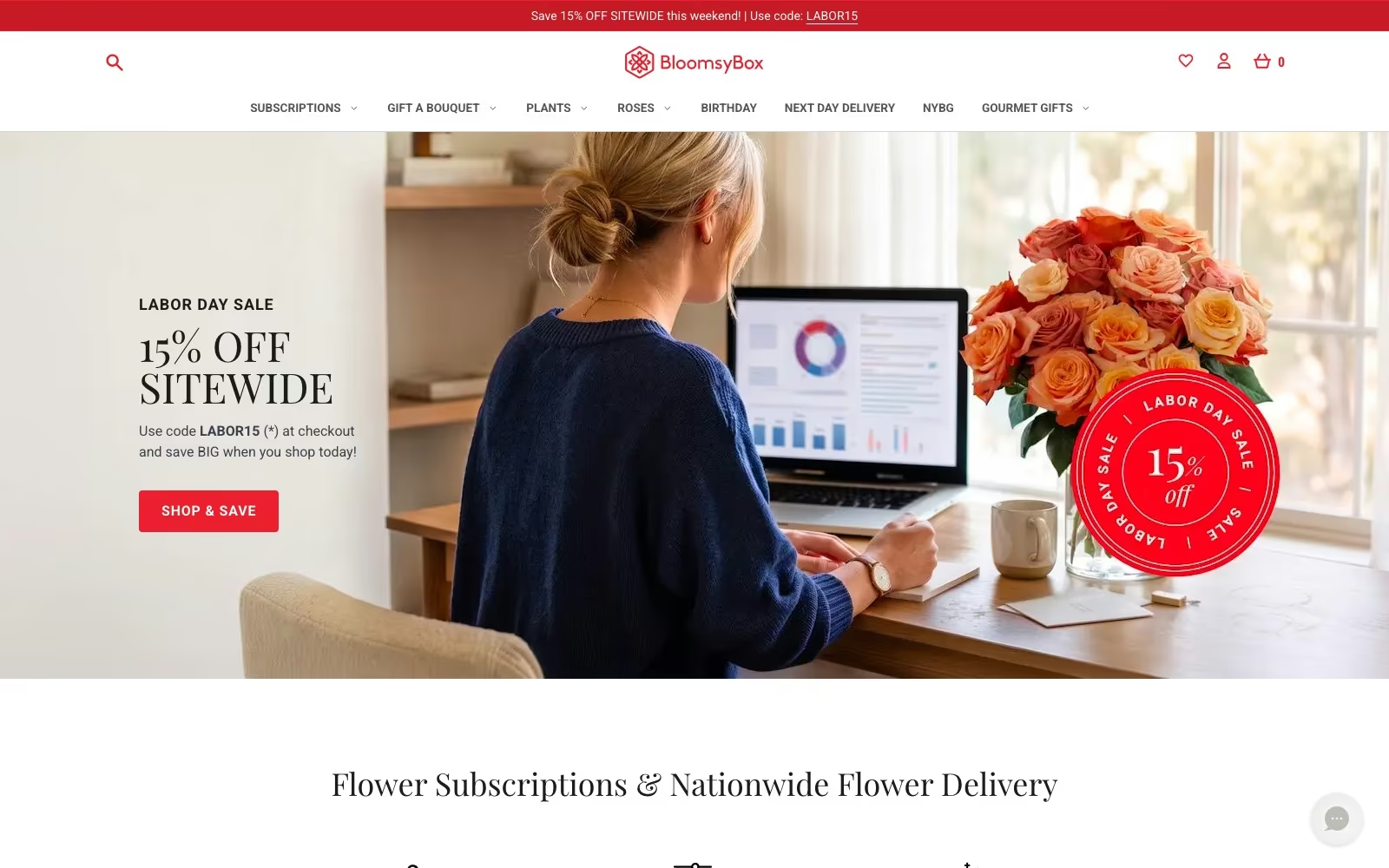
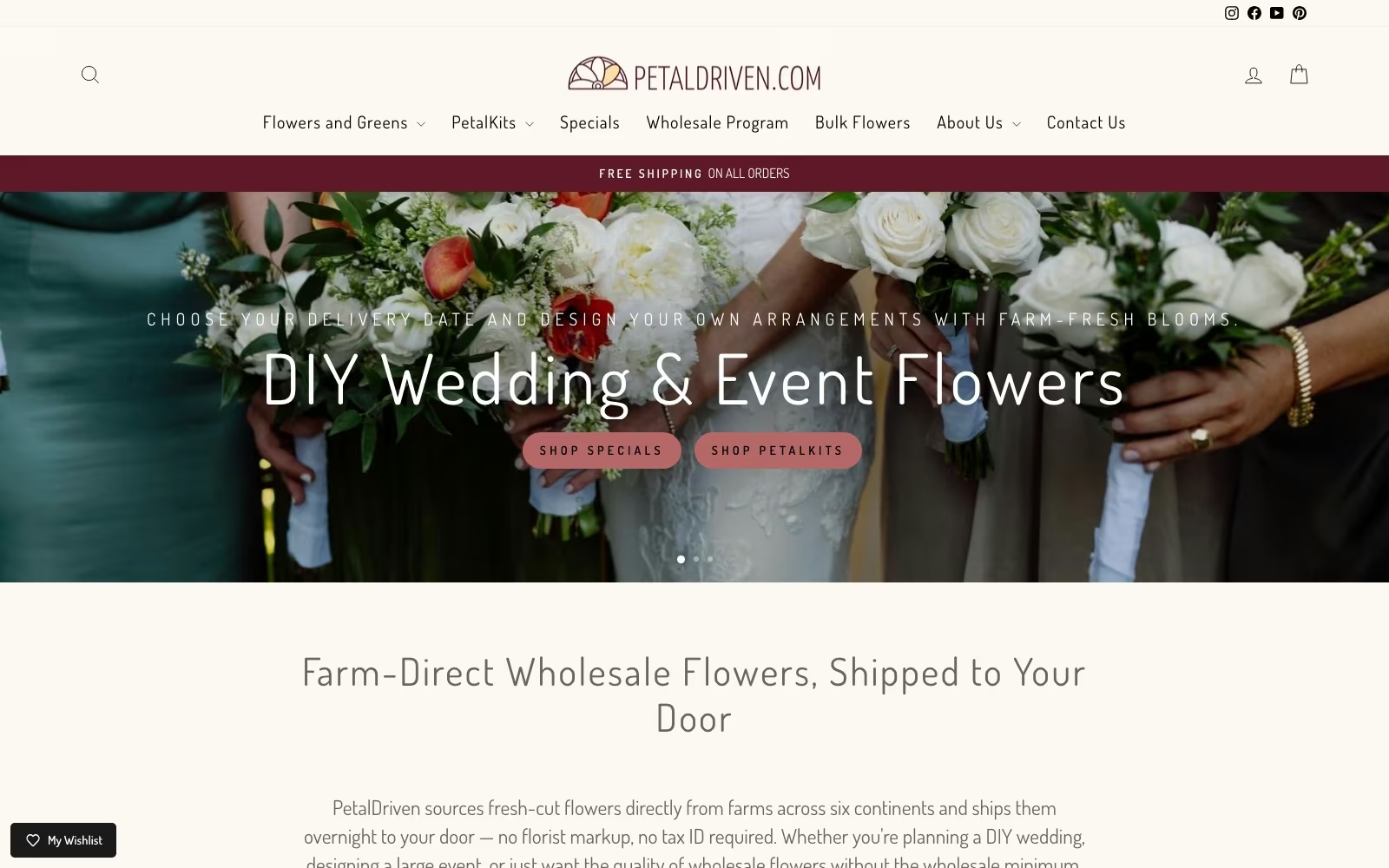
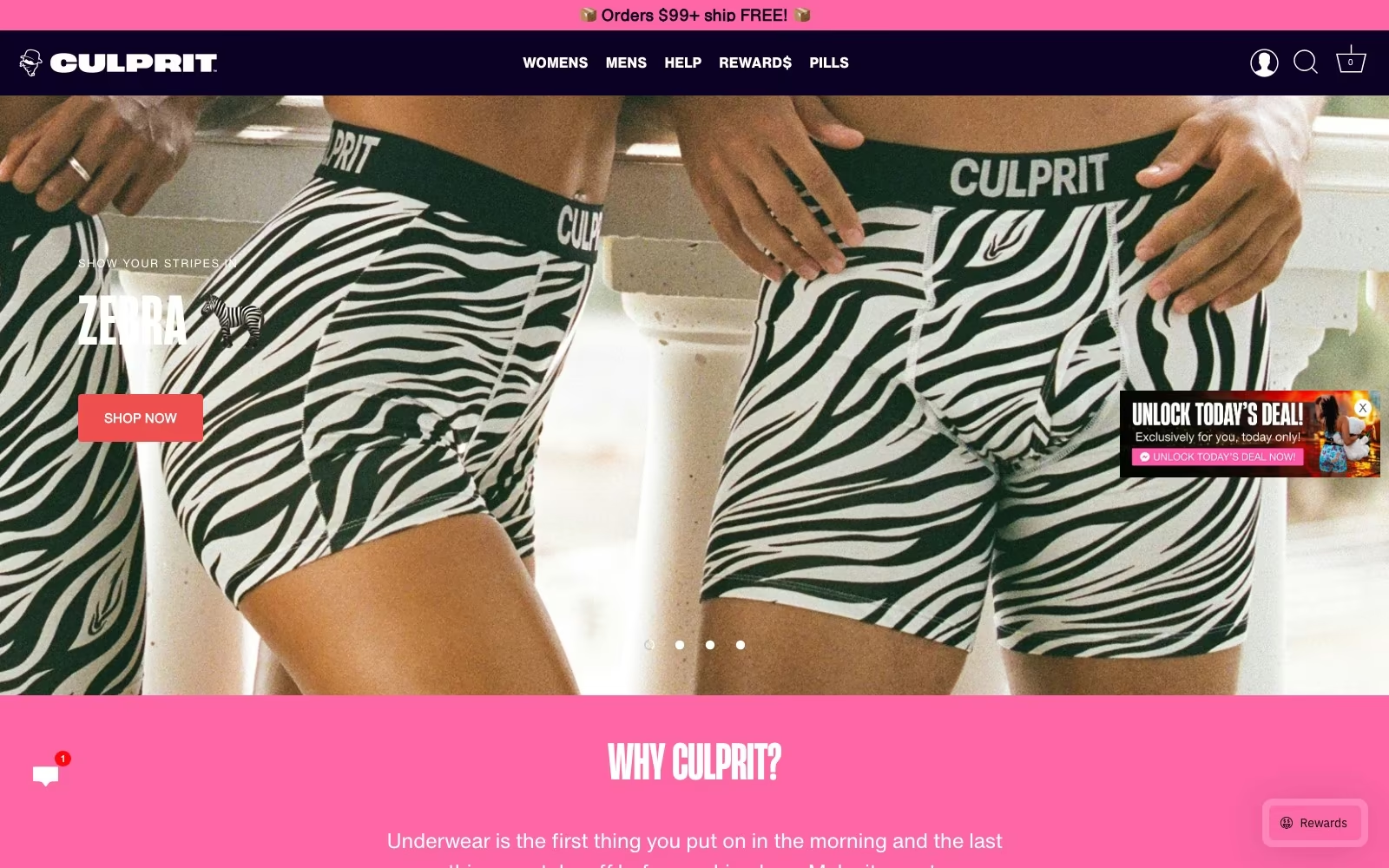
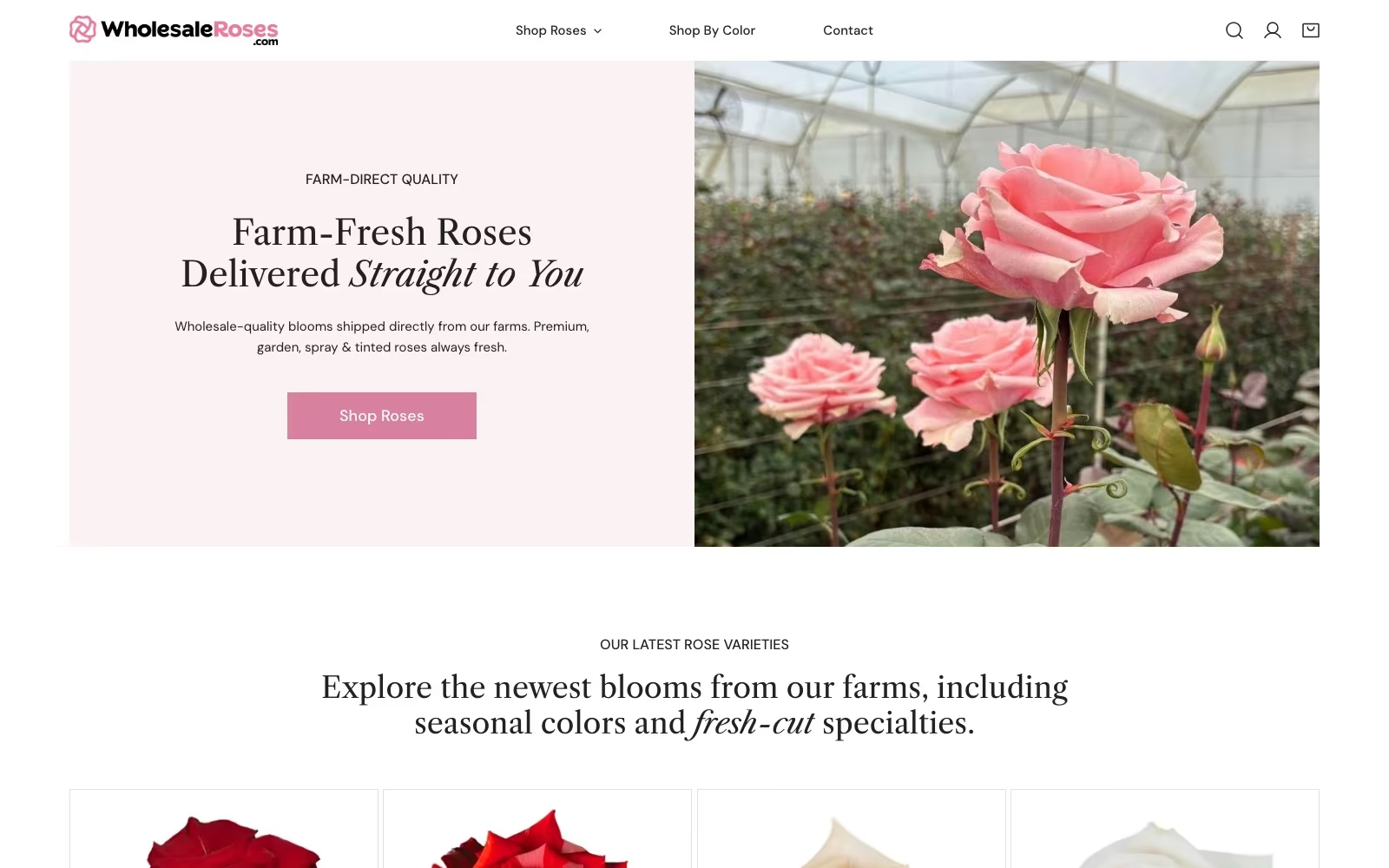
Website Portfolio
Video Ads
Static Ads

































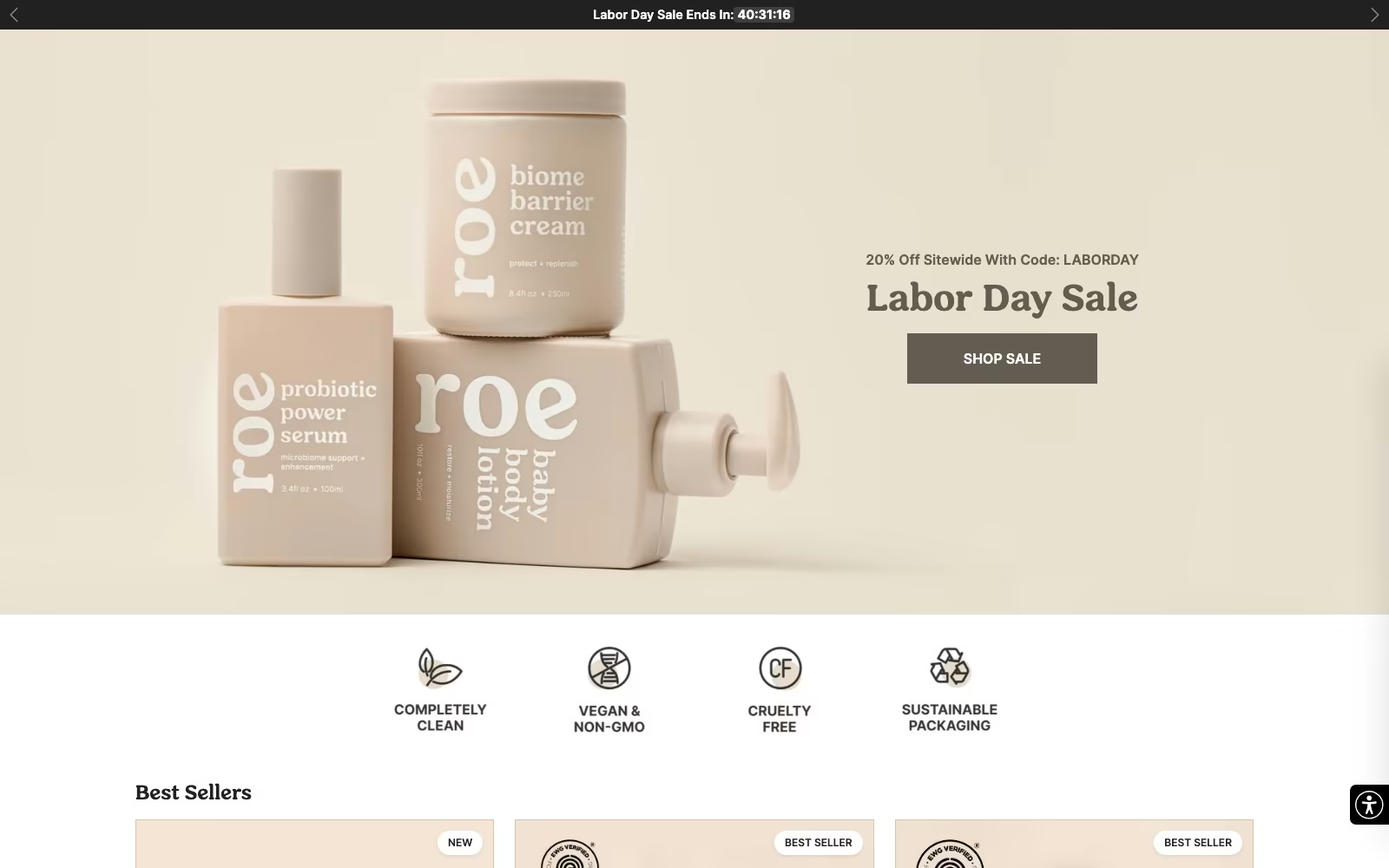

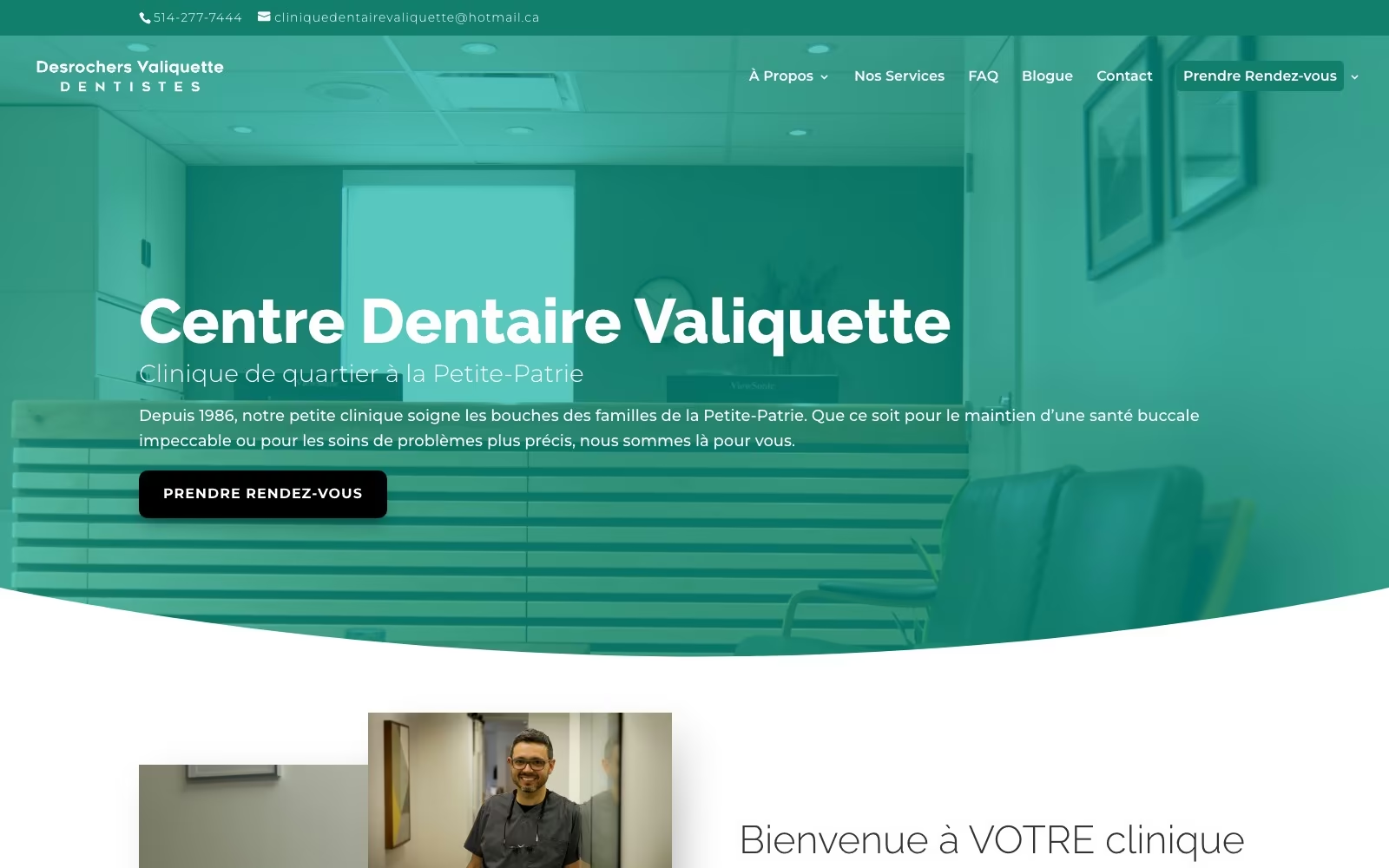

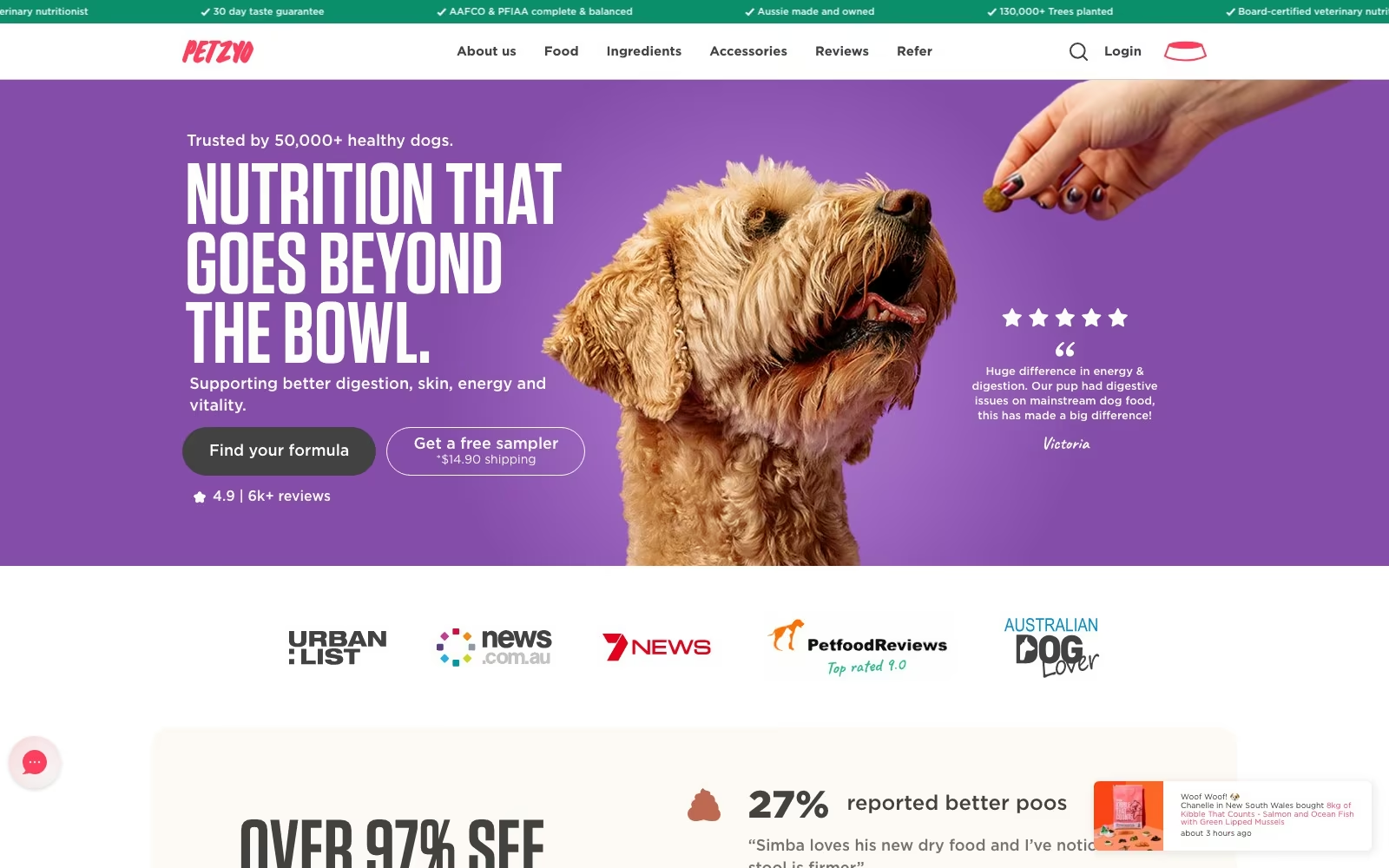


















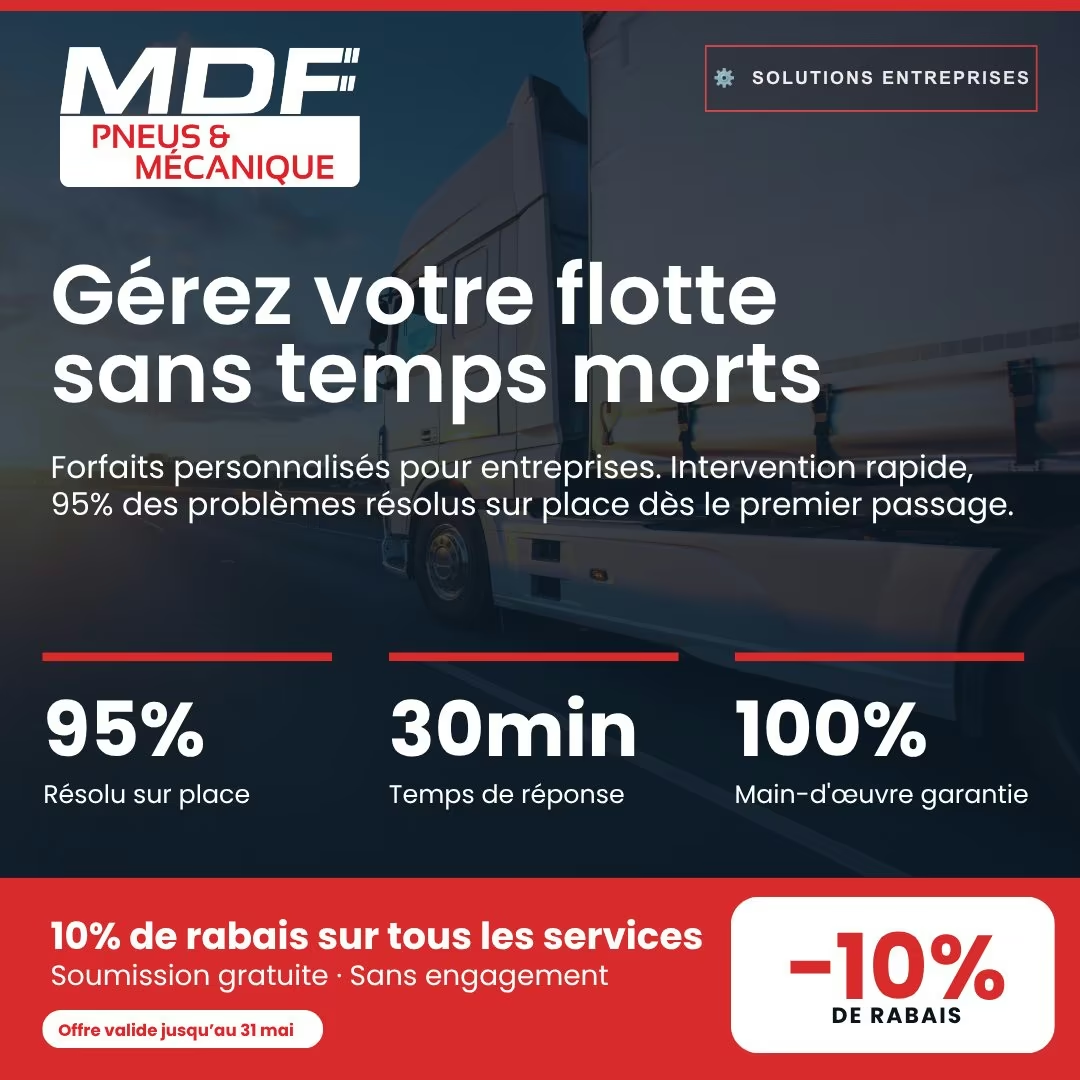







FAQ
What advertisers ask us first.
Is Microsoft Advertising worth running if Google already works?
For most advertisers, yes — and the reason is cost, not size. The audience here is smaller but it converts well, particularly for business, financial, legal, industrial and considered-purchase products, and the auction has fewer serious bidders in it. That combination means clicks are usually cheaper for the same intent. The honest caveat is that it is only worth it if the account is genuinely managed: an imported copy of your Google campaigns left on autopilot will underperform, and that is the version most advertisers have tried. Run properly, it is one of the cheapest incremental channels available to a keyword advertiser.
How much cheaper are the clicks, really?
It depends on your category, and we would rather show you your own numbers than a headline. As a reference point, Benchmarketing's 2026 dataset puts the median Microsoft Ads cost per click at $3.32 and the median cost per acquisition at $41.44, with the interquartile range running from roughly $22 to $74. What matters more than the median is that spread: the same platform produces very different economics depending on how the account is built. In an audit we model your expected cost per click and cost per lead from your own Google search term reporting before you spend anything, so the decision is made on your numbers.
Can we just import our Google Ads campaigns and be done?
Import first, absolutely — it is the fastest way to get coverage, and Microsoft supports scheduled recurring imports, with up to 100 scheduled import jobs per account, which is genuinely useful for keeping new keywords and ads in sync. What we would not do is stop there. Search behaviour differs, the auction is thinner, and the audience skews older and more professional, so keyword lists, match types, negatives and ad copy all want adjusting. Our rule is import for coverage, then rebuild for performance, then keep a light scheduled import running so nothing new gets stranded on one platform.
How does the syndicated partner traffic work?
It is the set of partner sites and properties that show Microsoft results alongside Bing itself, and the answer is: use it, but never blind. Partner traffic can be excellent value in some categories and noisy in others, and the mistake we see most often is leaving it bundled with owned traffic so the two cannot be told apart. We segment it from day one, judge it on its own conversion rate and cost per acquisition, and adjust or exclude it on evidence. That takes one reporting decision at setup and it saves the argument later, because you can see exactly what each source of traffic is worth.
Which industries do best on Microsoft Ads?
Categories where the buyer is at a desk during working hours, and categories with a considered purchase. Microsoft publishes its audience reach from Comscore desktop PC data measured in December 2025, and the people it describes are older, higher-income and more likely to be using a work machine. In practice that means business software, professional and financial services, legal, healthcare, industrial and manufacturing, higher education and home services tend to perform well. Younger consumer and impulse categories are usually thinner here — we will say so in the audit rather than take the budget.
How do you measure success when volume is lower?
On absolute contribution, not on percentages of a small base. A channel producing fifteen good leads a month at half your usual spend per lead is worth reporting even though its share of traffic looks minor, and a channel producing fifty cheap leads that never close is not. So we reconcile conversions against your CRM or booking system, import the qualified and closed outcomes back into the account, and report CPA per qualified lead and revenue rather than raw conversions. Where volume is genuinely thin, we use longer reporting windows so decisions are made on enough numbers to mean something.
Do you work on shopping and audience campaigns too?
Yes, and for retailers the shopping side is often where the value sits. That work starts with the feed: titles, attributes, availability and pricing kept accurate, because feed quality decides how much of the catalogue is eligible to show at all. Beyond shopping we run audience ads across the Microsoft network, with prospecting and remarketing segmented by intent rather than pooled into one list. Both get their own budget and their own read, so a display-style placement never quietly borrows credit for a Bing lead.
What does it cost to have you manage it?
The first engagement is a fixed-price audit and rebuild, quoted before you commit, covering the audit, the structural work, tracking, copy and a a reporting baseline. Ongoing Bing PPC management is a monthly fee scoped to the size and complexity of the account rather than a percentage of media spend — percentage pricing rewards us for spending more of your money, which is the wrong incentive on a channel where the whole point is efficiency. If the audit shows Microsoft Ads is not worth your budget, we will tell you that and stop there.
Will this take work from our team?
Very little, and less than the alternative. What we need is access, one person who can answer questions about what a good lead looks like, and roughly an hour a fortnight to look at the numbers with us. We handle the build, the query report reviews, the copy, the feed and the reporting. Where we do ask for help is offline conversion data — the difference between bidding on form fills and bidding on closed revenue is the single biggest lever on a lead generation account, and it needs a small amount of cooperation from whoever owns the CRM.
How do we choose between Bing ads agencies?
Ask three questions and the field narrows quickly. First, who actually does the work — the named specialists on your account, or a junior team behind the person in the pitch? Second, what does the agency do in the first thirty days: a real audit of your Bing account with priced findings is a different service from a template deck of best practices. Third, how is success defined — clicks and impressions, or qualified leads and revenue reconciled against your own system? Good agencies will also tell you when the channel is not worth your budget. That answer is the strongest signal of expertise you will get.
What does the first thirty days look like with your team?
Week one is access, discovery and definitions: what a good lead looks like, which products carry margin, which markets matter. Weeks two and three are the audit and the fix list, with each finding priced so you can see what the problems spend. Week four is the rebuild starting on the highest-value items — usually conversion tracking, negative keyword lists and campaign structure. You get a weekly working session with the specialists doing the work and one written monthly review. Most clients see the wasted spend fall before they see the new volume arrive, which is the right order.
Do you support businesses outside the United States?
Yes. The Microsoft network's share of desktop search varies significantly by country, so the first thing we do for a multi-market brand is size the opportunity per market rather than assume it travels. Some markets justify a full build; others are worth a light, well-negotiated presence on the highest intent keywords only. We manage the account centrally with market-level budgets, currencies, ad copy and negative lists, and report per market so the weaker ones are visible rather than hidden inside a global average.
Can you run our whole paid search programme, not just Microsoft Ads?
We can, and it usually works better that way because the two auctions inform each other: keyword discoveries here feed the Google build, and vice versa. Our paid search, SEO and conversion tracking teams work from the same measurement and the same plan. It is equally fine to buy this channel alone while another agency runs Google — we will share what we learn with them, because a search programme split between two teams who do not talk is the expensive way to do it.

.webp)
.webp)