The channel you own outright.
own outright
We are the email marketing agency for brands whose subscriber list is bigger than their income from it. We fix inbox placement, build the automated flows that carry most of the money, write campaigns people finish reading, and report email income in a way finance accepts — alongside CRM analytics, copywriting and conversion work when the landing page is the constraint.






Tell us a little about your brand and we'll be in touch within 24 hours to lock in a time.


THE FOUR WORKSTREAMS
Deliverability, lifecycle, campaigns, measurement.
Deliverability, lifecycle
In that order, because a beautiful campaign in a spam folder earns nothing and an automated flow beats a newsletter on almost every metric that matters. Each workstream has its own owner, its own checklist and its own numbers.
Deliverability & list health
Lifecycle automation
Campaigns & creative
Measurement & growth
Reach the inbox first, then be clever.
Everything downstream depends on this and it is the part most programmes neglect until a send collapses. We authenticate the domain properly with SPF, DKIM and DMARC, separate marketing from transactional sending, warm dedicated IPs where volume justifies them, and align the sending subdomain with the brand so recipients recognise who is writing.
Then list hygiene, which is mostly subtraction: suppress hard bounces immediately, sunset chronically unengaged contacts on a schedule, remove role and spam-trap addresses, require confirmed opt-in where the source is doubtful, and make unsubscribing genuinely one click. Engagement is the currency the mailbox providers price, so mailing fewer, more interested people improves placement for everyone still subscribed. Apple's privacy features made open rates a soft signal, so we monitor placement, clicks and complaint rates instead of celebrating an inflated open number.
Baseline context matters here: Mailchimp's published benchmarks put average opens at 35.63% and clicks at 2.62% across all users, and 29.81% opens with 1.74% clicks for ecommerce senders. Those are the numbers a healthy sending reputation makes possible.
- SPF, DKIM and DMARC configured and monitored
- Marketing and transactional streams separated
- Bounce suppression, sunset policy and confirmed opt-in where needed
- Placement, complaint and click rates tracked, not just opens
- One-click unsubscribe honoured everywhere
35.63%
average open rate across all Mailchimp users
2.62%
average click rate in the same benchmark set
The 2% of sends that carry the income.
This is where the money is, and the gap is not subtle. Omnisend's 2026 report found that automated emails made up just 2% of all sends yet generated 30% of total email-driven income, earning 16 times more revenue per send than scheduled campaigns — $2.87 against $0.18. Timing beats volume, because a triggered message arrives while the interest still exists.
So we build the flows properly rather than accepting the platform's defaults: welcome and onboarding sequences that earn the second open, browse and cart abandonment with honest urgency instead of manufactured panic, post-purchase sequences that reduce support tickets and set up the reorder, replenishment timed to the actual consumption cycle, winback for lapsing customers, review and referral requests placed where satisfaction peaks, and for B2B a nurture track that reads sales-stage data rather than blasting every contact the same PDF.
Every flow gets branching on behaviour and value, quiet hours, frequency caps so a customer never receives four messages in a day, and an exit condition. Then we test the sequence — timing, order, offer, subject — because the compounding gains live there, not in the next newsletter.
- Welcome, abandonment, post-purchase, replenishment and winback built out
- Branching on behaviour, value and lifecycle stage
- Frequency caps and quiet hours across every automation
- B2B nurture driven by CRM stage, not a static list
- Timing, order and offer tested continuously
30%
of email revenue from automations that are 2% of sends
16x
more revenue per send than scheduled campaigns
Written to be finished, not admired.
Campaigns still matter for launches, seasonal trading, content and community, and the craft bar is higher than a template implies. One idea per email, a subject line that promises exactly what the message delivers, a first line that works as preview text, a clear primary action, and a plain-text cousin that reads properly when images are blocked. We write in your voice, not in a house style borrowed from another client.
Segmentation does most of the heavy lifting. Klaviyo's 2026 benchmarks across more than 183,000 brands show an average campaign click rate of 1.69% while the top 10% of senders reach 3.38% — double, from the same inboxes. That gap is relevance: send to the people the message concerns, and suppress the rest rather than padding the reach number.
Accessibility and rendering are part of the build: semantic structure, real text over images, alt text that carries meaning, contrast that survives dark mode, and testing across the clients your audience actually uses. Landing pages are treated as part of the campaign, because a strong email pointing at a weak page is a wasted send.
- One idea and one primary action per email
- Segmented sends with suppression, not blanket reach
- Dark mode, image-blocked and accessibility testing before send
- Landing pages reviewed as part of the campaign
- Written in your brand voice, documented for your team
1.69%
average campaign click rate across 183,000+ brands
3.38%
click rate reached by the top 10% of senders
Revenue finance recognises.
Email is reported generously by default: platform revenue counts every order it can associate with a send, which overstates contribution and starts arguments with finance. We report it three ways instead — platform attributed, CRM or billing confirmed, and incremental where a holdout makes that measurable — and we say which one we are using every time.
The channel deserves the honesty because the underlying economics are strong. Litmus puts the average return at $36 for every $1 spent on email, and its State of Email research found 35% of marketers reporting $10-$36 back per dollar, 30% reporting $36-$50 — and 21% unable to say at all. That last group is the one we most often start with.
Growth is the other half of the job: list acquisition that does not poison inbox placement. Well-placed sign-up capture, an offer worth an address, preference collection so people choose frequency and topic, and progressive profiling instead of a fourteen-field form. Bought lists and scraped addresses are declined, every time, because one send can cost a domain months of reputation.
- Platform, CRM-confirmed and incremental revenue reported side by side
- Holdout tests where the decision justifies them
- Sign-up capture, preference centre and progressive profiling
- Revenue per recipient and per send tracked over time
- Written monthly review ending in recommendations
$36
average return per $1 spent on email (Litmus)
21%
of marketers cannot state their email ROI at all
average unique open rate worldwide (GDMA)
average click-to-open rate worldwide (GDMA)
Deliverability fixed before we increase sending volume
Platform, templates, flows and documentation
We made the difference for those brands

B2B software, fintech, insurance

Food & beverage

Consumer tech and platforms

Consumer tech and platforms

Food & beverage

B2B software, fintech, insurance

Healthcare & regulated services

Consumer tech and platforms

Healthcare & regulated services

Healthcare & regulated services

Food & beverage

Consumer tech and platforms

Home essentials, appliances, kitchen & pet

B2B software, fintech, insurance

Beauty, personal care & wellness

Retail & commerce

Home essentials, appliances, kitchen & pet

Travel & mobility

Home essentials, appliances, kitchen & pet

Creative, content, arts & culture

B2B software, fintech, insurance

Food & beverage

B2B software, fintech, insurance

B2B software, fintech, insurance

Healthcare & regulated services

Food & beverage

Consumer tech and platforms

Healthcare & regulated services

Beauty, personal care & wellness

Travel & mobility
01 — The challenge
A big list, a small number.
The list has grown for years, a newsletter goes out most weeks, the welcome sequence is two emails written before the last rebrand, and email shows up in the board pack as a number nobody quite believes. Meanwhile complaints creep up, placement drifts, and the answer to a slow month is to send more.
“We have 200,000 subscribers and no idea which of them are worth emailing.”
The economics say the channel is worth fixing rather than sending harder: Litmus measures an average return of $36 per $1 spent, and Omnisend found automations producing 30% of email revenue from 2% of sends. Almost every underperforming programme we inherit has the same three causes: inbox placement nobody owns, flows left at their defaults, and revenue reported one flattering way. All three are fixable inside a quarter.
02 — Our approach
Earn the inbox, build the flows, then report honestly.
We start with an audit of inbox placement and list health: authentication, stream separation, bounce and complaint history, unengaged cohorts, and the acquisition sources feeding it. Anything harming placement is fixed before we increase volume. Then we build the lifecycle properly — welcome, abandonment, post-purchase, replenishment, winback and, for B2B, CRM-stage nurture — with branching, frequency caps and quiet hours across every automation, because triggered messages carry most of the revenue. Campaigns run alongside on a planned calendar, segmented and suppressed rather than blasted, written in your voice and tested for dark mode, blocked images and accessibility. Measurement is the discipline that holds it together: platform, CRM-confirmed and incremental revenue reported side by side, with a written monthly review. You own the platform, the templates, the flows and the documentation throughout.
03 — What we did
Four phases, compounding after the first.
Audit, flows, campaigns, growth — the first month buys the inbox back, and every month after that compounds on it.
Weeks 1-2 / Audit
Fix deliverability before volume
Authentication, stream separation, bounce and complaint history, unengaged cohorts suppressed and acquisition sources reviewed.

Weeks 2-6 / Flows
Build the automations that pay
Welcome, abandonment, post-purchase, replenishment, winback and nurture built with branching, frequency caps and quiet hours.

Weeks 4-8 / Campaigns
A calendar, segmented and tested
Planned campaigns written in your voice, segmented with suppression, tested for dark mode, blocked images and accessibility.

Ongoing / Growth
Grow the audience, prove the revenue
Sign-up capture, preference centre and progressive profiling, with platform, CRM-confirmed and incremental revenue reported together.

WHAT YOU GET
Deliverables that outlast the retainer.
outlast the retainer
Everything below is built in your own email platform, documented as we go, and handed over in full.

Deliverability audit and repair
Authentication, sending streams, bounce and complaint handling, sunset policy and one-click unsubscribe brought to standard and monitored.

Lifecycle flow build
Welcome, abandonment, post-purchase, replenishment, winback and nurture sequences with branching, caps and exit conditions.

Campaign calendar and copy
A planned calendar with segmentation and suppression rules, written in your brand voice and tested before every send.

Template and design system
Modular templates that survive dark mode, blocked images and older clients, with accessibility built in rather than added later.

List growth and preferences
Sign-up capture, offers worth an address, a preference centre and progressive profiling — never bought or scraped lists.

Revenue reporting and review
Platform, CRM-confirmed and incremental revenue reported together, with a written monthly review ending in recommendations.
HOW WE WORK
Operating standards, not promises.
Operating standards


















Built on trust. Proven by results.
We partner with SMBs and Fortune 500 companies to deliver more than reach — we bring clarity, execution, and measurable outcomes. Every successful partnership starts with a strong culture fit and a shared drive to grow.






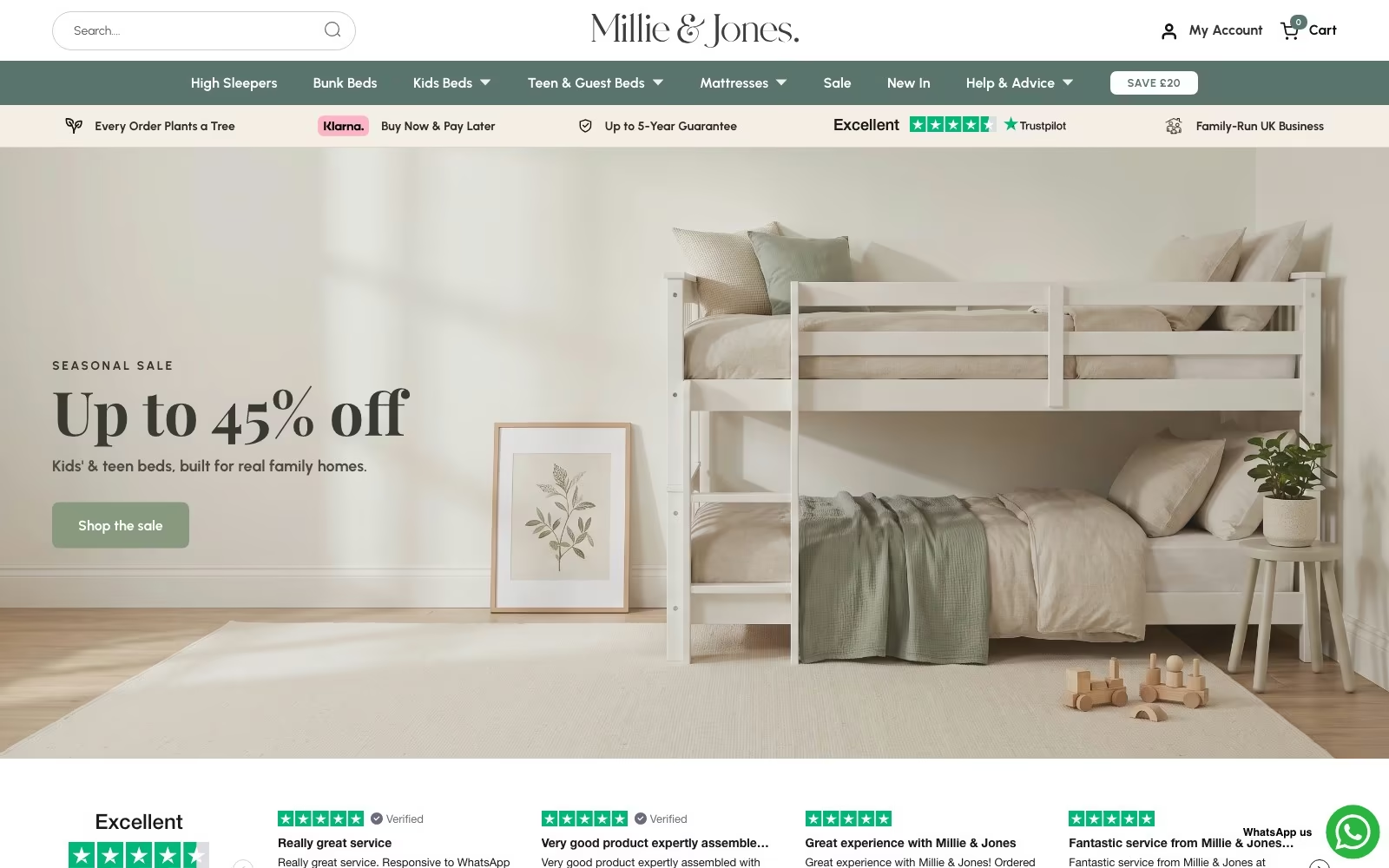
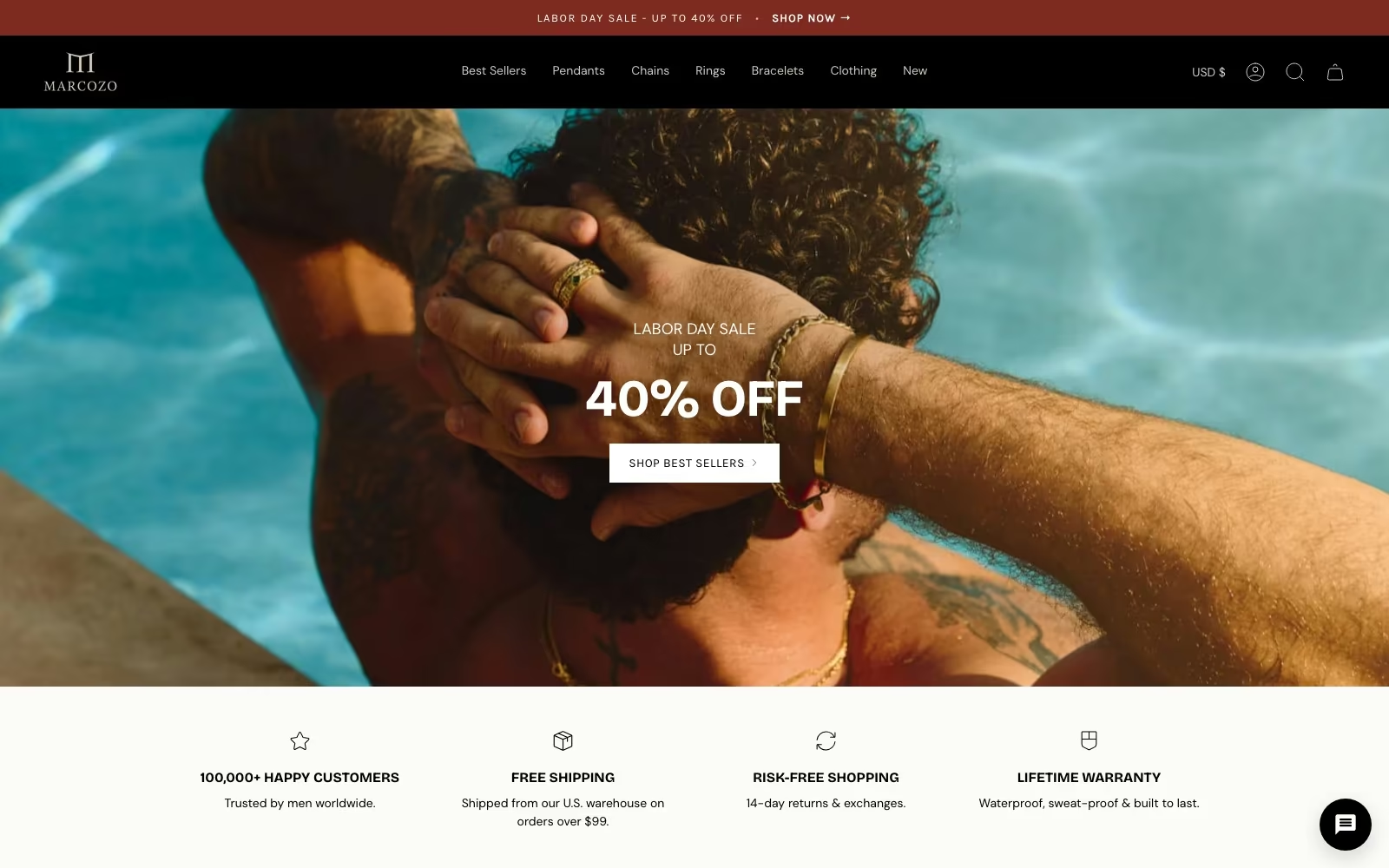
CASE STUDIES
Case studies
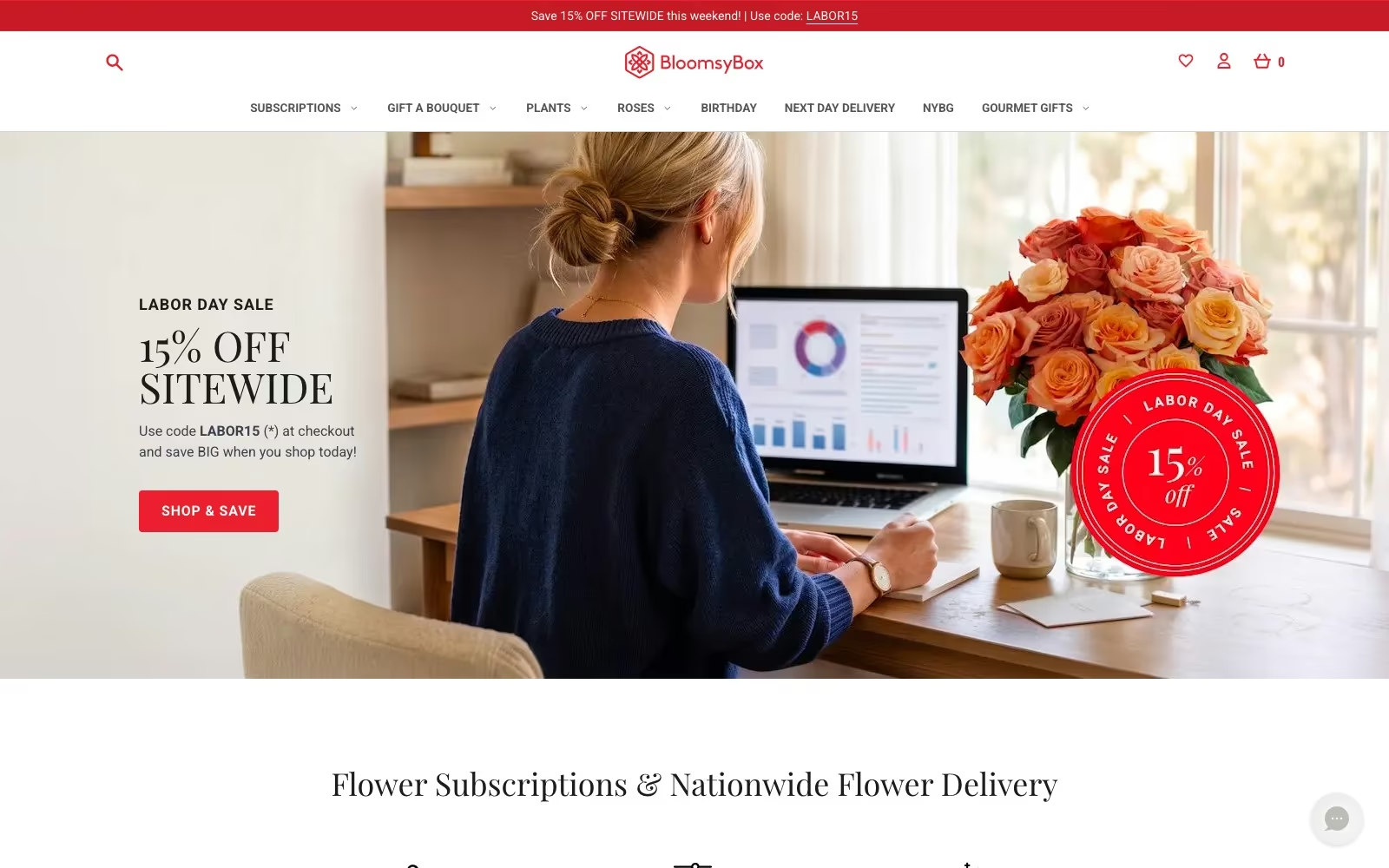
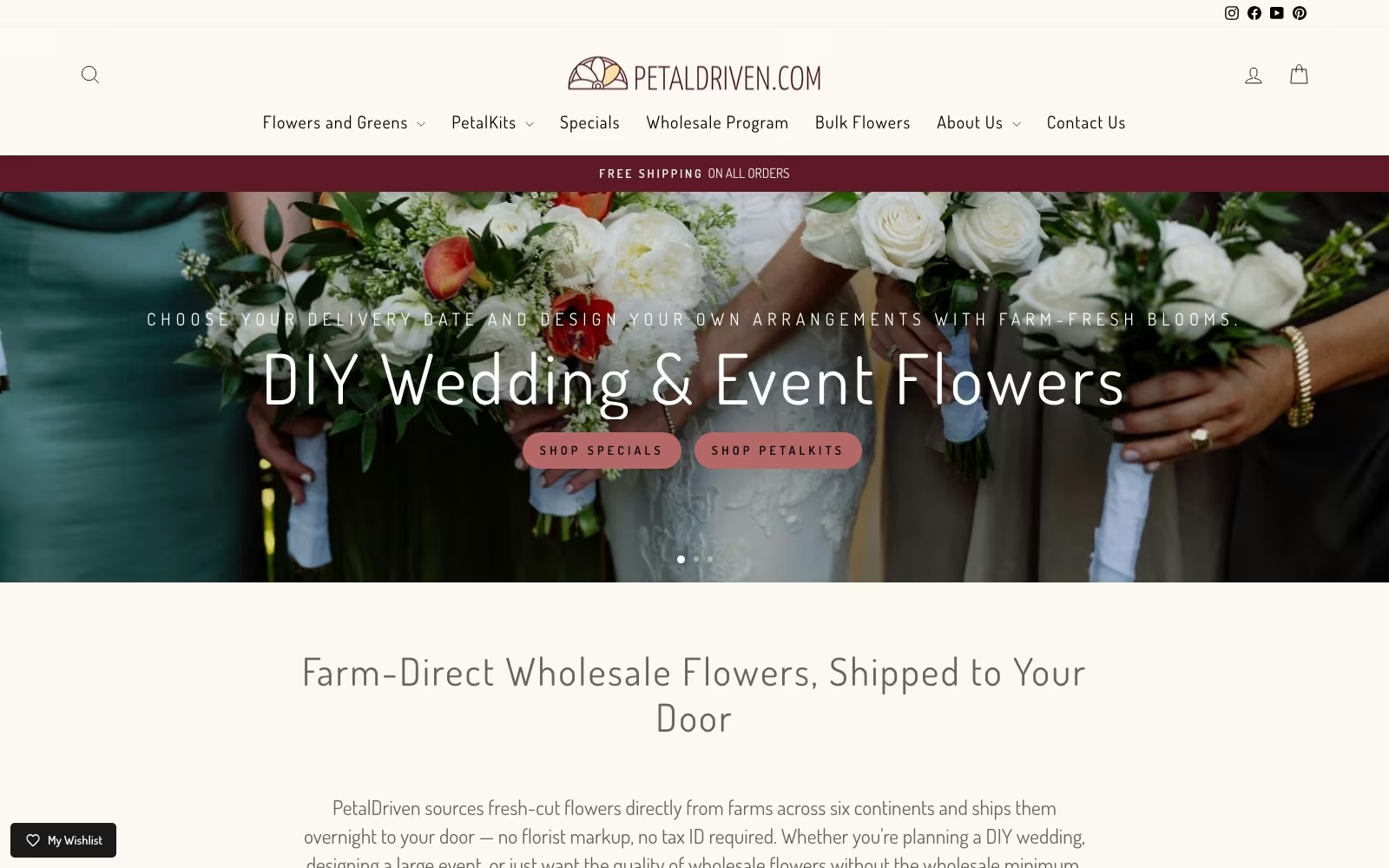
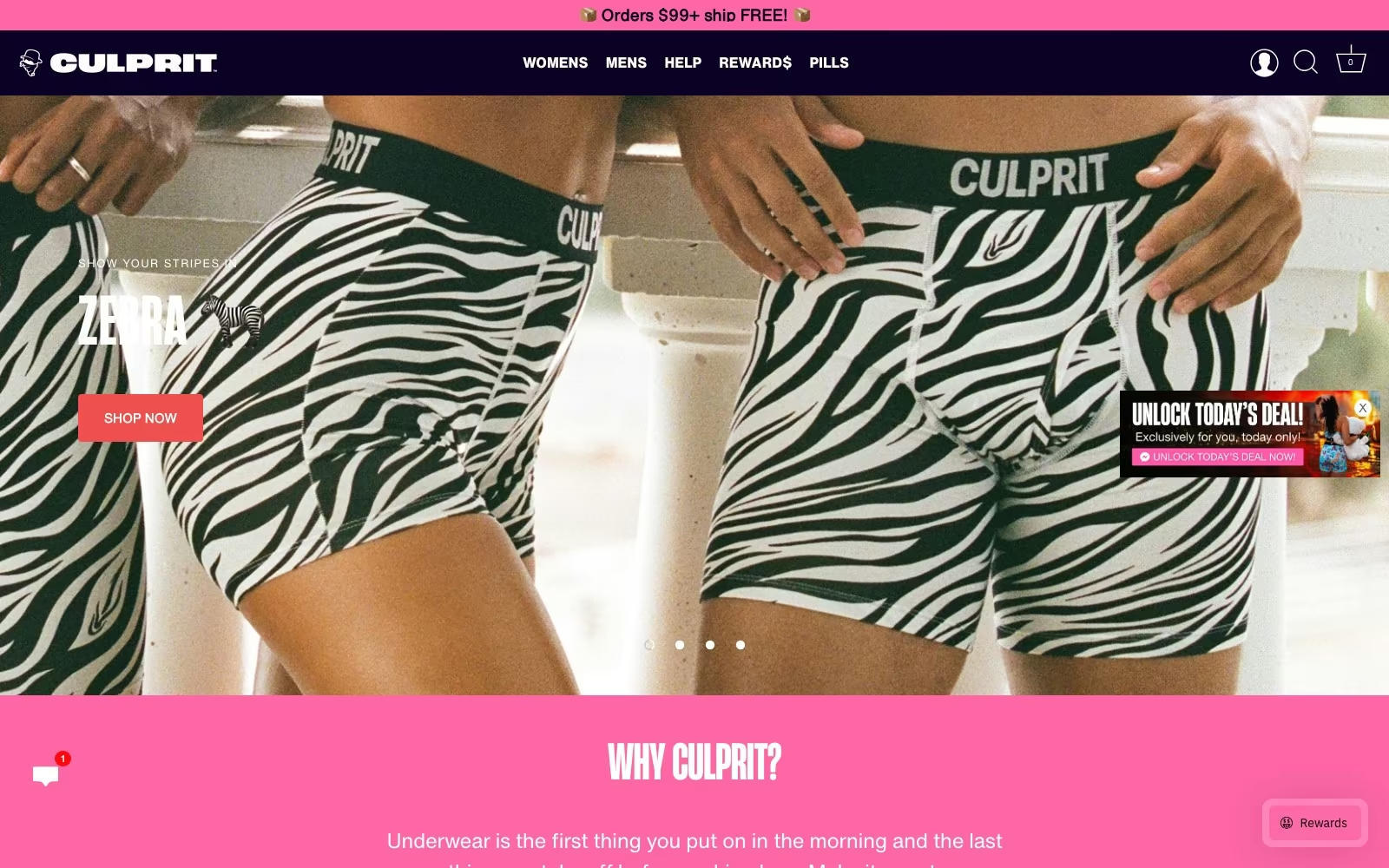
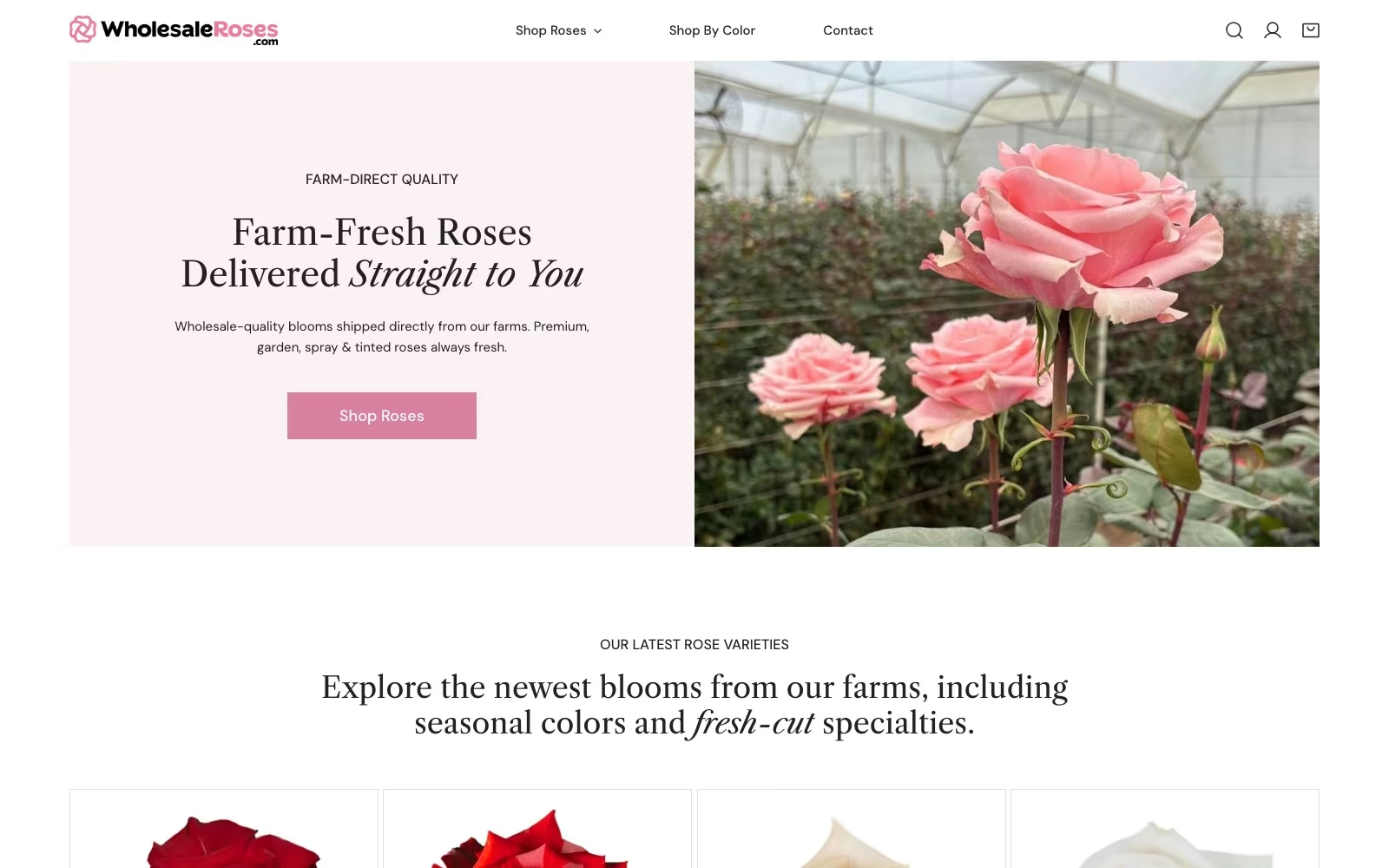
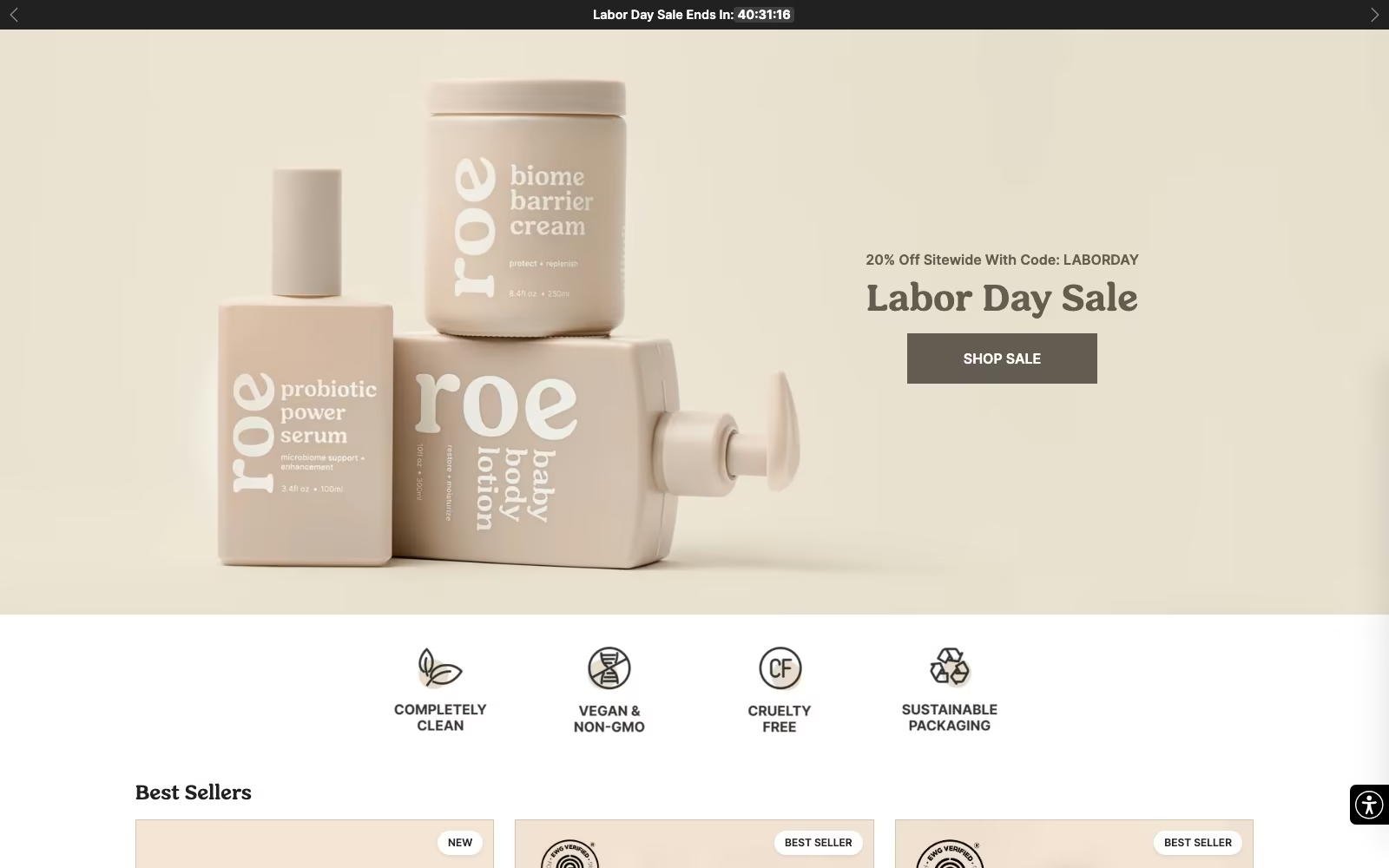
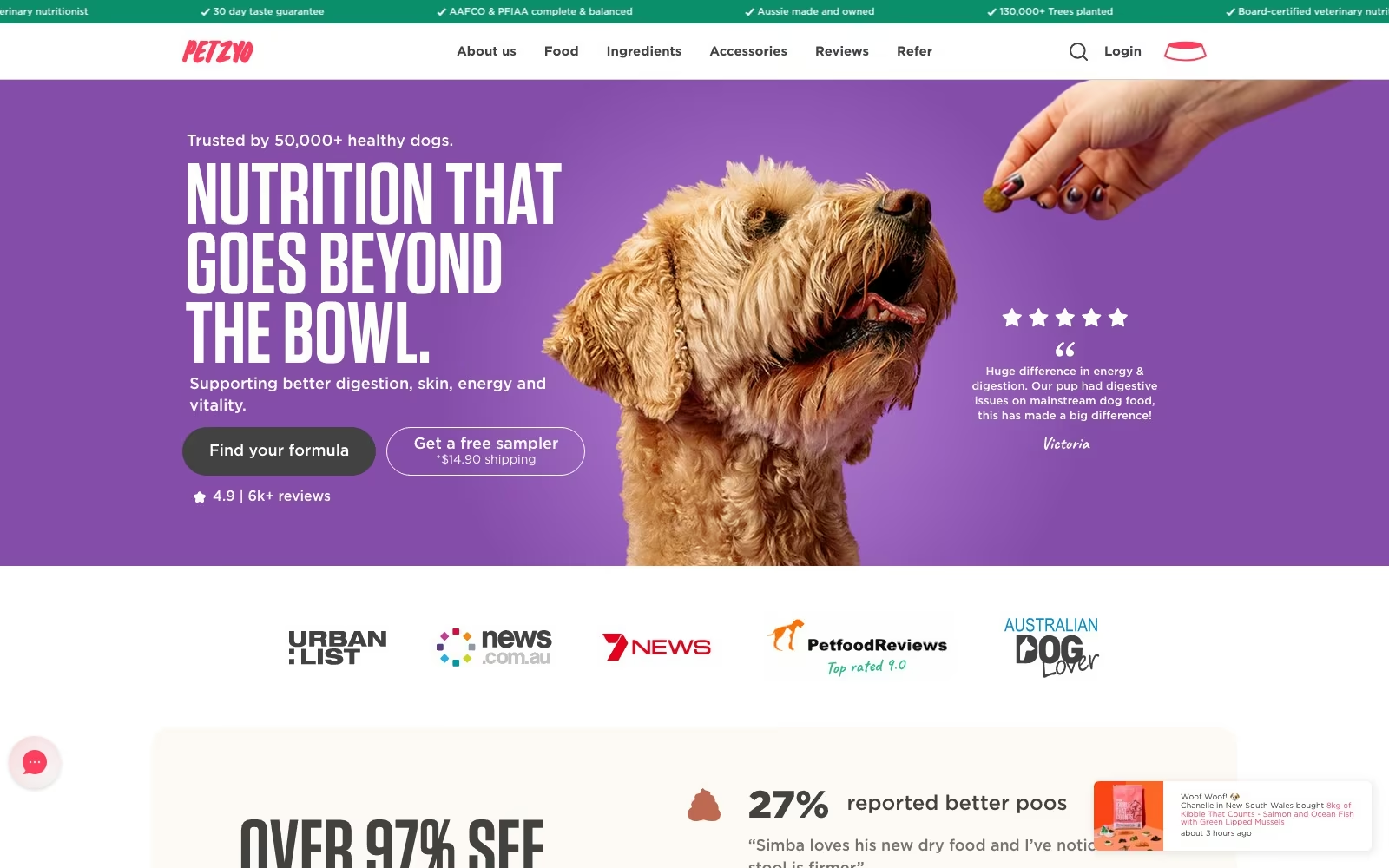
Website Portfolio
Video Ads
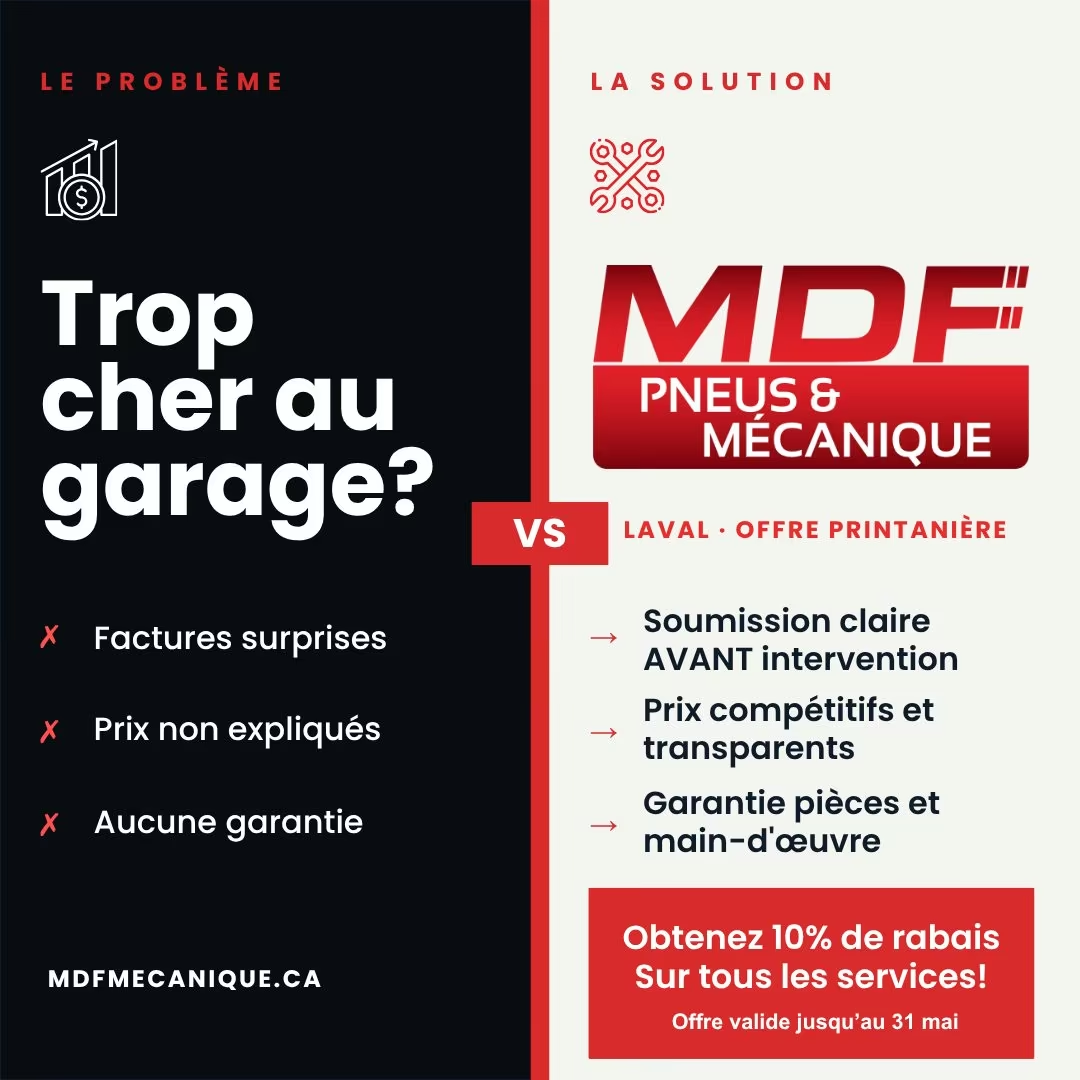
Static Ads
































































FAQ
What brands ask us first.
Which email marketing features actually matter when comparing platforms?
Fewer than the feature grids suggest. The ones that change results are segmentation you can build without a developer, automation triggers that read purchase and behaviour data, branching inside a flow, frequency capping across channels, a preference centre, reliable deliverability reporting, and a clean API or native connection to your store and CRM. Advanced extras — predictive scores, generative subject-line tools, complex attribution dashboards — are pleasant and rarely decisive. Free tiers are genuinely useful for small businesses testing the channel, and most brands outgrow them at the point they need real automation rather than at a contact threshold. We will read your plan against the features you actually use before recommending an upgrade.
What does an email marketing agency actually deliver?
Four workstreams. Deliverability and list health, so messages arrive at all. Lifecycle automation, which is where most of the revenue is created. Campaigns, planned and segmented rather than blasted. And measurement honest enough that finance accepts the number. A good engagement leaves you with authenticated sending, a full set of built-out flows, modular templates, a preference centre, a documented segmentation model and a monthly review that changes what happens next — all inside your own platform, and all yours if we stop working together.
How much revenue should email produce for us?
It depends on catalogue, purchase frequency and list quality, so anyone quoting a universal percentage is guessing. The useful benchmarks are these: Litmus measures an average return of $36 for every $1 spent, with its State of Email research showing 35% of marketers between $10 and $36 per dollar and 30% between $36 and $50. In our first audit we model your own ceiling from list size, engagement cohorts, margin and repeat behaviour, then give you a range with the assumptions written down rather than a headline multiple.
Are automated flows really better than campaigns?
They are more efficient by a wide margin, and both belong in a programme. Omnisend's 2026 report found automations making up 2% of sends and producing 30% of email revenue, at 16 times the revenue per send of scheduled campaigns, and its benchmark work puts automated sends at $3.41 per email against $0.155 for campaigns in 2025. The reason is timing rather than cleverness: a triggered message arrives while intent exists. Campaigns still carry launches, seasonal trading and community, which flows cannot. So we usually fix flows first and let campaigns benefit from the improved reputation.
Our emails are landing in spam or promotions. Can that be fixed?
Yes, and it is the first thing we work on. Placement problems almost always come from a short list of causes: authentication that was never completed, marketing and transactional mail sharing one stream, mailing cohorts that have not engaged in a year, complaints from a poor acquisition source, or a sudden volume jump on a cold domain. We fix the technical setup, suppress the cohorts damaging engagement, rebuild sending volume gradually, and monitor complaint and placement rates weekly. Most programmes see placement recover within a few sending cycles — and the recovery holds because the causes are removed rather than masked.
Should we email our unengaged subscribers or delete them?
Neither, immediately. We run a bounded reactivation attempt — a short, honest sequence to the least stale cohorts, at controlled volume, watching complaints closely — and then sunset whoever does not respond. Keeping them in rotation is what drags placement down for the people who do want to hear from you, and inflating list size helps nobody. Suppressed contacts stay in the database rather than being deleted, so they can be re-engaged if they buy or return through another channel, and so your reporting history stays intact.
Which email platform should we be on?
Usually the one you have, and we will say so when moving is not worth the disruption. Klaviyo is hard to beat for ecommerce lifecycle work; HubSpot and Salesforce Marketing Cloud make sense where the CRM is the centre of gravity; Braze, Iterable and Customer.io earn their cost when messaging spans app, push and email; Brevo and Mailchimp are perfectly capable at moderate volume. Migration is a real project — flows, templates, segments, deliverability warm-up and historical data — so we only recommend it when the current platform genuinely blocks something you need, and we write the comparison out with costs on both sides.
How do you measure email revenue without overstating it?
By reporting it three ways and naming which one we are quoting. Platform attributed revenue is useful for comparing sends but generous, because it claims orders it merely touched. CRM or billing-confirmed revenue tells you what actually closed. Incremental revenue, from a holdout group who receive nothing for a defined period, tells you what would not have happened anyway — the number worth basing budget on. Running a holdout costs a little short-term revenue and settles the argument permanently, so we recommend it once the programme is stable.
How often should we send?
As often as you have something worth reading, which is a real constraint rather than a platitude. We set frequency from engagement cohorts instead of a single house rule: your most active subscribers can hear from you weekly or more, occasional buyers considerably less, and everyone sits under a global cap so no customer receives a stack of messages in one day. A preference centre lets people choose topic and cadence, which reliably outperforms guessing. Then we watch complaint rate, unsubscribes and revenue per recipient — if revenue per send falls as volume rises, the programme is borrowing from next quarter.
Do you write the copy and design the templates, or do we?
We do both by default, and hand you a system you can run yourself. Copy is written in your voice from a documented brief — our copywriting team keeps the tone consistent with the rest of your marketing — and templates are modular, so your team can assemble a new send from approved blocks without a developer. Every template is tested for dark mode, blocked images, older clients and accessibility before it ships. Plenty of clients write their own campaigns and buy strategy, flows and deliverability from us instead; that split works well.
What do email marketing services include, and what is extra?
Our email marketing services include the full build: deliverability repair, lifecycle flows, modular templates, segmentation, the preference centre, reporting and training. Campaign production — the emails that go out each month — is the part that scales with how much you send, so it is priced by volume and easy to increase for a peak season and reduce afterwards. Extra work usually means something outside email itself: landing pages, product photography, SMS message costs, platform licence fees, or a migration between platforms. We list those separately in the plan rather than folding them into a single monthly number, so businesses can see exactly what the marketing spend is buying.
Can you help our in-house marketing team instead of replacing it?
Often that is the best value we offer. Plenty of marketing teams have a capable person running campaigns and simply need the technical foundation built and the strategy set: authentication fixed, flows designed, templates made easy to assemble, segments documented, reporting connected. We build that, train the team, and stay available for the harder questions — a deliverability incident, a platform migration, a new product line, a quarter where leads are flat. It is a smaller engagement than a full retainer and it leaves the day-to-day sending with the people closest to your customers, which is usually where the best emails come from anyway.
Can email work for B2B and long sales cycles?
Yes, though it looks different. Success is meetings booked and pipeline created, not orders, so the programme is driven by CRM stage and sales activity rather than a content calendar: onboarding for new enquiries, education while a deal is dormant, re-engagement when a champion changes job, and alerts to the rep when a contact shows intent. Our CRM analytics team wires those stages back so reporting shows influenced pipeline rather than clicks. It is also the version of email marketing where deliverability matters most, because one complaint-heavy send can affect the sales team's own mail.
How do you grow the audience without hurting deliverability?
By making the exchange fair and the source traceable. Well-placed capture on high-intent pages, an offer genuinely worth an address, confirmed opt-in wherever the source is doubtful, preference collection at sign-up, and progressive profiling instead of a form that asks for fourteen fields nobody fills. We tag every contact with its source so a poorly performing channel can be isolated before it damages the whole domain. Bought lists, scraped addresses and co-registration feeds we decline outright — one send from a bad source can cost months of sending reputation.
How should we choose between email marketing agencies?
Ask each agency four questions and the field narrows quickly. Who owns deliverability, and what will they do in week one? Which lifecycle flows will exist at the end of the build, and will your team be able to edit them without the agency? How is email income reported — platform attributed only, or confirmed against the CRM? And who actually writes the emails: the strategist in the pitch, or a junior you never meet? Ask for a sample monthly review rather than a case-study slide, because the review shows how an agency thinks. Good email marketing agencies will also tell you when a smaller engagement is enough — plenty of businesses need a flow build and a training session, not a permanent retainer.
Which email marketing tools and platforms do you work with?
All the mainstream ones, and we choose by fit rather than by partnership. Klaviyo, Mailchimp, Brevo and Shopify Email cover most ecommerce businesses; HubSpot and Salesforce Marketing Cloud suit teams whose CRM is the centre of gravity; Braze, Iterable and Customer.io earn their price when messaging spans app, push, SMS and email. Around the core platform sit the supporting tools we set up as needed: deliverability monitoring, list validation, preference centres, review and loyalty apps, and the reporting layer our analytics team maintains. If a cheaper platform does what you need, that is the recommendation you will get, along with the features you would be giving up.
Do you handle SMS and push as well as email?
Yes, as part of the same lifecycle rather than a separate programme, because the risk of running them apart is a customer receiving three messages about one order. Consent is collected and stored per channel, frequency caps apply across all of them, and each message goes out on the channel that suits it: SMS for time -critical prompts like a delivery window or an appointment reminder, push for app-based nudges, email for everything that needs room to explain. We keep the cost per contacted customer visible, since SMS is priced per message and easily becomes the most expensive habit in a programme.
What does it cost, and how do you charge?
The audit and build phase is fixed-scope and quoted up front — deliverability repair, flow build, templates, segmentation and reporting — so you approve a number rather than an open retainer. Ongoing work is a monthly fee scoped to the campaign volume, testing and reviews you want, and it scales down once the flows are mature and your team is running the calendar. We do not price email as a share of the revenue it reports, because that would give us an incentive to inflate exactly the number we are asking you to trust.

.webp)
.webp)