L'Entrepôt de la Réno · Renovation & building materials · Paid social · 2026
How L'Entrepôt de la Réno tripled its Meta budget and still doubled its return
Most accounts buy growth by giving up efficiency. This one did the opposite: spend went from CA$103k to CA$320k in twelve months, and return on ad spend climbed from 2.65× to 5.55×.


5.55×
return on ad spend
up from 2.65× on 3.1× the budget
The results, up top — every number is in the strip below
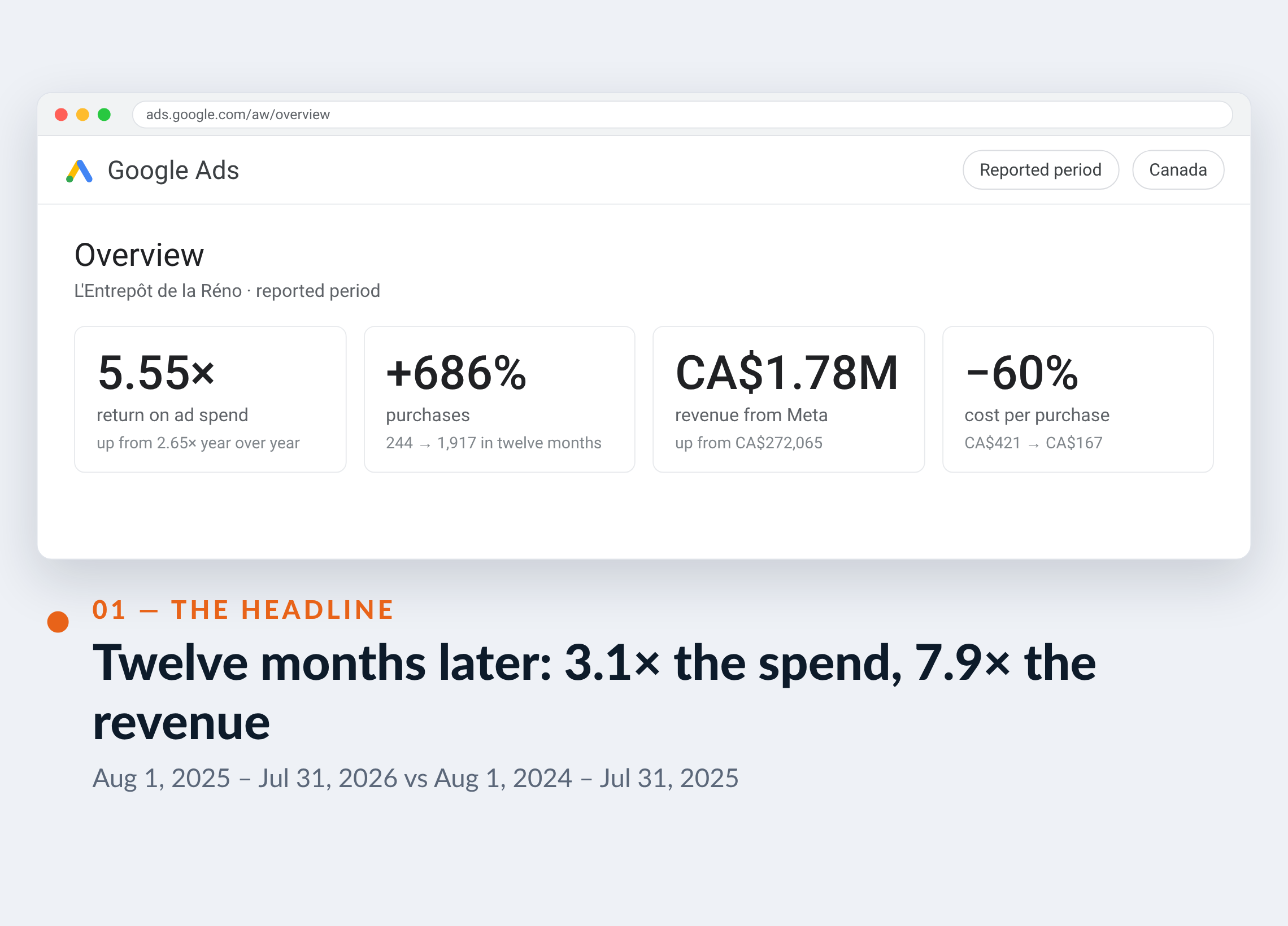
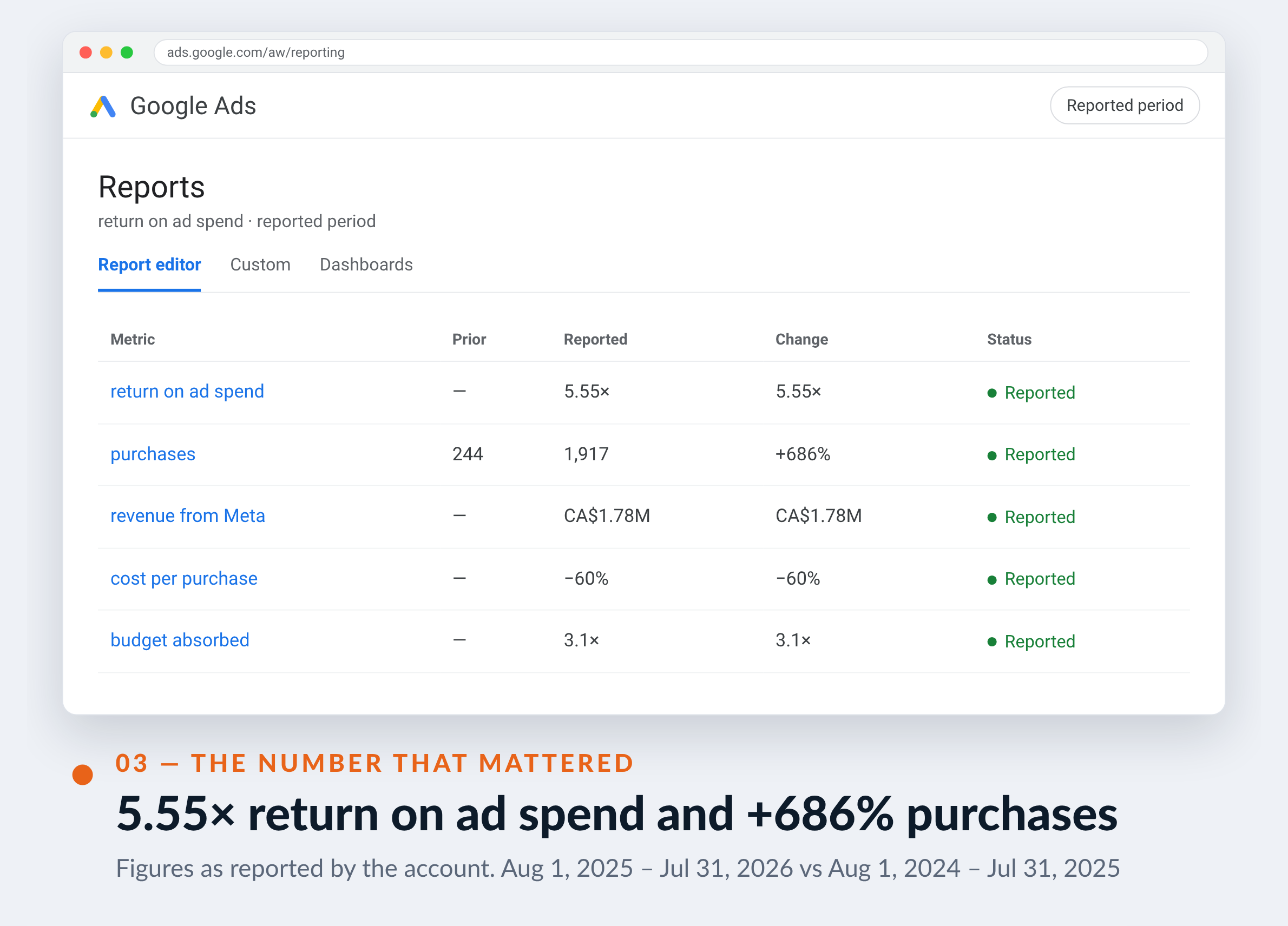
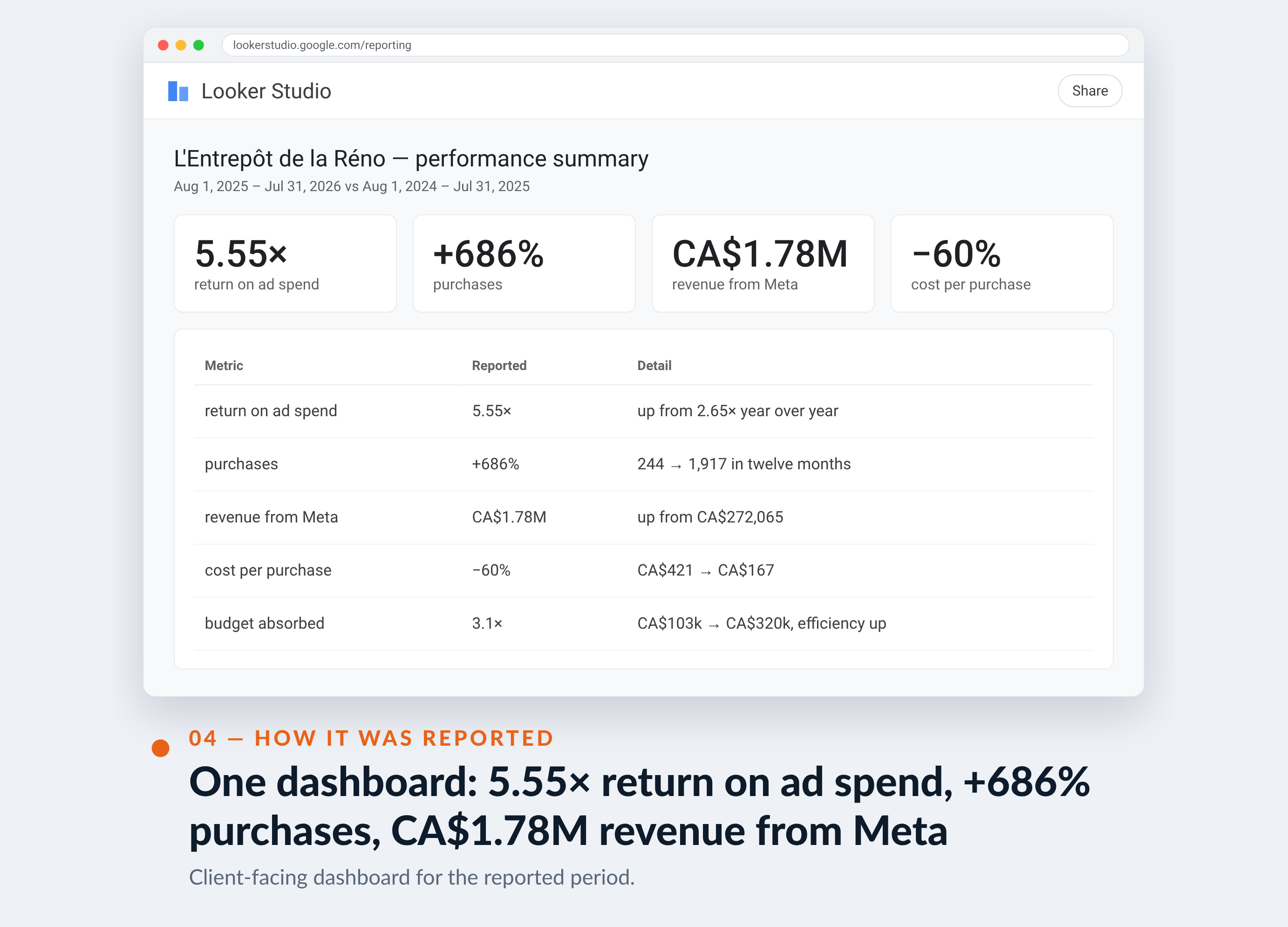
5.55×
return on ad spend
up from 2.65× year over year
+686%
purchases
244 → 1,917 in twelve months
CA$1.78M
revenue from Meta
up from CA$272,065
−60%
cost per purchase
CA$421 → CA$167
3.1×
budget absorbed
CA$103k → CA$320k, efficiency up


01 — The challenge
Scaling was the plan. Efficiency was the risk.
L'Entrepôt de la Réno sells renovation and building materials to Quebec homeowners and contractors — a category with real seasonality, big basket sizes and a long consideration window. The account was already profitable at CA$103k of annual Meta spend, returning 2.65× at a cost per purchase of CA$421.
The ambition was to grow it several times over. The honest risk was the one every scaling account runs into: push budget hard into a limited audience and returns erode faster than revenue grows. Anyone can spend more. The question was whether the account could absorb three times the budget without the economics falling apart.
“I didn’t want a bigger ad budget, I wanted a bigger business. When we agreed to triple the spend I fully expected the returns to fall off a cliff — and every month I could see exactly which campaigns were carrying us and which ones I was paying to keep alive. That is the part I never had before.”
That distinction — budget versus business — is why the work started with structure instead of spend. An account that cannot tell you which campaign is carrying it cannot be scaled safely, no matter how good the creative is.
02 — Our approach
Build the account so more budget makes it smarter, not noisier.
The problem was treated as a structural one before a creative one. A fragmented account splits its own signal — a dozen small ad sets each learning from a trickle of conversions never gets good at anything. So the first move was consolidation: fewer, broader, higher-signal campaigns, so every extra dollar of budget fed one learning system instead of diluting ten.
Second, the jobs were separated. A prospecting layer built to find new buyers, judged only on new-customer cost. A retention layer built on catalogue and site behaviour, judged on incremental revenue rather than the last click it happened to catch. Blending those two into one blended ROAS is how accounts fool themselves for years.
Third, creative became the growth lever instead of the bid. In a high-ticket renovation category, the thing that moves cost per purchase is not a bid tweak — it is showing the right product, the right price and the right proof to someone mid-project. Concepts shipped on a rolling schedule, each one entering against a named control, and retired them on evidence of fatigue rather than on a calendar.
Scaling then went in steps rather than jumps, holding budget increases to increments the learning phase could absorb, and only pushing again once the new spend level held its cost per purchase for a full week.


03 — What we did
Four moves, in the order that mattered.
Structure first, then signal, then creative volume, then scale. Each step made the next one cheaper.
Account structure
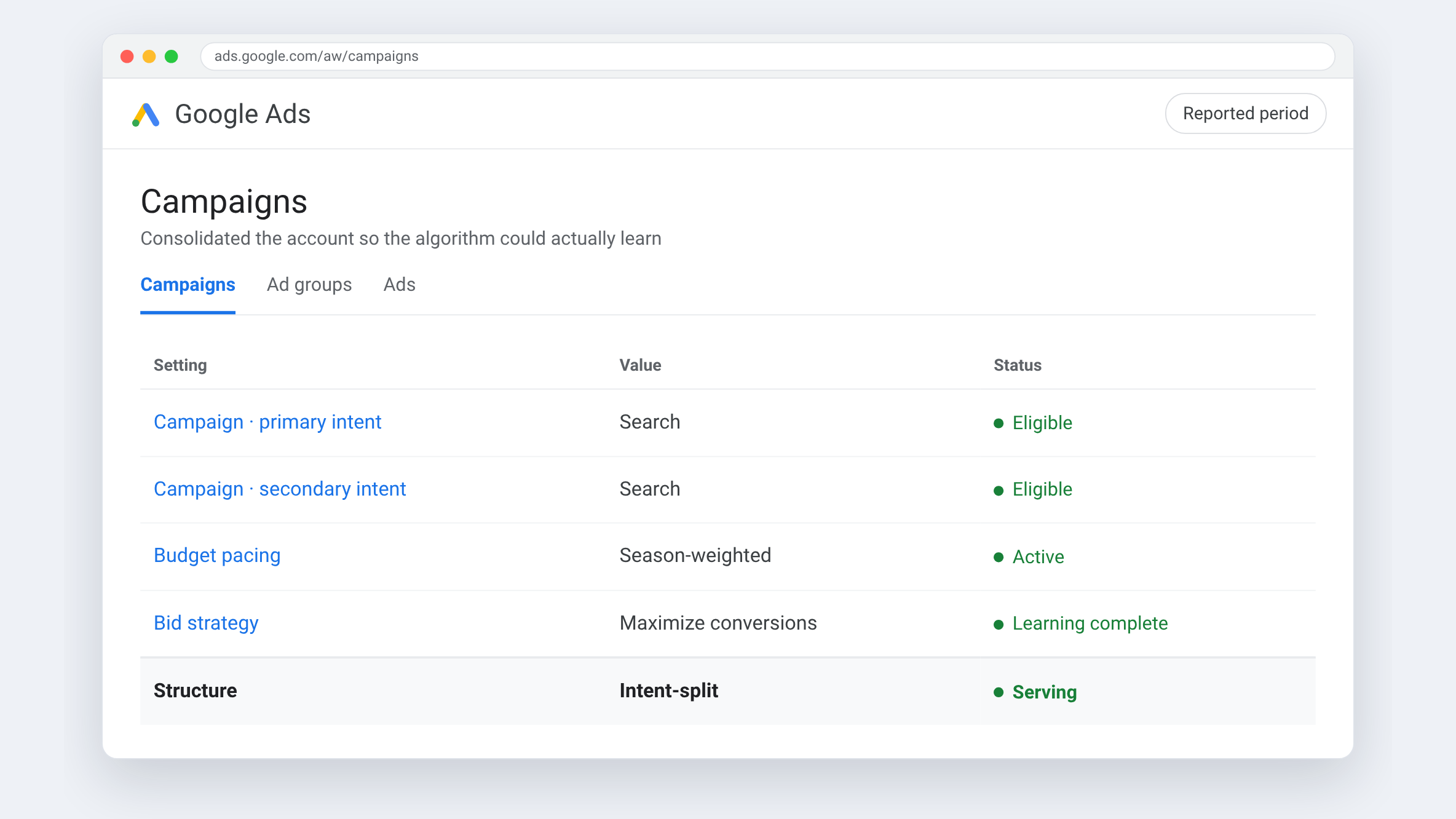
Consolidated the account so the algorithm could actually learn
A sprawling set of small ad sets was collapsed into a handful of broad, high-signal campaigns. Fewer decisions, more conversions per learning system — which is what let the account absorb three times the budget without cost per purchase drifting.
Prospecting vs retention
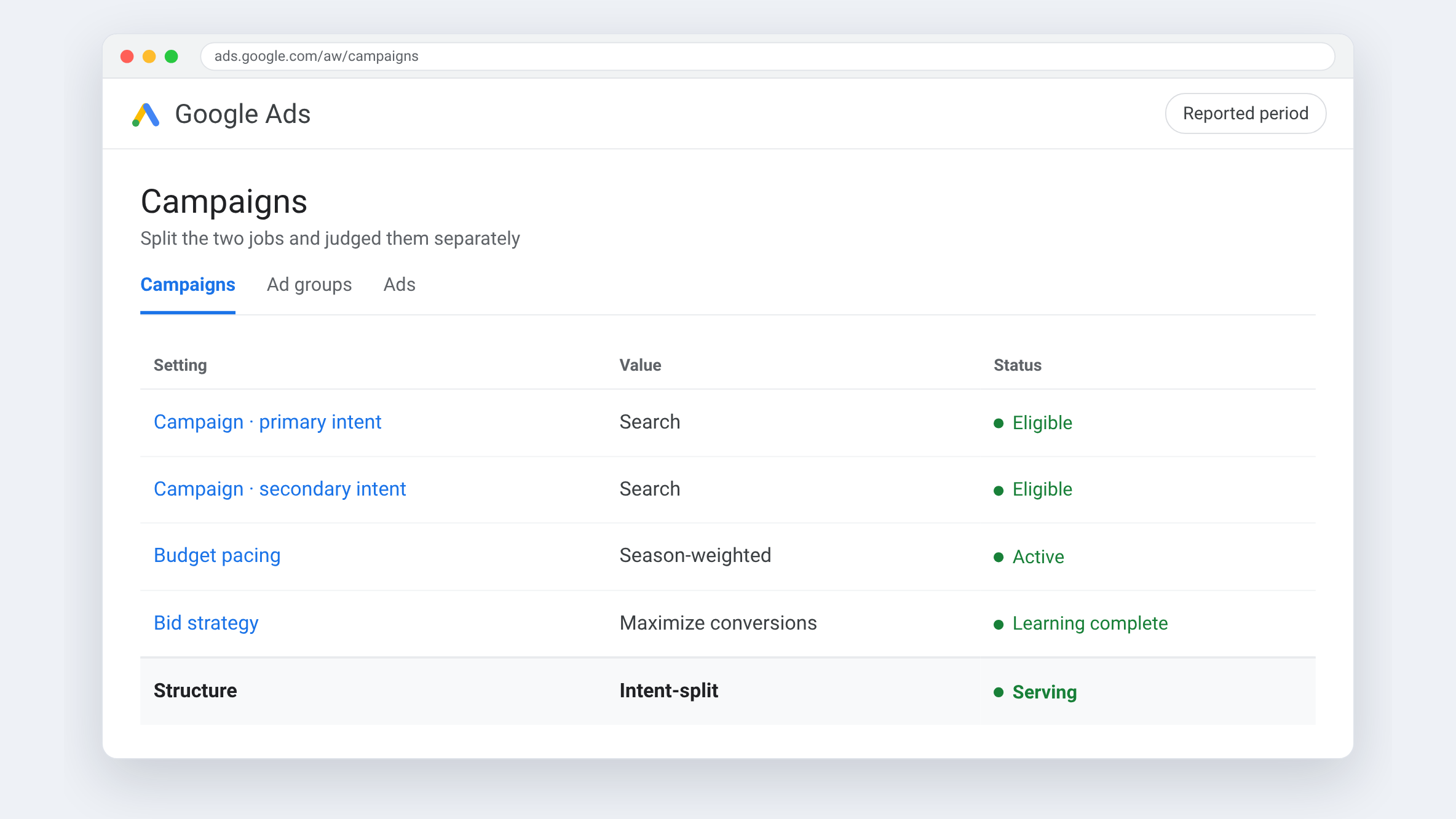
Split the two jobs and judged them separately
New-customer acquisition and existing-customer revenue were separated into their own layers with their own targets, so retargeting could no longer flatter the blended ROAS while prospecting quietly got more expensive.
Performance creative
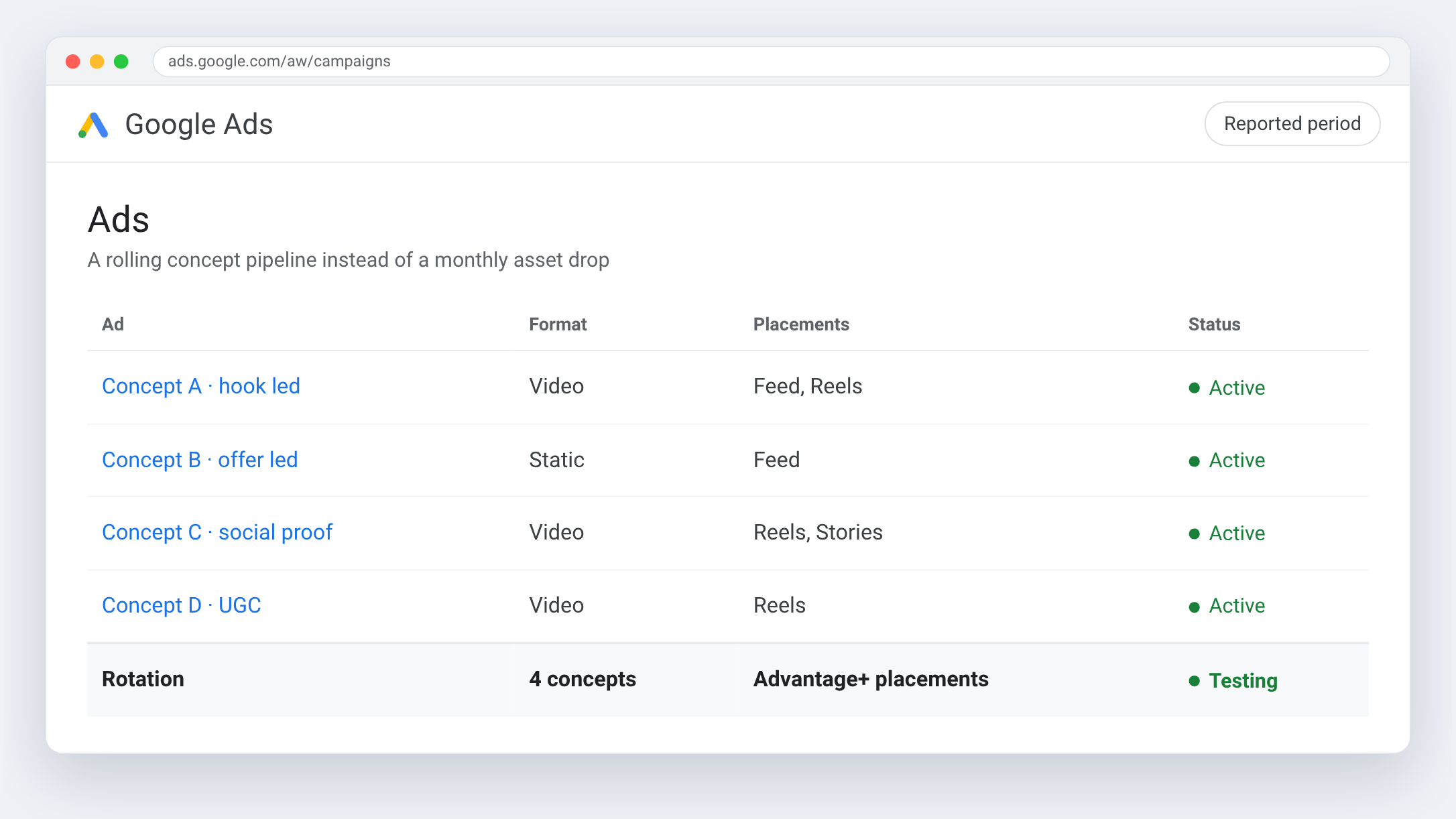
A rolling concept pipeline instead of a monthly asset drop
In a high-ticket renovation category, creative — not bids — moves cost per purchase. New concepts shipped continuously, each tested against a named control and retired on fatigue signals rather than on a calendar.
Scaling protocol
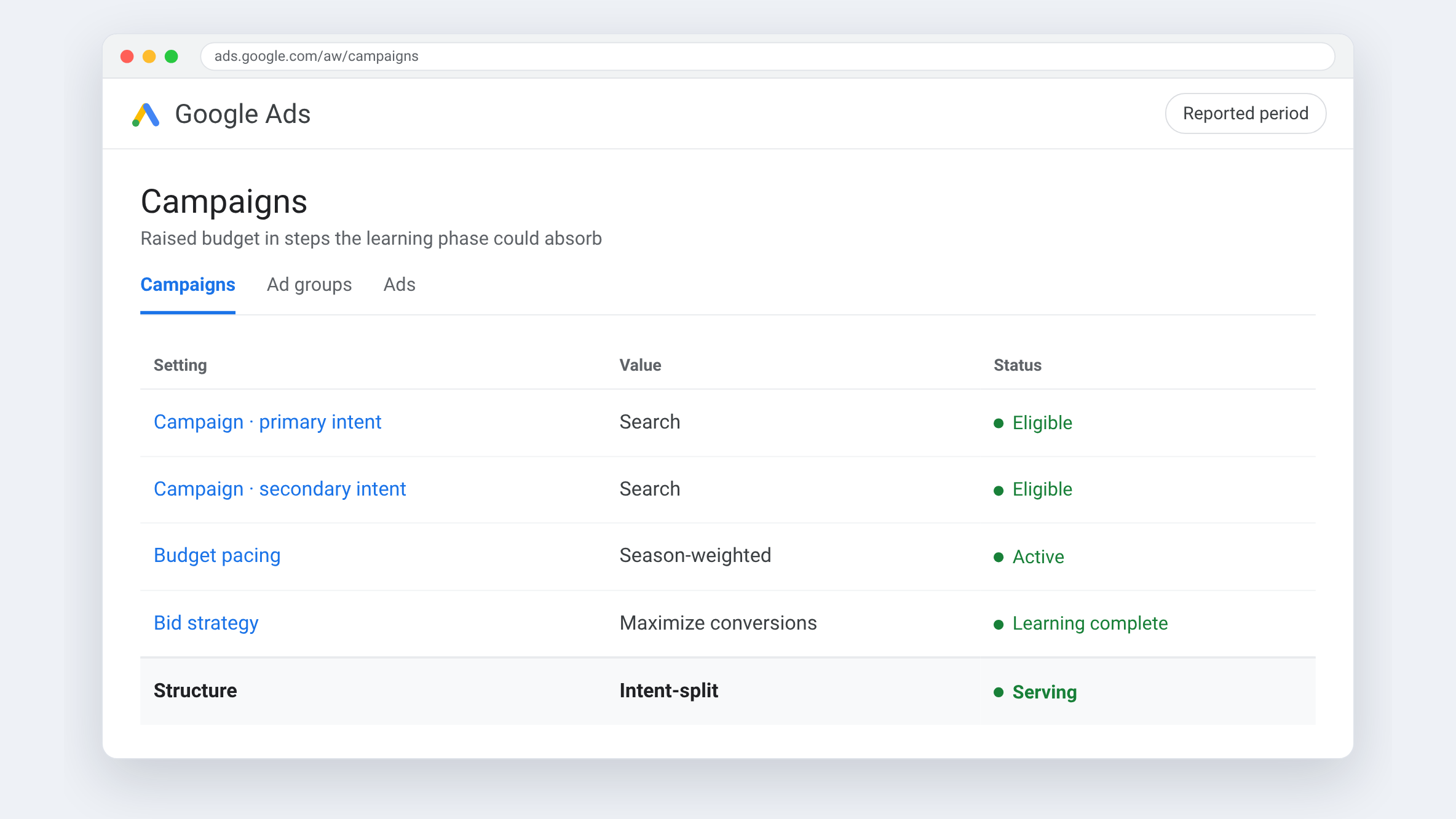
Raised budget in steps the learning phase could absorb
Every increase was sized to avoid resetting delivery, then held until the new spend level proved it could keep its cost per purchase for a full week. That discipline is why ROAS rose during the scale-up instead of after it.

04 — The results
Twelve months later: 3.1× the spend, 7.9× the revenue.
The stack we ran it on

Meta Ads Manager
Paid social

Google Ads
Paid search

GA4
Analytics
Meta Conversions API
Tracking

Shopify
E-commerce

Product catalogue feed
Feed

AgencyAnalytics
Reporting

Looker Studio
Dashboards










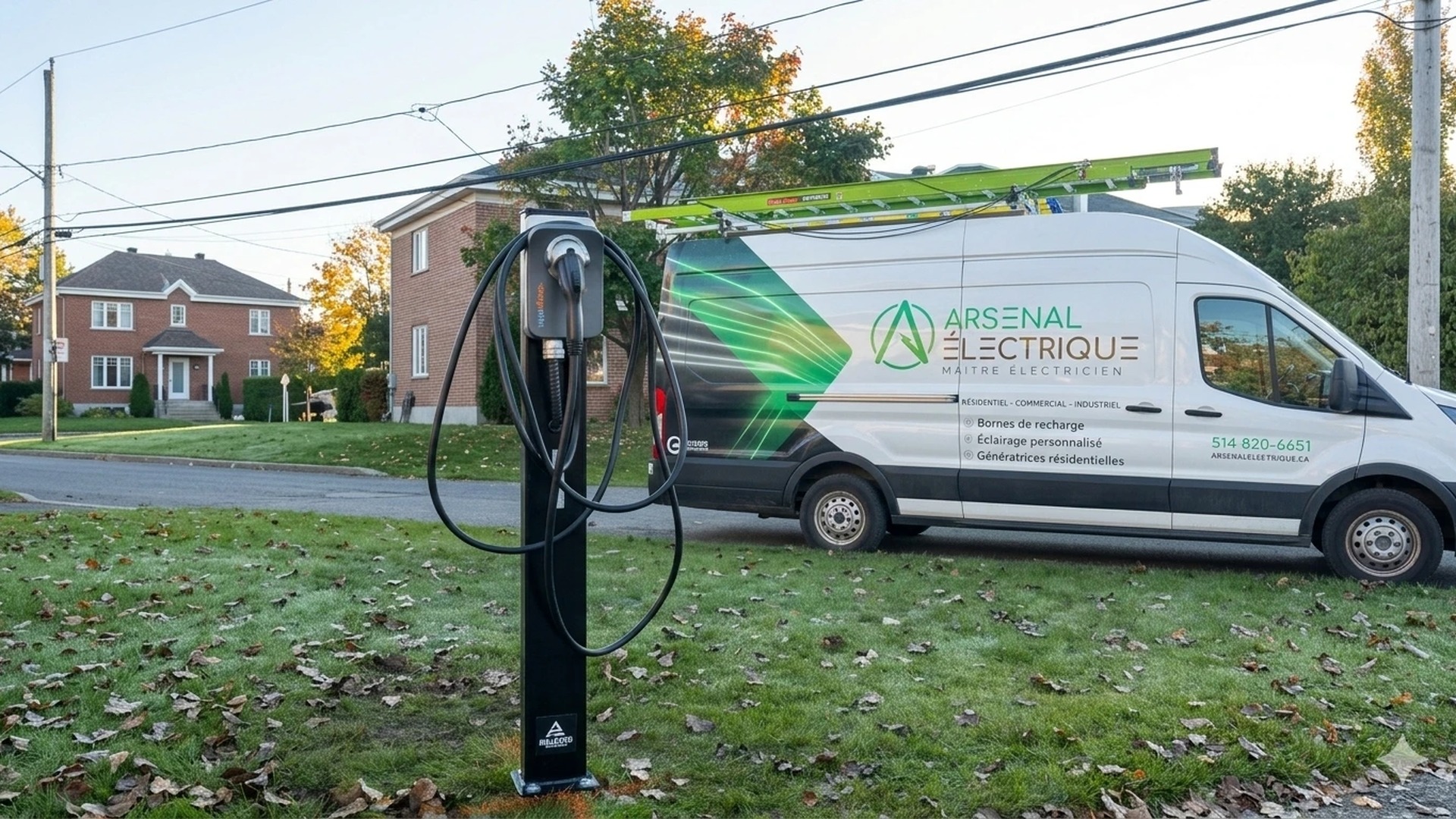








































Farrukh Ahmed CPA — Local SEO launch
position 50 → 17 · +166% desktop map impressions

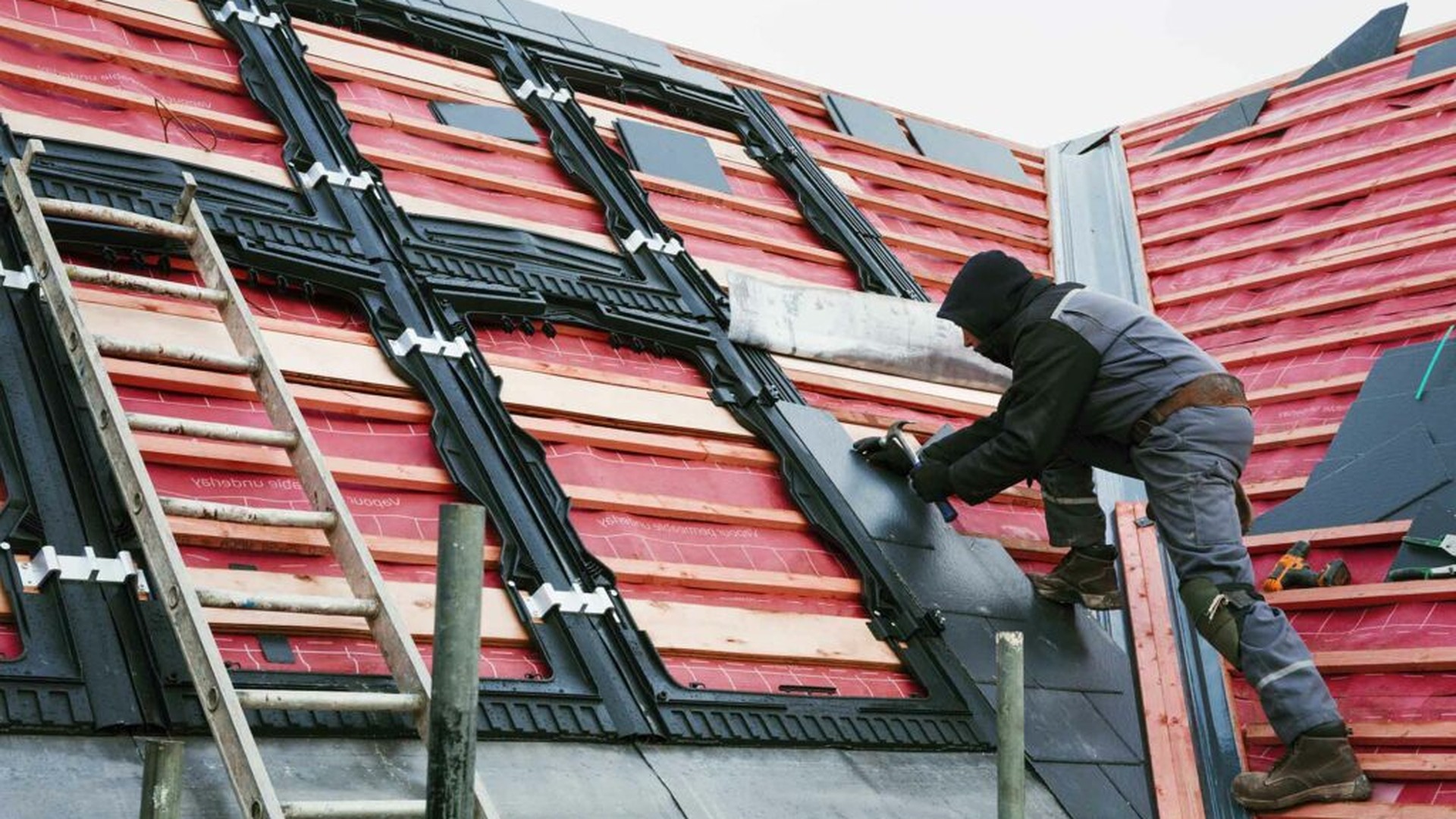


Food Allergy Institute — Paid media and booked consultations
243 → 1,012 consultations/mo · cost per landing page view −30%



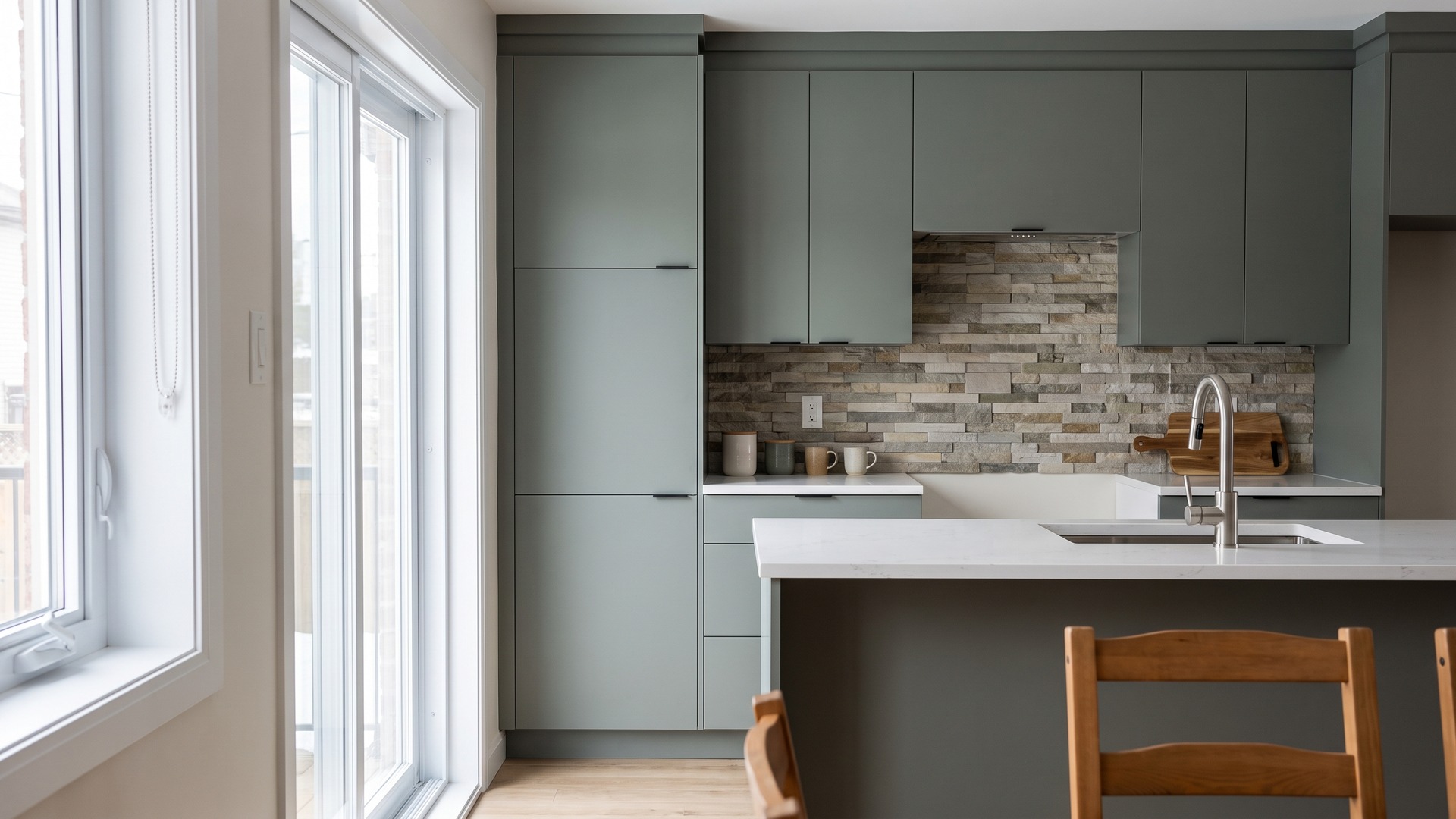




























































National Consumer Panel — UGC-driven acquisition & paid media
CPI −30% · CPA −20%


National Debt Relief — UGC, performance creative & influencer strategy
CVR +25% · CAC −30%






New Balance — Casting, post-production & influencer marketing
7 athletes · 750k audience
















































"Their transparency, attention to detail, and collaborative approach made them feel like an extension of our own team."


.webp)
.webp)