Content that earns its place in the plan.
earns its place
We are the content marketing agency for companies tired of publishing on schedule and reporting on hope. We pick topics buyers actually search, write them properly, connect them to the pages that sell, and report what the content contributed — so it sits alongside SEO, paid search and AI search as a channel, not as a chore.






Tell us a little about your brand and we'll be in touch within 24 hours to lock in a time.



THE FOUR LAYERS
Strategy, production, distribution, proof.
distribution, proof
Most content programmes are strong on production and thin everywhere else, which is why volume rises while results do not. We work the four layers in order, and we would rather publish half as often with a distribution plan and a measurement plan attached to every piece.
Strategy & topic selection
Production & editorial quality
Distribution & repurposing
Measurement & contribution
Choose topics on evidence, not enthusiasm.
The plan starts with demand rather than a brainstorm. We map what your buyers search at each stage, what your competitors already own, where the pages on your own site are competing with each other, and which questions your sales team answers on every call. That produces a ranked list of topics with an estimate of the traffic and the commercial value behind each, and a reason for the order.
Search behaviour has changed, so topic selection has to change with it. Semrush found 58.5% of US Google searches end without a click, and answer engines summarise more of what used to be a visit. That does not make content less valuable; it moves the value toward material a summary cannot replace — original data, pricing detail, comparisons, real methodology, and the pages that convert once someone finally does click through.
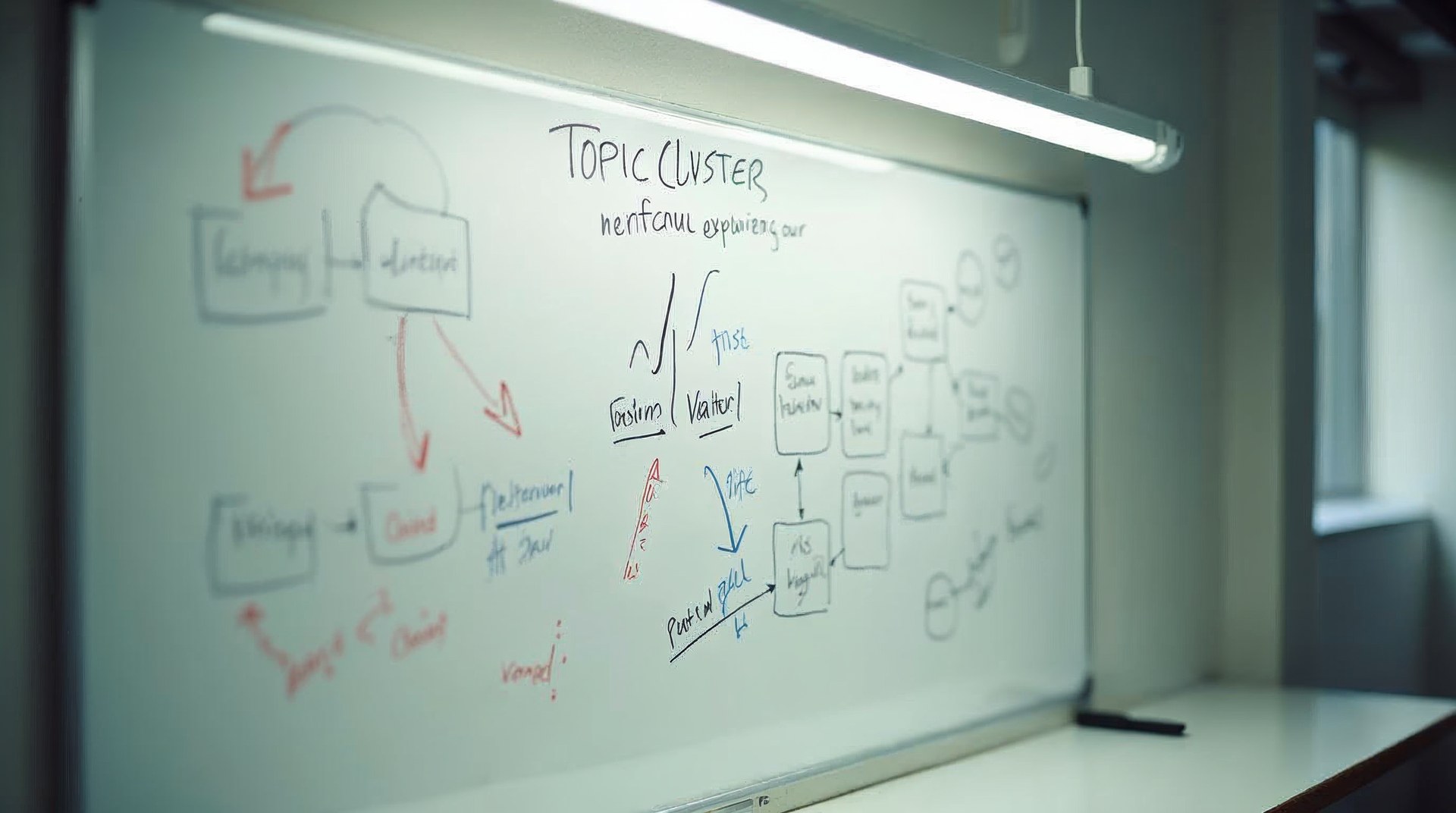
The output is a quarterly plan with clusters rather than a list of standalone posts, because a group of related pages that link to each other and to your service pages compounds in a way that individual articles never do.
- Keyword and question mapping across the buying journey
- Competitor coverage gaps and internal cannibalisation flagged
- Topics ranked by traffic potential and commercial value
- Clusters planned so pages support each other, not compete
58.5%
of US Google searches end without a click
51%
of website traffic still arrives through organic search
Written by people who know the subject.
Every piece is briefed against the search intent and the buyer's real question, written by a writer who understands the category, reviewed by an editor, and fact-checked with sources linked. Where the topic needs expertise we do not have, we interview yours — a thirty-minute call with a founder or an engineer is worth more than a week of desk research, and it is the part competitors cannot copy.
Length follows the job. Orbit Media's 2025 survey of 808 bloggers found the average post is now 1,333 words, a second consecutive annual decline, with only 9% publishing over 2,000 words. We write to the question, not to a word target: a pricing page answer can be 700 words and a category guide 3,000, and padding either one helps nobody.
AI has a place in the process — research, outlining, first-draft structure, repurposing — and no place as the final author. CMI's 2026 research puts AI use among B2B marketers at 95%, which is precisely why generic output no longer differentiates anything. Our drafts go through a human editor whose job is to add judgement, specificity and a point of view.
- Brief per piece covering intent, angle and internal links
- Subject-matter writers plus an editorial review pass
- Expert interviews where the topic demands real expertise
- Claims fact-checked and sources linked
- AI used for research and structure, never as the final author
1,333
average words per blog post in 2025, down for a second year
95%
of B2B marketers now use AI-powered applications
Publishing is the middle of the job.
A piece that only exists as a blog post is worth a fraction of what it cost. Each one is planned with its distribution: the newsletter it anchors, the social versions cut from it, the sales enablement it feeds, the paid amplification where the topic justifies spend, and the internal links that pass authority to the page you actually want to rank.
Repurposing is where thin budgets get their leverage. One piece of original research becomes a report, a summary post, a set of charts, a webinar outline and six months of social; one customer interview becomes a case study, a quote library and a landing page section. Orbit Media's data puts the average post at nearly four hours of work before it is published — spending another hour distributing it is the cheapest return in the programme.
We also keep the back catalogue working. Refreshing and consolidating pages that have decayed usually beats writing new ones, and it is the first thing we look at on a site with a few years of published work behind it.
- A distribution plan attached to every piece before it is written
- Newsletter, social and sales-enablement cuts from the same source
- Internal links planned to support the pages that convert
- Existing content refreshed and consolidated, not left to decay
3h48
average time invested in writing a single blog post
94%
of marketers say repurposing content raises content ROI (SEMrush)
Report contribution, not activity.
Pieces published is not a result. We report what content contributed: non-brand organic sessions to the pages we own, assisted pipeline and revenue from the CRM, share of the questions your category asks, and citations in AI answers where that is now the discovery route. Each report ends with what we are changing next month and why.
The uncomfortable part of the discipline is patience. Content compounds on a horizon of quarters, and the honest version of the timeline is stated before you sign rather than after the third month. In return we set leading indicators you can check early — coverage of the planned clusters, indexation, ranking movement on the target questions, engaged sessions and conversion rate on the pages the content feeds.
Where a topic is not working we retire it rather than defend it. CMI's 2026 research is blunt about where teams are putting money: 45% name AI tools as a top investment area for 2026 while people ranked last at 9%. Our reading is the opposite — the scarce resource is editorial judgement, and that is what we staff.
- Non-brand organic performance reported per cluster
- Assisted pipeline and revenue pulled from your CRM
- Visibility in AI answers tracked alongside rankings
- Monthly written review that ends in decisions
45%
of B2B marketers name AI tools a top 2026 investment area
9%
put people and training first — the gap we staff against
of B2B marketing budgets go to content (CMI)
of B2B marketers now run AI-assisted content (CMI)
Every claim fact-checked with the source linked
The content, briefs and research outright
We made the difference for those brands

Healthcare & regulated services

Beauty, personal care & wellness

B2B software, fintech, insurance

Apparel and lifestyle

Beauty, personal care & wellness

B2B software, fintech, insurance

Food & beverage

Consumer tech and platforms

Consumer tech and platforms

Apparel and lifestyle

Beauty, personal care & wellness

Food & beverage

Healthcare & regulated services

Creative, content, arts & culture

Beauty, personal care & wellness

Home essentials, appliances, kitchen & pet

Retail & commerce

Home essentials, appliances, kitchen & pet

Home essentials, appliances, kitchen & pet

Consumer tech and platforms

Retail & commerce

Beauty, personal care & wellness

B2B software, fintech, insurance

Consumer tech and platforms

Travel & mobility

Consumer tech and platforms

Food & beverage

Apparel and lifestyle

Travel & mobility

Healthcare & regulated services
01 — The challenge
Publishing every week, and nothing to show the board.
The calendar is full. The blog is busy. Traffic is flat, the pages that rank are the ones nobody buys from, and when the board asks what the content produced last quarter, the honest answer is a number of posts.
“We publish constantly. I could not tell you which piece ever sold anything.”
It is rarely a writing problem. It is topics chosen for comfort rather than demand, pieces that stop at publish with no distribution behind them, no internal links to the pages that convert, and measurement that counts output. Meanwhile the ground moved: 58.5% of US searches now end without a click (Semrush) and AI answers absorb the easy questions, while organic still supplies around 51% of website traffic (BrightEdge). The channel is very much alive; the shortcut version of it is what stopped working.
02 — Our approach
Fewer pieces, chosen properly, distributed on purpose.
We start with an audit: what already ranks, what has decayed, where your pages compete with each other, and which questions your buyers ask that you have never answered. Then we build a quarterly plan of clusters ranked by traffic potential and commercial value, each one mapped to the service page it should support. Production runs on briefs, subject-matter writers, an editor and fact-checking with sources linked; your experts are interviewed where the topic needs expertise we do not have. Nothing publishes without a distribution plan — newsletter, social cuts, sales enablement, internal links, paid amplification when the topic earns it. Existing pages get refreshed and consolidated before we write new ones, because that is usually the faster return. Reporting covers non-brand organic performance, assisted pipeline from your CRM, and visibility in AI answers, and ends in decisions.
03 — What we did
Four phases, one compounding library.
Audit, plan, produce and compound — with a weekly working session and a written monthly review of what the content contributed and what changes next.
Weeks 1-2 / Audit
Find the demand and the decay
Existing pages audited for performance and overlap, buyer questions mapped to search demand, and a ranked topic list built with the commercial value behind each cluster.

Weeks 3-6 / Production
Brief, interview, write, edit
Every piece briefed against intent, informed by an interview with your experts where it matters, written by a subject-matter writer and edited with claims fact-checked and linked.

Ongoing / Distribution
Publish, then actually distribute
Newsletter, social cuts, sales enablement and internal links planned before publication, with paid amplification where the topic justifies the spend.

Quarterly / Compounding
Refresh, consolidate, report contribution
Decayed pages refreshed and thin ones merged, then contribution reported against non-brand organic, assisted pipeline and visibility in AI answers.

WHAT YOU GET
Deliverables you keep and can reuse.
keep and reuse
Everything below is produced in your accounts, documented as we go, and yours — including the briefs, the research and the editorial standards.

Content strategy and quarterly plan
A ranked plan of clusters with traffic potential and commercial value per topic, mapped to the pages each one should support.

Audit and topic research
Existing pages scored for performance and overlap, competitor coverage gaps identified, and buyer questions mapped to real search demand.

Articles, guides and original research
Briefed, interviewed, written and edited pieces with claims fact-checked and every source linked, published on your schedule.

On-page and internal linking
Titles, structure, schema and internal links built so each piece supports the service page it is meant to feed.

Distribution and repurposing
Newsletter, social and sales-enablement versions cut from the same source, with amplification where the topic justifies paid support.

Contribution reporting
Non-brand organic performance, assisted pipeline from your CRM and AI answer visibility, reviewed monthly in writing.
HOW WE WORK
Operating standards, not promises.
Operating standards


















Built on trust. Proven by results.
We partner with SMBs and Fortune 500 companies to deliver more than reach — we bring clarity, execution, and measurable outcomes. Every successful partnership starts with a strong culture fit and a shared drive to grow.






CASE STUDIES
Case studies
Website Portfolio
Video Ads
Static Ads





































































FAQ
What teams ask us first.
What does a content marketing agency actually do?
Four jobs, and most programmes only buy one. Strategy: deciding which topics deserve investment, based on search demand and commercial value rather than what is easy to write. Production: briefs, subject-matter writers, editing and fact-checking. Distribution: making sure each piece reaches an audience through email, social, sales and internal links instead of waiting to be found. Measurement: reporting what the content contributed to pipeline. A good engagement leaves you with a compounding library, a documented editorial standard and a team that knows why each piece exists.
How do you choose between content marketing agencies?
Ask three questions. First, how do they pick topics — if the answer is a content calendar rather than demand data and commercial value, you are buying volume. Second, who writes and who edits: ask to meet the writer and read three pieces in your category, not a portfolio of unrelated work. Third, what do they report — posts published and traffic are activity metrics; contribution to pipeline is a result. Then check what happens to the work if you leave: briefs, research and standards should be yours. We answer all four in the first call and put the answers in the proposal.
Is content marketing still worth it now that AI answers questions directly?
Yes, and the work has become more valuable rather than less — it has just moved. Summaries absorb the generic questions, so generic content loses. What survives is material an answer engine cannot synthesise: original data, pricing and process detail, honest comparisons, real methodology, and expert opinion with a name attached. Those are also the pages AI systems cite, which is now a discovery channel in its own right. With 58.5% of US searches ending without a click (Semrush), we plan for visibility inside answers as well as clicks to the site, and report both. Our AI search work exists for exactly this reason.
How much content do we need, and how often should we publish?
Less than most calendars assume, and more consistently. A cluster of eight to twelve connected pages that fully covers one commercially valuable topic beats forty scattered posts, because the pages support each other and the whole group ranks. Cadence follows capacity: two well-made pieces a month sustained for a year beats eight a month for two months. The industry has already drifted that way — Orbit Media's 2025 survey shows the average post down to 1,333 words with only 9% over 2,000. We size the plan to what your budget can produce properly.
Do you use AI to write the content?
We use it where it helps and never as the final author. It is good at research synthesis, outline options, repurposing a finished piece into other formats, and first-pass structure. It is bad at judgement, at specificity, and at having a point of view — which is exactly what makes content worth reading. Since 95% of B2B marketers now use AI applications (CMI, 2026), competent AI output is the new baseline and cannot differentiate you. Every draft passes a human editor whose job is to add the things a model cannot, and we tell you plainly where AI was used in the process.
How long before we see results?
Leading indicators inside the first six to eight weeks: the planned clusters get built, pages index, target questions start ranking, and engaged sessions on the pages content feeds begin to move. Meaningful organic growth is a two- to three-quarter horizon on most sites, faster on an established domain and slower on a new one. We say this before you sign, and we set the early indicators so you are never waiting a quarter to know whether the work is on track. Refreshing existing pages usually produces the first visible wins, which is why we start there.
Can you work with our existing writers or in-house team?
Often the best arrangement. A common split is that we own strategy, briefs, editing and measurement while your team writes, which raises quality immediately without adding headcount. Another is that we handle the specialist and research-heavy pieces while your team covers product and customer stories. Either way we document the editorial standard, the brief template and the voice guide so the improvement stays after the engagement ends. Training your writers is part of the work, not an upsell.
What happens to content that already exists on our site?
We audit it first, because it is usually the fastest source of growth. Pages that once ranked and have decayed get refreshed; thin pages competing for the same query get consolidated into one strong page with redirects handled properly; pages with traffic but no path to a conversion get internal links and a relevant call to action. This work often lifts results before a single new piece publishes, so it comes first in the plan rather than after the new production has taken up the budget.
How do you measure whether content is contributing to revenue?
By connecting the pages to your CRM rather than reading traffic charts. We report non-brand organic sessions per cluster, conversion rate on the pages content feeds, assisted pipeline and closed revenue where the deal touched a content page, and visibility in AI answers for the questions that matter. Content is usually an assisting channel, so we present both its direct and its assisted contribution and are explicit about which is which. If your measurement cannot yet support that, our analytics team fixes the tracking first, because a plan built on numbers nobody trusts wastes the budget.
Do you also handle the SEO and the paid promotion?
Yes, and content works better when they are in the same plan. Our SEO team handles the technical and authority work that lets good content rank, and our paid social team amplifies the pieces worth spending on and retargets the people who read them. It is equally fine to buy content alone while other partners run your media — we brief them on what is publishing and share the plan, because content that nobody else knows about is content working at half strength.

.webp)
.webp)