WordPress that behaves like software, not a hobby project.
like software
We are the WordPress development agency for companies whose revenue runs through the page. Custom themes instead of bloated bundles, blocks your marketers can use without a developer, plugins chosen like dependencies rather than collected, and a maintenance routine that keeps the thing fast and patched — so technical SEO, performance and paid search stop paying for someone else's bad habits.






Tell us a little about your brand and we'll be in touch within 24 hours to lock in a time.



THE FOUR LAYERS
Four layers decide whether WordPress ages well.
ages well
Theme code, the editing experience, the dependency list and the operations around it. Almost every rescue project we take on is healthy at the top and rotten one layer down: the redesign looks current, and underneath it sits a page builder, forty plugins and no deployment process.
Custom theme & architecture
Editing experience
Plugins & dependencies
Performance & operations
Written for your content, not for a demo.
WordPress itself is not the problem. It is the most widely deployed publishing platform on the open web — W3Techs puts it at about 41% of all websites and roughly 59% of the CMS market in 2026 — and it scales perfectly well when the code on top of it is deliberate. What ages badly is a multipurpose theme carrying a decade of options nobody uses.
So we write the theme. Templates map to the content types you actually publish, styling comes from a small design system rather than per-page overrides, and the front end ships the CSS and JavaScript a page needs instead of the library it inherited. Where a headless front end genuinely earns its complexity we will say so, and where it does not we will tell you that too.
The measure of good architecture is boring: a new template takes hours, a core upgrade is a Tuesday, and nobody is afraid of the theme folder.
- Custom theme mapped to your real content types
- Design system instead of per-page style overrides
- Only the assets a template needs, loaded when needed
- Upgrade path documented and rehearsed
41%
of all websites run on WordPress (W3Techs, 2026)
59%
share of the CMS market worldwide
Blocks a marketer can trust at 5pm on a Friday.
The reason companies quietly abandon their own publishing plans is usually the editor. If every campaign page needs a developer, campaigns get smaller. So we treat the editing experience as a product with its own editors: named block patterns for the layouts your team really uses, guardrails so a hero cannot be broken by pasting in a screenshot, and sensible defaults that already match the brand.
Custom fields go where structure matters — pricing tables, locations, people, case studies — because structured content can be reused, syndicated and marked up for search, while free-form text cannot. Editors get preview, revisions and a staging environment where a mistake costs nothing.
We also write the short internal guide and walk the team through it. An editor your marketers can operate without asking permission is worth more than any feature list.
- Named block patterns for your real page types
- Guardrails so layouts cannot be broken accidentally
- Structured fields for content that repeats
- Staging environment, revisions and a written how-to
0
developer tickets needed to publish a campaign page
Every plugin is a dependency you now own.
This is where most risk lives, and the data is unambiguous. Patchstack's State of WordPress Security in 2026 found 91% of newly disclosed vulnerabilities in plugins and 9% in themes, with only six reported in WordPress core — all low priority. The core is not fragile; the extension layer is where exposure accumulates.
We treat the plugin list like a software bill of materials. Each entry has to justify itself: who maintains it, how quickly they patch, what it loads on the front end, and what happens the day it is abandoned. Overlaps get consolidated, page builders get replaced by native blocks, and anything doing fifty lines of work gets written into the theme instead. Updates run on a schedule against a staging copy, with a rollback that has actually been tested.
The outcome is a smaller attack surface, a faster front end and an upgrade that stops being an annual crisis.
- Dependency inventory with a maintainer and a reason each
- Page builders replaced by native blocks
- Scheduled updates rehearsed on staging first
- Tested rollback, backups verified by restoring them
91%
of new WordPress vulnerabilities are in plugins
6
core vulnerabilities reported in the same period
Fast on the phone in the parking lot.
Speed is a commercial number. Deloitte's work with Google found that a 0.1-second mobile improvement lifted retail conversion by 8.4% and average order value by 9.2%, while the 2025 Web Almanac reports 48% of mobile and 56% of desktop origins passing Core Web Vitals. Most of the gap is self-inflicted: unbudgeted third-party scripts, images served at desktop dimensions, and caching that was never configured.
Operations is the unglamorous half of the engagement. Object and page caching, a CDN, PHP and database tuning, images converted and sized at upload, a performance budget enforced in review, uptime and error monitoring, staging plus version control, and security hardening at the server rather than by installing another plugin.
Everything runs in your accounts, on infrastructure you own, documented as we go. Nothing here is a subscription you cannot leave.
- Caching, CDN and server-level tuning configured properly
- Performance budget enforced in code review
- Uptime, error and Core Web Vitals monitoring
- Version control, staging and documented deployments
8.4%
retail conversion lift from a 0.1s mobile gain
48%
of mobile origins pass Core Web Vitals
of all websites run WordPress (Clutch)
typical agency hourly rate for WordPress work (Clutch)
Every change rehearsed before it reaches visitors
Code, hosting accounts and documentation
We made the difference for those brands

Consumer tech and platforms

B2B software, fintech, insurance

Consumer tech and platforms

Consumer tech and platforms

Creative, content, arts & culture

Food & beverage

Creative, content, arts & culture

B2B software, fintech, insurance

B2B software, fintech, insurance

Home essentials, appliances, kitchen & pet

Consumer tech and platforms

B2B software, fintech, insurance

Food & beverage

Home essentials, appliances, kitchen & pet

Travel & mobility

Healthcare & regulated services

Beauty, personal care & wellness

Retail & commerce

B2B software, fintech, insurance

Consumer tech and platforms

B2B software, fintech, insurance
Travel & mobility

Consumer tech and platforms

Home essentials, appliances, kitchen & pet

Creative, content, arts & culture

B2B software, fintech, insurance

Food & beverage

Apparel and lifestyle

Healthcare & regulated services

Creative, content, arts & culture

Home essentials, appliances, kitchen & pet
01 — The challenge
The redesign looked great. Then the invoices started.
A theme bought three years ago, a page builder holding the layout together, forty plugins nobody can remove, and an update everyone is scared to run. Marketing waits on a developer for a landing page; the developer waits on a staging copy that does not exist.
“Nobody here will touch the updates. We just hope it holds.”
That fear is rational, and it is also fixable. The exposure is concentrated in the extension layer — Patchstack found 91% of new vulnerabilities in plugins and six in core — so the cure is fewer dependencies, a rehearsed update routine and code you own rather than options you rent. The same clean-up usually returns the seconds the front end was losing, which is why performance and maintainability are one project here, not two.
02 — Our approach
Audit the stack. Own the code. Then make it fast.
We start with an audit an engineer would recognise: theme and template quality, the dependency inventory with a maintainer and a reason for each entry, database and hosting configuration, render path, and whether anyone can deploy safely. You get the findings in writing with a priority order and a price before committing to anything. Then we replace the fragile parts — a custom theme in place of the multipurpose one, native blocks in place of the page builder, structured fields for content that repeats — while keeping the URLs, rankings and analytics intact. Performance work follows: caching, CDN, image pipeline, script budget, server tuning. Finally the operating routine: scheduled updates on staging, verified backups, monitoring, and a short guide so your marketers publish without a ticket. Code, hosting, accounts and documentation are yours throughout.
03 — What we did
Four phases, and the URLs survive all of them.
Audit, rebuild, performance, then care — run in sequence with a weekly working session and a written review of what changed and what it moved.
Weeks 1-2 / Audit
Read the code before touching it
Theme quality, dependency inventory, hosting and database configuration, render path and deployment safety, written up with a priority order and a fixed price.

Weeks 3-7 / Rebuild
Custom theme, native blocks, kept URLs
The multipurpose theme and page builder come out, a bespoke theme with named block patterns goes in, and every URL, redirect and tracking event is preserved.

Week 8 / Performance
Cut the seconds, then hold them
Caching and CDN, image pipeline, third-party script budget, PHP and database tuning, with Core Web Vitals monitored after launch rather than assumed.

Ongoing / Care
Updates that are a routine, not an event
Scheduled updates rehearsed on staging, backups verified by restoring them, uptime and error alerts, and a monthly written review with the next recommendations.

WHAT YOU GET
Deliverables your developers would approve.
your developers
Everything below lands in your repository, your hosting account and your documentation — and it stays yours if you ever leave.

Technical audit and roadmap
Theme code, dependency inventory, hosting, database and render path reviewed, with a prioritised roadmap and a fixed price per phase.

Custom theme and design system
A bespoke theme mapped to your content types, with a small design system so new templates take hours instead of a sprint.

Block patterns for your team
Named patterns for the layouts marketing really uses, with guardrails so pages cannot be broken and defaults that match the brand.

Migration without losing rankings
Content, URLs, redirects, schema and tracking carried across deliberately, then verified in search and analytics after launch.

Performance engineering
Caching, CDN, image pipeline, script budget and server tuning, judged on Core Web Vitals from real visitors rather than a lab score.

Maintenance and security care
Scheduled updates on staging, verified backups, hardening, uptime and error monitoring, plus a monthly written review.
HOW WE WORK
Operating standards, not promises.
Operating standards


















Built on trust. Proven by results.
We partner with SMBs and Fortune 500 companies to deliver more than reach — we bring clarity, execution, and measurable outcomes. Every successful partnership starts with a strong culture fit and a shared drive to grow.






CASE STUDIES
Case studies
Website Portfolio
Video Ads
Static Ads

























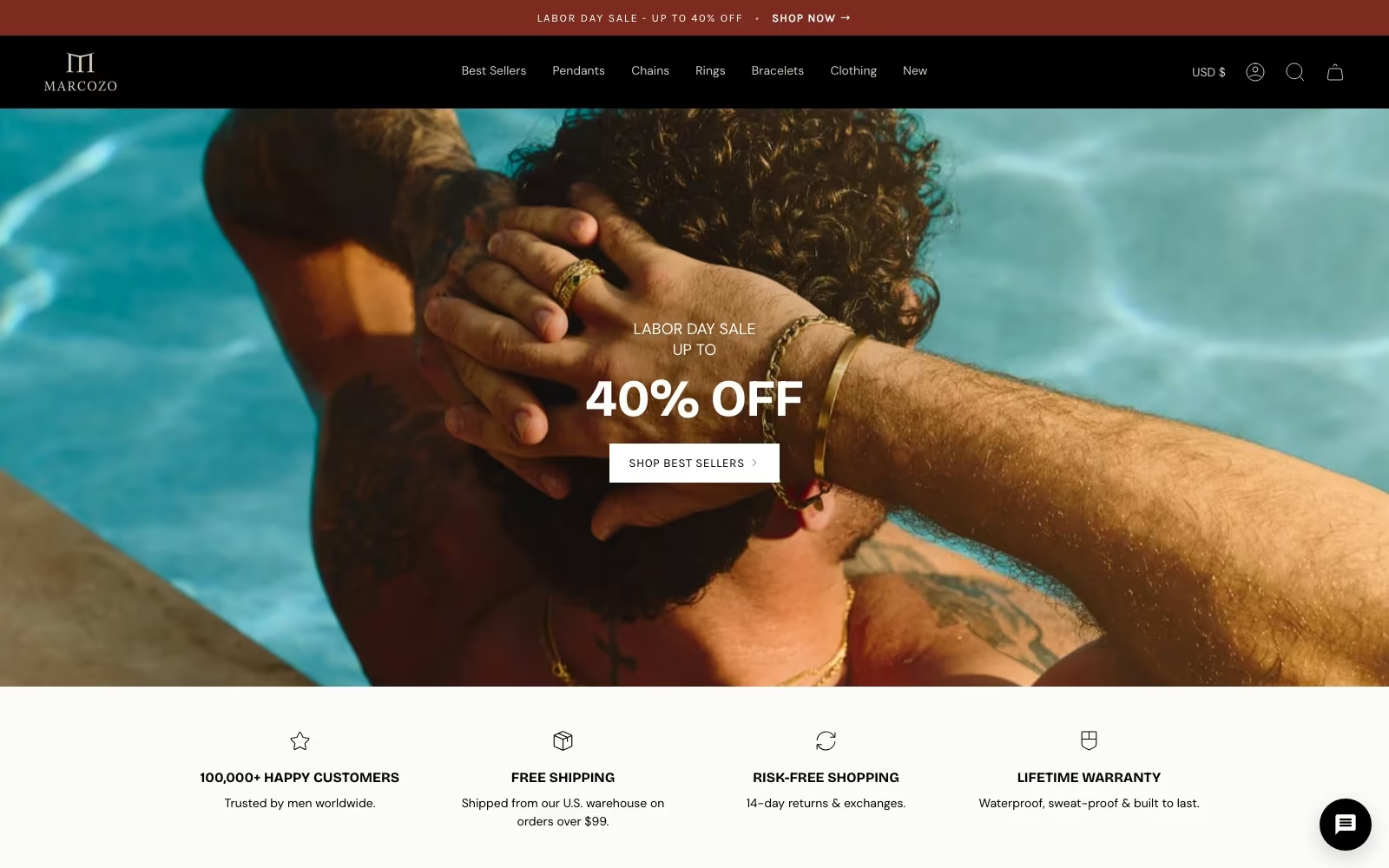

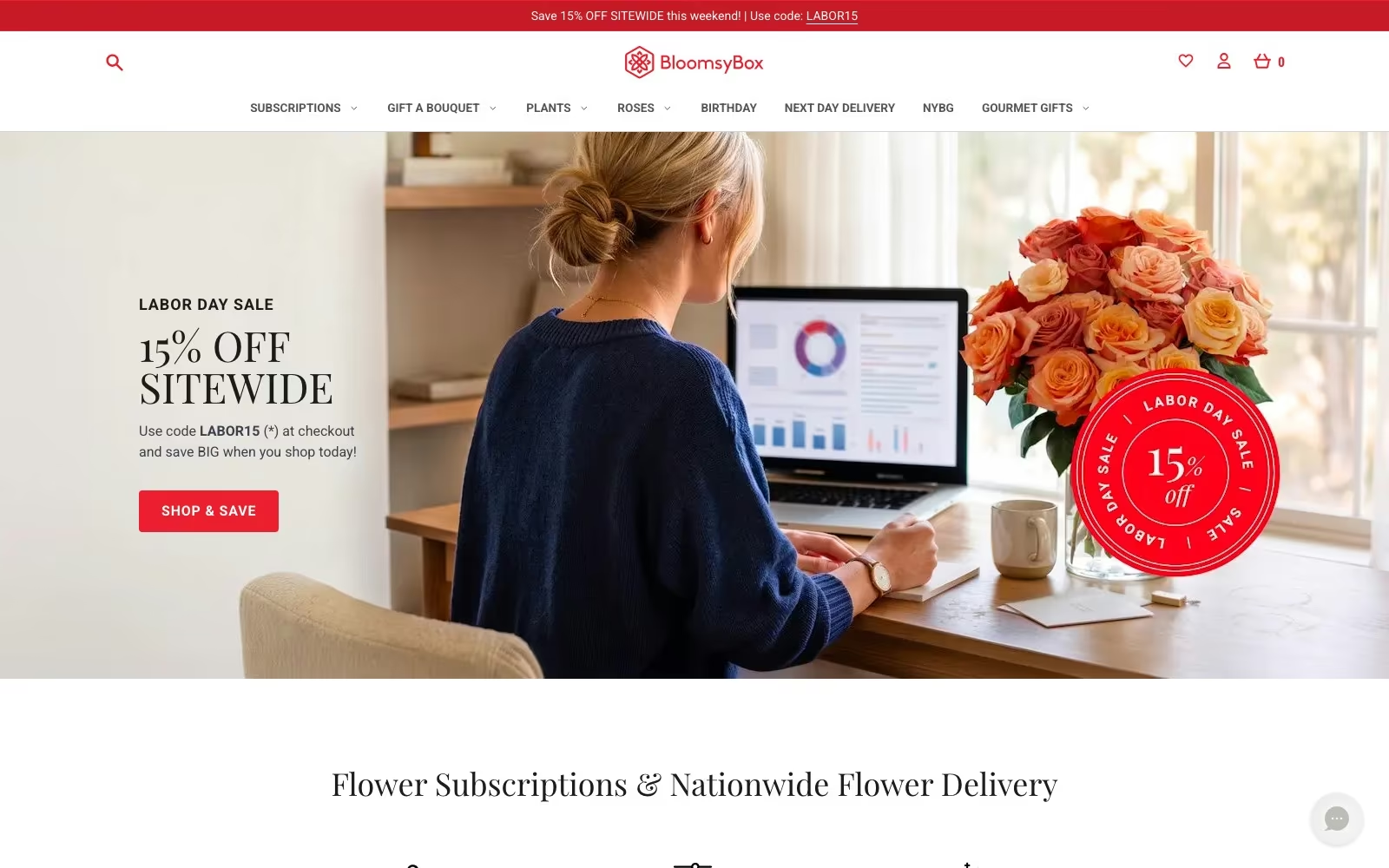











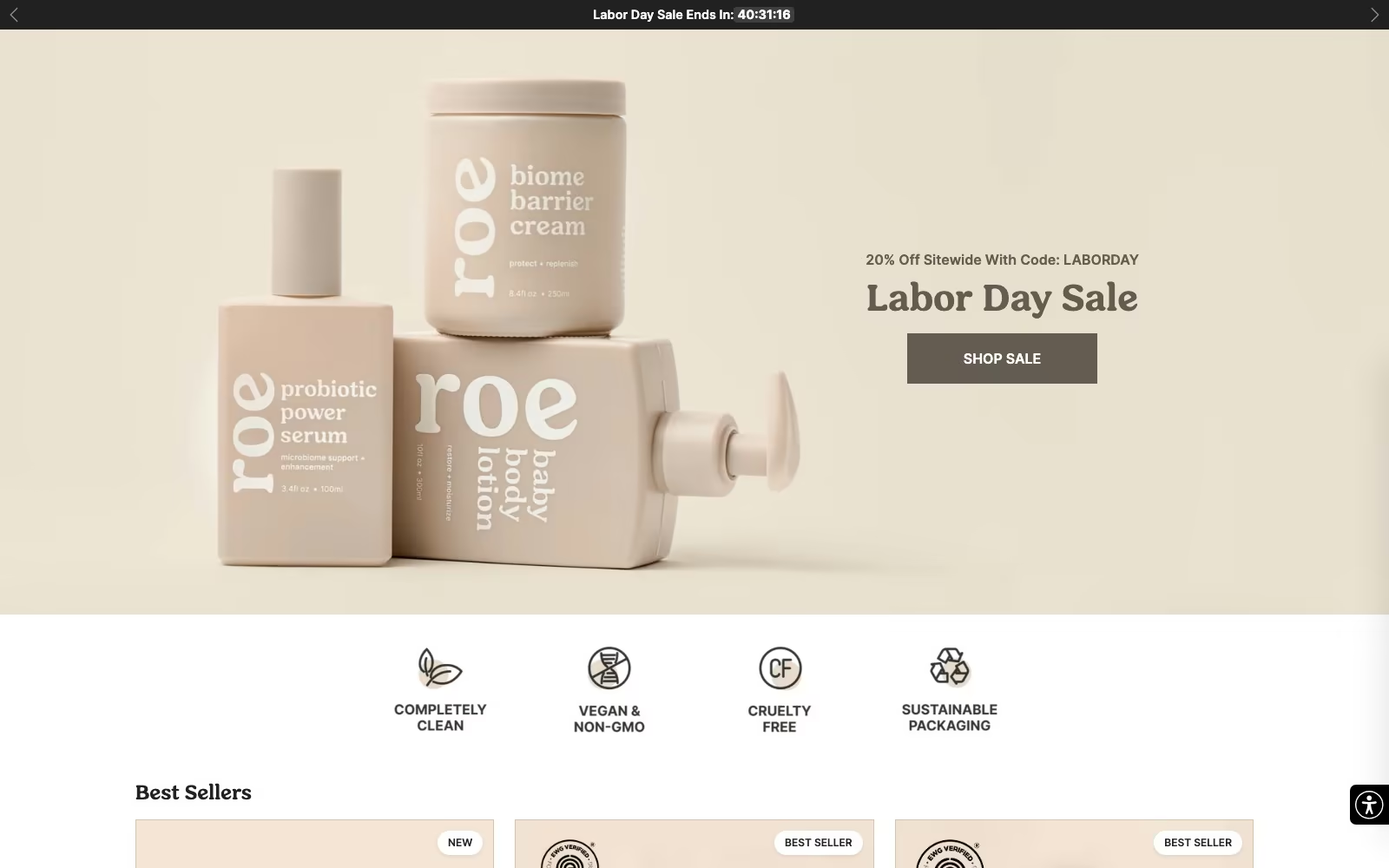

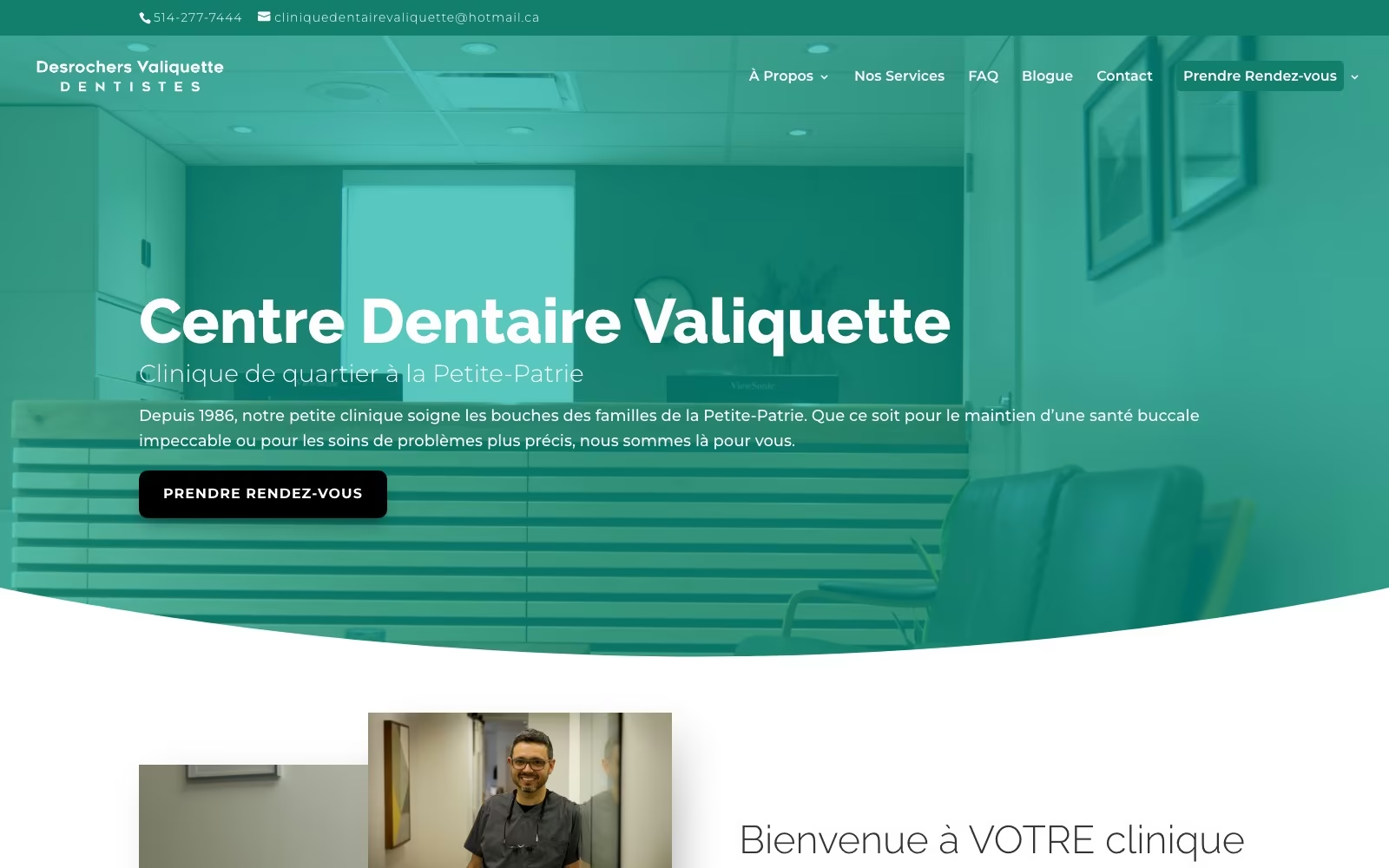



























FAQ
What teams ask us first.
What does a WordPress development agency actually do that a freelancer cannot?
Continuity and range, mostly. A good freelancer can write an excellent theme; what is harder for one person to sustain is the surrounding work — performance engineering, a rehearsed update routine, verified backups, monitoring, accessibility, structured markup for search, and cover when someone is on holiday. We put a senior engineer alongside specialists in performance, search and conversion, working from one plan. The other difference is process: version control, staging, code review and documentation are standard here, which is what turns a website into an asset your team can operate for years.
Is WordPress still the right choice in 2026?
For most content-led companies, yes. It is the most widely deployed publishing platform on the open web — W3Techs measures about 41% of all websites — the talent pool is deep, the editing experience is genuinely good when configured well, and you own your data and hosting outright. Where it goes wrong is implementation: multipurpose themes, page builders and unmanaged plugins. There are cases where we recommend something else — a small marketing site with no publishing rhythm often suits Webflow, and an application-shaped product belongs in custom development. We will tell you which of those you are before quoting.
Will a rebuild hurt our search rankings?
Handled properly it protects them, and that is the part we plan first. We inventory every URL, its traffic and its rankings before anything moves, map redirects one to one, carry across titles, headings, internal links, schema and image alternatives, and keep analytics and conversion tracking continuous through launch. Then we watch coverage, impressions and Core Web Vitals for weeks afterwards and fix anything that drifts. The gains usually run the other way: cleaner templates, faster pages and structured content typically improve visibility, because the technical debt being removed was itself a ranking drag.
How many plugins is too many?
The count matters less than what each one costs you. A handful of well-maintained, lightweight extensions is fine; twenty overlapping ones, three of them abandoned, is a liability — and Patchstack's 2026 research puts 91% of new vulnerabilities in the plugin layer. Our rule is that each dependency needs an owner, an active release history and a measurable job, and anything doing a small amount of work belongs in the theme instead. In practice a rescue project usually ends with roughly half the plugins it started with, a faster front end and updates nobody dreads.
How long does a project take, and what does it cost?
A technical audit is a fixed-scope, fixed-price piece delivered in one to two weeks. A bespoke theme and rebuild for a mid-market marketing site is typically six to ten weeks depending on template count and content volume; performance work runs a further one to two weeks; migrations from another system add time for content mapping. We quote per phase rather than as an open-ended retainer, so you approve a number instead of a rate, and ongoing care is a separate monthly fee scoped to the routine you want.
Can you make our existing installation fast without rebuilding it?
Often, yes, and it is usually the first thing we try. Caching, a CDN, an image pipeline, a third-party script budget, database clean-up and server tuning recover most of the lost seconds on a typical installation, and those are worth real money: Deloitte and Google measured an 8.4% retail conversion lift from a 0.1-second mobile improvement. Where a rebuild becomes the cheaper option is when the theme itself is the bottleneck — a page builder rendering hundreds of nested containers has a floor you cannot optimise past. We measure first and tell you which situation you are in.
Do you handle hosting, security and updates?
Yes, as an operating routine rather than a badge. Updates are rehearsed on a staging copy on a schedule, backups are verified by restoring them, hardening happens at the server and application level, and uptime, error and Core Web Vitals monitoring alerts us before your customers notice. We will recommend and manage hosting appropriate to your traffic, in your own account so you are never renting your own infrastructure. If something does break, there is a tested rollback and a named engineer, which is the part that actually shortens an incident.
Can our marketing team publish without a developer afterwards?
That is the design goal. Named block patterns cover the layouts your team really uses, with guardrails so a page cannot be visually broken, and structured fields for anything that repeats. We write a short internal guide, record a walkthrough and sit with the team while they publish the first few pages themselves. Teams that get this typically ship several times more campaign pages in a quarter, because the marginal cost of a landing page drops from a developer ticket to twenty minutes.
Do you handle enterprise WordPress development for large websites?
Yes — large, complex builds are most of our WordPress development work. Enterprise projects differ from small websites in the operational detail rather than the design: multisite or multi-brand structures, role-based permissions for large editorial teams, single sign-on, staged environments, load testing, and integrations with the systems the business actually runs on — CRM, ERP, subscription billing, marketing automation. Publishers and high-traffic businesses also need caching and database strategies that survive traffic spikes, which is architecture work rather than a plugin choice. We scope those projects in phases with a written technical specification, so the enterprise stakeholders reviewing it can see exactly what is being built before the first sprint.
Can you build scalable, complex systems on WordPress rather than brochure websites?
That is where WordPress earns its keep. Custom post types and structured fields let you model real business objects — products, locations, courses, member directories, event schedules, resource libraries — and expose them through templates and an API for other systems to consume. We have built member portals, quoting tools, multi-language websites and large resource hubs on it, always with the same rule: business logic lives in versioned code we own, not in a plugin's settings screen. Where a requirement genuinely belongs in an application framework instead, we will say so on the first call rather than bend the system into a shape it will not hold.
Do you offer ongoing support plans and work with other agencies?
Both. Ongoing support is a monthly plan scoped to what you need: scheduled updates rehearsed on staging, verified backups, uptime and error monitoring, security hardening, small development requests inside an agreed allowance, and a monthly written review. Response times and escalation are written into the agreement, so support is a commitment rather than a promise. We also work as the engineering partner behind other agencies — design studios and marketing agencies who need senior WordPress development capacity without hiring it — under their brand and with their client relationship left completely intact.
What digital services do you run alongside WordPress development?
The services that decide whether the website earns anything: search visibility, technical optimization, conversion optimization, performance engineering and paid media. Clients hire us for engineering alone often enough, and that is fine, but the WordPress projects that produce the best commercial results are the ones where the same team owns the template, the page content and the traffic buying it. One weekly review, one set of numbers, and no argument about whether the problem is the website or the marketing.
How much WooCommerce expertise do you have?
Enough to be blunt about it. WooCommerce is excellent for catalogues with unusual rules — B2B pricing tiers, quotes, subscriptions, complex shipping, wholesale alongside retail — and it needs real engineering discipline at scale, because a checkout carrying six extensions is a performance and reliability risk. Our WooCommerce work concentrates on checkout speed, payment and tax integrations, structured product data and the reporting that shows contribution after refunds. Where a shop is a straightforward retail catalogue with no unusual logic, we will happily tell you a hosted platform would cost you less to run.
Do you also run the marketing on the site you build?
We can, and the loop closes faster when we do: the team reading the numbers is the team changing the pages. Our SEO, paid search and landing page specialists work from the same plan as the engineers. It is equally fine to hire us for engineering alone while another agency handles media — we will document everything for them and keep the templates open, because a website only one supplier can operate is not much of an asset.

.webp)
.webp)