A SaaS marketing audit that ends in a ranked action plan.
ranked action plan
A marketing audit is a systematic review of your entire marketing function: the data and attribution you make decisions on, spend and pipeline by channel, the funnel and the stage definitions behind it, the website and buyer journey, search visibility including AI answers, your martech stack, and the lifecycle programmes aimed at retention. For a B2B SaaS or technology company that means judging marketing on pipeline and payback rather than traffic and marketing qualified leads. You get a severity-classified findings workbook and a 90-day plan with owners, in seven days, with no campaign work attached. Book a meeting and we will scope it honestly, including telling you when your marketing does not need auditing yet.






Tell us a little about your brand and we'll be in touch within 24 hours to lock in a time.



WHAT WE AUDIT
Four questions a SaaS marketing audit has to answer.
has to answer
Every digital marketing audit we run works through the same four questions, in this order, because answering them out of order produces confident advice built on numbers that were never true. In SaaS the first question is the whole ball game: most marketing arguments are really disagreements about definitions. The method is the same one on our marketing audit page, read against pipeline.
Data, definitions and measurement
Spend, pipeline and payback
Website, funnel and the buyer journey
Search, stack and competitors
Can you trust the numbers before you act on them?
We start with measurement, because a marketing audit that skips it is guesswork with charts. Google Analytics and product analytics configuration, conversion tracking on every form, trial, demo request and self-serve signup, consent and tag handling, UTM discipline, and whether marketing's report reconciles with opportunities and revenue in the CRM. Then the definitions: what counts as a marketing qualified lead, what sales actually accepts, and how funnel stages are entered and exited.
Two things usually break. Attribution across a self-serve and sales-assisted motion running at once, and the CRM data itself: Validity's 2026 study of 500 organisations found 62% had lost revenue to poor CRM data and 67% had campaigns delayed or scrapped because of it, while only 41% had a named governance owner.
- Analytics, tags, consent and UTM structure verified with live test events
- Every conversion traced from click to CRM record to closed revenue
- Lead and funnel stage definitions tested against what sales accepts
- A list of numbers you should stop reporting until they are fixed
62%
of organisations lost revenue to poor CRM data in 2026
Where the money goes, and what it buys in pipeline.
Then the spend: paid search and paid social, review sites and marketplaces, content and organic, events and webinars, outbound support, partner programmes, and the agency and martech fees layered on top. We rebuild the numbers from platform and invoice data, find waste by campaign, search term and audience, and calculate customer acquisition cost, cost per accepted opportunity and payback by segment and motion rather than cost per form fill.
Efficiency is the operating question of this cycle. Benchmarkit's 2026 benchmarks across 342 companies show median growth compressing from 30% in CY-22 to 20% in CY-25 while median CAC payback improved from 18 to 16 months and the median Rule of 40 rose from 15% to 25%. An audit that cannot express spend in those terms cannot help you defend it.
- Waste identified by campaign, search term, audience and segment
- Customer acquisition cost, cost per accepted opportunity and payback by motion
- Review sites, events and partner spend priced against pipeline
- A reallocation model for the budget you already have
16 mo
median SaaS CAC payback in CY-25, improved from 18 months
What happens after the click, step by step.
Traffic is rarely the problem. We walk the buyer journey the way an evaluator does: category and comparison pages, product and pricing pages, documentation, the trial or demo request path, form length and routing, page speed on a real connection, the follow-up sequence, and how fast a human responds. Then the handoff to sales and what happens to a request that arrives on a Friday afternoon.
We also test the funnel against your own ideal customer profile rather than a persona document. Conversion rates are read by segment and by source, because a healthy blended rate routinely hides one segment converting well and paying badly, and a self-serve motion quietly subsidising an enterprise experiment.
- Every step from click to accepted opportunity timed and recorded
- Trial, demo and pricing paths tested on mobile and desktop
- Conversion rates read by segment and source, never blended only
- Ideal customer profile checked against closed-won data, not workshop memory
49%
of senior leaders can measure how marketing drives business outcomes
The demand you are not capturing, and who is.
The last block covers demand, the stack and the market. A technical SEO review of site health, indexation, content coverage and internal links, your visibility in search and in AI answers, the category, comparison and alternative-to searches you should own, an inventory of the martech stack with what each tool is genuinely used for, lifecycle and retention programmes, and a competitor teardown covering positioning, pricing presentation, paid media and content.
Retention belongs in a marketing audit because it decides what acquisition is worth. Benchmarkit reports median net revenue retention at 102%, with usage-based pricing at 108% against 95% for seat-based, while median gross revenue retention fell from 88% to 84%. Leaking retention makes every channel look worse than it is.
- Technical and content findings ranked by traffic and pipeline at risk
- Visibility measured in classic search and in AI answers
- Martech stack inventoried against actual use and cost
- Competitor teardown with the specific gaps to attack first
102%
median net revenue retention across 342 SaaS companies
Fixed scope with a defined end date, agreed in writing
Covered every time, so a weak area is a finding not a gap
A project, not a retainer, so findings cannot bend toward a sale
Workbook, plan and models handed over in files you can change
We made the difference for those brands

B2B software, fintech, insurance

B2B software, fintech, insurance

Consumer tech and platforms

B2B software, fintech, insurance

Beauty, personal care & wellness

Creative, content, arts & culture

B2B software, fintech, insurance
Travel & mobility

B2B software, fintech, insurance

Healthcare & regulated services

Beauty, personal care & wellness

Beauty, personal care & wellness

Retail & commerce

Consumer tech and platforms

Creative, content, arts & culture

Creative, content, arts & culture

Food & beverage

Food & beverage

Apparel and lifestyle

Creative, content, arts & culture

B2B software, fintech, insurance

Apparel and lifestyle

Consumer tech and platforms
Retail & commerce

Creative, content, arts & culture

Apparel and lifestyle

Consumer tech and platforms

Home essentials, appliances, kitchen & pet

Beauty, personal care & wellness

B2B software, fintech, insurance

Travel & mobility

Home essentials, appliances, kitchen & pet
01 — The challenge
Pipeline is short, the dashboard is green, and every team has its own number.
The pattern is familiar at B2B SaaS companies. Marketing reports marketing qualified leads and a healthy conversion rate. Sales says the leads are students, job seekers and the wrong company size. Finance has a third number from the CRM, and nobody has reconciled the three because each was built on a different definition. Two attribution models disagree. The martech stack has grown a tool per quarter and shrunk never. Somebody suggests a marketing audit, and what usually arrives is a marketing audit checklist with no numbers from your business in it.
“Marketing reported six hundred qualified leads last quarter. Sales accepted seventy, and neither number was wrong.”
The stakes are practical. The CMO Survey finds executives cut expenses 53.1% of the time when profits miss, and marketing is the category cut 45.4% of the time, while only 49% of senior marketing and finance leaders can measure how marketing drives business outcomes, 74% have killed an initiative they could not measure, and 69% feel pressure to deprioritise brand. Evidence is what makes that budget conversation a decision instead of a reflex.
02 — Our approach
Seven days, evidence first, then a 90-day plan.
Fixed scope, a named senior lead, a start date, and no execution attached. Day one is access and reconstruction: analytics and product analytics, ad platforms, Search Console, the CRM and marketing automation, your reporting, and every marketing invoice including martech, events and review sites, so the audit argues from what happened rather than what was reported. Days two and three test measurement end to end, including live test signups and demo requests we follow into the systems and to a named owner, plus the lead and stage definitions that decide what every chart means. Days three to five cover spend and pipeline efficiency, the website and buyer journey, organic and AI search visibility, content coverage, the martech stack, lifecycle and retention, and a competitor teardown built from live assets rather than a tool summary. Day six is judgement: every finding written with the measured evidence beside it, a severity band, the cost of leaving it alone, and the fix. Day seven is the plan and the handover call.
Nine areas are covered every time: measurement, paid search, paid social, spend efficiency, website and funnel, organic and AI search, offer and positioning, competitors and lifecycle. We audit the marketing function. We are not product or engineering consultants, we make no claim about your product market fit beyond what the evidence shows, and we do not run the campaigns afterwards.
03 — What we did
How the seven days actually run.
Reconstruct the evidence, verify measurement and definitions, judge the spend, the funnel and the stack, then hand over a ranked plan your team can start on Monday.
Days 1-2 / Reconstruct
Your own data, rebuilt from the sources that can be trusted
Analytics, product data, ad platforms, Search Console, CRM, marketing automation and every invoice including martech and events, in one view.

Days 2-3 / Verify
Test signups and demo requests followed to a named owner
We submit real trial signups and demo requests and trace each through tags, analytics, automation and the CRM, then list what cannot be relied on.

Days 3-6 / Findings
Every finding with evidence, severity and a cost of inaction
Spend, funnel, site, content, search visibility, stack, lifecycle and competitors, banded urgent, critical, needs attention or monitor.

Day 7 / Plan
A ranked 90-day plan with owners and acceptance tests
Each action names the findings it closes, what done means as a number or a verified state, an owner and an effort estimate. Then a handover call.

WHAT YOU GET
Six deliverables, all editable, all yours.
all yours
One workbook, one plan and the working files behind them, written for your segments, your motion and your funnel in plain language.

Findings workbook
Every finding with the measured evidence, a severity band, the cost of inaction, the fix, an owner and an effort estimate.

Ranked 90-day plan
Phased across three months, each action linked to the findings it closes and to an acceptance test rather than a vague outcome.

Budget reallocation model
What the same budget returns moved between paid, content, events, review sites and lifecycle, with the assumptions visible.

KPI and measurement framework
The handful of metrics worth reporting, from pipeline created to payback, how each is collected, and the tracking repairs needed first.

Competitor teardown
Competitor by dimension: positioning and proof, pricing presentation, paid media, content and AI search visibility, and what each means.

Quick wins list
The fixes worth doing in the first week, each with the evidence behind it and who on your team can complete it.
HOW WE WORK
Operating standards, not promises.
Operating standards


Sales-led B2B software companies
Long evaluations and a lead definition nobody agrees on, where the funnel report and the pipeline report never match.
Product-led and hybrid motions
Self-serve signups and enterprise deals in one funnel, with one blended conversion rate hiding both.
Multi-product and post-acquisition portfolios
Several products, several stacks and one board asking a single question about marketing efficiency.


















Built on trust. Proven by results.
We partner with SMBs and Fortune 500 companies to deliver more than reach — we bring clarity, execution, and measurable outcomes. Every successful partnership starts with a strong culture fit and a shared drive to grow.







CASE STUDIES
Case studies
Website Portfolio
Video Ads
Static Ads




























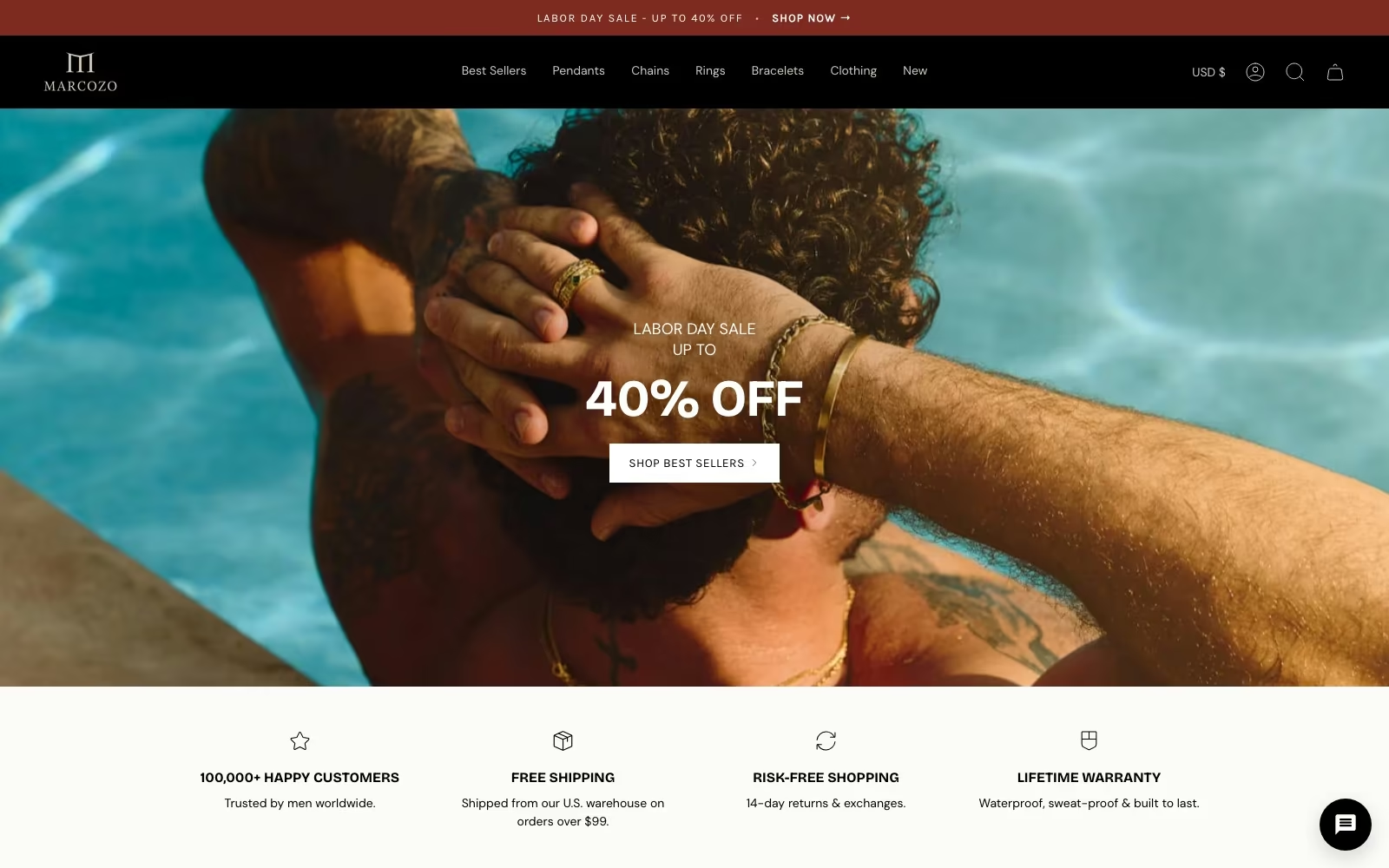













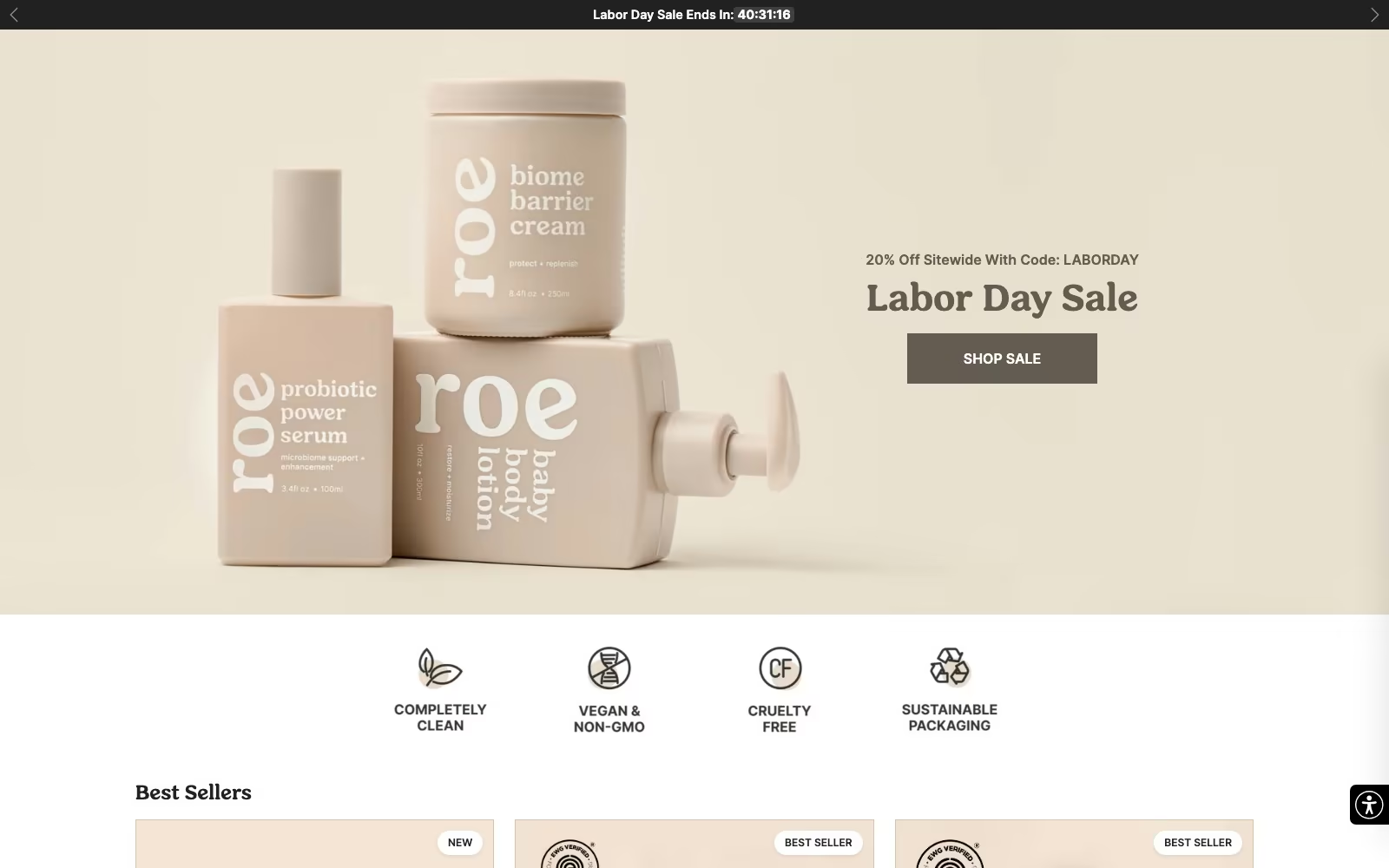



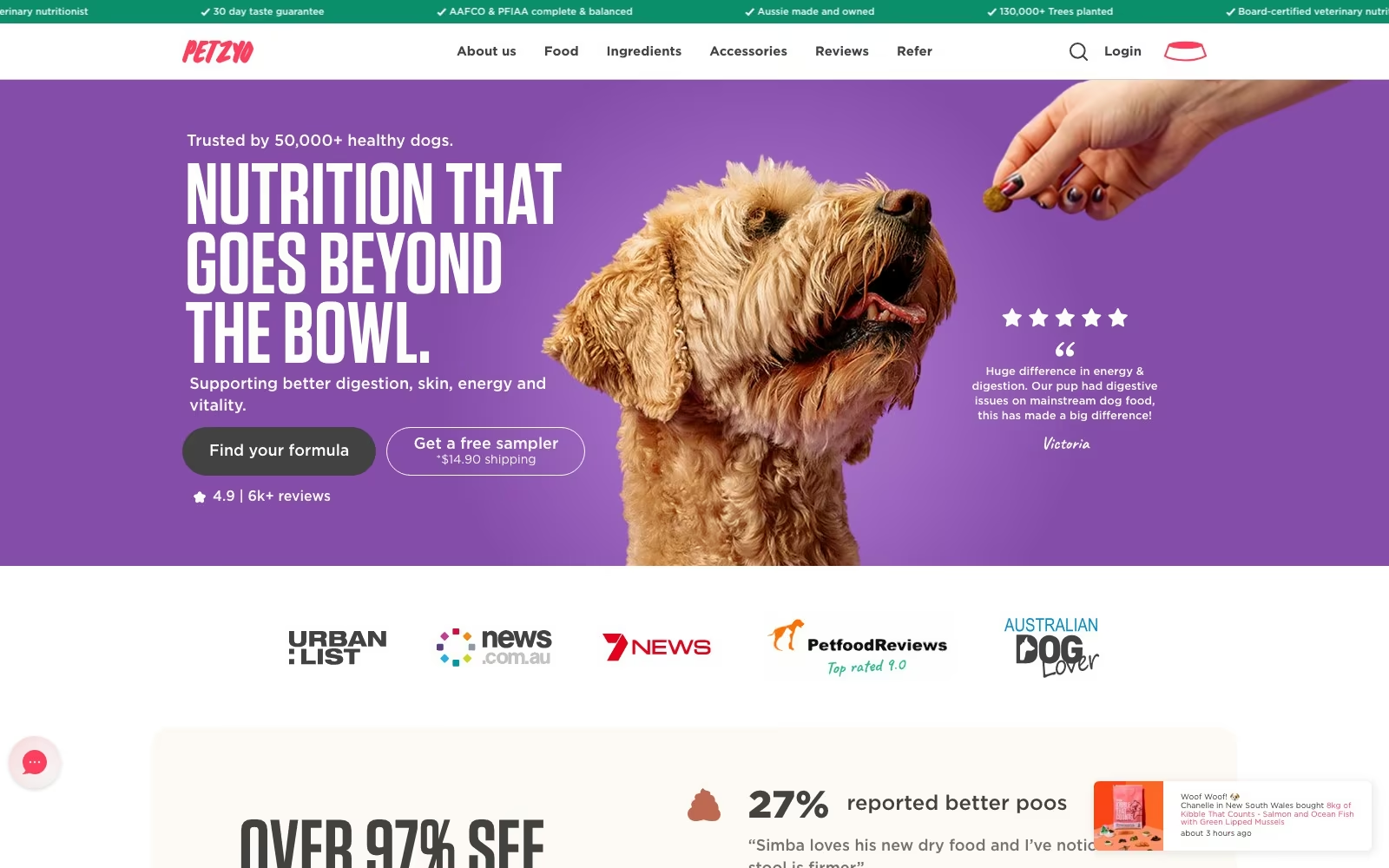















EN

EN

EN


FR

FR

FR

FR

FR

FR

FR

FR


EN
FAQ
What SaaS teams ask before commissioning a marketing audit.
What does a B2B SaaS marketing audit actually cover?
Nine areas, every time: measurement, paid search, paid social, spend efficiency, website and funnel, organic and AI search, offer and positioning, competitors and lifecycle. For a SaaS company we read them against pipeline and payback, so the ideal customer profile, funnel stage definitions, lead quality, the martech stack, self-serve and sales-assisted motions and retention programmes are all in scope. The output is a findings workbook plus a ranked 90-day plan.
How is this different from a marketing audit checklist?
A checklist tells you what to look at. An audit produces findings about your business, each with the measured evidence beside it, a severity band, what leaving it alone costs, and the fix. We keep a fixed nine-area scope so nothing is skipped, but every line in the workbook comes from your analytics, ad accounts, CRM, invoices and live site, never from a template. Use a checklist first if you want; call us for what it cannot answer.
Marketing says the leads are qualified and sales disagrees. Can the audit settle it?
That is usually the first finding. We test the marketing qualified lead definition against what sales actually accepts, trace live test signups and demo requests from click to CRM record to a named owner, and reconcile marketing's report with opportunities and closed revenue. Where the definition is the problem, the workbook says so and the plan rewrites it with sales in the room. Where routing or response time is the problem, we time it and report it.
We run self-serve and sales-assisted motions at once. Can you audit both?
Yes, and separately. Blending them produces a conversion rate that describes neither. We split the funnel by motion and by segment, follow signups and demo requests along their own paths, and report acquisition cost, accepted opportunities and payback for each. Cross-subsidy between motions is one of the most common findings we write, and it is invisible in a blended dashboard.
Does the audit include our martech stack?
Yes, as an inventory with findings: what each tool costs, what it is genuinely used for, where two tools overlap and where data does not flow between them. The CMO Survey names lack of budget (20.1%) and integration or data architecture (19.1%) as the top barriers to getting value from martech, which matches what we usually find. We recommend consolidation where the evidence supports it and resell no software.
Do you audit retention, or only acquisition?
Both, because retention decides what acquisition is worth. We review onboarding, lifecycle messaging, expansion campaigns and reactivation, and read them against your own cohorts. Benchmarkit's 2026 benchmarks put median net revenue retention at 102% and show median gross revenue retention falling from 88% to 84%. Where churn is a product or support issue rather than a marketing one, the workbook says so plainly.
What does the audit cost?
A fixed fee quoted after a scoping call, with deliverables and dates written down before you commit. It varies with the number of products, motions and ad accounts in scope and the state of your data, so publishing a rate would mislead most readers. For context on scale, The CMO Survey puts marketing at 9.0% of company revenue and 33.6% of digital activity in the hands of outside agencies. Book a meeting for a scope and a number.
Do you run the campaigns afterwards?
Not as part of this. The audit is a project with a defined end and no attached retainer, which is what lets the workbook say that a channel we would happily sell is not worth funding for you. Your team, your current agency or another firm can execute the plan. If you later want us to run something, it is scoped and quoted separately.
Our CRM data is a mess. Should we clean it first?
No, that is part of what the audit measures. Validity's 2026 study found 62% of organisations lost revenue to poor CRM data and only 41% had a named governance owner, so waiting for clean data means waiting forever. We document what the data can and cannot support, label directional findings as directional, and put the repairs in the plan. Building that layer is marketing operations consulting, quoted separately.
Does the audit cover AI search visibility?
Yes. Category, comparison and alternative-to queries are checked in classic search and in AI answers, along with whether your documentation, pricing page and comparison content give an engine anything accurate to quote. Findings name the queries where competitors appear and you do not, and the content and structural changes that would fix it.
How long does an audit take, and is a week really enough?
Seven days, and yes, because the scope is fixed and we are reading evidence rather than inventing a strategy. Longer audits are usually longer because of access delays and internal scheduling, which is why day one is access and why we ask for roughly three to four hours of your team's time in total: a kickoff, short interviews and the handover call.
How is this different from marketing strategy consulting?
Direction of travel. The audit looks backwards at evidence: what the marketing function has been doing, what it produced, and what is broken. SaaS marketing strategy consulting looks forward and decides segments, positioning, channel roles, budget and measurement. Most teams buy the audit first, because a plan written on unverified numbers is a guess with headings.
How is this different from growth advisory?
Scope of the question. Growth advisory hunts the commercial constraint wherever it sits, including pricing model, ideal customer profile and retention. The marketing audit stays inside the marketing function and produces evidence plus a ranked 90-day plan. If you already believe marketing is the problem, the audit is the cheaper first step.
We are between a CMO and an agency change. Is this the right moment?
It is one of the best. The workbook documents what the current setup actually produced, the plan states what the next leader or partner has to deliver, and the measurement framework gives them a baseline to inherit rather than reset. We hold no media and sell no software, so nothing in the audit is written to win the work that follows.
What happens after the plan?
Your team runs it, and every action has a named owner and an acceptance test. Many teams book a review at ninety days to check the leading indicators, which takes half a day and is optional. Where you want a standing numbers habit, scorecard advisory sets one up and hands it back, and the parent engagement is the marketing audit itself.

.webp)
.webp)