One set of numbers everyone in the business trusts.
everyone in the business trusts
Marketing operations consulting fixes the layer underneath your campaigns: tracking, the CRM, lead management and attribution, so marketing and sales argue about decisions instead of arguing about whose report is right. We audit the martech stack you already pay for, model the data properly, rebuild the routing and lifecycle stages, and hand over documentation your team can run. We do not run your campaigns inside this engagement. Book a meeting and we will tell you which part of the stack to fix first, and which tools to stop paying for.






Tell us a little about your brand and we'll be in touch within 24 hours to lock in a time.



WHAT WE FIX
Four layers of the revenue operations problem.
revenue operations problem
Marketing ops failures look like reporting problems and are almost never reporting problems. They start in measurement, spread through the data model, then show up as leads nobody follows and a marketing automation platform that nobody trusts. We work the four layers in this order, because fixing them out of order wastes the budget.
Measurement and attribution
CRM and the data model
Lead management and routing
Martech stack and automation
Events, conversions and one attribution model you can defend.
We start with what is actually being captured: analytics configuration, server side tracking, consent, ad platform conversions, offline and phone conversions, and the deduplication rules that decide whether one deal counts once or three times. Then we agree a single attribution model, write down what it can and cannot answer, and make the platform numbers reconcile with the revenue numbers your finance team recognises.
The gap is widespread. Haus found only 49% of senior marketing and finance leaders measure how marketing is driving business outcomes, and 74% have abandoned or scaled back an initiative because they could not measure it. Deep repair work runs through our conversion tracking and server side tracking teams.
- Event and conversion audit across web, ads and CRM
- Deduplication and currency rules written down, not assumed
- One attribution model, with its limits stated in plain language
- Platform reporting reconciled against recognised revenue
49%
of marketing and finance leaders measure how marketing drives business outcomes
Objects, fields and lifecycle stages that mean one thing.
Most CRM problems are definition problems. A lead means four things to four teams, three fields hold the same value, and the source field was overwritten by an import in 2023. We map the objects and fields you actually use, delete or archive the rest, define the lifecycle stages with entry and exit criteria, and set the hygiene rules that keep the database usable in Salesforce, HubSpot, Marketo, Pardot or Microsoft Dynamics.
The cost of skipping this is measurable: 62% of organizations report losing revenue directly because of poor CRM data quality, and nearly a third of teams spend six or more hours a week fixing and reconciling data.
- Object and field map, with duplicates retired
- Lifecycle stages defined with entry and exit criteria
- Source and campaign attribution fields protected from overwrites
- Hygiene, dedupe and enrichment rules documented and owned
62%
of organizations lose revenue directly because of poor CRM data quality
Lead scoring, routing and handoff that sales will actually use.
Then the process between marketing and sales: what qualifies a lead, how scoring is calculated and reviewed, who receives it, in how many minutes, what happens on no response, and how a recycled lead comes back into nurture rather than dying in a queue. We build the routing, write the service level both teams sign, and put a feedback loop in place so lead scoring is corrected by outcomes instead of opinions.
Bad data does the damage here too: Validity reports poor data contributing to delayed or scrapped campaigns for 67% of organizations, and only 41% have a dedicated data governance owner.
- Qualification criteria agreed by marketing and sales in writing
- Lead scoring model built, tested and scheduled for review
- Routing, response time and recycle rules live in the platform
- A closed loop from outcomes back into the scoring
67%
of organizations have had campaigns delayed or scrapped because of poor data
The stack you pay for, rationalised.
Last, the technology. We inventory every tool, what it costs, who owns it, which capability it duplicates and whether anyone logs in. Then we recommend what to consolidate, what to cancel and what to configure properly, and we rebuild the marketing automation that matters: core campaign programs, lifecycle emails, forms, unsubscribes and the integrations that keep the systems in step.
Underuse is the norm, not the exception. Gartner puts martech utilization at 49% of purchased capability, with only 15% of respondents qualifying as high performers, while the share of marketing budget going to martech has fallen to a five-year low of 19.4%, from 26.6% in 2021.
- Full tool inventory with cost, owner and real usage
- Consolidate, cancel or configure called on every line
- Core automation programs rebuilt and tested
- Integrations documented, with failure alerts
49%
of purchased martech capability is actually used, on Gartner's measure
Fixed scope with a defined end date, agreed in writing
Built in your instances, with no dependency on ours
Operations work only, so cancelling a program is a valid answer
Every process handed over with a runbook and a named owner
We made the difference for those brands

Beauty, personal care & wellness

B2B software, fintech, insurance

Creative, content, arts & culture

Home essentials, appliances, kitchen & pet

B2B software, fintech, insurance

Beauty, personal care & wellness

B2B software, fintech, insurance

Consumer tech and platforms

Beauty, personal care & wellness

Creative, content, arts & culture

B2B software, fintech, insurance

Healthcare & regulated services

Apparel and lifestyle

Home essentials, appliances, kitchen & pet

Home essentials, appliances, kitchen & pet

Consumer tech and platforms

B2B software, fintech, insurance

Home essentials, appliances, kitchen & pet

Consumer tech and platforms

Beauty, personal care & wellness

B2B software, fintech, insurance

B2B software, fintech, insurance

B2B software, fintech, insurance

Apparel and lifestyle

Creative, content, arts & culture

Consumer tech and platforms

Food & beverage

Travel & mobility

Home essentials, appliances, kitchen & pet

Beauty, personal care & wellness
01 — The challenge
Three reports, three numbers, and a meeting that goes nowhere.
The pattern is familiar in any mid market company that grew faster than its systems. The ad platforms claim more conversions than the CRM has records. Sales says the leads are unqualified; marketing says sales never called them. Somebody built a dashboard, then somebody else built a spreadsheet to correct the dashboard. Every meeting spends its first twenty minutes deciding which number to believe, and the decision that was on the agenda gets pushed to next week.
“We have more marketing data than ever and less confidence in it than we had two years ago.”
It also quietly corrupts behaviour. 67% of C-suite respondents admit campaign data is at times manipulated to make results look better to leadership, nearly double the 38% reported organizationwide. When nobody can reproduce a number, presentation replaces measurement, and that is an operations problem before it is a culture problem.
02 — Our approach
Audit, data model, build, handover. Typically six weeks.
Fixed scope with a named senior consultant who does the work rather than supervising it. Week one is the audit: read-only access to your analytics, ad accounts, CRM and marketing automation platform, interviews with the marketing team, the sales lead and whoever currently produces the reporting, and a trace of two or three real deals from first touch to closed revenue to find exactly where the record breaks. You get the findings ranked by revenue impact, not by how easy they are to fix. Weeks two and three are design: the data model, field and object map, lifecycle stage definitions, the attribution model and its stated limits, the lead scoring and routing logic, and a stack recommendation that names what to consolidate and what to cancel. We bring options with trade-offs and argue them through with your team, because an operations design nobody challenged tends to collapse the first time a rep ignores it. Weeks four and five are the build: tracking corrected, fields migrated, routing and scoring live, core automation rebuilt and tested with real records, and reporting rewired so one source of truth feeds both the marketing dashboard and the sales pipeline view. Week six is handover: written documentation, a short recorded walkthrough per system, an owner named for every process, and a maintenance calendar. We are consultants here. We do not run your paid media or content inside this engagement, which is why the recommendation can say keep your agency, cancel a tool we would otherwise implement, or stop a program entirely. Everything is built in your instances, under your licences, and it stays yours.
03 — What we did
How the six weeks actually run.
Audit first, then the data model, then the build, then documentation your marketing operations team can maintain without us.
Weeks 1 / Audit
Trace real deals through every system
Analytics, ad platforms, CRM and automation read end to end, plus two or three real deals followed from first touch to revenue.

Weeks 2-3 / Data model
Objects, fields and lifecycle stages defined once
One definition per stage, duplicate fields retired, attribution model agreed with its limits written down.

Weeks 4-5 / Build
Routing, scoring and automation rebuilt and tested
Tracking corrected, lead management live, core programs rebuilt and tested against real records rather than a demo.

Week 6 / Handover
Documentation, owners and a maintenance calendar
Written process documentation, a recorded walkthrough per system, a named owner per process. Then the engagement ends.

WHAT YOU GET
Six deliverables, all editable, all yours.
all yours
Built in your own systems, documented in plain language, with an owner named against every process.

Operations and martech audit
Every finding across tracking, CRM, lead management and the stack, ranked by revenue impact with the evidence attached.

Data model and field map
Objects, fields and lifecycle stages with one definition each, plus the hygiene and dedupe rules that keep them clean.

Rebuilt automation programs
Core campaign and lifecycle programs, forms and integrations rebuilt in your marketing automation platform and tested.

Lead scoring and routing logic
Qualification criteria, the scoring model, routing and response rules, and the recycle path for leads sales returns.

One source of truth reporting
The attribution model, the reconciled numbers, and reporting that feeds both marketing and the sales pipeline view.

Process documentation and owners
Written runbooks, recorded walkthroughs, a named owner per process and a maintenance calendar your team can follow.
HOW WE WORK
Operating standards, not promises.
Operating standards


B2B and mid market SaaS companies
Long sales cycles, self-serve and sales-led motions in one funnel, and a pipeline definition that has drifted between teams.
Consumer and ecommerce brands
Ad platform numbers, the store and the email platform each telling a different revenue story.
Multi-location and franchise operators
Calls, forms and walk-ins per location, and attribution that has to survive being rolled up centrally.


















Built on trust. Proven by results.
We partner with SMBs and Fortune 500 companies to deliver more than reach — we bring clarity, execution, and measurable outcomes. Every successful partnership starts with a strong culture fit and a shared drive to grow.







CASE STUDIES
Case studies
Website Portfolio
Video Ads
Static Ads










































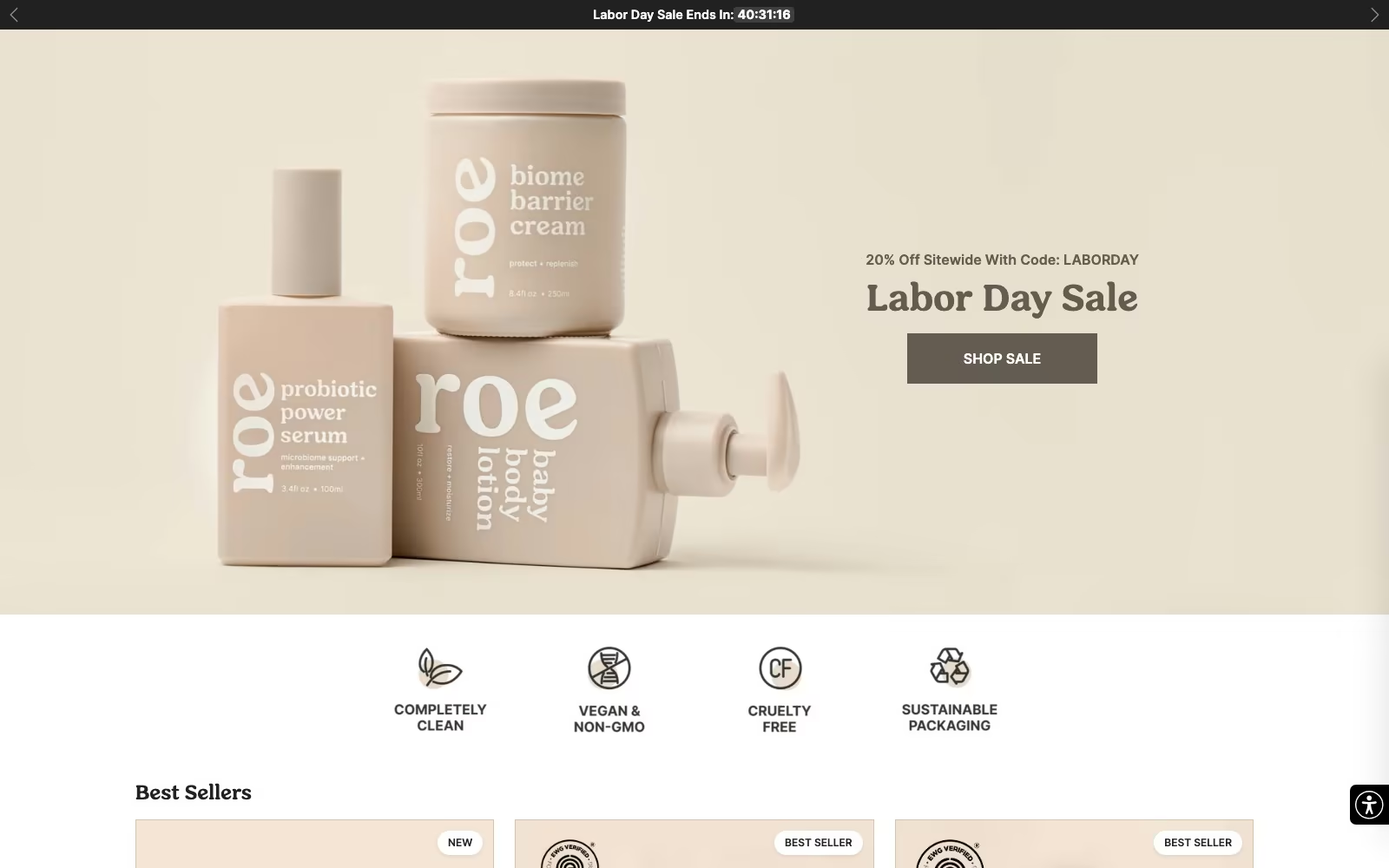



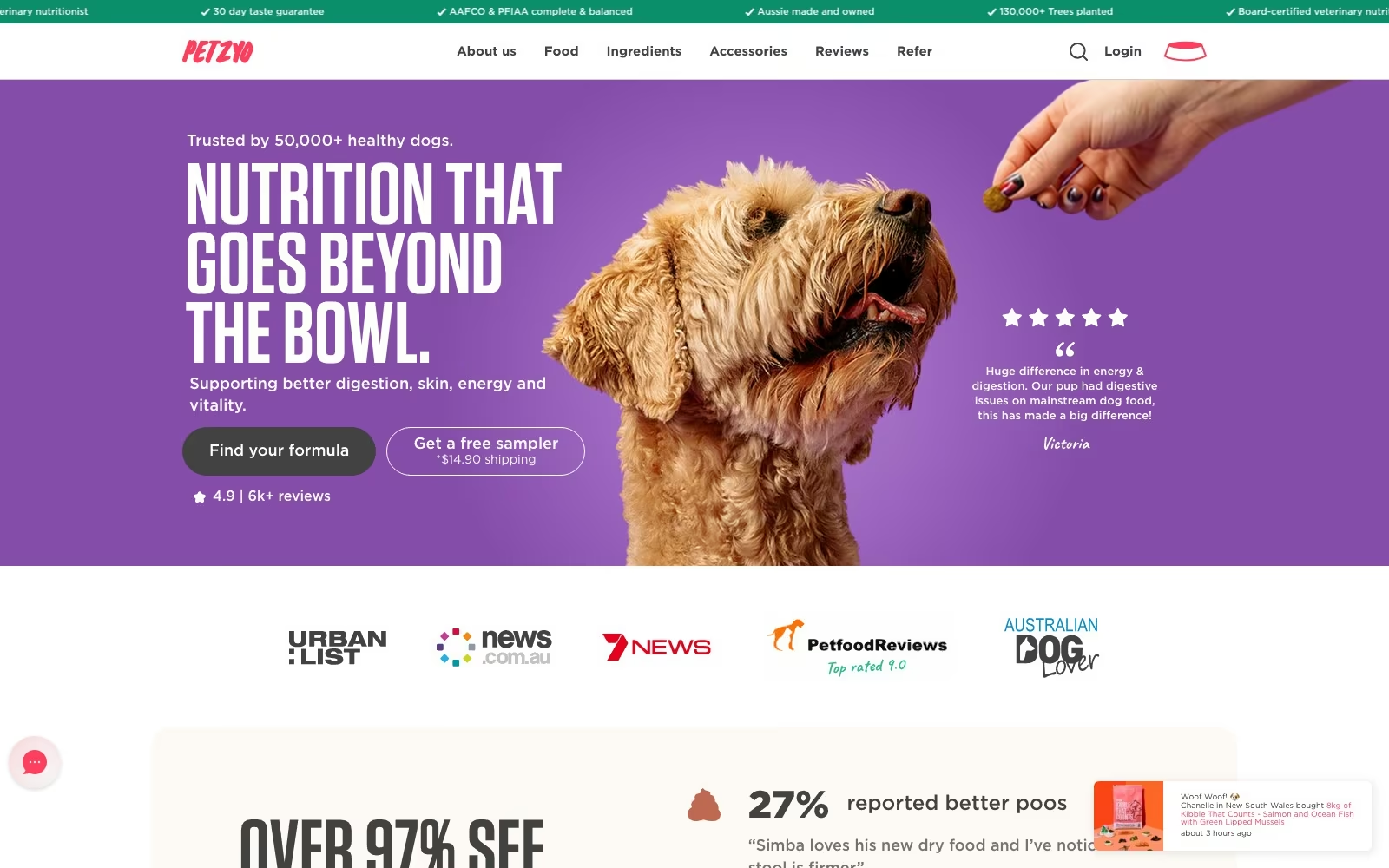















EN

EN

EN


FR

FR

FR

FR

FR

FR

FR

FR


EN
FAQ
What leaders ask before fixing marketing operations.
What does marketing operations consulting include?
Four blocks of work. An audit of measurement, the CRM, lead management and the martech stack, with findings ranked by revenue impact. A data model: objects, fields, lifecycle stages and attribution defined once. A build: tracking corrected, lead scoring and routing live, core marketing automation programs rebuilt and tested. Then a handover with documentation, named owners and a maintenance calendar. Typically six weeks, fixed scope, built inside your own systems.
Is marketing operations the same as revenue operations?
They overlap and the distinction is mostly about scope. Marketing operations owns the marketing side: campaign infrastructure, the automation platform, lead management up to the handoff, and marketing reporting. Revenue operations spans marketing, sales and customer success as one system, with shared definitions, one pipeline model and one forecast. Our work starts in marketing ops because that is where most of the broken data originates, but the deliverables are written so they hold at revenue operations level, which is why we insist the sales lead is in the room from week one.
What does the engagement cost?
A fixed fee, quoted after a scoping call, with the deliverables and dates written down before you commit. The number moves with how many systems are in scope and how much history has to be migrated, so publishing a rate would mislead most readers. For budget context, Gartner puts average marketing budgets at 7.8% of company revenue, with martech at a five-year low of 19.4% of that budget. Book a meeting for a scope and a number.
Do we need this if we already have a marketing automation platform?
Owning the platform is usually why the work is needed. Gartner measures martech utilization at 49% of purchased capability, with only 15% of organizations qualifying as high performers, and only 49.7% of companies say their marketing teams have the skills and training to use their own marketing systems, down from 54.1% in 2022. The gap is rarely the software. It is that nobody defined the data model, so each new program is built on a different set of assumptions.
Which platforms do you work in?
The common mid market and enterprise combinations: HubSpot end to end, Salesforce with either Marketo, Pardot, or Salesforce Marketing Cloud Account Engagement, Microsoft Dynamics, and the lighter automation platforms that ecommerce brands run beside their store. On the measurement side, analytics, tag management, server side tracking, the ad platforms and call tracking. Where your stack includes something we do not work in daily, we say so before you sign and either scope the vendor in or leave that piece out rather than learn it on your budget.
Will you rip out our martech stack?
Rarely, and never as an opening move. Migrations are expensive, they consume a quarter of your team's attention, and most stacks we audit fail on configuration and ownership rather than capability. The usual recommendation is to consolidate two or three overlapping tools, cancel what nobody logs into, and configure properly what you already pay for. When a platform genuinely cannot support the data model, we say so, scope the migration separately, and take no reseller margin on whatever you choose instead.
How is this different from a marketing audit?
A marketing audit looks at the whole marketing function, including channels, creative, budget and team, and ends with findings and a plan. Marketing operations consulting is narrower and deeper: it takes the operations layer and rebuilds it. Many clients run the audit first and arrive here because the audit found that the numbers cannot be trusted. If you already know the measurement is the problem, you can start here.
Do you run our campaigns afterwards?
Only if you ask, and it is quoted separately. This engagement deliberately excludes running paid media, content and lifecycle campaigns, because the operations recommendation has to be free to say that a program should stop, a tool should be cancelled, or your current agency is doing fine. If you do want execution afterwards, the retainers are separate agreements, and plenty of clients take the documentation and run it with their own team.
Can you fix attribution so we know what works?
We can make attribution honest, which is more useful than making it confident. That means one agreed model, consistent definitions, deduplicated conversions, offline and phone revenue included where it exists, and a written statement of what the model cannot answer. Uncertainty is the norm: only 40% of marketing and finance leaders say their measurement tools make it much easier to act decisively. Where the question needs incrementality testing rather than attribution, we say so, and our analytics team can design the test.
How long does the data cleanup take?
The design work is fast; the cleanup depends on volume and how many years of history you want corrected. Inside the six weeks we fix the forward-looking rules, migrate the fields that matter, dedupe and standardise the records that feed reporting, and archive the rest so it stops distorting the numbers. Retroactively rebuilding several years of source data is a separate project and usually poor value, because the decisions you make from this point only need the current data to be right.
Who needs to be involved from our side?
Less time than most people expect, but from specific people. We need an administrator for each system for access and change approval, whoever produces the current reporting, the sales lead or head of revenue for the qualification and routing decisions, and someone senior enough to settle a definition when two teams disagree. Expect a kickoff, two working sessions in the design weeks, a test window and the handover. Everything else is ours.
What if our sales team ignores the new process?
Then the process was designed without them, which is why the sales lead sits in the design sessions rather than receiving the output. In practice adoption comes from three things: routing that gets reps a lead in minutes, a qualification definition they helped write, and reporting that shows their pipeline the way they already think about it. We also keep the number of required fields as small as the reporting genuinely needs, because every extra mandatory field is a bet against adoption.
Does this help with AI in marketing?
It is the prerequisite. Gartner found a lack of integrated marketing data is the second most cited barrier to AI-driven efficiency, ranked first by 13% of CMOs and in the top three by 30%, and 62% of organizations already lose revenue to poor CRM data quality. Models trained or prompted on a broken data model repeat the errors faster. If AI strategy is the reason you are here, our AI marketing advisory engagement usually runs after this one, not before.
What do we get that we can keep?
Everything, and in a form your team can maintain. The audit with its evidence, the data model and field map, the lifecycle definitions, the scoring and routing logic as built, the rebuilt automation programs in your own instance, the reporting, written runbooks, recorded walkthroughs and a maintenance calendar with an owner per process. Nothing sits in a tool of ours and nothing requires us to keep working with you.
How does this fit with dashboards and reporting projects?
It comes first. A dashboard built on fields nobody has defined simply publishes the confusion faster, which is why we fix definitions before visuals. Once the operations layer holds, reporting is straightforward, and it can be delivered by your team or through our data visualization and CRM analytics work. If your real need is a weekly set of numbers leadership will use, marketing scorecard advisory is the cheaper starting point.
Should we hire a marketing operations person instead?
Often yes, eventually, and this engagement makes that hire far more likely to succeed: the platform is configured, the model is documented and the role has a scorecard rather than a mess to inherit. Where the question is the shape of the team as a whole, marketing team structure advisory answers it properly, and where you need ongoing leadership over the revenue system, a fractional head of growth is the better fit. We take no fee from any recruiter.

.webp)
.webp)