Your pipeline problem is usually a decision that was never made.
never made
Most B2B software companies have more marketing activity than marketing strategy. Two segments are being served badly instead of one being served well, the positioning is a category name, and every channel is funded a little. We run a fixed-scope marketing strategy consulting engagement and hand over a written marketing plan: ideal customer profile, positioning and messaging, channel roles, budget and the measurement behind it. Advisory only — no campaign management, no media buying and no fractional execution inside the engagement. Book a meeting and bring four quarters of pipeline, retention and spend data.






Tell us a little about your brand and we'll be in touch within 24 hours to lock in a time.



WHAT WE EXAMINE
Four decisions a SaaS marketing strategy has to settle.
has to settle
Efficiency, not volume, is the market that software marketing now operates in. Benchmarkit's 2026 benchmarks, drawn from 342 B2B SaaS and AI-native companies, show median growth compressing from 30% in CY-22 to 20% in CY-25 while the 75th percentile fell from 75% to 42%, and median customer acquisition cost payback improving from 18 to 16 months. A strategy decides where that spend goes, not simply how much of it there is.
Segment and ideal customer profile
Positioning and messaging
Channel roles and demand plan
Budget, measurement and the plan itself
Which customers the company is actually built for.
We start with your own revenue data: annual recurring revenue and gross margin by segment, win rates by company size and use case, sales cycle length, expansion and churn by cohort, and the support and onboarding load each segment creates. The pattern is common — the segment marketing chases converts worst, churns fastest and consumes the most product roadmap.
Retention is the honest arbiter of an ideal customer profile. Benchmarkit reports median net revenue retention of 102% across its 2026 sample, with usage-based pricing models at 108% against 95% for seat-based, while median gross revenue retention fell from 88% to 84%. The profile we write is a decision with named industries, company sizes and buying roles, and the segments you are declining are written down.
- Recurring revenue, margin and win rate by segment and use case
- Retention and expansion read by cohort, not blended
- Sales cycle and support load priced into segment choice
- Ideal customer profile written as a decision, with exclusions
102%
median net revenue retention across 2026 B2B SaaS benchmarks
What you are, against what buyers compare you to.
Software positioning fails in two ways: claiming a category the market does not use, or describing features a buyer cannot evaluate. We build the position from evidence — win-loss reasons, the alternatives that actually appear in deals including in-house builds and spreadsheets, support and product telemetry, and customer interviews — then write the claim, the proof behind it and the messaging for each buying role.
Brand and demand get separated deliberately. The Haus 2026 Decision Confidence Index found 71% of leaders saying their AI tools favour short-term performance and 69% feeling pressure to deprioritise brand, which is how a company ends up cheaply acquiring customers nobody remembers choosing.
- Category and alternatives named as buyers name them
- Claims tested against win-loss and customer interviews
- Messaging by role: economic buyer, practitioner, security and finance
- Proof plan covering references, reviews and third-party validation
69%
of marketing leaders feel pressure to deprioritise brand for short-term performance
What each channel is for across a long, committee-driven cycle.
Every channel gets a named job rather than a share of hope. Search and AI-answer visibility carry problem-aware research. Paid captures existing intent for the segments you chose. Content, product marketing and thought leadership build the case a champion takes internally. Lifecycle and customer marketing defend the retention number. Outbound, partners, communities and events get the same treatment, including the ones we recommend stopping.
Efficiency is checked, not assumed. Benchmarkit's blended customer acquisition cost ratio sits at $1.30 with median annual recurring revenue per employee of $175K, so the plan models what each channel has to return before it earns next quarter's budget.
- One named job per channel, mapped to segment and funnel stage
- Product-led and sales-led motions reconciled, not run in parallel
- Customer and lifecycle marketing funded as demand, not admin
- Channels to reduce or stop named explicitly
16 months
median CAC payback in 2026 benchmarks, improved from 18
Owners, budgets and dates, or it is a deck.
The final section is the one that decides whether anything happens. We set budget by segment and channel, define the short metric set the leadership team and board will review, specify the tracking and attribution work required to report it honestly, name an owner for every workstream, and put the plan on a calendar with quarterly checkpoints tied to your planning cycle.
This is where most software marketing plans break. Only 49% of 500 senior marketing and finance leaders said they can measure marketing's effect on business outcomes, and 74% had abandoned an initiative they could not measure, while 62% of organisations report losing revenue to poor CRM data quality and only 41% have a data governance owner.
- Budget allocated by segment, channel and quarter
- A short metric set leadership and the board will actually review
- Attribution and CRM gaps named, with the minimum fix scoped
- Named owners and dates on every workstream
25%
median Rule of 40 in 2026 benchmarks, up from 15% but below the 40% threshold
Fixed scope with a defined end date, agreed in writing
Retention and expansion by cohort before any channel recommendation
Advisory only, so the plan can recommend spending less
Sales and customer success interviewed, not surveyed by email
We made the difference for those brands

Creative, content, arts & culture

Beauty, personal care & wellness

Beauty, personal care & wellness

Retail & commerce

Apparel and lifestyle

Consumer tech and platforms

Food & beverage

Healthcare & regulated services

B2B software, fintech, insurance

Apparel and lifestyle

Healthcare & regulated services

Food & beverage

Consumer tech and platforms

Consumer tech and platforms

Retail & commerce

B2B software, fintech, insurance

B2B software, fintech, insurance
Travel & mobility

Apparel and lifestyle

B2B software, fintech, insurance

Healthcare & regulated services

B2B software, fintech, insurance

Creative, content, arts & culture

B2B software, fintech, insurance

Consumer tech and platforms

Creative, content, arts & culture

Home essentials, appliances, kitchen & pet

Consumer tech and platforms

Food & beverage

Retail & commerce

Consumer tech and platforms
01 — The challenge
Everything is running. Nothing has been decided.
The symptom set is consistent across B2B software companies between a few million and a few hundred million in recurring revenue. Marketing runs content, paid, events, outbound support and a website refresh at once. The ideal customer profile is a slide from a funding round two years ago. Product marketing is one person writing launch copy. Sales says leads are unqualified; marketing says deals are mishandled; both are partly right because nobody agreed which segment the company serves. Board reporting shows pipeline created, which moves whenever someone changes a stage definition.
“We can tell you exactly what marketing did last quarter. We cannot tell you what it decided.”
The market no longer forgives that. Benchmarkit's 2026 data shows median growth at 20% against 30% three years earlier and median gross revenue retention slipping from 88% to 84%, which means growth now has to be argued for segment by segment rather than funded as a category bet. A written strategy is how a software company wins that argument internally, with its own board as much as with buyers.
02 — Our approach
Evidence, then decisions, then a written marketing plan. Four to six weeks.
Fixed scope, one senior consultant in every session, no execution work inside the engagement. Week one is evidence. We take four to eight quarters of recurring revenue by segment, cohort retention and expansion, pipeline and win-loss records, product usage where it is available, website, search and AI-visibility data, and every line of marketing and agency spend. We interview the chief executive or founder, sales and customer success leadership, product, and the marketing team, and we speak to customers and recently lost prospects where scope allows. Week two is analysis: margin, win rate and retention by segment, the profile that actually renews and expands, positioning tested against the real alternatives in deals, a channel audit priced against pipeline and payback, and an assessment of what can honestly be measured today. Week three is a decision session with your leadership team covering which segments lead, what the positioning claims and proves, which channels are funded and at what level, how brand and demand are split, and what sales and marketing owe each other. The final weeks produce the written plan: segment priority and ideal customer profile, a positioning and messaging platform with a proof plan, a channel and content plan by quarter, a budget by segment, a measurement framework, and a one-page brief any agency or new hire can be held to. We run no campaigns, buy no media, give no product, legal or financial advice, and hand everything over in editable files that stay yours.
03 — What we did
How the engagement actually runs.
Revenue and retention evidence before opinions, positioning tested against real deals, then one plan your leadership has already argued through.
Week 1 / Evidence
Recurring revenue, cohorts and pipeline read together
Revenue and retention by segment and cohort, win-loss records, product usage where available, and every line of marketing spend.

Week 2 / Analysis
Segment ranking and positioning tested against real alternatives
Which segments renew and expand, and claims checked against win-loss reasons, customer interviews and the alternatives that appear in deals.

Week 3 / Decisions
Priorities, positioning and funding decided by leadership
Which segments lead, what the positioning says, which channels are funded, and who owns each number from next quarter.

Weeks 4-6 / Plan
The written marketing plan and its measurement framework
Positioning platform, channel and content plan by quarter, budget by segment, metrics, and a brief any agency can be held to.

WHAT YOU GET
Six deliverables, all editable, all yours.
all yours
Written for your segments, your product and your sales motion, in files your team can change without calling us.

Written marketing plan
What marketing will do over the next four quarters, by segment and motion, with a named owner and a date on every workstream.

Segment priority and ideal customer profile
Win rate, retention and margin by segment and use case, with the segments you are deliberately declining written down.

Positioning and messaging platform
The claim, the evidence behind it, and messaging by role for the economic buyer, the practitioner and the security and finance reviewers.

Channel and content plan
One named job per channel across search, paid, content, lifecycle, partners and events, sequenced by quarter.

Budget and measurement framework
Spend by segment and quarter, the metrics leadership and the board review, and the tracking required to report them honestly.

Agency and in-house brief
A one-page brief that lets any agency, contractor or new hire execute the strategy without reinterpreting it.
HOW WE WORK
Operating standards, not promises.
Operating standards


Sales-led B2B software companies
Where deals run through committees and the plan has to arm a champion rather than generate clicks.
ExploreProduct-led and hybrid motions
Where self-serve signups and enterprise deals compete for the same roadmap and the strategy has to reconcile both.
ExploreTechnology and AI-native platforms
Where the category is still forming, buyers compare against in-house builds, and positioning does most of the work.
Explore

















Built on trust. Proven by results.
We partner with SMBs and Fortune 500 companies to deliver more than reach — we bring clarity, execution, and measurable outcomes. Every successful partnership starts with a strong culture fit and a shared drive to grow.







CASE STUDIES
Case studies
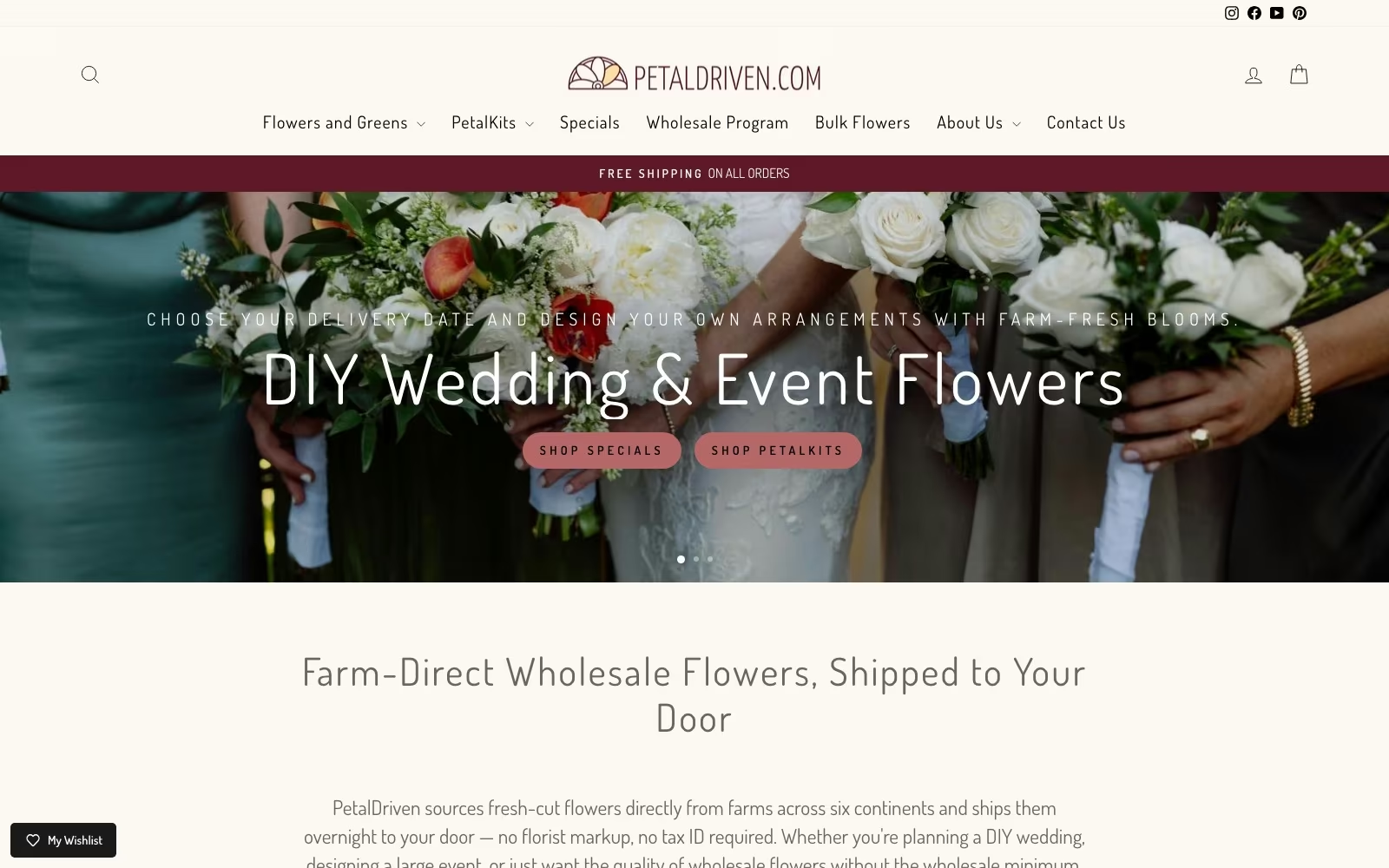
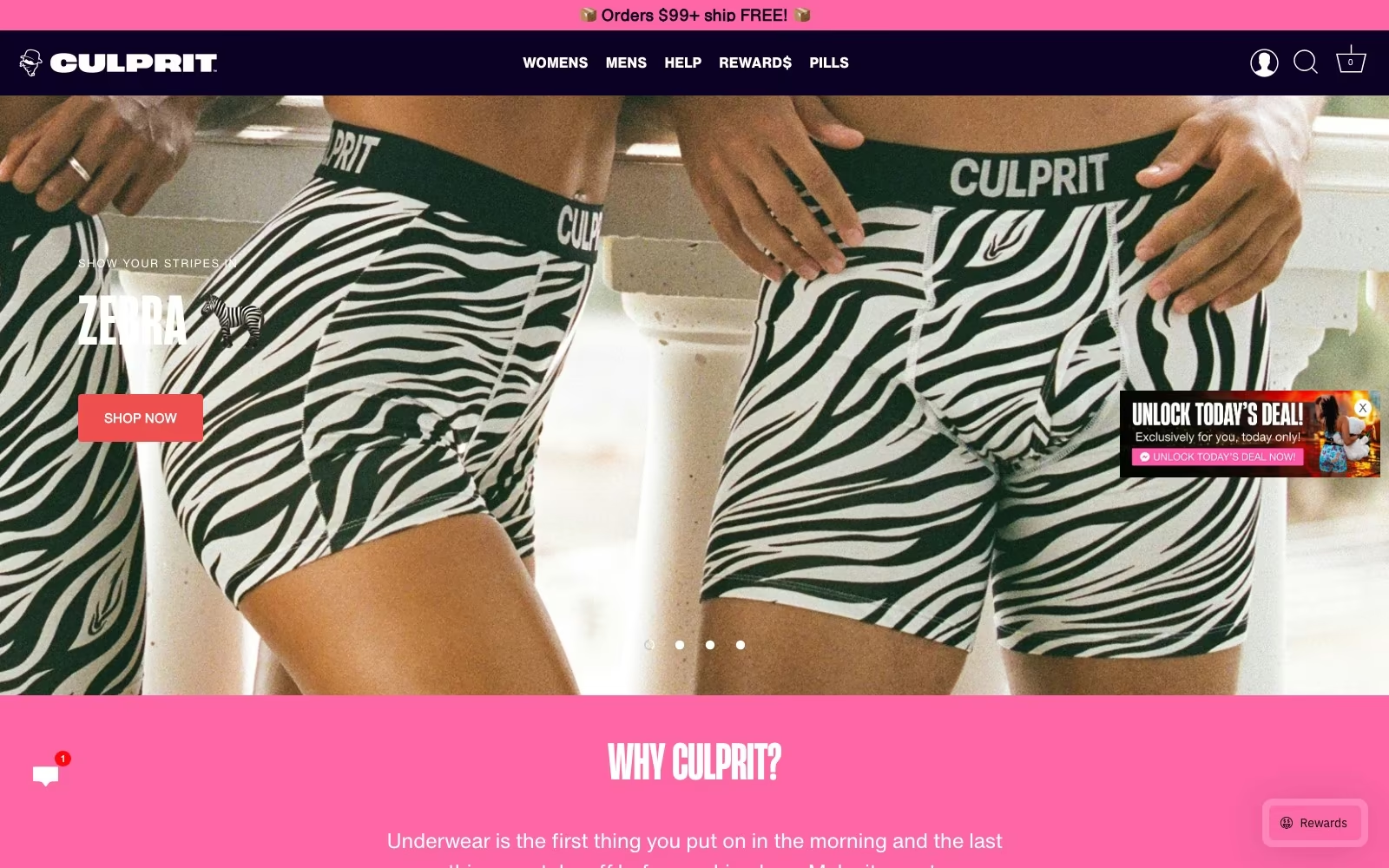
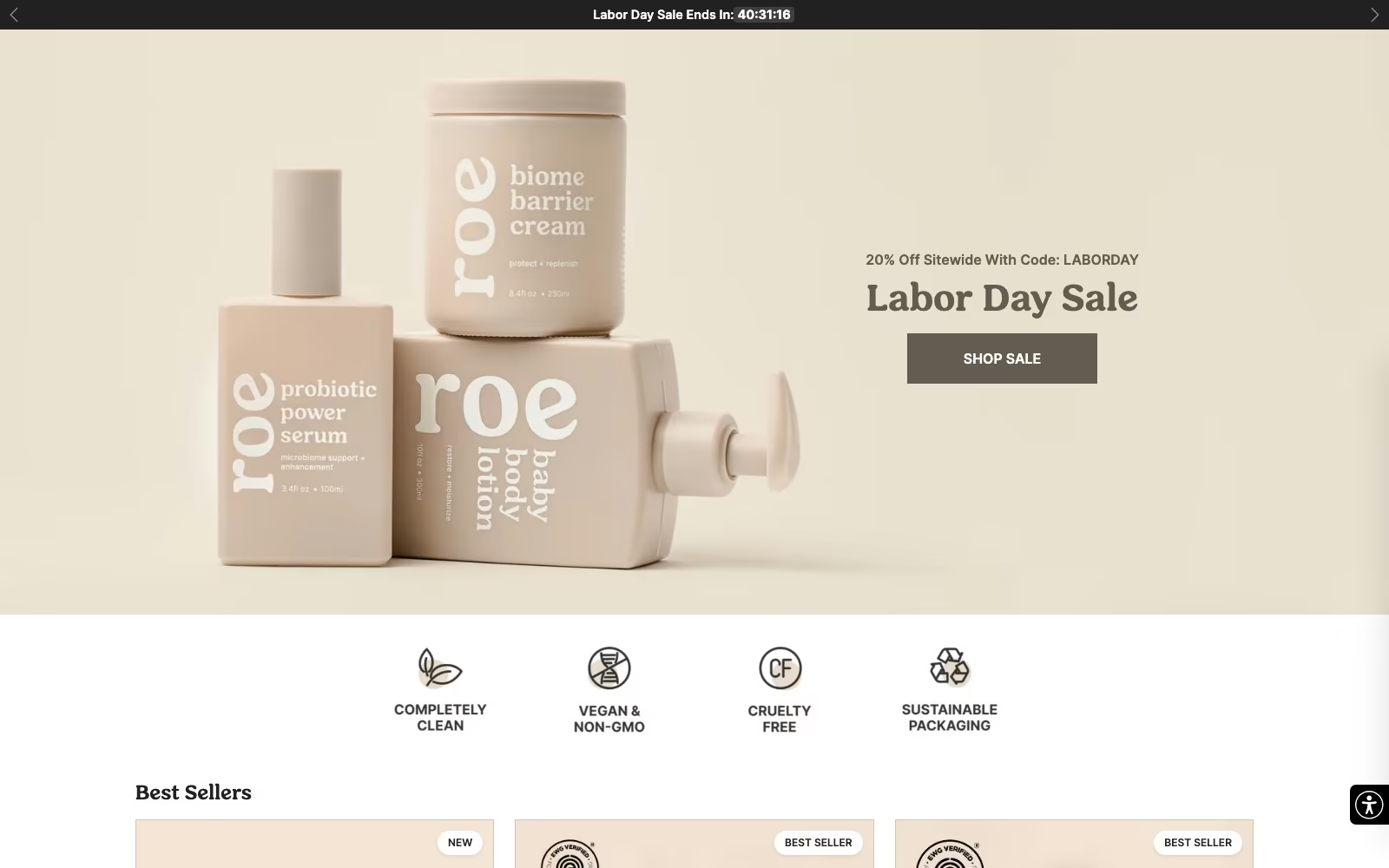
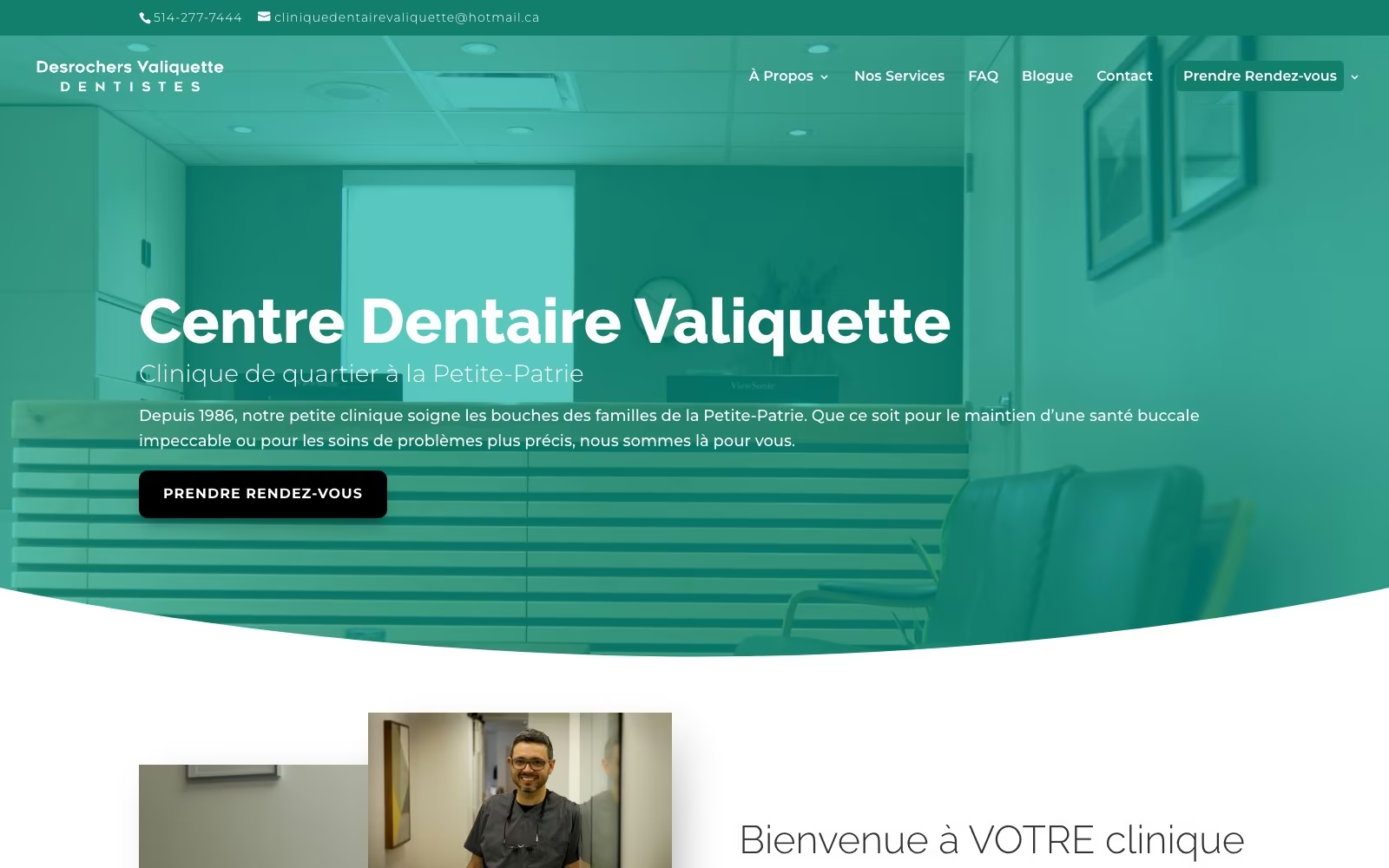
Website Portfolio
Video Ads
Static Ads





















































EN

EN

EN


FR
FR
FR

FR

FR

FR

FR

FR


EN
FAQ
What software leaders ask before buying marketing strategy consulting.
What does marketing strategy consulting cover for a B2B SaaS company?
Four decisions and a plan. Segment priority and the ideal customer profile, meaning which customers the company is built for and which are declined; positioning and messaging, meaning what you are against the alternatives buyers actually consider; channel roles, meaning what each channel is for across a long committee-driven cycle; and budget and measurement, meaning owners, spend by quarter and the metrics leadership and the board review. The output is a written marketing plan, not a workshop summary.
How is this different from hiring a SaaS marketing agency or consultant?
An agency executes a plan. This engagement writes one, and because we take no execution work inside it, the plan is free to say that two channels should be cut and one segment should stop being marketed at all. The deliverable includes a one-page brief written so any agency, contractor or in-house team, including your current one, can deliver against it. Execution is scoped separately afterwards if you want us to do it.
What does the engagement cost?
A fixed fee quoted after a scoping call, with deliverables and dates written down before you commit. It varies with the number of segments, products and regions in scope and the state of your CRM, analytics and product data, so publishing a rate would mislead most readers. For budget context, The CMO Survey puts marketing at 9.0% of company revenue on average, with software companies typically well above that. Book a meeting for a scope and a number.
We are product-led. Does a written strategy still apply?
Yes, and it usually matters more, because product-led companies accumulate two motions without deciding which one leads. The plan states what self-serve acquisition is for, where sales assistance begins, which segments are only ever served self-serve, and how activation and expansion are marketed. Benchmarkit's 2026 data showing usage-based pricing at 108% net revenue retention against 95% for seat-based is one reason that decision belongs in the strategy rather than in the roadmap.
Will you rewrite our positioning from scratch?
Only if the evidence says so. More often the position exists inside the company and has never been written down or agreed, so different teams describe the product three different ways. We test the current claim against win-loss reasons, customer interviews and the alternatives that genuinely appear in deals, then either sharpen it or replace it, and always with the evidence attached so your leadership can argue with the reasoning.
Do you talk to our customers and lost prospects?
Yes, within the agreed scope, and it is usually the highest-value hour of the engagement. Customer interviews show which outcome buyers actually bought, and recently lost prospects explain what the messaging failed to answer. We agree the list with you, keep the interviews short and confidential, and feed findings into the positioning platform rather than publishing them.
How do you handle attribution when our data is imperfect?
We work from financial and CRM records first, reconcile analytics against them, and label which findings are solid and which are directional. Validity's 2026 research found 62% of organisations losing revenue to poor CRM data and 67% having campaigns delayed or scrapped because of it, so imperfect data is the normal starting point. Where tracking is genuinely absent, part of the plan is the minimum change that makes next quarter reportable; marketing operations consulting is the engagement that implements it.
Where does AI fit into a software marketing strategy?
Two places, both practical. First visibility: buyers now research through AI answers as well as search, so the plan specifies the content, documentation and third-party evidence that gets a product cited and compared accurately. Second internal use, where the risk is a short-term bias — 71% of leaders in the Haus 2026 index said their AI tools favour short-term performance. Readiness, use cases and policy are scoped in AI marketing advisory rather than here.
How is this different from growth advisory?
Different question. SaaS growth consulting looks for the commercial constraint on growth wherever it sits, including pricing, packaging, retention and the sales system. Marketing strategy consulting takes the commercial model as given and answers what marketing should do about it: segments, positioning, channel roles, budget and measurement. Companies that already know their constraint usually want this one.
Who from our side needs to be involved?
A sponsor, usually the chief executive or founder; the sales leader; someone from product or customer success who can speak to what customers actually keep using; and whoever owns marketing today. Expect around two hours of interviews each in week one and a half-day decision session in week three. If the sponsor cannot attend that session, we move it rather than run it without them.
We are between marketing leaders. Should we wait?
No, this is a good moment for it, because the plan becomes the brief for the hire and stops the new leader spending a quarter rediscovering your data. Where the question is really about structure and sequencing, marketing team advisory covers it, and where you need someone to lead the function in the meantime a fractional CMO is the engagement. Both are quoted separately and neither is required to use the plan.
Will the plan tell us to spend less?
Sometimes, and always with the numbers attached. The common finding is not that the budget is wrong in total but that it is spread across too many segments and channels to reach effect in any of them. With a blended customer acquisition cost ratio of $1.30 and median payback at 16 months in the 2026 benchmarks, concentration usually beats coverage. Your leadership makes the call; we make the trade-off visible.
Do you do this for other industries?
Yes. The parent engagement is marketing strategy consulting, and the same method runs in other verticals with the buying mechanics changed, for example industrial marketing strategy consulting and ecommerce growth consulting.
What happens after the plan?
Your team runs it, and every workstream has a named owner on your side. Many companies book a review at ninety days to check the leading indicators and adjust the sequence, which takes half a day and is optional. Where you want a standing numbers habit instead, scorecard advisory sets one up and hands it back by week eight. Execution, if you want us to do it, is scoped separately.
How do we know the plan is not a template?
Because it is built on your cohorts, your win-loss reasons and your interviews, and it names your segments, competitors and product lines. A template cannot say which of your four segments should carry next year's budget or which proof point closes your enterprise deals. Every recommendation carries the evidence it came from, so your leadership can disagree with the reasoning rather than with the conclusion.

.webp)
.webp)