When the growth problem is the offer, not the ad budget.
not the ad budget
Most industrial manufacturers we meet do not have a traffic problem. They have a positioning problem, a pricing problem, or a quoting process that loses the deals it wins on merit. Growth consulting here means the commercial diagnosis first: which segments are worth serving, what your offer is really worth, where quotes leak, and how distribution helps or blocks you. Then a written revenue growth plan your own team can run. Advisory only, no campaigns inside this engagement. Book a meeting and bring last year's quote log.






Tell us a little about your brand and we'll be in touch within 24 hours to lock in a time.



WHAT WE EXAMINE
Four levers that move industrial revenue before media does.
before media does
Industrial buying has moved earlier and gone quieter. In the Q1 2026 Industrial Buyer Pulse, based on 303 North American manufacturing decision-makers, 76% had placed at least one supplier on a shortlist before any live interaction, rising above 90% among C-level and VP respondents. By the time your sales team hears from a plant, the shortlist is usually written. That changes what a growth advisory engagement should look at.
Segments and ICP
Pricing and offer
Quoting and pipeline
Proof and distribution
Which accounts are actually worth winning.
We rebuild your customer set from the invoice data rather than the CRM opinion: revenue, gross margin, reorder rate, engineering support burden, payment behaviour and how much of your capacity each account consumes. It is common to find a top-ten customer by revenue sitting in the bottom quartile by margin once support and rush jobs are loaded in.
From there we define the segments to pursue, the ones to hold and the ones to price away from, by industry, by application and by geography. Contract manufacturers, component makers and automation suppliers all need this split drawn differently, so it is drawn with your team rather than from a template.
- Account profitability rebuilt from invoices, not the CRM
- Support and rush-job cost loaded onto each account
- Segments ranked to pursue, hold or price away from
- An ICP written tightly enough to disqualify work
76%
of industrial buyers shortlist a supplier before any live interaction
What your offer is worth, stated in the buyer's terms.
Industrial pricing tends to be cost-plus and historical, which quietly caps growth. We look at price realisation by product family and by customer, discount authority and how it is used, the cost of lead time as a purchased feature, and where value pricing is defensible because uptime, tolerance or delivery risk carries real money for the buyer.
The commercial levers are the same ones that separate high performers elsewhere: firms that beat their business case use pricing optimization at 43% against 24% of their peers and sales force and marketing effectiveness at 53% against 29%.
- Price realisation mapped by product family and account
- Discount authority and its actual use, measured
- Lead time and service priced as features, where defensible
- The offer rewritten in buyer outcomes, not specifications
43%
of high performing firms use pricing optimization, against 24% of peers
Where quotes leak, and what that costs per quarter.
The quote log is usually the richest and least read dataset in the company. We work through win and loss by segment, by value band and by reason, quote turnaround against the buyer's own deadline, how many quotes get no follow up, and whether engineering time is being spent on work that never converts. Small process fixes here routinely outperform new demand.
The bar has risen too: 55% of industrial buyers say the proof required to approve a major 2026 investment is higher than a year ago, against 13% reporting a lower bar. Quotes now have to carry evidence, not just a price.
- Win and loss analysed by segment, value band and reason
- Quote turnaround measured against the buyer's deadline
- Follow-up gaps quantified in revenue, not anecdotes
- Engineering effort mapped against conversion
55%
of industrial buyers say the approval bar is higher than a year ago
The evidence a technical buyer needs, and who owns the customer.
Two questions decide industrial growth more than any campaign. First, does the evidence exist in a form an engineer or a procurement lead can use without contacting you: specifications, tolerances, certifications, test data, application notes, real installations. Asked which proof they trust most at the earliest stage, 29% of buyers chose independent third-party validation or certification, ahead of customer references at 20%, while supplier-authored documentation came fourth at 15%.
Second, the channel. Direct, distributor, rep network or marketplace changes who owns the relationship, what margin you keep and what you are allowed to say. We map the conflicts honestly rather than pretending they are a messaging issue.
- Technical evidence audited against what buyers actually request
- Certifications and test data made findable, not gated by default
- Channel conflict mapped between direct, distributor and rep sales
- Margin and control compared per route to market
29%
of industrial buyers trust third-party validation most at the earliest stage
Fixed scope with a defined end date, agreed in writing
Account profitability rebuilt from billing, not the CRM
Interviews with your customers and a recently lost prospect
Advisory only, so the plan can recommend spending less
We made the difference for those brands

B2B software, fintech, insurance

Food & beverage

Consumer tech and platforms

Retail & commerce

Healthcare & regulated services

Retail & commerce

Consumer tech and platforms

B2B software, fintech, insurance

Home essentials, appliances, kitchen & pet

B2B software, fintech, insurance

Healthcare & regulated services

Consumer tech and platforms

Beauty, personal care & wellness

Consumer tech and platforms

Apparel and lifestyle

B2B software, fintech, insurance

Food & beverage

Retail & commerce

Consumer tech and platforms

Travel & mobility

Beauty, personal care & wellness

Healthcare & regulated services

Beauty, personal care & wellness

B2B software, fintech, insurance

Healthcare & regulated services

B2B software, fintech, insurance

B2B software, fintech, insurance

Consumer tech and platforms

Consumer tech and platforms

B2B software, fintech, insurance
01 — The challenge
Revenue is flat, the plant is busy, and nobody agrees why.
The pattern repeats across manufacturing and industrial companies: the shop floor is running, quotes are going out, and the top line has not moved in three years. Sales says the price is too high. Engineering says sales quotes the wrong work. Marketing has a website and a trade show budget and no way to connect either to an order. Meanwhile the two largest customers absorb most of the capacity and set the terms, and the quotes that would diversify that risk lose to suppliers whose product is no better.
“We are quoting more than ever and winning the same amount of work.”
Spending into that is expensive. Only 49% of senior marketing and finance leaders say they can measure how marketing drives business outcomes, and 74% have abandoned or scaled back an initiative because they could not measure it. In an industrial business with long cycles and quiet buyers, that uncertainty is worse, which is why we start with the commercial diagnosis rather than a channel plan.
02 — Our approach
Diagnose, quantify, decide, then a plan your team can run. Four to six weeks.
Fixed scope, one senior advisor present in every session, and no campaign work inside the engagement. Week one is data and interviews: three years of invoices and the quote log, the CRM as it really is, and conversations with sales, engineering, operations and, where you allow it, three or four customers and one recently lost prospect. Customer interviews consistently produce the sharpest finding in the project, because industrial buyers explain their evaluation in plain terms when asked directly. Week two is quantification: account profitability rebuilt from invoices, price realisation by product family, win and loss by segment and reason, and quote turnaround measured against the buyer's deadline rather than yours. Week three is the decision session with your leadership team, where we argue through which segments to pursue, what the offer and pricing should be, what the route to market looks like and what capacity constraints limit any of it. Nothing is decided by us alone, because a plan the plant manager and the sales lead did not shape does not survive the first busy month. The final week produces the written revenue growth plan: the segments and ICP, the offer and pricing changes, the quoting and follow-up fixes, the evidence and content the technical buyer needs, the channel decision, a quarter-by-quarter sequence with owners, and the small set of numbers to watch monthly. Where the plan calls for execution we scope that separately and you are free to run it in house or with anyone else. That separation is deliberate: it is what lets the plan recommend a pricing change and a quote process fix instead of a campaign.
03 — What we did
How the engagement actually runs.
Invoices and the quote log before opinions, decisions with your leadership team, then one written plan with owners and a sequence.
Week 1 / Diagnosis
Accounts and segments rebuilt from the invoice data
Three years of invoices, the quote log, and interviews with sales, engineering, operations and your customers.

Week 2 / Quantification
Price realisation and margin by product family
What you actually realise against list, where discounting concentrates, and what lead time is worth to the buyer.

Week 2 / Quantification
Win, loss and the quotes that go quiet
Conversion by segment and reason, turnaround against the buyer's deadline, and the follow-up gap in revenue terms.

Weeks 3-6 / Plan
Route to market, then the written growth plan
Direct, distributor or rep decided on margin and control, then a quarterly plan with owners. Then we hand over.

WHAT YOU GET
Six deliverables, all editable, all yours.
all yours
Written for your plant, your products and your customers, in files your team can change without calling us.

Revenue growth plan
The written plan: where growth comes from, in what order, with owners and a quarter-by-quarter sequence.

Segment and account analysis
Profitability by account and segment rebuilt from invoices, with the ICP and the accounts to price away from.

Pricing and offer review
Price realisation by product family, discount behaviour, and where value pricing is defensible with this buyer.

Quote and pipeline findings
Win and loss by segment and reason, turnaround times, and the follow-up gaps quantified in lost revenue.

Route to market assessment
Direct, distributor, rep and marketplace compared on margin, control and conflict, with a recommendation.

Monthly numbers to watch
A short scorecard your team can maintain, with definitions, so progress is visible without a reporting project.
HOW WE WORK
Operating standards, not promises.
Operating standards


Contract manufacturers and job shops
Where quote volume, mix and engineering time decide margin, and the growth question is which work to stop taking.
Component and equipment makers
Where distribution, specification and technical evidence decide whether you are on the shortlist before anyone calls.
Automation and industrial technology
Where the sale is a project with several approvers, and proof of outcome matters more than product specification.


















Built on trust. Proven by results.
We partner with SMBs and Fortune 500 companies to deliver more than reach — we bring clarity, execution, and measurable outcomes. Every successful partnership starts with a strong culture fit and a shared drive to grow.







CASE STUDIES
Case studies
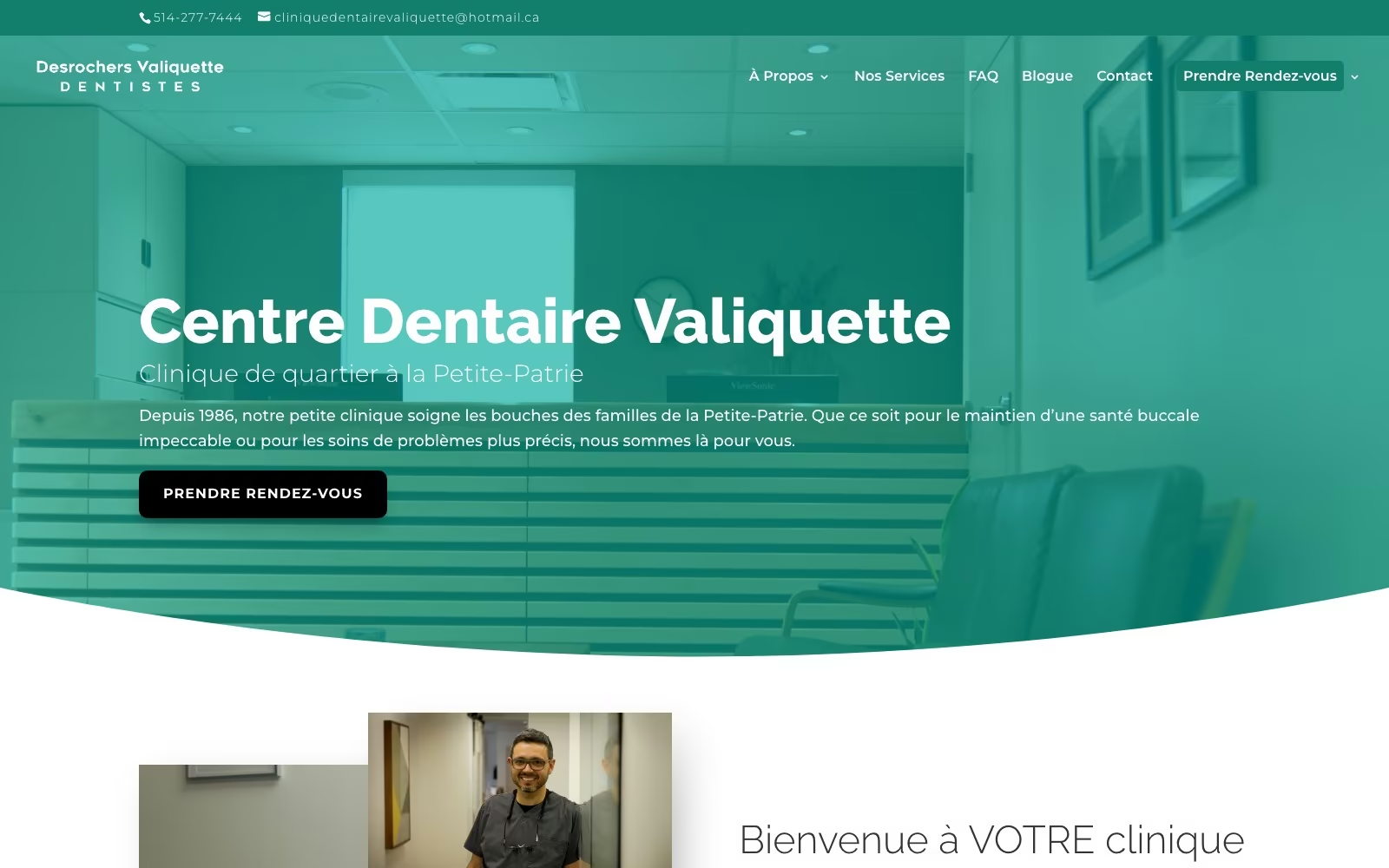
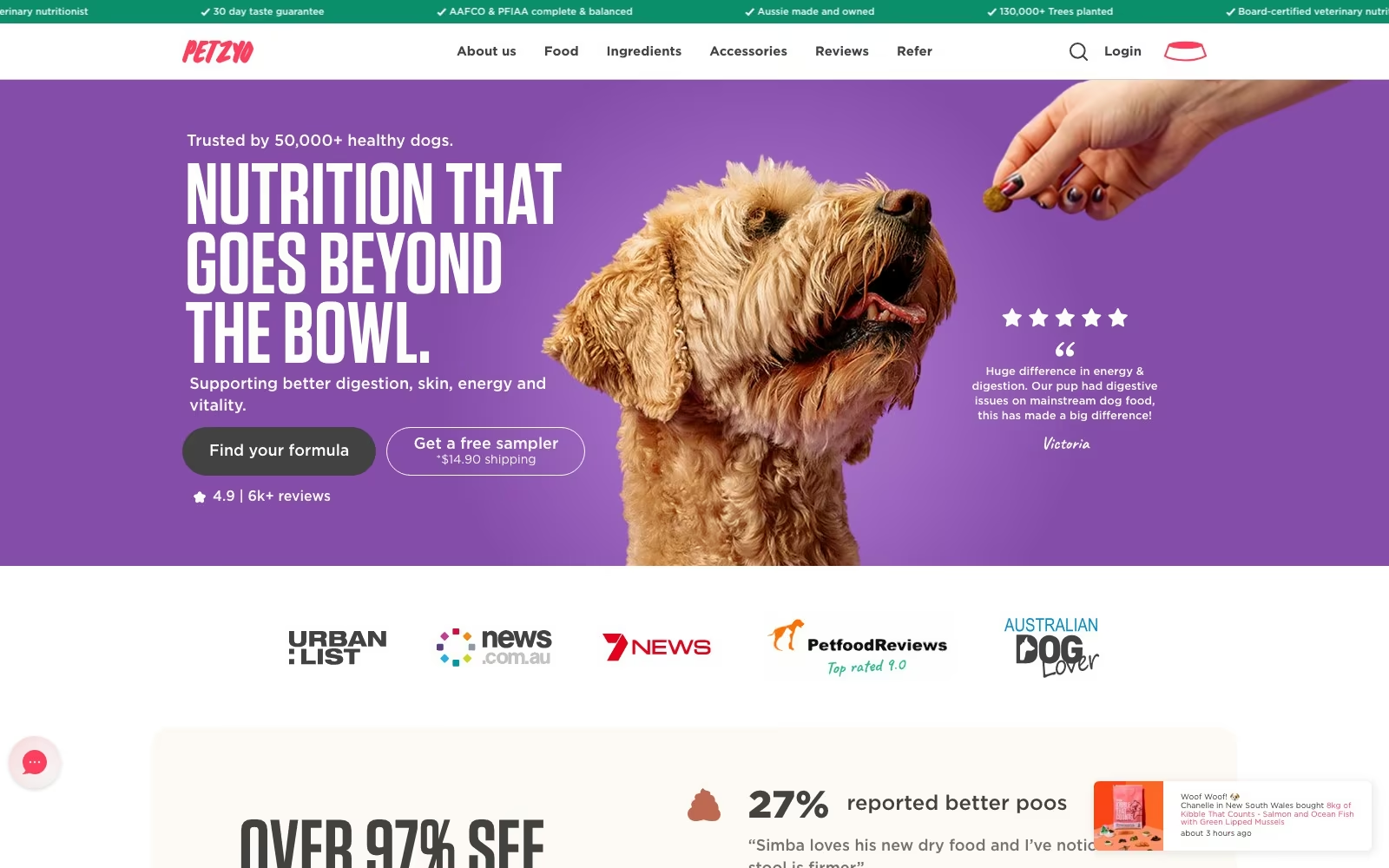
Website Portfolio
Video Ads
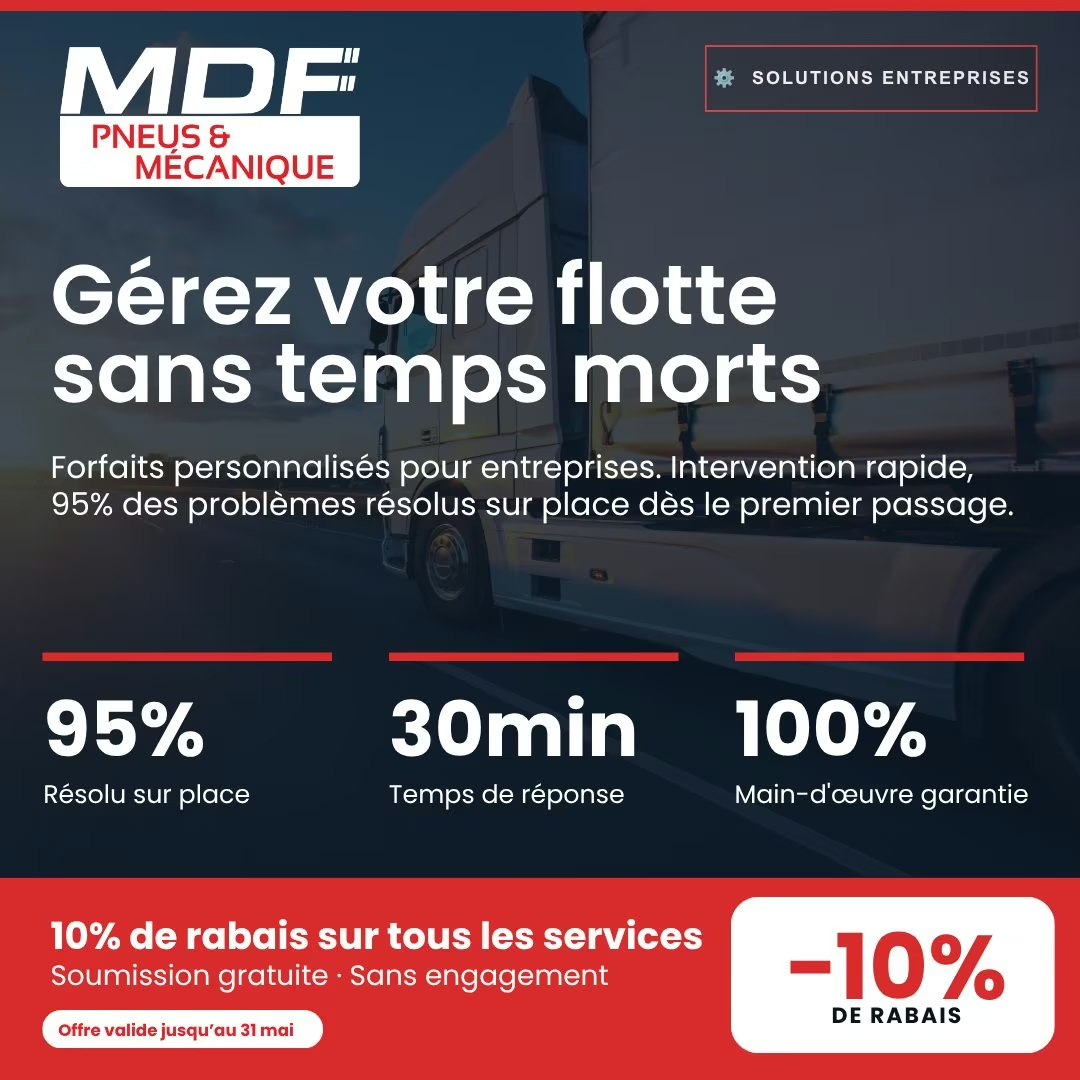
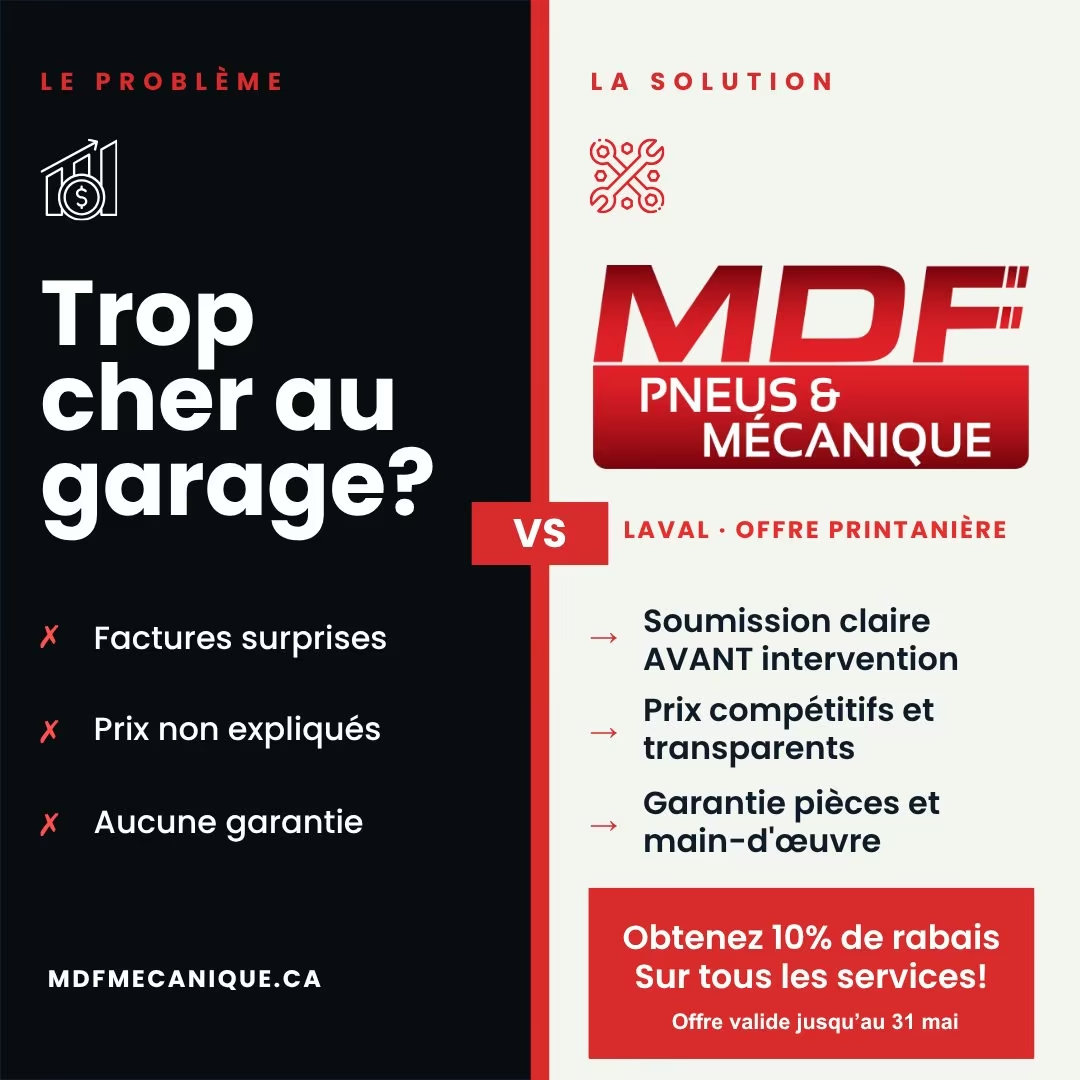
Static Ads




















































EN

EN

EN


FR
FR
FR

FR

FR

FR

FR

FR


EN
FAQ
What manufacturers ask before buying growth consulting.
What does manufacturing growth consulting actually cover?
Four areas and a plan. Segments and ideal customer profile rebuilt from your invoice data; pricing and offer, including what you realise against list and where value pricing is defensible; quoting and pipeline, meaning win and loss by segment, turnaround and follow-up; and route to market across direct, distributor and rep channels. The output is a written revenue growth plan with owners and a quarterly sequence, plus a short scorecard your team maintains afterwards.
How is this different from hiring a marketing agency?
An agency is paid to run marketing. This engagement is paid to work out whether marketing is your constraint at all, and in industrial businesses it frequently is not: the constraint is pricing, mix, quote turnaround or channel. Because we take no execution work inside the engagement, the plan is free to say that the fastest gain is fixing follow-up on quotes you already receive. If execution is warranted afterwards, it is scoped separately and you can run it with anyone.
We only sell through distributors. Is this still useful?
Often more useful, because distribution hides the end customer and the growth question becomes who owns the relationship and where margin actually goes. We look at distributor performance by territory and line, what they can and cannot sell for you, where your direct activity helps them or competes with them, and what evidence the end user needs that only you can produce. The recommendation can be to strengthen the channel rather than bypass it.
Our sales cycle is eighteen months. How can six weeks help?
Because the diagnosis uses history you already have rather than waiting for new results. Three years of invoices and quotes tell you which segments convert, at what margin and where deals stall, without running a single campaign. The plan then sets expectations honestly against your cycle, and the monthly scorecard tracks leading indicators such as quote volume by segment and turnaround time rather than revenue, which will not move for several quarters.
What does the engagement cost?
A fixed fee quoted after a scoping call, with deliverables and dates written down before you commit. It varies with the number of product families, how many plants or business units are in scope and whether distributor data is available, so publishing a rate would mislead most readers. For budget context, The CMO Survey puts marketing spend at an average 9.0% of company revenue, with 33.6% of digital marketing activities run by outside agencies. Book a meeting for a scope and a number.
Will you talk to our customers?
With your permission, and we recommend it strongly. Three or four customer conversations and one recently lost prospect usually produce the sharpest finding in the whole project, because industrial buyers describe their evaluation plainly when asked by a third party. We agree the list with you, explain the purpose up front, never sell during the call and never quote anyone by name without written consent.
How much of this is about the website?
Less than most people expect, but the site is not irrelevant, because the shortlist is now formed before contact. 76% of industrial buyers shortlist at least one supplier before any live interaction, and 29% trust independent third-party validation or certification most at that stage. So the recommendation is usually about evidence rather than design: specifications, certifications, test data and real applications made findable. Where a rebuild is genuinely needed we say so and scope web design separately.
Do you handle pricing strategy, or just marketing?
Pricing is in scope as a commercial lever and it is often the highest-return finding: realisation against list by product family, discount authority and how it is used, and where lead time or service can be priced. Firms that beat their business case use pricing optimization at 43% against 24% of peers. We do not build a full cost accounting model or set standard costs, and where that work is needed we say so and recommend you use a specialist.
Trade shows still drive our business. Will you tell us to stop?
Not on principle. Shows still work in several industrial categories, and the useful question is what they cost fully loaded, which opportunities actually trace back to them and what happens in the eleven months in between. Usually the recommendation is to keep the two shows that produce and rebuild the follow-up around them, because the leak is almost always after the show rather than at it.
Who from our side needs to be involved?
Fewer people than you would expect, but the right ones: whoever owns sales, the estimating or quoting lead, someone from operations who knows capacity, and the owner or general manager who can make the pricing and segment decisions. Expect a kickoff, a data pull, a handful of interviews, one decision workshop and a final review. We work around production schedules and take read-only access to systems through your accounts.
What if the answer is that we need more capacity, not more demand?
Then the plan says that, and it changes what growth means: better mix at the same volume, price increases where the queue justifies them, and disqualifying work that consumes engineering time for little margin. We have no incentive to recommend demand generation you cannot fulfil, and filling a full plant with low-margin work is the most common self-inflicted growth problem in the sector.
How does AI change industrial buying?
It moves more of the evaluation into a phase you cannot see. Among industrial buyers who use AI tools, 56% say AI-generated summaries often influence which suppliers make the initial shortlist, 86% say evaluation is faster than a year ago, and 52% would let an AI agent build an initial shortlist without live supplier interaction. Practically, that raises the value of structured, public, verifiable technical information. The plan covers what to publish; making it citable is GEO and AEO work.
Is this only for large manufacturers?
No, though it fits companies with enough history to analyse. A single plant with a few million in revenue, three years of quotes and a clear owner is a good candidate, and so is a multi-plant group where the question is which unit to invest behind. Very early or pre-production businesses get less from it, because the invoice and quote history that carries the diagnosis does not exist yet.
How is this different from the general growth advisory engagement?
Same discipline, industrial specifics. Growth advisory is the parent engagement, and this version adds quote log analysis, distributor and rep channel economics, specification and certification evidence, and capacity as a real constraint on the plan. If your question is narrower, a marketing audit reviews what is currently running, while marketing strategy consulting takes the wider positioning view.
What happens after the plan?
Your team runs it. You own the plan, the analysis and the scorecard, and the owners named in it are yours. Some clients book a review at ninety days to check what moved and re-cut the quote analysis, which takes half a day and is optional. Where you want ongoing commercial leadership rather than a project, a fractional CMO is the engagement to consider, quoted separately.

.webp)
.webp)