Marketing leadership, without the full time hire.
without the full time hire
A fractional CMO is an experienced marketing leader who owns your strategy, your numbers and your marketing team a set number of days a month. Ours arrive with a 90-day plan, a scorecard your board can read, and a clear line about what we do not do: this engagement is leadership and strategy, not an execution retainer and not media buying. If you want the campaigns run as well, that is a separate decision you make later, with the plan already in your hands. Book a meeting and we will tell you honestly whether a part-time CMO is what your company actually needs.






Tell us a little about your brand and we'll be in touch within 24 hours to lock in a time.



WHAT A FRACTIONAL CMO OWNS
Four things a part time CMO is accountable for.
accountable for
Strategy the company can act on, a marketing team that knows what it is doing this quarter, a measurement layer the finance lead trusts, and the discipline to kill what is not working. Execution stays with your team or your agencies, and we say so in writing before the engagement starts.
Strategy and priorities
Team and agencies

Numbers and forecasting
Board and investor work
A written marketing strategy, not a deck of intentions.
Most companies do not lack ideas. They lack a decision about which three things matter this quarter and which twelve do not. Your fractional CMO writes that down: the customer segments worth pursuing, the positioning and messaging that separates you, the channels that fit your buying cycle, and the things you are deliberately not doing this year.
The pressure to choose is real and measurable. Gartner's 2026 CMO Spend Survey found 56% of CMOs say their organisation lacks the budget to deliver its own 2026 strategy, and 54% report insufficient resources. A strategy that ignores that gap is fiction. Ours is built against the budget and the team you actually have.
- Segments, positioning and messaging settled in writing
- A channel plan matched to how your customers really buy
- An explicit not-doing list, agreed with the leadership team
- Quarterly priorities with named owners and dates
56%
of CMOs say they lack the budget to deliver their own 2026 strategy
Someone senior running the marketing team day to day.
An experienced marketing leader is worth most in the ordinary week: the brief that gets rewritten before it wastes a month, the junior marketer who finally knows what good looks like, the agency call where somebody on your side can actually challenge the plan. We run your marketing team, chair the agency reviews, and hire into the gaps rather than around them.
Fractional leadership also sits naturally beside a company that is between chief marketing officers: 31% of S&P 500 companies have no CMO at all, and a great many mid-market companies never will.
- Weekly marketing team meeting run by your fractional CMO
- Briefs, feedback and quality standards your team can follow
- Agency and freelancer performance reviewed against the plan
- Hiring specs written for the roles you genuinely need next
31%
of S&P 500 companies have no CMO at all, in line with the historical average
Marketing performance your CFO does not have to take on faith.
Customer acquisition cost by segment, pipeline by source, payback period, the honest version of attribution with its limits stated. We build the scorecard, defend the numbers in the leadership meeting, and forecast what the next quarter of spend should produce.
The cost discipline matters because marketing is the first line cut when the quarter goes sideways: The CMO Survey reports executives respond to a profit miss by cutting expenses 53.1% of the time, and marketing is the category cut 45.4% of the time. A marketing function that can show payback survives those conversations. One that shows impressions does not.
- One scorecard: pipeline, cost per acquisition, payback, retention
- Attribution set up with its limits written down, not hidden
- A rolling forecast tied to the plan, updated monthly
- Board-ready reporting your finance lead has already checked
45.4%
of the time marketing is the expense category cut when profits miss
The marketing story an investor will actually believe.
For companies with a board, private equity ownership or a raise ahead, the fractional CMO writes the marketing section of the story: what the market is worth, what customer acquisition costs today, what it would cost at three times the volume, and which assumptions are load bearing. Sponsors backing portfolio companies use the same engagement to get a real read on marketing before they commit growth capital.
It is also a route many senior marketers now travel in both directions. Spencer Stuart found nearly two thirds of CMO exits between 2021 and 2025 were moves up, including 9% promoted to chief executive — this is senior operating experience, not a stopgap.
- Marketing narrative and assumptions for the board pack
- Diligence-grade view of acquisition cost and channel capacity
- Growth model tested at two and three times current spend
- A named person who presents it and answers the hard questions
9%
of departing S&P 500 CMOs tracked 2021-2025 were promoted to chief executive
One senior marketing leader on your company, never a rotating bench
Strategy, plan and scorecard exist as documents you keep
A set number of days a month, agreed before we start
Every account, tool and artefact stays in your company's name
We made the difference for those brands

Food & beverage

Healthcare & regulated services

Food & beverage

B2B software, fintech, insurance

Consumer tech and platforms

Home essentials, appliances, kitchen & pet

Consumer tech and platforms

Apparel and lifestyle

B2B software, fintech, insurance

B2B software, fintech, insurance

Creative, content, arts & culture

Travel & mobility

B2B software, fintech, insurance

Home essentials, appliances, kitchen & pet

Apparel and lifestyle

Healthcare & regulated services

Apparel and lifestyle

Consumer tech and platforms

Healthcare & regulated services

Consumer tech and platforms

Consumer tech and platforms

Healthcare & regulated services

Apparel and lifestyle

Retail & commerce

Consumer tech and platforms

Beauty, personal care & wellness

Home essentials, appliances, kitchen & pet

Consumer tech and platforms

Healthcare & regulated services

B2B software, fintech, insurance
01 — The challenge
You do not have a marketing problem. You have a leadership gap.
The pattern repeats in company after company. There is a marketing coordinator doing their best, two agencies pointing at each other, a founder approving creative between sales calls, and nobody senior enough to say what the plan is or brave enough to stop the things that are not working. Spend goes up, the pipeline does not, and every review ends with a request for one more channel.
“We were not short of activity. We were short of somebody who could decide what to stop.”
Hiring a full time chief marketing officer is the obvious answer and often the wrong first move: the salary is a serious commitment, the search takes months, and average CMO tenure in the S&P 500 is 4.1 years against 5.0 for the rest of the C-suite. A fractional CMO gives you the marketing leadership and the expertise now, at a fraction of the time commitment, and makes the eventual full time hire a much better decision because the strategy already exists.
02 — Our approach
Diagnose in three weeks, decide, then run it with your team.
We start with a diagnostic, because an experienced marketing leader who arrives with answers before questions is a liability. Three weeks: every channel, the full cost stack, the last four quarters of performance, interviews with sales, finance, customer support and the people doing the work, plus a look at what your competitors are actually doing rather than what everybody assumes. You get a written diagnosis, including the parts that are uncomfortable. Then we set strategy with your leadership team in one working session, and it ends with a 90-day plan: three priorities, named owners, dates, a budget allocation and a not-doing list. From there your fractional CMO runs the marketing function on a fixed rhythm, typically two to four days a month for a mid-market company: a weekly working session with the team, a monthly leadership read, a quarterly reset. We chair agency reviews, rewrite briefs before they waste anyone's month, and keep the scorecard honest, including the months it did not move. What we do not do is take over execution. Your team and your agencies keep delivering, because a leader who is also the doer stops being able to judge the work. If you need hands, we will tell you what to hire or who to brief, and you decide separately. Every artefact is yours: the plan, the scorecard, the hiring specs, the agency scorecards. The engagement is designed so a company can graduate out of it into a full time hire.
03 — What we did
The first 90 days, in the order they happen.
Diagnosis, then a plan the leadership team has signed, then the operating rhythm that makes it stick, then a board-ready read on what changed.
Weeks 1-3 / Diagnose
A full read of marketing, cost stack included
Channels, spend, pipeline by source, the team, the agencies and the last four quarters of performance, with interviews across sales, finance and support.

Week 4 / Decide
Three priorities, owners, dates and a not-doing list
One working session with your leadership team turns the diagnosis into a 90-day plan with a budget allocation everybody has agreed to.

Ongoing / Lead
Weekly with the team, monthly with the leadership group
Your fractional CMO runs the marketing team meeting, chairs agency reviews, and unblocks work before it stalls. Execution stays with the people who own it.

Monthly / Report
One scorecard, defended in the room
Pipeline, cost per acquisition, payback and retention, presented by the person accountable for them, with the flat months reported too.

WHAT YOU GET
Deliverables that stay yours.
stay yours
Every artefact below is written for your company, handed over in your own systems, and still useful the day the engagement ends.

Marketing diagnostic
A written read of every channel, the full cost stack and the last four quarters, with the uncomfortable parts left in.

90-day marketing plan
Three priorities with owners, dates and budget, plus the not-doing list your leadership team has agreed to.

Positioning and messaging
Segments worth pursuing, the claim you can defend, and the language your sales team and your agencies both use.

Team and agency structure
Who you need next, what to brief out, and agency scorecards that make the renewal conversation an easy one.

Marketing scorecard
Pipeline, acquisition cost, payback and retention in one page, with the attribution limits stated rather than hidden.

Board-ready reporting
The marketing section of the board pack, with the assumptions written down and someone senior to defend them.
HOW WE WORK
Operating standards, not promises.
Operating standards


Founder-led companies past their first plateau
Revenue arrived through the founder's own network and has stopped compounding. The gap is leadership, not effort.
Private equity portfolio companies
Sponsors who need a real read on customer acquisition before, during and after the investment thesis is set.
Companies between chief marketing officers
Interim marketing director cover that keeps the function moving and makes the permanent hire a better decision.


















Built on trust. Proven by results.
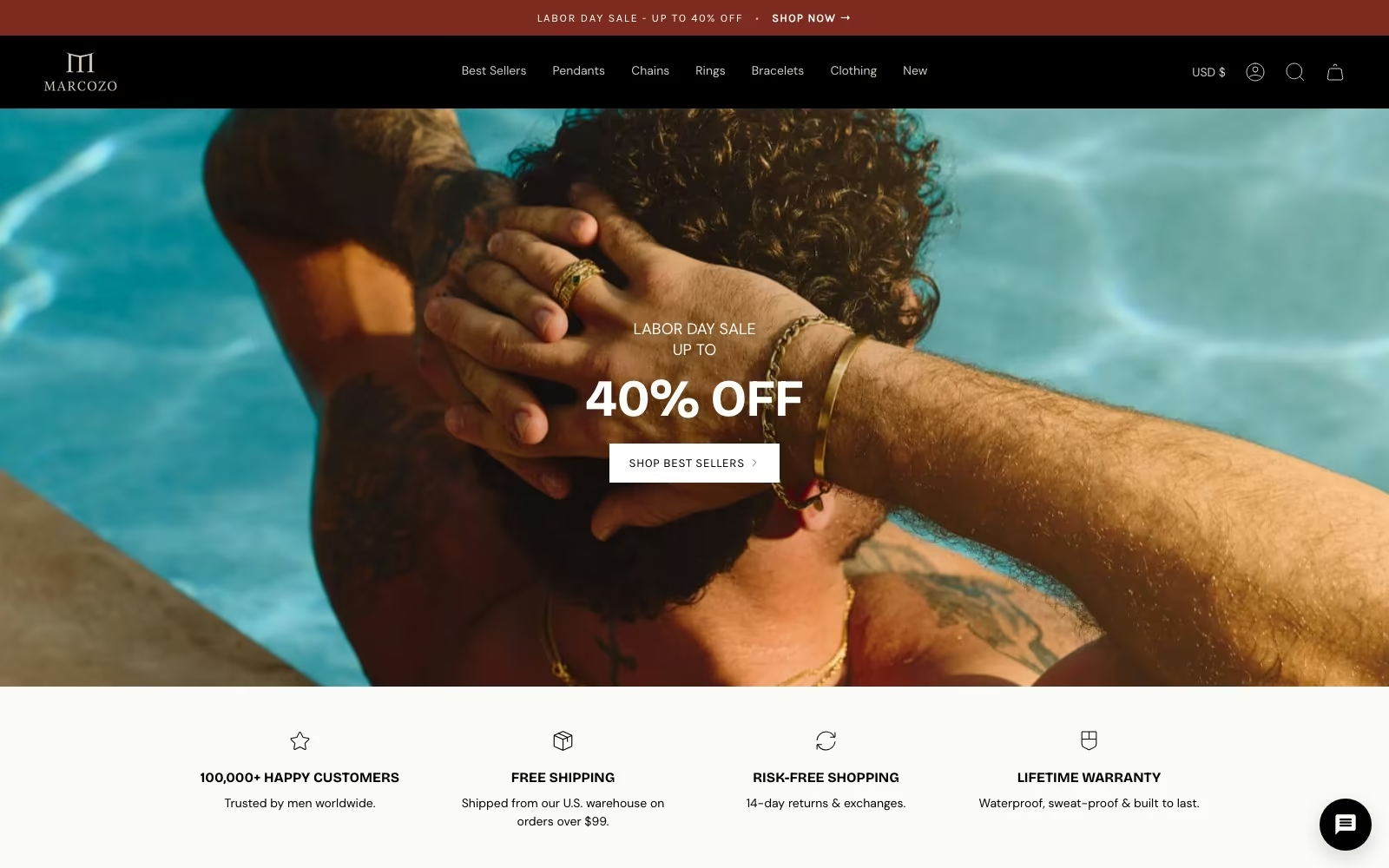
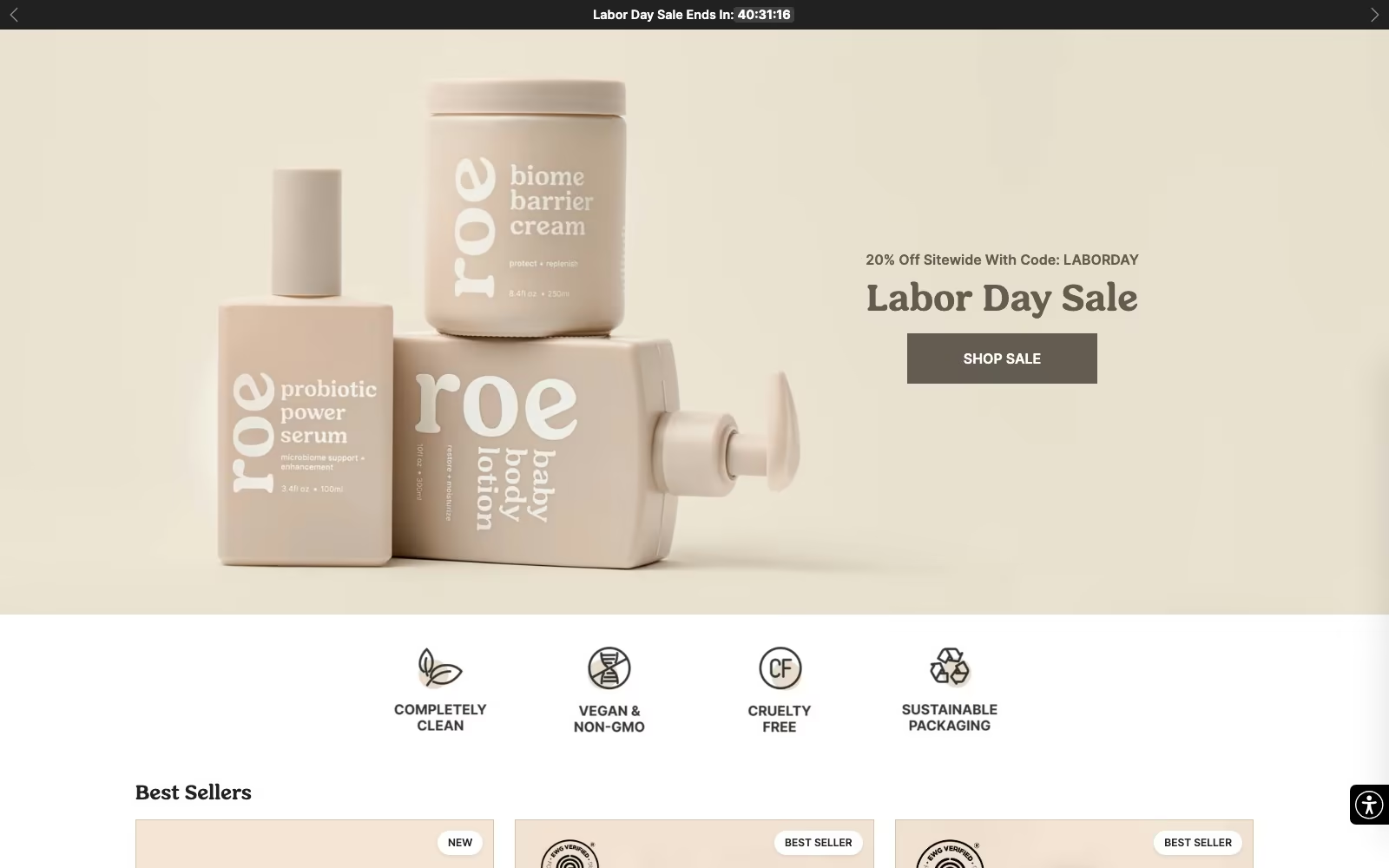
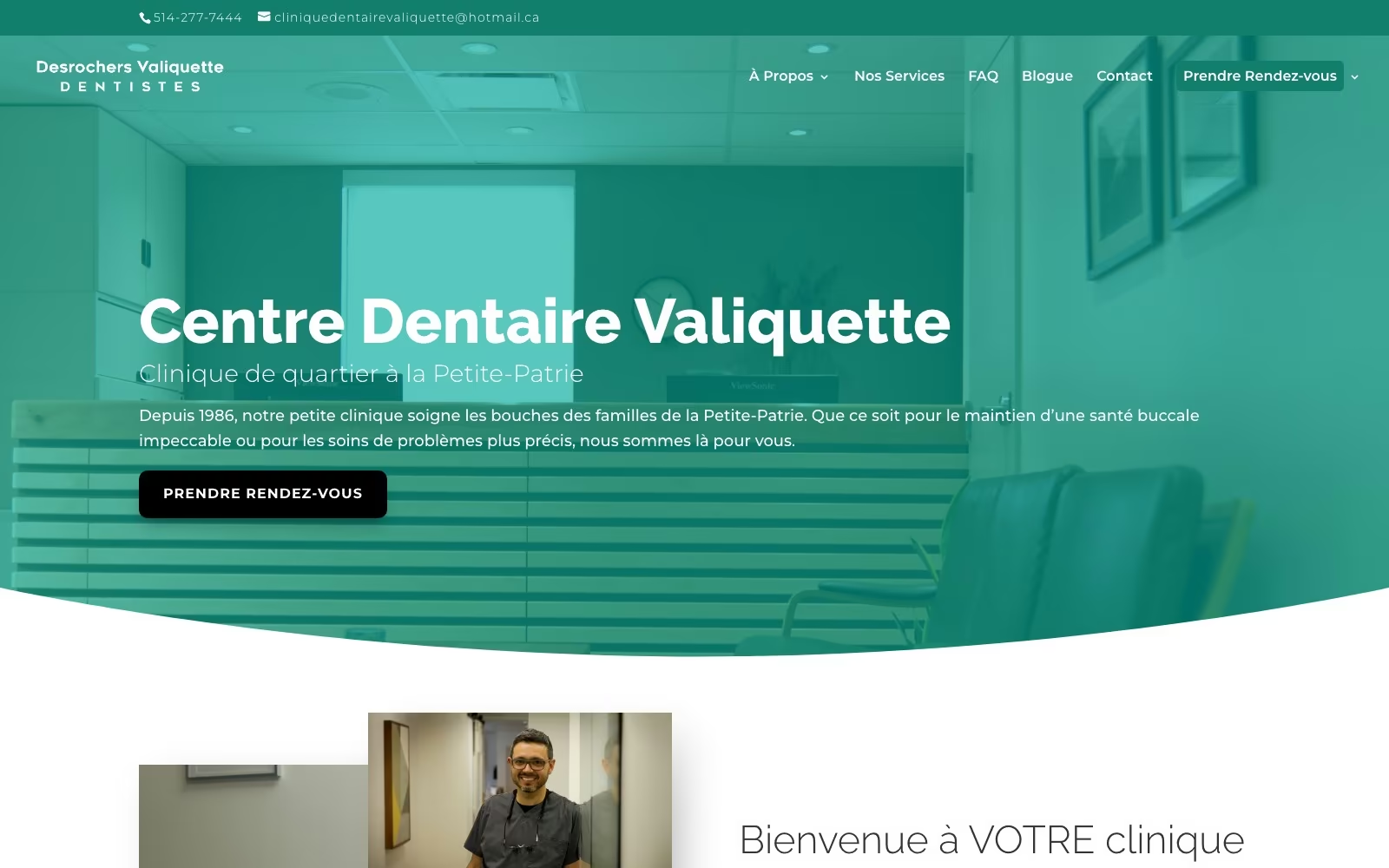
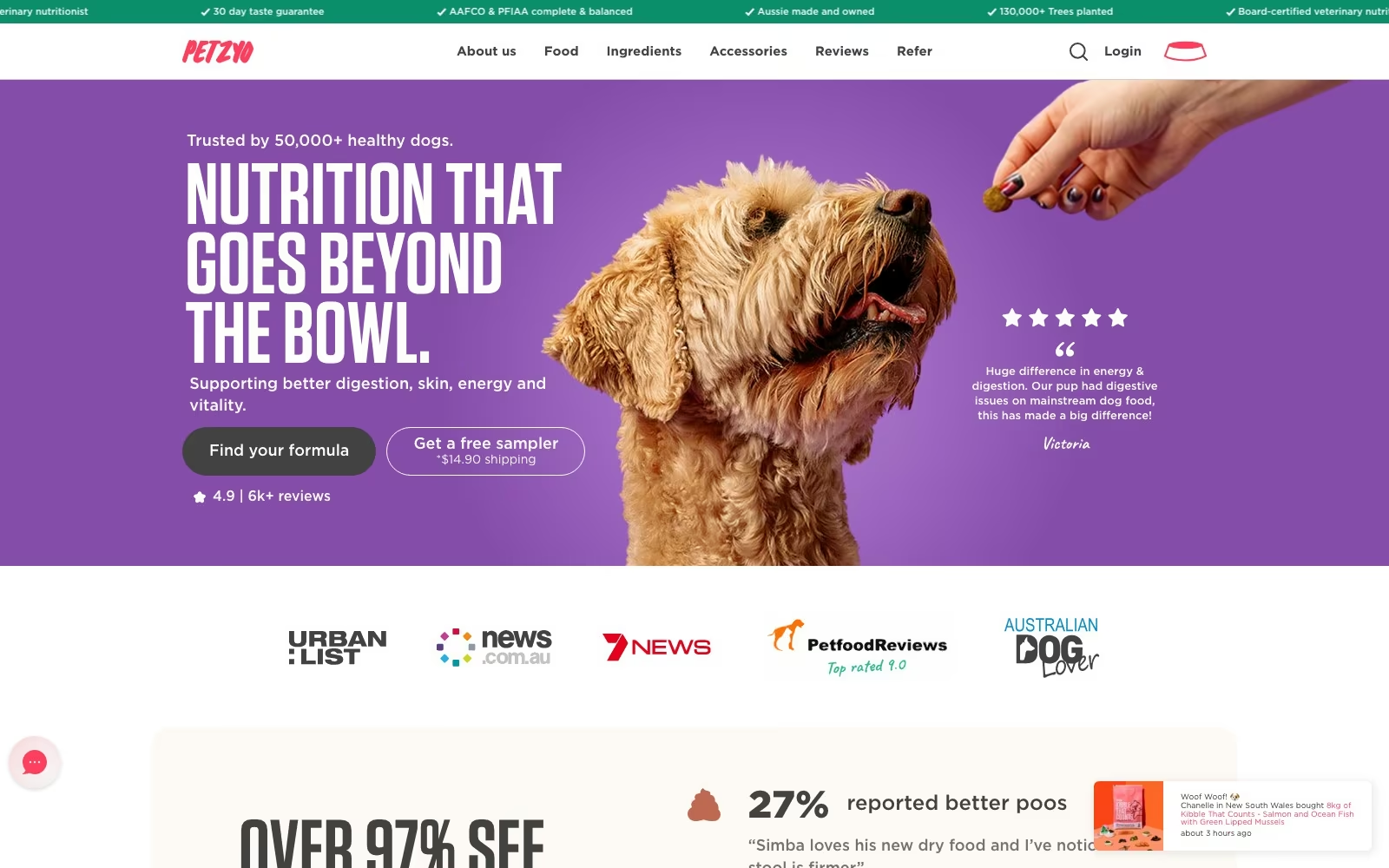
We partner with SMBs and Fortune 500 companies to deliver more than reach — we bring clarity, execution, and measurable outcomes. Every successful partnership starts with a strong culture fit and a shared drive to grow.







CASE STUDIES
Case studies
Website Portfolio
Video Ads
Static Ads

























































EN

EN

EN


FR
FR
FR

FR

FR

FR

FR

FR


EN
FAQ
What companies ask before they hire one.
What does a fractional CMO actually do day to day?
They own the marketing strategy, run the marketing team and defend the numbers, on a fixed part time commitment. In a typical month that means one weekly working session with your marketing team, chairing the agency reviews, rewriting the briefs that are not good enough, sitting in the leadership meeting with the scorecard, and spending real time with sales to keep the pipeline definition honest. Between sessions they are reachable for the decisions that cannot wait a week. What fills the calendar is judgement calls and unblocking, not producing the work.
How is this different from hiring a full time CMO?
Cost, speed and risk. A full time chief marketing officer is a senior salary plus recruitment plus a three to six month search, and Spencer Stuart puts average S&P 500 CMO tenure at 4.1 years, the second shortest in the C-suite. A fractional CMO starts in weeks, costs a fraction of the full time commitment, and can be sized up or down as the company changes. The trade is real: you get less of that person's time. For most companies under a certain scale that is the right trade, because the scarce thing is senior judgement, not hours. When you do need someone full time, we write the spec and help you hire them.
Why will you not run the execution too?
Because a leader who also owns delivery cannot judge delivery. If the same party sets the strategy, buys the media and marks its own homework, the strategy quietly bends toward whatever that party sells. Keeping our fractional CMO engagement to leadership and strategy is what makes the advice worth having. Your existing team and agencies keep executing, and if there is a genuine gap we will tell you what to hire or brief out. Web Tonic does run paid search, SEO and paid social for other clients, and if you ever want us to, that is a separate contract with a separate conversation, never an assumption baked into this one.
How many days a month, and how long does the engagement run?
Two to four days a month suits most mid-market companies, and we agree the number before we start rather than billing hours against a vague retainer. Companies in a turnaround or preparing for a raise often start heavier for the first quarter, then settle. On duration: six to twelve months is normal, with a first review at 90 days once the plan has had a quarter to work. Some engagements end there because the plan is running and the team can hold it. Others continue for years. We would rather you leave when the leadership gap is closed than pay for a dependency.
What does a fractional CMO cost?
We quote after the diagnostic, not off a rate card, because the honest answer depends on the days per month and the state of the marketing function. What we can give you is context for the trade-off: Gartner's 2026 survey puts total marketing budgets at 7.8% of company revenue, and a fractional engagement is designed to sit inside that envelope rather than on top of it, usually funded by stopping work that was not paying. You will get a fixed monthly fee with a defined day commitment and a stated notice period, agreed in writing before anything starts. Book a meeting and we will scope it.
We already have agencies. Will a fractional CMO just fight with them?
The opposite, usually. Good agencies suffer most from the absence of a decision maker: no brief, no priority, no feedback, then a surprise review at renewal. Your fractional CMO gives them a written plan, a single point of approval and a scorecard they can see, which is what a strong partner wants. Where an agency is genuinely underperforming, you get a documented case rather than a hunch, and someone senior to run that conversation for you. We also review the measurement setup underneath it all, because most agency arguments are really conversion tracking arguments.
How quickly will we see results?
Decision quality improves in the first month, which is not a metric but is the thing you will feel first. Cost savings from stopping unproductive spend usually land inside the first quarter. Pipeline movement depends entirely on your sales cycle: weeks for a short-cycle consumer business, two to three quarters for considered B2B purchases. We set the leading indicators in the 90-day plan so nobody is guessing in the meantime. And we report flat months as flat: overall marketing spending grew just 1.7% in the last 12 months, the smallest rise since 2021, so a quarter that holds ground while costs fall is often the real win.
Is a fractional CMO only for startups?
No. The model fits any company where the marketing decisions are worth more than a full time salary but the workload does not justify one: mid-market manufacturers, professional services firms, multi-location operators, ecommerce brands past the founder-marketing stage, and private equity portfolio companies where the sponsor wants marketing expertise on the ground without adding permanent overhead to every business. It also fits large companies covering a gap between chief marketing officers, where an interim marketing director keeps the function moving while the search runs.
Who owns the strategy and the accounts?
You do, without exception. The diagnostic, the plan, the positioning work, the scorecard, the hiring specs and the agency scorecards are your documents in your systems from day one. Advertising accounts, analytics properties, domains and tooling stay in your company's name, and where we find them sitting in a supplier's account we move them back as part of the first quarter. If the engagement ends, nothing walks out of the door with us. That is a deliberate design choice, and it is the same standard we apply on our analytics work.
How do you measure marketing performance?
One scorecard, agreed in the first month, with four things on it: pipeline or revenue by source, customer acquisition cost by segment, payback period, and retention. Everything else is diagnostic detail that lives underneath. We state the limits of attribution rather than pretending a dashboard is truth, and where the data cannot support a claim we say so. Most companies discover in month one that their existing numbers cannot answer the questions their board is asking, which is why the measurement fix is almost always in the first 90-day plan.
What if our marketing team is one person, or nobody?
That is common and it changes the plan, not the model. With a small team the fractional CMO spends more of the engagement on structure: what one person can realistically own, what has to be briefed out, and the sequence of hires that makes sense as revenue grows. We write the job specs, sit in on interviews and set the standards the new people will be measured against. What we will not do is recommend a large team as the default answer. Plenty of companies grow faster with one good marketer, a clear plan and two well-managed suppliers.
Can you support a private equity sponsor across portfolio companies?
Yes, and the shape is slightly different. For sponsors we run a diagnostic-first engagement across the portfolio: a comparable read on customer acquisition cost, channel capacity and marketing capability in each business, then a fractional CMO placed where the leadership gap is widest. The value is usually in finding out which company can absorb growth capital and which one would burn it. This sits next to our growth advisory work, and the reporting is built for an investment committee, not a marketing meeting.
How does this relate to your other advisory services?
A fractional CMO is the ongoing leadership option. If you need the thinking but not the leadership, marketing strategy consulting delivers the plan as a defined project. If the question is commercial rather than marketing, offer, pricing, segments and the revenue model, that is growth advisory. And if you simply want to know what is broken before committing to anything, start with a diagnostic. We will point you at the smallest engagement that answers your question, including none of them.
How do we choose between fractional CMO providers?
Ask four questions and the field thins quickly. First, who is the named executive and what have they personally run, as opposed to what the firm's portfolio claims: experienced marketing leadership is a person, not a brand. Second, does the provider also sell execution, and if so how is that conflict handled in writing. Third, what are the deliverables and the accountability in month one, month three and month six, in plain language. Fourth, what happens to the strategic work if the engagement ends. Any provider who cannot answer those in a first conversation is selling capacity, not expertise.
What industries do your fractional CMOs work in?
We work across B2B services, manufacturing and industrial companies, multi-location and franchise operators, professional services, ecommerce and consumer products, and private equity portfolio companies in all of the above. Industry familiarity matters less than people expect, because the recurring failure is rarely industry knowledge: it is unclear positioning, unmeasured customer acquisition and no alignment between marketing and sales. That said, we will tell you if your category needs specialist expertise we do not have, and we would rather lose the engagement than learn on your budget. You can see the sectors we already serve on our AI search and email marketing work.
How is the engagement governed, and what happens when it ends?
Governance is deliberately boring: a fixed number of days a month, a written scope, a monthly leadership read, a quarterly review of the engagement itself, and a stated notice period on both sides. Nothing auto-renews into a habit. When it ends, whether that is because you have hired a full time chief marketing officer or because the leadership gap is closed, you keep the strategy, the scorecard, the operating rhythm and the documented capabilities of your own team. We run a handover session with whoever picks it up, and we are happy to be the outgoing party who briefs your new hire properly. Measurable progress and a clean exit are the point of the model.

.webp)
.webp)