Fix the offer before you spend more on traffic.
before you spend more
Growth consulting that starts with a diagnosis of the commercial engine: who you sell to, what you sell, what you charge, how the pipeline really converts, and which of those four is actually capping revenue growth. It ends with a written revenue growth plan and an order of work. Read the boundary before you read anything else: this is strategy and advisory, not execution. No media buying, no campaign management, no upsell into a retainer at the end. Book a meeting if that is the engagement you want.






Tell us a little about your brand and we'll be in touch within 24 hours to lock in a time.



WHAT WE LOOK AT
Four places business growth usually stalls.
usually stalls
Almost every stalled growth curve traces back to one of four things, and it is rarely the one the leadership team is arguing about. A growth advisor's job is to find which, prove it with your own data, and say so plainly.
Agency selection guides: Global marketing agencies · US performance marketing agencies · US digital marketing agencies · Remote digital marketing agencies.
Who you sell to
What you sell and charge
How the pipeline converts
The growth model
The customer segment you are winning is not always the one you chase.
We rebuild your ideal customer profile from evidence rather than opinion: which segments close fastest, which pay full price, which churn, which generate referrals, and which quietly consume the sales team's week for nothing. Most businesses discover their best customer looks different from the one on the website.
Getting this wrong is expensive at both ends. The CMO Survey reports acquisition spending is now 26% larger than retention spending and growing, even as retention outperforms acquisition in the performance data. Chasing the wrong segment harder is the most common growth strategy we are asked to accelerate, and the first one we stop.
- Segment-level margin, close rate, churn and referral behaviour
- Interviews with won, lost and churned customers
- A written ideal customer profile, and the segments to decline
- What that means for sales targeting and marketing spend
26%
more is spent on acquisition than retention, even though retention performs better
Pricing and packaging move revenue faster than any channel.
Offer structure, price points, contract length, what is bundled, what is billed separately, and what your sales team discounts when they are nervous. This is the least glamorous part of a growth advisory engagement and reliably the highest return, because a pricing change lands in the current quarter while a channel change lands in the next one.
We model the alternatives against your real order book, stress-test them with your sales lead, and write down the risks. If the honest conclusion is that your pricing is already right, you will hear that too, and we will move on to the constraint that matters.
- Price and margin analysis by segment and product line
- Packaging and bundling options modelled on your own order book
- Discounting behaviour measured, not assumed
- A recommended change with its downside stated
31.4%
of marketing expenses now go to paid media, a five-year high, which raises the cost of a weak offer
The leak is usually between marketing and sales, not inside either.
We map the whole path: how a lead is defined, what happens in the first hour, who follows up and how often, where deals stall, what the sales process asks a buyer to do that they do not want to do. Then we quantify the cost of each drop-off so the fixes can be ranked by money rather than by whoever complained loudest.
Revenue operations detail matters here: lead routing, response times, CRM hygiene, the handoff meeting nobody runs. Not one of those items is exciting, they all compound, and most are fixable inside a quarter with the team you already have.
- Stage-by-stage conversion and cycle time from your own CRM
- Response time and follow-up discipline measured on real leads
- The three highest-value leaks, costed
- A revenue operations fix list ordered by payback
1.7%
growth in overall marketing spending in the last 12 months, the smallest rise since 2021
One model everyone argues with before anyone spends.
We build a simple, defensible model of how your business grows: traffic and demand in, conversion through the pipeline, average value, retention, and the cost to acquire each unit of it. Then we test it at two and three times the current level to see what breaks first, because capacity, not ambition, is usually the binding constraint.
The discipline is worth it. McKinsey's study of 5,000 large public companies found an extra five percentage points of annual revenue growth correlates with three to four extra points of total shareholder return, yet fewer than half the companies excelled at more than three of the ten growth rules. Growth is mostly a sequencing problem.
- A one-page growth model your finance lead can rebuild
- Stress tests at two and three times current volume
- The binding constraint named: demand, conversion, capacity or cash
- A sequenced plan, not a list of everything possible
8%
of companies in McKinsey's growth study mastered more than five of the ten growth rules
Strategy and advisory only, so the advice cannot bend toward what we sell
Four to six weeks agreed in writing, with a defined end
A named growth advisor on your business, not a research team
Every model and document handed over in a form you can change
We made the difference for those brands

Travel & mobility

Creative, content, arts & culture

B2B software, fintech, insurance

Consumer tech and platforms

Home essentials, appliances, kitchen & pet

Consumer tech and platforms

Beauty, personal care & wellness

Food & beverage

B2B software, fintech, insurance

Healthcare & regulated services

Apparel and lifestyle

Consumer tech and platforms

Beauty, personal care & wellness

B2B software, fintech, insurance

Beauty, personal care & wellness

Retail & commerce

Beauty, personal care & wellness

Home essentials, appliances, kitchen & pet

Healthcare & regulated services

Home essentials, appliances, kitchen & pet

Beauty, personal care & wellness

Consumer tech and platforms

Retail & commerce

Retail & commerce

Creative, content, arts & culture

Food & beverage

Consumer tech and platforms

B2B software, fintech, insurance

Consumer tech and platforms

Consumer tech and platforms
01 — The challenge
More traffic into a broken offer just costs more.
The call usually starts the same way. Leads are up, revenue is flat. Or spend is up, margin is down. Somebody proposes a new channel, somebody else proposes a rebrand, and the meeting ends with a plan to do both. Nobody has established which part of the commercial engine is actually the constraint, so the money goes to whichever idea was argued best.
“We doubled the pipeline and the revenue did not move. That was the moment we knew the problem was not lead volume.”
The budget environment makes guessing expensive. Gartner found 56% of marketing leaders say they lack the budget to deliver their own 2026 strategy, and The CMO Survey puts marketing budgets at 9.0% of revenue, the lowest share in years. When there is no spare money, the order of work matters more than the work itself. That order is what a growth advisory engagement produces.
02 — Our approach
Diagnose the constraint, model the options, hand over the plan.
Four to six weeks, fixed scope, one senior growth advisor on your business. We start with your numbers, not a workshop: revenue by segment and product, margin, pipeline conversion stage by stage, churn, acquisition cost by channel, and the last eight quarters of trend. In parallel we interview the people who know where the bodies are buried, which is usually the sales team, customer support and two or three customers who nearly left. We also buy or use your product the way a customer does, because the friction that costs you revenue is rarely visible from the inside. That produces a written diagnosis naming one binding constraint, with the evidence attached and the second and third candidates listed so you can argue with us properly. Then we model options against your own order book: pricing and packaging changes, segment focus, pipeline and revenue operations fixes, capacity. Each option carries an expected effect, a cost, a time to impact and a downside, because a growth strategy without stated risk is marketing material. We present it to your leadership team, defend it, and revise it with the context your team brings. You end with a revenue growth plan: the constraint, the sequence, who owns each move, what to stop doing, and the leading indicators to watch. Then the engagement ends. We do not run the campaigns, do not take a media budget, and do not stay on retainer by default. If you want implementation help afterwards, you can hire us, hire someone else, or do it in house, and the plan is written so that all three are possible.
Explore our pricing and engagement approach. For peer learning and discussion, visit the S³ community.
03 — What we did
Four to six weeks, in this order.
Evidence first, then the offer and pricing work, then the pipeline, then a plan your leadership team has argued with and signed.
Weeks 1-2 / Evidence
Your numbers, your customers, your sales process
Revenue and margin by segment, pipeline conversion from the CRM, churn, and interviews with won, lost and churned customers.

Weeks 2-4 / Offer
Pricing, packaging and the segments worth chasing
Options modelled against your real order book, with the margin effect and the risk of each written down rather than implied.

Weeks 3-5 / Pipeline
The three leaks that cost the most money
Stage-by-stage conversion, response times and handoffs, each drop-off costed so the fix list can be ranked by payback.

Week 6 / Plan
One sequenced revenue growth plan, then we leave
The binding constraint, the order of work, owners, leading indicators and an explicit stop-doing list. No retainer attached.

WHAT YOU GET
Six documents, and no retainer attached.
no retainer attached
Everything below is written for your business, handed over in editable form, and usable by whoever executes it, including a competitor of ours.
Related guides: US advertising agencies · UK digital marketing agencies · Canadian marketing agencies · Boutique digital marketing agencies.

Growth diagnosis
The binding constraint named, with the evidence attached and the runners-up listed so you can challenge the call.

Ideal customer profile
Which segments to pursue, which to decline, and what that changes for sales targeting and marketing spend.

Offer and pricing options
Packaging and price scenarios modelled on your own order book, each with a downside written next to it.

Pipeline and revenue operations review
Stage conversion, response times and handoffs, with the three most expensive leaks costed and ranked.

Growth model
A one-page model of how revenue is produced, stress-tested at two and three times current volume.

Sequenced growth plan
The order of work with owners, dates, leading indicators and an explicit list of what to stop doing.
HOW WE WORK
Operating standards, not promises.
Operating standards


Owner-managed businesses at a plateau
Revenue stopped compounding and nobody can agree why. The engagement exists to settle that argument with evidence.
Middle market companies preparing to scale
Before a hiring wave or a capital raise, a written view of what actually produces revenue and what breaks first.
Private equity backed businesses
An independent read on the commercial engine for sponsors and boards who need more than the management deck.


















Built on trust. Proven by results.
We partner with SMBs and Fortune 500 companies to deliver more than reach — we bring clarity, execution, and measurable outcomes. Every successful partnership starts with a strong culture fit and a shared drive to grow.







CASE STUDIES
Case studies
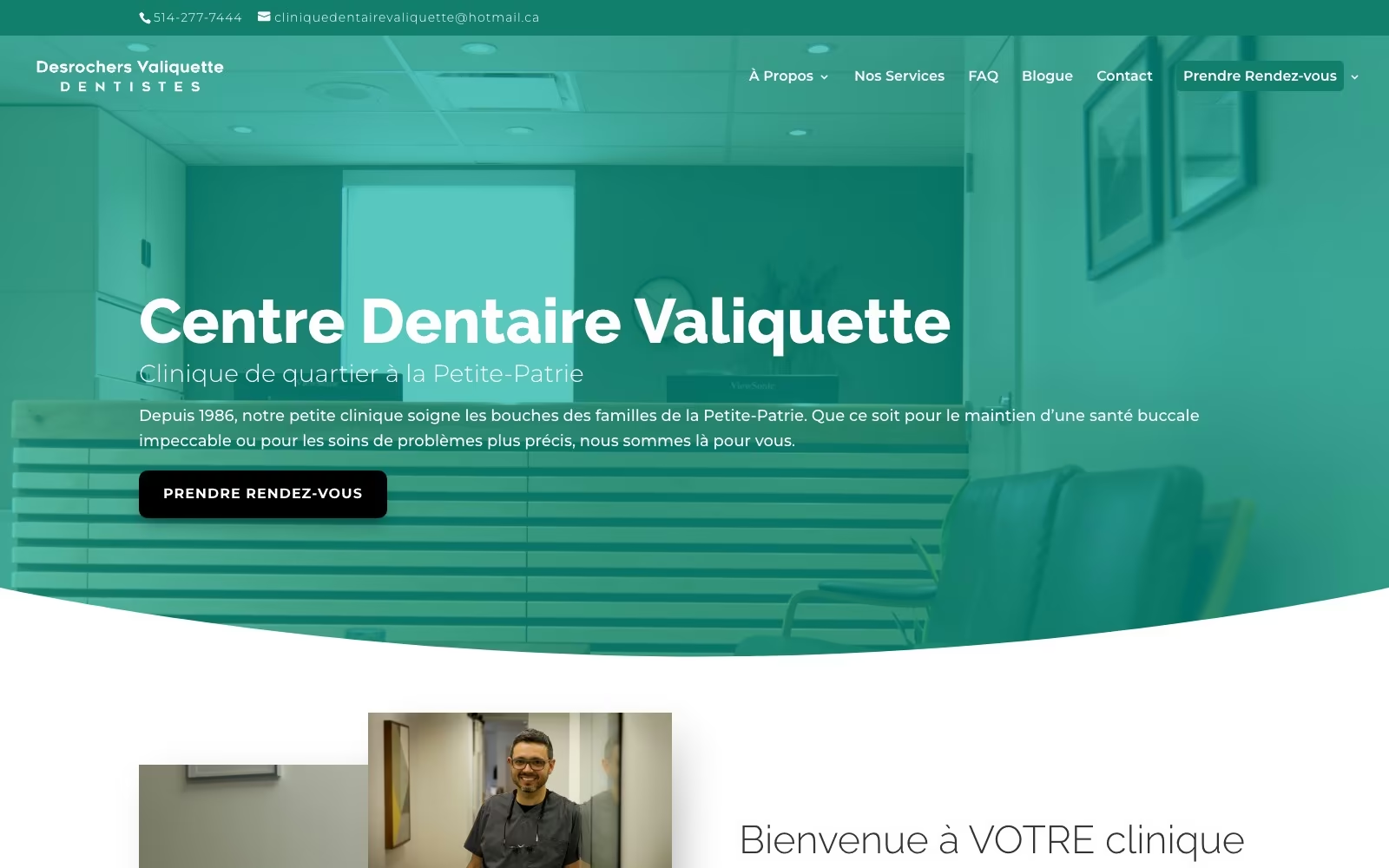
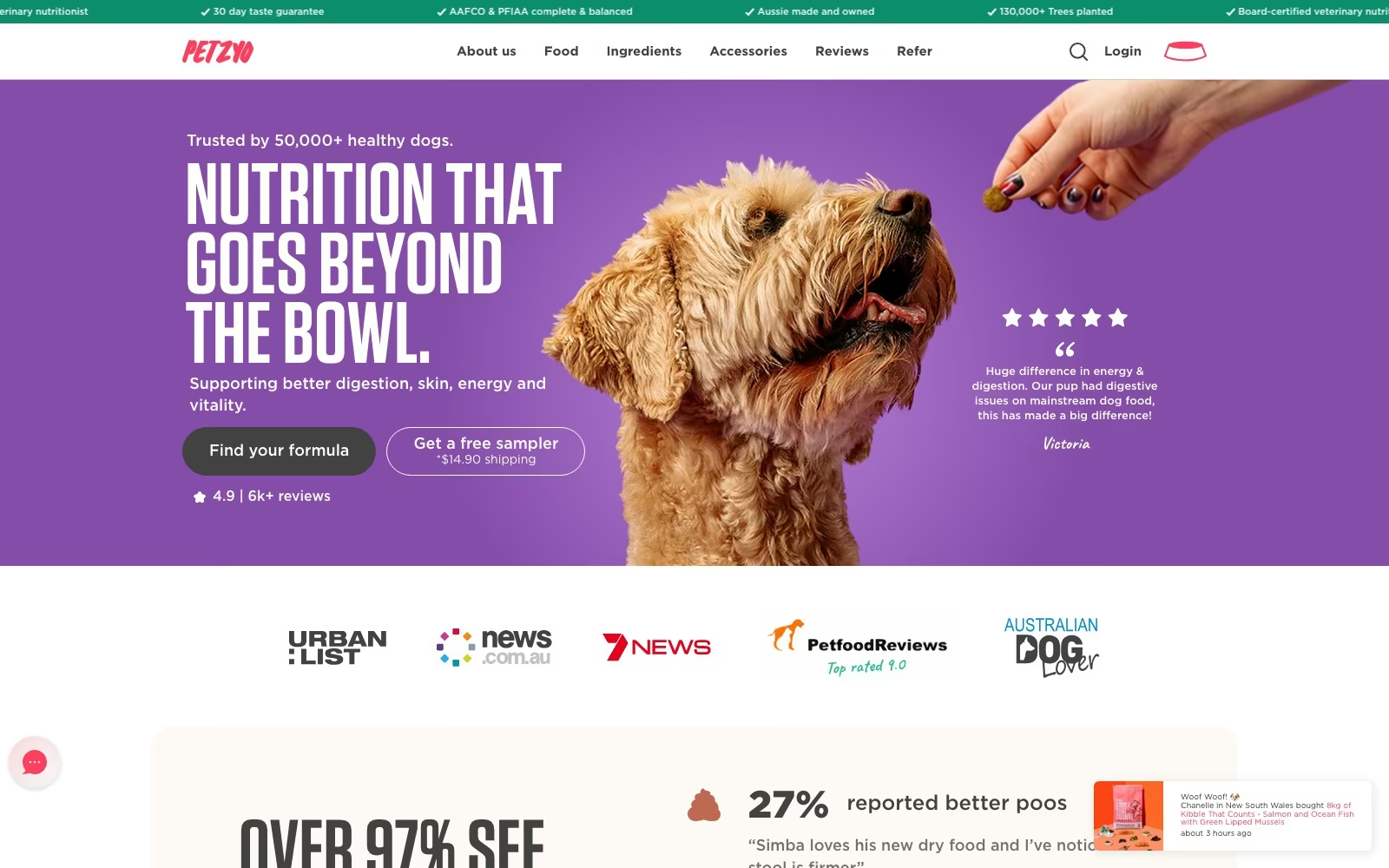
Website Portfolio
Video Ads
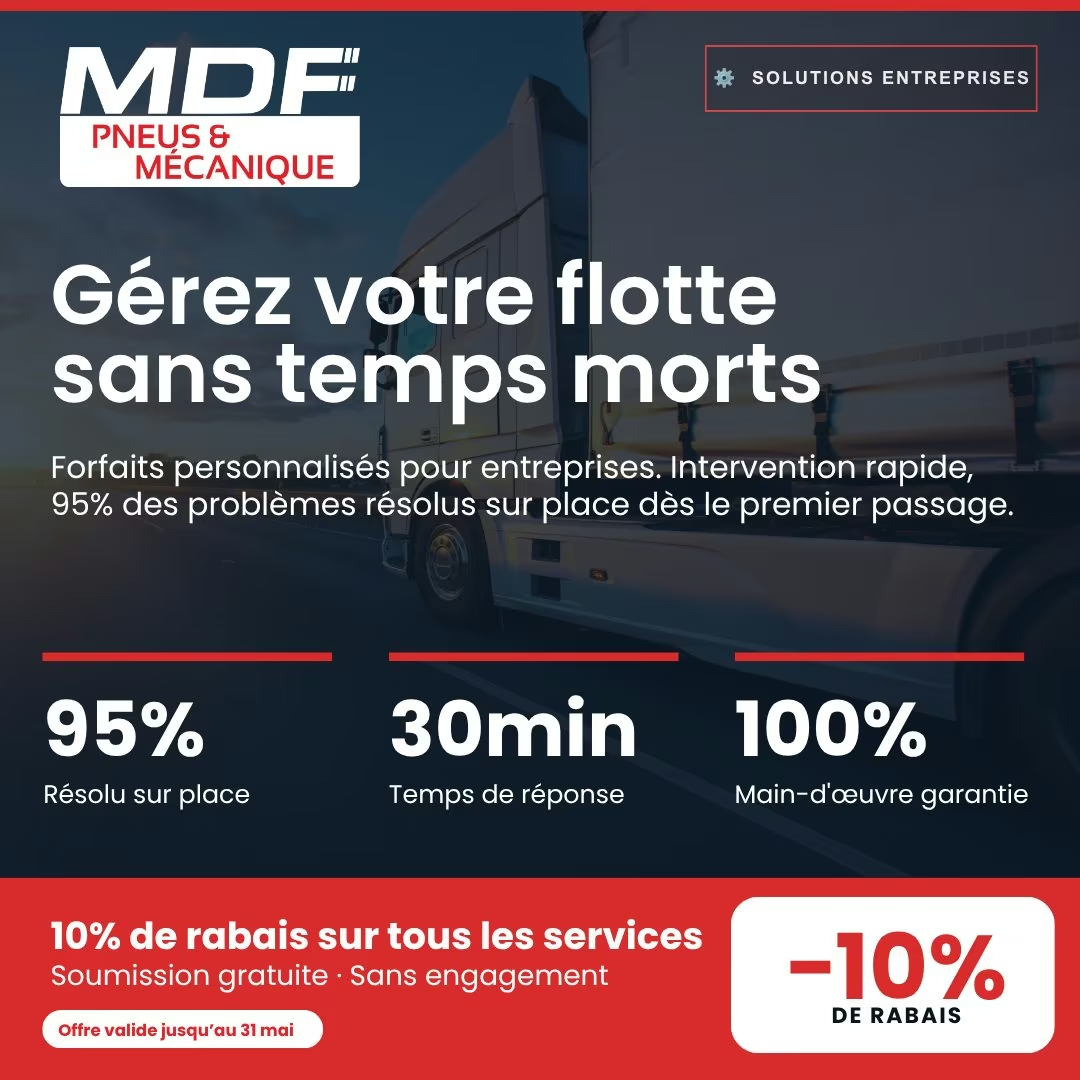
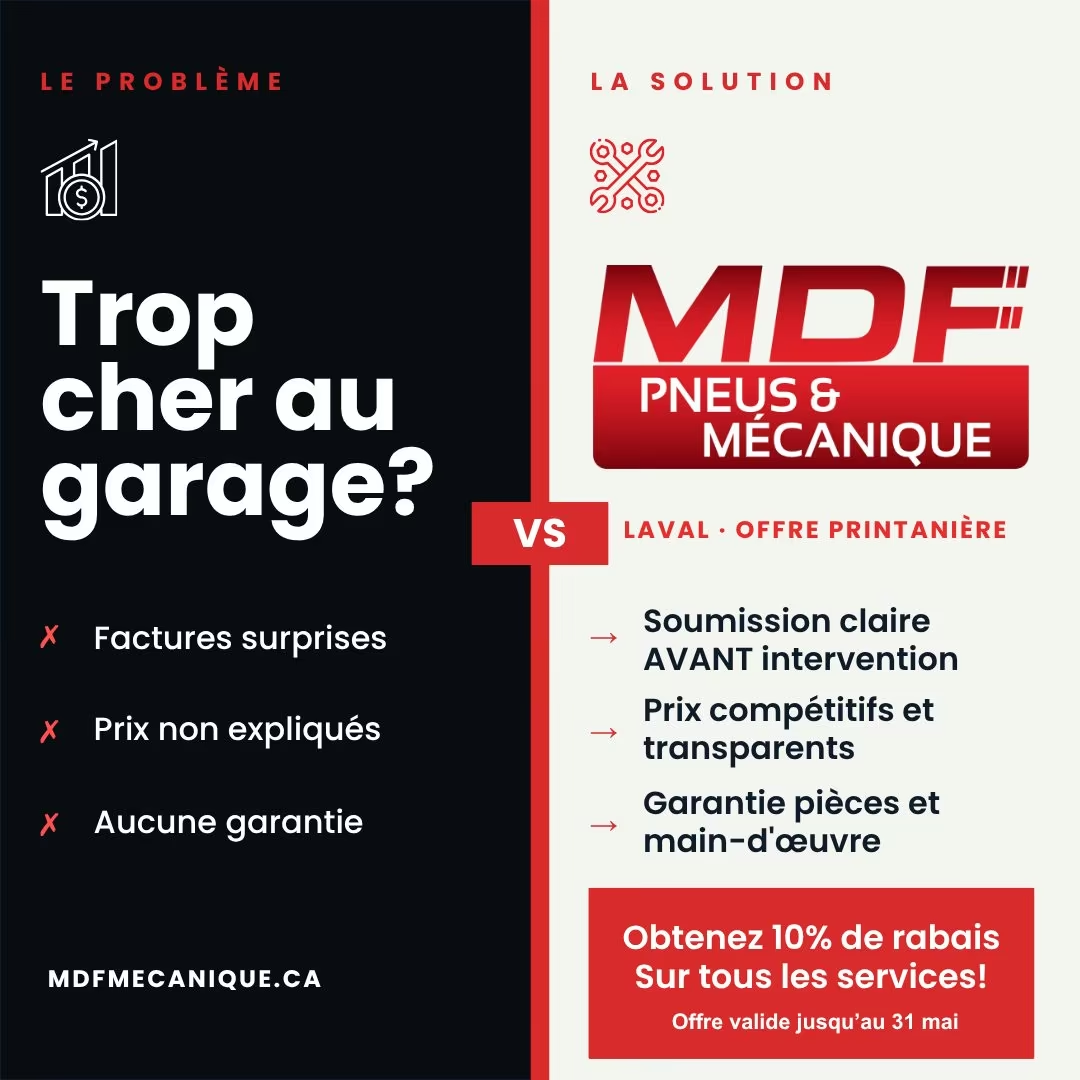
Static Ads


























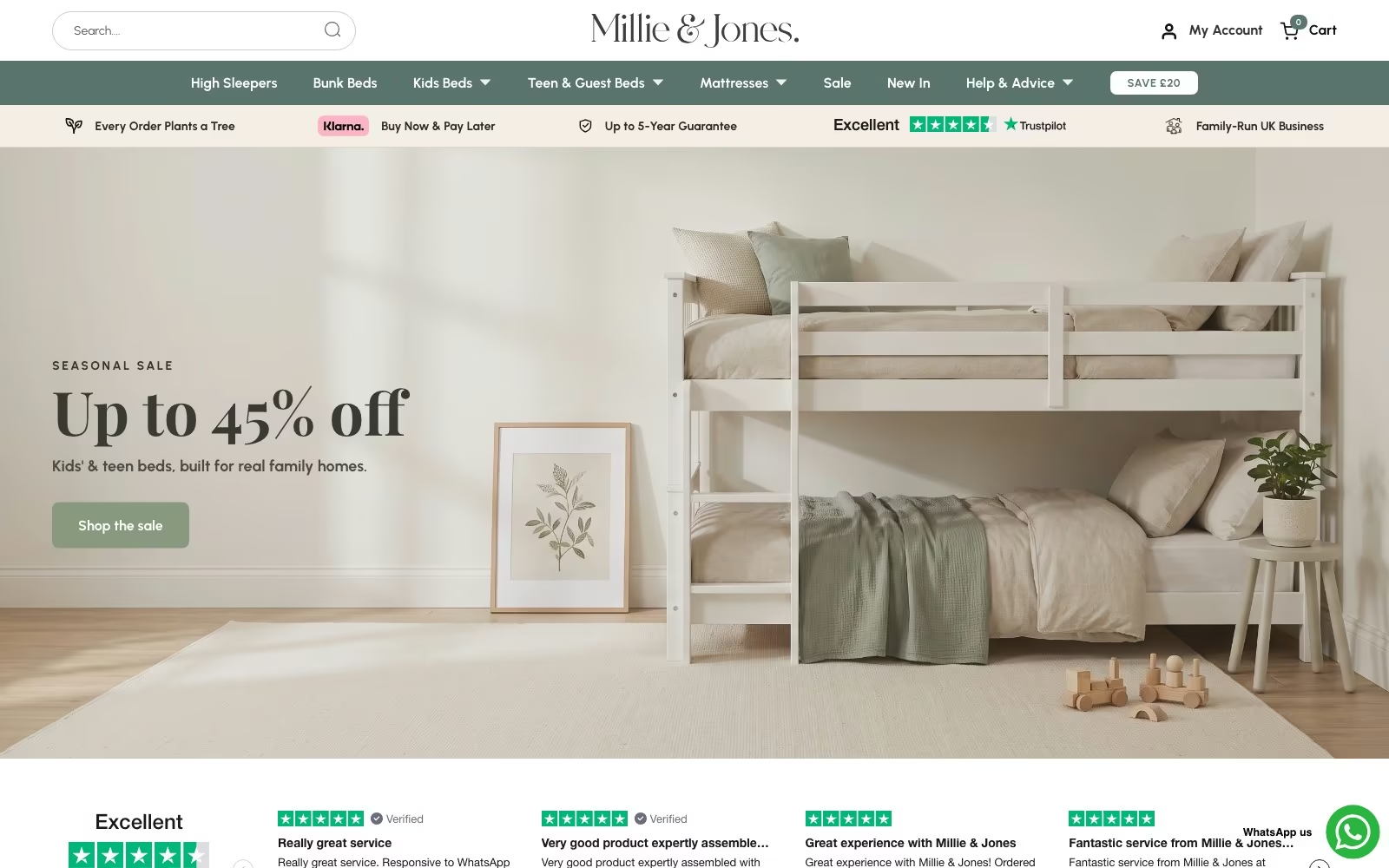

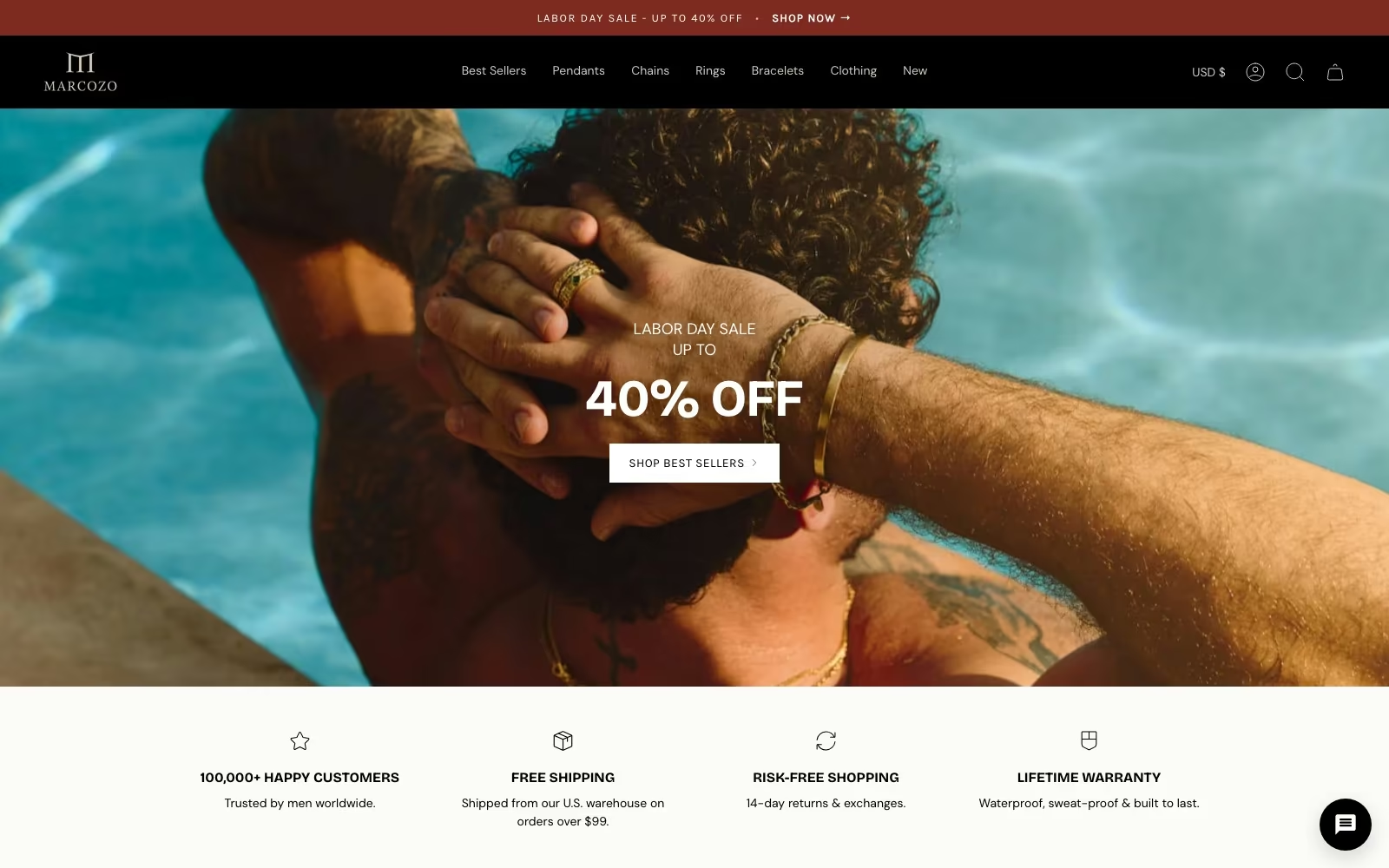

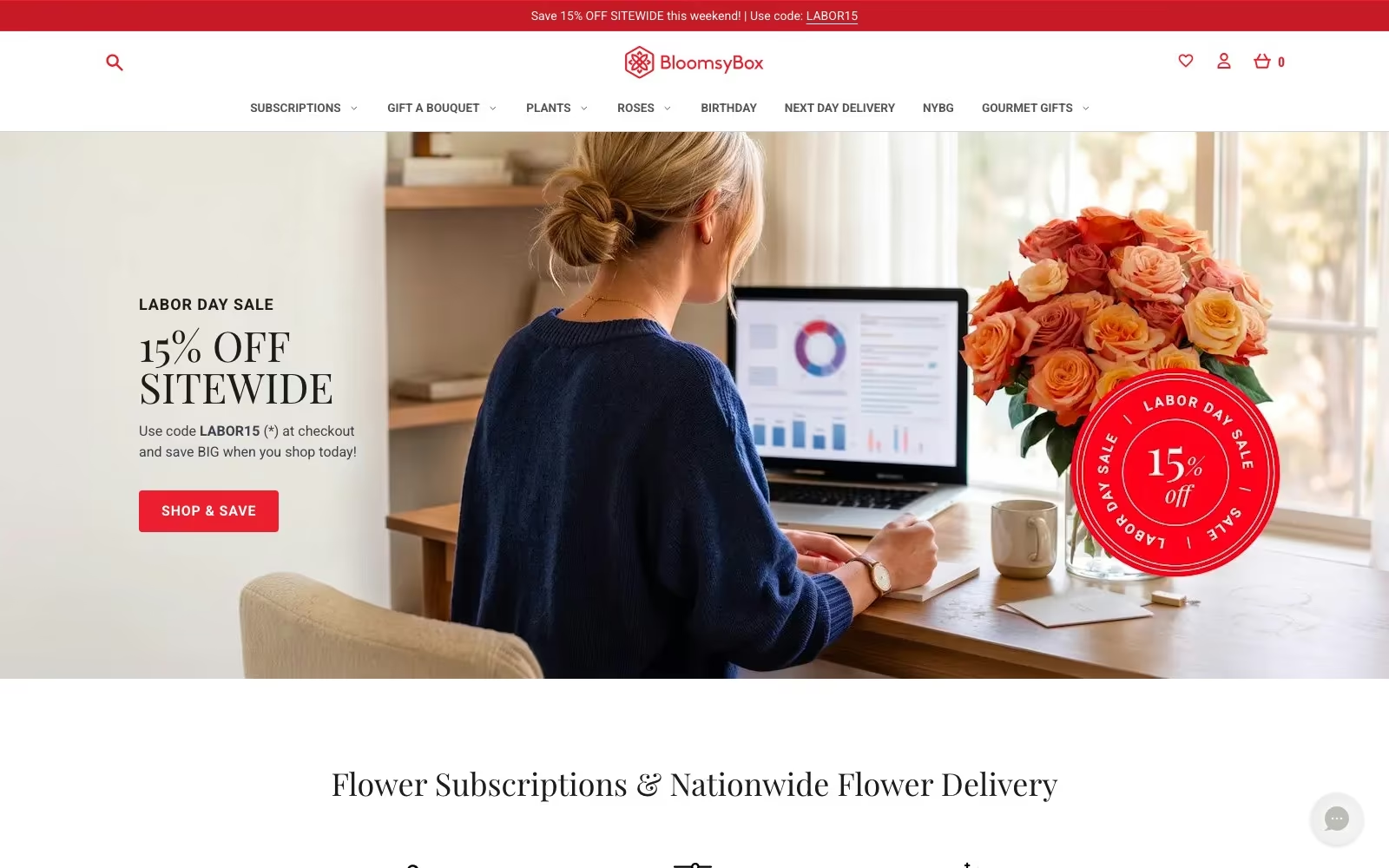











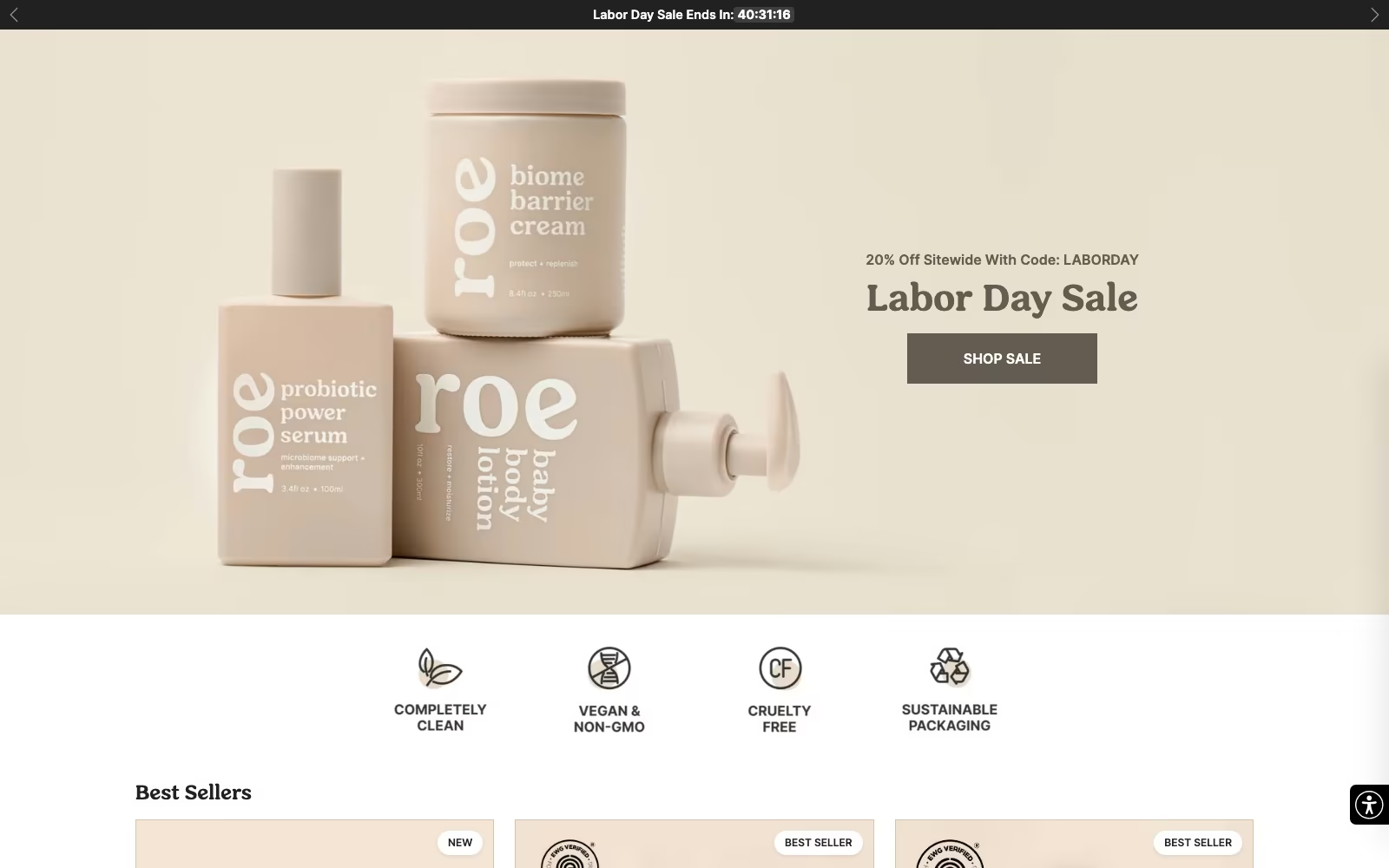

















EN

EN

EN


FR
FR
FR

FR

FR

FR

FR

FR


EN
FAQ
What business owners ask us first.
What is growth advisory, exactly?
A short, fixed-scope engagement that answers one question: what is actually limiting revenue growth, and in what order should you fix it. A growth advisor looks across the whole commercial engine, the customer segments you serve, the offer and its pricing, the sales process and pipeline, retention, and the capacity behind all of it, rather than at one channel. The output is a written diagnosis, a simple growth model and a sequenced plan. It is consulting work with a defined end, not an ongoing service.
Why will you not execute the plan?
Because the moment an advisor's income depends on the recommendation, the recommendation changes. Firms that sell media will find a media problem. We keep growth advisory separate from delivery so that the honest answer, which is often stop spending and fix the offer, is one we can actually give. Web Tonic does run paid search, SEO and paid social as separate services. If you want us for delivery afterwards, that is a new conversation and a new contract, and plenty of advisory clients never have it.
Is this the same as a fractional CMO?
No, and the difference is duration and accountability. Growth advisory is a project: four to six weeks, a diagnosis and a plan, then we leave. A fractional CMO is ongoing marketing leadership, someone who owns the plan, runs the team and reports monthly. Companies often start with advisory to find out whether the problem is strategic or operational. If the plan is clear and the team can run it, you need nothing more. If the gap turns out to be leadership, the fractional engagement is the honest next step and the advisory work becomes its first 90 days.
Do you provide M&A, transaction or financial advisory services?
No. Web Tonic is a marketing and growth firm, not a broker-dealer, an investment bank or a financial advisory practice, and we are not regulated to give financial, legal or securities advice. Search results for growth advisory mix the two worlds constantly, so it is worth being blunt. What we do is commercial: demand, offer, pricing, pipeline conversion, retention and the marketing that feeds them. We work alongside corporate finance advisors on deals fairly often, usually providing the commercial read on the growth plan, and we are happy to do that as a defined piece of work.
What does a growth advisory engagement cost?
A fixed fee, quoted after a scoping call, with the scope and the deliverables written down before you commit. We do not publish a rate card because the work varies with the size of the business and the state of the data, and a number without scope is meaningless. For context on the trade-off, Gartner puts total marketing budgets at 7.8% of company revenue in 2026, and a diagnosis that stops one unproductive channel usually pays for itself inside that envelope. Book a meeting and you will get a scope and a number, with no obligation attached to either.
How much of our time will this take?
Less than you fear, and more than nothing. Expect a two-hour kickoff with the leadership team, read-only access to your CRM, analytics and finance reporting, five to eight interviews of forty minutes each across sales, support and operations, and two working sessions to challenge the findings. Your sales lead carries the heaviest load, roughly half a day in total. We do the analysis ourselves rather than sending a questionnaire and calling the answers research, which is precisely why the diagnosis holds up when your leadership team pushes back on it.
We already know what is wrong. Why pay for a diagnosis?
Sometimes you do, and in that case say so on the scoping call and we will tell you whether the engagement is worth buying. More often each leader knows a different true thing, and the organisation cannot act because there is no shared, evidenced answer. What a growth advisory engagement really produces is an agreement: one constraint, one sequence, one stop-doing list that finance, sales and marketing have all argued with in the same room. That agreement is usually the unlock, not the insight.
What size of company does this suit?
Businesses roughly between two and one hundred million in revenue get the most from it, because they have enough data to analyse and enough complexity that the constraint is not obvious. Below that, the honest answer is often a sales problem rather than a strategy problem, and we will tell you so rather than sell you an engagement. Above it, the work usually narrows to one division or one market. Owner-managed businesses, middle market companies and private equity backed businesses all buy the same core work, they just argue about different parts of it.
What happens after the plan is delivered?
You run it. The plan names owners inside your business, sets leading indicators and states what to stop, so the first ninety days do not need us. Some clients book a single review session at ninety days to check the indicators and adjust the sequence, which is usually the highest-value hour of the whole engagement. Others move on to marketing strategy consulting to turn the commercial plan into a marketing plan, or bring in a fractional leader. Neither is assumed, and neither is priced in advance.
How do you handle confidential financial information?
Under a mutual non-disclosure agreement signed before any access is granted, with read-only access wherever the systems allow it, and with a named list of who on our side can see what. Revenue, margin and customer data stay in your systems where possible, and anything we export lives in a folder you own and can revoke. At the end of the engagement we tell you exactly what we hold and delete it on request. Boards and sponsors ask this first, and rightly.
Will you tell us something we do not want to hear?
Regularly, and it is most of the value. Common examples: the segment the founder loves is the least profitable one, the price is too low rather than too high, the sales process asks buyers to do something they will not do, or marketing is fine and operations cannot deliver what marketing sells. The CMO Survey found executives respond to a profit miss by cutting expenses 53.1% of the time, which is exactly when an outside opinion is worth having and hardest to hear.
Do we need working analytics before we start?
No, though it changes the first week. If your reporting is unreliable we will say so in the diagnosis and work from the sources that are trustworthy: invoices, the CRM, bank data, sales records. Then fixing measurement becomes an item in the plan itself, usually an early one, because you cannot manage a sequence you cannot see. If that is the state you are in, our conversion tracking and analytics teams handle it as a separate, defined project once the plan says it is worth doing.
Who does the work on your side?
A named senior growth advisor runs the engagement end to end and is in every session, supported by an analyst for the data work. You meet that person before you commit, and if they are not right for your business we will say so rather than substitute. Continuity matters in short engagements: average CMO tenure in the S&P 500 is 4.1 years, so institutional memory about why a decision was made is scarce, and a written plan with the reasoning attached is part of what you are buying.

.webp)
.webp)