A marketing plan with owners, budgets and dates.
owners, budgets and dates
Marketing strategy consulting built from your data rather than a framework: what your market actually looks like, which customer segments are worth the effort, the positioning and messaging you can defend, the channels that suit how people buy from you, and the twelve-month plan that follows. It is a project with a defined end, and it does not include running the campaigns. That separation is deliberate. Book a meeting and we will scope it honestly, including telling you if you do not need it.






Tell us a little about your brand and we'll be in touch within 24 hours to lock in a time.



THE FOUR DECISIONS
Four decisions a marketing strategy has to settle.
has to settle
A marketing strategy is not a list of activities. It is four decisions, written down, that let everyone else stop guessing: who, what we say, where, and how we will know.
Agency selection guides: US marketing agencies · Global advertising agencies · Marketing consulting firms · Advertising agencies.
Market and customer
Positioning and messaging
Channel and budget plan
Measurement and capability
Who you are for, evidenced rather than asserted.
We start with the market and the customer, because most weak marketing strategies are really weak segmentation. That means customer interviews, search and category demand data, win and loss patterns from your own CRM, and an honest read of the competitive set, including the substitutes people choose instead of your category.
The gap between strategic and reactive is measurable. Duke's CMO Survey team reports marketing spending decisions remain more reactive than strategic, shaped more by financial pressure and executive reflex than by marketing priorities. A written strategy is what makes the next budget conversation a different one.
- Customer interviews across won, lost and churned accounts
- Category and search demand sized with real data
- Competitive and substitute set mapped, not guessed
- Priority segments named, with the ones to decline
9.0%
of revenue is the average marketing budget, the lowest share since 2021
One claim you can defend, in language your customers use.
Positioning is a choice about what you are willing to lose in order to be chosen for something specific. We write it as a single defensible claim with the evidence behind it, then build the messaging your sales team, your website and your agencies all work from, in the words customers actually used in the interviews.
Brand strategy and demand generation stop fighting once this exists, because the argument about tone was never about tone. It was about a decision nobody had made.
- A single positioning claim, with the proof it rests on
- Messaging hierarchy for each priority segment
- Objection handling written from real sales calls
- Naming, tone and proof points your team can apply
45.4%
of the time marketing is the first expense category cut when profits miss
Channels chosen for your buying cycle, with the money allocated.
Then the channel plan: search, paid media, content, email, partnerships, events, whatever fits the way your customers genuinely decide, with a budget allocation, an expected role for each channel, and a stop-doing list. We size it against the budget you have rather than the one a consultancy would like you to approve.
Allocation is shifting under everyone's feet: paid media reached a five-year high of 31.4% of marketing expenses while martech fell to a five-year low of 19.4%. A plan that names the trade-off is worth more than one that lists every option.
- Channel roles mapped to your real buying journey
- Budget allocated by channel and quarter
- A twelve-month sequence, not twelve months of everything
- An explicit list of what to stop funding
31.4%
of marketing expenses now go to paid media, a five-year high
How you will know, and who is going to do it.
A strategy nobody can execute is an expensive document. So the last section covers measurement, the four numbers that matter and how they will be collected, and capability: which roles you need, what to brief out, which tools earn their cost and which do not.
In the same survey, marketers cite the right talent over the right technology as the most important driver of revenue growth, and Gartner found 70% of CMOs call AI leadership a critical 2026 goal while only 30% report mature AI capability. We plan for the team you will actually have.
- Four headline measures, with how each is collected
- Reporting cadence and who presents it
- Roles to hire, roles to brief out, tools to cut
- A ninety-day first phase anyone can start on Monday
30%
of CMOs report mature AI capability, against 70% who call AI leadership critical
Fixed scope with a defined end date, agreed in writing
Strategy only, so the plan cannot bend toward what we sell
Every recommendation traceable to your data or a named source
Plans and models handed over in files you can change
We made the difference for those brands

Creative, content, arts & culture

Home essentials, appliances, kitchen & pet

Travel & mobility

Creative, content, arts & culture

B2B software, fintech, insurance

B2B software, fintech, insurance

Beauty, personal care & wellness

Beauty, personal care & wellness

Retail & commerce

B2B software, fintech, insurance

Creative, content, arts & culture

Consumer tech and platforms

Consumer tech and platforms

Creative, content, arts & culture

Healthcare & regulated services

Consumer tech and platforms

Beauty, personal care & wellness

Food & beverage

B2B software, fintech, insurance

Retail & commerce

Beauty, personal care & wellness

B2B software, fintech, insurance

Consumer tech and platforms

Consumer tech and platforms

Healthcare & regulated services

Home essentials, appliances, kitchen & pet

Creative, content, arts & culture

Food & beverage

B2B software, fintech, insurance

Retail & commerce
01 — The challenge
Everyone is busy, nobody can say what the strategy is.
Ask five people in the same company what the marketing strategy is and you get five answers, all of them descriptions of activity. There is a website refresh, a content calendar, two paid channels and a trade show, and each was approved on its own merits in a different meeting. Spend is committed, nothing is sequenced, and the quarterly review becomes an argument about which channel gets credit.
“We had a marketing plan. What we did not have was a decision about who we were for.”
It gets harder in a squeezed year. The CMO Survey reports marketing spending grew just 1.7% over the prior twelve months, the smallest rise since 2021, with budgets at 9.0% of revenue, while Gartner found 56% of marketing leaders say they lack the budget to deliver their own strategy. Under those conditions a marketing strategy consultant earns their fee mostly by helping you stop things.
02 — Our approach
Six weeks: evidence, positioning, plan, handover.
Fixed scope and a named marketing strategy consultant who is in every session. Weeks one and two are evidence: customer interviews across won, lost and churned accounts, search and category demand data, your CRM and analytics read properly, unit economics from finance, and a competitive review that includes the substitutes people choose instead of buying anything. We also use your product or enquiry path the way a customer does, which regularly surfaces the most expensive problem in the whole engagement. Weeks three and four are decisions: priority segments, the positioning claim and the evidence behind it, the messaging hierarchy per segment, and the channel roles that follow. We bring options rather than a verdict, and your leadership team argues with them in a working session, because a strategy the executive team has not challenged will not survive its first quarter. Weeks five and six turn that into the plan: twelve months sequenced by quarter, budget allocated by channel, four headline measures with a collection method, named owners, the capability and hiring implications, and the stop-doing list. Then we hand it over, walk your team and your agencies through it, and the engagement ends. We do not execute the plan, take a media budget or attach a retainer, so the recommendation cannot bend toward what we would like to sell you next. The document is written in plain language and stays yours, executable by your team, by your existing agencies, or by another firm entirely.
03 — What we did
How the six weeks actually run.
Evidence, then the positioning decision, then a sequenced plan, then a handover built for the people who have to run it.
Weeks 1-2 / Evidence
Customers, category demand and your own numbers
Interviews, search and category data, CRM and analytics, unit economics, and a competitive read that includes doing nothing as an option.

Weeks 3-4 / Decide
Segments, positioning and the messaging that follows
Options presented, argued with by your leadership team, then written down as one defensible claim with a messaging hierarchy per segment.
Weeks 5-6 / Plan
Twelve months, sequenced, with the money allocated
Channel roles, budget by quarter, four headline measures, named owners and an explicit list of what to stop funding.

Week 6 / Handover
Briefed to your team and your agencies, then we leave
A working handover session, the plan in editable form, and an optional review at ninety days. No retainer attached.

WHAT YOU GET
Six deliverables, all editable, all yours.
all yours
Written for your company and your team, in plain language, in files you can change without calling us.
Related guides: Startup marketing agencies · Mobile app marketing companies · Product marketing agencies · Online advertising platforms.

Market and customer evidence
Interview findings, category demand, win and loss patterns and the competitive read, with the sources listed.

Segment priorities
The customer segments worth pursuing, the ones to decline, and what that changes for sales and marketing.

Positioning and messaging
One defensible claim with its proof, plus the messaging hierarchy and objection handling per segment.

Twelve-month marketing plan
Channel roles, budget allocation by quarter, sequence, named owners and the stop-doing list.

Measurement framework
Four headline measures, how each is collected, the reporting cadence and who presents it.

Team and capability plan
Roles to hire, work to brief out, tools to keep or cut, and the first ninety days written for your team.
HOW WE WORK
Operating standards, not promises.
Operating standards


B2B and professional services firms
Long buying cycles and several decision makers, where positioning does more work than any channel.
Consumer and ecommerce brands
Crowded categories where the offer, the price ladder and retention decide whether paid media can ever pay.
Multi-location and franchise operators
One strategy that has to survive contact with dozens of local markets and the people running them.


















Built on trust. Proven by results.
We partner with SMBs and Fortune 500 companies to deliver more than reach — we bring clarity, execution, and measurable outcomes. Every successful partnership starts with a strong culture fit and a shared drive to grow.







CASE STUDIES
Case studies
Website Portfolio
Video Ads
Static Ads





























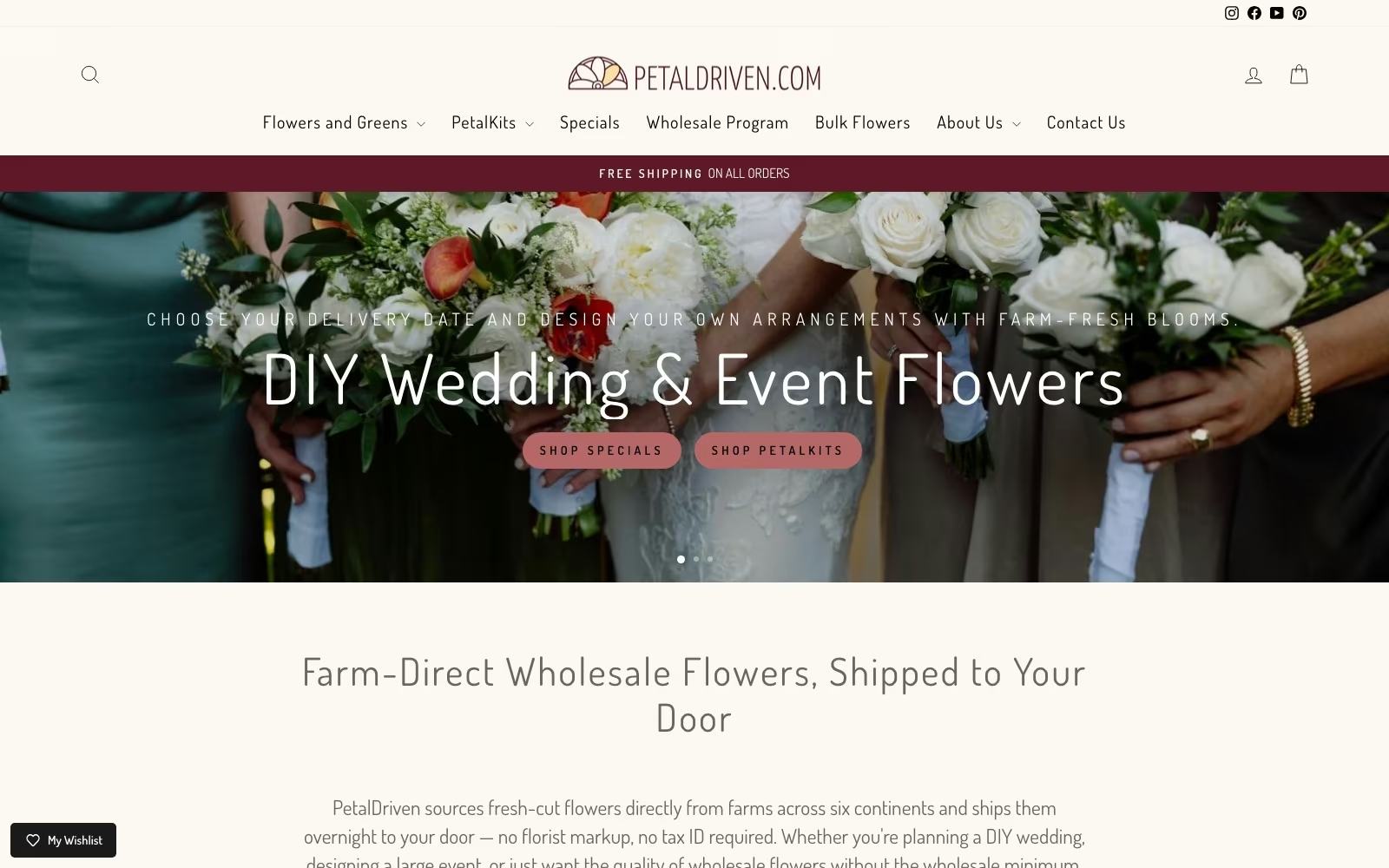









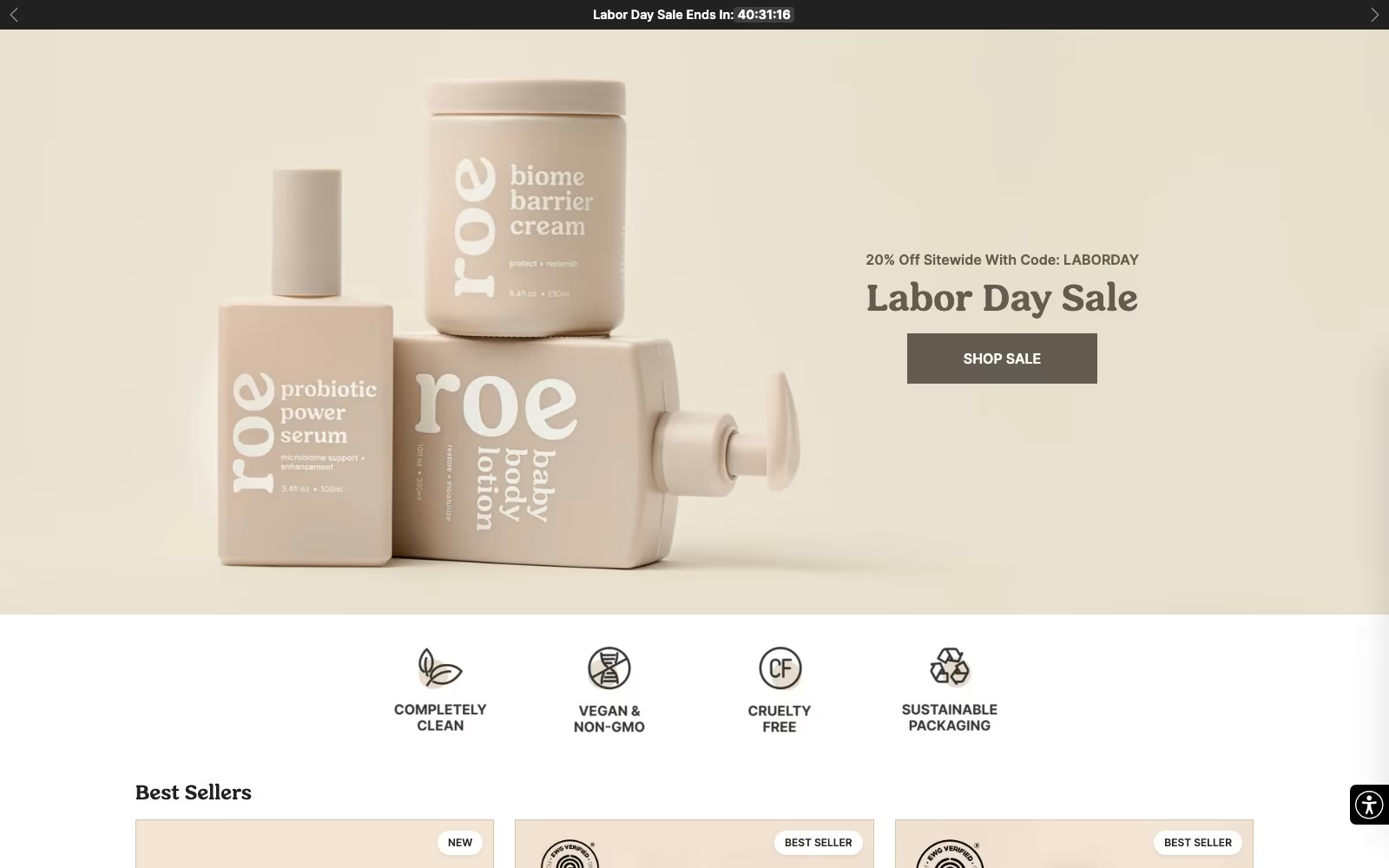

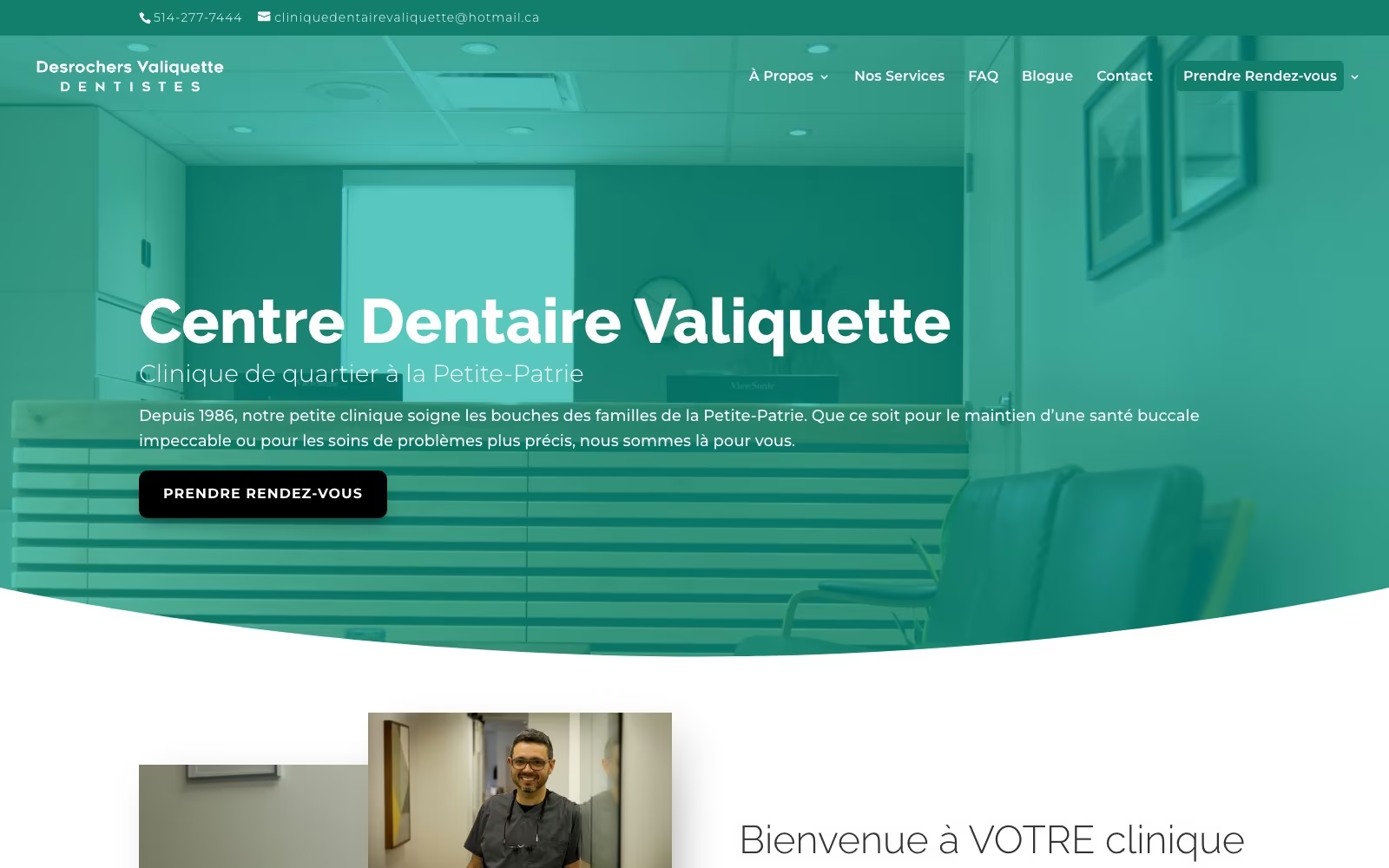

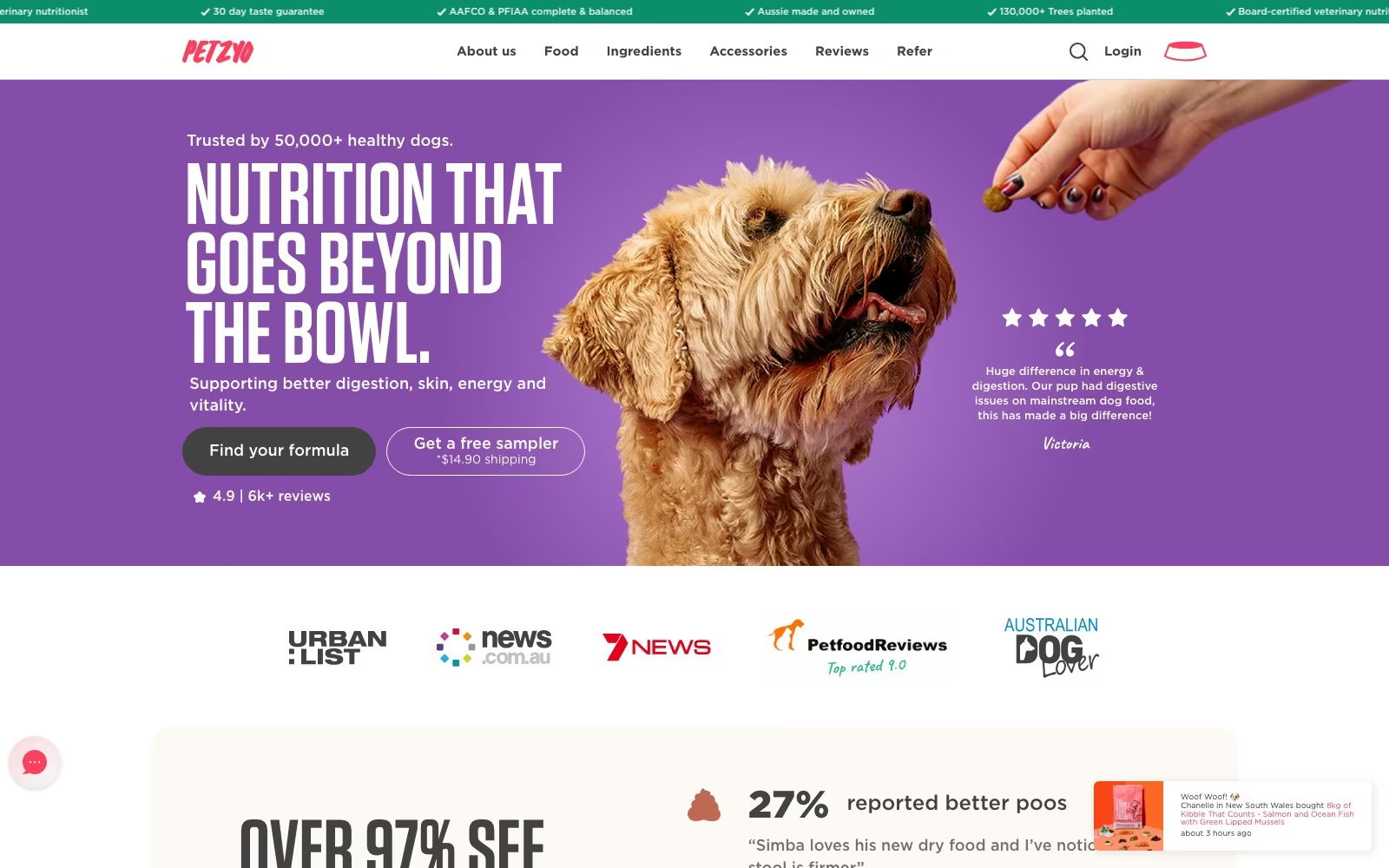














EN

EN

EN


FR
FR
FR

FR

FR

FR

FR

FR


EN
FAQ
What clients ask before they commission a strategy.
What does marketing strategy consulting actually deliver?
Four things, in one document you can act on. First, evidence: what your market and customers really look like, from interviews and demand data rather than assumption. Second, decisions: which segments you are for and the positioning and messaging that follows. Third, a twelve-month plan with channel roles, budget by quarter, named owners and a stop-doing list. Fourth, a measurement framework and a capability plan, so the strategy is executable by the team you will actually have. It is a project, not a subscription.
How is this different from what a marketing agency gives us?
An agency plan tends to start from the services the agency sells, which is reasonable but not neutral. A strategy engagement starts from your market and can conclude that the right move is to change the offer, fix retention, or stop two of the channels you are currently paying for. We keep the two apart on purpose: Web Tonic runs SEO, paid search and paid social for clients, but not inside this engagement and not as a condition of it.
Do you execute the plan afterwards?
Not as part of this. The engagement ends with a handover session and, if you want it, a review at ninety days. Afterwards you can execute in house, with your existing agencies, or with us under a separate agreement that you negotiate with the plan already in your possession. That order matters: it means you are never buying a strategy in order to unlock a retainer, and it is why we can write down that a channel we sell is not worth funding for you. Plenty of clients take the plan and never come back, which is a fine outcome.
Is this the same as hiring a fractional CMO?
No. Marketing strategy consulting is a defined project producing a plan; a fractional CMO is ongoing leadership that owns the plan, runs the team and reports monthly. If your team can execute once someone tells them what matters, buy the project. If the missing piece is judgement in the room every week, buy the leadership. If the constraint is commercial rather than marketing, offer, pricing or the sales process, then growth advisory is the right starting point instead.
What does a marketing strategy consultant cost?
A fixed project fee, quoted after a scoping call, with deliverables and dates written down before you commit. We do not publish rates because scope drives the number and a figure without scope helps nobody. For context on the envelope it has to fit inside, Gartner puts average marketing budgets at 7.8% of company revenue. In most engagements the stop-doing list frees more money than the project costs, which is the test we would apply if we were buying it. Book a meeting for a scope and a number.
How much of our leadership team's time does it take?
Roughly a day and a half each across six weeks, concentrated in three sessions: a two-hour kickoff, a half-day working session on segments and positioning, and a two-hour plan review. On top of that we need read access to analytics, the CRM and finance reporting, plus introductions to five to ten customers for interviews. The customer interviews are the part clients try to skip and the part that changes the strategy most, so we push back when they get cut.
We are a small company. Is a strategy project overkill?
Sometimes, and we will say so. If you are pre-product-market-fit or your revenue comes from a handful of relationships, a six-week strategy engagement is probably premature and a short advisory session would serve you better. Where it does pay for small companies is at the point where founder-led selling stops scaling and the next hire or the next budget is about to be committed on instinct. A wrong channel choice costs more than the engagement.
How do you handle brand strategy and creative?
We settle positioning, messaging, proof points and tone, which is the part that has to be true before any creative work makes sense. We do not design the identity or produce the campaign inside this engagement. What your design partner or our own creative team receives afterwards is a brief with a claim, the evidence, the segments and the language customers actually used, which is a considerably better starting point than a mood board and a deadline.
What if we disagree with the recommendation?
Then we have done part of our job and the working sessions exist for exactly that. We bring options with trade-offs rather than a verdict, and where you have information we do not, you should win the argument. What we will not do is quietly drop a finding because it is unwelcome: if the evidence says the segment the founder loves is unprofitable, that stays in the document with the numbers next to it. You can decide to pursue it anyway, with the cost understood, which is a legitimate strategic choice.
Which industries do you work in?
B2B services and professional firms, manufacturing and industrial companies, multi-location and franchise operators, consumer products and ecommerce, healthcare and financial services where the compliance constraints are part of the strategy rather than an afterthought. The method is consistent because the failure modes are: unclear segmentation, undefended positioning, unmeasured acquisition. If your category needs regulatory expertise we do not have, we will tell you before you sign rather than learn on your budget.
How do you use AI in the work?
For breadth, never for judgement. It helps us read thousands of reviews, support tickets and competitor pages quickly, cluster search demand, and draft faster. Interviews, the positioning decision and the plan are done by the named consultant, because a model will happily produce a confident strategy with no evidence underneath it. The AI question also belongs in your plan: 70% of CMOs call AI leadership a critical goal while only 30% report mature capability, so we cover where AI genuinely helps your marketing and where it is theatre, alongside AI search visibility.
Our reporting is a mess. Can you still do this?
Yes, and it is the normal starting condition. We work from the sources that are trustworthy, usually invoices, CRM records and bank data, flag which numbers cannot currently be relied on, and put the measurement fix into the first phase of the plan. Two things then become possible that were not before: a real cost per acquisition, and a marketing conversation with your finance lead that is not an argument. Our conversion tracking and analytics teams can do that repair as a separate project if you want it done properly.
Will the strategy survive a change of marketing leadership?
That is one reason it is written down rather than presented. Average CMO tenure in the S&P 500 is 4.1 years, and consumer-company CMOs average 3.5 years, so the reasoning behind a decision usually leaves with the person who made it. Our document records the evidence, the options considered and why each call was made, which is what lets a new marketing leader adapt the plan instead of restarting from zero. It also makes onboarding a new agency a one-day job rather than a quarter.
How does your approach compare with a large strategy consulting firm?
The big consulting firms are genuinely good at enterprise transformation and they are priced for it, usually with a partner selling the work and consultants two years out of business school doing it. Our model is the inverse: one senior marketing consultant with operating experience, a six-week engagement, and a plan sized for a business that has to run it with the team it has. We also stay closer to delivery reality than a pure strategy firm, because our own specialists execute digital marketing every day for other clients, so the plan does not recommend things nobody can actually buy or staff. If your problem is a global operating model rather than a growth plan, the large firms are the better call and we will say so.
Does the plan cover digital marketing channels in detail?
Yes, at the level of role, budget and sequence rather than campaign settings. For each channel that earns a place, search, paid media, content, email, partnerships, events, we write what job it does for which segment, what it should cost, what good looks like in the first two quarters, and what would make us cut it. Detailed keyword plans, creative testing plans and media buying structures belong to whoever executes, and our SEO, email marketing and marketing automation teams build those separately if you hire them. Keeping the strategy one level above execution is what makes it usable by any competent firm, including your current one.

.webp)
.webp)