Where AI pays back in your marketing, and where it does not.
and where it does not
An AI marketing consultant is only useful if the advice survives contact with your data, your team and your risk appetite. We assess readiness across data, process and skills, score candidate use cases on value against effort, run two or three of them as measured pilots, and leave you with a written roadmap, a usage policy and a way to see whether AI search engines mention your brand at all. We do not resell AI software and we take no vendor margin. Book a meeting and we will tell you which tools to stop paying for.






Tell us a little about your brand and we'll be in touch within 24 hours to lock in a time.



WHAT WE ASSESS
Four questions an AI readiness assessment has to answer.
has to answer
Adoption is no longer the interesting question. The CMO Survey puts artificial intelligence and machine learning at 24.2% of marketing activities in 2026, nearly double the 13.1% of 2024, with companies projecting 55.9% within three years. What separates the companies getting returns is unglamorous: data, sequencing, skills and governance.
Related guides: AI-powered marketing agencies · AI failures and examples · AI paraphrasing tools.
Data and systems readiness
Use case scoring
Measured pilots
Governance and enablement
Can your data support the use case you want?
We start with what your systems can actually feed a model: the CRM and its definitions, product and content data, consent, tracking, and whether revenue can be joined to marketing activity at all. Predictive analytics and machine learning use cases live or die here, and so does anything that promises real time personalisation.
The risk is well documented: 78% of C-suite and 92% of SVP and VP respondents say they have acted on an AI recommendation they later suspected was wrong because of bad underlying data, and only 41% have a dedicated data governance owner. Where the plumbing is the constraint, marketing operations consulting comes first.
- CRM, content and product data assessed against each use case
- Consent, privacy and data residency constraints written down
- Whether revenue can be joined to marketing activity, honestly
- Use cases your data cannot support yet, named as such
78%
of C-suite respondents have acted on an AI recommendation they suspected was wrong
A ranked shortlist, scored on value against effort.
Then we inventory the work your marketing team does, from content production and personalisation to reporting, research, lifecycle and creative iteration, and score each candidate on value, effort, data dependency and risk. The output is a ranked shortlist with the rejected ideas kept visible, because knowing why something was rejected stops it coming back every quarter.
The market has already converged on where value sits: content creation leads AI applications at 73.9%, followed by content personalization at 65.4%, automation at 48.9% and data analysis at 46%. Your ranking should still be yours, not the market's.
- Use case inventory built from your team's real workload
- Scored on value, effort, data dependency and risk
- Rejected candidates documented with the reason
- Sequenced so early wins fund the harder work
73.9%
of companies using AI in marketing apply it to content creation
Two or three pilots with a baseline and a decision date.
Nothing is adopted on a demo. We run two or three of the top-ranked use cases as short pilots with a baseline measured first, a success threshold agreed before starting, a fixed review date and a written kill criterion. Quality is assessed by your own people against the standard your brand voice already sets, not by the tool vendor's benchmark.
Measurement discipline is the part most companies skip: 71% of marketing and finance leaders believe AI-powered tools prioritise short-term performance over long-term brand growth, and only 40% say their measurement tools make decisive action much easier.
- Baseline measured before the pilot, not after
- Success threshold and kill criterion agreed in writing
- Output quality judged by your team against your brand voice
- A decision date, so pilots cannot run indefinitely
71%
of leaders say AI marketing tools favour short-term performance over brand
A usage policy people can follow, and training that lands.
Last, the part that decides whether any of it sticks: a usage policy covering what may be put into which tools, disclosure, human review before publication, and how client or customer data is handled; an owner for AI decisions; and training aimed at the specific work your team does rather than a generic webinar.
The gap here is stark. Only 29% of organizations have an AI roadmap or strategy prioritising use cases for the next one to two years, and just 13% have all four governance foundations in place, while a lack of internal talent is the barrier to AI-driven efficiency CMOs rank first most often, cited first by 19% and in the top three by 38%.
- A short usage policy written in plain language
- Human review and disclosure rules before anything publishes
- One named owner for AI decisions and tool requests
- Role-specific training, with the prompts and workflows kept
29%
of organizations have an AI roadmap covering the next one to two years
Fixed scope with a defined end date, agreed in writing
No vendor margin, no referral fee, no licence markup
Every pilot measured against a baseline taken beforehand
Roadmap, policy and prompts handed over in your own files
We made the difference for those brands

Creative, content, arts & culture

Beauty, personal care & wellness

B2B software, fintech, insurance

Home essentials, appliances, kitchen & pet

Healthcare & regulated services

Retail & commerce

Consumer tech and platforms

B2B software, fintech, insurance

B2B software, fintech, insurance

Beauty, personal care & wellness

Healthcare & regulated services

Creative, content, arts & culture

Home essentials, appliances, kitchen & pet

B2B software, fintech, insurance

Apparel and lifestyle

Apparel and lifestyle

Travel & mobility

Food & beverage

Travel & mobility

Home essentials, appliances, kitchen & pet

Apparel and lifestyle

Food & beverage
Creative, content, arts & culture

Food & beverage

Beauty, personal care & wellness

Beauty, personal care & wellness

Healthcare & regulated services

Retail & commerce

Healthcare & regulated services

Consumer tech and platforms

Creative, content, arts & culture
01 — The challenge
Everybody is using AI and nobody can say what it changed.
The usual picture inside a marketing team in 2026: five people paying for four different tools on personal cards, a content workflow that is faster but produces work the brand lead quietly rewrites, one abandoned pilot from last year, and a board that has started asking what the AI budget bought. Meanwhile the two use cases that would genuinely save the team a day a week are stuck because they need data nobody owns.
“We are busier with AI than we were without it, and I cannot show what it returned.”
02 — Our approach
Assess, score, pilot, then a roadmap and a policy. Four to six weeks.
Fixed scope with a named senior advisor who is in every session. The first week is assessment: interviews with the marketing team, whoever owns data and reporting, the sales lead and the person accountable for brand, plus a read of the tools already in use, what they cost, who pays for them and what each is actually producing. We also test the underlying data against the use cases you are hoping for, because most disappointment traces back to that gap. Week two is scoring: a use case inventory built from the real workload, ranked on value, effort, data dependency and risk, argued through with your leadership team so the sequence reflects your appetite rather than ours. Weeks three to five are pilots: two or three use cases run properly, with a baseline measured first, a success threshold and kill criterion agreed in writing, your own people judging output quality against your brand voice, and a fixed decision date. The final week produces the artefacts: a written roadmap for the next two to four quarters, the tool recommendation including what to cancel, a short usage policy covering disclosure and human review, a named owner for AI decisions, role-specific enablement with the prompts and workflows we built, and a baseline of how AI search engines currently describe and cite your brand. We are advisors here. We do not resell software, we take no vendor margin or referral fee, and we do not run your campaigns inside this engagement, which is why the roadmap can recommend fewer tools, a slower pace, or that a use case is not worth doing at all. Everything is handed over in editable files that stay yours.
03 — What we did
How the engagement actually runs.
Readiness first, then a scored shortlist, then measured pilots, then the roadmap and policy your team runs without us.
Week 1 / Assessment
Readiness across data, process and skills
Interviews, a tool and spend inventory, and a hard look at whether your data supports the use cases you want.

Week 2 / Scoring
A ranked shortlist, argued with leadership
Every candidate scored on value, effort, data dependency and risk, with the rejected ones documented.

Weeks 3-5 / Pilots
Two or three pilots with baselines and kill criteria
Measured against a baseline taken first, judged by your team, decided on a date agreed in advance.

Week 6 / Roadmap
Roadmap, usage policy, enablement and a visibility baseline
Two to four quarters sequenced, a policy people can follow, training that fits the work. Then the engagement ends.

WHAT YOU GET
Six deliverables, all editable, all yours.
all yours
Written for your company and your data, in plain language, in files you can change without calling us.

AI readiness assessment
Data, process, skills and governance scored, with the constraints that block specific use cases named explicitly.

Scored use case shortlist
Every candidate ranked on value, effort, data dependency and risk, with the rejected ideas and the reasons kept.

Pilot results and decisions
Baseline, method, what the pilot produced, the quality assessment and the adopt or drop decision in writing.

AI usage policy
What may go into which tools, disclosure, human review before publishing, data handling, and one named owner.

Team enablement pack
Role-specific training, the prompts and workflows we built during the pilots, and a short internal guide.

AI search visibility baseline
How AI answer engines currently describe, cite or ignore your brand, with the prompts and sources recorded.
HOW WE WORK
Operating standards, not promises.
Operating standards


B2B and mid market companies
Where the early value is research, sales enablement content and reporting, and the risk sits in what may be shared with a model.
ExploreConsumer and ecommerce brands
Creative volume, product content and lifecycle personalisation, judged against a brand voice that cannot drift.
ExploreRegulated and professional services
Where disclosure, review and record keeping decide what is allowed before any efficiency case is considered.
Explore

















Built on trust. Proven by results.
We partner with SMBs and Fortune 500 companies to deliver more than reach — we bring clarity, execution, and measurable outcomes. Every successful partnership starts with a strong culture fit and a shared drive to grow.





CASE STUDIES
Case studies
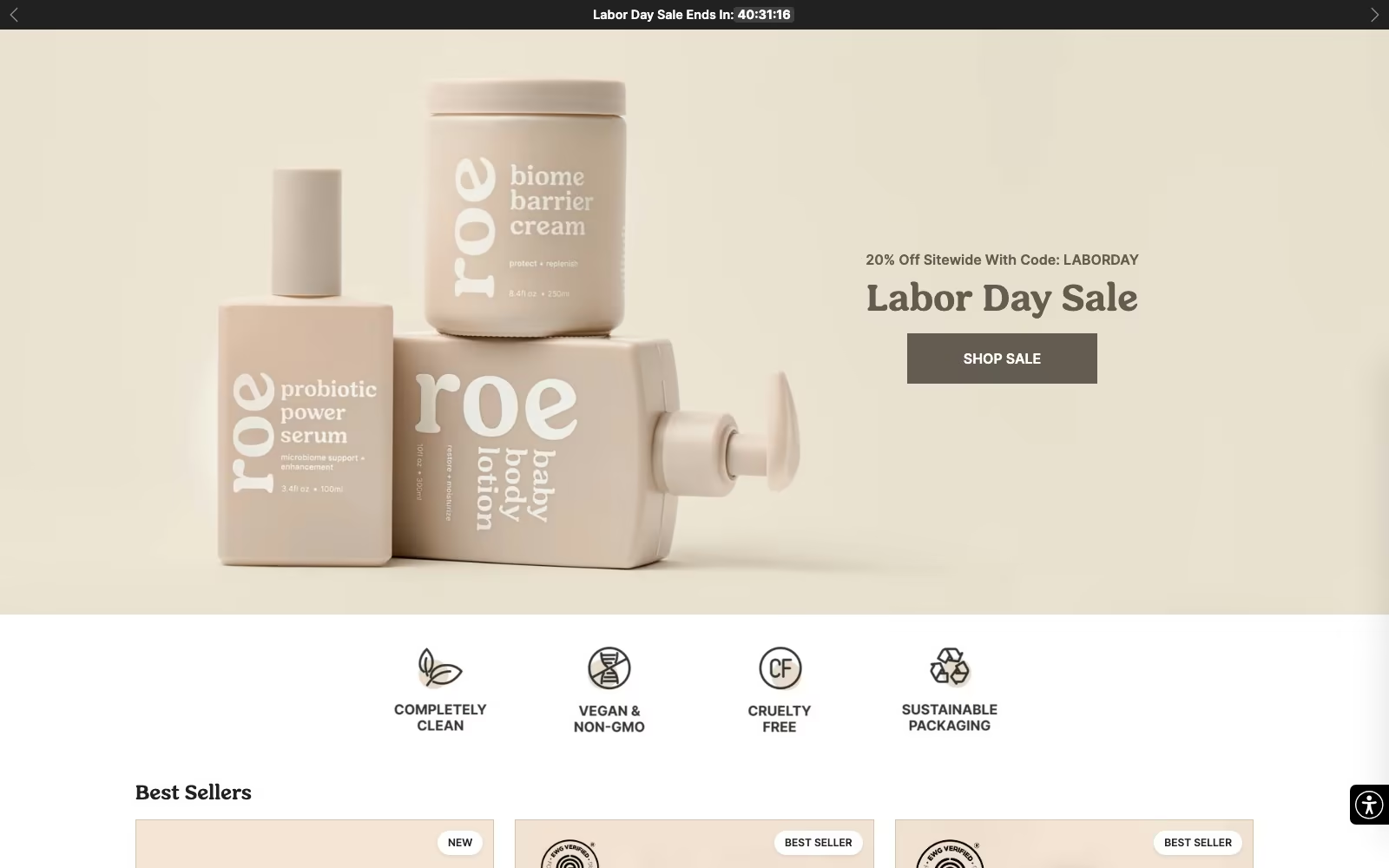
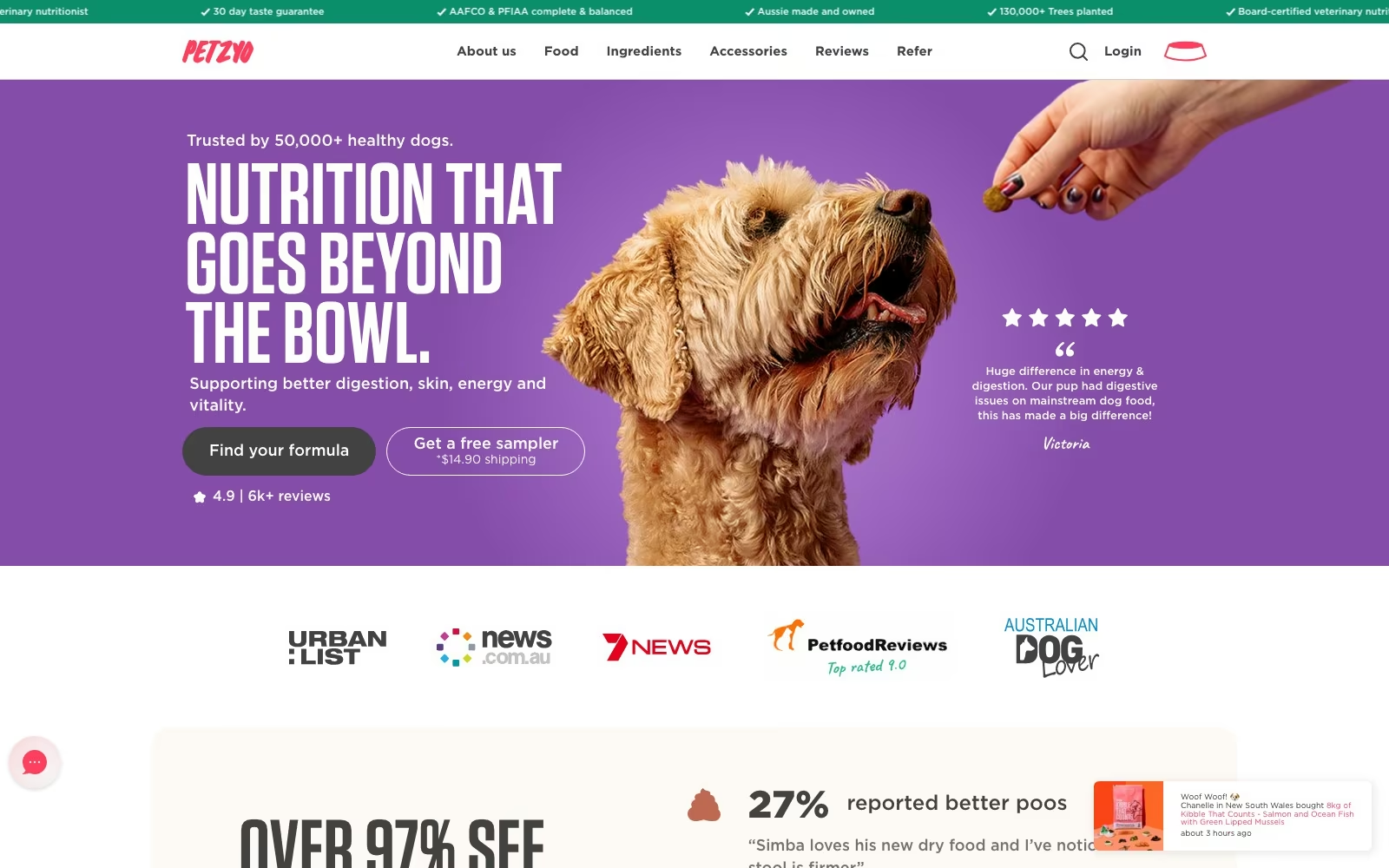
Website Portfolio
Video Ads
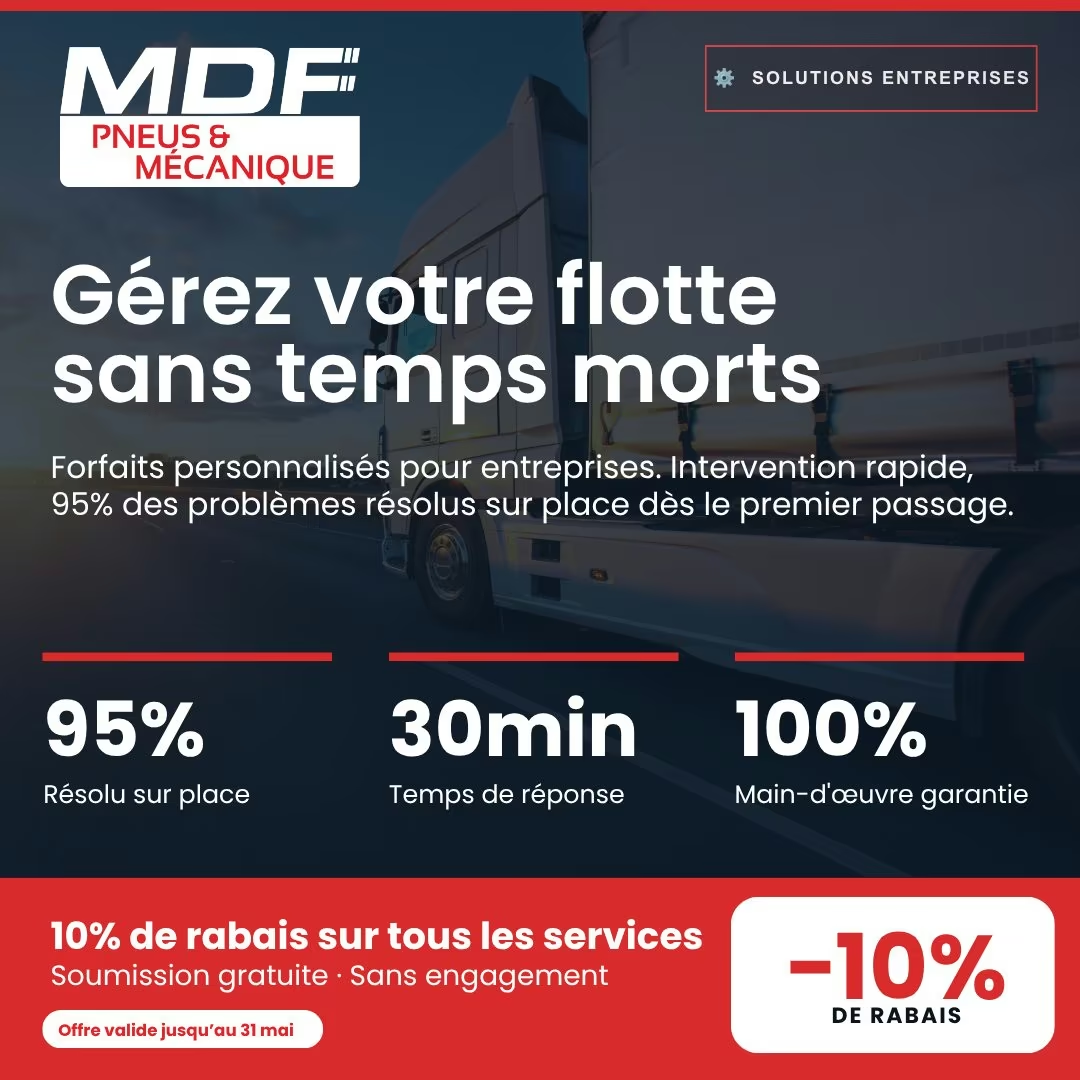
Static Ads






















































EN

EN

EN


FR
FR

FR

FR

FR

FR

FR

FR


EN
FAQ
What leaders ask before buying AI marketing consulting.
What does an AI marketing consultant actually deliver here?
Five things: a readiness assessment across data, process, skills and governance; a ranked shortlist of use cases scored on value against effort; two or three of them run as measured pilots with baselines and kill criteria; a written roadmap for the next two to four quarters with a tool recommendation including cancellations; and the governance layer, meaning a usage policy, a named owner and role-specific enablement. Four to six weeks, fixed scope, all files editable and yours.
Is our data ready for AI?
That is the first thing we test, and the answer is usually partly. Content and research use cases need very little. Predictive analytics, lead scoring and real time personalisation need a clean data model, consistent definitions and a working join between marketing activity and revenue. 62% of organizations already report losing revenue directly because of poor CRM data quality, and a model built on that repeats the errors faster. When the data is the blocker we say so and scope marketing operations consulting first rather than selling you a roadmap you cannot run.
What does the engagement cost?
A fixed fee, quoted after a scoping call, with deliverables and dates written down before you commit. The number moves with team size, how many use cases you want piloted and whether governance has to satisfy a compliance function, so publishing a rate would mislead most readers. For budget context, Gartner reports CMOs allocating a mean 15.3% of marketing budget to AI, rising to 21.3% among organisations with mature AI processes. Book a meeting for a scope and a number.
Will you build us custom AI models?
Not in this engagement, and for most marketing teams that is the right answer. The value is in choosing use cases, sequencing them, measuring them honestly and governing them, and the majority are served by tools you can already buy plus workflow design. Where a pilot proves that a bespoke build genuinely pays back, we specify it, help you brief it and review the vendor's work, and we take no fee from whoever builds it.
Which tools do you recommend?
Whichever ones fit the use cases that survived scoring, and the recommendation is written after the pilots rather than before them. We hold no reseller agreements, take no referral fees and mark up no licences, so the advice is free to say that the tool your team likes is not worth its seat cost, or that two of your four subscriptions overlap. Consolidating and cancelling is a common outcome and often the fastest return in the whole project.
How do you measure whether AI actually improved anything?
By taking a baseline before each pilot and agreeing the success threshold in advance, on measures that matter to the business: production time, cost per asset, cycle time, conversion or pipeline where the volume supports it, plus a quality assessment by your own reviewers. Vanity outputs, such as volume of content produced, are excluded deliberately. Context worth keeping in view: only 49% of marketing and finance leaders measure how marketing is driving business outcomes at all, so the measurement habit often outlasts the pilots as the more valuable change.
Does this include AI search visibility, and will AI engines mention us?
The baseline is included: we record how answer engines and AI overviews currently describe, cite or ignore your brand across a set of prompts your buyers would actually use, and keep the prompts so the test can be repeated. Improving that position is a separate discipline and it is real work on your content, entity data and citations, delivered through our GEO and AEO service alongside SEO. Nobody can guarantee a mention in an AI answer, and anyone who does is selling something.
Will AI replace part of our marketing team?
Our experience is that it changes the mix rather than the headcount, and we do not take redundancy work. The roles that gain value are the ones that judge output, own data and manage specialists; the roles defined purely by throughput change most. Anxiety is real and worth naming: 71% of professionals believe AI will eliminate more jobs than it creates over three years, and 48% describe their own sentiment toward AI as neutral, negative or unsure. Where the honest answer is a structural one, marketing team structure advisory is the engagement that addresses it properly.
How do you handle privacy, confidentiality and client data?
The usage policy is explicit about it: which categories of information may never be entered into a general purpose tool, which tools are approved for what, where data is processed and retained, what needs a data processing agreement, and what has to be disclosed to customers or clients. Pilots run on either synthetic or properly permissioned data. Where your sector adds obligations we are not qualified on, we say so and recommend your counsel reviews the policy before it is adopted.
Should we write an AI policy before or after the pilots?
A short interim policy first, the full one after. Teams are already using these tools, so a one page interim rule on what may be entered and what must be reviewed protects you during the engagement, and the durable policy is written once the pilots show which workflows are actually in use. Just 13% of organizations have all four governance foundations in place, an AI council, a roadmap, generative AI policies and an ethics policy, and 39% have a council, so most companies are starting from nothing here.
Who from our side needs to be involved?
Less time than you would expect. We need the marketing team members who do the work, whoever owns data and reporting, the person accountable for brand, the sales lead where AI touches lead handling, and someone senior enough to approve the policy. Expect a kickoff, two working sessions, a review per pilot and a final presentation. Pilots do consume some of your team's attention by design, because the point is to test the tools inside your real workflow.
How is this different from marketing strategy consulting?
Marketing strategy consulting decides where to compete, what to say and which channels to back. This engagement is narrower: given your strategy, where does AI change the economics of executing it. If you are unsure the strategy itself is right, start there, or with a marketing audit if the question is what is currently working. An AI roadmap bolted onto an unclear strategy just industrialises the wrong activity.
Do you run the marketing afterwards?
Only if you ask, and it is quoted separately. This engagement deliberately excludes execution so the roadmap is free to recommend fewer tools, a slower pace or no further spend. Plenty of clients take the roadmap, the policy and the enablement pack and run everything with their own team, which is a good outcome. Where you want ongoing marketing leadership rather than a project, a fractional CMO is the engagement to look at.
We tried an AI pilot last year and it went nowhere. What changes?
Usually three things were missing: a baseline, a decision date and an owner. Pilots without those drift until someone loses interest, which reads as failure but was never a test. We also sequence deliberately, so the first pilots are the ones your data can support, and the harder use cases wait until the constraint is fixed. The pattern is common: only 19% of organizations describe their AI progress as accelerating, while 46% call it inconsistent or siloed.
How much of this is training our team versus tooling?
More than most buyers expect, and it is the cheaper half. Only 49.7% of companies say their marketing teams have the skills and training to use their own marketing systems, down from 54.1% in 2022, and CMOs rank a lack of internal talent as their top barrier to AI-driven efficiency, first for 19% and in the top three for 38%. So the enablement pack is role-specific, built around the workflows we piloted with your own material, and kept short enough that people actually use it.
What happens after the six weeks?
You own the roadmap, the policy, the prompts and the visibility baseline, and your named owner runs the next quarter. Most clients book one check-in ninety days later to review what was adopted, what was quietly abandoned and what the next two use cases should be, which takes half a day and is optional. Nothing in the engagement obliges you to buy anything from us afterwards, including the execution work.

.webp)
.webp)