Decide the shape of the marketing team before you hire.
before you hire
Marketing team structure advisory answers three questions with evidence: what work your marketing function actually has to do, which of it belongs in house and which is better bought, and in what order to hire. You get an accountability chart, role scorecards, a sequenced hiring plan and a written in-house versus agency recommendation. We are advisors here, not a recruiter, and we do not run your marketing inside this engagement. Book a meeting and we will tell you honestly when your next hire should wait a quarter.






Tell us a little about your brand and we'll be in touch within 24 hours to lock in a time.



WHAT WE SETTLE
Four decisions behind every marketing team that works.
that works
Marketing org design goes wrong in predictable ways: hiring a title instead of a job, buying agency support for work nobody owns internally, or asking one generalist to cover six specialisms. These four decisions prevent most of it.
The work, before the roles
In-house versus agency
Structure and accountability
Hiring plan and scorecards
Every job the marketing function has to do, listed once.
We start with the work rather than the org chart: demand generation, content, the website, the digital channels you run, lifecycle and CRM, reporting and data, brand, sales support, and the operational glue that nobody puts in a job description. Each item gets a volume estimate, a required seniority and a note on whether it is continuous or episodic, which is what decides whether it can be a fraction of somebody's role.
This is where the honest constraint usually appears. The most cited marketing capability gap is not a missing skill but resourcing, with 22.3% of marketers saying existing capabilities lack the people, time and budget to function.
- Every recurring marketing job listed with volume and seniority
- Continuous work separated from episodic projects
- Unowned work made visible, including reporting and operations
- Work that should stop before anyone is hired to do it
22.3%
of marketers say capabilities lack the people, time and budget to function
A written recommendation, line by line.
Then each block of work gets a decision: in house, bought from an agency or freelancer, or dropped. The test is not ideology, it is volume, specialism, tooling cost and how quickly the skill goes stale. Continuous work with institutional knowledge tends to belong inside; spiky, tool-heavy or platform-specialist work is usually cheaper and better bought.
Most companies land in the middle: The CMO Survey finds roughly a third, 33.6%, of digital marketing activities are performed by external agencies, partners and services, with companies expecting 31.6% in two years. The question is which third, and that is the part we write down.
- A build, buy or drop call on every block of work
- Total cost compared properly, including tools and management time
- The specialisms not worth employing at your volume
- What you must keep in house to stay a competent buyer
33.6%
of digital marketing activities are run by external agencies and partners
One owner per number, on one page.
The structure follows the work: an accountability chart with one owner per function, the numbers each role carries, who they report to, and the meeting rhythm that keeps marketing and sales working from the same pipeline rather than two versions of it. Where you run an operating system such as EOS, the chart and scorecards are written to fit it rather than sitting beside it.
We also mark the seams that break: campaign to lead handoff, content to channel, data to decision. Those are where a structurally sound team still fails in practice.
- Accountability chart with one owner per marketing function
- The numbers each role carries, and who sees them weekly
- Marketing and sales handoff defined and measurable
- A meeting rhythm sized for your team, not a framework
49.7%
of companies say their teams have the skills to use their own marketing systems
The next three hires, in order, with scorecards.
Last comes sequence. Which role to add first given your revenue and the constraint we found, what that person must have done before, the scorecard they will be measured against in ninety days, the interview questions that actually discriminate, and the trigger that unlocks the next hire. Written so you can run the process without us.
It is worth being deliberate: a lack of internal talent is the barrier to AI-driven marketing efficiency CMOs most often rank first, cited first by 19% and in the top three by 38%, and a mis-hire at senior level costs a year.
- Hire order tied to the constraint, not to the wish list
- A scorecard per role with ninety-day and annual measures
- Interview questions and work samples that separate candidates
- Named triggers for the hire after this one
34.5%
of marketers rank talent the single biggest driver of organic revenue growth
Fixed scope with a defined end date, agreed in writing
No placement fees, no referral cut, no incentive to hire
Advisory only, so keeping your current agency is a valid answer
Charts, scorecards and plans handed over in your own files
We made the difference for those brands

Home essentials, appliances, kitchen & pet

Retail & commerce

Healthcare & regulated services

Creative, content, arts & culture

Retail & commerce

Retail & commerce

Food & beverage

Consumer tech and platforms

Home essentials, appliances, kitchen & pet

B2B software, fintech, insurance

Beauty, personal care & wellness

Apparel and lifestyle

Beauty, personal care & wellness

B2B software, fintech, insurance

Consumer tech and platforms

B2B software, fintech, insurance

Retail & commerce

Food & beverage
Creative, content, arts & culture

B2B software, fintech, insurance

Food & beverage

Creative, content, arts & culture

B2B software, fintech, insurance

B2B software, fintech, insurance

B2B software, fintech, insurance

Consumer tech and platforms

B2B software, fintech, insurance

Beauty, personal care & wellness

Creative, content, arts & culture

Home essentials, appliances, kitchen & pet

Creative, content, arts & culture
01 — The challenge
The team grew by accident, and now nobody owns the number.
It happens the same way everywhere. Somebody capable was hired years ago and the job expanded around them. An agency was added for one channel, then kept for three. A designer, a coordinator and a founder all touch the website. When results slip, the honest answer to who owns pipeline is that four people own a piece of it and no one owns the total.
“We kept hiring marketing team members and the work still landed back on me.”
Adding headcount is also getting harder to justify. Marketing headcount growth has slowed to 2.5% from 5.4% a year earlier, with the largest companies shrinking their marketing organizations, while training and development sits at 3.8% of marketing budgets, down from a pre-pandemic high of 5.8%. Structure has to do more of the work than hiring.
02 — Our approach
Three weeks: interviews, model, structure, hiring plan.
Fixed scope with a named senior advisor who is in every session. Week one is evidence: interviews with your marketing team members, the sales lead, whoever owns the website and the founder or CEO, plus a read of the actual work, the tools, the agency contracts and what each person spent their last month doing. We ask everyone the same two questions, what are you accountable for and what number tells you it went well, and the gaps in those answers usually map the problem faster than any diagnostic. Week two is the model: the full inventory of marketing work with volumes and seniority, the build, buy or drop call on each block, a proper cost comparison that includes tools and management time, and an accountability chart with one owner per function. We bring options with trade-offs rather than one verdict, then argue them through with your leadership team, because a structure the CEO has not challenged does not survive its first quarter. Week three turns it into something you can act on: role scorecards, a sequenced hiring plan with triggers, interview questions and work samples, the meeting rhythm, the reporting each role owns, and a transition plan for whatever changes. We are advisors in this engagement. We do not place candidates, we take no fee from any recruiter, and we do not run your marketing here, so the recommendation can say keep your agency, keep your team as it is, or hire nobody this quarter. Everything is handed over in editable files that stay yours.
03 — What we did
How the three weeks actually run.
Interviews first, then the work inventory and the structure, then a hiring plan your team can run without us.
Week 1 / Evidence
Interviews with everyone who touches marketing
Your marketers, the sales lead, the website owner and the CEO, plus the real work of the last month, the tools and the agency contracts.

Week 2 / Model
The work inventory and the build, buy or drop calls
Every recurring job sized, then assigned in house, bought or dropped, with the total cost compared honestly.

Week 3 / Structure
Accountability chart and a scorecard per role
One owner per function, the numbers each role carries, and ninety-day measures written before anyone is interviewed.

Week 3 / Handover
A sequenced hiring plan, briefed to your leadership team
Hire order with triggers, interview questions, work samples and a transition plan. Then the engagement ends.

WHAT YOU GET
Six deliverables, all editable, all yours.
all yours
Written for your company, in plain language, in files you can change without calling us.

Marketing work inventory
Every recurring job in the marketing function with its volume, required seniority and current owner, including the unowned work.

In-house versus agency recommendation
A build, buy or drop call on each block of work, with the cost comparison and the reasoning written out.

Accountability chart
One owner per marketing function, reporting lines, and the numbers each seat carries on a single page.

Role scorecards
Per role: outcomes, ninety-day measures, annual measures and the competencies that predict success in your context.

Sequenced hiring plan
Which role first, what unlocks the next one, interview questions and work samples that separate candidates.

Operating rhythm and reporting
The meetings worth holding, who runs them, and the reporting each role owns so marketing and sales share one pipeline view.
HOW WE WORK
Operating standards, not promises.
Operating standards


B2B and professional services firms
Where the marketing team's real job is supporting a sales motion, and the two rarely share a pipeline view.
Consumer and ecommerce brands
Creative volume, lifecycle and merchandising all compete for the same small in-house team.
Multi-location and franchise operators
The structural question is what sits centrally and what each location or franchisee controls.


















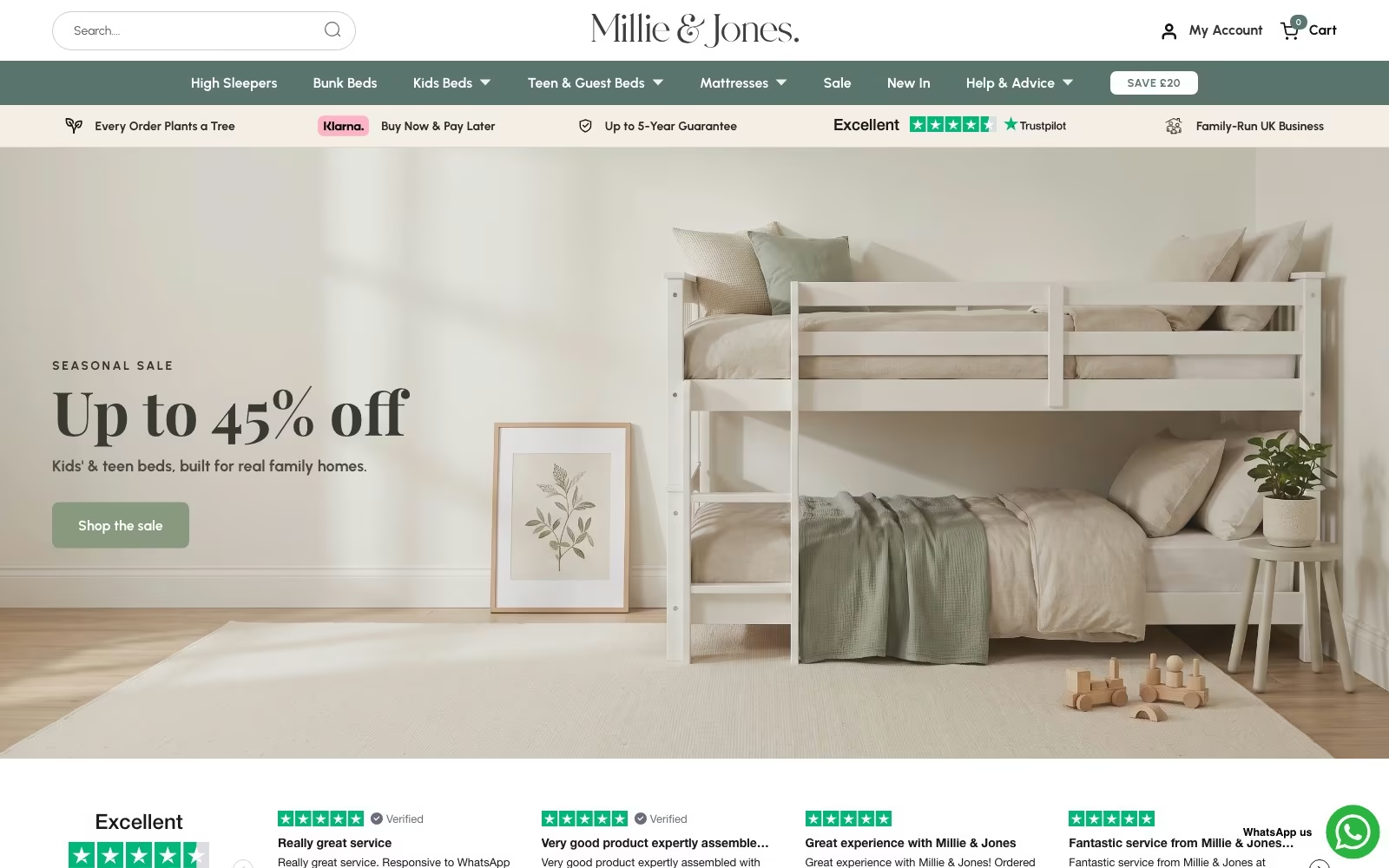
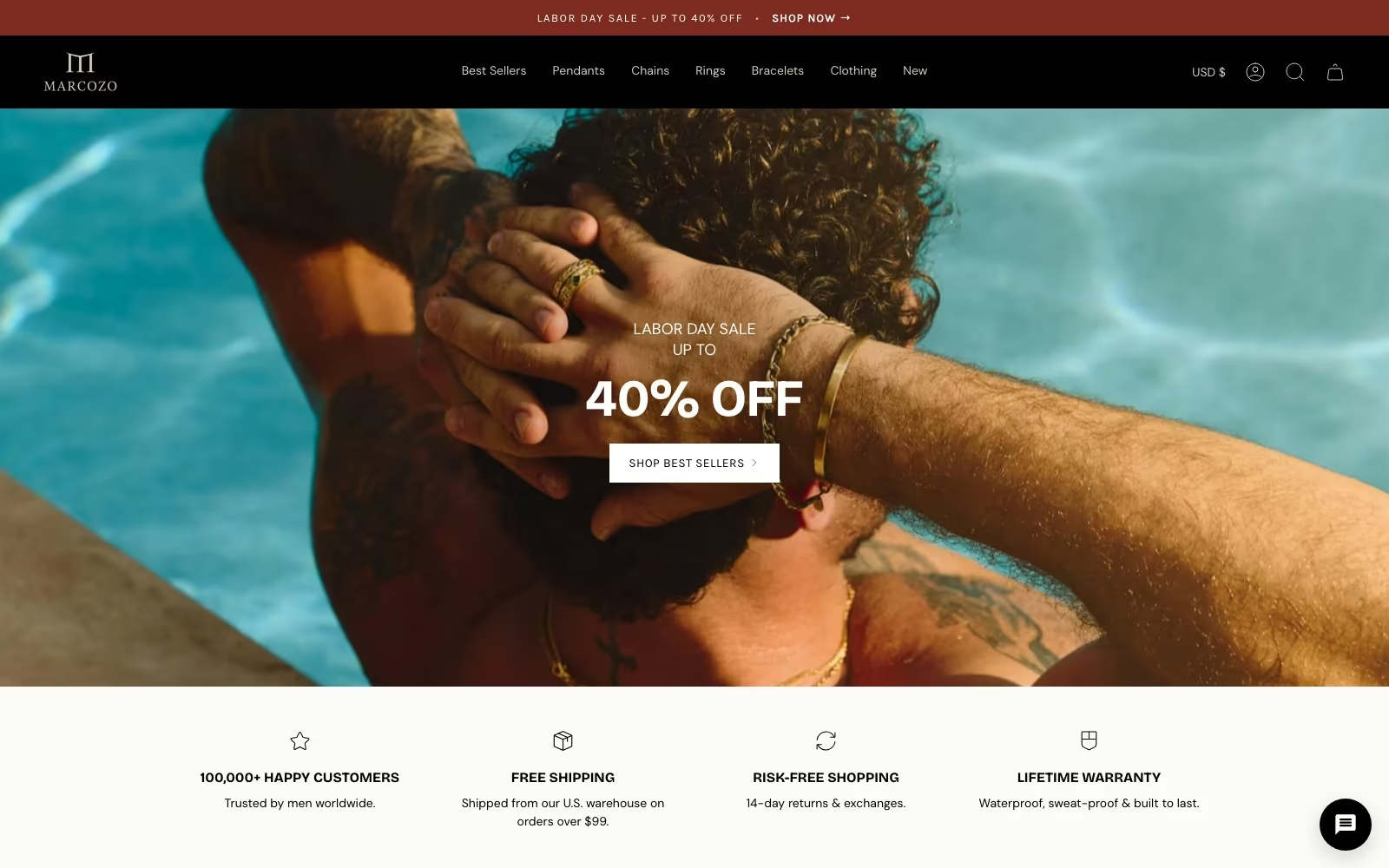
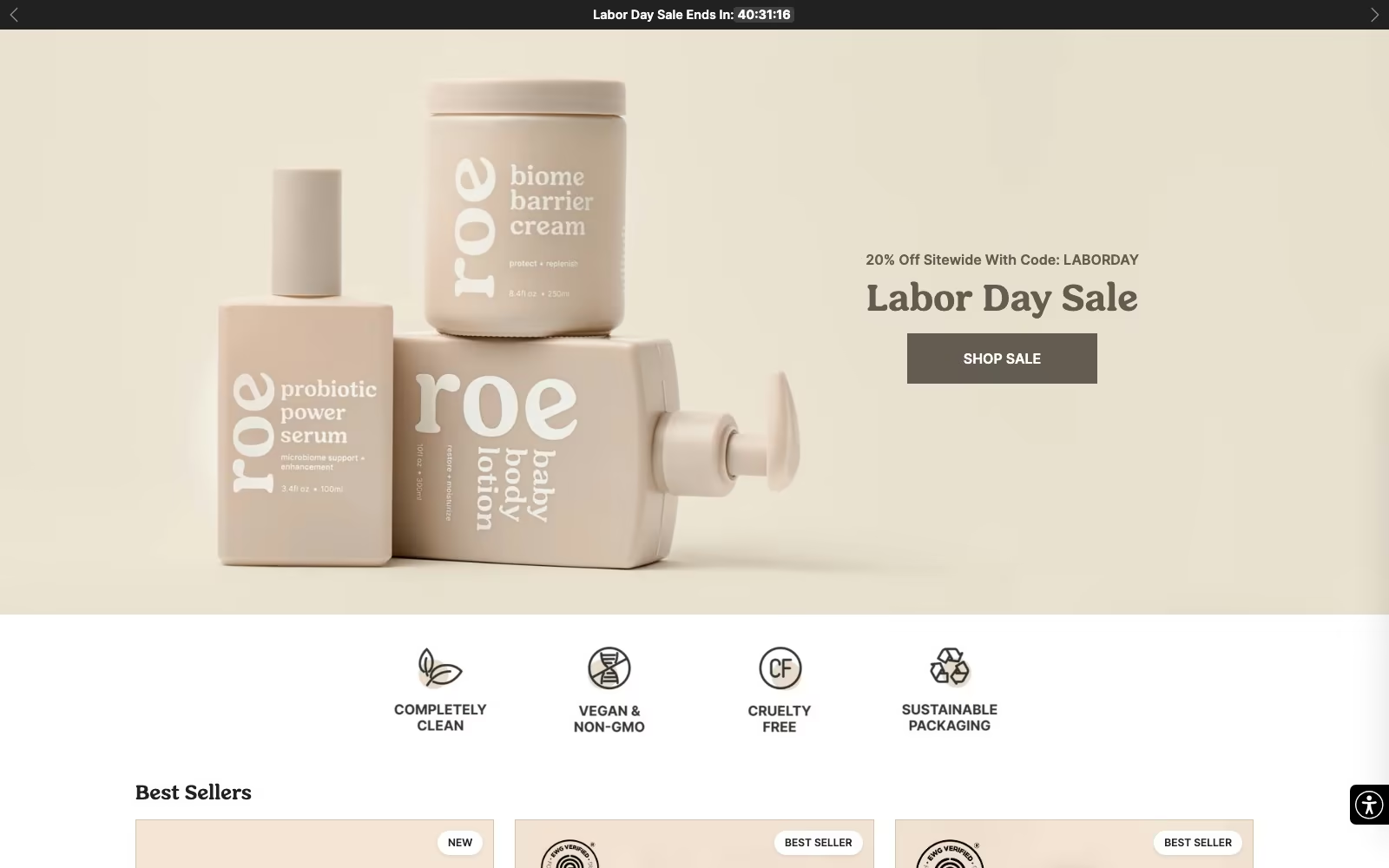
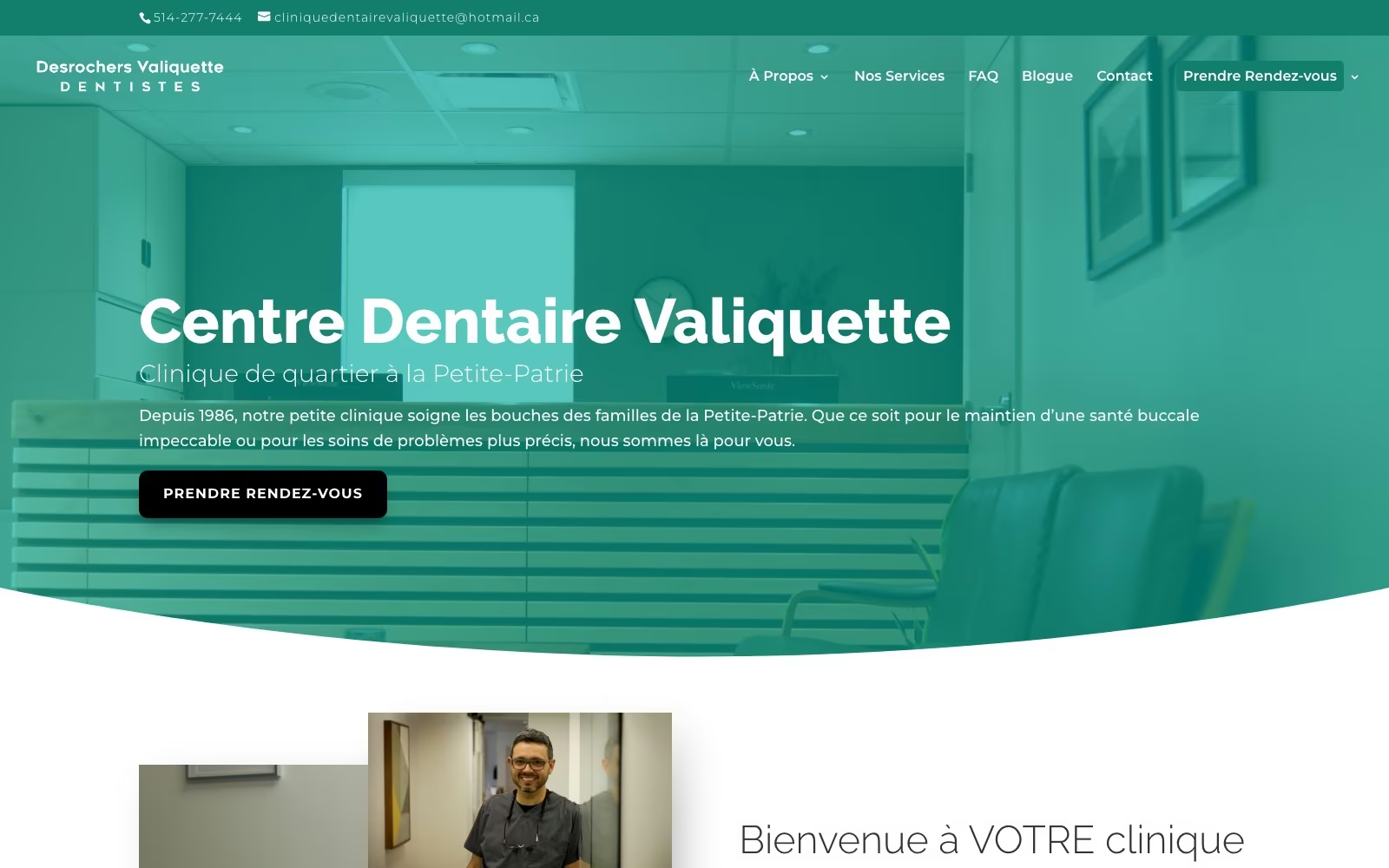
Built on trust. Proven by results.
We partner with SMBs and Fortune 500 companies to deliver more than reach — we bring clarity, execution, and measurable outcomes. Every successful partnership starts with a strong culture fit and a shared drive to grow.







CASE STUDIES
Case studies
Website Portfolio
Video Ads
Static Ads

























































EN

EN

EN


FR

FR

FR

FR

FR

FR

FR

FR


EN
FAQ
What leaders ask before restructuring marketing.
What does marketing team structure advisory include?
Four things. An inventory of every job the marketing function has to do, sized by volume and seniority. A written in-house versus agency call on each block of that work. An accountability chart with one owner per function and the numbers each seat carries. And a sequenced hiring plan with role scorecards, interview questions and triggers for the hire after this one. Three weeks, fixed scope, handed over in editable files.
Should we hire in house or use an agency?
Both, and the useful answer is which parts. Continuous work that accumulates institutional knowledge, owning the numbers, the website, lifecycle, customer insight, belongs in house. Spiky, specialist or tool-heavy work, platform buying at moderate spend, production peaks, technical SEO, is usually cheaper and better bought. Most companies settle near the market average: 33.6% of digital marketing activities are performed by external agencies, partners and services. The rule we apply is that you must keep enough capability in house to be a competent buyer of the rest.
What does the engagement cost?
A fixed fee, quoted after a scoping call, with deliverables and dates written down before you commit. Team size and the number of locations move the number, so we do not publish a rate that would mislead most readers. For context on the budget it sits inside, Gartner puts average marketing budgets at 7.8% of company revenue, and the comparison worth making is against the cost of one mis-sequenced hire. Book a meeting for a scope and a number.
Are you a recruiter, and do you place the candidates?
No. We design the structure, write the scorecards and build the process, and we will sit in on interviews as a second opinion if you want us there. We do not source candidates, we take no placement or referral fee from any recruiter, and nothing in our compensation improves if you hire more people. That is deliberate, because the most valuable output of this engagement is often the recommendation to not fill a role you were about to advertise.
Will this cost people their jobs?
It is not a redundancy exercise and we do not take that work. In practice the common finding is the opposite: capable marketing team members carrying work three levels apart, with no time for the part they were hired for. The usual recommendations are to move work between people, stop some of it, buy a specialism rather than expect it internally, and give one person the number they are actually accountable for. Where a role genuinely does not fit the structure, we say so to you privately, with the reasoning, and how you handle it is your call.
Who do you interview during the three weeks?
Everyone who touches marketing: each marketing team member, the sales lead or head of revenue, whoever owns the website, the person who produces the reporting, and the CEO or founder. Where an agency is central to the work we interview them too, with your permission. Conversations are confidential in the sense that we report themes and evidence, not who said what, which is what makes people candid enough for the exercise to be worth doing.
How does this fit with EOS or another operating system?
It fits inside it rather than beside it. If you run EOS, the accountability chart we produce is a marketing-depth version of yours, the role scorecards use measurable weekly numbers that can sit on your existing scorecard, and the meeting rhythm we recommend plugs into your weekly meeting instead of adding a parallel one. The same applies to other frameworks. What we will not do is hand you a generic template and call it org design, because the value is in the specific work your business has and the people you already have doing it.
Do we need a marketing advisor if we already have a CMO?
Sometimes, usually for one of two reasons. A new marketing leader wants an independent read on the team they inherited before making changes they cannot reverse, and with average S&P 500 CMO tenure at 4.1 years and consumer-company tenure at 3.5 years that handover happens often. Or an established CMO wants outside evidence for a structural case they are making to a CEO or board. In both, our job is a second opinion with the interviews and the numbers behind it, not to duplicate the leadership.
Is this the same as hiring a fractional CMO?
No. This is a three-week advisory project that produces a structure and a hiring plan. A fractional CMO is ongoing leadership that owns the plan, runs the team and reports monthly, and a fractional head of growth does the same for the revenue system. Many clients do this project first, precisely to find out whether the answer is a permanent hire, a fractional leader or a redistribution of the work they already own.
What is the first marketing hire for a small company?
It depends on your constraint, but the pattern we see most often is that companies hire a junior generalist when they need one senior operator two days a week, or hire a specialist for a channel that has not been proven yet. The safer first hire is usually someone who can own execution across the two channels that already produce revenue and can brief specialists for the rest. The plan we write names the role, the level, and the trigger, typically a revenue or volume threshold, that should be met before you hire the next one.
How do you decide what a role should be measured on?
Every seat gets one primary number it can genuinely influence, plus two or three supporting measures and a small number of process measures for roles whose output lags. A demand generation lead carries qualified pipeline; a content owner carries the organic and AI-search visibility that leads to it, not word count; a lifecycle owner carries repeat revenue. Where the data to measure a role does not currently exist, that becomes a phase-one item, because a scorecard nobody can populate is theatre.
Our reporting is unreliable. Does that block this work?
No, but it shapes the recommendation, and it is common: only 49.7% of companies say their marketing teams have the skills and training to use their own marketing systems, down from 54.1% in 2022. We work from the sources that can be trusted and flag what cannot, and the structure we design names who owns the repair. If the measurement problem is the bigger constraint, a marketing audit is the cheaper first step, and our analytics team can do the repair as a separate project.
How should AI change the shape of a marketing team?
It changes the mix more than the headcount. Production volume that used to justify junior roles is now partly automated, which raises the value of people who can judge output, own data and manage specialists, and lowers the value of roles defined purely by throughput. In the plans we write that usually means fewer, more senior seats, one clear owner of measurement, and explicit expectations about tool use in every scorecard. We also flag where AI is being used as a reason not to fix a structural gap, which is a more expensive mistake than the tooling saves.
What happens after the three weeks?
You own the chart, the scorecards and the hiring plan, and you run it. Most clients want one check-in ninety days later to review what changed and what the first hire is actually doing, and that can be scheduled but is not required. If the plan concludes you need ongoing leadership rather than another hire, we will say which of the fractional engagements fits and let you decide, including deciding to buy it elsewhere. Nothing in this project obliges you to buy anything from us afterwards.
Which industries do you do this in?
B2B services and professional firms, manufacturing and industrial companies, consumer products and ecommerce, SaaS, and multi-location or franchise operators where the real question is what sits centrally versus locally. The method transfers because the failure modes do: work nobody owns, seniority mismatched to the job, and an agency filling a gap that should have been a decision. Where a sector needs regulatory expertise we do not have, we say so before you sign rather than learn it on your budget.

.webp)
.webp)