Senior growth leadership, two days a week.
two days a week
A fractional head of growth owns your growth system rather than a channel: the acquisition and retention numbers, the experiment pipeline, the handoff between marketing and sales, and the monthly report your board reads. It is ongoing part-time leadership, not a project and not a full time hire, and the channel work stays with your team or a separate agreement so the leadership is never selling you execution. Book a meeting and we will tell you honestly whether you need a fractional CGO, a fractional CMO, or neither yet.






Tell us a little about your brand and we'll be in touch within 24 hours to lock in a time.



WHAT THE ROLE OWNS
Four things a fractional CGO takes off your desk.
takes off your desk
Growth leadership is a job with edges. These four are the job; everything else is either your team's work or a specialist's.
The growth system
The bets and the roadmap
The cross functional team
The reporting line
One model of how revenue is actually created.
The first month is spent building one model of your entire growth system: where demand comes from, what it costs, how it converts through the funnel, what a customer is worth over time, and where the system leaks. In SaaS that means ARR, cohorts, activation and expansion; in a services or ecommerce business it means enquiry to close, average order value and repeat rate. One model everyone argues from beats four dashboards nobody trusts.
Most companies do not have this. 74% of senior leaders have abandoned or scaled back an initiative because they were not confident how to measure it, which is a leadership gap rather than a tooling gap.
- Acquisition, conversion, retention and revenue in one model
- Unit economics your finance lead recognises, including LTV
- The ICP defined from real purchase data, not a workshop
- The two or three constraints that actually cap growth
74%
of leaders have cut a growth initiative because they could not measure it
A ranked queue of experiments, not a wish list.
Then the work gets prioritised. Every quarter has three or four growth bets with a hypothesis, a sizing estimate, an owner and a kill criterion, plus a running queue of smaller tests on the pages, offers and audiences that already carry traffic. Product-led growth motions, pricing and packaging experiments, lifecycle sequences and channel expansion all compete for the same slots, which is the point.
The discipline is saying no in public. A growth roadmap that fits on one page is a roadmap your team can actually deliver between other commitments.
- Three to four quarterly bets with sized upside and kill criteria
- A live test queue across pages, offers and audiences
- Product, pricing and packaging treated as growth levers
- An explicit stop-doing list each quarter
34.5%
of marketers name talent the top driver of organic revenue growth
Marketing, sales and product working from the same numbers.
Growth breaks at the seams: leads that sales does not call, a product onboarding that undoes the promise the ads made, a pricing page written by nobody. A fractional head of growth runs the cross functional rhythm that closes those gaps, briefs your agencies and freelancers properly, and coaches the marketers you already employ instead of replacing them.
That coaching matters more than it used to. Training and development now accounts for 3.8% of marketing budgets, down from a pre-pandemic high of 5.8%, while a lack of internal talent is the barrier to AI-driven efficiency most often ranked first by CMOs, at 19%.
- A weekly growth meeting with a real agenda and decisions
- Marketing to sales handoff defined and monitored
- Agencies and freelancers briefed and held to outcomes
- Coaching for your existing marketing and sales teams
3.8%
of marketing budgets go to training, down from a 5.8% pre-pandemic high
One page a month you can take to your board.
Every month you get the same page: the numbers against plan, what we learnt from the bets that ran, what changed in the market or the competitive set, what we are doing next, and what we need from you. Investors and boards ask harder questions than internal reviews do, so the report is written for that audience from the start.
It also creates an exit ramp. If the numbers say your growth function no longer needs part-time leadership, that belongs in the report too.
- Monthly one-page report against the plan, same format each time
- Experiment results written up, including the failures
- Board and investor questions answered with your own data
- A named review point where we agree whether to continue
2.5%
marketing headcount growth last year, down from 5.4% the year before
A fixed diagnostic first, so nobody commits blind
Fixed weekly time, in your calendar, not on demand
Leadership only, so a channel we sell can still be cut
Models, playbooks and reports handed over in your files
We made the difference for those brands

Food & beverage

Healthcare & regulated services

Home essentials, appliances, kitchen & pet

B2B software, fintech, insurance

Healthcare & regulated services

Consumer tech and platforms

Retail & commerce

Healthcare & regulated services

Consumer tech and platforms

B2B software, fintech, insurance

Beauty, personal care & wellness

B2B software, fintech, insurance

Home essentials, appliances, kitchen & pet

Home essentials, appliances, kitchen & pet

Home essentials, appliances, kitchen & pet

Consumer tech and platforms

Healthcare & regulated services

Healthcare & regulated services

B2B software, fintech, insurance

B2B software, fintech, insurance

B2B software, fintech, insurance

Retail & commerce

Consumer tech and platforms

Retail & commerce

Travel & mobility

Consumer tech and platforms

Food & beverage

Beauty, personal care & wellness

Retail & commerce

B2B software, fintech, insurance
01 — The challenge
You need growth leadership before you can afford it.
The gap is familiar. Revenue is real, marketing and sales are both busy, and the founder is still the person deciding what gets tried next. A full time head of growth at the level you need is one of the most expensive hires in the company and takes months to find, and hiring one too early usually means hiring someone junior enough to say yes, who then needs the leadership you were trying to buy.
“We did not need another marketer. We needed someone to decide what we were not going to do this quarter.”
Meanwhile the internal bench is getting thinner, not stronger. The CMO Survey reports marketing headcount growth slowed to 2.5% over the past year from 5.4%, and the most cited capability gap is resourcing, with 22.3% saying existing capabilities lack the people, time and budget to function. Part-time senior leadership is the honest answer to that arithmetic.
02 — Our approach
Thirty days to a growth model, then a monthly rhythm.
The engagement starts with a fixed 30-day diagnostic, so you are not committing to a long relationship on a first impression. In those four weeks your fractional head of growth builds the growth model from your own data, interviews your sales team and a handful of customers, reviews the channels and the product analytics, and comes back with the constraints, the first quarter's bets and an honest read on whether this role is what you need. Some engagements end there, deliberately. If we continue, the shape is two fixed days a week: a weekly growth meeting where decisions get made, work briefed to your team and your specialists, experiments launched and killed on the criteria we agreed, and one monthly page for you and your board. Quarterly we reset the bets and review the model, including whether the engagement should shrink. What the role does not do is execute the channels. Your fractional CGO does not build the campaigns, write the content calendar or manage the ad accounts day to day; that stays with your team, your existing agencies, or a separate Web Tonic agreement you negotiate on its own merits. Keeping leadership and execution in different contracts is what lets the same person recommend cutting a channel we sell. Everything built during the engagement, the model, the playbooks, the hiring scorecards and the reporting, stays with you in editable files, which is also what makes handing over to a permanent hire a two-week job rather than a restart.
03 — What we did
How a fractional CGO engagement runs.
A fixed diagnostic, then a weekly cadence of decisions, experiments and one page a month.
Days 1-30 / Diagnose
The growth model, built from your own numbers
Funnel, cohorts, unit economics and the ICP, plus sales and customer interviews, ending in the constraints that actually cap revenue.

Quarterly / Prioritise
Three or four bets, sized, owned and killable
Each bet gets a hypothesis, an expected size, an owner and the condition under which we stop. Everything else waits its turn.

Weekly / Run
A growth meeting where decisions actually get made
Experiments launched and read, work briefed to your team and specialists, and the marketing to sales handoff monitored rather than assumed.

Monthly / Report
One page for you, your board and your investors
Numbers against plan, what the bets taught us, what happens next, and what we need from you. Same format every month.

WHAT YOU GET
Six deliverables, all editable, all yours.
all yours
Leadership is the service, but it leaves artefacts behind, and they stay with you when the engagement ends.

Growth model
Acquisition, conversion, retention and revenue in one file, with the unit economics and assumptions visible.

Quarterly growth roadmap
Three or four bets per quarter with sized upside, owners, kill criteria and an explicit stop-doing list.

Experiment log
Every test with its hypothesis, setup, result and decision, including the ones that failed and what they ruled out.

Channel and lifecycle playbooks
How each working motion is run, written so your team or a new hire can repeat it without you in the room.

Monthly board report
One page against plan, in the same format each month, built to survive investor questions.

Growth hiring plan
The roles to add and in what order, with scorecards and interview questions for the permanent hire that replaces us.
HOW WE WORK
Operating standards, not promises.
Operating standards


B2B SaaS and product-led companies
Where activation, expansion and pipeline all move the same ARR number and usually fight each other.
Consumer and ecommerce brands
Repeat rate and margin decide whether acquisition can scale, so retention is a growth job, not an email job.
Services and multi-location operators
Growth lives in the enquiry-to-close path and the speed of the follow-up more than in the media plan.


















Built on trust. Proven by results.
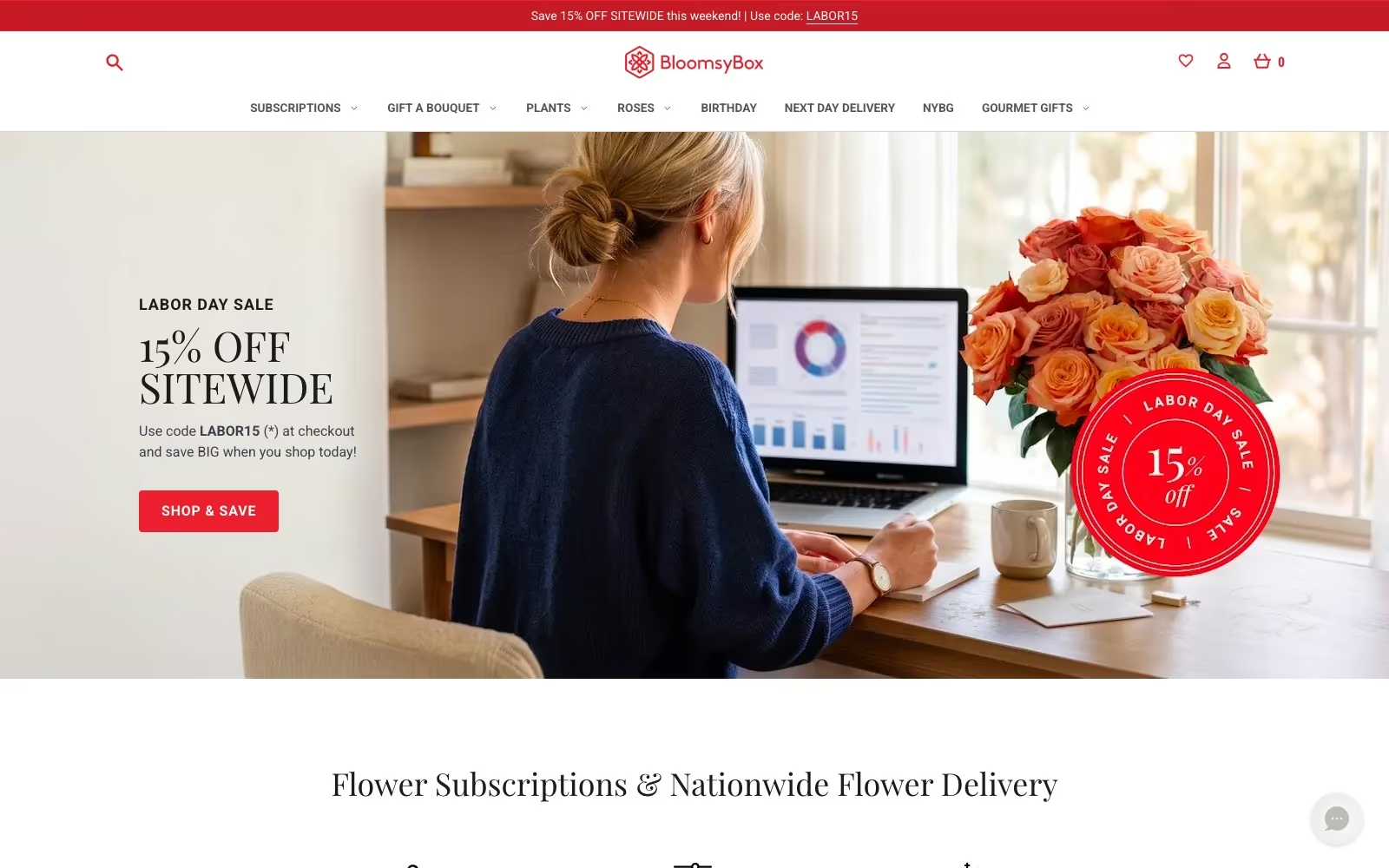
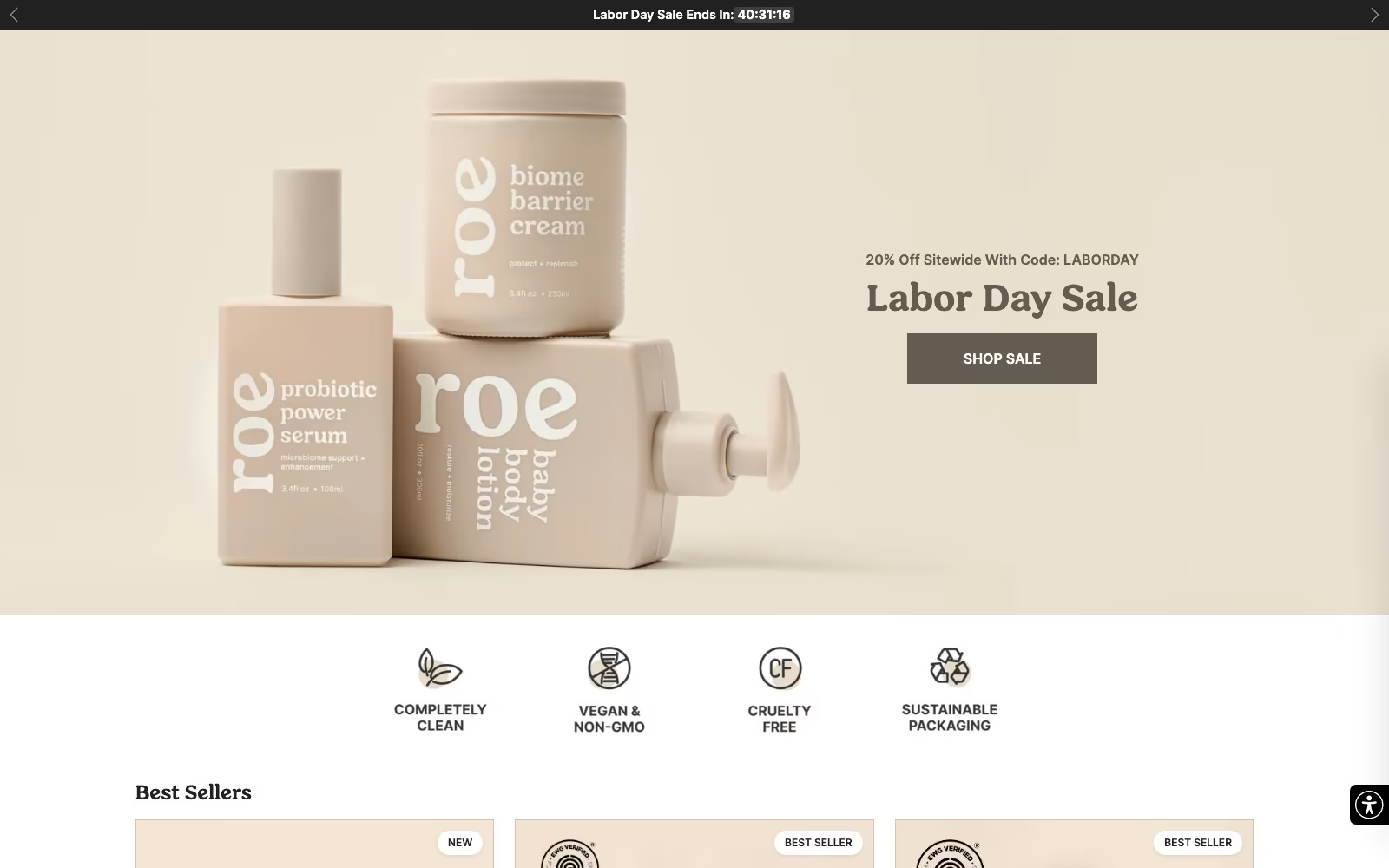
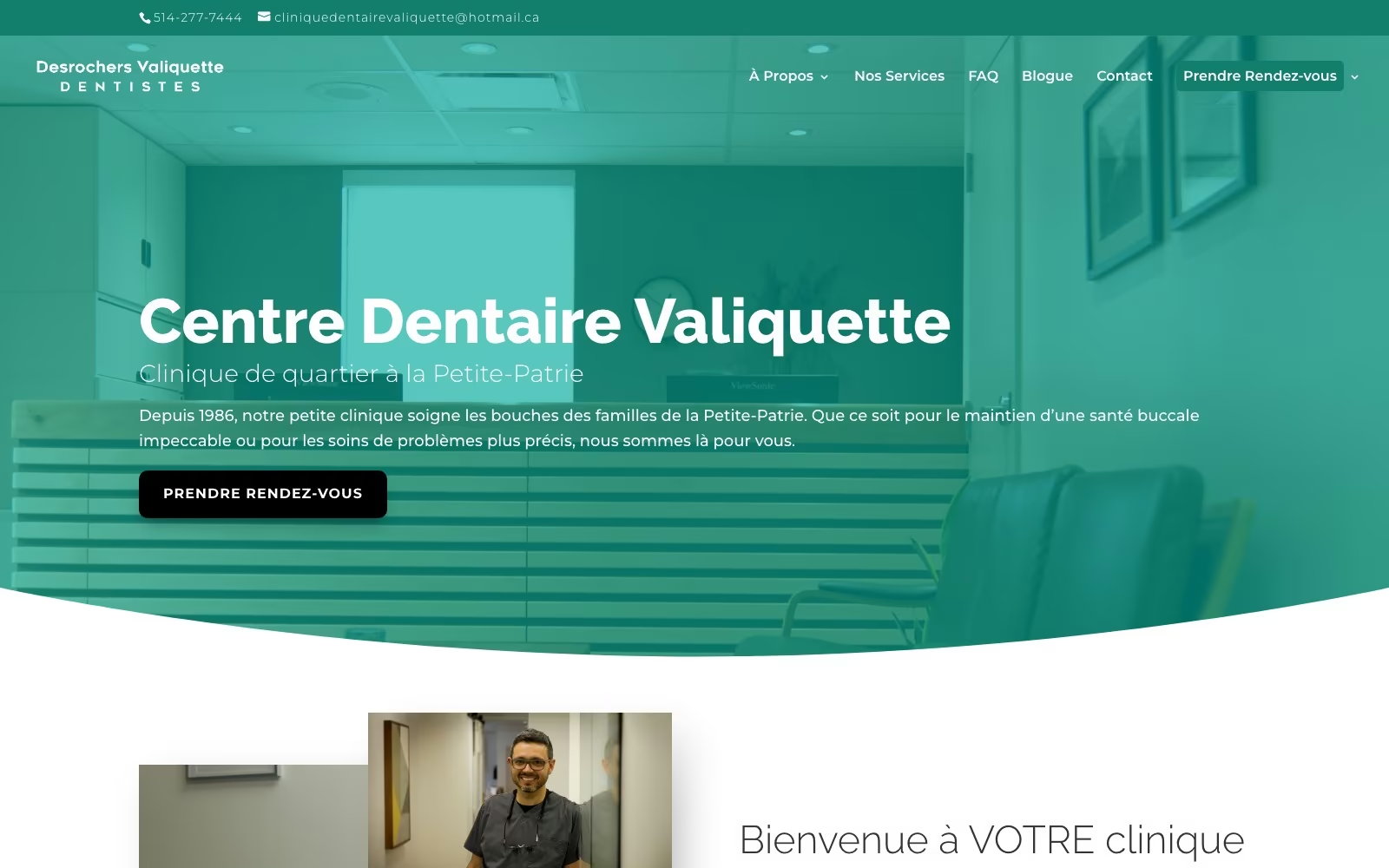
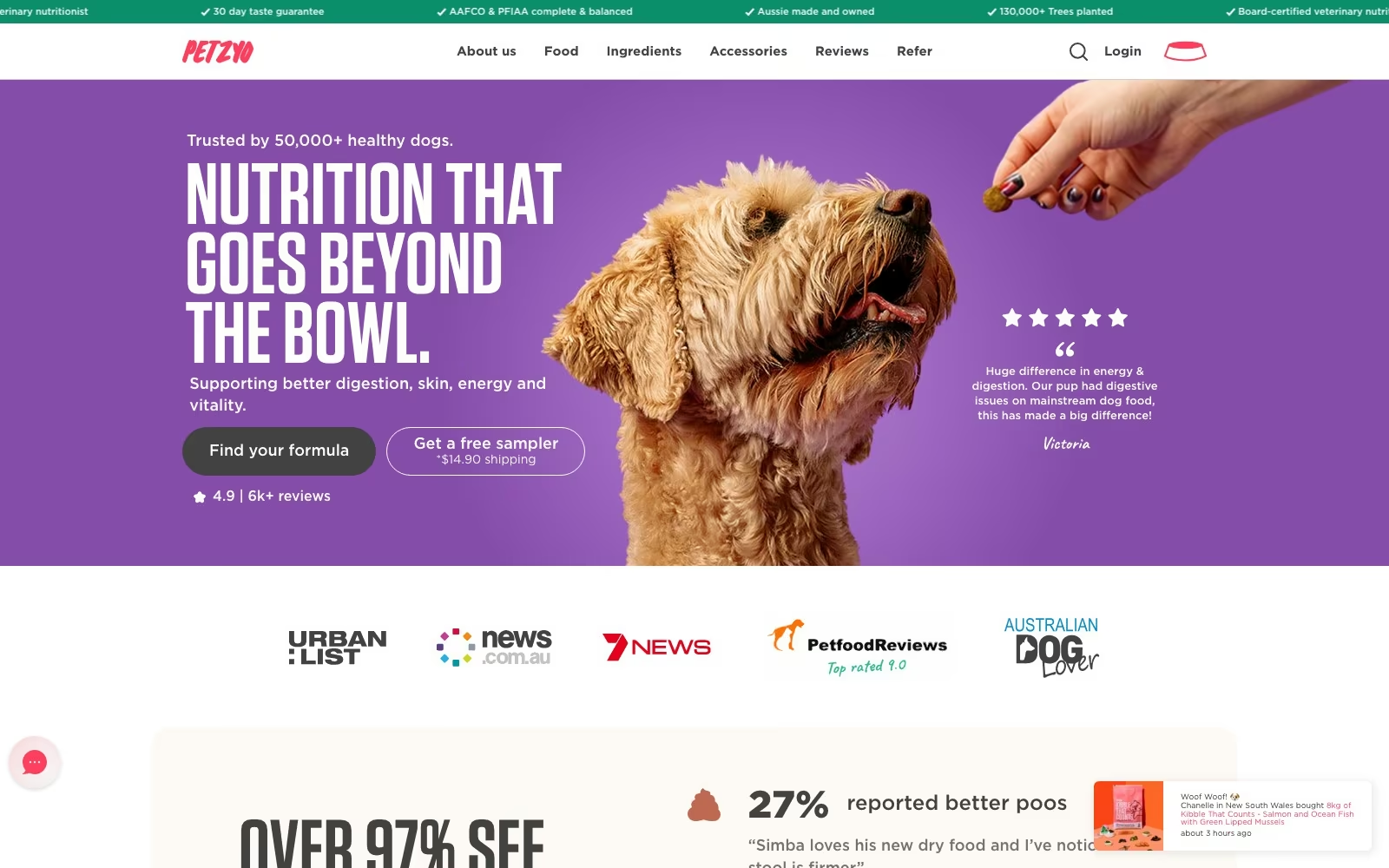
We partner with SMBs and Fortune 500 companies to deliver more than reach — we bring clarity, execution, and measurable outcomes. Every successful partnership starts with a strong culture fit and a shared drive to grow.







CASE STUDIES
Case studies
Website Portfolio
Video Ads
Static Ads





















































EN

EN

EN


FR
FR
FR

FR

FR

FR

FR

FR


EN
FAQ
What founders ask before hiring a fractional CGO.
What does a fractional head of growth actually do?
Four things. Owns one model of how your revenue is created, so decisions stop being arguments about dashboards. Sets the quarterly growth bets and the test queue, with kill criteria. Runs the cross functional rhythm between marketing, sales and product, and briefs whoever executes. And reports monthly in one page you can hand to a board. It is senior growth leadership on a part-time engagement, which is a different job from doing the marketing work.
What is the difference between a fractional CGO and a fractional CMO?
Overlapping, not identical. A fractional CMO leans toward the marketing function as a whole: brand, positioning, the marketing team, agencies and the marketing budget. A fractional CGO leans toward the revenue system end to end, including activation, retention, pricing and the marketing-to-sales handoff, and is more common in SaaS and product-led businesses. If your gap is the marketing function, buy the CMO. If your gap is that nobody owns the whole funnel, buy the CGO. On a scoping call we will tell you which one fits, including when the answer is neither.
How much does a fractional head of growth cost?
A monthly fee, quoted after a scoping call, based on the days per week and the scope you agree. We do not publish rates because the honest number depends on the commitment and a figure without scope helps nobody. For context on the budget it sits inside, Gartner puts average marketing budgets at 7.8% of company revenue. The comparison worth making is not against an agency retainer but against a full time senior hire plus the months of search that precede one. Book a meeting for a scope and a number.
Is a fractional CGO cheaper than a full time hire?
Usually, but the real argument is timing and risk rather than the fee. A full time growth leader is a long search, a full salary with equity, and a one-way bet made before you know which growth problems you actually have. A fractional engagement starts in weeks, is sized to the days you need, and can shrink when it should. There is also a tenure reality behind the caution: average CMO tenure in the S&P 500 is 4.1 years and consumer-company CMOs average 3.5 years, so senior growth leadership is rarely the permanent fixture companies plan for.
How many days a week, and how is the time spent?
Two fixed days a week is the standard shape, one day for some earlier-stage companies and three where the growth function is larger. Fixed matters more than the number: the days are in the calendar, so the weekly growth meeting, the reviews and the briefing time are predictable for your team. Roughly a third goes to the meeting and decisions, a third to working on the model, the bets and the briefs, and a third to the people work, coaching, agency management and the sales handoff.
Do you execute the marketing work as well?
Not inside this engagement. Your fractional head of growth briefs and holds the standard; your team, your existing partners or a separate Web Tonic agreement do the building. If you want us to execute paid search, paid social or SEO, that is negotiated on its own merits with a scope you can compare against anyone else. The separation is what lets the same person recommend cutting a channel we would otherwise be paid to run.
We are pre-product-market fit. Is it too early?
Often yes, and we would rather say so. Before product market fit the useful work is customer conversations, iteration speed and finding one repeatable motion, which founders generally should not delegate. A fractional CGO earns their keep once there is a motion that works and the question becomes how to make it bigger and less dependent on the founder. If you are earlier than that, a short advisory engagement or growth advisory gives you the judgement without the ongoing commitment.
How long does a typical engagement last?
Six to twelve months is the common range, starting with the 30-day diagnostic and reviewed every quarter. Two endings are healthy: the growth function has matured enough that a permanent hire makes sense, and we help you hire and hand over; or the constraint turns out to be somewhere else in the business, in which case continuing would be us billing for the wrong problem. We build the exit into the engagement rather than treating renewal as the default, and everything we build stays with you.
How do you work with our existing marketing team?
As their leader for the days we are engaged, not as a parallel structure. That means owning priorities, unblocking decisions, reviewing work and coaching, which is usually the part your marketers have been missing rather than more hands. The CMO Survey finds the most cited capability gap is resourcing rather than a missing skill, with 22.3% saying existing capabilities lack the people, time and budget to function. In practice, a competent in-house team with clear priorities outperforms a bigger team without them.
What if we already have an agency?
That is the common case and it usually improves the relationship. Agencies do their best work against a clear brief and a defined outcome, and most underperformance we see comes from the client side of that arrangement rather than the agency's. Your fractional head of growth writes the briefs, sets the targets, runs the reviews and, where needed, has the difficult conversation with evidence in hand. We do not require you to move the work to us, and we will say when your incumbent is doing a good job.
How do you measure whether the engagement is working?
Against the model we build in the first 30 days, on a small number of committed measures: qualified pipeline or orders, cost per acquisition, conversion at the step we agreed is the constraint, and retention or repeat revenue. Alongside those, two process measures that predict the rest, experiments completed per month and the share of bets that produced a clear decision. If the numbers are flat and the process measures are healthy, you are learning; if both are flat, the engagement is not working and the monthly report should say so.
Does this work for SaaS specifically?
Yes, and the vocabulary is native there: ARR, cohorts, activation, expansion, net revenue retention, product-led growth motions and the GTM handoff between self-serve and sales. Where SaaS differs is that the product is a growth channel, so the bets often live in onboarding, pricing and packaging rather than in media. The same discipline applies in services and ecommerce businesses, where the equivalent levers are the enquiry path, the offer and repeat purchase.
Will you help us hire our permanent head of growth?
Yes, and it is often the best outcome of the engagement. We write the role definition against the growth model rather than a generic template, build the scorecard and interview questions, sit in on interviews if you want a second opinion, and hand over the model, playbooks and experiment log so the new hire starts with context instead of a blank page. If org design is the bigger question, marketing team structure advisory covers the whole shape of the team, not just this role.
How do you use AI in growth work?
For volume and speed, not for judgement. It is genuinely useful for reading large amounts of customer feedback, clustering search demand, drafting variants for tests and building analysis faster. The decisions about what to test, what to stop and what a result means stay with the named growth leader, because a model will produce a confident recommendation from thin evidence without flagging it. We also keep an eye on where automation is quietly spending your money, since bidding and generated creative both optimise for what they can see.
Which industries do you take on?
B2B SaaS and product-led businesses, professional and B2B services, ecommerce and consumer brands, and multi-location or franchise operators where the growth problem is repeatability across markets. We turn down work where the constraint is clearly not growth, for example a capacity or delivery problem dressed up as a marketing one, and we say so on the first call rather than learning it on your budget. If the whole marketing function needs leadership rather than the funnel, the fractional CMO engagement is the right one.

.webp)
.webp)