One ad fund. Every franchisee busy.
Every franchisee busy
Franchise paid search has two customers: the owner in a single town who wants the phone to ring this week, and the head office that has to answer for a national ad fund. We build campaigns that serve both — local budgets that respect territory lines, creative that keeps one look, and reporting each franchisee can read — measured in calls and bookings with our analytics team.






Tell us a little about your brand and we'll be in touch within 24 hours to lock in a time.



FOUR WORKSTREAMS
Four workstreams behind paid search that scales.
paid search that scales
Franchise PPC is four jobs at once: an account structure that maps to territories, a spending model the ad fund can defend, creative and landing pages that stay on brand while sounding local, and reporting that closes the loop from click to booked job.
Territory-safe account structure
Ad fund & co-op funding
Local creative & landing pages
Measurement & lead quality
Campaigns that respect the territory map.
The most expensive problem in franchise advertising is a system bidding against itself: two franchisees targeting the same metro, the national account overlapping both, and everyone paying more for the same click. It is invisible in a blended report and obvious the moment the account is split by territory.
We rebuild the account so every campaign maps to a real service area, with radius and location targeting drawn from the franchise agreement rather than a default. That structure is what makes local demand payable: 46% of Google searches carry local intent and 76% of people who search locally on a phone visit a business within 24 hours.
- Campaigns mapped to contractual service areas
- Overlap between franchisees found and removed
- Shared negatives and brand terms governed centrally
- New openings added without disturbing neighbours
46%
of Google searches carry local intent
76%
of local mobile searchers visit a business within 24 hours
A spending model the ad fund can defend.
Ad fund money is other people's money, and franchisees notice when a strong market subsidises a weak one without anyone saying so. We set a transparent model: a national layer for brand and category demand, a local layer funded per territory, and a clear rule for how contributions and spend are matched.
Then we hold it to a number everyone can check. With the average cost per lead across Google Ads sitting at $70.11, a target cost per booked job — not a cost per click — is the only figure worth arguing about at the annual meeting.
- National and local layers funded separately
- Cost per enquiry and per booked job targets per territory
- Pacing checked weekly, not at month end
- Contribution and spend reconciled openly
$70.11
average cost per lead across Google Ads (WordStream, 2025)
Consistent at head office, local on the page.
Ads written once for a whole system read like nobody's neighbourhood, and ads written freely by each franchisee stop looking like the same company. The workable answer is a governed library: approved messaging, offers and assets, with the town, the team, the opening hours and the local proof filled in per territory.
The landing page matters just as much as the ad. Sending every click to the national homepage wastes half the fund, so each campaign points at a page carrying that location's address, phone number, services and booking path — and we test those pages continuously rather than once at launch.
- Approved ad library with local fields per territory
- Landing pages matched to campaign and location
- Offer testing run centrally, results shared with owners
- Brand compliance without a review bottleneck
Per market
Every campaign lands on a page for that location
Counted where the money is: booked jobs.
Franchise leads are answered by phone, at a counter, sometimes by an owner mid-shift, which is why platform conversion counts and reality drift apart so quickly. We track calls per location, forms, bookings and, where the system allows it, the outcome fed back from the point of sale, so spend is judged on jobs rather than clicks.
The same discipline applies to franchise recruitment campaigns, where the numbers are far larger: the 2025 Annual Franchise Development Report puts the average cost per lead at $271 and the average cost per sale at $13,757, on an average recruitment media budget of $268,083.
- Call tracking per location, consistent with listing data
- Offline conversions imported where the system supports it
- Lead quality reviewed with franchisees, not assumed
- Consumer and recruitment campaigns reported separately
$271
average franchise development cost per lead (2025 AFDR)
$13,757
average cost per franchise sale in the same report
Ad accounts and tracking stay in the franchisor's name
Pacing checked while the month can still be fixed
Working session with the people running the campaigns
Long-term lock-ins
We made the difference for those brands

Beauty, personal care & wellness

Apparel and lifestyle

Consumer tech and platforms

B2B software, fintech, insurance

B2B software, fintech, insurance

Beauty, personal care & wellness

Apparel and lifestyle

Retail & commerce

Retail & commerce

Food & beverage

Creative, content, arts & culture

Food & beverage

Healthcare & regulated services

Travel & mobility

B2B software, fintech, insurance

Consumer tech and platforms

B2B software, fintech, insurance

Creative, content, arts & culture

Retail & commerce

B2B software, fintech, insurance

Apparel and lifestyle

Consumer tech and platforms

Food & beverage

Home essentials, appliances, kitchen & pet

B2B software, fintech, insurance

Apparel and lifestyle

Beauty, personal care & wellness

Creative, content, arts & culture

B2B software, fintech, insurance

Consumer tech and platforms
01 — The challenge
The fund is spent. Nobody agrees where it went.
A national dashboard shows a healthy cost per click and a growing conversion count. Meanwhile three franchisees are convinced the fund pays for somebody else's town, and one of them has quietly started running their own ads on the side.
“I pay into the fund every month. I have no idea what it buys me.”
The cause is nearly always structural: campaigns that ignore territory lines, clicks landing on a national homepage, and conversions counted in the platform instead of at the counter. With the average Google Ads cost per lead now $70.11, that gap between reported conversions and booked work is expensive on any budget.
02 — Our approach
Rebuild the structure, then make every dollar traceable.
We start with the map: every territory, every service area, every campaign already running, and every place two locations are bidding on the same query. That produces a rebuild plan and, just as important, a spending model the ad fund can explain — a national layer for brand and category demand, a local layer funded per territory, and a rule for how contributions and spend line up. Next we rebuild the account against the territory map, with targeting drawn from the franchise agreements, shared negative lists governed centrally, and brand terms handled in one place instead of fought over. Creative moves to an approved library with local fields, and every campaign points at a landing page carrying that location's address, hours and booking path. Then measurement: call tracking per location, offline conversions imported where the point of sale allows it, and lead quality reviewed with franchisees rather than assumed. Reporting is published per location and rolled up for head office, in enquiries and booked jobs. Accounts and data stay in the franchisor's name throughout.
03 — What we did
Six weeks to a rebuilt account, then a weekly cadence.
Audit, budget model, rebuild and measurement — in sequence, with weekly pacing checks and a monthly read every franchisee can follow.
Weeks 1-2 / Audit
Where the fund is actually going
Every campaign, territory and stray franchisee account inventoried, with overlap, wasted spend and the markets already close to target.

Week 3 / Funding model
A model the ad fund can defend
National and local layers separated, contributions matched to spend, and a cost per booked job target agreed per territory.

Weeks 4-6 / Rebuild
Campaigns, creative and pages rebuilt
Account restructured to the map, approved ad library with local fields, and a landing page per location instead of the national homepage.

Ongoing / Measurement
Calls, bookings and lead quality
Call tracking per location, offline conversions fed back where possible, and a monthly review of lead quality with the owners themselves.

WHAT YOU GET
Deliverables head office and franchisees both use.
both use
Everything below is delivered in working files and accounts that stay in the franchisor's name if you ever leave.

Territory and campaign map
Every service area matched to the campaign that serves it, with overlap resolved and targeting drawn from the agreements.

Account and spend audit
Where the fund goes today, what it buys, and the wasted spend ranked in the order it should be cut.

Approved ad and offer library
On-brand ad copy, offers and assets with local fields, so franchisees get flexibility without a compliance argument.

Landing pages per location
Pages carrying the right address, phone number, services and booking path, tested continuously rather than once.

Reporting by location
Calls, enquiries, booked jobs and cost per job per territory, rolled up for head office and readable by an owner in a minute.

Franchisee launch kit
The checklist that gets a newly opened location advertising properly in its first weeks, funding included.
HOW WE WORK
Operating standards, not promises.
Operating standards



















Built on trust. Proven by results.
We partner with SMBs and Fortune 500 companies to deliver more than reach — we bring clarity, execution, and measurable outcomes. Every successful partnership starts with a strong culture fit and a shared drive to grow.





CASE STUDIES
Case studies
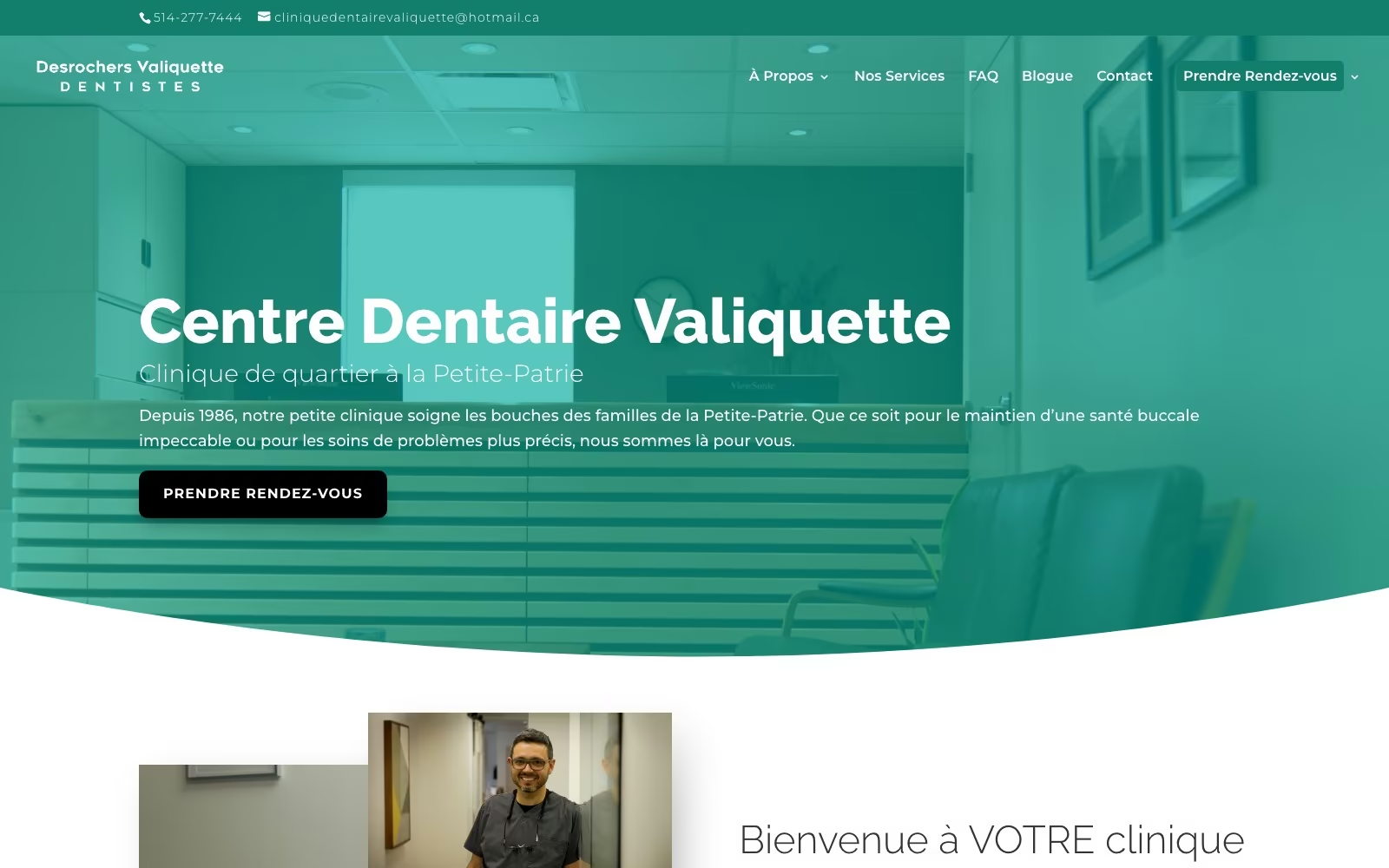
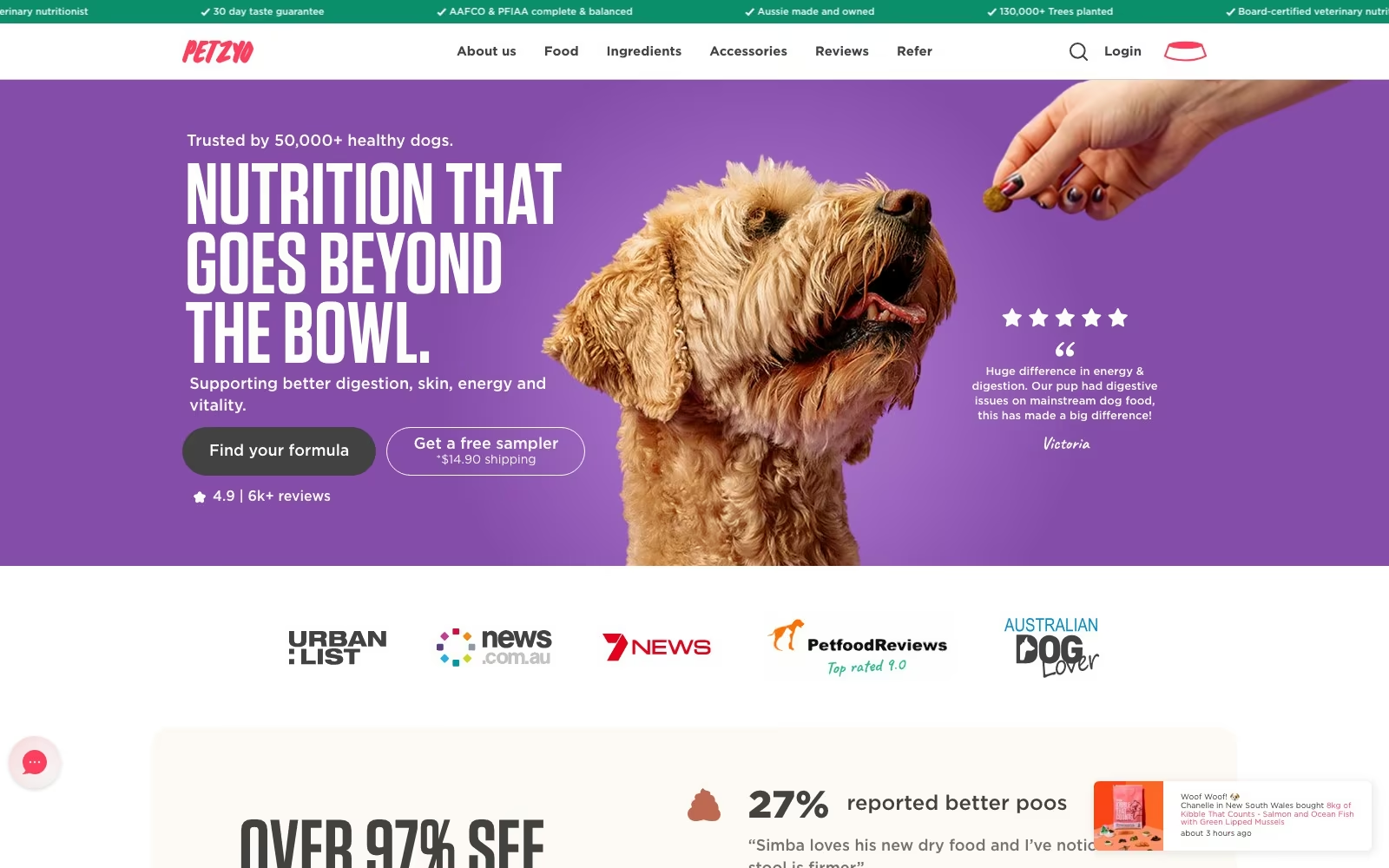
Website Portfolio
Video Ads
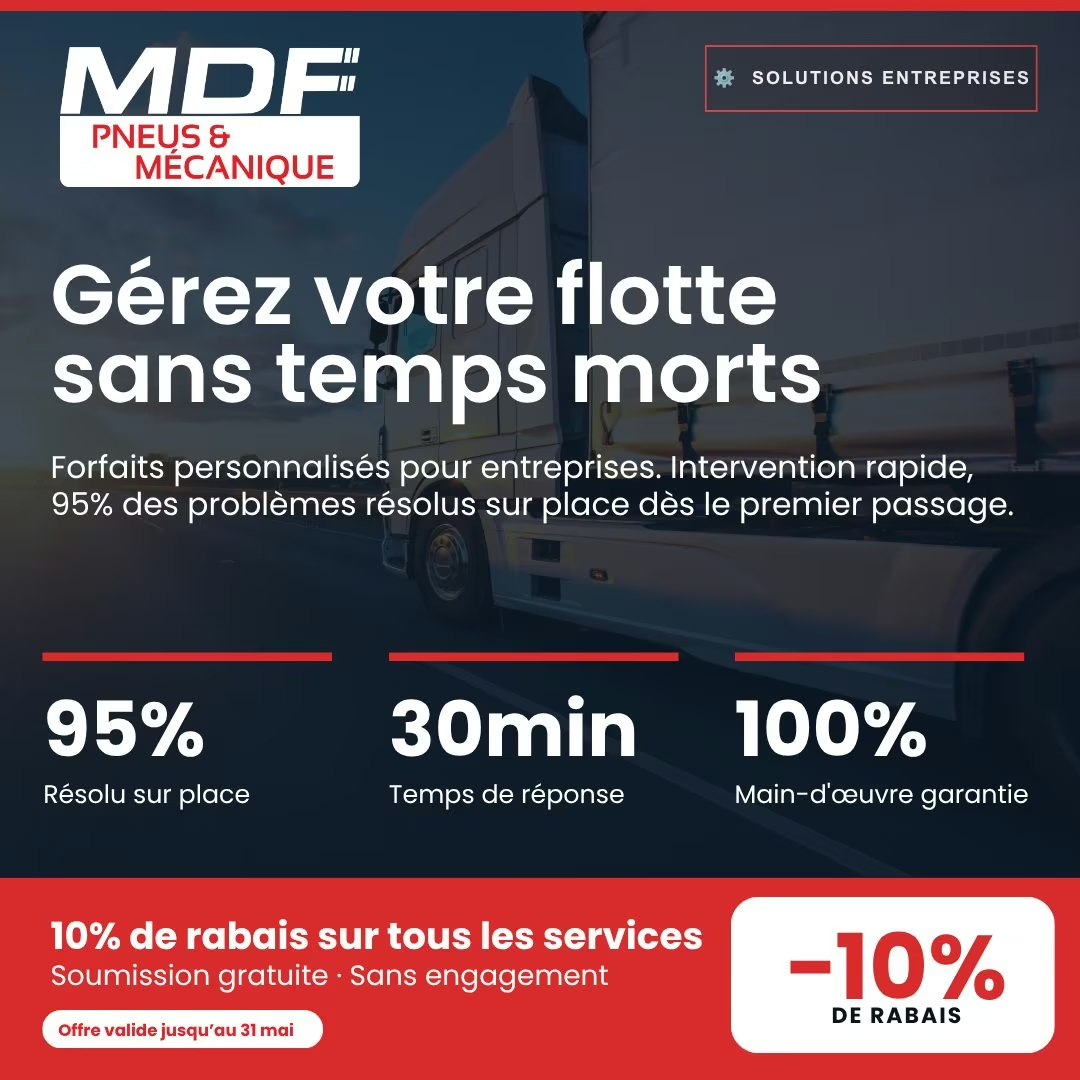
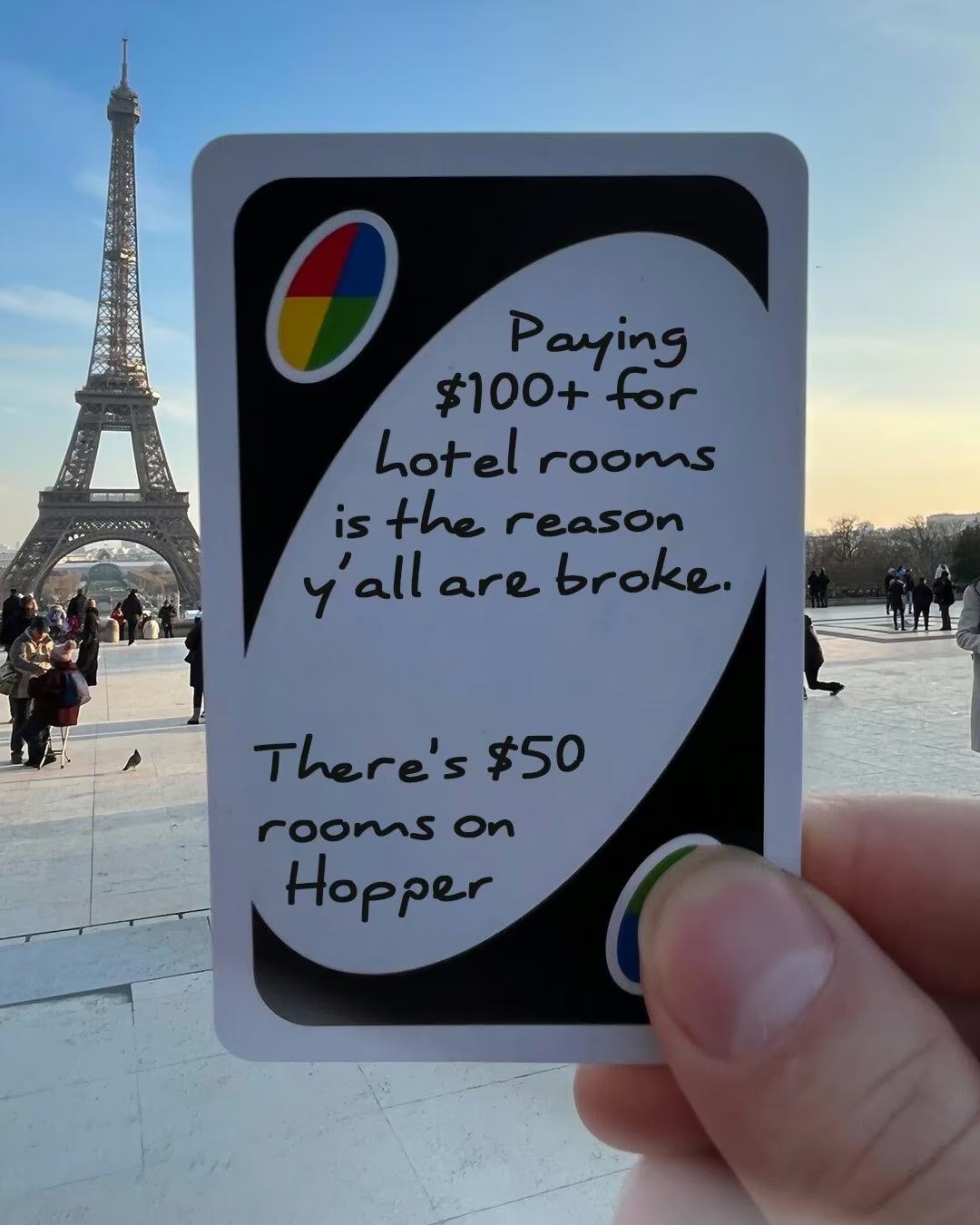
Static Ads



























































FAQ
What franchise marketers ask us first.
How quickly does franchise PPC improve results?
Structural fixes — removing overlap between territories, cutting queries that never book, pointing clicks at the right landing page — usually show inside the first month, because they change what you pay for immediately. Targets and bidding strategies need six to eight weeks of clean conversion data before they settle. We work to a cost per booked job rather than a cost per click, and against the $70.11 average cost per lead across Google Ads you will know quickly whether the money is buying real work.
Should franchisees be allowed to run their own campaigns?
With a framework, yes, and it usually strengthens the system. Owners know their town, their busy seasons and the offers that land there. What causes damage is unmanaged accounts bidding on the brand name, targeting a neighbour's territory, or running creative nobody has approved. The arrangement that works is a governed one: central control of brand terms, shared negatives and creative standards, with local spending flexibility and reporting everyone can see. Franchisees get their autonomy and the system stops paying twice for the same click.
How do you split national and local spend fairly?
By separating the layers and publishing the rule. The national layer carries name defence and category demand that no single owner should fund alone. The local layer is funded per territory and spent there, so a strong market is not quietly subsidising a weak one. Contributions and spend are reconciled openly, and where a market needs extra support we say that out loud and agree it rather than hiding it in a blended average. Most ad fund disputes are transparency problems before they are money problems.
What does franchise PPC management cost?
A fixed monthly fee scoped to the number of territories and campaign complexity, quoted before anything starts and separate from media spend. We do not take a percentage of the ad fund, because that quietly rewards spending more rather than booking more. Setup and rebuild work is scoped once, and where the honest engagement is an audit and a territory map instead of a retainer, we scope it that way and say so. Ad accounts, conversion data and creative stay in the franchisor's name.
How do you stop two locations bidding against each other?
By drawing the account from the franchise agreements rather than the platform defaults. Every campaign is tied to a defined service area, radius targeting is set against real drive times instead of a round number, and boundary postcodes are assigned deliberately rather than left to whoever bids highest. Trademark terms are run centrally in one campaign, and shared negative lists stop a plumbing franchise in one suburb paying for clicks twenty miles away. We re-check overlap whenever a location opens, closes or changes hands.
Does Performance Max work for a franchise system?
It can, once search is efficient and conversion data is clean, and it needs guardrails. Automated campaigns are happy to serve outside the spirit of a territory map and to claim conversions that a well-run name campaign would have taken anyway. We introduce it after the structure is fixed, with location targeting tightened, brand traffic excluded where the platform allows, asset groups built per region, and a holdout comparison so the lift is judged honestly. Where it does not beat the alternative, we say so and put the budget back.
How do you measure leads when franchisees answer their own phones?
Call tracking per location, set up so the displayed number stays consistent with the business listing data search engines read. Forms, click-to-calls and booking events are tracked alongside, and where the point of sale or CRM supports it, we import the outcome back into the ad platform so bidding optimises toward booked jobs instead of raw enquiries. Then we review a sample of calls with the owners each month, because lead quality is a conversation, not a metric that arrives by itself.
How does paid search work alongside our SEO programme?
They share market research and should share reporting. Paid tells you within days which local terms convert, which sharpens the organic roadmap; organic then takes over terms where clicks are punishing and holds them for years. In a mature local programme more than 70% of organic traffic and around half of organic-derived leads come from regular organic listings, so the two channels together lower blended cost per enquiry over time. We run both with our franchise SEO team on one plan and report blended cost per booked job per territory.
Can you run franchise recruitment campaigns too?
Yes, and we keep them completely separate from consumer campaigns — different audience, different funnel, different sales cycle, different reporting. Development campaigns are judged on qualified applications and cost per signed franchisee rather than on lead volume, because a cheap lead that never qualifies is the most expensive thing in the funnel. For scale: the 2025 AFDR reports an average cost per lead of $271 and an average cost per sale of $13,757, on an average recruitment media budget of $268,083.
A new location opens next month. What happens?
It launches with its own campaign, funding and landing page rather than being folded into a neighbour's. Opening weeks are when local demand is curious and competition for the brand name is lowest, so we front-load spend, run an opening offer from the approved library, tighten targeting to the new service area, and check overlap with adjacent territories before the first click. The owner gets a short briefing on what is running, what it buys and what to expect, plus the launch checklist.
What happens to the campaigns if a franchise changes hands?
Very little should change for the customer, and that is the point. The campaign, the tracked number, the landing page and the conversion history belong to the territory rather than the individual owner, so the new franchisee inherits a working account instead of starting from a cold algorithm. We update the ownership details, hours, team and any local offers, brief the new owner on the reporting, and keep the historical data intact so the comparison stays honest.
Do you use the ad fund to buy your own tools?
No. Media spend buys media, and our fee is separate and fixed. Where a tool is genuinely needed — call tracking, a landing page platform, a reporting layer — we recommend it in writing with the cost stated, and it is bought on the brand's own account so access never depends on us. That rule occasionally costs us margin and it is the reason franchise clients let us near an ad fund in the first place.
What reporting do franchisees actually get?
One page per location, monthly, in language an owner reads between shifts: what was spent in their territory, how many calls and form enquiries came in, how many turned into booked work where we can see it, cost per booked job, and what we changed. Head office gets the same data rolled up with the national layer included and the outliers flagged. Nobody has to log into a dashboard, and if a market had a bad month the report says so before the franchisee has to ask.
Can we keep our current agency for some markets?
Yes, and sometimes that is the sensible transition. We can rebuild the structure and run the national layer while an incumbent keeps a region, as long as territory boundaries, brand terms and negative lists are governed in one place — that is the part that must not be split. We will share the map, the standards and the reporting format openly with them. A phased handover across a couple of quarters is usually calmer for franchisees than one weekend of change.
What does a franchise PPC strategy include beyond Google Ads?
Google search is the spine, and it is rarely the whole plan. Most systems also need paid social for openings and offers, retargeting so the people who compared three companies come back, and shopping or local inventory ads where products are involved. Some franchises benefit from Local Services Ads, which are priced per enquiry and sit above the usual results. We pick the mix per territory rather than applying one template, and we say plainly when a channel is not worth the management time.
How do you research keywords for hundreds of towns?
Once properly, then locally. We build a master keyword set for the service category — the specific phrases people use when they are ready to book, the comparison searches, the problem searches — and validate it against real search data. Each territory then inherits that set with local modifiers, its own negatives, and any terms unique to that area: a regional word for the service, a nearby landmark, a competitor who only exists in one city. It is one framework applied at the level of each town, not a national list copied everywhere.
What makes a franchise PPC agency different from a general one?
Governance. A general agency optimises an account; a franchise PPC agency has to keep hundreds of owners, one brand and one fund pulling in the same direction. That means account structures tied to legal service areas, creative approval that does not become a bottleneck, reporting written for franchisees as well as for head office, and the discipline to raise an uncomfortable finding at the annual meeting. The digital marketing craft is the same; the operating model around it is the job.

.webp)
.webp)