A website built for someone standing in water.
standing in water
Restoration websites are not read, they are used — one hand, wet screen, bad signal, ninety seconds of patience. We design and develop sites for restoration companies that load fast, dial on a tap, say what you cover and where, and give your crews cleaner calls. It runs alongside your restoration marketing and our wider web design work so nothing is built twice.






Tell us a little about your brand and we'll be in touch within 24 hours to lock in a time.



FOUR WORKSTREAMS
Four workstreams turn a site into a phone that rings.
Four workstreams
Speed, the call path, the proof a panicked homeowner needs, and a structure search engines can actually rank. In that order.
Speed on a bad connection
The call path
Proof and reassurance
Structure that can rank
Three seconds is the whole budget.
Most restoration sites fail here before design is even discussed. The average home service website takes 8.7 seconds to load on mobile, and 53% of mobile visitors abandon anything slower than three seconds. An analysis of 500 contractor websites found an average load of 5.4 seconds, with only 18% under the three-second mark.
We keep it light: compressed job photography, no page-builder bloat, fonts and scripts kept to what earns its place, and every template tested on a real phone over mobile data rather than a fast office connection.
- Core Web Vitals treated as a launch requirement, not a nice extra
- Job photography compressed properly instead of uploaded raw
- No heavy page-builder scaffolding under the design
- Tested on real phones on mobile data before go-live
8.7s
average mobile load time on home service websites
18%
of 500 contractor sites analysed loaded in under three seconds
Every screen is one tap from a human.
An emergency visitor does not scroll a gallery. They want a number, a promise about arrival time, and confidence that the crew works in their town. So the phone number is fixed to the screen, the service area is named in words rather than a map graphic, and forms ask for the three things your dispatcher genuinely needs.
It matters commercially as much as it does for usability: with median water damage leads costing $600 to $740, a call path that loses one visitor in three is the most expensive design decision in the business.
- Tap-to-call fixed on screen across every template
- Service area written in plain town names
- Short forms that route to the on-call phone
- Emergency and non-urgent paths kept visibly separate
$740
median price of a water damage lead on Google Ads in 2026
$8.33
average cost per click across home and home improvement
Credibility, in the four seconds you get.
The homeowner is choosing between strangers during the worst morning of their year, and there are 62,582 restoration firms in the US sharing about $7.2 billion of work, most of them saying identical things. What settles it is specifics: certifications, response times, the insurers you deal with, real photographs of your own crews and trucks.
We design the proof in rather than bolting a badge row onto the footer — reviews close to the call buttons, before-and-after work from real jobs, and plain answers about insurance and cost where people actually look for them.
- Certifications and insurance experience stated up front
- Reviews placed beside the call buttons, not on a hidden page
- Photography from your jobs, never a stock library
- Cost and claim questions answered before they are asked
62,582
US restoration firms competing for the same emergency calls
Built so the search work has something to stand on.
A pretty site that cannot grow is a two-year problem. We create a structure that takes new service and location pages without a developer: templates for water, fire, smoke, mold and storm work, honest pages for the suburbs your trucks reach, and clean internal linking between them.
Redirects are mapped before launch so existing rankings survive the move, and tracking is installed on day one so paid and organic performance can be compared against benchmarks like the $90.92 average cost per lead across home improvement.
- Service and location templates your team can extend
- Full redirect map agreed before anything goes live
- Analytics and call tracking installed at launch
- Content structured for the searches homeowners actually make
$90.92
benchmark cost per lead across home and home improvement
5.4s
average load time across 500 contractor websites analysed
Website, hosting, analytics and call tracking in your name
The site is judged on answered calls, not on launch day
Weekly working session with the people doing the work
Long-term lock-ins
We made the difference for those brands

Creative, content, arts & culture

Creative, content, arts & culture

Retail & commerce

B2B software, fintech, insurance

Beauty, personal care & wellness

B2B software, fintech, insurance

Healthcare & regulated services

Beauty, personal care & wellness

B2B software, fintech, insurance

Food & beverage

Healthcare & regulated services

Apparel and lifestyle

Travel & mobility

Creative, content, arts & culture

Apparel and lifestyle

Consumer tech and platforms

Food & beverage

B2B software, fintech, insurance

Home essentials, appliances, kitchen & pet

Home essentials, appliances, kitchen & pet

B2B software, fintech, insurance

Consumer tech and platforms

Consumer tech and platforms

Consumer tech and platforms

B2B software, fintech, insurance

Home essentials, appliances, kitchen & pet

Retail & commerce

B2B software, fintech, insurance

Travel & mobility

Consumer tech and platforms
01 — The challenge
The site looks fine on the office monitor.
That is usually where the trouble starts. On a desktop the restoration site looks professional: a large hero photo, a slider of certifications, a contact form. On a phone in a wet driveway it takes nine seconds to appear, the number is an image that cannot be tapped, the service area is a map nobody can read, and the form asks for a preferred callback window from somebody whose ceiling is coming down. The calls still come, so nobody blames the website — but the ones that never arrived are invisible.
“Our site is fine. It has been fine for six years.”
The data says otherwise across the whole trade: only 18% of 500 contractor sites loaded in under three seconds, and nearly 40% had tap targets or forms that broke on phones. Fixing that is cheaper than the leads it currently loses.
02 — Our approach
Design for the worst moment, not the best screenshot.
We start with your calls rather than a mood board. Which loss types do you want more of, what do your dispatchers get asked first, which suburbs pay, and where do people give up on the current site? That gives us the pages worth building and the order to tackle them in. Then we design the emergency path: number fixed on screen, arrival promise in your own words, town names written out, short forms that reach the on-call phone, and everything tested on a mid-range phone over mobile data before anyone sees a desktop mock-up. The build is deliberately light, with your own job photography compressed properly, templates your team can extend to new services and suburbs, redirects mapped so existing rankings survive, and analytics plus call tracking live from day one. After launch we stay to watch the numbers for a quarter, because the honest review of a website is what your phone does over the following weeks. You own the site, the hosting and every account, and there is no long-term lock-in holding it hostage.
03 — What we did
A build measured in answered calls, not launch day.
Call research, then the emergency path, then a light build, then a quarter of watching what the phone does.
Weeks 1-2 / Research
What your dispatchers hear all day
Call recordings, the loss types you want more of, the suburbs that pay, and where visitors currently abandon the site.

Weeks 2-5 / Design
The emergency path designed on a phone
Tap-to-call fixed on screen, arrival promises in your own words, plain town names and forms short enough to finish one-handed.

Weeks 5-9 / Build
Light pages, real photography, safe migration
Compressed job photography, templates your team can extend, and a redirect map agreed before launch so rankings survive the move.
Day 90 / Review
What the phone actually did
Calls, form enquiries and booked jobs before and after launch, by loss type and suburb, with the next round of fixes prioritised.

WHAT YOU GET
Deliverables your office manager can audit.
can audit
Everything below lands in accounts you own and stays yours if you ever leave.

Site and call audit
Where the current site loses visitors on a phone, and which repairs would pay for themselves fastest.

Page plan and structure
The service and suburb pages worth having, in the order your crews want the work.

Design and build
A light, fast site with the emergency call path designed for one hand on a wet screen.

Photography and proof
Your crews, trucks and finished jobs used properly, with reviews and certifications placed where they persuade.

Migration and redirects
A mapped redirect plan so existing rankings and links survive the move to the new site.

Tracking and 90-day review
Analytics and call tracking from launch day, then a written review of what the phone did.
HOW WE WORK
Operating standards, not promises.
Operating standards


Fire, smoke & mold remediation
Longer decisions where cost, insurance and proof of work settle the call.
ExploreCommercial & large loss
Property manager pages built around capability, capacity and references.
Explore

















Built on trust. Proven by results.
We partner with SMBs and Fortune 500 companies to deliver more than reach — we bring clarity, execution, and measurable outcomes. Every successful partnership starts with a strong culture fit and a shared drive to grow.






CASE STUDIES
Case studies
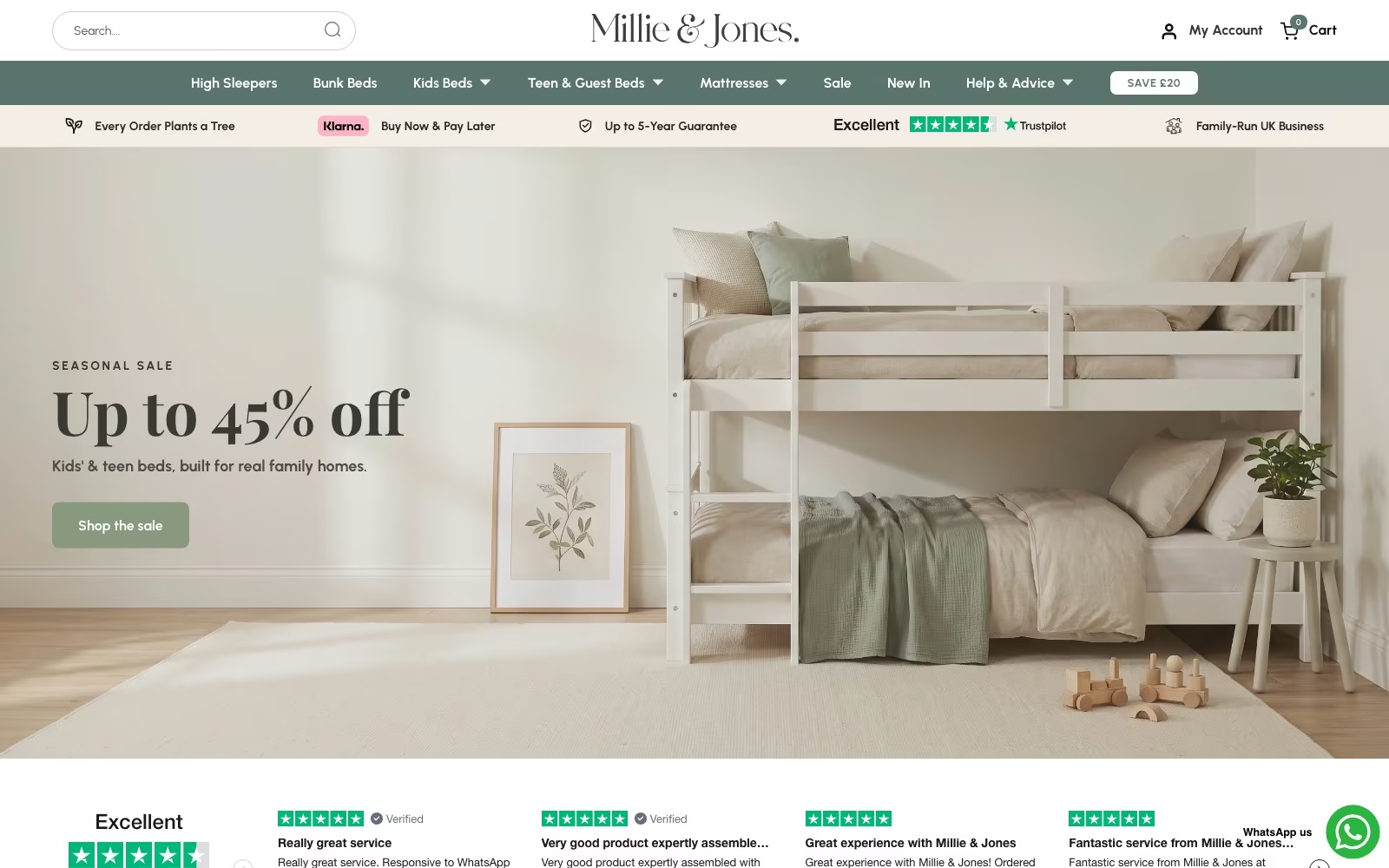
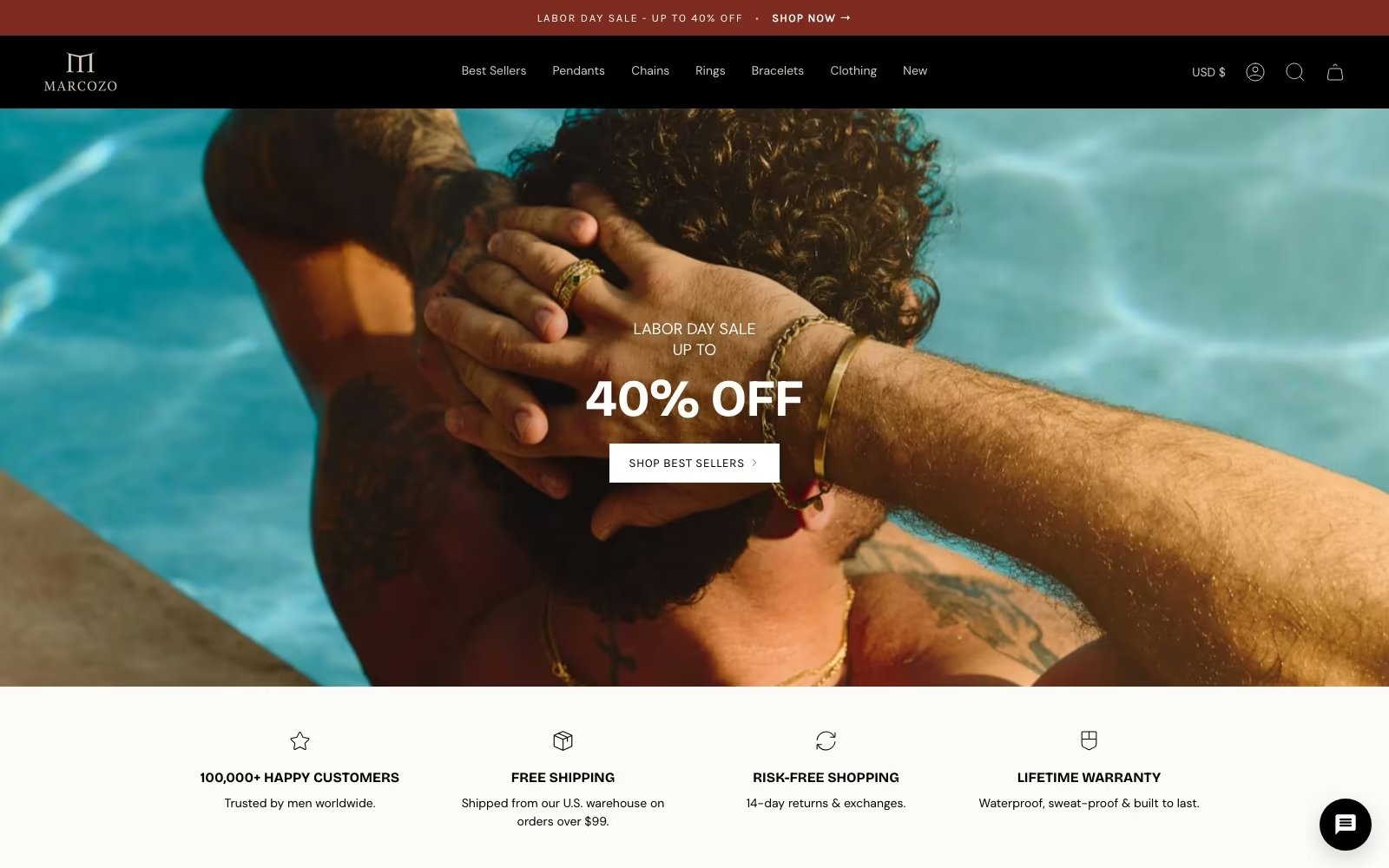
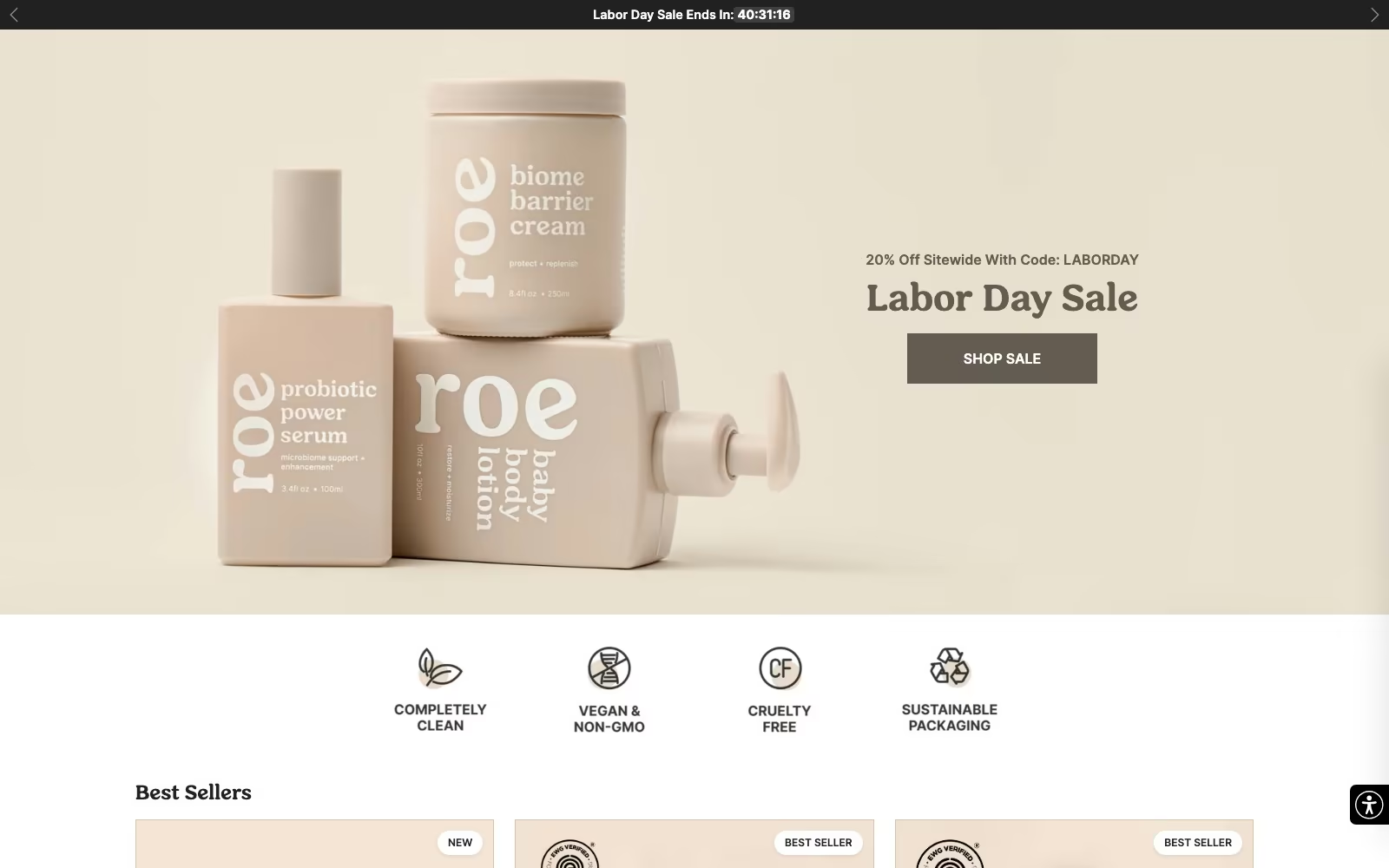
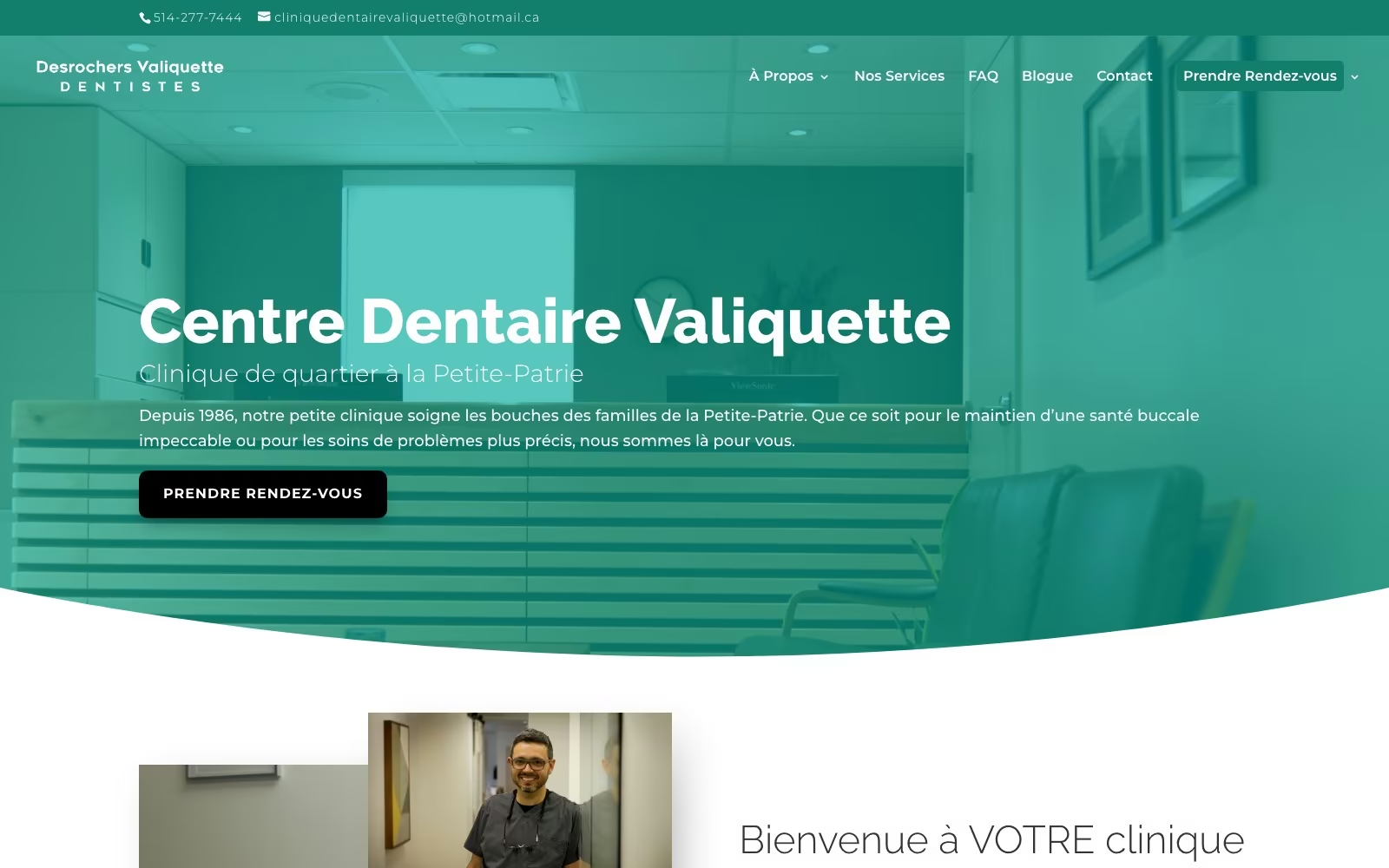
Website Portfolio
Video Ads
Static Ads




























































FAQ
What restoration owners ask us first.
How long does a restoration website take to build?
Typically eight to twelve weeks from the first working session to launch, depending on how much photography and content we are creating with you. If you are losing calls right now we will often fix the speed and the call path on the existing site in the first fortnight rather than make you wait for the new build — the repairs are cheap and they carry over.
Will a new website hurt the rankings we already have?
Handled properly, it protects them. We map every existing URL to its replacement before launch, keep the pages that already earn calls, and monitor positions daily for the first month so anything that slips is caught in hours. The risk people have heard about comes from launches with no redirect plan; that is the part we remove.
Can our office staff update the site without calling a developer?
Yes, and we train them on it. Adding a suburb page, swapping a job photo, changing a response time during a storm or publishing a review takes a few minutes in the editor. Anything structural stays with us so the site cannot be broken by accident, but the day-to-day updates that matter during an event are in your hands.
Do we need professional photography of our crews?
It helps more than any design detail we could add. Homeowners are choosing between strangers, and real trucks, real technicians and real finished work do the persuading that stock imagery cannot. If a shoot is not in budget we will show your team how to capture usable photos on site, and we compress and crop them so speed does not suffer.
What about the website speed problem specifically?
It is the first thing we measure and the last thing we compromise on. With home service sites averaging 8.7 seconds on mobile and 53% of visitors leaving after three, speed is not a technical vanity metric in this trade, it is the difference between a booked job and a call to your competitor. Our site speed specialists are involved from the design stage, not after launch.
Should the website be built around emergencies or around all our services?
Both, on separate paths. The emergency route has to be blunt: number, arrival time, town names, nothing in the way. The reconstruction, mold and commercial work needs a slower path with detail, references and clear pricing conversations, because those buyers are comparing over days. Blending the two into one generic homepage is the most common mistake we undo.
Do you handle hosting, security and ongoing maintenance?
We do, and it stays in your name. Hosting, backups, updates and monitoring are covered by a simple monthly arrangement, or we will hand the whole thing to your own IT provider with documentation if you prefer. Either way you keep the keys, which is the part that matters if you ever want to work with somebody else.
How does the site work with our paid ads?
Campaign traffic gets purpose-built landing pages rather than being pointed at the homepage, because an ad click deserves a page that answers exactly what the ad promised. Those pages live inside the same design system so they load fast and look like you, and they can be edited within hours during a storm. Our restoration PPC team builds them from the same plan.
What does a restoration website cost?
It depends on how many service and location pages you need and how much content and photography we produce, so we scope it properly rather than quote a brochure price. What we can promise is a fixed number before work starts, no percentage of anything, no long-term lock-in, and a build you own outright. Owners tell us the fixed scope is what lets them say yes.
Can you improve our current site instead of replacing it?
Often, and we will say so honestly when it is the better call. If the platform is sound, targeted work on speed, the call path and the service pages delivers most of the benefit for a fraction of the cost, and you can rebuild later from a stronger position. We only recommend a replacement when the current site genuinely cannot be made fast or extended.
How do you measure whether the new site worked?
By comparing what the phone did before and after. Calls, form enquiries and booked jobs, split by loss type and suburb, tracked from launch day and reviewed in writing after ninety days. Design opinions are easy to argue about; a call count is not, and it tells us which pages to improve next.
How does the website support our local marketing and visibility?
A restoration business is found locally or not at all, so the site is built to feed that: a page per service and per town, business details identical to your Google Business Profile and directory listings, and structured data that helps search engines understand what you do and where. Good web design and good local SEO are the same job here — visibility brings the visitor, and the page decides whether the phone rings.
What pages does a restoration company actually need?
Fewer than most agencies sell, and more specific. A strong page for each service you want more of — water damage, fire and smoke cleanup, mold remediation, storm damage, reconstruction — plus honest town pages where your trucks respond, an insurance and claims explainer, real project examples and a simple about page. Thirty thin pages help nobody; ten specific ones can carry a whole company.
Do commercial and property manager clients need something different?
They do. A property manager comparing vendors wants capacity, certifications, response guarantees, references and a named contact, not a big red emergency banner. We give that audience its own path with the detail it needs, while keeping the homeowner route as blunt and quick as possible, so one website can serve both without confusing either.
Can you handle our search and reporting too?
Yes, and the numbers get more honest when one team holds them. Our restoration SEO, local SEO and analytics specialists work from the same plan as the build team, so a job is attributed once instead of claimed by three vendors.

.webp)
.webp)