Dealership PPC judged on units sold, not clicks bought.
on units sold
Automotive is one of the most competitive auctions there is, and most dealer accounts are still spending against brand terms, a stale keyword list and a lead form nobody has tested on a phone. We rebuild the account around the stock you actually need to move, wire the CRM back into Google so bidding optimises on appointments rather than form fills, and report cost per sold unit. It runs from the same plan as your organic search work, so nothing is counted twice.






Tell us a little about your brand and we'll be in touch within 24 hours to lock in a time.



FOUR WORKSTREAMS
Four workstreams decide whether a dealer account performs.
Four workstreams
Automotive paid search rewards the boring things: clean measurement, a structure that matches how the store sells, a feed that tells the truth, and a page that loads. Bidding cleverness comes fourth.
Account structure
Inventory & vehicle ads
Landing pages & lead path
Measurement & bidding
Structure decides the auction before the bid does.
Most inherited dealer accounts carry the same faults: one catch-all campaign per department, model campaigns competing with each other, brand terms absorbing a third of the budget, and negatives last touched two years ago. The auction is unforgiving here — automotive search ads average $3.13 a click and a 6.17% click-through rate, so wasted impressions are expensive rather than merely untidy.
We rebuild it around intent and margin: new and used separated, model lines that carry stock given their own budget, service and parts kept clear of the sales pool, conquest work isolated so it never quietly eats the in-market spend.
- New, used, service and conquest separated by intent
- Brand spend capped at a defensible level
- Negative lists rebuilt from real search terms
- Budget aligned with the stock you need to move
$3.13
average automotive search cost per click (2026 benchmark)
6.17%
average click-through rate on automotive search ads
The feed is the campaign.
Vehicle ads and inventory-driven campaigns only work when the feed is clean: correct trims, real photographs, accurate prices and availability that updates when a car sells. A feed that lags by two days spends money advertising cars on somebody else's driveway, and it is the single most common leak we find in a dealer account.
We take ownership of feed health, connect it to the campaigns that carry stock pressure, and stop the ads on ageing units becoming a subsidy for the units that would have sold anyway. Aged inventory gets its own push with a budget that turns off when the car does.
- Feed audited for trims, prices, photos and availability
- Vehicle ads and shopping surfaces set up properly
- Aged units pushed on purpose, not by accident
- Spend follows stock pressure week by week
$2.85
reported automotive Google Ads CPC at a 5.8% conversion rate
You cannot bid your way past a slow page.
Sending paid clicks to a heavy platform page is where most dealer budget dies. The 2026 mobile speed study found 92% of local dealership domains failing Google's mobile speed requirements, and mobile is where the traffic is: 68.5% of visits, converting at 1.9% against 3.8% on desktop. That gap is a page problem, not a traffic problem.
We build fast, single-purpose pages for the campaigns that matter, with a form short enough to finish at a traffic light, a phone number that tracks, and finance or trade-in tools that load. Our landing page team builds them outside the platform when the platform cannot be fixed.
- Purpose-built pages per campaign, tested on a phone first
- Short forms, tracked calls, working chat
- Trade-in and finance paths that do not stall
- Continuous testing on the pages carrying the most spend
1.9%
mobile conversion rate on dealer sites against 3.8% on desktop
92%
of dealer domains fail Google's mobile speed requirements
Bid on what the store sells, not on what a form counts.
A form fill is not a sale. When the CRM sends appointments, shown appointments and sold units back into the ad platforms, smart bidding stops chasing the cheapest lead and starts chasing the ones that close — which matters when the industry closes about 10.2% of internet leads, and the best stores 10-15%.
We wire offline conversion import, call tracking and analytics together, agree a target cost per sold unit with you, and report against it. The same plumbing shows how paid interacts with the 19% of buyers now using AI sites or AI overviews while shopping, so the two are managed together rather than argued about.
- Offline conversions imported from the CRM
- Call tracking counted as a real conversion
- Bidding optimised on appointments and sold units
- One monthly read in plain language
10.2%
average lead-to-sale close rate on internet leads
$32.79
average cost per lead on automotive search ads
Ad accounts, analytics and tracking stay in your name
Cost per sold unit is the metric we are judged on
Weekly working session with the people doing the work
Long-term lock-ins
We made the difference for those brands

Creative, content, arts & culture

Consumer tech and platforms

B2B software, fintech, insurance

Beauty, personal care & wellness

Beauty, personal care & wellness

B2B software, fintech, insurance

Creative, content, arts & culture

Beauty, personal care & wellness

Retail & commerce

Apparel and lifestyle

Healthcare & regulated services

Creative, content, arts & culture

B2B software, fintech, insurance

Beauty, personal care & wellness

Healthcare & regulated services

Food & beverage

Food & beverage

Travel & mobility

B2B software, fintech, insurance

B2B software, fintech, insurance

Beauty, personal care & wellness

Consumer tech and platforms

Healthcare & regulated services

Beauty, personal care & wellness

B2B software, fintech, insurance
Travel & mobility

B2B software, fintech, insurance

B2B software, fintech, insurance

Beauty, personal care & wellness

Home essentials, appliances, kitchen & pet

B2B software, fintech, insurance
01 — The challenge
The spend is steady. Nobody can say what it sold.
The pattern repeats from store to store: the budget goes out every month, the vendor's report shows leads and a cost per lead, and the sales desk quietly believes half of those leads were people who were coming in anyway. Nobody can trace a sold unit back to a campaign, so the argument about paid search never actually ends.
“We know what a lead costs. We have no idea what a car costs us to sell.”
The fix is measurement before media. With a $32.79 average cost per lead and roughly 10.2% of internet leads closing, the true cost of a sold unit is knowable arithmetic, not a mystery — and once the CRM is feeding the platforms, bidding starts optimising toward the leads that actually buy.
02 — Our approach
Measure first, restructure second, then spend against stock.
The first two weeks are unglamorous: conversion tracking rebuilt, call tracking verified, the CRM connected so appointments and sold units flow back into the platforms, and a baseline agreed with your GM so there is no argument later about what changed. Then we restructure — new, used, service and conquest separated, brand spend capped, negatives rebuilt from real search terms, and budget pointed at the models and aged units the store actually needs to move this month. Landing pages come next, built fast and single-purpose because the platform pages are usually the reason clicks do not convert. From there it is weekly management with a monthly read: search terms mined, bids and budgets moved with stock pressure, creative refreshed, and one page showing appointments, shown appointments and sold units by campaign. We hold category exclusivity by market, so we are never running the store down the road at the same time.
03 — What we did
A first ninety days that ends the guessing.
Tracking, restructure, pages, then weekly management — in sequence, with a working session every week and a written note of what changed.
Weeks 1-2 / Measurement
CRM, calls and conversions wired together
Offline conversion import from the CRM, call tracking verified, duplicate and junk conversions removed, and a baseline agreed before anything is switched off.

Weeks 2-6 / Restructure
Accounts rebuilt around stock and intent
New, used, service and conquest separated, brand spend capped, negative lists rebuilt from real search terms, and the vehicle feed cleaned before it drives a campaign.

Weeks 4-8 / Lead path
Fast pages and a form finished at a traffic light
Single-purpose pages for the campaigns carrying real spend, short forms, tracked phone numbers, and trade-in and finance paths that work on a phone.

Ongoing / Management
Cost per sold unit, reported monthly
Weekly search term mining and budget shifts against stock pressure, and one monthly page: appointments, shown appointments and sold units by campaign.

WHAT YOU GET
Deliverables your general manager can audit.
can audit
Everything below lands in accounts you own and stays yours if you ever leave.

Account and tracking audit
What the current account is really buying, where the waste sits, and which conversions are counting the same person twice.

Rebuilt campaign structure
New, used, service and conquest separated by intent, with budgets pointed at the stock that needs to move.

Feed and vehicle ads
Inventory feed audited and connected, vehicle ads set up properly, aged units pushed deliberately.

Landing pages and lead path
Fast single-purpose pages, short forms, tracked calls and a trade-in path that works on a phone.

Creative and offers
Ad copy and offer testing that reflects what is on the lot this week rather than last quarter's campaign.

Monthly reporting
Cost per appointment and per sold unit by campaign, next to what changed and what happens next month.
HOW WE WORK
Operating standards, not promises.
Operating standards


Franchise stores
Co-op compliant campaigns that still chase the models you need to move this month.
ExploreIndependent used lots
Feed-driven campaigns where the budget follows ageing stock rather than a fixed monthly plan.
ExploreService & fixed ops
Service and parts campaigns kept out of the sales pool, measured on booked work orders.
Explore

















Built on trust. Proven by results.
We partner with SMBs and Fortune 500 companies to deliver more than reach — we bring clarity, execution, and measurable outcomes. Every successful partnership starts with a strong culture fit and a shared drive to grow.






CASE STUDIES
Case studies
Website Portfolio
Video Ads
Static Ads
























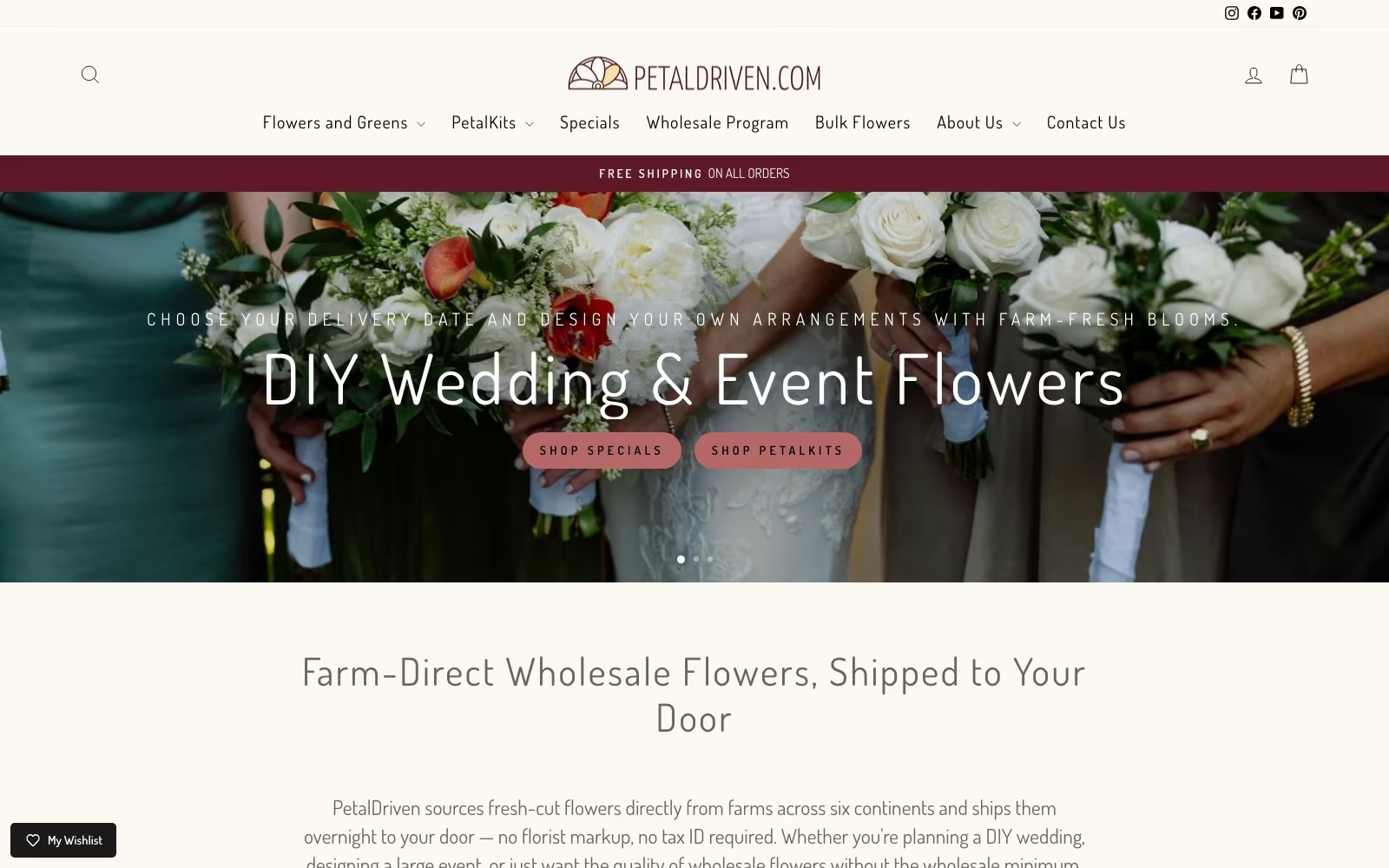



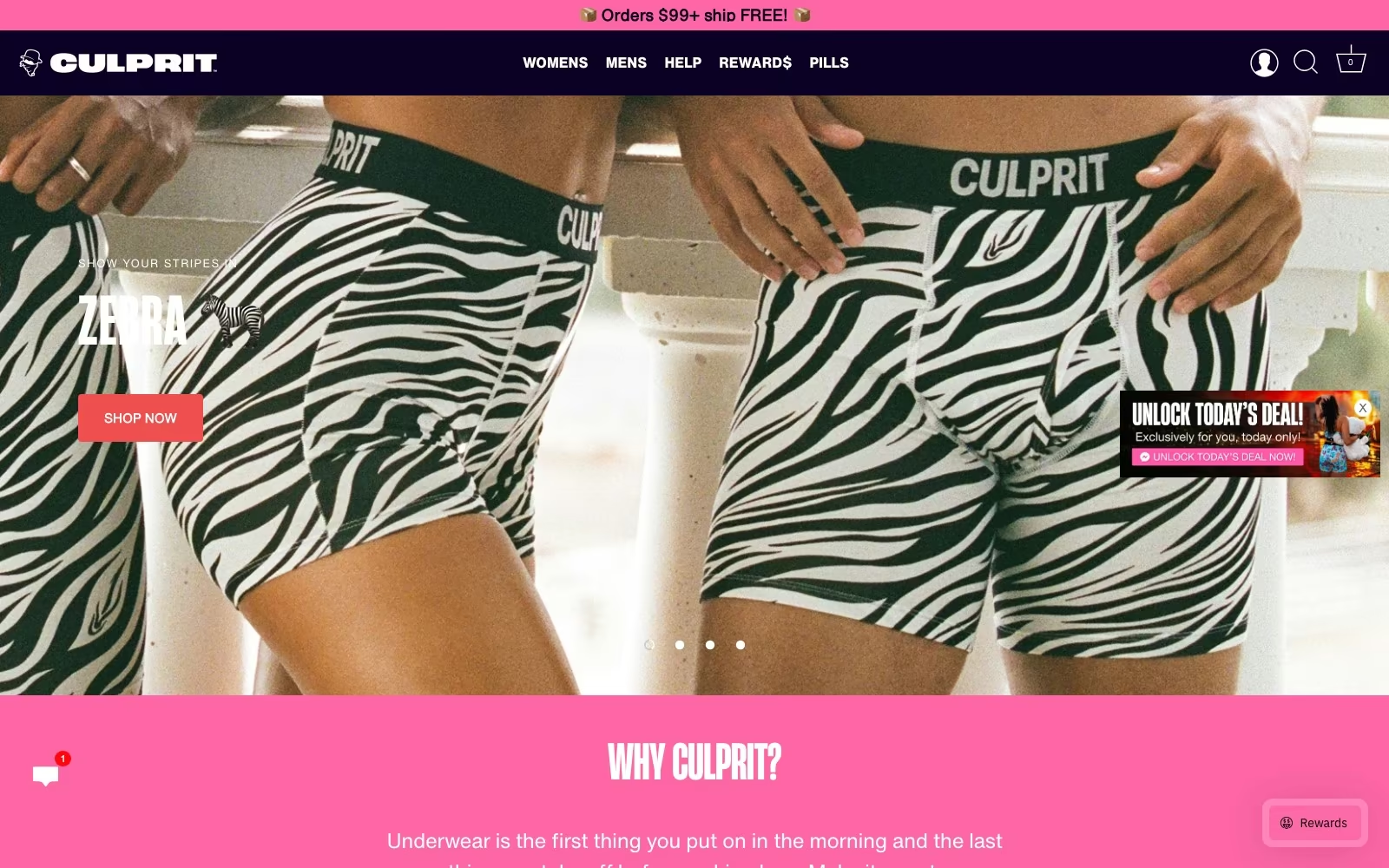





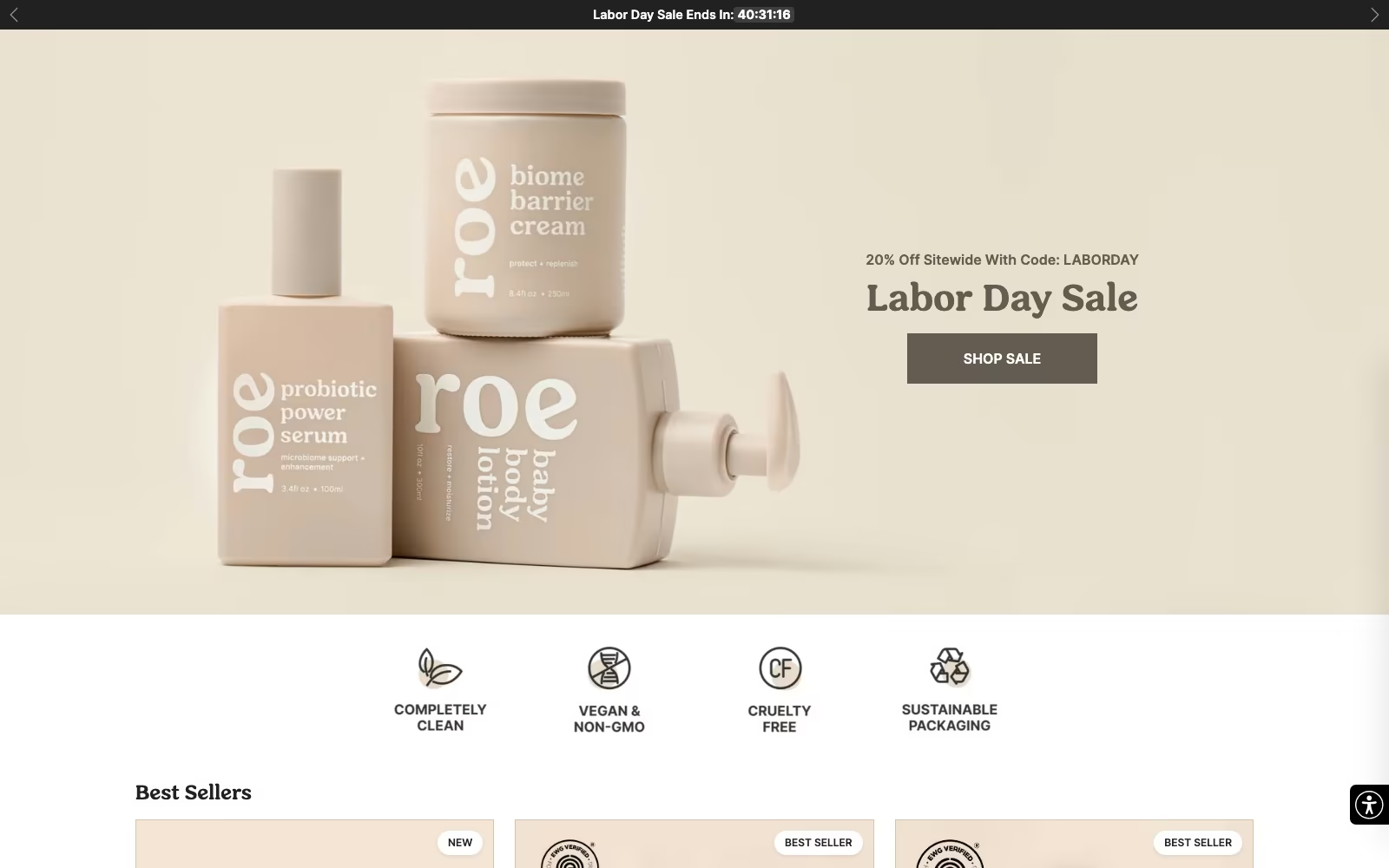

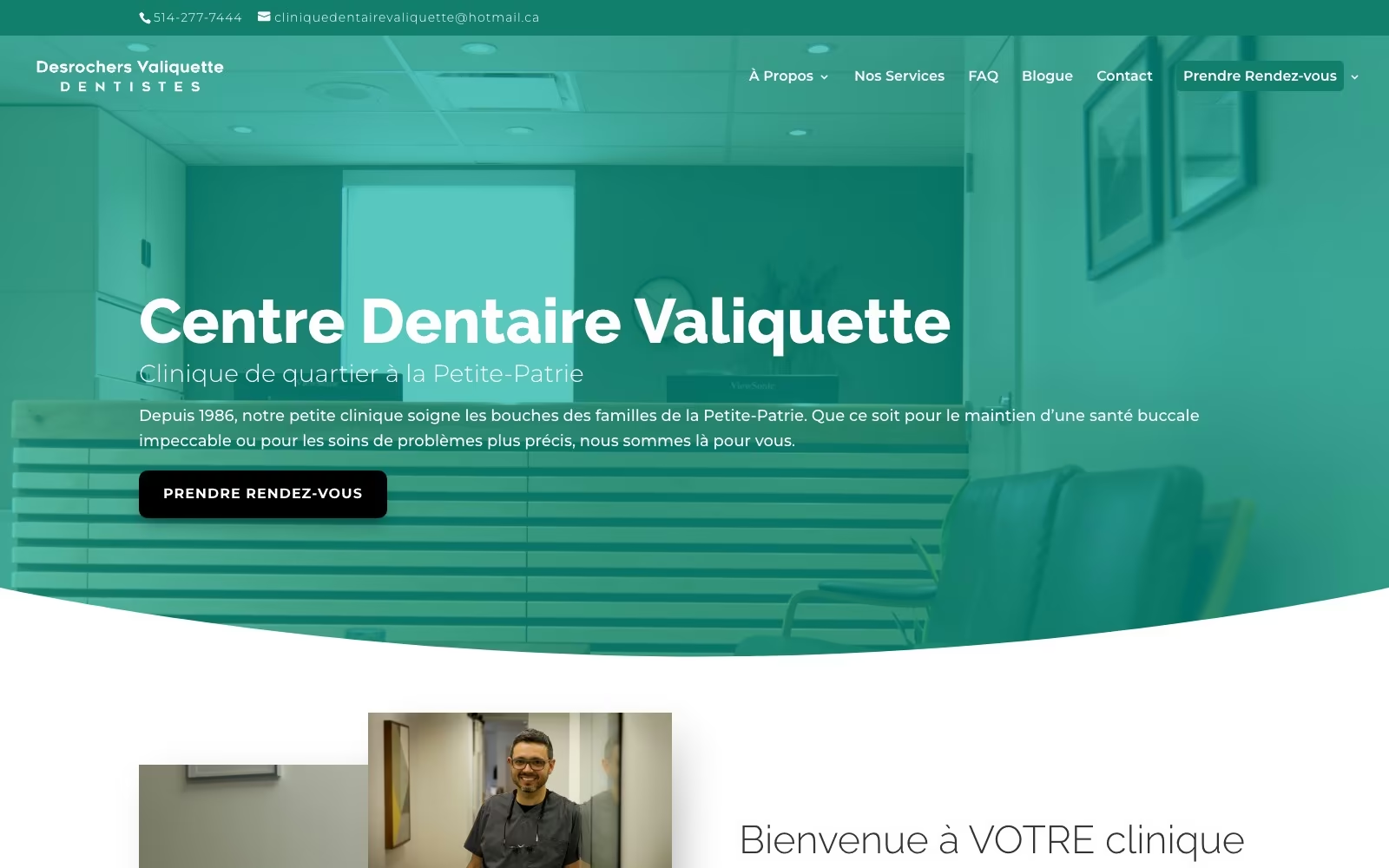



























FAQ
What dealers ask us first.
How quickly does a rebuilt dealer PPC account start performing?
Waste comes out in the first fortnight, because negatives, capped brand spend and paused catch-all campaigns take effect immediately. Structural gains follow over four to eight weeks as bidding relearns on cleaner conversion data. The honest read is one full sales cycle: appointments move before sold units do, and we agree that up front so nobody judges a rebuild on nine days of data.
Should we keep bidding on our own dealership name?
Some, rarely as much as an inherited account does. Brand terms look magnificent in a vendor report because they convert cheaply, and much of that volume would have arrived anyway. Our approach is to hold enough brand coverage to defend against conquest bids from the group down the road, measure the incremental part honestly, and move the rest to models and stock that need help. It usually frees a meaningful share of budget in month one.
What does dealership PPC cost, and how do we judge it?
Management is a fixed monthly fee scoped to the account rather than a percentage of spend, which keeps our incentive pointed at efficiency instead of volume. Media is yours and paid directly. Judge us on cost per appointment and per sold unit against your gross per unit: with an industry average lead at $32.79 and about 10.2% of internet leads closing, the break-even is straightforward arithmetic we will do with you before you sign anything.
Do we really need to connect the CRM?
It is the difference between a good account and a guessing account. Without it, the platforms optimise toward whoever fills in a form — including tyre-kickers, duplicate enquiries and people shopping four states away. With appointments and sold units flowing back, the bidding learns which clicks became customers and buys more of those. We handle the plumbing, including the awkward part where the CRM export needs a field nobody has populated since 2019.
Can you work with our co-op and manufacturer requirements?
Yes, and we treat co-op as a funding source rather than a straitjacket. We keep compliant assets and disclaimers where the programme requires them, document what qualifies for reimbursement, and prepare the claim evidence so the money is actually recovered. Where a programme rule genuinely damages performance, we will show you the cost of compliance in numbers so the trade-off is a decision rather than an assumption.
How do vehicle ads and the inventory feed fit in?
Feed quality is the campaign. Trims, prices, photographs and availability have to be right and current, or spend goes to cars that sold on Tuesday. We audit the feed, fix what the platform lets us fix, escalate what it does not, and then connect it so budget follows stock pressure — ageing units pushed on purpose, hot models not subsidised for sales that were happening anyway.
Our landing pages are locked to the dealer platform. Is that a problem?
It is a constraint we work with regularly, and often the highest-value thing we change. Where the platform allows custom templates we optimise those; where it does not, we build fast standalone pages for the campaigns carrying real spend and pass the lead straight into your CRM. Given 92% of dealer domains fail Google's mobile speed requirements, this is usually where the cheapest performance gain in the whole account is hiding.
Should we run service and parts campaigns as well as sales?
In most stores, yes, and they often carry the better return. Fixed-ops searches are local, high intent and repeat every few months, the auction is cheaper than new-vehicle terms, and the work fills bays that are already staffed. We keep them in separate campaigns with their own budgets and their own conversion definition — a booked work order — so the sales pool never absorbs the money.
What about Performance Max, and does it hide too much?
It can perform well in automotive, particularly with a healthy feed, but it needs guardrails: clean conversion data, brand exclusions so it does not quietly harvest your own name, sensible asset groups per department, and regular reporting on where placements actually ran. We use it where the data supports it and keep a controlled search structure alongside, so you always have a channel where the levers are visible.
How do AI overviews and assistants change paid search for dealers?
They change where the research happens rather than where the money is spent. Cox Automotive found 19% of buyers, and 25% of new-vehicle buyers, using AI sites or AI overviews while shopping, which shifts some early comparison away from classic results while high-intent local queries still land in paid. We manage both from one plan — the ads keep buying the bottom of the funnel while our AI search work keeps your store present in the research stage.
Will you work with our existing website vendor and BDC?
Yes, and it usually goes better when everyone shares one conversion definition. We agree with the BDC what counts as an appointment, make sure the CRM records it the same way every time, and give the website vendor a short list of changes ranked by revenue impact rather than a forty-page audit. When something is genuinely blocked, we say which channel it is costing and how much, and let you decide.
Can you run our other channels too?
Yes, and the numbers get more honest when one team holds them. Our dealership SEO, paid social and analytics specialists work from the same plan as the paid search team, so an appointment is attributed once instead of claimed by three vendors. Hiring us for search alone is equally fine — everything is documented and left in accounts you own.

.webp)
.webp)