Car dealership SEO that fills the lot with buyers, not browsers.
with buyers, not browsers
A shopper decides which two stores to visit long before anyone shakes a hand. That decision happens in the map result, in the model pages your site does or does not have, and in the used listings Google can actually read. We work on the organic half of that: a website search engines can crawl, model and service pages worth ranking, a business profile that beats the store down the road, and reporting that counts booked appointments instead of positions. It runs beside your paid search, never against it.






Tell us a little about your brand and we'll be in touch within 24 hours to lock in a time.



FOUR WORKSTREAMS
Four workstreams decide whether a dealership ranks.
Four workstreams
Ranking a dealership is not mysterious. A site crawlers can read, pages that outlive the stock, a map presence that beats the store down the road, and a report that counts appointments. Everything else is commentary.
Technical base
Model & service pages
Local & map
Measurement & AI search
Most dealer sites lose before the content argument starts.
Dealer platforms generate thousands of listing pages automatically, and most of them are slow, duplicated, or blocked from indexing entirely. The 2026 automotive mobile speed study of roughly 90,000 organic results across 250 US markets found 92% of local dealership domains fail Google's mobile speed requirements, with nearly 70% sitting entirely in the poor tier. That is the competitive picture: almost nobody in your market has done this work.
We crawl the whole site including the inventory feed, fix what blocks indexing, kill the duplicate listing variants, put clean vehicle schema on the stock pages, and get core web vitals into range on mobile first, since 68.5% of dealership website visits are mobile.
- Full crawl of the site and the inventory feed
- Duplicate stock pages consolidated, thin ones deindexed
- Vehicle, dealer and review schema applied properly
- Mobile speed and core web vitals brought into range
92%
of local dealership domains fail Google's mobile speed requirements (2026 study)
68.5%
of dealership website visits come from a phone
Stock turns over. Your model and service pages should not.
Inventory pages come and go with the cars. What compounds is the layer underneath: a page for each model line you sell, for finance and trade-in, for the used programme, and for every service and parts job the fixed-ops side depends on. Those pages hold their rankings while listings churn, and they are what an out-of-market shopper finds three weeks before they are ready to buy.
We build that page set around what people actually type, write it with your sales and servicing managers instead of around them, and keep the internal links pointing at the pages that earn. Organic is already the largest single traffic source in this industry at 46% of visits globally and 41% in the US.
- A page per model line, trim family and finance offer
- Servicing, parts and collision pages built for fixed ops
- Written with your managers, in your store's language
- Internal links aimed at the pages that produce appointments
46%
of automotive website traffic arrives from organic listings (41% in the US)
The map pack is where the ready-to-buy searches land.
“Toyota dealer near me” and “oil change near me” resolve in the map before anyone reads a blue link, and for a store with a physical lot that is the highest-intent surface there is. The work is unglamorous and continuous: a complete and correctly categorised business profile for sales and for service, photographs that look like your actual lot, consistent details wherever the store is listed, and a review routine the team can keep on a busy Saturday.
Groups with several rooftops get a real page and a real profile per store rather than one contact page carrying five addresses, which is the most common reason a group cannibalises its own local visibility.
- Profiles built for sales and service separately
- Consistent store details across the local directories
- A review routine your team can actually keep
- A real page per rooftop, never one shared address block
10.2%
average lead-to-sale close rate on internet leads (10-15% for top stores)
Rankings are not the report. Appointments are.
Search Console, analytics, the CRM and the phone system are wired together so an appointment can be traced back to the page and the query that produced it. That is also how we prove the organic side is not just harvesting demand your ads already paid for — useful, given automotive search ads average $3.13 a click and $32.79 a lead.
The same pages now feed a second surface. Cox Automotive found 19% of all buyers and 25% of new-vehicle buyers used AI sites or AI overviews while shopping, and assistants quote pages that answer plainly. We track that beside classic rankings through our AI search programme.
- Search Console, analytics, CRM and call tracking connected
- Appointments and sold units attributed to source
- AI overview and assistant visibility tracked
- One monthly read in plain language
19%
of car buyers used AI sites or AI overviews while shopping (25% of new-vehicle buyers)
$32.79
average cost of a paid automotive search lead
Website, analytics and business profiles stay in your name
An appointment is the metric, never a ranking screenshot
Weekly working session with the people doing the work
Long-term lock-ins
We made the difference for those brands

B2B software, fintech, insurance

Consumer tech and platforms

Healthcare & regulated services

Home essentials, appliances, kitchen & pet

Healthcare & regulated services

Consumer tech and platforms

Beauty, personal care & wellness

B2B software, fintech, insurance

Food & beverage

B2B software, fintech, insurance

Creative, content, arts & culture

Healthcare & regulated services

Home essentials, appliances, kitchen & pet

Retail & commerce

Apparel and lifestyle

Food & beverage

Creative, content, arts & culture

Creative, content, arts & culture

Consumer tech and platforms

Retail & commerce

Consumer tech and platforms

B2B software, fintech, insurance

B2B software, fintech, insurance

Travel & mobility

Apparel and lifestyle

Creative, content, arts & culture

Home essentials, appliances, kitchen & pet

B2B software, fintech, insurance

Beauty, personal care & wellness

Consumer tech and platforms
01 — The challenge
The traffic is there. The site cannot receive it.
Most stores we meet are not missing an audience. They are running a platform site nobody is allowed to change, a business profile last updated by a departed BDC manager, and a blog of manufacturer press releases. Meanwhile the group two towns over quietly owns every model search in the region.
“We rank for our own name and nothing else. Everything else we rent from Google.”
The gap is mostly mechanical. 92% of local dealer domains fail Google's mobile speed bar, and desktop still converts at 3.8% against 1.9% on mobile even though phones bring most of the visits. Fix the base, own the model and service pages, keep the map tidy, and the same market suddenly looks winnable.
02 — Our approach
Fix the base, own the model pages, hold the map, then compound.
We start with an audit that produces a list, not a lecture: what blocks indexing, which listing pages duplicate each other, which model and service pages simply do not exist, and where the store stands locally against the rooftops it really competes with. The first eight weeks go on the base, because that is the part that makes everything after it cheaper — crawl repair, schema on the stock pages, mobile speed, internal links. Then we build the durable page set: model lines, finance and trade-in, the used programme, service, parts and collision, each written with your managers and each with a booking step that takes under a minute. Local upkeep runs continuously: profiles for sales and service, photographs of the real lot, consistent listings, a review routine that survives a busy Saturday. From month three the content programme answers the questions your team fields on the phone every day. The report is appointments and sold units by source. Organic is slow money and honest money, and we would rather show you a flat month than dress one up.
03 — What we did
A first quarter that builds a base, not a backlog.
Audit, technical repair, the durable page set, the map, and a monthly read — in sequence, with a working session every week and a written note of what changed.
Weeks 1-4 / Foundation
Crawl the feed, fix the index, ship the schema
Duplicate stock pages consolidated, thin ones deindexed, vehicle and dealer schema applied, and mobile speed brought into range before a word is written.

Weeks 4-8 / Durable pages
Model, finance and service pages that outlive the stock
A page per model line, the used programme, finance and trade-in, plus the fixed-ops set — drafted with your managers and reviewed before publishing.

Ongoing / Local
Profiles, listings and a review routine per rooftop
Sales and aftersales listings completed and posted to, store details made consistent across directories, and a review habit the team can keep on a Saturday.

Monthly / Read
Appointments by source, in plain language
Search Console, analytics, the CRM and call tracking in one page: appointments and sold units by source, what changed, and what happens next.

WHAT YOU GET
Deliverables your dealer principal can audit.
can audit
Everything below lands in accounts you own and stays yours if you ever leave.

Technical audit and repair
Full crawl of site and inventory feed, index coverage, duplicates, schema and mobile speed fixed, with the change log to show for it.

Keyword and page map
The searches worth owning, ranked by gross per unit, mapped one to one against the pages your site needs.

Model and service pages
The durable page set your listings cannot provide, drafted with your managers and reviewed before anything goes live.

Local search programme
Profiles for sales and service, consistent listings, a review routine and a real page for every rooftop you run.

Content programme
The questions your team answers on the phone every day, published as the clearest answer available anywhere in your market.

Monthly reporting
Appointments and sold units by source, next to what changed this month and what happens next month.
HOW WE WORK
Operating standards, not promises.
Operating standards


Franchise stores
Model-line pages that rank beside the manufacturer, without breaking brand compliance.
ExploreIndependent used lots
Listing structure and local visibility, where the whole game is being found before the big group is.
ExploreService & fixed ops
Service, parts and collision searches, which pay every month regardless of what the sales floor does.
Explore

















Built on trust. Proven by results.
We partner with SMBs and Fortune 500 companies to deliver more than reach — we bring clarity, execution, and measurable outcomes. Every successful partnership starts with a strong culture fit and a shared drive to grow.




CASE STUDIES
Case studies
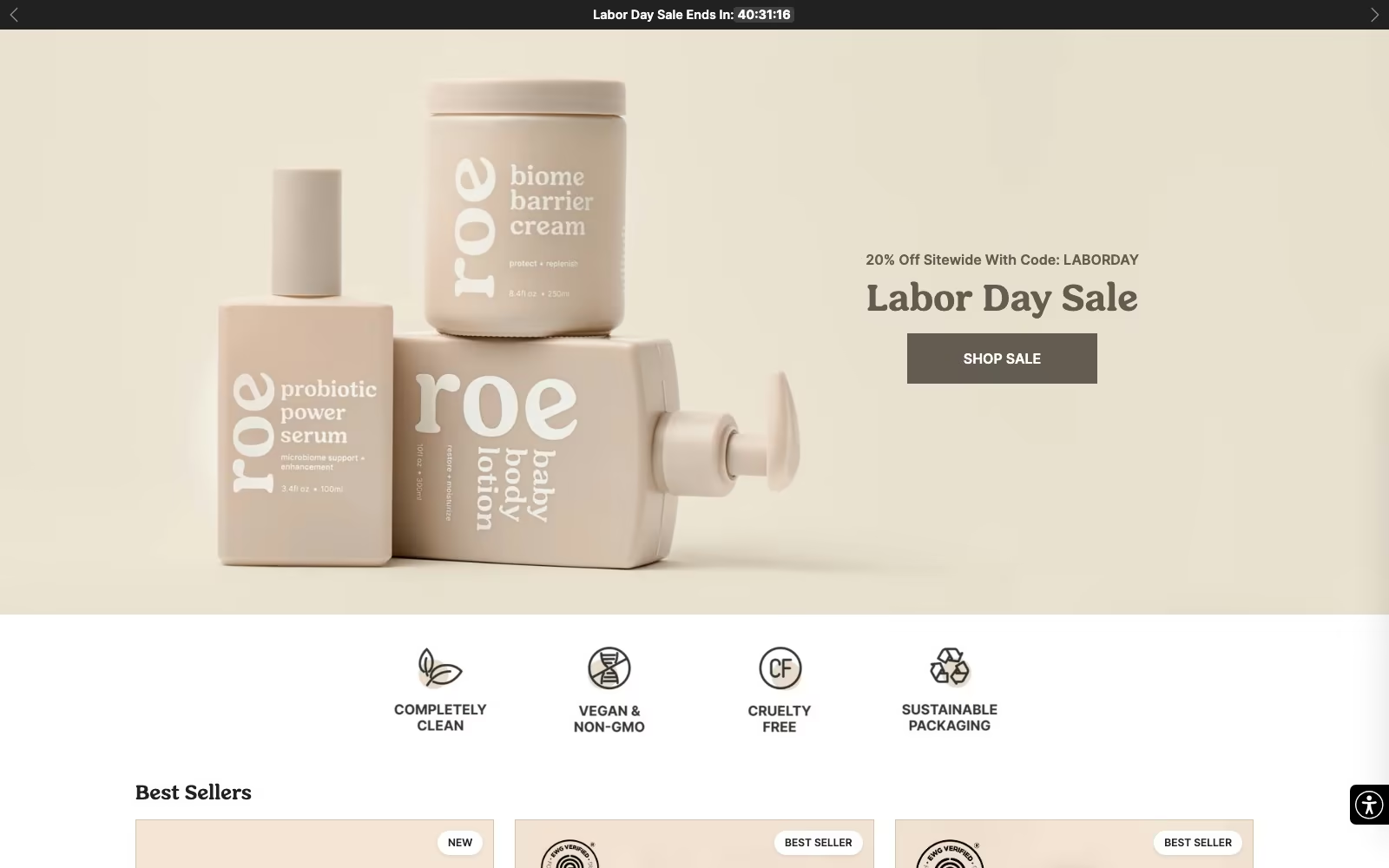
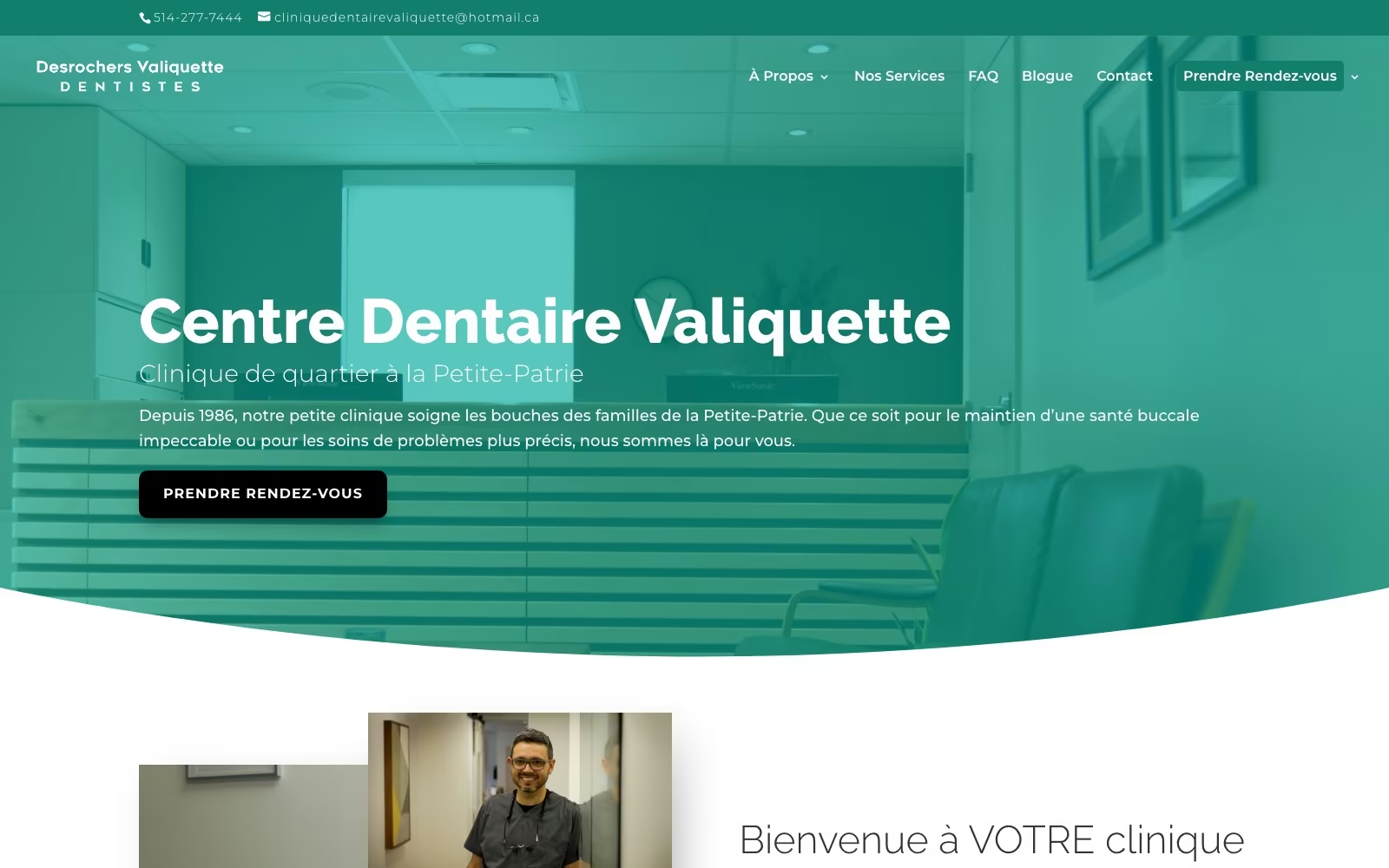
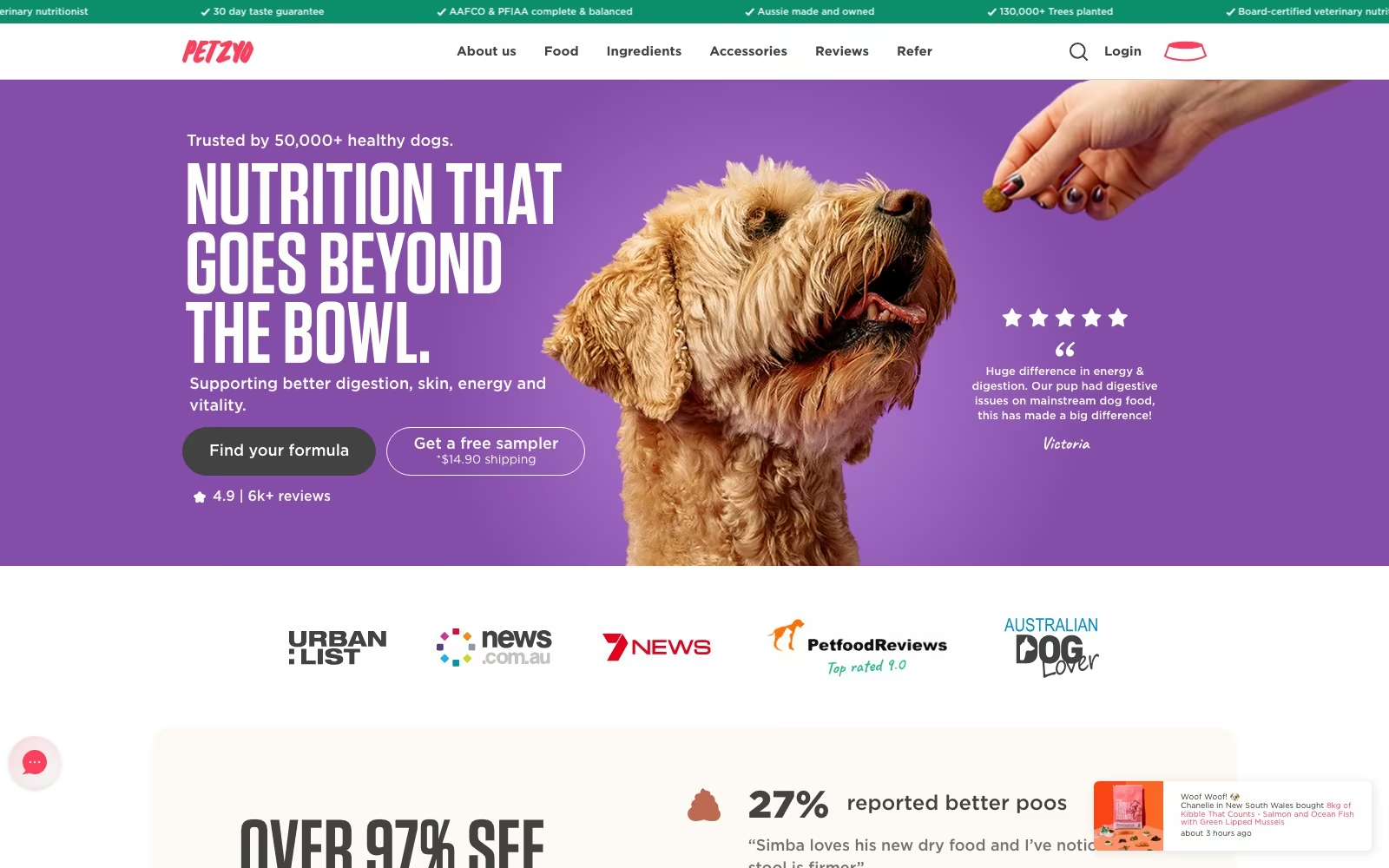
Website Portfolio
Video Ads
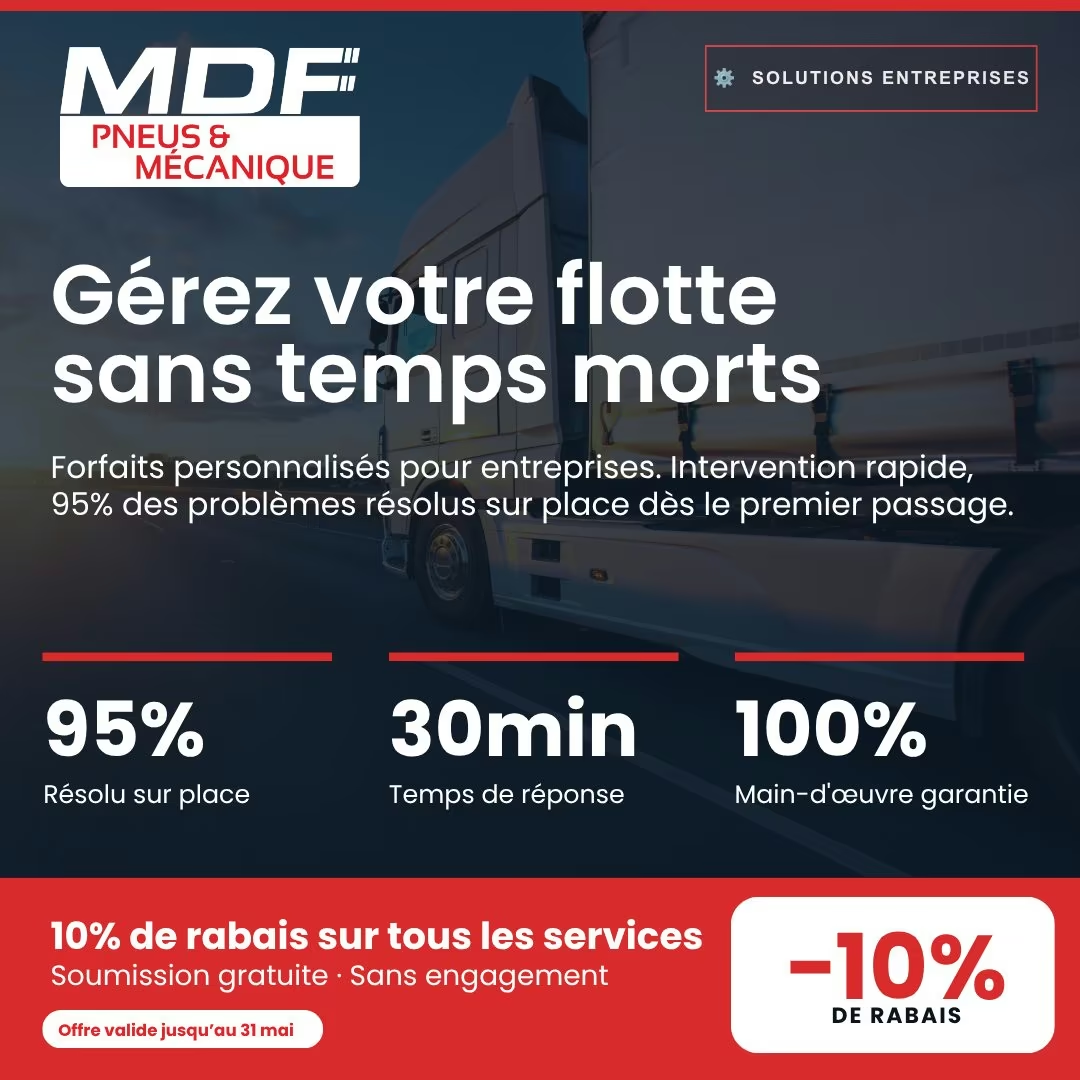
Static Ads


























































FAQ
What dealers ask us first.
How long before dealership SEO produces real appointments?
Technical repairs show inside weeks, because indexing and speed changes are read quickly. New model and service pages usually start ranking within two to three months, and the local surface can move faster than that if the profile has been neglected. A stable, predictable flow generally sits six to twelve months out. We agree the leading indicators up front — indexed stock pages, impressions on model and service queries, map views, calls — so nobody waits a year for the first sign of life.
Our website is locked down by the manufacturer platform. Can you still help?
Almost always, yes, and this is the most common question we get. Even on a restrictive platform you normally control titles and descriptions, the custom page templates, the business profile, the review flow, the internal linking and the content library. That is where most of the available gain sits anyway, given 92% of dealer domains fail the mobile speed bar and a very ordinary site that is fast and correctly structured beats a pretty one that is not. Where the platform is genuinely blocking growth we will say so and show you what it is costing before recommending a move.
Is organic worth it when we already spend heavily on paid search?
They do different jobs, and the honest case for organic is arithmetic. Automotive search ads run about $3.13 a click and $32.79 a lead, and that meter stops the day you pause. Organic is already the largest single source of visits in this industry at 46% globally and 41% in the US, and it keeps working between campaigns. The best result we see is both, run from one plan, with the paid budget freed to chase the models where you actually need the volume.
Should we bother with SEO for used inventory that turns over weekly?
Not page by page — a stock page that lives for eleven days will never earn a ranking. The value is structural: clean templates, correct vehicle schema, sensible internal links and fast pages, so the whole feed is indexed properly and the durable pages above it (model lines, body styles, the used programme, budget and finance pages) collect the searches. Those pages catch the shopper who is three weeks out, and your listings close them once they are ready.
What does dealership SEO cost, and how do we judge it?
A fixed monthly fee scoped to the work and quoted after the audit rather than off a rate card, plus any one-off build. Judge it on cost per booked appointment and cost per sold unit, compared with what the same volume costs you in media. We set that target with you in month one, report it monthly, and will tell you plainly when the right answer is a one-off technical fix rather than an ongoing programme.
We have five rooftops. How does that work?
One plan, but never one page. Each store gets its own location page, its own business profile, its own review routine and its own line in the reporting, because otherwise the group competes with itself and the strongest rooftop absorbs the searches meant for the others. Shared assets — the model content, the finance explainers, the service library — are built once at group level and linked down, so you pay for the writing once and every store benefits.
How do reviews fit into ranking locally?
They act as both a ranking input and the deciding factor for the shopper comparing two stores in the map. What matters is steady flow and honest replies, not a burst of ten in one week. We set up a routine the sales and service teams can keep — the right moment to ask, a short link, a reply template that sounds like a person — and we track rating and volume against the rooftops you compete with, so you can see the gap closing.
What about AI overviews and assistants? Are dealers invisible there?
Not if the pages answer questions cleanly, which is the same standard good content has always been held to. Cox Automotive found 19% of buyers, and 25% of new-vehicle buyers, using AI sites or AI overviews during their shopping, and those systems quote sources that state a clear answer with the detail attached: what is in stock, what the trim includes, what the service costs, what happens next. We track where your store is being cited through our AI search work rather than guessing.
Does service and parts deserve its own attention?
It is often the fastest win in the whole programme. Fixed-ops searches are high intent, local, and repeat every few months, while the competition for them is usually a chain and two independents rather than every franchise in the region. A proper page per aftersales line, an accurate service profile with its own hours, and an online booking path that works on a phone can produce bookings well before the sales side moves.
Who writes the content? Will it sound like our store?
Our writers draft it, your managers shape it, and nothing is published without someone in the store signing it off. The raw material comes from a short interview with the people who answer these questions all day — the used manager on trade values, the servicing manager on what a job actually involves. That is the difference between content that ranks and content that also wins the walk-in.
How do you report, and what will we actually see each month?
One page in plain language: appointments and sold units by source, calls from the map and from organic, the queries gaining and losing visibility, what we changed and why, and what happens next month. Underneath it sit Search Console, analytics, your CRM and call tracking, connected so a booking can be traced back to the page that produced it. We say so plainly when a month was flat, because a report that only ever contains good news is not a report.
Can you run our other channels too?
Yes, and the numbers get more honest when one team holds them. Our dealership PPC, dealership web design and analytics specialists work from the same plan as the organic team, so an appointment is attributed once instead of claimed by three suppliers. It is equally fine to hire us for organic alone — we document the setup and leave every account open in your name.

.webp)
.webp)