Be the wealth firm the assistant names.
the assistant names
A prospect with real money now drafts the questions before they call anyone. They ask a conversational tool what a reasonable fee looks like, which credentials matter, what to put in a request for proposal. Two things decide whether your firm shows up in that conversation: whether OpenAI has cleared you to advertise in a regulated category, and whether the model has anything of yours worth quoting. We build both, alongside our AI search programme and the wider ChatGPT ads practice.






Tell us a little about your brand and we'll be in touch within 24 hours to lock in a time.



FOUR WORKSTREAMS
Four workstreams behind a wealth firm's AI visibility.
Four workstreams
Platform eligibility and the compliance review that goes with it, the paid placements themselves, the answer layer that earns a citation, and an intake path built for a prospect who arrives with a drafted brief.
Eligibility & compliance
Paid campaign build
Answer-layer content
Intake & measurement
Financial services is manually approved. We start with your position.
OpenAI says it may approve advertisers within financial services, healthcare and legal services, with those categories rolling out gradually and approvals reviewed manually on a case-by-case basis. Search Engine Journal confirms finance advertisers are cleared one at a time through manual review, and Marketing Brew reports most regulated marketers have not yet crossed the threshold. Any agency promising you placements next week has not read the policy.
We establish where your firm stands, prepare the advertiser verification, and align every asset with your own regulatory obligations first — the SEC marketing rule, 17 CFR 275.206(4)-1, for a registered investment advisor, or FINRA Rule 2210 on communications with the public if you sit with a broker-dealer.
- Platform eligibility checked against current OpenAI ad policy
- Advertiser verification prepared and submitted for you
- Every asset through your compliance officer before it goes up
- A written timing expectation, never a promise of placement
55%
of surveyed Americans asked an LLM for financial advice this year, against 10% last year
Narrow moments, plain claims, careful pacing.
Once a firm is approved, restraint matters more than mechanics. This is a conversational surface, not a search results page: the ad lands beside an answer someone is already reading, so a targeting decision is really an editorial one. For a wealth manager the value concentrates in a short list of questions — what a fee-only relationship costs at a given asset level, how to compare two firms, what belongs in a request for proposal, when a family office makes sense.
We build to those, keep every claim substantiated and free of performance promises, exclude the distressed contexts no advisory firm should be buying, and pace budget against booked meetings rather than click rates.
- Ads account, billing and tracking in your firm's name
- Copy written for a prospect mid-question, no performance claims
- Distressed and vulnerable contexts excluded deliberately
- Spend paced against booked meetings, reviewed weekly
18%
of US adults have sought financial guidance from AI tools such as ChatGPT
The citation is worth more than the placement.
An assistant asked how to choose a wealth manager builds its answer from sources it trusts, then usually suggests speaking to a professional. Being the firm it names is a durable position rather than a monthly rental, and the behaviour is already reshaping the front of the funnel: Northern Trust told CNBC that about half of clients now send formal requests for proposals, even those with as little as $100 million, with some saying they used ChatGPT to formulate the questions.
We build that citation layer out of your own planners' knowledge: the situations you genuinely handle, written clearly enough for a model to quote and precise enough for a chief compliance officer to sign.
- Situation-specific explainers, not generic personal finance
- Structured so an assistant can quote a clean, correct answer
- Credentials, fee schedule and fiduciary status machine-readable
- Citation tracking across ChatGPT, Gemini and Perplexity
Half
of Northern Trust clients now send a formal RFP, some drafted with an AI tool
This prospect arrives informed and sceptical at once.
They have a plan sketched by a chatbot and real doubt about it. Gallup's study with Edward Jones found only 3% of US adults have a great deal of confidence in financial guidance from AI, and clients are just as wary of advisors leaning on it: 24% would feel good about an advisor using AI for investment recommendations while 33% would be upset by it. That gap is your opening — they want a human being to check the homework.
We rebuild the first contact for that person: an introductory call that is genuinely an introduction, honest fee context up front, a named advisor, and a response time your team can actually meet.
- Meeting booking rebuilt for an informed prospect
- Assistant referrals tracked separately in analytics
- Cost per meeting and per funded relationship by source
- One monthly read in plain language
3%
of US adults have a great deal of confidence in financial guidance from AI
Ads account, analytics and content stay in your practice's name
A funded relationship is the metric, never an impression count
Working session with the people actually doing the work
Every regulatory assumption written down before anything runs
We made the difference for those brands

Consumer tech and platforms

Food & beverage

B2B software, fintech, insurance

Creative, content, arts & culture

Consumer tech and platforms

Food & beverage

Apparel and lifestyle

Beauty, personal care & wellness

Healthcare & regulated services

B2B software, fintech, insurance

Healthcare & regulated services

Home essentials, appliances, kitchen & pet

Food & beverage

B2B software, fintech, insurance

Beauty, personal care & wellness

B2B software, fintech, insurance

Home essentials, appliances, kitchen & pet

Food & beverage

B2B software, fintech, insurance

Consumer tech and platforms

Healthcare & regulated services

Consumer tech and platforms

Beauty, personal care & wellness

Food & beverage

Beauty, personal care & wellness

B2B software, fintech, insurance

Consumer tech and platforms

Consumer tech and platforms

B2B software, fintech, insurance

Food & beverage
01 — The challenge
The first conversation about the money is not with you.
It happens late in the evening, in a chat window, with someone typing out a liquidity event, a concentrated stock position or a family they are worried about leaving unprepared. By the time they reach a wealth management firm they have a vocabulary, a shortlist and a strong opinion about fees. Referrals and the centres of influence still work. But a second front door has opened, and most firms have no idea what it says about them when a prospect knocks.
“They arrive with a brief a chatbot helped them write, and one real question: is this right?”
The shift has been quick. TD Bank's survey of 2,500 consumers found 55% asked an LLM for financial advice this year, against 10% a year earlier, and CNBC reports the effect reaching the top of the market, where clients with as little as $100 million now run a formal proposal process. The appetite for a trusted human has not fallen. The path to finding one has moved.
02 — Our approach
Establish eligibility, earn the citation, buy carefully, count funded relationships.
We open with a candid eligibility read, because financial services is a manually approved advertising category and you deserve to know your position before a budget is committed. In parallel we audit how the major assistants answer the twenty questions that precede hiring a wealth manager in your market: which advisors get named, which sources the reply is built from, and where you are simply absent. That audit becomes the content plan. Your advisors supply the substance in a short recorded conversation each; we write and structure the pages so a model can quote them without mangling a regulated statement, and we make credentials, fee schedule and fiduciary status machine-readable. Where advertising is open to you we set the account up in your firm's name, route every asset through your chief compliance officer, exclude the distressed contexts no advisor should buy, and start small enough to learn honestly. Testimonials and third-party reviews are handled under your own marketing rule obligations rather than borrowed from another industry's playbook. Intake is rebuilt for a prospect who arrives informed and sceptical, because that is where most of this spending is lost. Reporting is one page: citations gained, meetings by source, cost per funded relationship. We report the flat months too, and if this platform is not yet the right place for your firm we will say so and move the budget somewhere it works harder.
03 — What we did
A first quarter that builds standing, not just spend.
Eligibility and an assistant audit, then the citation layer, then compliant placements and a monthly read — in sequence, with a working session every week.
Weeks 1-2 / Position
Eligibility read and an assistant visibility audit
Where your firm stands with the platform's financial services category, and how the assistants answer the questions that precede hiring a wealth manager in your market today.

Weeks 2-6 / Answer layer
Situation-specific guidance your advisors stand behind
Liquidity events, concentrated positions, multi-generational planning, trustee duties — answered properly for the clients you actually serve and structured so a model can quote them cleanly.

Weeks 4-8 / Placements
Compliant campaigns, narrow moments, careful pacing
Account and billing in your name, every asset through your compliance officer, distressed contexts excluded, spend paced against booked meetings.

Monthly / Read
Citations, meetings and funded relationships by source
One page: where you are being cited, who enquired, what it cost, what changed and what happens next month.

WHAT YOU GET
Deliverables your compliance officer can audit.
can audit
Everything below lands in accounts you own and stays yours if you ever leave us.

Eligibility and platform read
Where your firm stands under the current financial services rules, what approval requires, and a candid view of the timing.

Assistant visibility audit
How ChatGPT and the other assistants answer the questions that precede hiring a wealth manager, and which sources they cite.

Answer-layer content
Situation-specific guidance written from your advisors' knowledge and structured so a model can quote it accurately.

Campaign build and management
Ads account in your practice's name, compliant creative, deliberate context exclusions and weekly pacing against booked meetings.

Intake rework
A booking path built for an informed, sceptical prospect, with honest fee context and a named advisor to speak to.

Monthly reporting
Citations, meetings and cost per funded relationship by source, with paid and organic reported together.
HOW WE WORK
Operating standards, not promises.
Operating standards


Registered investment advisors
Fee transparency reads well in an answer engine: state it plainly and models repeat it.
ExploreBroker-dealer affiliated firms
Heavier review and filing duties, so the publishing calendar is built around them from week one.
ExploreFamily offices and specialist practices
A narrow mandate is the easiest thing here to be cited for and the hardest for anyone to copy.
Explore

















Built on trust. Proven by results.
We partner with SMBs and Fortune 500 companies to deliver more than reach — we bring clarity, execution, and measurable outcomes. Every successful partnership starts with a strong culture fit and a shared drive to grow.






CASE STUDIES
Case studies
Website Portfolio
Video Ads
Static Ads






























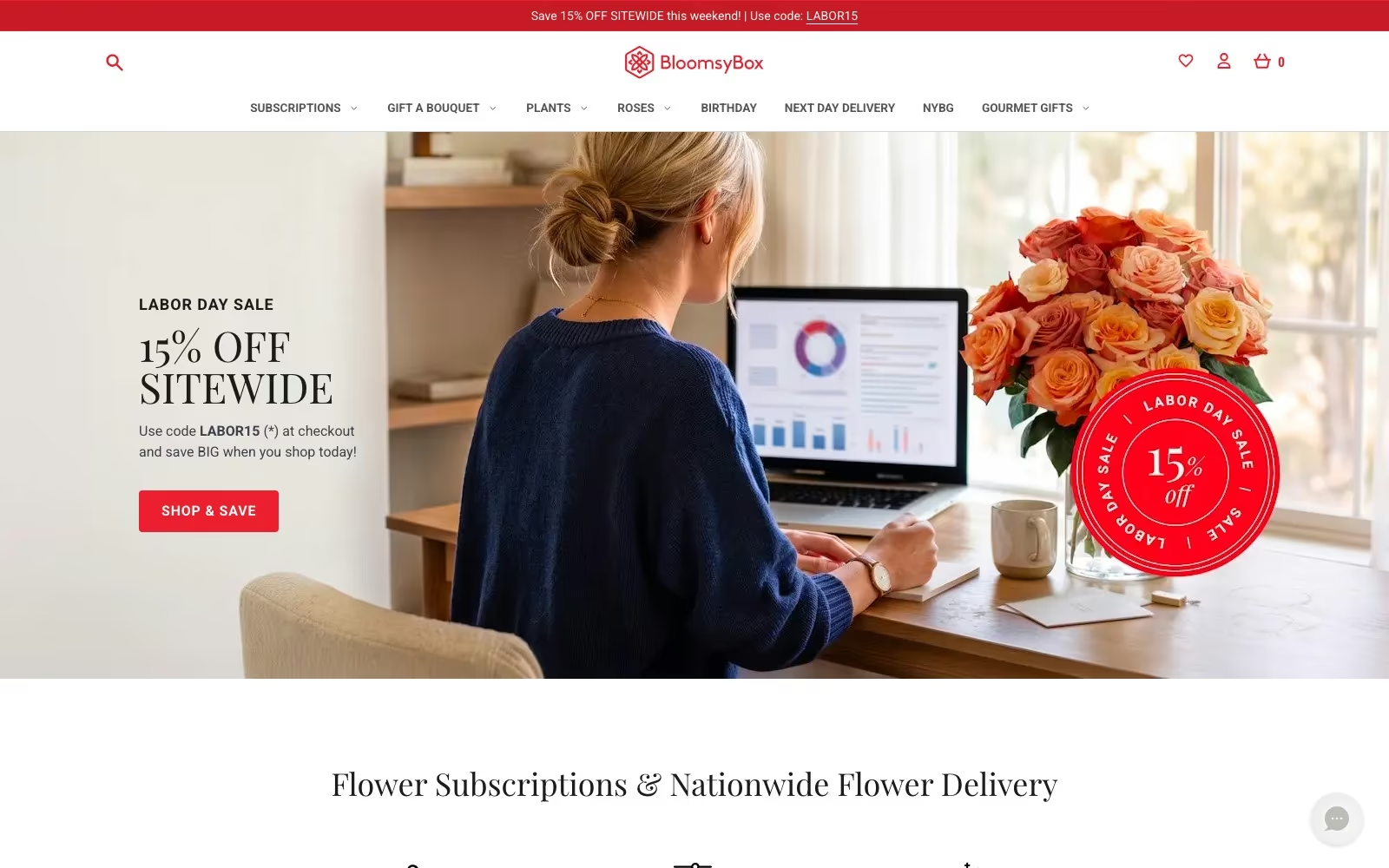











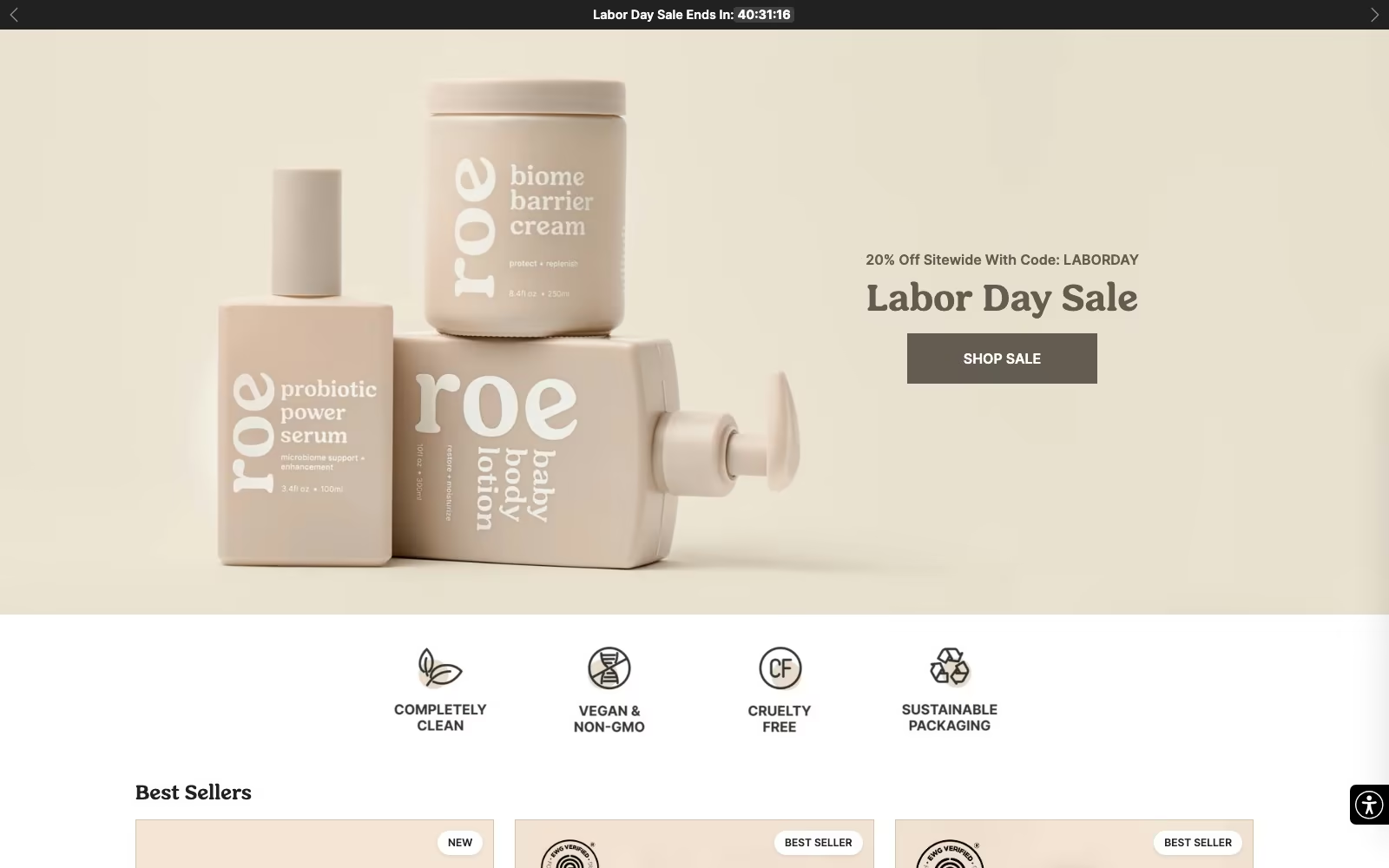

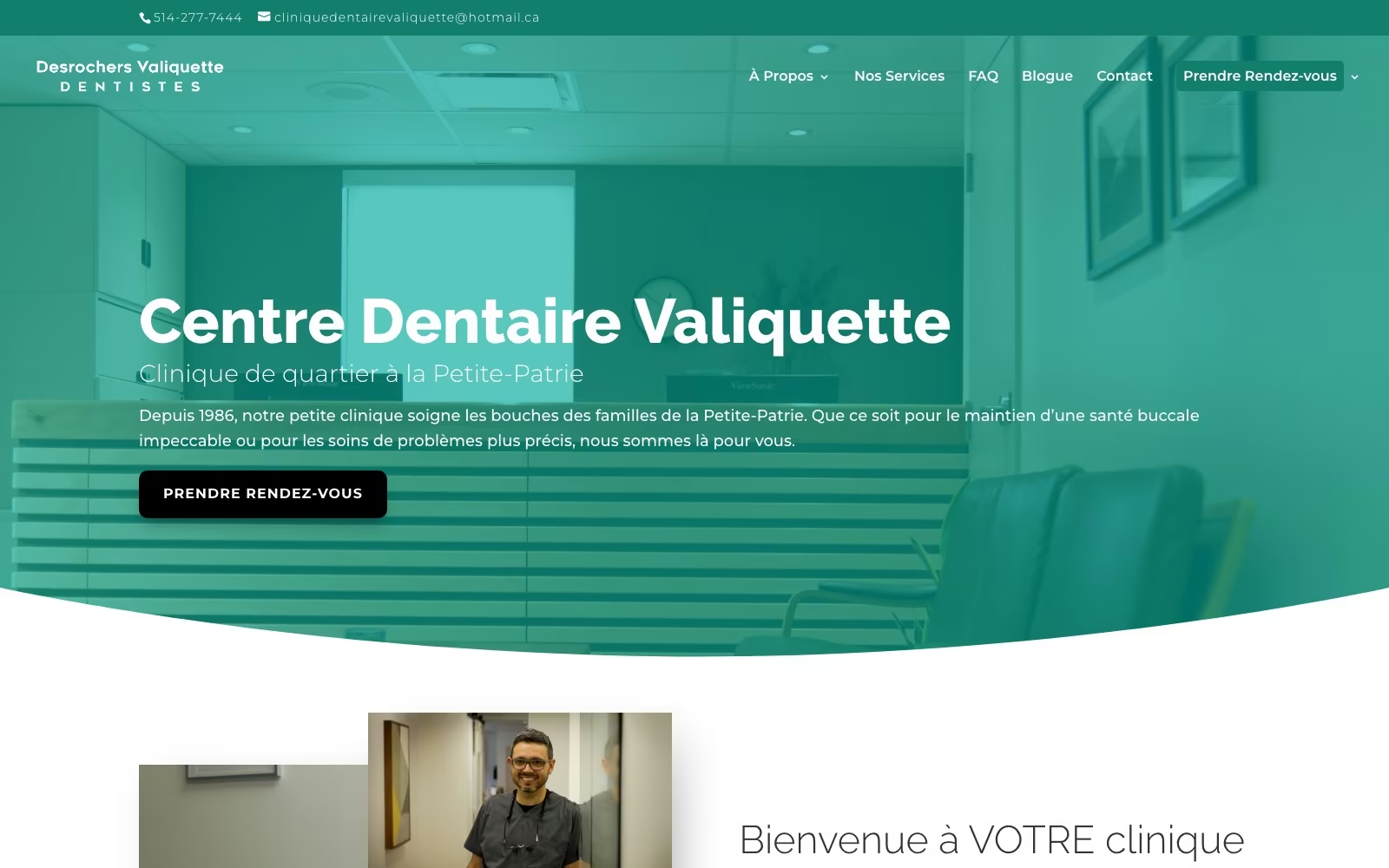

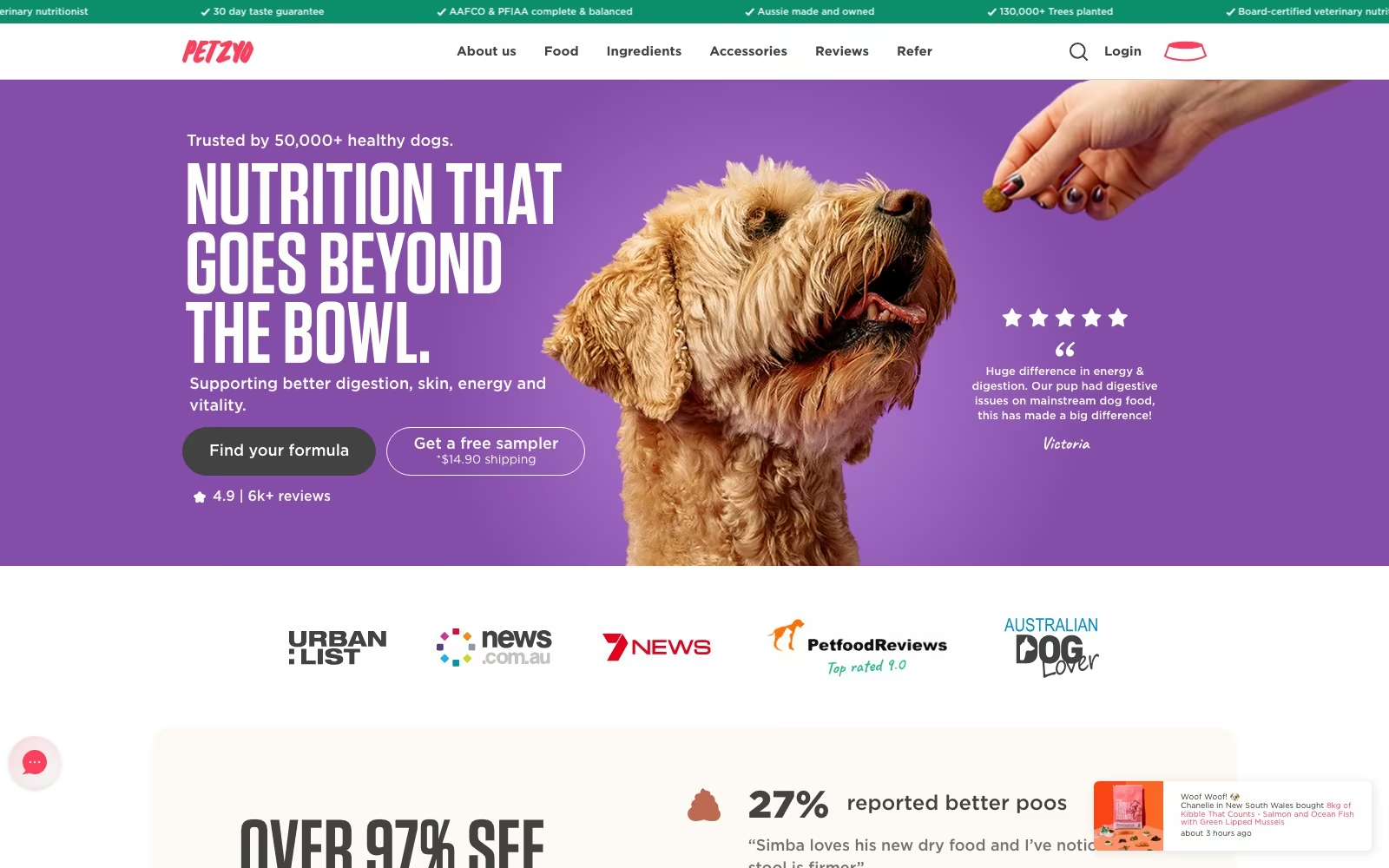















EN

EN

EN


FR

FR
FR

FR

FR

FR

FR

FR


EN
FAQ
What wealth management firms ask us first.
Can a wealth management firm actually run ads inside ChatGPT right now?
Increasingly yes, and we will tell you which side of the line you are on before a budget is committed. OpenAI approves financial services advertisers case by case as the category rolls out, and finance approvals run one advertiser at a time through manual review. We prepare the verification and the application, and the organic answer work begins immediately so your firm gains ground either way.
How does our compliance review fit into this?
At the front, where it belongs, and it tends to improve the work rather than slow it. Before anything is written we agree the claim library with your chief compliance officer: what may be said about performance, fees, credentials and fiduciary status, and in precisely what words. Every ad and page then goes through your review before submission, with version history retained so an examiner can see what ran and when. Firms that have been burned by a marketing supplier inventing claims usually find this the reassuring part of the engagement.
Can we use client testimonials in this channel?
Often yes, and carefully. The SEC marketing rule permits testimonials and endorsements subject to disclosure, oversight and disqualification conditions, and FINRA Rule 2210 sets its own content standards for communications with the public. We build a review and disclosure process with your compliance team first, then use approved reviews where they help most — on your own pages, where an assistant can read them, rather than squeezed into ad copy that cannot carry the required disclosure.
Are we not competing with the chatbot for the client?
Less than it feels. A conversational tool is good at explaining a concept and poor at taking responsibility for a decision, and prospects know it: only 3% of US adults have a great deal of confidence in financial guidance from AI, though 18% have asked for it. That combination is the opportunity. People arrive with a draft plan and want a credentialed human to check it, which is a warmer conversation than a cold seminar lead and usually a faster one to close.
Is this just SEO with a new name?
They overlap, and the overlap works in your favour. Classic search rewards a page that ranks; an assistant rewards a page it can quote accurately, which means a clear answer, a stated fee model, verifiable credentials and structure it can parse. Much of that lifts both surfaces at once. What is genuinely new is prompt auditing, citation tracking across several assistants, and the paid placements themselves, which behave differently from a search auction because the ad sits beside a ChatGPT reply rather than a list of links.
How do you measure something as vague as being cited by an assistant?
With a fixed prompt set and a repeatable test. We agree the questions a prospective client in your market would genuinely ask, run them across ChatGPT, Gemini and Perplexity on a schedule, and record whether your firm appears, what is said about it, and which sources the reply was built from. That gives a baseline and a monthly trend line. Alongside it we tag assistant referrals in analytics and ask at intake, so the qualitative picture and the enquiry count check each other, next to the conversion tracking setup.
What does a programme like this cost?
A fixed monthly fee for the work, quoted after the audit rather than off a rate card, plus whatever media budget you approve separately and pay directly. For most wealth firms the content and citation work is the larger share early on, because it produces the durable position, with media layered in once eligibility is confirmed. We agree a target cost per meeting and per funded relationship in month one and report against it every month, including the months it did not move.
Will prospects from an AI conversation meet our minimum?
The mix is broader than a referral pipeline, so qualification has to be deliberate rather than hopeful. We write the pages and the ads for the situations that match your minimum — a business sale, concentrated equity, an inheritance, a trustee appointment — because specificity filters far better than a disclaimer ever will. And the behaviour reaches further up market than most firms expect: Northern Trust now sees formal proposal requests from clients with as little as $100 million, some drafted with an AI tool.
Do our advisors have to write the content?
No. They talk for forty minutes and we do the rest. A recorded conversation with the advisor who handles business exits, or concentrated positions, or multi-generational planning gives us the specifics that make a page worth citing: what clients get wrong, what the paperwork really involves, what a realistic timeline looks like. We draft, they review, your compliance officer approves, and nothing publishes without that sign-off.
How long before we see anything?
Citation movement usually appears within one to three months of the first content going live, because assistants re-crawl and re-rank sources faster than classic search settles. Paid placements, where eligibility allows, produce data in days but need a few weeks before the numbers mean anything. A predictable flow of meetings from this channel is a six to twelve month proposition, and we agree the leading indicators up front so nobody is waiting in the dark.
What if the platform changes its rules again?
It will, and the plan is built for that. The answer-layer content is yours and keeps working across every assistant and classic search regardless of what any one platform decides about advertising. The media side stays deliberately flexible: small tests, monthly commitments, nothing that depends on a single placement type surviving. Marketing Brew's reporting shows how cautiously regulated advertisers are moving here, and we think that caution is correct. We track the policy pages weekly and tell you what changed in the monthly read.
Should we do this instead of referrals and centres of influence?
Alongside, not instead. Referrals remain the best-converting source of clients for almost every firm we work with, and nothing here jeopardises that. What this channel adds is presence at the moment someone first admits they need help, which used to be invisible: 55% of surveyed consumers asked an LLM for financial advice this year, up from 10%. We usually keep the existing programme funded, add a measured position here, and let cost per funded relationship decide the balance.
Should we tell clients we use AI ourselves?
Yes, and the research says disclosure is what makes it comfortable. Clients are largely relaxed about disclosed AI use for administrative work, but only 24% would feel good about it informing investment recommendations while 33% would be upset. So we keep the boundary explicit in your marketing: technology helps us find and serve you faster; a named human being makes the recommendations. Saying that plainly is also the kind of clear statement an assistant is happy to quote.
Who inside a wealth management business should own this?
Usually marketing runs it, compliance holds a veto, and one senior advisor lends the expertise — that trio is enough. Marketing owns the calendar and the budget for ChatGPT ads and the wider financial content programme; your compliance officer approves the claim library once and then reviews by exception rather than line by line; the advisor gives us forty minutes a month of genuine expertise. Firms without a marketing lead ask us to run it end to end, which works too, provided someone senior has authority to approve financial advice content quickly.
Does ChatGPT advertising work for advisors with a niche client base?
It works better, in our experience. A general wealth management pitch has to beat every large advisory brand for attention; a specific one only has to be the clearest financial answer to a narrow question. Advisors serving surgeons, or airline pilots, or founders after an exit tend to be cited quickly, because the assistant is looking for relevant expertise and there is less of it to choose from. The same specificity makes the ads cheaper to run and the resulting prospects far better qualified, which is the whole point of the exercise.
How much of this is advertising and how much is content?
Early on the split is roughly a third ads, two thirds content, and it shifts as eligibility and results allow. Paid placements inside ChatGPT buy you presence while approvals and rankings settle; the financial content earns the citations that keep working after any campaign stops. We would rather a wealth management client under-spend on media in the first quarter and over-invest in the pages their advisors stand behind, because that is the asset. Once cost per meeting is stable and trustworthy, scaling the ads side is a straightforward decision, and we build the landing pages behind it too.
What happens if ChatGPT gives someone bad financial advice about our firm?
We monitor for it and correct the record, which is a real part of the job. Assistants occasionally state an out-of-date fee, an old address or a regulatory status that has changed, usually because they are reading a stale third-party profile. Our monthly prompt run catches that, and the fix is practical: publish the correct information clearly on your own site in a structured form, then update the directories and reviews the model is leaning on. Most misstatements we have seen clear within a couple of crawl cycles once the source is corrected. The same monitoring runs for our SEO clients.
How is ChatGPT advertising different from Google Ads for a financial firm?
The intent is warmer and the targeting is coarser, so the copy carries more of the load. On Google a person types three words and picks from a list of links; inside ChatGPT they are mid-conversation, several questions into a financial planning problem, and the ad has to belong in that exchange. Targeting is contextual rather than keyword-level, which means an advisor cannot buy their way to precision — the wording, the offer and the landing experience do it instead. Click rates and conversion rates behave differently too, so we keep Google Ads running as the control and judge ChatGPT ads against booked meetings rather than against each other's cost per click.
What kinds of prospects actually turn up from ChatGPT ads?
Mostly people mid-decision rather than at the very start. In our experience with advisors, the prospects who arrive from a conversational tool have already asked it three or four questions: what a fiduciary is, what fee model suits them, whether their situation is high enough in complexity to need help at all. They arrive with vocabulary and a shortlist. That makes for a shorter, franker first meeting, and it also means a vague page will lose them — the financial firm that answers the specific question wins the introduction, and the one with a brochure does not.
Which tools do you use to track how ChatGPT talks about us?
A prompt set we maintain for you, run on a schedule, plus AI visibility tooling that records which sources each answer was built from. We check ChatGPT, Google's Gemini and Perplexity, because the assistants disagree with each other more often than people expect and a gap in one is worth knowing about. Everything lands in the same monthly report as your ads data, your search rankings and your email enquiries, so you are reading one picture rather than four dashboards. You keep access to all of it, and the prompt set is yours to reuse.
What are the real risks of advertising a financial product this way?
Three, and we plan for each. The regulatory risk is that an ad or a quoted page misstates a financial product or an outcome, which is why the claim library and your compliance sign-off come before the writing rather than after. The reputational risk is appearing beside a conversation where no advisor should appear, which we handle with deliberate context exclusions. The commercial risk is simply that the channel is young: volumes are still modest, so we size the test to what you can comfortably learn from and keep your proven channels funded throughout.
How do you help our advisors sound trustworthy to a model and a human at once?
By writing plainly and showing the working. A model rewards a page that states who the advice is for, what it costs and where the limits are; people reward exactly the same thing, which makes this easier than it sounds. Credentials, registrations and approved client testimonials are published in a structured, machine-readable form so an assistant can repeat them accurately instead of paraphrasing. And every page is written for the client in front of you: named advisors, real situations, no anonymous house voice. Trust in this channel is built by specificity, not adjectives.
What does the first month of communication with your team look like?
Predictable, and light on your calendar. Week one is a kickoff and access handover; week two brings the eligibility read and the assistant audit, sent by email and walked through live. From there a standing thirty-minute session each week with the people doing the work, one shared channel for anything between sessions, and a named senior strategist who answers rather than routes. Your compliance officer is in the loop from the first draft. If something is not working we tell you in that session, not at the quarterly review.
Can you run our other channels too?
Yes, and the numbers get more honest when one team holds them. Our AI search, paid search and analytics specialists work from the same plan, so a funded relationship is attributed once instead of claimed by three suppliers. Hiring us for this channel alone is equally fine — we document the setup and leave every account open in your name.

.webp)
.webp)