Built for a wet phone, one bar of signal.
one bar of signal
A water damage restoration website has one job: turn a frightened property owner standing in the damage into a phone call. 72% of restoration leads arrive from mobile during the emergency itself, so we design restoration websites around speed, a tap-to-call button and plain answers. We already run marketing for restoration companies.






Tell us a little about your brand and we'll be in touch within 24 hours to lock in a time.



FOUR LEVERS
Four levers turn a restoration website into a phone.
into a phone
Speed on a bad connection, a tap-to-call button that never scrolls away, a page for every service and service area, and copy that answers who pays. Everything else on a restoration website design is decoration on top of those four.
Mobile speed
Emergency conversion design
Structure that ranks
Trust and the insurance question
Load before she taps the next result.
The visitor is on a phone, often on poor signal, often in the dark. Across 500 audited contractor sites the median page took 5.4 seconds and only 18% loaded in under three, and measured mobile homepage load runs 7.88 seconds for roofing brands and 6.24 for HVAC.
That is the bar you are actually competing against, and it is a low one. We build restoration websites lean - real image budgets, no bloated page builder stack, fonts and scripts kept honest - so the site is open before a slower competitor has painted its header.
- A performance budget agreed before design starts
- Core Web Vitals tested on a mid-range phone, not a desktop
- Image weight and third-party scripts kept under control
- Speed retested every time content is added
5.4s
median load time across 500 contractor sites
18%
of those sites loaded in under three seconds
One action, always in reach.
A restoration website does not need a clever navigation. It needs a tap call button fixed to the screen, a response time stated in the first line, and coverage a visitor can confirm in two seconds. Audited restoration sites convert between 8% and 14%, and the gap between those two numbers is design, not traffic.
We design the emergency path first and the brand pages second, because 69% of restoration customers go with the first company they reach. Every extra tap between the visitor and your dispatcher is a job handed to whoever made it simpler.
- Persistent tap-to-call button on every mobile page
- Response time and 24/7 availability above the fold
- Service area confirmable without scrolling
- Forms kept short, with the phone always offered first
8-14%
conversion range on audited restoration sites
79%
of contractor site traffic arrives on mobile
A page per service, a page per area.
Most restoration websites hide water extraction, mold remediation, fire and smoke damage, sewage cleanup and reconstruction behind one services page. Search engines cannot rank it and a property owner cannot tell whether you handle her problem.
We build the structure the way the search happens: a real page for each restoration service, a real page for each service area, and internal links that connect them properly. The design and the restoration SEO are the same decision made once, rather than a rebuild followed by an argument.
- A written page per restoration service
- Service area pages for the cities your trucks reach
- Schema markup and clean heading structure built in
- Redirects mapped before launch, never after
84%
of restoration customers search online first
Answer who pays, in the first screen.
Underneath the panic is a financial question, and the site that answers it wins. Direct insurance billing messaging converted 28% higher across 200 audited contractor websites - a larger effect than almost any layout change available.
So we put the carrier relationship, the certifications and the real job photography where they are read, not on an About page nobody opens. Real crews, real losses, dated reviews naming the city: proof that you have handled this exact thing before, three streets away.
- Direct insurance billing stated plainly, high on the page
- Certifications and licences shown, not claimed
- Photography from your own jobs, never stock
- Recent reviews naming the city and the loss type
28%
conversion lift from direct insurance billing messaging
69%
of customers choose the first company they reach
of contractor website traffic arrives on a mobile phone
median load time across 500 audited contractor sites
A written page for every city your trucks genuinely reach
Website, hosting, content and analytics in your own accounts
We made the difference for those brands

Consumer tech and platforms

Food & beverage

Home essentials, appliances, kitchen & pet

Retail & commerce

Retail & commerce

Healthcare & regulated services

Beauty, personal care & wellness

Beauty, personal care & wellness

Home essentials, appliances, kitchen & pet

Consumer tech and platforms

Beauty, personal care & wellness

B2B software, fintech, insurance

Consumer tech and platforms

Consumer tech and platforms

Home essentials, appliances, kitchen & pet

Creative, content, arts & culture

Retail & commerce

Home essentials, appliances, kitchen & pet

Consumer tech and platforms

Beauty, personal care & wellness

Retail & commerce

Creative, content, arts & culture

Retail & commerce

Home essentials, appliances, kitchen & pet

B2B software, fintech, insurance

Healthcare & regulated services

Home essentials, appliances, kitchen & pet

B2B software, fintech, insurance

B2B software, fintech, insurance

Creative, content, arts & culture
01 — The challenge
The website is the bottleneck, not the traffic.
Most restoration companies we meet are already buying attention. Emergency terms cost $80.41 a click and around $500 a lead, and that traffic lands on a site that takes six seconds to open and hides the phone number in a header menu.
The result is a marketing budget doing half its work. Audited restoration sites convert between 8% and 14%; moving from the bottom of that range to the top nearly doubles the jobs from the same spend, with no extra media at all.
“Our site looked great on the designer's monitor and lost us jobs on a phone.”
That is the pattern. Restoration websites get judged in a boardroom on a large screen and used in a flooded basement on a cracked phone. 72% of restoration leads come from mobile during the emergency, so the phone is the real design brief.
02 — Our approach
Design the emergency path first.
We start on a phone. The first thing we design is the path from a paid or map result to a ringing dispatcher: what loads, how fast, what is stated in the first screen, and where the tap-to-call button sits when the page scrolls. The desktop layout is derived from that, not the other way round.
Then the structure. A page for every restoration service you deliver and every service area your trucks genuinely reach, with headings, schema markup and internal links built in from the start so the site launches ready to rank rather than waiting for a separate project.
Then the trust layer, written from interviews with your project managers. How the insurance claim works, which carriers you bill directly, what happens in the first four hours, how long drying takes, what happens to the contents. Real photography from your own losses and reviews that name the city.
We migrate carefully - redirects mapped before launch, rankings watched after - and we measure the result in calls, not compliments. If the site is not producing more booked losses within a quarter we come back and say so rather than waiting to be asked.
03 — What we did
From a brochure to a dispatch line.
The same sequence whether you run two trucks or a multi-branch franchise.
01
Tested on a real phone
Speed, tap targets, call paths and content gaps measured on a mid-range handset against the restoration companies beating you locally, with every defect named in writing.

02
The emergency path designed
The route from result to ringing phone built first - persistent tap to call, response time and coverage stated in the first screen, insurance answered before the fold.

03
Services, areas and proof
A page per restoration service and service area, written from interviews with your project managers, with real job photography and schema markup built in rather than added later.

04
Launched and measured
Redirects mapped before launch, rankings watched after, and the new site reported on in calls and booked losses instead of sessions.

WHAT YOU GET
Deliverables you keep, whatever happens next.
you keep
The website, the hosting, the content and the analytics live in your own accounts from the first week.

Mobile and conversion audit
Your current site measured on a real handset for speed, call paths and content gaps against the restoration companies beating you locally, with every defect named in writing.

Structure and page map
Every restoration service and service area mapped to its own page before design starts, with the questions each page must answer written down first.

Emergency conversion design
A persistent tap-to-call button, response time and coverage above the fold, and short forms that always offer the phone first - designed on a phone before a desktop.

Written service and area pages
Copy for every loss type and city, drawn from interviews with your project managers, with the insurance and drying detail answered plainly rather than avoided.

Technical build and migration
A lean build with schema markup and clean headings, redirects mapped before launch and rankings watched afterwards, so a redesign protects the visibility you already have.

Post-launch measurement
Call tracking and analytics configured in your own accounts, with a written read on calls and booked losses by page after launch rather than a handover and silence.
HOW WE WORK
Operating standards, not promises.
Operating standards
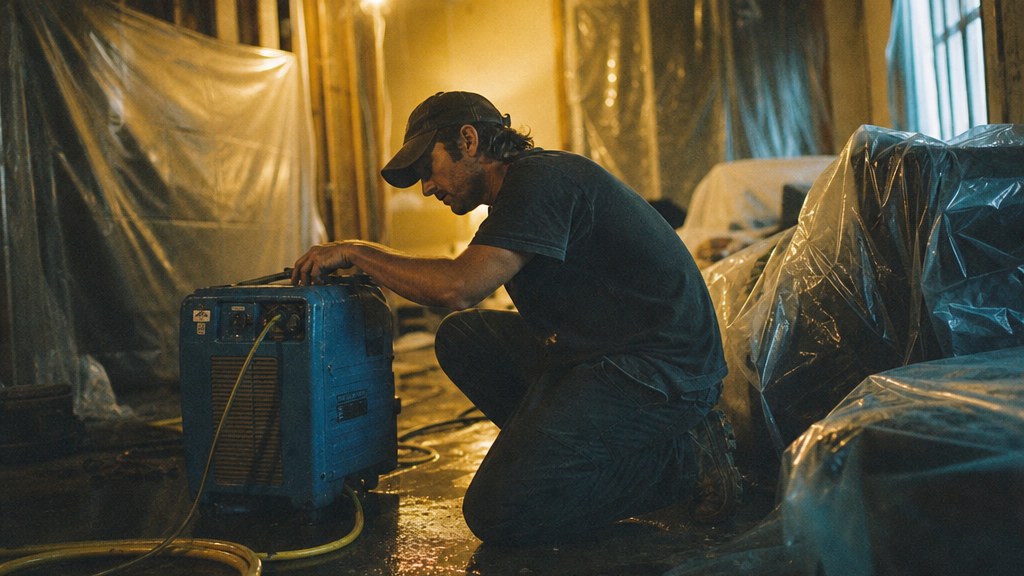

Emergency service pages
The mobile path from a 2am search to a ringing dispatcher, designed first.
ExploreService area pages
A written page for each city your trucks reach, not eighty spun duplicates.
ExploreCommercial and large loss
Longer pages for facility managers who need response times, references and scope.
Explore

















Built on trust. Proven by results.
We partner with SMBs and Fortune 500 companies to deliver more than reach — we bring clarity, execution, and measurable outcomes. Every successful partnership starts with a strong culture fit and a shared drive to grow.






CASE STUDIES
Case studies
Website Portfolio
Video Ads
Static Ads































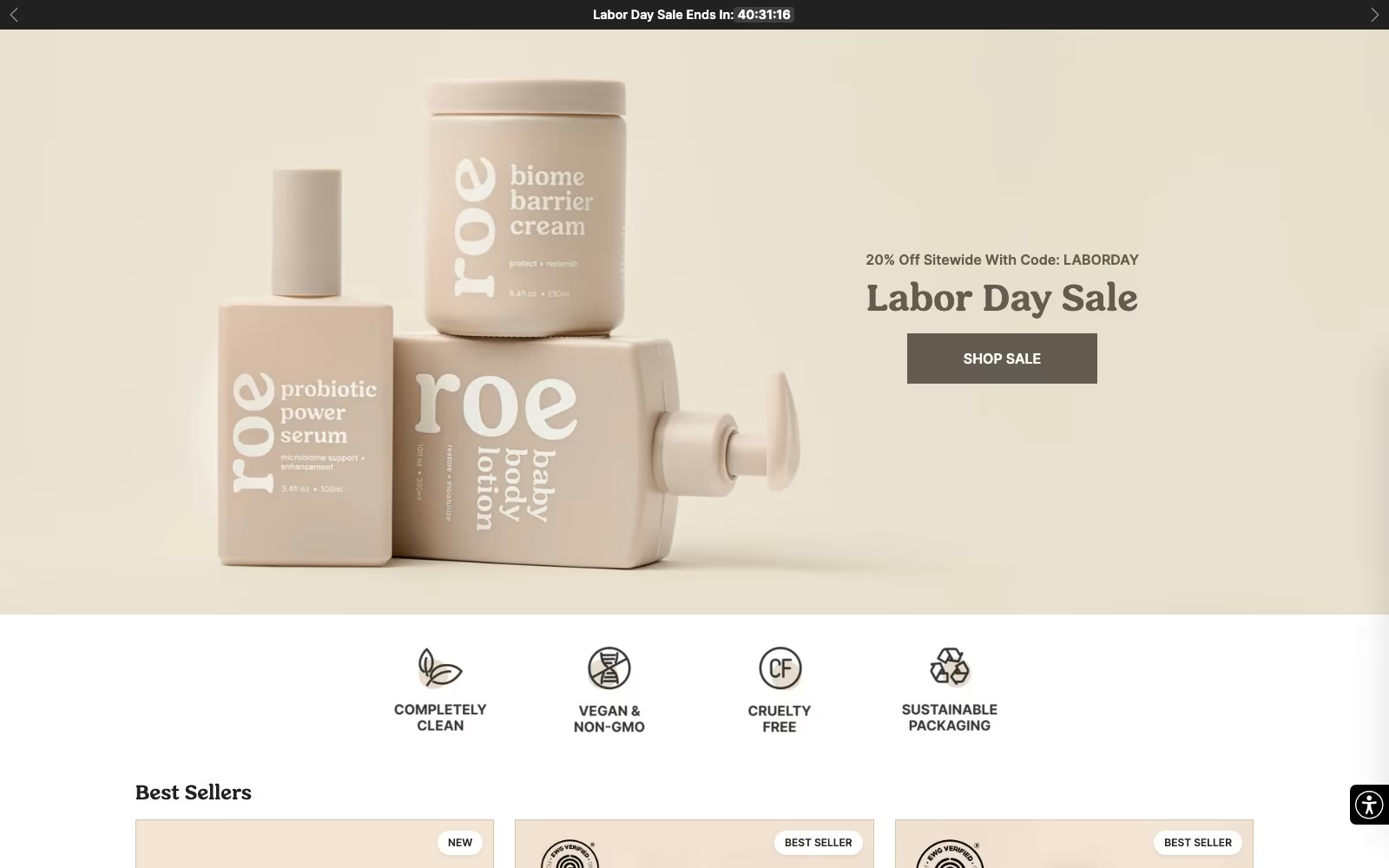

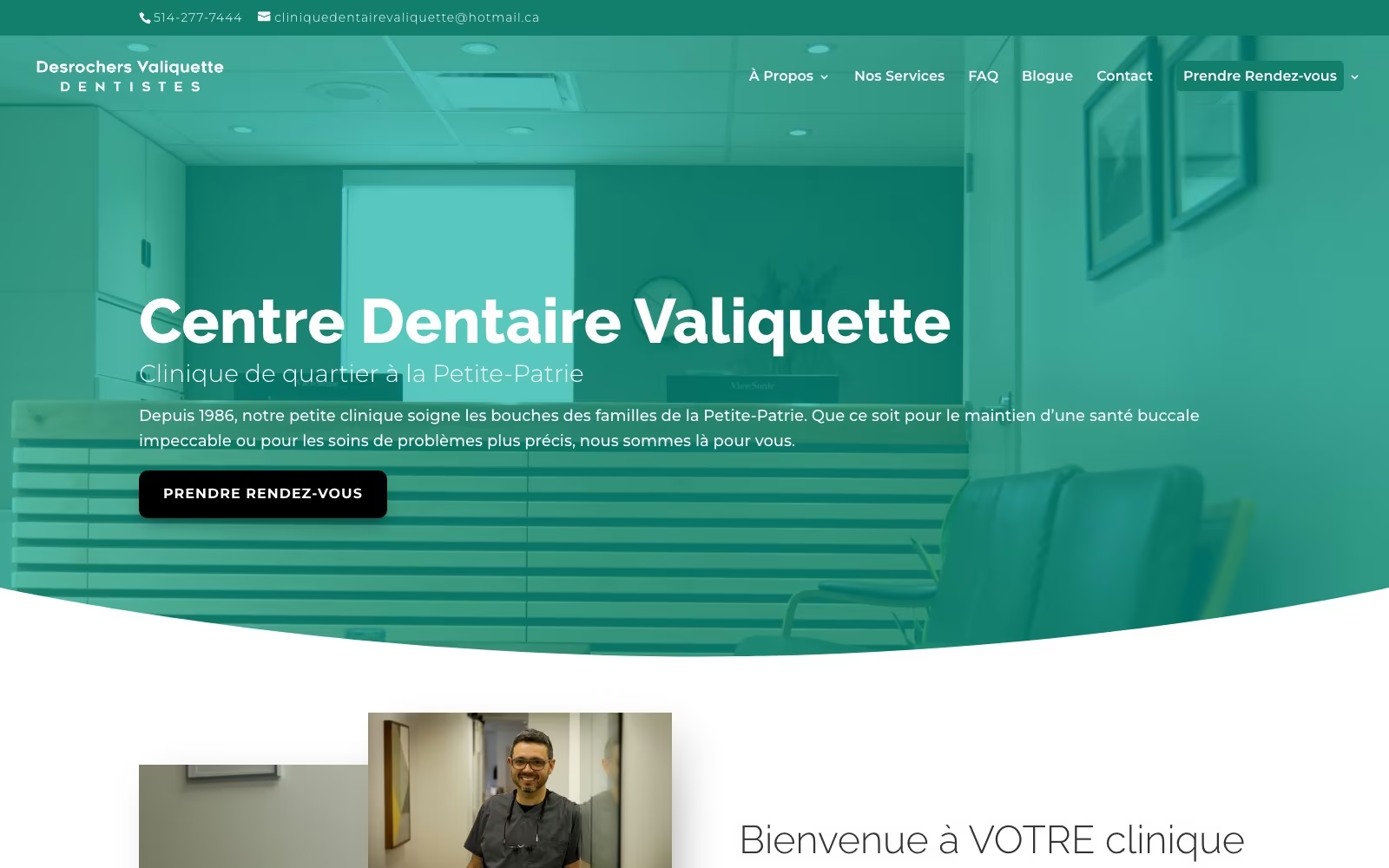

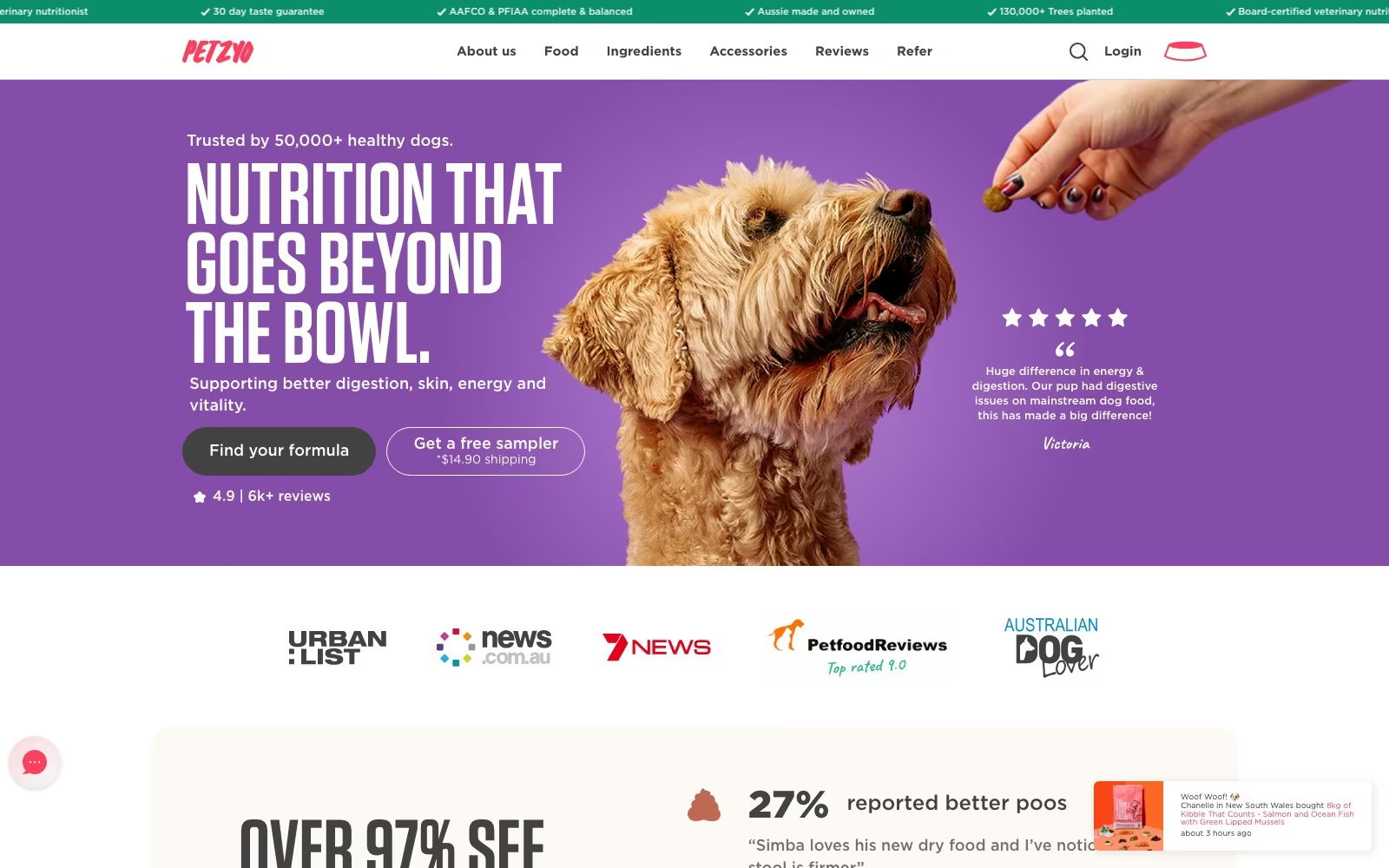

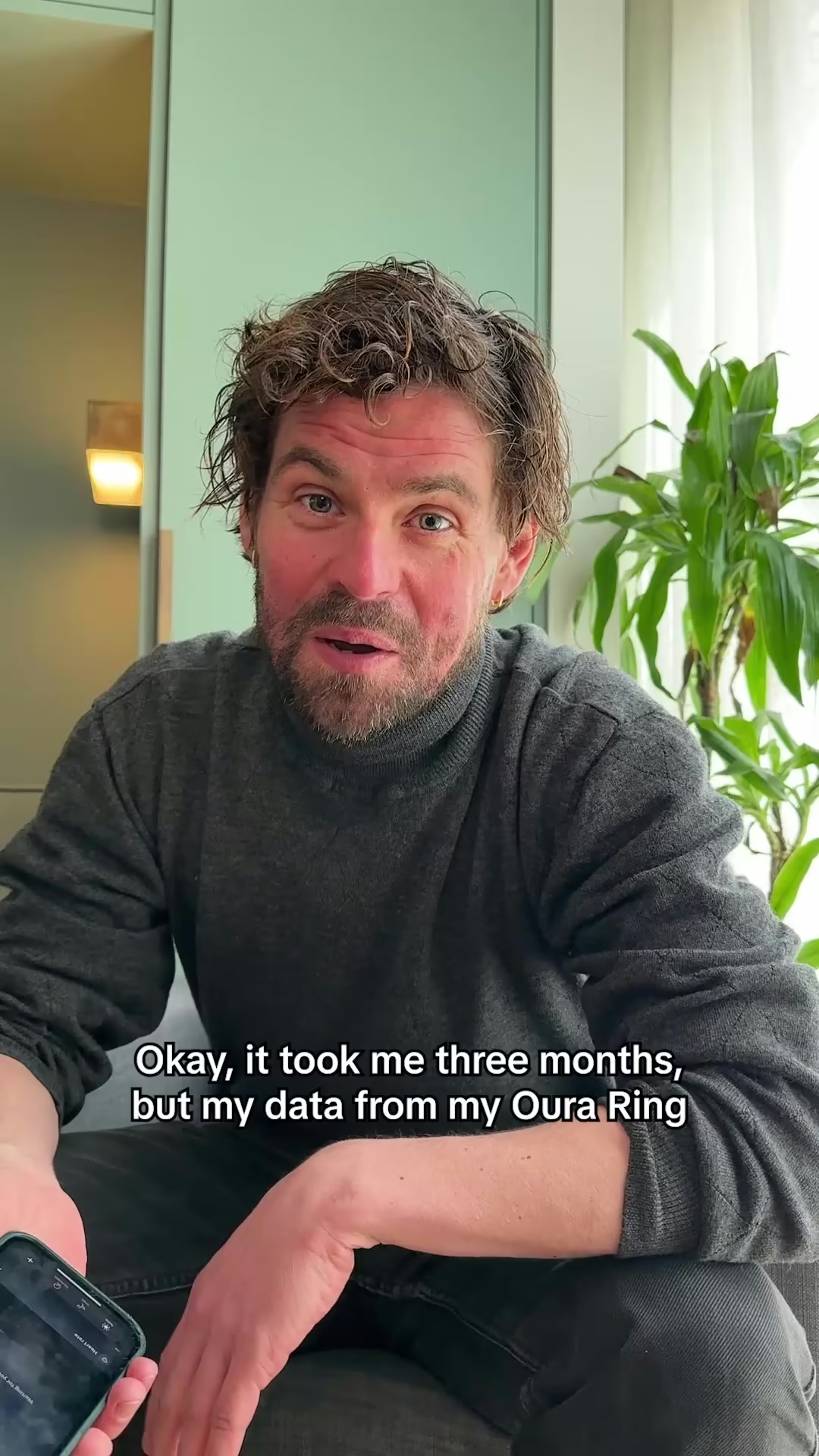












EN

EN

EN


FR
FR
FR

FR

FR

FR

FR

FR


EN
FAQ
Questions restoration owners ask us
Will a redesign hurt our current rankings?
Handled properly it protects them, and that is the part we take responsibility for. Every existing URL is inventoried, redirects are mapped and tested before launch, the structure is carried over deliberately, and rankings are monitored daily for the first weeks. Rankings usually improve after launch, because the new site is faster and finally has a page for each service and area to rank with.
How fast does a restoration website need to be?
Faster than the competitor loading beside you on the same phone, which is a low bar today. The median contractor site takes 5.4 seconds and only 18% load in under three. We set a performance budget before design starts and test on a mid-range handset rather than a designer's desktop, because that is where the job is actually won.
Why does mobile matter so much in restoration?
Because the search happens at the damage. 72% of restoration leads come from mobile during the emergency and 79% of contractor traffic overall is mobile. A layout that reads beautifully on a wide monitor and buries the phone number behind a menu is losing jobs every night.
What actually goes above the fold?
Three things: that you answer now, that you cover her area, and that you deal with the insurance company. Direct insurance billing messaging converted 28% higher across 200 audited contractor sites. Awards, history and mission statements are real assets, but they belong further down the page.
Do we need a page for every service area?
For the cities your trucks genuinely reach, yes - an owner wants her own area named and search engines need something specific to rank. What we will not do is generate eighty near-identical pages with the city name swapped, because that damages the site. We write the areas that matter properly and expand from there.
Should mold remediation have its own pages?
Yes, and usually a small section rather than a single page. Mold is a slower, more anxious decision than a burst pipe: people read about containment, air quality and clearance testing for days. That content converts a different visitor entirely, and it will not fit on a general water damage page without weakening both.
Can you improve our existing site instead of rebuilding?
Often, and we will say so honestly - it is usually the cheaper right answer. Where the platform is sound we fix speed, restructure pages and rewrite the emergency path in place. We recommend a rebuild only when the existing stack genuinely cannot be made fast or cannot carry service and area pages, and we show you the evidence for that call.
Do you write the content or do we?
We write it, from interviews with your project managers, and you approve every page. Nobody outside your business knows your drying standards, your response times or which carriers you bill directly, and those specifics are exactly what makes a restoration website read as real rather than templated.
How does the website work with our SEO and ads?
They are one decision. The structure we build is the structure restoration SEO needs, and the emergency pages are where restoration PPC traffic lands. Designing the site without them is how companies end up paying twice - once for the build, once for the retrofit.
What platform do you build on?
Whatever keeps the site fast and lets your team update it without calling us. We build most restoration sites in Webflow, and we work in WordPress where an existing setup justifies it. The platform matters far less than the performance budget and who holds the keys - which is you.
How do you measure whether the new site worked?
Calls and booked losses by page, through call tracking and analytics configured in your own accounts before launch so there is a genuine before and after. Sessions and bounce rate are diagnostics in the report; the score is how many more jobs the same traffic produced.
What does restoration web design cost?
Scope drives it: how many services, how many service areas, how much content we write, and whether we are migrating from an existing site with rankings to protect. We quote after the audit so the number reflects your situation rather than an average.
Most of the budget is people - strategy, writing, design and build - not licences. We do not mark up tools or hosting, and everything we build stays yours if you ever leave.
How do we choose between restoration web design agencies?
Ask three questions. Will they commit to a page speed target on a mid-range phone? Who writes the content, and have they interviewed a restoration project manager before? And how do they handle redirects on migration?
An agency that answers with measurements, names the people doing the work, and asks about your response times and carriers before quoting is doing the job properly. Ask to see a site they launched a year ago and what happened to its rankings afterwards.
How long does the project take?
Eight to twelve weeks for most restoration companies, and the variable is content rather than design - how many service and area pages we are writing and how quickly we can get time with your project managers. We give you the schedule with the quote and tell you early if anything slips.
Can our team update the site afterwards?
Yes, and it is built for that. Your team can add service areas, job photography, reviews and posts without touching code or calling us. We train whoever will be doing it, leave written documentation, and stay available for the structural work - but you are never locked in to us for routine changes.
What happens after launch?
We watch it. Rankings and redirects are monitored daily for the first weeks, speed is retested as content is added, and you get a written read on calls and booked losses by page. Launch is the middle of the project rather than the end of it, and the same people stay on the account.
Who actually does the work?
A named senior designer and writer who learn your service area, your response promise and the carriers you bill, supported by our build and conversion tracking teams. You have their direct line, and the person presenting the design is the person who made it.

.webp)
.webp)