Book the truck, not the visit.
not the visit
HVAC is one of the most expensive auctions in neighbourhood search, and the gap between a good account and a wasteful one is measured in thousands a month. We run Google Ads, Local Services Ads and Microsoft Ads for heating and cooling companies — managed against booked jobs rather than form fills — alongside our paid search and conversion tracking teams.






Tell us a little about your brand and we'll be in touch within 24 hours to lock in a time.



FOUR WORKSTREAMS
Four workstreams behind paid campaigns that fill the schedule.
that fill the schedule
Search campaigns built around emergency and replacement intent, Local Services Ads where they beat the auction, landing pages that make a phone call easy, and the measurement that shows which spend produced a paying customer.
Google Ads and Microsoft Ads
Local Services Ads and Performance Max
Landing pages and call handling
Tracking and performance management
Buy the searches that end in a booked job.
A homeowner typing “AC not cooling” on a 95-degree afternoon is worth several times a curious browser, and the paid search auction knows it. HVAC keywords are priced accordingly: the average HVAC price per click across 176 US cities is $20.12, with a median of $15.50, so a loose keyword list burns real money before lunchtime.
We build tight campaign structures around service, urgency and equipment intent, with search terms and negative keywords reviewed weekly rather than at setup. Branded and non-branded campaigns stay separate, because SearchLight's dataset of 816 contractors shows branded leads at $34 against $149 for non-branded search — averaging the two together hides where the money actually goes.
- Campaign structure built around service and urgency, not around your website menu
- Search term review and negative keyword work every week
- Service area, radius and hours targeting matched to your vans
- Microsoft Ads run where the volume and CPC justify it
$20.12
average HVAC price per click across 176 US cities
$149
average cost per lead on non-branded HVAC search
Two channels that usually undercut the search auction.
Local Services Ads sit above the paid search results, are charged per lead rather than per click, and carry the Google Guaranteed badge that homeowners actually notice. Local Services Ads typically cost 40 to 60% less per acquisition than traditional search ads across most trades, which makes the licence and review requirements worth the paperwork.
Performance Max is the other lever people get wrong. Used carelessly it eats branded traffic; used well it is the cheapest source of new customers in the account — $72 per lead against $149 on non-branded search, at a 32.2% book rate. We run it with exclusions and honest reporting on which channel produced the job.
- Google Guaranteed listings set up, verified and disputed when a lead is not real
- Review generation supported, because ranking there depends on it
- Performance Max fenced off from your brand traffic
- Channel-level reporting so no campaign takes credit twice
40-60%
typical Local Services Ads saving per acquisition vs search ads
$72
average Performance Max cost per lead in the SearchLight HVAC dataset
The page and the phone decide whether the click paid.
Most HVAC ad budgets are lost after the visit begins. The ad promises same-day service, the visitor lands on a homepage with a brand video, and the phone number is a tiny link at the bottom of the screen. Phone calls are 70 to 80% of home services conversions, so a page that hides the number is throwing away the expensive part.
The upside is real: HVAC campaigns convert at 9.51% on average, and the most efficient market in that dataset runs 15.0%. We build mobile-first pages per service and per season with our landing pages team, then work on how fast the phone gets answered.
- One page per service and season, matched to the ad that sent the click
- Tap-to-call above the fold on every device
- Booking and finance options stated plainly, not buried
- Phone handling reviewed with the people answering the phone
9.51%
average HVAC paid search conversion rate
70-80%
share of home services conversions that arrive as phone calls
Count booked jobs, not form fills.
Ad platforms optimise towards whatever you tell them to count. Count form submissions and you will get the cheapest possible form submissions, most of which are price shoppers or somebody wanting a filter. Count booked jobs and the same budget starts finding replacement work.
This is the industry's weak spot: 67% of home service businesses cannot connect marketing spend to revenue and 78% run two or more vendors. We connect phone records and your field service software, then report price per booked job against the $66.69 average Google Ads cost per lead and $5.42 average CPC of 2026.
- Phone measurement and conversion actions rebuilt and verified before spend scales
- Booked jobs fed back to the platforms where your software allows
- Reporting on price per booked job and per paying customer
- Weekly optimisation with a monthly written read
$66.69
average Google Ads cost per lead across industries in 2026
$472
blended spend per paying HVAC customer in the SearchLight dataset
blended HVAC Google Ads cost per lead across 816 contractors
shoulder-season reduction in effective HVAC cost per lead
Search term review and negative keyword maintenance
Ad accounts, phone numbers and pages in your name
We made the difference for those brands

Retail & commerce

Healthcare & regulated services

B2B software, fintech, insurance

Home essentials, appliances, kitchen & pet

Creative, content, arts & culture

Home essentials, appliances, kitchen & pet

Beauty, personal care & wellness

Retail & commerce

Food & beverage

Home essentials, appliances, kitchen & pet

B2B software, fintech, insurance

Food & beverage

Travel & mobility

Food & beverage

Beauty, personal care & wellness

Creative, content, arts & culture

Consumer tech and platforms
Retail & commerce

B2B software, fintech, insurance

B2B software, fintech, insurance

B2B software, fintech, insurance

Consumer tech and platforms

Beauty, personal care & wellness

Travel & mobility

Home essentials, appliances, kitchen & pet

Consumer tech and platforms

Consumer tech and platforms

Consumer tech and platforms

Food & beverage

Home essentials, appliances, kitchen & pet

Beauty, personal care & wellness
01 — The challenge
The leads were cheap. The trucks stayed in the yard.
This is the story behind most HVAC accounts we inherit. The dashboard shows hundreds of conversions, the price per enquiry looks competitive, and the dispatcher spends the week on calls about thermostat settings and quotes for equipment nobody intends to buy. The campaign is working perfectly — at buying the wrong thing.
“We had 180 leads last month and 24 of them turned into work.”
The benchmark shows how much room there is between those two numbers: the blended HVAC book rate across 816 contractors is 41.7%, but branded campaigns book at 55.3% while Performance Max books at 32.2%. Cost per lead alone cannot tell you which of those you are buying.
02 — Our approach
Fix the measurement, then buy the demand worth buying.
We start with measurement, because everything downstream is guesswork without it. Phone records on every campaign, conversion actions cleaned up so a chat opening does not count as a lead, and a connection to your field service software wherever it allows one. Until we can see which spend produced a booked job, we would rather not scale it.
Then the account gets rebuilt around intent. Emergency, repair, replacement and maintenance demand behave differently and deserve their own campaigns and budgets. Branded search stays separate so nobody claims credit for customers you already had. Local Services Ads run where the economics beat the auction, and Performance Max is fenced in rather than left to graze on your brand.
After that it is seasonal management: spend pushed into the heat waves and cold snaps, shoulder seasons used for maintenance plans and tune-ups at a lower price per enquiry, and a monthly written read on price per booked job. The ad accounts, phone numbers and landing pages stay in your name.
03 — What we did
Four weeks to a clean account, then a weekly rhythm.
Audit and measurement, build, launch, then seasonal management — with weekly optimisation and a monthly written read on what the spend produced.
Week 1 / Audit
Where the current budget is going
Search terms, service areas, devices, call handling and conversion actions reviewed, with wasted spend and miscounted conversions listed plainly.

Week 2 / Build
Structure, offers and pages
Campaigns rebuilt around emergency, repair, replacement and maintenance intent, each pointed at a page written for that job rather than the homepage.

Weeks 3-4 / Launch
Live, with the phones ready
Campaigns go live once phone measurement is verified and the dispatch team knows what is coming, so a booked job is never lost to a missed call.

Ongoing / Manage and scale
Seasonal planning, weekly optimisation
Negatives, bids and spend moved with the weather and the booking board, reported on price per booked job rather than per visit.

WHAT YOU GET
Deliverables you keep, whatever happens next.
you keep
Ad accounts, phone measurement numbers, creative and landing pages stay in your name from day one.

Account and measurement audit
What the current campaigns are really buying, and every conversion action counting something that is not a job.

Campaign and budget plan
Which channels get what through the year, and the price per booked job each one has to hit to be worth running.

Ad copy built for the trade
Copy written for emergency, replacement and maintenance demand, in enough volume to keep testing rather than running one ad forever.

Service landing pages
A mobile-first page per service and season with tap-to-call above the fold and finance options stated plainly.

Reporting on booked jobs
Leads, calls, booked jobs and spend in one view, with a written note on what moved instead of a wall of platform charts.

Phone handling playbook
What the office says when the phone rings, because response speed decides what an expensive visit was actually worth.
HOW WE WORK
Operating standards, not promises.
Operating standards


Residential HVAC companies
Repair, replacement and maintenance plans in a crowded neighbourhood auction.
ExploreCommercial HVAC contractors
Longer sales cycles, bigger contracts, and far fewer searches to win.
ExploreMulti-location and franchise operators
Several service areas, one budget, and a need to know what each market produced.
Explore

















Built on trust. Proven by results.
We partner with SMBs and Fortune 500 companies to deliver more than reach — we bring clarity, execution, and measurable outcomes. Every successful partnership starts with a strong culture fit and a shared drive to grow.




CASE STUDIES
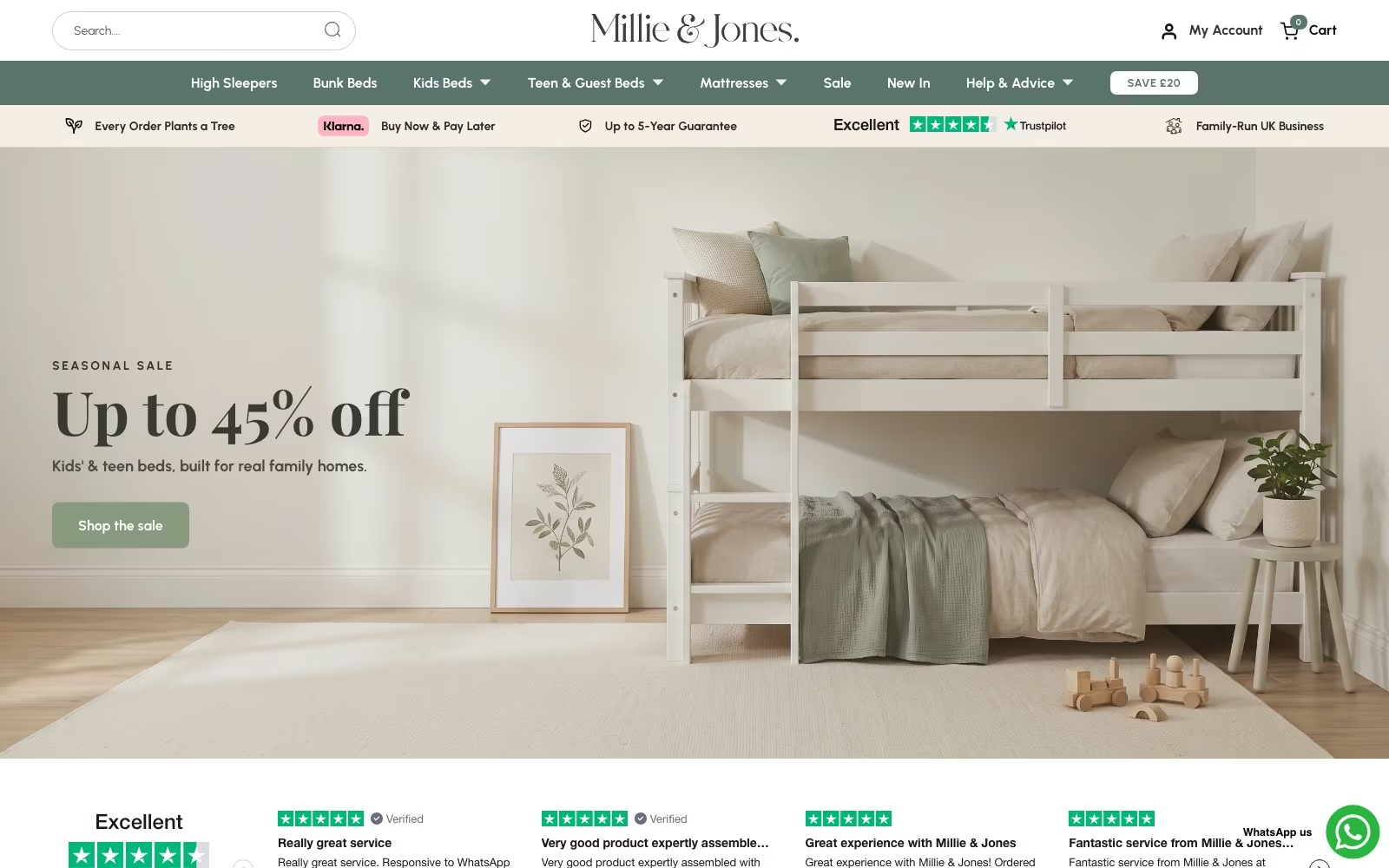
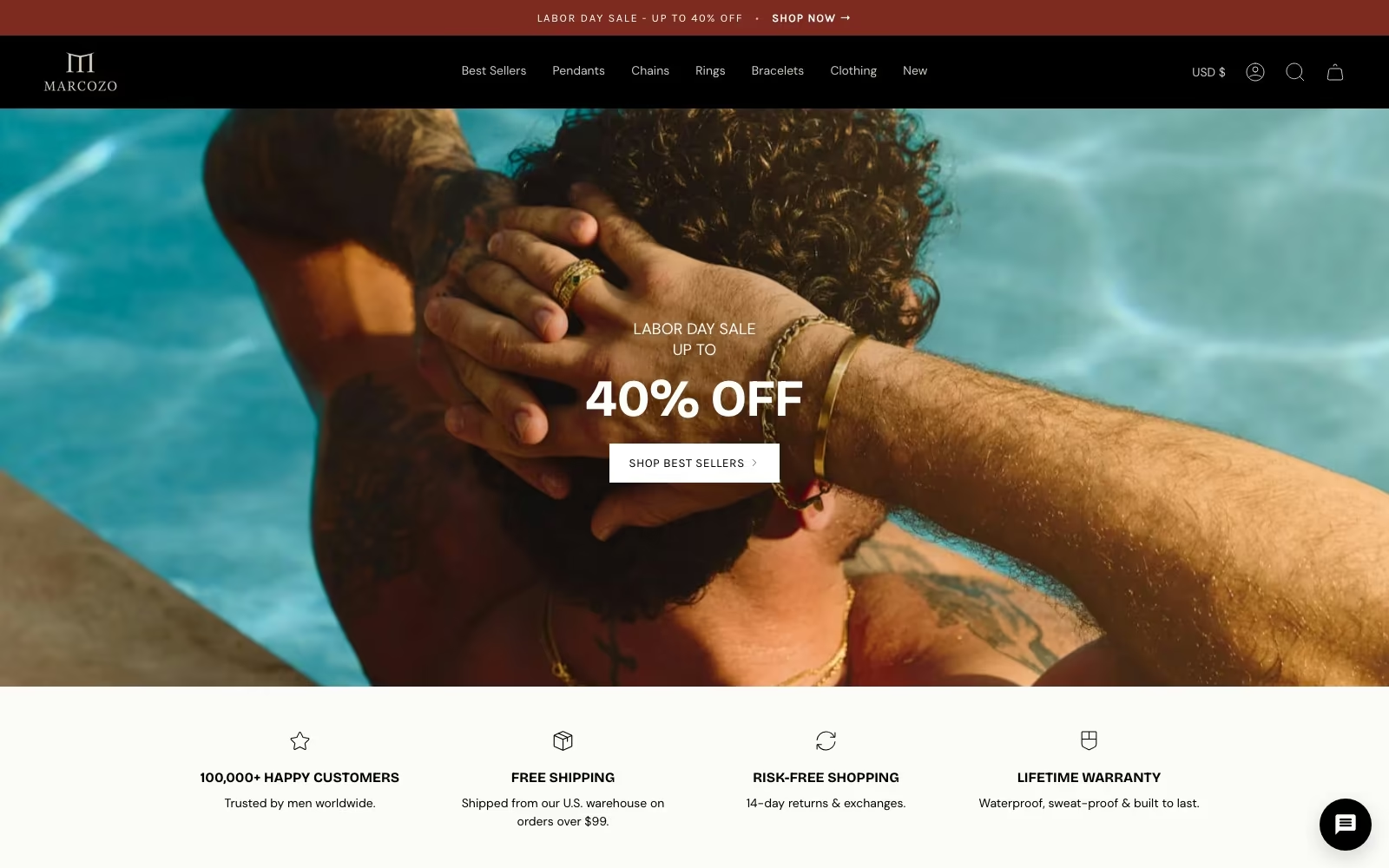
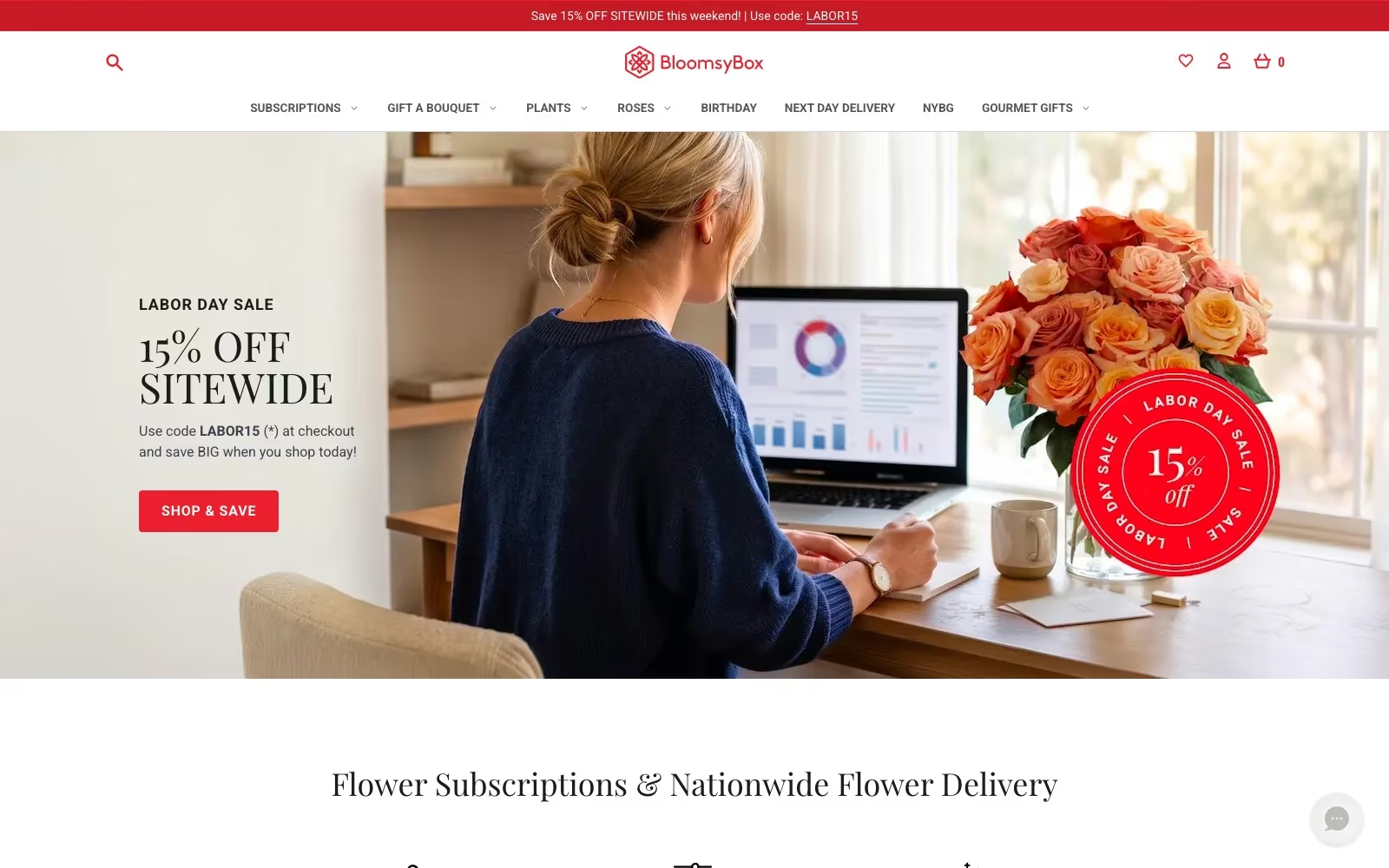
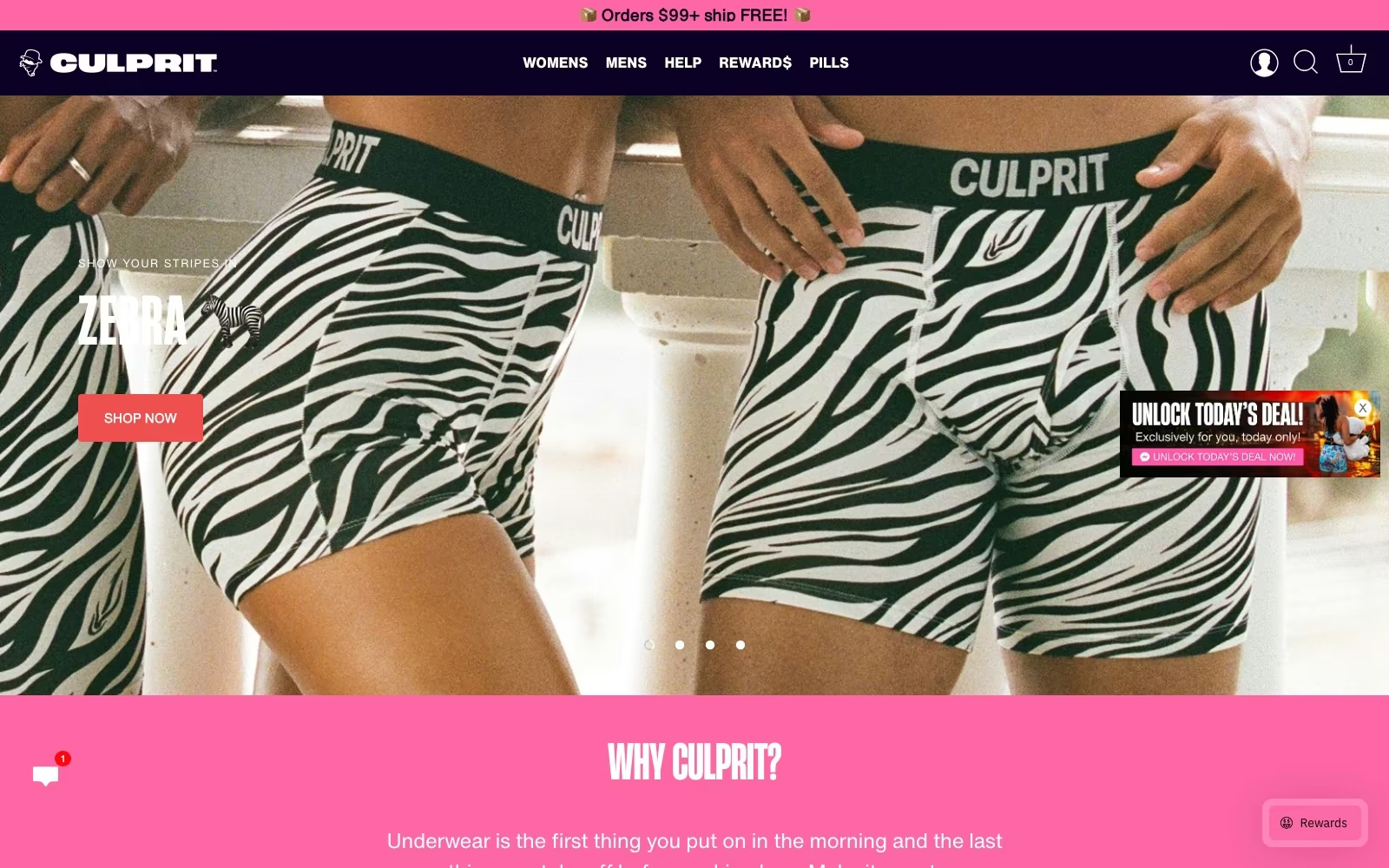
Case studies
Website Portfolio
Video Ads
Static Ads




























































FAQ
Questions HVAC owners ask us
How much should an HVAC company spend on PPC each month?
Enough to hold position through your busy season in the areas your vans actually cover. We scope it from your average job value, your capacity and how contested your market is. For context, the average contractor spends 6% of annual revenue on marketing, and those investing at least 12% see net profits move from 5% to 9% — and we will say plainly if your target needs more budget than you planned.
What is a good cost per lead for HVAC Google Ads?
It depends on campaign type more than on your market. Across 816 contractors the blended cost per lead is $104, made up of $34 branded, $149 non-branded search and $72 Performance Max. The more useful number is spend per paying customer, which in that same dataset runs $472 blended. A $149 lead that books beats a $40 lead that wanted a filter price.
Should we run Local Services Ads as well as Google Ads?
For most residential contractors, yes. Local Services Ads usually cost 40 to 60% less per acquisition than search ads, and the Google Guaranteed badge earns attention from homeowners who do not know your brand. Search still matters for equipment, commercial and replacement keywords that LSA does not serve, so we run them together and report each one separately.
Why were our previous ads producing poor-quality leads?
Almost always because the account was told to optimise for form fills or any phone call over 15 seconds. Platforms are excellent at finding more of whatever you count, so a loose definition produces price shoppers at scale. Redefining a conversion as a booked job, and feeding that back from your service software, is normally the single biggest improvement available in an inherited account.
Is Performance Max safe for an HVAC account?
It is, with guardrails. Left alone it will happily spend your budget re-buying customers who searched your brand name. Fenced off with brand exclusions and proper conversion data it is often the cheapest source of new work in the account: $72 per lead against $149 on non-branded search. We report it as its own channel so nothing takes credit twice.
How do you handle seasonality?
By planning the year rather than reacting to it. Heat waves and cold snaps are when demand and prices spike together, and shoulder seasons are where maintenance plans get sold cheaply — spring and autumn cut effective cost per lead by 15 to 25% as competition thins. We shift budget into those windows instead of running a flat monthly number.
Do you need access to our field service software?
Where it integrates, yes, and it makes a real difference. Feeding booked jobs and revenue back to the ad platforms lets them optimise towards work rather than enquiries. Where a system will not connect, we build the closest reliable proxy from phone records and say clearly that it is one.
Will you lock us into a long contract?
No. The ad accounts, phone numbers, creative and landing pages are yours from day one, so the whole programme can move with you. We do ask for a fair window, usually a quarter, because paid campaigns need learning time and a full weather swing before anyone can judge them honestly.
Can PPC work for a new HVAC company with no reviews?
It is usually the fastest channel available to a new business, because it does not depend on the authority and review count you have not built yet. Search ads can be live in days. Local Services Ads take longer because of licence and insurance checks, so we start with search and add LSA as the reviews arrive.
How does PPC fit alongside SEO for an HVAC business?
Paid buys immediate volume and shows you which services, offers and areas actually convert. Those learnings then shape the organic plan, and over time HVAC marketing lowers what you need to spend to hold the same booking board. Most of our home services clients run both, with paid heavier in the first year.
What conversion rate should our landing pages hit?
Use the industry spread as a target rather than a hope. HVAC paid search converts at 9.51% on average, and the strongest market in that dataset reaches 15.0%. If your pages sit in low single digits, the page and the phone are where the next improvement is, not the bidding strategy.
Do phone calls really matter more than forms?
In this trade, yes. Phone calls account for 70 to 80% of home services conversions, and a missed call in July is a job that went to the next company on the list. We measure phone enquiries properly, listen to a sample every month, and tell you what the office could change — even when that is the part no advertising can fix.
How do we choose an HVAC PPC agency?
Ask who manages the account day to day, how often search terms are reviewed, and what appears on the report. An agency reporting impressions and visits is measuring its own activity; one reporting price per booked job is measuring your business. Confirm the ad accounts and phone numbers will be in your name before you sign anything.
Are homeowners really searching differently now?
They are, and it is worth planning for. 83% of homeowners start their search online and 22% now use AI tools such as ChatGPT to research or find recommendations. Paid search still captures the urgent demand, but we pair it with ChatGPT ads and AI visibility work for clients who want to be present in both places.
Do you run Microsoft Ads too?
When the numbers justify it. Microsoft Ads carry less volume but often a lower price per visit and an older, higher-income audience that suits system replacement work. We test it once Google is producing reliably, rather than splitting a modest spend across platforms on day one.
How do you improve lead quality rather than lead volume?
Three levers. Keyword and negative keyword work so your ads only reach high intent demand in the service area you can reach. Ad copy and offers that qualify people rather than promising the cheapest price. And optimisation against real booked jobs, so the platform learns what a good customer looks like. Quality improvement is slower than volume and worth far more.
What happens in the first month?
Audit, measurement rebuild, campaign and page build, then launch. You get the wasted-spend findings, a channel and budget plan with targets, new landing pages and a phone handling playbook for the office. Spend stays deliberately modest until the measurement is proven.
Do you work with commercial HVAC companies too?
Yes. Commercial demand is thinner, more considered and far more valuable per contract, so the campaigns look different: tighter keyword sets, longer-form pages, and reporting built around opportunities rather than call volume. We set the targets from your pipeline maths instead of reusing a residential template.
Who will actually be running our account?
A named senior paid media strategist who also joins the monthly session. You will know who writes your ads and who touches the budget, and you can reach them directly. Nothing gets handed to an anonymous queue once the pitch is over.

.webp)
.webp)