One brand, every neighbourhood answer.
every neighbourhood answer
When someone asks an assistant who to call in their suburb, a franchise network can win the answer in two hundred towns at once — or lose it everywhere for the same structural reason. We run ChatGPT advertising and the answer layer behind it as one programme: national campaigns the franchisor controls, store presence each franchisee actually benefits from, and reporting that splits the two. It runs alongside our AI search and local SEO programmes.






Tell us a little about your brand and we'll be in touch within 24 hours to lock in a time.



FOUR WORKSTREAMS
Four workstreams behind a multi-location AI presence.
Four workstreams
Campaign architecture, store answer coverage, the recruitment development pipeline, and measurement that survives a franchise advisory council.
Network-level campaigns
Location-level answers
Franchise development
Measurement & governance
One account structure that scales to every outlet.
Advertising in ChatGPT reaches a billion weekly users, a fifth of them showing commercial intent, across the US and 31 European markets, and Search Engine Land has documented how the buy is set up in practice. The hard part for a franchise is never the platform, it is the architecture: who owns the account, how national and local money stay separated, and how a new outlet joins without a rebuild.
We design that structure first — naming, budget routing, geo-boundaries that respect territory agreements, and a joining process a franchise business consultant can run without us.
- Account and billing owned by the franchisor, never by an agency
- National and territory budgets kept visibly separate
- Geo-targeting aligned to territory agreements
- A documented onboarding path for each new outlet
1bn
weekly ChatGPT users, 20% of them showing commercial intent, per OpenAI
The assistant answers per suburb, so the content has to.
Neighbourhood questions are where multi-outlet operators quietly lose. Across 41 multi-location franchise brands, fewer than 30% of individual location pages rank in the top-3 local pack for their primary service term in their own territory, and SOCi's 2026 index of 2,751 multi-location brands and roughly 350,000 US locations shows how uneven listing quality remains at scale.
An assistant inherits those weaknesses. We fix the store layer as content, not as a directory chore: real service detail per market, hours and coverage a model can parse, and per-market proof that gives the answer engine something specific to cite.
- Store pages rebuilt as answers, not templated stubs
- Listings, hours and service areas made machine-readable
- Per-market proof so a model can cite something specific
- Citation tracking sampled across representative territories
30%
of franchise location pages rank top-3 locally for their own primary service term
2,751
multi-location brands analysed in SOCi's 2026 Local Visibility Index
Recruiting franchisees is a second, costlier funnel.
Development marketing has become brutally expensive: the 2026 Annual Franchise Development Report puts the average cost per franchise lead at $351, up from $271, with the cost to recruit each new franchisee rising to $17,550 from $13,757. Candidates researching a brand now do it conversationally, asking an assistant what a given brand costs, what the item 19 says and whether owners are happy.
We treat that as its own campaign and its own answer set, with the disclosure discipline the FTC franchise rule demands, so the model repeats your actual position rather than a forum thread from 2019.
- Development campaigns separated from consumer demand
- Candidate questions answered accurately and on the record
- Disclosure discipline respected in every claim
- Cost per qualified candidate reported, not per click
$351
average cost per franchise development lead in 2025, up from $271
$17,550
average cost to recruit each new franchisee, up from $13,757
Numbers a franchisee will believe.
Franchise marketing lives or dies on trust between the two sides of the network, and the two sides do not see it the same way: in a March 2026 Uberall and Dialog survey of 352 US franchise brands and franchisees, 93% of franchisees called local marketing critical to their success against 81% of brands. If the reporting cannot show a franchisee what their fund bought in their own town, the programme loses the room.
So we report per store as well as per network: what the national buy delivered, what territory money delivered, and what came from being cited rather than bought.
- Per-store reporting alongside the network view
- Assistant referrals separated from classic listings traffic
- Ad fund spend traceable to outcomes by town
- One monthly read written for a franchise advisory council
93%
of franchisees call local marketing critical, against 81% of brands
Ads account, analytics and content stay in the franchisor's name
A booked job or qualified candidate is the metric, never impressions
Weekly working session with the people doing the work
Long-term lock-ins
We made the difference for those brands

B2B software, fintech, insurance

Retail & commerce

Apparel and lifestyle

Food & beverage

Healthcare & regulated services

Beauty, personal care & wellness

Food & beverage

Home essentials, appliances, kitchen & pet

Beauty, personal care & wellness

Travel & mobility

Home essentials, appliances, kitchen & pet

Apparel and lifestyle

Creative, content, arts & culture

B2B software, fintech, insurance

Healthcare & regulated services

Home essentials, appliances, kitchen & pet

Travel & mobility

Retail & commerce

Healthcare & regulated services

B2B software, fintech, insurance

Apparel and lifestyle

Consumer tech and platforms

Consumer tech and platforms

Food & beverage

Consumer tech and platforms

B2B software, fintech, insurance

Beauty, personal care & wellness

B2B software, fintech, insurance

Healthcare & regulated services

Creative, content, arts & culture
01 — The challenge
A national brand can be invisible in two hundred towns at once.
Someone types a suburb and a service into an assistant and gets back two or three named businesses. A network either shows up in that reply in every market it operates, or it fails in all of them for one shared reason — thin store content, listings that disagree with each other, or a brand page that answers nationally and helps nobody nearby.
“Corporate says the campaign is working. My phone in Fresno says otherwise.”
The gap is measurable. Fewer than 30% of franchise location pages rank top-3 locally for their own primary service term, and the Uberall and Dialog study of 352 brands and franchisees found the two sides disagree about what good local marketing even looks like. An answer engine simply amplifies whichever version is published.
02 — Our approach
Design the structure, fix the store layer, buy nationally, report per market.
We start with architecture, because a programme that is structured badly cannot be rescued by better creative. That means deciding who owns the ads account, how the national fund and territory contributions stay visibly separate, how geo-targeting respects territory agreements, and how outlet two hundred and one joins without a rebuild. Then we audit how the assistants answer the questions that matter in a representative sample of your markets, both consumer questions and franchise development ones, and record who is being named instead of you. That becomes two content plans: a store layer with genuine service detail, parseable hours and coverage, and per-market proof; and a development set that answers candidate questions accurately and on the record. Paid campaigns launch once the answer layer is standing, so the placements land on content that can carry them. Everything is reported twice, per network and per store, because a franchisee who cannot see what their money bought in their own town will withdraw from the programme, and they are right to. We report the flat months, we tell you when a market does not justify the spend, and the accounts stay in the franchisor's name throughout.
03 — What we did
A first quarter that builds the structure, not just the spend.
Architecture and an assistant audit, then the store layer, then paid campaigns and a monthly read — in sequence, with a working session every week.
Weeks 1-2 / Structure
Account architecture and an assistant visibility audit
Ownership, budget routing and territory-safe geo-targeting agreed, plus how the assistants answer consumer and candidate questions across a representative sample of your markets.

Weeks 2-6 / Location layer
Store content rebuilt as answers, not stubs
Real service detail per market, machine-readable hours and coverage, and per-market proof that gives an answer engine something specific to cite.

Weeks 4-8 / Campaigns
National and development campaigns, cleanly separated
Consumer demand and franchise recruitment run as two buys with two budgets and two definitions of success, paced against booked jobs and qualified candidates.

Monthly / Read
Per-network and per-store reporting
One page for the council and one line per market: citations, enquiries, spend per outcome, what changed and what happens next month.

WHAT YOU GET
Deliverables a franchise advisory council can audit.
can audit
Everything below lands in accounts the franchisor owns and stays yours if you ever leave.

Network architecture plan
Account ownership, budget routing, territory-safe targeting and a documented path for onboarding each new outlet.

Assistant visibility audit
How the assistants answer consumer and candidate questions across a representative sample of your markets, and who they name.

Store answer layer
Store content rebuilt with real service detail, parseable hours and coverage, and per-market proof worth citing.

Campaign build and management
Consumer and development campaigns run separately, with weekly pacing against booked jobs and qualified candidates.

Franchisee enablement
A short playbook and briefing so each owner knows what is running in their territory and what is asked of them.

Monthly reporting
Network and per-store numbers, citations included, in one page written for the council rather than for us.
HOW WE WORK
Operating standards, not promises.
Operating standards


Emerging networks under 25 units
Development demand usually pays back faster than consumer demand at this size, so we sequence it first.
ExploreScaled networks over 100 units
The store layer becomes the whole game: fix it once and every territory inherits the gain.
ExploreMulti-unit operators
Several territories under one owner, reported as one profit-and-loss picture instead of five disconnected dashboards.
Explore

















Built on trust. Proven by results.
We partner with SMBs and Fortune 500 companies to deliver more than reach — we bring clarity, execution, and measurable outcomes. Every successful partnership starts with a strong culture fit and a shared drive to grow.






CASE STUDIES
Case studies
Website Portfolio
Video Ads
Static Ads




















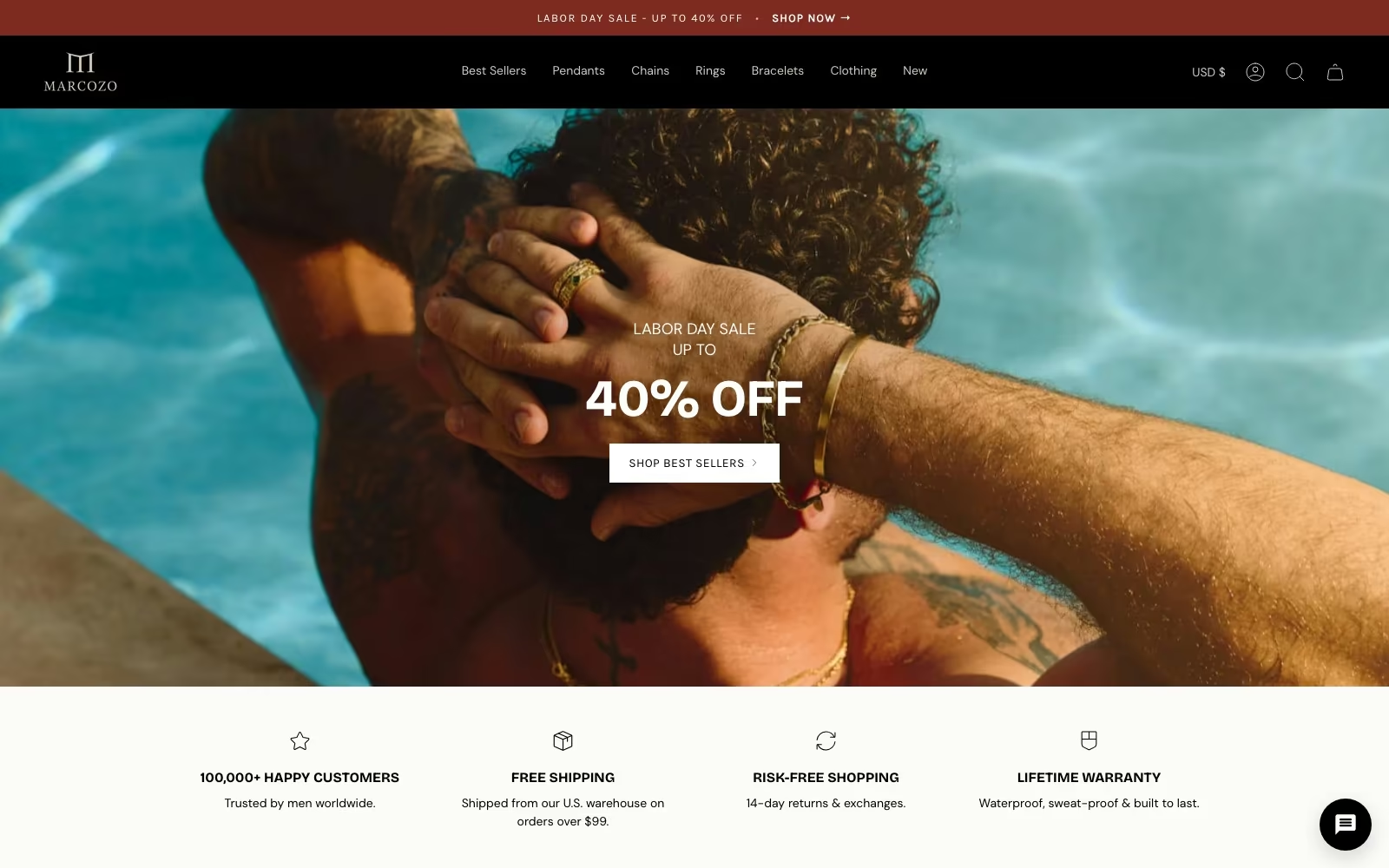

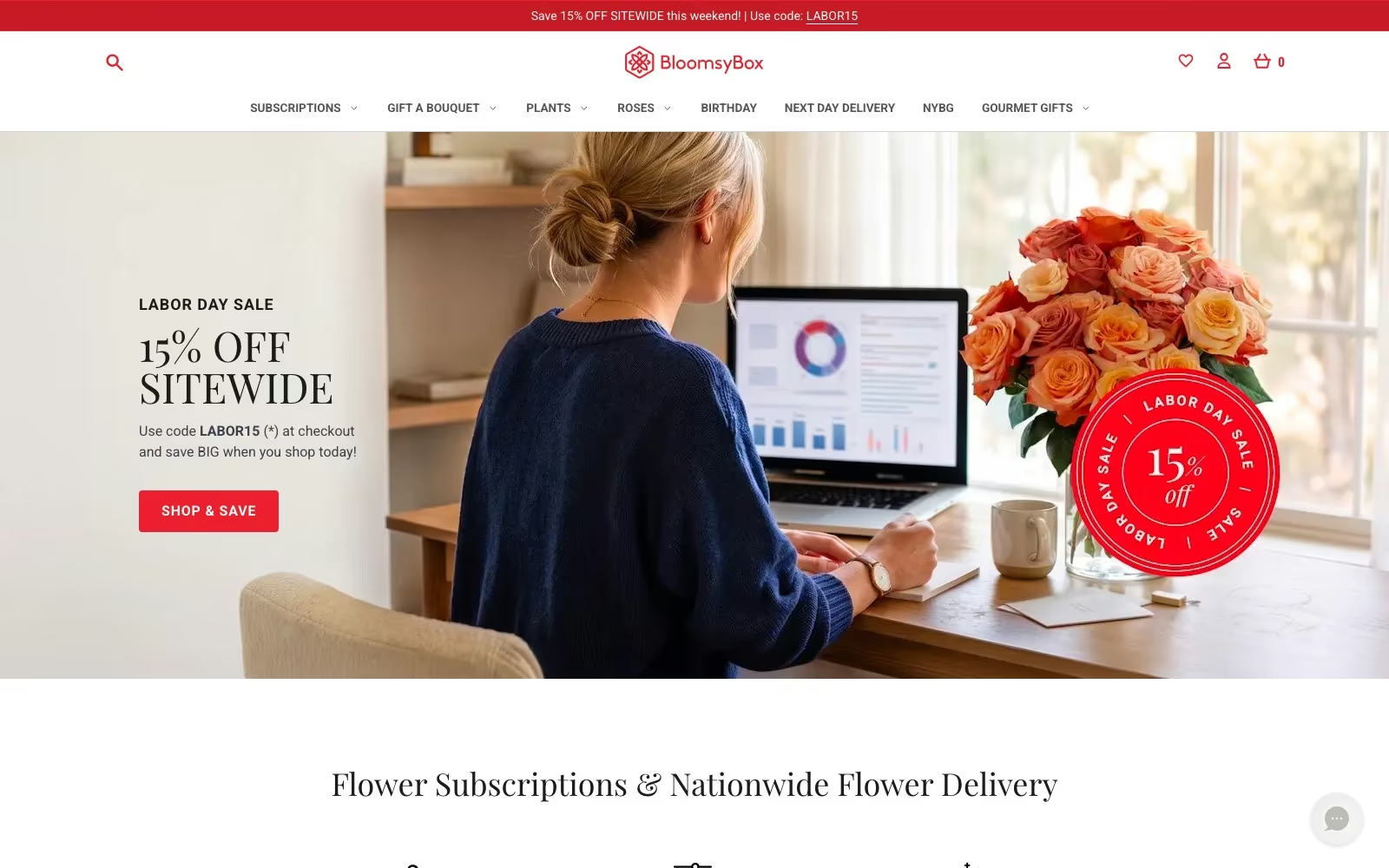

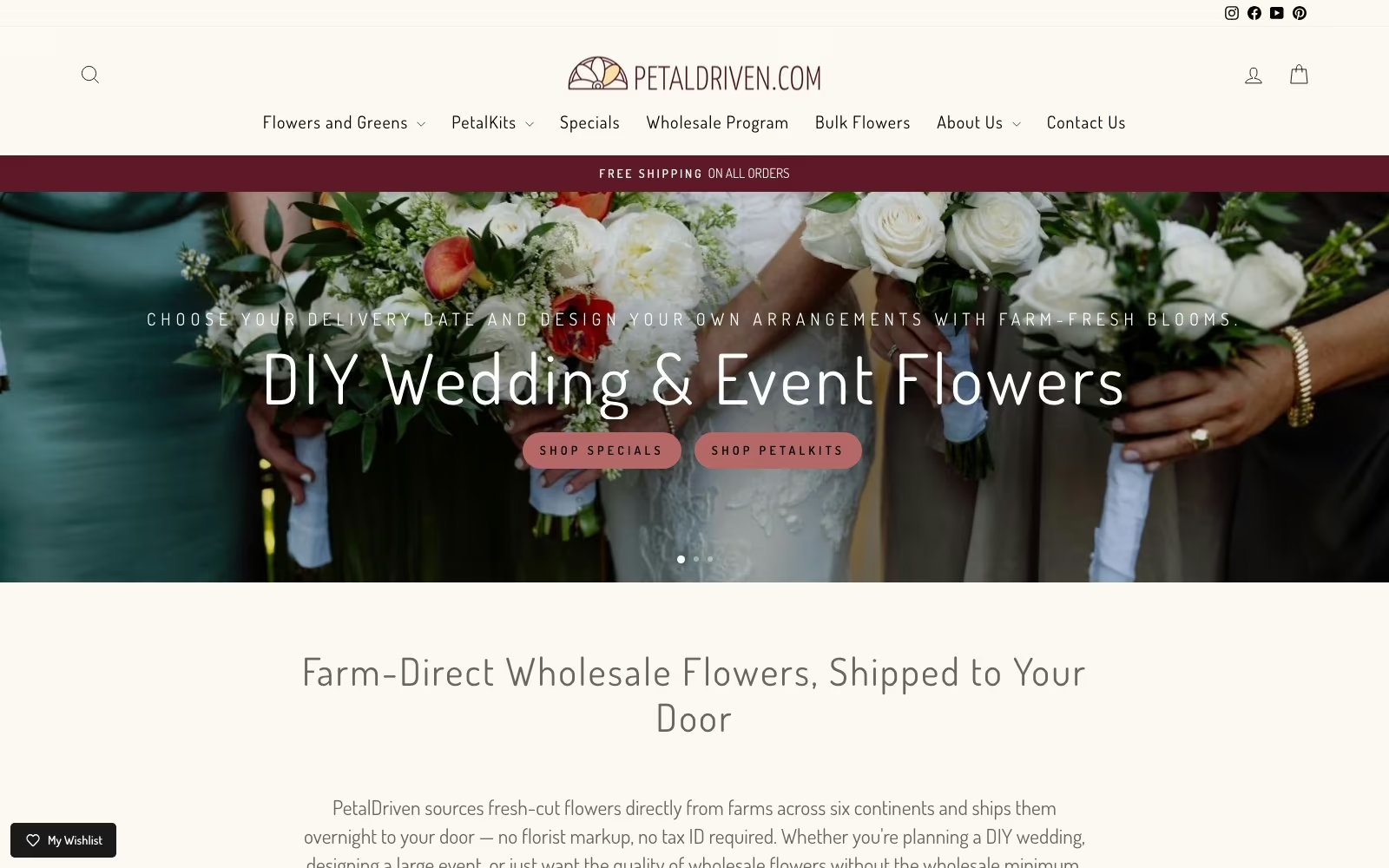



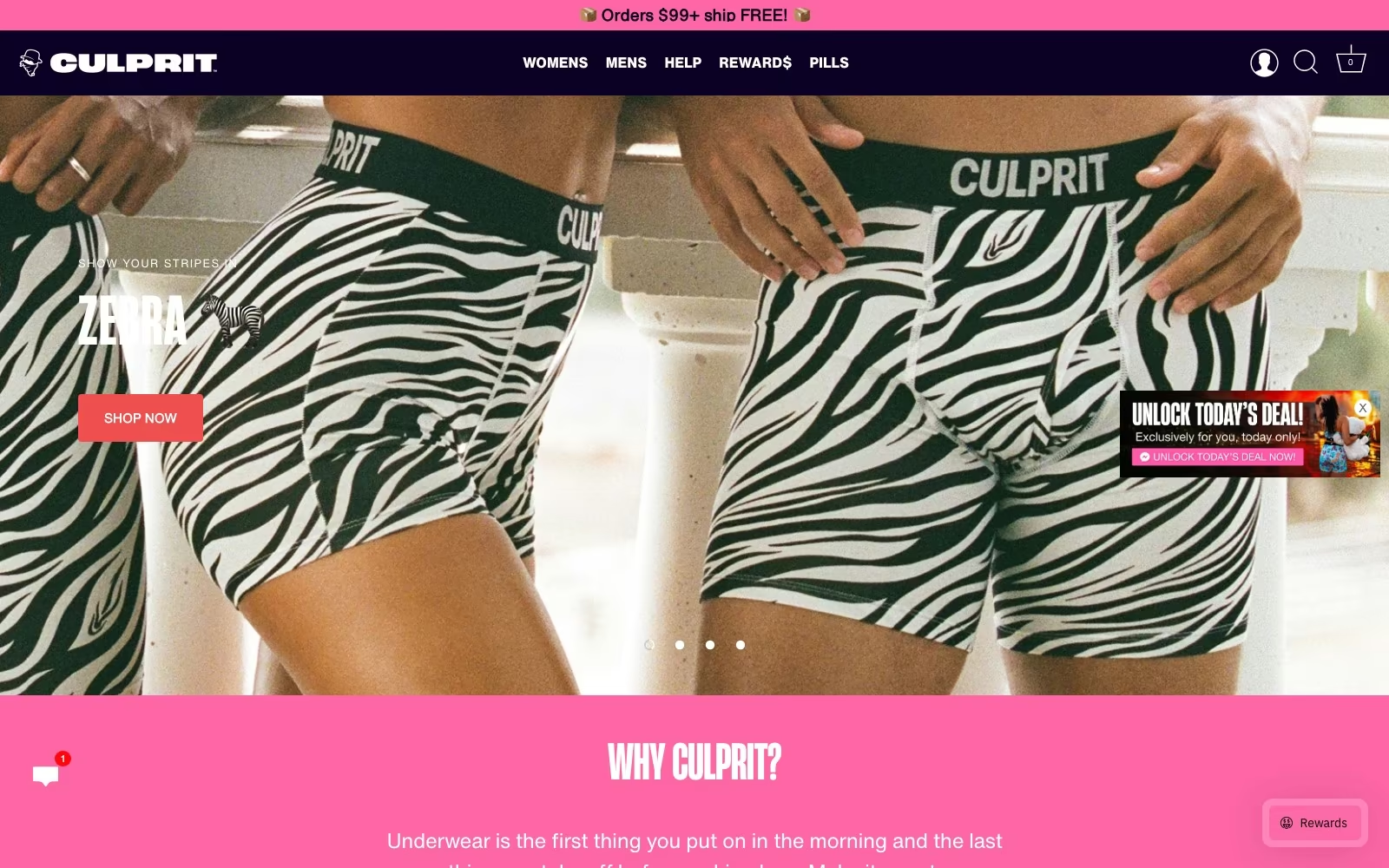































FAQ
What franchise marketing teams ask us first.
Is our franchise category even allowed to advertise inside ChatGPT?
Most are, and we confirm yours before any budget is set. OpenAI treats financial services, healthcare and medicine, and legal services as restricted categories approved manually, advertiser by advertiser, and Search Engine Journal has tracked how those approvals work. A home services, food, fitness or pet operator is typically outside that net; a medical, dental or lending operator generally falls inside it. Either way we tell you the position first, and the answer-layer work proceeds regardless of the advertising verdict.
Who owns the account, us or our franchisees?
The franchisor owns the ads account, the analytics and the material, and we build it that way from day one so there is nothing to unwind later. Franchisees get visibility into their own market and, where your network allows local contributions, a clean way to add budget without creating a second uncontrolled campaign that competes with the national buy. If you ever stop working with us, the whole structure stays exactly where it is and keeps running.
How do we keep franchisees from feeling the fund is spent elsewhere?
By reporting per market from the first month, which is the part most programmes skip. Each owner sees what ran in their territory, what came in and what it bought, next to the network view. That transparency matters more here than in almost any other channel: in the Uberall and Dialog survey of 352 brands and franchisees, 93% of franchisees called local marketing critical to their success against 81% of brands. When owners can see the local line, the programme keeps its funding.
Does this replace our local SEO and listings work?
It depends on it entirely, which is why we do them together. An assistant builds a local reply out of whatever it can verify about a outlet, so weak listings and templated pages hurt you in both places at once. The scale of that weakness is well documented: SOCi's 2026 index covers 2,751 multi-location brands and about 350,000 US locations and finds listing quality still uneven. Our local SEO team fixes that layer and the same work feeds the answer engines.
Can we use this to recruit franchisees rather than customers?
Yes, and for many brands it is the stronger case. Candidates research conversationally now, asking what a brand costs to open, what the earnings disclosure says and whether existing owners are content. Meanwhile the 2026 Annual Franchise Development Report puts cost per lead at $351 and cost per recruited franchisee at $17,550, both sharply up year on year. We run development as its own campaign with its own answer set and its own cost-per-qualified-candidate target, kept strictly inside your disclosure obligations.
How do you handle territory boundaries?
Carefully, because getting this wrong creates a franchise dispute rather than a marketing problem. Before anything launches we map targeting to your territory agreements, agree what happens in overlapping metros and where two owners border each other, and document the rule so it is applied consistently instead of decided ad hoc. Where the platform's geo-controls are coarser than your contracts, we say so plainly and adjust the buy rather than pretend the boundary is exact.
We have two hundred outlets. Is that too many to do properly?
No, but it changes the method. We build the store layer as a production line: one strong template filled with genuinely different content per market, generated from real inputs your operators supply rather than spun. We start with a representative sample of markets, prove the pattern works there, and then roll it out. Reporting is sampled at the network level and complete at the store level, so nobody waits three months for a rollout to finish before seeing evidence.
How long before we see anything?
Citation movement usually appears within one to three months of the store layer going live, because assistants re-crawl and re-rank sources faster than classic search settles. Paid campaigns produce data in days but need a few weeks before the numbers mean anything, and a multi-market rollout takes a quarter to reach full coverage. A stable flow of booked jobs from this channel is a six to twelve month proposition, and we agree the leading indicators up front.
What does a programme like this cost?
A fixed monthly fee for the work, quoted after the audit rather than off a rate card and scaled to the number of markets in scope, plus whatever media budget you approve separately and pay directly. Most networks start with the architecture and a sample of markets, then expand once the pattern is proven, which keeps the early commitment small. We agree a target cost per booked job and per qualified candidate in month one and report against it.
What if the platform changes its rules again?
It will, and the plan is built for that. The store and development content is yours and keeps working across every assistant and classic search regardless of what any one platform decides about advertising. The media side stays deliberately flexible: small tests, monthly commitments, nothing that depends on one placement type surviving. We track the ad policy pages and changelogs weekly and report what changed and what it means for your network.
Should we do this instead of Google Ads?
Alongside, not instead, and the split should follow the evidence. Search still produces most neighbourhood demand for the networks we work with. What is changing is the layer above it: a billion weekly ChatGPT users, a fifth showing commercial intent, now across 31 European markets as well as the US. We usually keep the existing programme funded, add a measured position here, and let cost per booked job decide the balance over the following two quarters.
Can you run our other channels too?
Yes, and the numbers get more honest when one team holds them. Our AI search, paid search and analytics specialists work from the same plan, so a booked job is attributed once instead of claimed by three suppliers. Hiring us for this channel alone is equally fine — we document the setup and leave every account open in your name.

.webp)
.webp)