PPC that a SaaS board can read as pipeline, not as clicks.
as pipeline
Most SaaS paid search accounts report beautifully and sell badly: cheap trials at the top, a demo queue full of students and competitors, and a CAC nobody can reconcile with the revenue in the CRM. We run B2B SaaS PPC the other way round — pipeline first, spend second — with your ad accounts, tracking data and analytics in your own name. The clicks are the cheap part; the qualification is the job.






Tell us a little about your brand and we'll be in touch within 24 hours to lock in a time.



FOUR WORKSTREAMS
Four workstreams turn paid search into qualified pipeline.
into qualified pipeline
Software companies rarely lose this channel on bidding. They lose it on what counts as success, on which searches get funded, and on a landing experience written for the buyer who is already sold.
Revenue measurement
Account & demand map
Ads & landing pages
Reporting & efficiency
A closed deal, not a form fill, is the target.
Optimising to raw signups is how SaaS accounts get expensive quietly. We define success at the stage your revenue team believes in — a qualified demo, an activated trial, an opportunity created — and send those stages back to Google from the CRM so bidding learns from money rather than from volume.
The maths is unforgiving without it. ChartMogul puts the median free-to-paid rate across SaaS products at 8%, with 57% of products leading on a free trial, so a channel judged on trial starts is being judged on a number that is wrong nine times out of ten.
- Offline conversion import from your CRM
- Qualified demo and opportunity as bid targets
- Consent Mode and enhanced conversions configured
- One agreed pipeline definition shared across the team
8%
median free-to-paid rate in SaaS (ChartMogul)
$6.81
average B2B SaaS paid click (Pipe Rocket, 2026)
Fund the searches that describe your buyer's problem.
Category terms are the most expensive way to meet somebody who has not decided anything yet. We split the account by demand type: competitor and alternative searches, jobs-to-be-done phrasing, integration and use-case queries, and review-site intent — each with its own budget and its own acceptable cost per opportunity.
The premium is real and worth planning around: B2B SaaS averages a $6.81 click and an $84 blended cost per lead, against a $5.42 click and a $66.69 lead across all industries. Software pays more per visitor, so it can afford fewer wasted ones.
- Ad groups split by demand type, not by product tab
- Competitor and alternative coverage handled deliberately
- Negative lists for jobseekers, students and integrations support
- Guardrails set per motion and reviewed weekly
$84
blended cost per lead in B2B SaaS (Pipe Rocket)
$66.69
all-industry average cost per lead (WordStream)
One page per problem, not one page for the whole product.
Ad copy for software has to name the buyer, the job and the constraint in two lines, then hand over to a page that continues the same sentence. Sending an integration query to a homepage carousel is the most common reason a good ad group posts a bad sign-up rate.
Committee reality shapes the page too. Forrester found buying groups double to 14 members on purchases with genAI features, against seven without, which means the page needs the security summary, the pricing posture and the migration answer in reach — not just a demo button.
- A page per demand theme, written to the query
- Pricing posture stated instead of hidden
- Security, procurement and migration answers on the page
- Message testing run in the ads before the page is rebuilt
2.57%
average B2B SaaS lead rate on Google Ads
One number the CFO and the head of demand both trust.
Software reporting fails when marketing shows cost per lead and finance shows payback. We report both in one view: budget, qualified pipeline, cost per opportunity, win rate by motion, and the payback window on the deals the channel actually closed.
That is also how we decide what to stop. A campaign holding a respectable 3.60% click-through rate while producing unqualified demos is one to cut, and we would rather say so in the monthly review than defend the dashboard.
- Spend to pipeline to closed revenue in one report
- Cost per opportunity by motion and by segment
- Payback window, not just cost per acquisition
- A documented change log for every optimisation
3.60%
average click-through rate in B2B SaaS search
14
buying group members on genAI purchases (Forrester)
Ad accounts, tracking data and pages stay in your name
The bid target is a qualified opportunity, never a form fill
Weekly working session with the people running the account
Long-term lock-ins
We made the difference for those brands

Creative, content, arts & culture

B2B software, fintech, insurance

Healthcare & regulated services

Retail & commerce

Healthcare & regulated services

B2B software, fintech, insurance

Healthcare & regulated services

Home essentials, appliances, kitchen & pet

Consumer tech and platforms

Retail & commerce

Healthcare & regulated services

B2B software, fintech, insurance

Beauty, personal care & wellness

Apparel and lifestyle

B2B software, fintech, insurance

Home essentials, appliances, kitchen & pet

Creative, content, arts & culture

Healthcare & regulated services

Home essentials, appliances, kitchen & pet

B2B software, fintech, insurance

Beauty, personal care & wellness

Healthcare & regulated services
Consumer tech and platforms

Beauty, personal care & wellness

B2B software, fintech, insurance

Consumer tech and platforms

B2B software, fintech, insurance

Beauty, personal care & wellness

Beauty, personal care & wellness

B2B software, fintech, insurance
01 — The challenge
The dashboard is green and the pipeline is empty.
A growth lead inherits a paid search account that looks healthy. Cost per lead is down, trials are up, the agency deck has arrows pointing the right way — and sales say the demos are unqualified, the trials never activate, and the last two quarters of revenue came from somewhere else entirely.
“We are spending more and closing the same amount.”
Usually nothing is broken technically. The account is simply optimising to the cheapest signal available, and in software the cheapest signal is almost never the valuable one. With the average B2B SaaS click at $6.81, an account pointed at the wrong signal buys volume at a premium price and calls it efficiency. Point it at qualified pipeline and the same budget usually buys fewer, better conversations.
02 — Our approach
Fix the measurement, fund the right demand, then compound it.
We start where the money is decided: the success definition. Qualified demo, activated trial and opportunity created get imported back from your CRM, so the bidding models learn from revenue rather than from form fills, and so a lead from a 20-seat prospect is never priced like a lead from an enterprise account. Next we rebuild the demand map — competitor searches, alternative-to searches, jobs-to-be-done phrasing, integration and review-site intent — and give each motion its own budget and its own acceptable cost per opportunity, with negatives that keep jobseekers and support traffic out. Landing pages come next: one page per theme, written to the query, carrying the pricing posture and the security answers the committee will ask for. Then it is a weekly loop of search terms, bids, copy and page tests, and a monthly review that reads budget against pipeline and payback in plain language, including the parts that did not work.
03 — What we did
Six weeks to a pipeline-honest account, then a weekly loop.
Measurement, demand mapping, landing experience and a revenue read — in sequence, with a weekly working session and a written note of what changed.
Weeks 1-2 / Measurement
CRM stages imported as conversions
Qualified demo, activated trial and opportunity created flow back from the CRM into Google Ads, with consent mode and enhanced conversions configured so the data survives.

Weeks 2-4 / Demand map
Account rebuilt around demand type
Competitor, alternative, use-case and review-site intent separated, each with a budget and a target cost per opportunity, plus negative lists that remove jobseekers and support queries.

Weeks 4-6 / Landing experience
A page per theme, written to the query
Pricing posture stated, security and migration answers in reach for the wider committee, and a booking step that takes two minutes.

Ongoing / Weekly loop
PPC search terms, bids, copy, pages
Weekly tuning against qualified pipeline, monthly reporting on cost per opportunity and payback, and an honest recommendation when a motion is not earning its budget.

WHAT YOU GET
Deliverables your revenue team can audit.
can audit
Everything below is built in your own accounts and stays yours if you ever leave.

Revenue measurement build
CRM stages imported as conversions, consent mode configured, and one agreed definition of a qualified lead.

Demand and competitor map
The searches worth funding, ranked by expected deal value, with the segments you do not want excluded up front.

Campaign build and management
Account split by demand type, bids set against cost per opportunity, weekly tuning and a documented change log.

Landing pages per theme
One page per demand theme with pricing posture, security answers and a two-minute booking step.

Pipeline reporting
Spend, qualified pipeline, cost per opportunity and payback in one monthly view your CFO can read.

Waste guardrails
Shared negative lists, budget caps per motion and alerts when a motion drifts away from qualified demand.
HOW WE WORK
Operating standards, not promises.
Operating standards


Product-led companies
Trial starts are the beginning of the measurement, not the end of it: activation is the target.
ExploreSales-led software
Longer cycles and larger committees, measured on opportunities created and won.
ExploreReview-site and marketplace demand
G2, Capterra and alternative-to searches funded as their own motion with their own target.
Explore

















Built on trust. Proven by results.
We partner with SMBs and Fortune 500 companies to deliver more than reach — we bring clarity, execution, and measurable outcomes. Every successful partnership starts with a strong culture fit and a shared drive to grow.




CASE STUDIES
Case studies
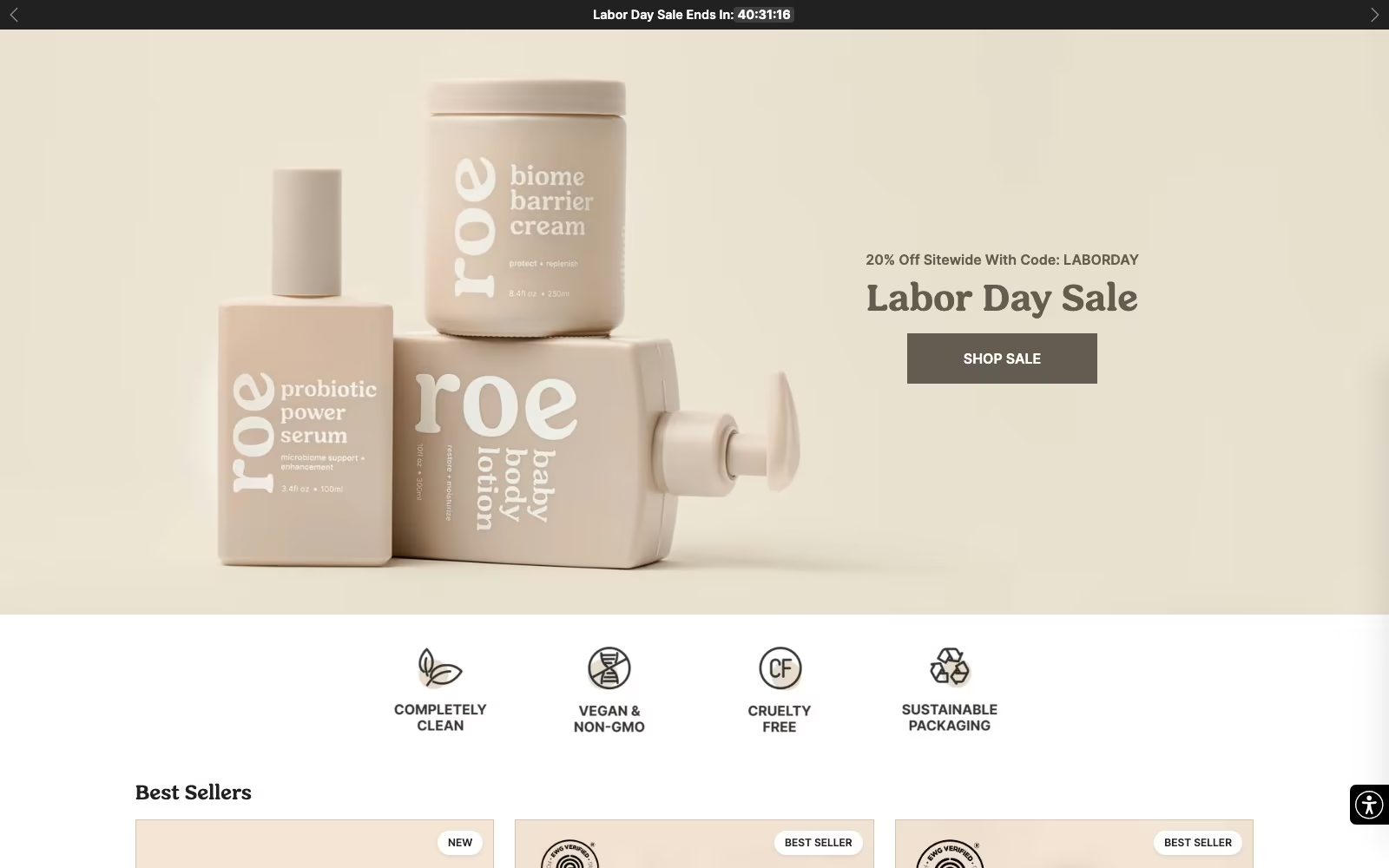
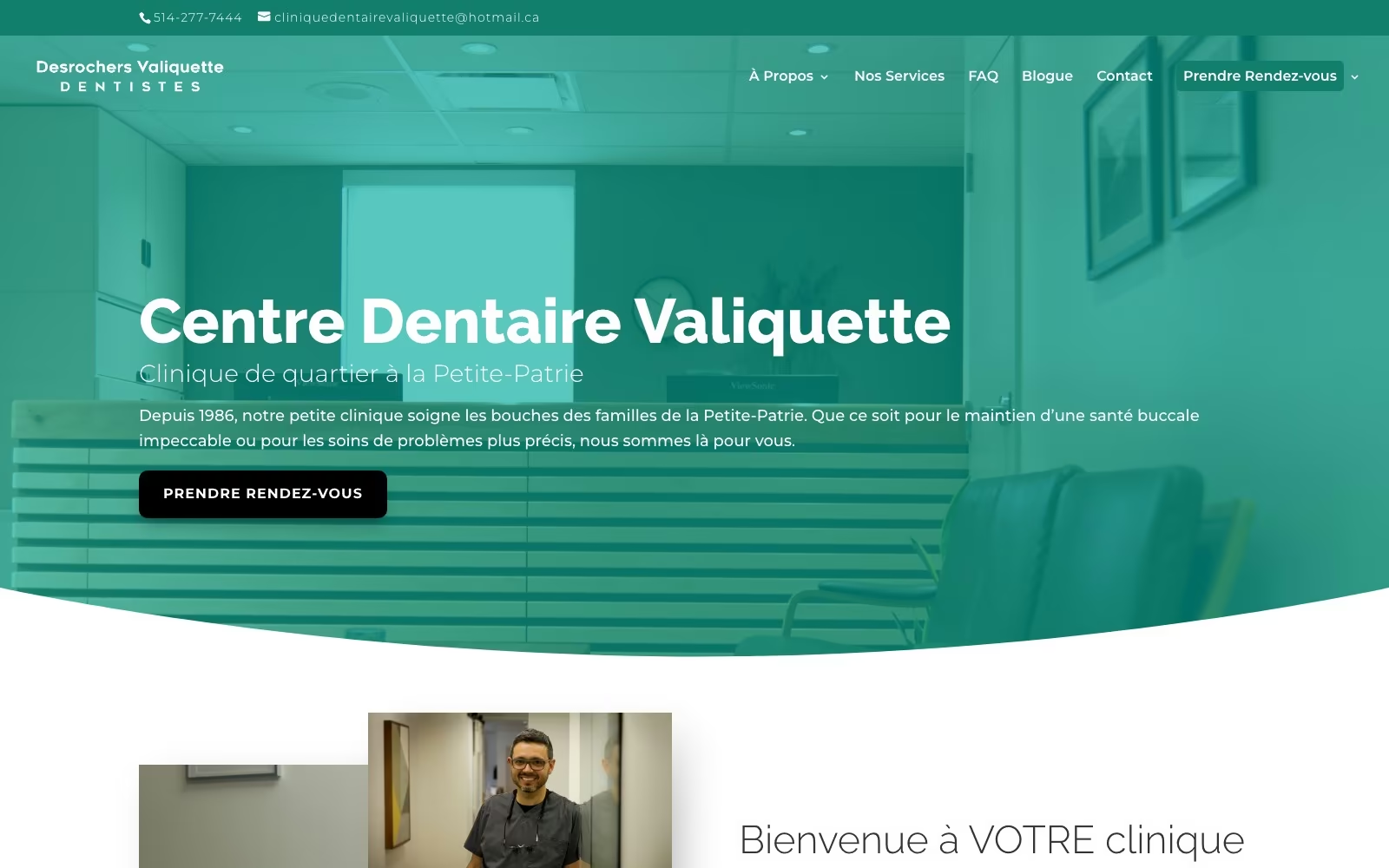
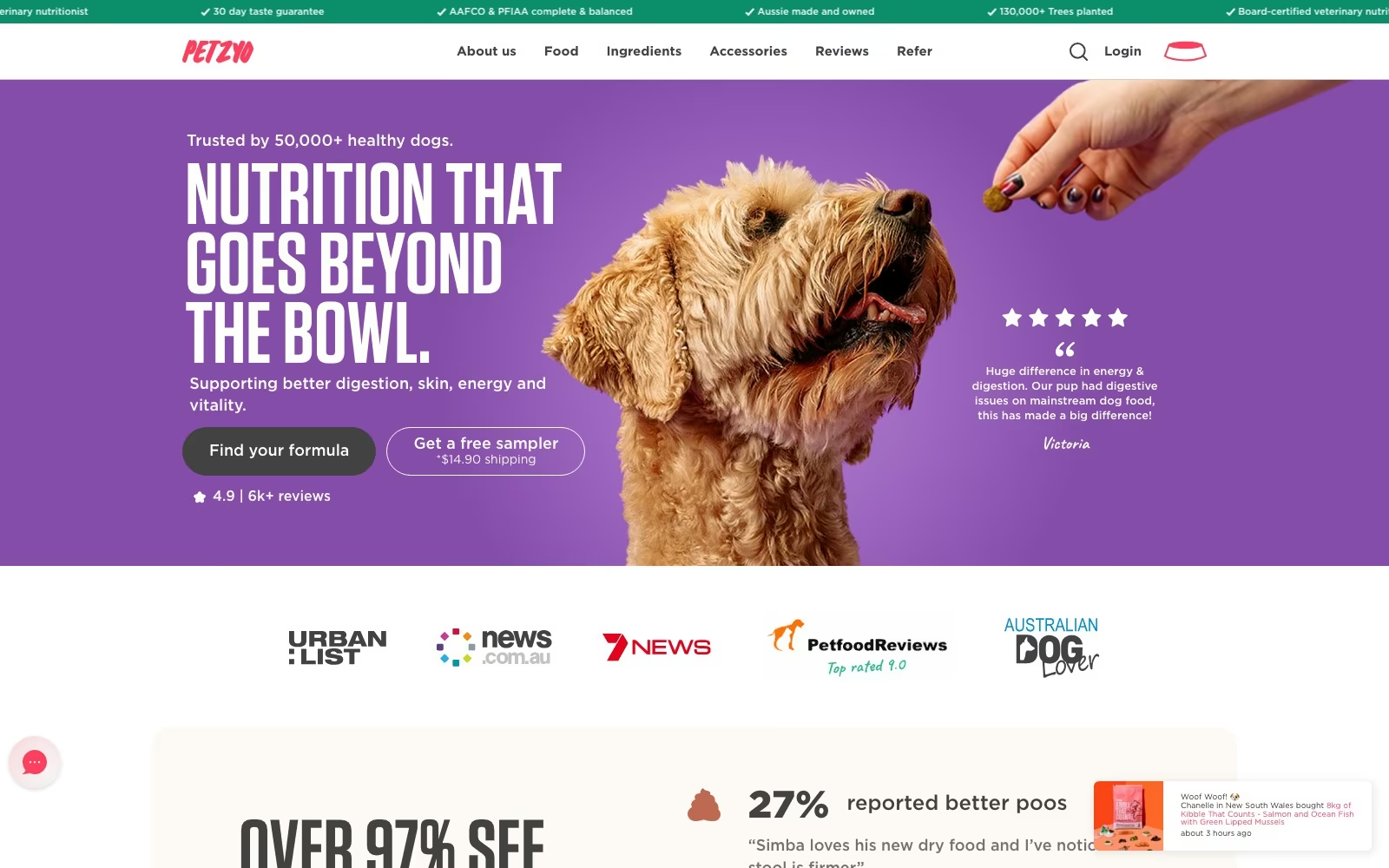
Website Portfolio
Video Ads
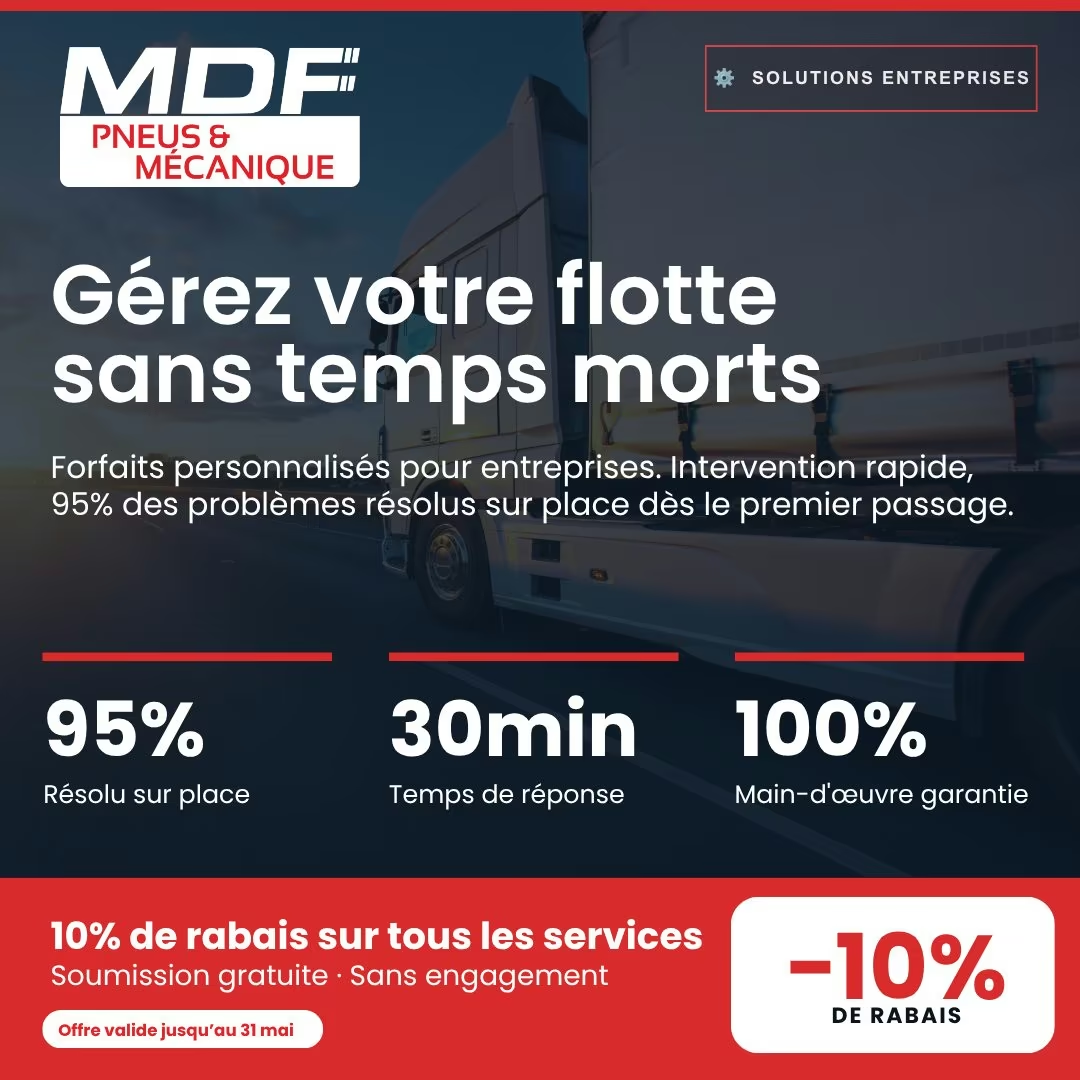
Static Ads
































































FAQ
What software teams ask us first.
What should a B2B SaaS company invest in PPC to learn anything?
Enough to reach a decision on your own numbers rather than a round figure copied from a blog. The honest way to size it is backwards from deal value: at an average $6.81 click, a 2.57% close-through rate and an $84 blended cost per lead in B2B SaaS, a motion needs a few hundred qualified clicks before the data means anything, and a longer window if your sales cycle runs a quarter. We size the test against average contract value and close rate, agree in advance what result would make it a keeper, and stop early when the answer is already clear.
What makes SaaS paid search different from other B2B advertising?
Three things: the click costs more, the sign-up is not the sale, and the buyer is a group. Software pays about $6.81 a click against $5.42 across all industries, so waste is expensive; the trial or demo is a milestone rather than revenue; and Forrester found buying groups reaching 14 members on genAI-feature purchases against seven without them. An account built for one decision-maker and a single cheap signal will underperform one built for a committee and a qualified opportunity, even at identical spend.
How do we choose between SaaS PPC agencies without buying a deck?
Ask three questions and the shortlist sorts itself. First, what will you optimise to — if the answer is leads rather than pipeline stages, the reporting will look better than the business. Second, who does the work: the strategist in the pitch, or a pooled team you meet at handover. Third, what happens to the accounts if we leave. Good agencies answer all three without hedging. It is also fair to ask what they would not run for you yet, because an agency that recommends every channel in the first meeting is selling a bundle, not a plan.
Should we bid on competitor and alternative-to keywords?
Usually yes, with a separate budget and honest expectations. Competitor searches convert at a lower rate and a higher cost per click than your own brand, but the searcher has already decided they need the category, which is the expensive part of the job. We treat it as its own motion with a specific comparison page, a target cost per opportunity of its own, and a cap so it never quietly consumes the budget. Where a competitor is much larger, we would rather fund alternative-to and switching queries than trade blows on their brand name.
Our trials never activate. Is that a PPC problem?
Partly, and it is diagnosable rather than mysterious. ChartMogul's median free-to-paid rate is 8%, so some fall-off is normal, but a channel producing signups that never open the product is usually funding the wrong searches or promising something the onboarding does not deliver. We look at activation by campaign and by search theme before touching bids; often the fix is cutting two ad groups and rewriting one page rather than anything clever in the auction.
Can you work with our in-house marketing team rather than replacing it?
That is the common arrangement, and it works well when the split is written down. Typically we own the account structure, bidding, search term hygiene and the reporting spine, while your team keeps positioning, product marketing and the content calendar; we write ad copy together because nobody knows the objections like the people who hear them. We work in your tools, document every change, and run a weekly session so nothing is a surprise at the monthly review.
How long before paid search is a reliable revenue line?
Delivery signals move within two weeks, cost per qualified opportunity becomes readable in six to eight, and payback depends on your sales cycle rather than on the advertising. A self-serve product can read closed revenue inside a quarter; an enterprise motion with a six-month cycle is judged on opportunity quality first and revenue later. We say which stage the data supports at each review instead of claiming revenue attribution the timeline cannot justify yet.
What does your PPC reporting actually show?
One page: spend, qualified pipeline created, cost per opportunity, win rate by motion and payback window, with last month's promises listed beside what happened. Underneath sits the detail — search terms added and excluded, tests running, pages changed — and a change log so any movement can be traced to a decision. If a campaign lost money we say so in the first paragraph rather than the appendix, and bring a recommendation for the budget rather than a reason to keep it.
Do you handle LinkedIn and paid social as well as Google Ads?
Yes, and for most software companies the two only make sense read together: search harvests demand that already exists, paid social creates the demand that search later harvests, and judging either in isolation produces the wrong budget decision. Our paid social, LinkedIn ads and paid search specialists work from one plan and one measurement spine, so a demo is attributed once instead of being claimed by three suppliers.
What does it cost to have you run it?
A fixed monthly fee, quoted separately from media budget and scoped to the motions you want run. After an audit you get a plan tied to targets — cost per qualified opportunity first — and we will name the channels we would not run yet rather than selling everything at once. Where the useful scope is a measurement build and two landing pages rather than a retainer, we scope it that way and say so on the first call. You own the ad account, the conversion data and the pages throughout.

.webp)
.webp)