Creative for software companies, built to be tested, not admired.
to be tested
Most B2B SaaS creative dies of good taste: a clean gradient, a dashboard screenshot nobody can read on a phone, and a headline that could belong to any of forty competitors. We build creative as a testing system — positioning first, then a concept queue, then enough production volume to keep Meta, LinkedIn and YouTube supplied — measured against pipeline with our paid social team, not against internal applause.






Tell us a little about your brand and we'll be in touch within 24 hours to lock in a time.


FOUR WORKSTREAMS
Four workstreams behind creative that keeps working.
that keeps working
Software brands rarely have a design problem. They have a positioning problem, a volume problem and a measurement problem, and the ads are simply where all three become visible.
Positioning
Concepts & angles
Production workflow
Creative measurement
Decide what you are claiming before anybody opens a design tool.
Every ad is an argument, and most SaaS ads are arguing for the category rather than the product. We start with the positioning work: who this is for, what it replaces, the specific job it does better, the objection that kills deals, and the proof that answers it. That document is the brief for every concept afterwards.
It also has to survive a group. Forrester reports buying groups doubling to 14 members on genAI-feature purchases, against seven without, so the creative has to work for the operator who feels the pain and the executive who signs, which is two different arguments in one campaign.
- Positioning statement agreed before production starts
- The replaced alternative named explicitly
- One message per role in the buying committee
- Objections and proof mapped side by side
14
buying group members on genAI purchases (Forrester, 2026)
7
members on comparable purchases without them
Angles get tested. Executions get iterated.
A concept is an argument — the migration story, the spreadsheet replacement, the compliance nightmare, the founder's own screen recording. An execution is a way of dressing it. Testing five executions of one argument teaches you nothing; testing five arguments teaches you what your market actually believes.
Volume is not optional here. Taylor Sicard's 2026 creative benchmarks put a good Meta hook rate near 30% and a good hold rate near 25%, with only about 5% of creatives becoming winners. If one in twenty works, a quarter with four ads in it was never a test.
- Angle queue ranked before anything is produced
- One variable changed per test, written down
- Winners iterated, losers retired without ceremony
- A standing backlog so the account never runs dry
5%
share of creatives that become winners (2026 benchmarks)
30%
hook rate a good Meta ad reaches
A workflow that ships weekly, in every format the platforms want.
Creative fails on logistics more often than on taste. We run a single workflow from brief to trafficked ad: static and motion built from the same angle, sized for feed, story and in-stream, versioned so the winning hook can be recut without rebuilding the whole asset.
The bar for attention on this platform is set by consumer brands, not by your competitors. B2B and SaaS advertisers average a 0.6-1.2% link click-through rate on Meta, which means the first second of the video and the first four words of the static are the whole negotiation.
- Static, motion and UGC-style built from one brief
- Every format sized for feed, story and in-stream
- Editable source files handed over, not flattened exports
- A weekly shipping cadence rather than a quarterly campaign
0.6-1.2%
typical B2B and SaaS link CTR on Meta (COREPPC)
Judge the work on pipeline, then on hook and hold.
Creative reporting that stops at impressions is decoration. We read each concept on cost per qualified opportunity first, then on the diagnostic metrics that explain it: hook rate for the opening, hold rate for the middle, click and landing behaviour for the promise.
Downstream reality gets a vote too. With a median free-to-paid conversion of 8% across SaaS products, 57% of which lead with a free trial, an ad that wins on signups while attracting the wrong company size is a loss the dashboard will call a win for two months.
- Cost per qualified opportunity by concept
- Hook and hold rates read as diagnosis, not as targets
- Activation and fit checked by creative angle
- A monthly note on what to kill and what to scale
8%
median free-to-paid conversion in SaaS (ChartMogul)
25%
hold rate a good Meta video sustains
Source files, templates and ad accounts stay in your name
New creative ships every week, not once a quarter
Working session with the people making the work
Long-term lock-ins
We made the difference for those brands
Home essentials, appliances, kitchen & pet
Consumer tech and platforms

B2B software, fintech, insurance

B2B software, fintech, insurance

B2B software, fintech, insurance

B2B software, fintech, insurance

Creative, content, arts & culture

Apparel and lifestyle

Food & beverage

Retail & commerce

Home essentials, appliances, kitchen & pet

Food & beverage

Healthcare & regulated services
Home essentials, appliances, kitchen & pet

Healthcare & regulated services

B2B software, fintech, insurance

Retail & commerce

Retail & commerce

Consumer tech and platforms

Consumer tech and platforms

Beauty, personal care & wellness

Creative, content, arts & culture

Retail & commerce

Apparel and lifestyle

Food & beverage

Beauty, personal care & wellness
B2B software, fintech, insurance

Beauty, personal care & wellness

B2B software, fintech, insurance
B2B software, fintech, insurance
01 — The challenge
Beautiful work, flat results.
The brand refresh landed, the site looks like the category leader's, and the ads are the tidiest they have ever been. Performance is unchanged. Somebody suggests testing another shade of the gradient, and the quarter disappears into executions.
“Our creative looks great and none of it moves the number.”
The usual cause is arithmetic rather than art direction. Around 5% of creatives become winners, and a strong Meta hook rate sits near 30%, so a brand shipping four ads a quarter is running a lottery with four tickets. Ship arguments instead of executions, ship them often enough for the odds to work, and the same design team suddenly looks brilliant.
02 — Our approach
Positioning, an angle queue, weekly production, and a pipeline read.
We begin with positioning, because a concept queue built on a vague claim produces vague ads: who this software is for, what it replaces, the job it does better, the objection that stalls the deal and the proof that answers it. From there we build an angle queue — arguments, not layouts — ranked by how much we expect to learn, with one message written for the operator who feels the pain and another for the executive who signs the contract. Production runs weekly rather than in campaign-sized lumps: static, motion and screen-recording formats built from a single brief, sized for every placement, versioned so a winning hook can be recut in an afternoon. Everything is judged on cost per qualified opportunity first and on hook, hold and landing behaviour second, and the monthly review names the concepts we are killing as plainly as the ones we are scaling. Source files stay with you.
03 — What we did
Four weeks to a working creative system, then a weekly cadence.
Positioning, angle queue, production workflow and a pipeline read — in sequence, with a weekly working session and a written note of what changed.
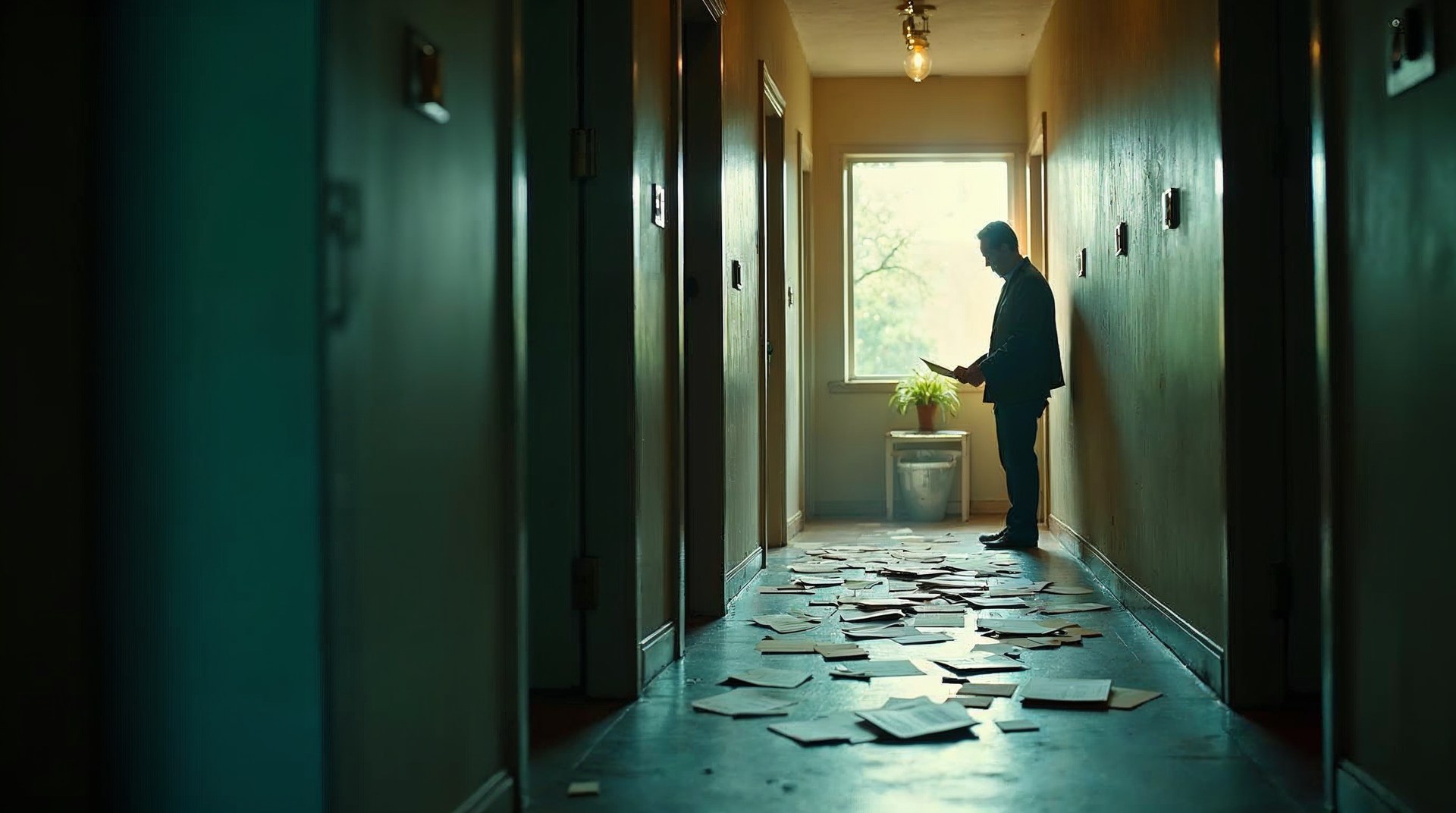
Week 1 / Positioning
The claim, the alternative, the objection
One page agreed with founders and sales: who it is for, what it replaces, the job it does better, and the objection that kills deals.
Week 2 / Angle queue
Arguments ranked by what they teach
A backlog of distinct angles — migration, spreadsheet replacement, compliance, founder screen recording — each with the audience and the proof it needs.
Weeks 3-4 / Production
Static, motion and screen capture from one brief
Every angle produced in the formats each placement wants, versioned so hooks can be recut without rebuilding the asset, source files handed over.
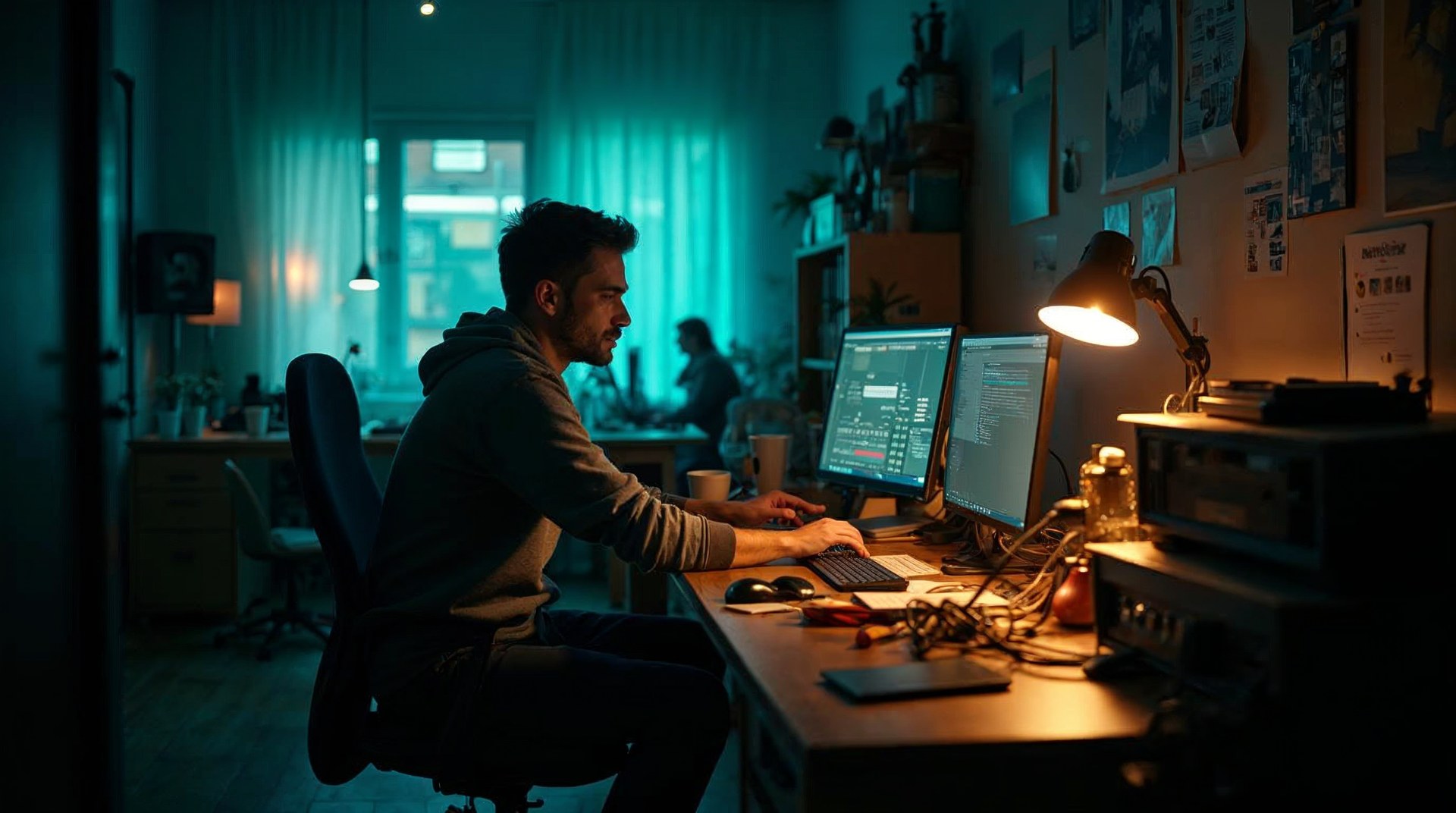
Ongoing / Weekly cadence
Kill, iterate, scale
Weekly reads on cost per qualified opportunity with hook and hold as diagnosis, and a monthly note naming what is being retired.

WHAT YOU GET
Deliverables your team can pick up and run.
pick up and run
Everything below is delivered in editable source files that stay yours if you ever leave.

Positioning and message map
The claim, the replaced alternative, the objections and the proof, with one message per role in the buying committee.

Angle and concept queue
A ranked backlog of arguments to test, each with its audience, its format and the question it answers.

Static and motion production
Weekly output across feed, story and in-stream formats, built from one brief and versioned for recuts.

Creative system and templates
Editable templates, type and colour rules and a naming convention so in-house designers can extend the work.

Creative performance reporting
Cost per qualified opportunity by concept, with hook, hold and landing behaviour as the diagnosis.

Asset library handover
Source files, fonts and export presets organised so nothing is trapped in an agency account.
HOW WE WORK
Operating standards, not promises.
Operating standards

Product-led software
Product truth as the creative: real screens, real workflows, recorded rather than illustrated.
ExploreEnterprise and sales-led
Separate arguments for the operator who feels the pain and the executive who signs.
ExploreCategory creators
Naming the alternative you replace, because a market that cannot place you will not buy you.
Explore

















Built on trust. Proven by results.
We partner with SMBs and Fortune 500 companies to deliver more than reach — we bring clarity, execution, and measurable outcomes. Every successful partnership starts with a strong culture fit and a shared drive to grow.



CASE STUDIES
Case studies
Website Portfolio
Video Ads
Static Ads
















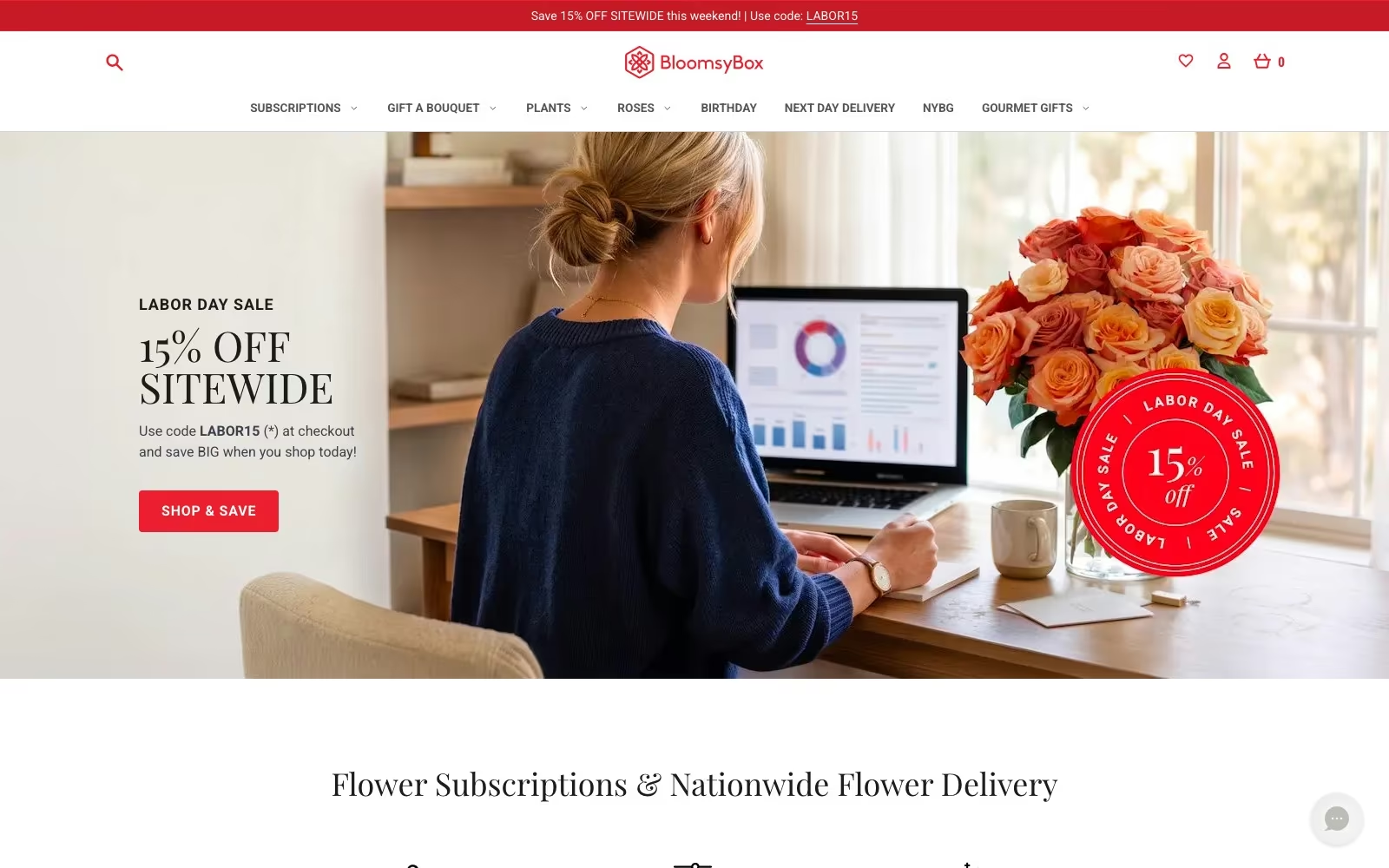

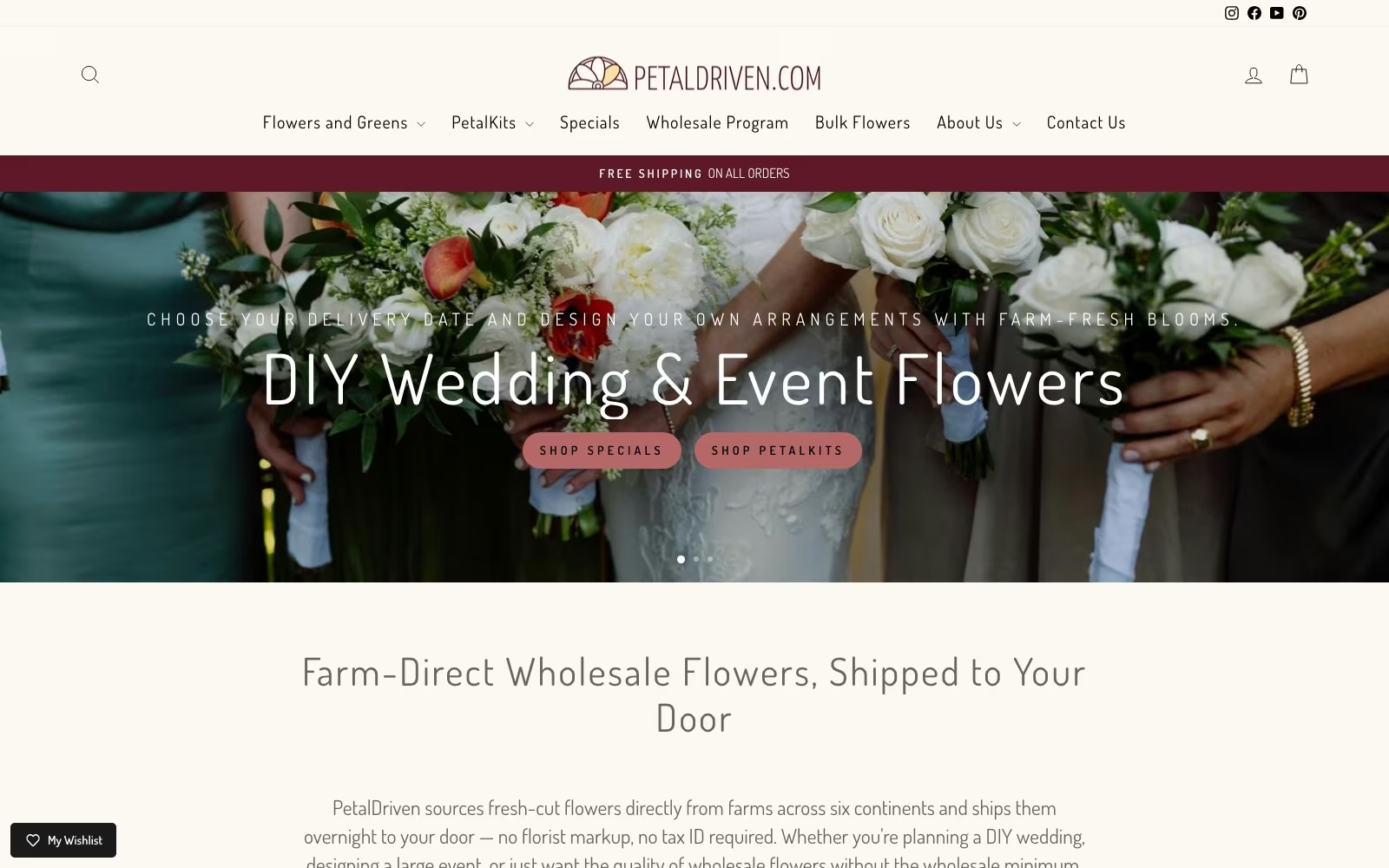



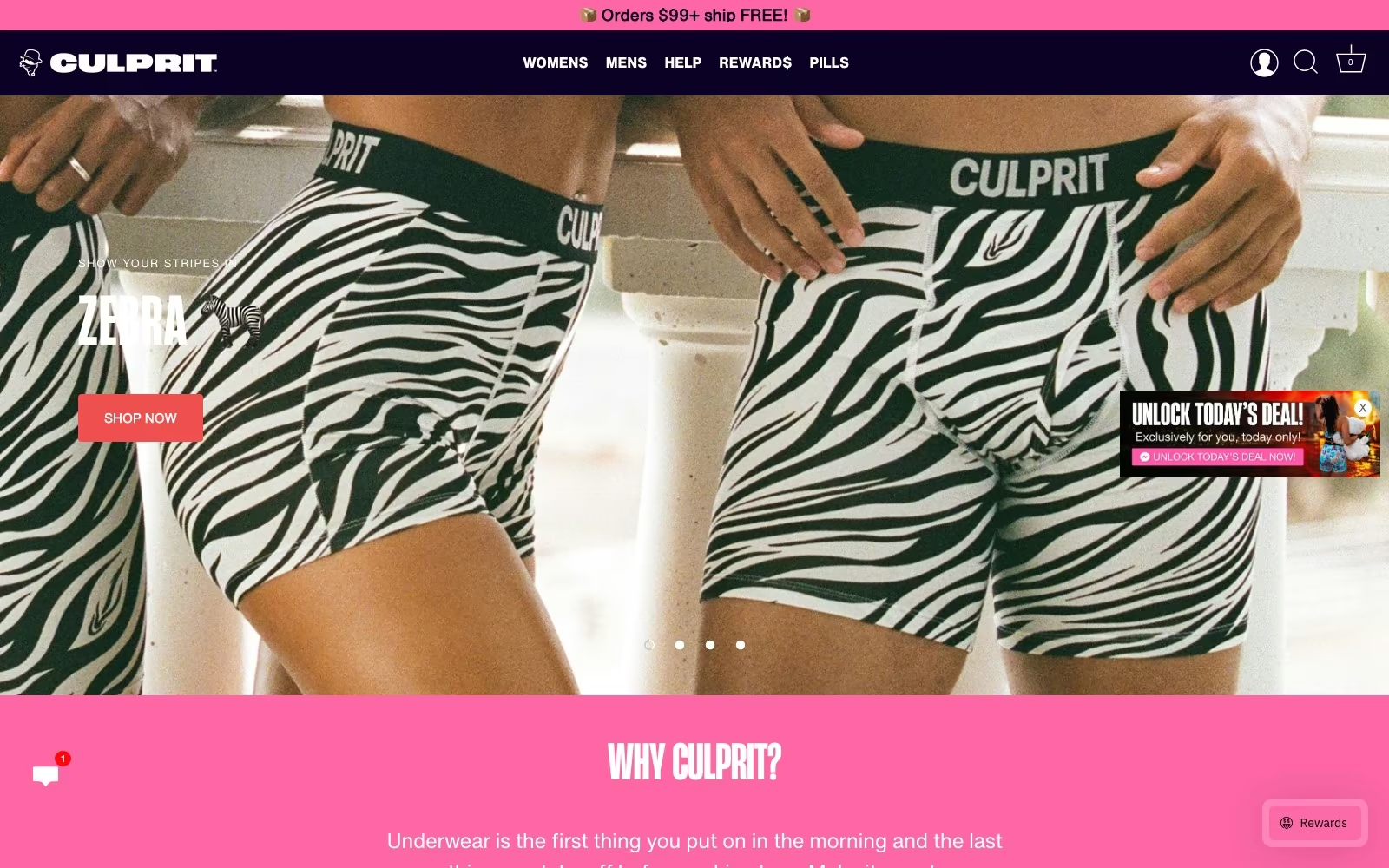

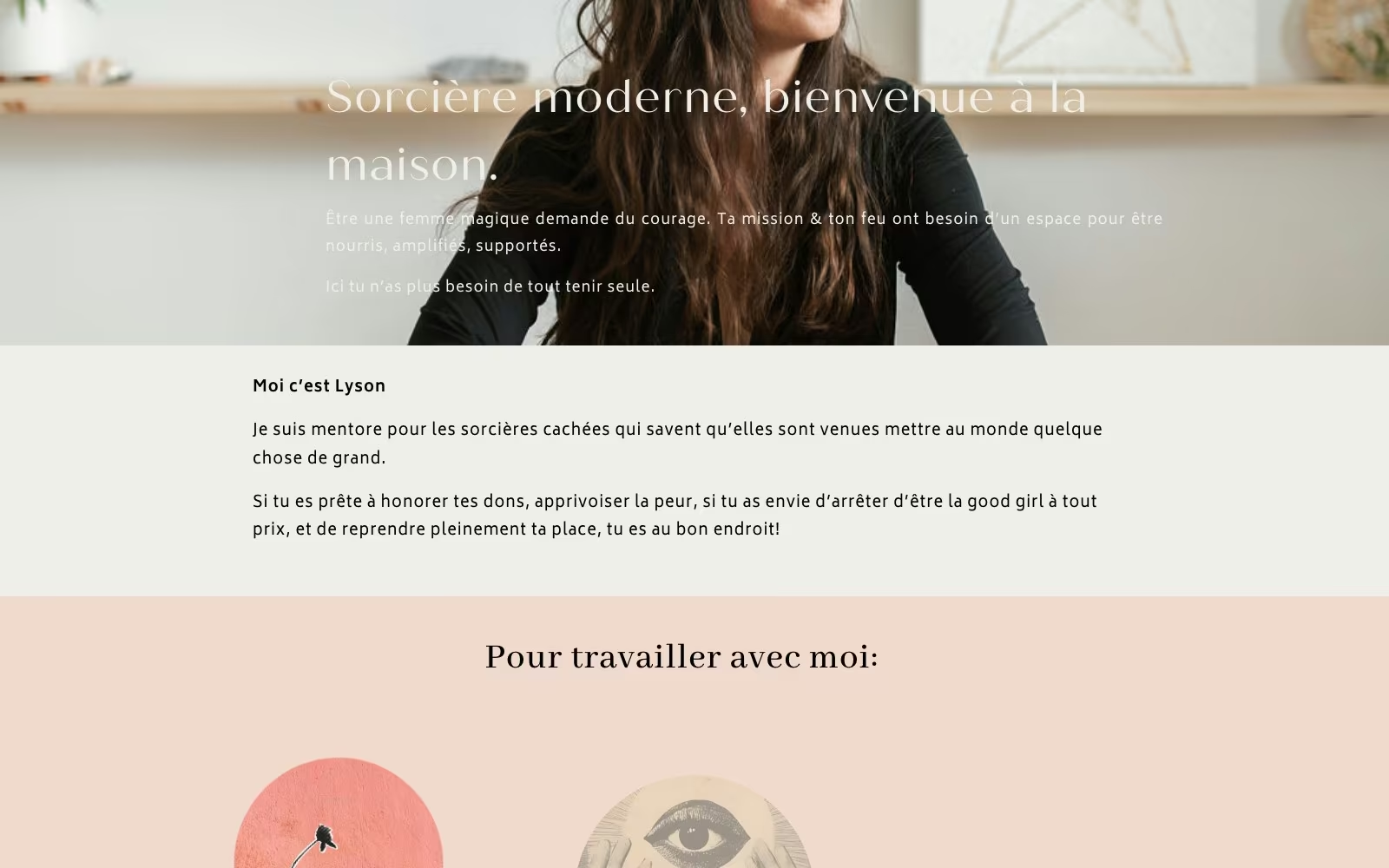



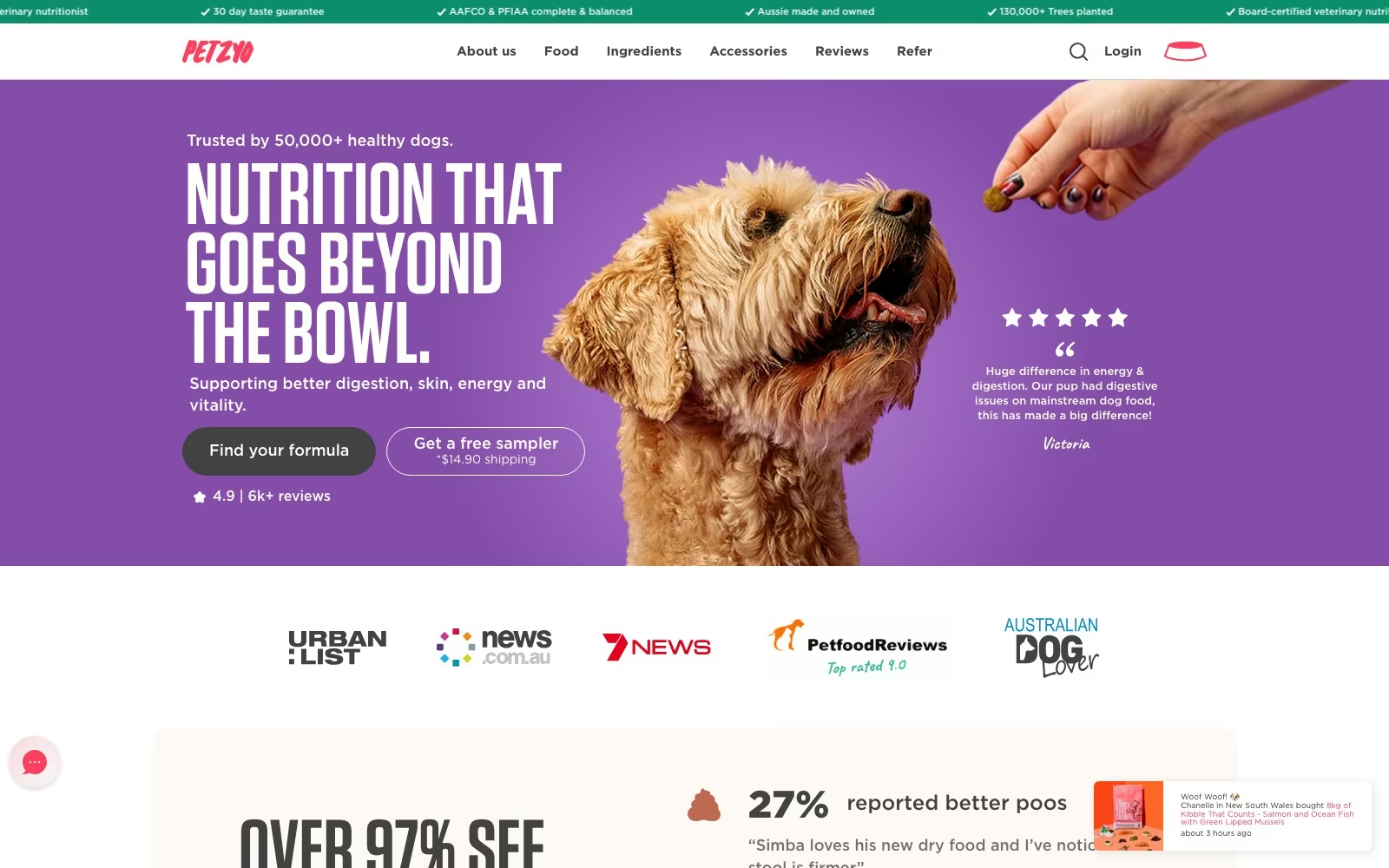

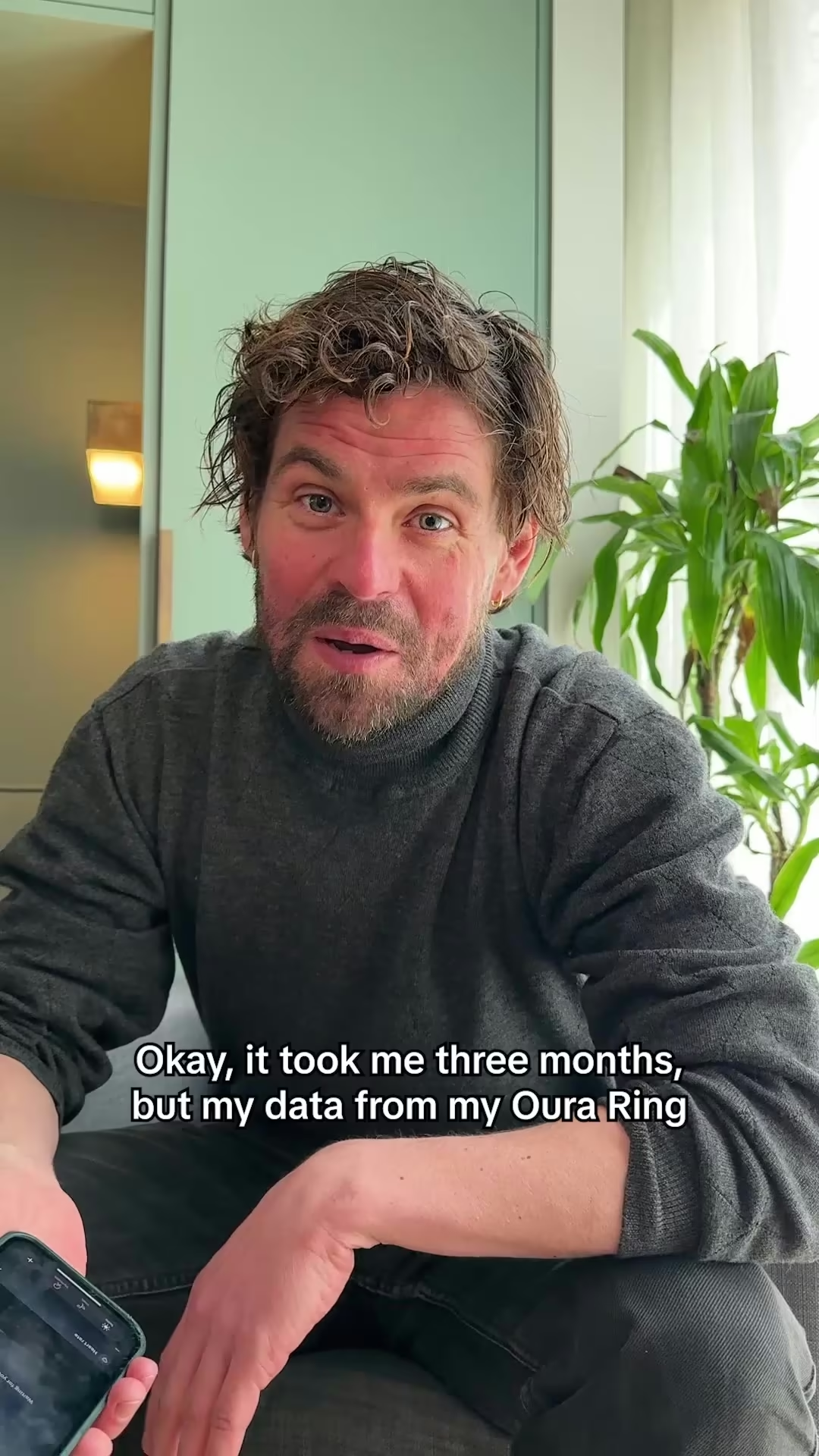


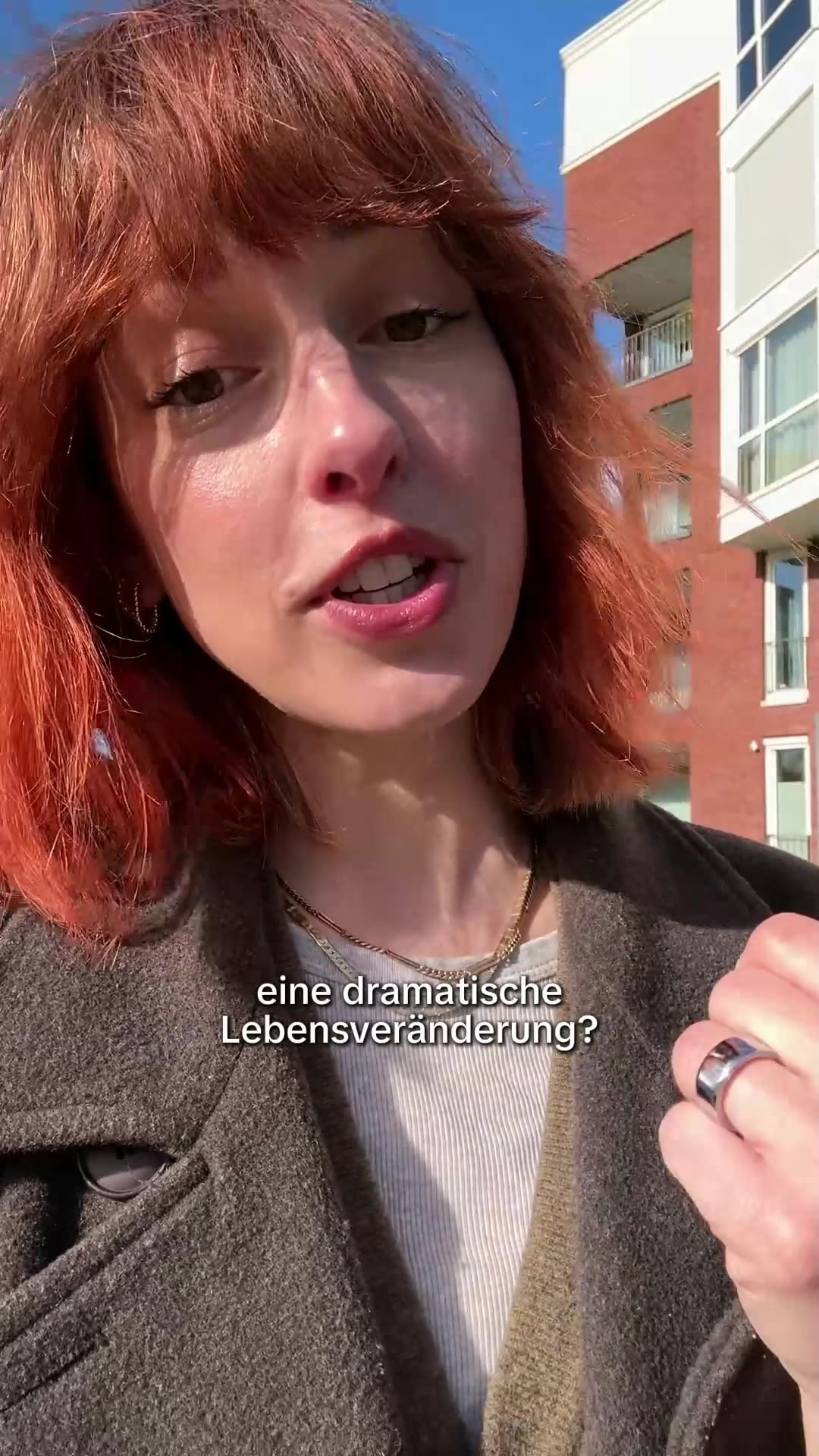



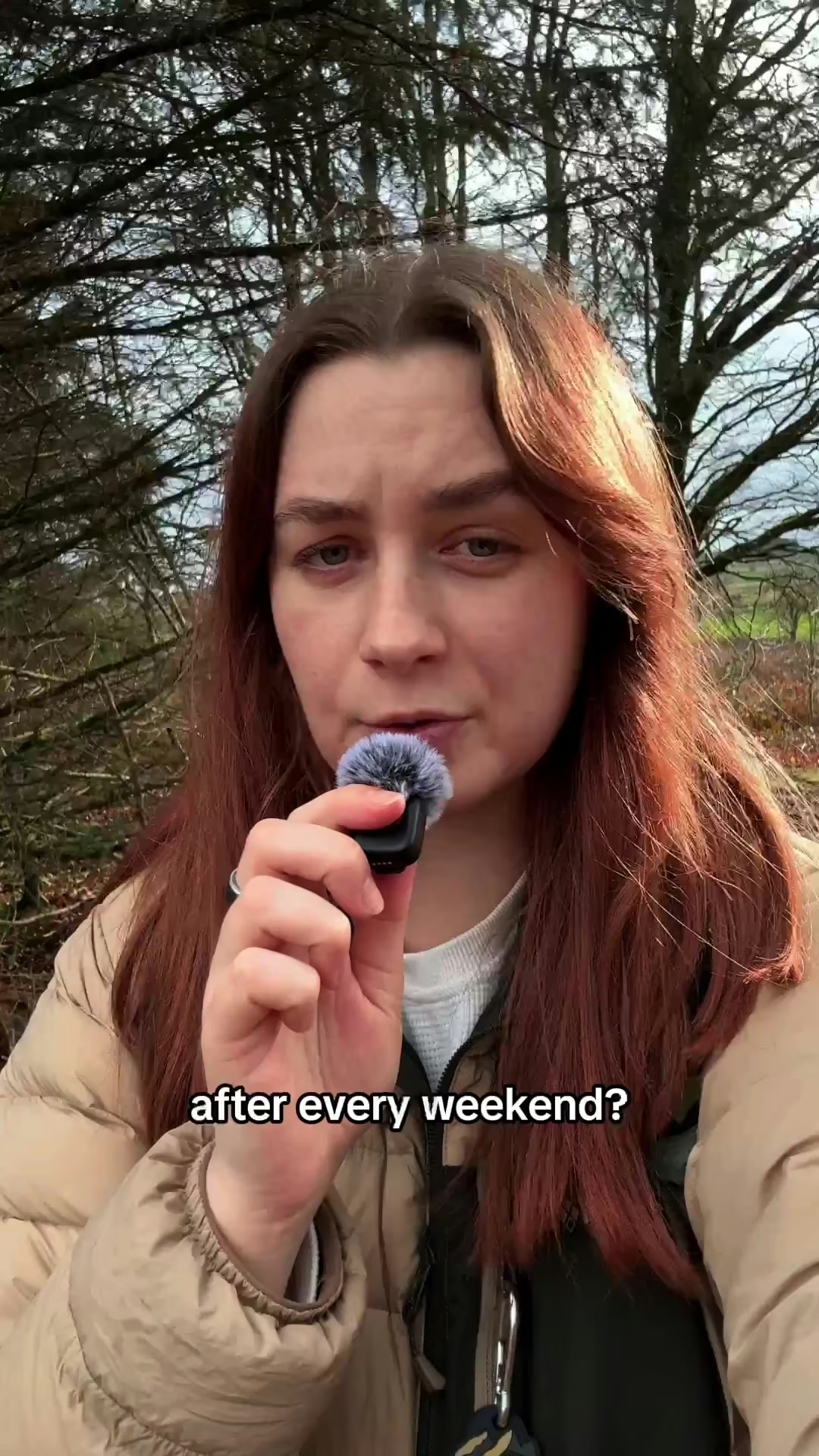













FAQ
What software teams ask us first.
How much creative volume does a B2B SaaS brand actually need?
More than feels dignified, and less than an agency selling volume will quote. The benchmark that settles the argument is the hit rate: only around 5% of creatives become winners, with a good hook rate near 30% and a good hold rate near 25%. For most software companies spending moderately, that means a handful of genuinely distinct angles each month plus iterations of whatever is working — not forty variations of one layout. We size the cadence against your spend so the account is never starved and never producing work nobody has time to read.
Is dashboard screenshot creative really that bad?
Screenshots are not the problem; unreadable ones are. A product shot that needs pinch-zoom on a phone is asking for effort at the exact moment attention is cheapest, and B2B and SaaS advertisers already average only a 0.6-1.2% link click-through rate on Meta. What works is a cropped detail of the one screen that proves the claim, a cursor doing the job in three seconds, or a recorded moment of the workflow — product truth at a size a thumb can read.
How do you test creative without burning the budget?
By testing arguments rather than executions, and by changing one variable at a time. Five layouts of the same claim produce noise; five distinct claims produce a decision. We run each angle with enough budget to reach a readable result, keep audience and placement constant while the message moves, and write the hypothesis down before launch so nobody re-interprets the outcome afterwards. Losers are retired without ceremony, winners are iterated in the direction the data suggests rather than redesigned.
Does this work for LinkedIn and YouTube as well as Meta?
Yes, with different economics. LinkedIn buys precision at a much higher cost per click, so the creative can carry more text and a heavier ask; Meta buys cheap reach and rewards a hook in the first second; YouTube sits between them and rewards demonstration. We produce each angle in the formats a placement actually wants rather than resizing one asset five ways, and our LinkedIn ads and YouTube ads teams run the media from the same plan.
How do you choose between creative agencies for a SaaS brand?
Ask what they will measure. An agency that answers with awards, brand lift or impressions is selling craft; one that answers with cost per qualified opportunity and a testing cadence is selling a system. Then ask who does the work and whether you get the source files. The best test in a first meeting is to ask what creative they would kill on your current account and why — an honest answer arrives with reasoning, and an evasive one arrives with a case study.
Can our in-house designers keep this running?
That is how most of these engagements should end. We build editable templates, type and colour rules, a naming convention and a documented brief format, then run the cadence with your team until the loop is theirs. Plenty of software companies keep us for angle development and heavy motion work while in-house handles iteration, which is usually the cheapest split. Nothing is delivered as a flattened export you cannot edit.
How does positioning work fit if we already have a brand book?
A brand book covers how you look; positioning covers what you claim, and advertising fails on the second far more often than the first. We work inside your existing visual system and spend the effort on the argument: the alternative you replace, the objection that stalls deals, and the proof that answers it for each role in the group. That matters more as committees grow — Forrester now sees 14-member buying groups on genAI-feature purchases against seven without — because one message rarely satisfies both the user and the signer.
What if our product is genuinely hard to explain?
Then the creative should stop explaining and start demonstrating. Complicated software sells on a moment of recognition — the ugly spreadsheet, the 2am alert, the four tools duct-taped together — rather than on an architecture diagram. We usually open with the problem in the customer's own words, show ten seconds of the product doing the job, and leave the technical depth to the landing page and the sales call. If the team cannot agree on the one sentence, that is a positioning problem surfacing early, which is a good outcome for a creative project.
How quickly will we know whether the creative is working?
Hook and hold read within days, cost per qualified opportunity within four to six weeks, and durable conclusions after two or three cycles of the queue. We resist calling a winner early because early leaders often revert once the audience broadens. What you get in the meantime is a weekly note on what shipped, what is being cut and what the data suggests next — and a monthly review that states plainly whether the work earned its budget.
Does Meta really work for B2B SaaS, or should we stay on LinkedIn?
Meta works for SaaS when the creative does the qualifying that LinkedIn targeting normally does. On Meta you are buying cheap attention from a broad audience, so the persona has to be named inside the first frame — the role, the tool being replaced, the moment of pain — and the offer has to suit somebody at an earlier stage of awareness than a demo request. Meta rewards volume and iteration; LinkedIn rewards precision and patience. Most software companies we work with run both: Meta for reach, testing and sign ups on self-serve products, LinkedIn for the accounts sales actually wants. The same angle queue feeds both, resized and rewritten per platform rather than exported twice.
How does creative fit a wider B2B SaaS marketing strategy?
Creative is where the strategy becomes visible, so the two are best planned together. A demand generation plan decides which buyer personas matter, which stage of awareness the campaigns are addressing, and what the messaging framework claims; creative then turns each of those decisions into something a person will actually watch. When agencies split the work — one running paid media, another making assets — the usual result is beautiful content aimed at the wrong stage. We keep positioning, the content calendar and the ads under one plan so a change in strategy reaches the creative in days rather than in the next quarterly campaign.
What should a SaaS marketing team look for in creative agencies?
Four things, in this order. A messaging framework you can read and recognise as your own product, not a template. A visible testing plan with a cadence, so the best ideas are found rather than guessed. Evidence that the agency understands demand generation economics — what a sign up is worth at your price point, and which stage of awareness the budget is buying. And plain ownership terms: source files, templates and ad accounts in your name. Ask each shortlisted agency what differentiation they would claim for you and why; the best answer usually comes with a caveat attached, which is how you know somebody has thought about the market rather than the pitch.
What does it cost to have you run creative?
A fixed monthly fee scoped to the cadence you need, quoted separately from media spend. After a first review you get a plan tied to a testing cadence and a target, and we will tell you where in-house production would be cheaper than ours rather than absorbing the whole scope. Where the useful engagement is a positioning sprint and one production batch instead of a retainer, we scope it that way and say so on the first call. Source files and ad accounts stay in your name throughout.

.webp)
.webp)