PPC for accounting firms, judged on booked work.
judged on booked work
Paid search is the fastest way for a practice to be visible on the searches that matter, and the fastest way to waste a budget if the account is built the way most of them are: one campaign, broad match everywhere, no negative keywords, and a homepage as the landing page. We build accounts around the engagements you actually want, wire it up so a booked consultation is the conversion, and report what a new engagement costs rather than what a click costs. It runs beside your organic search work, on one plan.






Tell us a little about your brand and we'll be in touch within 24 hours to lock in a time.



FOUR WORKSTREAMS
Four workstreams decide whether an ads budget pays.
Four workstreams
Nothing exotic: measurement that tells the truth, keywords and match types that buy the right clicks, pages that answer the query, and a weekly loop that cuts what does not work. Most accounts we inherit are missing three of the four.
Measurement
Keywords & structure
Landing pages
Weekly management
A form fill is not a new engagement.
The first thing we change in an inherited Google Ads account is what counts as a conversion. Newsletter signups, PDF downloads and contact page visits teach the bidding algorithm to buy more of the wrong thing, and they make the reporting flattering and useless.
Conversion tracking is rebuilt around a booked consultation, call measurement is added so phone enquiries count, and qualified status comes back from your practice CRM so the account learns from clients rather than from clicks. The benchmark to beat is public: accounting campaigns average a $101 acquisition at a 4.40% conversion rate.
- Booked consultation set as the primary conversion
- Call measurement for phone enquiries
- Qualified-lead status returned from the CRM
- Campaign identifiers in every destination URL
$101
average acquisition cost in accounting campaigns
4.40%
average conversion rate in the sector
Buy the engagements you want, not the word 'accountant'.
Head terms in this profession are expensive and vague. The money sits in specific searches: catch-up bookkeeping, S-corp election, sales tax registration, a notice from a tax authority, outsourced controller work, a specialism for one industry. Each deserves its own campaign, its own bid and its own page.
We rebuild the account by service line and fee value, choose match types deliberately rather than leaving everything broad, and maintain negative keyword lists so student questions, software comparisons and job seekers stop costing money. Clicks are not cheap here — CUFinder puts the CPA average at $4.85 — so each one has to be aimed.
- Campaigns split by service line and fee value
- Match types chosen deliberately, not left broad
- Negative keyword lists maintained weekly
- Geographic targeting tied to where you can serve
$4.85
average paid click for a CPA firm (CUFinder, 2026)
2.84%
average click-through rate in accounting
The page has to answer what was typed.
Sending a sales tax question to a homepage listing eleven services is the most common and most expensive mistake in this profession. The click is paid for at full price and the visit is thrown away.
We build one page per campaign: the question restated in the headline, what the engagement includes, a fee posture instead of a mystery, proof a prospective buyer can verify, and a booking step that takes two minutes. Against an industry landing page conversion benchmark of 3.20% this is usually where the biggest single gain in the account comes from, and it lifts organic listings at the same time.
- One page per campaign, matched to intent
- Fee posture stated rather than hidden
- Verifiable proof above the fold
- Booking and call paths both tested on mobile
3.20%
landing page conversion benchmark in accounting
The account is worked every week, not set and forgotten.
Search terms are read weekly, wasteful queries become negatives, strong ones become their own campaigns, ad copy is rotated on evidence, and bids move with what booked rather than with what clicked. Tax season gets its own plan, because 60% or more of annual acquisition lands between January and April.
Retention is what makes the arithmetic work: CPA firms keep about 92% of their clients, so a client won in February is a multi-year fee, and the right ceiling on acquisition cost is set against lifetime value rather than a single engagement letter.
- Weekly query report review and negatives
- Ad copy tested on evidence, not opinion
- Seasonal pacing planned before January
- Budget targets set against lifetime fee value
92%
average retention at CPA firms
60%+
of annual acquisition falls in the Jan-Apr window
Ads account, measurement and pages stay in your name
A consultation is the conversion, never a download
Weekly working session with the people running the account
Long-term lock-ins
We made the difference for those brands

Apparel and lifestyle

Creative, content, arts & culture

B2B software, fintech, insurance

Consumer tech and platforms

Food & beverage

Beauty, personal care & wellness

Creative, content, arts & culture

Retail & commerce

B2B software, fintech, insurance

Home essentials, appliances, kitchen & pet

Beauty, personal care & wellness

Beauty, personal care & wellness

Food & beverage

Consumer tech and platforms

Beauty, personal care & wellness

Food & beverage
Creative, content, arts & culture

Home essentials, appliances, kitchen & pet

Consumer tech and platforms

Consumer tech and platforms

Healthcare & regulated services

Retail & commerce

Retail & commerce

Creative, content, arts & culture

Food & beverage

Creative, content, arts & culture

B2B software, fintech, insurance

Retail & commerce

B2B software, fintech, insurance

Creative, content, arts & culture

B2B software, fintech, insurance
01 — The challenge
The budget goes out on time. Nobody can say what came back.
The pattern repeats in almost every account we inherit. Spend is steady, the monthly report is full of impressions and clicks, and when a partner asks how many clients it produced, the answer is a shrug and a number of form fills that includes three students and a software vendor.
“We spend on ads every month. I could not tell you what a client costs us.”
That is a measurement problem before it is a media problem. Once a booked consultation is the conversion and CRM status flows back, the account stops optimising toward noise and the real numbers appear. They are knowable: a $4.44 click, a 4.40% conversion rate and a $101 acquisition is the sector benchmark, and a firm should know whether it is above or below that line before it argues about budget.
02 — Our approach
Fix the measurement, rebuild the account, match the pages, work it weekly.
Week one is measurement, because everything downstream is guesswork without it: a booked consultation defined as the conversion, call tracking live, campaign identifiers in every URL, and qualified status returning from your practice system so a tyre-kicker and a retained engagement are never counted alike. Week two is the rebuild — campaigns split by service line and fee value, match types chosen rather than defaulted, negative lists seeded from the last twelve months of query data, and geography limited to where you can actually serve. Then the pages: one per campaign, answering the question that was typed, with a fee posture and a two minute booking step. After launch it is a weekly loop. We read the query report, cut the waste, promote what books, rewrite the weakest copy, and move budget toward the service lines producing the cheapest bookings. Seasonality is planned in advance rather than reacted to, and the monthly review compares paid with organic on one page so the firm can see where the next dollar belongs.
03 — What we did
Two weeks to a measured account, then a weekly loop.
Measurement, account rebuild, destination pages and the weekly optimisation cycle — in sequence, with a working session every week and a written note of what changed.
Week 1 / Measurement
Conversions rebuilt around booked work
A booked consultation set as the primary conversion, call tracking live, identifiers in every URL, and qualified status returning from the practice CRM.

Week 2 / Rebuild
Campaigns split by service line and fee value
Tax, bookkeeping, advisory and controller work separated, match types chosen deliberately, negatives seeded from a year of query data.

Week 2 / Pages
One landing page per campaign
The question restated in the headline, the engagement described, the fee posture stated, and a booking step that takes two minutes on a phone.

Ongoing / Weekly loop
Read, cut, promote, rewrite
Weekly query report review and negatives, ad copy tested on evidence, budget moved toward the service lines producing the cheapest booked clients.

WHAT YOU GET
Deliverables your managing partner can audit.
can audit
Everything below lands in your own accounts and stays yours if you ever leave.

Conversion tracking build
Booked consultations, call measurement and CRM status wired together so the numbers mean something.

Keyword and negative plan
The searches worth buying, ranked by fee value, with the waste excluded before launch rather than after.

Account build and management
Campaigns split by service line, bids set on fee value, weekly optimisation and a documented change log.

Landing pages per campaign
One page per intent with fee posture, verifiable proof and a two-minute booking step.

Ad copy and testing
Copy written for a person mid-decision, tested against evidence and rotated on what books work.

Cost-per-client reporting
Cost per booked consultation and per engagement won, next to organic, on a single page each month.
HOW WE WORK
Operating standards, not promises.
Operating standards


Tax practices
Seasonal pacing, deadline demand and entity-specific offers planned before January.
ExploreBookkeeping & clean-up
Productised fixed-fee offers, where a clear price on the page does most of the selling.
ExploreAdvisory & CFO services
Higher fees and longer cycles, bid against lifetime value rather than a single engagement.
Explore

















Built on trust. Proven by results.
We partner with SMBs and Fortune 500 companies to deliver more than reach — we bring clarity, execution, and measurable outcomes. Every successful partnership starts with a strong culture fit and a shared drive to grow.





CASE STUDIES
Case studies
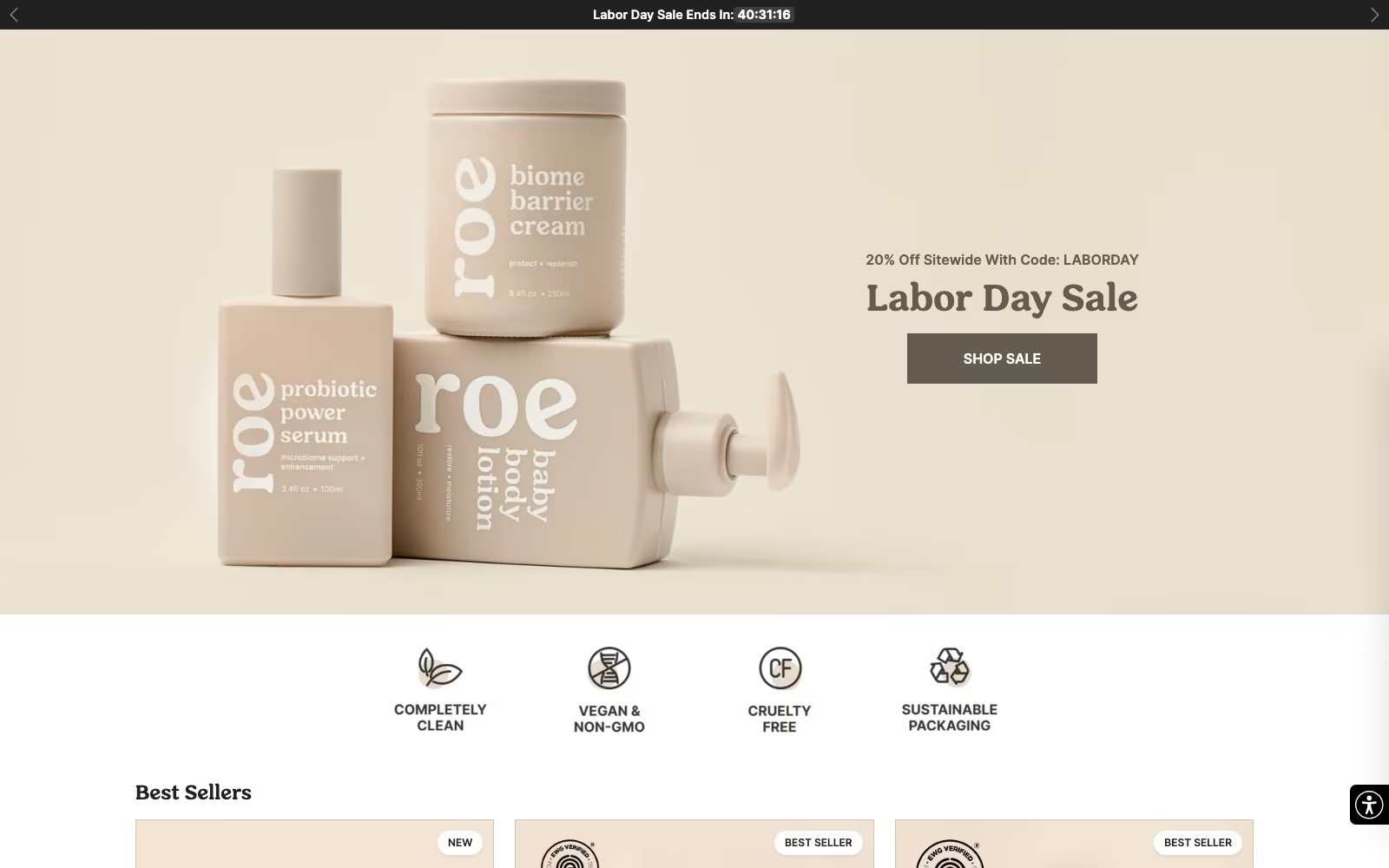
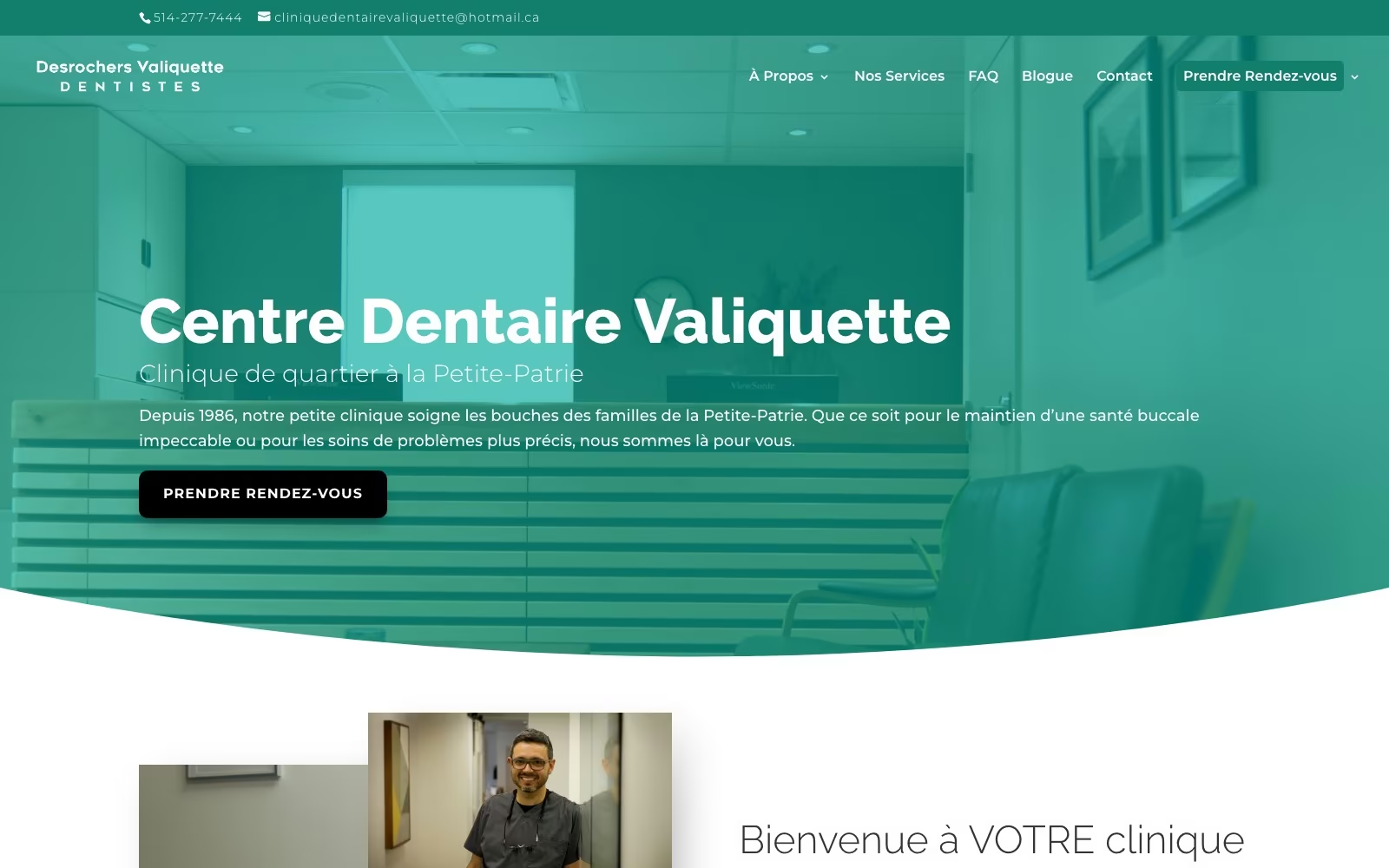
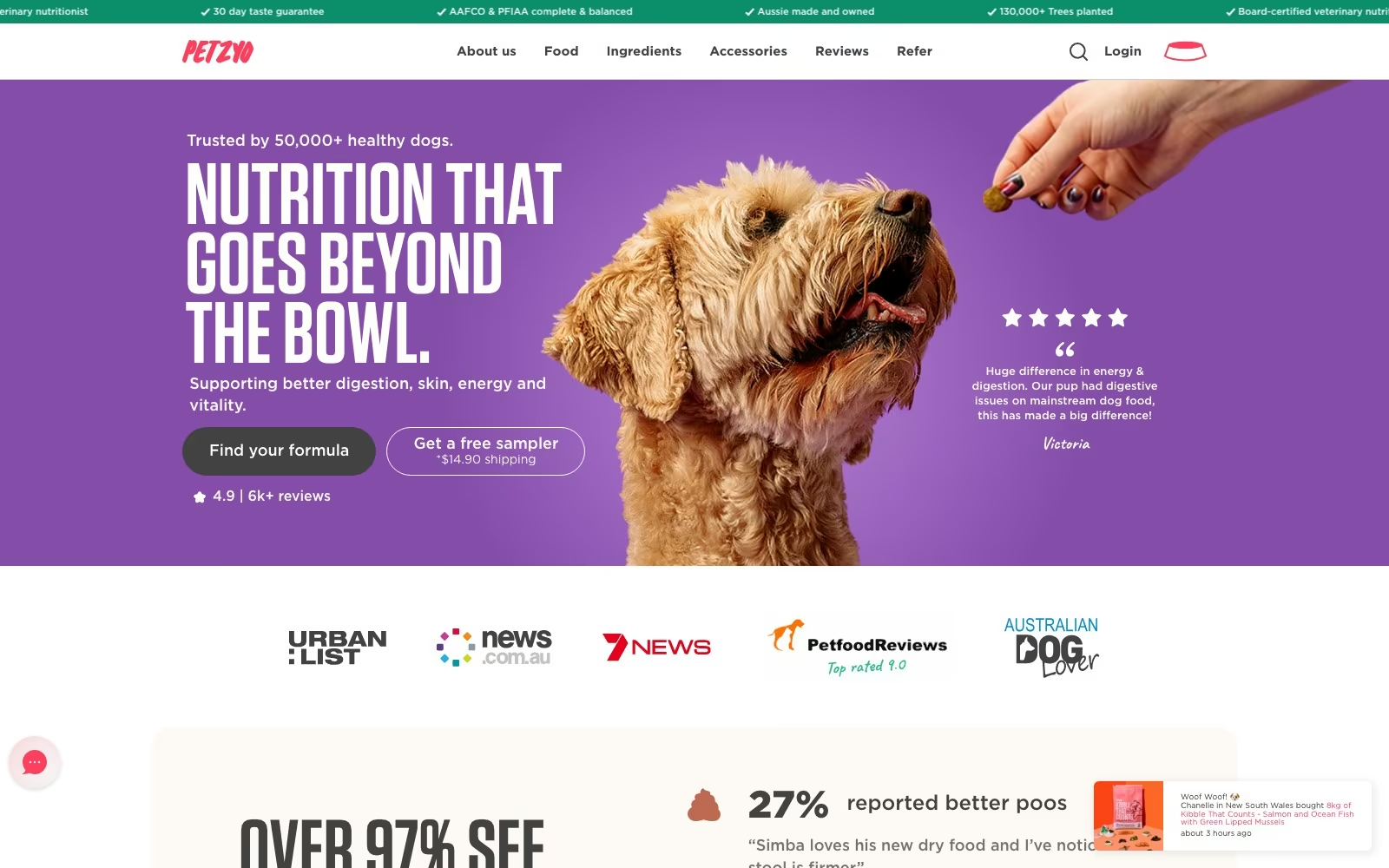
Website Portfolio
Video Ads
Static Ads




































































FAQ
What firms ask us first.
What should an accounting firm budget for paid search?
Enough to reach a decision rather than a round number picked in a meeting. We size the test against your average engagement value and close rate: at a $4.44 average click and a 4.40% conversion rate, you can calculate how many clicks stand behind one booked consultation before spending anything, then multiply by the number of bookings needed to judge it fairly. A firm selling $400 individual returns and one selling a $3,000-a-month controller retainer need very different budgets, and we will tell you if the numbers do not support a test yet.
How quickly will we see results?
Delivery signals — impressions, clicks, query data, obvious waste — appear within days, and the first structural improvements usually land in the first fortnight. A reliable read on the price of a booked consultation takes six to eight weeks in most practices, longer where the engagement is large enough that volume is naturally thin. We agree in advance what number would make it a keeper, so the decision is not made on the mood of a single week.
Is Google Ads or LinkedIn better for winning business clients?
They answer different questions. Search captures somebody who already has the problem; LinkedIn reaches the right person before they go looking. Benchmark data puts LinkedIn cost per lead at $84.40 against a $101 acquisition on Google Ads for accounting, and notes LinkedIn outperforming for business-client lead cost, so for a firm chasing larger commercial engagements it deserves a share of budget. For tax season and local demand, paid listings win outright. We usually run them first, prove the measurement, then test the second channel with a defined budget.
Should we pause ads outside tax season?
Reduce, rarely pause. More than 60% of annual acquisition in this profession falls between January and April, so the season deserves the majority of the budget — but the off-season is when advisory, bookkeeping and controller searches are cheapest and least contested, and it is when a full pause costs you the learning the account needs. We plan the year in advance: heavy in season, lean and advisory-focused in summer, rebuilt and tested in autumn so January starts warm instead of cold.
Will you use our existing ads account or start a new one?
Almost always yours, kept in your firm's name. Existing accounts carry conversion history that new ones do not, and starting fresh throws that away for no reason beyond tidiness. We audit what is there, keep what works, restructure the rest, and document every change so the account stays operable by anyone. A new account only makes sense when the history is genuinely unusable, and we would explain why before doing it.
How do you stop us paying for students and job seekers?
Negative keywords, maintained weekly rather than written once. Before launch we seed the lists from your last twelve months of query data and from the patterns common to this profession: definitions, coursework, salary and jobs queries, software comparisons, free templates and DIY questions. After launch the weekly query review is where most of the money is saved, because it catches new waste while it is still small. It is unglamorous and it is the single highest-return habit in the account.
Do we need new landing pages, or can we send traffic to our site?
Most firms need two or three, not a rebuild. The predictable failure is a specific query arriving on a general services page, which pays full price for a click and then asks the visitor to do the sorting. Against an accounting landing page conversion benchmark of 3.20%, matching the page to the query is usually the cheapest improvement available. Those pages also help your organic search presence, so the spend works twice.
What does your management fee cover, and how is spend handled?
A fixed monthly fee, quoted separately from media, covering strategy, the weekly optimisation loop, ad copy, reporting and a working session with the people actually running your account. Media is paid by you, on your own card, in your own account — we never mark it up or hold it, so the numbers in the platform and the numbers in the report are the same numbers. Where the right scope is a one-off rebuild and a handover rather than a retainer, we say so on the first call.
Can you work with our compliance obligations?
Yes, and it is straightforward once it is written down. We keep an approved language list for the account: no guaranteed refunds, no implied outcomes with a tax authority, no advice that requires a licence, clear identification of the practice behind the ad, and any disclaimers your state board or professional body expects carried through to the page itself. Copy that would sit awkwardly with your regulator gets flagged before it is built, not after somebody complains.
How do you report, and what will we see each month?
One page in plain language: spend, booked consultations, cost per booked consultation and cost per engagement won, the service lines that moved, what we changed and why, and what happens next month. Paid sits beside organic in the same view so the firm can see where the next dollar belongs rather than comparing two suppliers' best months. When a month is poor we say so and explain what we are doing about it — a report that only contains good news is not a report.
What if the ads are not profitable for our firm?
We tell you, in the monthly review, with the arithmetic attached, and we recommend moving the money — usually into organic listings, better pages or the follow-up process, which is where a surprising share of lost work actually goes. Paid media is a tool, not a religion, and a practice with no capacity to take three new clients this quarter does not need a bigger budget. Being useful about that is how we keep clients for years rather than months.
Can you run our other channels at the same time?
Yes, and the reporting gets more honest when one team holds it. Our SEO, landing page and analytics specialists work from one plan with the paid team, so a booked consultation is attributed once rather than claimed by three vendors. It is equally fine to hire us for the ads account alone while another agency keeps the rest — everything is documented and left open in your name.

.webp)
.webp)