The injured ask the assistant first, at 2am.
the assistant first
Do I have a case, how long do I have to file, will this cost me anything — those questions get typed into ChatGPT long before anyone rings a law firm. We run ChatGPT Ads for personal injury firms, through the legal advertiser approval rules, and measure signed cases.






Tell us a little about your brand and we'll be in touch within 24 hours to lock in a time.



FOUR WORKSTREAMS
Four workstreams behind signed cases from AI search.
signed cases from AI search
Advertiser eligibility handled properly, campaigns built for how injured people describe what happened, creative your bar rules allow, and tracking that reports signed cases rather than clicks.
Eligibility and compliance
Campaigns and case intent
Creative, intake and landing pages
Tracking and benchmarking
Legal advertisers are approved one at a time.
This is the part most firms discover late. Legal services sit inside a restricted category on the platform: OpenAI approves legal, health care and finance advertisers individually through manual review rather than letting anyone with a card buy placement. Clearing it is a documentation exercise before it is a creative one.
We prepare the bar registration, entity and disclaimer material a reviewer expects, keep every claim inside what your state bar advertising rules allow, and keep a record of what was approved and when. Nothing runs that a partner has not seen first.
- Advertiser approval prepared and submitted properly
- Bar registration and disclaimer requirements documented
- Copy reviewed against your state advertising rules
- An approval trail kept for every ad that runs
Manual review
how legal advertisers are approved on ChatGPT today
$25
minimum daily budget to run ChatGPT Ads
Buy the situation, not the keyword.
Nobody types “personal injury lawyer near me” into an assistant. They write what happened: rear-ended on the way home, the other driver's insurer has already called, a wrist that still will not bend, three weeks off work. Campaigns are built around those case types because that is what the conversation contains.
The pricing gap is the reason to look now. Average CPCs run $2-$5 across industries with daily budgets from $25, while attorneys and legal services post the highest average CPC of any industry at $9.87, with competitive personal injury head terms running $150-$500 or more per click.
- Campaigns mapped to real case types
- Jurisdictions you are admitted in respected in targeting
- Motor vehicle, premises and work injury read separately
- Budgets set so a month of data is readable
$9.87
average legal cost per click, the highest of any industry
$150-$500+
what competitive injury head terms cost per click
Answer the question they actually asked.
Injury creative that shouts gets ignored and, in several states, gets you a letter. What works is plain: the kind of case you handle, what happens in the first call, how the fee works, and a real next step. The click lands on a page about that case type, not a homepage of courthouse photography.
The stakes per lead are high enough to justify the care: personal injury cost per lead benchmarks show Google Ads at $442 and Local Service Ads at $378. Intake speed and page clarity are what stop those leads leaking.
- Ad copy written to pass review the first time
- Disclaimers built into the creative, not bolted on
- Landing pages per case type and jurisdiction
- Intake forms trimmed to what a screener really needs
$442
benchmark cost per personal injury lead on Google Ads
$378
benchmark cost per lead from Local Service Ads
Report signed cases, not conversations.
A new channel invites vanity reporting. We wire calls, forms and chats, connect your case management system where it allows, and report cost per qualified lead and cost per signed case. Volume that never converts to a retainer is not a result we will claim credit for.
Then we benchmark honestly against your existing mix. The same benchmarks put organic and SEO leads at $183 against $442 from paid search, which is usually the strongest argument for running visibility work alongside any ad channel rather than instead of it.
- Calls, forms and chats tracked and verified before launch
- Case management system connected where it allows
- Cost per qualified lead and per signed case reported monthly
- Ad accounts, tags and data in your name from day one
$183
benchmark cost per injury lead from organic search
Monthly
A written read on spend, leads and signed cases
average cost per click on ChatGPT Ads today
the legal cost per click a year earlier, before this year's rise
Reads while this channel is still young
Ad accounts, creative and data in your name
We made the difference for those brands

B2B software, fintech, insurance

Apparel and lifestyle

Beauty, personal care & wellness

Creative, content, arts & culture

Consumer tech and platforms

Creative, content, arts & culture

B2B software, fintech, insurance

Beauty, personal care & wellness

Home essentials, appliances, kitchen & pet
B2B software, fintech, insurance

Consumer tech and platforms

Creative, content, arts & culture

Consumer tech and platforms

Consumer tech and platforms

Healthcare & regulated services

B2B software, fintech, insurance

Travel & mobility

Apparel and lifestyle

Retail & commerce

Travel & mobility

Apparel and lifestyle

B2B software, fintech, insurance

Creative, content, arts & culture

Beauty, personal care & wellness

Apparel and lifestyle

Food & beverage

B2B software, fintech, insurance

Home essentials, appliances, kitchen & pet

Home essentials, appliances, kitchen & pet

Food & beverage
01 — The challenge
The first legal advice now comes from a chatbot.
An injured person used to call the firm on the billboard or ask a relative. Increasingly they open an assistant at two in the morning and type what happened: the collision, the insurer who already called, the wrist that still will not bend. They ask whether they have a case, what it might be worth, and how long they have to act. By the time your intake team hears from them, the expectations are set.
“She arrived knowing the statute of limitations and what her claim was supposedly worth.”
Meanwhile the traditional route keeps getting dearer: legal services now post the highest average cost per click of any industry at $9.87, up from $8.58 a year earlier.
02 — Our approach
Approval first, then presence, then proof.
We start with eligibility, because for a law firm nothing else matters until the account is approved. Bar registration, entity details, disclaimer language and the advertising rules your state already applies get packaged before a campaign is drafted, which is what stops launches stalling in review for weeks.
Then economics. What a signed case is worth by type, what share of leads qualify, and what you pay today across search, Local Service Ads, television and referrals. That gives this channel a number to beat rather than a budget to spend. Campaigns are built around real case situations, with landing pages per case type and copy written to be both persuasive and defensible.
We launch small, read it weekly, and scale only what clears the target. Alongside it we make the firm easier for an assistant to cite at all — quotable practice content, clear attorney credentials, consistent firm details — because that visibility keeps working whatever the ad platform does next.
03 — What we did
Approved in weeks, judged on signed cases.
Eligibility and benchmarks first, then campaign and landing page build, a measured launch, and scaling only against cost per signed case.
Weeks 1-2 / Baseline
Eligibility and current case cost
Advertiser approval prepared, and current cost per qualified lead and per signed case measured across every channel you buy.

Weeks 2-4 / Build
Campaigns, creative and pages
Case-led campaigns, compliant ad copy, case-type landing pages and intake tracking verified end to end.

Week 4 / Launch
Small, measured, honest
Live at a budget that produces readable data, reviewed weekly against your existing cost per qualified lead.

Ongoing / Compound
Scale what signs cases
Budget follows signed cases, while quotable content and clean firm data earn unpaid mentions inside AI answers.

WHAT YOU GET
Deliverables you keep, whatever happens next.
you keep
Ad accounts, creative, landing pages and tracking all stay in your name from the first week.

Channel baseline and targets
What a qualified lead and a signed case cost you now by channel, and the target this one has to beat.

ChatGPT Ads campaign plan
The case types worth buying, jurisdictions, budgets and the testing sequence quarter by quarter.

Compliant creative set
Ad copy and offers written to pass review and to convert, with disclaimers built in from the start.

Advertiser approval pack
Bar registration, entity and disclaimer documentation prepared for the manual review legal advertisers face.

Intake tracking build
Calls, forms and chats tracked, with your case management system connected where it allows.

Monthly reporting pack
Spend, qualified leads and signed cases against your benchmark, with a written note on what moved and why.
HOW WE WORK
Operating standards, not promises.
Operating standards


Motor vehicle collisions
The highest-volume, most competitive demand, where intake speed decides who signs the client.
ExplorePremises and slip and fall
Cases that hinge on whether the person believes they have a claim at all.
ExploreWork injury and catastrophic claims
Fewer enquiries, far higher case value, and weeks of quiet research before any call.
Explore

















Built on trust. Proven by results.
We partner with SMBs and Fortune 500 companies to deliver more than reach — we bring clarity, execution, and measurable outcomes. Every successful partnership starts with a strong culture fit and a shared drive to grow.




CASE STUDIES
Case studies
Website Portfolio
Video Ads
Static Ads
































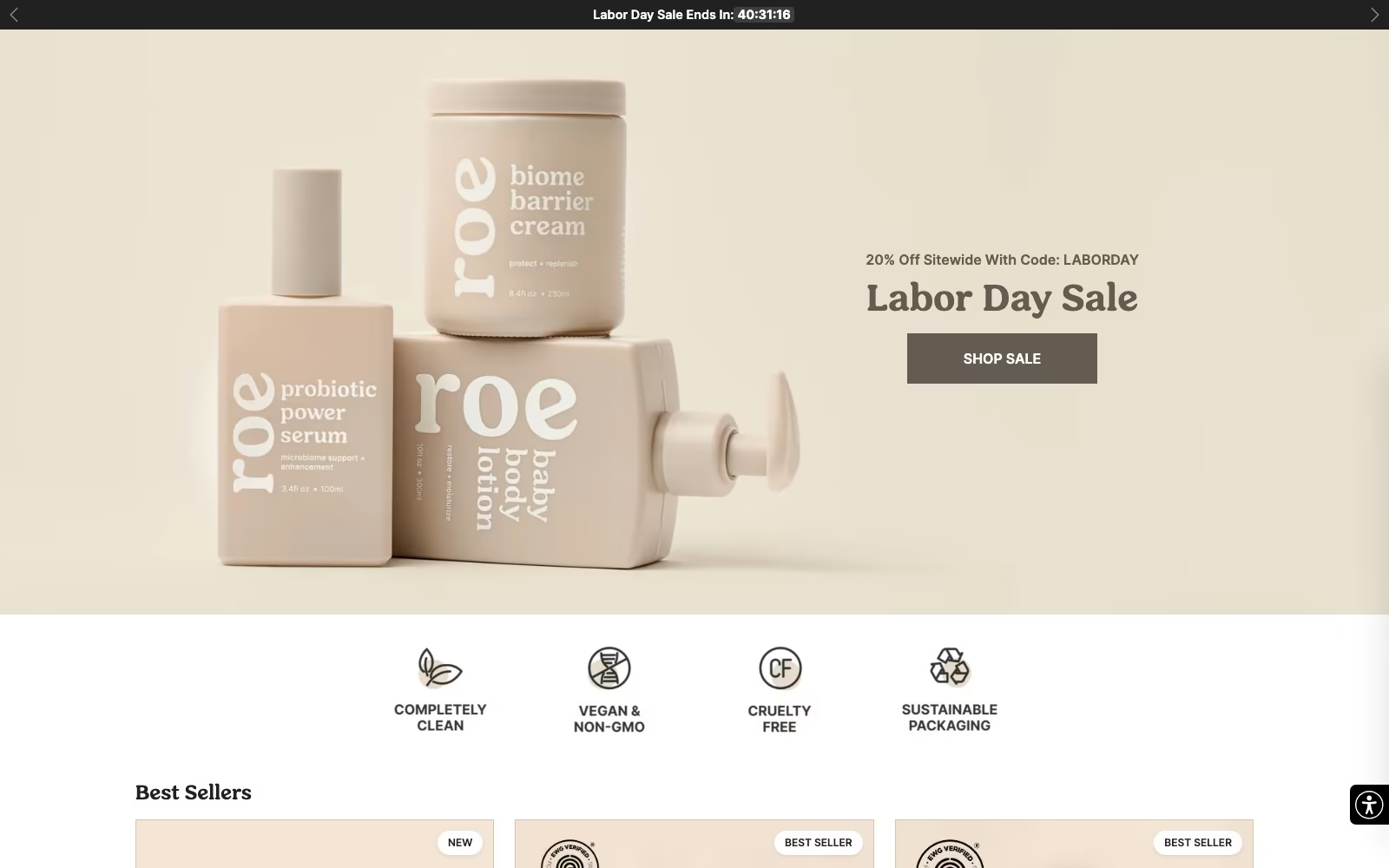

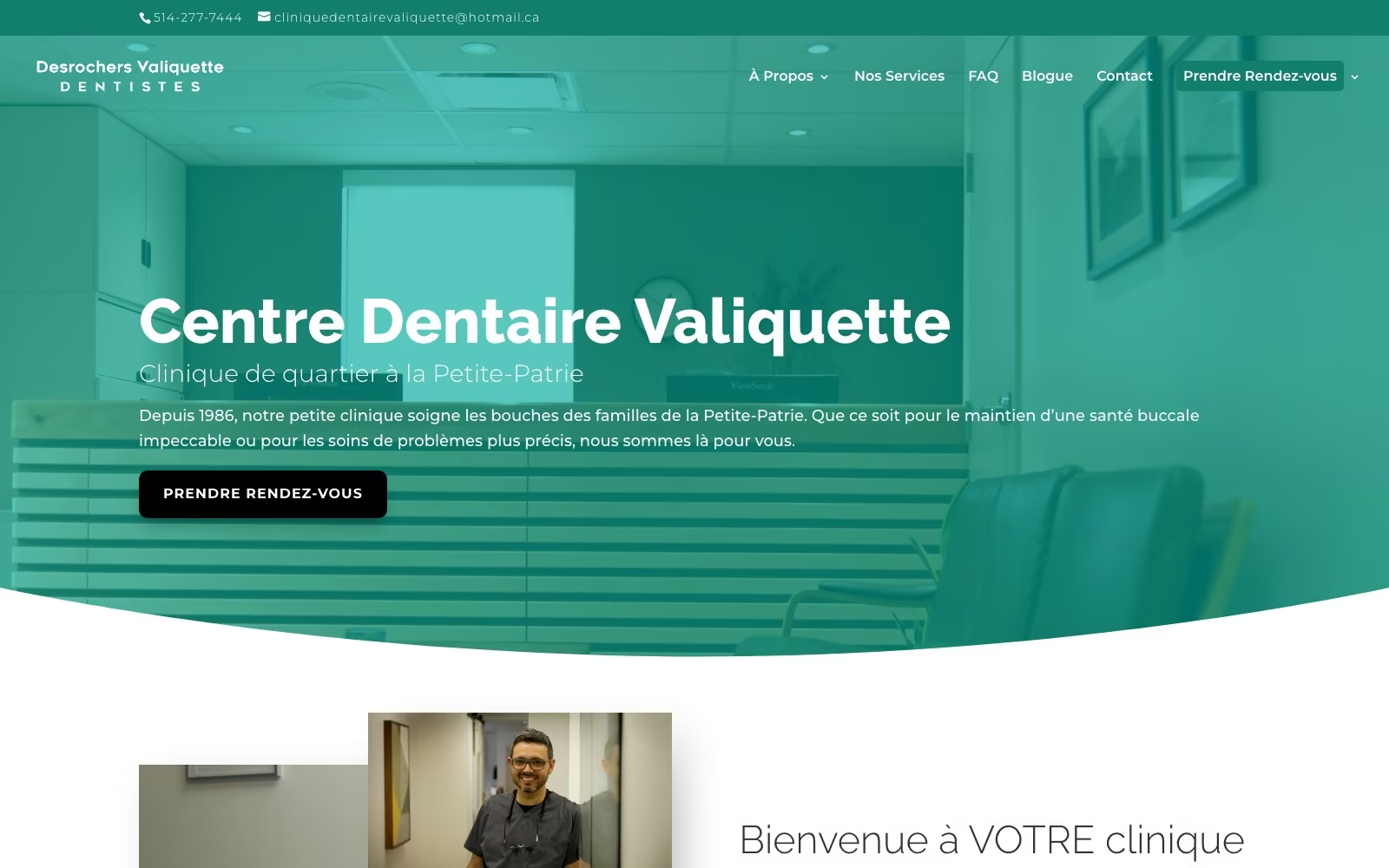

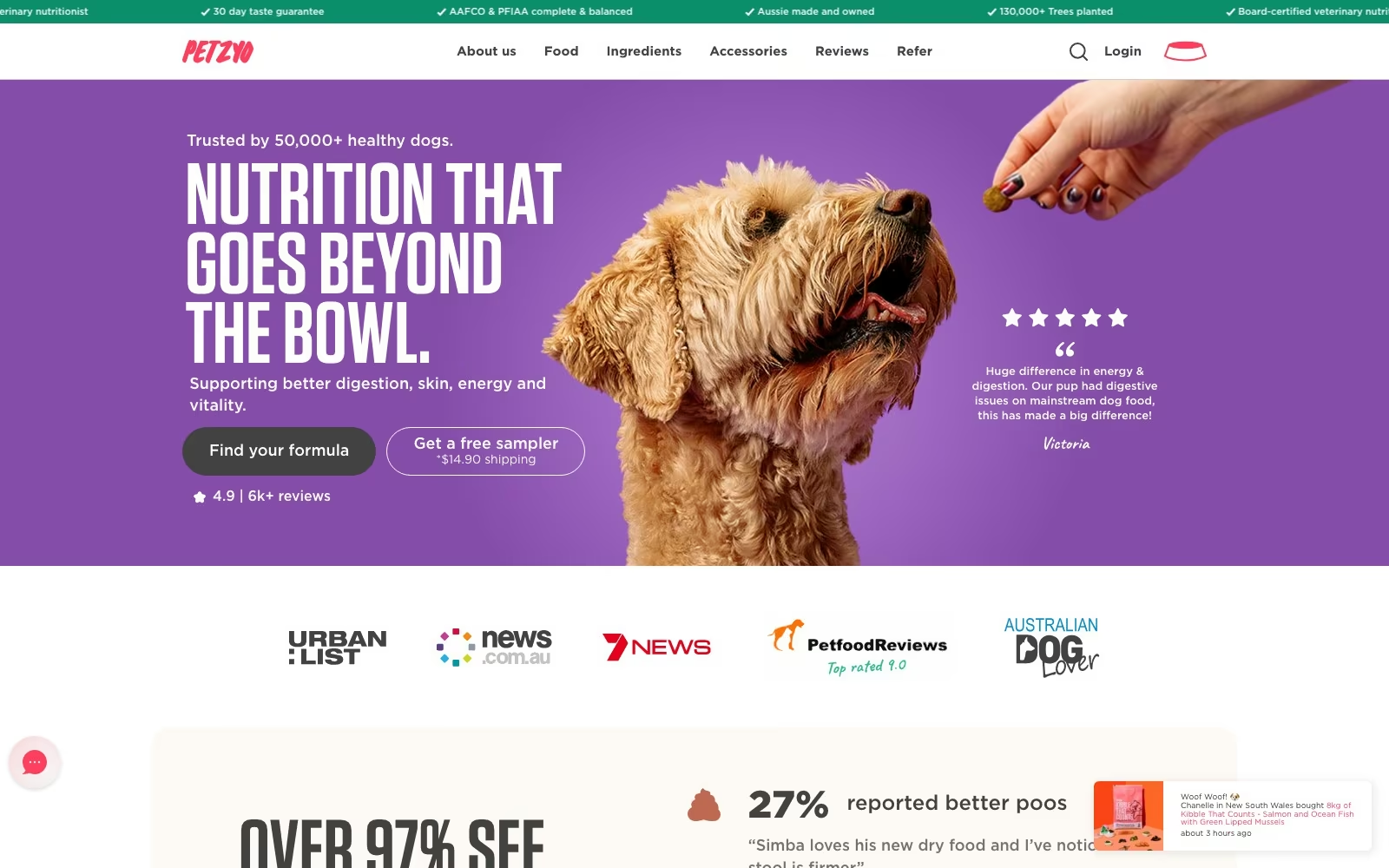

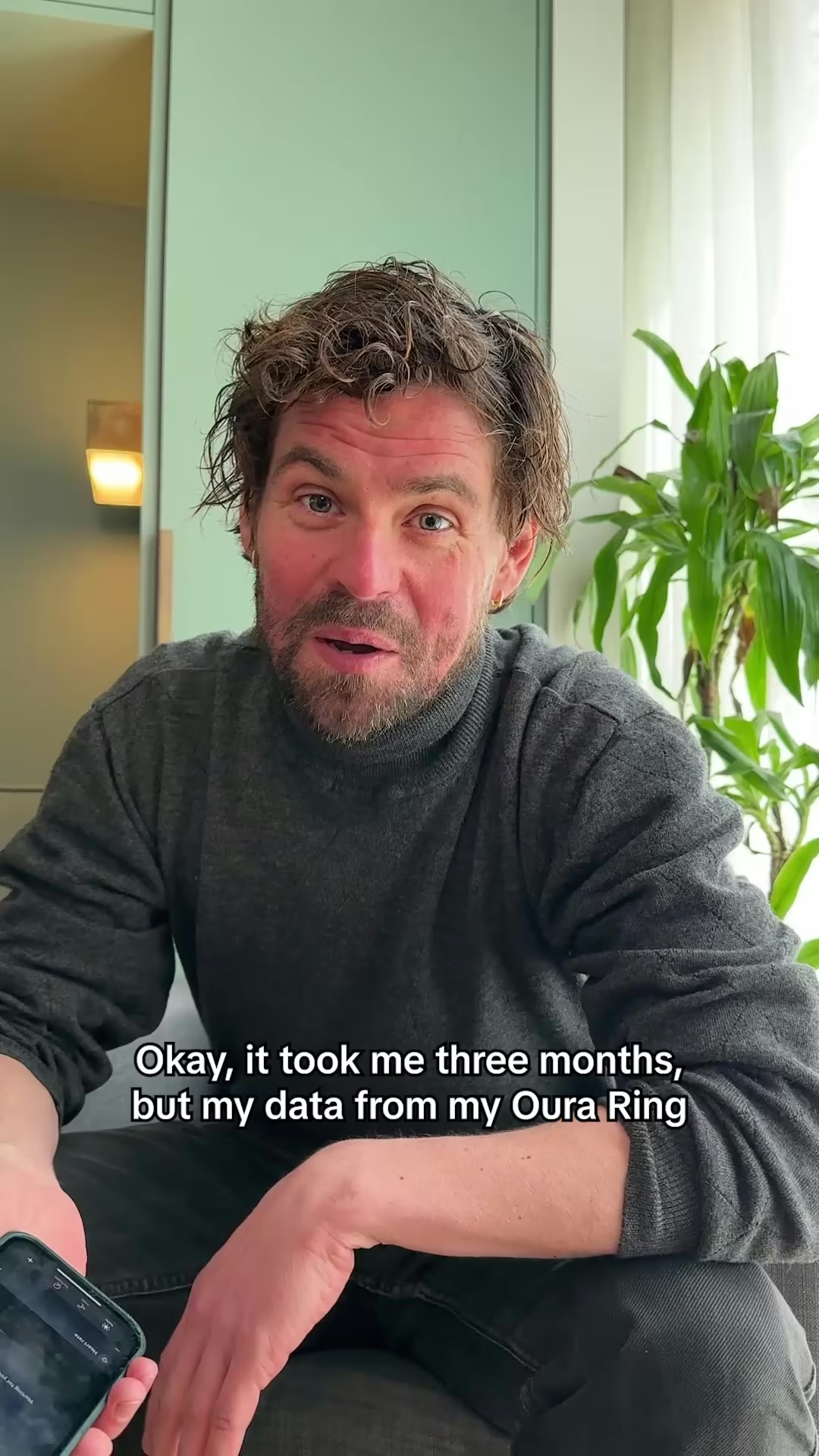












EN

EN

EN


FR
FR

FR

FR

FR

FR

FR

FR


EN
FAQ
Questions injury firms ask us
Are legal ads actually allowed on ChatGPT?
They are, under a restricted-category rule set. OpenAI approves advertisers in legal, health care and finance one at a time through manual review, so eligibility is decided on your documentation rather than your card details. We prepare that submission, and we will not promise a timeline the platform controls.
What do ChatGPT Ads cost a personal injury firm?
Average CPCs run $2-$5 across industries with daily budgets starting at $25. Set that beside the $9.87 average legal cost per click, and $150-$500+ per click on competitive injury head terms, and the case for testing early is arithmetic rather than enthusiasm.
How does bar compliance work with an AI ad platform?
The same way it works everywhere else, with one extra step. Your state rules on results claims, testimonials, specialisation language, disclaimers and required firm identification all still apply, and the platform adds its own review on top. We draft to the stricter standard first, route everything for partner sign-off before submission, and keep a record of what was approved and when.
Will the leads be any good?
That is the right question, and it is why we report on signed cases rather than form fills. People describing an accident to an assistant tend to give far more detail than a search query does, which helps qualification, but volume alone proves nothing. With benchmark costs at $442 per lead on paid search, lead quality is the entire economics of the channel.
Which case types should we advertise here first?
The ones with a long research phase and genuine uncertainty behind them: premises liability, work injury, medical device or product claims, catastrophic injury. Those are the situations people describe at length to an assistant because a directory listing cannot answer them. Straightforward collision demand is usually still cheaper to buy on search, at least while this channel is young.
Can this be tracked through to a signed case?
Yes, and it is the only measure we will argue from. Calls, forms and chats are tracked from launch, and where your case management system allows it we connect qualification and signing outcomes, so reporting shows cost per qualified lead and cost per signed case. Our conversion tracking team builds and verifies that before any spend starts.
What about client confidentiality in the tracking?
It is handled deliberately. Conversions are configured to report the event and its value without passing case detail into an ad platform, call recordings and transcripts stay inside your systems, consent is respected on the site, and anything questionable is removed rather than argued about. Our privacy compliance team reviews the setup before launch.
How do we get named in AI answers without paying?
By being verifiable. Assistants lean on clear practice content, attorney credentials, consistent firm information and real reviews, so a firm that explains its case types thoroughly gets cited more often than one with a brochure site. It also happens to be the cheapest channel in the benchmarks: organic leads at $183 against $442 from paid search. Our AI search visibility team runs that alongside the ads.
How quickly can a campaign be live?
Build takes about four weeks; approval time is decided by the platform's review of legal advertisers, which is why we prepare that documentation in week one rather than after the creative is written. Anyone quoting a guaranteed go-live date on a restricted category is guessing. We will tell you where the submission stands every week.
Does intake speed really matter that much?
It is usually the difference between a good month and a wasted budget. Someone who has just described a collision to an assistant at midnight is comparing firms in the same session, and the one that answers first tends to sign the case. We build the campaigns so that calls route properly out of hours and forms trigger an immediate response, then report on how fast intake actually responded.
What does a monthly retainer include?
Campaign management, new ad copy and creative variants, landing page changes where the data points, compliance review coordination, tracking maintenance, and a written monthly report tying spend to qualified leads and signed cases. You get a named senior strategist who joins your monthly session, and nothing on the invoice should be a mystery to you.
Should we keep running Google Ads and LSAs?
Almost certainly, and they stay the benchmark. Local Service Ads benchmark at $378 per lead and Google Ads at $442, so this channel has to earn its budget against those numbers. Our paid search team runs the comparison monthly, and if the new channel is not competitive we will say so plainly and move the money.
Does our local visibility still matter?
More than before. An accurate profile, real reviews, consistent firm details and genuine location content are largely the same evidence an assistant uses to decide who to name in a city. Our local SEO work and this channel feed each other, which is why we usually check the state of one before recommending the other.
Who will be working on our account?
A named senior paid media strategist, with a copywriter experienced in regulated legal advertising and an analytics specialist alongside. You will know their names, you can email them directly, and the same person joins your monthly session. Your account is not handed to a rotating queue of juniors.
What if the platform changes its rules again?
We expect it to, and the plan is built for that. Because your accounts, creative, landing pages and tracking stay in your name, and because the content and visibility groundwork keeps producing regardless of any single ad product, a rule change means reallocating budget rather than starting over. We monitor policy updates weekly and tell you before they affect a live campaign.

.webp)
.webp)