Beautiful is the easy part.
the easy part
Plenty of med spa websites look expensive. Fewer of them load in two seconds, explain a treatment properly, and let someone book on a phone in the car park. We build medical spa websites around that second list, with our landing page and performance teams involved before the first mockup.






Tell us a little about your brand and we'll be in touch within 24 hours to lock in a time.



FOUR WORKSTREAMS
Four workstreams behind a clinic website that books.
a clinic site that books
Brand and design that suits your price point, treatment pages written to be decided on, a booking path built for a thumb, and the technical build that keeps all of it fast.
Brand and design
Treatment pages and structure
Booking and enquiry paths
Build, speed and handover
Look like your prices.
Aesthetics is a trust purchase. Someone is deciding whether to let your team inject their face, and the look carries most of that judgement before a word is read: photography, typography, whitespace, whether the practitioners are shown as real people. Stock models and a resold template do the opposite of what your pricing needs.
We create a custom look built on your own photography and your own practitioners, and we make room for the proof that actually convinces: before-and-after evidence, credentials, and reviews placed where a hesitant visitor is looking. Alongside it our design team keeps the clinic consistent from the site to the treatment room.
- Bespoke visual work, never a resold template
- Art direction for your own clinic photography
- Credentials, reviews and results given real space
- A visual system that carries across print and social
3-5%
conversion rate on average med spa mobile traffic
10-15%
what the top tenth of med spa sites convert at
One treatment, one page, one decision.
The single services page listing nine treatments is the most common structural fault we find, and it costs bookings twice: it cannot rank properly and it cannot answer anybody's question. Across 505 audited US medspas, 52% were flagged on their conversion path and 26% on their service pages.
Every funded service gets its own page: what it does, who it suits, honest pricing signals, downtime, aftercare and real results. That work pays measurably — average medical practice sites convert at 3.6% while dedicated pages reach 6.1% — and it makes the clinic far easier to rank with med spa SEO.
- One page per service, written before it is designed
- Pricing, downtime and suitability answered honestly
- Clinical sign-off built into the publishing process
- Structure planned for search from the first sitemap
6.1%
conversion rate on dedicated medical pages versus 3.6% site average
52%
of 505 audited medspas were flagged on their conversion path
Built for a thumb, not a desk.
Your visitors are on phones. 58% of booking page traffic is mobile, and mobile-optimised booking forms convert 31% better. Yet the typical clinic form asks for a date of birth, a preferred practitioner and a message, then opens a scheduler in a new tab that forgets everything.
We map the shortest honest path to a consultation: call, text, book, or a two-field enquiry, live above the fold, wired into the scheduler you already run. Then we track it end to end with our conversion tracking team, so you know which page produced which appointment.
- Call, text and appointment paths above the fold on mobile
- Integration with Zenoti, Boulevard, Aesthetic Record and similar
- Short forms, with the long questions moved to intake
- Every enquiry path tracked and verified before launch
58%
of booking page traffic comes from mobile devices
31%
better conversion on mobile-optimised booking forms
Fast, editable, and yours.
Med spa websites get heavy fast: full-resolution galleries, embedded schedulers, chat widgets, four tracking scripts. 53% of mobile users abandon a page that takes longer than three seconds, and only about 42% of mobile experiences pass all three Core Web Vitals thresholds. The failure pattern is specific: a gorgeous custom build loading in six seconds on mobile, bouncing 72% of visitors and converting 1.8%.
We build on Webflow or WordPress depending on who will edit it, compress and lazy-load the gallery work properly, and hand over a website your own team can update. Domain, hosting, code and content stay in your name.
- Core Web Vitals measured before and after launch
- Galleries optimised so results still look like results
- Webflow or WordPress, chosen for your team not ours
- Training, documentation and full ownership at handover
53%
of mobile users abandon a page slower than three seconds
42%
of mobile experiences pass all three Core Web Vitals
US medical aesthetics industry revenue, growing $1B a year
US medical spas in 2023, up from 8,899 a year earlier
Core Web Vitals checked before and after launch
Domain, hosting, code and content in your name
We made the difference for those brands

Home essentials, appliances, kitchen & pet

Travel & mobility

Beauty, personal care & wellness

Home essentials, appliances, kitchen & pet

Healthcare & regulated services

Creative, content, arts & culture

Creative, content, arts & culture

Apparel and lifestyle

Retail & commerce

Food & beverage

Creative, content, arts & culture

Home essentials, appliances, kitchen & pet

Food & beverage

Home essentials, appliances, kitchen & pet

Home essentials, appliances, kitchen & pet

B2B software, fintech, insurance

Home essentials, appliances, kitchen & pet

B2B software, fintech, insurance

B2B software, fintech, insurance

B2B software, fintech, insurance

Travel & mobility

B2B software, fintech, insurance

Retail & commerce

Healthcare & regulated services

Retail & commerce

Home essentials, appliances, kitchen & pet

Beauty, personal care & wellness

Beauty, personal care & wellness

Creative, content, arts & culture

Consumer tech and platforms
01 — The challenge
It photographs well. It just does not book.
The most common brief we get is not from a clinic with an ugly site. It is from an owner who paid properly for a beautiful website, and cannot work out why the enquiries did not follow. Nine treatments on one page, a gallery that takes six seconds on 4G, a form nobody finishes, and no way to tell which page produced last month's consultations.
“Everyone compliments the site. Almost nobody books from it.”
The gap is measurable rather than mysterious: the average med spa converts 3 to 5 percent of mobile traffic while the top tenth convert 10 to 15 percent.
02 — Our approach
Design the decision, then design the pages.
We start with how people actually choose your clinic. What they need to know before booking a first injectable, what stops them, which treatments carry your margin, and what your competitors are showing that you are not. That produces a sitemap and a page-by-page plan before anybody opens a drawing tool.
Then we write, and design around the writing. Each service gets a page built to be decided on, with real photography, honest pricing signals, proof and a two-tap enquiry path. Your practitioner reviews every clinical claim before it ships.
The build follows: fast, accessible, editable by your own staff, integrated with the scheduler you already use, and tracked so each page's contribution to booked consultations is visible. At handover you own the domain, the hosting, the code, the content and the analytics — and we stay on for the iteration work if you want us to.
03 — What we did
Live in weeks, improved from there.
Discovery and structure, copy and design in parallel, a fast build with booking wired in, then measured iteration once real visitors arrive.
Weeks 1-2 / Plan
How patients decide, mapped to pages
Treatment economics, competitor review and a page-by-page plan with the questions each page has to answer.

Weeks 2-5 / Design
Copy first, then the look
Treatment pages written and clinically reviewed, then art-directed around your own photography rather than stock aesthetics.
Weeks 4-7 / Build
Fast build, booking wired in
Built on the platform your team can edit, galleries optimised, scheduler integrated and every enquiry route tested.

Ongoing / Iterate
Measured improvement after launch
Speed, page performance and booking data reviewed monthly, with changes made where the evidence points.

WHAT YOU GET
Deliverables you keep, whatever happens next.
you keep
Domain, hosting, design files, code, content and analytics all stay in your name.

Site structure and plan
The sitemap, the page-by-page brief and the questions each page has to answer before a visitor books.

Custom design system
A bespoke look with type, colour and components, built for your price point and your own photography.

Treatment page copy
Written pages for each funded treatment, with pricing signals and aftercare, cleared by your practitioner.

Fast, editable build
Webflow or WordPress, optimised galleries, Core Web Vitals measured, and your staff trained to edit it.

Booking integration
Call, text and online booking paths wired to your scheduler and tested on a phone before launch.

Tracking and reporting
Analytics and conversion tracking configured so each page's contribution to consultations is visible.
HOW WE WORK
Operating standards, not promises.
Operating standards

Single-location med spas
One clinic, one clear treatment menu, and a booking path that works on a phone.
ExploreMulti-location groups
Shared design system with genuine location pages and per-clinic booking.
ExploreAesthetic and wellness clinics
Injectables, laser, body and weight programmes each given a page built to convert.
Explore

















Built on trust. Proven by results.
We partner with SMBs and Fortune 500 companies to deliver more than reach — we bring clarity, execution, and measurable outcomes. Every successful partnership starts with a strong culture fit and a shared drive to grow.






CASE STUDIES
Case studies
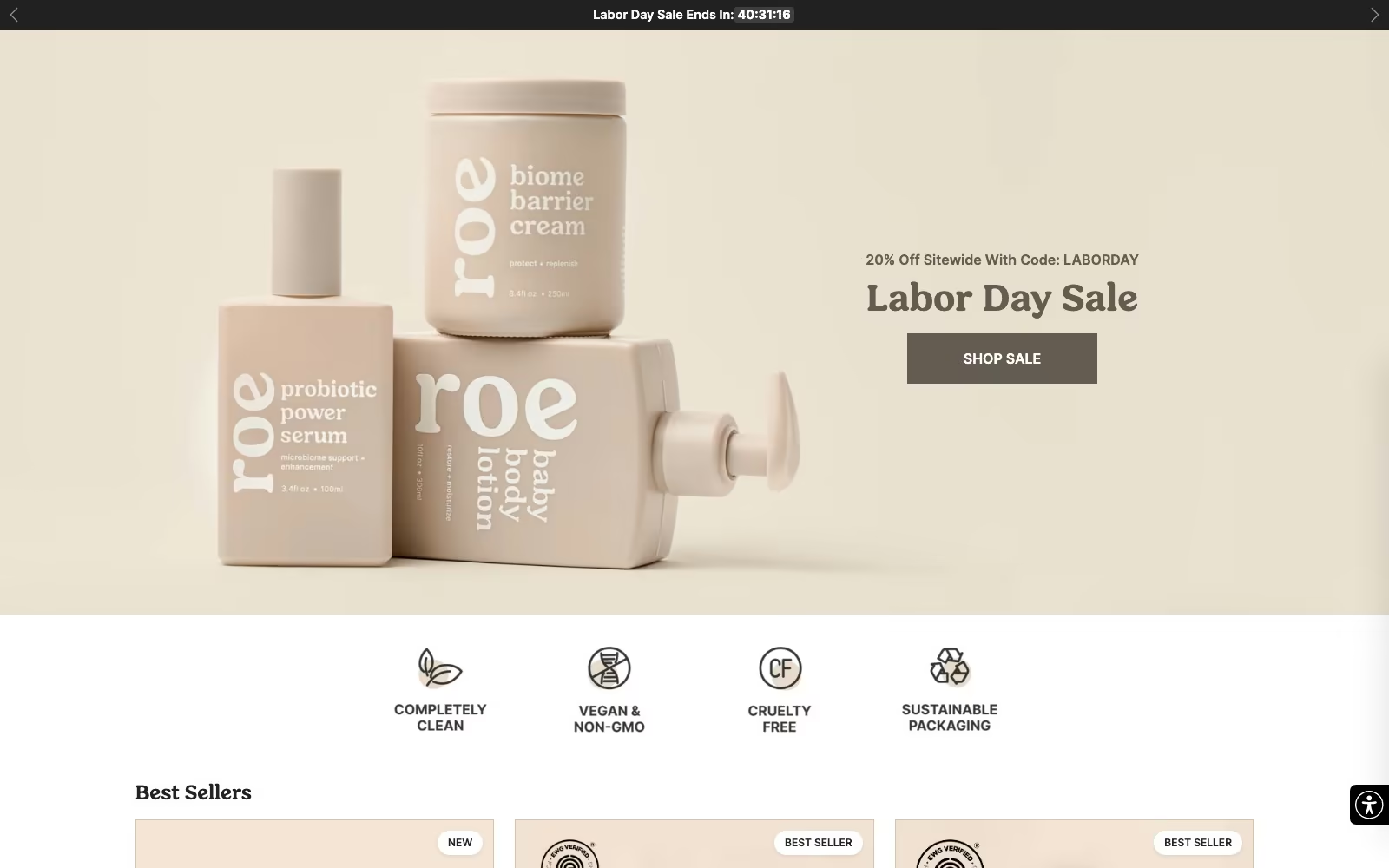
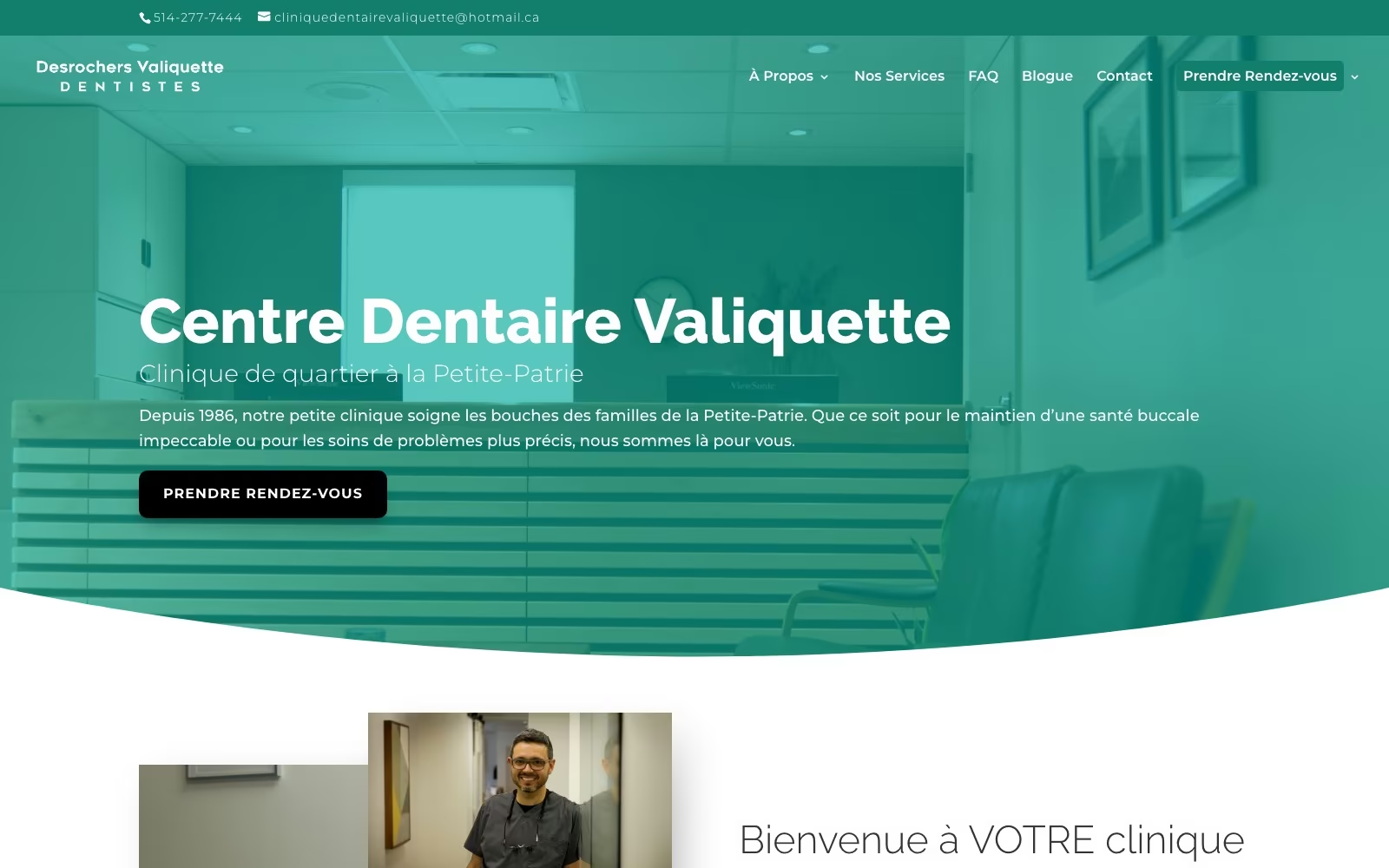
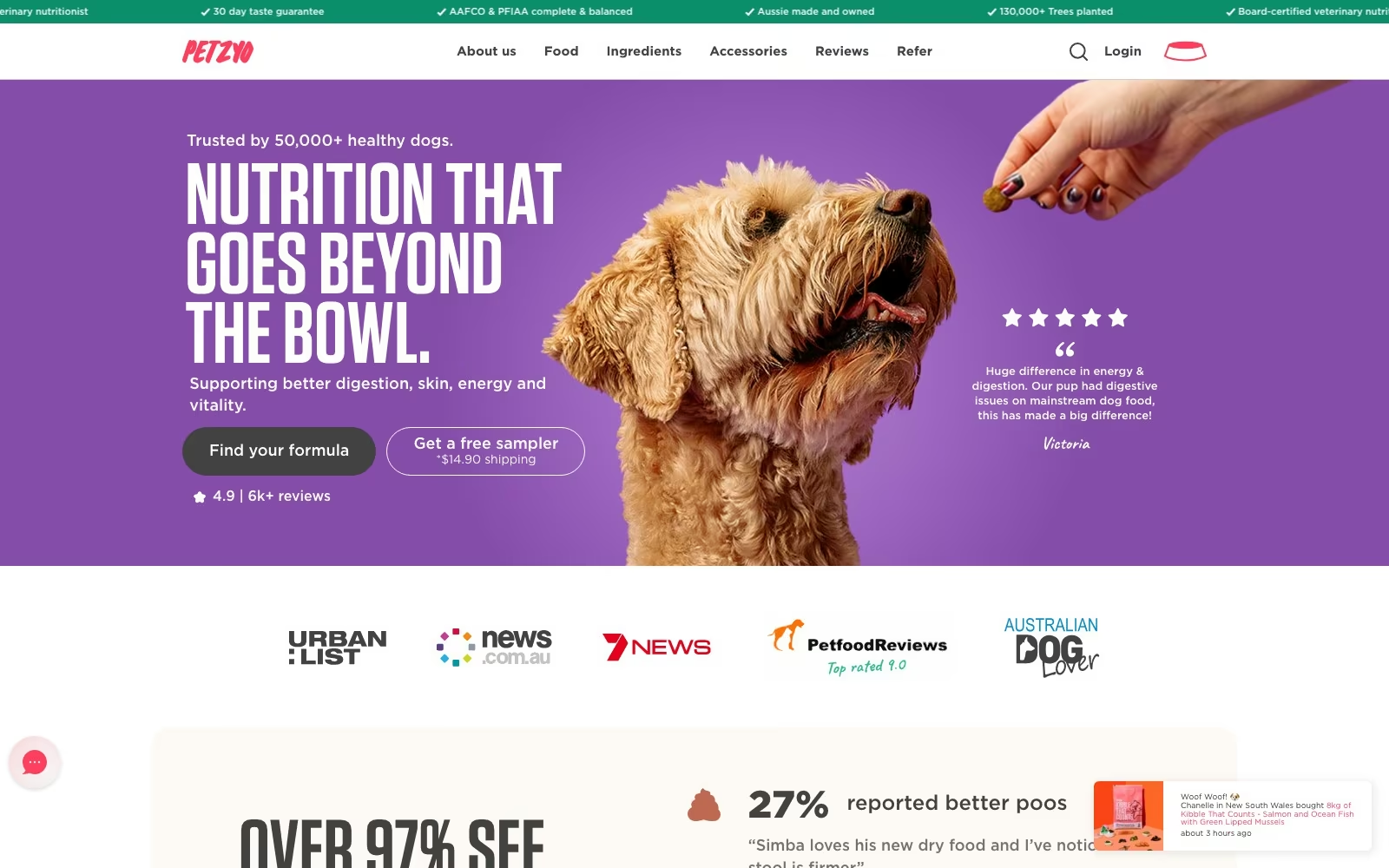
Website Portfolio
Video Ads
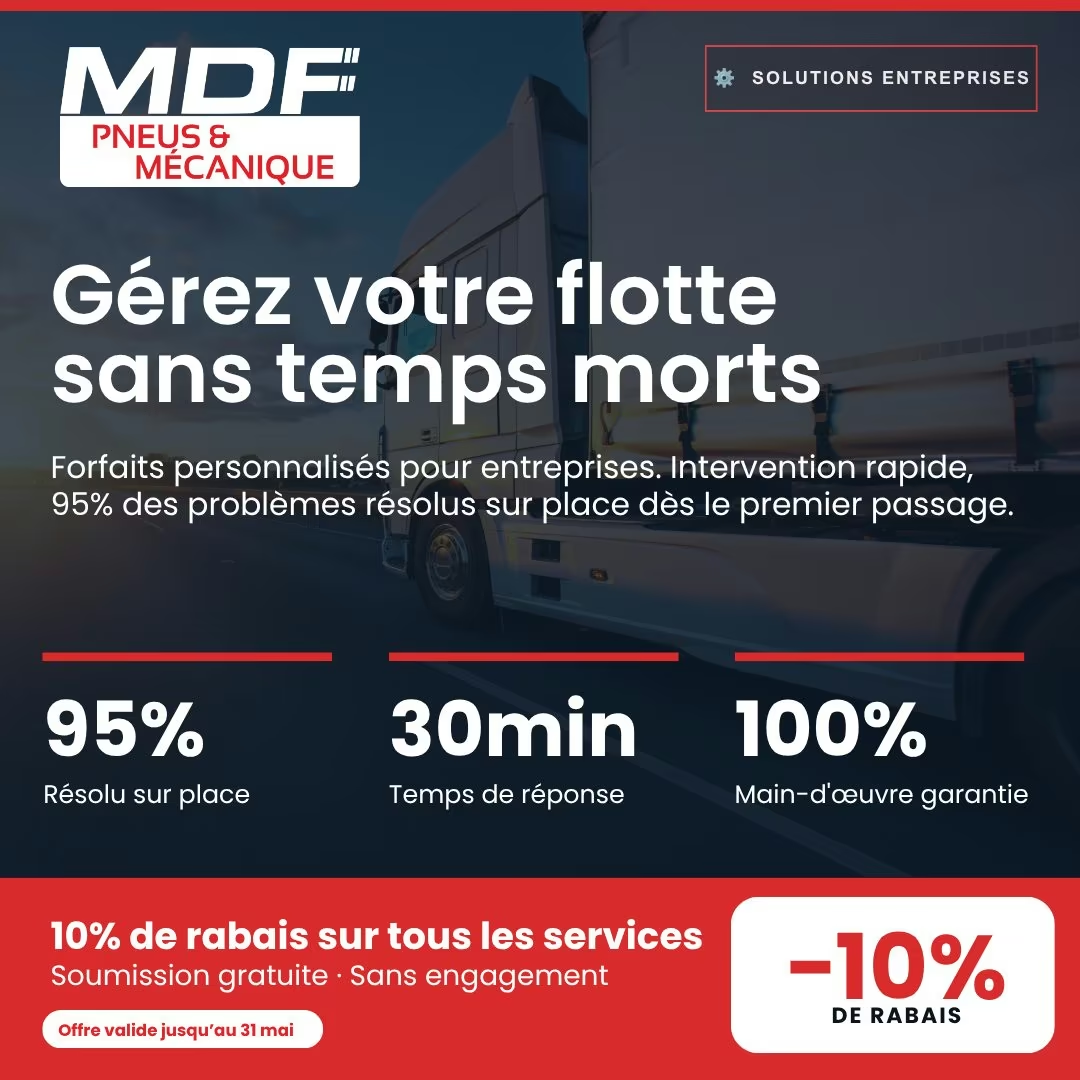
Static Ads



















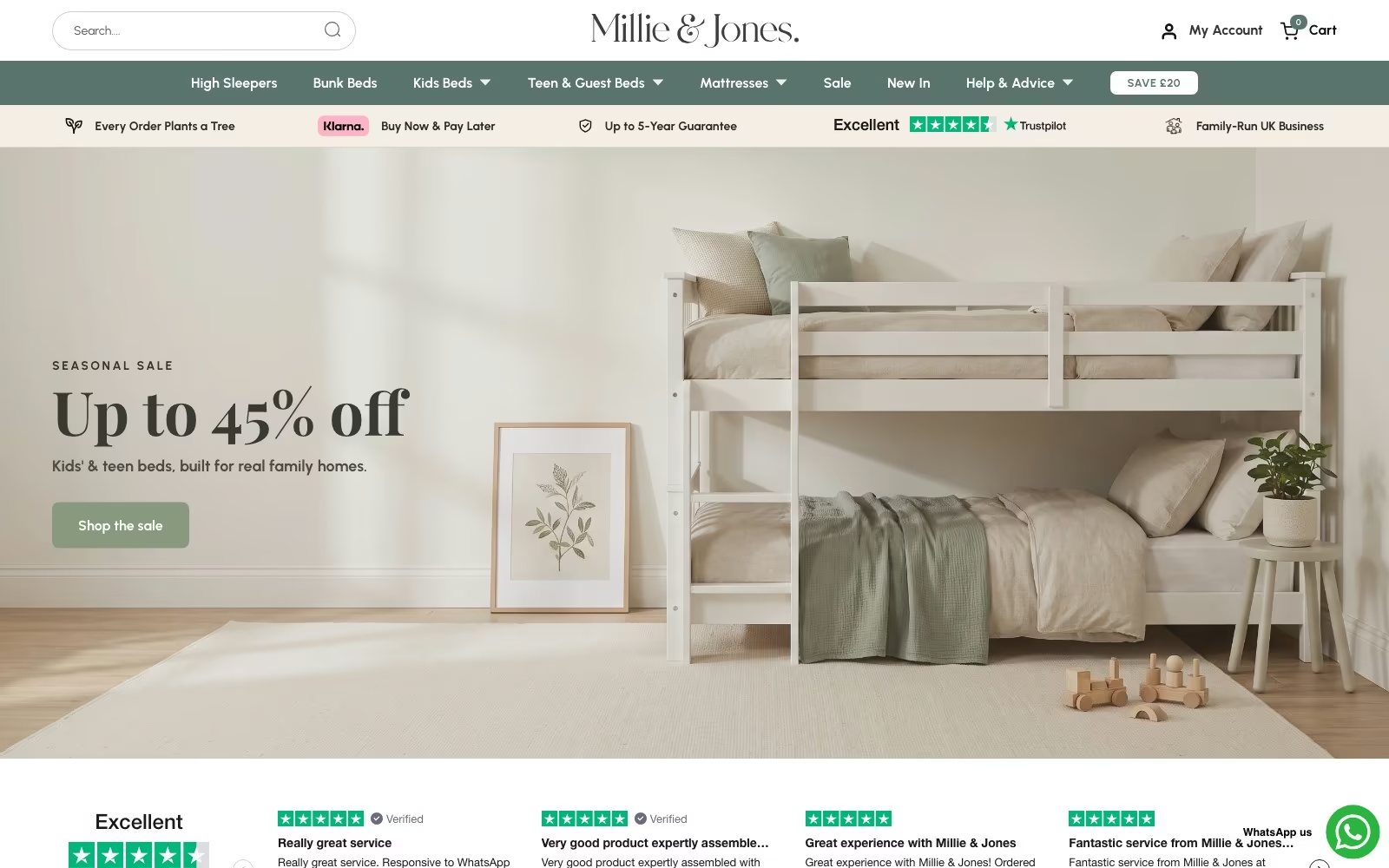

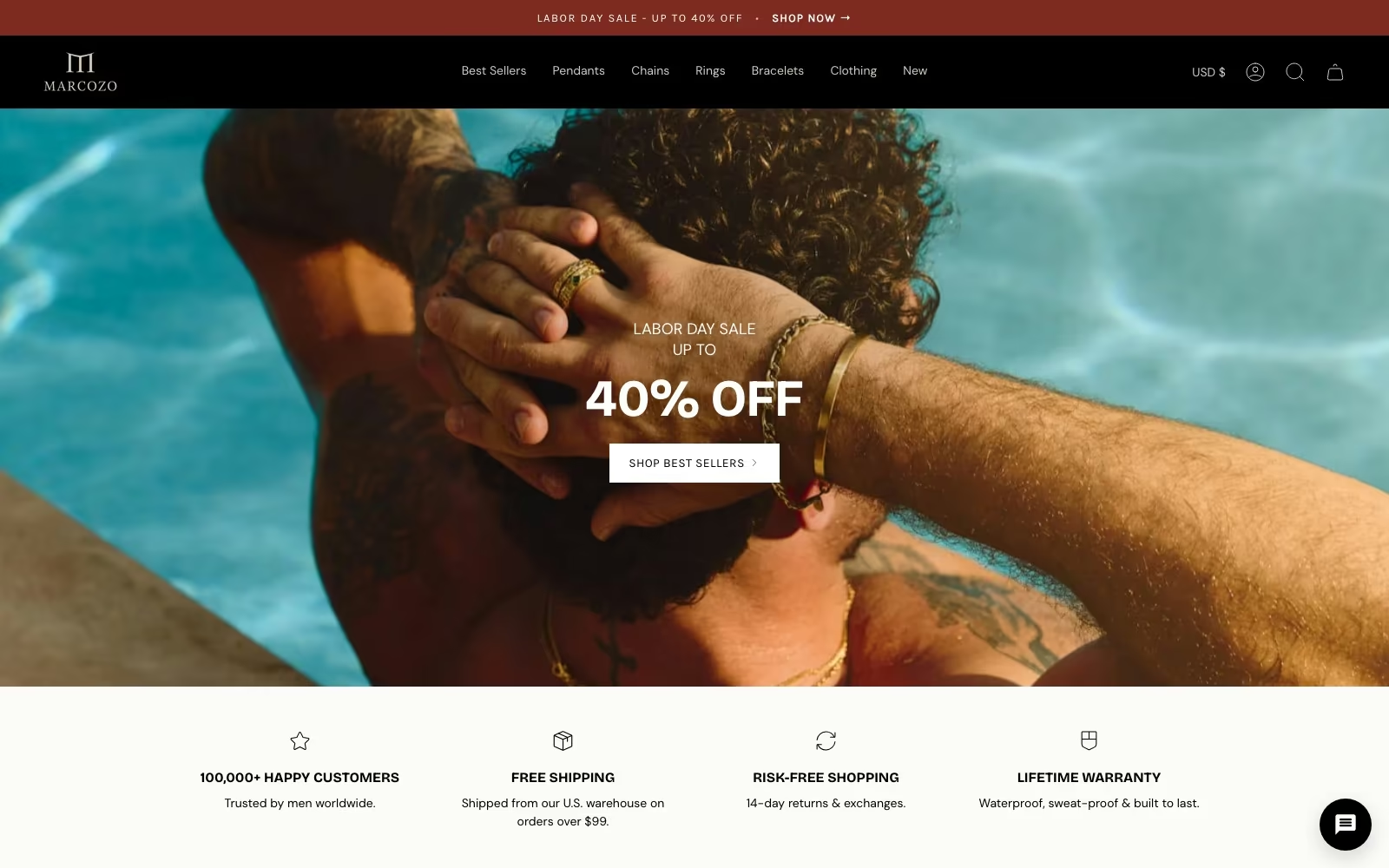


























EN

EN

EN


FR
FR
FR

FR

FR

FR

FR

FR

EN
FAQ
Questions med spa owners ask us
Why is our beautiful med spa site not producing bookings?
Usually three things at once: everything lives on one services page, the galleries make mobile slow, and the enquiry path asks too much too early. The pattern is well documented — a custom build loading in six seconds on mobile with a 72% bounce rate and a 1.8% conversion rate — and all three are fixable without starting the look again.
What conversion rate should a med spa website achieve?
The average med spa converts 3 to 5 percent of mobile traffic, while the top tenth reach 10 to 15 percent, and dedicated medical pages average 6.1% against a 3.6% site-wide figure. We set your target from your current baseline rather than an industry average, because traffic mix matters as much as page quality.
How do we choose a medical spa web design agency?
Ask who writes the treatment copy, whether page speed is in the contract, how booking will be tracked, and who owns the site afterwards. Those four answers separate a pretty deliverable from a booking system. Ours: we write the copy, we measure Core Web Vitals before and after, we track every enquiry path, and you own everything from handover.
What does med spa web design cost?
It scales with treatment pages, photography needs and integrations rather than with a page count on a rate card. We quote against a written plan you can read line by line, so you can see what each part buys and cut scope knowingly. Clinics often stage it: core site and the three services that pay first, then the rest.
Will a redesign hurt our rankings?
Handled properly, a redesign protects rankings and usually improves them, because the new structure gives each service a page worth ranking. We map every existing URL, redirect it, keep the content that earns traffic and hand the plan to our technical SEO team before launch. That mapping is what removes the risk, and it is standard on every build we do.
Do you integrate with our booking software?
Yes. Zenoti, Boulevard, Aesthetic Record, Mindbody and the common schedulers all work, either embedded or handed off cleanly with the enquiry captured first. It matters because 58% of booking traffic is mobile and mobile-optimised forms convert 31% better, so we test the whole path on real handsets before launch.
How fast should our site be?
Fast enough that nobody waits, which in practice means passing Core Web Vitals on mobile. Only around 42% of mobile experiences pass all three thresholds, against roughly 63% on desktop, and 53% of mobile users abandon a page slower than three seconds. Gallery-heavy clinic websites are the usual culprit, and that is a solvable engineering problem.
Can you use our own photography?
We would rather insist on it. Real practitioners, your treatment rooms and your own results do more for a trust purchase than any stock library. If you do not have a usable set yet, we art-direct a shoot brief so the photographer delivers what the pages actually need, including the crops for social.
How many treatment pages do we need?
One for every treatment you want new patients to find you for, which is usually fewer than the menu. We start with the treatments carrying margin and demand, and add the rest as they earn it. 26% of 505 audited medspas were flagged on their service pages, so this is where most clinics have the most to gain.
Who writes the medical content?
Our copywriters draft it and your practitioner or medical director approves every clinical claim before publication. That keeps the language accurate and compliant with the advertising rules in your state while taking the writing entirely off your practice's plate.
Do we own the website when the project ends?
Completely. Domain, hosting, the build, the design files, the copy and the analytics are all in your name, and we document how everything works at handover with training for whoever will edit it. You can keep us on for iteration and maintenance, and plenty of clinics do, but nothing is locked to us.
Who will be working on our project?
A named designer, a copywriter and a developer, with one lead who runs the project and joins every call. You will know their names and can email them directly. The same lead stays with you through post-launch iteration, so nothing gets re-explained to a new team.

.webp)
.webp)