A website your buyers can actually specify from.
actually specify from
Industrial buyers arrive with a drawing, a material and a deadline. We design and build manufacturing websites that answer them — capability pages with real ranges, downloadable technical content and a quote path on every page — alongside our manufacturing SEO and technical SEO teams.






Tell us a little about your brand and we'll be in touch within 24 hours to lock in a time.



FOUR WORKSTREAMS
Four workstreams behind an industrial website that earns RFQs.
that earns RFQs
Buyer research before a single wireframe, a site structure built around capabilities and products, an engineering-grade content layer, and a build fast enough to survive the way industrial buyers actually browse.
Buyer research and site strategy
Design and product architecture
Build, speed and integration
Content, launch and measurement
Design for the engineer and the purchasing manager at once.
Two very different people use a manufacturing website. The design engineer wants tolerances, materials, drawings and standards. The purchasing manager wants lead times, certifications, capacity and a quote. A site built for only one of them loses the other quietly.
We map both journeys before design starts, because technical buyers complete 62% of the buying process online before they contact a salesperson. The output is a sitemap, a content plan and a set of page templates tied to the decisions your customers make, not to a theme you bought.
- Interviews with sales, engineering and customer service
- Journeys mapped for specification and for procurement
- Competitor and distributor review on the same capabilities
- Sitemap and template plan signed off before design
62%
of the technical buying process happens online before sales is contacted
46%
of manufacturing decision-makers have switched suppliers over poor website performance
Structure a large catalogue so nothing is three clicks too deep.
Most industrial websites hide their best asset. Product families sit behind a filter nobody uses, spec sheets live in a PDF folder search engines never reach, and the capability that wins your best contracts is one bullet on an about page.
We design capability and product templates that scale to a real catalogue, with clear calls to action on every level, comparison tables engineers can read, and a quote request that never asks for information a buyer does not have yet. The industrial baseline is modest — a 2.6% overall website conversion rate with RFQ forms at 2.8% — and structure is where most of the gain sits.
- Capability, product family and application templates
- Filtering and search designed for part-level browsing
- Spec sheets, drawings and CAD files exposed as real pages
- Quote paths and clear calls to action on every template
2.8%
benchmark RFQ form submission rate on specialized manufacturing sites
5.5%
benchmark conversion rate on technical spec and whitepaper downloads
Fast on a plant-floor connection, and wired into your systems.
Speed is the weakest part of most industrial websites. Across 504 CNC company sites, the average page speed score was 58 and only 41 sites scored in the Good range, while the same study found the highest scores in the narrow technical SEO checklist. Fast is a competitive advantage here because so few competitors have it.
We build on a CMS your marketing team can run without a developer, connect the forms to your CRM or ERP so a quote request lands where it is worked, and hold Core Web Vitals on templates rather than only on the homepage.
- Core Web Vitals held on every template, not just the homepage
- CMS your team can edit without a developer
- Form, CRM and ERP integration for quote requests
- Accessibility and browser testing before launch
58
average page speed score across 504 CNC manufacturer websites
54.5%
average bounce rate on specialized manufacturing websites
Launch with tracking that counts quotes, not sessions.
A redesign that cannot prove itself gets defunded at the next budget round. Before launch we set up quote, download and call tracking, keep the rankings you already have through a mapped migration, and agree what a good month looks like in your terms.
The economics deserve the care: industrial B2B leads average $333 each and industrial websites convert at about 1.32%, so a handful of extra quote requests a month repays a build quickly. We report against those numbers with the analytics team.
- Redirect map and rankings protected through migration
- Quote, download and call tracking verified before launch
- Capability and application content written with your engineers
- Monthly reporting on quote requests by page and source
$333
average cost of an industrial B2B lead, so each extra RFQ carries real value
48.5%
share of specialized manufacturing web traffic coming from organic search
benchmark website conversion rate for specialized manufacturers
days: the average industrial sales cycle a site has to survive
Weeks from first interview to a typical launch
Design files, code and analytics in your name
We made the difference for those brands

B2B software, fintech, insurance

Beauty, personal care & wellness

Consumer tech and platforms

Travel & mobility

Food & beverage
Creative, content, arts & culture

Consumer tech and platforms

Home essentials, appliances, kitchen & pet

B2B software, fintech, insurance

Consumer tech and platforms

Consumer tech and platforms

Retail & commerce

Home essentials, appliances, kitchen & pet

Consumer tech and platforms

Healthcare & regulated services

Home essentials, appliances, kitchen & pet

Food & beverage

Healthcare & regulated services

Retail & commerce

Food & beverage

Apparel and lifestyle

B2B software, fintech, insurance

B2B software, fintech, insurance

B2B software, fintech, insurance

Beauty, personal care & wellness

Creative, content, arts & culture

Creative, content, arts & culture

Consumer tech and platforms

Consumer tech and platforms

B2B software, fintech, insurance

Consumer tech and platforms
01 — The challenge
The plant is world-class. The website is a brochure from 2016.
We hear the same sentence in most first calls: the website was built when the company was half its size, nobody internally can edit it, and the newest capability is missing entirely. Meanwhile the sales team emails PDF spec sheets because the site cannot show them.
“A buyer asked whether we could hold that tolerance. It is on our floor every day. It is nowhere on our site.”
That gap costs real contracts, because the site is the qualification round: 46% of manufacturing decision-makers say they have switched suppliers because of poor website performance.
02 — Our approach
Design around capabilities, then prove them on the page.
We start with your people. Sales tells us which questions kill a deal, engineering tells us what a customer must know to specify correctly, and customer service tells us what the phone rings about. That becomes the site structure — capability pages, product families, applications, industries served and a quote path that suits your business.
Design follows the content rather than the other way round. Templates carry real ranges, materials, certifications and photographs of your own work, so an engineer can evaluate you without a call and a purchasing manager can shortlist you without a meeting. Every template is drawn for mobile as well, because buyers research from the floor as often as from a desk.
Then we build it fast, connect it to the systems your team already uses, migrate without losing rankings, and hand over a site your marketing person can update alone. The site, the content and the analytics are yours from day one.
03 — What we did
Roughly a quarter from first interview to launch.
Discovery and structure, design and content, build and integration, then a measured launch followed by ongoing iteration on the pages that produce quotes.
Weeks 1-3 / Discovery
Interviews, analytics and a sitemap
We interview sales and engineering, review search demand and analytics, and agree the sitemap, templates and quote path before anything is designed.

Weeks 4-9 / Design and build
Templates, capability content and integration
Design and content run together, then the build: CMS, forms wired to your CRM or ERP, and speed budgets held on every template.

Weeks 10-12 / Launch
Migrated, measured and live
Redirects mapped, rankings protected, quote and call tracking verified, so the first RFQ after launch can be traced to the page that produced it.

Ongoing / Iterate
The pages that earn quotes get better
Monthly reporting on quote requests, then targeted work on the templates and capability pages with the most to gain.

WHAT YOU GET
Deliverables you keep, whatever happens next.
you keep
Design files, content, code and analytics stay in your name from the first week.

Website and content audit
What the current site hides, where buyers drop out, and which pages are worth keeping through a rebuild.

Sitemap and template plan
Capability, product and application templates mapped to the questions engineers and buyers ask at each stage.

Design system and page designs
A component library and finished page designs for desktop and mobile, in files your team owns and can extend.

Built site with CMS and integrations
A fast build your marketing team can edit, with forms connected to the CRM or ERP where quotes actually get worked.

Capability and product content
Ranges, materials, certifications and applications written with your engineers so the detail survives technical review.

Tracking, training and handover
Quote tracking verified, documentation written, and a training session so your team can run the site without us.
HOW WE WORK
Operating standards, not promises.
Operating standards


Contract manufacturers and job shops
Capability-led sites where the quote form is the product page.
OEMs and equipment builders
Large product catalogues, configurators and dealer or distributor paths.
Industrial distributors and suppliers
Part-level search, stock data and fast templates across thousands of pages.


















Built on trust. Proven by results.
We partner with SMBs and Fortune 500 companies to deliver more than reach — we bring clarity, execution, and measurable outcomes. Every successful partnership starts with a strong culture fit and a shared drive to grow.






CASE STUDIES
Case studies
Website Portfolio
Video Ads
Static Ads





















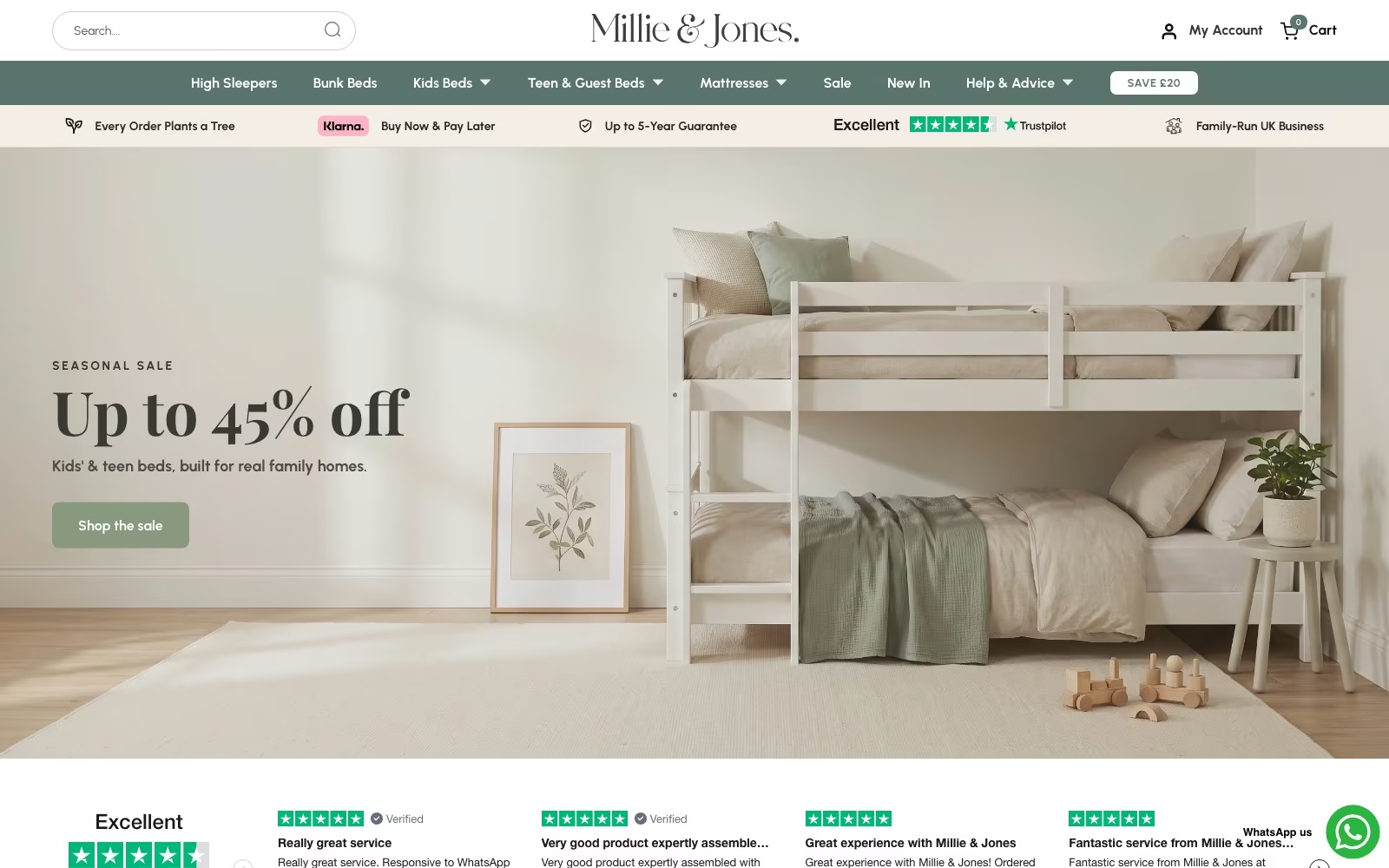

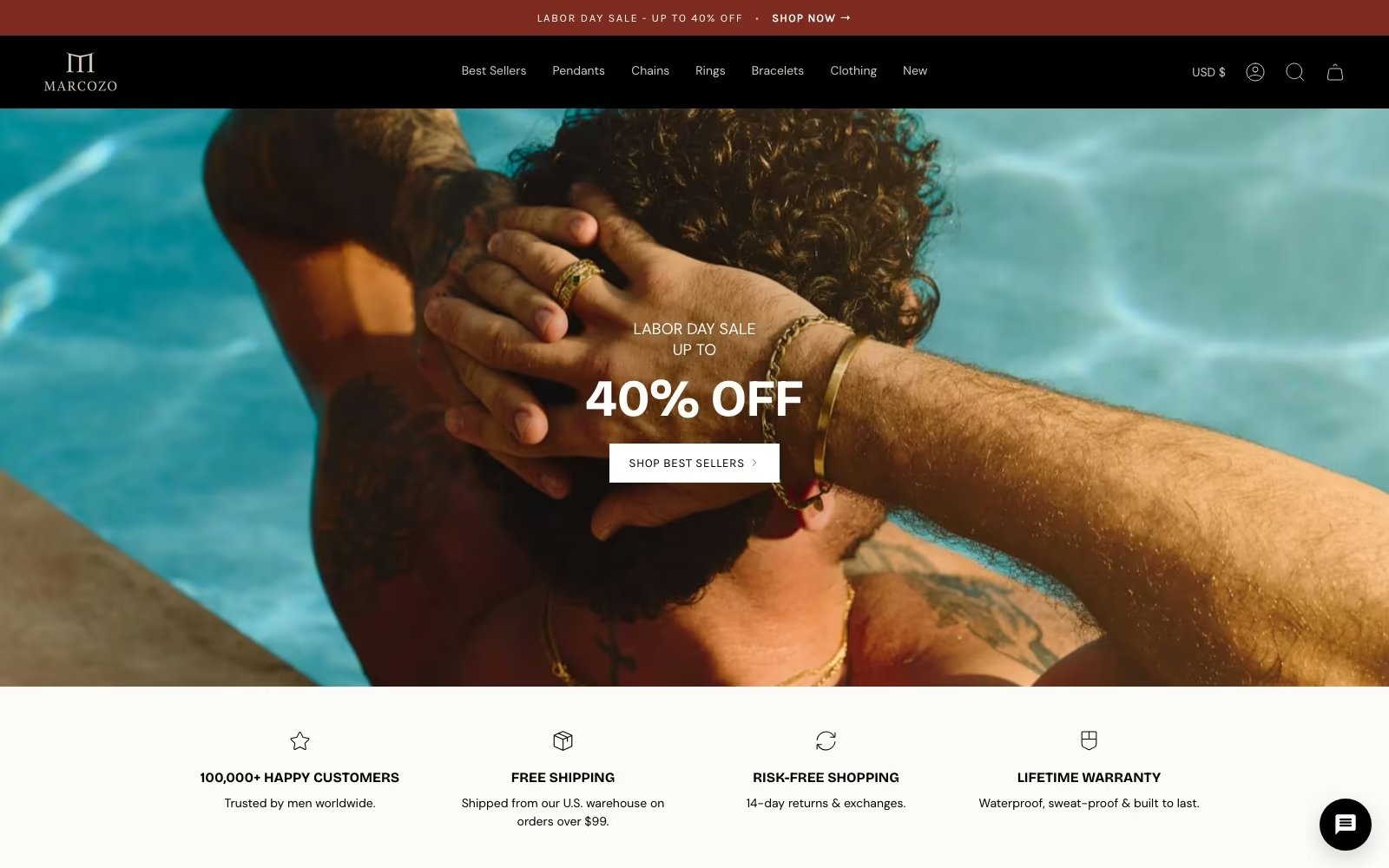

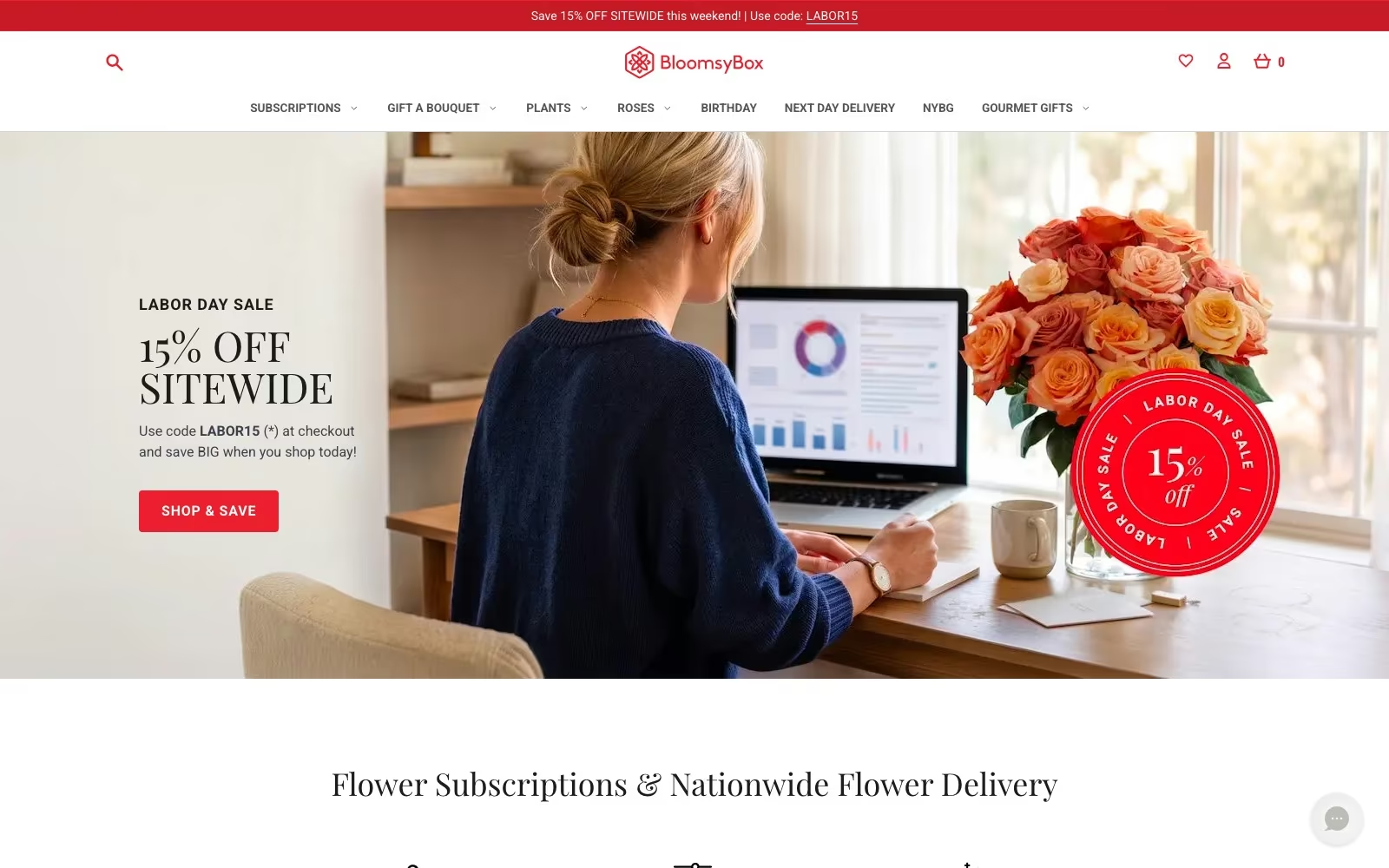

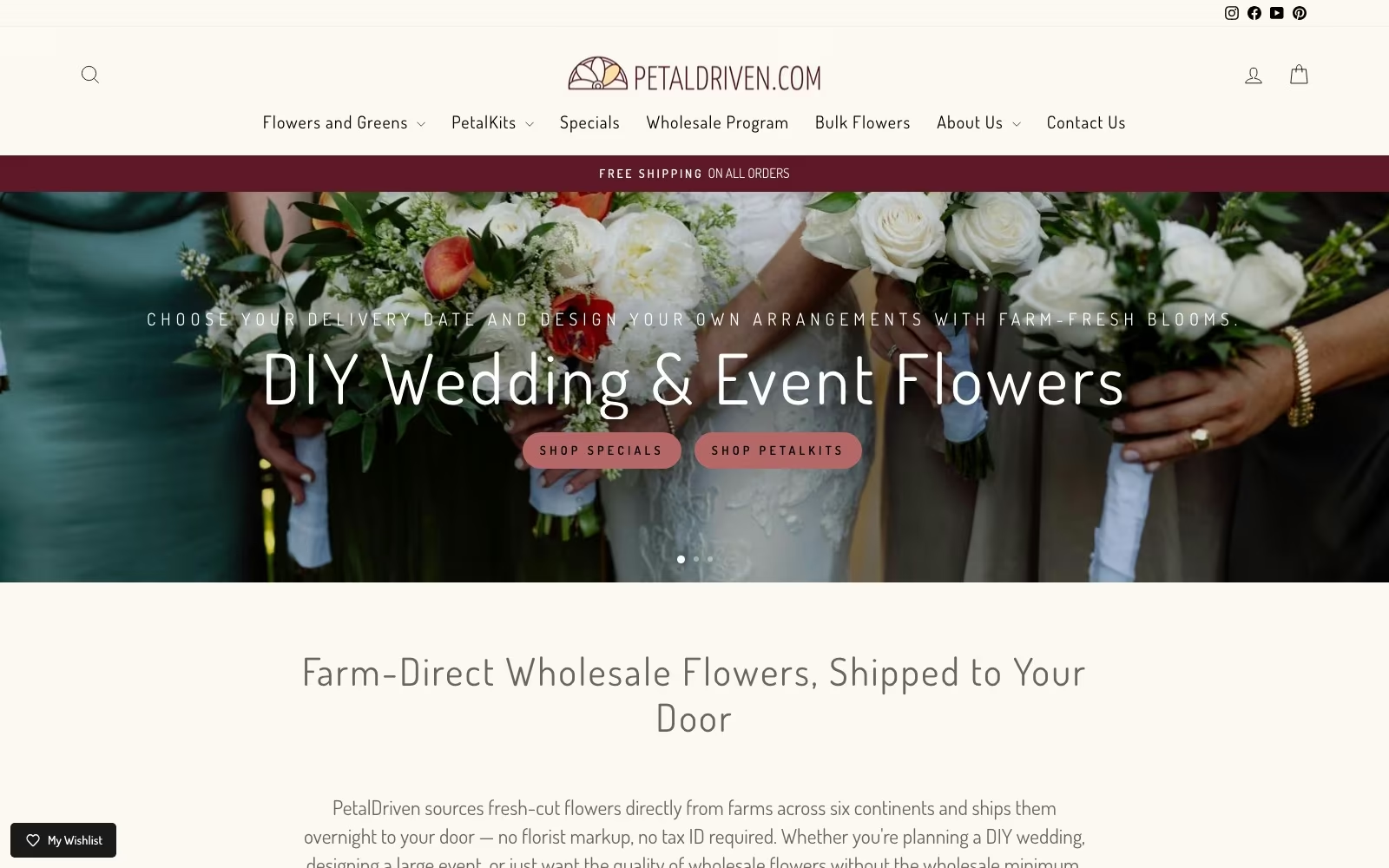



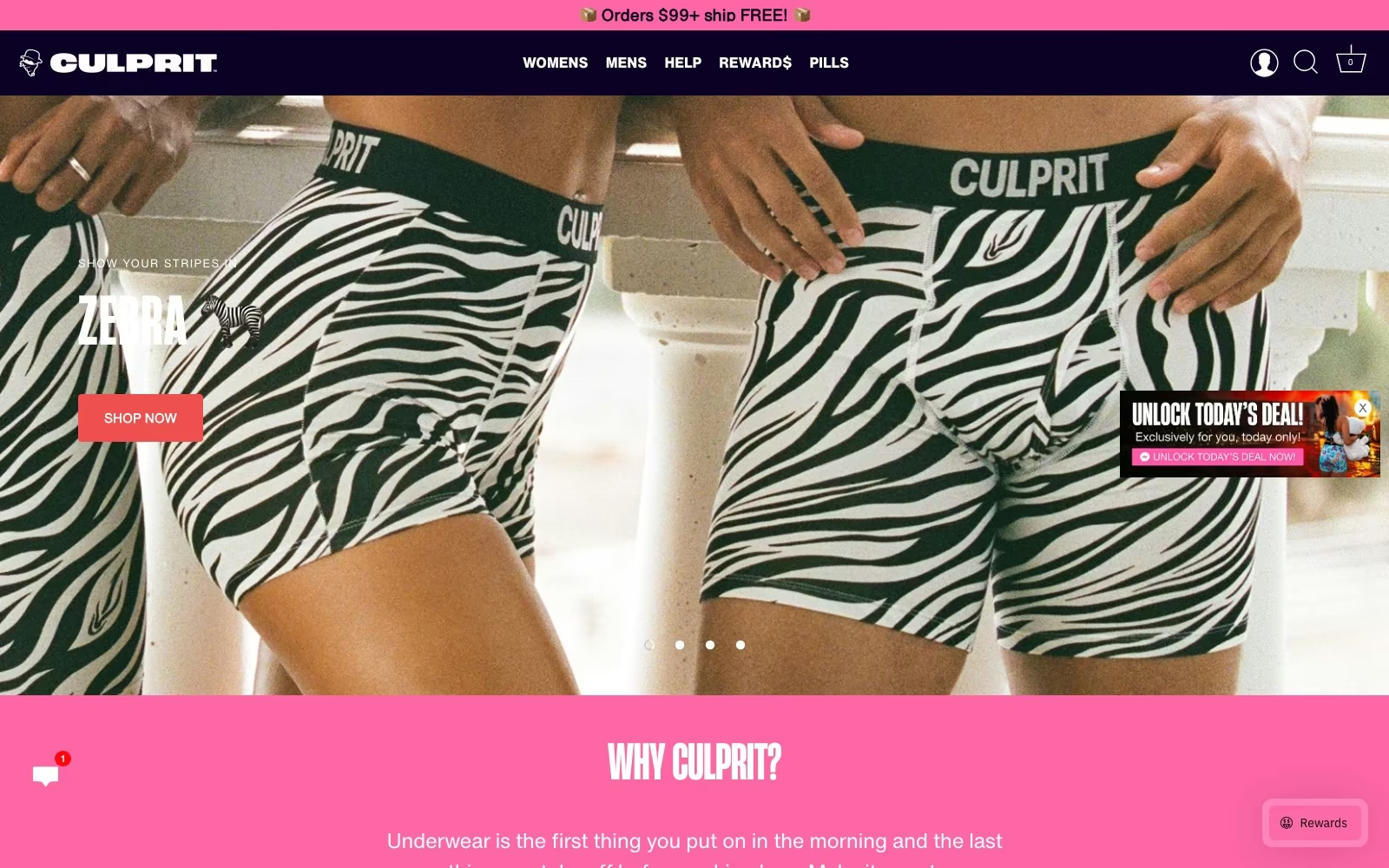



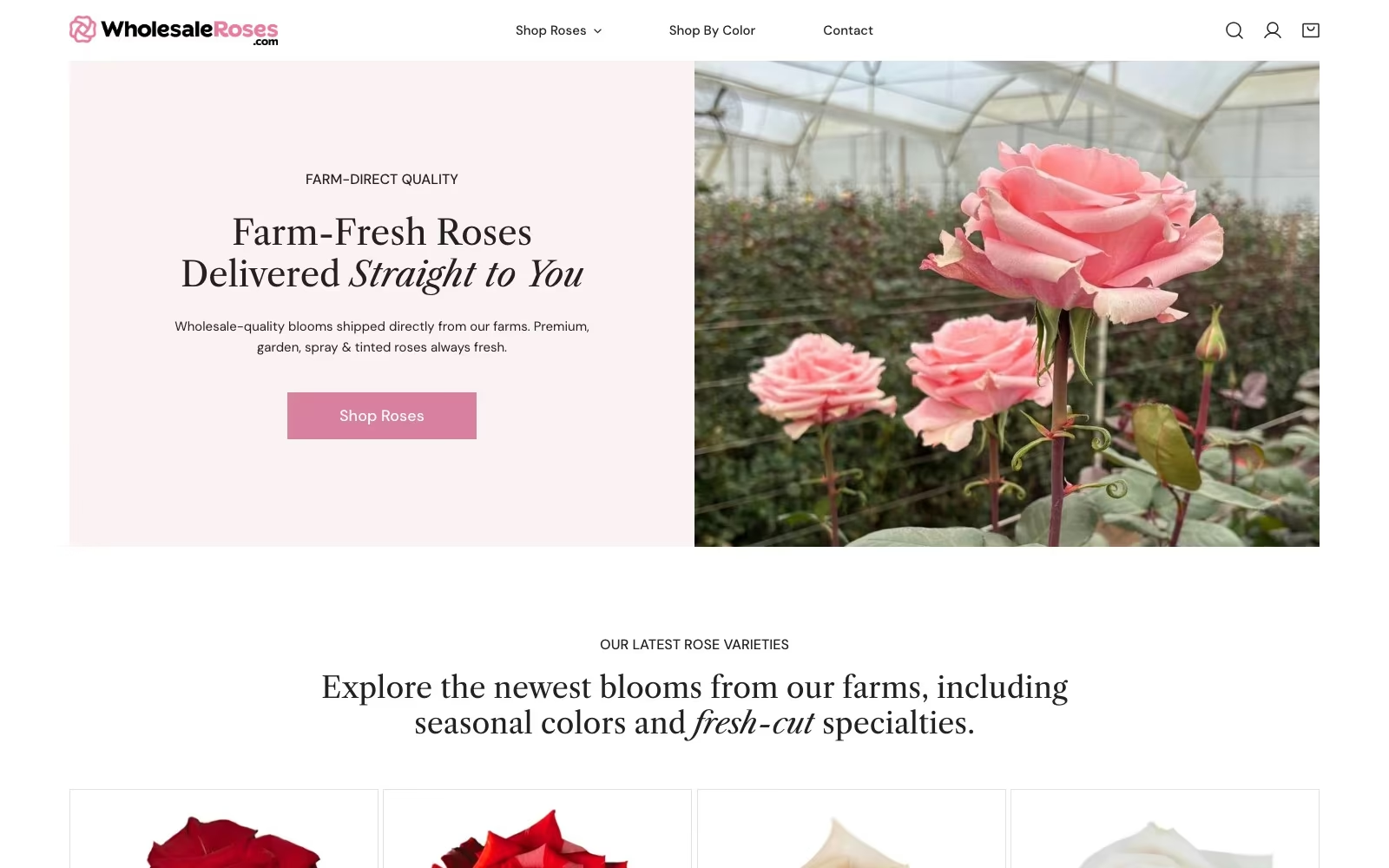

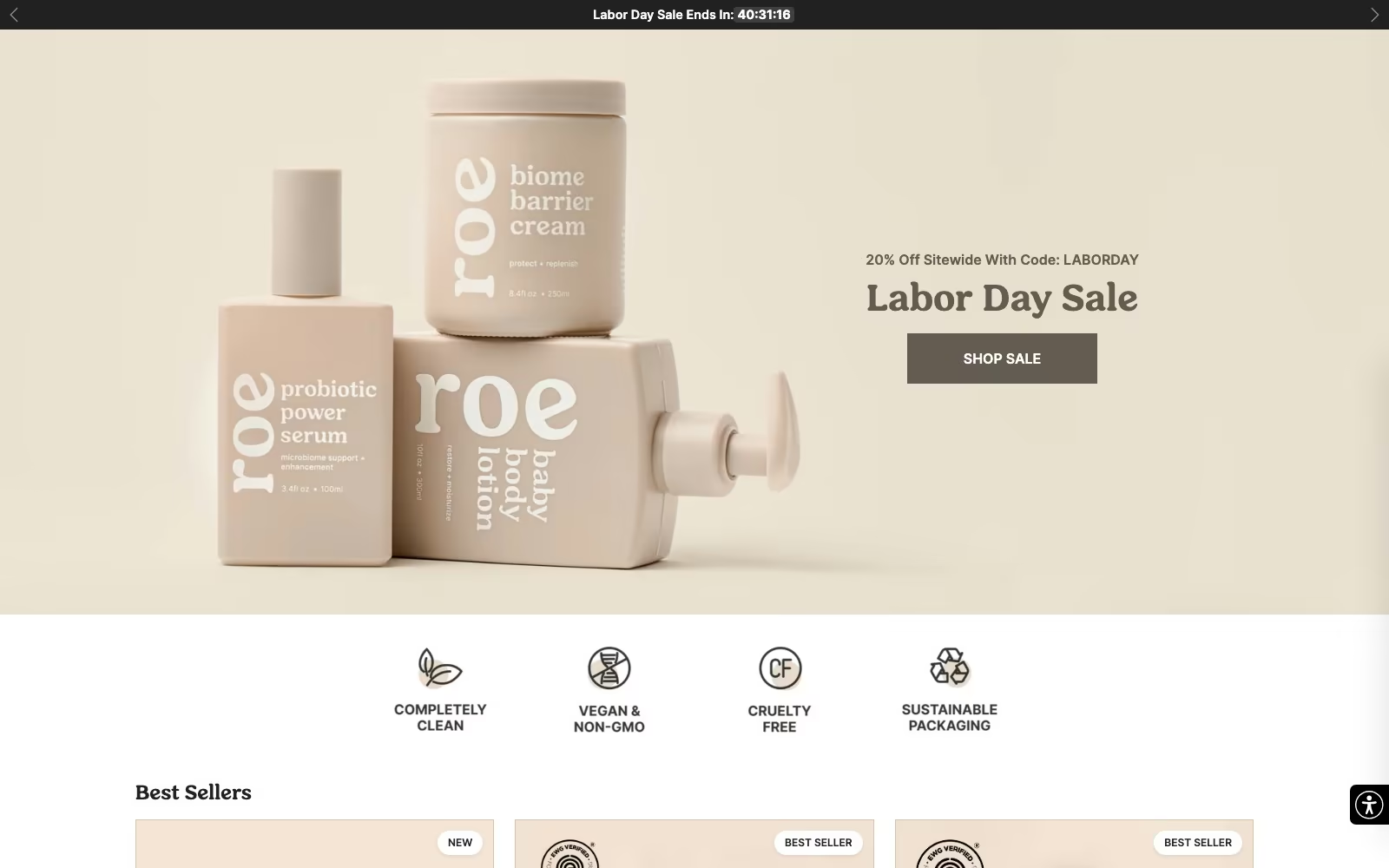

















EN

EN

EN


FR

FR
FR

FR

FR

FR

FR

FR


EN
FAQ
Questions manufacturers ask us
How long does a manufacturing website design project take?
Twelve weeks is the usual shape: discovery and sitemap, then design, content and build in parallel, then migration, testing and training. Sites with large product catalogues or an ERP integration run longer, and we scope that honestly up front so the timeline you approve is the one you get.
What does manufacturing web design cost?
We price from scope rather than a package: templates, catalogue size, content volume and integrations. It helps to weigh it against what a lead is worth to you — industrial B2B leads average $333 apiece — so a build that adds a few quote requests a month pays for itself faster than most industrial capital spending.
How do we choose a manufacturing web design agency?
Ask who writes the technical content and how they verify it, ask to see a site they built two years ago and how it performs now, and ask whether the design files and code are yours at the end. An agency that keeps your site hostage on a proprietary platform is selling dependency. Ask to speak to the designer and developer who would do the work, not just the person pitching.
Will a redesign hurt the rankings we already have?
Handled properly, a redesign protects your rankings and usually improves them. We map every URL to its replacement before launch, keep the content that earns traffic, and fix the technical debt underneath — and page speed is where the headroom is, since the average page speed score across 504 CNC manufacturer sites was 58. Our SEO team signs off the migration plan before anything goes live.
What conversion rate should a manufacturing website reach?
Treat the benchmark as a floor. Specialized manufacturing sites convert at about 2.6% overall, with RFQ forms at 2.8% and technical downloads at 5.5%. If your site sits well below that, the fix is usually clearer capability detail, a shorter quote form and faster pages rather than more traffic.
Do we need to write all the technical content?
No. We need about an hour a month from someone technical. We interview your engineers, draft the capability and application pages, and send them back for a factual review. Nothing publishes without your sign-off, and the tolerances, materials and certifications on the page are the ones your floor actually holds.
Can you integrate the website with our ERP or CRM?
Usually yes. We routinely connect quote forms and product data to CRM systems, and we work with your IT team or ERP partner where a direct feed is involved. Where a legacy system has no usable interface, we will tell you what is realistic and propose a staged approach instead of promising a live feed we cannot deliver.
Should the product catalogue live on the website or stay in PDFs?
On the website, with the PDF as a download rather than the only home. A spec sheet locked inside a PDF cannot rank, cannot be linked to and cannot be quoted back by an AI answer engine. We turn the important families into real pages and keep the printable version alongside for buyers who need it in a purchase file.
How does the site help with long sales cycles?
By carrying the research the buyer does before a call. Industrial cycles run around 130 days on average, and 70% of technical buyers pick the better-known brand when two options look similar. Deep capability content, case evidence and downloadable specs keep you present through those months rather than only at the moment someone fills a form.
What platform will you build on?
Webflow or WordPress for most manufacturers, chosen on how your team works rather than on what we prefer to build. Where a catalogue needs a headless setup or a custom quoting tool we will scope that with our development team and explain the trade-offs in plain language before you commit.
Do you handle photography of our plant and products?
Yes, and it is worth doing. Stock imagery of a generic factory undermines the specificity everything else on the page is trying to prove. We arrange a shoot day, capture the machines, the parts and the people, and the images stay yours for sales decks and trade shows too.
How do we judge manufacturing website design examples we like?
Look past the visuals. Open the navigation on a phone and see whether a visitor can find a product family in two taps. Check whether specifications are on the page or hidden in a download. See whether the case studies name a real industry and a real application, or stay vague. A modern industrial website earns trust with specifics; a pretty one without them just looks expensive.
Which industries and equipment types do you build websites for?
Contract manufacturers, OEMs and equipment builders, and industrial distributors, across metal fabrication, machining, plastics, packaging machinery, automation and industrial services. The complex catalogues differ, but the buyer behaviour rarely does: users arrive with a specification and leave if they cannot confirm it. Our manufacturing team brings the sector experience, and your engineers keep us accurate on the details of your own equipment.
Do you offer custom design, or templates?
Custom design on a component system, which is the practical middle ground. You get page designs made for your business rather than a theme, and your team gets reusable blocks so new pages stay consistent without a designer. For a small manufacturer with a simple catalogue we will say honestly when a lighter WordPress or Webflow solution serves you better than a bespoke build.
How does web design connect to the rest of our digital marketing?
The website is where every other channel lands, so we design it with the campaigns in mind. Search and paid traffic need capability pages worth ranking and landing pages worth clicking; email and trade show follow-up need something specific to send people to. We work alongside our paid search and analytics teams so the services fit together instead of competing for credit.
How does a manufacturing website build trust with a first-time visitor?
With evidence a buyer can check. Named customers and case studies, certifications shown rather than claimed, photographs of your own plant, clear specifications, and a plain statement of the industries you serve and the ones you do not. Visitors decide fast whether a company is credible; the pages that win are the ones where the detail is high enough that only a real manufacturer could have written them.
Can you help if we only need part of the work?
Yes. Some clients want the full strategy, design and build; others have an internal developer and need design and content only, or a conversion pass on an existing site. We scope whichever part actually helps, and if the honest answer is that your current site needs three fixes rather than a rebuild, we will tell you that and quote the three fixes.
What happens after launch?
You get training, documentation and a support window, then monthly reporting on quote requests by page if you want us to stay involved. Many clients move onto a small retainer for iteration and new capability pages; others take it in house entirely. Both are fine, and the site works the same either way.

.webp)
.webp)