A website that answers the phone.
answers the phone
Heating and cooling websites are judged in about four seconds, on a phone, by somebody standing next to equipment that has stopped working. We design and build sites for that moment — fast, plain, easy to call from — with our web design and site speed teams.






Tell us a little about your brand and we'll be in touch within 24 hours to lock in a time.



FOUR WORKSTREAMS
Four workstreams behind an HVAC website that books work.
that books work
Mobile-first design for people in a hurry, speed treated as a feature, booking and call paths that survive a busy week, and a build your team can update without an invoice.
Mobile-first design
Speed and technical build
Booking, calls and conversion paths
Ownership, content and handover
Design for the phone in the hot hallway.
Most heating and cooling traffic is mobile, and mobile is where the conversion gap lives: mobile converts at 1.82% against 3.14% on desktop, a 42% gap, while 60 to 70% of HVAC searches happen on a phone. The problem is rarely taste. It is a hero video, a menu with fourteen items, and a phone number rendered as an image.
We design the phone layout first: what the service is, where you work, how fast you can come, and a tap-to-call button that never leaves the screen. Everything else earns its place afterwards. Nearly 40 percent of the 500 contractor sites Grow Local analysed failed on mobile with tap targets too small to hit, which is a solved problem that keeps costing contractors work.
- Phone layout designed first, desktop adapted from it
- Tap-to-call fixed in view on every page
- Service, service area and response time answered above the fold
- Tap targets, contrast and form fields checked on real devices
1.82%
average mobile conversion rate on HVAC sites vs 3.14% on desktop
60-70%
share of HVAC searches that happen on a phone
Speed is not a nice-to-have in this trade.
The trade average is genuinely bad. Across 104 scored HVAC sites the mean mobile Largest Contentful Paint is 8.35 seconds, against Google's 2.5 second good threshold, and only 18 percent of 500 contractor sites loaded under the three seconds customers expect. Heavy hero photography and uncompressed background video do most of the damage.
We build light: compressed and correctly sized imagery, minimal scripts, no third-party widget stack that nobody can name. It pays twice, because Google's research shows bounce probability rising 32% as load time goes from one to three seconds — and every paid click landing on a slow page is money already spent.
- Core Web Vitals treated as build requirements, not a later audit
- Images compressed and sized for phones before launch
- Third-party scripts justified one by one or removed
- Speed re-tested after every content change, not just at handover
8.35s
mean mobile LCP across 104 scored HVAC websites
18%
of 500 contractor sites loaded in under three seconds
Make calling and booking the easiest thing on the page.
In home services the phone is the funnel: calls are 70 to 80% of all leads, and missed calls waste an estimated $1,500 a month for the average contractor. A website that hides the number, or offers only a nine-field form, is quietly choosing the slowest path for the customer.
We design for both kinds of visitor: the emergency caller who needs a number and a promise, and the replacement shopper who wants finance options, equipment detail and reviews before they commit. Online booking gets real attention, since 56% of homeowners now want 24/7 scheduling and most contractor sites still close at five.
- Emergency and replacement journeys designed separately
- Online booking or callback wired into your scheduling system
- Finance, maintenance plans and warranties stated plainly
- Reviews and licence detail placed where hesitation happens
70-80%
share of home services leads that arrive as phone calls
56%
of homeowners want 24/7 scheduling from a service company
A site your office can run on a Tuesday.
Plenty of contractors are renting their website without realising it: the agency owns the domain, the platform is proprietary, and a price change means a support ticket. We build on systems you can leave with — WordPress or Webflow — with your team trained to edit services, seasonal offers and staff pages themselves.
The build is also structured to rank. Service and service-area pages are laid out for real search demand, schema is implemented properly, and the content structure is agreed with our HVAC SEO team before design starts, so the new site does not launch straight into a traffic dip.
- Domain, hosting, code and content in your name from day one
- Editable service, offer and team pages, with training
- URL structure and redirects planned before launch
- Analytics and call measurement live on day one
5.4s
median load time across 500 analysed contractor websites
6.24s
median mobile load for HVAC sites in a 380-site contractor study
mean mobile LCP across 104 scored HVAC websites we build against
conversion gap between mobile and desktop on HVAC sites
Photography from your own jobs, compressed for phones
Domain, hosting, code and content in your name
We made the difference for those brands

Consumer tech and platforms

B2B software, fintech, insurance

B2B software, fintech, insurance

Consumer tech and platforms

Beauty, personal care & wellness

Apparel and lifestyle

B2B software, fintech, insurance

Travel & mobility

Consumer tech and platforms

Consumer tech and platforms

Beauty, personal care & wellness

Consumer tech and platforms

Consumer tech and platforms

B2B software, fintech, insurance

B2B software, fintech, insurance

B2B software, fintech, insurance

Home essentials, appliances, kitchen & pet

Healthcare & regulated services

B2B software, fintech, insurance

B2B software, fintech, insurance

Retail & commerce

Retail & commerce

B2B software, fintech, insurance

B2B software, fintech, insurance

Beauty, personal care & wellness

Beauty, personal care & wellness

Home essentials, appliances, kitchen & pet

B2B software, fintech, insurance

Consumer tech and platforms

B2B software, fintech, insurance
01 — The challenge
It looked great in the pitch. It loads in eight seconds.
The homepage has a video of a technician walking towards camera, a rotating banner, and a chat widget that opens itself. On the office desktop it is impressive. On a phone with two bars, in a house that is already too hot, it is a white screen.
The paid campaigns keep sending visitors to it, the organic pages sit below competitors with plainer sites, and nobody can say which part is losing the work.
“Traffic looks fine. The phone just doesn't ring like it should.”
The trade-wide numbers say it is rarely one company's bad luck: HVAC sites load in a median 6.24 seconds on a phone across a 380-site contractor study, and the average HVAC click costs $20.12. Slow pages are expensive twice over.
02 — Our approach
Plan the journeys, build light, prove it on a phone.
We start with the two people who visit a heating and cooling website: someone whose system just failed, and someone quietly pricing a replacement. They want different things, and most sites are built for neither. The emergency visitor needs the service, the area, the response time and a button. The replacement shopper needs equipment detail, finance options, real reviews and a reason to trust the install.
Then we design mobile-first and build light. Structure and URLs are agreed with the SEO plan before any layout work, so the site launches with its rankings intact rather than recovering from itself. Imagery is real work from your own jobs wherever possible, compressed properly, because stock photography of smiling strangers persuades nobody and slows everything down.
Before launch we test on real devices and real connections, not just in a desktop browser: load time, tap targets, forms, booking, and the call path end to end. After launch we watch calls and bookings rather than bounce rate, and keep improving the pages that carry the work. The site, domain, code and content are yours throughout.
03 — What we did
Six to ten weeks, with the phone path proven first.
Discovery and structure, design, build and speed work, then launch with measurement and a written plan for what improves next.
Weeks 1-2 / Discovery
What your customers actually need
Service mix, seasonality, competitors, current analytics and call recordings reviewed, then the page structure and URL map agreed before any design.

Weeks 3-4 / Design
Phone layouts first
Mobile screens designed and reviewed before desktop, with the emergency and replacement journeys drawn as separate paths.

Weeks 5-8 / Build
Light pages, real photography
Built on a platform you own, with compressed job photography, schema, booking wired in, and speed checked as the pages go together.

Weeks 9-10 / Launch
Redirects, measurement, training
Redirects mapped and tested, analytics and call measurement live, and your office trained to update services and seasonal offers.

WHAT YOU GET
Deliverables you keep, whatever happens next.
you keep
Domain, hosting, code, content and measurement stay in your name from day one.

Current site and speed audit
What your existing site loads at on a phone, where visitors drop out, and which pages are worth keeping.

Structure and URL map
Every service and service-area page planned with the SEO team, with redirects mapped before anything moves.

Mobile-first design system
Phone and desktop layouts, components and a style your team can extend without breaking the look.

The built website
A fast, editable site on a platform you own, with schema, booking and forms wired into your systems.

Measurement setup
Analytics and call measurement configured so calls, bookings and forms are counted separately from day one.

Training and edit guide
A short written guide plus a working session, so seasonal offers and prices change without an invoice.
HOW WE WORK
Operating standards, not promises.
Operating standards


Residential heating and cooling companies
Emergency calls, replacements and maintenance plans, mostly from a phone.
Commercial HVAC contractors
Longer decisions, technical buyers, and a site that has to look credible to both.
Plumbing, heating and electrical groups
Several trades under one brand, each needing its own clear path.


















Built on trust. Proven by results.
We partner with SMBs and Fortune 500 companies to deliver more than reach — we bring clarity, execution, and measurable outcomes. Every successful partnership starts with a strong culture fit and a shared drive to grow.






CASE STUDIES
Case studies
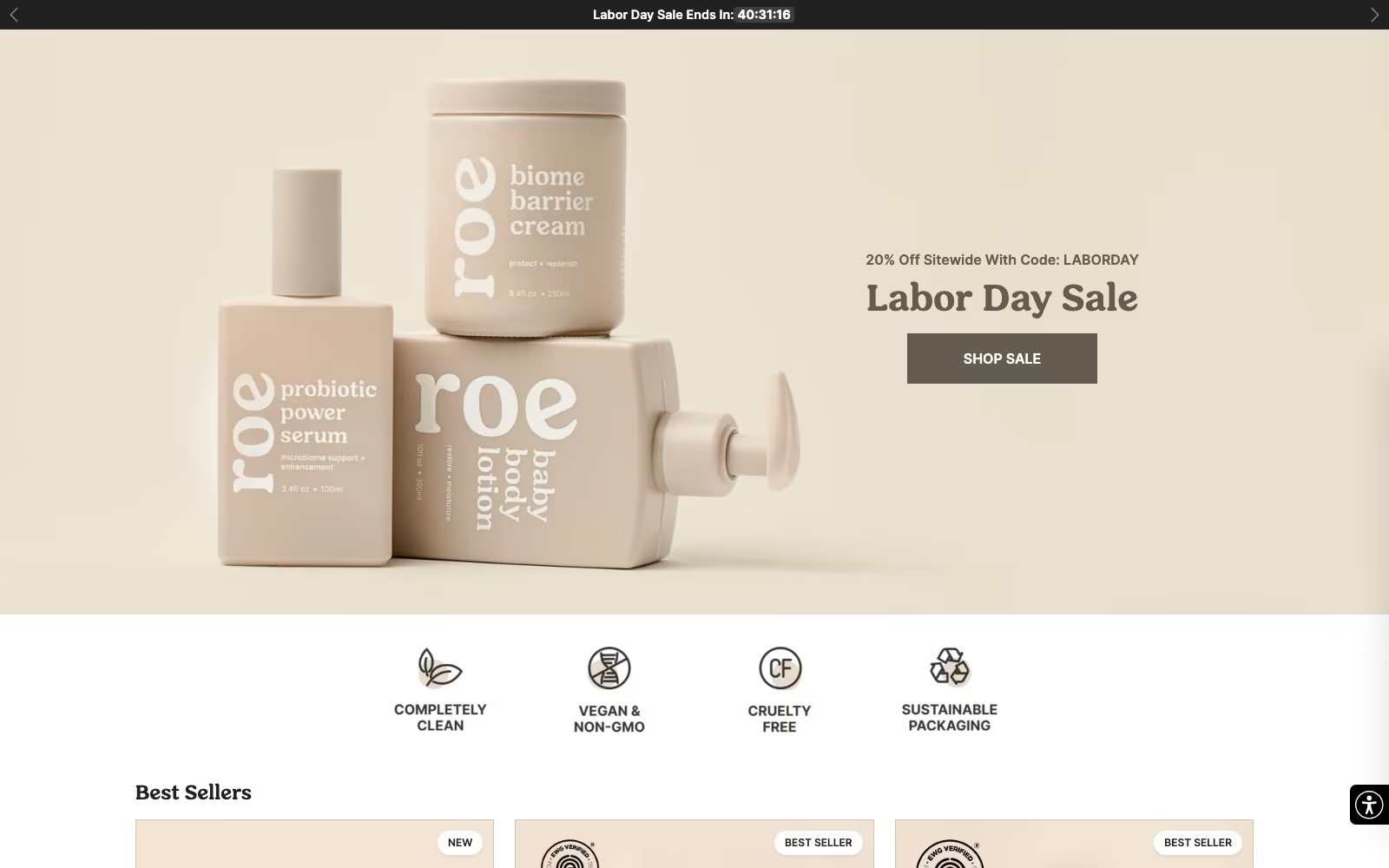
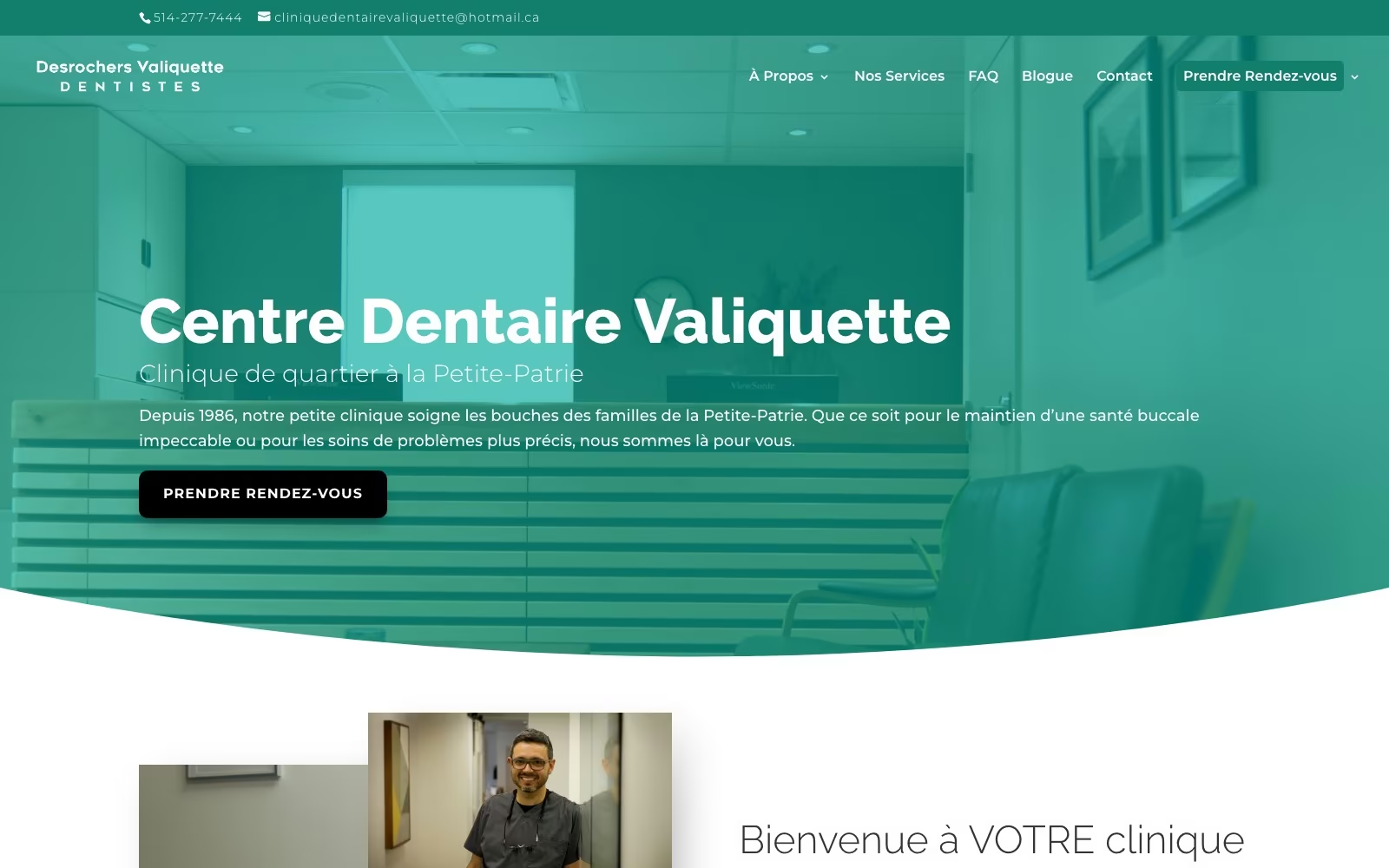
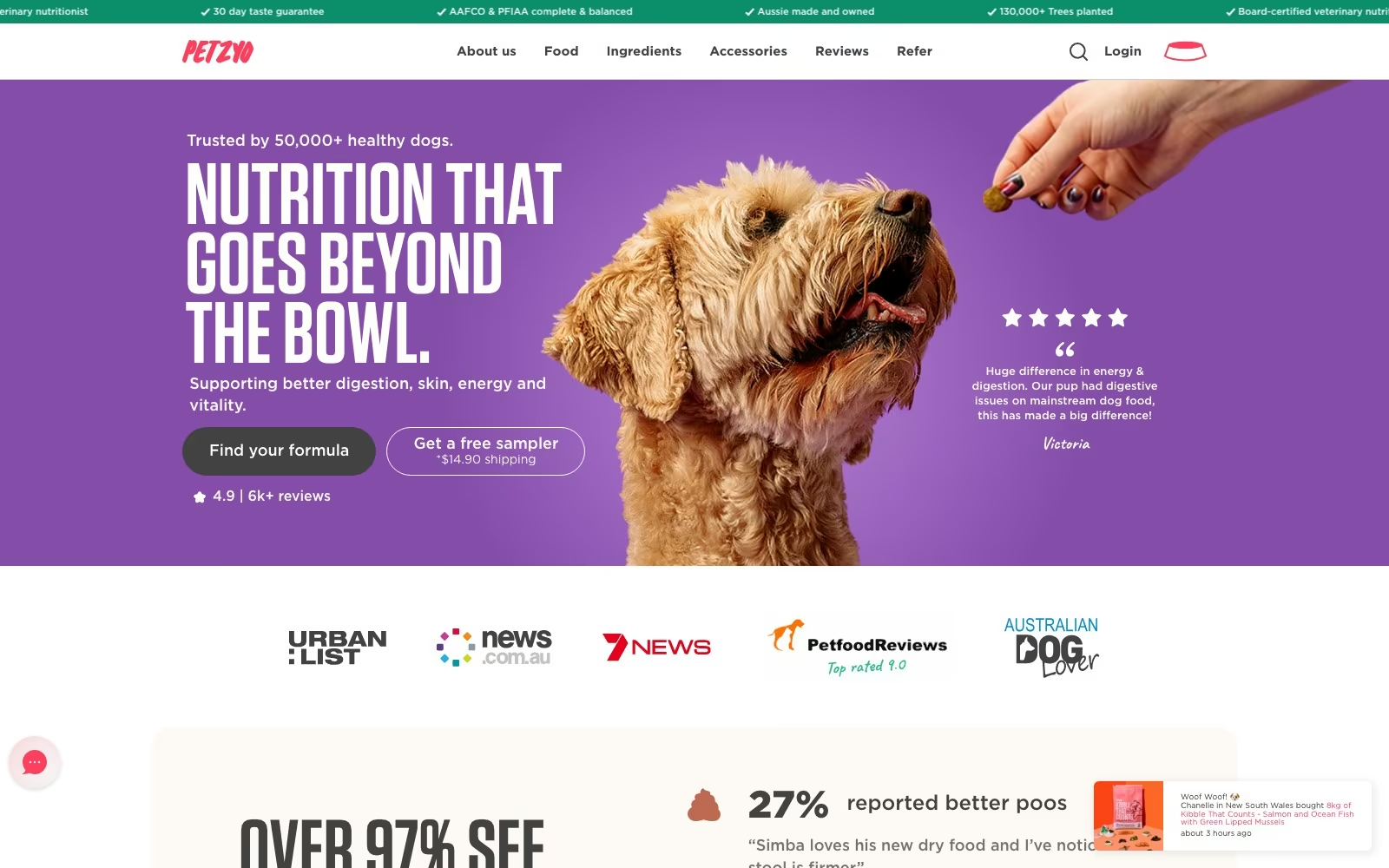
Website Portfolio
Video Ads
Static Ads






















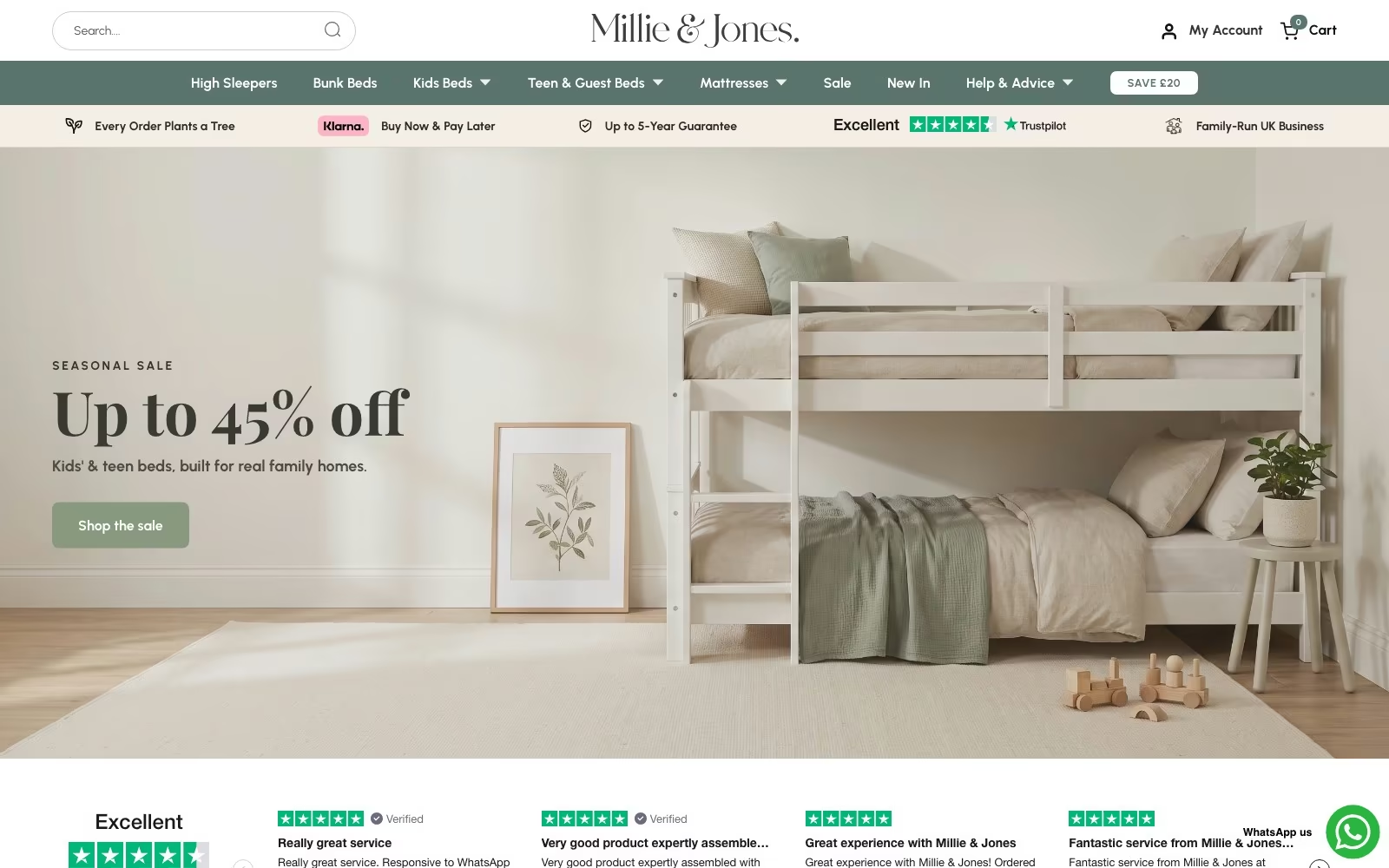

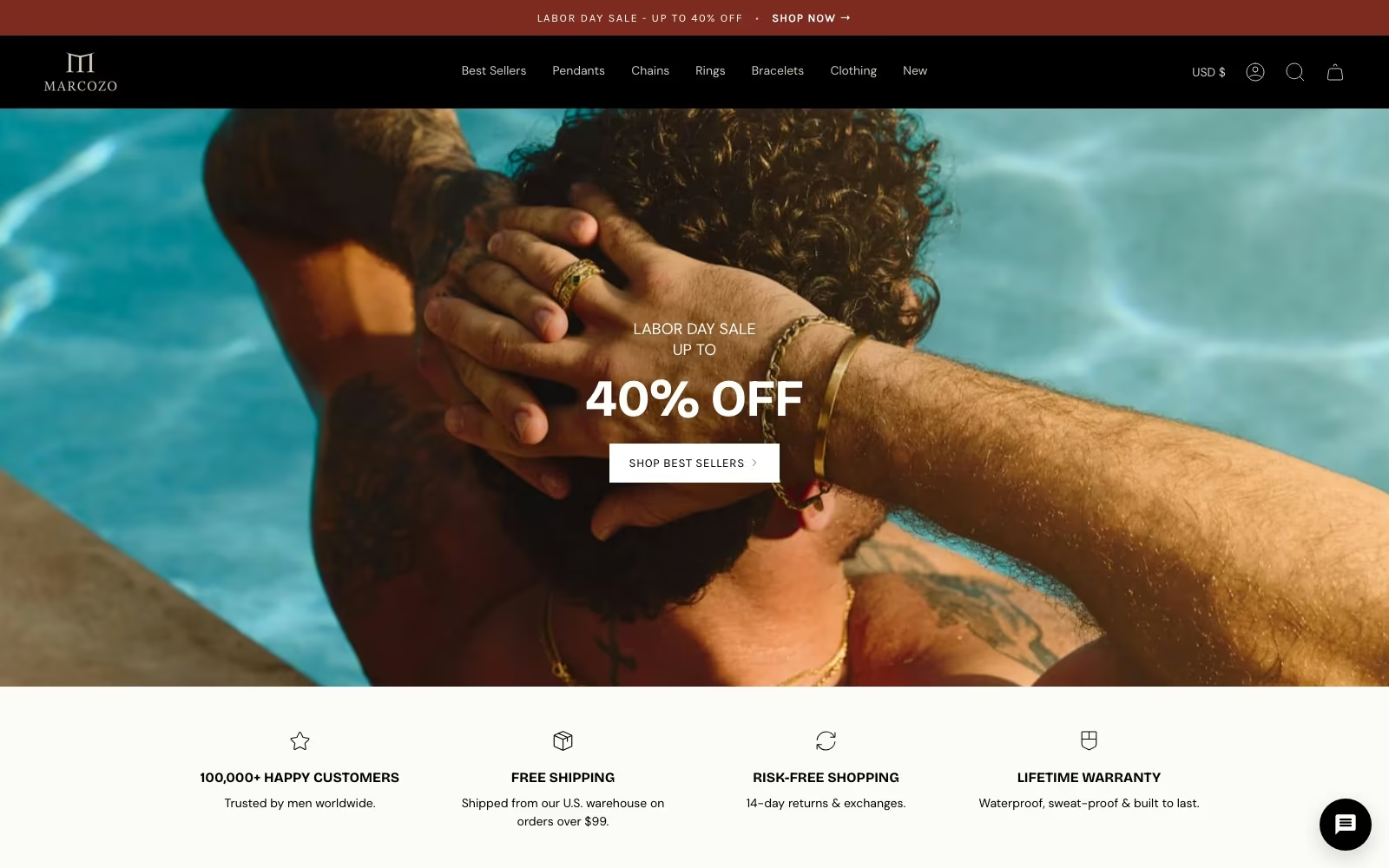

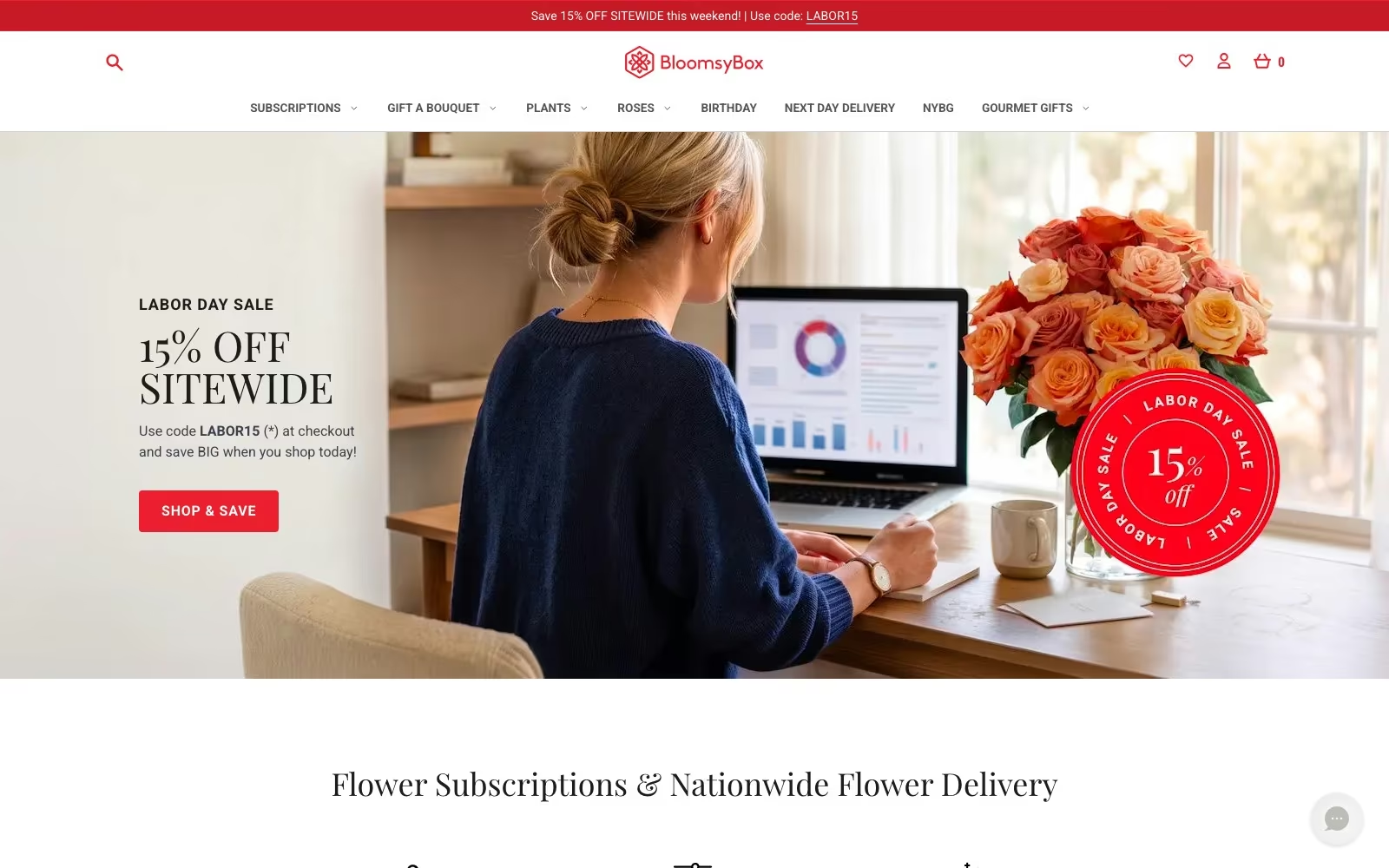





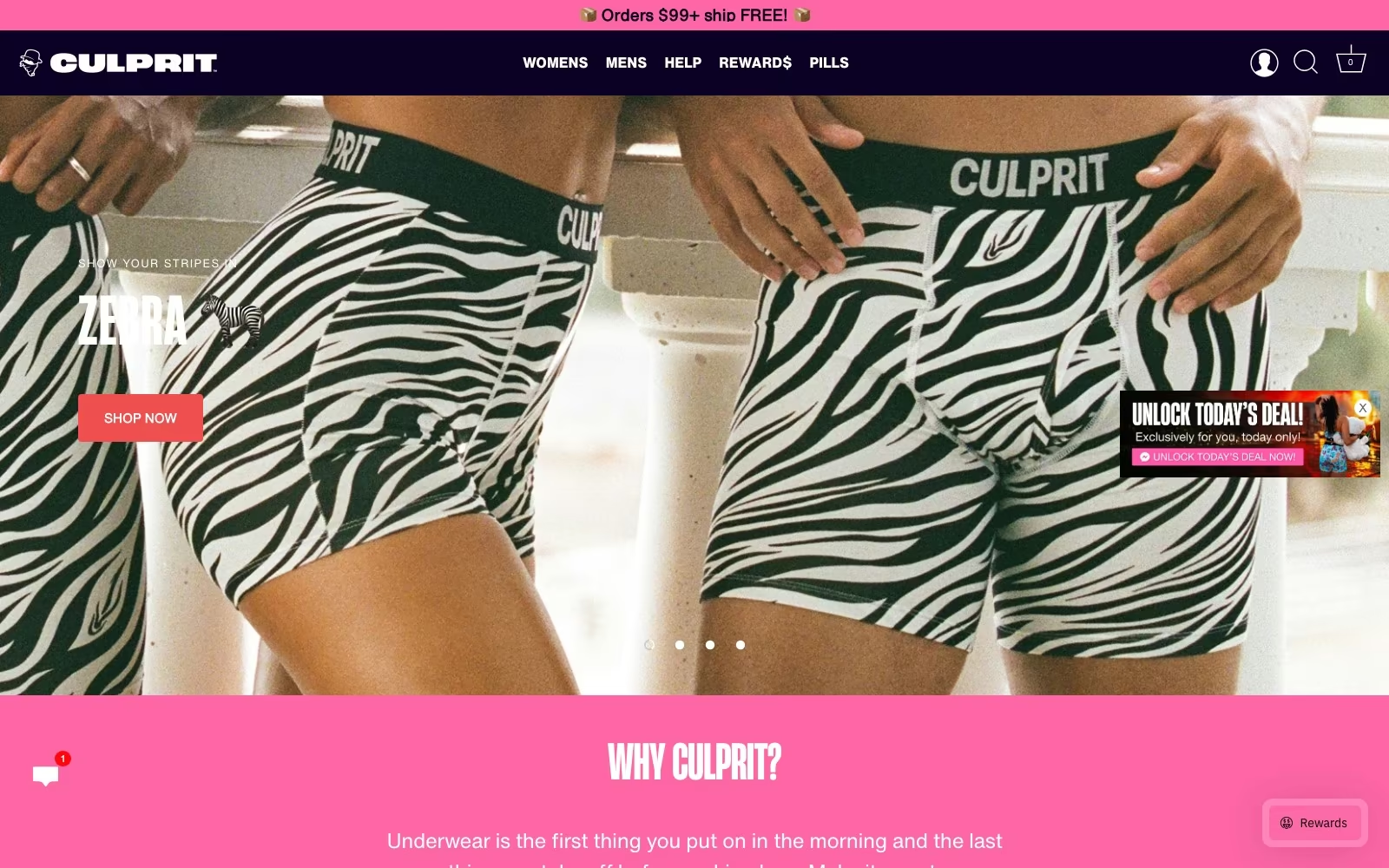
































FAQ
Questions HVAC owners ask us
How much should an HVAC website cost?
It depends on how many services and service areas need real pages. As market context, a semi-custom WordPress build for a contractor runs $5,000 to $15,000 with $200 to $500 a month for hosting and maintenance. We price from your scope and tell you honestly when improving your current site would serve you better than replacing it.
Why does mobile matter so much for a heating company?
Because that is where the emergency is. 60 to 70% of HVAC searches happen on a phone, and mobile converts at 1.82% against 3.14% on desktop — a gap that is mostly design, not intent. Fixing the phone experience is usually the cheapest large improvement available to a contractor site.
Our current site is slow. Can you fix it without a rebuild?
Often, yes, and we will say so rather than sell a rebuild. Compressed images, fewer scripts and a lighter hero routinely take seconds off. Worth knowing the baseline: the mean mobile LCP across 104 HVAC sites is 8.35 seconds, so a site at four seconds is already ahead of most competitors.
Will a redesign hurt our search rankings?
Handled properly it protects and usually improves them. We agree the URL structure and redirect map before design begins, keep the pages that already earn calls, and monitor rankings daily through launch week. The risk people have heard about comes from relaunches where nobody planned the redirects — that is the exact step we do first.
Should we use a template or a custom build?
A good template, edited honestly, beats a bloated custom build. What matters is whether the site is fast, easy to call from, structured for the services you sell, and editable by your own team. We use templates as a starting point when it saves you money and build custom when your service mix or booking system genuinely needs it.
Can customers book online instead of calling?
Yes, and increasingly they expect to: 56% of homeowners want 24/7 scheduling. We wire booking into your scheduling system where it integrates and use a callback request where it does not. The call path stays prominent either way, since calls are still 70 to 80% of home services leads.
Do you write the content or do we?
We write it, from interviews with your technicians and service manager. The detail that makes a service page persuasive — how a same-day call actually works, what an install day looks like, what the warranty really covers — comes from your team. You review everything before it goes live.
What platform will our site be built on?
Usually WordPress or Webflow, chosen for what your team will maintain rather than for our convenience. Both let you leave with the site. We avoid proprietary contractor platforms that hold the domain, the content and the leads, because that is a rental agreement dressed up as a website.
Will our office be able to update the site?
That is part of the handover. Services, seasonal offers, prices, team pages and job photos are all editable, and we run a working session plus a short written guide. Anything structural we are happy to handle, but you should never need us to change a phone number or a spring tune-up price.
Do you use stock photos of technicians?
Only as a placeholder, and we push hard to replace them. Photos of your actual vans, crew and completed installs outperform stock every time, because homeowners are deciding whether to let these specific people into their house. We give you a simple shot list your team can capture on a phone in a single week.
How does the website fit with our ads?
Directly, and expensively if it is ignored. With the average HVAC click at $20.12, a slow or vague landing page burns budget every hour it stays up. We build dedicated pages for the campaigns our HVAC PPC team runs, matched to the ad that sent the visit.
How do we know the new site is working?
Calls, booking requests and form submissions counted separately, by page and by device, from launch day. We report those rather than sessions, because traffic charts do not tell you whether the truck got booked. You also see load times and mobile behaviour so any regression is caught early.
What if we work in several towns?
Then the structure carries real service-area pages, planned with the SEO team, rather than one paragraph repeated with the town name swapped. Each page needs its own reason to exist: local jobs, local proof, response times for that area. We plan how many are worth building before we build any.
Can you handle plumbing and electrical divisions too?
Yes, and it is a structural question more than a design one. Each trade needs its own section, its own service pages and its own conversion path, with a homepage that routes people quickly rather than making them read. We have built this shape for several combined home services companies.
How do we choose an HVAC web design company?
Ask to see their builds on a phone, on a normal connection, and time them. Ask who owns the domain and code afterwards, and whether your office can edit the site. A beautiful desktop mockup tells you very little about whether a homeowner in July will wait for it to load.
What happens after launch?
We watch calls, bookings and speed for the first weeks, fix anything the real traffic reveals, and give you a short written plan for what improves next. Ongoing maintenance is available and optional — the site is yours, and it should keep working whether or not we stay involved.

.webp)
.webp)