Be the contractor the assistant recommends.
the assistant recommends
Homeowners describe electrical symptoms to an assistant before they ever type a query into a search box: a breaker that keeps tripping, a board too small for a charge point, a burning smell behind a socket. That conversation is now a place you can buy a placement in, and it is early enough to be cheap. We set the pixel up properly, buy the high-intent moments, and report cost per booked job alongside your paid search programme.






Tell us a little about your brand and we'll be in touch within 24 hours to lock in a time.



FOUR WORKSTREAMS
Four workstreams turn a novelty into a channel.
into a channel
The surface is new, the discipline is not: measurement first, then intent mapping, then a destination that converts, then honest reporting against the trade's own economics.
Setup & measurement
Intent & coverage
Destination & booking
Economics & reporting
The pixel and the conversion definition come first.
Buying here is straightforward once the plumbing is right: click-based buying through the ads manager, conversion bidding once enough events are flowing, and a web pixel with automatic advanced matching switched on for new installs. What breaks accounts is the same thing that breaks a search account — a conversion that counts a phone call twice.
We install the pixel, agree what a genuine enquiry is with your office, wire call tracking to match, and only then let budget build. The scale is already substantial: Adthena counted 7,378 distinct advertisers in a single week of July 2026, with placements up 97 times in a quarter.
- Web pixel installed with advanced matching enabled
- One agreed definition of a genuine enquiry
- Call tracking reconciled against form events
- Click-based buying until conversion data supports bidding
7,378
distinct advertisers counted in one week of July 2026
97x
growth in ad placements across a single quarter
Symptoms, not keywords.
Nobody asks an assistant for an electrical contractor by name. They describe a problem — wiring that hums, a board that is full, a socket that scorched a plug — and the answer arrives with a recommendation attached. An analysis of 36,153 answers found 72% of US responses now carrying an ad, so those moments are inventory.
We map the symptom language your customers actually use, cover the high-value electrical services first — panel upgrades, rewires, charger installs, generator work — and keep the geography tight so you are not paying for questions two hours outside your patch.
- Symptom and situation language mapped, not just service names
- High-ticket demand covered before cheap repairs
- Geography held to actual drive time
- Weekly check of what the surface is actually matching
72%
of US answers now carry an ad, across 36,153 analysed
The click arrives already half-convinced. Do not waste it.
Someone who has just been told their panel is undersized does not need a brochure homepage. They need the same words they just read, a price band, proof you turn up, and a way to book without a phone call at nine at night.
We build a destination per problem with our landing page team, and treat speed of response as part of the funnel: answering inside five minutes makes qualification 21 times more likely, while the average contractor takes four to eight hours.
- One fast destination per problem, not a homepage
- Price bands and proof above the fold
- Booking that works at nine at night
- Response speed measured and reported
21x
more likely to qualify a lead answered inside five minutes
4-8 hrs
average contractor response time to a new enquiry
Judged against the trade's own numbers.
A new surface only earns a place if it beats what you already run. Your benchmark is public: a $93.69 median lead at a $12.18 median click on classic search in this trade. Anything cheaper that books at the same rate is incremental profit; anything worse gets cut, and we will say so.
Prices here move as more advertisers arrive — active advertisers went from 2,585 to 3,770 in a single week once the minimum budget dropped — so the early-mover advantage is genuine but temporary, and reporting has to be monthly and honest.
- Measured against your existing cost per booked job
- Budget capped until the numbers justify more
- Monthly written summary, including when to stop
- Everything left in accounts you own
$93.69
median trade lead on classic search, the benchmark to beat
3,770
advertisers active in one week, up from 2,585 seven days earlier
Ad accounts, pixel and call tracking stay in your name
Cost per booked job is the metric we are judged on
Weekly working session with the people doing the buying
Long-term lock-ins
We made the difference for those brands

Consumer tech and platforms

Beauty, personal care & wellness

Healthcare & regulated services

B2B software, fintech, insurance

B2B software, fintech, insurance

Consumer tech and platforms

Food & beverage

Food & beverage

Consumer tech and platforms

B2B software, fintech, insurance

Healthcare & regulated services

Home essentials, appliances, kitchen & pet

Apparel and lifestyle

Travel & mobility

Apparel and lifestyle

Food & beverage

Food & beverage

Healthcare & regulated services

Creative, content, arts & culture

Consumer tech and platforms

B2B software, fintech, insurance

Food & beverage

Beauty, personal care & wellness

Home essentials, appliances, kitchen & pet

Food & beverage

Home essentials, appliances, kitchen & pet

Healthcare & regulated services

Retail & commerce

Consumer tech and platforms

Retail & commerce
01 — The challenge
The research moved. The budget has not.
Homeowners still call an electrical contractor at the end, but the first ten minutes of the decision have quietly moved into a chat window. They describe the smell, upload a photo of the panel, ask whether it is urgent, and get told what the job probably involves and roughly what it involves. If nobody local is present in that answer, the shortlist is written before your ads ever load.
“Half our customers arrive already knowing what they need. We have no idea who told them.”
It is not a fringe surface any more: 72% of US answers carry an ad in an analysis of 36,153 responses, and advertiser counts reached 7,378 in a week. The window where placements are cheap is open now, which is the whole argument for testing this year rather than next.
02 — Our approach
Measure, cover the expensive problems, then scale slowly.
Week one is plumbing: the pixel installed with advanced matching, one agreed definition of a genuine enquiry, call tracking reconciled so a homeowner who rings after reading a page is not counted twice, and a baseline taken from your existing accounts so the comparison is fair. Then we map demand the way customers describe it — symptoms and situations rather than service names — and cover the high-ticket problems first: panel upgrades, rewires, charger installs, standby power. Destinations are built per problem, fast, with price bands and a booking path that works after hours. Spend stays capped until the numbers earn an increase, and we bid per click until there is enough conversion volume to hand over. Every month you get one written read: what it spent, what it booked, how it compares with the rest of your media, and whether it deserves more. If it does not, we will say so plainly rather than quietly keeping the line item alive.
03 — What we did
A first ninety days with a clear verdict at the end.
Measurement, coverage, destinations, then a monthly read — with a working session every week and a written note of what changed.
Week 1 / Measurement
Pixel in, conversions agreed, baseline taken
Web pixel installed with advanced matching, one definition of a real enquiry agreed with your office, call tracking reconciled, and a baseline pulled from your existing accounts.

Weeks 2-4 / Coverage
Demand mapped the way homeowners describe it
Symptom and situation language mapped to the jobs that pay best, geography held to real drive time, and the expensive problems covered before cheap repairs.

Weeks 3-6 / Destinations
One fast page per problem, bookable after hours
Destinations that repeat the words the customer just read, with price bands, proof and a booking path that does not depend on somebody answering a phone at nine at night.

Ongoing / Verdict
Cost per booked job, next to your other channels
A monthly written summary comparing this surface with your existing media, a budget that only grows when the numbers justify it, and a recommendation to stop if they do not.

WHAT YOU GET
Deliverables your operations manager can audit.
can audit
Everything below lands in accounts you own and stays yours if you ever leave.

Setup and tracking build
Pixel installed with advanced matching, conversion definitions agreed, and call tracking reconciled so nothing is counted twice.

Demand and symptom map
The problems your customers describe, ranked by ticket value, with the coverage plan that follows from it.

Campaign build and management
Campaigns launched on click-based buying, geography held tight, and budgets capped until performance earns more.

Destination pages
One fast page per problem with price bands, proof and an after-hours booking path.

Copy and offers
Ad and page wording written in the language customers use, tested against the offers your crews can actually honour.

Monthly verdict report
Cost per enquiry and per booked job against your other media, with a clear recommendation to scale or stop.
HOW WE WORK
Operating standards, not promises.
Operating standards

Residential service
Symptom-led electrical coverage for tripping breakers, scorched sockets and undersized panels.
ExploreChargers & standby power
High-ticket installs where a homeowner is researching feasibility before phoning anyone.
ExploreCommercial & facilities
Longer electrical projects measured on quoted and won contracts rather than enquiry volume.
Explore

















Built on trust. Proven by results.
We partner with SMBs and Fortune 500 companies to deliver more than reach — we bring clarity, execution, and measurable outcomes. Every successful partnership starts with a strong culture fit and a shared drive to grow.






CASE STUDIES
Case studies
Website Portfolio
Video Ads
Static Ads























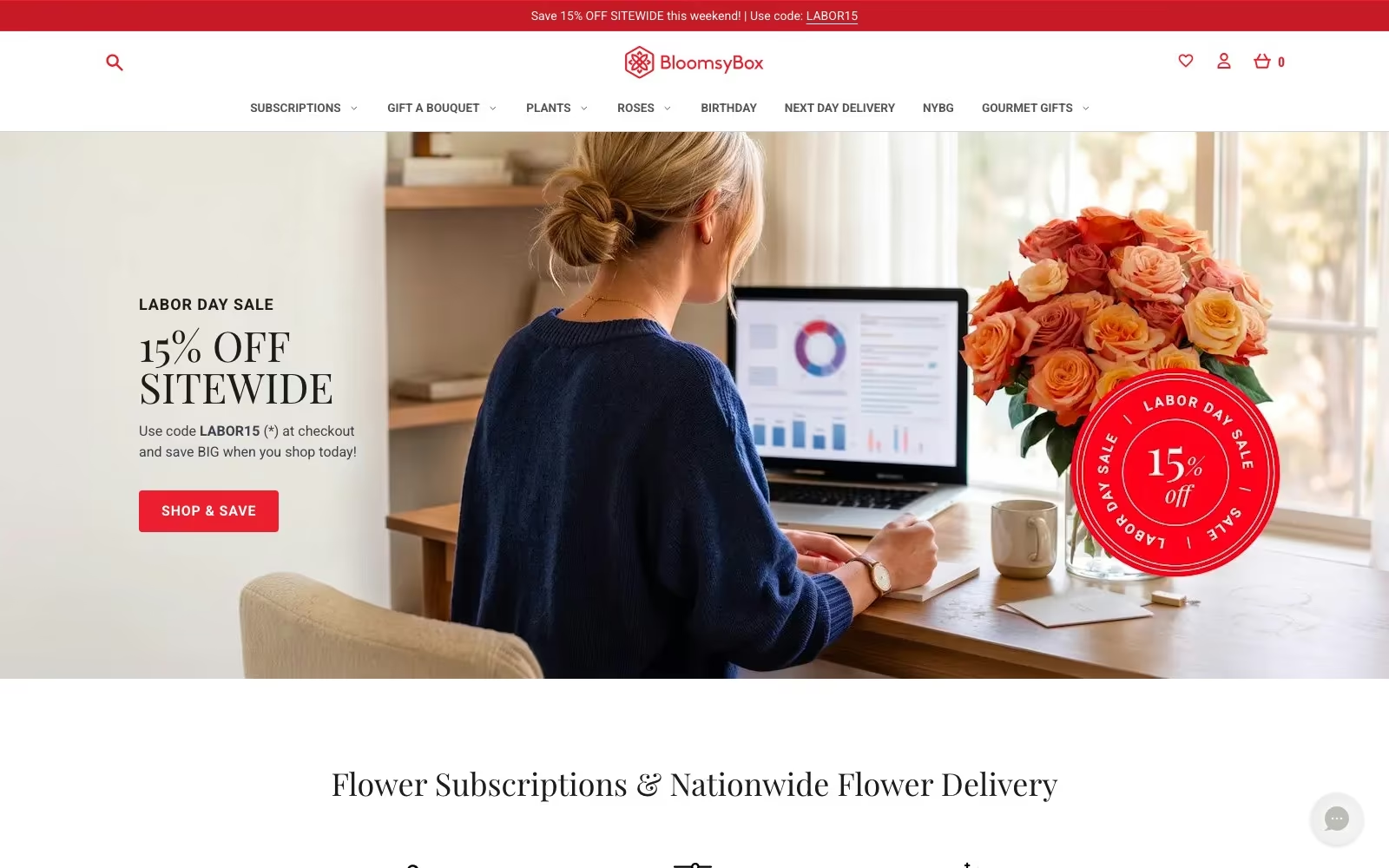











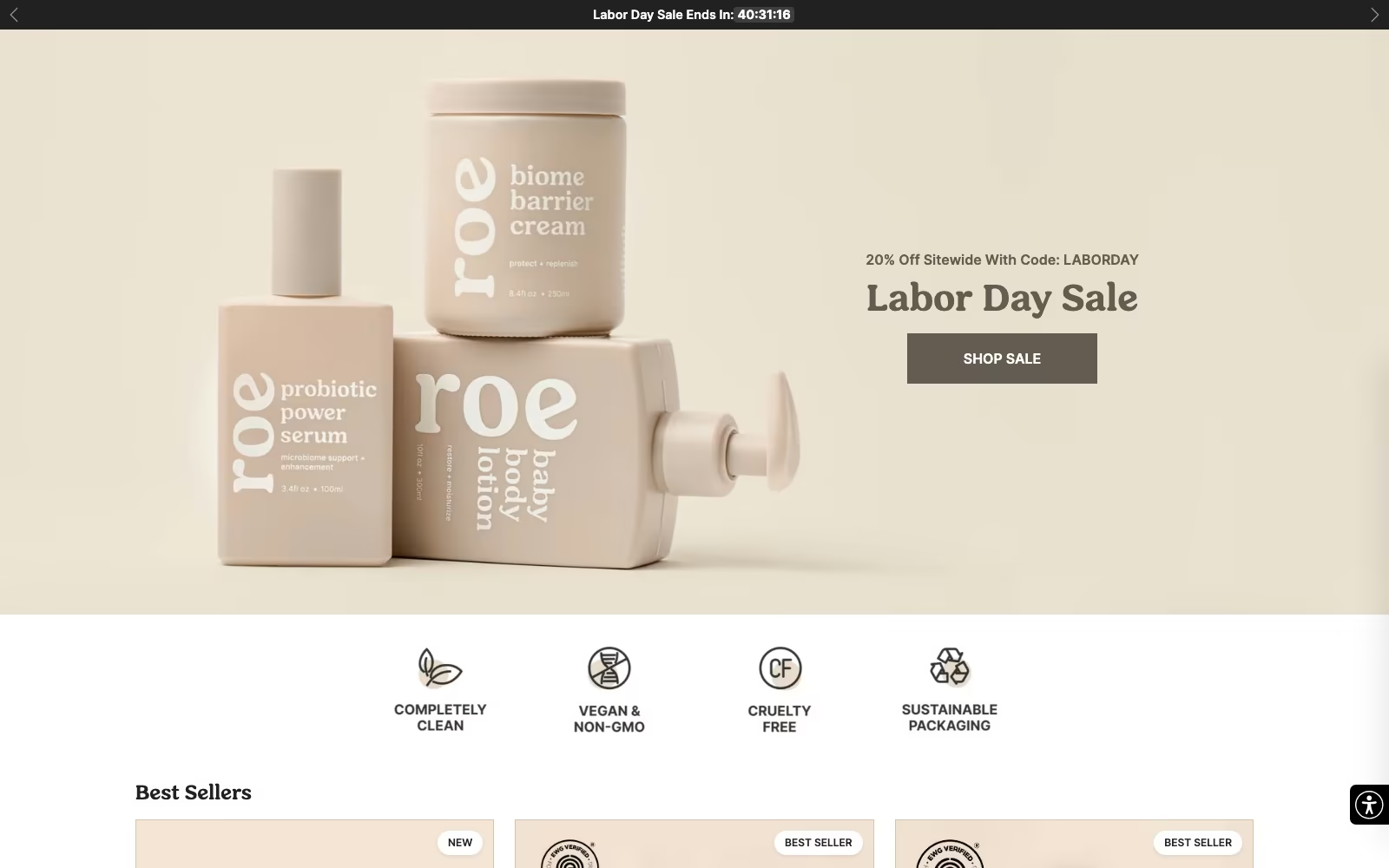

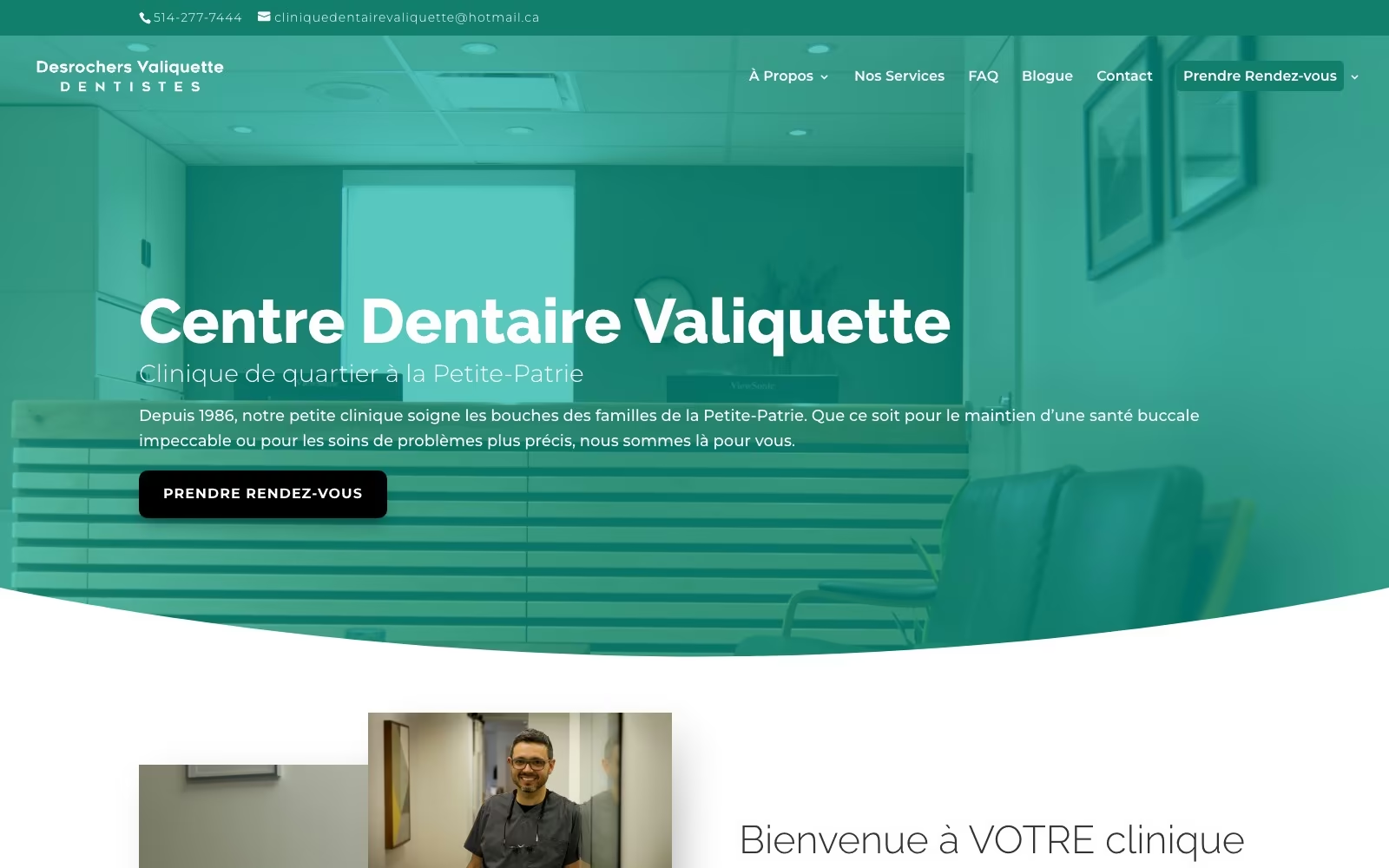

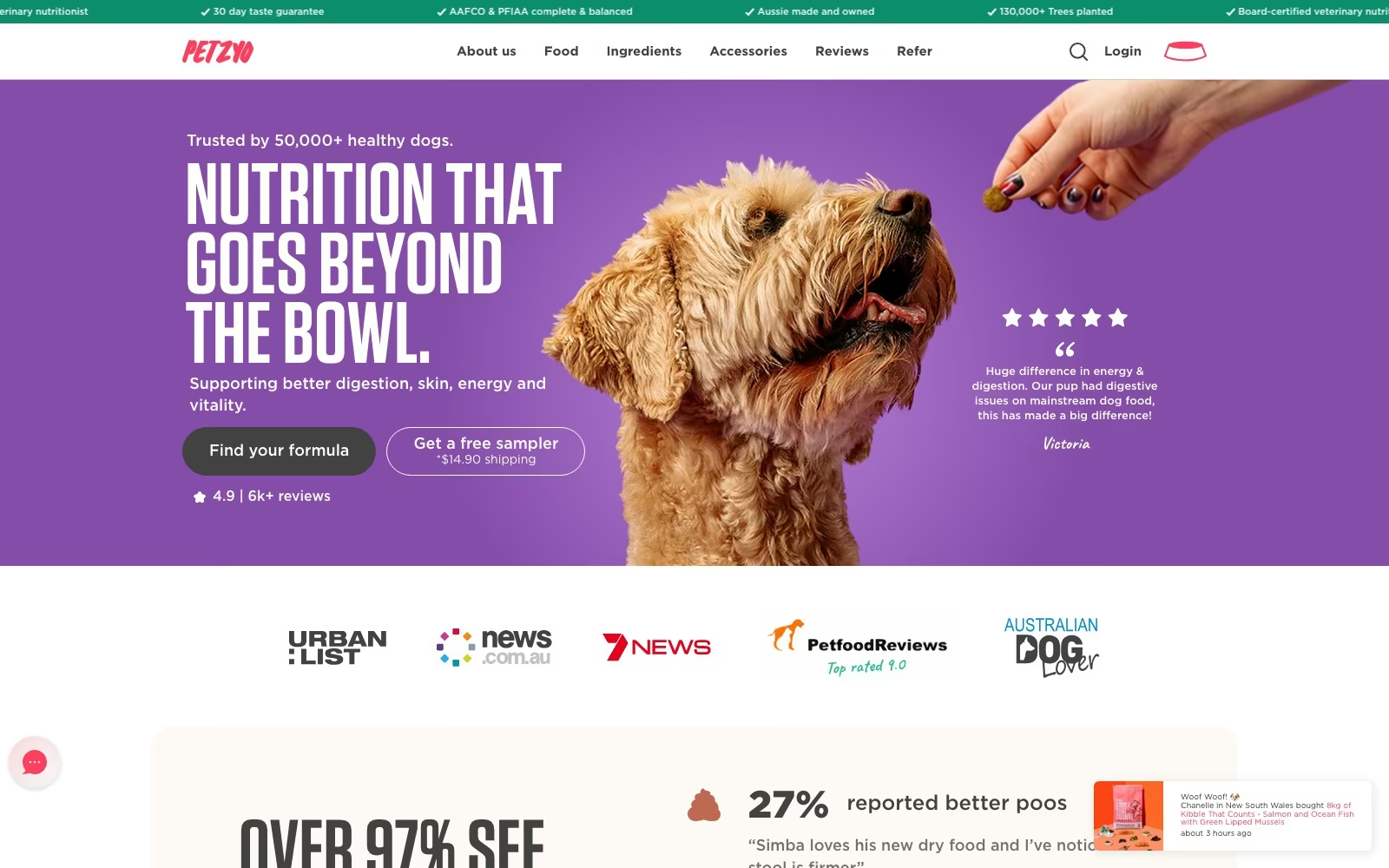

























FAQ
What contractors ask us first.
Do placements inside an assistant pay off for a local shop?
Right now it deserves a capped test, because inventory is growing faster than competition for it: 7,378 advertisers in a week sounds like a lot next to the millions of accounts bidding on Google search. The rational position is a small budget, honest measurement and a clear benchmark — your existing cost per booked job — with a decision at ninety days rather than an open-ended experiment.
How do you target when there are no keywords in the usual sense?
By mapping how customers describe problems rather than services. A homeowner types about a burning smell, a breaker that will not reset or a garage that needs a charger, and the placement is matched to that context. So we build coverage from symptom language collected out of your own call recordings and enquiry forms, weight it by ticket value, and hold geography to real drive time.
What can this surface not do yet?
Quite a lot, and it is better to know up front. There are no lookalike audiences, no interest targeting and no video placements, and reporting is thinner than you are used to in mature platforms. That is exactly why measurement on your side has to be solid: with fewer levers inside the platform, the pixel, the conversion definition and the destination page carry the performance.
How is it measured, and how will we know it worked?
Against the trade's own economics rather than platform vanity metrics. Your benchmark is a $93.69 median lead at a $12.18 median click, and the value side is a 43.4% booking rate at a $1,434 average ticket. We report cost per enquiry and per booked job next to your other media every month, so the verdict is arithmetic rather than opinion.
Will this cannibalise our existing search spend?
Some overlap is inevitable and best watched rather than fearing. Because one team holds both, we can see when total booked work rises against a flat combined budget, which is the only cannibalisation test that matters. If the new surface simply moves the same enquiries around at a higher price, we say so and put the money back where it performed.
What budget should we start with?
Enough to gather real data and small enough that a bad month is not painful. For most independent shops that is a modest monthly cap held steady for a full quarter, rather than a large burst that ends before the numbers stabilise. We size it against your existing spend in the first session, and the cap does not move without your say.
Does our website need to change first?
Usually one or two pages, not a rebuild. The click arrives from a conversation where the problem has already been explained, so it needs a page that repeats those words, shows a price band and lets someone book at nine at night. We build those alongside the campaign; the rest of your site can carry on as it is.
How quickly do prices here change?
Faster than in mature platforms. Advertiser counts jumped from 2,585 to 3,770 inside one week when the minimum spend threshold dropped, and cost follows competition. That is why we review weekly rather than monthly during a test, and why the early advantage is best taken now instead of waiting for the surface to mature.
Can you run this alongside our other channels?
Yes, and it is the sensible way to buy it. Our paid search, organic search and analytics teams work from one plan, so a booked job is attributed once instead of claimed by three vendors. Taking this surface on its own is equally fine, and everything stays documented in accounts you own.
Is there a reputational risk in advertising inside AI answers?
The risk we take seriously is a mismatch between what the answer implies and what your crews deliver, so we keep claims conservative and checked with your senior electricians. Placements are labelled as advertising, the destination repeats the same promise, and pricing language stays in bands you can honour. Handled that way it reads as helpful rather than intrusive, which is also what performs.
What happens at the end of the test?
You get a written verdict with three options: scale, hold at the current cap, or stop. Each one is argued from the numbers, including the ones that do not flatter us. If the honest answer is that your money does better in existing channels this quarter, that is what the recommendation says, and everything built — pixel, pages, symptom map — stays useful either way.
Do we need a big content library to compete here?
No, but being genuinely present online helps, because assistants lean on what they can read about you. Reviews, a clear service area, honest pricing information and a few pages that answer real questions do more than volume. Our AI search team handles the organic side of that, and the two programmes share one plan.

.webp)
.webp)